
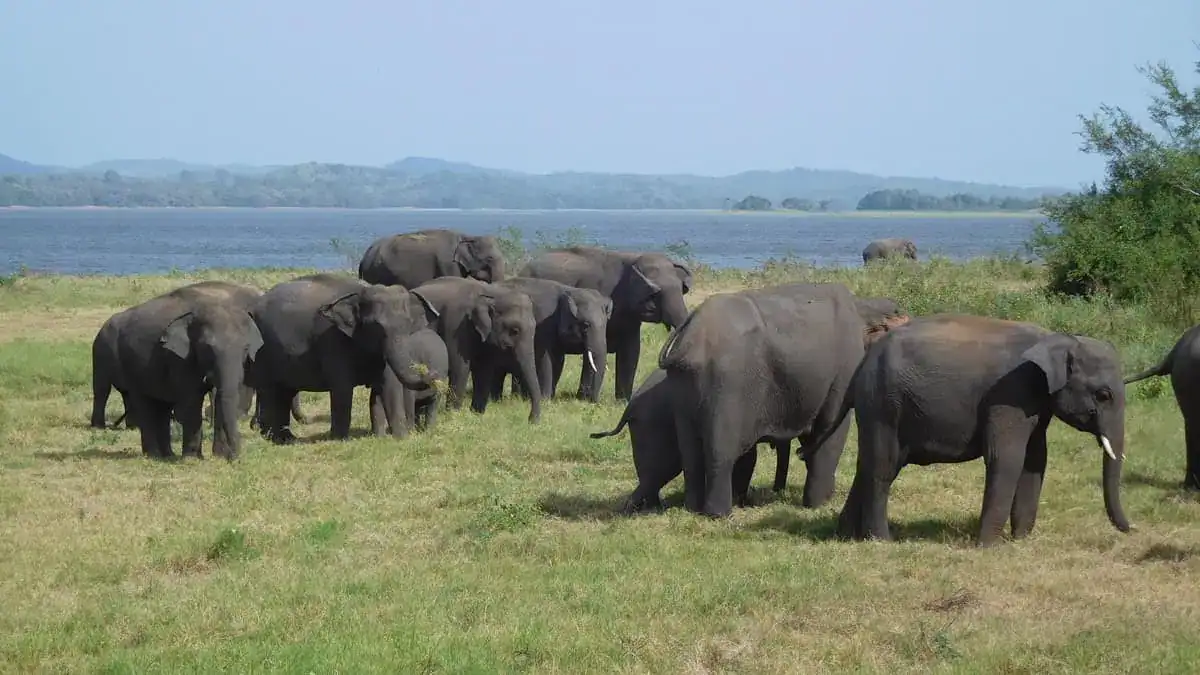

Sri Lanka attracts travellers with sandy beaches, nature & wildlife, and cultural heritage. Yet elephants in Sri Lanka offer one of the most memorable travel experiences on the island. You see them in the wild, moving freely across plains and forests. Many travellers arrive without a clear plan. They struggle to decide where to go, when to visit, and how to choose an ethical experience. Some end up in crowded parks. Others visit places that raise concerns about animal welfare. This guide gives you clear answers. You will learn where to see elephants, how to plan your wildlife safari, and how to travel responsibly.
Why Elephants in Sri Lanka Attract Travellers from Around the World
Sri Lanka holds one of the highest densities of Asian elephants. The Department of Wildlife Conservation estimates the wild elephant population at over 6,000. It gives you a strong chance of sightings compared to many other destinations.
You do not need long travel times to reach wildlife areas. National parks sit close to major travel routes. It allows you to combine elephant safaris with beaches, cultural sites, and hill country travel.
Elephants live across different ecosystems. You see them in dry plains, near reservoirs, and along forest edges. This variety improves your chances of seeing them during your trip.
Tourism data from the Sri Lanka Tourism Development Authority shows steady growth in nature-based travel. Wildlife safaris play a major role in this trend. Elephants remain one of the main reasons travellers visit Sri Lanka.
The experience feels direct and real. You see elephants in open environments rather than enclosed spaces. It creates a stronger connection with nature.
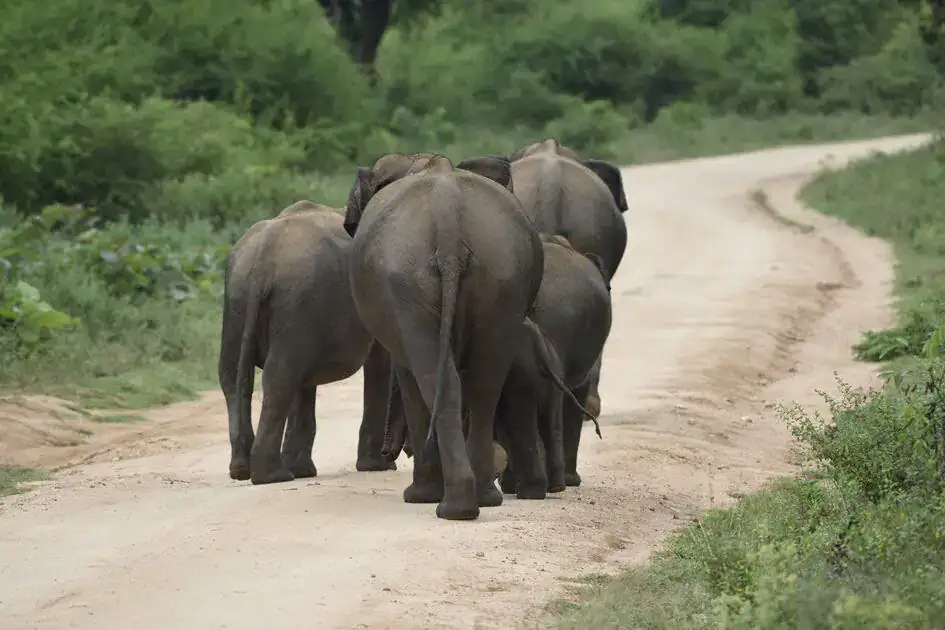
A Morning Walk – Elephants in Udawalawe National Park (Photo: Nalaka Priyantha)
Understanding Elephant Behaviour Before You Visit
You gain more from your safari when you understand how elephants behave.
Elephants in Sri Lanka live in family groups led by females. These herds include mothers, calves, and younger members. Adult males often move alone or join herds during mating periods.
Water shapes their movement. During dry periods, elephants gather near lakes and reservoirs. It is when sightings increase.
They feed for many hours each day. Grass, leaves, and bark form their diet. You often see them grazing in open areas, especially in the early morning and late afternoon.
Elephants protect their young. They respond quickly to threats. It is why keeping a safe distance matters during any encounter.
When you understand these patterns, you improve your chances of meaningful sightings.
The Elephant Gathering in Sri Lanka: A Natural Event You Should Not Miss
The elephant gathering stands as one of the most important wildlife events in Asia.
During the dry season, elephants move towards shrinking water sources. The Minneriya reservoir becomes a central point. Large groups gather here to feed and interact.
At peak times, more than 200 elephants gather in one area. It makes it one of the largest gatherings of Asian elephants in the world.
You see different herd structures during this period. Mothers guide calves across open grassland. Younger elephants play in the water. Larger males move at a distance from the main herd.
This event usually takes place between July and October. The exact timing depends on rainfall patterns. When water levels drop, elephants move towards the reservoir.
Kaudulla National Park also plays a role in this movement. Elephant herds often shift between Minneriya and Kaudulla depending on water availability. It gives you an alternative if one park becomes crowded.
Late afternoon is the best time for viewing. Elephants move into open areas to feed. Light conditions improve, which also helps with photography.
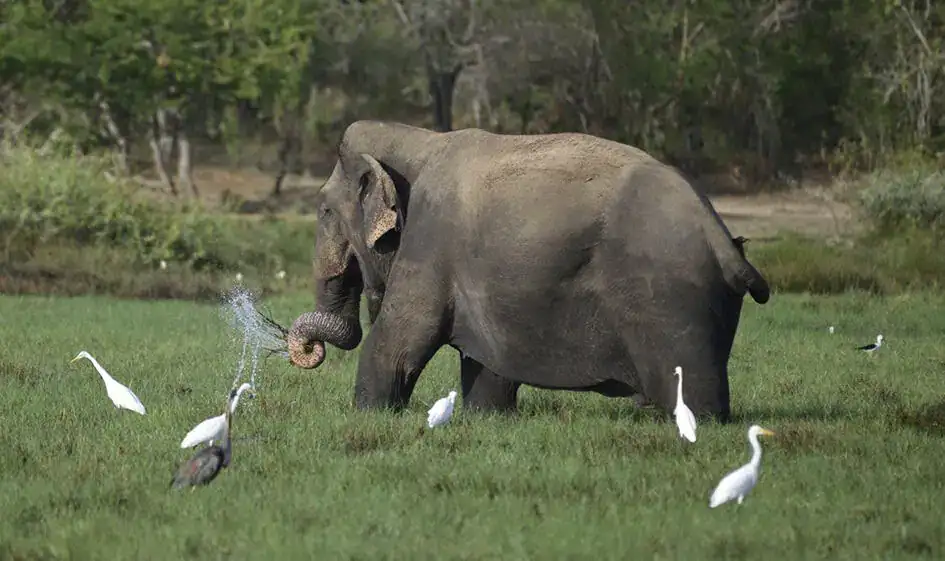
An elephant, having a meal – Kumana National Park (Photo: Nalaka Priyantha)
Best National Parks for Elephant Safaris in Sri Lanka
Choosing the right national park shapes your entire experience. Each park offers a different setting and safari style.
Udawalawe National Park
Udawalawe is one of the most reliable places to see elephants in Sri Lanka. The landscape consists of open grassland with scattered trees. It allows clear visibility.
You often see elephants near water sources throughout the day. Many travellers report many sightings during a single safari.
This park suits first-time visitors. You do not need long drives or complex planning. Even short safaris offer strong results.
Minneriya National Park
Minneriya is best known for the elephant gathering. During the dry season, large elephant herds gather near the reservoir.
This park offers one of the most memorable wildlife experiences in Sri Lanka. You see elephants interacting in large numbers, a rarity in many parts of the world.
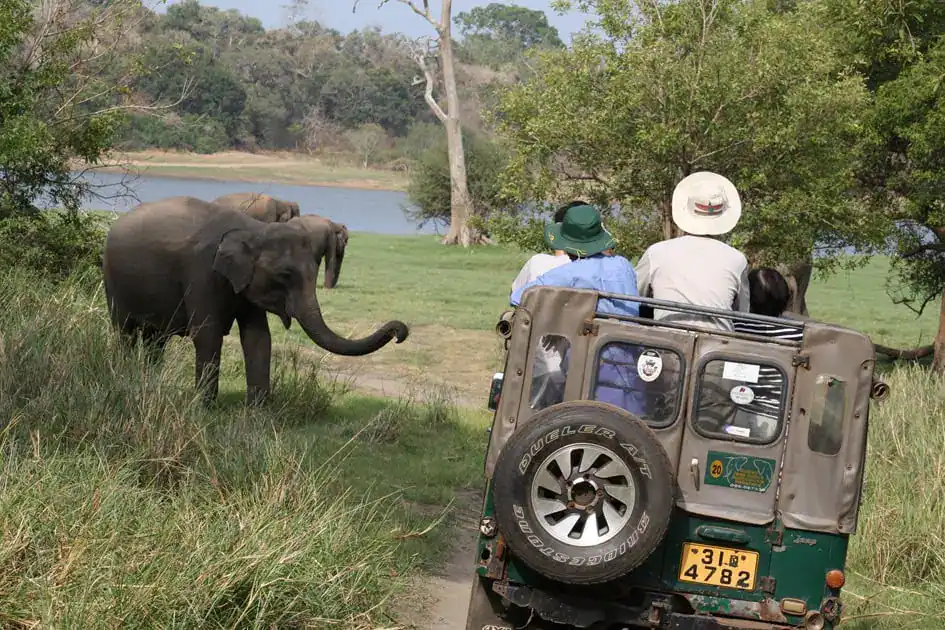
A Safari in Minneriya National Park (Photo: shankar s., CC BY 2.0)
Kaudulla National Park
Kaudulla serves as an alternative to Minneriya. Elephant herds move between these parks depending on water levels.
You often find fewer vehicles in Kaudulla during peak season. It creates a quieter and more comfortable safari experience.
Yala National Park
Yala offers a broader wildlife experience. Elephants share the park with leopards, crocodiles, and a wide range of bird species.
Elephant sightings are common, though not as concentrated as in Udawalawe. This park suits travellers who want variety in their safari.
Wilpattu National Park
Wilpattu is less crowded and more remote. The park is known for its natural lakes, called villu.
Elephants appear near these water sources. Sightings need patience, but the experience feels calm and less commercial.
This park suits travellers who prefer a quieter and more natural setting.
Elephant Care Centres: What You Should Know Before Visiting
Sri Lanka offers places where you can see elephants outside the wild. These include care centres and orphanages. You need to understand the difference before visiting.
Udawalawe Elephant Transit Home
The Elephant Transit Home focuses on rehabilitation. Orphaned elephants receive care before being released into the wild.
Human interaction is limited. Visitors observe feeding sessions from a distance at fixed times.
This approach supports conservation. Elephants do not remain in captivity. They return to their natural habitats once they are strong enough.
Many conservation groups support this model. Visiting this centre aligns with responsible travel.
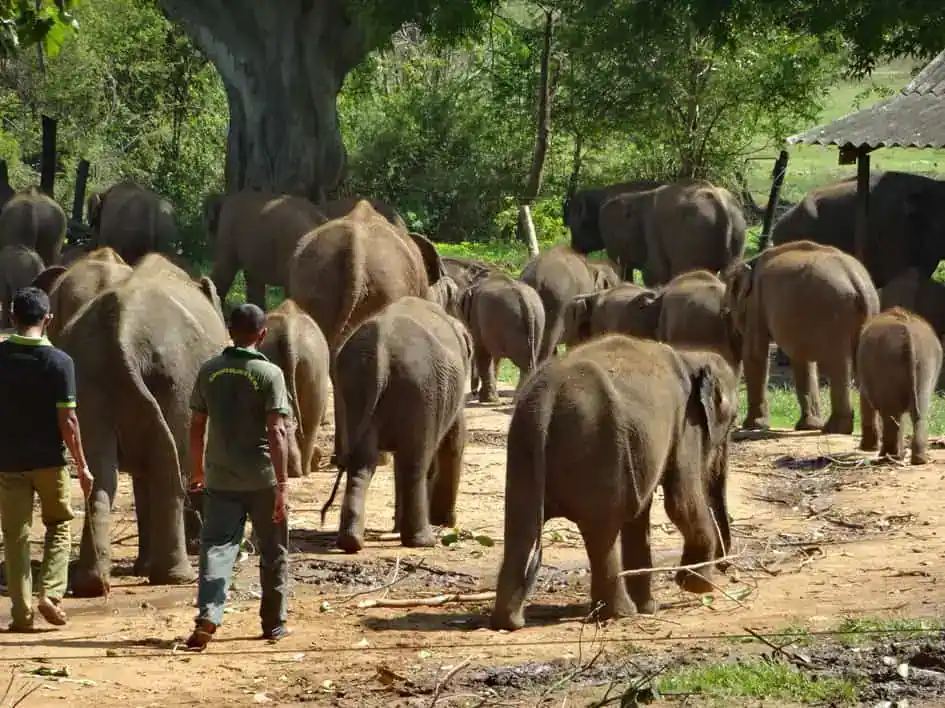
Udawalawe Elephant Transit Home (Photo: Z Thomas, CC BY-SA 4.0)
Pinnawala Elephant Orphanage
Pinnawala is one of the most visited elephant attractions in Sri Lanka. It houses elephants that cannot return to the wild.
Visitors see elephants being fed and taken to the river for bathing. It creates a structured viewing experience.
If you choose to visit, focus on observation. Avoid activities that involve direct interaction with the animals.
Best Places to Spot Elephants in Sri Lanka
You improve your travel plan when you match your destination with your expectations.
Udawalawe offers the highest chance of sightings with minimal effort.
Minneriya and Kaudulla offer the best opportunity to see large herds during the dry season.
Yala offers a combination of elephants and other wildlife.
Wilpattu offers a quieter safari with fewer visitors.
This approach helps you choose the right experience based on your travel style.
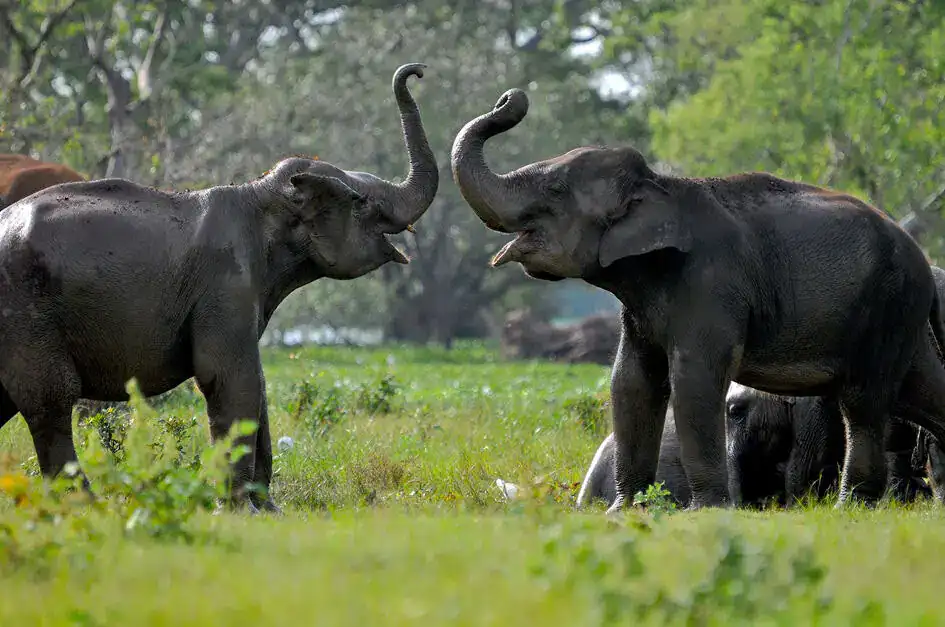
Playing or fighting? – Yala National Park (Photo: Manelka Jayasundara, CC BY-SA 4.0)
Best Time to See Elephants in Sri Lanka
The timing of your visit strongly affects your safari experience.
Dry seasons increase your chances of sightings. Water sources become limited. Elephants gather near reservoirs and open grassland.
The period from July to October is best for the Minneriya gathering. It is when large herds are most visible.
Udawalawe offers sightings year-round due to consistent water availability.
Time of day also matters. Early morning and late afternoon provide better conditions. Temperatures are lower, and elephants are more active.
Rain affects both visibility and access. Wet conditions reduce movement and make trails difficult to navigate. Always check the local weather before planning your safari.
It is recommended to read about the weather in Sri Lanka and the best time to visit.
Planning Your Elephant Safari Experience
Good planning improves both comfort and success.
Choose a base location close to your chosen park. Ella, Sigiriya, and Udawalawe provide easy access to nearby safari areas.
Book your safari through a trusted operator. Many hotels work with experienced drivers and guides who understand animal behaviour.
Decide whether you prefer a morning or evening safari. Morning drives offer cooler weather and fewer crowds. Evening drives provide softer light and active wildlife.
Bring essential items to stay comfortable during the safari. You should carry water, sun protection, and a camera. Binoculars help you observe animals at a distance.
Wear neutral clothing. Bright colours draw attention and disturb wildlife. Simple and muted tones work best.
Keep realistic expectations. Wildlife moves freely, and sightings depend on natural behaviour.
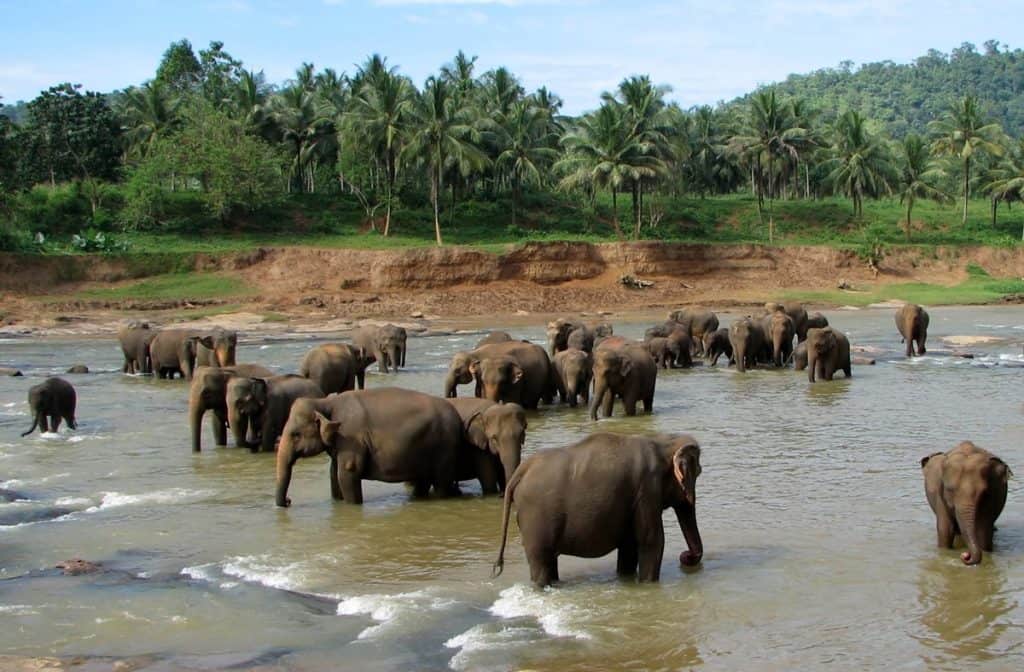
Pinnawala Elephant Orphanage (Photo: Bernard Gagnon)
Safety Tips When Watching Elephants
Safety should guide every decision during your safari.
- Stay inside your vehicle at all times. It protects both you and the animals.
- Keep a safe distance from elephants. They may react if they feel threatened.
- Follow the instructions of your guide. They understand animal behaviour and park conditions.
- Avoid loud noise and sudden movement. This reduces stress for wildlife.
- Never feed elephants. It disrupts natural habits and increases risk.
- Respect all park rules. These rules protect visitors and wildlife.
Responsible and Sustainable Elephant Tourism
Your choices affect the future of elephants in Sri Lanka.
Human-elephant conflict remains a major issue. Expansion of agriculture reduces natural habitats. It leads to increased contact between people and elephants.
Responsible travel helps reduce this pressure.
Choose safari operators who follow ethical practices. Avoid experiences that involve riding elephants or forced interaction.
Support conservation efforts such as the Elephant Transit Home. These projects focus on rehabilitation and release.
Reduce plastic waste during your visit. Carry reusable water bottles and avoid single-use items.
Respect local communities. Many people live near elephant habitats and face daily challenges due to wildlife movement.
Sustainable travel supports both conservation and local livelihoods.
It is the foundation of a meaningful experience with elephants in Sri Lanka.

Wild Elephants in Kaudulla National Park (Photo: David Stanley, CC BY 2.0)
Costs and Budgeting for Seeing Elephants in Sri Lanka
Planning your budget helps you avoid surprises and make better choices. Elephant experiences in Sri Lanka range from low-cost options to premium private safaris.
National park entrance fees vary by park and by nationality. Foreign visitors pay higher rates than locals. Parks such as Yala and Udawalawe charge standard entry fees, as well as service and vehicle fees.
You can book the wildlife park permits through the official Wildlife Park Permits Reservation eService.
Safari costs depend on the type of experience you choose. A shared jeep safari is cheaper and suitable for solo travellers or couples. A private jeep gives more flexibility and space. This option suits families or travellers who want a quieter experience.
You should expect to pay for:
- Park entrance fees
- Jeep rental
- Driver or guide fees
In most cases, hotels arrange safaris as part of a package. It simplifies planning and often ensures reliable service.
Accommodation costs vary by location. Places like Sigiriya and Yala provide many accommodation choices, ranging from budget guesthouses to luxury safari lodges. Udawalawe also offers affordable stays close to the park entrance.
Food and transport remain affordable compared to many other destinations. Local restaurants provide simple Sri Lankan meals at low cost. Public transport connects major towns, while tuk-tuks help you reach nearby parks. We recommend reading “Transport in Sri Lanka: The Best Guide.”
You improve your experience by focusing on value rather than the lowest price. A skilled guide and a well-maintained vehicle make a clear difference during your safari.
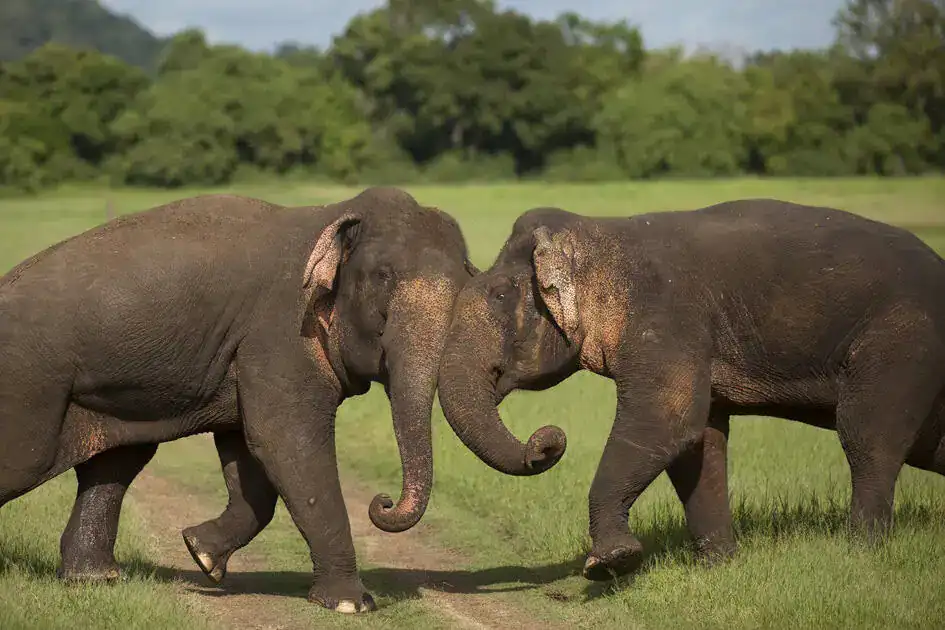
Fighting Elephants – Minneriya (Photo: Rohit Varma, CC BY-SA 2.0)
How to Book the Right Elephant Safari
Choosing the right safari operator shapes your experience.
Start with your accommodation. Many hotels work with trusted drivers who understand the park and animal behaviour. It reduces the risk of poor service.
You should ask a few simple questions before booking. Check how many people will be in the jeep. Ask about the duration of the safari. Confirm pick-up times and included costs.
Morning and evening safaris offer different advantages. Morning drives start early and give you cooler conditions. Evening drives provide softer light and active wildlife near water sources.
Avoid operators who promise guaranteed close encounters. Wildlife does not follow fixed patterns. Ethical guides respect distance and animal behaviour.
A good driver focuses on quality rather than speed. You should not feel rushed during your safari. The goal is to observe animals in a calm, respectful manner.
Suggested Itineraries to See Elephants in Sri Lanka
You get more out of your trip when you follow a clear route. These sample itineraries help you include elephant experiences without wasting time.
3-Day Short Wildlife Trip
This plan suits travellers with limited time.
Day 1
Arrive in Colombo and travel to Udawalawe. Check into your accommodation near the park.
Day 2
Take an early morning safari in Udawalawe National Park. Visit the Elephant Transit Home during feeding hours. Spend the afternoon resting or exploring nearby areas.
Day 3
Return to Colombo or continue your journey towards Ella or the Southern Coast.
This itinerary offers strong chances of seeing elephants within a short period.
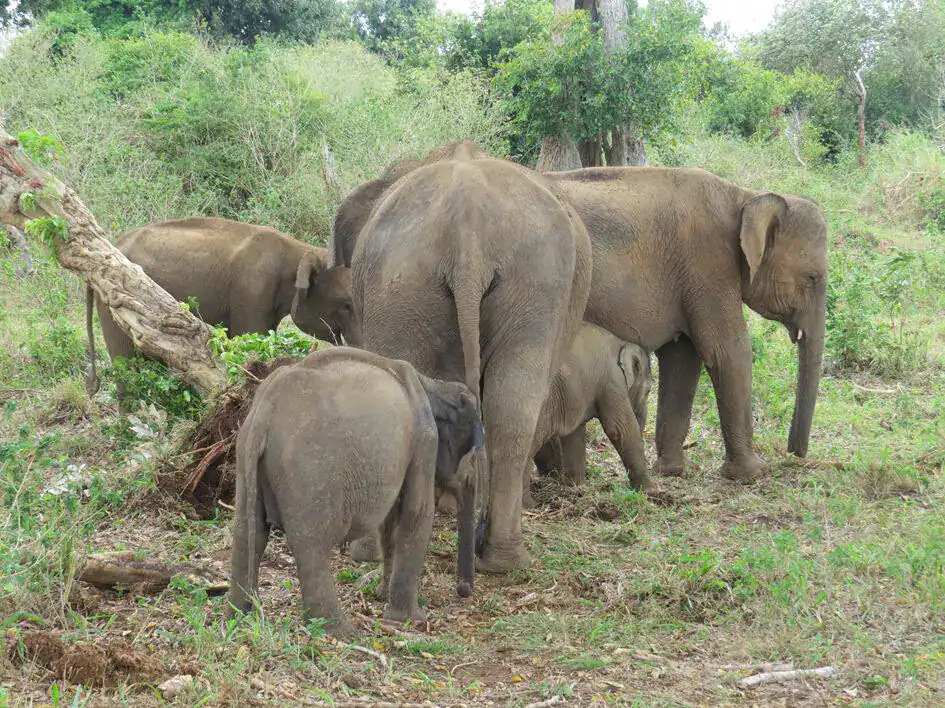
A Small Herd of Elephants – Udawalawe National Park (Photo: Nalaka Priyantha)
5-Day Cultural and Wildlife Trip
This plan combines elephants with cultural sites.
Day 1
Travel to Sigiriya or Dambulla.
Day 2
Visit Sigiriya Rock Fortress and take an evening safari in Minneriya or Kaudulla National Park.
Day 3
Explore nearby cultural sites such as Polonnaruwa.
Day 4
Travel to Kandy or continue towards the hill country.
Day 5
Return to Colombo or move towards your next destination.
This route combines wildlife with Sri Lanka’s cultural heritage.
7-Day Complete Elephant Experience
This plan suits travellers who want variety.
Day 1
Arrive in Colombo and travel to Sigiriya.
Day 2
Safari in Minneriya or Kaudulla.
Day 3
Visit cultural sites in the region.
Day 4
Travel to Ella through the hill country.
Day 5
Travel to Udawalawe.
Day 6
Morning safari in Udawalawe and visit the Elephant Transit Home.
Day 7
Return to Colombo or continue to the Southern Coast.
This itinerary offers different safari environments and a higher chance of varied sightings.
Read about the best Sri Lanka itineraries which match your travel season.
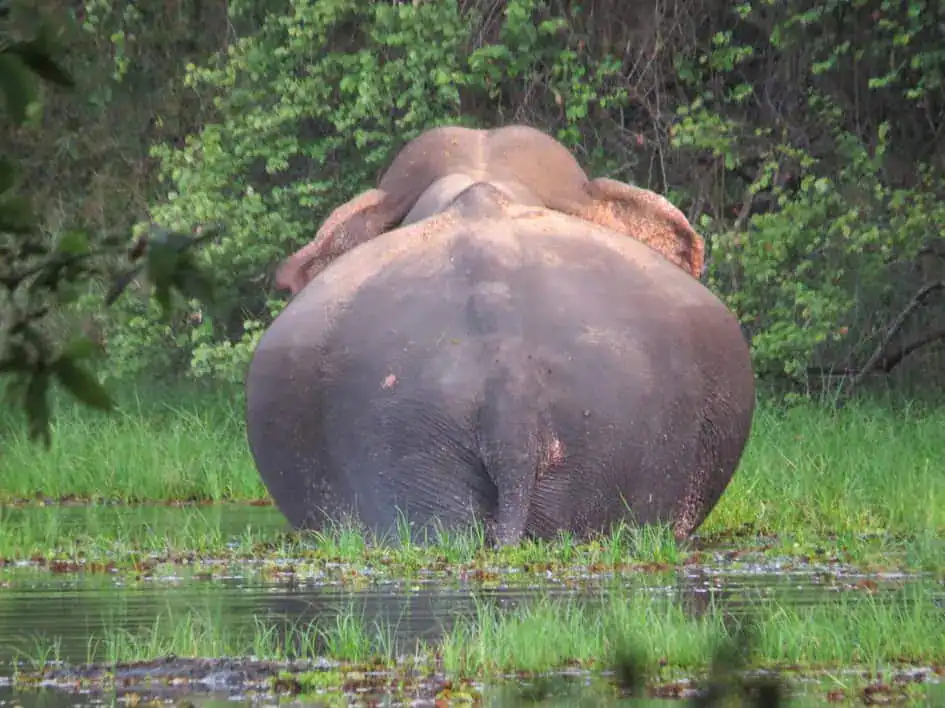
Having a delicious meal – Wilpattu National Park (Photo: Nalaka Priyantha)
Common Mistakes Travellers Make
Many travellers reduce their experience due to simple mistakes. You can avoid these with basic awareness.
One common mistake is choosing the wrong park at the wrong time. For example, visiting Minneriya outside the dry season reduces your chances of seeing large herds.
Another mistake is booking the cheapest safari without checking the quality. Poor vehicles and inexperienced drivers affect your experience.
Some travellers expect close encounters with elephants. It leads to disappointment or unsafe situations. Wildlife should be observed from a distance.
Starting safaris too late in the day is another issue. Elephants are more active in the early morning and late afternoon.
Ignoring weather conditions also creates problems. Rain reduces visibility and makes park access difficult.
You improve your experience by planning with these factors in mind.
Photography Tips for Elephant Safaris
You do not need advanced equipment to take good photos. A few simple steps improve your results.
Use natural light to your advantage. Early morning and late afternoon offer softer light and better colours.
Keep your camera ready. Elephants move slowly but unpredictably. You should be prepared at all times.
Focus on behaviour rather than just close shots. Images of elephants interacting, feeding, or moving in herds tell a stronger story.
Avoid using flash. It disturbs animals and reduces image quality.
If you use a phone, hold it steady and take multiple shots. It increases your chances of capturing a clear image.
Respect distance while taking photos. Do not ask your driver to approach animals too closely.
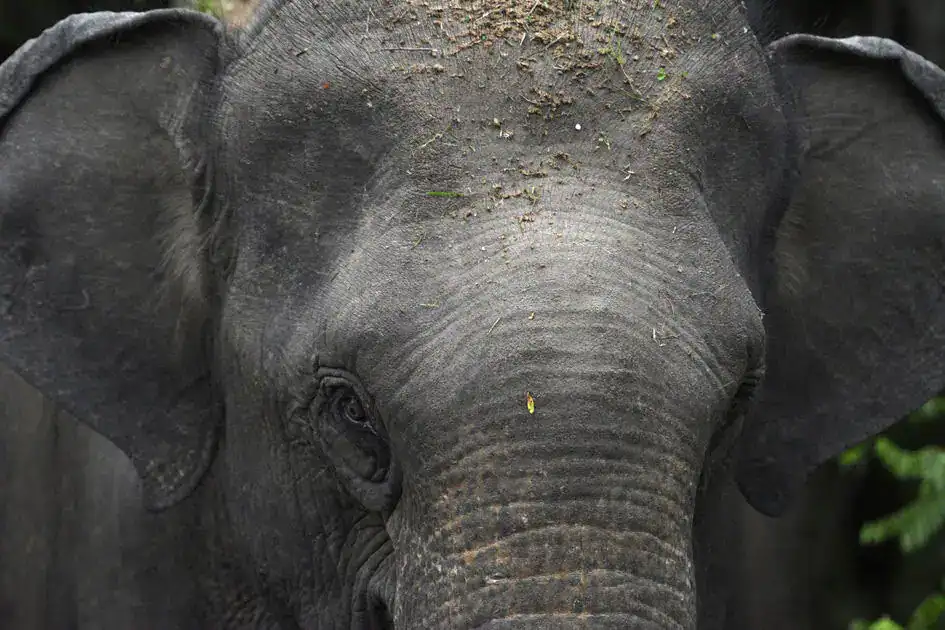
Eye contact – Yala National Park (Photo: Nalaka Priyantha)
Human and Elephant Conflict: What Travellers Should Know
Elephants in Sri Lanka face ongoing challenges. Human-elephant conflict is one of the most serious issues.
As agriculture expands, natural habitats shrink. Elephants move into farmland in search of food. It leads to conflict with local communities.
Each year, both humans and elephants are affected by these encounters. The Department of Wildlife Conservation works on solutions such as protected corridors and electric fences.
Your travel choices influence this situation.
When you support ethical tourism, you help reduce pressure on wildlife habitats. Choosing national parks and regulated safaris supports conservation efforts.
Avoid feeding elephants near roads or villages. It encourages unnatural behaviour and increases the risk of conflict.
Understanding this issue adds depth to your experience. You see elephants as part of a larger system that includes people, land, and conservation efforts.
What Makes Elephants in Sri Lanka Unique
Elephants in Sri Lanka differ from those in other regions.
They belong to the Asian elephant species. Sri Lankan elephants are a distinct subspecies with specific physical features. Many males lack large tusks, which makes them different from African elephants.
You see them in a wide range of environments. They adapt to dry zones, forests, and grasslands.
Their presence near ancient reservoirs reflects a long history of coexistence between humans and wildlife. Many of these water systems date back centuries.
This connection between nature and history adds meaning to your safari experience.
If you are new to Sri Lanka, we recommend reading our complete Sri Lanka travel guide for first-time travellers.
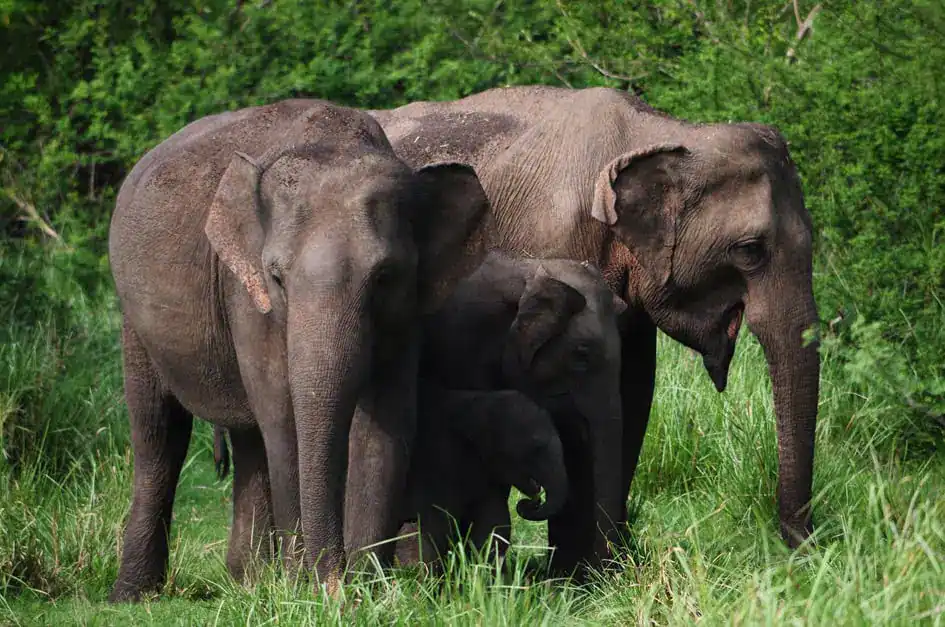
The Protection – An Elephant Family in Minneriya National Park (Photo: Ruchira Sanjeewa, CC BY-SA 4.0)
Final Thoughts on Elephants in Sri Lanka
Elephants in Sri Lanka offer one of the most meaningful wildlife experiences in Asia. You see them in natural settings, moving freely across landscapes shaped by both nature and history.
You now understand where to go, when to visit, and how to plan your safari. You know how to choose ethical experiences and avoid common mistakes. You also understand the importance of responsible travel.
Your choices shape your experience and support conservation efforts. When you travel with awareness, you protect both wildlife and local communities.
The next step is simple. Plan your route, choose the right park, and experience elephants in Sri Lanka in a way that respects their world.
Map – Best Places to Spot Elephants in Sri Lanka
Sources and References:
- Sri Lanka Tourism Development Authority (SLTDA), Official tourism statistics, visitor trends, and national strategies related to wildlife tourism and safaris in Sri Lanka.
- Sri Lanka Tourism, Verified information on national parks, safari experiences, and key wildlife destinations such as Yala, Udawalawe, and Minneriya.
- Department of Wildlife Conservation, Sri Lanka, Official data on elephant populations, national park regulations, conservation efforts, and human-elephant conflict in Sri Lanka.
- Central Bank of Sri Lanka, Data on tourism growth and its economic impact, including wildlife tourism trends.
- Department of Wildlife Conservation, Sri Lanka, Information on elephant rehabilitation, release programs, and ethical conservation practices.
- Pinnawala Elephant Orphanage, Official information about the orphanage, its operations, and visitor guidelines.
- UNESCO World Heritage Centre, Information on protected sites such as Sinharaja Forest Reserve and Central Highlands, which are key elephant habitats.
- IUCN Red List of Threatened Species, Conservation status and global data on Asian elephants.
- World Wildlife Fund (WWF) – Asian Elephant Conservation, Insights into elephant conservation challenges, including habitat loss and human-elephant conflict.
Featured image: Elephant Gathering – Minneriya National Park (Photo: Walter Gehr, CC BY-SA 4.0)

I am a Sri Lankan medical doctor who spends my free time travelling, exploring new destinations, and documenting the beauty of the island I call home. I have journeyed across almost every corner of Sri Lanka with my wife and daughter — from wildlife parks and misty mountains to ancient cities, deep forests, rugged landscapes, and quiet beaches.
Travel is not just a hobby for me — it’s a way of life. I love nature, enjoy road trips, and find joy in wildlife photography. I also read widely about tourism, travel trends, and destination culture. Through my writing, I aim to help travellers experience Sri Lanka through real stories, meaningful insights, and honest recommendations — the same way I explore it with my own family.