
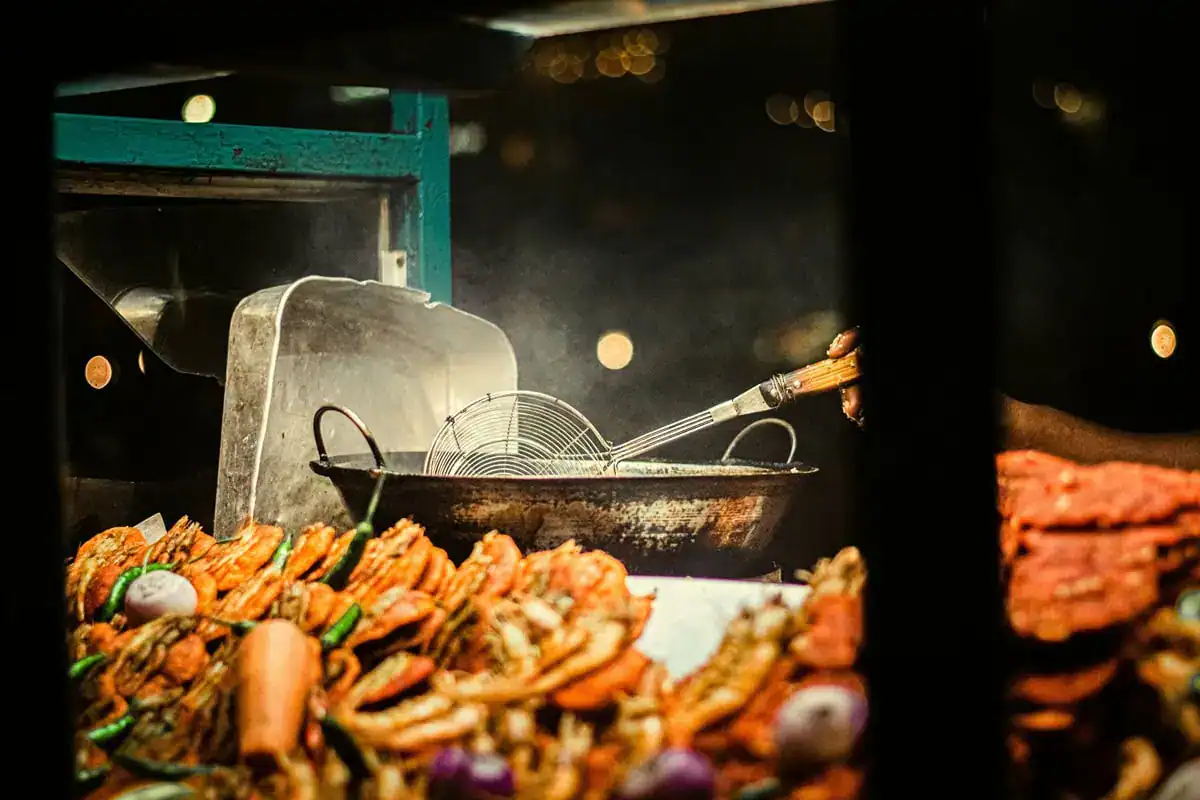

There is no better way to feel the pulse of Sri Lanka than by tasting Sri Lankan street food where it actually lives: outside in the real world, surrounded by crowds, noise, sea air, spices, vendors calling out to customers, and the warm glow of evening. You can dine in restaurants if you want quiet comfort, air conditioning, and neat tables. Yet restaurants do not show the everyday life of the island. You do not see the rhythm of the city from inside a dining room. The authentic flavour of Sri Lanka reveals itself on the pavement.
It appears in the smoke rising from hot pans, in the scent of fried chilli, in the fast hands of vendors who have cooked the same recipes for years, and in the laughter of people as they eat while standing. That is where you meet the soul of the island.
Street food in Sri Lanka is more than just a meal; it’s an experience. It’s a moment of connection, a shared ritual, and a small celebration of daily life. It’s where strangers become friends over a shared love for food, and where the social fabric of the island is woven.
Why Sri Lankan Street Food Matters
Sri Lanka is a country built on movement, spice, trade, coastal exchange, and centuries of cultural layering. For most of its history, food had to be portable. Farmers ate in the field. Traders ate near the docks. Pilgrims ate near temples. Today, office workers eat at stalls between meetings. Students stop for short eats on the way home. Families gather at popular food strips in the evening for a treat. Most locals do not plan every meal hours in advance. They see a stall, smell something delicious, and decide to eat right there. It makes dining in Sri Lanka a natural part of the daily routine.
Sri Lankan food is a vibrant tapestry woven from the influences of Sinhalese, Tamil, Muslim, Malay, Arab, Portuguese, Dutch, and British traditions. This rich cultural heritage is what makes the country’s food culture so colourful, layered, and bold in taste.
You do not have to know the history to enjoy the food. Yet once you see this background, you understand why the flavours feel so multi-dimensional.
The Five Core Dishes You Must Try (Food + Emotion + Identity)
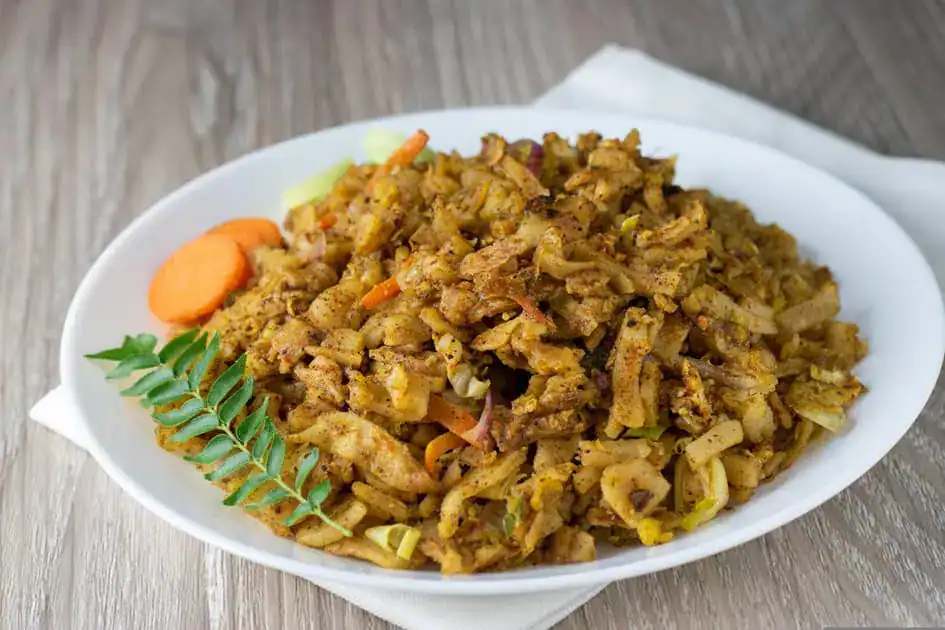
Kottu Roti – One of the Sri Lankan Street Foods (Photo: Kavinda F)
Kottu Roti: The Rhythm of the Streets
Kottu roti is one of the most iconic dishes in Sri Lankan cuisine. It uses chopped godamba roti, a type of flatbread. The cook chops the roti with two metal blades. The chopping sound is loud and rhythmic. It is impossible to ignore. You can hear kottu stands before you even see them. The sound cuts through the street like a pulse. That sound is a symbol of evening life.
Kottu has many variations. Chicken kottu is common. Cheese kottu is popular with younger crowds. Egg kottu is a great mid-budget choice. Vegetable kottu is ideal for vegetarians and those seeking a lighter meal option. From there, they toss the chopped roti together with eggs, cheese, meat, vegetables—or even a bit of everything. Then they add curry gravy. The result is rich, filling, and full of flavour. If you want to feel that you have stepped into the inner world of street food in Sri Lanka, kottu should be one of your first dinners.
Hoppers: Crisp, Delicate, and Beautiful
Hoppers, also known as appa, are one of the most elegant aspects of Sri Lankan street food culture. They are bowl-shaped rice flour pancakes with crisp edges and soft centres. Plain hoppers taste subtle and light. Egg hoppers feel richer. The egg sits in the centre and cooks until the white is firm and the yolk remains glossy. You tear a piece from the centre. You dip it into lunu miris, which is a spicy onion and chilli paste. You take a bite. The mix of soft, crisp, tangy, and mild creates a very balanced flavour.
Hoppers are available in the morning and again in the evening. At night, hopper makers line up small pans on open flame stoves. They swirl batter into each pan in circular motions. It almost feels like a dance. The flames glow in the darkness. The air smells like coconut and sour fermentation. This is dining in Sri Lanka, a theatrical experience.
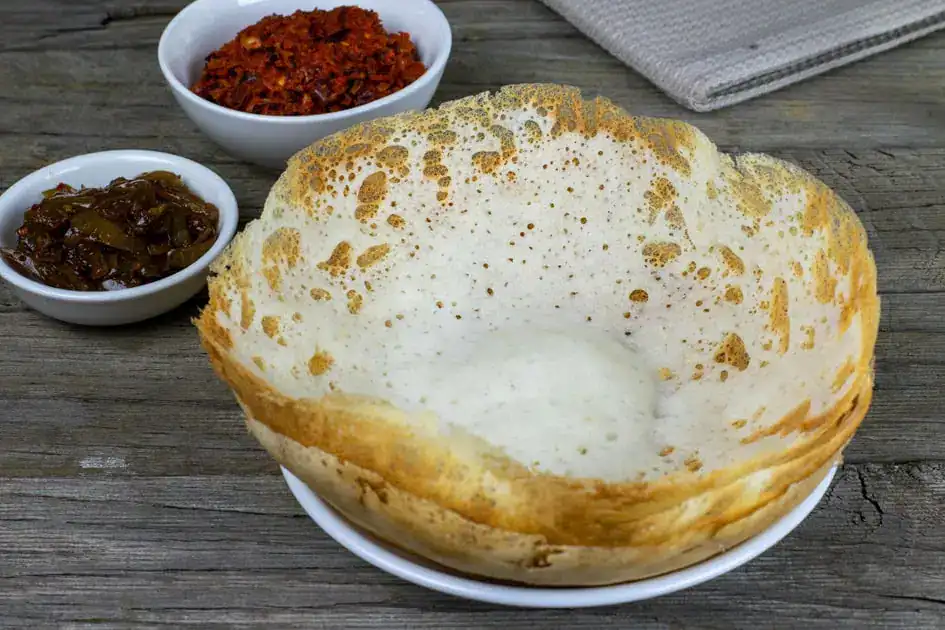
Hoppers (Photo: Kavinda F)
Isso Vadai: Crunchy and Bold at Sunset
Isso vadai is one of the most memorable bites you can have near the sea. It is a lentil fritter topped with prawns. The fritter is crispy. The prawns add brine and chew. The vendor gives you lime and maybe some onion on the side. You stand by the ocean at Galle Face Green in Colombo. You watch the sun drop into the horizon. You bite into the fritter. The wind blows in from the sea. You taste spice, salt, chilli, and crunch all at once.
If one food could represent a perfect moment in Colombo, Isso Vadai might be the winner.
Short Eats: The Nation’s Snack Currency
Short eats are bite-sized savoury snacks. They include fish buns, samosas, cutlets, and stuffed pastries. They are sold everywhere. They are cheap. They travel well. They are part of everyday life. Short eats tell a story about movement. People grab them on buses. They buy them between trains. They pack them for school. They share them with friends. Short eats reveal how street food in Sri Lanka fits into everyday life.
Sweets and Drinks That Complete the Experience
Street food in Sri Lanka offers simple yet meaningful desserts and drinks. King coconut juice is refreshing. Vendors cut the bright orange shell open right in front of you. Wood apple juice tastes sour, deep, and almost caramel-like. Buffalo curd with kithul treacle is thick, creamy, and sweet. The treacle adds a smoky flavour. It is one of the best natural sweet treats in the country. Kola Kanda stands as one of the most recognisable traditional drinks in Sri Lankan cuisine.
How to Order Like a Local (Travel Practicality + Confidence)
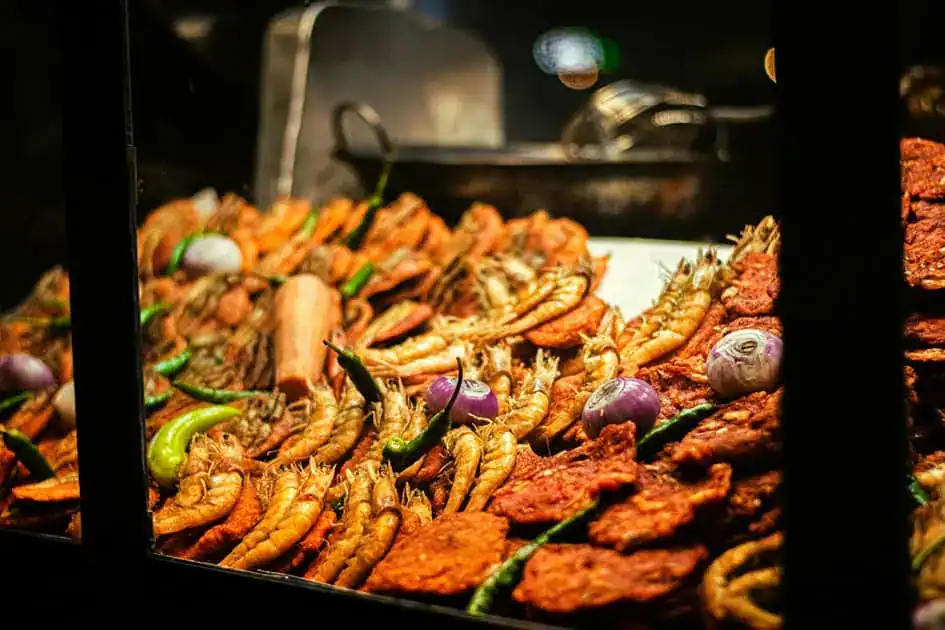
Isso Vadai (Photo: Sandaru Muthuwadige)
Ordering street food can be intimidating if you’re unsure of what to expect. Yet the social rules are friendly. Vendors usually speak enough English to take basic orders. If you’re uncertain about what to choose, point to what looks good. Most vendors are happy to explain what each item is. They appreciate curious eaters.
Food costs vary by area. Kottu is more expensive than short eats. Isso Vadai by the beach has emotional value, so you might be willing to pay a little more. Street food is still highly affordable compared to restaurant dining. It is polite to pay with small notes. Vendors often do not carry significant change.
If you want to request a milder spice, you can say “mild”. If you want something vegetarian, say “veg only”. If you wish to buy hoppers, you can say “one plain hopper” or “one egg hopper”. If you feel nervous, listen to the customers ahead of you. You will hear how locals order in simple and brief phrases.
Where to Go for the Full Street Food Atmosphere
In Colombo, Galle Face Green turns into a lively food zone each evening, packed with stalls and street snacks. It is next to the ocean. The view is open. The air is salty. The walk feels wide. People gather in waves. It is where families stroll in the evening and where office workers unwind after a long day at work. You can sit on the grass, watch the sunset, and taste isso vadai while the sky changes colour. This is not only dining in Sri Lanka. It is a travel moment you want to remember.
Pettah and Aluth Kade are lively at night. You hear kottu stands in action. You smell tea, chilli, and garlic. These areas show raw street energy. You stand among people who are finishing their day, not starting their holiday. It feels honest, direct, and real.
In Kandy, street food stalls near the lake and market area have a calmer, more relaxed atmosphere. It is a good place to eat hoppers in the evening. It is also a pleasant place to drink king coconut juice while walking.
Along the South Coast, especially around surfing towns, you will find late-night kottu and hopper stands near the beach. The relaxed coastal vibe adds a layer of peace. Eating a hopper near the sound of waves is a quiet pleasure.
Smart Eating Habits for Street Food Lovers
Safety is simple if you follow clear logic. Choose stalls with a steady line of customers. Food that sells fast does not sit around long. Heat protects you, so fresh food is best. If something looks like it has been sitting out too long, skip it. Watch how the vendor handles ingredients. Clean handling is easy to spot. Busy hands moving with confidence are a good sign. Do not fear spice. Just ask for “mild” if you need it. Carry tissues because most food is eaten with hands. Carry small notes because you may need exact change.
Follow these steps, and you can explore street food with confidence and ease. You can relax. You can enjoy. You can allow the flavour to take centre stage and trust the process.
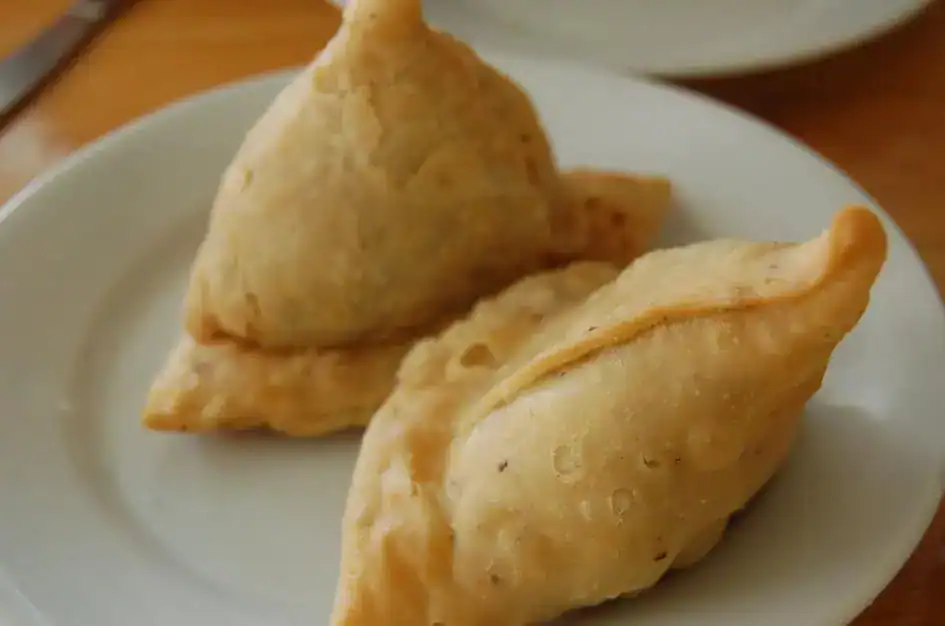
Samosa (Photo: snowpea&bokchoi, CC BY 2.0)
A Full 24-Hour Street Food Plan to Save and Use
You can follow this one-day plan almost anywhere in Sri Lanka.
Start with egg hoppers, dhal, and lunu miris for breakfast. Drink sweet milk tea. In the late morning, buy short eats at a bakery counter. Eat a fish bun and a samosa. For lunch, find a local canteen and order rice and curry. After that, walk, explore, take photos, and watch the street life around you. When the afternoon heat drops, head to Galle Face Green. Try isso vadai as the sun goes down. When night falls, finish with kottu. Listen to the blades hit the iron. Watch the steam rise. Eat your final plate. End your night with king coconut juice to cool down.
This plan allows you to experience the diverse range of street food in Sri Lanka. It shows you how different dishes appear at different times. It connects food with place and time. It makes your day feel like it belongs here.
Begin with One Bite
Sri Lankan street food is not just a list of dishes. It is a doorway into culture, connection, identity, memory, and everyday life. It is a window into how people move, talk, gather, and relax. You feel the country more deeply when you eat outside. You understand the culture better when you taste it in motion.
If you want to taste Sri Lankan cuisine the way locals do, step out of restaurants and step onto the street. Follow the scent of spice. Follow the sound of metal blades hitting a griddle. Follow the people who buy food from their favourite stall. Your travel story begins when your taste and curiosity meet the street.
Which dish will you choose first?
Featured Image: Sri Lankan Street Food in Colombo (Photo: Sandaru Muthuwadige via Unsplash)

I am a Sri Lankan medical doctor who spends my free time travelling, exploring new destinations, and documenting the beauty of the island I call home. I have journeyed across almost every corner of Sri Lanka with my wife and daughter — from wildlife parks and misty mountains to ancient cities, deep forests, rugged landscapes, and quiet beaches.
Travel is not just a hobby for me — it’s a way of life. I love nature, enjoy road trips, and find joy in wildlife photography. I also read widely about tourism, travel trends, and destination culture. Through my writing, I aim to help travellers experience Sri Lanka through real stories, meaningful insights, and honest recommendations — the same way I explore it with my own family.