
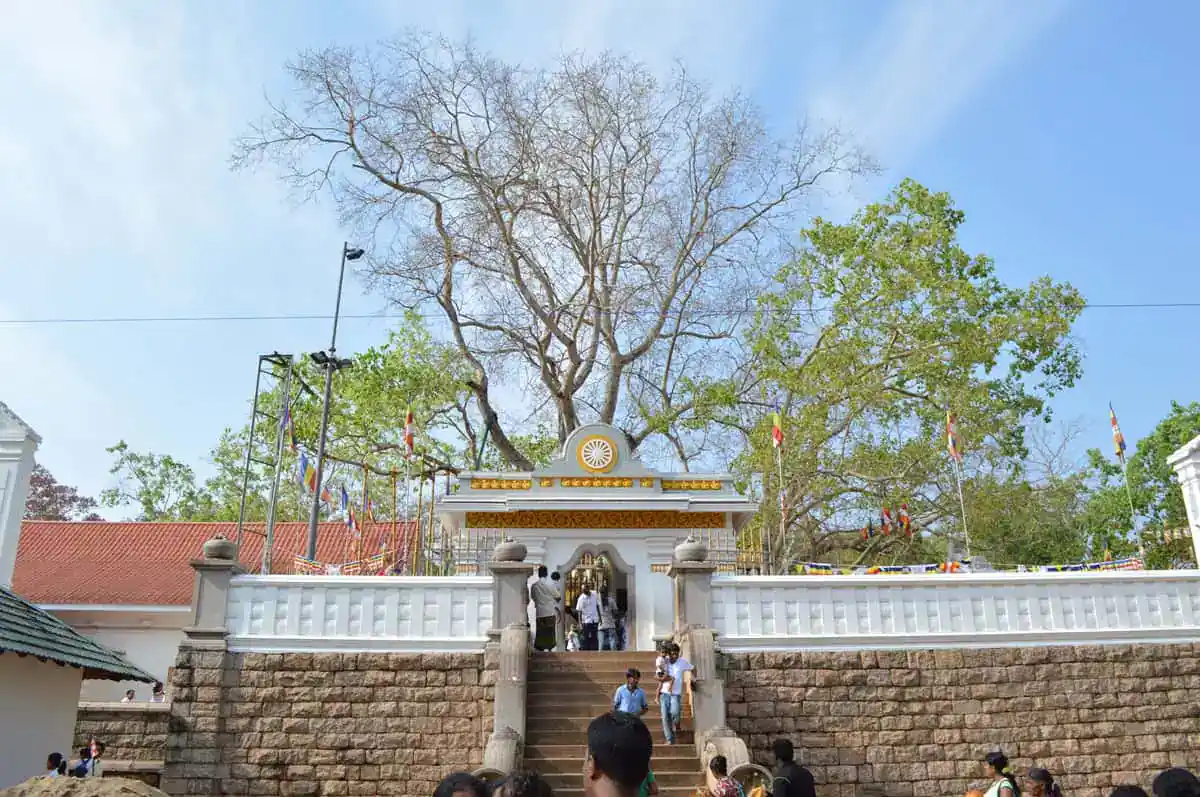

What is Anuradhapura?
Anuradhapura is one of the oldest and most important cities of Sri Lanka. It lies in the north-central plain of the island, about 205 km north of Colombo. For 1,393 years, it served as the island’s first royal capital and the centre of Sinhalese civilisation. More than a city, it is the cradle of Buddhist culture on the island, the birthplace of advanced hydraulic engineering, and now a UNESCO World Heritage Site bearing traces of a civilisation that flourished over two millennia.
Walking through Anuradhapura feels like walking through history. Ancient stupas, monasteries, palaces, reservoirs, and sacred trees rise around you. The city offers an unmatched link between deep antiquity and living religious tradition.
If you want to explore Sri Lanka’s history and cultural heritage, it is advisable to read the guide “Religious Landmarks and Temples in Sri Lanka“.
Why Anuradhapura is Special
Anuradhapura holds a unique place in the history of Sri Lanka. It remained the island’s political and spiritual centre for over a millennium. The city is home to some of the oldest and largest Buddhist monuments on the island.
It also showcases early mastery of civil engineering. The ancient inhabitants built an extensive network of reservoirs (tanks), spillways, canals, and irrigation systems that supported agriculture and settlement over centuries.
Finally, the city remains a sacred pilgrimage centre. The presence of holy relics, sacred trees, stupas, ancient monasteries, and living traditions offers a spiritual dimension many travellers cannot find elsewhere.
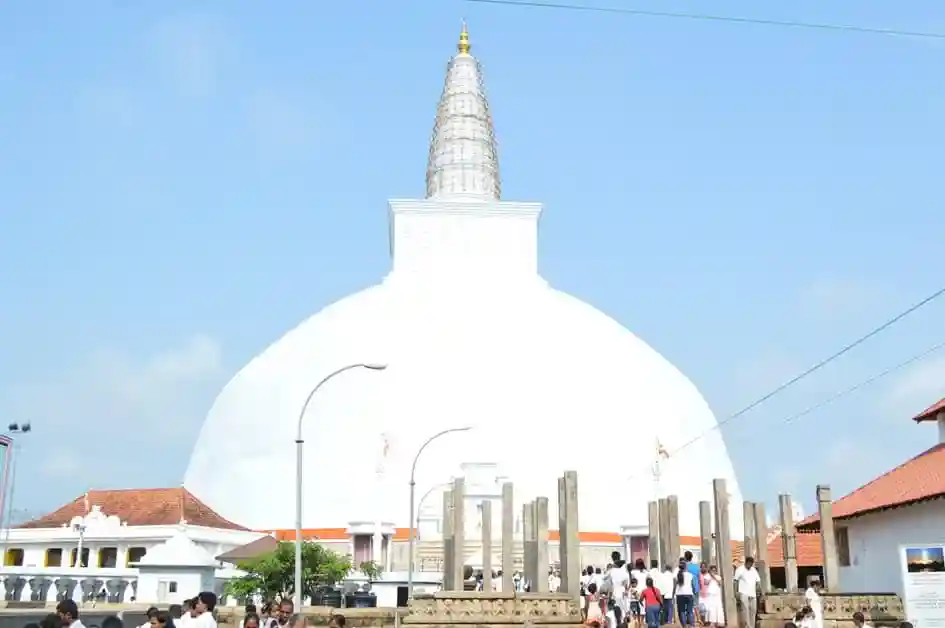
Ruwanweliseya – Anuradhapura (Photo: Nalaka Priyantha)
Recognition and Tourism Appeal
The historical core of Anuradhapura is designated as the Sacred City of Anuradhapura, a UNESCO World Heritage Site that highlights its global cultural significance.
As part of the island’s “Cultural Triangle,” Anuradhapura draws heritage travellers, pilgrims, and culture-seekers from around the world. Many travel itineraries link Anuradhapura with other historical sites, offering multi-day tours that trace the ancient capitals and Buddhist heritage of Sri Lanka.
Travel guides and tour operators emphasise its colossal stupas, serene monasteries, ancient tanks, sacred trees, and rich history as major draws.
For many foreign travellers, Anuradhapura is the go-to destination to understand the ancient roots of Sri Lankan culture and Buddhism outside India.
Historic Roots, Ancient Architecture, and Hydraulic Legacy
Anuradhapura’s rise began around the 4th century BC, when it became the established capital of the Sinhalese kingdom. Over centuries, successive kings built stupas, monasteries, palaces, and expansive hydraulic works.
The city became a centre of Theravada Buddhism after Buddhism was introduced to Sri Lanka. The arrival of Buddhism transformed not only religion but also architecture, art, and urban planning. The ancient monasteries and stupas stand as evidence of these changes.
The hydraulic network is another remarkable legacy. The ancient tanks (reservoirs) and canals allowed agriculture to flourish even in the dry zone. This water management system supported large populations, monasteries, and towns.
When successive invasions and decline led to the capital’s shift (especially after the 11th century), many monuments fell into neglect. Over time, the jungle reclaimed large parts. Later rediscovery and restoration efforts revived the site and made it accessible to modern visitors.
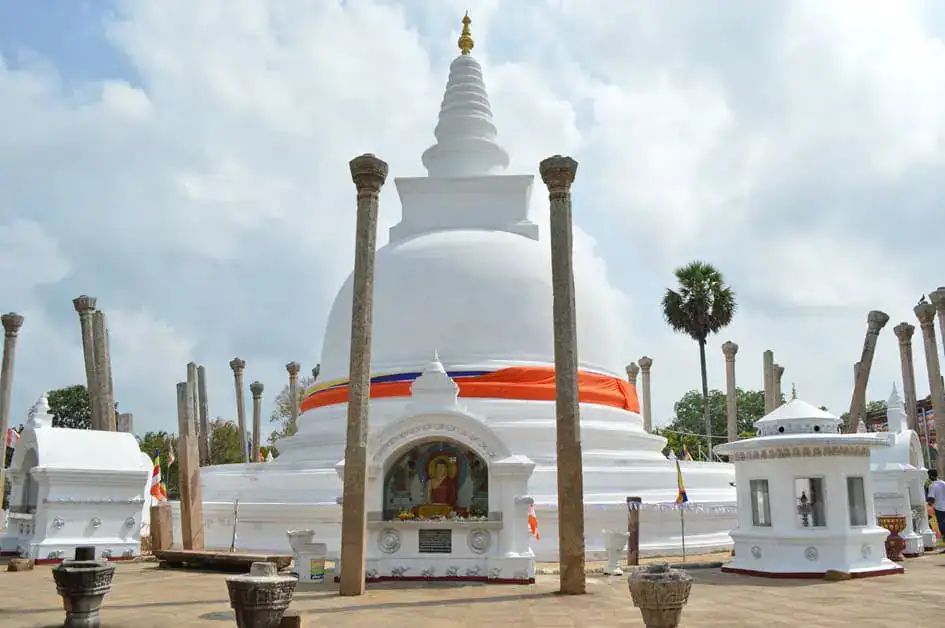
Thuparamaya (Photo: Nalaka Priyantha)
Best Time to Visit and Why
Anuradhapura lies in Sri Lanka’s dry zone. The climate is generally hot and dry. Early morning or late afternoon offer cooler, more comfortable light for exploring stupas, monuments, and reservoirs. Sunrise or sunset around the big stupas or lakes adds a magical feel for photography and reflection.
Anuradhapura is open all year. From December to April is cooler, while May to September is drier but hotter.
If your interest lies in religious festivals, consider timing your trip around full-moon Poya days. On such days, devotees gather at stupas and sacred trees to offer prayers and incense. Pilgrimage sites such as the sacred tree in the city and shrines in nearby hills (like Mihintale) become lively with ceremonies.
The “shoulder” seasons (avoiding peak heat and monsoon) often offer the best balance of manageable weather and fewer crowds.
If you combine your visit to Anuradhapura with other destinations in Sri Lanka, read up on the Weather in Sri Lanka guide and the best time to visit.
Current Weather and Weather Forecast in Anuradhapura
Whom Is Anuradhapura Best For
Anuradhapura suits travellers who appreciate history, architecture, Buddhism or spiritual journeys.
It fits those who enjoy archaeological ruins, ancient engineering, and places where cultural heritage remains alive.
It also suits pilgrims, meditative travellers and anyone interested in Buddhist tradition and rituals.
Travellers on a budget, backpackers, mid-range travellers, and heritage-tour visitors alike will find value.
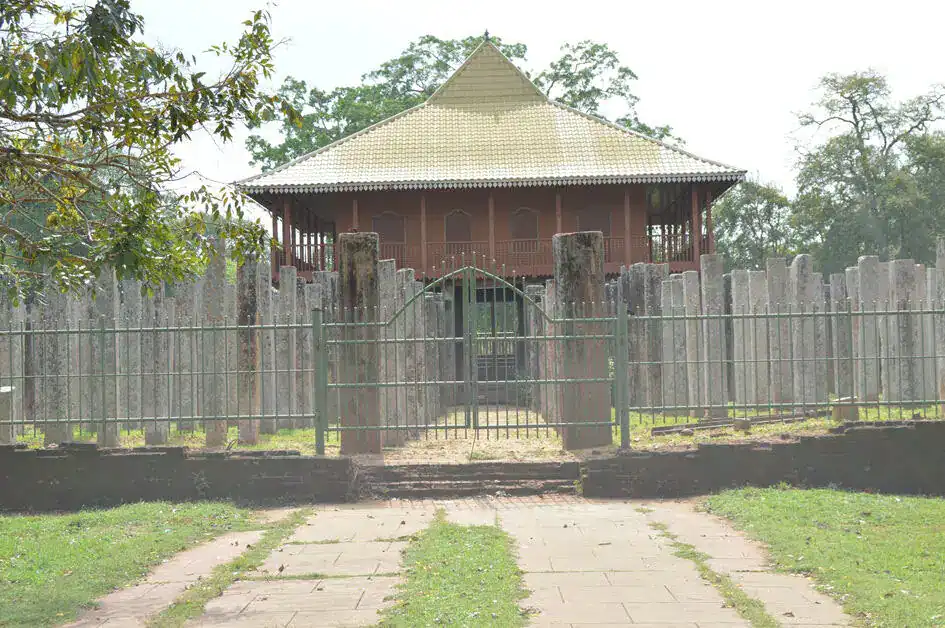
Lovamahapaya (Photo: Nalaka Priyantha)
Anuradhapura for Every Budget
You can enjoy Anuradhapura on a modest budget or with comfort.
Budget travellers may stay in guesthouses or simple lodgings, eat local food, and explore with a bicycle or regional transport.
Mid-range travellers may choose modest hotels or guesthouses with basic amenities, guided tours, and use tuk-tuks or local drivers.
To travel more comfortably, you may hire a private driver or guide, stay in a mid-range hotel, and visit many nearby sites.
Layout and Conditions
The ancient city covers many square kilometres. UNESCO-protected zones with stupas, monasteries, tanks, sacred trees, and ruins spread across a broad area.
Many sites are outdoors. The weather can be hot. Bring water, wear a hat, use sunscreen, and wear comfortable clothes.
Some monuments are modest ruins. Others remain large stupas or intact statues. Some original roofing, pillars or brickwork remain; other sites show only foundations, ponds or carved stone features.
Temples and stupas remain active places of worship. Respectful clothing and behaviour are necessary, especially around sacred Bodhi trees, temples, and during ceremonies.
Location and How to Get There
Anuradhapura lies about 205 km north of Colombo, in the North Central Province of Sri Lanka.
You can reach it by train from Colombo or by long-distance bus. Long-distance buses and trains connect most major cities with Anuradhapura. From there, local transport (tuk-tuk, bicycle, hired driver) helps you reach the many monuments.
Nearby destinations such as hills, monasteries, and forest sites lie within 10–30 km and are easily accessible via tuk-tuk or hired car/bike, encouraging extended exploration.
It is advisable to research and familiarise yourself with the transportation options in Sri Lanka if you plan to visit Anuradhapura.
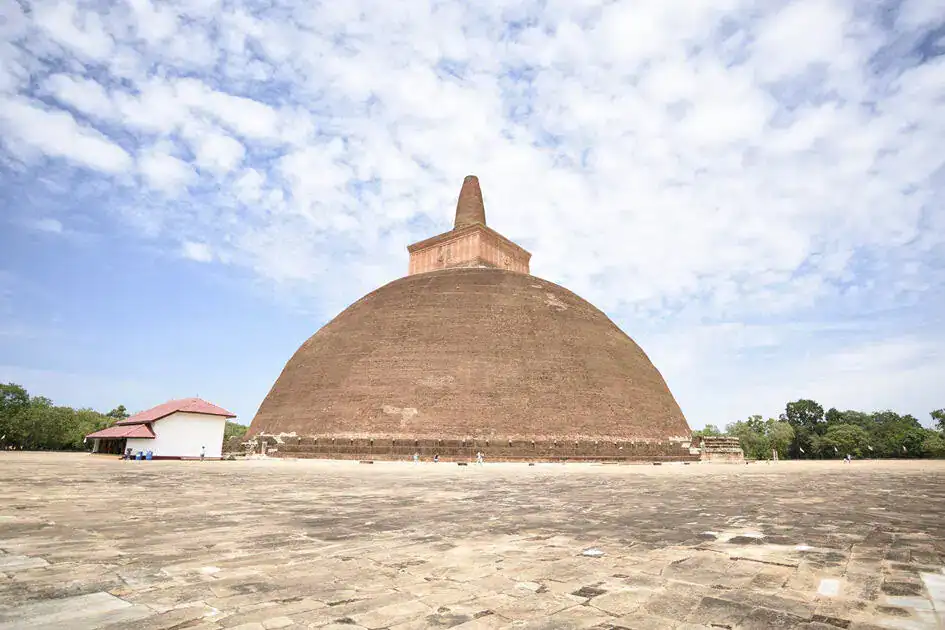
Abhayagiri Dagaba (Photo: Nalaka Priyantha)
Transport, Getting Around, and Parking
To explore the ancient city core, a bicycle is a good option. The terrain is primarily flat, and many monuments lie within a day’s ride of each other. This suits travellers who like to move slowly, linger, and stop often.
Tuk-tuks are common for short trips between monuments. For more remote sites (forest monasteries, hills, distant stupas, surrounding villages), hiring a driver or car may save time.
If you bring your own vehicle, watch for parking near the main stupas. Some sacred sites may restrict vehicle access near entrances.
Popular Attractions and Experiences
Here are the prominent landmarks, heritage sites, and experiences that make up a full-depth visit to Anuradhapura. Each is historically significant or offers unique cultural or aesthetic value.
Jaya Sri Maha Bodhi
This sacred Bo tree grew from a cutting of the original Bodhi tree under which Buddha attained enlightenment. It stands on a raised terrace surrounded by protective terraces and lower-level bo trees. Pilgrims come throughout the year to offer worship, flowers, incense, and prayers.
Ruwanweliseya
It is one of the grandest stupas in Sri Lanka. Built by King Dutugemunu in the 2nd century BC, it remains a major centre of worship. The stupa houses relics of Buddha and draws pilgrims, especially on full-moon days.
Thuparamaya
Recognised as the first Buddhist stupa built on the island. It marks the early establishment of Buddhism in Sri Lanka.
Sangamiththa Stupa
Part of the ancient sacred sites connected with the spread of Buddhism in Sri Lanka, representing early devotion and monastic architecture.
Lovamahapaya (Brazen Palace/Loha Prasada)
Once a multi-storey monastery or palace with a copper-roofed superstructure, now a forest of stone columns. It shows the scale and ambition of ancient builders.
Abhayagiri Dagaba and Monastery Complex
A vast monastic site. For centuries, it served thousands of monks. Its ruins, stupas, ponds, and foundations offer insight into ancient communal monastic life.
Abhayagiri Museum
Among the monuments that help you understand the ancient city’s history, culture, and art. The museum collects artefacts and contextual information about the ruins.
Pancavasa/Biso Maligaya and the Moonstone (Sandakadapahana)
Ancient carved stone features such as moonstones and guardstones (muragala) showcase the artistry, symbolism, and architectural aesthetics of early Sri Lanka.
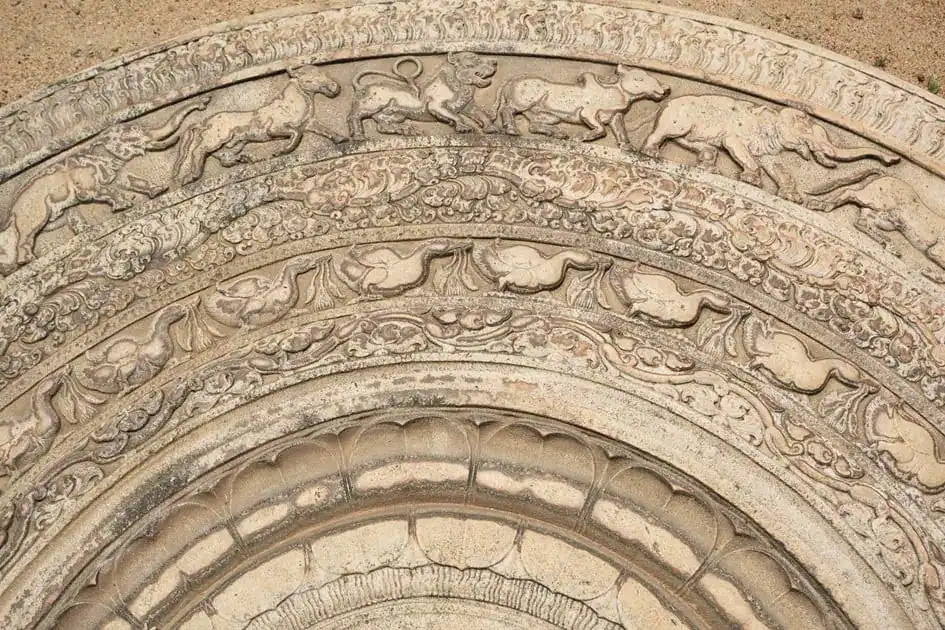
A Moonstone in Anuradhapura (Photo: Nalaka Priyantha)
Ratnaprasada and other royal buildings, guardstones (Muragala)
These show the secular and royal dimension beyond religious monuments. The presence of palaces, administrative buildings, and royal residences remind you that Anuradhapura was once a living capital. The guardstones and moonstones at Ratnaprasada show the refined artistic skill of the Anuradhapura period.
Eth Pokuna (Elephant Pond)
Part of the water infrastructure around monasteries and palaces. It reflects how ancient residents managed water supply, hygiene, ritual bathing, and daily needs.
Jetavanaramaya Stupa/Dagaba and Monastery
It is among the largest brick structures built in the ancient world. Its peak height reached 122 metres (400 feet), making it the tallest dagaba/stupa in the world and the third-tallest structure globally. The red-brick ruins remain striking at sunrise or sunset.
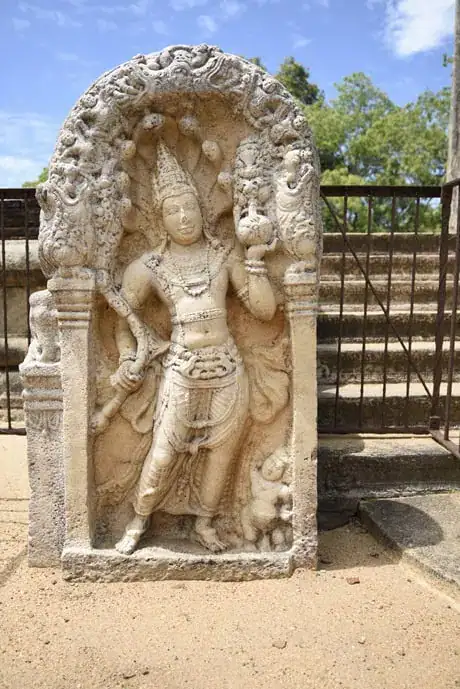
Guardstones in Anuradhapura (Photo: Nalaka Priyantha)
Jetavanaramaya Museum
A place to see findings, inscriptions, artefacts, and learn about the history of the stupa and monastery. Helps connect visitors to the human story behind the ruins.
Mirisavetiya Dagaba/Stupa
One of many stupas that show continued creativity, devotion, and expansion of the ancient city across centuries.
Lankarama Dagaba/Stupa
A smaller but important stupa among the many monuments; its presence adds layering to the heritage landscape.
Samadhi Buddha Statue
A finely carved Buddha statue in meditation posture is located in Mahamevnāwa Park. Its serene expression and preservation make it a highlight for visitors.
Vessagiriya (Cave Monastery Ruins)
Early monastic dwellings carved in rock, showing how monks lived. Such sites show the evolution from forest-dwelling ascetics to structured monastic systems.
Isurumuniya Rock Temple and Ranmasu Uyana (Royal Park)
A rock temple with beautiful carvings and a lakeside setting. The Royal Park nearby adds a more relaxed, scenic side to the city, beyond the stupas and monasteries.
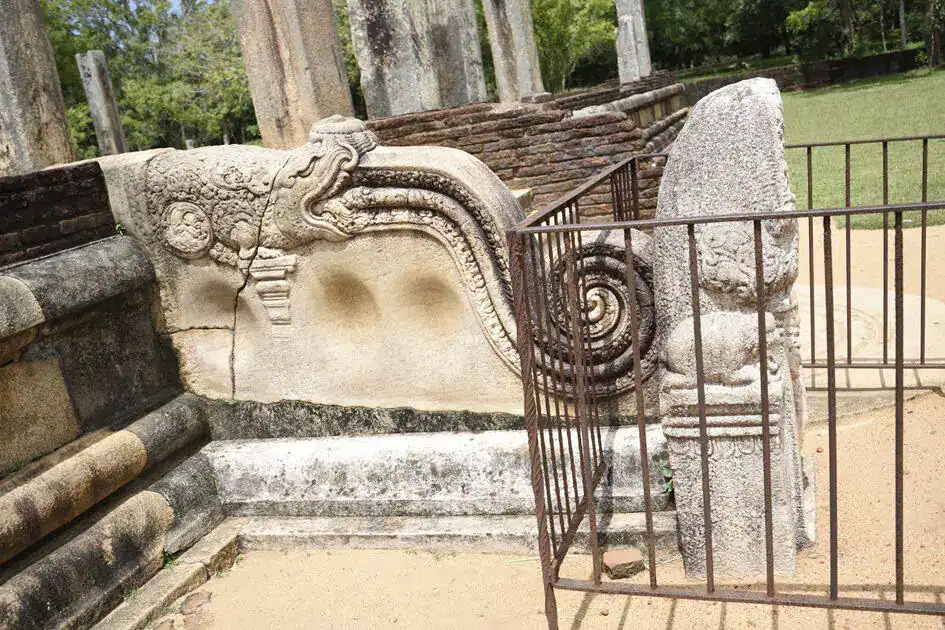
Korawakgala (wingstones) in Anuradhapura (Photo: Nalaka Priyantha)
Twin Ponds (Kuttam Pokuna)
Two ancient bathing tanks with carved stone steps and ponds. They show how ancient cities incorporated hygiene, design, and ritual bathing.
Vijayarama Aramic Complex
Another monastic complex, part of the network of sacred and communal spaces that made Anuradhapura a large monastic centre.
Nakha Vehera
Smaller monuments and stupas scattered across the ancient city; they add depth to the heritage site beyond the major stupas.
Stone Bridges & Causeways, Ancient Hospitals, Monastic Residencies
These remain as ruins or foundations. They reveal the full socio-economic complexity of ancient Anuradhapura beyond religion.
Anuradhapura Archaeological Museum
An essential stop for context: exhibits, artefacts, history, chronology, and insights into daily life in ancient times.
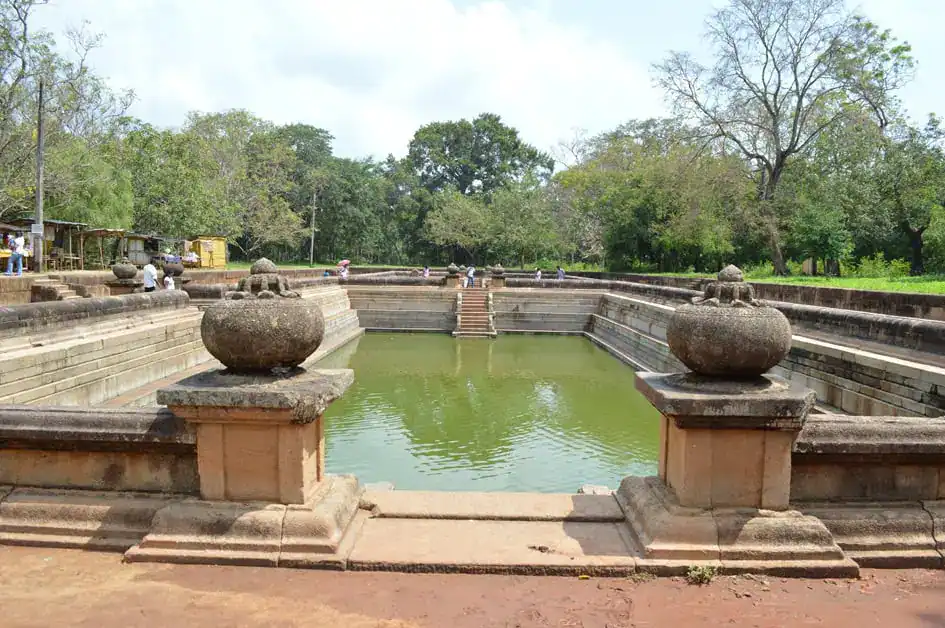
Kuttam Pokuna/Twin Ponds (Photo: Nalaka Priyantha)
Nearby Key Sites
- Mihintale – A short journey from Anuradhapura, this is where Buddhism arrived in Sri Lanka after the monk Mahinda met King Devanampiyatissa. For that reason, it is regarded as the birthplace of Buddhism on the island. The hilltop rock temple complex, stupas, and monastery ruins draw pilgrims and history lovers.
- Avukana Buddha Statue – A rock-carved standing Buddha over 12 metres (39 feet) high, near the Anuradhapura district. It exemplifies ancient Sri Lankan stonecraft and the Buddhist sculpture tradition.
- Ritigala Forest Monastery – This ancient monastic complex lies in forested hills between Anuradhapura and Kandy, and dates to the 1st century BC. The ruins, jungle setting, and remote tranquillity offer a different side to heritage tourism.
Activities, Events, and Experiences
Anuradhapura offers much more than sightseeing. You may immerse yourself in experiences that link the past to the present, culture to daily life.
You may explore the ancient city by bicycle. The flat terrain and widespread monuments make cycling the ideal way to see many sites in one or two days.
You may attend evening pilgrimage ceremonies at sacred sites like Jaya Sri Maha Bodhi or Ruwanweliseya. Many devotees gather to chant, offer flowers, and incense. These ceremonies provide deep insight into living traditions.
At monasteries or certain temples, you may join meditation sessions. The city’s spiritual atmosphere, sacred trees, quiet pools and ancient ruins support calm and reflection.
You may hike nearby hills or forested areas: the climb to Mihintale offers panoramic views and a sense of pilgrimage. Ritigala Forest Monastery provides a more secluded forest-temple hike and a chance to see jungle-reclaimed ruins.
Sunrise or sunset visits to stupas or lakes (ancient tanks), such as Tissa Wewa, Nuwara Wewa, Basawakkulama/Abhaya Wewa, Kala Wewa, and Nachchaduwa Wewa, yield beautiful light and atmosphere. You may enjoy lakeside views at old reservoirs or around stupas, ideal for photography or calm contemplation.
If you travel a bit farther, you may pair Anuradhapura with other key sites in Sri Lanka’s “Cultural Triangle,” such as ancient capitals, rock fortresses, cave temples, and other heritage sites.
You may also explore local village life, traditional crafts, and ancient irrigation heritage by visiting surrounding villages, simple temples, tanks, rice fields, and rural communities.
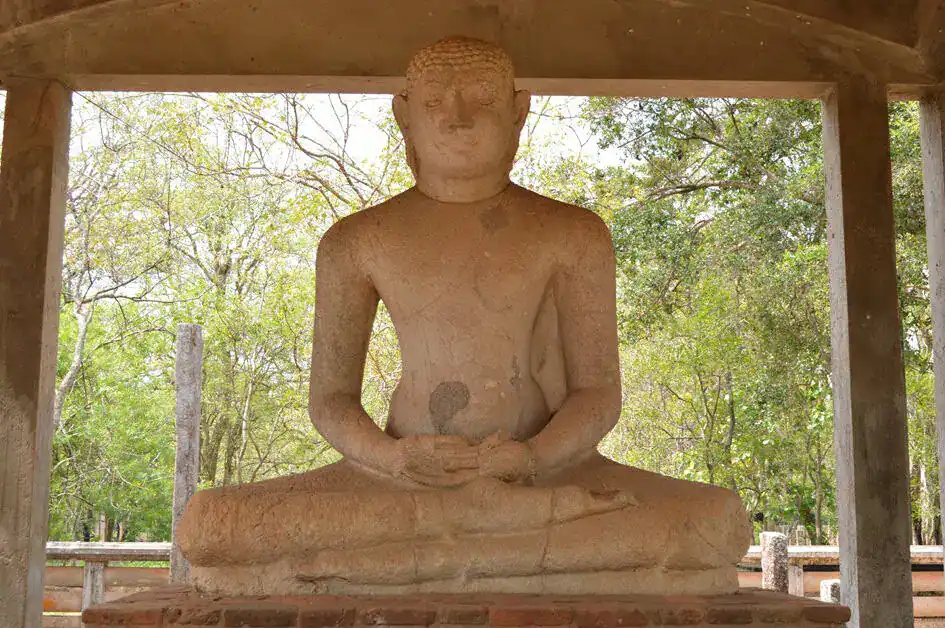
Samadhi Buddha Statue (Photo: Nalaka Priyantha)
Culture and Local Life
Anuradhapura remains a living city and a religious centre. Monks, pilgrims, and locals continue to practise and preserve ancient traditions. You will see everyday life shaped around ancient sites, rituals, devotional offerings, white-clad worshippers, and daily routines rooted in faith and heritage.
Nearby villages still maintain traditional crafts, simple living, and handicraft stalls. You may learn about ancient irrigation systems (the wewa/tank networks), rice-field cultivation, cattle herding, and rural life that echoes old times.
Local markets offer handicrafts and simple goods. Simple temple food, herbal drinks, including Kola Kanda, and traditional snacks reflect regional tastes.
Accommodation and Dining
Anuradhapura offers a range of accommodation options. Budget stays may include basic guesthouses or hostels. Mid-range hotels and simple lodges provide greater comfort when staying near the Ancient City.
Dining tends to be local. Simple Sri Lankan meals, rice and curry, vegetarian temple-style meals, and local snacks are commonly available in guesthouses or small eateries. If you want to explore Sri Lankan cuisine and taste local foods and drinks, read our popular Sri Lankan foods and drinks guide.
If you prefer guided tours or private transport, many lodgings or local tour operators offer packages or can help you arrange tuk-tuk or driver hire.
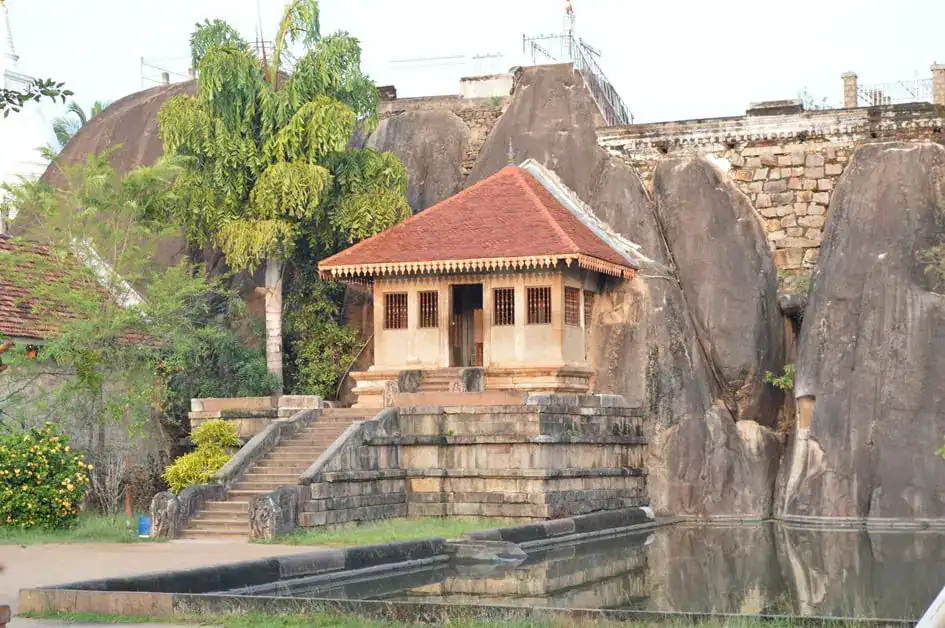
Isurumuniya Rock Temple (Photo: Nalaka Priyantha)
What to Bring and Packing List
- Lightweight breathable clothes — modest attire for temple visits (cover shoulders and knees)
- Hat, sunglasses, sunscreen — heat and sun can be strong
- Refillable water bottle — many sites are open and dry
- Comfortable walking shoes or sandals — many ruins, uneven stone surfaces
- A modest scarf or shawl for temple areas
- Camera (or smartphone) — for stupas, architecture, lakes, sunrise/sunset moments
- Small backpack for day-trips, snacks, water
Money, Services, and Connectivity
Local currency is Sri Lankan rupees. Many guesthouses, tuk-tuks, and small vendors accept cash. Plan accordingly, especially when visiting remote sites outside the city core.
Basic services such as small shops, eateries and tuk-tuks are available near the ancient city and new town areas.
Mobile connectivity works in town and at most main sites. At remote forest or hill sites (such as Ritigala or certain parts of Mihintale), reception may be patchy.
What Not to Miss
- Take time for early morning or evening visits to stupas when the light is soft and the place feels quiet and sacred.
- Visit the sacred Jaya Sri Maha Bodhi tree and observe worship rituals.
- Explore major stupas: Ruwanweliseya, Jetavanaramaya, Thuparamaya.
- Cycle through the ancient city instead of rushing in tuk-tuks.
- Climb Mihintale Hill for sunrise or sunset views and a spiritual ambience.
- Walk among forest ruins at Ritigala for a different, quieter heritage experience.
- Visit the Archaeological Museum to get context and deepen your appreciation of what you see.
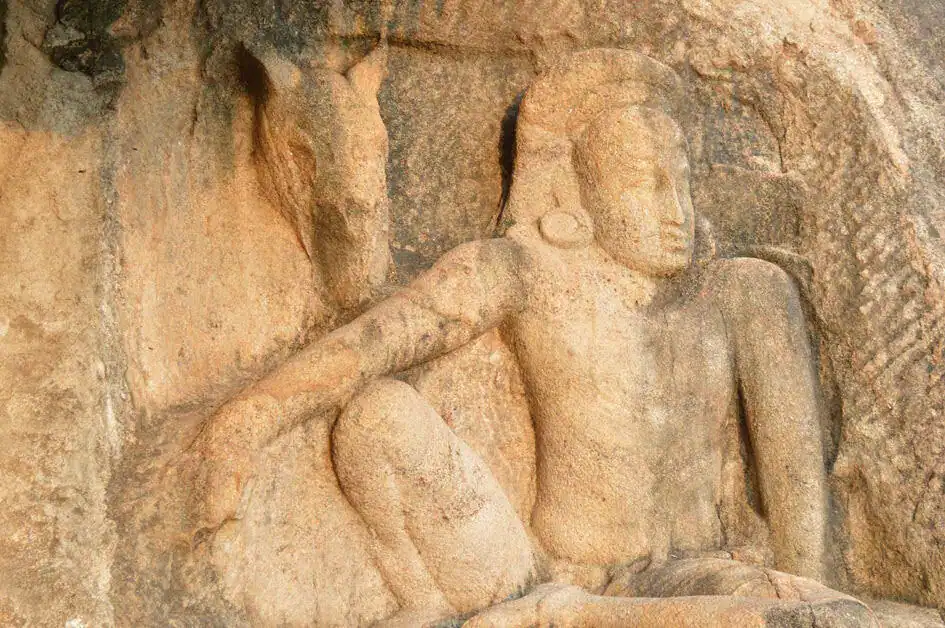
Stone Carvings – Isurumuniya Rock Temple (Photo: Nalaka Priyantha)
Dos and Don’ts
- Do dress modestly for temples and sacred sites.
- Do remove shoes when entering stupas or temple courtyards.
- Do carry water, especially if you visit remote or exposed ruins.
- Do respect worshippers — many sites remain active places of devotion.
- Don’t climb on fragile ruins or stand on top of ancient carvings.
- Don’t litter or damage stonework.
- Don’t expect luxury — many sites and lodgings are simple.
Special Tips
- Start your day early. Arrive at sacred sites before noon to avoid heat.
- Use a bicycle to see many sites in a day.
- Hire a local guide or driver if you plan to visit sites outside the core area (hills and forest monasteries).
- Combine Anuradhapura with nearby heritage or nature spots for a fuller trip.
Photography Tips
- Early-morning or late-afternoon light gives soft, warm tones to stupas, brick structures, and reservoirs.
- Sunrise over lakes or tanks yields beautiful mist-and-reflection photos.
- Sunset behind stupas often offers golden light and beautiful silhouettes.
- For night photography of stupas or Buddha statues, look for moonlit evenings — many stupas are softly lit or accessible after dusk (respect religious rituals and avoid sacred ceremony times).
- Use a wide-angle lens to capture large stupas in their entirety.
- Shoot detail of stone carvings, guardstones, moonstones, and ancient bricks — these show texture and historical depth.
- Include local people or pilgrims in frames to give a sense of scale and living tradition.
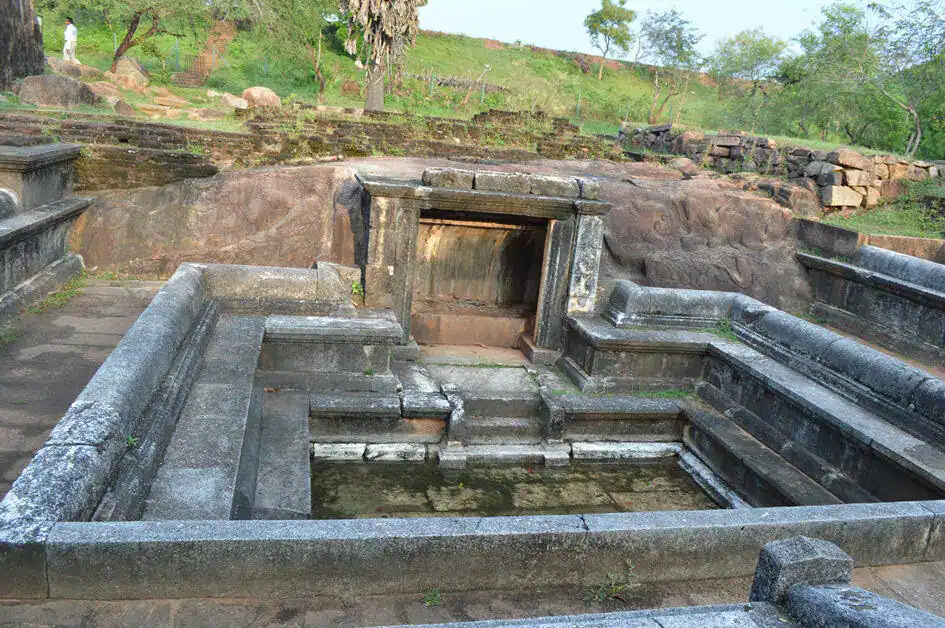
Ranmasu Uyana/Royal Park (Photo: Nalaka Priyantha)
Simple & Easy Plans
One-day plan: Rent a bicycle early in the morning. Visit Jaya Sri Maha Bodhi, Ruwanweliseya, and Thuparamaya. Stop by the Samadhi Buddha statue. Explore Twin Ponds. Finish with sunset at a reservoir.
Two-day plan: Day one as above. Day two: explore Jetavanaramaya, Abhayagiri complex and museum, Lovamahapaya, and Isurumuniya Rock Temple. Use the evening for the local market or for resting in town.
Three-day plan (or more): Use the first two days for core sites. On the third day, explore Mihintale, climb the hill, and visit the rock temples and stupas. On another day, explore Ritigala Forest Monastery or visit the Avukana Buddha Statue.
Add extra days if you want to travel to surrounding villages, explore tanks and rural life, or combine it with other heritage sites elsewhere in Sri Lanka.
Respect ancient and sacred sites as living heritage. Do not damage or climb ruins. Avoid littering or defacing monuments.
Support local businesses: guesthouses, small eateries, local guides, handicraft stalls, and local transport. It helps the community and maintains the local economy.
Respect local customs, religious etiquette, and dress codes.
If possible, learn a few words in the local language or show simple common courtesy when interacting with locals.
Health, Safety, and Comfort
Hydration matters. The climate is often hot and dry. Carry water if you plan long walks or cycling.
Use sunscreen and wear a hat or sun-protective clothing.
If you visit remote forest areas (like Ritigala), wear sturdy shoes. Be cautious of uneven terrain, slippery rocks or forest paths.
Respect warnings or guidelines at sites, especially protected or fragile zones.
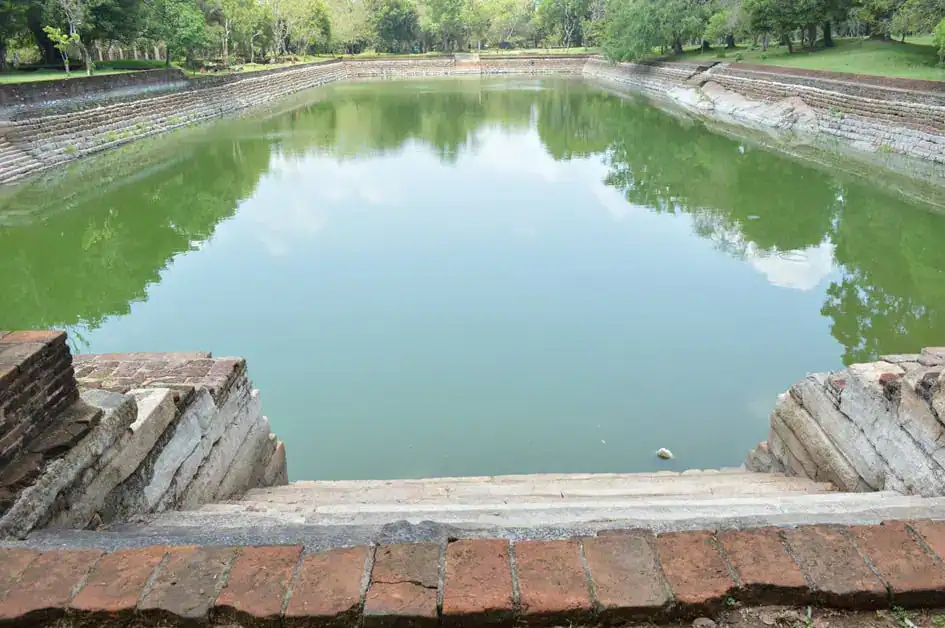
Eth Pokuna/Elephant Pond (Photo: Nalaka Priyantha)
Shopping and Souvenirs
You may buy local handicrafts, modest souvenirs, or simple items from small stalls near the ancient city or in nearby villages.
Temple-style souvenirs, small Buddha statues, local handmade crafts or textiles are commonly available.
If you visit villages, you may find simple pottery, local crafts, herbal drinks and snacks to take home.
Nearby Destinations to Pair With Anuradhapura
You may combine a visit to Anuradhapura with a visit to Mihintale, just 15 km away. The hill-temple complex and pilgrimage sites are directly linked to the origins of Buddhism in Sri Lanka.
You may also visit Ritigala Forest Monastery, a forest monastery in the hills and jungles, offering a peaceful, remote, ancient-temple experience.
You may extend your trip to include other cities and heritage sites in the Cultural Triangle of Sri Lanka, such as Sigiriya Rock Fortress, Dambulla Cave Temple, and Polonnaruwa, especially those that continue the journey through the island’s ancient capitals and monuments.
You may visit the Avukana Buddha Statue, a remarkable standing Buddha statue near the region, to appreciate ancient Sri Lankan Buddhist sculpture and craftsmanship.
Final Thoughts
Anuradhapura remains one of the most profound, layered, and rewarding heritage destinations in Sri Lanka. It combines deep history, spiritual tradition, ancient architecture, impressive engineering, and living religious practice.
If you like to explore the roots of Buddhism, view ancient stupas and monasteries, ride through old towns on a bicycle, wander through reservoirs and silent ruins, or climb sacred hills, Anuradhapura offers more than a trip: it provides an experience across time.
Whether you travel on a tight budget or with moderate comfort in mind, you will find value. You will see remains of one of humanity’s early advanced civilisations. You will feel a link across centuries.
Allow enough time for quiet walks, early rises, and respectful visits. Listen to chanting under sacred trees. Watch the sun rise on brick stupas. Visit the hills at dawn. Experience Anuradhapura not merely as a place to see, but as a place to feel.
Anuradhapura Map
Featured image: Jaya Sri Maha Bodhi (Photo: Nalaka Priyantha)

I am a Sri Lankan medical doctor who spends my free time travelling, exploring new destinations, and documenting the beauty of the island I call home. I have journeyed across almost every corner of Sri Lanka with my wife and daughter — from wildlife parks and misty mountains to ancient cities, deep forests, rugged landscapes, and quiet beaches.
Travel is not just a hobby for me — it’s a way of life. I love nature, enjoy road trips, and find joy in wildlife photography. I also read widely about tourism, travel trends, and destination culture. Through my writing, I aim to help travellers experience Sri Lanka through real stories, meaningful insights, and honest recommendations — the same way I explore it with my own family.