
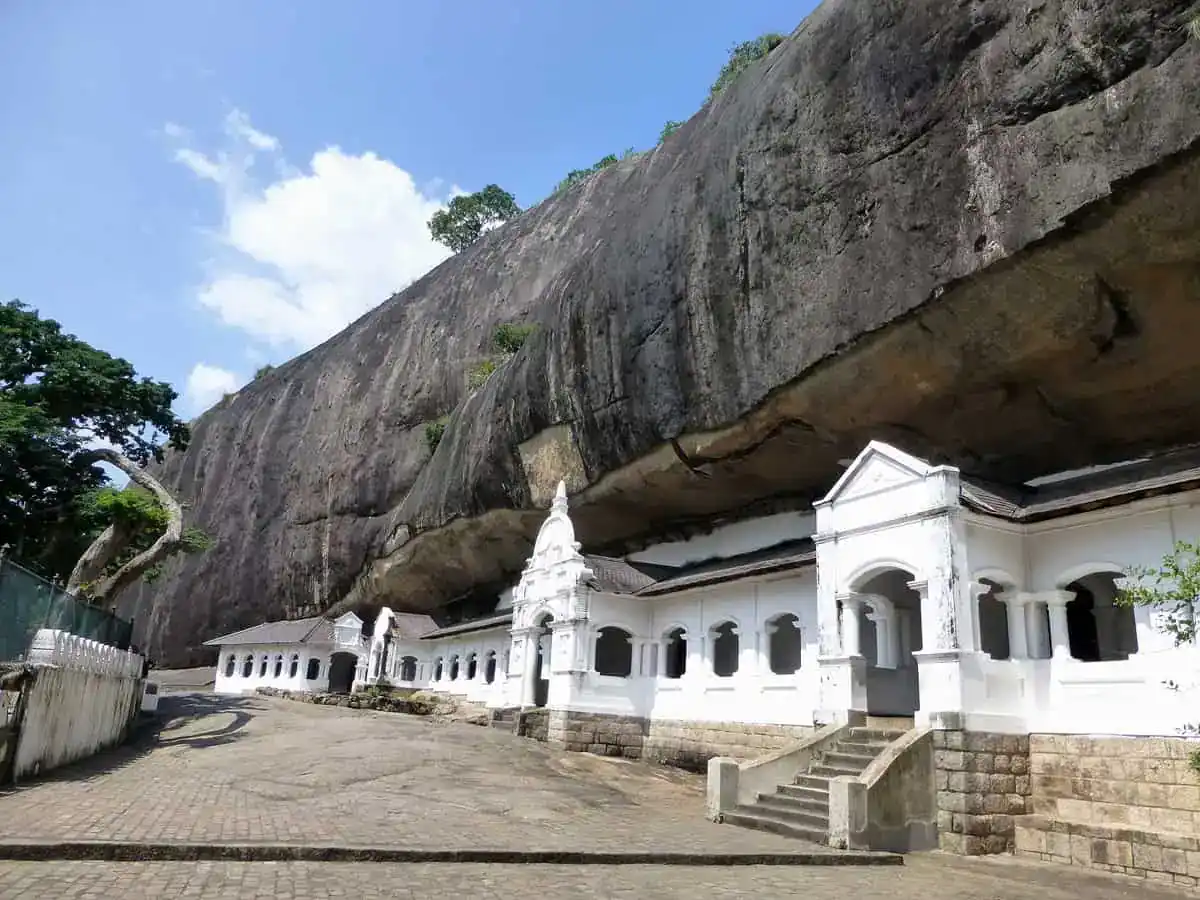

The Dambulla Cave Temple rises above the plains in central Sri Lanka and offers one of the most striking cultural visits in the country. Travellers enter a rock sanctuary filled with murals, carvings, and statues that span centuries of Buddhist devotion. The complex sits high on a stone outcrop, offering expansive views of farms, lakes, and distant hills. As a UNESCO Heritage site, the temple stands among the most important religious landmarks and temples in Sri Lanka. It provides deep insight into the history of Sri Lanka through art, religion, and living culture. Each cave holds its own story, and each space reflects the island’s long-standing cultural heritage.
Why Rangiri Dambulla Cave Temple Is Special
The Dambulla Cave Temple is one of the largest and best-preserved cave temple complexes in Asia. Its five caves house more than 150 Buddha statues, along with images of gods, kings, and monks. Painted surfaces stretch across ceilings and walls over more than 2,000 square metres. These works show scenes from the life of Buddha, symbols of protection, and stories tied to the early kingdoms of the island. The site has been active for more than 2,000 years, making it one of the oldest places of continuous Buddhist worship in the country. Monks once used the caves for shelter, meditation, and teaching. Visitors sense the weight of history with every step.
Nature and Setting Around the Rock Temple
The temple rests on a great slab of stone that rises above the landscape. The rock rises from the plains as a single dome, giving the site a commanding presence. As you climb, you move through pockets of shade and scrub trees. Lizards and birds live among the crevices, and monkeys sit along the path, watching visitors come and go. The top of the climb offers broad views of fields, small reservoirs, and distant mountains. The natural setting supports the site’s spiritual purpose, as monks often sought quiet places far from city life.
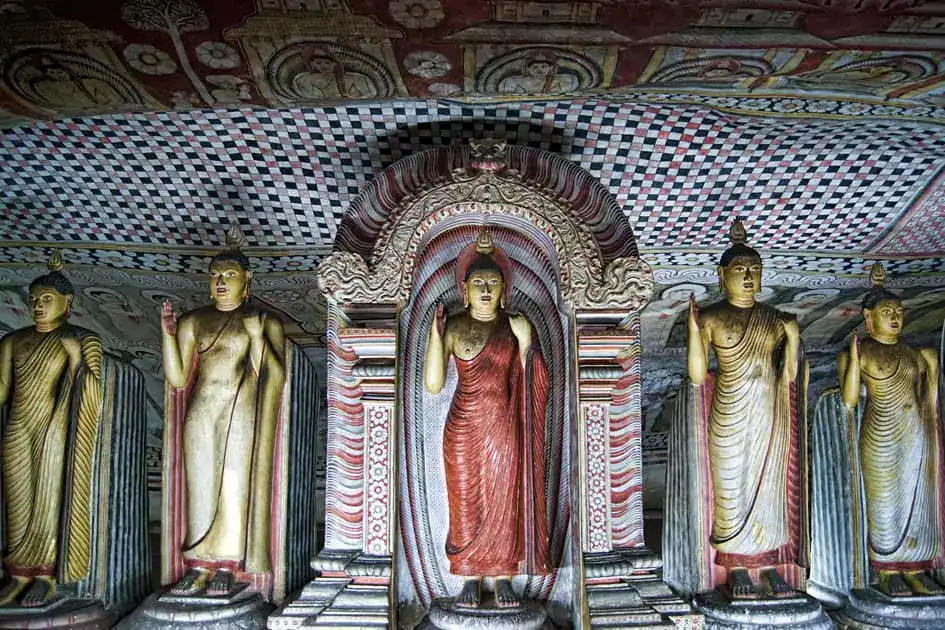
Buddha Statues – Dambulla Cave Temple (Photo: Philip Nalangan, CC BY 4.0)
Site Plan Basics
The complex includes five cave shrines cut into the rock face. Each cave is long, cool, and protected by natural overhangs. Builders shaped the floors and used the stone walls as canvases for murals. Some caves feel narrow and intimate. Others feel tall and grand, filled with long rows of Buddha images. The caves sit close together, making it easy to follow the route from one to the next. A courtyard outside the caves gives space for worshippers and visiting monks.
The Five Caves of Dambulla Cave Temple
Cave of the Divine King (Devaraja Lena)
The Cave of the Divine King features a large reclining Buddha carved directly into stone. Soft light enters the space, highlighting the figure’s smooth lines. The walls show early images of gods and protectors. This cave sets the tone for the visit, since it reflects the earliest phase of the temple’s history.
Cave of the Great Kings (Maharaja Lena)
The second cave holds the most statues. Tall seated Buddhas, standing Buddhas, and figures of ancient kings fill the hall. The ceiling features detailed murals in layers that span different eras. This cave introduces visitors to the artistic richness of the complex. It is also one of the spaces that pilgrims value most.
Great New Monastery (Maha Aluth Viharaya)
The third cave holds many statues arranged in organised groups. The murals here show more precise lines and brighter colours, reflecting later phases of painting associated with the Kandyan period. Visitors see floral patterns, narratives from Buddhist teachings, and scenes that show royal patronage.
Western Monastery (Paccima Viharaya)
The fourth cave has a simple and calm interior. Fewer images line the walls, which helps create a sense of quiet and meditation. This cave is linked with monastic practice and daily ritual. Its layout reflects a strong influence of early Sinhala monastic design.
Second New Monastery (Devana Aluth Viharaya)
The fifth cave includes several statues that reflect the most recent artistic additions at the site. Murals here feature a mix of traditional styles and later-century patterns. The space marks the temple’s expansion as more pilgrims visited and rulers continued to support the complex.

A Stupa in the Dambulla Cave Temple (Photo: Kaushiru90, CC BY-SA 4.0)
Sinhala Sculpture and Art
The Dambulla Cave Temple preserves some of the finest examples of Sinhala sculpture and painting. Artists shaped hundreds of statues using stone, clay, and plaster. Many figures show the calm expression and hand gestures associated with Buddhist ritual. The murals tell a long visual story. Some sections show bright reds, golds, and blues from the Kandyan era. Others show darker tones from early periods. Lines are clean and confident. Patterns flow across ceilings like woven textiles. Large panels show stories from the life of Buddha. Small details show floral borders and sacred symbols. These murals help explain the island’s cultural development and the long relationship between art and religious practice.
History and Culture of Dambulla Cave Temple
The caves served as shelters for monks long before the temple took its complete form. Records suggest monks stayed here during the third century BCE. One story describes how King Valagamba used the caves as a refuge during political conflict. When he regained his throne, he developed the caves into a formal temple as an act of gratitude. Later kings continued to add images, statues, and murals. Dambulla became a centre of worship and pilgrimage during the Anuradhapura and Polonnaruwa periods. During the Kandyan period, painters restored and expanded the murals to strengthen the kingdom’s cultural identity. The site stands as a marker of Sri Lanka’s long history and serves as a living cultural space rather than a museum.
Global Recognition and Tourism Appeal
The temple received a UNESCO World Heritage listing for its preserved art and historical significance. This status highlights its universal cultural value and places it alongside other major heritage sites in the Cultural Triangle of Sri Lanka. Visitors from around the world travel to Dambulla to study its murals, meditate in its caves, or take guided tours to learn about its significance. The temple remains an active religious site, so visitors often meet monks and worshippers during their visit.
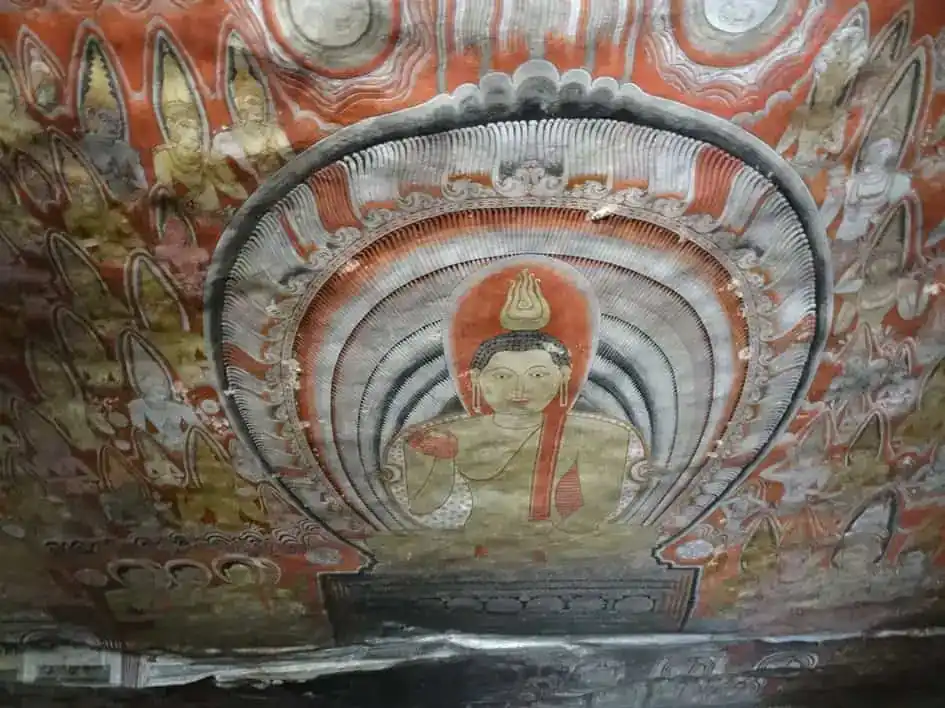
Ancient Rock Paintings – Dambulla Cave Temple (Photo: Cherubino, CC BY-SA 3.0)
Scenic Walking Trail to the Caves
The climb begins at the base of the rock near the modern temple complex. Steps lead upward across stone pathways. Along the route, you find shaded rest points and viewpoints that open towards the plains. The climb takes about 15 to 20 minutes, depending on your pace. The upper terrace holds broad flat areas where visitors gather before entering the cave complex. The walk is part of the experience and helps prepare you for the caves’ calm interior.
Location and How to Get There
Dambulla lies in the Central Province and sits along the main road between Kandy and Anuradhapura. It is easy to reach by car, van, or bus. You can travel from Colombo in about three and a half hours by expressway and the main road. The nearest major city is Matale. Many cultural tours include Dambulla as a stop on the way to Sigiriya Rock Fortress or Polonnaruwa.
It is advisable to research and familiarise yourself with transportation options in Sri Lanka if you plan to visit the Rangiri Dambulla Cave Temple.
Transport, Getting Around, and Parking
Parking areas sit near the base of the temple path. Tuk-tuk drivers offer transfers from town centres and hotels. The climb to the caves must be done on foot. Inside the complex, the route is straightforward, with signs guiding you from one cave to the next.
Weather, Climate, and Best Time to Visit
The area has a warm tropical climate. December to March offers the driest and most comfortable weather. During this period, the walk is cooler, and the light inside the caves is softer. April can be warm during midday. The Southwest Monsoon and inter-monsoon rains bring more showers from May to October. Early morning remains the best time to visit throughout the year.
If you plan to combine your visit to Dambulla Cave Temple with other destinations in Sri Lanka, read up on the weather in Sri Lanka and the best time to visit.
Weather and Weather Forecast in Dambulla
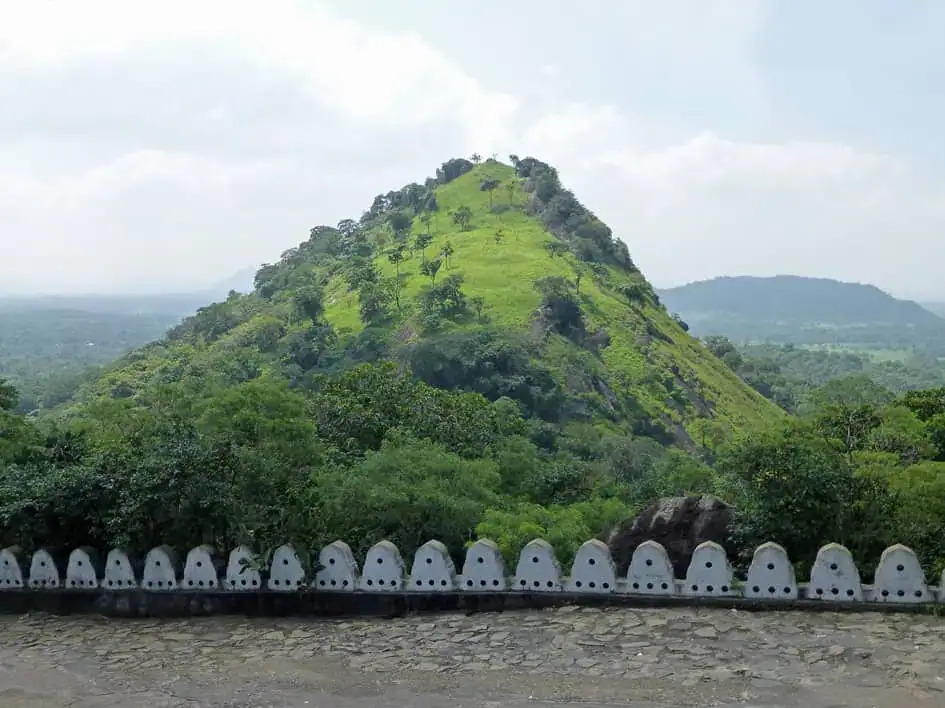
A View from Dambulla Cave Temple (Photo: Ji-Elle, CC BY-SA 3.0)
Best for Whom
Dambulla Cave Temple suits travellers interested in culture, art, religion, history, or architecture. Families find the space manageable and safe. Photographers enjoy the murals and views. The site also suits visitors exploring UNESCO Heritage locations in the Cultural Triangle.
Things to Do, Popular Activities, and Experiences
• Tour each cave in order and study the murals and statues.
• Sit near the large reclining Buddha in the first cave and read the plaques.
• Explore the ceiling paintings in the second cave and notice the patterns that repeat across centuries.
• Use a local guide to hear stories linked to kings and monks.
• Visit the modern temple at the base of the rock.
• Pair your visit with Sigiriya Rock Fortress or a wildlife safari in Minneriya, Wasgamuwa, or Kaudulla National Park.
Nearby Destinations That Can Be Paired With
The temple lies close to several major cultural and natural sites. Sigiriya is only a short drive away. Polonnaruwa offers medieval ruins. Minneriya, Wasgamuwa and Kaudulla National Parks offer nature and wildlife experiences, including elephant-watching. Kandalama Lake offers walks and views. These pair well with a half-day visit to Dambulla.
Where to Stay and Dining
Dambulla town and the nearby Kandalama area offer hotels, guesthouses, and eco lodges. You find simple cafés near the main road and more comfortable dining in larger hotels. Many places serve rice and curry, mild soups, fruit juices, and Ceylon Tea.
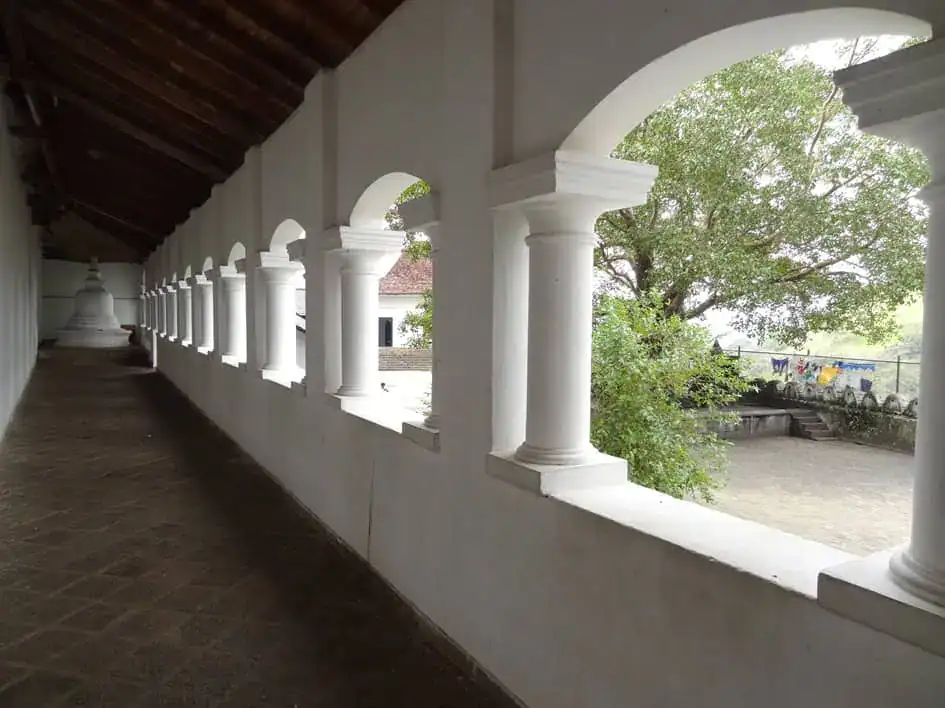
Exterior of Dambulla Cave Temple (Photo: Cherubino, CC BY-SA 3.0)
What to Bring
Bring water, a scarf or shawl for modest dress, sunscreen for the climb, and a camera. Wear footwear that is easy to remove at the cave entrances.
Simple and Easy Plans That Work
A strong plan is to arrive around eight in the morning, climb the trail, explore the caves for two hours, return to the base by late morning, then travel to Sigiriya for lunch and an afternoon tour. Another plan is to visit Dambulla as part of a full-day Cultural Triangle circuit.
Dos and Don’ts
Wear modest clothing to cover the shoulders and knees.
Do remove shoes when entering sacred spaces.
Do follow marked paths and signs.
Do not touch murals or statues.
Do not use a flash inside the caves.
Must Do and Do Not Miss
You must spend time in the Cave of the Great Kings for its scale and artistry. Do not miss the ceiling paintings in the third cave. Do not miss the views from the top terrace.
Special Tips
Arrive early before the tour groups. Carry a bottle of water. If the steps feel warm, take brief breaks at shaded points.
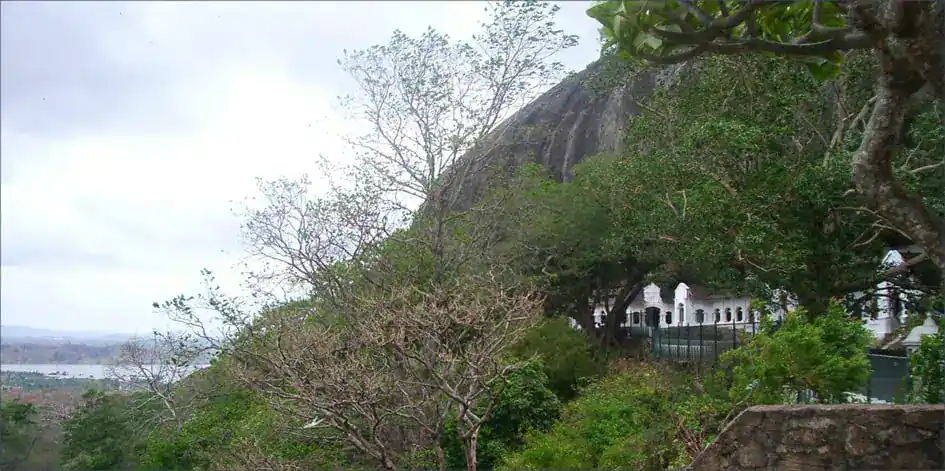
Another View of Dambulla Cave Temple (Photo: Jolle~commonswiki, CC BY-SA 3.0)
Photography Tips
Raise ISO for interior shots. Hold your camera steady for low light. Capture mural details at an angle to reduce glare. Leave flash off to protect the art.
Sunset
The early-morning climb offers a cooler experience and soft light. The sunset from the terrace offers a wide view of the plains and distant hills.
Safety and Comfort
Watch your footing on stone steps. Keep personal items secure since monkeys may approach bags. Drink water before and after the climb.
Respect the site as a place of worship. Take your litter with you. Support local guides and local food stalls to help sustain the community. Avoid touching stone surfaces or painted areas.
Souvenirs
Stalls near the base sell postcards, photo prints of murals, small statues, incense, and handmade crafts.
Culture and Local Life
Dambulla town reflects everyday Sri Lankan life with markets, farms, and small shops. Monks walk through the streets in the morning hours. Locals warmly support visiting pilgrims and travellers.
The Dambulla Cave Temple offers a strong window into Sri Lanka’s Cultural Heritage and History. The site blends art, devotion, nature, and long human presence on a single rock outcrop. Its caves remain active with prayer and reflection. Visitors leave with a deeper understanding of the island’s cultural story and a sense of the spiritual traditions that shaped it.
Dambulla Map
Featured image: Rangiri Dambulla Cave Temple (Photo: Ji-Elle, CC BY-SA 3.0)

I am a Sri Lankan medical doctor who spends my free time travelling, exploring new destinations, and documenting the beauty of the island I call home. I have journeyed across almost every corner of Sri Lanka with my wife and daughter — from wildlife parks and misty mountains to ancient cities, deep forests, rugged landscapes, and quiet beaches.
Travel is not just a hobby for me — it’s a way of life. I love nature, enjoy road trips, and find joy in wildlife photography. I also read widely about tourism, travel trends, and destination culture. Through my writing, I aim to help travellers experience Sri Lanka through real stories, meaningful insights, and honest recommendations — the same way I explore it with my own family.