


Your arrival in Kandy feels intentional rather than dramatic. The road curves inward. Hills close around the city. The air cools and softens. Traffic slows as temples, schools, and homes share the same narrow streets. You hear chanting before you see the shrine. You notice ritual before you understand it. Kandy does not rush to explain itself. It asks you to observe first. If you plan to visit Sri Lanka, Kandy provides the cultural grounding that gives meaning to everything else you experience. This guide presents Kandy city as it truly functions, with history, belief, and daily life existing side by side.
What Is Kandy City?
Kandy sits at the centre of Sri Lanka’s Central Province as a major urban hub. It sits in a natural valley surrounded by hills, rivers, and protected forest land. The town developed around the Temple of the Tooth (Sri Dalada Maligawa), which houses a sacred Buddhist relic believed to be the Buddha’s tooth. Kandy functions as a religious capital, an administrative centre, and a living urban environment. Government offices, courts, schools, hospitals, and markets operate beside ancient temples and royal buildings. Religious life shapes schedules, movement, and behaviour across the city rather than existing apart from it. This integration defines Kandy city.
Why Kandy Is Special
Kandy city was the last kingdom of Sri Lanka. While coastal regions fell under Portuguese and Dutch control, Kandy resisted foreign rule for centuries. British authority reached the city only in 1815. This long resistance shaped a strong cultural identity rooted in independence and continuity. Kandyan kings protected Buddhism during periods of external pressure and preserved local art, ritual, and governance systems. The Temple of the Tooth symbolised spiritual authority and political legitimacy. The ruler who safeguarded the relic ruled the land. This belief influenced architecture, ceremony, law, and urban planning. Walking through Kandy places you inside the final chapter of Sri Lanka’s monarchy.

Queens Hotel – Kandy (Photo: A.Savin)
Recognition and Tourism Appeal
UNESCO recognised Kandy as a World Heritage Site under the title Sacred City of Kandy. This recognition reflects the religious importance, the preserved architecture, and the continuity of living tradition. The designation protects buildings, processional routes, and ritual practices. Daily offerings continue without interruption. Annual festivals follow historic paths through the city. Pilgrims and travellers share public space without separation. Kandy attracts visitors because culture unfolds naturally rather than being staged. Kandy is also the southern point of Sri Lanka’s Cultural Triangle.
Historic Roots and Ancient Architecture
Kandy’s architecture reflects layered history rather than uniform design. The royal palace complex features Kandyan-era construction, with wooden pillars, tiled roofs, carved beams, and painted ceilings. Temple interiors display murals depicting Buddhist narratives, royal processions, and symbolic imagery. Stone foundations and defensive walls reveal how the city used terrain to its advantage for protection. British colonial buildings appear near administrative zones, schools, and hospitals, adding another architectural layer. Streets follow natural contours rather than modern grids. Each structure serves a purpose shaped by belief, geography, and governance.
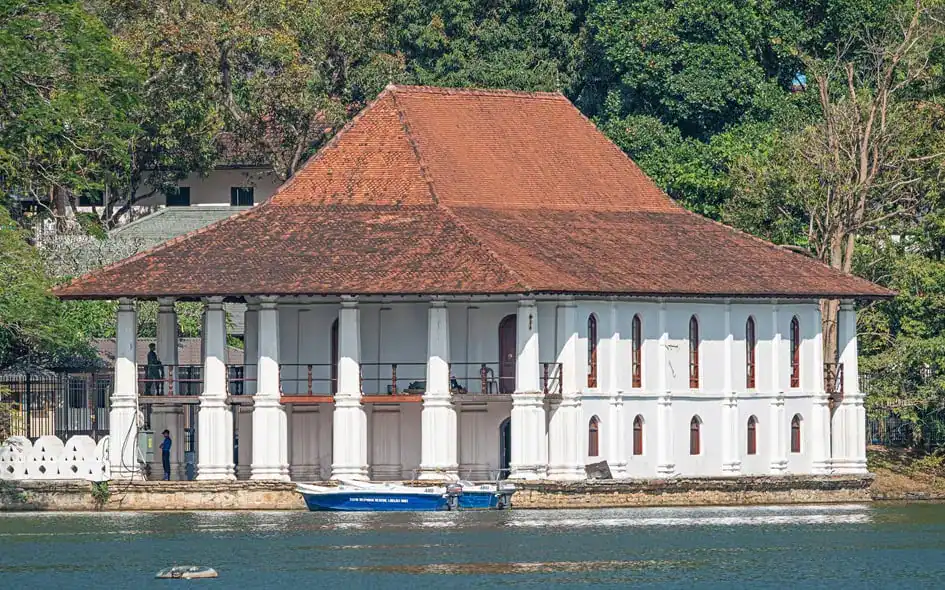
Queens Bath/Ulpan Ge (Photo: A.Savin)
Location, How to Get There, Parking, and Getting Around
Kandy lies about 115 kilometres from Colombo. Trains run daily from Colombo Fort and provide scenic views of rivers, valleys, tunnels, tea fields, and hill towns. Many travellers choose rail travel for comfort and reliability. Buses operate frequently and cost less, though travel time increases. Driving offers flexibility, though congestion grows near the city centre.
Parking exists near Kandy Lake, public buildings, and shopping centres. Availability drops during peak hours and festival seasons. Walking works well within the central zone. Tuk-tuks provide quick access to hills, viewpoints, and nearby temples. Local buses efficiently connect the suburbs and surrounding towns.
You can also start the Kandy-to-Ella train ride, which is considered one of the most scenic train routes in the world. You can reach either Nuwara Eliya or Ella, depending on your next destination. This train reaches your destination, passing tea estates, forests, waterfalls, hills, valleys, bridges, tunnels, and remote cities in the hill country.
It is recommended to book train tickets in advance via Online Advance Train Seats Reservation from the Sri Lanka Railways Official Page.
When planning a visit to Sri Lanka, it is advisable to read our transport guide.
Best Time to Visit and Why
December through April brings lower rainfall and clearer skies. These months are ideal for walking, sightseeing, and outdoor exploration. July and August host Kandy Esala Perahera (Procession), the city’s most important cultural festival. This season offers unmatched depth, though crowds increase and accommodation fills early. May, June, September, and October bring heavier rain. The hills turn green, forests thicken, and waterfalls strengthen. With preparation, travel remains rewarding.
If you plan to visit Sri Lanka, it is advisable to read up on the weather and the best time to visit Sri Lanka.

Inside the Temple of the Tooth (Photo: A.Savin)
Weather and Conditions
Kandy’s elevation creates a moderate climate. Daytime temperatures range from the mid-twenties to the low thirties Celsius. Evenings cool quickly, especially after rainfall. Short showers occur throughout the year. Humidity stays lower than in coastal regions. Comfortable clothing, rain protection, and supportive footwear improve daily exploration.
Current Weather and Weather Forecast in Kandy
Best for Whom
Kandy suits travellers interested in culture & heritage, history, and place. Families enjoy botanical gardens, museums, and lakeside walks. Couples appreciate viewpoints, forest paths, and quiet stays. Solo travellers find the city approachable and safe. Active travellers use Kandy as a base for hiking and nature excursions. First-time visitors to Sri Lanka gain essential cultural grounding here.
If you are interested in hiking, read “Hiking in Sri Lanka: 10 Trails That Take You Off the Beaten Path,” which lists many trails near Kandy.
You can also hike the 1st Stage of the Pekoe Trail: An Emerging World-Class Long-Distance Trail in Sri Lanka.
Kandy for Every Budget
Kandy accommodates all budgets. Budget travellers stay in guesthouses and homestays near the centre. These places offer simple comfort and local interaction. Mid-range travellers choose boutique hotels and hillside lodges with privacy and views. Luxury travellers select restored heritage properties and forest retreats. Food prices remain accessible. Local meals cost little. Transport remains affordable through tuk-tuks and buses. Cultural experiences range from free temple visits to guided excursions.

A View in the Temple of the Tooth (Photo: A.Savin)
Popular Attractions, Experiences, Events, and Activities
Temple of the Tooth, Royal Palace, and Kandy National Museum
The Temple of the Tooth stands at the heart of Kandy. It houses the sacred relic of the Buddha’s tooth and shapes the city’s rhythm. This place is known as one of Sri Lanka’s most visited temples and religious landmarks. Daily rituals take place three times each day, accompanied by drumming and chanting. The surrounding palace complex includes the Royal Palace and Audience Hall, once used by Kandyan kings. The Kandy National Museum displays royal garments, ceremonial weapons, manuscripts, and cultural artefacts. Together, these sites explain the religion, governance, and artistic traditions of the Kandyan Kingdom.
Visit the official website of the Temple of the Tooth.
Kandy Lake
Kandy Lake was built by the last Kandyan king, Sri Wickrama Rajasinghe, in 1807. It surrounds the temple complex and defines the city’s centre. A walking path follows the shoreline, offering views of hills, temples, and colonial buildings. Locals gather here in the evening to relax and socialise. Birds, trees, and water soften the urban environment and provide balance to city life.
Bahiravakanda Temple and Buddha Statue
Bahiravakanda Vihara sits on a hill overlooking the city. A large white Buddha statue marks the site. The viewpoint offers panoramic views across Kandy city, including the lake and temple complex. Early morning and late afternoon provide the clearest visibility and calm conditions.
Arthur’s Seat Viewpoint
Arthur’s Seat overlooks Kandy Lake from a roadside platform. This viewpoint offers a clear understanding of the city’s layout within its valley. Sunset highlights the contrast between water, forest, and the built environment.

Kandy Lake and the Temple of the Tooth – Arthur’s Seat View (Photo: A.Savin)
Kandy Markets and Street Life
Kandy Market Hall and the surrounding streets show daily commerce in motion. Vendors sell produce, spices, grains, and snacks. Nearby streets hold clothing shops, bakeries, pharmacies, and tea stalls. Walking here reveals everyday routines, economic exchange, and social interaction.
Udawattakele Sanctuary and Forest Reserve
Udawattakele is a protected forest reserve within the city. Trails pass through dense vegetation, ponds, and bird habitats. The forest once served royal use. Today, it offers walking, birdwatching, and a quiet space away from traffic. Early morning visits provide the best wildlife sightings.
Ceylon Tea Museum and Tea Experiences
The Ceylon Tea Museum sits on Hanthana Hill. Exhibits explain tea production, machinery, labour history, and export development. Tastings follow the exhibits. Nearby estates offer guided walks, demonstrations of leaf plucking, and insight into plantation life.

Bahiravakanda Temple (Photo: Bernard Gagnon, CC BY-SA 3.0)
Kandyan Cultural Performances
Kandyan cultural performances present traditional dance and drumming rooted in ritual practice. Performers wear elaborate costumes and masks. Movements reflect ancient healing rituals, religious ceremonies, and storytelling traditions. Fire rituals often close performances. These shows help travellers understand how performance functions as cultural expression rather than entertainment.
Kandy Esala Perahera (Procession)
The Kandy Esala Perahera honours the sacred tooth relic and seeks blessings for rainfall and harvest. Processions unfold over several nights through the city. Dancers, drummers, torch bearers, and decorated elephants follow historic routes. Families plan their year around this event. Advance planning is essential for seating and accommodation.

Kandy Esala Perahera (Photo: Omar AV, CC BY 3.0)
Food Experiences in Kandy
Food in Kandy reflects regional tradition. Rice-and-curry meals include multiple vegetable and meat dishes served together. Street food includes roti, lentil snacks, and fresh fruit. Cooking classes cover spice preparation, grinding methods, and home-style cooking. Tea shops serve Ceylon tea throughout the day and function as social spaces.
Shopping for Crafts and Souvenirs
Kandy is known for its traditional crafts. Shops sell batik fabric, carved wood, silver jewellery, and gemstones. Government-certified outlets provide quality assurance. Markets allow polite bargaining and direct engagement with local sellers.

Ceylon Tea Museum (Photo: calflier001, CC BY-SA 2.0)
Nearby Key Attractions, Experiences, Events, and Activities to Pair With Kandy
Royal Botanic Gardens, Peradeniya
Located 6 kilometres from Kandy, the Royal Botanic Gardens cover over 60 hectares. The gardens display more than 4,000 species of orchids, palms, bamboo, spices, medicinal plants, and other plants. Shaded paths follow the river, supporting slow, relaxed exploration. The gardens offer a break from urban noise and heat.

Peradeniya Royal Botanical Garden (Photo: Koshy Koshy, CC BY 2.0)
Gadaladeniya Temple
Gadaladeniya Temple lies about 12 kilometres from Kandy. Built in the 14th century, it reflects South Indian architectural influence through stone carvings and structural form. The hilltop location provides quiet surroundings and expansive views.
Lankatilaka Temple
Lankatilaka Temple stands nearby on a rocky hill. Tall stone walls and detailed carvings reflect Kandyan-era design. The temple combines Buddhist and Hindu influences. Views extend across farmland and forest.
Embekke Devalaya
Embekke Devalaya lies around 14 kilometres from Kandy. Wooden pillars display intricate carvings of animals, dancers, and geometric patterns. The craftsmanship reflects advanced medieval woodworking techniques and artistic planning.

Gadaladeniya Temple (Photo: Cherubino, CC BY-SA 3.0)
Degaldoruwa Raja Maha Viharaya
Degaldoruwa lies around 7 kilometres from the city. This rock temple features Kandyan-style murals painted directly onto the cave walls. The artwork depicts Buddhist stories, royal life, and village scenes.
Knuckles Mountain Range and Meemure-side Excursions
The Knuckles range lies north of Kandy and requires guided travel. Trails pass through forests, rivers, and remote villages. Meemure offers overnight hiking, camping, and exposure to traditional rural life. These regions provide excellent panoramic views.
A few trails:
- AllTrails Map – Knuckles 5 Peak Trail (7.7 km)
- AllTrails Map – Corbett’s Gap (11.3 km)
- AllTrails Map – Lebonon Estate to KMP Hut (6.4 km)
- AllTrails Map – Kandasamigala (5.1 km)
Attractions in Matale
Matale lies 25 kilometres from Kandy. The area includes the National Spice Garden, Aluviharaya Rock Temple, and Nalanda Gedige. The National Spice Garden introduces visitors to cinnamon, pepper, cardamom, and other herbs used in local medicine and cooking. Buddhist monks wrote the Pali Canon on palm leaves in Aluviharaya Rock Temple. Cave chambers show simple halls and painted walls. The on-site museum explains the script work. Nalanda Gedige is an ancient stone temple with a hybrid Hindu-Buddhist architectural style. These sites reflect religious diversity, ancient engineering, and regional trade history.

Lankatilaka Temple (Photo: Eleleleven, CC BY-SA 2.0)
Culture and Local Life
Culture in Kandy shapes daily behaviour rather than existing as performance. Temple schedules influence work hours and movement. White clothing appears during religious observance. Markets open early to serve households. Families gather near the lake at dusk. Courtesy and patience guide interaction. Visitors who observe local norms receive warmth, help, and respect.
Accommodation and Dining
Accommodation in Kandy ranges from city hotels to hillside lodges and forest retreats. Many properties reflect local design and integrate with natural surroundings. Dining includes street stalls, cafés, bakeries, and international restaurants. Sri Lankan breakfasts, rice-based lunches, and curry dinners dominate menus. Ingredients come from nearby farms and markets.
What to Bring and Packing List
- Lightweight clothing for warm days.
- Layers for cool evenings.
- Walking shoes with grip.
- Carry rain protection year-round.
- Modest attire for temples.
- Insect repellent.
- Sunscreen.
- Reusable water bottles.
- Small cash improves daily comfort.

Wooden carvings in the Drummers’ Hall – Embekke Temple (Photo: Z thomas)
Money, Services, and Connectivity
Banks and ATMs operate throughout Kandy. Most hotels and larger shops accept card payments. Mobile networks provide reliable coverage across the city and nearby areas. Tourist offices offer maps and guidance. Pharmacies, hospitals, clinics, and transport services are easily accessible.
What Not to Miss
- Do not miss attending a pooja ceremony at the Temple of the Tooth.
- Walk around Kandy Lake in the evening.
- Spend time inside Udawattakele Sanctuary.
- Attend a cultural performance.
- Visit at least one nearby historic temple to understand regional variation.
Dos and Don’ts
Dress modestly at religious sites. Remove shoes before entering temples. Avoid loud behaviour near prayer areas. Ask permission before photographing people. Follow local guidance, signage, and customs at all times.
Special Tips
Begin sightseeing early in the day to avoid crowds and heat. Book accommodation early during the Kandy Esala Perahera season. Carry small notes for tuk-tuks and markets. Plan daily routes around temple ritual schedules.
Photography Tips
Use early morning light for temples and markets. Sunset works well for lake and viewpoint shots. Follow photography rules at sacred sites. Avoid flash during rituals and ceremonies.

Statues and Murals in Degaldoruwa Temple (Photo: A.Savin)
Simple and Easy Plans
A single day in Kandy covers the temple complex, Kandy Lake, the central market, and a cultural show. Two days allow time for the botanical gardens and the tea museum. Three days allow forest walks, nearby temples, and slower exploration.
- Support local businesses, guides, and family-run accommodation.
- Reduce plastic use.
- Stay on marked trails in forests.
- Respect wildlife and sacred areas.
- Follow temple rules.
- Leave cultural and natural sites unchanged.
Health, Safety, and Comfort
Drink filtered or bottled water. Protect against the sun and insects. Follow crowd guidance during festivals. Use licensed transport services. Rest during hot afternoons. Pay attention to local advice during weather changes.

Kandy Esala Perahera – Temple of the Tooth (Photo: Phsmet, CC BY-SA 4.0)
Shopping and Souvenirs
Choose authentic crafts and certified gemstones. Tea supports local growers and travels well. Avoid items made from endangered materials. Buy directly from local sellers when possible.
Final Thoughts
Kandy offers depth, continuity, and meaning. History, belief, nature, and daily life exist here without separation. Kandy does not put culture on display. You encounter it in daily routines and shared spaces. Whether you attend Kandy Esala Perahera, walk forest paths, explore markets, or sit quietly beside the lake, Kandy shapes how you understand the island. When you visit Sri Lanka, Kandy offers context, balance, and memories that last long after the journey ends.
Kandy Map
Featured image: Temple of the Tooth, Kandy (Photo: A.Savin)

I am a Sri Lankan medical doctor who spends my free time travelling, exploring new destinations, and documenting the beauty of the island I call home. I have journeyed across almost every corner of Sri Lanka with my wife and daughter — from wildlife parks and misty mountains to ancient cities, deep forests, rugged landscapes, and quiet beaches.
Travel is not just a hobby for me — it’s a way of life. I love nature, enjoy road trips, and find joy in wildlife photography. I also read widely about tourism, travel trends, and destination culture. Through my writing, I aim to help travellers experience Sri Lanka through real stories, meaningful insights, and honest recommendations — the same way I explore it with my own family.