
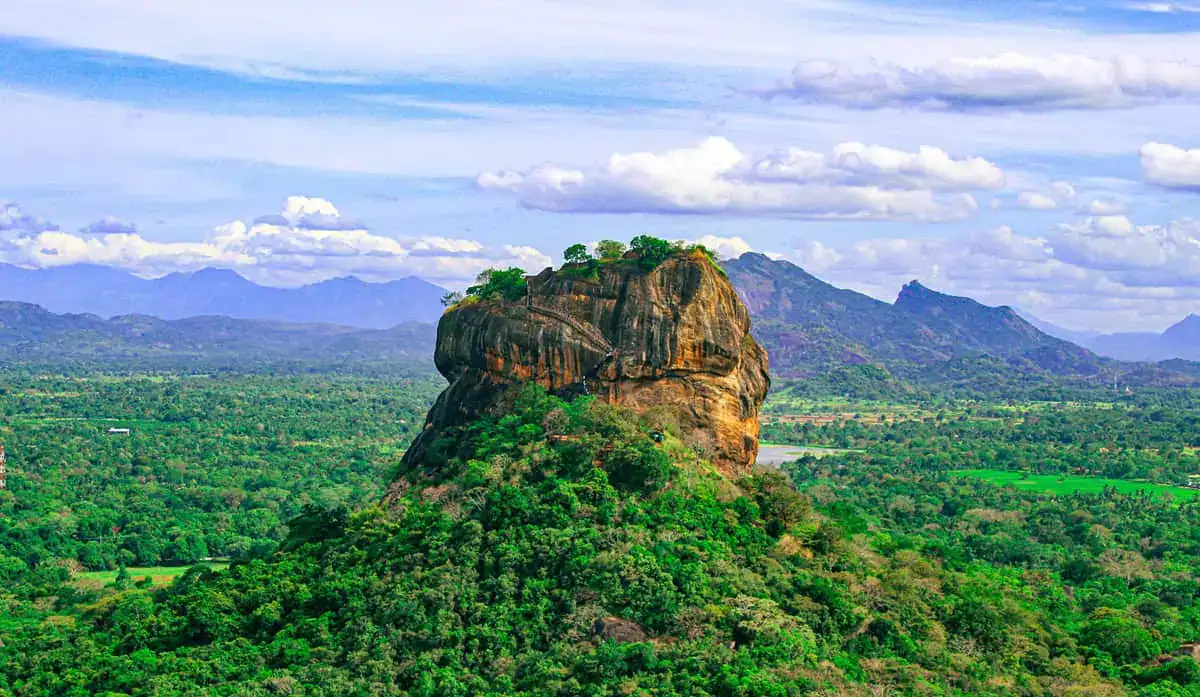

Spending 2 weeks in Sri Lanka during the December to March season allows you to experience the island at its most balanced. These months bring stable weather across the Cultural Triangle, clear conditions in the Hill Country, strong nature & wildlife activity in national parks, and calm seas along the South and Southwest Coasts. Fourteen days provide enough time to travel slowly, avoid constant packing, and move through regions in a way that feels logical and rewarding. This Sri Lanka itinerary follows the classic highlights loop because it aligns with geography, climate, and traveller energy from arrival to departure.
This route suits first-time visitors who want a complete introduction without rushing. You begin close to the international airport and move inland. At the same time, energy remains high; you gradually climb into cooler hill regions, then slow down as you approach wildlife and coastal days. Each destination connects naturally to the next. Distances stay reasonable. Experiences feel varied without repetition.
Clear Overview of the Classic 14 Day Sri Lanka Itinerary
Title: The Perfect 2 Weeks in Sri Lanka: Classic Highlights Itinerary (December to March)
Destination: Sri Lanka, starting from Negombo, the Cultural Triangle, Sigiriya Rock Fortress, Dambulla Cave Temple, Polonnaruwa or Anuradhapura, Minneriya or Kaudulla National Park, Kandy, Kandy to Nuwara Eliya or Ella scenic train ride, Nuwara Eliya or Ella, Yala National Park, the South Coast, Galle, and finishing at Bandaranaike International Airport.
Total Duration: 14 days and 13 nights
Theme: Culture & heritage, wildlife, Hill Country scenery, scenic train travel, and South Coast beaches
Pace: Moderate and well-balanced
What This Itinerary Covers
- Ancient cities of the Cultural Triangle
- Sigiriya Rock Fortress, Village Life, and Dambulla Cave Temple
- Polonnaruwa or Anuradhapura
- Elephant and wildlife safaris
- Kandy and Buddhist heritage
- The Kandy to Hill Country train journey
- Hill Country tea estates, waterfalls, and viewpoints
- South and Southwest Coast beaches
- Colonial heritage in Galle

A traditional fishing boat on Negombo Beach (Photo: Véronique Nijs)
Who This Suits
- First-time visitors
- Couples and families
- Travellers seeking variety with structure
- Visitors travelling between December and March
This Sri Lanka itinerary works well during this season because inland travel remains dry and coastal sea conditions support swimming, beach time, and short boat trips.
Transport and Route Logic
This route follows a clean inland loop before ending along the South Coast. You begin near the airport to reduce fatigue after arrival. The journey then moves north into the Cultural Triangle, where dry zone conditions support sightseeing and wildlife viewing. From there, the route flows south towards Kandy before climbing into the Hill Country, where cooler temperatures offer contrast. Wildlife regions follow next, placed before beach time to refresh the pace. The journey finishes along the South and Southwest Coasts, where December to March brings calm seas and clear skies.
Private car travel with a driver is suitable for most of the route. It allows early starts, flexible stops, and comfort during longer inland drives. Short tuk-tuk rides work well inside towns. The Kandy-to-Hill Country train journey replaces a long road transfer and offers one of the most scenic travel experiences in the country.
To get a basic idea of transport in Sri Lanka, it is advisable to read “Transport in Sri Lanka: The Best Guide”.
Route Snapshot by Day
- Day 1. Arrival in Negombo
- Day 2. Negombo to Sigiriya area
- Day 3. Sigiriya Rock Fortress, village life, and Dambulla Cave Temple
- Day 4. Polonnaruwa or Anuradhapura
- Day 5. Minneriya or Kaudulla safari and transfer towards Kandy
- Day 6. Kandy culture and heritage
- Day 7. Kandy to Hill Country by train
- Day 8. Nuwara Eliya or Ella
- Day 9. Nuwara Eliya or Ella
- Day 10. Hill Country to Yala and the first safari
- Day 11. Second safari and transfer to the South Coast
- Day 12. South Coast beach stay
- Day 13. Galle and South Coast heritage
- Day 14. Return and departure
Approximate Road and Rail Times
- Airport to Negombo: 30 minutes
- Negombo to Sigiriya area: 3.5 to 4 hours
- Sigiriya to Dambulla Cave Temple: Around 30 minutes
- Sigiriya area to Polonnaruwa: Around 1.5 hours
- Sigiriya area to Anuradhapura: Around 2 hours
- Sigiriya area to Minneria National Park: Around 30 minutes
- Sigiriya area to Kaudulla National Park: Around 1 hour
- Sigiriya to Kandy: Around 2.5 to 3 hours
- Kandy to Peradeniya Botanic Gardens: Around 30 minutes
- Kandy to Hill Country by train: Around 4 to 6 hours
- Nuwara Eliya to the Yala region: Around 5 to 6 hours
- Ella to the Yala region: Around 3 hours
- Yala to South Coast: Around 3 to 4 hours
- Galle to Colombo/airport: Around 2.5 hours
Day by Day Sri Lanka Itinerary
Day 1. Arrival in Negombo

Negombo Beach During Sunset (Photo: Nisal Rajapakshe)
Morning
You arrive at Bandaranaike International Airport and complete immigration procedures. A short transfer brings you to Negombo, which sits close to the airport and avoids long travel on the first day.
Afternoon
Check in to your hotel and rest after the flight. A gentle walk along the beach or lagoon helps adjust to the climate and time zone.
Evening
Dinner stays relaxed and early. Rest prepares you for inland travel the next morning.
Where to Stay
Negombo beach area
Accommodation Guidance
Choose a beachside hotel or family-run guesthouse with flexible check-in. Location matters more than luxury on the first night.
Food Stop
Grilled fish or seafood curry prepared with coconut milk and local spices.
Practical Notes
Avoid planning sightseeing on the arrival day. Hydration and rest matter most.
Day 2. Negombo to the Sigiriya Area
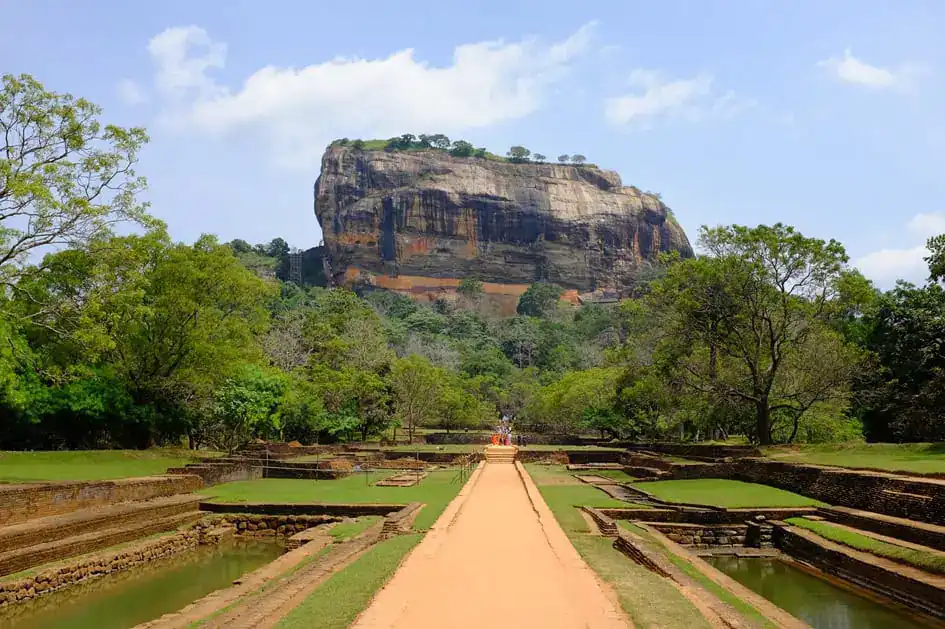
Sigiriya with the ancient garden (Photo: Wrobell, CC BY-SA 3.0)
Morning
Depart Negombo early to avoid city traffic. The drive leads inland through coconut plantations, rural towns, and irrigation reservoirs. The transition from coastal humidity to dry-zone air feels gradual.
Afternoon
Arrive in the Sigiriya or Habarana area by early afternoon. Check in and rest. Many properties are near lakes or forest edges, ideal for a leisurely afternoon.
Evening
Dinner takes place at the hotel. Surroundings remain quiet and natural.
Where to Stay
Sigiriya or Habarana
Accommodation Guidance
Nature lodges and boutique hotels work well here. Staying close to Sigiriya supports early starts.
Food Stop
Hotel rice and curry with seasonal vegetables, dhal, and coconut sambol.
Practical Notes
Travel time averages four hours. Early departure improves comfort.
Day 3. Sigiriya Rock Fortress, Village Life, and Dambulla Cave Temple
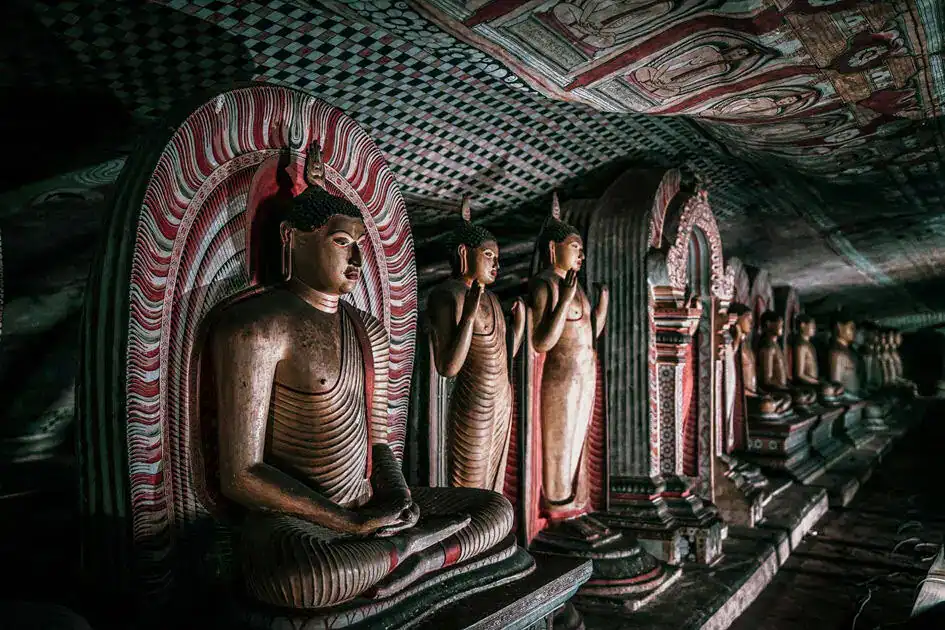
Inside the Dambulla Cave Temple (Photo: Agnieszka Stankiewicz, via Unsplash)
Morning
The day begins early with a climb of Sigiriya. Morning hours reduce heat and crowds. You pass water gardens, the mirror wall, frescoes, and stone staircases before reaching the summit ruins with wide views across forest and farmland.
The ancient city of Sigiriya is one of the most-visited attractions for travellers and a UNESCO World Heritage Site.
Plan around three hours for the full complex, including the water gardens and museum areas, plus time for the climb.
Opening hours of Sigiriya Rock Fortress: From 5.00 am to 6.30 pm daily, the Precos area closes at 5.45 pm.
Trail Map:
Afternoon
After descending, you join a village experience nearby. Travel takes place by cart or boat through rural landscapes. A local family hosts a home-cooked lunch prepared in clay pots over a wood fire.
Later in the afternoon, visit Dambulla. Painted caves and Buddha statues reflect centuries of devotion.
The climb stays short but steep in sections. Afternoon visits avoid heat.
Rangiri Dambulla Cave Temple complex is also a UNESCO World Heritage Site. It is one of the largest and best-preserved cave temple complexes in Asia.
Opening hours of Rangiri Dambulla Cave Temple: From 7.00 am to 7.00 pm daily.
Evening
Return to the hotel and rest after a full day.
Where to Stay
Same hotel in the Sigiriya area
Accommodation Guidance
Staying multiple nights in one place reduces packing and helps maintain a steady pace.
Food Stop
Traditional village lunch served with rice, vegetable curries, and fresh sambols.
Practical Notes
Wear modest clothing for temple visits. Carry water and sun protection.
Day 4. Polonnaruwa or Anuradhapura
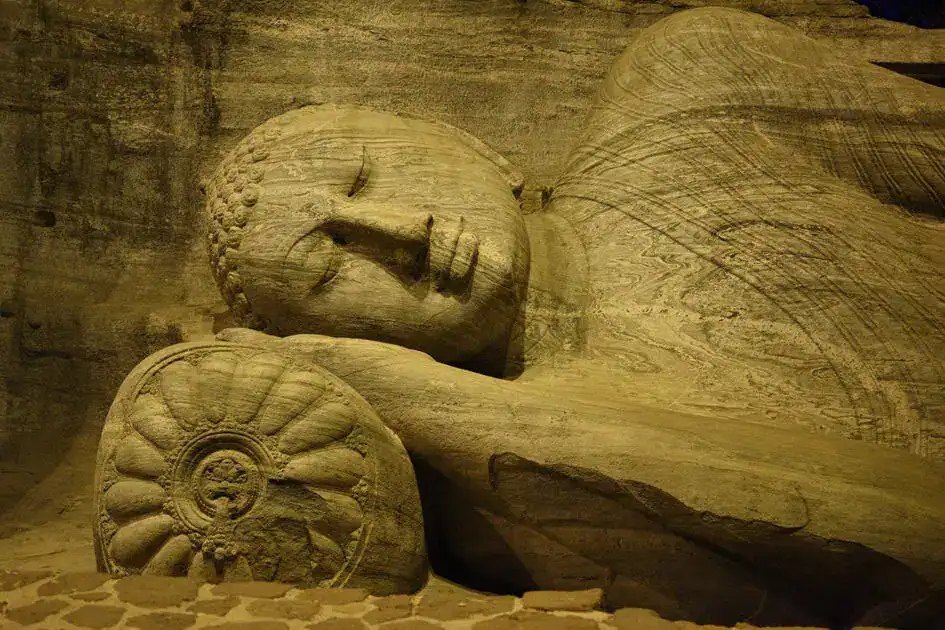
A Buddha Stature – Gal Viharaya (Photo: Nalaka Priyantha)
Morning
After breakfast, travel towards Polonnaruwa or Anuradhapura. Polonnaruwa suits most travellers due to its compact ruins and shorter travel time. Anuradhapura suits those focused on religious heritage.
Both Anuradhapura and Polonnaruwa are UNESCO World Heritage Sites.
Afternoon
Explore the chosen site at a steady pace. Cycling works well in Polonnaruwa. Walking routes dominate Anuradhapura. Lunch takes place near the site.
Evening
Return to your hotel by early evening.
Where to Stay
Same hotel in the Cultural Triangle
Accommodation Guidance
Remaining in the same base keeps the day manageable despite long site visits.
Food Stop
Local café near the ruins serving rice, curry, and fresh fruit.
Practical Notes
Anuradhapura requires more walking and time. Start early if choosing this option.
Day 5. Safari and Transfer Towards Kandy
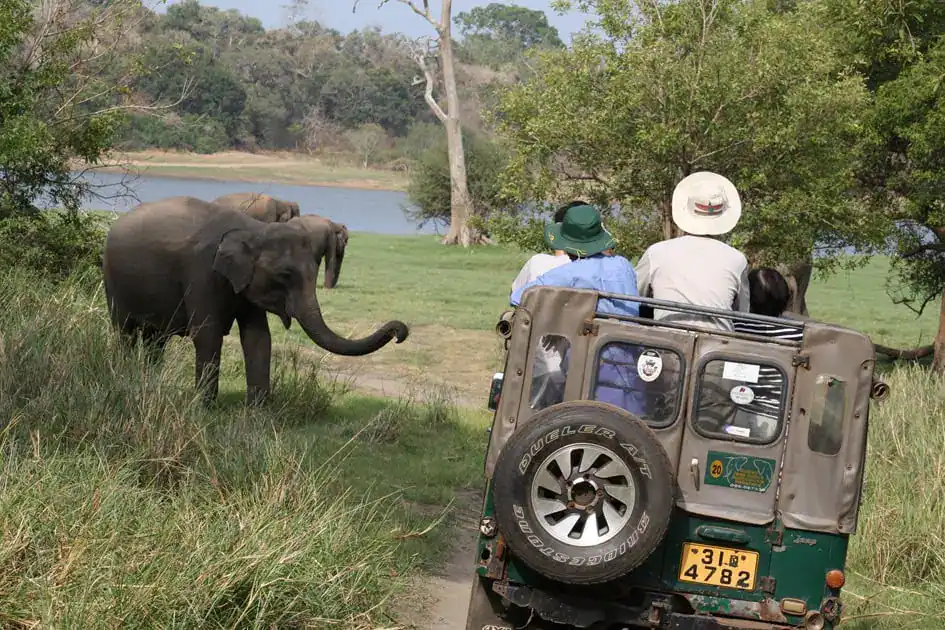
A Safari in Minneriya National Park (Photo: shankar s., CC BY 2.0)
Morning
The morning remains unstructured. Swimming or a short nature walk suits the day ahead.
Afternoon
An afternoon safari takes place at Minneriya National Park or Kaudulla National Park. Elephant herds often gather near reservoirs during this period.
Opening hours for Minneriya and Kaudulla National Parks are 6:00 am-6:00 pm daily.
Evening
After the safari, continue to Kandy. Check in and enjoy a simple dinner.
Where to Stay
Kandy city area
Accommodation Guidance
Choose accommodation near the lake or town centre for easy access.
Food Stop
Local restaurant serving Kandyan rice and curry with forest vegetables.
Practical Notes
Safari entry usually begins mid-afternoon. Carry insect repellent.
Day 6. Kandy Culture and Heritage
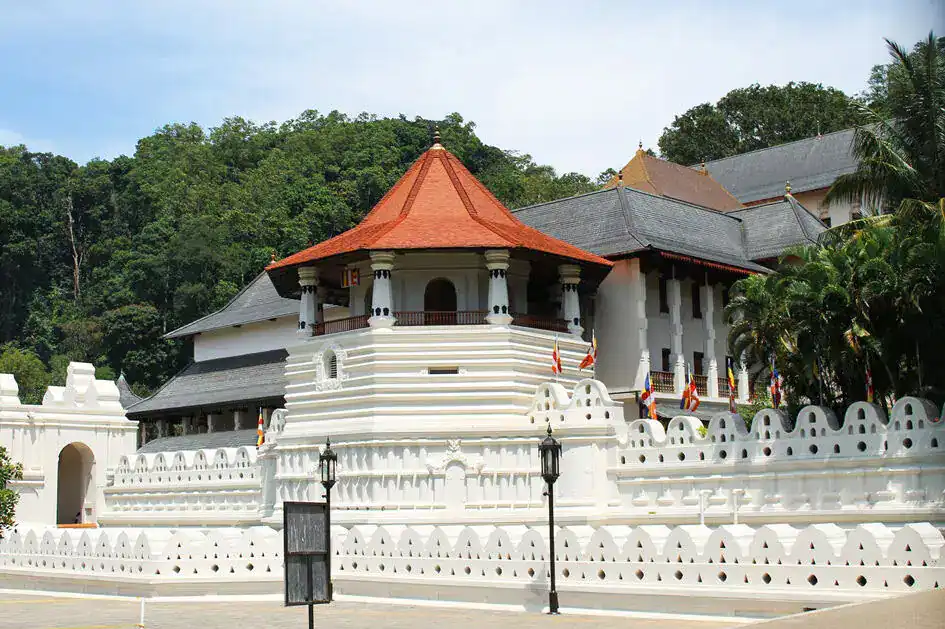
The Temple of the Tooth – Kandy (Photo: Musthaq Nazeer, via Pixabay)
Morning
Visit the Temple of the Tooth during morning rituals. Observe offerings and chanting in a respectful setting.
Opening hours of the Temple of the Tooth: From 5.30 am to 8.00 pm daily.
The Sacred City of Kandy is also a UNESCO World Heritage Site.
Afternoon
Explore Peradeniya Botanic Gardens. Walk shaded paths among palms, orchids, and flowering trees near the river.
Opening hours of Royal Botanic Gardens, Peradeniya: From 7.30 am to 6.00 pm daily.
Evening
Attend a cultural dance performance featuring Kandyan drumming and movement. A short city walk follows.
Where to Stay
Central Kandy
Accommodation Guidance
Mid-range city hotels offer the best balance of comfort and access.
Food Stop
Traditional Kandyan rice and curry with mild spice blends.
Practical Notes
Dress modestly at religious sites. Remove shoes before entering temples.
Day 7. Kandy to the Hill Country by Train
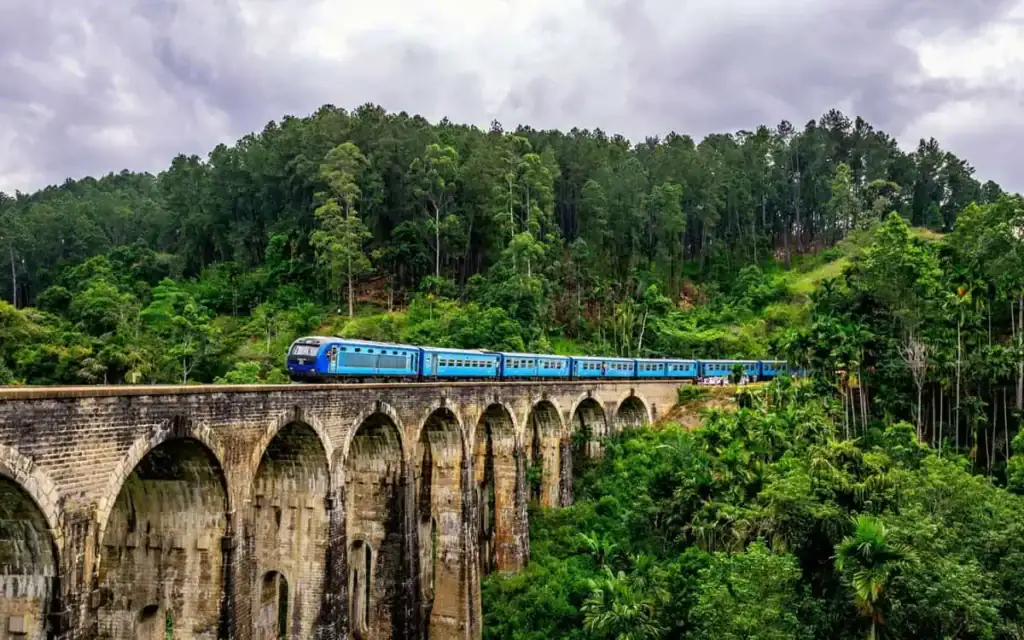
Kandy to Ella Train over the Nine Arches Bridge (Photo: Hendrik Cornelissen, via Unsplash)
Morning
Board the scenic train from Kandy towards the Hill Country. Reserved seating offers comfort and open views. The route passes tea estates, mountains, waterfalls, valleys, bridges, and tunnels.
- Check the train schedule.
- Online Ticket Booking: Online Advance Train Seats Reservation from the Sri Lanka Railways Official Page.
Afternoon
Arrive at Nanu Oya (Nuwara Eliya) or Ella station. Transfer to your hotel and settle into cooler air. Light walking suits the afternoon.
Evening
Relax at the hotel and enjoy a quiet dinner.
Where to Stay
Nuwara Eliya or Ella
Accommodation Guidance
Tea estate bungalows suit Nuwara Eliya. Boutique hotels suit Ella.
Food Stop
Tea estate lunch or café meal with fresh vegetables.
Practical Notes
Train tickets sell out quickly during peak season. Book ahead.
Day 8. Hill Country Exploration in Nuwara Eliya or Ella
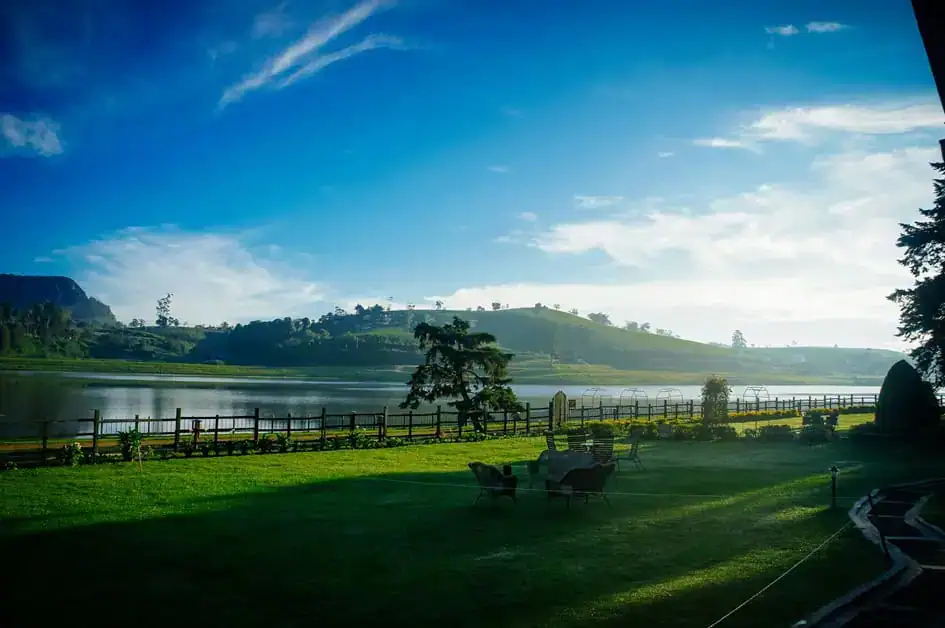
Gregory Lake Nuwara Eliya (Photo: Subodha Karunarathne)
Morning
You wake to cool air and soft light filtering through tea fields or mountain slopes. After breakfast, begin the day with a visit to a tea estate near your base. Walk through the plantations and observe leaf-plucking routines. A factory visit follows, during which guides explain the processing stages of Ceylon Tea from withering to grading. A tasting session helps you understand how altitude shapes flavour.
If you stay in Nuwara Eliya, you can also continue to nearby waterfalls, such as Ramboda, Lover’s Leap, St. Clair’s, or Devon Falls. These cascades remain active throughout the season and are located along scenic hill roads. If you’re staying in Ella, start with a walk to Little Adam’s Peak. The trail stays gentle and rewards you with wide valley views.
Trails in Nuwara Eliya:
- AllTrails Map – Ramboda Falls (1.1 km)
- AllTrails Map – Gregory’s Lake Loop (4.5 km)
- AllTrails Map – Lover’s Leap Waterfall (1 km)
- AllTrails Map – Lovers Leap Falls from Gregory’s Lake (12.1 km)
Trails in Ella:
- AllTrails Map – Little Adam’s Peak (1.4 km)
- AllTrails Map – Little Adam’s Peak and Lookout (2.9 km)
- AllTrails Map – Nine Arch Bridge from Ella Rd (1.9 km)
- AllTrails Map – Nine Arch Bridge (1.3 km)
- AllTrails Map – Ella – Ella Rock (9.5 km)
- AllTrails Map – Ella Rock Trail (5.6 km)
- AllTrails Map – Amba to Ella via Ella Rock (9.3 km)
- AllTrails Map – Rawana Ella Temple and Rawana Ella Cave (2.3 km)
Afternoon
Lunch is held at a café overlooking tea fields or in town. Afterwards, slow the pace. Free time allows rest, reading, or short walks near your accommodation. This break balances earlier sightseeing days.
Evening
Dinner remains relaxed. Hill Country evenings feel quiet and cool, which suits early nights.
Where to Stay
Same Hill Country accommodation
Accommodation Guidance
Tea estate bungalows suit travellers seeking calm and space. Boutique hotels suit those who prefer walkable access to the town centre.
Food Stop
Local café serving vegetable curries, roti, or soups prepared for cooler weather.
Practical Notes
Carry a light jacket. The weather changes quickly in the hills.
Day 9. Hill Country at Leisure
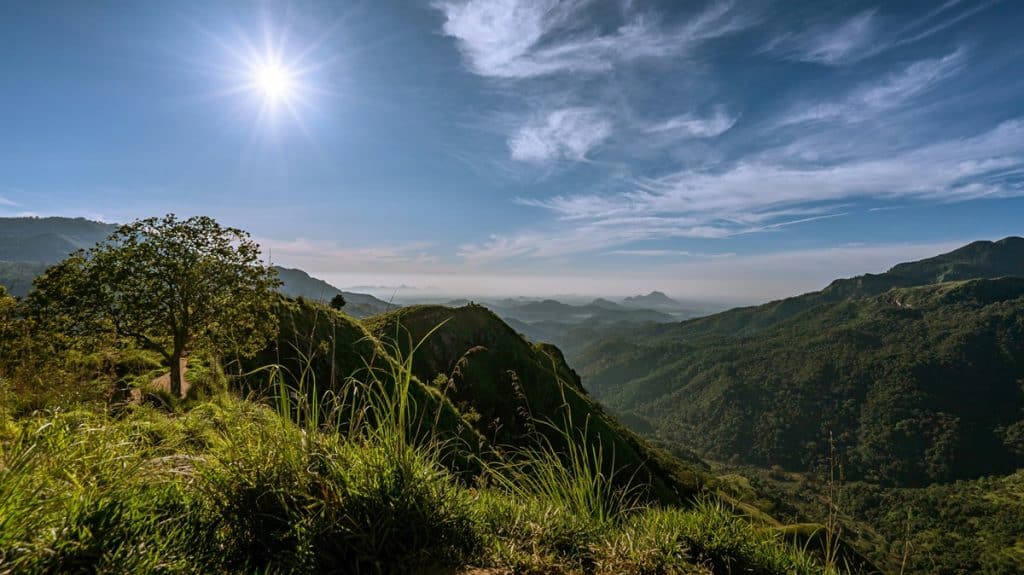
Little Adam’s Peak, Ella (Photo: Kevin Olson via Unsplash)
Morning
This second full day in the Hill Country allows deeper exploration without travel pressure. In Ella, visit the Nine Arch Bridge early to avoid crowds. Watching a train pass through the arches adds context to your rail journey. Continue with a village walk through vegetable farms and tea plots.
In Nuwara Eliya, the morning is ideal for visiting the city’s attractions, the local market, or the Hakgala Botanical Garden. These spaces reflect daily routines shaped by climate and agriculture.
Opening hours of Hakgala Botanical Garden: From 7:30 am to 6:00 pm, ticketing hours: 7:30 am-5:00 pm daily.
Afternoon
Lunch remains light. The afternoon stays flexible. Options include spa treatments, longer tea estate walks, or rest at the hotel. This downtime prepares you for the descent ahead.
Evening
Early dinner and preparation for departure the next day.
Where to Stay
Same Hill Country accommodation
Accommodation Guidance
Choose properties with views or gardens to enjoy quiet hours without leaving the hotel.
Food Stop
Bakery items, fresh bread, and local vegetable dishes.
Practical Notes
Avoid late nights. The next day involves a longer drive.
Day 10. Hill Country to Yala and First Safari

Two leopards are playing in Yala National Park (Photo: Nalaka Priyantha)
Morning
After breakfast, begin the descent from the hills towards the dry zone. Tea fields fade into forest and open plains. Short stops allow refreshments and photographs.
Afternoon
Arrive near Yala or Tissamaharama by early afternoon. Check in and rest during warmer hours. Later, head out for the first safari. Afternoon light is ideal for wildlife viewing and photography.
Opening hours of Yala National Park: From 6:00 am to 6:00 pm daily.
Evening
Return to the lodge by early evening. Dinner follows soon after.
Where to Stay
Yala or Tissamaharama area
Accommodation Guidance
Safari lodges near park gates reduce travel time. Eco lodges suit travellers focused on nature.
Food Stop
Hotel dinner with rice, curry, and grilled vegetables.
Practical Notes
Remain quiet during safaris and follow the ranger’s guidance.
Day 11. Second Safari and Transfer to the South Coast

Sunny Day – Mirissa Beach (Photo: Tatiana Kachanovetskaia)
Morning
Begin with an early-morning safari in Yala National Park, or an alternative park if conditions are better suited. Cooler temperatures keep animals active, which improves sightings of elephants, leopards, deer, and birdlife.
Afternoon
After breakfast and rest, begin the coastal transfer to the South or Southwest Coasts. December to March offers the best sea conditions here.
Common beach bases include Mirissa, Weligama, Unawatuna, Hikkaduwa, or Bentota. These locations support swimming, relaxed beach time, and coastal travel during this season.
- Mirissa Beach: Best for swimming, whale watching, surfing (beginners and intermediate surfers), and scenic spots.
- Weligama Beach: Ideal for families, surf lessons, and swimming.
- Unawatuna Beach: Best for casual swims, stand-up paddling, snorkelling, and diving.
- Hikkaduwa Beach: Best for swimming, diving, surfing (beginners and advanced surfers), paddle-boarding, kayaking, snorkelling, and turtle encounters.
- Bentota Beach: Ideal for families, swimming, surfing (beginner-friendly), jet skiing, wakeboarding, boat rides, kayaking, and river safaris.
Evening
Arrive at the beach by late afternoon or early evening. A short walk along the shore marks the transition into slower travel.
Where to Stay
Selected South or Southwest Coast beach town
Accommodation Guidance
Beachfront hotels suit longer stays. Boutique resorts suit couples. Family resorts suit group travel.
Food Stop
Fresh seafood curry or grilled fish prepared with coastal spices.
Practical Notes
Travel time averages three hours. Confirm the beach base before booking.
Day 12. South Coast Beach Day

Surfing – Weligama Beach (Photo: Inna Rabotyagina)
Morning
Begin the day with a beach walk or swim. Mirissa and Weligama are suitable for a calm morning swim. Unawatuna and Hikkaduwa offer sheltered bays.
Afternoon
Lunch takes place at a beachside café. Optional activities include light snorkelling, paddleboarding, or resting in the shade. Whale watching operates from Mirissa during this season.
Evening
Sunset defines the evening. Dinner near the beach closes the day.
Where to Stay
Same beach accommodation
Accommodation Guidance
Resorts suit relaxation-focused travellers. Smaller hotels suit quieter stays.
Food Stop
Beachside café serving seafood, rice and curry, or vegetarian coastal dishes.
Practical Notes
Avoid strong midday sun. Hydration remains important.
Day 13. Galle and South Coast Heritage

The Famous Lighthouse – Galle Fort (Photo: Diwyanjalee Wanigasekara, CC BY-SA 4.0)
Morning
Travel to Galle and explore Galle Fort. Walk along ramparts overlooking the ocean. Explore narrow streets lined with cafés, galleries, and colonial buildings.
Afternoon
Lunch inside the fort or nearby. Continue with a relaxed coastal drive through Unawatuna, Hikkaduwa, or Bentota, depending on your base.
Evening
Return to your beach hotel for the final night.
Where to Stay
South Coast beach town or Galle area
Accommodation Guidance
Heritage hotels suit Galle Fort. Beach hotels suit relaxed final nights.
Food Stop
Local restaurant serving southern Sri Lankan seafood dishes.
Practical Notes
Wear light clothing and carry water when walking through town.
Day 14. Return and Departure

Unawatuna Beach (Photo: Chathura Anuradha Subasinghe)
Morning
Begin the return journey towards Colombo or the international airport. Early departures help manage traffic.
Afternoon
Lunch en route if time allows. Arrival at the airport is followed by a buffer time for check-in.
Evening
Departure.
Where to Stay
No overnight stay
Practical Notes
Allow extra time during public holidays and weekends.
Accommodation Guidance Throughout This Sri Lanka Itinerary for 2 Weeks
This 2-week Sri Lanka itinerary suits a wide range of travel styles and budgets while keeping regional travel efficient and well-paced. Budget travellers find strong value in family-run guesthouses across the Cultural Triangle, Kandy, and along the South Coast, where rooms remain simple, clean, and well-located near key attractions. Couples and families often prefer mid-range boutique hotels that offer comfortable rooms, pools, and convenient access to major sites, especially in Sigiriya, Kandy, and the Hill Country. Along the South Coast, beachfront hotels offer direct access to calm seas during the December to March season, reducing the need for daily transport.
Travellers seeking a quieter, more spacious stay benefit from heritage properties, eco lodges near national parks, and tea estate bungalows in Nuwara Eliya or Ella, where cooler surroundings and open landscapes support rest along the journey. Safari lodges near Yala reduce early-morning travel time and improve access to the park. Booking accommodation several weeks ahead is advisable between December and March, as international arrivals peak and availability narrows in popular inland regions and South-Coast beach towns.
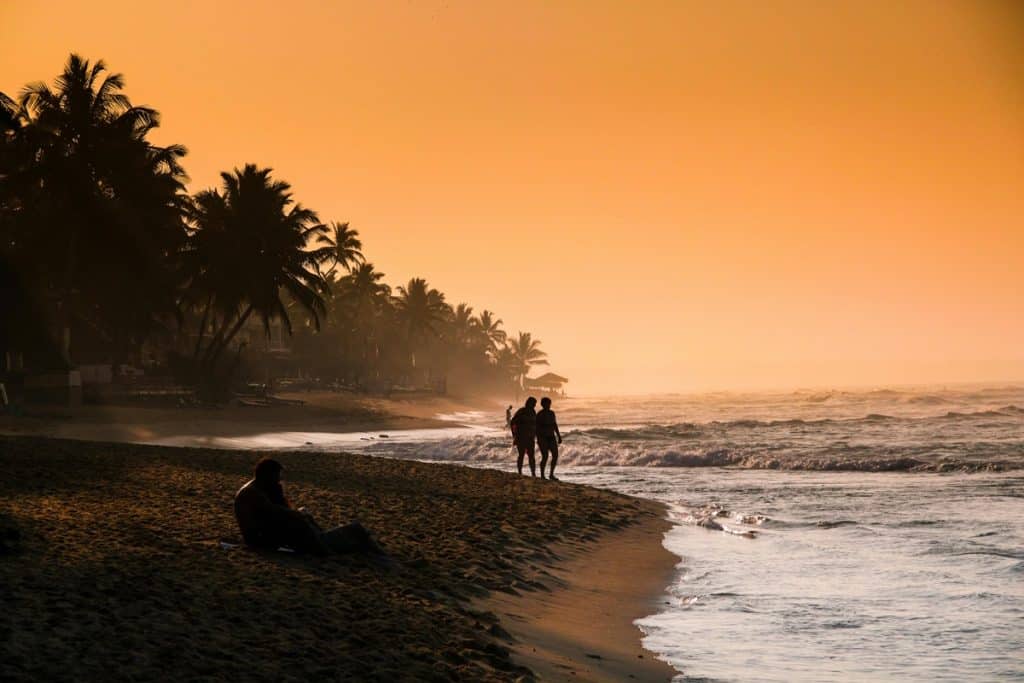
Hikkaduwa Beach (Photo: Dinusha Hemal Fernando)
Dining and Food Experiences Across the Trip
Food plays an important role in this 2-week Sri Lanka itinerary, especially during the December to March season, when coastal seafood stays fresh, and inland produce remains steady. As you move from the dry-zone plains to the cool hills and finally to the South Coast, flavours shift with geography. Each region introduces ingredients shaped by climate, farming patterns, and access to the sea.
In the Cultural Triangle, rice-and-curry dishes feature vegetables, lentils, coconut sambols, and freshwater fish. Village lunches focus on simple dishes cooked over wood fires, served with seasonal produce grown nearby. In Kandy, Kandyan-style cuisine features forest vegetables, jackfruit curries, and mild spice blends. At the same time, street snacks such as hoppers and short eats are available near markets. In the Hill Country, meals feel warmer and heavier, with soups, breads, and vegetable dishes suited to cooler air, and tea remains central to daily routines. Along the South Coast, seafood dominates. Grilled fish, prawn curries, crab dishes, and coconut-based preparations reflect proximity to the ocean and shape the final days of the journey.
Cultural and Local Experiences
This Sri Lanka itinerary places cultural contact at the centre of the journey while maintaining respect for local communities. Experiences focus on observation, conversation, and participation in everyday settings rather than staged encounters. You move through living traditions, working landscapes, and active places of worship in a way that feels natural and grounded.
Village visits near Sigiriya highlight farming practices, irrigation systems, and home cooking shaped by the dry-zone climate. Temple visits in Dambulla and Kandy offer insight into Buddhist rituals, with offerings, chanting, and daily prayer continuing uninterrupted for visitors. Cultural dance performances in Kandy present regional drumming and movement traditions passed down through generations. In the Hill Country, visits to tea estates illustrate the economic and social role of tea production. At the same time, conversations with guides and workers add context to daily routines. Along the South Coast, Galle Fort reflects layers of colonial influence, and interactions in fishing towns reveal how coastal livelihoods shape food, trade, and family life.
Flexibility and Alternatives
You may replace Polonnaruwa with Anuradhapura. If skipping Polonnaruwa, selecting both Nuwara Eliya and Ella balances the itinerary. Safari parks adjust based on wildlife movement. Beach bases vary by preference.
Weather and Packing Notes for December to March
From December to March, weather conditions across this Sri Lanka itinerary remain stable and dry, especially in the Cultural Triangle, Kandy, the Hill Country, and along the South and Southwest coasts. These months form the main travel season because rainfall decreases and sea conditions improve. The Cultural Triangle stays warm, with daytime temperatures often between 28 and 34 degrees Celsius. Skies remain clear, supporting early-morning climbs and wildlife safaris.
Kandy and the Hill Country feel cooler, particularly in the mornings and evenings. Temperatures at higher elevations, such as Nuwara Eliya, drop noticeably after sunset, and mist often settles across tea fields. The South Coast experiences strong sunshine and calm seas during this period, which supports swimming and beach time. Expect warm days overall, cooler nights in the hills, and dry travel conditions that make road journeys predictable.
Packing Essentials
- Lightweight breathable clothing for warm inland temperatures.
- Comfortable walking shoes with good grip for rock climbs and temple steps.
- Modest attire for temples, including a scarf or shawl.
- Light sweater or jacket for Hill Country evenings.
- Swimwear for South Coast beaches.
- Hat and sunglasses for sun protection.
- Sunscreen with high protection.
- Insect repellent for safari regions.
- Reusable water bottle.
- A camera or phone with sufficient storage for wildlife and landscapes.
If you plan to visit Sri Lanka, it is better to research the weather and the best time to visit.

Bentota Beach (Photo: confused_me via Pixabay)
Practical Details, Hours, Fees, Bookings, and Dress Codes
Entry Fees
Sigiriya, Dambulla, Anuradhapura, Polonnaruwa, the Temple of the Tooth, Minneriya, Kaudulla, and Yala National Parks require tickets or permits purchased at the gate. National parks require jeep hire too. You can also book national park permits/tickets online through the Wildlife Park Permits Reservation eService.
Carry cash and a card.
See ticket prices for Sigiriya, Dambulla Cave Temple, Anuradhapura, and Polonnaruwa.
Ticket fees for the Temple of the Tooth: FAQ – Sri Dalada Maligawa – Temple of the Sacred Tooth Relic
Opening Hours
Temples and heritage sites operate from morning hours until sunset. National parks follow set entry times for jeeps. Safari drives take place during morning and afternoon sessions.
Dress Code
Cover shoulders and knees at temples. Remove shoes and hats before entry.
Transport Tips
Start early on travel days. Carry water and snacks. Rely on local drivers for timing and road conditions. Private drivers help with flexible stops. Book trains early for reserved seats.
Safety, Health, and Comfort Notes
Travel Insurance
Comprehensive travel insurance covering medical care, safari activities, and transport delays remains essential for this 2-week journey. Include coverage for wildlife excursions and rail travel. Keep digital and printed copies of your policy details accessible during the trip.
Local Safety
Sri Lanka remains safe for independent travellers during the December to March season, including the South Coast. Follow all wildlife regulations during safaris and listen carefully to park rangers. Never feed or approach wild animals. Apply mosquito repellent in the evenings, especially near lakes, forests, and national parks. Use sunscreen daily along the South Coast and during outdoor activities. Drink bottled or properly filtered water.
Hospitals and Medical Access
Major hospitals operate in Colombo, Anuradhapura, Polonnaruwa, Kandy, and Galle, with reliable facilities and specialists. Smaller hospitals and clinics are available in towns such as Negombo, Dambulla, and Nuwara Eliya. The emergency contact number for police is 119, and 1990 connects you to medical emergency services. Carry your basic medication, prescriptions, and a small personal first-aid kit, especially when travelling between regions.

Coral Reef in Hikkaduwa (Photo: Amila Tennakoon, CC BY 2.0)
Estimated Costs for 2 Weeks in Sri Lanka
Costs vary based on your travel style, yet overall expenses remain predictable across a 14-day journey. Budget accommodation generally ranges from 25 to 40 USD per night. Mid-range hotels usually range from 60 to 120 USD, while luxury stays start at around 150 USD. Meals cost about 3 USD at local cafés and rise to roughly 20 USD at established restaurants and hotel dining rooms. Hiring a private car with a driver averages 45 to 60 USD per day. Train fares depend on route and class, with reserved seating priced higher, especially on the Hill Country line.
Entrance fees for major cultural sites typically range from 10 to 65 USD. Safari drives involve additional optional costs depending on the park and duration. Because this Sri Lanka itinerary follows a logical inland loop before moving to the South Coast, daily transfers remain efficient, which helps manage transport expenses over two weeks. Staying at least two nights in key regions such as the Cultural Triangle, the Central Highlands, and the beach also helps control overall spending by reducing the need for frequent long-distance travel.
Responsible Travel Notes
Support locally owned hotels, guesthouses, guides, markets, and restaurants throughout this Sri Lanka itinerary. Your spending decisions directly influence small communities across the Cultural Triangle, the Hill Country, and the South Coast. Reduce plastic use by carrying reusable bottles and disposing of waste responsibly, especially in rural and coastal areas where waste systems remain limited.
Respect dress codes and behave respectfully at religious sites and in villages. Avoid wildlife disturbance during safaris. Do not touch or feed wild animals. Respect wildlife distance rules at all times. Choose guides and operators who adhere to ethical practices and comply with environmental standards. Learn basic greetings in Sinhala and Tamil, if you can, as this shows courtesy and interest in local culture. Ask before taking photos of people.
Responsible choices protect cultural heritage and natural spaces.
Highlights Summary
- Sigiriya Rock Fortress
- Dambulla Cave Temple
- Polonnaruwa or Anuradhapura
- Minneriya or Kaudulla National Park safari to see elephants
- Kandy cultural heritage
- Kandy to Hill Country train journey
- Ella or Nuwara Eliya, trails, hikes, tea heritage, landscapes, and waterfalls
- Yala National Park safaris
- South Coast beach stay (Mirissa, Weligama, Unawatuna, Hikkaduwa, or Bentota)
- Galle and Galle Fort
Final Thoughts
Spending 2 weeks in Sri Lanka during the December to March season allows travel with depth, comfort, and clarity. This Sri Lanka itinerary follows the island’s climate patterns, geography, and human rhythms. Each region adds meaning without repetition. For travellers seeking a complete and balanced introduction to the island, this classic highlights journey remains the most reliable way to experience Sri Lanka.
Map – 2 Weeks in Sri Lanka: Classic Highlights Itinerary (December to March)
Featured image: Sigiriya Rock Fortress (Photo: Chamixth, CC BY-SA 4.0)

I am a Sri Lankan medical doctor who spends my free time travelling, exploring new destinations, and documenting the beauty of the island I call home. I have journeyed across almost every corner of Sri Lanka with my wife and daughter — from wildlife parks and misty mountains to ancient cities, deep forests, rugged landscapes, and quiet beaches.
Travel is not just a hobby for me — it’s a way of life. I love nature, enjoy road trips, and find joy in wildlife photography. I also read widely about tourism, travel trends, and destination culture. Through my writing, I aim to help travellers experience Sri Lanka through real stories, meaningful insights, and honest recommendations — the same way I explore it with my own family.