

Sri Lanka ranks among the few places on earth where you stand a realistic chance of seeing wild leopards during a short trip. Many travellers arrive with high expectations, yet leave without a single sighting. The reason often lies in planning. Leopards in Sri Lanka live across multiple ecosystems. Yet each park offers a different experience, success rate, and level of effort. Choosing the right location shapes your wildlife safari outcome more than luck. This guide explains where leopard spotting works best, how each park differs, and how you can increase your chances through smart decisions.
Why Sri Lanka Is One of the Best Places in the World for Leopard Spotting
The Sri Lankan leopard, Panthera pardus kotiya, stands as an endemic subspecies found only on the island, as identified through genetic research published in Conservation Biology. Wildlife researchers identify Sri Lanka as one of the world’s leading destinations for leopard viewing, due to unusually high population density in protected dry-zone habitats. Studies published by the Department of Wildlife Conservation estimate one of the highest leopard densities anywhere in Yala National Park Block 1, with figures often cited at 0.5-1 leopard per square kilometre in prime areas.
Unlike many African reserves, Sri Lankan leopards sit at the top of the food chain. No lions or competing predators challenge their dominance. This ecological advantage changes behaviour. Leopards hunt during daylight hours more frequently, rest openly on rocks, and cross jeep tracks without hesitation. For visitors, this increases visibility during safari drives.
The national parks in Sri Lanka vary greatly in terrain. Some feature open scrubland. Others hold dense forest or grassland plains. Leopard movement patterns vary with prey availability and water sources. Understanding these differences helps you make the decision where to focus your time.
Wildlife guides often repeat a simple truth. Leopard sightings rarely depend on chance alone. Timing, patience, and park selection shape outcomes.
Yala National Park: The Highest Chance of Seeing Leopards
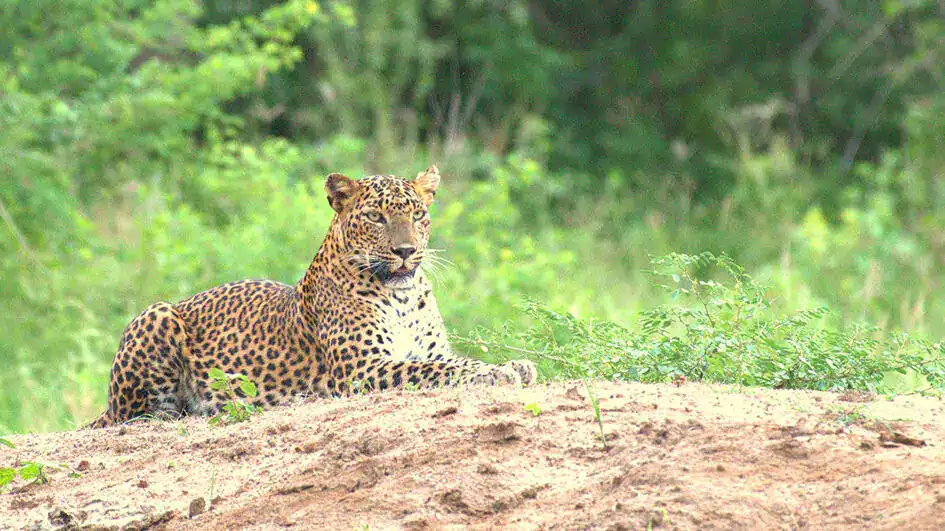
A leopard in Yala National Park (Photo: Nalaka Priyantha)
Yala National Park is Sri Lanka’s most famous wildlife destination. For travellers interested in leopard spotting, this park often offers the highest likelihood of success.
Located in the Southeast Dry Zone, Yala combines open plains, rocky outcrops, lagoons, and forest patches. These varied habitats support deer, wild boar, monkeys, and buffalo, all of which are key prey species. Leopards patrol defined territories, which experienced trackers learn over years of guiding.
Research surveys and long-term monitoring confirm that Yala National Park holds one of the highest leopard densities recorded globally. Sightings occur throughout the year, though conditions vary with seasonal rainfall.
Why Yala Works for Leopard Sightings
Open terrain improves visibility. Leopards often rest on granite rocks in the early morning. Waterholes attract prey during dry months, increasing predator movement.
Safari drivers communicate via observation rather than radio tracking because official tracking devices are restricted. Skilled drivers read alarm calls from langurs and spotted deer. These signals often indicate the presence of a predator nearby.
Best Areas Inside Yala
Block 1 receives the most visitors and records the highest frequency of sightings. Leopard territories remain well studied here. Yet vehicle congestion increases during peak seasons.
Blocks 3 and 5 offer quieter experiences. Sightings occur less frequently but feel more natural because there are fewer jeeps.
Pros of Yala National Park
- High probability of leopard encounters.
- Experienced safari guides.
- Strong infrastructure and accommodation options.
Challenges
- Vehicle crowding during peak months.
- Pressure on animals near popular sightings.
Best Strategy for Yala
Choose early-morning safaris that start at park opening. Leopards remain active before temperatures rise. Stay at least two nights near the park. Multiple drives improve success rates significantly.
Wilpattu National Park: A Wilder Leopard Experience
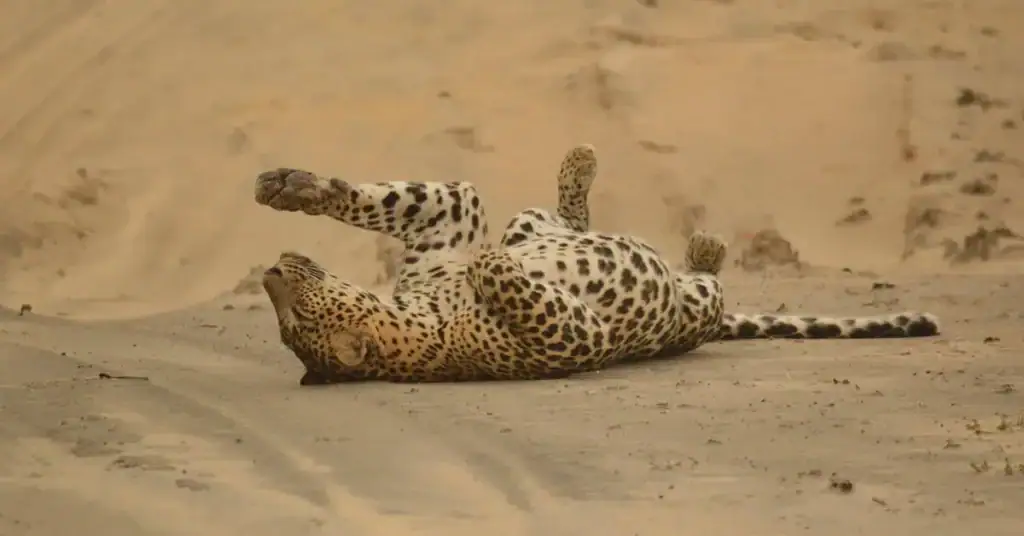
A leopard is resting in Wilpattu National Park (Photo: Nalaka Priyantha)
Wilpattu National Park offers a completely different atmosphere. Located in the Northwest, Wilpattu ranks among the largest as well as the oldest national parks in Sri Lanka. The park’s identity is defined by natural lakes known as villu. These shallow basins attract wildlife throughout the dry season.
Leopard spotting in Wilpattu demands patience. Dense forest cover reduces visibility compared with Yala. Sightings occur less frequently, yet encounters are often calmer and longer because fewer vehicles are on the road.
Why Wilpattu Appeals to Wildlife Enthusiasts
Leopards here move through forest corridors rather than open plains. Guides track pugmarks along sandy roads. Early morning drives reveal fresh tracks near water sources.
Wildlife photographers often prefer Wilpattu National Park because animals behave naturally, free from large crowds. Visitors sometimes observe leopards crossing roads quietly or resting near the edges of Villu.
Research conducted after the park reopened following decades of closure during civil conflict shows healthy predator recovery. Conservation monitoring indicates stable leopard populations supported by strong prey density.
Pros of Wilpattu
- Fewer vehicles.
- Authentic wilderness atmosphere.
- Longer, undisturbed sightings.
Challenges
- Sightings require patience.
- Longer driving distances inside the park.
Best Strategy for Wilpattu
Plan two or three safari drives. Focus on early morning entries. Choose experienced trackers familiar with recent leopard movement patterns.
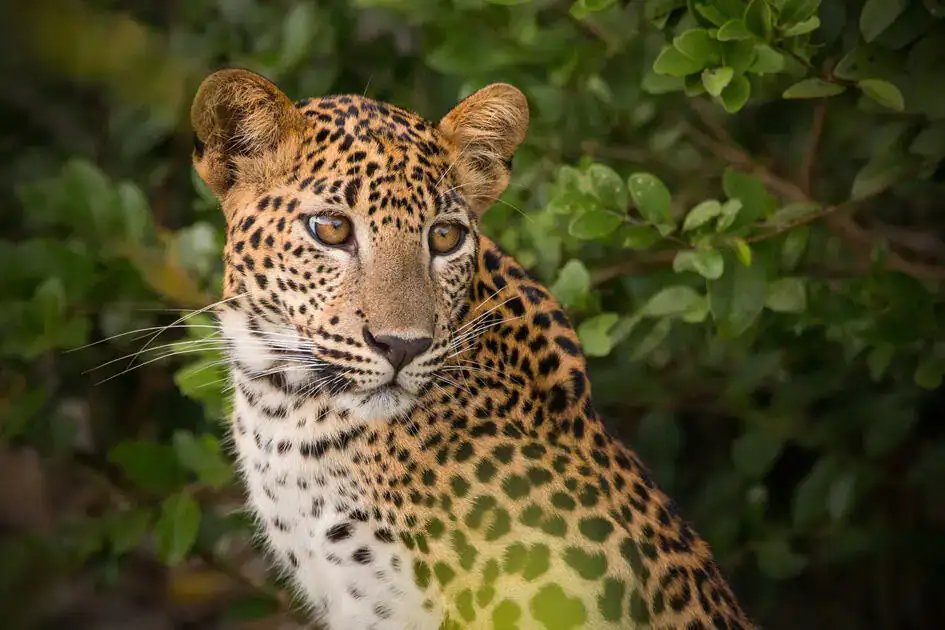
Sri Lankan Leopard in Wilpattu National Park (Photo: Senthi Aathavan Senthilverl, CC BY-SA 4.0)
Udawalawe National Park: Unexpected Leopard Encounters
Udawalawe National Park earns fame for elephants. Large herds roam open grasslands near the reservoir. Leopard sightings receive less attention, yet guides report steady increases over recent years.
The park’s open terrain improves visibility. Leopards hunt smaller prey such as hares, peafowl, and young deer along grassland edges. Sightings remain unpredictable yet rewarding.
Why Udawalawe Deserves Attention
The park’s compact size allows efficient coverage during a single drive. Visitors often combine elephant viewing with the possibility of leopard encounters.
Many travellers overlook Udawalawe when planning leopard spotting routes. It reduces pressure from safari vehicles compared with Yala.
Best Approach
Treat leopard sightings here as a bonus rather than a guarantee. Focus on morning drives through rocky areas and areas with tree cover.
Kumana National Park: Quiet Neighbour of Yala
Kumana National Park lies east of Yala. Birdwatchers visit for wetlands and migratory species, yet predators roam the same terrain.
Leopards move between Yala and Kumana through connected habitats. Lower visitor numbers create peaceful safari conditions. Sightings occur occasionally, often during dry months when animals travel between water sources.
Travellers who prefer quieter national parks in Sri Lanka often select Kumana after visiting Yala.
Lunugamvehera connects the Yala and Udawalawe ecosystems. Wildlife uses this region as a migration corridor. Leopard presence remains confirmed by camera-trap studies conducted by conservation researchers.
Safari infrastructure remains limited. Visitors seeking solitude and raw wilderness choose this park. Sightings remain rare yet meaningful.
Gal Oya National Park: Remote Wilderness
Gal Oya National Park offers one of Sri Lanka’s least-crowded safari experiences. Boat safaris across Senanayake Samudraya attract attention, though leopards inhabit the surrounding forest areas.
Sightings occur infrequently due to dense vegetation. Yet experienced guides occasionally report successful leopard tracking during dry seasons.
Travellers who value quiet exploration over guaranteed sightings often appreciate Gal Oya.
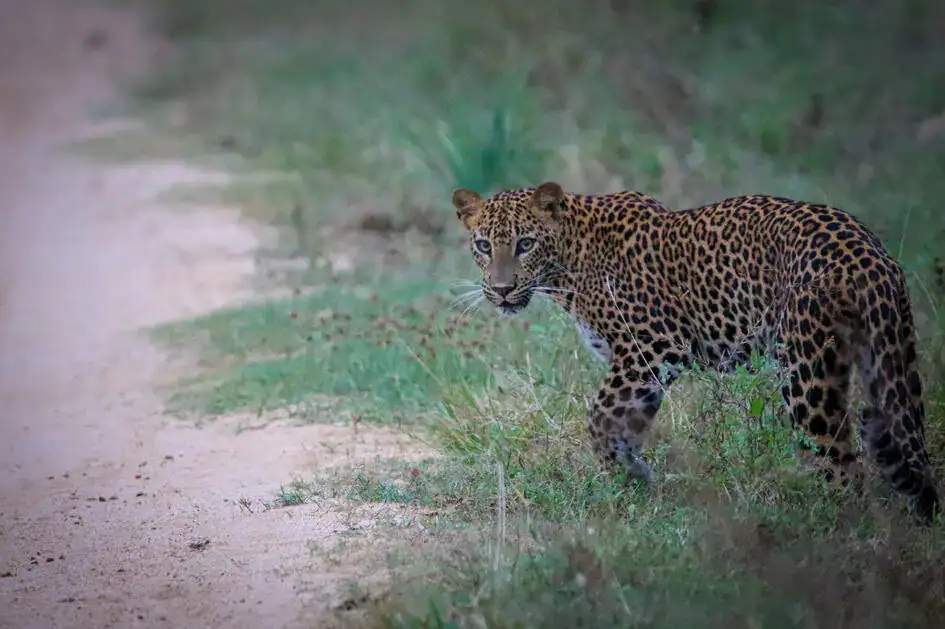
A leopard in Kumana National Park (Photo: Vasuki Jayaweera, CC BY-SA 4.0)
Leopards in Horton Plains National Park
Horton Plains National Park differs sharply from dry-zone parks. Located in Sri Lanka’s central highlands at elevations above 2,000 metres, this montane grassland ecosystem supports a small population of leopards adapted to cooler climates.
Scientific observations confirm the presence of leopards through camera traps and occasional sightings. These leopards prey on sambar deer, which roam the plains in large numbers. Sightings remain rare because of thick cloud cover, dense vegetation, and hiking-only access, which limit viewing opportunities.
Visitors walking the World’s End trail sometimes encounter fresh tracks early in the morning. Rangers advise hikers to remain alert yet calm. Leopard attacks remain extremely rare. These animals avoid human contact.
Horton Plains is not a traditional leopard-spotting destination. Still, the confirmed presence of leopards in Sri Lanka’s highland ecosystem highlights the species’ adaptability across climates.
Best Time for Leopard Spotting in Sri Lanka
Seasonal timing shapes safari outcomes. Sri Lanka experiences monsoon cycles affecting wildlife behaviour differently across regions.
Dry Season Advantages
Water sources shrink during dry months. Prey animals gather near remaining waterholes. Leopards follow prey movement, increasing visibility.
Yala National Park performs best from February through July—vegetation thins, improving sight lines.
Wilpattu National Park experiences high sightings between May and September, when seasonal drying reduces dense foliage.
Morning vs Afternoon Safaris
Morning drives offer cooler temperatures and higher predator activity. Leopards hunt during early hours before the heat builds.
Afternoon safaris produce sightings near sunset, especially during dry months when animals approach water sources.
Stay Duration Matters
One safari rarely guarantees success. Wildlife guides recommend at least two drives. Three drives increase the probability significantly.

A leopard on a stone in Yala National Park (Photo: Byrdyak, CC BY-SA 4.0)
How to Increase Your Chances of Seeing Leopards
Planning influences results more than luck. Follow practical strategies used by experienced safari travellers.
- Choose skilled trackers.
- Stay near park entrances to enter early.
- Avoid peak holiday crowds.
- Remain quiet during sightings.
- Follow the guide instructions carefully.
Leopards respond strongly to noise and vehicle pressure. Calm behaviour improves observation time.
Ethical Safari Practices and Leopard Conservation
Responsible tourism protects wildlife long-term. Increased safari popularity brings pressure on animals, especially in Yala National Park.
Select operators who maintain a safe distance from animals. Avoid drivers who chase or block leopard movement. Ethical guides prioritise animal welfare over close photographs.
Sri Lanka’s leopard population faces threats from habitat loss and human conflict outside protected areas. Tourism revenue supports conservation when managed responsibly.
Choosing the Right Park for Your Travel Style
Your ideal safari depends on expectations.
- For the best chance of sightings, choose Yala National Park.
- If you prefer quieter wilderness, choose Wilpattu National Park.
- If elephants interest you as much as predators, choose Udawalawe.
- If you seek remote exploration, consider Gal Oya or Kumana.
Each park offers a different rhythm. Matching expectations prevents disappointment.
National Parks in Sri Lanka require tickets or permits purchased at the gate. You can also book national park permits/tickets online through the Wildlife Park Permits Reservation eService.
All national parks open at 6:00 am and close at 6:00 pm daily.
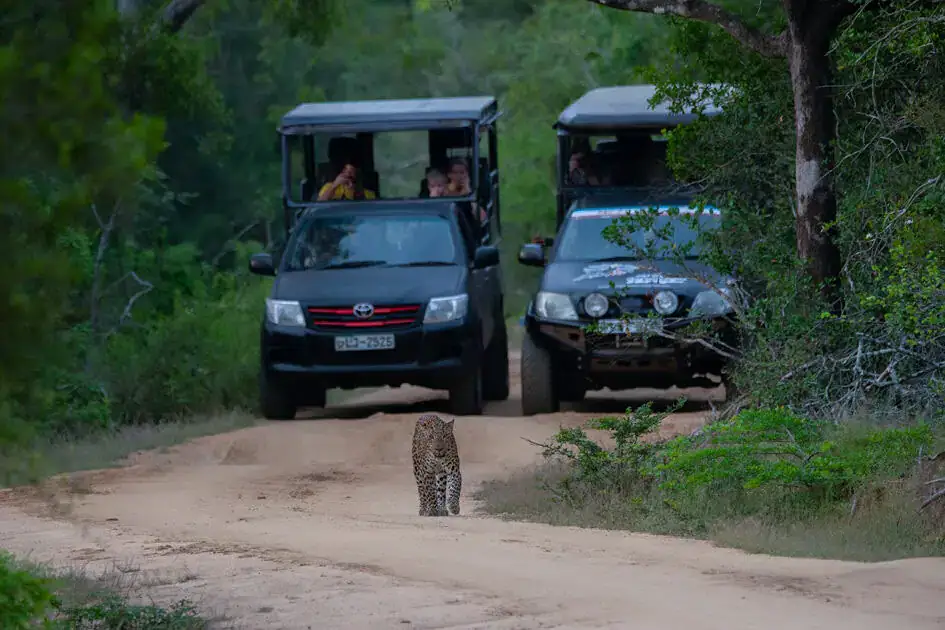
Safari Jeeps and a Leopard in Yala National Park (Photo: Thilina Kaluthotage, CC BY-SA 4.0)
How to Plan Your Leopard Safari Route Across Sri Lanka
Once you understand how each park differs, the next step is to build a logical travel route. Many travellers attempt to visit too many parks within a short time. Long drives reduce safari energy and limit wildlife encounters. A focused plan improves results.
Sri Lanka’s main leopard habitats sit within the dry zone. Travel distances between parks remain manageable, but road conditions and traffic add to travel time. Smart planning groups nearby locations together.
Classic Southern Wildlife Route
This route suits first-time visitors interested in leopard spotting and offers a high success rate.
Start in the Cultural Triangle or the hill country. Travel south towards Udawalawe National Park for an introductory safari focused on elephants. Continue east to Yala National Park for dedicated leopard drives.
Suggested flow:
This itinerary increases wildlife diversity while improving your chances of seeing leopards in Sri Lanka.
Northern Wilderness Route
Travellers who prefer quieter environments often choose Wilpattu National Park as their main safari destination.
Suggested flow:
- Negombo or Colombo arrival.
- Anuradhapura cultural sites.
- Wilpattu National Park, two or three nights.
This route combines history and wildlife while avoiding heavy safari traffic.
Extended Wildlife Route for Enthusiasts
Wildlife-focused travellers sometimes combine Wilpattu and Yala during longer stays. The contrast between parks deepens understanding of leopard behaviour across ecosystems.
Suggested flow:
- Wilpattu National Park.
- Central Highlands or Horton Plains.
- Yala National Park.
This itinerary highlights how leopards adapt from forest environments to open dry plains.
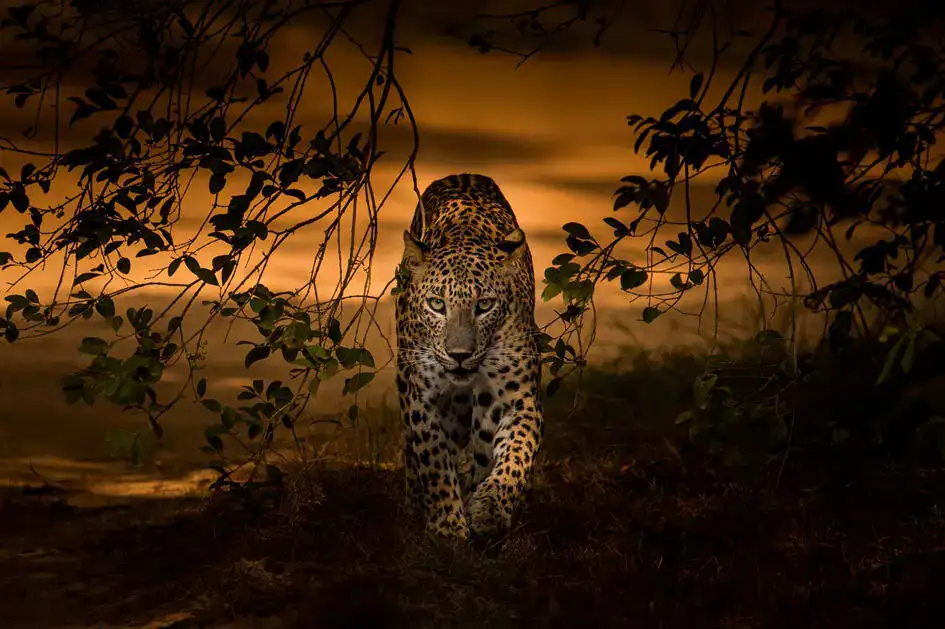
A Stunning Female Leopard in Wilpattu National Park (Photo: Senthiaathavan, CC BY 4.0)
Choosing the Right Safari Operator
Your driver shapes your safari experience more than the vehicle or lodge. Experienced trackers read subtle signs. They observe bird alarm calls, fresh footprints, and movement patterns.
When selecting a safari operator, consider:
- Years of guiding experience.
- Knowledge of leopard territories.
- Respectful driving behaviour.
- Communication skills.
Avoid operators promising guaranteed sightings. Wildlife remains unpredictable. Honest guides explain conditions rather than make unrealistic claims.
Vehicle choice matters as well. Jeeps with elevated seating improve visibility through vegetation. Smaller groups reduce noise and improve observation.
Where to Stay Near Leopard Parks
Accommodation location affects safari timing. Staying close to park entrances allows early entry, increasing the likelihood of leopard sightings.
Near Yala National Park
Options range from simple guesthouses to luxury safari lodges. Areas near Tissamaharama provide easy access to Block 1 entrance gates.
Many lodges schedule breakfast before dawn to allow immediate departure when gates open at 6:00 am.
Near Wilpattu National Park
Eco lodges and boutique camps dominate the area. Quiet surroundings match the park’s atmosphere. Evening discussions with naturalists often enhance understanding of leopard behaviour.
Near Udawalawe National Park
Family-run guesthouses offer convenient access. Many include home-cooked meals and flexible safari timing.
Choosing smaller properties often provides better local knowledge compared with large resorts.
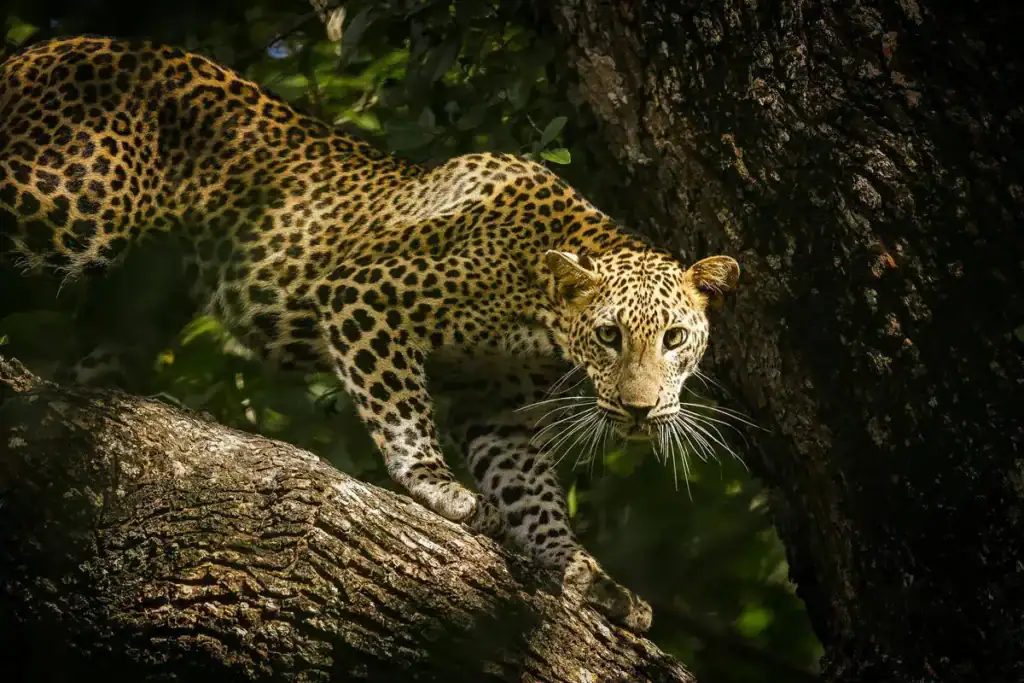
A Leopard in Sri Lanka (Photo: Rajee Kumar)
Understanding Leopard Behaviour During Safaris
Knowing how leopards behave helps you set realistic expectations during drives. Leopards remain solitary animals. Each adult controls a defined territory marked by scent and tree scratch marks.
Activity peaks occur during early morning and late afternoon. During midday heat, leopards rest in shaded areas or rocky shelters.
Common behaviours you might observe:
- Walking along jeep tracks.
- Resting on tree branches.
- Drinking near waterholes.
- Stalking prey in tall grass.
Leopards rely on stealth. Sudden vehicle movement or loud conversation often causes them to retreat into cover. Quiet observation extends viewing time.
Why Some Travellers Miss Leopard Sightings
Many visitors assume wildlife sightings depend purely on luck. In reality, several avoidable mistakes reduce chances.
Short stays rank as the most common issue. A single safari rarely aligns with leopard movement. Multiple drives dramatically increase the probability.
Arriving late to the park also reduces the likelihood of success. Early morning offers cooler temperatures and active predators.
Crowded vehicles create noise. Leopards detect disturbance quickly and disappear into vegetation.
Expectations also matter. Leopards remain wild animals, not staged attractions. Patience plays a central role in safari success.
Photography Tips for Leopard Spotting
Photographing leopards requires preparation rather than expensive equipment. Lighting conditions change rapidly during safari drives.
Use fast shutter speeds to capture movement. Leopards often walk across roads quickly. Early morning light produces softer tones ideal for photography.
Helpful tips:
- Keep the camera ready at all times.
- Avoid sudden movements inside the jeep.
- Use continuous shooting mode.
- Focus on the eyes for stronger images.
Many memorable sightings occur unexpectedly. Preparation ensures you capture the moment.
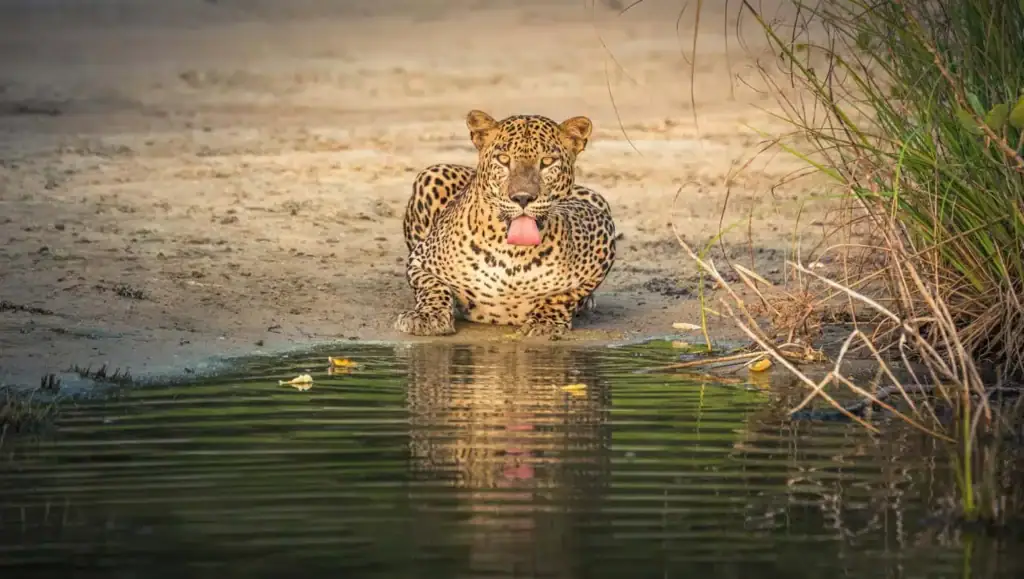
A Leopard – Wilpattu National Park (Photo: Udara Karunarathna)
Safety Guidelines During Leopard Safaris
Sri Lanka’s national parks maintain strict safety rules. Visitors remain inside vehicles during drives. Leopards rarely approach vehicles aggressively, yet maintaining distance protects both animals and people.
Follow the guide instructions at all times. Avoid standing or leaning outside the jeep. Sudden movements attract animal attention.
Hikers in Horton Plains National Park occasionally encounter leopard tracks. Rangers advise staying on marked paths and travelling during daylight hours. Leopards avoid human interaction, and sightings remain rare.
Best Months for Leopard Spotting by Region
Understanding seasonal differences improves planning.
Yala National Park
February to July offers strong viewing conditions. Dry weather reduces vegetation cover and concentrates wildlife near water.
Wilpattu National Park
May to September provides improved visibility after the rains decrease. Road access improves during this period.
Udawalawe National Park
Year-round safaris operate successfully. Dry months produce higher predator movement near open plains.
Horton Plains National Park
Early mornings between January and March provide clearer weather conditions for hiking. Leopard sightings remain rare but have been confirmed through research monitoring.
Quick Comparison Guide for Travellers
- If your priority focuses on leopard sightings, choose Yala National Park.
- If you value peaceful safari experiences, choose Wilpattu National Park.
- If you want elephants with occasional encounters with predators, choose Udawalawe.
- If you prefer cooler climates and hiking in areas with remote wildlife, visit Horton Plains.
Sample Three-Day Leopard Safari Plan
- Day 1: Arrive near Yala—briefing with guide in the evening. Rest early.
- Day 2: Morning safari at park opening. Afternoon rest. Evening safari drive.
- Day 3: Second morning safari focusing on different zones. Depart after breakfast.
This schedule balances rest with peak wildlife activity periods.
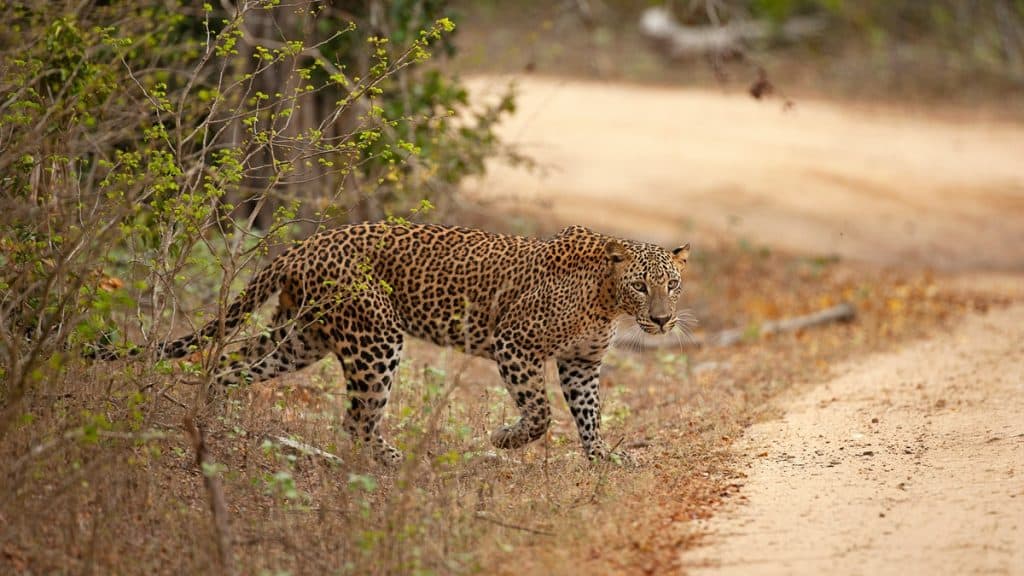
A Leopard in Yala National Park (Photo: Rohit Varma)
Why Leopard Spotting in Sri Lanka Feels Unique
Leopards in Sri Lanka live in compact ecosystems accessible on short trips. You travel from popular beaches to dry forests within hours. This proximity enables wildlife encounters without extended travel.
Unlike larger safari destinations, Sri Lanka blends culture & heritage, landscapes, and nature & wildlife into a single journey. One week includes religious landmarks & ancient temples, tea-covered hills, and predator tracking in national parks.
The experience feels immersive because habitats change rapidly across short distances.
The Best National Parks to Spot Leopards in Sri Lanka
Choosing the right park determines your safari success. Leopards in Sri Lanka live across diverse ecosystems, yet each location offers a different balance between probability, atmosphere, and effort.
Yala National Park offers the best chance of sightings and is suitable for first-time safari travellers. Wilpattu National Park rewards patience with quieter and more natural encounters. Udawalawe offers unexpected opportunities to see leopards alongside elephant herds. Horton Plains National Park reminds visitors that these predators survive even in highland grasslands, though sightings remain rare.
Your preparation shapes your outcome. Stay longer, start early, choose experienced guides, and respect wildlife space. When planning aligns with animal behaviour, leopard spotting becomes far more rewarding.
As you plan your journey through the national parks in Sri Lanka, consider what experience matters most to you. Do you want frequent sightings, peaceful wilderness, or a deeper connection with nature through patience and observation? The answer guides you towards the right park. It brings you closer to witnessing one of Asia’s most elusive predators in the wild.
Map – Leopard Spotting in Sri Lanka
Sources and References:
This article was prepared using conservation research and wildlife publications from recognised scientific and conservation organisations.
- Department of Wildlife Conservation, Sri Lanka. Leopard Conservation Action Plan for Sri Lanka 2019–2023.
- Kittle, A. M. et al. (2017). Leopard density and ranging behaviour in Sri Lanka. Biological Conservation.
- Miththapala, S. et al. (1996). Phylogeographic subspecies recognition in leopards. Conservation Biology.
- IUCN SSC Cat Specialist Group. Panthera pardus Species Assessment.
- Sunquist, M. and Sunquist, F. Wild Cats of the World. University of Chicago Press.
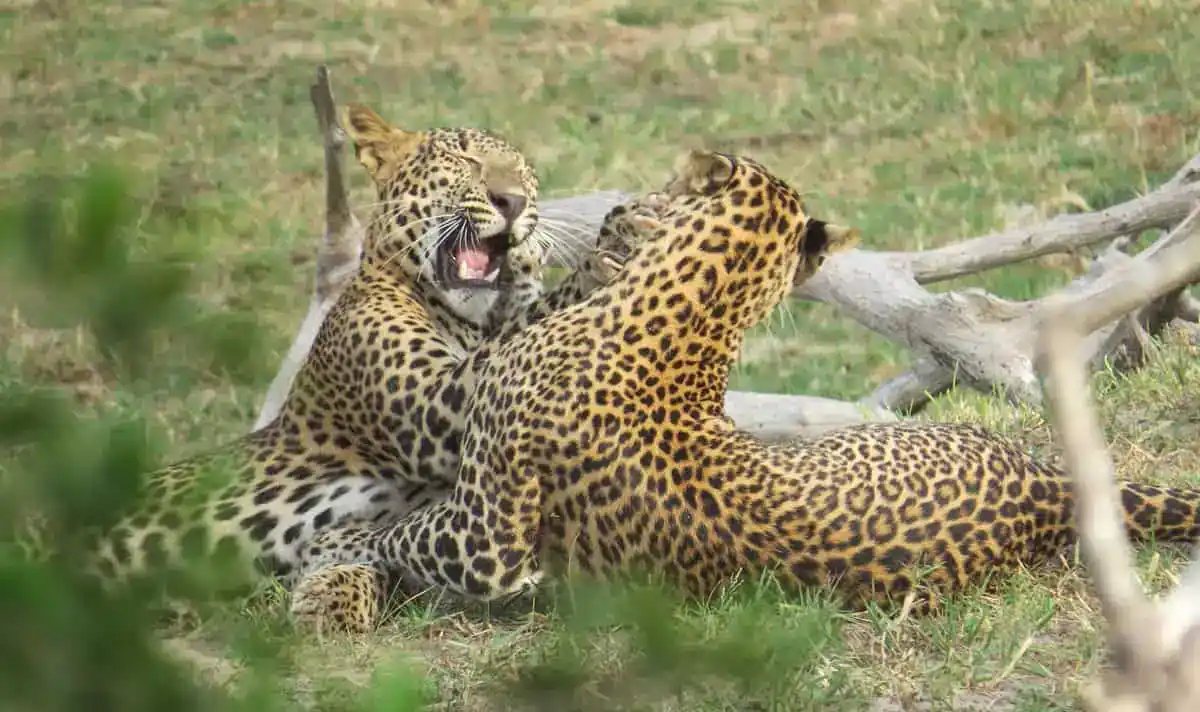
Featured image: Two Leopards Playing in Yala National Park (Photo: Nalaka Priyantha)

I am a Sri Lankan medical doctor who spends my free time travelling, exploring new destinations, and documenting the beauty of the island I call home. I have journeyed across almost every corner of Sri Lanka with my wife and daughter — from wildlife parks and misty mountains to ancient cities, deep forests, rugged landscapes, and quiet beaches.
Travel is not just a hobby for me — it’s a way of life. I love nature, enjoy road trips, and find joy in wildlife photography. I also read widely about tourism, travel trends, and destination culture. Through my writing, I aim to help travellers experience Sri Lanka through real stories, meaningful insights, and honest recommendations — the same way I explore it with my own family.