
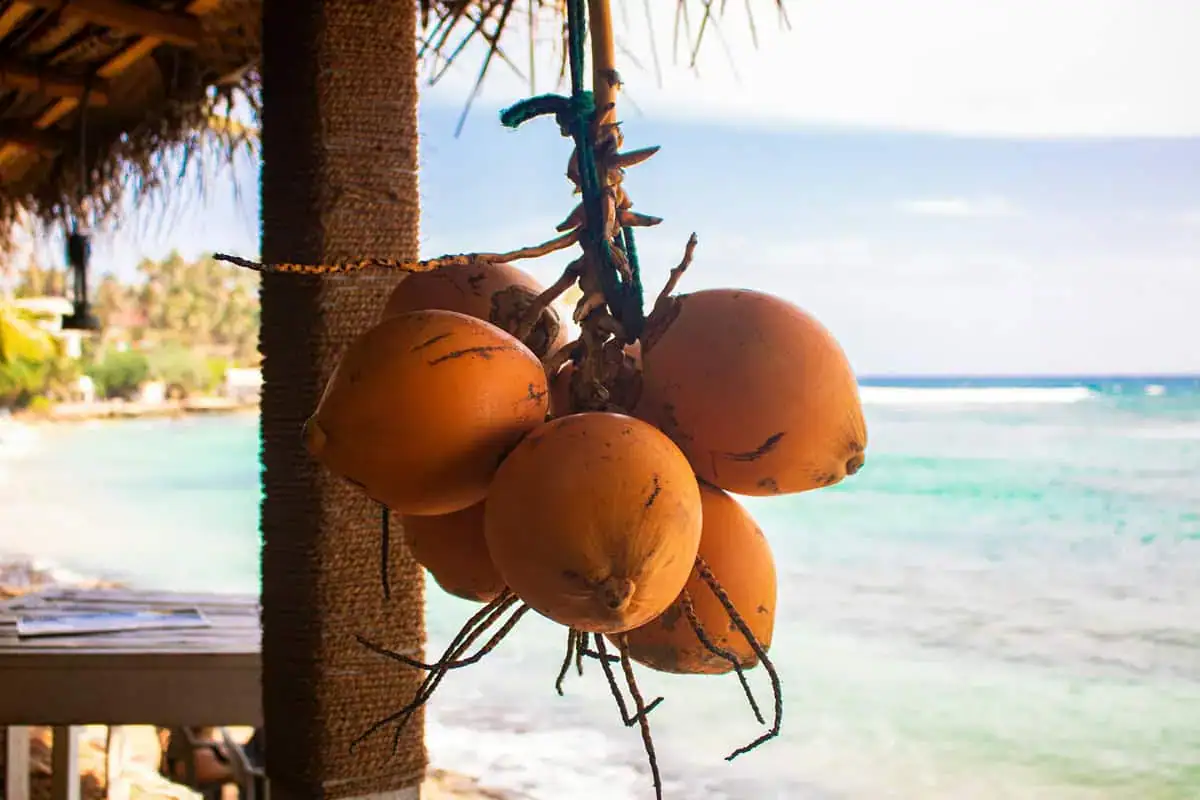

When you visit Sri Lanka, one of the first refreshing treats you’ll encounter is the bright orange-husked coconut that locals call thambili. It is the King Coconut, a variety unique to the island. You’ll spot a vendor by the roadside, hand him a nut, he will tap it open, insert a straw, and you’ll taste one of the purest, most naturally hydrating drinks in Sri Lanka. In this post, I’ll guide you through what King Coconuts are, why they stand out among Coconuts in Sri Lanka, how to find and enjoy one, and the benefits behind the cool, clear water they hold.
If you are also interested in other popular drinks in Sri Lanka, read the popular Sri Lankan foods and drinks guide to become familiar with them.
What is the Sri Lankan King Coconut?
The King Coconut is a variety of the coconut palm species Cocos nucifera, scientifically classified as Cocos nucifera var. aurantiaca. It is native to Sri Lanka and has been a trusted local drink for hydration and wellness. The shell is orange (or yellow‐orange) rather than the green or brown of more common coconuts. Its interior water is naturally sweet, lighter on flesh, and prized as a thirst-quencher.
Alternative Names
In Sinhala, the King Coconut is called “thambili”. Among its sub-varieties are “Ran Thambili”, “Gon Thambili”, and “Nawasi Thambili”. These reflect slight genetic or regional differences in the tree and nut.
Why is King Coconut special?
The King Coconut stands out for several reasons:
- Its husk colour makes it easy to spot and reminds you that you are drinking something local and different.
- It has been selectively grown in Sri Lanka for its drinkable water rather than heavy kernel meat.
- The water inside contains a rich combination of sugars, vitamins, minerals, and amino acids, giving it functional-beverage credentials.
- It supports local livelihoods. Research notes that King Coconut water has been among the fastest-growing export products in Sri Lanka over the past decade (M. D. Jayasinghe & I. G. N. Hewajulige, 2021).
- These features make the King Coconut more than just a tropical snack. If you’re exploring “Drinks in Sri Lanka”, the King Coconut points to culture, health and agriculture all in one.
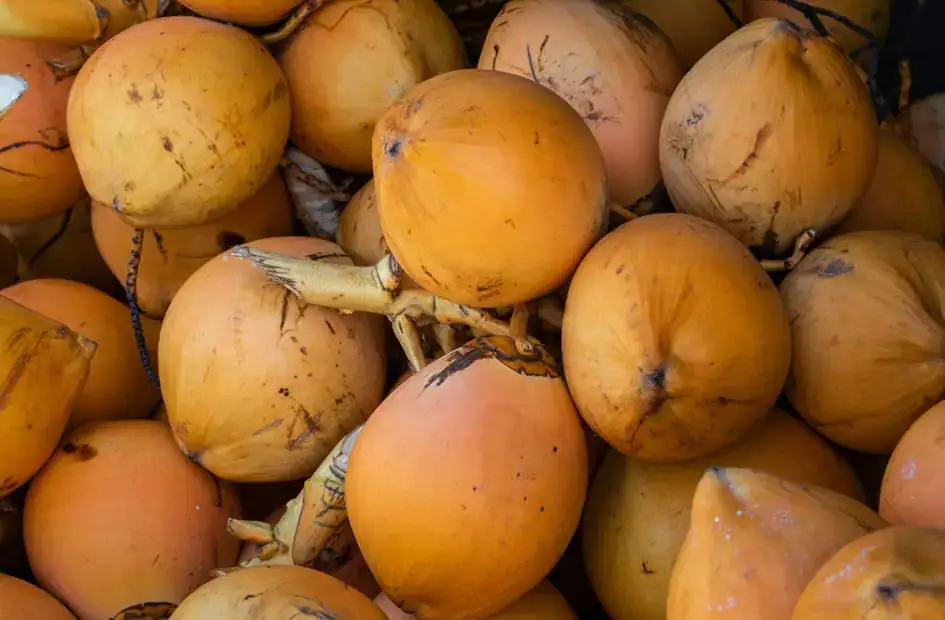
King Coconuts (Photo: Zoshua Colah)
Varieties of King Coconuts and Coconuts in Sri Lanka
Sri Lanka grows many coconut varieties. The King Coconut belongs to the “Aurantiaca” group (orange‐husked). By contrast, tall and dwarf varieties (green or brown husk) fall into other groups.
Within King Coconut types, examples include:
- Ran Thambili (pink hue inside husk)
- Gon Thambili (red, dwarf)
- As a visitor, you’ll see “King Coconut” offered—recognise it by its bright orange husk, and fewer vegetative fibres inside.
King Coconut tree
The King Coconut tree tends to be somewhat shorter in stature compared with many tall coconut palms. It produces medium-sized nuts, with each bunch containing 25-50 nuts. Its growth and fruiting patterns are adapted to Sri Lanka’s climate. The kernel inside is thinner than that of coconuts grown for copra or oil; the emphasis is on the water. When you see a cluster of vibrant orange nuts at the crown of a palm, you’re likely looking at a King Coconut tree.
Where does King Coconut grow, and how is it plucked?
The King Coconut thrives in the wet and intermediate zones of Sri Lanka, especially in districts such as Kurunegala, Gampaha and Galle. Its cultivation is primarily for fresh nut drinks and bottled water (M. D. Jayasinghe & I. G. N. Hewajulige, 2021).
Harvesting involves selecting nuts of optimum maturity. One study notes that nuts at 7–8 months after fruit-set show higher concentrations of reducing sugars and minerals before kernel development dominates at 8–9 months (M. D. Jayasinghe & I. G. N. Hewajulige, 2021).
Farmers or pickers climb or use long poles to detach the bunch and deliver fresh king coconuts roadside. The freshness of the nut is vital for the best taste and nutrient profile.
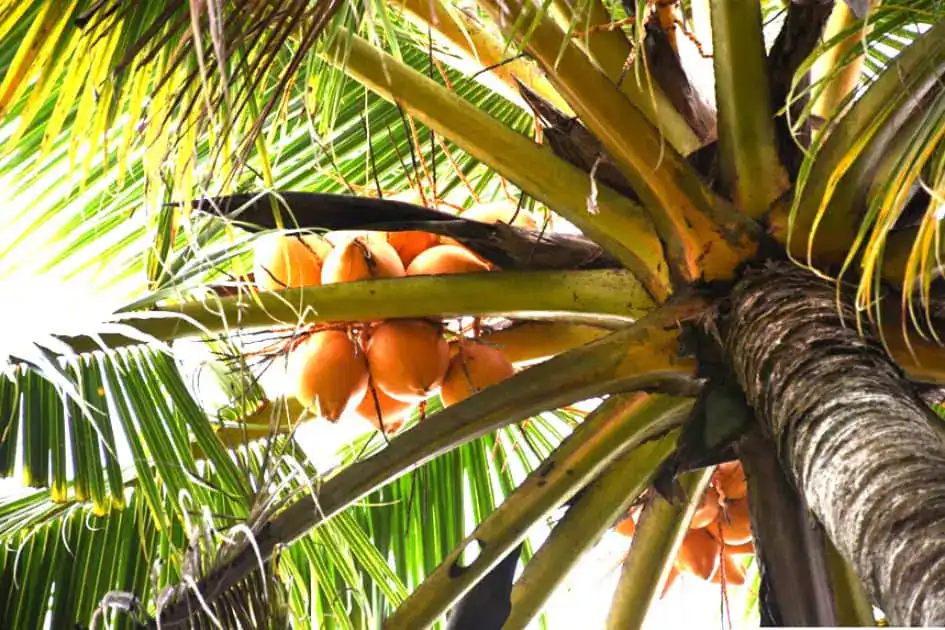
King Coconuts on the tree (Photo: awpasindu)
How do you find King Coconuts / Where to drink King Coconut?
If you are in Sri Lanka, finding a King Coconut is straightforward:
- Look for roadside stalls or beachside vendors selling orange-husked coconuts (often with bunches hanging outside).
- Ask for “thambili” (Sinhala) and specify you want it chilled.
- In hotels or cafés, you may find bottled King Coconut water—but nothing beats cracking open a fresh nut.
- If you travel inland, even local grocery shops keep King Coconuts and will open them for you.
- Because King Coconuts are smaller than some mature coconuts, expect a slightly higher price for the freshness and convenience.
How to taste it
Drinking a fresh King Coconut is an experience:
- The vendor will open the husk to reveal the nut.
- Insert a straw and sip the clear water inside. Take a moment to taste: you’ll find it sweeter and lighter than many green coconuts.
- Once you finish, you can break open the nut and remove the meat if desired (though it’s thin).
- To fully appreciate flavour, drink it chilled (ask the vendor to keep it in a cooler or ice bucket).
- Pro tip: turn the nut to allow some of the coconut meat to scrape your teeth for a subtle flavour contrast.
Why is King Coconut water special?
Rather than being a by‐product of harvest for oil or copra, King Coconut water is the primary purpose of the nut. It has a unique composition: high in natural electrolytes, moderate in natural sugars, and low in fat. Some researchers describe it as “a good source for blood sugar restoration and to stave off hunger without using artificial beverages with added sugars and harmful additives” (M. D. Jayasinghe & I. G. N. Hewajulige, 2021).
Unlike many sugary drinks, it offers natural hydration with beneficial minerals. The flavour profile is lighter, sweeter, and more delicate than that of many regular coconuts.
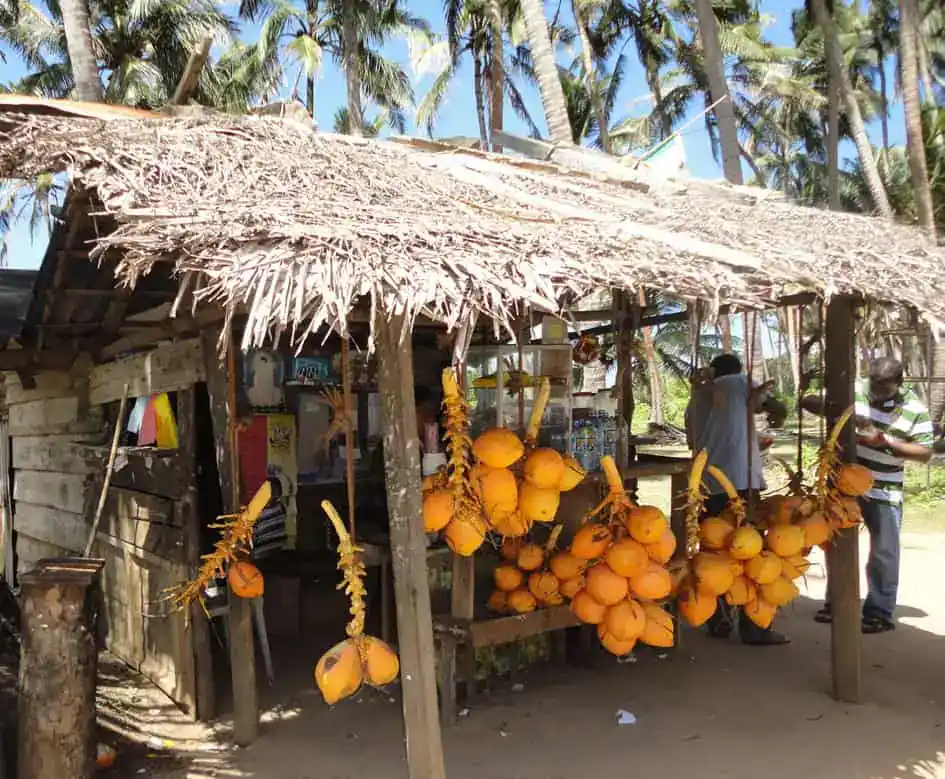
King Coconut kiosk in Sri Lanka (Photo: Singhalawap, CC BY-SA 3.0)
What is included in King Coconut Water?
Here are the key components of King Coconut water:
- Electrolytes: potassium (K⁺), sodium (Na⁺), magnesium (Mg²⁺), calcium (Ca²⁺)
- Natural sugars: mainly reducing sugars (glucose and fructose) at optimum maturity. One study shows that at 7–8 months of maturity, the total soluble solids (Brix) of King coconut water measured around 4.5-5.0 (M. D. Jayasinghe & I. G. N. Hewajulige, 2021).
- Vitamins: Vitamin C (ascorbic acid) and specific B vitamins.
- Amino acids and phytochemicals: for instance, L-arginine has been noted in King Coconut water.
- Very low fat and cholesterol-free.
- All these make it nicely suited for hydration and light nourishment.
Benefits of King Coconut Water
Here are the benefits you’ll appreciate:
- Hydration: Thanks to its electrolyte content, the water helps restore fluids and minerals.
- Nutritional value: Sweet but natural, offering a healthier alternative to sugary drinks.
- Skin and wellness: Some studies mention anti-oxidant content and possible anti-ageing effects via Vitamin C.
- Support for export & local economy: The growing international interest in bottled King Coconut water helps local producers.
- While it is not a miracle cure, King Coconut is a smart, natural choice for a refreshing, healthy drink in humid climates or after physical activity.
When to drink
- On hot days in Sri Lanka, when you feel the need for refreshment.
- After light exercise or a beach swim, you need cool hydration.
- It is a natural sports drink and stays light while offering a strong mineral profile.
- In place of sodas or artificially sweetened beverages.
- Anywhere you’d reach for a light drink, you’ll find King Coconut water a pleasant pick.
Serving style
- Traditional: fresh nut with a straw, served chilled.
- Bottled: many packaged King Coconut waters exist in export markets. (Check label for sugar content).
- In cafés: sometimes used as a base for mocktails or smoothies, or paired with local desserts.
- For flavour, you can add a squeeze of lime or mint to fresh water for a variant.
- The simpler the better: the original flavour of King Coconut water holds its own.
Energy and nutrition data
Here are typical figures (per 100 ml or 100 g) for King Coconut water:
- Calories: around 20-25 kcal per 100 ml.
- Carbohydrates: around 4-6 g (mostly natural sugar) at optimum maturity.
- Fat: 0 g.
- Protein: negligible (~0 g).
- Potassium: higher than that of a banana (depending on brand/specimen), as claimed by some producers.
- Remember, actual values depend on the nut’s maturity, processing, and whether it’s raw or bottled.
Best with
- A chilled King Coconut water pairs well with a simple snack after beach or pool time.
- If you’re eating Sri Lankan street food like rice and curry or short eats, the refreshing drink helps balance the spice.
- Use it in mocktails: mix with fresh lime and mint for a natural tropical refresher.
- You could blend the inner flesh (thin though it is) into a smoothie with banana and King Coconut water.
- In short, it works as a stand-alone drink or as a light accompaniment.
Special tips
Here are some helpful points:
- Select a nut with a bright orange husk and no noticeable damage.
- Ask the vendor: if the nut has been chilled, it will taste even nicer.
- Drink soon after opening: once exposed to air, the flavours and some nutrients may degrade.
- If you want extra meat inside, ask for a slightly more mature nut—but expect thicker flesh, somewhat less water.
- In bottled King Coconut water, check the sugar and processing: raw is better; avoid added sweeteners.
- Because King Coconut water contains natural sugar, if you are on a strict low-sugar diet, you should account for it.
- These tips help you get the best experience.
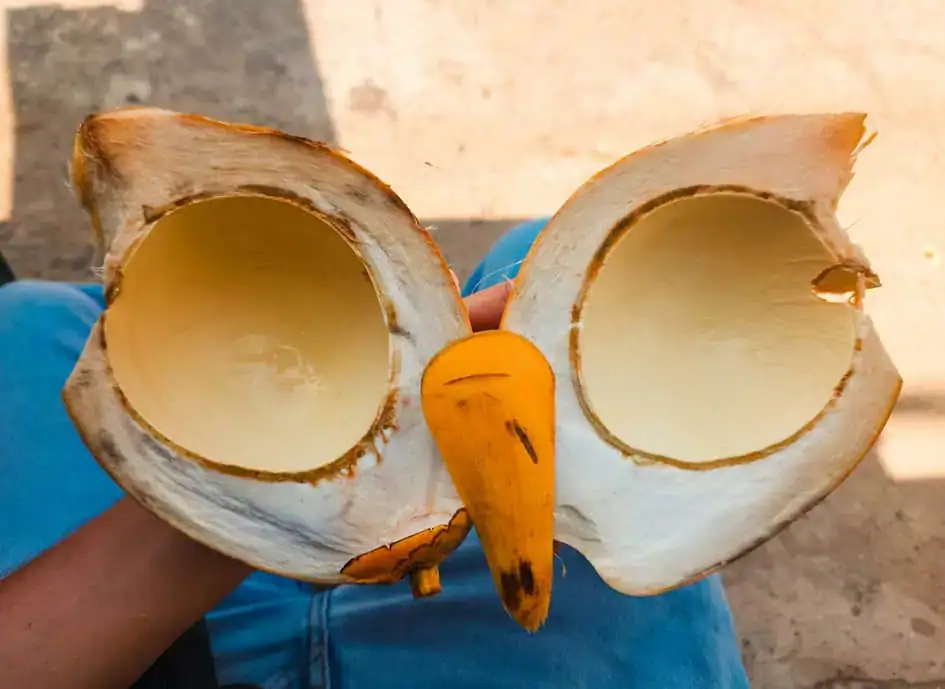
Inside a King Coconut (Photo: Zoshua Colah)
Dos and don’ts
Do
- Do drink it fresh and chilled.
- Do enjoy it as an alternative to sugary or carbonated drinks.
- Do savour the subtle sweetness and the nature of the drink itself.
Don’t
- Don’t assume all coconuts are the same: green or brown coconuts may have different tastes and water profiles.
- Don’t treat it as a medical cure—it is a refreshing drink with nutrients, not a substitute for medical advice.
- Don’t leave a fresh nut open in the sun for long periods—it will warm and lose flavour.
Why you should taste King Coconut
If you are travelling in Sri Lanka or exploring drinks in Sri Lanka, you’ll find that King Coconut offers a genuine local taste of the place. The combination of rich, hydrating water, natural sweetness, and cultural tradition makes it more than just a drink. Whether you’re standing by a roadside stall or sipping a bottled version back home, you engage with the heritage of Coconuts in Sri Lanka and the King Coconut tree that supports countless farmers. For your next tropical thirst moment, let the King Coconut be your pick.
The King Coconut is a distinctive orange-husked variety of coconut native to Sri Lanka, offering light, naturally sweet water rich in electrolytes and nutrients. You’ll find it growing on shorter palms, harvested at roughly 7-8 months maturity for optimum flavour and mineral content. Spot it at roadside stalls or beaches, and enjoy it chilled with a straw for a clean, refreshing drink. Its water includes potassium, magnesium, vitamin C, natural sugars and almost no fat. Compared with other coconuts, it offers a unique taste and hydration profile. When you seek a healthy tropical refreshment, the King Coconut stands out among Drinks in Sri Lanka. Choose one, sip slowly, savour the moment.
Is Sri Lanka Worth Visiting? Yes, of course. There are many reasons to explore Sri Lanka. Delicious Sri Lankan foods and drinks are definitely among them.
Featured image: King Coconut – Mirissa Beach, Sri Lanka (Photo: Zoshua Colah)
Other Popular Sri Lankan Foods and Drinks:
- Hot Butter Cuttlefish
- Ceylon Tea
- Hoppers (Appa)
- Rice and Curries
- String Hoppers
- Kola Kanda
- Pol Roti
- Kottu Roti

I am a Sri Lankan medical doctor who spends my free time travelling, exploring new destinations, and documenting the beauty of the island I call home. I have journeyed across almost every corner of Sri Lanka with my wife and daughter — from wildlife parks and misty mountains to ancient cities, deep forests, rugged landscapes, and quiet beaches.
Travel is not just a hobby for me — it’s a way of life. I love nature, enjoy road trips, and find joy in wildlife photography. I also read widely about tourism, travel trends, and destination culture. Through my writing, I aim to help travellers experience Sri Lanka through real stories, meaningful insights, and honest recommendations — the same way I explore it with my own family.