
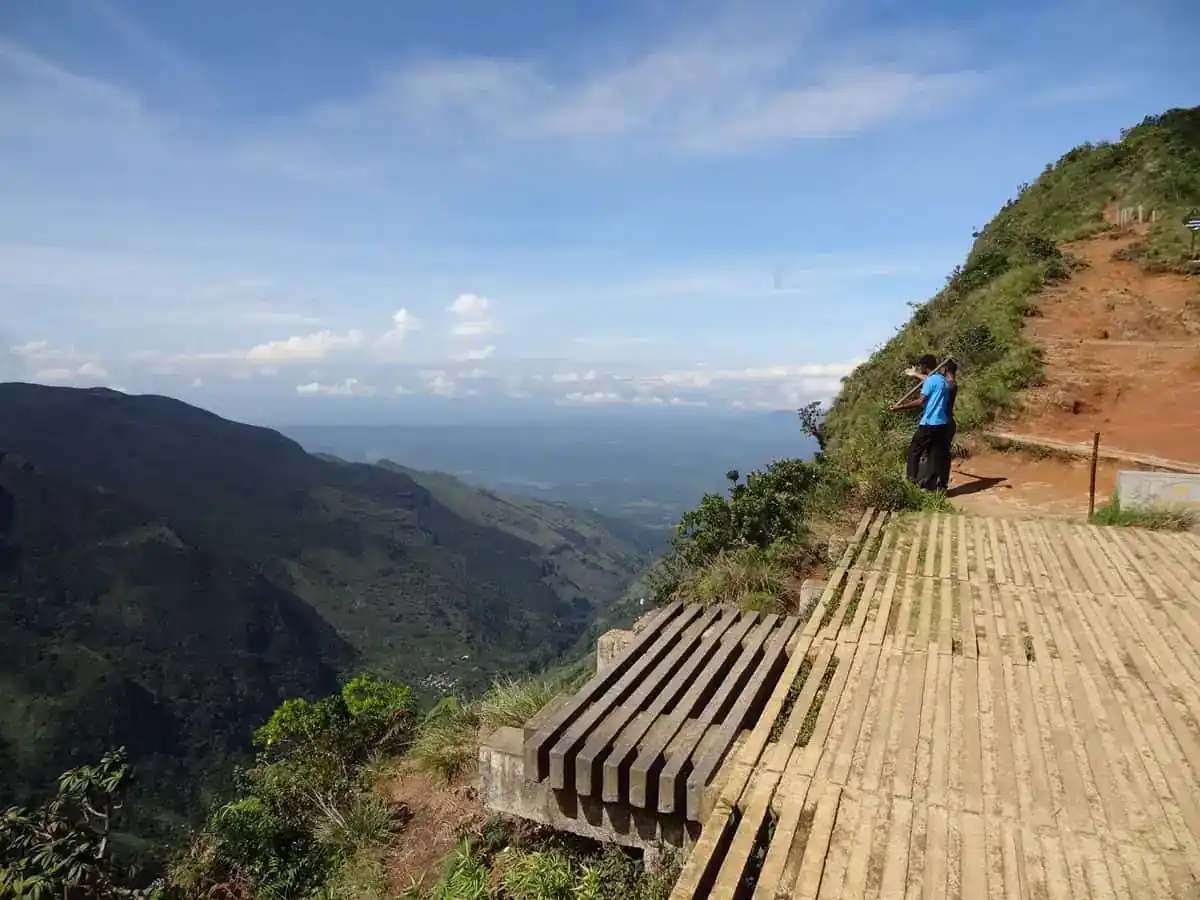

Introduction: Why Horton Plains National Park Feels Different
Many travellers arrive in Sri Lanka expecting popular beaches, ancient cities, and tropical forests. Few expect a cold plateau above the clouds. Horton Plains National Park offers a different experience from the rest of the island. The park sits high in the central mountains, where grasslands stretch across rolling hills, and mist moves through quiet forests.
Horton Plains National Park attracts visitors who enjoy nature walks, wildlife, and wide mountain views. The famous cliff called World’s End draws thousands of travellers each year. Yet the park offers more than one viewpoint. Walking trails pass through cloud forests, streams, and open plains where deer graze in the early morning light.
This guide explains everything you need to know about Horton Plains National Park. You will learn about the park’s location, wildlife, hiking routes, travel tips, and the best ways to include this mountain landscape in your Sri Lanka journey.
If you are a wildlife enthusiast interested in Horton Plains National Park, it is recommended to read and become familiar with Nature and Wildlife in Sri Lanka: Essential Guide as well. It is also recommended to read the ultimate Sri Lanka travel guide to plan your route to Horton Plains.
Understanding Horton Plains National Park
Horton Plains National Park sits in the Central Highlands of Sri Lanka. The park lies at an elevation of about 2,100 to 2,300 metres above sea level. Because of this altitude, the climate feels cooler than most parts of the island. Morning temperatures often fall below ten degrees Celsius.
The park covers about 3,160 hectares. The landscape includes montane grasslands and cloud forests. These habitats support rare plants and animals found nowhere else in the world.
The Central Highlands gained recognition as a UNESCO World Heritage Site. Horton Plains forms part of this protected region together with Peak Wilderness Sanctuary and the Knuckles Conservation Forest.
The plateau also plays an important role in Sri Lanka’s water system. Three major rivers begin in this mountain region.
- Mahaweli River
- Kelani River
- Walawe River
Rainfall and mountain streams feed these rivers, which supply water to large parts of the country.
Horton Plains National Park gained official national park status in 1988. Before that time, the area served as a wildlife reserve.
Today, the park protects one of Sri Lanka’s most important ecosystems.
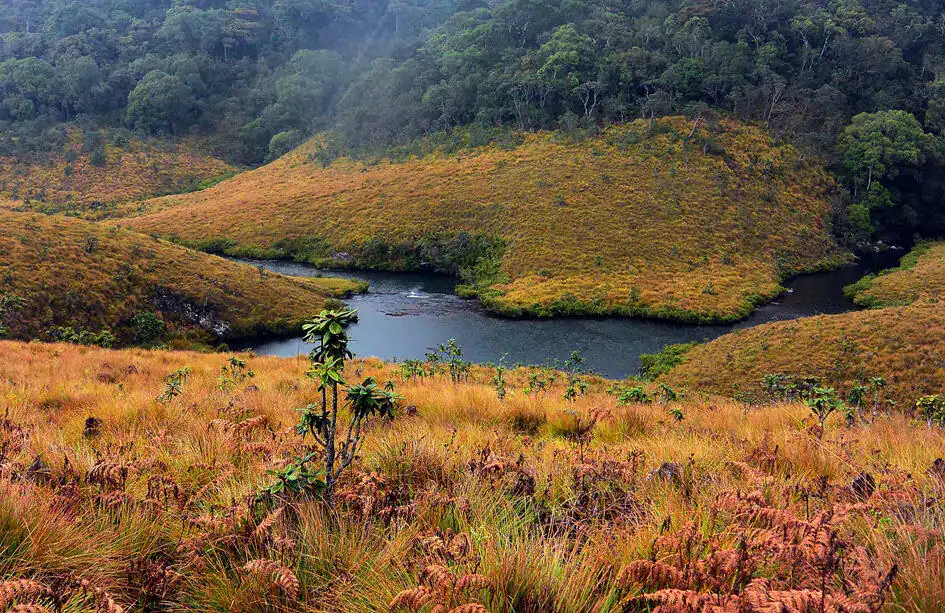
Montane grasslands and cloud forests of Horton Plains National Park (Photo: A-wiki-guest-user, CC BY-SA 4.0)
Location and Geography
Horton Plains National Park lies in the Nuwara Eliya District of Sri Lanka’s Hill Country. The park sits about 30 kilometres south of Nuwara Eliya town.
Travellers often visit Horton Plains while staying in nearby mountain towns.
Map – Horton Plains National Park
The park occupies a high plateau surrounded by mountains. Kirigalpotta and Thotupola Kanda rise near the plains. These peaks stand among the highest mountains in Sri Lanka.
Mist often covers the plateau during early morning hours. Grasslands stretch across open slopes, while forests fill valleys and stream beds.
Because of its altitude and isolation, Horton Plains holds a unique climate and ecosystem.
Main Entrance and Access
Horton Plains National Park has 2 entrance gates. One is Pattipola entrance, and the other is Ohiya entrance. These entrances lie along the road between Pattipola and Ohiya, which passes through the national park.
Most travellers reach the park through Nuwara Eliya.
The road climbs through tea plantations and forest before reaching the entrance checkpoints.
At the gates, visitors pay an entrance fee and register with the Department of Wildlife Conservation. Parking areas appear near the trailhead.
You can also book entry tickets/permits through the official Wildlife Park Permits Reservation eService.
From the main entrance, the main walking trail begins. Most visitors explore the park on foot along the marked circular route.
Vehicles remain in the parking area during the visit.
Opening hours for entering the national park are from 6:00 am to 4:00 pm (every day). The main walking trail opens from 6:00 am to 2:00 pm (every day).
How to Reach Horton Plains National Park
Reaching Horton Plains requires an early start. Most visitors leave Nuwara Eliya before sunrise.
Travel times from nearby towns
- Nuwara Eliya to Horton Plains: About 1.5-2 hours by car.
- Ella to Horton Plains: About 2-3 hours.
- Haputale to Horton Plains: About 2 hours.
- Ohiya to Horton Plains: About 40 minutes.
Travellers usually arrive by private car or taxi. Some visitors hire a driver for the early morning trip.
Trains also stop at Ohiya and Pattipola railway stations on the route from Nanu Oya (Nuwara Eliya), Ella, and Haputale. From Ohiya or Pattipola, travellers continue by vehicle to the park entrance.
The early start helps visitors reach World’s End before clouds cover the view.
Landscape and Ecosystems
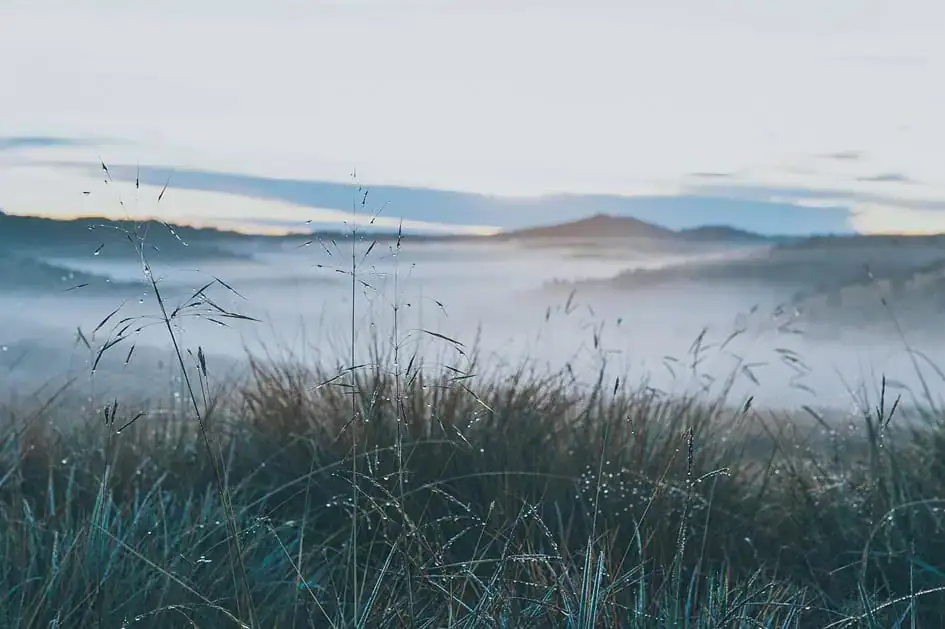
Montane grasslands with mist moving across the plains (Photo: Elina Sazonova, via Pexels)
Horton Plains National Park protects two major ecosystems.
- Montane grasslands
- Cloud forests
The grasslands spread across open hills covered with short grasses and shrubs. These plains support grazing animals such as sambar deer.
Cloud forests grow in sheltered valleys and along streams. Trees remain shorter and thicker than those in lowland forests. Moss and lichens cover branches due to constant moisture.
Streams flow through the plains and form waterfalls further downhill.
These ecosystems support many species found nowhere else. Scientists classify this region as a biodiversity hotspot.
Because of its ecological value, conservation authorities carefully protect the area.
Flora of Horton Plains
Plant life in Horton Plains National Park reflects the cool mountain climate. Grasslands host species adapted to high-altitude winds and low temperatures.
Among the most common plants are dwarf bamboo, tussock grasses, and shrubs.
The cloud forests contain different vegetation.
- Rhododendron trees
- Strobilanthes shrubs
- Tree ferns
- Mosses and orchids
During certain seasons, flowers bloom across the plains and forest edges. Purple and yellow blossoms appear along the walking trails.
These plants play an important role in the ecosystem. They provide shelter and food for birds, insects, and mammals.
Fauna of Horton Plains National Park
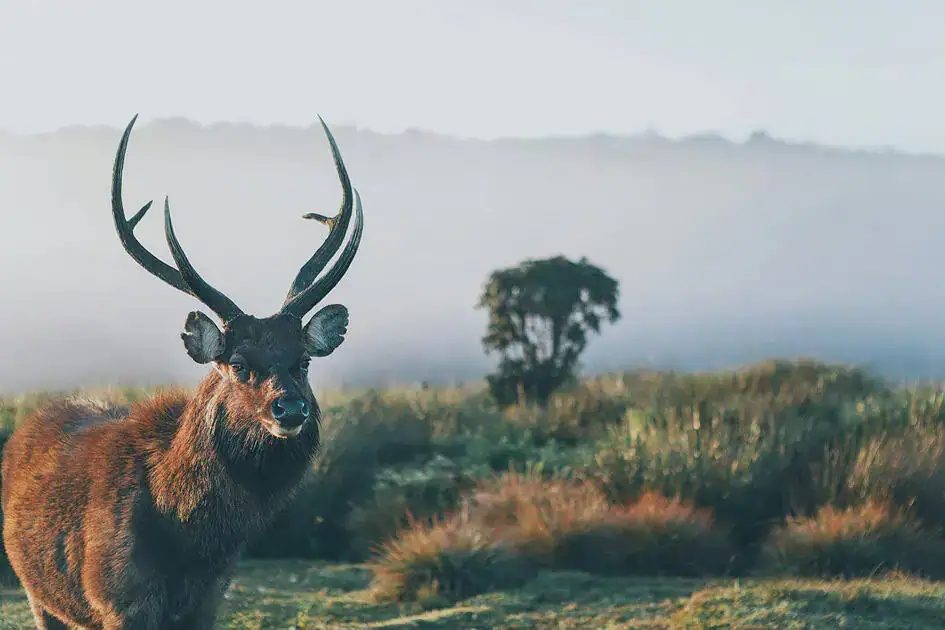
Sambar Deer – Horton Plains National Park (Photo: Elina Sazonova, via Pexels)
Horton Plains National Park protects several species of wildlife.
Mammals
Sambar deer appear frequently across the grasslands. Visitors often see these animals grazing near the trail.
Other mammals include,
- Purple-faced langur
- Toque macaque
- Sri Lankan giant squirrel
- Wild boar
- Rusty spotted cat
Leopards live in the region, although sightings remain rare. These predators move quietly through the forests and hunt mainly at night.
Birds
The park attracts bird watchers due to several endemic species.
- Sri Lankan white-eye
- Sri Lanka bush warbler
- Sri Lankan wood pigeon
- Yellow-eared bulbul
- Sri Lanka whistling thrush
Mixed bird flocks often move through the forest canopy during morning hours.
Reptiles and Amphibians
Several reptiles and frogs live in the moist forest environment.
- Rhino horn lizard
- Common hourglass tree frog
- Endemic skinks
Invertebrates
Butterflies, dragonflies, and insects thrive in the grasslands and streams. These smaller species play an important role in pollination and the food chain.
The Horton Plains Hiking Trail
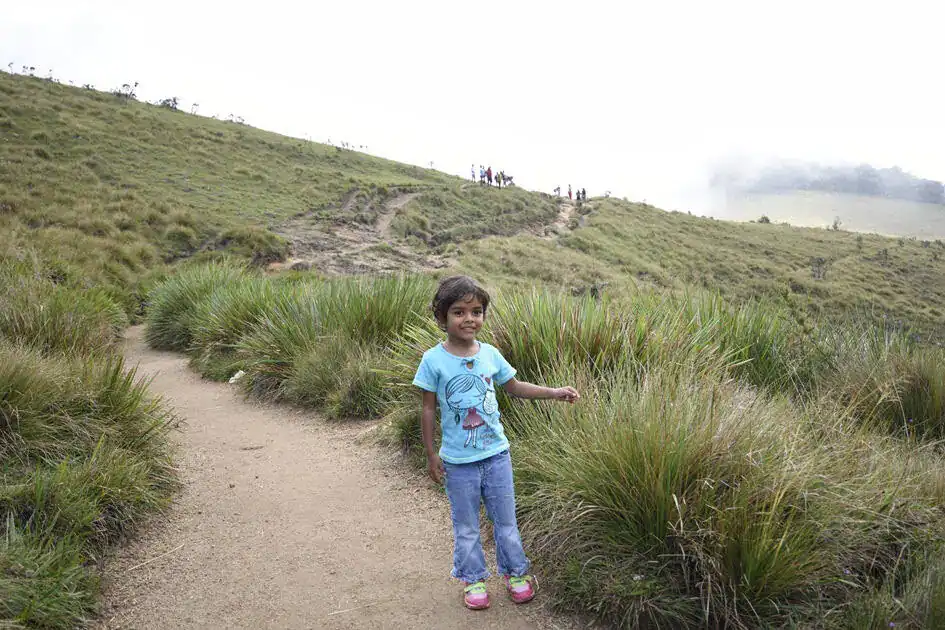
My Daughter, Nethuli – Walking Along the Main Trail (Photo: Nalaka Priyantha)
Most visitors come to Horton Plains National Park for the main walking route. This trail forms a circular loop across the plateau.
The trail is about 9 kilometres long.
The path begins near the park entrance and passes through forest and grassland before returning to the starting point.
Most travellers complete the walk within 2-3 hours.
The trail includes three major highlights.
- Mini World’s End
- World’s End
- Baker’s Falls
The trail remains well-marked and easy to follow. Wooden signs help guide visitors along the route.
Early morning remains the best time to begin the hike. Clear weather improves visibility, and wildlife activity increases.
World’s End
World’s End stands as the most famous viewpoint in Horton Plains National Park.
The cliff drops almost 870 metres straight down towards the southern plains of Sri Lanka.
On clear mornings, visitors see farmland, villages, and distant hills far below.
Clouds often rise from the valley after mid-morning. When this happens, the view disappears behind thick mist.
Because of this, travellers start the hike early to reach the viewpoint before clouds arrive.
A safety fence marks the edge of the cliff. Visitors stay behind this barrier while enjoying the view.
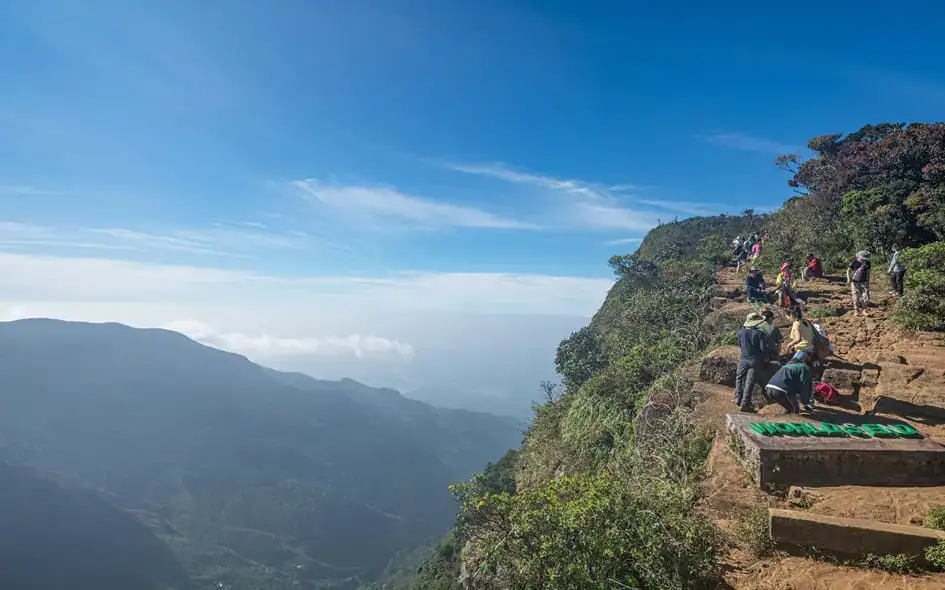
World’s End cliff, one of the most famous viewpoints in Sri Lanka (Photo: A.Savin)
Mini World’s End
Mini World’s End appears earlier along the hiking trail.
This viewpoint offers a smaller cliff with wide views across the surrounding hills.
Although the drop feels less dramatic than the main viewpoint, the scenery remains impressive.
Many travellers stop here for photos before continuing towards World’s End.
Baker’s Falls
Baker’s Falls lies inside the forest section of the hiking trail.
The waterfall is named after British explorer Sir Samuel Baker. He explored parts of the region during the nineteenth century.
Water flows over rocks surrounded by ferns and forest plants.
Steps lead down to a viewing platform near the waterfall. Visitors often pause here before completing the final section of the loop trail.
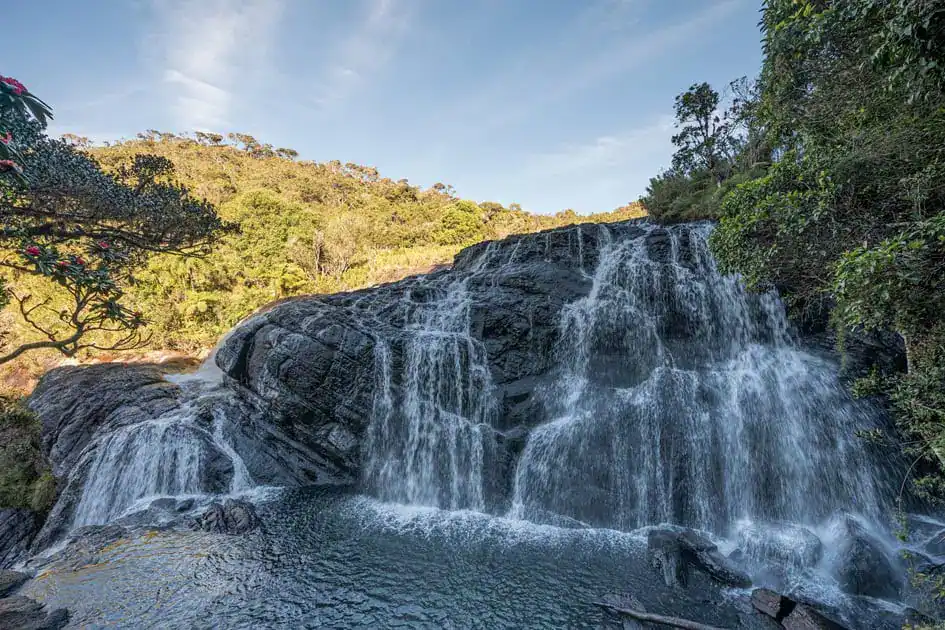
Baker’s Falls (Photo: A.Savin)
Other Hiking Routes in Horton Plains National Park
The circular trail to World’s End attracts most visitors. Horton Plains National Park also offers other hiking routes for travellers who want a longer mountain walk.
Kirigalpotta Trail
Kirigalpotta rises to 2,388 metres above sea level. This peak is the second-highest mountain in Sri Lanka.
The trail begins near the main park entrance. Hikers walk through grasslands and forest sections before reaching the summit.
The walk covers around fourteen kilometres for a return journey. Most hikers spend five to six hours on the route.
The summit offers wide views across the highlands.
Thotupola Kanda Trail
Thotupola Kanda reaches 2,357 metres above sea level. This peak is the third-highest mountain in Sri Lanka.
The trail remains shorter than the Kirigalpotta route. The path climbs through the forest before reaching the open grasslands near the summit.
Hikers complete the round trip in about three hours.
The summit area offers views across Horton Plains and the surrounding mountains.
The Pekoe Trail in Horton Plains
The Pekoe Trail is a long-distance hiking route through Sri Lanka’s tea country and mountains. This trail stretches for more than three hundred kilometres across the Hill Country.
Two stages of the Pekoe Trail pass through Horton Plains.
Stage 10: Dayagama to Horton Plains
This stage climbs through tea estates and forest before reaching the park boundary. The trail offers views across valleys and plantation landscapes.
Stage 11: Horton Plains to Udaweriya
This stage begins near the plains and continues through the forest and villages towards Udaweriya.
Hikers who enjoy long-distance trekking often combine these stages with a visit to Horton Plains National Park.
If you are interested in hiking, trekking, and mountains, we recommend reading about the popular mountains in Sri Lanka.
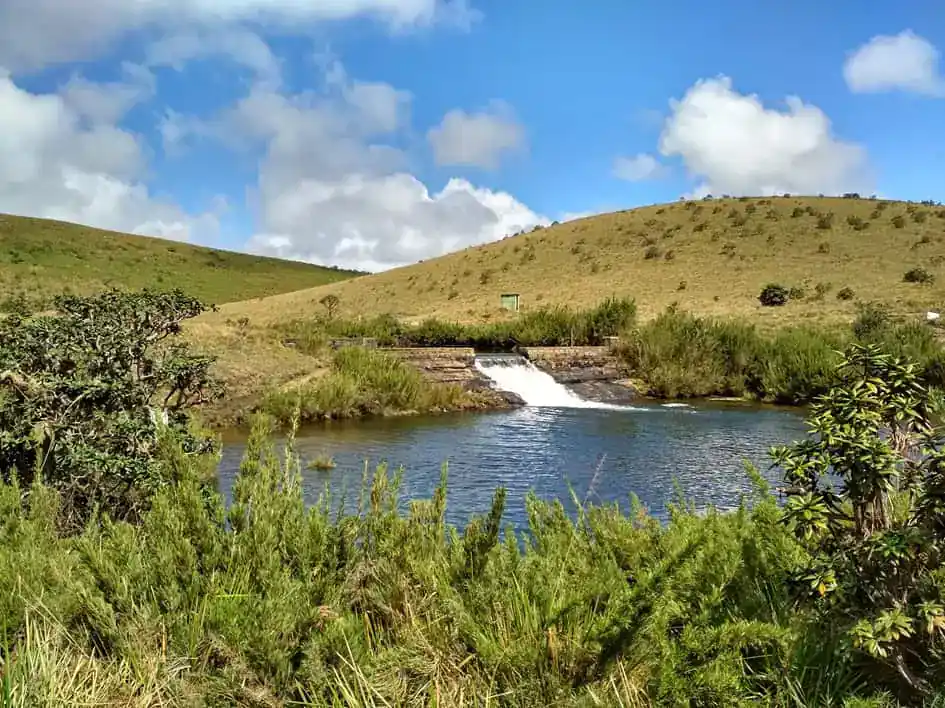
Chimney Pond – Horton Plains (Photo: Savith Rajakaruna, CC BY-SA 4.0)
Wildlife Encounters in Horton Plains
Wildlife encounters often occur during the early morning hours.
Sambar deer appear most frequently. Visitors often see these animals grazing along the grasslands near the trail.
Monkeys move through the forest canopy. Purple-faced langurs travel in small groups and feed on leaves and fruit.
Bird watchers often stop along the forest sections of the trail. Mixed flocks of birds move through the canopy searching for insects.
Leopards live in the region, but sightings remain rare. These animals avoid human activity and remain active at night.
Visitors should respect wildlife at all times. Feeding animals harms their natural behaviour and damages the ecosystem.
Best Time to Visit Horton Plains National Park
Weather conditions play an important role in planning your visit.
The clearest views often appear between January and April. During these months, the skies remain more stable in the early morning.
May to September brings more cloud cover. Visibility at World’s End often changes quickly.
October and November bring the heaviest rainfall. Trails become wet, and mist reduces visibility.
Regardless of the season, the best time of day remains early morning.
Many visitors arrive at the park entrance around six in the morning. This timing allows enough time to reach World’s End before clouds rise from the valley.
Who Will Enjoy Horton Plains National Park Most
Horton Plains National Park suits travellers who enjoy nature and walking.
The park appeals to,
- Hikers
- Nature lovers
- Bird watchers
- Landscape photographers
- Travellers exploring Sri Lanka’s Hill Country
Visitors who prefer short wildlife drives or safari-style travel may find the park quieter than lowland national parks.
The experience focuses more on walking, scenery, and mountain ecosystems.

Kirigalpoththa Trail (Photo: Chamrith, CC BY-SA 4.0)
Facilities Inside Horton Plains National Park
Facilities inside the park remain simple to protect the natural environment.
Visitors will find,
- Parking area near the entrance
- Visitor registration point
- Basic restrooms
- Information boards near the trailhead
Food stalls and restaurants do not operate inside the park.
Travellers should bring water and snacks before entering.
Waste bins remain limited. Visitors must carry all waste back out of the park.
Wildlife Bungalows and Staying Inside the Park
Horton Plains National Park offers several wildlife bungalows managed by the Department of Wildlife Conservation.
These bungalows allow visitors to spend the night within the park area.
Staying overnight offers a different experience of the mountain landscape. Early morning mist and wildlife activity appear stronger before visitor traffic arrives.
Reservations for wildlife bungalows require advance booking through the Department of Wildlife Conservation.
Accommodation and Dining Near Horton Plains
Most travellers stay outside the park.
Nuwara Eliya offers the largest range of accommodation. Visitors find hotels, guesthouses, and boutique stays across the town.
Ohiya and Haputale offer quieter options close to nature.
Restaurants and cafés appear widely in Nuwara Eliya. Many hotels provide breakfast for guests who plan early departures to the park.
Nearby Attractions
Travellers often combine a visit to Horton Plains National Park with other destinations in the Hill Country.
Popular nearby places include,
- Nuwara Eliya town
- Gregory Lake
- Hakgala Botanical Garden
- Ella town
- Nine Arches Bridge
- Little Adam’s Peak
- Ella Rock
- Ravana Ella Falls
- Lipton’s Seat viewpoint
The train journey between Kandy and Ella also passes through this mountain region.
These destinations fit well within a Hill Country travel plan.
What to Bring for Your Visit
The climate at Horton Plains feels cooler than most parts of Sri Lanka.
Visitors should bring,
- Warm jacket or sweater
- Comfortable walking shoes
- Drinking water
- Sun protection
- Rain jacket during wet months
- Camera or binoculars
Morning mist and strong sunlight often appear on the same day. Proper clothing helps visitors stay comfortable during the hike.
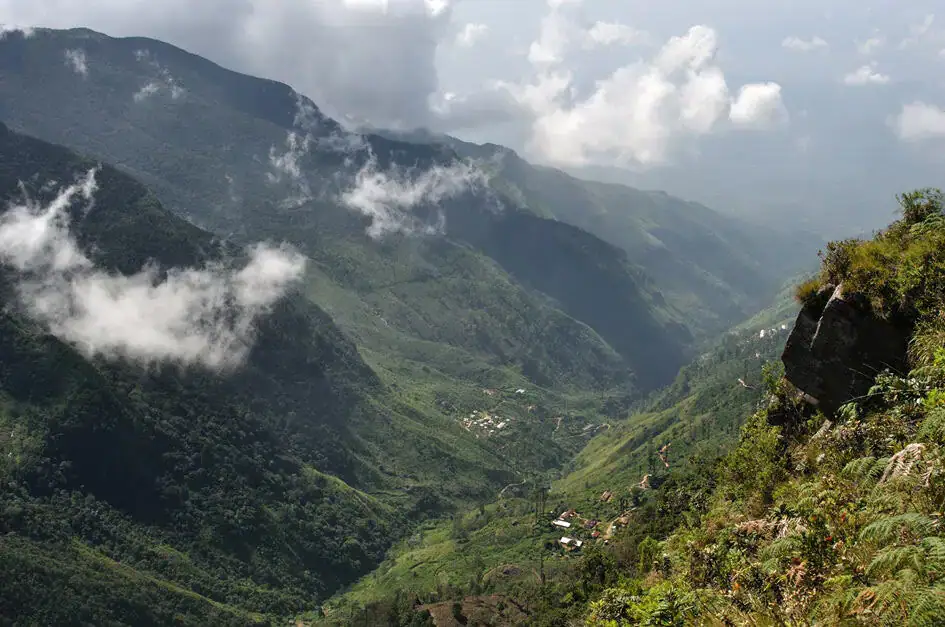
A View from the World’s End (Photo: Gwen Fran, CC BY-SA 2.0)
Photography Tips
Horton Plains National Park offers strong photography opportunities.
Early morning light creates clear views at World’s End. Mist often lifts slowly from the valley, creating dramatic scenery.
Wildlife photographers often capture sambar deer grazing across the grasslands.
Forest sections of the trail provide chances to photograph birds and plant life.
Photographers should protect equipment from moisture. Mist and light rain appear frequently in the highlands.
Responsible Travel and Conservation
Horton Plains National Park forms part of a fragile ecosystem. Visitors play an important role in protecting this environment.
Responsible travel practices include,
- Do not walk on the grass. Stay on marked trails.
- Do not smoke. Do not drink alcohol.
- Do not get into the water.
- Avoid disturbing wildlife.
- Do not feed or touch wild animals.
- Don’t litter. Carry waste out of the park.
- Do not make loud noises.
- Respect park regulations.
Conservation efforts protect rare species and water sources within the Central Highlands.
Responsible tourism helps preserve the park for future generations.
Safety and Visitor Guidance
Visitors should follow several simple safety guidelines.
Remain on marked trails at all times. Forest areas outside the trail contain uneven ground and wildlife habitat.
Avoid approaching animals. Even calm-looking deer should remain undisturbed.
Watch your footing along the trail during wet weather. Rocks and roots become slippery after rain.
Stay behind safety fences at viewpoints such as World’s End.
Park rangers monitor visitor activity across the area. Following their guidance helps maintain safety for both visitors and wildlife.
Horton Plains National Park in a Sri Lanka Travel Plan
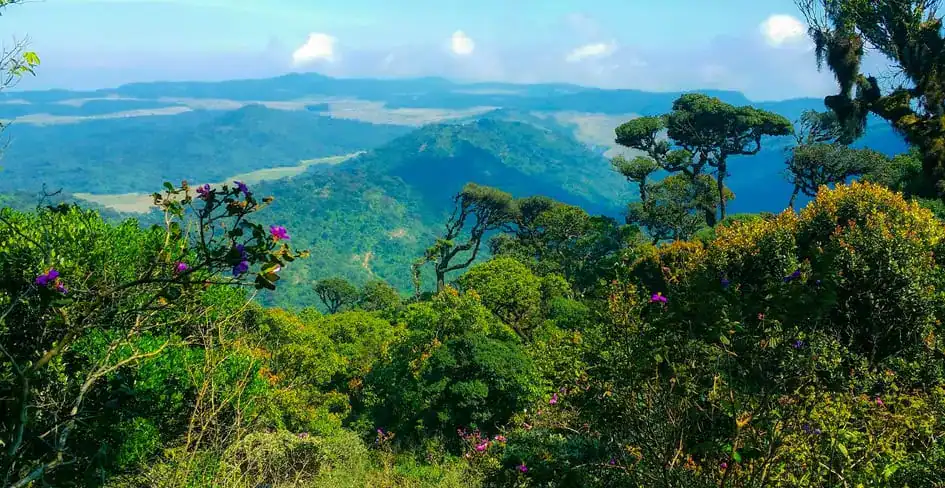
The View From Horton Plains National Park (Photo: Ishan Kahapola Arachchi, via Unsplash)
Many travellers include Horton Plains National Park during a Hill Country journey.
A simple plan works well.
- Day 1: Arrive in Nuwara Eliya.
- Day 2: Leave early in the morning for Horton Plains National Park.
- Day 3: Travel south towards Ella or Haputale.
This route allows visitors to explore both mountain scenery and nearby towns.
Travellers who enjoy hiking may spend additional days exploring trails and viewpoints across the region.
Why Horton Plains National Park Holds Special Status
Horton Plains National Park holds special value within Sri Lanka’s protected areas.
The park protects a rare high-altitude ecosystem. These montane grasslands and forests support many endemic plants and animals.
The plateau also plays an important role in the island’s water supply. Rivers flowing from these mountains sustain agriculture and communities far beyond the park boundaries.
Because of its environmental importance, the Central Highlands was recognised as a UNESCO World Heritage Site.
This recognition highlights the region’s global importance.
To get a complete understanding of planning your first trip to Sri Lanka, check out our Sri Lanka Travel Guide: The Ultimate Planning Guide for First-Time Travelers.
Summary: Exploring Horton Plains National Park
Horton Plains National Park offers one of the most distinctive landscapes in Sri Lanka. The high mountain plateau, grasslands, and cloud forests create a setting unlike the rest of the island.
Visitors walk across open plains, watch deer grazing near the trail, and reach dramatic viewpoints such as World’s End. Waterfalls, forest paths, and mountain summits add variety to the experience.
The park also protects rare plants and animals within the Central Highlands ecosystem. This ecological value gives Horton Plains National Park global significance.
Travellers who explore Sri Lanka’s Hill Country often find Horton Plains National Park among the most memorable places on their journey. The quiet trails, cool air, and wide mountain views offer a different perspective on the island’s natural beauty.
Featured image: World’s End – Horton Plains National Park (Photo: Cherubino, CC BY-SA 3.0)

I am a Sri Lankan medical doctor who spends my free time travelling, exploring new destinations, and documenting the beauty of the island I call home. I have journeyed across almost every corner of Sri Lanka with my wife and daughter — from wildlife parks and misty mountains to ancient cities, deep forests, rugged landscapes, and quiet beaches.
Travel is not just a hobby for me — it’s a way of life. I love nature, enjoy road trips, and find joy in wildlife photography. I also read widely about tourism, travel trends, and destination culture. Through my writing, I aim to help travellers experience Sri Lanka through real stories, meaningful insights, and honest recommendations — the same way I explore it with my own family.