
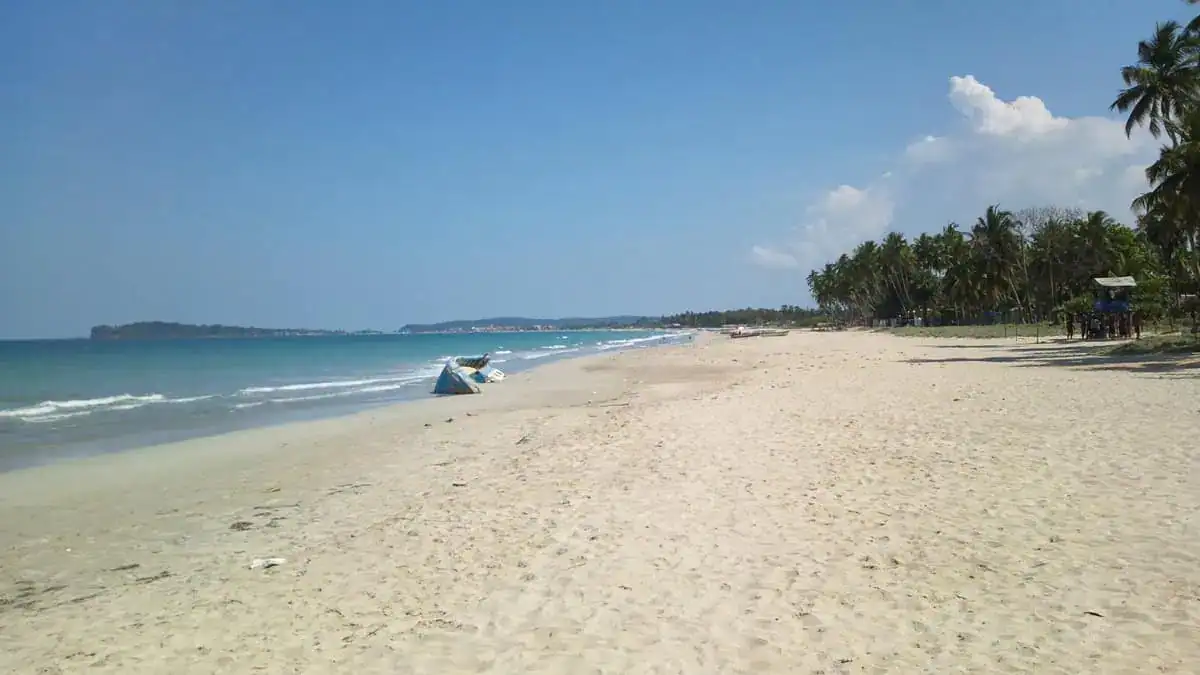

Uppuveli Beach draws travellers who plan to visit Sri Lanka for calm seas, long stretches of sand, and a slower pace. This beach sits near Trincomalee on the Northeast Coast. You reach warm water, clean sand, and a setting that feels open and simple. Uppuveli Beach gives you space to rest, swim, and enjoy coastal life without pressure. Many who search for the best beaches in Sri Lanka include this place on their itinerary for a clear reason. It works well for first-time visitors and for those who return to the island.
If you are new to Sri Lanka, we recommend reading our ultimate travel guide for first-time travellers.
Why Uppuveli Beach Is Special
Uppuveli Beach stands out for its wide shoreline and gentle sea. The sand feels soft and pale. The water stays clear for most of the dry season. You do not face large crowds on most days. It creates a calm mood that helps you relax from the first hour.
The sea here suits swimmers. Waves stay low in the main season. You walk into the water with ease. Families and solo travellers both enjoy this setting. Local guides often point out the steady conditions as a key strength of this coast.
Another strong point lies in access. You stay close to Trincomalee town yet feel far from the noise. This balance helps you plan short trips and return to the beach with ease. Many beaches in Sri Lanka offer beauty. Uppuveli Beach adds comfort and space.
Recognition and Tourism Appeal
Sri Lanka has seen steady growth in tourism over the past decade. Sri Lanka Tourism Development Authority’s data show rising interest in the East Coast after years of focus on the South. Trincomalee and its nearby beaches now attract more international guests each season.
Travel guides often list Uppuveli Beach among the top spots in the East. Reviews highlight clean conditions, friendly locals, and fair prices. You find fewer large resorts here. Small guesthouses and boutique stays shape the area. It creates a more personal travel style.
When you visit Sri Lanka, you notice how the East Coast differs from the West and South. Rain patterns shift. Tourist flow spreads out. Uppuveli Beach benefits from this. You get a good climate when other parts of the island face rain.
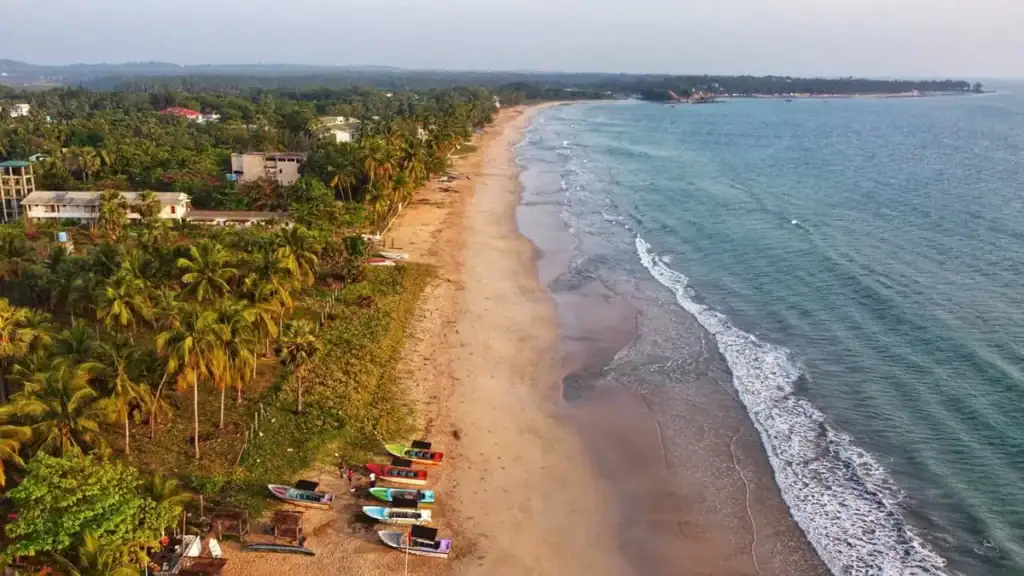
Uppuveli Beach – Trincomalee (Photo: Dennis Sylvester Hurd, CC0 1.0)
Best for Whom
Uppuveli Beach suits a wide range of travellers. You do not need a strict plan to enjoy this place.
If you travel alone, you find peace and safety. The beach stays open and visible. Locals engage in a relaxed manner. You move around without stress.
Couples enjoy quiet walks and long swims. The setting supports slow travel. You spend time together without noise from large crowds.
Families find safe water and open space. Children play on the sand with ease. Many guesthouses cater to families with simple meals and flexible room options.
Budget travellers benefit from low-cost stays and food. Backpackers often use Uppuveli Beach as a base to explore Trincomalee and nearby sites.
If you want nightlife or luxury resorts, you may look elsewhere. If you want calm, space, and value, Uppuveli Beach is a good fit.
Uppuveli Beach for Every Budget
You control your spending with ease in Uppuveli. Prices stay lower than in many popular beach towns.
Budget travellers find hostels and simple rooms near the shore. Many offer fans, basic beds, and shared spaces. You pay low rates and still stay close to the sea.
Mid-range options include small hotels and guesthouses with air conditioning, private bathrooms, and breakfast. These places often sit within walking distance of the beach.
Higher-end stays exist but remain limited. A few boutique hotels offer pools, sea views, and full service. Even these cost less than similar places in busier regions.
Food stays affordable across all levels. Local rice-and-curry meals cost little. Seafood prices depend on the catch of the day. Fresh fish, prawns, and crab appear on many menus.
You control your budget through simple choices. Walk instead of hiring transport. Eat local meals. Choose small stays. Uppuveli Beach makes this style easy.
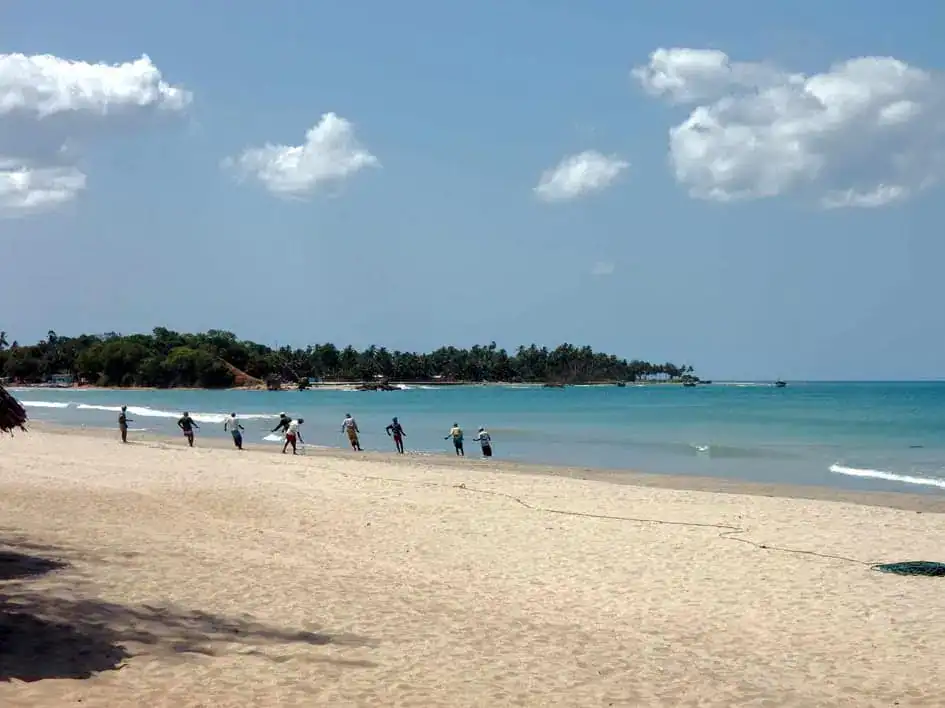
Traditional Fishing – Uppuveli Beach (Photo: FLASHPACKER TRAVELGUIDE, CC BY-SA 2.0)
Best Time to Visit Uppuveli Beach and Why
Timing shapes your experience on Sri Lanka’s coasts. Uppuveli Beach follows a pattern that differs from the South.
The best time to visit runs from May to September. During these months, the East Coast stays dry and sunny. The sea remains calm and clear. You enjoy swimming and boat trips without interruption.
From October to January, rain increases. The sea grows rough. Some guesthouses close for the season. Travel still works, but conditions change.
February to April marks a transition period. The weather improves. Fewer crowds appear. Prices stay lower than in peak months.
Many travellers plan their route around the island’s weather. When the South faces rain, the East shines. It gives Uppuveli Beach a strong advantage in travel planning.
If you are planning to combine your visit to Uppuveli Beach with other destinations on the island, it is recommended to read about the weather and the best time to visit.
Current Weather & Weather Forecast in Uppuveli
Location and How to Get There
Uppuveli Beach lies about 6 kilometres north of Trincomalee town. You reach the area with simple routes from major cities.
From Colombo, you travel by train or bus to Trincomalee. The train ride takes around 8 to 9 hours. Buses run daily and offer both standard and air-conditioned options.
Once you reach Trincomalee, a short tuk-tuk ride brings you to Uppuveli Beach. The trip takes around 15 minutes.
Private taxis provide a faster option from Colombo. Travel time sits near 6 to 7 hours, depending on traffic and road conditions.
Domestic flights also operate to nearby airstrips, though they cost more and run less often.
Clear road signs guide you once you approach Trincomalee. Local drivers know Uppuveli well, so you rarely face confusion.
We recommend reading our guide about the transport in Sri Lanka.
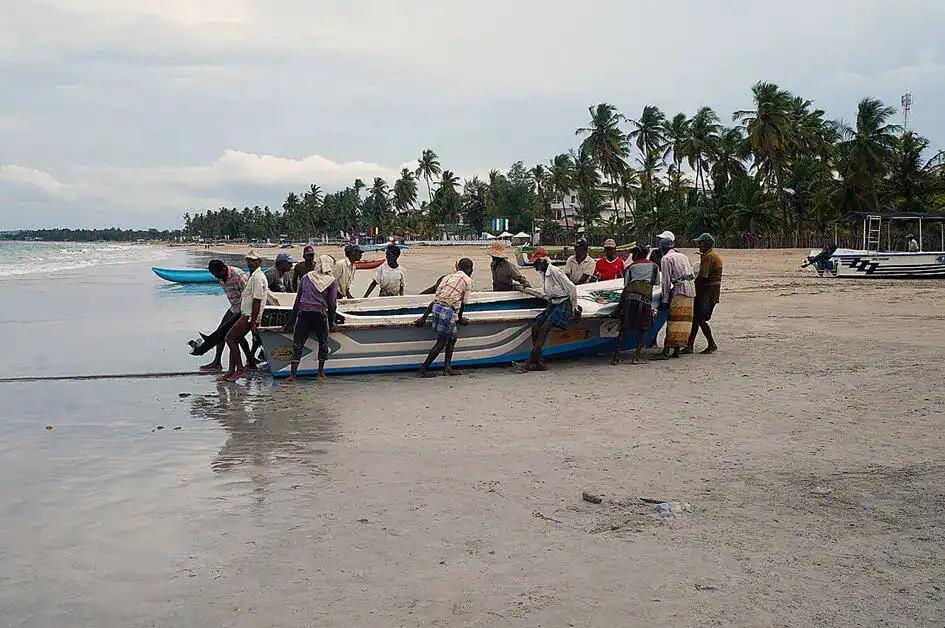
Fishermen – Uppuveli Beach (Photo: PIERRE ANDRE LECLERCQ, CC BY-SA 4.0)
Transport, Getting Around, and Parking
You move around Uppuveli Beach with ease. The area stays compact.
Tuk-tuks serve as the main form of transport. Drivers wait near main roads and guesthouses. Fares remain low for short trips.
Bicycles offer a good way to explore. Many guesthouses rent bikes. You ride along the coast and reach nearby cafes and shops.
Scooters give more freedom. Rental shops provide daily rates. You need a valid license and basic road awareness.
Walking works well for most visitors. The beach, food spots, and stays sit close together.
Parking stays simple. Guesthouses and hotels offer space for scooters and cars. You rarely face congestion.
Beach Layout and Conditions
Uppuveli Beach stretches across a long, open line of sand. You find fewer rocks compared to other parts of the coast.
The sand feels soft and light in colour. You walk barefoot without discomfort.
The water stays shallow near the shore. It supports safe swimming. The seabed slopes gently, which helps those who prefer a calm entry into the sea.
You find small sections with fishing boats. These areas show local life in action. Fishermen bring in their daily catch during the early hours.
Shade comes from palm trees near the edge of the beach. Some guesthouses place sunbeds for guests. Public areas remain open and free.
Cleanliness stays fair. Local efforts and visitor awareness help maintain the beach. You still need to carry your waste and respect the space.
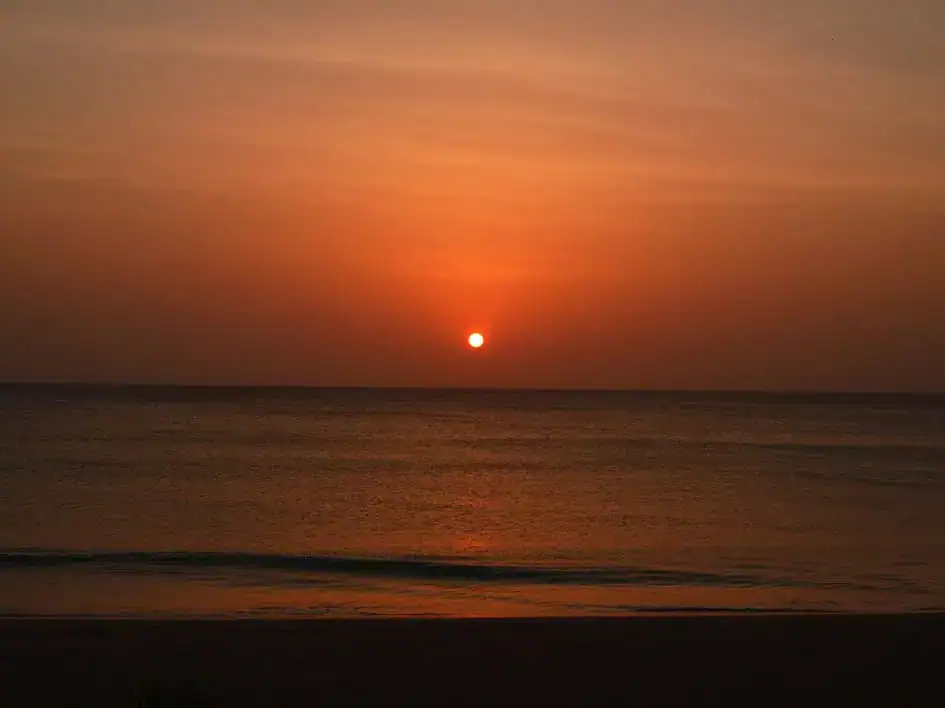
Sunrise and Calmness – Uppuveli (Photo: Nalaka Priyantha)
Nature, Flora, and Fauna
The coastal environment around Uppuveli Beach supports simple yet rich natural life.
Palm trees line parts of the shore. Small shrubs and coastal plants grow in sandy soil. These plants help reduce erosion and protect the shoreline.
Birdlife appears early in the morning and late in the afternoon. You may see seabirds, herons, and small flocks moving along the coast.
Marine life thrives in nearby waters. Coral reefs exist a short boat ride away. These reefs support fish, sea turtles, and other species.
Pigeon Island, located offshore, serves as a marine national park. Many visitors take day trips to snorkel and view coral ecosystems.
You help protect this environment by avoiding plastic waste and respecting marine zones.
This natural setting adds depth to your visit. You do more than sit on the beach. You observe a living coastal system that supports both people and wildlife.
If you are interested in nature, we recommend reading Nature and Wildlife in Sri Lanka: Essential Guide.
Things to Do, Popular Activities, Experiences, and Events in Uppuveli
Uppuveli Beach gives you a mix of simple and active experiences. You choose how you spend your time.
Swimming ranks as the main activity. The calm sea during peak season supports long sessions in the water. You enter the sea with ease due to the gentle slope. Early morning and late afternoon offer the best light and cooler air.
Snorkelling draws many visitors. Boats leave from nearby points to reefs close to shore and to Pigeon Island National Park. You see coral, reef fish, and sometimes turtles. Clear water improves visibility during the dry season.
Diving operates through local centres in Trincomalee. You find beginner courses and guided dives. Wreck sites and reefs add variety for trained divers.
Boat trips remain popular. You hire a small boat for short rides along the coast or for trips to Pigeon Island. Some tours include snorkelling gear and basic guidance.
Beach walks give you quiet time. The long stretch of sand is ideal for early morning walks. You watch fishermen at work and see daily routines.
Yoga sessions appear at some guesthouses. These take place near the beach during sunrise or sunset. You stretch and focus in a calm setting.
Seasonal whale-watching tours depart from Trincomalee. Blue whales and dolphins appear in nearby waters during certain months. Local operators provide half-day trips.
Events remain limited but meaningful. Small beach gatherings, live music at cafes, and local celebrations occur during peak season. These events feel informal and relaxed.
Nearby Key Attractions That Pair Well with Uppuveli Beach

Fort Fredrick – Entrance (Photo: AntanO, CC BY-SA 4.0)
Uppuveli Beach works best when paired with nearby sites. You explore more without long travel times.
Nilaveli Beach lies a short drive north. This beach offers similar calm water and a wider shoreline. Many travellers combine both beaches in one stay.
Fort Frederick sits near Trincomalee town. Built during colonial times, the fort now serves as a public site. You walk through gates, see old structures, and enjoy views of the coast.
Koneswaram Temple stands on a cliff above the sea. This temple holds strong cultural value. Visitors observe rituals and enjoy views across the ocean.
Marble Beach offers clear water and controlled access. The area stays clean and organised. Entry may require a small fee.
Hot springs at Kanniya provide a short inland trip. You see a set of wells with warm water. Local visitors use the site for bathing.
These places help you build a varied plan. You mix beach time with culture and short trips.
Culture and Local Life
Life near Uppuveli Beach follows a steady pace. Fishing remains a key activity. You see boats return with catch during the early hours. Markets in Trincomalee sell fresh fish each day.
The area is home to a mix of Tamil and Sinhalese communities. You notice this in language, food, and religious sites. Hindu temples and Buddhist shrines stand within a short distance of each other.
Local food reflects this mix. Rice and curry serve as a staple meal. You also find string hoppers, seafood dishes like hot butter cuttlefish, and simple street snacks.
People engage in a friendly but direct manner. You receive help when needed, especially from guesthouse owners and small business operators.
Daily life stays visible. You do not feel separated from the community. It gives your visit a more grounded feel.
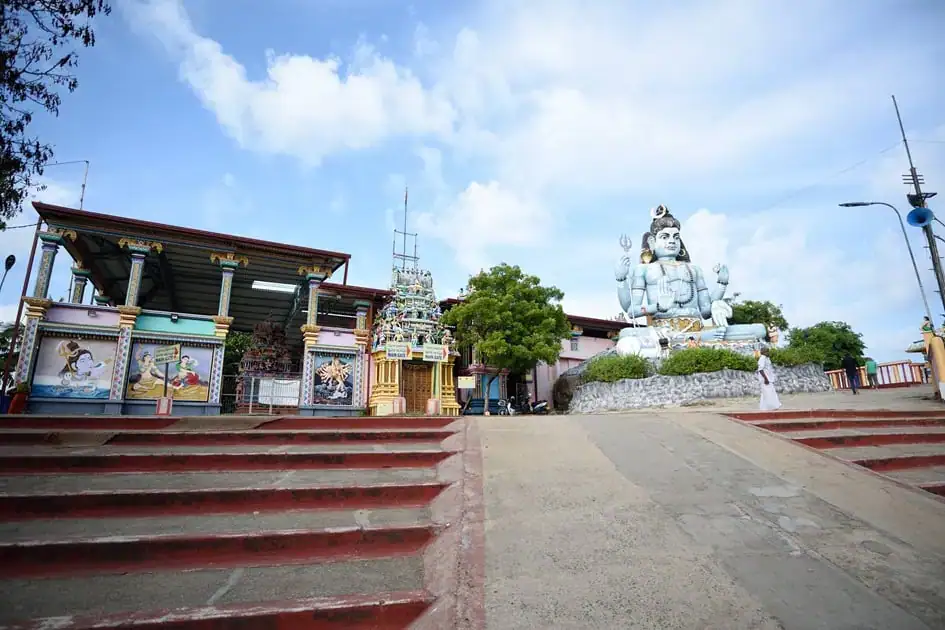
Koneswaram Temple (Photo: Nalaka Priyantha)
Where to Stay and Dining
Uppuveli Beach offers a wide range of stays. Most sit within walking distance of the shore.
Guesthouses form the backbone of accommodation. These include family-run places with a few rooms. You receive direct service and local advice.
Small hotels provide added comfort. Air conditioning, private bathrooms, and breakfast options come standard in mid-range places.
Boutique stays offer more style. These include sea views, small pools, and curated spaces. Prices remain lower than in major resort areas.
Dining stays simple and varied. Beachfront cafes serve seafood, rice dishes, and Western options. You find grilled fish, prawns, and fresh juices.
Local eateries in Trincomalee offer lower prices and authentic Sri Lankan meals. You try different curry combinations and local bread.
Food quality depends on freshness. Ask about the catch of the day for the best seafood.
What to Bring and Packing List
You pack light but with purpose for Uppuveli Beach.
Bring:
- Light clothing for warm weather
- Swimwear for daily beach use
- Sunscreen with high protection
- Sunglasses and a hat
- Sandals or flip-flops
- Reusable water bottle
- Basic first aid items
- Snorkelling gear, if you prefer your own.
- Cash in local currency
Pack modest clothing for temple visits. Cover the knees and shoulders when entering temples & religious sites.
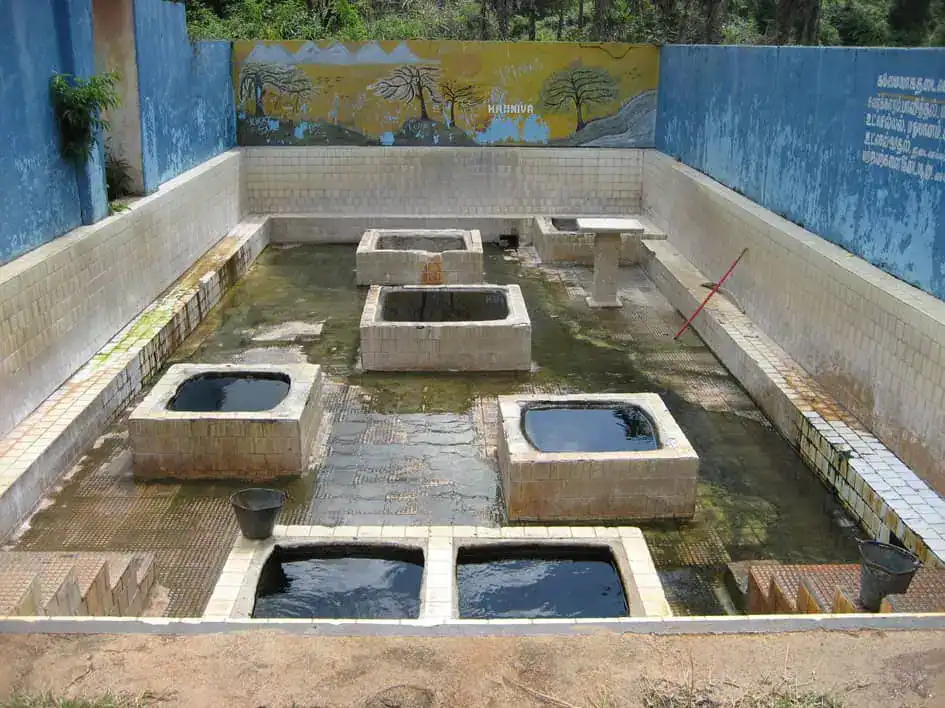
Kanniya Hot Water Springs – Trincomalee (Photo: Annette 777, CC BY-SA 2.0)
Simple and Easy Plans That Work
You do not need complex plans in Uppuveli. Simple schedules work best.
Three-day plan:
Day 1:
Arrive in Trincomalee. Travel to Uppuveli Beach. Check in. Spend the afternoon on the beach. Watch the sunset.
Day 2:
Take a morning boat trip to Pigeon Island. Snorkel and return by midday. Rest in the afternoon. Visit a local cafe for dinner.
Day 3:
Visit Koneswaram Temple and Fort Frederick. Return to the beach for a final swim. Depart in the evening or the next morning.
Five-day plan:
Add a day trip to Nilaveli Beach. Include a whale watching tour if in season. Spend one full day with no plan. Rest, walk, and enjoy the beach.
It is recommended to read about the best Sri Lanka travel itineraries for your travel season.
Do Not Miss in Uppuveli
Some experiences stand out and deserve priority.
- Sunrise walk along the beach
- Fresh seafood dinner near the shore
- Snorkelling at Pigeon Island
- Short visit to Koneswaram Temple
- Evening relaxation with sea breeze
These moments shape your memory of Uppuveli Beach.
Dos and Don’ts
Follow simple guidelines to improve your stay.
Do:
- Respect local customs.
- Keep the beach clean.
- Use reef-safe sunscreen.
- Support local businesses.
- Confirm prices before services.
Do not:
- Leave plastic waste on the beach.
- Disturb marine life.
- Enter temples without proper dress.
- Ignore weather warnings.
- Rely only on cards for payment.
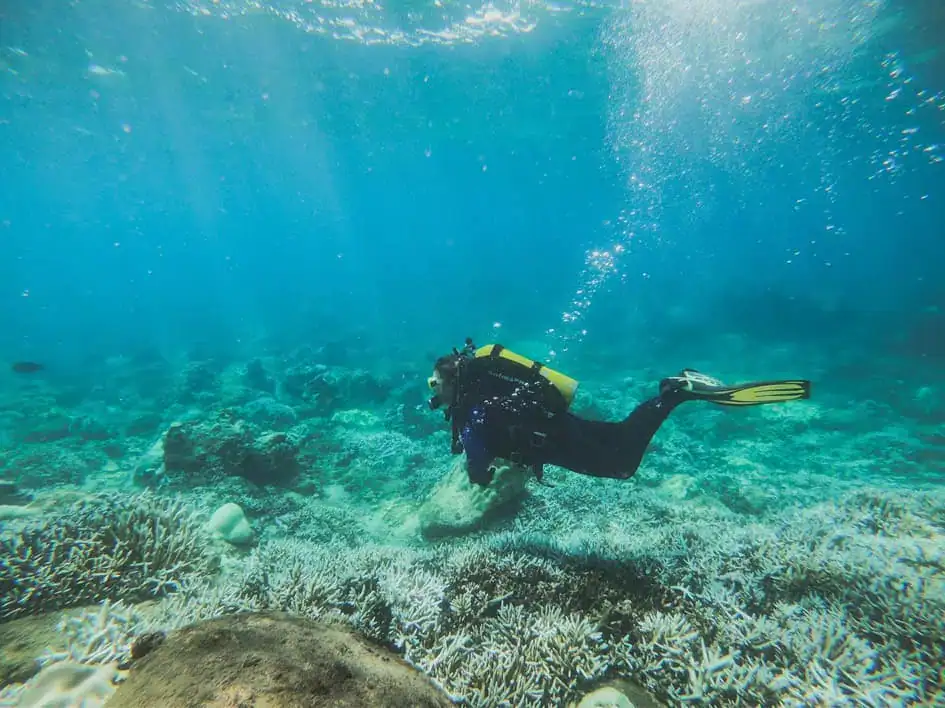
Diving – Pigeon Island National Park (Photo: Kalana Weeramuni, CC BY-SA 4.0)
Special Tips for Visiting Uppuveli Beach
Plan travel based on weather patterns. The East Coast works best from May to September.
Book stays in advance during peak months. Rooms fill fast due to limited supply.
Use early hours for outdoor activities. Heat rises during midday.
Carry small change for tuk-tuks and small shops. Many places do not accept cards.
Stay hydrated. Heat and humidity increase fluid loss.
Photography Tips
Light shapes your photos in Uppuveli Beach.
Use early morning for soft light and fewer people. Capture fishermen and calm water.
Sunset offers strong colours. Position yourself facing west for the best results.
Keep the camera protected from salt and sand. Use a simple cover or bag.
Include local elements such as boats and palm trees. These add context to your images.
Avoid harsh midday light. Shadows appear strong and reduce detail.
Money, Services, and Connectivity
Cash remains the main form of payment in Uppuveli. ATMs exist in Trincomalee town. Withdraw enough for your stay.
Mobile networks provide fair coverage. Data services work for basic use. Signal strength may drop near remote parts of the beach.
Wi-Fi appears in most guesthouses and cafes. Speed varies. Do not rely on high-speed access for heavy tasks.
Basic services, such as pharmacies and small shops, are nearby. For larger needs, travel to Trincomalee.
Fitness, Wellness, and Leisure
Uppuveli Beach supports a simple wellness routine.
You swim daily in calm water. It helps maintain fitness.
Beach walks add light exercise. The long shoreline supports steady movement.
Yoga sessions take place at some stays. These focus on breathing and flexibility.
You rest without pressure. The quiet setting helps reduce stress.
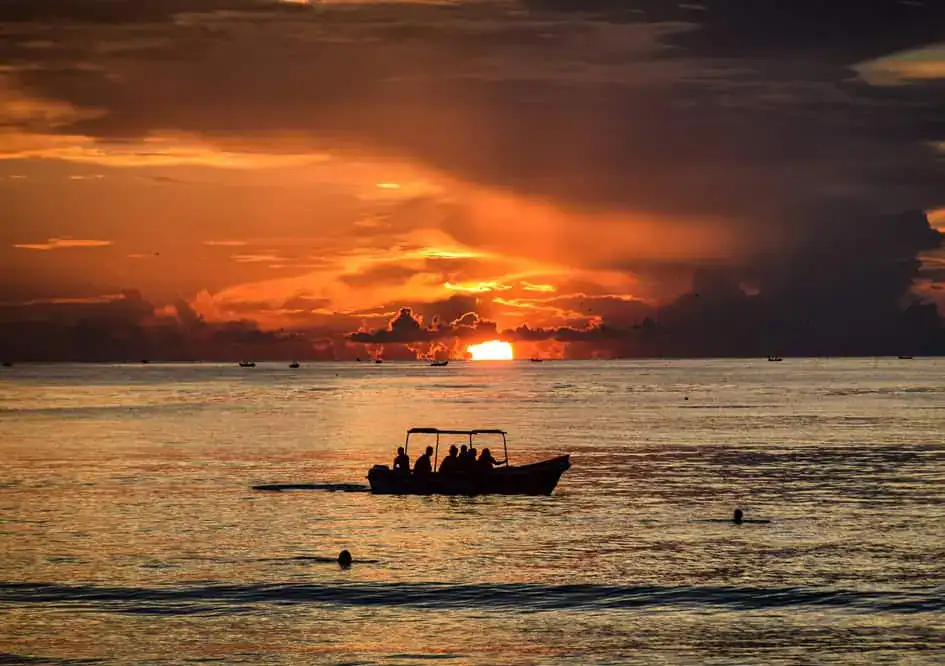
Sunrise (Photo: Sandeepa05, CC BY-SA 4.0)
Health, Safety, and Comfort
Safety levels remain steady in Uppuveli Beach. You still follow basic precautions.
Swim in designated areas. Watch for changes in sea conditions.
Protect your skin from sun exposure. Use sunscreen and cover up when needed.
Drink bottled or filtered water. Avoid tap water for direct consumption.
Medical services exist in Trincomalee. For serious issues, travel to larger hospitals in major cities.
Responsible Travelling and Sustainability
Your actions shape the future of beaches in Sri Lanka. Sustainable travel focuses on reducing environmental impact while strengthening cultural preservation and local economies.
Reduce plastic use. Carry reusable bottles and bags.
Support local businesses. Choose family-run stays and local guides.
Respect marine life. Do not touch coral or feed fish.
Dispose of waste in proper bins. If none exist, carry waste back with you.
Use water and energy with care. Resources remain limited in coastal areas.
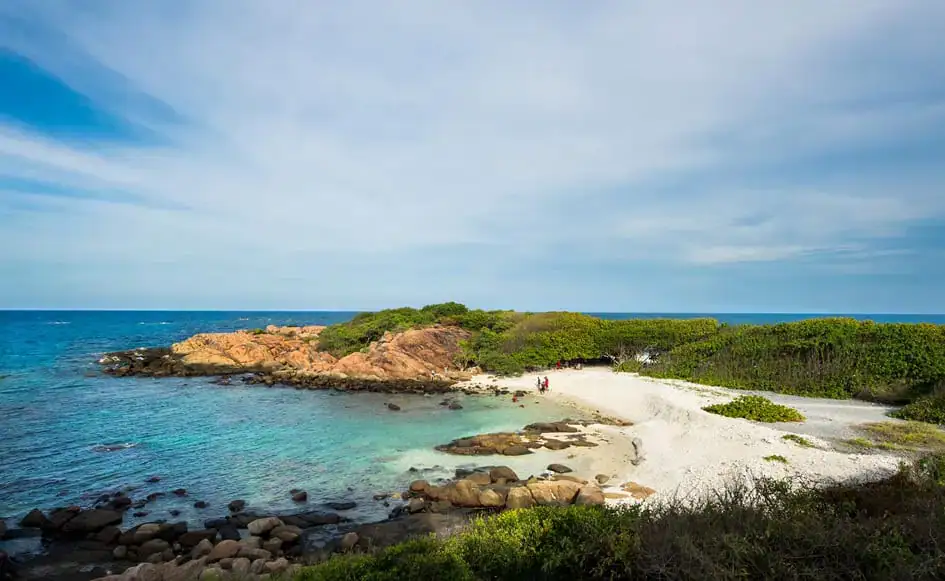
Pigeon Island National Park (Photo: Chiranmayu Medis, CC BY-SA 4.0)
Shopping, Souvenirs, Evenings, and Nightlife
Shopping stays simple in Uppuveli. Small shops sell handmade items, clothing, and basic souvenirs.
Trincomalee offers a wider range of goods. You find local crafts, spices, and textiles.
Evenings feel calm. Beachfront cafes play soft music. Some places host small gatherings.
Nightlife stays limited. You do not find large clubs. The focus remains on quiet social time and rest.
This suits travellers who prefer a relaxed end to the day.
Final Thoughts
Uppuveli Beach offers a clear, honest coastal experience. You enjoy space, calm water, and a steady pace. When you visit Sri Lanka, this beach offers a strong contrast to busier regions. You combine rest, local culture, and simple travel in one place. Many beaches in Sri Lanka attract attention, yet Uppuveli Beach stands out for balance and ease. You leave with a clear sense of the coast near Trincomalee and a plan to return.
Map – Uppuveli
Sources and References:
- Sri Lanka Tourism Development Authority, Official statistics, tourism trends, and regional development insights for Sri Lanka’s east coast.
- Sri Lanka Tourism, Destination guides, travel recommendations, and official visitor information.
- Department of Wildlife Conservation, Sri Lanka, Information on marine parks such as Pigeon Island and conservation guidelines.
- Department of Meteorology, Sri Lanka, Weather data.
- UN World Tourism Organization, Global tourism trends and supporting context for Sri Lanka’s tourism growth.
- Lonely Planet, Travel insights, destination overviews, and practical tips for Trincomalee and Uppuveli.
- Tripadvisor, User reviews, ratings, and traveller experiences for Uppuveli Beach and nearby attractions.
- Booking.com, Accommodation trends, pricing insights, and guest feedback for stays in Uppuveli and Trincomalee.
- Agoda, Regional accommodation data and traveller reviews.
- Google Maps, Location data, distance estimates, and local business listings.
- PADI, Diving standards, safety practices, and general diving information.
- Rough Guides, Background information on Sri Lanka travel, culture, and destinations.
Featured image: Uppuveli Beach (Photo: Honeplus, CC BY-SA 3.0)

I am a Sri Lankan medical doctor who spends my free time travelling, exploring new destinations, and documenting the beauty of the island I call home. I have journeyed across almost every corner of Sri Lanka with my wife and daughter — from wildlife parks and misty mountains to ancient cities, deep forests, rugged landscapes, and quiet beaches.
Travel is not just a hobby for me — it’s a way of life. I love nature, enjoy road trips, and find joy in wildlife photography. I also read widely about tourism, travel trends, and destination culture. Through my writing, I aim to help travellers experience Sri Lanka through real stories, meaningful insights, and honest recommendations — the same way I explore it with my own family.