

Introduction: A Week Among Sri Lanka’s Ancient Kingdoms
If you have one week in Sri Lanka and care more about temples, ruined capitals, and living Buddhist traditions than about popular beaches or wildlife safaris, this 7-Day Sri Lanka Cultural Itinerary is designed for you.
The route links the island’s great royal capitals, Anuradhapura, Sigiriya and Polonnaruwa, with the painted cave shrines of Dambulla and the hill city of Kandy, home of the Temple of the Tooth Relic. These places lie close together in the ancient cities region of the north-central plains and the hills just to the South. Together they tell one long story. Kingdoms rose and moved, monks and kings built great stupas and reservoirs, and a king raised a palace on top of a rock.
Much of this heritage in Sri Lanka is still in use. People still worship at the shrines you will visit, and pilgrims dressed in white still bring flowers to a sacred tree honoured for more than two thousand years.
The route is rewarding, but it is also active. You will climb Sigiriya, walk barefoot on sun-warmed temple stone, and spend one very long day on the road. This guide is honest about where the effort falls and how to manage it.
If you would like to compare other routes, read the best Sri Lanka itineraries. First-time visitors may also find the Complete Sri Lanka Travel Guide for first-time visitors useful before finalising plans.
7-Day Sri Lanka Cultural Itinerary at a Glance
Title: 7-Day Sri Lanka Cultural Itinerary: Ancient Wonders & Living Traditions
Destination: Sri Lanka, starting and finishing at Bandaranaike International Airport (BIA), with Negombo, Anuradhapura, Sigiriya, Polonnaruwa, Dambulla, and Kandy
Total Duration: 7 days and 6 nights
Overnight Bases: Negombo (1 night), Sigiriya or Habarana (3 nights), Kandy (2 nights)
Theme: Ancient capitals, Buddhist heritage, cave temple art, and the living traditions of Kandy
UNESCO World Heritage Properties: Five, if the route runs as planned: the Sacred City of Anuradhapura, the Ancient City of Sigiriya, the Ancient City of Polonnaruwa, the Golden Temple of Dambulla, and the Sacred City of Kandy
Transport: Private car with driver strongly recommended
Pace: Moderately active, with one demanding Day 2 and a long airport transfer on Day 7
Five World Heritage properties do not mean seeing each one in full. Anuradhapura alone could fill several days. The aim is to see the most meaningful parts of each site properly.
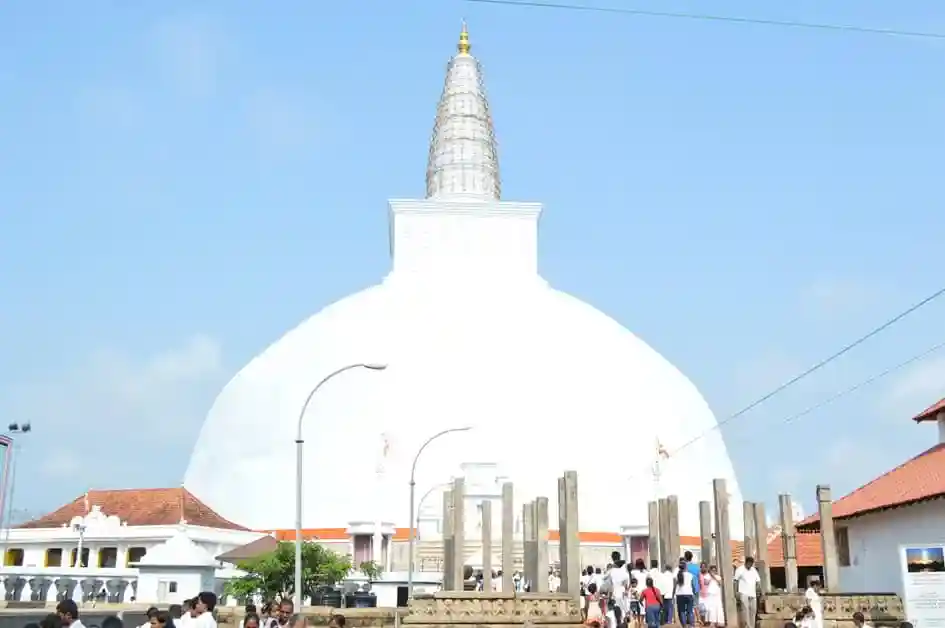
Ruwanwelisaya (Photo: Nalaka Priyantha)
What This Itinerary Covers
This route focuses on the core of Sri Lanka’s cultural heritage: the ancient capitals and the sacred sites that are still in use today.
The route includes,
- Arrival and a gentle first night in Negombo
- The Sacred City of Anuradhapura, including Jaya Sri Maha Bodhi and Ruwanwelisaya
- Sigiriya Rock Fortress, its water gardens, and frescoes
- The ancient city of Polonnaruwa and Gal Vihara
- Rangiri Dambulla Cave Temple
- Kandy, the Temple of the Tooth Relic and Kandy Lake
- An optional village experience and a Kandyan dance performance
Beaches, wildlife safaris, and the Hill Country train are not part of this route. Leaving them out is what makes room for the ancient cities in a single week.
Who This Itinerary Is Best For
This 7-day Sri Lanka cultural itinerary suits travellers who want to understand culture in Sri Lanka, not just photograph it.
- First-time visitors with a strong interest in history
- Repeat visitors who skipped the ancient cities on an earlier trip
- Couples and solo travellers who enjoy temples, ruins, and museums
- Travellers happy to start early and explore sites with a guide
It suits some travellers less, so it is best to know this before booking.
- Slow-paced travellers may find two long road days and early starts tiring.
- Travellers with limited mobility should know that Sigiriya involves many steep steps, metal stairways, and exposed ledges. Most temples require bare feet on stone or sand.
- Families with young children can manage the route, but heat, long drives, and barefoot temple visits make it hard going for little ones.
- Late arrivals and early departures squeeze the first and last days. A morning flight home changes the final night’s plan, as explained later in this guide.
Route, Transport and Overnight Bases
The route forms a loop. It begins near the airport on the West Coast, heads north to Anuradhapura, then turns east to Sigiriya or Habarana. From there, you make a day trip to Polonnaruwa. The journey then continues south through Dambulla to Kandy before returning west to the airport.
Anuradhapura and Polonnaruwa are sightseeing stops, not overnight bases. Staying three nights in the Sigiriya–Habarana area means you unpack once for the busiest part of the trip. Sigiriya village puts you close to the rock, while Habarana sits at a road junction slightly closer to Polonnaruwa. Both work well.
A private car with a driver is the most practical choice for this compressed route. It lets you start early before the heat builds, wait out a downpour, and head straight to the next site. Many drivers know the sites well, but a licensed site guide adds a lot at Anuradhapura and Polonnaruwa. Short tuk-tuk rides are handy within towns.
Public buses connect all these towns at low cost, and the railway to Kandy is pleasant. On a seven-day plan, however, connections, crowding, and the lack of direct services between some sites cost time you do not have. Buses suit a longer, more flexible trip better.
We recommend reading our “Transport in Sri Lanka: The Best Guide“.
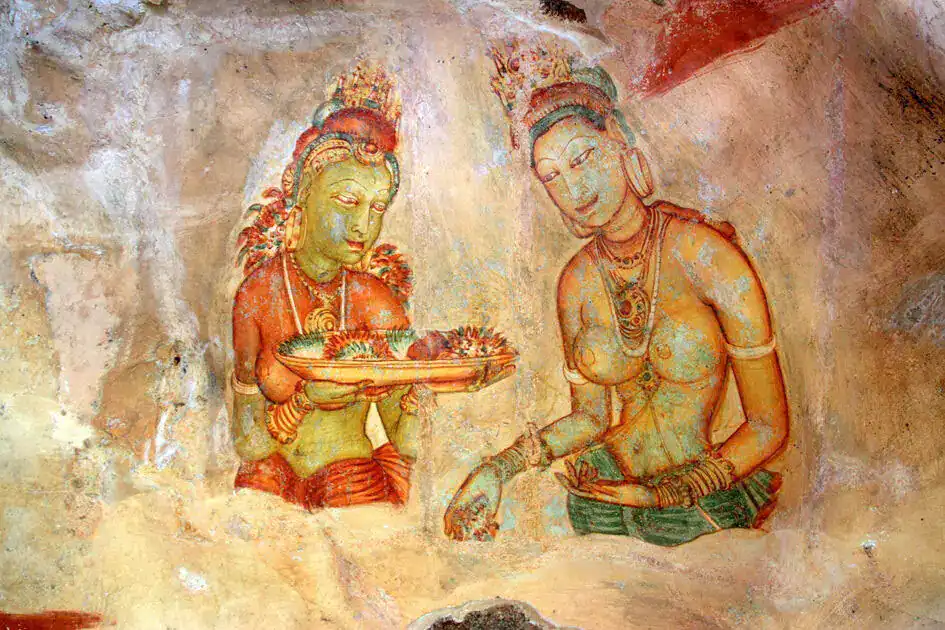
Frescoes in Sigiriya (Photo: Yves Picq, CC BY-SA 4.0)
Seven-Day Route Snapshot
| Day | Route / Main Highlights | Overnight |
| Day 1 | Arrive at BIA, short transfer, rest; optional gentle look at Negombo | Negombo |
| Day 2 | Early drive to Anuradhapura: Sri Maha Bodhi, Ruwanwelisaya, and one more monument | Sigiriya/Habarana |
| Day 3 | Sigiriya Rock Fortress and gardens; quiet village experience or rest | Sigiriya/Habarana |
| Day 4 | Day trip to Polonnaruwa: Royal Palace area, Sacred Quadrangle, Gal Vihara | Sigiriya/Habarana |
| Day 5 | Dambulla Cave Temple, then travel to Kandy | Kandy |
| Day 6 | Temple of the Tooth Relic, Kandy Lake and city heritage | Kandy |
| Day 7 | Transfer from Kandy to BIA for departure | – |
Approximate Transfer Times and Pacing
Travel in Sri Lanka often takes longer than distances suggest. Town centres, traffic, road works, and stops for meals all add time.
Typical travel times
- BIA to Negombo: Around 20–40 minutes
- Negombo to Anuradhapura: Around 4–4.5 hours
- Anuradhapura to Sigiriya/Habarana: Around 1.5–2 hours
- Sigiriya/Habarana to Polonnaruwa: Around 1.5 hours each way
- Sigiriya to Dambulla: Around 30–40 minutes
- Dambulla to Kandy: Around 2–3 hours
- Kandy to BIA: Around 3–4 hours, sometimes more
These are approximate ranges, not guarantees.
Day 2 is the most demanding day of the trip. With four to five hours of driving and several hours on foot at Anuradhapura, it can easily stretch beyond ten hours, and much of the sightseeing falls in the hottest part of the day. Day 7 is the other long leg, and your flight time decides how it works.
Day-by-Day Cultural Itinerary
Day 1: Arrive in Sri Lanka — Negombo
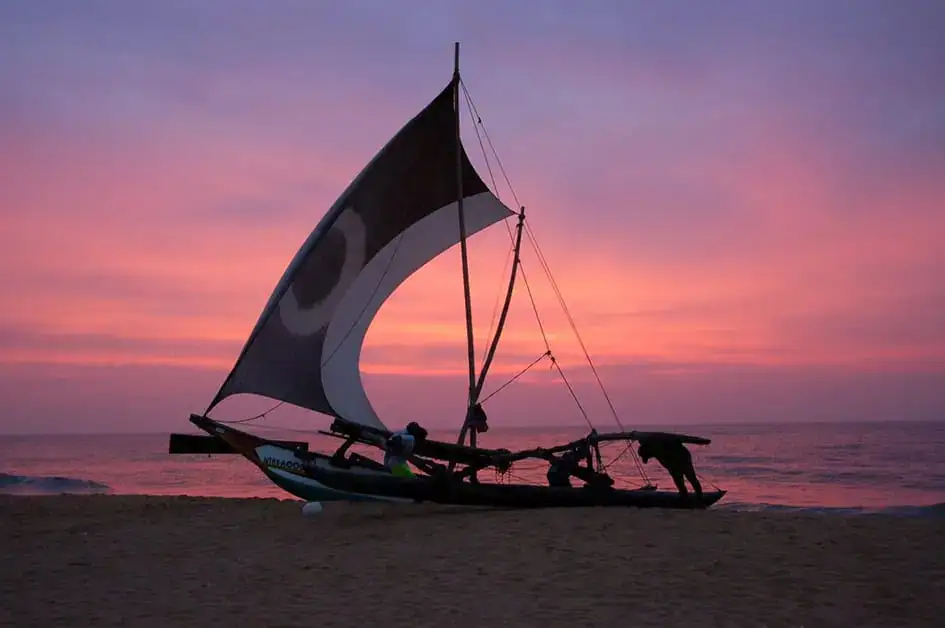
Traditional Fishing Boat and Sunset – Negombo Beach (Photo: e y e / s e e, CC BY-NC-ND 2.0)
Morning or Afternoon
Arrive at Bandaranaike International Airport. After immigration and baggage collection, meet your driver for the short transfer to Negombo. Stopping here means you do not begin the trip with a long drive after a long flight.
Later in the Day
Rest first. If you land early and still have energy, Negombo has a gentle cultural side. This stretch of coast has a long Catholic history, and churches stand out across the town. Fishing remains central to local life, and the boats along the lagoon give a good sense of how the town works. A slow walk is plenty for today.
Evening
Have an early dinner and a good night’s sleep. Tomorrow starts at dawn.
Where to Stay
Negombo beach hotel or guesthouse
Find where to stay in Negombo.
Accommodation Guidance
A hotel near the beach road keeps restaurants close. Anywhere in town keeps tomorrow’s early departure simple.
Food Stop
Try a rice-and-curry meal with fresh seafood.
Practical Notes
Agree on tomorrow’s start time with your driver tonight. Leaving around dawn makes a real difference to Day 2.
Day 2: Anuradhapura’s Sacred City — On to Sigiriya/Habarana
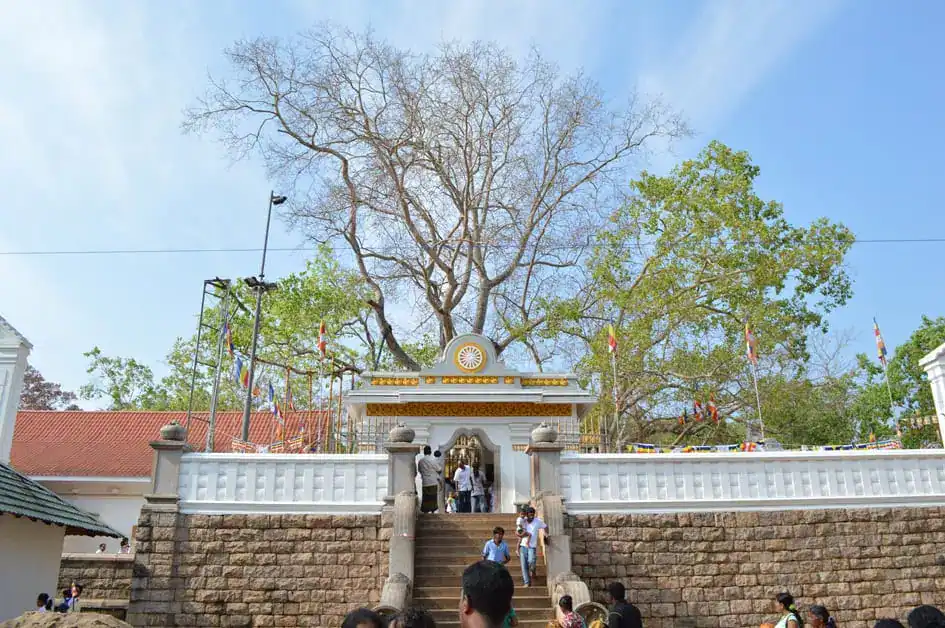
Sri Maha Bodhi – Anuradhapura (Photo: Nalaka Priyantha)
Early Morning
Leave Negombo at dawn and drive north towards Anuradhapura. You should arrive by late morning.
Anuradhapura was the island’s first great capital and remained the centre of Sinhalese kingship for more than a thousand years. Today it is both a vast archaeological landscape and one of the most sacred places in the Buddhist world. Full exploration is impossible on this schedule, so this plan focuses on a few key sites.
Late Morning and Early Afternoon
Begin at Jaya Sri Maha Bodhi, the sacred fig tree grown from a branch of the tree at Bodh Gaya, under which the Buddha attained enlightenment. It is widely regarded as the oldest tree in the world with a recorded planting date. This is a place of active worship. You will see families in white making offerings, and you may hear chanting. Remove shoes and hats, cover shoulders and knees, and move quietly.
A short walk away rises Ruwanwelisaya, the great white stupa built under King Dutugemunu in the second century BCE. Walk slowly around it clockwise, as pilgrims do.
If time and heat allow, add one more major monument. The vast brick stupa of Jetavanaramaya, among the largest structures of the ancient world, is a strong choice. Abhayagiri is another option. Your guide can advise based on the time of day.
Late Afternoon
Continue east to the Sigiriya or Habarana area, ideally arriving before dark.
Where to Stay
Sigiriya or Habarana lodge, hotel, or guesthouse (night 1 of 3)
Find where to stay in Sigiriya.
Accommodation Guidance
Choose one base for all three nights. Sigiriya suits Day 3; Habarana is slightly closer to Polonnaruwa for Day 4.
Food Stop
Break the journey with a simple rice-and-curry lunch in Anuradhapura before the drive east.
Practical Notes
Temple stone and sand can be very hot underfoot by midday. Many visitors carry thin white socks, which are generally acceptable inside temple grounds. Drink plenty of water.
If the day feels too much, visit only Sri Maha Bodhi and Ruwanwelisaya. Another option is to take a long lunch break and visit in the softer mid- to late-afternoon light, though this means arriving later at your base. Full-moon Poya days bring large numbers of pilgrims and a special atmosphere, but visits move more slowly.
Day 3: Sigiriya Rock Fortress and Local Traditions
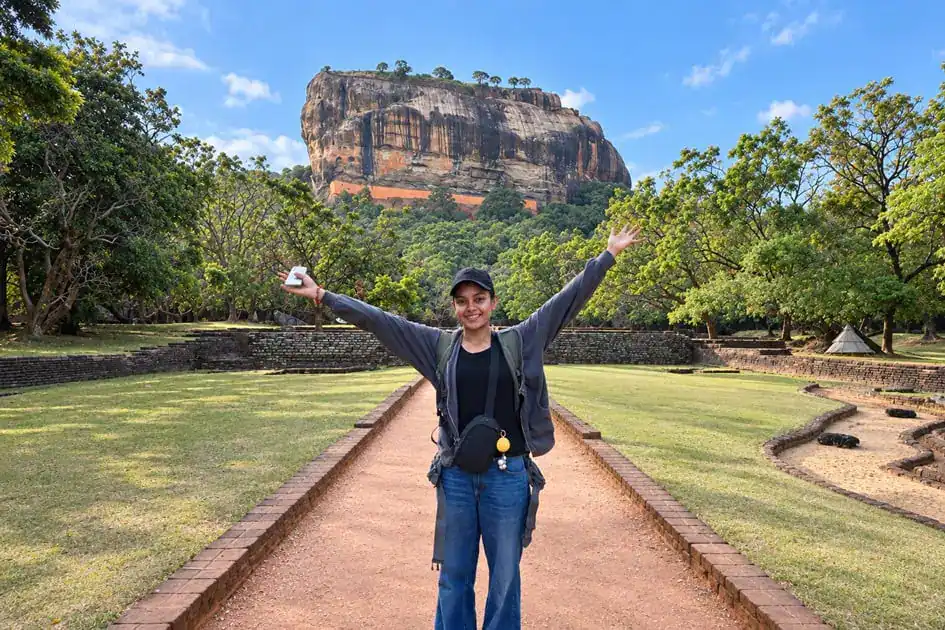
My daughter, Nethuli, at the Sigiriya premises (Photo: Nalaka Priyantha)
Morning
Start early at Sigiriya Rock Fortress, before the heat and crowds build. In the fifth century CE, King Kashyapa made this rock his capital, with a palace on the summit and a planned royal city at its base.
Before climbing, spend time in the water gardens. Their pools, channels, and symmetrical layout show how carefully the whole site was designed.
The climb involves around 1,200 steps and roughly 200 metres of height. At the Lion Terrace, two huge carved paws remain from the gateway that once led through a lion’s mouth. On the way, you pass the famous painted frescoes in their sheltered gallery, where photography is not allowed, and walk beside the polished Mirror Wall, inscribed with verses left by visitors over many centuries. The final stairway leads to the palace foundations and wide views over forest and reservoirs.
Sigiriya is a UNESCO World Heritage Site. Allow around three hours to explore the whole site, including the gardens, the climb, and the museum near the entrance.
Sigiriya Rock Fortress opening hours: 5.00 am to 6.30 pm daily. Tickets sell out by 5.00 pm, and the frescoes section closes at 5.45 pm. Check current hours before you go.
AllTrails Map – Sigiriya Rock Trail (2.4 km)
Afternoon
Keep the afternoon light. Resting at your hotel is perfectly sensible after the climb. If you would like a cultural experience, ask your accommodation about a small, responsibly run village experience. It might be a home-cooked meal, a walk through paddy fields, or time with a local family. Experiences vary, and the best ones feel informal rather than staged, so do not expect a set performance.
Evening
A quiet evening at your lodge.
Where to Stay
Stay in the same accommodation (night 2 of 3).
Food Stop
Try kottu roti or a vegetable curry at a local restaurant in Sigiriya village.
Practical Notes
The climb is steep and can feel exposed near the top. Wear shoes with good grip, as rain makes the stone slippery. Some signs ask for silence because of wild hornet nests on the rock, so follow them.
Day 4: Polonnaruwa’s Ancient Royal Capital
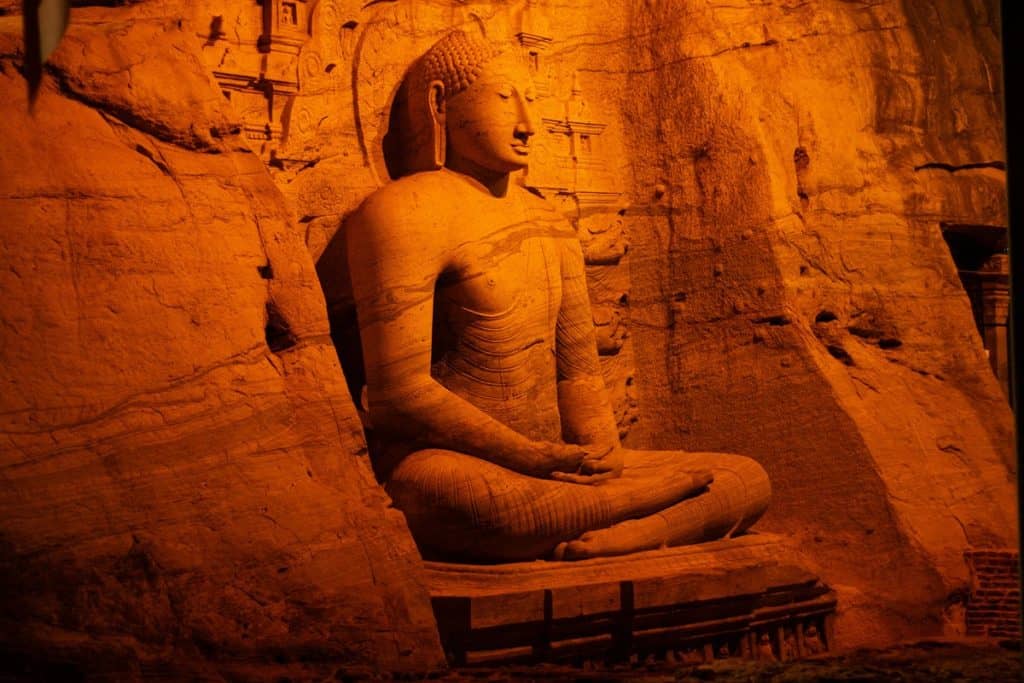
A Buddha statue – Gal Viharaya, Polonnaruwa (Photo: Nalaka Priyantha)
Morning
Drive to Polonnaruwa. After Anuradhapura fell, the capital moved here, and the city flourished between the eleventh and thirteenth centuries. It is more compact and better preserved than Anuradhapura, which makes it the easiest place on this route to picture a medieval royal city.
Begin at the site museum, where tickets are sold. It gives helpful background before you head out.
Polonnaruwa Museum opening hours: 7.00 am to 5.30 pm daily, with last entry at 5.00 pm.
Then focus on a few key areas.
- The Royal Palace area, linked to King Parakramabahu I, with its thick brick walls and the stepped audience hall
- The Sacred Quadrangle, a close group of shrines that once housed the Tooth Relic. The circular Vatadage, with its carved moonstone and guardian stones, is the highlight.
- Gal Vihara, four Buddha images carved from one granite rock face. It is still a place of worship, so remove your shoes and never pose with your back to the statues.
Beyond the city lies the Parakrama Samudra, a huge man-made reservoir that shows how these kingdoms depended on water engineering.
The ancient city of Polonnaruwa is also a UNESCO World Heritage Site.
Afternoon
The ruins spread over several kilometres. Cycling between them is popular early in the day, while moving by car is wiser once the heat rises. You do not need to see every monument. Three or four areas seen properly are worth more than a rushed tour. Return to your base after lunch.
Evening
Relax at your hotel.
Where to Stay
Stay at the same accommodation (night 3 of 3).
Food Stop
A simple rice and curry with several vegetable dishes suits the heat of this region.
Practical Notes
Carry sun protection, water, and a hat you can remove quickly at shrines. A licensed guide helps a great deal here, as many ruins have little signage. Read more about the Cultural Triangle.
Day 5: Dambulla Cave Temple — Travel to Kandy
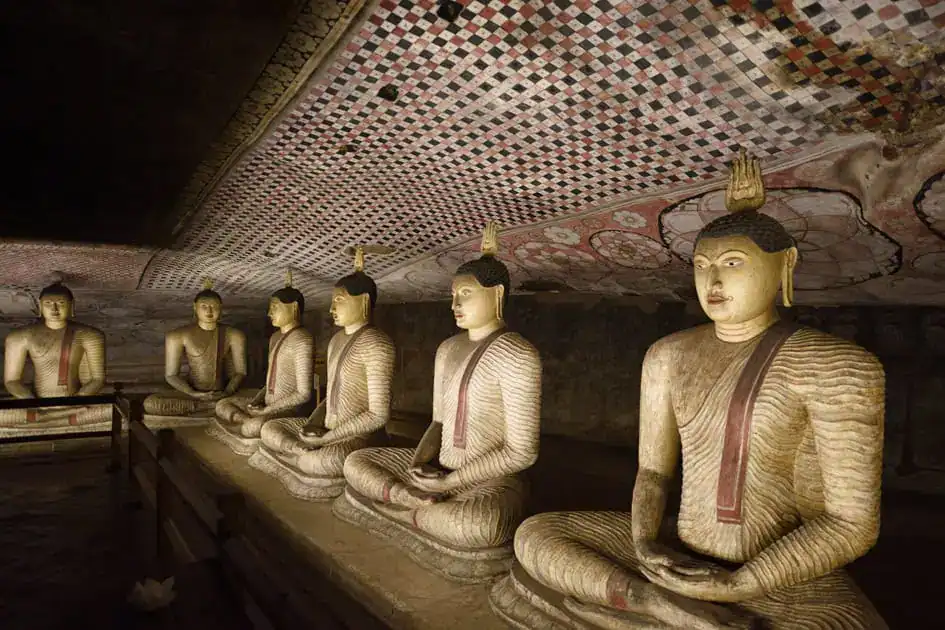
Buddha statues and murals – Dambulla Cave Temple (Photo: Nalaka Priyantha)
Morning
Check out after breakfast, then drive a short distance to the Dambulla Cave Temple. A path climbs the rock to five cave shrines filled with Buddha images and painted ceilings. The paintings and statues come from different periods, and monks still look after the temple and worship here. It holds UNESCO World Heritage status as the Rangiri Dambulla Cave Temple.
Leave your shoes at the shrine entrance and cover your shoulders and knees. Inside the caves, move slowly and let worshippers go first.
Opening hours of Rangiri Dambulla Cave Temple: 7.00 am to 5.00 pm daily.
Afternoon
Continue south to Kandy. If the timing works, you could stop briefly in the Matale area, at the Aluvihare Rock Temple, where Buddhist scriptures are traditionally said to have been first written down. Skip it if you’re running late. Getting to Kandy in good time matters more today.
Evening
If you arrive with time to spare, watch a Kandyan dance performance. Cultural dance performances for visitors are usually held in the early evening near Kandy Lake. Check the current show time and buy tickets when you arrive. This is a stage performance of traditional dance and drumming, which is different from a temple ritual.
Where to Stay
Hotel or guesthouse near Kandy Lake (night 1 of 2)
Accommodation Guidance
Staying close to the lake puts the temple and restaurants within walking distance. Hillside hotels have better views but mean more tuk-tuk rides.
Food Stop
Try Sri Lankan hoppers with spicy sambol for dinner.
Practical Notes
Kandy’s traffic can be slow in the late afternoon, so allow extra time for the final stretch into the city.
Day 6: Kandy’s Sacred and Living Heritage

Kandy Lake and the Temple of the Tooth – Arthur’s Seat View (Photo: A.Savin)
Morning
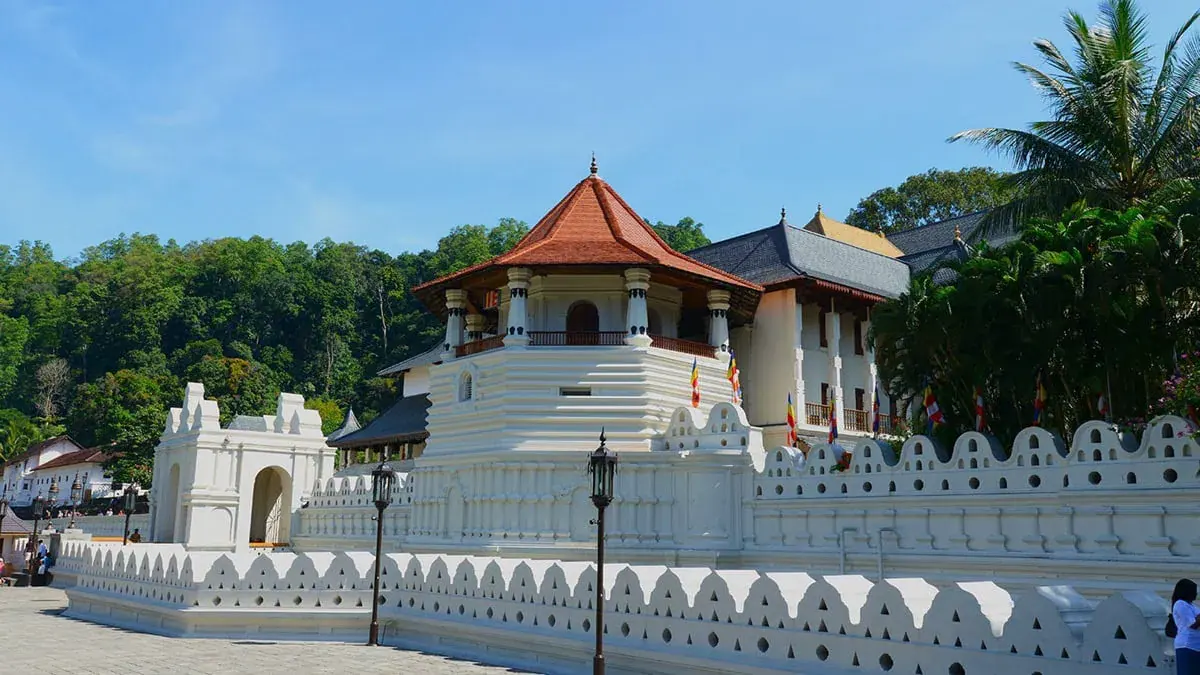
Visit the Temple of the Tooth Relic (Sri Dalada Maligawa), the most important Buddhist shrine in the country. It houses a relic of the Buddha’s tooth. For centuries, whoever kept the relic held the right to rule, so it moved with the royal capitals and ended up in Kandy, the last Sinhalese kingdom.
The best time to visit is during one of the daily rituals (thevava), when drums sound, and devotees queue with flowers to make offerings. You are watching worship, not a show, so stay quiet and keep to the edges.
Opening hours of the Temple of the Tooth: 5.30 am to 8.00 pm daily. Daily rituals run from 5.30 to 7.00 am, 9.30 to 11.00 am and 6.30 to 8.00 pm.
Your ticket also covers the museums inside the temple complex.
Afternoon
Walk the shady path around Kandy Lake, built by the last king of Kandy. If you’d like to see crafts, the Kandy area is known for brasswork, wood carving and lacquer work, and a guide can take you to workshops. Shopping is optional. If you prefer, browse the local markets for Ceylon Tea and spices.
Evening
Go back to the temple for the evening ritual, or have a quiet dinner by the lake.
Where to Stay
Stay at the same accommodation (night 2 of 2).
Food Stop
Try lamprais or rice and curry at a traditional restaurant.
Practical Notes
You leave your shoes at a booth near the entrance. A separate booth is available for foreign visitors. Kandy Esala Perahera, the great procession usually held in July or August, fills the city and books up hotels. The dates follow the lunar calendar, so check the official announcements.
Day 7: Kandy to Bandaranaike International Airport
Morning or Afternoon
Today is mainly a transfer day. The drive from Kandy to BIA usually takes around 3 to 4 hours. Airlines generally ask passengers to check in about 3 hours before international flights. Plan to leave Kandy roughly seven to eight hours before your flight.
Evening
Depart from Bandaranaike International Airport.
Practical Notes
An afternoon or evening flight suits this plan. If you’re on a morning flight, spend Night 6 in Negombo or near the airport instead of Kandy. That means a shorter Kandy visit on Day 6 followed by an afternoon drive. Avoid sightseeing on the way unless your flight is late in the evening.
Where to Stay Along the Route
Negombo: Beach-road hotels and guesthouses are close to restaurants and only a short drive from the airport.
Sigiriya/Habarana: Sigiriya village is closest to the rock. Habarana is better placed for Polonnaruwa. Both areas have plenty of lodges, from simple guesthouses to quiet resorts.
Kandy: Areas near the lake are the most convenient. The hills above town are quieter but less walkable.
Read How to Choose Where to Stay in Sri Lanka.
Food and Cultural Experiences to Try
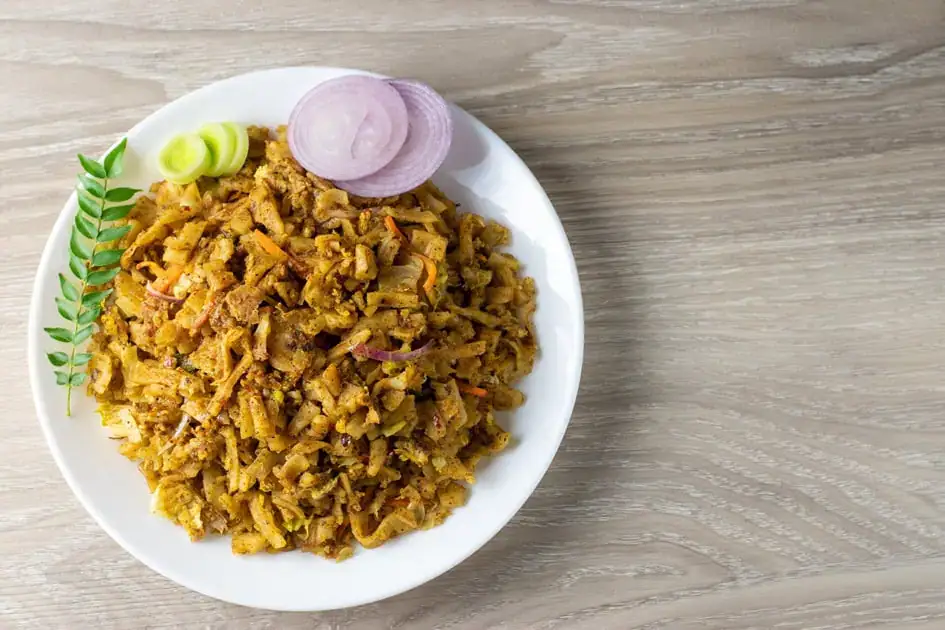
A plate of Kottu Roti (Photo: KavindaF, via Pixabay)
- Rice and curry, with several vegetable dishes, dhal, and coconut sambol
- Hoppers and string hoppers, which are more common at breakfast or dinner
- Kottu roti, freshly chopped on a hot griddle
- King coconut, which is very welcome on hot days in the ancient cities
- Ceylon tea, especially in and around Kandy
Some of the best cultural experiences are simple ones. You could watch the evening offering at a temple, share a meal with a village family, or take time at a stupa while pilgrims walk around it. Explore more authentic Sri Lankan cuisine.
Temple Etiquette and Responsible Cultural Travel
- Dress: Cover your shoulders and knees. Light-coloured clothing is respectful. The Temple of the Tooth does not allow shorts or sleeveless tops.
- Shoes and hats: Remove them before you enter temple grounds. Thin socks help on hot stone.
- Buddha images: Never pose with your back to a statue, touch it, or climb on it. Tattoos of the Buddha may be a problem, so keep them covered.
- Photography: Follow the signs. Photography is not allowed at the Sigiriya frescoes. Never use a flash near worshippers, and ask before taking photos of people.
- Worshippers: Give way to people who are praying, and don’t walk in front of them. Walk clockwise around stupas.
- Guides: Licensed guides add context and support local livelihoods. Agree on a fee before you start.
Read about sustainable and responsible travelling in Sri Lanka.
Best Time to Take This Cultural Route and What to Pack
You can take this route all year. The ancient cities are usually hot and sunny, but heavy showers can come in any season. The inter-monsoon months and the Northeast Monsoon bring more rain to parts of the Cultural Triangle. Kandy is cooler and gets rain more evenly throughout the year. No month is reliably dry everywhere, so plan early starts and keep afternoons flexible. Check Sri Lanka’s weather and the best time to visit.
Pack:
- Light, loose clothes that cover your knees and shoulders
- A sarong or scarf for temple visits
- Sandals that are easy to slip off, plus shoes with good grip for Sigiriya
- Thin socks for hot temple ground
- A hat, sunscreen, and sunglasses
- A compact umbrella or light rain jacket
- A refillable water bottle
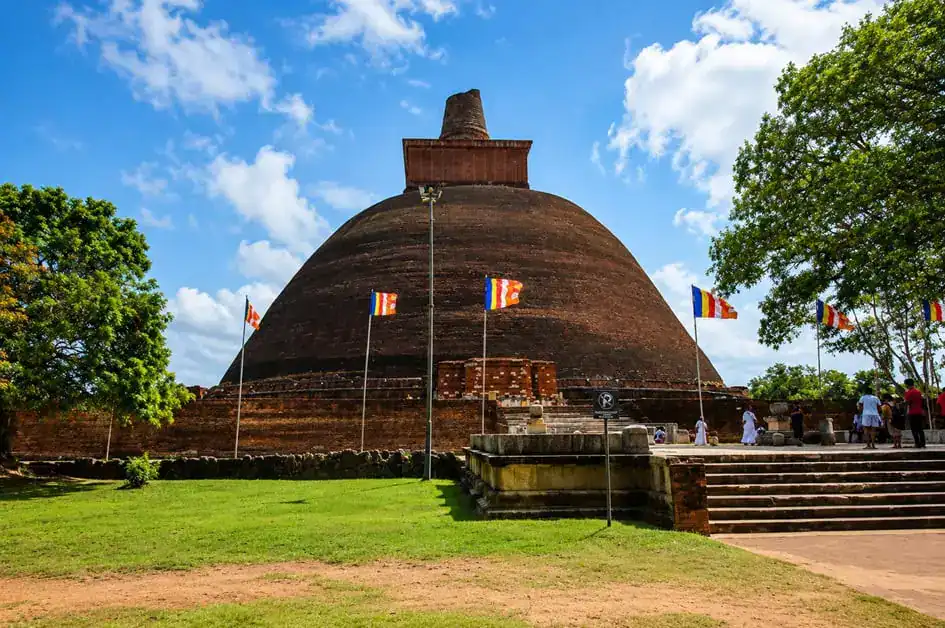
Jetavanarama Stupa – Anuradhapura (Photo: Nalaka Priyantha)
Practical Planning: Tickets, Opening Hours, and Accessibility
Approximate entry fees for foreign adults, as listed by official or ticketing sources at the time of writing:
- Sigiriya: around US$35.
- Anuradhapura Sacred Area: US$30
- Polonnaruwa Ancient City: US$30
- Dambulla Cave Temple: around US$3
- Temple of the Tooth: LKR 3,000
Tickets for Sigiriya, Anuradhapura, and Polonnaruwa can be bought online through the Central Cultural Fund e-services portal or at each site. Buy Dambulla and Temple of the Tooth tickets on arrival. Keep your ticket with you, because Anuradhapura has several checkpoints. Fees and hours can change, so check ticket prices for Sigiriya, Dambulla Cave Temple, Anuradhapura, and Polonnaruwa before travelling.
Accessibility: Sigiriya’s upper climb is not suitable for wheelchairs or for anyone uneasy with heights, although the gardens can be visited separately. Dambulla needs a steady uphill walk. Anuradhapura and Polonnaruwa are mostly flat but widely spread out, and a car makes them much easier to manage.
Safety, Health, and Comfort Notes
Travel Insurance
Make sure you have travel insurance with full medical cover for this 7-day Sri Lanka cultural itinerary. Choose a policy that covers medical evacuation, flight delays, and changes to your trip, since a missed flight on Day 7 can be expensive. Keep a digital copy of your policy on your phone and a printed copy in your bag.
Local Safety
Most visitors find Sri Lanka welcoming and easy to travel in. Use the seatbelt in your car. At the ancient sites, heat is the main risk, so start early, rest in the shade and drink bottled or filtered water. Monkeys live at Dambulla and Polonnaruwa, so keep food out of sight. Avoid touching stray dogs at temples. Use mosquito repellent at dawn and dusk.
Buy tickets only at official counters and hire licensed guides.
Hospitals and Medical Access
There are government hospitals in Negombo, Anuradhapura, Polonnaruwa, Dambulla, and Kandy. Kandy also has private hospitals. Pharmacies are easy to find in towns along the route. The police emergency number is 119, and the Suwa Seriya ambulance service is 1990. Bring your own medicines and prescriptions and a small first-aid kit.
Budget Considerations for Seven Days
The main costs are:
- Private car and driver: usually the highest single cost. Ask whether fuel, the driver’s meals, accommodation, and parking are included.
- Heritage entry fees: around US$110–120 per adult for the five sites listed above, plus any guide fees
- Accommodation: varies widely, from guesthouses to boutique lodges
- Meals: local rice-and-curry restaurants are inexpensive, while hotel dining costs much more
Budget travellers can save by choosing guesthouses and eating locally. Heritage fees stay the same regardless of your budget.
Flexibility and Sensible Alternatives
- Ease Day 2: See only Sri Maha Bodhi and Ruwanwelisaya, or take a long lunch break and visit later in the day.
- Add a night (changes the plan): An overnight stay in Anuradhapura makes Day 2 much easier, and the trip becomes 8 days and 7 nights.
- Heat or rain: Switch Days 3 and 4 so you climb Sigiriya on the clearer morning. Sit out storms and continue later.
- Morning departure (changes the plan): Spend Night 6 in Negombo instead of Kandy.
- Polonnaruwa by car: Move between sites by car instead of cycling if it’s very hot.
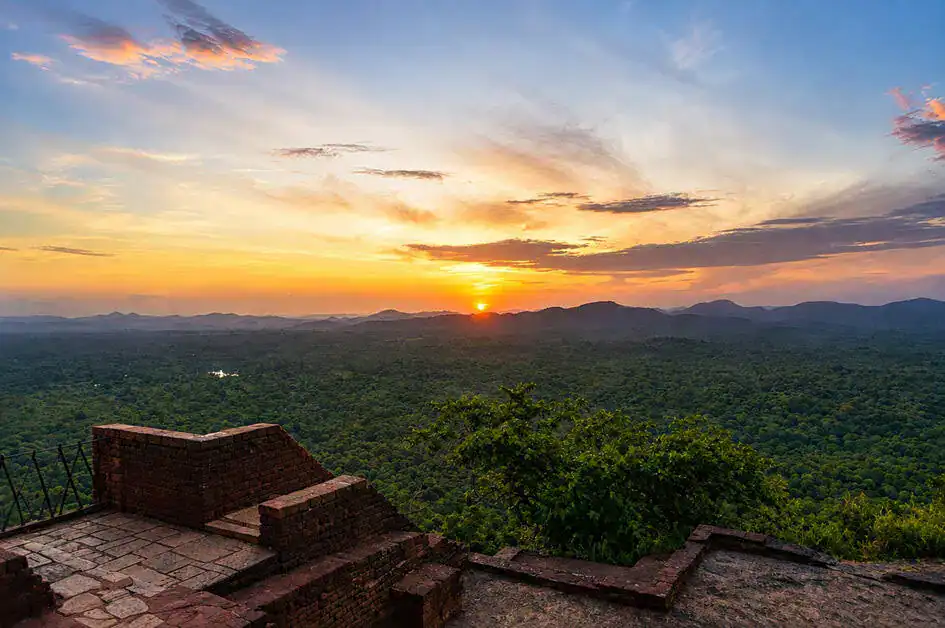
Sunrise from the Sigiriya Rock Fortress (Photo: Nalaka Priyantha)
Highlights Summary
In one week, you walk among pilgrims beneath the sacred Bodhi tree and around Ruwanwelisaya’s white dome. You climb Kashyapa’s rock past ancient paintings, and you stand before the granite Buddhas of Gal Vihara. Then you step into Dambulla’s painted caves and hear the drums at the Temple of the Tooth. This is a journey through monuments that are still part of living faith.
Final Thoughts
This 7-Day Sri Lanka Cultural Itinerary works best when you see fewer sites and take more time at each one. Start early, accept that Day 2 is long, and choose your flight times carefully. If you have an extra day, use it to slow down rather than add more stops.
Ready to plan? Start with our guide to the Cultural Triangle, then compare the best Sri Lanka itineraries to find the trip that suits you.
Map – 7-Day Sri Lanka Cultural Itinerary
Sources and References:
- UNESCO World Heritage Centre – Sacred City of Anuradhapura. Historical and archaeological information about Sri Lanka’s ancient capital, Buddhist monasteries, sacred monuments, and the Sri Maha Bodhi.
- UNESCO World Heritage Centre – Ancient City of Sigiriya. Information about Sigiriya Rock Fortress, its fifth-century royal history, landscaped gardens, frescoes, and archaeological significance.
- UNESCO World Heritage Centre – Ancient City of Polonnaruwa. Historical information about Sri Lanka’s medieval capital, its royal monuments, religious architecture, and the reign of King Parakramabahu I.
- UNESCO World Heritage Centre – Rangiri Dambulla Cave Temple. Information about the historic Buddhist cave shrines, religious paintings, Buddha statues, and the site’s cultural significance.
- UNESCO World Heritage Centre – Sacred City of Kandy. Historical and cultural information about Sri Lanka’s last royal capital, the Temple of the Sacred Tooth Relic, and the city’s Buddhist traditions.
- Central Cultural Fund (Sri Lanka) – Heritage Sites. Official information about Sri Lanka’s major archaeological and cultural heritage attractions, including Anuradhapura, Sigiriya, Polonnaruwa, Dambulla, and Kandy.
- Central Cultural Fund (Sri Lanka) – Official Heritage Site eTicketing. Official information about entry tickets, booking procedures, visitor requirements, and access to major archaeological sites.
- Sri Lanka Tourism – Cultural Heritage. Official tourism information about Sri Lanka’s ancient cities, Buddhist monuments, cultural traditions, and UNESCO World Heritage attractions.
- Sri Lanka Tourism – Heritage: Discover the Past. Background information about Sri Lanka’s ancient kingdoms, archaeological remains, historic capitals, and living cultural heritage.
- Sri Dalada Maligawa – Official Website of the Temple of the Tooth Relic. Information about the temple’s history, sacred relic, Buddhist worship, Kandyan architecture, and visitor guidelines.
- Sri Lanka Tourism – Buddhist Places and Attractions. Information about Buddhist pilgrimage sites, sacred relics, temple architecture, and religious traditions, particularly in Kandy.
- Department of Immigration and Emigration, Sri Lanka – Electronic Travel Authorization (ETA). Official information about tourist entry requirements, visa applications, and travel authorisation.
Featured image: Temple of the Tooth – Kandy (Photo: Koshy Koshy, CC BY 2.0)

I am a Sri Lankan medical doctor who spends my free time travelling, exploring new destinations, and documenting the beauty of the island I call home. I have journeyed across almost every corner of Sri Lanka with my wife and daughter — from wildlife parks and misty mountains to ancient cities, deep forests, rugged landscapes, and quiet beaches.
Travel is not just a hobby for me — it’s a way of life. I love nature, enjoy road trips, and find joy in wildlife photography. I also read widely about tourism, travel trends, and destination culture. Through my writing, I aim to help travellers experience Sri Lanka through real stories, meaningful insights, and honest recommendations — the same way I explore it with my own family.