
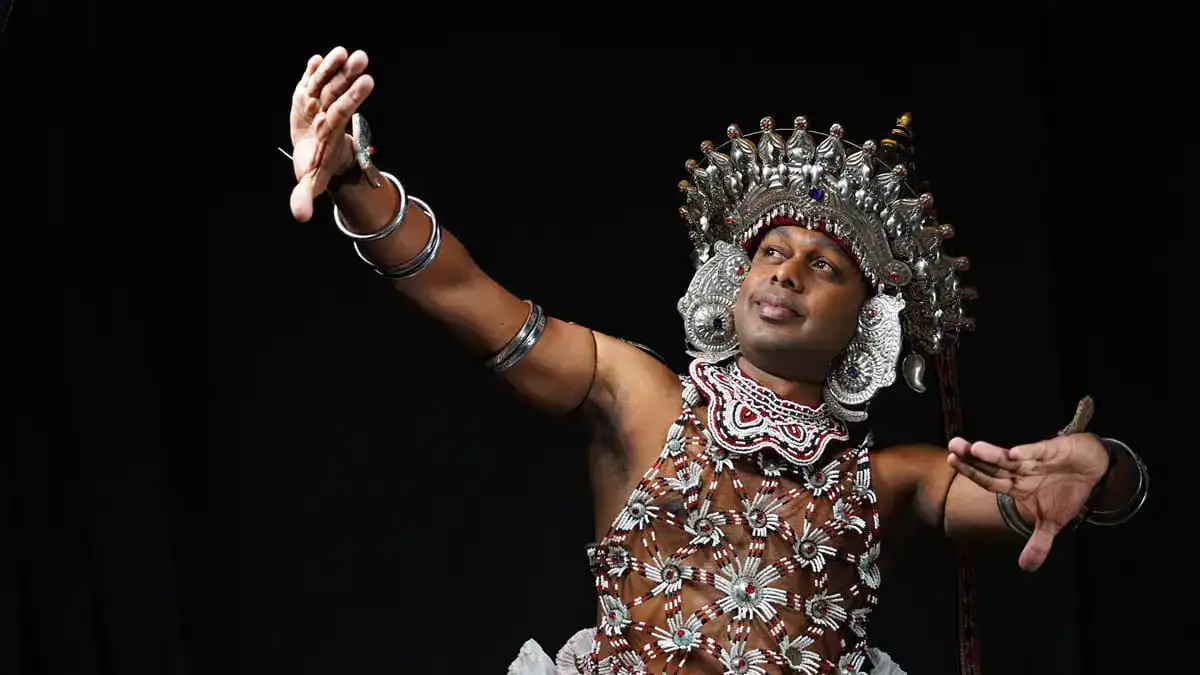

Sri Lanka offers much more than golden beaches, wildlife parks, and ancient temples. The island also holds one of South Asia’s richest performing arts traditions. Traditional dances in Sri Lanka tell stories of kings, gods, nature, faith, and village life through graceful movements, rhythmic drumming, and colourful costumes. Every performance carries meaning. Every drumbeat follows customs passed from one generation to the next. If you want a closer look at Sri Lankan culture, few experiences match an evening spent watching skilled dancers perform centuries-old routines. A dance performance gives you a stronger connection with the island than any guidebook or museum display ever will.
Many visitors attend a cultural show in Kandy without knowing what they are watching. They enjoy the music and the costumes, yet the deeper meaning often goes unnoticed. Each dance reflects a different region, belief, or ceremony. Some celebrate harvests. Some honour Buddhist traditions. Others formed part of healing rituals that local communities still respect today. Once you understand the stories behind these performances, you begin to see Sri Lanka through a different lens.
Sri Lanka Tourism promotes cultural experiences as one of the island’s defining attractions. Festivals, religious processions, dance performances, and traditional music take place throughout the year, giving travellers many opportunities to experience living heritage rather than viewing history through glass. The Sri Lanka Tourism Development Authority also identifies authentic cultural experiences as a key part of sustainable tourism and community development.
Why Traditional Dances in Sri Lanka Matter
Dance has shaped Sri Lanka’s identity for centuries. Long before theatres and cultural centres appeared, dance formed part of religious ceremonies, healing rituals, royal celebrations, and village festivals. Communities used movement and music to honour deities, seek blessings, celebrate victories, and strengthen social bonds.
Unlike many forms of entertainment, Sri Lankan traditional dances still serve their original purpose in many places. During religious festivals, dancers perform as acts of devotion. During village ceremonies, they preserve customs that families have protected for hundreds of years. These performances are living traditions rather than staged recreations.
This close link between dance and daily life gives visitors a rare opportunity. You do not simply watch performers on a stage. You witness traditions that continue to hold meaning for local communities.
Kandy, the last royal capital of the Sinhala Kingdom, still stands at the centre of this cultural heritage. The city combines Buddhist traditions, royal history, music, and dance in ways few Asian destinations match. Sri Lanka Tourism highlights Kandy as one of the country’s strongest cultural destinations due to its unique heritage.
The Three Main Styles of Traditional Dances in Sri Lanka
Although dozens of regional performances exist across the island, nearly every traditional performance belongs to one of three major schools. Each style developed in a different region. Each carries its own music, costumes, movements, and history.
Understanding these three traditions helps you appreciate almost every dance performance you see during your journey.
Kandyan Dance, The Pride of the Hill Country
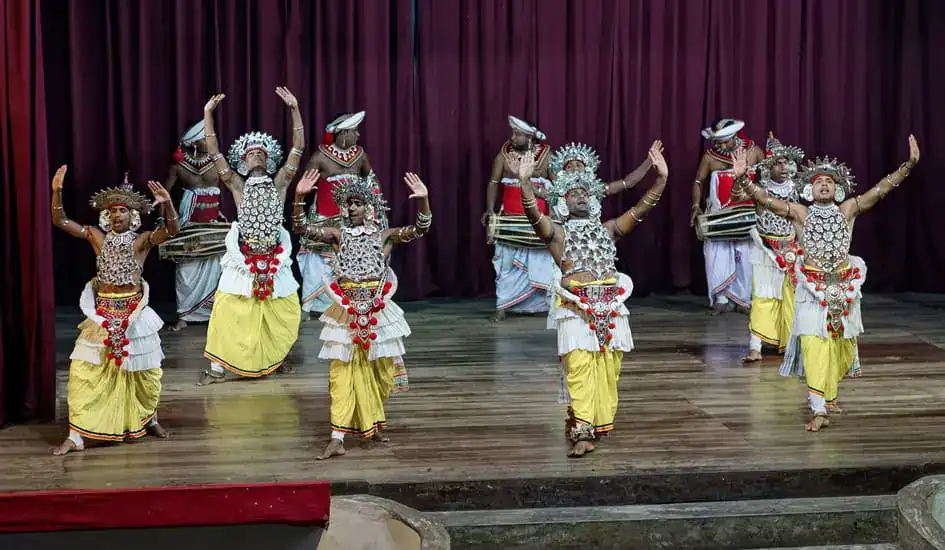
Kandyan dance performance – Kandy Cultural Centre (Photo: Jakub Hałun, CC BY 4.0)
Kandyan dance, known locally as Uda Rata Natum, is the best-known traditional dances in Sri Lanka. Its roots stretch back to the ancient Kandyan Kingdom, where royal courts supported dancers and drummers who performed during ceremonies and religious events.
Today, Kandyan dance represents Sri Lankan culture worldwide. Most visitors first encounter this style during evening cultural shows in Kandy or while watching the famous Esala Perahera procession.
The performance begins with powerful drumming. The rhythm grows stronger as dancers enter the stage wearing bright white costumes decorated with silver ornaments. Their movements combine speed, balance, flexibility, and precision. High jumps, rapid spins, controlled landings, and graceful hand gestures create a performance that feels both elegant and energetic.
The famous Ves costume holds special importance. Only dancers who complete years of training and pass a traditional initiation ceremony earn the right to wear this sacred costume. The elaborate headdress, silver chest plates, arm bands, and layered skirt represent discipline as much as beauty.
Several famous dances belong to this tradition. The Ves Dance remains the signature performance. Gajaga Wannama reflects the movements of an elephant carrying the Sacred Tooth Relic during the annual procession. Mayura Wannama imitates the graceful movements of a peacock. Pantheru Dance celebrates strength through the use of a circular percussion instrument.
The Geta Bera drum drives every performance. Skilled drummers communicate with dancers through changing rhythms, allowing every movement to match the music with perfect timing. According to cultural authorities in Sri Lanka, traditional drumming also serves ceremonial purposes. It is used to seek blessings at important events.
For many travellers, the Kandyan dance becomes the highlight of an evening in Kandy. Most cultural centres present performances lasting about one hour, often ending with dramatic fire dancing and fire walking.
Low Country Dance, Ancient Rituals from Sri Lanka’s Southern Coast
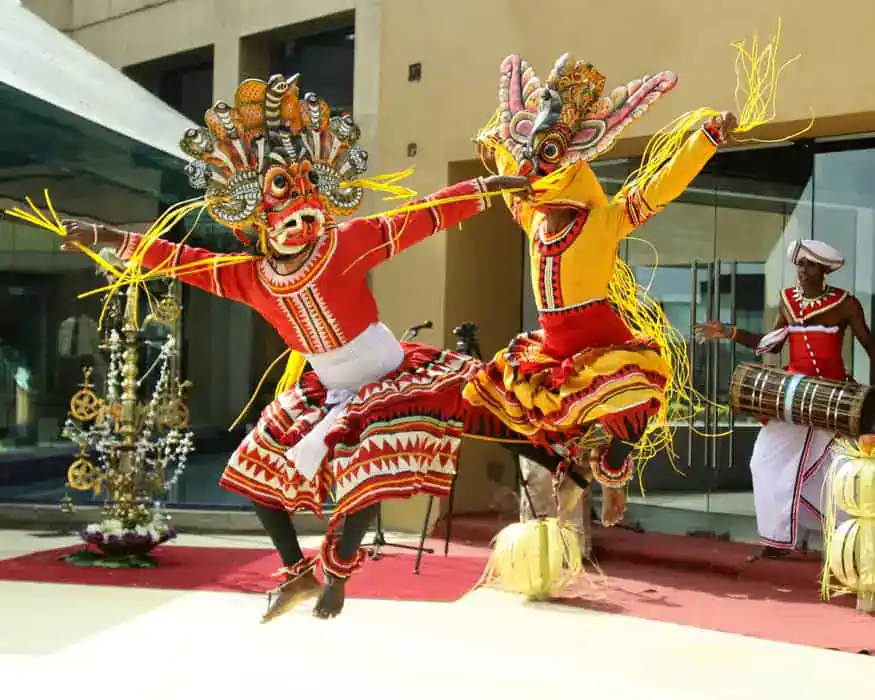
A Sri Lankan devil dance (Photo: Denish C, CC BY-NC-ND 2.0)
The Southern Coast developed a very different dance tradition. Known as Pahatharata Natum, or Low Country Dance, this style grew from ancient healing ceremonies rather than royal celebrations.
People sometimes refer to these performances as devil dances. The name creates confusion for many foreign visitors. These performances do not celebrate evil spirits. Instead, they form part of traditional healing rituals where dancers wear colourful traditional masks representing illnesses, natural forces, or protective spirits.
Local communities believed sickness resulted from harmful spiritual influences. Ritual specialists performed dances, music, and chanting to restore balance and health. While modern medicine now serves daily life, many villages continue these ceremonies because they hold cultural and spiritual value.
Masks play an important role in Low Country Dance. Each mask carries its own identity. Bright colours, exaggerated facial features, and detailed carvings allow audiences to recognise different characters during the performance.
Ambalangoda stands as the centre of Sri Lanka’s mask-making tradition. Visitors often combine a dance performance with a visit to local workshops, where artisans continue carving masks by hand, using techniques passed down through generations.
The Yak Bera drum provides the driving rhythm for these ceremonies. Its deep sound differs from the sharper rhythm of the Geta Bera used in Kandyan performances.
The third major tradition receives less attention from international visitors. Yet, its cultural value equals to that of the other two schools.
Sabaragamuwa dance developed in the Ratnapura region, an area famous for gemstones and lush forests. Local traditions connect many performances with the worship of God Saman, who holds an important place in regional beliefs.
Compared with Kandyan dance, Sabaragamuwa performances appear softer and slower. The movements flow smoothly while maintaining strong links with ritual traditions. Dancers rely less on dramatic jumps and more on graceful body movements and expressive gestures.
The Davula drum creates the rhythm for these performances. Unlike the Geta Bera and Yak Bera, the Davula is played with a stick on one side and by hand on the other. This produces a distinctive sound that immediately identifies the tradition.
Although visitors rarely find daily performances outside the region, cultural festivals often include Sabaragamuwa items alongside Kandyan and Low Country dances.
The Meaning Behind the Costumes
One reason Sri Lankan traditional dances leave such a lasting impression is the attention given to costume design.
The famous Ves costume has become a national symbol. Its white fabric reflects purity while polished silver ornaments catch the stage lights during movement. The elaborate crown adds height and elegance to every performance. Each piece follows traditions developed over centuries rather than changing with modern fashion.
Low Country dancers wear costumes suited to their ritual performances. Masks become the main attraction. Bright reds, yellows, blues, and greens help distinguish different characters from local folklore. Every mask carries a symbolic meaning. Some represent diseases. Others represent protective spirits or mythical beings.
Sabaragamuwa costumes tend to appear simpler. Their understated appearance allows audiences to focus on graceful movements instead of elaborate decoration.
These costumes do more than create visual appeal. They communicate identity before the music even begins.
The Drums That Give Life to Every Performance
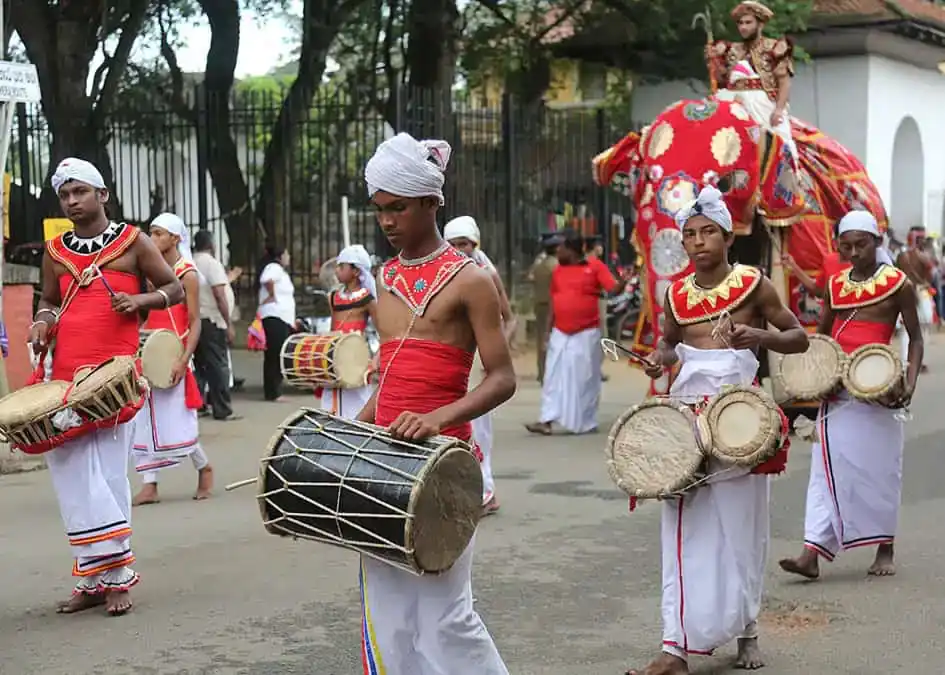
Drummers, Kandy Esala Perahera (Photo: Denish C, CC BY-NC-ND 2.0)
No discussion of dances in Sri Lanka feels complete without mentioning traditional drumming.
The drummer does far more than keep time. Every rhythm signals changes in movement, mood, and pace. Experienced dancers learn each beat through years of disciplined practice.
The Geta Bera dominates Kandyan performances. Its powerful sound fills large performance halls and open spaces during religious processions.
The Yak Bera creates the distinctive rhythm of Low Country ceremonies. Its deeper tone supports dramatic ritual performances involving masks and storytelling.
The Davula serves as the heartbeat of the Sabaragamuwa dance. Its unique playing technique produces rhythms unlike any other Sri Lankan drum.
Visitors often focus on the dancers while overlooking the musicians. Yet every performance depends upon the close relationship between both groups. One cannot succeed without the other.
This connection becomes especially clear during major cultural festivals, where hundreds of dancers and drummers perform together with extraordinary precision. Sri Lanka Tourism describes these festivals as among the island’s finest cultural experiences because they combine dance, music, religious traditions, and community participation into a single celebration.
Where to Watch Authentic Traditional Dances in Sri Lanka
Watching a dance performance in the right setting makes a big difference. Sri Lanka offers many opportunities to see traditional performances, yet the quality and authenticity vary from one venue to another. Some shows focus on visitors and present a short introduction to several dance styles. Others form part of religious festivals or village ceremonies where dance still serves its original purpose.
If your schedule allows, include both experiences during your trip. A professional cultural show explains the different styles clearly and accessibly. A festival or religious event shows how dance still fits into daily life across the island.
Kandy, The Cultural Heart of Sri Lanka
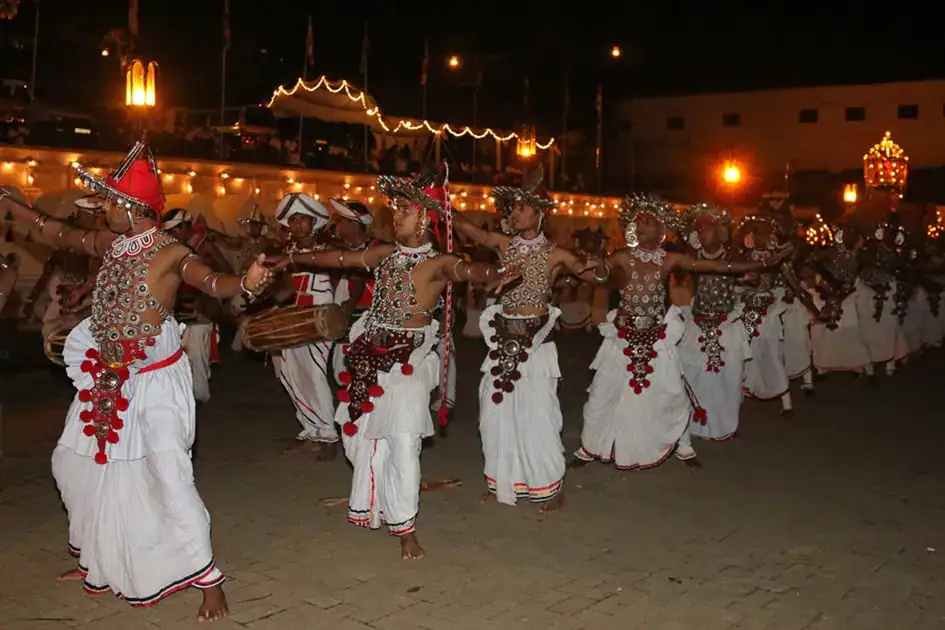
Kandyan Dancers – Kandy Esala Perahera (Photo: Denish C, CC BY-NC-ND 2.0)
Kandy ranks as the best destination for anyone who wants to experience traditional dances in Sri Lanka. The city’s rich history, its role as the last royal capital, and its close link with Buddhism make it the natural home of Kandyan dance.
Several cultural centres hold evening performances throughout the year. Most shows last about one hour and present a mix of Kandyan dances, drumming, acrobatics, fire dancing, and fire walking. The programmes introduce visitors to different dance forms while keeping the performance easy to follow.
Many travellers plan their visit around the Temple of the Sacred Tooth Relic. This creates the perfect opportunity to spend the afternoon exploring one of Sri Lanka’s most sacred sites before attending a dance performance in the evening.
The combination of history, religion, architecture, music, and dance offers one of the most rewarding cultural experiences in Sri Lanka.
Colombo
Sri Lanka’s capital also offers opportunities to experience Sri Lankan traditional dances. Cultural theatres, museums, hotels, and special events often feature performances by leading dance schools from across the country.
Although Colombo lacks the historic atmosphere of Kandy, performances often showcase dancers who have trained for many years. This makes the city a good option for visitors who begin or end their journey in the capital.
Many international conferences, tourism events, and official ceremonies also include traditional dance performances as part of the welcome programme. These performances highlight the importance of dance within Sri Lankan culture.
Ambalangoda
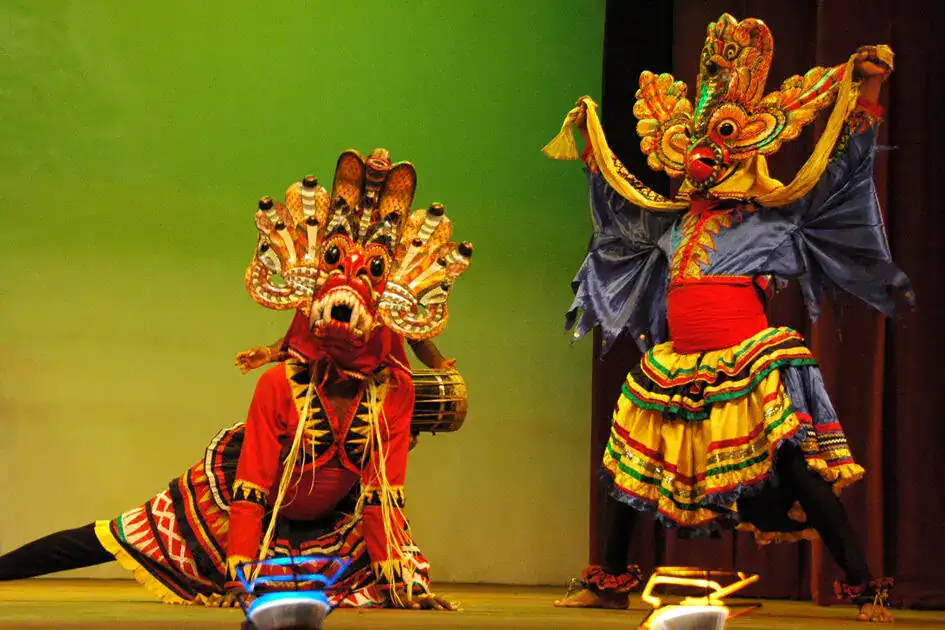
A Devil Dance with Raksha Masks (Photo: Shreyans Bhansali, CC BY-NC-SA 2.0)
Ambalangoda attracts visitors for a different reason. The town serves as the centre of Sri Lanka’s traditional mask-making industry.
Local workshops welcome visitors year-round. Skilled artisans explain how each mask represents a character from folklore, healing ceremonies, or village traditions. Several museums display historic masks alongside modern creations.
Many workshops also organise demonstrations where visitors watch masked dancers perform rituals connected with Low Country traditions. This offers valuable context before attending a larger performance.
The experience combines dance, sculpture, folklore, and craftsmanship into one visit.
Ratnapura
Ratnapura rarely appears on standard travel itineraries, yet the region preserves many traditions linked with Sabaragamuwa dance.
Visitors who travel beyond the main tourist routes often encounter community festivals where local dance groups perform during religious celebrations.
These performances feel less commercial than larger cultural shows. They also provide a closer look at village traditions that continue across the country.
The Esala Perahera, Sri Lanka’s Greatest Cultural Festival

A Young Dancer, Esala Perahera (Photo by Dinuka Gunawardana, via Pexels)
No discussion about Sri Lankan traditional dances feels complete without mentioning the Esala Perahera.
Held each year in Kandy, this festival honours the Sacred Tooth Relic of Lord Buddha. The procession has continued for centuries and ranks among Asia’s most famous religious festivals.
Thousands of local and international visitors arrive every year to witness the event.
As evening falls, the streets of Kandy fill with performers dressed in traditional costumes. Drummers create powerful rhythms while dancers move through the streets in carefully organised groups. Torch bearers, whip crackers, musicians, flag bearers, decorated elephants, and temple officials all play their part in the procession.
Every dance follows traditions preserved through generations. Every costume reflects historical customs. Every movement carries religious and cultural meaning.
The procession usually takes place between July and August, depending on the lunar calendar. Sri Lanka Tourism lists the festival among the country’s premier cultural events due to its historical significance and international appeal.
If you plan to attend, book accommodation several months in advance of your visit. Hotels often reach full occupancy long before the festival begins.
The Cultural Meaning Behind Every Performance
Dance in Sri Lanka tells stories without spoken words.
Many Kandyan dances celebrate animals found across the island. Dancers copy the graceful movements of peacocks, elephants, monkeys, swans, and deer. These performances show the close relationship between people and nature throughout Sri Lankan history.
Other dances honour kings, warriors, and religious traditions. Hand movements, facial expressions, and body posture communicate respect, gratitude, courage, and devotion.
Low Country performances reflect another side of Sri Lankan culture. Their stories focus on healing, protection, and the relationship between people and unseen spiritual forces.
Sabaragamuwa dance highlights faith, humility, and regional customs.
Once you understand these meanings, every performance becomes richer. Instead of watching colourful costumes and energetic movements, you begin reading stories through dance.
This deeper understanding often becomes one of the most rewarding parts of visiting Sri Lanka.
Why Every Traveller Should Experience Traditional Dances in Sri Lanka
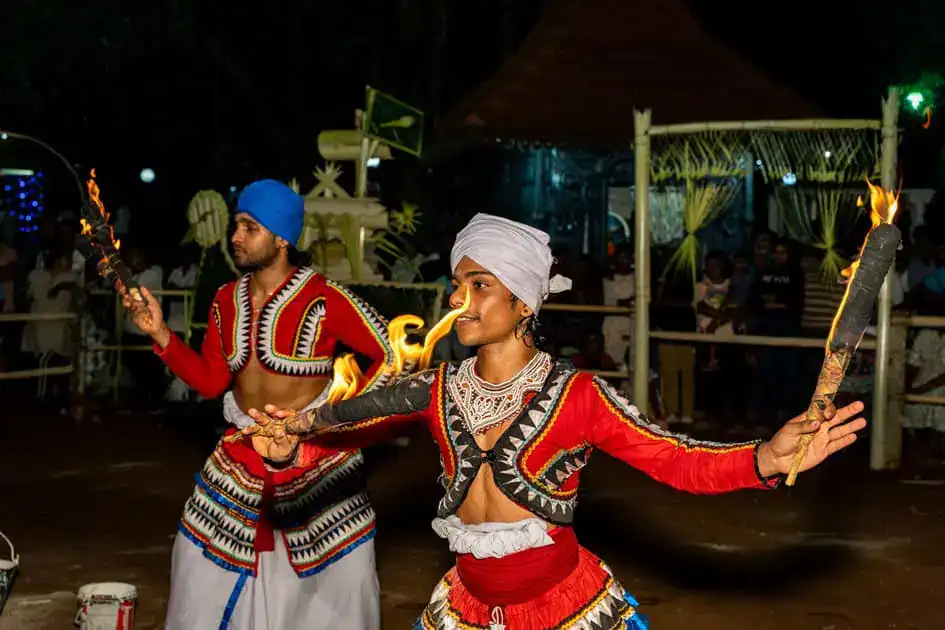
Gini Madu Dancing Performance (Photo: Thilina Alagiyawanna, via Pexels)
Many visitors spend their holiday moving between beaches, wildlife parks, tea plantations, and archaeological sites. These places deserve their reputation. They reveal different parts of Sri Lanka’s natural beauty and long history.
Dance adds another layer to the journey.
A performance explains traditions that shaped communities across the island for centuries. You hear the rhythms that accompanied royal ceremonies. You watch costumes inspired by ancient beliefs. You witness skills perfected through years of disciplined practice.
Few experiences offer such a direct connection with local culture.
A dance performance also fits easily into almost every itinerary.
If you spend two or three days in Kandy, reserve one evening for a cultural show.
If you travel along the Southern Coast, include a visit to Ambalangoda to learn about traditional masks and Low Country dance.
If your visit falls during the Esala Perahera, allow enough time to enjoy the full procession rather than rushing through it.
These experiences require little extra planning, yet they often become lasting memories.
A Simple One-Day Cultural Experience in Kandy
Many visitors ask how they should organise a day in Kandy. A balanced itinerary allows enough time for both sightseeing and cultural activities.
Start your morning at the Temple of the Sacred Tooth Relic. Arrive early before large crowds gather. Spend time exploring the temple complex and learning about its religious importance.
Continue to the Royal Botanical Garden at Peradeniya during the afternoon. The gardens provide a relaxing change of pace after visiting the temple.
Visit Kandy Lake before sunset. Walk around the shoreline and enjoy views across the city.
Finish the evening with a traditional cultural show. Watching Kandyan dance after exploring Kandy’s historical landmarks helps connect everything you learned during the day.
Complete the evening with a traditional Sri Lankan dinner at a local restaurant.
This simple itinerary combines history, religion, nature, music, dance, and local cuisine in one rewarding day.
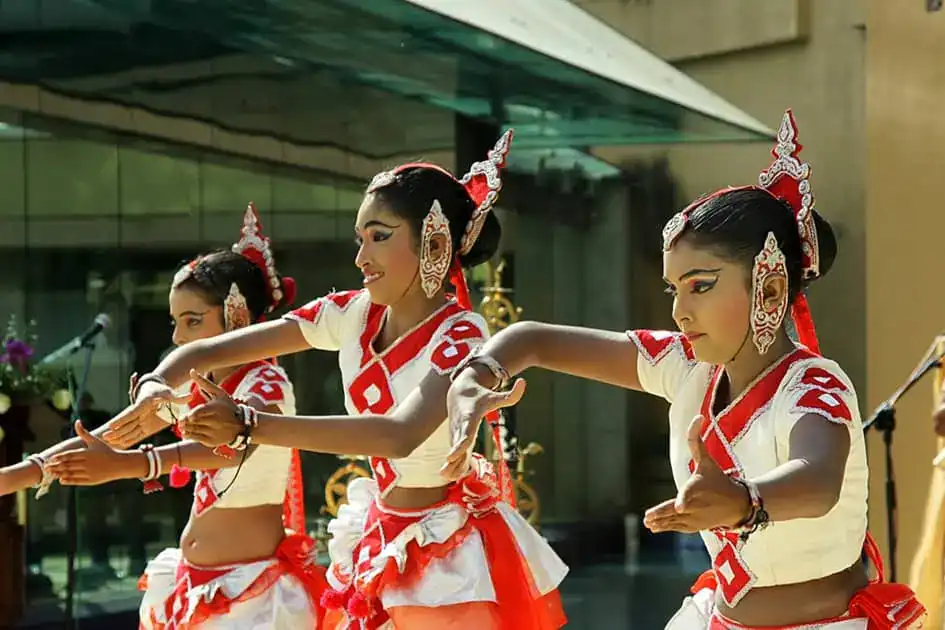
Female Dancers (Photo: Denish C, CC BY-NC-ND 2.0)
Practical Tips Before You Attend a Dance Performance
A little preparation improves your experience.
Arrive at least thirty minutes before the performance begins. This gives you enough time to choose a good seat and observe the musicians as they prepare their instruments.
Dress respectfully, especially if the performance takes place near a temple or during a religious festival.
Switch off your phone before the performance starts.
Avoid using flash photography. Bright flashes distract performers and reduce the experience for other guests.
Listen carefully when presenters explain the dances before each performance. These introductions help you recognise different dance styles and understand the meaning behind each routine.
Support local communities whenever possible. Purchasing handmade masks, traditional drums, or locally produced crafts helps preserve valuable skills and provides income for artisan families.
How Traditional Dance Supports Cultural Tourism
Traditional dance plays an important role in Sri Lanka’s tourism industry.
Cultural tourism encourages visitors to spend more time in local communities while supporting artists, performers, guides, craft workers, and small businesses.
Dance schools also train young performers from an early age. Years of practice prepare students for cultural festivals, national events, and international performances.
This ongoing training helps preserve customs that might otherwise disappear.
Visitors play an important role in this process. Every ticket purchased supports performers, musicians, costume makers, stage technicians, and cultural organisations working to protect Sri Lanka’s heritage for future generations.
Choosing authentic performances over commercial imitations helps maintain the quality of these traditions.
Before you visit Sri Lanka for the first time, it is recommended to read the ultimate travel guide for first-time travellers and the best travel itineraries for your travel season.
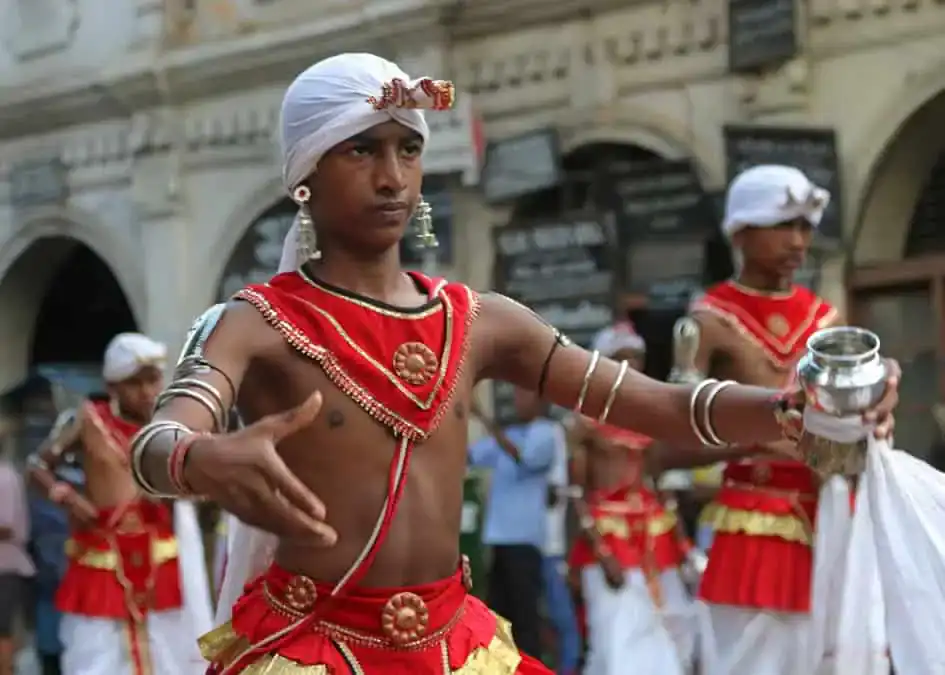
A Traditional Dancer (Photo: Denish C, CC BY-NC-ND 2.0)
Final Thoughts
Traditional dances in Sri Lanka offer far more than an evening of entertainment. They preserve history, celebrate faith, honour nature, and strengthen cultural identity across the island. Every performance reflects generations of dedication, discipline, and artistic excellence. From the energetic movements of Kandyan dance to the healing rituals of the Low Country tradition and the graceful elegance of Sabaragamuwa dance, each style reveals a different chapter of Sri Lankan history.
For travellers, these performances create lasting memories because they offer something deeper than sightseeing alone. They offer a direct connection with people, traditions, and customs that continue to shape daily life across the country. Whether you watch a cultural show in Kandy, attend the Esala Perahera, or visit a village known for traditional masks, you will leave with a richer understanding of Sri Lankan culture.
If your itinerary includes historic cities, wildlife parks, tea plantations, or tropical beaches, reserve time for a traditional dance performance as well. The experience will help you appreciate the culture in Sri Lanka from a fresh perspective. Among the many unforgettable experiences waiting across the island, Sri Lankan traditional dances continue to stand as one of the finest expressions of the nation’s heritage. They deserve a place on every travel itinerary and in every visitor’s story of Sri Lanka.
Sources and References:
- Sri Lanka Tourism. Festivals and events.
- Sri Lanka Tourism. Cultural heritage.
- Sri Lanka Tourism Development Authority. Official website.
- Central Province Tourism Bureau. Sri Lankan traditional dancing and drumming.
- Explore Sri Lanka. Traditions of dance and music.
- Department of National Museums, Sri Lanka. National Museum of Kandy.
- UNESCO. Convention for the Safeguarding of the Intangible Cultural Heritage.
- Encyclopaedia Britannica. Sri Lanka.
- Tourist Directory Sri Lanka. Arts and crafts in Sri Lanka.
- The Temple of the Sacred Tooth Relic. Official website.
Featured image: A traditional dance in Sri Lanka (Photo: Harsha Bokalawala via Pexels)

I am a Sri Lankan medical doctor who spends my free time travelling, exploring new destinations, and documenting the beauty of the island I call home. I have journeyed across almost every corner of Sri Lanka with my wife and daughter — from wildlife parks and misty mountains to ancient cities, deep forests, rugged landscapes, and quiet beaches.
Travel is not just a hobby for me — it’s a way of life. I love nature, enjoy road trips, and find joy in wildlife photography. I also read widely about tourism, travel trends, and destination culture. Through my writing, I aim to help travellers experience Sri Lanka through real stories, meaningful insights, and honest recommendations — the same way I explore it with my own family.