

Sri Lanka holds one of the richest festival calendars in Asia. The island celebrates Buddhist, Hindu, literary, harvest, and community traditions throughout the year. Streets fill with dancers, drummers, lanterns, pilgrims, elephants, fire rituals, and temple ceremonies. These events shape daily life in towns and villages across the country. They also attract large numbers of foreign visitors who seek culture, history, and local experiences.
The demand for cultural tourism in Sri Lanka continues to grow. The Sri Lanka Tourism Development Authority’s data shows a strong rise in visitor arrivals after the tourism recovery period. Cultural heritage tourism now plays a major role in the best travel itineraries promoted by Sri Lanka Tourism. Festivals in Sri Lanka stand at the centre of this growth. It is because they give visitors direct access to local traditions, Sri Lankan food, music, religion, and social life.
Many travellers visit Sri Lanka for the popular beaches and nature & wildlife. Yet the island’s cultural celebrations often become the highlight of the journey. A traveller who watches the Kandy Esala Perahera at night, lights a Vesak lantern in Colombo, or joins families during the Sinhala and Tamil New Year sees a side of Sri Lanka that guidebooks alone fail to explain.
This guide explores the most famous traditional festivals in Sri Lanka. Each festival reflects a different part of the island’s identity. Some events honour the Buddha. Others celebrate Hindu gods, harvest traditions, literature, or regional customs. Together, they form a living cultural map of Sri Lanka.
Kandy Esala Perahera

Traditional dancers – Kandy Esala Perahera (Image by u_mnp9mrjmed from Pixabay)
The Kandy Esala Perahera is the most famous festival in Sri Lanka. Sri Lanka Tourism promotes the event as one of the island’s leading cultural attractions. The festival takes place in Kandy during July or August and runs for about 10-12 days. The procession centres around the Temple of the Sacred Tooth Relic, known as Sri Dalada Maligawa.
The festival honours the Sacred Tooth Relic of the Buddha. The event also preserves older rituals linked to rain blessings and guardian deities from the Kandyan Kingdom period. Historians trace the roots of the Perahera back more than a thousand years.
Crowds line the streets of Kandy each evening as the procession begins. Traditional drummers lead the parade. Kandyan dancers follow with acrobatic performances and spinning movements. Fire dancers walk through the streets carrying flaming torches. Whip crackers announce the arrival of each section of the procession.
The decorated elephants form the visual centre of the event. The main tusker carries the sacred casket linked to the Tooth Relic. The elephant wears layers of embroidered cloth, lit and adorned with ornaments. Visitors from across the world travel to Kandy to witness this moment.
The final nights, known as the Randoli Perahera, draw the largest crowds. Hotels in Kandy often reach full occupancy during this period. International travel reviews describe the festival as one of Asia’s greatest street processions.
The event ends with the Diya Kepeema ceremony at the Mahaweli River. Priests perform a symbolic water-cutting ritual before dawn. This ceremony marks the close of the sacred celebrations.
Vesak Festival

Vesak Lanterns (Photo: theonlymikey, CC BY-NC-SA 2.0)
Vesak stands as the most important Buddhist festival in Sri Lanka. The festival marks the Buddha’s birth, enlightenment, and passing away. The celebration takes place during the full moon in May and lasts several days.
Cities across Sri Lanka transform during Vesak week. Streets glow with colourful lanterns and illuminated displays. Large pandals rise beside roads and temples. These structures use artwork and lights to tell stories from Buddhist teachings.
Colombo becomes one of the busiest centres during the festival. Public parks, temples, and shopping streets host lantern exhibitions and religious events. Families walk through the city late into the night to admire the decorations.
One of the strongest traditions during Vesak is the presence of dansal stalls. Volunteers offer free food and drinks to the public. Travellers often receive rice & curry, tea, sweets, noodles, and ice cream from local families and organisations. This custom reflects Buddhist values linked to generosity and compassion.
Many Sri Lankans spend Vesak at temples. They observe sil, meditate, listen to sermons, and offer flowers before Buddha statues. White clothing dominates the festival because people wear simple attire during religious observances.
Foreign travellers often describe Vesak as one of the most peaceful festivals in Sri Lanka. The event lacks loud commercial activity. Instead, the atmosphere centres on reflection, kindness, and community participation.
Sri Lanka Tourism frequently promotes Vesak as a major cultural event. It is because the festival offers visitors direct access to Buddhist traditions without barriers. Travellers move freely through lantern zones, temple grounds, and food stalls while interacting with local communities.
Sinhala and Tamil New Year
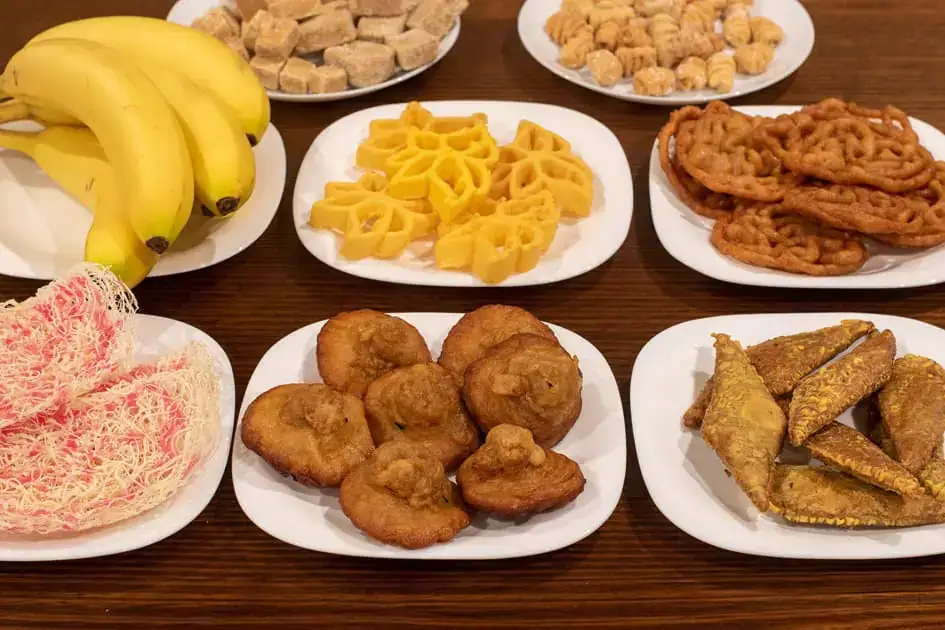
Traditional Sweet Treats During the New Year Festival (Photo: Kavinda F from Pixabay)
Sinhala and Tamil New Year takes place in mid-April and marks the traditional solar new year. The festival celebrates harvest traditions and family life. Both Sinhalese and Tamil communities observe the event across the island.
The atmosphere changes days before the new year begins. Homes receive fresh paint and decorations. Families shop for clothing, sweets, and ingredients for traditional foods. Villages organise games and social gatherings.
Astrology plays a major role during the festival. Religious and cultural leaders announce auspicious times for cooking, eating, working, and religious rituals. Families follow these times closely.
Milk rice forms one of the main ceremonial foods. Families cook the rice at the exact moment stated in the astrology schedule. The milk boiling over the pot symbolises prosperity and abundance for the coming year.
Traditional games bring villages together during the holiday period. Men, women, and children compete in events such as pillow fighting, tug-of-war, climbing greasy poles, and breaking clay pots while blindfolded.
Food plays a central role throughout the celebrations. Homes prepare sweetmeats such as kavum, kokis, aluwa, and mung kavum. Visitors often receive plates of festive snacks when they enter homes during the season.
The festival also strengthens family ties. Many Sri Lankans travel long distances to reunite with relatives. Urban workers return to rural hometowns. Streets in major cities grow quiet while village communities become active.
Travellers who visit Sri Lanka in April often seek village experiences, as the festival reflects everyday Sri Lankan life. Homestays and cultural tourism programs often include cooking sessions, traditional games, and village ceremonies during this period.
Poson Festival

Lighting Oil Lamps at the Temple (Image by vined mind from Pixabay)
Poson commemorates the arrival of Buddhism in Sri Lanka during the third century BCE. According to Sri Lankan history, Arahat Mahinda introduced Buddhism to King Devanampiyatissa at Mihintale. This event shaped the island’s religious and cultural history.
The festival takes place during the full moon in June and focuses mainly on Mihintale and Anuradhapura. Thousands of pilgrims travel to these sacred sites during the celebration period.
Mihintale becomes the spiritual centre of the festival. Pilgrims climb hundreds of stone steps to reach the ancient monastery complex. Many wear white clothing and carry flowers for temple offerings.
Anuradhapura also attracts huge crowds during Poson week. Sacred Buddhist sites such as Sri Maha Bodhi and Ruwanwelisaya remain active throughout the night with religious worship and devotional chanting.
Temporary food stalls appear across the pilgrimage routes. Volunteers distribute meals and drinks free of charge to pilgrims and visitors. This tradition mirrors the generosity seen during Vesak.
Poson differs from the Kandy Esala Perahera in tone and atmosphere. The festival focuses more on pilgrimage and devotion than performance and spectacle. Travellers seeking spiritual tourism often prefer Poson. The event offers insight into Sri Lanka’s Buddhist identity and sacred heritage.
Nighttime illumination creates one of the festival’s most memorable scenes. Temples, stupas, and roads glow with lights while groups of pilgrims move between sacred locations.
Kataragama Esala Festival

Water Carrier Dancers (Kothala Padya Narthanya) – Kataragama Esala Festival (Photo: Iamironviper, CC BY-SA 4.0)
Kataragama hosts one of the most unique festivals in Sri Lanka. It attracts Buddhists, Hindus, Muslims, and members of the indigenous Vedda community. The festival takes place in the Esala month between July and August in the sacred town of Kataragama in southern Sri Lanka.
The festival honours God Kataragama, also known as Skanda or Murugan. Devotees believe the deity grants protection, blessings, and spiritual guidance.
Pilgrimage forms a major part of the Kataragama experience. Some devotees walk for days or weeks across forests and villages to reach the sacred shrine. These long journeys hold deep religious meaning.
The festival includes processions, drumming, temple rituals, and acts of devotion. Fire-walking ceremonies draw strong interest from foreign visitors. Devotees walk barefoot across burning embers as part of vows and spiritual commitments.
Kavadi dancing also forms a major feature of the festival. Participants carry decorated wooden structures attached to their bodies via hooks and piercings. These acts symbolise sacrifice and devotion.
The atmosphere in Kataragama differs from the organised structure of Kandy. The town feels raw, emotional, and deeply spiritual. Chanting fills the streets. Incense smoke rises near shrines. Pilgrims gather beside the Menik Ganga river for ritual bathing ceremonies.
Foreign photographers and documentary travellers often visit Kataragama because the festival reflects ancient religious traditions that have changed little over time.
Nallur Festival

The Chariot – Nallur Festival (Photo by Ajai S on Unsplash)
The Nallur Festival stands as one of the largest Hindu festivals in Sri Lanka. The event takes place at Nallur Kandaswamy Temple in Jaffna and lasts around twenty-five days in late July, August, and early September.
The festival honours Lord Murugan, one of the most important Hindu deities in Tamil tradition. Thousands of devotees gather daily during the celebration period.
The streets around the temple are crowded with worshippers dressed in white and saffron. Temple music fills the air from morning until night. Priests conduct rituals several times a day.
Large processions form the centre of the festival. Chariots carrying sacred images move through the streets surrounded by devotees. The golden chariot ceremony attracts especially large crowds.
Many worshippers walk barefoot throughout the festival period. Some observe fasting rituals or carry offerings as part of vows made to the deity.
The Nallur Festival also reflects the cultural identity of northern Sri Lanka. The event preserves Tamil Hindu traditions through music, dance, language, and ritual practices.
Tourism in Jaffna has grown steadily during recent years. Foreign travellers now include the Nallur Festival in cultural itineraries across northern Sri Lanka. Visitors often combine the festival with trips to Jaffna Fort, local islands, and regional food experiences.

Dancers at Navam Perahera (Photo: Steven dosRemedios, CC BY-NC-ND 4.0)
Navam Perahera takes place in Colombo during late January or February and begins at Gangaramaya Temple. The event offers visitors an easier way to experience a traditional Sri Lankan procession without travelling to Kandy.
The festival runs for two nights and attracts both local and international crowds. Decorated elephants move through the streets beside traditional dancers and drummers.
Gangaramaya Temple organises the event with strong attention to visual presentation. Lights, costumes, and music create a festive atmosphere in the heart of the capital city.
The procession reflects Buddhist traditions while also serving as a major cultural event in Colombo. Travellers staying in the city often choose the Navam Perahera. Its access is easier than for larger regional festivals.
Photographers value the event because the city backdrop creates a strong visual contrast with the traditional performances.
Galle Literary Festival

The Audience – The Forum recording, the Galle Literary Festival (Photo: BBC World Service, CC BY-NC 2.0)
The Galle Literary Festival adds a different dimension to festivals in Sri Lanka. This event focuses on literature, art, food, music, and discussion rather than religious ritual. The festival usually takes place at the end of January or the beginning of February inside the historic Galle Fort.
Galle Fort gives the festival a distinct atmosphere. Dutch colonial buildings, narrow streets, seaside cafes, and boutique hotels create a strong setting for cultural events. Writers, journalists, filmmakers, artists, and readers gather for talks and workshops across the Fort area.
The festival first gained international attention during the early 2000s. Since then, the event has attracted well-known authors and speakers from Europe, Asia, Australia, and South Asia. International visitors often plan Sri Lanka itineraries around the festival dates.
Sessions cover literature, politics, history, travel writing, food culture, and social issues. Cooking demonstrations and music events also form part of the program. Local artists and craftspeople receive space to present work to foreign audiences.
The event plays an important role in Sri Lanka’s cultural tourism industry. The festival appeals to a different group of travellers. Many visitors attending the festival stay in boutique hotels along the Southern Coast. They combine literary events with beach holidays and heritage tours.
Galle Literary Festival also reinforces Sri Lanka’s image as a destination for the arts and intellectual exchange. The event attracts travellers who seek meaningful cultural experiences rather than fast tourism.
Sabaragamuwa Maha Saman Dewala Perahera

A Young Dancer (Photo by Dinuka Gunawardana, via Pexels)
The Sabaragamuwa Maha Saman Dewala Perahera takes place in Ratnapura during August or September. The festival honours God Saman, the guardian deity linked to the Sabaragamuwa region.
Compared with the Kandy Esala Perahera, this festival receives less international publicity. Yet many Sri Lankan cultural researchers and experienced travellers consider the event one of the island’s most authentic processions.
The festival begins at the Maha Saman Devalaya in Ratnapura. Traditional dancers, drummers, and elephants move through the streets during the nightly processions. Villagers gather in large numbers to participate in rituals and religious offerings.
The event preserves customs connected to local guardian deity worship. These traditions existed in Sri Lanka before the spread of Buddhism and later merged with Buddhist practices. The festival, therefore, reflects both religious devotion and regional identity.
Traditional Sabaragamuwa dance performances form a major feature of the procession. These performances differ from Kandyan dance styles seen in Kandy. The costumes, drum rhythms, and movements reflect the cultural traditions of the Sabaragamuwa Province.
Foreign travellers who seek less commercial cultural experiences often enjoy this festival. The atmosphere feels intimate and community-centred. Ratnapura also offers visitors access to nearby gem-mining regions, waterfalls, and rainforests.
Deepavali Festival

Diwali – The Festival of Lights (Photo: Amila Tennakoon, CC BY 2.0)
Deepavali, also known as Diwali, marks one of the most important traditional Hindu festivals in Sri Lanka. The celebration usually falls in October or November and centres mainly in Tamil Hindu communities in the North, East, and Colombo.
The festival commemorates the victory of good over evil and of light over darkness. Homes and temples glow with oil lamps in the evening. Families clean houses, prepare sweets, buy new clothing, and gather for religious ceremonies.
Hindu temples become active early in the morning. Worshippers offer prayers, flowers, fruits, and incense to deities. Priests conduct ceremonies throughout the day while devotional music plays across temple grounds.
Children light fireworks during the evening. Streets in Tamil neighbourhoods fill with families visiting relatives and exchanging sweets and gifts. Traditional Deepavali foods include laddu, murukku, payasam, and other festive dishes.
Deepavali holds deep emotional value for Tamil families because the festival strengthens family unity and spiritual life. The event also highlights Sri Lanka’s multicultural character.
Foreign travellers who visit Jaffna or eastern Sri Lanka during Deepavali often experience warm hospitality from local communities. Temples welcome visitors who follow dress codes and respectful behaviour. The festival also gives travellers a chance to explore Tamil cuisine and Hindu traditions.
Sri Lanka Tourism often promotes Deepavali as part of the island’s multicultural identity. This approach supports cultural tourism beyond the island’s Buddhist heritage.
Thai Pongal Festival

Thai Pongal Festival – Sri Selva Vinayagam Hindu Temple (Photo: Denish C, CC BY-NC-ND 2.0)
Thai Pongal celebrates the harvest season and stands as one of the oldest Tamil festivals in Sri Lanka. The festival usually takes place in January and lasts four days.
The event focuses on gratitude for the harvest, nature, cattle, and the sun. Tamil farming communities across northern and eastern Sri Lanka observe the festival with ceremonies and family gatherings.
The word Pongal refers to a rice dish cooked with milk and jaggery. Families prepare this dish outdoors in clay pots during sunrise. As the milk boils over, people shout “Pongalo Pongal” to welcome prosperity and good fortune.
Kolam art decorates the entrances of homes and temples. Women create detailed patterns on the ground using rice flour and coloured powders. These designs symbolise welcome and abundance.
Temples hold special ceremonies during the festival period. Farmers bring offerings linked to agriculture and harvest traditions. Cattle also receive decorations and blessings because animals play an important role in farming life.
Thai Pongal gives travellers insight into rural Tamil culture in Sri Lanka. Visitors who join local families during the festival often describe the experience as personal and genuine. The event lacks large commercial crowds. Instead, the focus stays on family, gratitude, and agricultural traditions.
Many cultural travel itineraries now include Thai Pongal experiences because travellers increasingly seek village-based tourism and local interaction.
Why Festivals Matter to Sri Lanka Tourism

Kandyan Ves Dancers – Kandy Esala Perahera (Photo: Denish C, CC BY-NC-ND 2.0)
Cultural tourism continues to shape Sri Lanka’s travel industry. The Sri Lanka Tourism Development Authority identifies heritage and culture as major travel motivations among international visitors. Festivals support this trend by fostering direct engagement between travellers and local communities.
Many international visitors now choose travel dates based on festival calendars. Tour companies promote cultural circuits linked to Kandy Esala Perahera, Vesak, Poson, and Jaffna’s Hindu festivals. Hotels also build special packages around these events.
Festivals support local economies in strong ways. Hotels, restaurants, transport providers, photographers, guides, artists, dancers, and food vendors all benefit during major celebrations. Smaller regional festivals also spread tourism income beyond Colombo and major beach areas.
Interest in authentic travel experiences continues to rise across international tourism markets. Many travellers no longer seek only luxury accommodation or sightseeing. They want direct cultural experiences. Sri Lanka’s festivals provide this through food, ritual, music, pilgrimage, and community participation.
Travel reviews often highlight cultural festivals as the most memorable part of Sri Lankan journeys. Visitors frequently mention the warmth of local people at Vesak food stalls, the village celebrations during the Sinhala and Tamil New Year, and the emotional atmosphere of religious processions.
Sri Lanka also benefits from year-round festival tourism. Different celebrations take place across multiple months and regions. It helps sustain tourism activity throughout the seasons.
Travel Tips for Attending Festivals in Sri Lanka

Playing A Traditional Drum – Sinhala and Tamil New Year Festival (Photo: Denish C, CC BY-NC-ND 2.0)
Travellers planning festival-based journeys in Sri Lanka should plan, as major events attract large crowds.
Accommodation fills quickly during Kandy Esala Perahera, Vesak, and major Hindu festivals. Early booking helps travellers secure good locations and fair prices.
Visitors should dress modestly when attending religious festivals. Covered shoulders and knees remain important at temples and sacred sites. Shoes must come off before entering temple buildings.
Photography is usually welcome at public processions. Yet visitors should avoid intrusive behaviour during religious rituals. Respect for worshippers matters greatly during ceremonies and pilgrimages.

Festival Calendar in Sri Lanka
Transport delays often occur during large festivals because roads close for processions and crowd control. Extra travel time helps avoid stress.
The best cultural experiences often come from smaller interactions. Travellers who speak with local families, taste festival foods, or join village games often leave with stronger memories than those who only observe from a distance.
Many visitors also combine festivals with regional travel. Kandy festivals pair well with hill-country journeys. Jaffna celebrations connect with northern heritage tours. Kataragama links with Yala National Park and the Southern Coastal routes.
New to Sri Lanka? We recommend reading our complete travel guide for first-time visitors and learning how to find the best Sri Lanka travel itinerary for your travel season.

Worshipping Buddha – Vesak Festival (Photo: Brett Davies, CC BY-NC-SA 2.0)
Final Thoughts
Traditional festivals in Sri Lanka offer far more than entertainment. These celebrations preserve history, religion, music, dance, family traditions, and regional identity across the island. They connect modern Sri Lanka with ancient customs that still shape daily life.
Each festival creates a different experience. Kandy Esala Perahera fills the streets with grand processions and sacred ceremony. Vesak transforms cities into spaces of reflection and generosity. The Sinhala and Tamil New Year brings families together through food and village traditions. Nallur Festival preserves Tamil Hindu heritage through devotion and ritual.
The strength of festivals in Sri Lanka comes from their authenticity. These events exist first for local communities and religious traditions. Visitors become part of the atmosphere rather than spectators at staged performances.
Sri Lanka Tourism and the Sri Lanka Tourism Development Authority continue to promote cultural tourism because these celebrations help visitors understand the island beyond beaches and wildlife. Travellers who attend Sri Lankan festivals often return home with stronger emotional connections to the country.
A journey through Sri Lanka becomes richer when timed with one of these cultural celebrations. The sounds of temple drums, the glow of Vesak lanterns, the scent of incense, and the energy of crowded processions stay with travellers long after the journey ends.
Sources and References:
- Sri Lanka Tourism Development Authority (SLTDA).
- Sri Lanka Tourism.
- Sri Lanka Tourism Event Calendar.
- Temple of the Sacred Tooth Relic (Sri Dalada Maligawa).
- UNESCO World Heritage Centre.
- Galle Literary Festival.
- Department of Census and Statistics, Sri Lanka.
- Lonely Planet Sri Lanka Travel Guide.
- Tripadvisor Traveller Reviews.
- “The Kandyan Kingdom of Sri Lanka” by K. M. de Silva.
Featured image: Kandy Esala Perahera (Photo: Phsmet, CC BY-SA 4.0)
I am a Sri Lankan medical doctor who spends my free time travelling, exploring new destinations, and documenting the beauty of the island I call home. I have journeyed across almost every corner of Sri Lanka with my wife and daughter — from wildlife parks and misty mountains to ancient cities, deep forests, rugged landscapes, and quiet beaches.
Travel is not just a hobby for me — it’s a way of life. I love nature, enjoy road trips, and find joy in wildlife photography. I also read widely about tourism, travel trends, and destination culture. Through my writing, I aim to help travellers experience Sri Lanka through real stories, meaningful insights, and honest recommendations — the same way I explore it with my own family.