
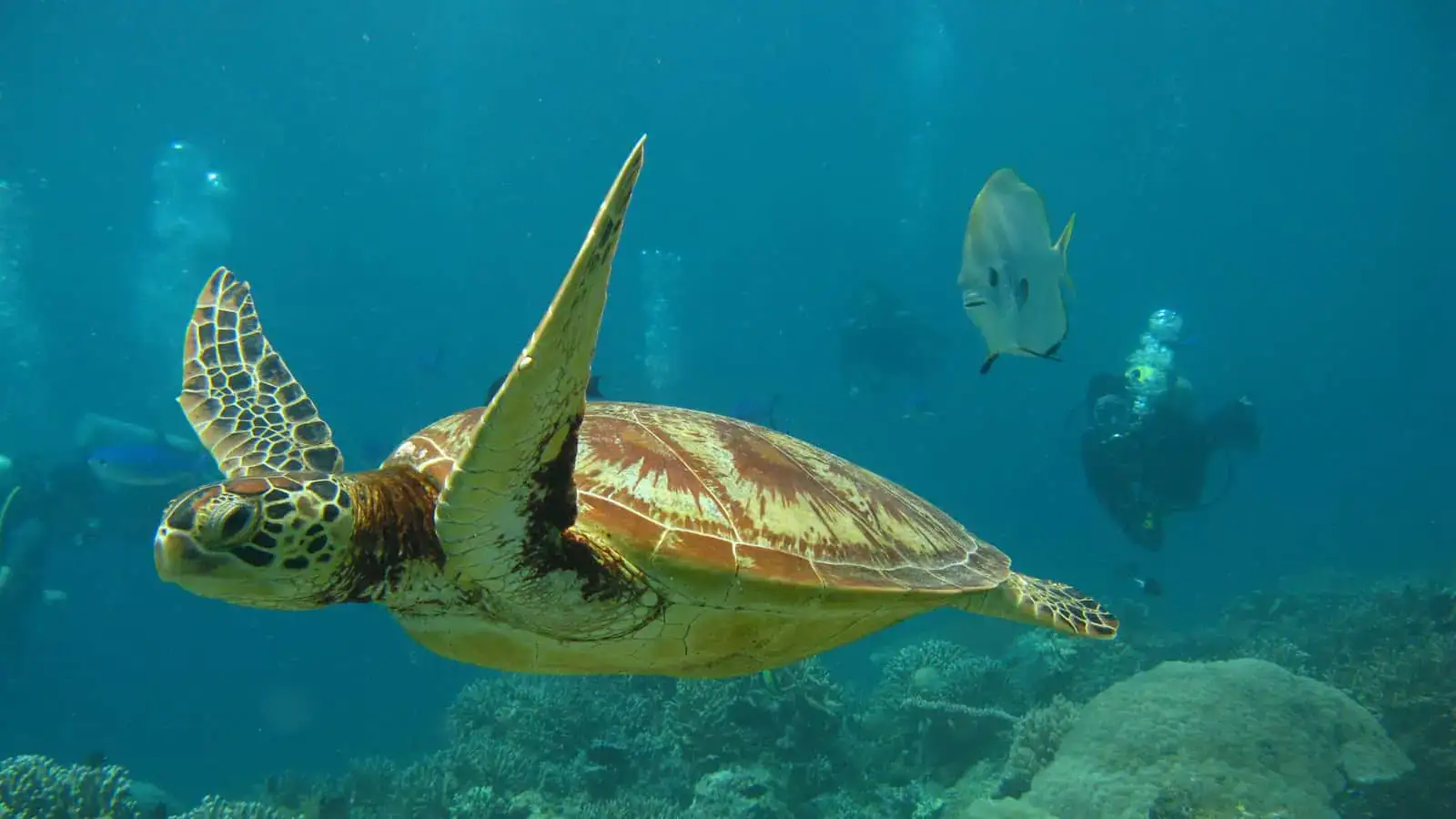

Seeing turtles in Sri Lanka can mean several quite different things. You might watch a female green turtle haul herself up a dark beach near Tangalle to dig her nest. You might spot one grazing in the shallows while you snorkel off the Southwest Coast. Or you might end up at a hatchery looking at tanks of young turtles, which is a very different experience from either of the other two.
Five of the world’s seven sea turtle species nest on Sri Lankan shores, and that makes the island an important place for these animals. It doesn’t mean you’ll see all five on a two-week holiday. Most travellers who meet a turtle in the wild will meet a green turtle, and many will be very happy to see even one.
This guide focuses on genuinely wild encounters: Rekawa Beach for watching turtles nest at night, and Hikkaduwa and parts of the Galle coast for seeing turtles in the sea. It also explains where Kosgoda and its hatcheries fit in, and why a hatchery visit isn’t the same as seeing a turtle living freely.
Sea Turtles in Sri Lanka: What Can You Actually See?
The five species of sea turtles in Sri Lanka are:
- Green turtle. This is the species you’re most likely to meet. Green turtles nest on Sri Lankan beaches and feed in coastal waters, so they account for many sightings on nesting beaches and in the sea.
- Olive ridley turtle. A smaller turtle that lives around the island and nests on its beaches, though casual visitors see it far less often.
- Hawksbill turtle. Closely linked with coral reefs, so snorkellers and divers may occasionally come across one.
- Loggerhead turtle. It nests in Sri Lanka, but ordinary travellers rarely see it.
- Leatherback turtle. The largest sea turtle in the world. Leatherbacks nest here too, but they are comparatively uncommon.
Just as important as the species is the kind of encounter you have. Broadly, there are three:
- Watching a wild turtle nest. A female comes ashore on her own at night, digs a nest, lays her eggs, covers them and returns to the sea. You watch quietly with a guide.
- Seeing a free-ranging turtle in the sea. You share the water with a turtle that is feeding, resting, or swimming as it normally would, usually while swimming or snorkelling.
- Visiting a hatchery or conservation centre. You learn about turtle conservation and may see protected nests, hatchlings, or turtles being cared for.
The first two are what “seeing turtles in the wild” really means. A hatchery visit can be interesting and educational, but the turtles you see there are in human care. It is a different experience, and it helps to know which one you’re choosing before you go.
Best Places to Watch Sea Turtles in Sri Lanka
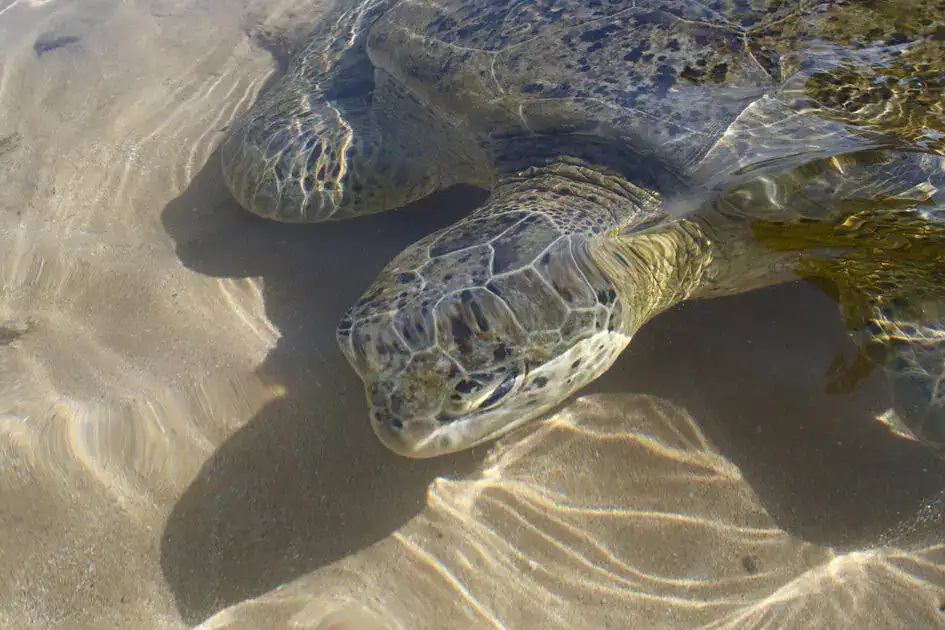
A turtle in shallow water in Hikkaduwa (Photo: James Higgott, CC BY-NC-SA 2.0)
Where to see turtles in Sri Lanka depends mostly on which of those three experiences you want. The table below gives the short answer.
| Place | Best for | Type of experience | Best itinerary fit |
| Rekawa Beach | Wild nesting turtles | Guided night observation | Tangalle and the South Coast |
| Hikkaduwa Beach | Turtles in the sea | Swimming and snorkelling observation | Southwest Coast |
| Kosgoda Beach | Conservation and hatchery context | Educational visit in a nesting area | Bentota–Galle route |
| Unawatuna/Dalawella area | Possible wild coastal encounters | Swimming and snorkelling | Galle and the South Coast |
Rekawa Beach – Best for Watching Wild Turtles Nest
If you want to see a wild turtle nest, Rekawa Beach is the place to focus on. The beach lies near Tangalle on Sri Lanka’s southern coast, and the Department of Wildlife Conservation lists it as a turtle-watching location.
Rekawa Beach also has a long conservation history. A nest-protection and research programme began here in 1993, and turtle watching has since become part of a community-based conservation effort. Researchers have recorded all five of Sri Lanka’s nesting species on this beach, with green turtles by far the most common. What makes Rekawa Beach special for travellers is simple: you’re watching natural behaviour, not a staged interaction.
The experience happens at night. Visitors gather at the visitor centre in the evening and wait while trained watchers patrol the beach. If a turtle comes ashore and conditions are right, small groups are guided down to watch her from a suitable distance. Current visitor information has advised arriving at the visitor centre at around 8.30 pm, but check the latest guidance before you go, as timings can change.
Waiting is part of the experience. It can take a long time for a turtle to appear, and on some nights none comes ashore at all. That isn’t a flaw in the attraction. It is what watching a genuinely wild animal involves.
Your guides will explain the rules on the night, and they’re worth following closely. Keep quiet and stay back. Keep lights to a minimum, don’t use flash and don’t use your phone torch unless you’re asked to. Never stand in a turtle’s path between the nest and the sea, and never touch the turtle or her eggs.
One request to avoid is asking to see baby turtles. The Rekawa turtle-watch organisation specifically asks visitors not to ask locals, hotel staff, or guides to arrange baby-turtle encounters. Hatchlings need all their energy for their first swim out to deeper water, and releasing them early or on demand can leave them too weak to make it.
Rekawa Beach fits most naturally into a stay around Tangalle, or a route along the South Coast from Mirissa. It also works well for travellers coming down from the Hill Country via Udawalawe National Park, or combining the South Coast with Yala National Park. If your trip is centred on the West Coast instead, there’s little point crossing the island just for Rekawa when another experience already fits your route.
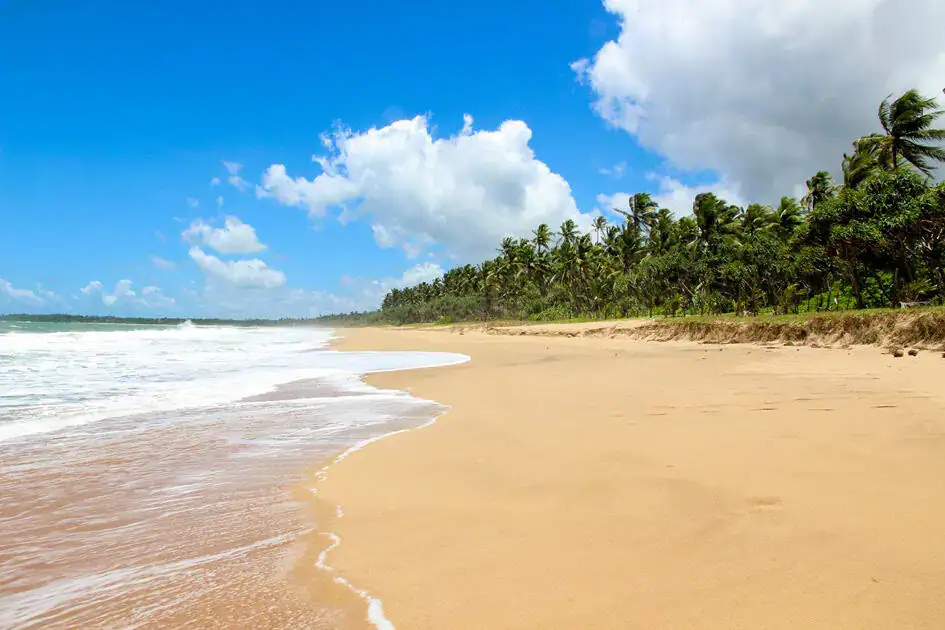
Rekawa Beach – Tangalle (Photo: LisArt, CC BY-NC-ND 2.0)
Hikkaduwa – Best for Seeing Turtles in the Water
Hikkaduwa offers a completely different kind of encounter. At Rekawa, you wait on a beach at night for a turtle to come ashore. At Hikkaduwa, you may meet turtles in the daytime, in shallow coastal water or while snorkelling over the reef.
Sri Lanka Tourism lists sea turtles among the marine life of Hikkaduwa’s reef, and green turtles are the species most associated with sightings here. Because Hikkaduwa sits on the popular Southwest Coast, it’s easy to include if you’re already travelling between Colombo and Galle. For more on getting in the water, see our guide to snorkelling in Sri Lanka.
Turtles here are wild, so no one can promise you’ll see one or say exactly where one will be. A turtle glimpsed from a respectful distance as it feeds or rises to breathe is a good encounter. You don’t need to get close for it to count.
At busier spots, you may see people offering food to draw turtles in, or crowding around one for photos. Feeding changes wild turtles’ natural behaviour, so it’s best to avoid it, even when someone offers to do it for a small fee. Don’t touch, chase, or hold on to a turtle; don’t surround it, and always leave it a clear route to the surface. Watching a turtle behave naturally is far more rewarding than creating a closer encounter by interfering.
Timing matters for comfort and safety in the water. Sri Lanka Tourism points to roughly November to March as Hikkaduwa’s best season, when the Southwest Coast is generally calmer. That refers to sea conditions, not to turtles. Turtles don’t only appear during those months, but calmer water makes swimming and snorkelling safer and more enjoyable.
Kosgoda – Best Known for Turtle Conservation Centres and Hatcheries
Kosgoda, on the Southwest Coast just south of Bentota, is one of Sri Lanka’s best-known turtle areas. Turtles nest on its beaches, and Sri Lanka Tourism highlights the several private hatcheries that operate here.
Depending on the project and the time of year, a visit may include explanations of turtle conservation, protected nests in sand enclosures, hatchlings, or older turtles receiving care. No single experience is guaranteed, and what you see varies from one centre to another.
The key point is that a hatchery visit isn’t the same as watching a wild turtle nest or meeting a free-ranging turtle at sea. It is an educational visit to a place where people manage turtles and their eggs. Standards and conservation practices also differ between operations, which we look at in more detail below.
According to official tourism information, the main egg-laying period around Kosgoda runs from about October to April. However, eggs can be found at other times of year. Treat those dates as specific to Kosgoda rather than as a national turtle season.
Kosgoda is easy to reach on a Southwest Coast route, and fits naturally alongside stays in Bentota, Hikkaduwa, or Galle.
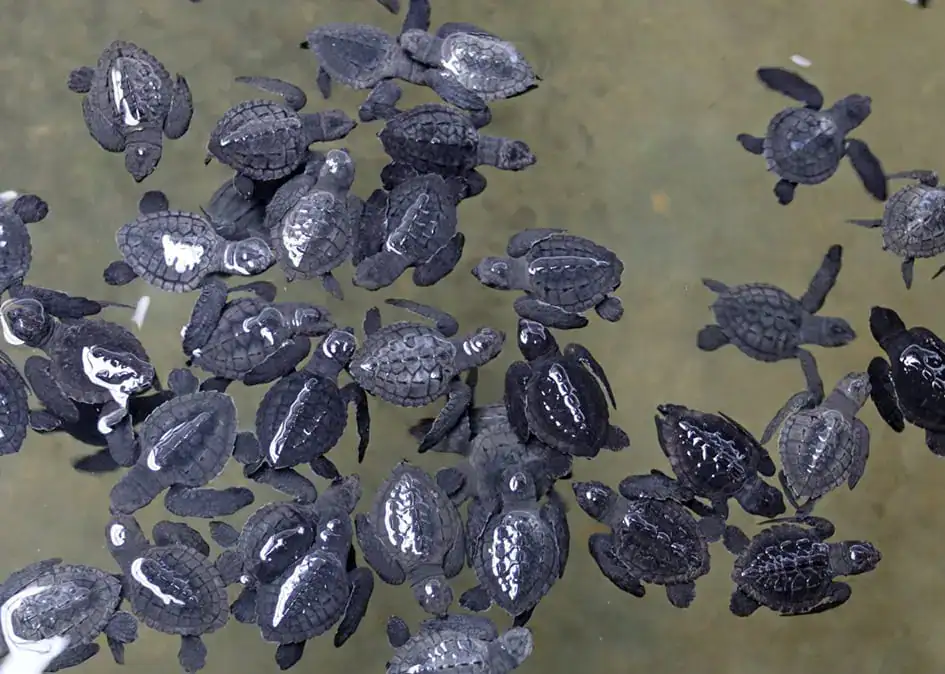
Hatchlings at a Kosgoda sea turtle conservation project (Photo: Denish C, CC BY-NC-ND 2.0)
Unawatuna, Dalawella, and the Galle Coast – Other Places for Wild Encounters
Wild turtles are sometimes seen in shallow coastal water around parts of the Galle and Unawatuna area, including Dalawella and nearby Talpe. If you’re already staying on this stretch of coast, you may get the chance to see one while swimming or snorkelling.
Sightings aren’t guaranteed, and a few good reports don’t mean every visitor will be lucky. These spots are best treated as a bonus rather than a reason to rebuild your itinerary. The same approach applies as at Hikkaduwa: keep your distance, don’t touch or feed the turtles, don’t chase them, and let them move and surface freely.
Sea turtles also live in suitable waters elsewhere around the island, including parts of the East Coast, where snorkellers and divers may occasionally meet one. For planning a trip around turtles, though, the places above are the most useful starting points.
When Is the Best Time to See Turtles in Sri Lanka?
There isn’t one simple answer, because three separate things affect your chances: nesting activity, location, and sea conditions for swimming or snorkelling. Turtles are present around Sri Lanka all year, but the best place and the best type of encounter change with the seasons.
The monsoons shape sea conditions, and the two main coasts have their calmer periods at different times of year. The Southwest Coast, including Hikkaduwa and Unawatuna, is generally at its best during the Northeast Monsoon, roughly from November to March. The East Coast tends to be calmer around the middle of the year. For in-water encounters, this matters a great deal. Rough seas and poor visibility can make snorkelling unpleasant or unsafe, even if turtles are close by. Calmer months don’t bring turtles in; they make it easier and safer to look for them. Our guide to the best time to visit Sri Lanka explains the monsoon pattern in more detail.
Nesting follows its own rhythm, and it varies by beach and species. Around Kosgoda, official tourism information gives October to April as the main laying period. At Rekawa Beach, Nature Friends of Rekawa, who run the turtle watch, describe February to July as the peak nesting season. Nesting can also happen outside these peaks at both places.
So the practical takeaway is this: decide which experience you want, then check the conditions for that coast and that activity. If a nesting watch is a priority, confirm current information locally shortly before your visit.
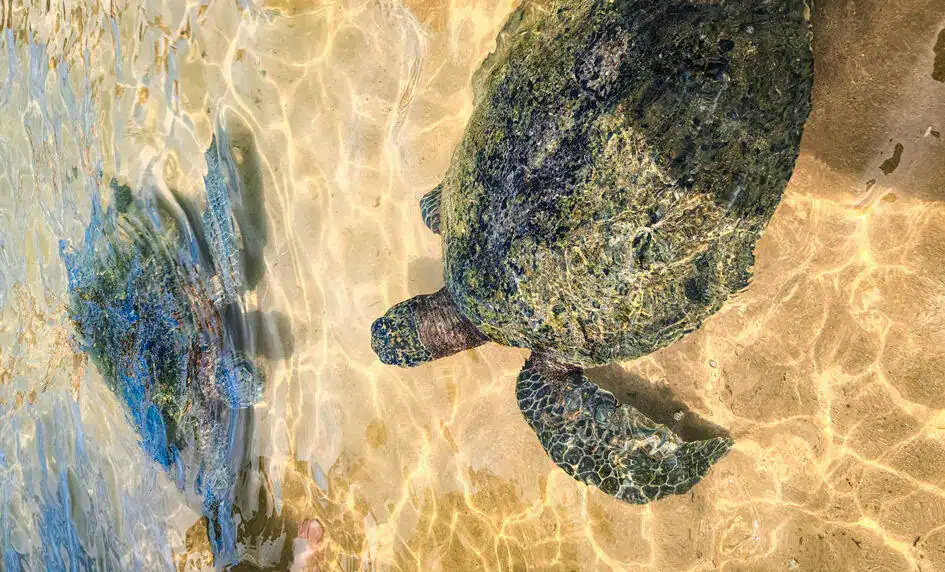
Two sea turtles in shallow water in Hikkaduwa (Photo: Zoshua Colah on Unsplash)
Watching a Turtle Nest at Night – What to Expect
A nesting watch is quite unlike most tourist attractions, and knowing what it involves makes it far more enjoyable.
Waiting. Turtles don’t keep to a timetable. You may wait for a long time, and some nights end without a sighting. Bring patience, not a fixed expectation.
Darkness. Low light is deliberate. Artificial light can disturb nesting females and confuse hatchlings heading for the sea, so expect a dark, quiet beach with guides using lights sparingly. Your eyes will adjust more than you might expect.
Time. Don’t plan anything tightly afterwards. Once a turtle appears, nesting itself takes a while, and a female sometimes comes ashore, wanders and returns to the sea without laying. Leave the evening open, and arrange transport back that won’t rush you.
Photography. No flash, and no phone lights unless a guide says it’s fine. Follow the instructions given on the night. A photo is a nice extra, but it should never come at the cost of disturbing the turtle.
Children and families. Many families find turtle watching memorable, but it helps to think realistically about your children. The evening runs late, there may be a long wait, the beach is dark, everyone needs to stay quiet, and you may see nothing. Some children love the adventure; others will be tired long before a turtle appears.
What to wear and bring. Light, comfortable clothing and footwear you can easily walk in on sand are enough. A light layer and something for the rain can help, depending on the season.
The best way to judge the night is not how close you got. A quiet, patient watch where the turtle nests undisturbed is a good result, even if you only saw her from a distance, and even if on this occasion she didn’t come.
Turtle Hatcheries in Sri Lanka – Should You Visit One?
Turtle hatcheries and conservation centres do a range of work, depending on the operation. This can include protecting eggs, relocating them in some circumstances, incubating nests, releasing hatchlings, caring for injured turtles, keeping some turtles long term, and educating visitors. The Sri Lanka Coast Guard also runs its own turtle conservation project, which shows how widely this approach is used in turtle conservation in Sri Lanka.
Research on Sri Lankan hatcheries suggests that tourism-supported hatcheries can contribute to conservation. It also shows that their value depends heavily on how they’re managed. Studies have raised concerns about how eggs are relocated, how many hatchlings are handled, how long they’re kept before release, whether tourists drive release times, conditions for turtles held in tanks, and inconsistent standards between operations.
The fair conclusion isn’t that hatcheries are all good or all bad. Standards and conservation value vary between operations. A good visit can teach you a lot about turtles and support useful work. A poor one may put visitor entertainment ahead of the animals.
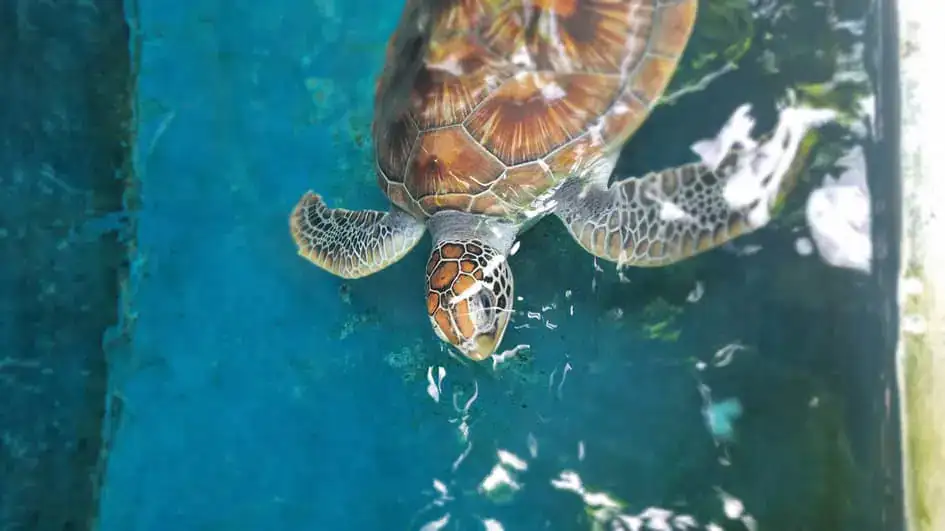
A turtle in a tank – the Sea Turtle Hatchery Centre in Mahamodara (Photo: Ridmika Harshani)
How to Choose a More Responsible Turtle Experience
Words like “rescue”, “sanctuary”, or “conservation” on a sign don’t tell you much on their own. What happens at the facility is a better guide.
Positive signs may include:
- turtle welfare and conservation clearly come before entertainment;
- handling is kept to a minimum;
- staff can explain why and how eggs are relocated;
- healthy turtles aren’t kept in tanks simply for display;
- releases follow conservation needs, not visitor convenience;
- the information you’re given is credible and clear;
- the project has a clear conservation purpose and appropriate links with conservation bodies or authorities.
Possible warning signs include:
- visitors are encouraged to pick up healthy hatchlings for photos;
- turtles are handled repeatedly without good reason;
- releases are promised on demand;
- healthy turtles appear to be kept mainly as an attraction;
- staff make pushy promises of guaranteed interaction.
Hatchling releases deserve particular thought. Releasing a baby turtle can feel like a direct way to help, and many travellers have done it with the best intentions. But hatchlings have limited energy for their first journey offshore. Timing and method should follow good conservation practice, not the schedule of a tour group. If a release is offered, it’s reasonable to ask why it’s happening now. The answer should be about the turtles, not about you.
How to See Sea Turtles Responsibly
The same few principles apply whether you’re on a nesting beach at night or in the water off the Southwest Coast:
- Give turtles space. Keep a sensible distance and never surround a turtle, on land or in the water.
- Look, don’t touch. Never touch, hold, chase, or restrain a wild turtle.
- Don’t feed them. This includes paying someone else to lure a turtle closer with food.
- Keep their routes clear. In the water, leave a turtle free to swim and surface. On the beach, never stand between a nesting turtle and the sea.
- Keep it dark. Around nesting turtles, avoid flash and unnecessary torch or phone lights.
- Leave nests alone. Don’t dig, touch or mark nests or eggs.
- Don’t ask for hatchlings. Avoid requests to hold baby turtles or to see a release arranged for you.
- Follow your guide. On nesting beaches, authorised guides and local wildlife instructions come first.
- Take your litter with you. Plastic on beaches and in the sea is a real hazard for turtles.
- Choose operators by what they do. Their behaviour matters more than their marketing.
The simplest test is this: the best turtle encounter is one where the turtle carries on behaving naturally, as if you weren’t there.
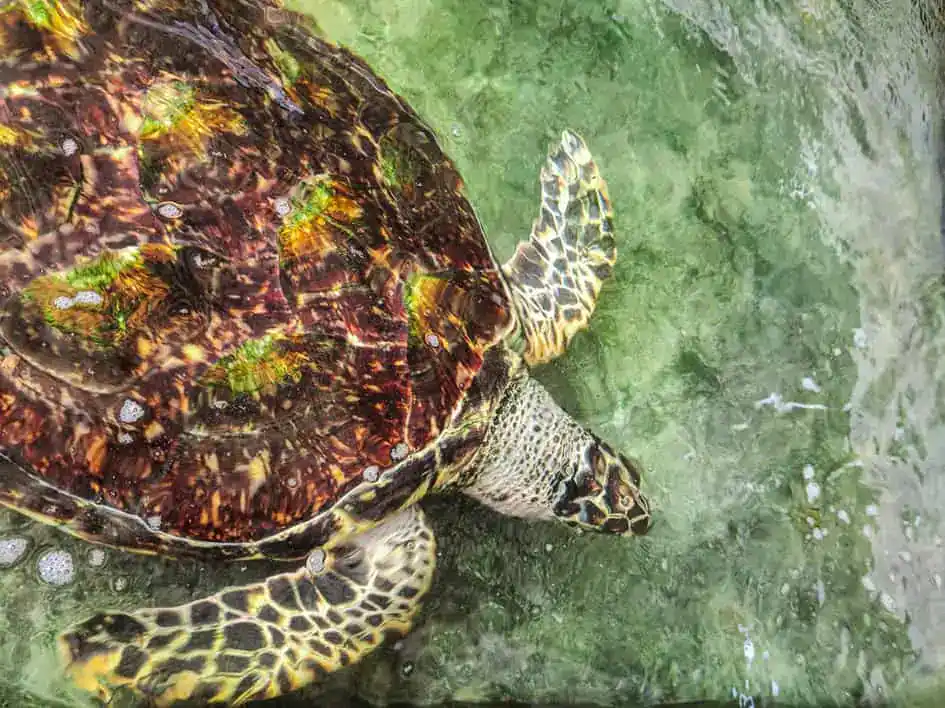
A Hawksbill sea turtle, a critically endangered species – Hikkaduwa (Photo: Zoshua Colah on Unsplash)
Which Turtle Experience Is Right for Your Sri Lanka Trip?
No single place is best for everyone. The right choice depends on the kind of encounter you want and where you’re already going.
Choose Rekawa Beach if watching natural nesting is your priority, and you’re comfortable with a night-time outing, a possible long wait, very little light, and the chance of seeing nothing at all.
Choose Hikkaduwa Beach if you’d like the chance to see a free-ranging turtle in the water, and you’re already spending time on the Southwest Coast. Go to watch quietly, not feeding or touching.
Choose Kosgoda Beach if you’re particularly interested in turtle conservation and hatcheries, and you understand that this is different from seeing a turtle behave naturally in the wild.
Consider Galle, Unawatuna or Dalawella if you’re already staying nearby and would enjoy a possible wild encounter without planning your trip around it.
You don’t need to visit every turtle location. One responsible, well-chosen encounter is usually more rewarding than travelling between several similar ones.
Fitting Turtle Watching Into a Sri Lanka Itinerary
Turtle experiences work best when they sit naturally on the route you’re already taking. Three common routes show how.
Southwest Coast: Colombo/Negombo → Bentota/Kosgoda → Hikkaduwa → Galle
If you’re heading down the West Coast from the airport or Colombo, Kosgoda and Hikkaduwa fall right on your way. You can visit a conservation centre around Bentota and look for turtles in the water at Hikkaduwa without any backtracking.
South Coast: Galle/Unawatuna → Mirissa → Tangalle/Rekawa
As you continue east along the South Coast, Rekawa Beach becomes the obvious choice. A night or two in Tangalle makes an evening turtle watch easy to arrange, and the Galle coast gives you earlier chances of an in-water encounter along the way.
Hill Country to the South: Ella/Hill Country → Udawalawe → Tangalle/Rekawa → southern beaches
Many travellers come down from Ella through Udawalawe before heading for the beaches. Tangalle is a natural first coastal stop on this route, so Rekawa fits neatly at the start of your beach time. It also sits well with a visit to Yala. For more ideas on combining national parks and coast, see our guide to nature & wildlife in Sri Lanka.
Whichever route you follow, let geography guide you. If a responsible turtle experience already fits your trip, there’s usually little reason to cross the island to repeat it somewhere else.
Frequently Asked Questions About Turtles in Sri Lanka
Can you see turtles in Sri Lanka?
Yes. Five sea turtle species nest on Sri Lankan shores, and travellers can see turtles both on nesting beaches and in coastal waters. They are wild animals, though, so no sighting can be guaranteed.
Where is the best place to see turtles in Sri Lanka?
It depends on the experience you want. Rekawa, near Tangalle, is the best choice for watching a wild turtle nest. Hikkaduwa is the most accessible place to look for free-ranging turtles in the water. Kosgoda is best known for hatcheries and conservation centres.
Can you swim with the turtles in Sri Lanka?
You may share the water with wild turtles in places such as Hikkaduwa and parts of the Galle coast. “Swimming with turtles” should mean watching them from a respectful distance while they go about their lives. It shouldn’t involve touching, feeding, chasing, surrounding, or holding them.
What is the best time to see turtles in Sri Lanka?
There’s no single national turtle season. The best time depends on where you are, what kind of encounter you want, local nesting activity and sea conditions. Calm seas matter for in-water sightings, while nesting peaks vary from beach to beach.
Are turtle hatcheries in Sri Lanka ethical?
There’s no blanket yes or no answer. Some hatcheries do valuable conservation work, while others put visitors ahead of turtles. Look at how an operation handles hatchlings, why and how it relocates eggs, whether healthy turtles are kept in tanks, and how releases are decided.
Can you see baby turtles being released in Sri Lanka?
Some conservation projects release hatchlings so that you may see a release. It should happen because the hatchlings are ready, not because visitors have asked for it or a tour has arrived. It’s best not to request a release or plan your visit around one.
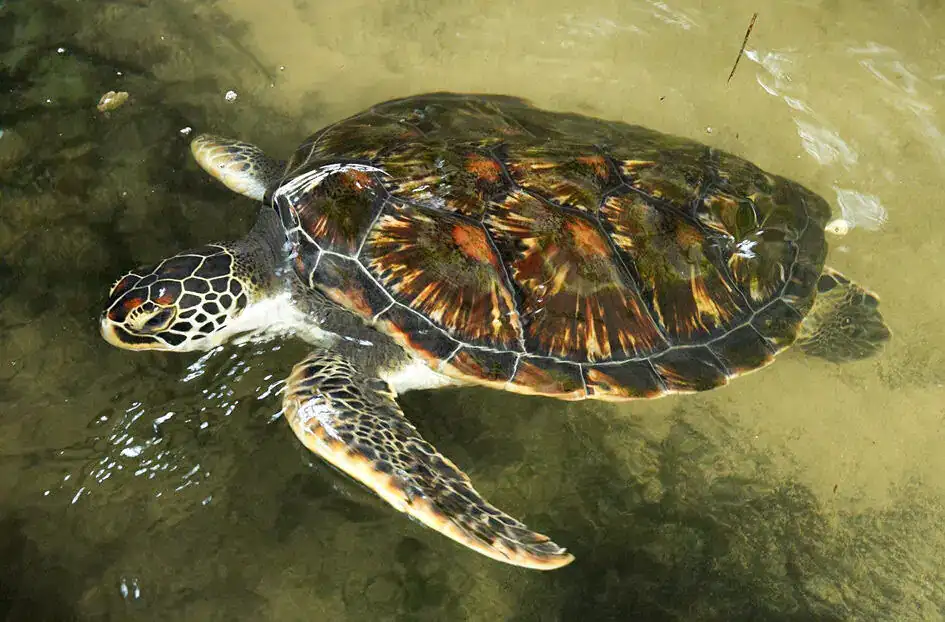
A turtle in a turtle conservation project in Bentota (Photo: Wouter Hagens, CC BY-SA 2.5)
If you are new to Sri Lanka, we recommend reading about finding the best Sri Lanka travel itineraries for your travel season and the complete travel guide for first-time travellers.
Seeing Turtles in Sri Lanka the Right Way
Turtles in Sri Lanka can be part of your trip in several very different ways, and the most rewarding encounters are those where the turtle carries on with its life. If you want to see a turtle nest, Rekawa is the place to be patient on a dark beach. If you’d rather meet one in the water, Hikkaduwa offers the best chance on the Southwest Coast. Kosgoda helps you understand the conservation side of the story, and the waters around Galle, Unawatuna, and Dalawella may give you an unexpected sighting if you’re already staying nearby.
The best choice is usually the one that fits the coast you’re already visiting. Pick one experience that suits your route and your interests, and give it the time it needs. Stay quiet, keep your distance, and let the turtle set the pace; whatever you see will feel like a genuine encounter with wild Sri Lanka.
Sources and References:
- Department of Wildlife Conservation, Sri Lanka (DWC) — Official information on Sri Lanka’s protected wildlife and marine tourism, including turtle watching at Rekawa.
- Sri Lanka Tourism – Kosgoda — Official visitor information on turtle nesting and turtle hatcheries at Kosgoda, including the area’s main egg-laying period.
- Sri Lanka Tourism – Hikkaduwa — Official destination information on Hikkaduwa’s reef, marine environment and sea turtles.
- Sri Lanka Tourism – Pristine Beach Holidays — Official information on Sri Lanka’s coastal seasons and regional sea conditions.
- Turtle Watch Rekawa — Visitor guidance for responsible turtle watching at Rekawa, including current viewing procedures and guidance on natural hatchings and avoiding premature hatchling releases.
- Sri Lanka Coast Guard – Turtle Conservation Project — Official information on the Coast Guard’s sea-turtle conservation, hatchery and hatchling-release programmes in Sri Lanka.
- Rathnayake, R.M.W. (2016), Ocean & Coastal Management — “Turtle watching: A strategy for endangered marine turtle conservation through community participation in Sri Lanka.” Research examining turtle watching and community participation in conservation at Rekawa.
- Tisdell, C. & Wilson, C. (2005), Environmental Management — “Do Open-Cycle Hatcheries Relying on Tourism Conserve Sea Turtles? Sri Lankan Developments and Economic–Ecological Considerations.” Research examining the potential benefits and limitations of tourism-supported turtle hatcheries in Sri Lanka.
- IUCN – The Fauna of Sri Lanka — Reference material covering Sri Lanka’s marine turtle fauna, including green, olive ridley, hawksbill, loggerhead and leatherback sea turtles.
Featured image: A Sea Turtle in Sri Lanka (Photo: FrontierEnviro, CC BY-SA 3.0)

I am a Sri Lankan medical doctor who spends my free time travelling, exploring new destinations, and documenting the beauty of the island I call home. I have journeyed across almost every corner of Sri Lanka with my wife and daughter — from wildlife parks and misty mountains to ancient cities, deep forests, rugged landscapes, and quiet beaches.
Travel is not just a hobby for me — it’s a way of life. I love nature, enjoy road trips, and find joy in wildlife photography. I also read widely about tourism, travel trends, and destination culture. Through my writing, I aim to help travellers experience Sri Lanka through real stories, meaningful insights, and honest recommendations — the same way I explore it with my own family.