
This is the 12-day Sri Lanka itinerary for June and July that my family and I actually followed. We travelled from 28th June to 9th July 2026. There were three of us: my wife, Ridmika; our daughter, Nethuli; and me, Nalaka. We covered most of the island in a rented car with a chauffeur tourist guide. We also took one scenic train ride and did plenty of hiking on foot.
Our route started in Gampaha, near Colombo. From there we went north to the ancient city of Anuradhapura, then on to Sigiriya, Kandy and the Hill Country. After three nights in Ella, we crossed to the surf beaches of Arugam Bay on the East Coast. Then we headed to Yala National Park, followed the South Coast to Galle and finished in Gampaha.
This was not a slow holiday. We started early on many days, hiked often and sometimes fitted several places into one day. In this article, we share what we did, where we stayed, what we ate, and what we paid. We also include the plans that did not work out. If you are thinking about a similar route, we hope our experience helps you plan your own.
Our 12-Day Sri Lanka Itinerary for June and July at a Glance
Here is a quick overview of our route, day by day.
| Day | Route / Main Destination | Main Highlights | Overnight Base |
| 1 | Gampaha to Anuradhapura and Sigiriya | Sacred sites of Anuradhapura | Sigiriya |
| 2 | Sigiriya and Dambulla | Sunrise climb of Sigiriya Rock, Dambulla Cave Temple, Thalkote Wewa | Sigiriya |
| 3 | Sigiriya to Kandy via Matale and Riverston | Nalanda Gedige, The National Spice Garden, Pitawala Pathana, Temple of the Tooth | Kandy |
| 4 | Kandy to Nuwara Eliya | Ramboda Falls, tea lounge, Lover’s Leap, Victoria Park, Gregory Lake | Nuwara Eliya |
| 5 | Horton Plains, Ambewela, and Ella | World’s End hike, scenic train to Ella | Ella |
| 6 | Ella | Little Adam’s Peak at sunrise, temples, waterfalls, tea factory tour | Ella |
| 7 | Ella to Demodara on foot | Pekoe Trail Stage 16, Nine Arch Bridge, Demodara loop | Ella |
| 8 | Ella to Arugam Bay | Muhudu Maha Viharaya, Peanut Farm Beach | Arugam Bay |
| 9 | Arugam Bay to Yala | Sunrise at Arugam Bay bridge, surfing lesson | Yala |
| 10 | Yala National Park | Full-day safari | Yala |
| 11 | Yala to Galle along the South Coast | Beach stops, Galle Fort sunset | Galle |
| 12 | Galle to Gampaha | Walking tour of Galle Fort, Southern Expressway | End of trip |
Our Route and How We Travelled
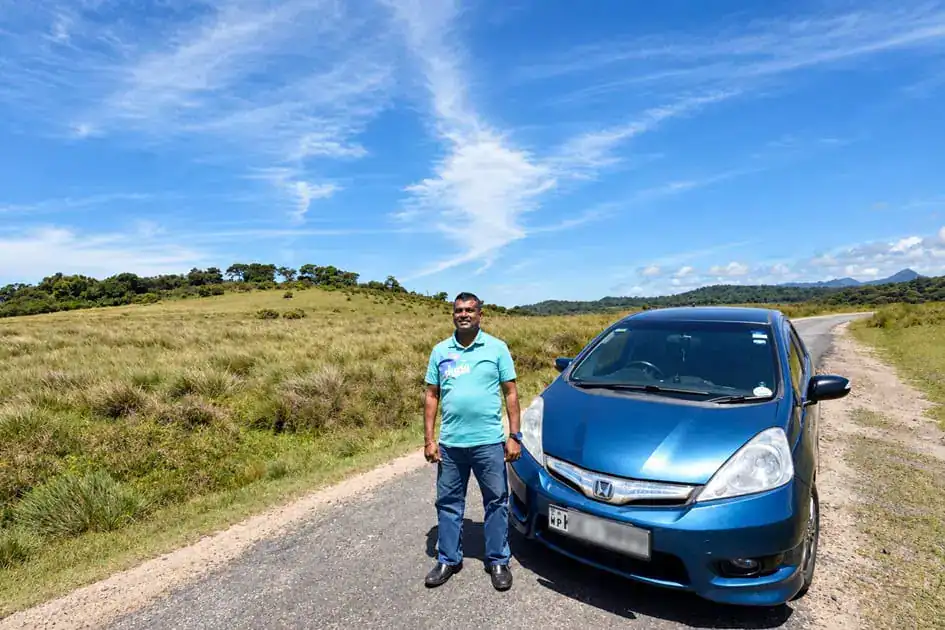
Our chauffeur tourist guide, Terance Janith – Horton Plains National Park (Photo: Nalaka Priyantha)
For the whole trip, we hired a car with a chauffeur tourist guide, Terance Janith. We paid USD 65 per day. Terance drove us between regions and to most of the sights. He also helped with practical problems. On Day 5, he took our luggage to Ella by car while we rode the train. On Day 7, he collected us at Demodara after a long hike.
The car was our main transport, but not the only one. We took the scenic train from Ambewela to Ella, which we had booked online in advance. Near Nuwara Eliya, we used a tuk-tuk to reach Lover’s Leap Falls. In Yala, we hired a safari jeep. We also covered a lot of ground on foot, from Sigiriya Rock to Horton Plains and a full stage of the Pekoe Trail.
We booked all our accommodation through Booking.com. Most places were small, family-run guesthouses and hostels. We also stayed in a hotel in Arugam Bay and a motel inside Galle Fort.
Our 11 nights were split between seven bases:
- Sigiriya (2 nights)
- Kandy (1 night)
- Nuwara Eliya (1 night)
- Ella (3 nights)
- Arugam Bay (1 night)
- Yala (2 nights)
- Galle (1 night)
The season shaped our route. From about May to September, the Southwest Monsoon brings rain to the West Coast, the South Coast, and the Hill Country, while the East Coast has its better season, and Arugam Bay’s surf season falls within this period. That is a big reason to include the East Coast in a trip at this time of year. Weather can change quickly in these months, so it helps to keep some flexibility.
A word about pace. This Sri Lanka itinerary for 12 days was active. We often left before sunrise, hiked on several days and moved between regions regularly. It worked for us because we were comfortable with early starts, active days, and busy schedules. If you prefer a slower pace, you can remove some stops or add extra nights. Ella, Arugam Bay and Galle would all be easy places to stay longer.
Our 12-Day Sri Lanka Road Trip — Day by Day
Day 1 — Gampaha to Anuradhapura and Sigiriya
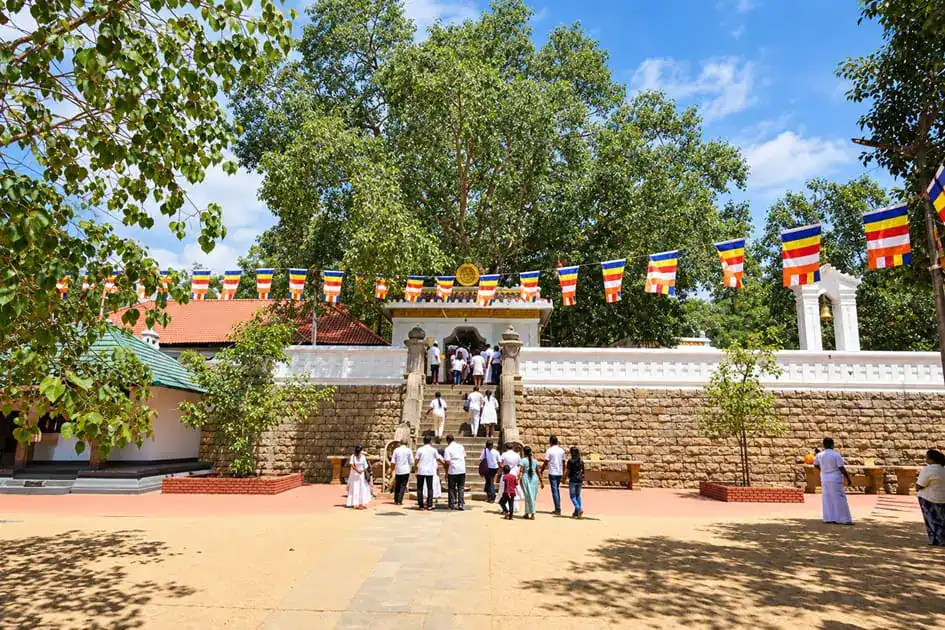
Sri Maha Bodhi – Anuradhapura (Photo: Nalaka Priyantha)
We left Gampaha on Sunday, 28th June, and drove north. Our first stop was breakfast at Hela Bojun Hala in Thambuttegama, an outlet serving traditional Sri Lankan food. We had String Hoppers (steamed nests of rice-flour noodles) with Coconut Sambol and Potato Curry. We also tried Lavariya, a sweet string hopper filled with coconut, and Vegetable Rolls.
Anuradhapura was Sri Lanka’s first great royal capital and is now a sacred city for Buddhists. It is a UNESCO World Heritage Site, and its monuments are spread over a large area. A car makes it much easier to move between them.
We visited a long list of sites in one day:
- Isurumuniya Temple and Ranmasu Uyana (the Royal Park)
- Jaya Sri Maha Bodhi, the sacred Bo tree
- Lovamahapaya (the Brazen Palace, or Loha Prasada)
- The great stupas of Ruwanweliseya, Jetavanaramaya, Thuparamaya, Abhayagiri, Lankarama, and Mirisavetiya
- Kuttam Pokuna (the Twin Ponds)
- The Samadhi Buddha Statue
- Ratnaprasada, with its guard stone (muragala) and moonstone
- Pancavasa (Biso Maligaya), known for its moonstone (sandakadapahana)
Timing matters here. Anuradhapura gets very hot, so we suggest visiting in the morning or the evening. You will walk barefoot at many sacred sites, and the ground heats up during the day.
Our visit fell on the day before Poson Poya. In 2026, Poson Full Moon Poya Day was on Monday, 29th June. Poson marks the arrival of Buddhism in Sri Lanka, and its main ceremonies take place at Mihintale and Anuradhapura. If your Sri Lanka itinerary in June includes the ancient cities, check the Poya date first. As you will see on Day 2, it affected our plans.
In the afternoon, we drove towards Sigiriya through Habarana. We stopped for lunch at another Hela Bojun Hala, this time in Maradankadawala. We had Plain Hoppers and Egg Hoppers with Lunu Miris, a spicy onion-and-chilli relish. We also had Pol (Coconut) Roti, mango juice, and plain tea.
We spent two nights at Hakuna Matata Hostel, in a 3-bed mixed dormitory room. It is a family-run budget property with basic facilities. Diwa and his family look after the place and the guests. We found them friendly and hospitable. The room had three beds, mosquito nets, a stand fan, linen, and towels. The shared bathroom had toiletries. During our stay, we found the property a little dusty. It suits travellers who want a simple stay closer to nature. Diwa and his family also helped us plan the next day using their own ideas and experience.
One safety note for the Sigiriya area: wild elephants roam here. If you walk outside early in the morning or in the late afternoon, stay alert. Ask local people for advice and follow it.
Day 2 — Sigiriya, Dambulla, and Our Changed Pidurangala Plan
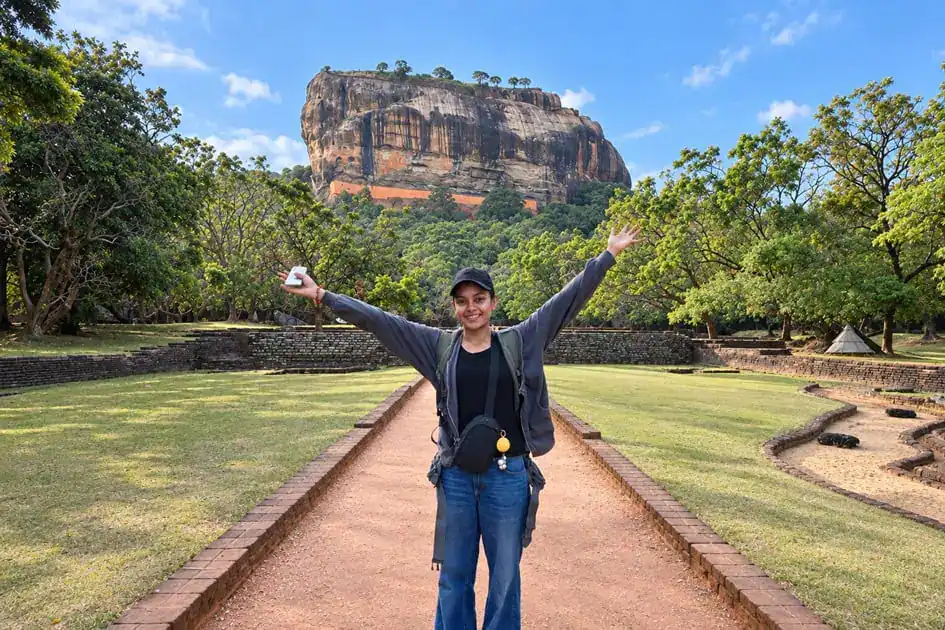
Our Daughter, Nethuli – Sigiriya Rock Fortress (Photo: Nalaka Priyantha)
We left the hostel between 5:00 and 5:15 am for a sunrise climb of Sigiriya Rock Fortress. Diwa’s family kindly gave us parcels of pancakes to eat for breakfast. We bought our tickets and reached the summit before sunrise. It was still dark on the way up, so we used rechargeable headlamps (Black Diamond Storm-R, 500 lumens) to see the path. We would suggest bringing a torch or headlamp if you plan an early climb.
Sigiriya was a royal citadel in the 5th century and is now a UNESCO World Heritage Site. Many foreign travellers were at the top waiting for sunrise. From the summit, we looked out over the countryside and across to Pidurangala Rock. We explored the ruins at the top, then saw the mirror wall, the famous frescoes, and the water gardens.
Next, we drove to the Rangiri Dambulla Cave Temple. We visited five caves filled with Buddha statues, statues of kings and gods, small stupas, and painted murals. Back at the car park, we cooled down with three mango juices and a passion fruit juice.
By late morning, the heat was building. We returned to the hostel and rested from 11 am to 2 pm. This midday break helped us manage the long day. We had a tasty lunch of Egg Noodles and Coke at Sigiri Heritage Villa Restaurant.
In the afternoon, we visited the Sigiriya Museum. Then we set off to climb Pidurangala Rock for sunset. This plan did not work. Because it was Poson Poya Day, too many people were already inside the site. Security officers didn’t allow us to climb. It was a useful lesson. Poya days are public holidays, and popular religious sites can get very busy. If a sunset climb matters to you, check the Poya calendar and keep a backup plan.
Our backup was Thalkote Wewa, a reservoir near Sigiriya. From its edge, we could see both Sigiriya and Pidurangala rocks in the background. It was a beautiful landscape. Kayaking, canoeing, and birdwatching are available there, although we didn’t try them.
For dinner, we had Egg Kottu Roti with plain tea. Kottu is chopped flatbread stir-fried with egg or meat, vegetables, and spices on a hot griddle. Ours was delicious but spicy. Back at the hostel, we met three travellers from New Zealand, Spain, and the UK. We chatted and shared ideas and experiences from our travels.
Our two nights at Hakuna Matata Hostel, with breakfast, cost USD 14.
Day 3 — Sigiriya to Kandy via Matale and Riverston
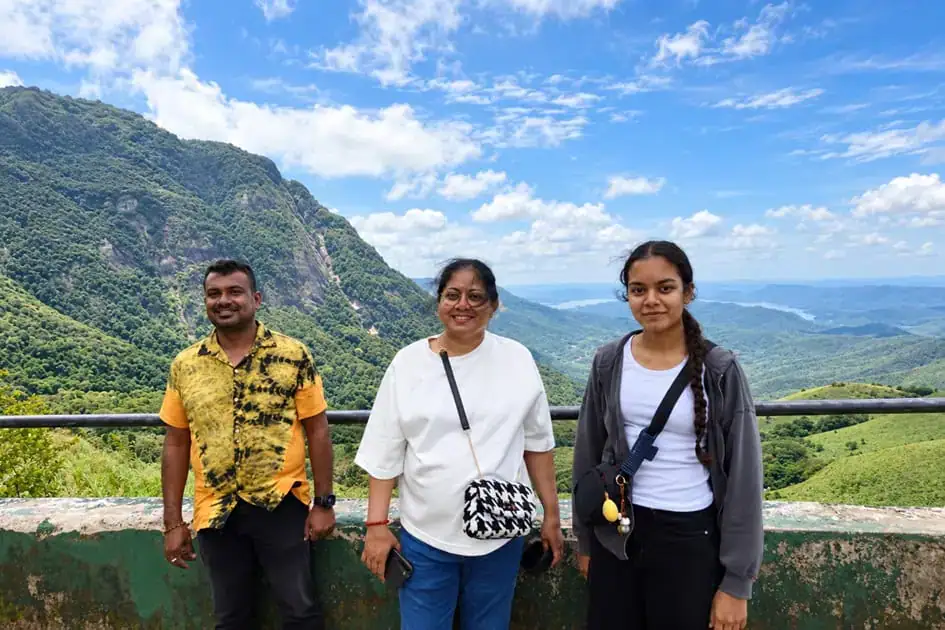
Our tourist guide, Terance, my wife, Ridmika, and Nethuli – Riverston, Matale (Photo: Nalaka Priyantha)
We left the hostel around 6 am and drove to Kandy via Matale. We stopped for breakfast in Nalanda. We had Hoppers, Ulundu Vade (a savoury fritter made from urad dal), and Pol Roti with plain tea.
Nearby, we visited Nalanda Gedige. This is thought to be the earliest known all-stone building in Sri Lanka, and it blends Hindu and Buddhist architecture. It is believed to stand close to the geographical centre of the island. The temple was moved to higher ground when the Bowatenne Reservoir was built.
Our next stop was the National Spice Garden in Matale. We bought grade C5 cinnamon from its sales centre. Further along the road, we bought waraka from a roadside stall. Waraka is a soft, sweet variety of ripe jackfruit, and it was delicious.
From Matale, we drove up to Riverston and Pitawala Pathana. Pitawala Pathana is a grassland plateau in the Riverston area of the Knuckles Mountain Range. On the way, we saw several old landslides. These dated from Cyclone Ditwah, which caused deadly landslides across the central hills in late 2025, including in Matale. Even so, we could reach Riverston and Pitawala Pathana by car. We stopped several times to enjoy the views. After buying entrance tickets, we hiked the Pitawala Pathana trail to the edge known as Mini World’s End.
If you plan to visit this area, check road conditions before you go. Landslide damage and repairs can change access.
You can check the road conditions online via the official website of Sri Lanka Road Status.
We had lunch at the restaurant near the Pitawala Pathana ticket counter. We ate Rolls, Pol Roti, and Parippu Wade, a crunchy lentil fritter.
In the evening, we reached Kandy and visited the Temple of the Sacred Tooth Relic, known as the Temple of the Tooth. It is one of the most important Buddhist sites in Sri Lanka. We took part in the Thewawa, a sacred ritual with offerings and traditional drumming. As at all temples, dress modestly and remove your shoes before entering.
We had Paratha (Parotta) and Egg Roti for dinner in Kandy. That night, we stayed at a family-run guesthouse called ようこそ youkoso. We had an air-conditioned triple room with linen and toiletries. During our stay, the owner and his family were friendly and hospitable, and it felt like staying at home. The guesthouse is about 4 km from the Temple of the Tooth. Our night there cost USD 5.55.
Day 4 — Kandy to Nuwara Eliya
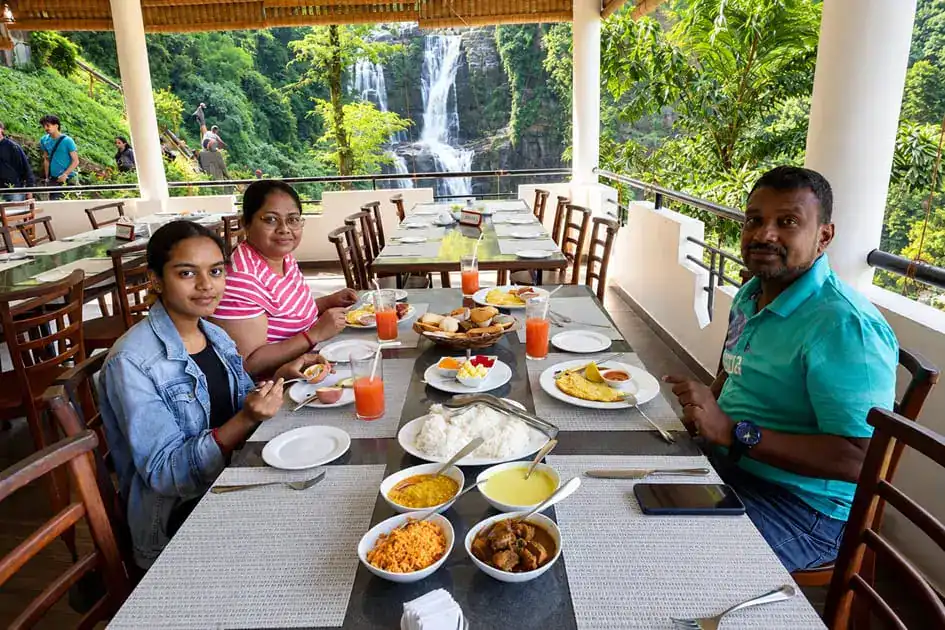
Having Breakfast at Ramboda Falls Hotel (Photo: Nalaka Priyantha)
On 1st July, we left Kandy in the morning and climbed into the Hill Country. The first part of our Sri Lanka itinerary in July was all about tea, cool air, and mountain views.
We stopped at the Ramboda tunnel, then had breakfast at the Ramboda Falls Hotel, overlooking Ramboda Falls. The menu covered two worlds. We had an English breakfast of toast, omelettes, sausages, bacon, fruit, juice, tea, and coffee. We also had String Hoppers with Fish Curry, Potato Curry, and Coconut Sambol.
Next, we visited the Labookellie Tea Lounge. We bought a big selection of premium Ceylon Tea from the Nuwara Eliya region. It ranged from Golden Tips and Silver Tips to leaf grades such as OP, FBOP, BOPF, BOP, and Pekoe. We also picked up green tea, English Breakfast, Earl Grey and ginger, lemon, and cinnamon teas.
In and around Nuwara Eliya, we fitted in a lot:
- The old Nuwara Eliya Post Office, Victoria Park, and the Grand Hotel
- Lover’s Leap Falls, reached by an adventurous tuk-tuk ride and a short hike through tea fields
- Kande Ela Reservoir
- Lunch at the restaurant at Ambewela Farm: chicken wings, potato chips, fish rolls, and warm fresh milk
- Hakgala Botanic Gardens
- Seetha Amman Kovil, a Hindu temple linked by local tradition to the Ramayana legend
- Gregory Lake
That night, we stayed at Ragith Villa, a family-run guesthouse about 2 km from Gregory Lake. It felt like a homestay. The owners welcomed us with plain tea and later cooked Egg Noodles for dinner. We found them friendly and hospitable. Our cosy Deluxe Double Room cost USD 17.
Day 5 — Horton Plains and the Scenic Train to Ella
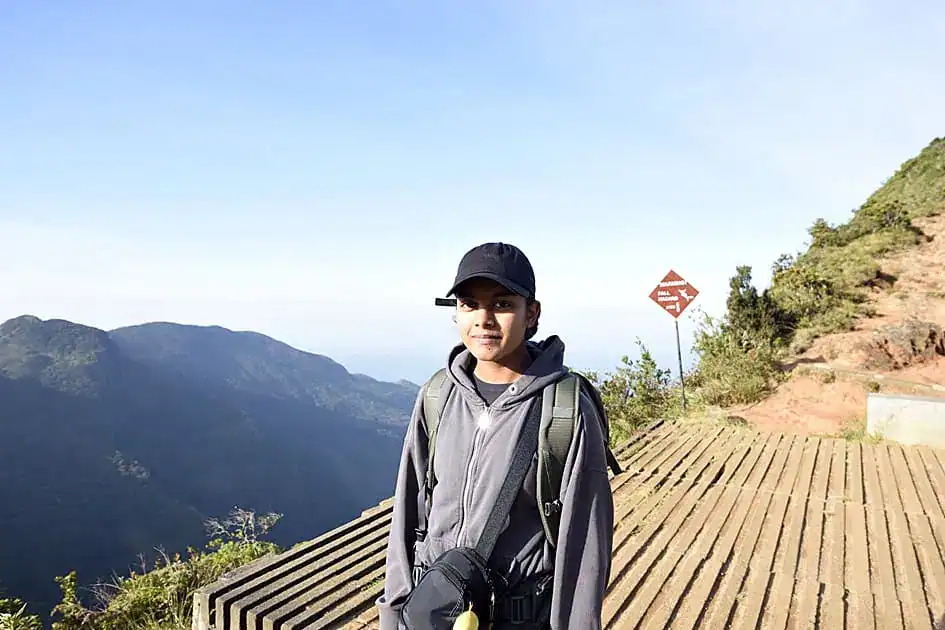
Nethuli – Mini World’s End – Horton Plains National Park (Photo: Nalaka Priyantha)
This was one of our biggest days. We left Nuwara Eliya very early for Horton Plains National Park. The owners of Ragith Villa gave us a packed breakfast of vegetable sandwiches with butter and carrot, plus Coconut Roti with Lunu Miris.
We aimed to reach the Pattipola entrance by 6:00 am. We had booked our entrance tickets online in advance, so we were the first to enter the park. We would recommend booking ahead if you want an early start.
You can book the entrance tickets online through the Official Wildlife Park Permits Reservation eService.
We hiked the World’s End loop, about 9 km. It took us to Mini World’s End, World’s End, and Baker’s Falls. The trail crosses open grassland and patches of mountain forest. We saw many sambar deer, as well as squirrels and birds. We were lucky with the weather. There was no cloud or mist, so the views from Mini World’s End and World’s End were breathtaking. Clouds often roll in at Horton Plains, so do not rely on clear views.
After the hike, we had Egg Rolls, Parippu Wade, muffins, and plain tea at the park restaurant. Then we visited the Devil’s Staircase viewpoint, about 1.5 km from the Ohiya entrance. Again, the sky was clear.
In the afternoon, we went to Ambewela station to catch the 3:00 pm special train to Ella. We had booked these tickets online too. Terance drove our luggage to Ella so we could travel light. This is a simple trick if you have a driver. It avoids carrying bags on a crowded train.
You can book train tickets through the Official Online Advance Train Seats Reservation.
The train ride was fantastic. The line passes through forests, mountains, tea plantations and villages, over bridges, and through tunnels. The train was full of travellers. We bought sweet mango slices from a vendor on board. We reached Ella at about 5:30 pm, and Terance was waiting at the station.
We spent three nights at Jasmine Garden Inn, a family-run guesthouse on the Ella–Passara Road, about 450 m from the town centre. The owner is Mr. Amare. We had an air-conditioned deluxe double room with an attached bathroom. There are plenty of restaurants nearby.
After about a week on the road, our clothes needed attention. We used Hidden Laundry Ella, about 500 m from our guesthouse. Our 8.5 kg of clothes cost USD 20. The next day, everything came back to the guesthouse clean, dry, folded, and smelling great in a transparent bag.
For dinner, we had Egg Noodles and lemonade at Café Infinity.
Day 6 — Little Adam’s Peak and Exploring Ella
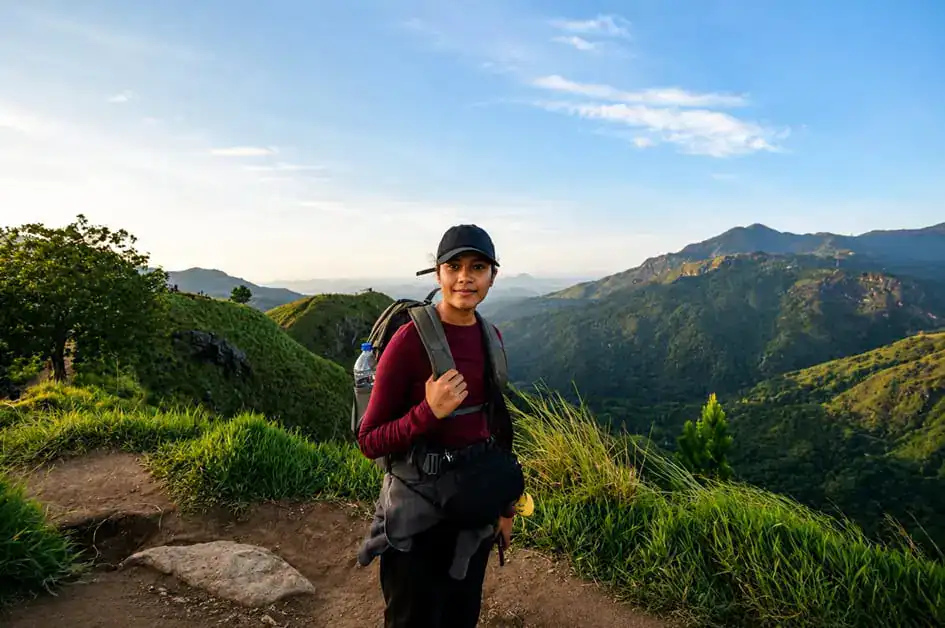
Nethuli – Little Adam’s Peak, Ella (Photo: Nalaka Priyantha)
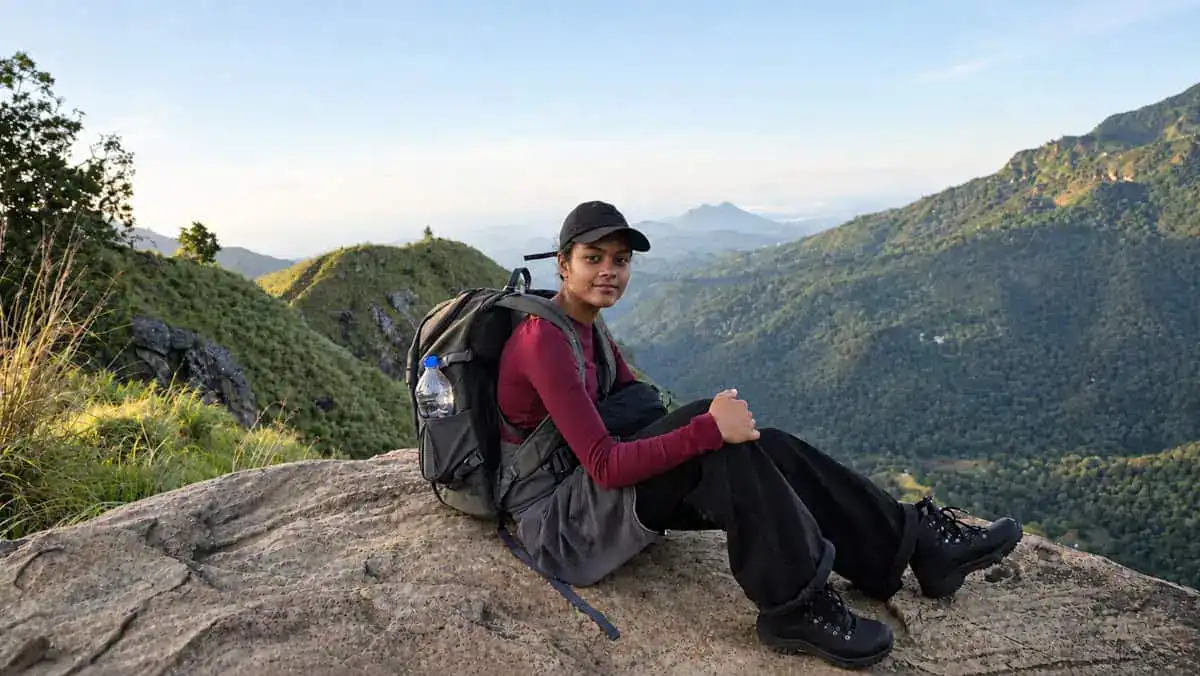
We left the guesthouse at 5:00 am for a sunrise hike up Little Adam’s Peak. One trailhead is only 650 m from Jasmine Garden Inn. The hike is about 1.5 km through tea plantations and hills. We found it mild to moderate. Depending on your fitness, it takes between 30 minutes and an hour.
From the top, we watched the sunrise, Ella Rock, Ella Gap, Ella town, and the winding Ella–Wellawaya Road. The trail also passes several places you can explore if you have time. These include 98 Acres Resort & Spa, Halpe Tea Shop, Ravana Pool Club, Ella Swing, the Flying Ravana Zipline and Adventure Park, and a Sky Walk.
On the way to Dowa Rock Temple, we had breakfast from a street food stall. We ate Egg Rolls, Ulundu Wade, and Parippu Wade with Lunu Miris, plus plain tea. Dowa Rock Temple is an ancient temple with an unfinished Buddha statue carved into a granite rock face. We also saw two Rakshasa (demon) images and a cave with Buddha statues, colourful paintings, and murals.
Next, we visited Mahamevnawa Buddhist Monastery in Kumbalwela. This beautiful temple stands on a hill with a fine view. We had Kurakkan Kenda, a finger millet porridge, from a dansala. A dansala is a stall that gives out free food or drink as an act of generosity.
We then visited Ravana Ella Falls and Secret Ella Falls. Near Secret Ella Falls, we stopped for king coconuts.
In the afternoon, we took a factory tour and tea tasting at the Uva Halpewatte Tea Factory. Our presenter, Mr. Arul, gave an excellent talk. We tasted OP, FBOP, Pekoe, BOP, pure green tea, Earl Grey, and chamomile. At the factory’s Sky Café, we bought more tea, including black teas from five growing regions: Ruhuna, Uva, Nuwara Eliya, Dimbula, and Kandy. In our view, it is one of the best places in Ella to learn about Ceylon tea and tea heritage in Sri Lanka.
We had lunch at a restaurant called Cycle Pub. We shared rice and curry with red rice, brinjal (aubergine) curry, banana pepper curry, dhal, papadam, carrot and cabbage salad, and fried eggs. We also ordered chicken noodles and seafood noodles with ginger beer.
After resting at the guesthouse, we had dinner at Café Fruity Coco nearby. We ate plain hoppers and egg hoppers with lunu miris and plain tea.
Day 7 — The Pekoe Trail, Nine Arch Bridge, and Demodara
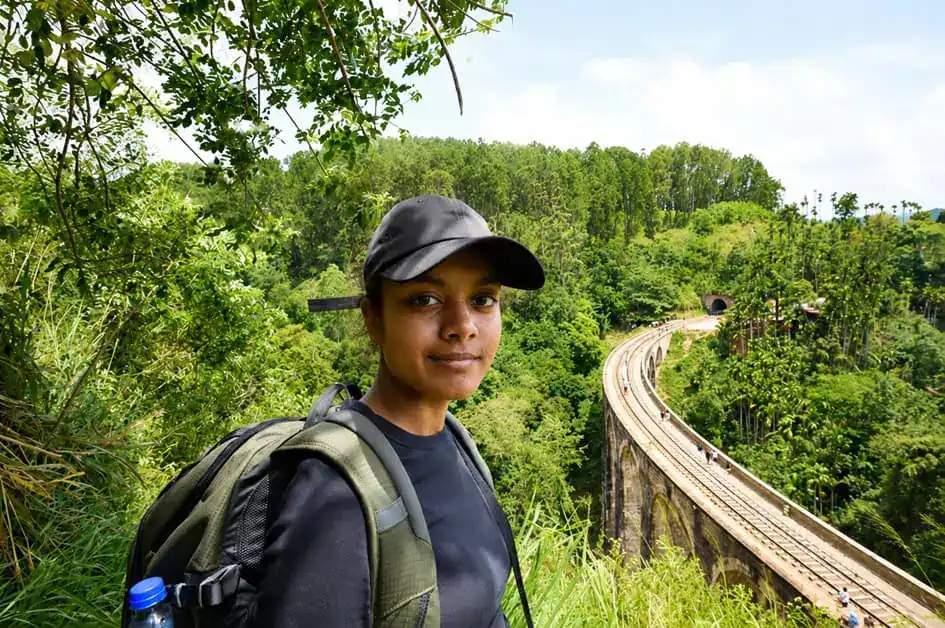
Along the Pekoe Trail, Nethuli at Nine Arch Bridge (Photo: Nalaka Priyantha)
After breakfast at Jasmine Garden Inn, we set out to walk from Ella to Demodara. Breakfast was pol roti with dhal curry and lunu miris, an egg and carrot sandwich, and tea. This walk is Stage 16 of the Pekoe Trail, a long-distance hiking route through Sri Lanka’s tea country. The stage is around 9.5 km and mild to moderate. It reaches a maximum height of 1,066 m, with 410 m of climbing.
The trail took us through pine forest to the Nine Arch Bridge, a colonial-era railway viaduct built from stone and brick. We bought two parcels of mangoes wrapped in banana leaves from a street vendor. One was sweet, and the other was sweet and sour. We decided to wait for a train. Before it arrived, we climbed to a viewpoint and watched it emerge from the tunnel and cross the bridge.
The rest of the stage showed us everyday life in the hills. We met many residents along the trail. We saw farmers harvesting a paddy field and tea pluckers at work on a plantation. The path passed through forests, rice fields, small villages, hills and tea estates, with several good viewpoints.
It was a hot and humid day. We carried snacks and water, and we still bought a 1.5-litre soft drink from a house along the way. The trail’s official profile advises drinking at least half a litre of water an hour while hiking. On a day like ours, that advice is good.
The official Pekoe Trail website says the stage takes about three hours. We took four and a half to five hours, mainly because we waited for the train at the bridge. If you plan to do the same, allow extra time.
At the end, we visited Demodara railway station and its famous railway loop, where the line circles a hill and passes under the railway station again. Then we called Terance to pick us up. This is one of the benefits of a Sri Lankan family road trip with a driver. A one-way hike is easy to arrange.
On the way back to Ella, we had lunch from a roadside stall: Vegetable Rolls, Vegetable Samosas, Parippu Wade, Ulundu Wade, and plain tea. We followed it with ice cream. After resting at the guesthouse, we had dinner at Raha Ella Sri Lanka. We ordered seafood and chicken fried rice, vegetable noodle soup, toast, onion omelettes and cola.
Day 8 — Ella to Arugam Bay
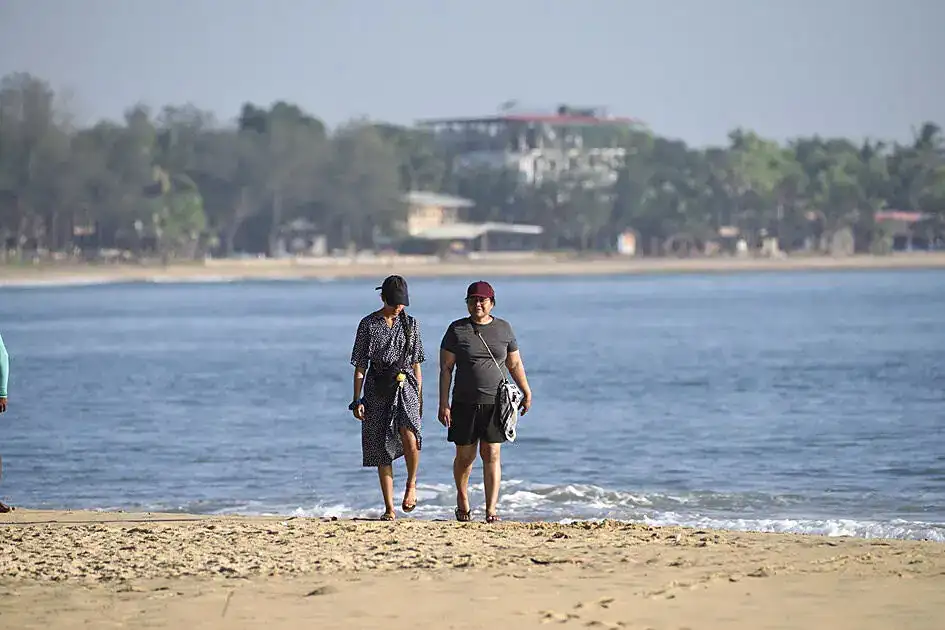
Mom and Daughter Time – Arugam Bay (Photo: Nalaka Priyantha)
On 5th July, we checked out of Jasmine Garden Inn early in the morning. We paid USD 59.40 for a deluxe double room for three nights. Then, we left Ella early and headed east. The landscape changed quickly as we came down from the hills into the dry zone.
We stopped for breakfast at a roadside restaurant in Monaragala. We had String Hoppers with Coconut Sambol, Parippu Wade, Vegetable Rolls, Samosas, and plain tea. At Siyambalanduwa, we bought ripe mangoes from a roadside stall. The sellers kindly gave us some jambu (watery rose apple) for free.
The road then passed through Lahugala Kitulana National Park. We reached Arugam Bay at about 1:00 pm.
Before checking in, we drove to the Muhudu Maha Viharaya archaeological site in Pottuvil. This ancient Buddhist site sits close to the sea. Inside an old stone building, we saw three statues: one of the Buddha, one of a king and one of a queen.
We stayed one night at Perera Hotel & Restaurant, about 1 km from the Main Point surf break. Our air-conditioned room had two comfortable double beds. The staff welcomed us with fresh papaya juice. We found Mr Perera and his staff very hospitable.
In the afternoon, we visited Peanut Farm Beach, about 9 km from Arugam Bay. Many foreign travellers were surfing there. We saw a few surf schools, restaurants, and places to stay. There was also a life-saving centre run by the Sri Lanka Police.
We planned to watch the sunset from Elephant Rock. We changed our minds. The area around the rock is forested, and we were worried about meeting wild elephants. If you plan to go, ask local people about current conditions and avoid walking there near dusk without advice.
Back at the hotel, we had a tasty dinner of seafood and chicken noodles with soft drinks.
Day 9 — Arugam Bay Surfing and the Journey to Yala
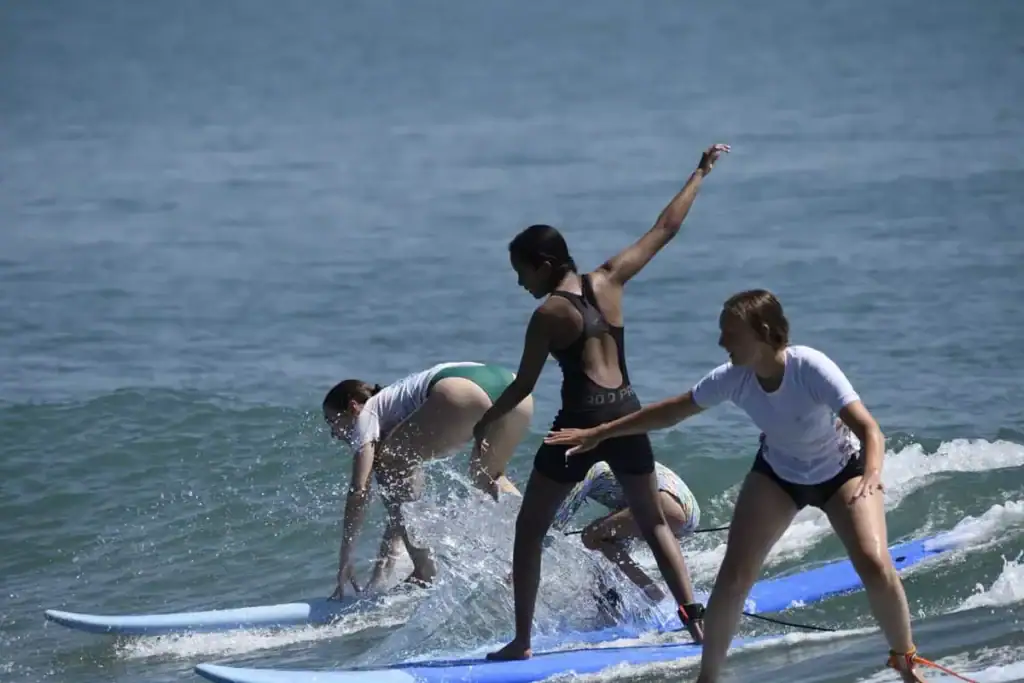
Nethuli – Surfing at the Main Surf Point in Arugam Bay (Photo: Nalaka Priyantha)
We woke early to watch the sunrise from the Arugam Bay bridge. It was a fantastic start to the day. Afterwards, we returned to the hotel.
Later that morning, we drove to two more surf spots: Pottuvil Point and Whisky Point. On the way, we had breakfast at a street restaurant. We ate Vegetable Roti, Parotta, Egg Roti, String Hoppers, and Hoppers with plain tea. The waves were not good for surfing at either point, so there were very few tourists. Surf conditions change from day to day, even in the main season.
We went back to the Main Point in Arugam Bay. There, Nethuli had a surfing lesson at Mambos Surfing School. We paid Rs. 5,000 for one hour. Her instructor, Sandun, started with basic training on the sand before taking her into the water. Within the hour, Nethuli was surfing on her own. For families, a short lesson like this is an easy way to try surfing. Choose a school with instructors, and follow their advice on where and when to go in.
We checked out after the lesson. We paid Rs. 13,000 for our night at Perera Hotel.
In the afternoon, we drove to the Yala area. The route took us back through Lahugala Kitulana National Park, Siyambalanduwa, and Monaragala, then on through Buttala, Kataragama and Tissamaharama.
We stayed for two nights at Yala Ying Yang Hostel & Camping. It is 7.5 km, or about 15 minutes, from the Palatupana entrance of Yala National Park. The hostel suits travellers who want an adventurous stay close to wildlife. In the garden and surrounding area, we saw many birds, including peacocks. We also saw black-naped hares, golden jackals, and wild buffaloes. The owner is Dimuthu, and we found both him and the caretaker very hospitable. They made chicken fried rice for dinner.
We had already booked a safari jeep from Waruna Yala Safari for a full-day safari the next day. Mr Waruna agreed to send the driver with a packed lunch and water.
Day 10 — Our Full-Day Yala Safari
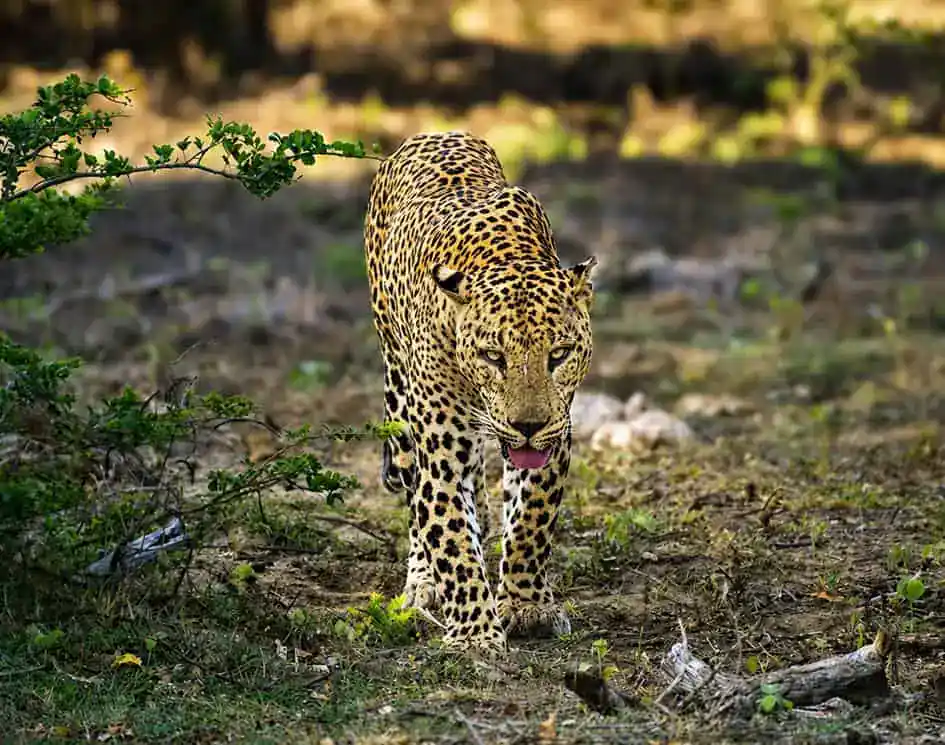
Lucas, A Famous Well-grown Leopard in Yala National Park (Photo: Nalaka Priyantha)
Our safari jeep arrived at the hostel at around 5:15 am. We drove to the Palatupana gate. At 6:00 am, the gate staff checked our online tickets and let us into Yala National Park.
You can book the entrance tickets online through the Official Wildlife Park Permits Reservation eService.
We spent the whole day in Yala. We saw many birds, a few elephants, deer, golden jackals, wild buffaloes, black-naped hares, and crocodiles. Most of all, we saw leopards. On this wildlife safari, we had the rare luck of seeing around eight of them.
Our first sighting was a mother leopard with two cubs. Next came an adult leopard, and then a leopard asleep on a tree branch. After that, we watched a mother calling to her cubs. While she called, a small cub crossed the road towards her. We could hear the other cub, but we never saw it.
Our final sighting was an adult male up close. He is a well-grown leopard known to wildlife enthusiasts as Lucas. Many years ago, we had seen his father, a leopard named Haamu. Lucas stayed near our jeep for a long time before crossing the road.
We want to be clear about this. Our day was exceptional. Yala is well known for leopards, but sightings are never guaranteed. Many visitors see one leopard or none at all. Go with an open mind, and enjoy the birds and other animals too.
We recommend reading about the best national parks to spot leopards in Sri Lanka.
At noon, we had lunch at the Patanangala Tourist Rest & Coffee House inside the park. We ate chicken sandwiches, rice, and egg and vegetable curries. We left the park at about 6:00 pm. We paid Rs. 40,000 for the safari jeep.
Back at the hostel, we had string hoppers with coconut sambol and egg curry for dinner. For dessert, we had buffalo curd with kithul treacle, a syrup made from kithul palm sap. It was the perfect end to a long day.
Day 11 — Yala to Galle Along the South Coast
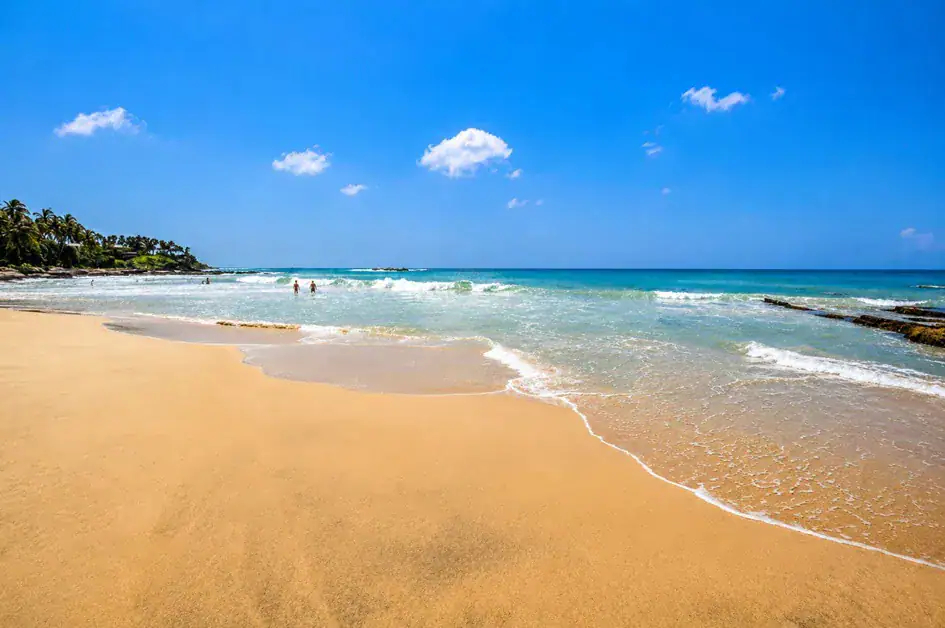
Goyambokka Beach in Tangalle (Photo: Nalaka Priyantha)
We checked out of Yala Ying Yang Hostel & Camping early in the morning. We paid Rs. 27,600 for a triple room for two nights.
On the road west, we stopped for breakfast at Hela Bojun Hala in Bataatha. We had Kiribath (Milk rice), Mushroom Pastries, and plain tea.
The rest of the day was a slow drift along the South Coast, with short stops at several beaches and viewpoints:
- Tangalle Beach and Goyambokka Beach
- Hiriketiya Beach
- Coconut Tree Hill and Mirissa Beach
- Weligama Beach
- Wijaya (Dalawella) Beach
- Unawatuna Beach
- Jungle Beach in Unawatuna
Along the way, we snacked on mango, guava, and king coconuts. This coast is in its wetter, rougher season during the Southwest Monsoon. If you plan to swim, check local advice and warning flags first.
In the late afternoon, we reached Galle Fort. The Portuguese built the old fort, and the Dutch greatly expanded it; it is now a UNESCO World Heritage Site.
Our last accommodation was the Frangipani Motel inside the fort. We had an air-conditioned triple room. Unfortunately, this was our least pleasant stay. During our visit, we found the owner, her daughter, and the staff rude and hard to communicate with. We did not feel welcome.
After checking in, we walked around the fort. We saw the lighthouse at Utrecht Bastion, Meeran Mosque, Flag Rock Bastion, and the Old Dutch Hospital. At Akersloot Bastion, we saw a breadfruit tree said to be the first one planted during the Dutch era. We watched a fantastic sunset from Flag Rock Bastion.
We bought grade Alba cinnamon from DP Ceylon Cinnamon & Spicy Hub in the fort.
For dinner, we had seafood chop suey and soft drinks at the Secret Garden Restaurant in the fort.
Day 12 — Exploring Galle Fort and Travelling to Gampaha
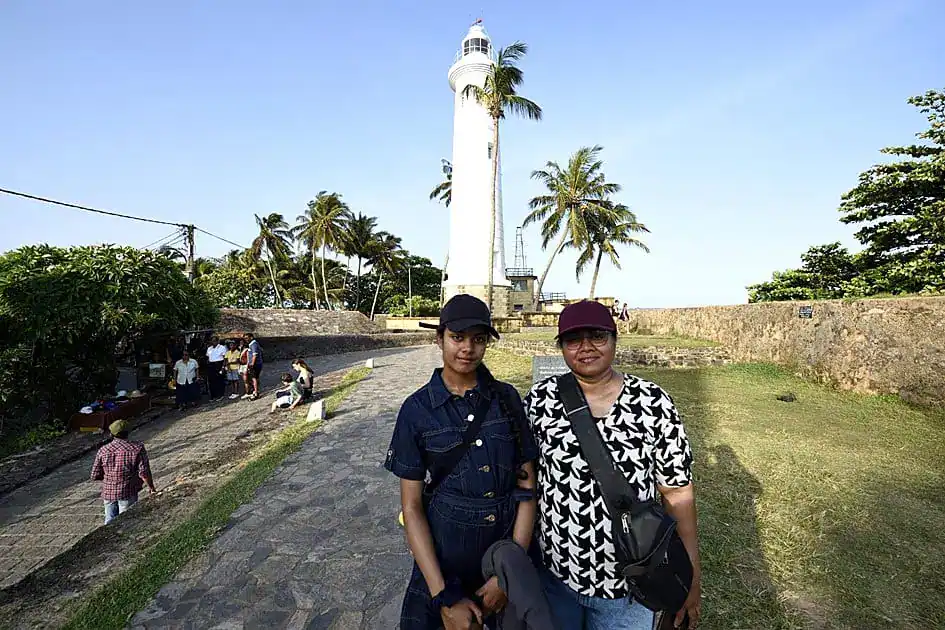
Mom and Daughter at the Lighthouse, Galle Fort (Photo: Nalaka Priyantha)
Our final morning began with breakfast at the Frangipani Motel. We had tea, eggs, toast with butter and jam, and watermelon, banana, and pineapple.
We spent the morning exploring more of the fort on foot. We visited the old Galle Library, the Dutch Reformed Church, and Amangalla. We also saw the Galle National Museum, the Clock Tower at Moon Bastion, All Saints Church, and the Maritime Archaeology Museum. Then we passed through the Old Gate and visited the Post Office, the Historical Mansion Museum, and Sri Sudharmalaya Buddhist Temple. The fort is compact, so walking between these places is easy.
We checked out and paid Rs. 10,036 for our one night. Before departure, we visited the Sea Turtle Hatchery Centre in Mahamodara, a family-run turtle rescue centre. We saw different kinds of sea turtles and hatchlings. Then Terance drove us to Gampaha on the Southern Expressway. We made one last food stop at the Welipenna Interchange Area, where we had egg sandwiches, egg rolls, vegetable roti, and soft drinks. From there, it was a short drive to Gampaha, and our journey ended.
Where We Stayed During Our 12-Day Trip
We booked every stay through Booking.com. Most were small, family-run places, and that shaped our trip. Hosts often helped with plans, cooked meals, or packed food for early starts.
| Base | Where We Stayed | Our Experience |
| Sigiriya (2 nights) | Hakuna Matata Hostel | Basic and a little dusty, but warm, helpful hosts |
| Kandy (1 night) | ようこそ youkoso | Homely, friendly family, 4 km from the Temple of the Tooth |
| Nuwara Eliya (1 night) | Ragith Villa | Cosy homestay feel, packed breakfast for Horton Plains |
| Ella (3 nights) | Jasmine Garden Inn | Walkable to town, close to the Little Adam’s Peak trail |
| Arugam Bay (1 night) | Perera Hotel & Restaurant | Comfortable room, very hospitable staff |
| Yala (2 nights) | Yala Ying Yang Hostel & Camping | Wildlife in the garden, 15 minutes from the park gate |
| Galle (1 night) | Frangipani Motel | Great location in the fort, but our least pleasant stay |
Location mattered more than luxury on this route. Staying close to trailheads and park gates made our early starts much easier.
What We Ate Along the Way
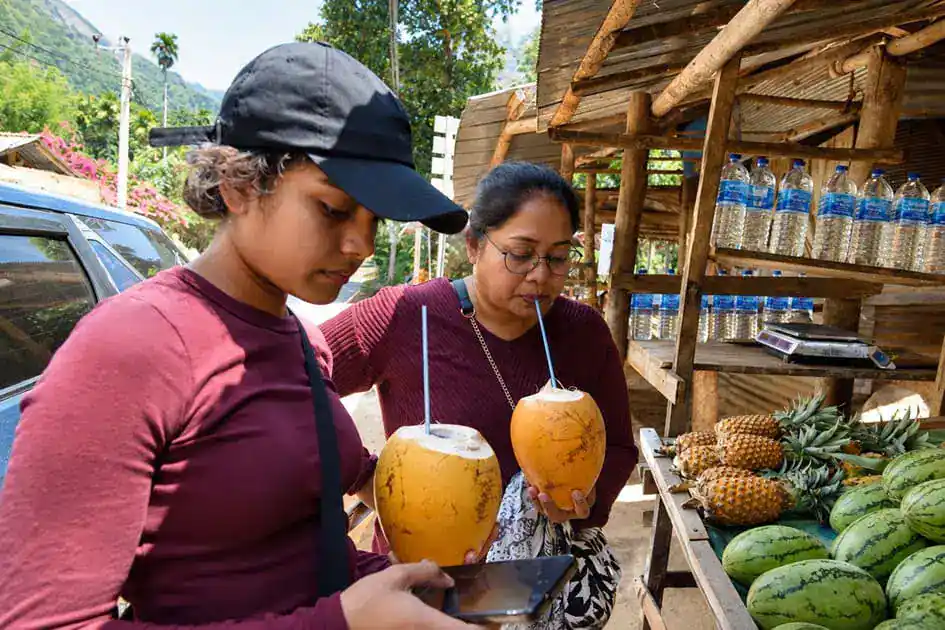
Drinking King Coconuts at a Roadside Fruit Stall in Ella (Photo: Nalaka Priyantha)
Food was one of the joys of this trip. We ate mostly local dishes, often from roadside stalls and small restaurants.
Breakfast was usually Sri Lankan. Hoppers, String Hoppers and Pol Roti came with Coconut Sambol, Lunu Miris or curry. Savoury snacks such as Parippu Wade, Ulundu Wade, Vegetable Rolls, and Samosas kept us going on long drives. The Hela Bojun Hala outlets we used in Thambuttegama, Maradankadawala, and Bataatha served good traditional food.
For bigger meals, we enjoyed rice and curry in Ella and spicy Egg Kottu in Sigiriya. Fruit was a constant: waraka (ripe jackfruit), mangoes, guava, jambu, and plenty of king coconuts. Our favourite dessert was buffalo curd with kithul treacle in Yala. We also came home with a lot of Ceylon tea and some Ceylon Cinnamon.
What Worked Well — and What We Would Do Differently
Several things made this trip run smoothly:
- Early starts. They got us to Sigiriya’s summit before sunrise and made us the first group into Horton Plains.
- Booking ahead online. We sorted our Horton Plains tickets, train tickets, and Yala tickets before we arrived.
- Having a driver. Terance carried our luggage while we took the train and collected us after our one-way hike to Demodara.
- A midday rest. Resting from 11 am to 2 pm in Sigiriya helped us cope with the heat.
A few things did not go to plan. Rather than regrets, these are points worth planning for:
- Poya days. We couldn’t climb Pidurangala on Poson Poya Day because of the crowds. Check the Poya calendar before planning popular sites.
- Hiking times. Our Pekoe Trail stage took longer than the official estimate because we waited for a train at Nine Arch Bridge.
- Surf conditions. Pottuvil Point and Whisky Point had no good waves on the morning we visited.
- Wildlife safety. We skipped Elephant Rock at sunset because of possible wild elephants.
- Accommodation. Reviews help, but one stay still disappointed us. Read recent reviews closely.
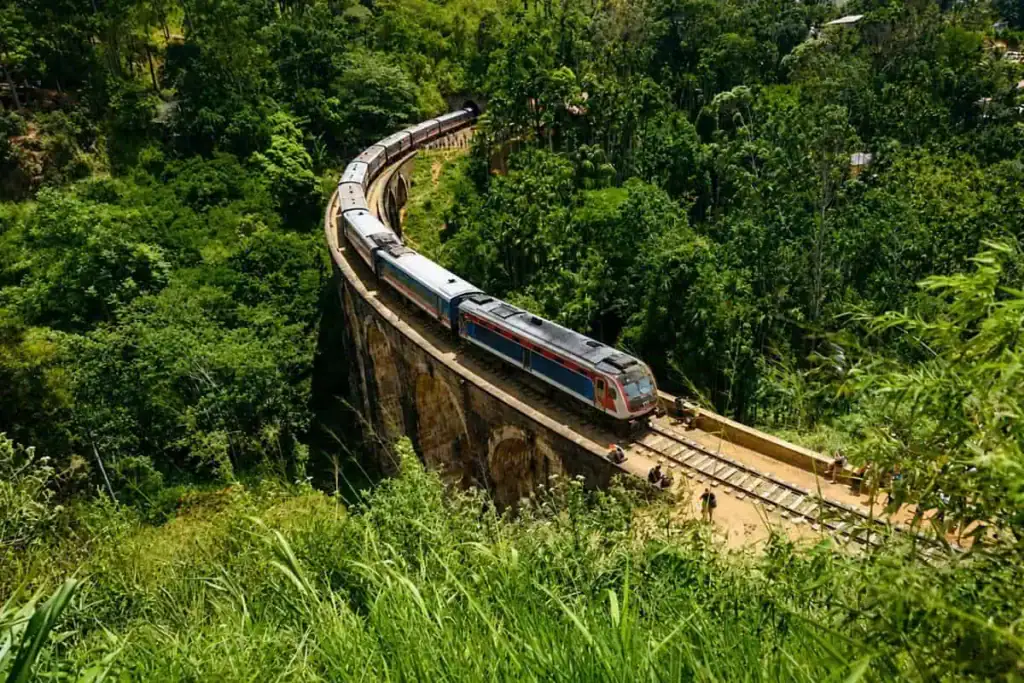
A Train over the Nine Arch Bridge, Ella (Photo: Nalaka Priyantha)
Some of the Costs From Our Trip
We did not record every expense, so we cannot give an accurate total for the trip. These are the prices we paid in June and July 2026. Prices change, so treat them as a guide only.
| Item | What We Paid |
| Car with chauffeur tourist guide | USD 65 per day |
| Hakuna Matata Hostel, Sigiriya (2 nights, with breakfast) | USD 14 |
| ようこそ youkoso, Kandy (1 night) | USD 5.55 |
| Ragith Villa, Nuwara Eliya (1 night) | USD 17 |
| Laundry in Ella (8.5 kg) | USD 20 |
| Jasmine Garden Inn, Ella (3 nights) | USD 59.40 |
| Surfing lesson, Arugam Bay (1 hour) | Rs. 5,000 |
| Perera Hotel & Restaurant, Arugam Bay (1 night) | Rs. 13,000 |
| Full-day safari jeep, Yala | Rs. 40,000 |
| Yala Ying Yang Hostel & Camping (triple room, 2 nights) | Rs. 27,600 |
| Frangipani Motel, Galle (1 night) | Rs. 10,036 |
We did not record the cost of entrance tickets, park fees, train tickets, meals, or shopping. Budget separately for these.
Practical Tips From Our June–July Road Trip
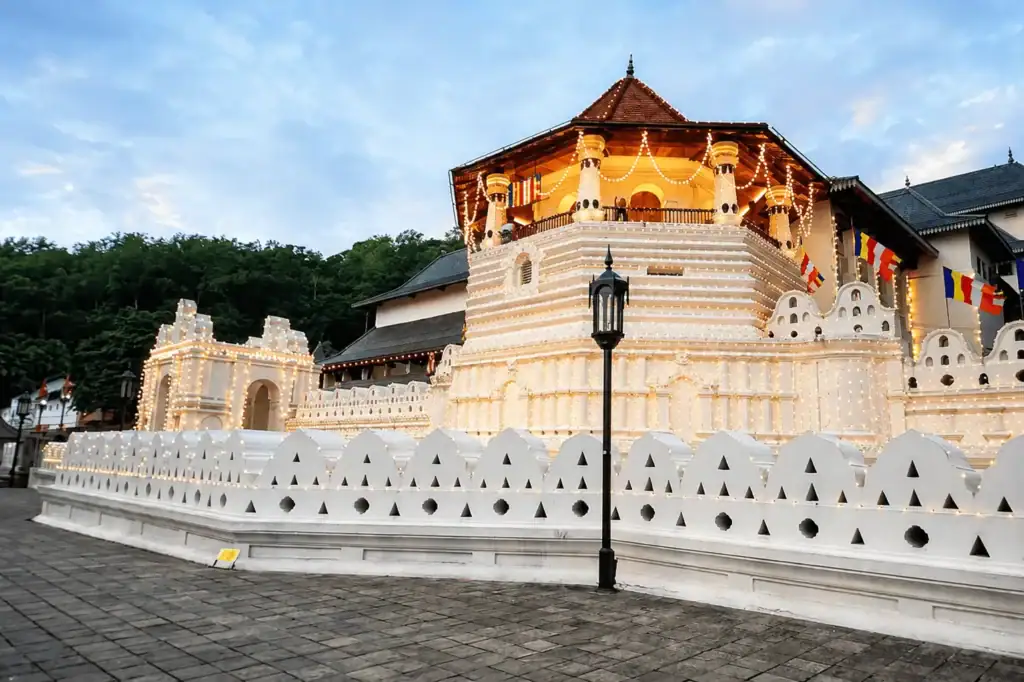
Temple of the Tooth, Kandy (Photo: Nalaka Priyantha)
- Dress for temples. Cover your shoulders and knees, and remove shoes and hats at sacred sites.
- Beat the heat. Visit sites like Anuradhapura, Sigiriya, and Dambulla early or late, and rest at midday.
- Carry water and snacks. Our Pekoe Trail day was hot and humid, and we needed more than we carried.
- Pack a headlamp. It made our pre-dawn Sigiriya climb much easier.
- Wear proper footwear. Several hikes crossed uneven paths, grassland, and tea estates.
- Respect wild elephants. Take local advice seriously, especially around Sigiriya, Pidurangala, and Arugam Bay.
- Watch wildlife responsibly. Stay in the jeep, keep noise down, never feed or touch animals and follow park rules.
- Use a surf school. Beginners should learn with an instructor and follow local advice on the sea.
- Stay flexible. Crowds, waves, and weather changed our plans more than once.
Is This 12-Day Route Right for You?
This route suits active travellers who enjoy early mornings, walking, and variety. It mixes ancient cities, tea country, hiking, a famous scenic train ride, surfing, a safari, and a colonial fort. Families with older children who like being outdoors may find it a good fit, as we did.
It is not a relaxed itinerary. If you prefer a slower pace, you could add a night in Ella, Arugam Bay, or Galle. You could also skip the Riverston detour or swap the full Pekoe Trail stage for a shorter walk to Nine Arch Bridge. We haven’t tested these changes ourselves, but they would ease the pace.
Highlights of Our 12-Day Sri Lanka Family Road Trip
- Watching sunrise from the top of Sigiriya Rock
- The Thewawa ritual at the Temple of the Tooth
- Clear views from World’s End at Horton Plains
- The scenic train from Ambewela to Ella
- Walking the Pekoe Trail past Nine Arch Bridge
- Nethuli surfing on her own after one lesson
- Around eight leopard sightings on our Yala safari
- Sunset from Flag Rock Bastion in Galle Fort
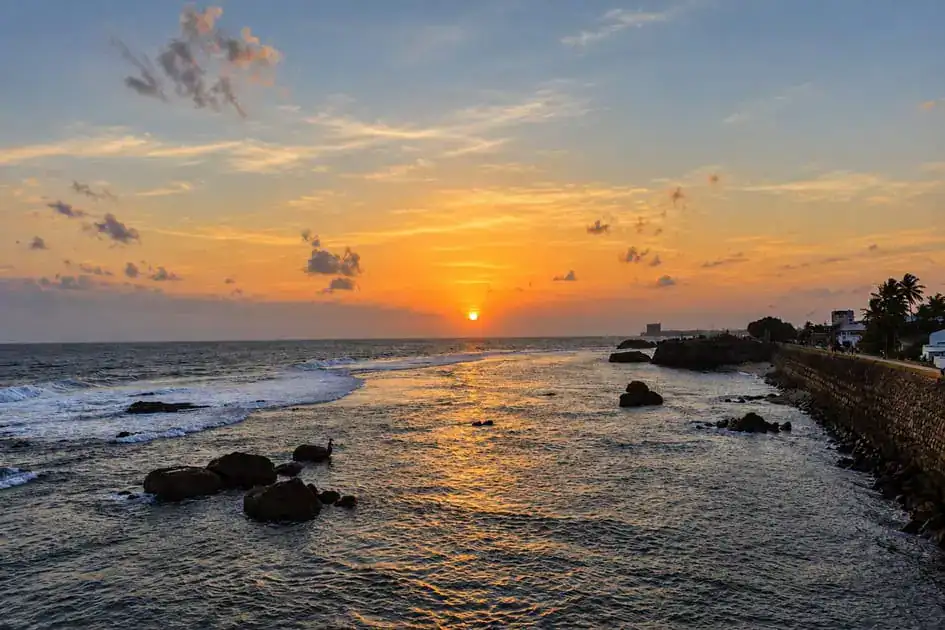
Sunset at the Flag Rock Bastion, Galle Fort (Photo: Nalaka Priyantha)
Final Thoughts
Our 12-day Sri Lanka itinerary for June and July took us from sacred cities to misty tea country, and from surf beaches to the walls of Galle Fort. Some plans changed along the way, from a crowded Poya day to flat surf. Those moments were part of the journey too.
What made the trip work was a mix of early starts, helpful hosts, good local food, and the freedom of travelling with a driver. If you enjoy active days and variety, a route like ours can show you many sides of Sri Lanka in less than two weeks.
Frequently Asked Questions
Is 12 days enough for Sri Lanka?
Twelve days is enough to see a wide range of the island if you keep moving, as we did. You will not see everything. Travellers who want a slower pace should cut some stops.
Is the June and July period a good time to travel around Sri Lanka?
It can be. The Southwest Monsoon, roughly May to September, brings more rain to the West, the South, and the hill country. The East Coast is in its better season then, and Arugam Bay’s surf season falls in these months. A Sri Lanka itinerary in June or July works best if it includes the East Coast.
Is this 12-day Sri Lanka itinerary suitable for families?
It worked well for our family of three, but it is active. It suits families with children who can manage early starts and hikes of up to about 9.5 km.
Do you need a chauffeur for this route?
It is not essential, as trains and buses cover many places. For us, the driver saved a lot of time, especially on cross-country legs and one-way hikes.
Is this a relaxed or fast-paced Sri Lanka itinerary?
It is fast-paced. We often started before sunrise and visited several places in a day.
Can you combine Ella, Arugam Bay, and Yala in 12 days?
Yes. We spent three nights in Ella, one in Arugam Bay and two in Yala. Extra time in Arugam Bay would give more chances of good surf.
What should you pack for Sri Lanka in June and July?
Pack light, breathable clothes, modest clothing for temples, good walking shoes, a headlamp, sun protection, mosquito repellent, and a rain layer. On a Sri Lanka itinerary in July that includes the hills, a warm layer is also useful for early mornings.
Sources and References:
- UNESCO World Heritage Centre — Sri Lanka. The heritage context surrounding the Sacred City of Anuradhapura, Sigiriya, Kandy, Galle and the Central Highlands of Sri Lanka/Horton Plains.
- Department of Wildlife Conservation, Sri Lanka — Protected Areas and National Parks. The official source for national park information, particularly Horton Plains and Yala, as well as park regulations, permits and wildlife-protection context. The DWC confirms that national parks are protected under the Fauna and Flora Protection Ordinance and that visitor entry is subject to permits and conditions.
- Sri Lanka Railways — Official Train Schedule. Appropriate for the Ambewela–Ella train journey.
- Sri Lanka Railways — Online Advance Seat Reservations. Sri Lanka Railways confirms its official online advance-reservation system and provides current booking information.
- Sri Lanka Tourism — Official Travel Information. The general official tourism reference for destinations and experiences included in the route, particularly the Cultural Triangle, Hill Country, East Coast and South Coast.
- Sri Lanka Tourism Development Authority (SLTDA). Useful for official tourism information, registered tourism services and practical information for international visitors.
- Sri Lanka Tourism Development Authority — Tourist Assistance and 1912 Hotline. SLTDA confirms that 1912 provides tourism and travel information and can connect travellers with the Tourism Police; it also lists 1990 for Suwa Seriya ambulance services.
- Department of Meteorology, Sri Lanka. The official meteorological source of seasonal conditions, rain and weather variability.
Featured image: Our daughter, Nethuli – Little Adam’s Peak, Ella (Photo: Nalaka Priyantha)

I am a Sri Lankan medical doctor who spends my free time travelling, exploring new destinations, and documenting the beauty of the island I call home. I have journeyed across almost every corner of Sri Lanka with my wife and daughter — from wildlife parks and misty mountains to ancient cities, deep forests, rugged landscapes, and quiet beaches.
Travel is not just a hobby for me — it’s a way of life. I love nature, enjoy road trips, and find joy in wildlife photography. I also read widely about tourism, travel trends, and destination culture. Through my writing, I aim to help travellers experience Sri Lanka through real stories, meaningful insights, and honest recommendations — the same way I explore it with my own family.