
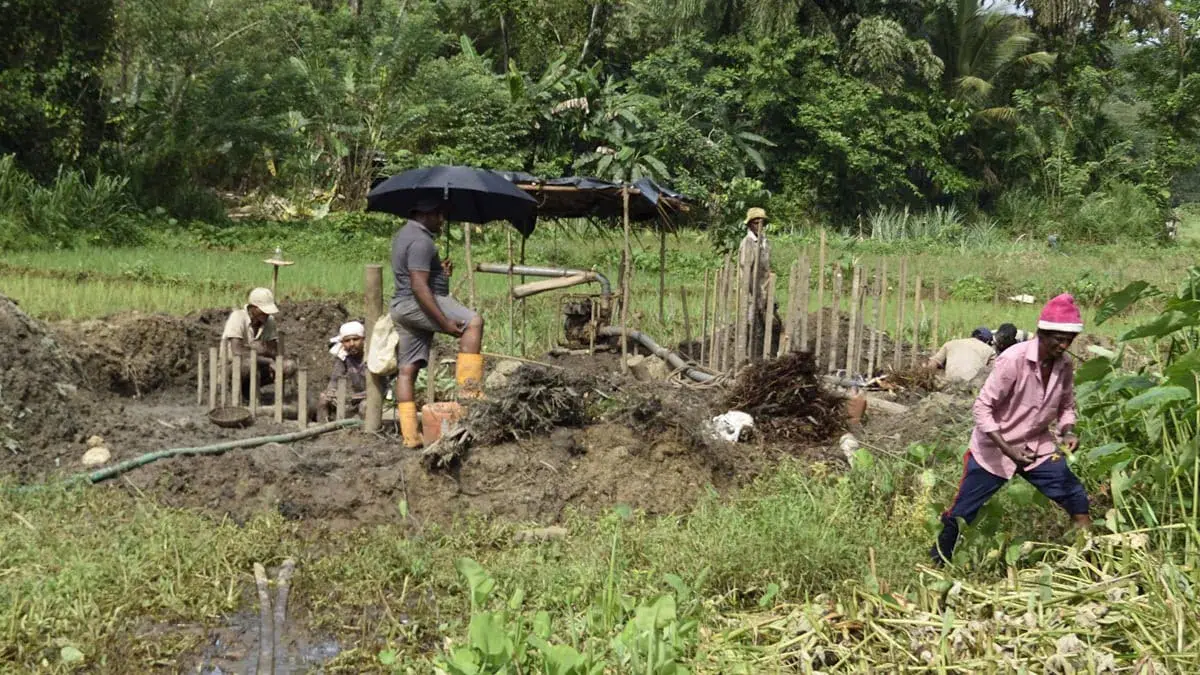

In a muddy pit beside a rice field, a miner swirls a shallow basket of wet gravel through running water. Sand and clay wash away, and the heavier pebbles stay behind. Every so often, someone leans in and picks out a small, dull-looking stone that might, once cut, turn out to be a sapphire. This slow, patient work sits at the heart of the story of gemstones in Sri Lanka, and it is much older than any modern jewellery shop.
For travellers, gems open a window onto the island’s history, landscape, and working life, especially around Ratnapura, the town most closely linked to the trade. Many visitors also end up buying gems, so it helps to know a little before you go. This guide covers which stones Sri Lanka is known for, how they are mined, where the main gem areas are, what you can realistically see as a visitor and how to shop with confidence.
Why Is Sri Lanka Famous for Gemstones?
A Gemstone Heritage Spanning Centuries
Sri Lanka’s reputation for gems goes back a very long way. The island has traditionally been called Ratnadeepa, usually translated as “island of gems”, and its stones travelled along ancient trade routes that linked South Asia with the Arabian world and the Mediterranean. Over the centuries, Roman, Arab, and later European traders all sought out Sri Lankan gems.
That heritage hasn’t faded. Mining, cutting, and trading still provide a living for many Sri Lankan families, and large, fine Sri Lankan sapphires are part of museum and royal collections worldwide.
What Makes Sri Lankan Gemstones Special?
Most of the answer lies in geology. Much of Sri Lanka rests on very old metamorphic rock, formed under the influence of intense heat and pressure deep underground. Over immense spans of time, weathering broke these rocks down. Rivers then carried the tough, heavy gem crystals downstream, where they settled into layers of gravel in riverbeds, floodplains, and old buried channels.
Geologists call these secondary, or alluvial, deposits. They explain why most Sri Lankan mining targets gem-bearing gravel rather than solid rock. Because nature has already gathered material from a wide area, one layer of gravel can hold several different gem species side by side. That variety makes the island unusual: Sri Lanka’s Export Development Board lists nearly 75 gemstone varieties belonging to about ten main species.
Famous Gemstones Found in Sri Lanka
Blue Sapphires
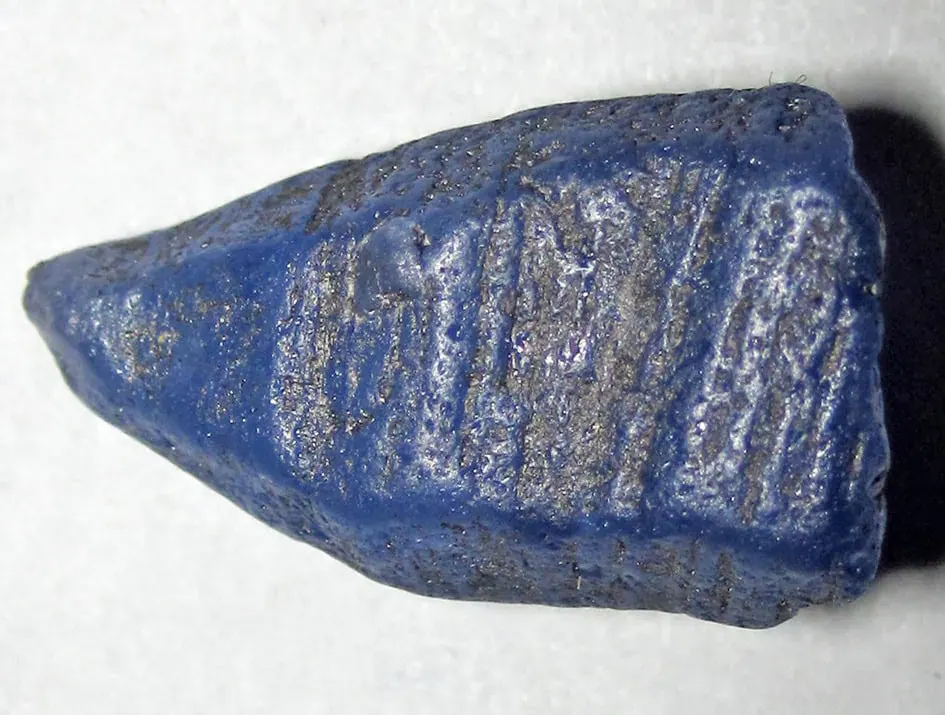
A Blue Sapphire from Ratnapura (Photo: James St. John, CC BY 2.0)
Sapphire is the stone most people connect with Sri Lanka, and it is often sold under the trade name “Ceylon sapphire”. Sapphire and ruby are both forms of corundum, a very hard mineral whose colour comes from tiny traces of other elements. Sri Lankan blue sapphires are often admired for their bright, lively medium blues, rather than the very dark tones some other sources produce.
Not every blue stone comes out of the ground that way. Much Sri Lankan corundum is mined as pale, milky material known locally as geuda, and it is often heat-treated to improve its colour and clarity. Heat treatment is a normal, accepted part of the trade, but the seller should always tell you about it.
Padparadscha Sapphires
Among collectors, the padparadscha is the sapphire most closely tied to Sri Lanka. It shows a delicate blend of pink and orange, and its name is usually linked to the colour of the lotus flower. What exactly counts as padparadscha is still debated, and gem laboratories don’t always agree, so never take the word on a label at face value. Fine examples are scarce, and the prices reflect that.
Star Sapphires and Star Rubies
Some corundum contains very fine, needle-like inclusions. When such a stone is cut into a smooth dome, called a cabochon, those needles reflect light as a six-rayed star. This effect is known as asterism, and Sri Lanka produces both star sapphires and, less often, star rubies. In a good stone, the star sits near the centre and glides smoothly across the surface as you tilt it under a single light source.
Rubies and Other Coloured Sapphires
A ruby is simply red corundum. Lighter pinkish stones are usually sold as pink sapphires, and where one becomes the other is partly a matter of trade convention. Sri Lankan rubies tend to be lighter in tone than those from some other well-known sources. The island also produces yellow, pink, purple, green, and colourless sapphires, so in Sri Lanka “sapphire” covers far more than blue.
Cat’s-Eye Chrysoberyl and Alexandrite
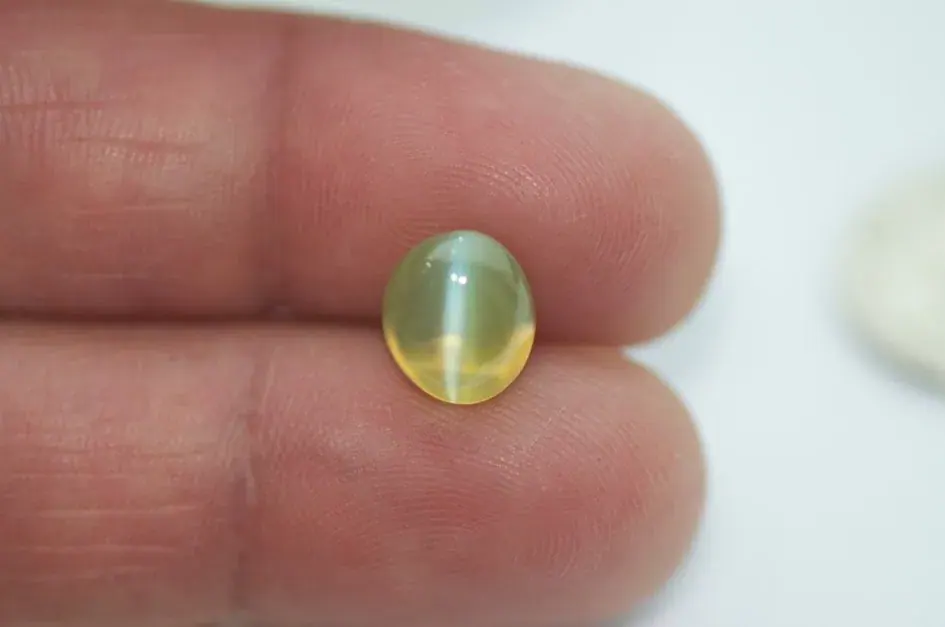
A Cat’s-Eye Chrysoberyl (Photo: Ian Brown, CC BY-ND 2.0)
Chrysoberyl is another mineral strongly associated with the island. Its best-known variety, cat’s-eye chrysoberyl, shows a single sharp line of light across a domed stone, much like a cat’s eye. Other gems, including quartz, can show a similar effect. In the trade, “cat’s-eye” on its own usually means chrysoberyl, but a reputable seller should name the species clearly.
Alexandrite is also a chrysoberyl, famous for changing colour: typically greenish in daylight and reddish under warm, incandescent light. Sri Lanka is one of its sources, though stones with a strong, clean colour change are uncommon.
Other Beautiful Sri Lankan Gemstones
Beyond corundum and chrysoberyl, Sri Lanka’s gravels yield a long list of other stones. Spinel, historically often mistaken for ruby or sapphire, comes in reds, pinks, purples, and blues. Garnets occur in several colours; zircon is valued for its brilliance and fire, and tourmaline, topaz, and aquamarine are also found. Moonstone, a feldspar with a soft, floating blue-white sheen, has strong local associations and is a popular, affordable keepsake.
These stones vary widely in quality and value. A less familiar name doesn’t automatically mean you’ve found a rare stone or a bargain.
Gem Mining in Sri Lanka: How Are Gemstones Discovered?
Gem mining in Sri Lanka mostly follows one simple principle: find the gem-bearing gravel, bring it up and wash it. That gravel layer is known locally as illam. It usually lies beneath layers of soil, clay and sand, sometimes close to the surface and sometimes many metres down. Gemmologists who have studied Sri Lanka’s illam describe it as among the world’s richest gem gravels. Still, its depth, thickness and quality vary a great deal from place to place.
Mining is licensed and overseen by the National Gem and Jewellery Authority (NGJA). Methods differ with the ground, the water level, and the size of the operation, so no single description fits every mine.
Method 1 — Pit and Tunnel Mining
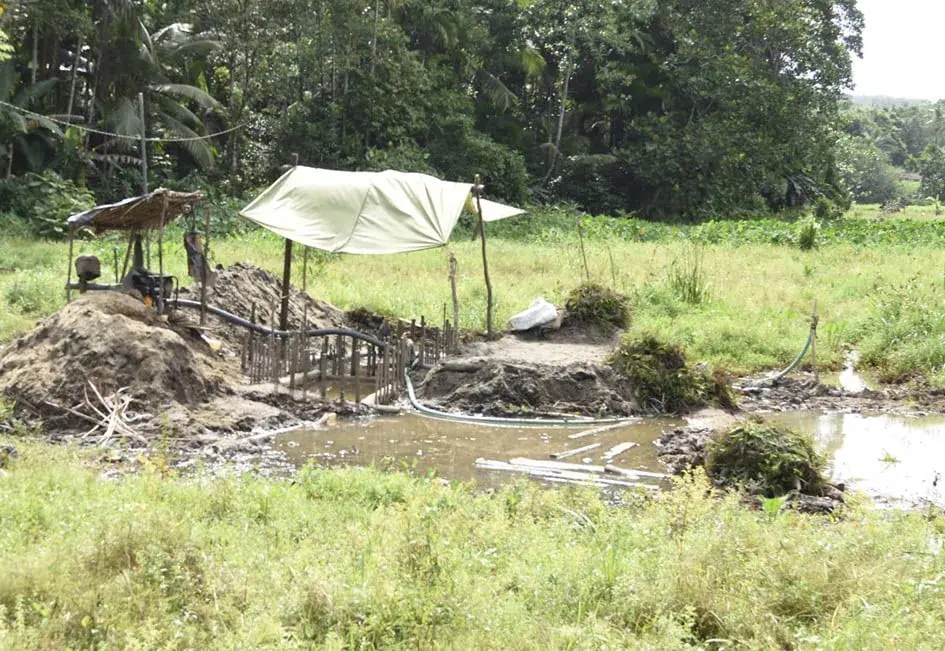
Pit and tunnel mining – Elapatha Village, Ratnapura (Photo: Nalaka Priyantha)
This is the traditional method most closely linked with Ratnapura. Miners dig a vertical shaft down to the illam, often a small rectangular pit just a few metres across. In soft, wet ground, the walls are commonly braced with timber and supports cut from local trees, sometimes lined with leaves or fern fronds to hold back loose earth. A simple roof, often V-shaped, may cover the pit to shelter it from rain and sun.
Groundwater is the constant problem. Pits in paddy-field areas fill with water quickly, so pumps are used to keep them workable. Once the miners reach the illam, they loosen the gravel and send it up in baskets or buckets, by hand or with a hand-powered winch. Where the gravel layer extends sideways, they may dig short horizontal tunnels from the bottom of the shaft to follow it.
Pit mining is physically hard and carries real risks, including collapsing walls, flooding, and poor air in deeper shafts. These are working sites, not attractions, and conditions change from one pit to the next.
Method 2 — Alluvial and Surface Mining
“Alluvial” describes where the gems came from, not how they are dug out. As explained earlier, rivers carried gem crystals away from their parent rocks and dropped them in riverbeds, floodplains, and ancient channels that may now be buried underground. Many of the deep pits described above are actually working alluvial gravel, so the two methods overlap rather than standing as separate types of deposit.
Where the illam lies close to the surface, it can be worked from shallow open excavations. In some licensed river operations, miners use long-handled hoes called mammoties to drag gravel from the riverbed and let the current wash away the fine material. Larger, mechanised open-pit operations exist too, using machinery to remove the overburden before the gravel is processed.
Shallow and river mining are subject to permits and environmental safeguards, because careless digging can damage riverbanks, farmland, and water quality. Unregulated river mining is not a harmless local tradition, and it is not something visitors should encourage.
What Happens After the Gravel Is Collected?
Whatever the method, the next step is washing. Gravel goes into wide, shallow woven baskets, which miners swirl and dip in water so the lighter material spills out. Gemstones are relatively heavy, so they collect towards the bottom and centre of the basket. Experienced eyes then pick through what’s left.
Rough gems rarely look impressive at this stage. Many are small, worn pebbles with no obvious sparkle. Mine owners or partners sort and assess them, then sell them to dealers, cutters, and traders for evaluation. That chain of buying and selling is where Ratnapura’s character really shows.
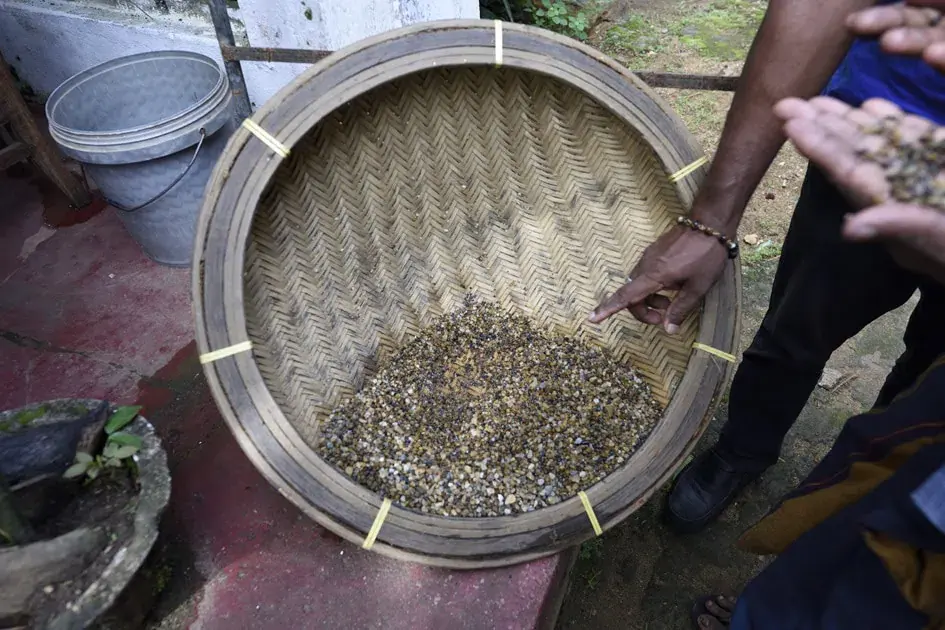
A woven basket with washed gravel (Photo: Nalaka Priyantha)
Ratnapura: The Gem Capital of Sri Lanka
Why Is Ratnapura Called the City of Gems?
The name says it all: Ratnapura means “city of gems” in Sinhala. The town sits in Sabaragamuwa Province, in a green, rain-soaked region of rivers, paddy fields, and forested hills, with the Sri Pada (Adam’s Peak) range rising to the North. Its gem trade goes back centuries, and the surrounding district remains one of the island’s most important gem-producing areas.
Traditional Gem Mining in Ratnapura
Around Ratnapura, small pit mines are part of the rural landscape. You may notice them as low, thatched- or tin-roofed shelters among rice fields, with water pumps, piles of washed gravel, and baskets nearby. Many are small, family- or partnership-run operations that still rely largely on hand tools and traditional washing methods, alongside some more mechanised sites. Mining here fits around farming and the seasons, and heavy rain can halt work for a while.
Ratnapura’s Gem Trading Culture
Ratnapura is a trading town as much as a mining one. On busy days, dealers gather in its streets to buy and sell rough and cut stones, often in small paper parcels, inspecting gems under a torch or loupe before bargaining. Most of this trade happens between Sri Lankan dealers, although foreign buyers come too. The NGJA also organises gem and jewellery events in the Ratnapura area to promote the town as a trading centre.
Ratnapura is also home to the Demuwawatha International Gem and Jewellery Trade Centre, commonly known as the Gem Tower. Developed by the National Gem and Jewellery Authority (NGJA), the facility brings together gemstone trading and related services, including gem testing and certification. Although primarily intended for the gem trade rather than conventional sightseeing, it may interest travellers who want to learn more about Sri Lanka’s gemstone industry. Check current visitor access arrangements before planning a visit.
What Makes Ratnapura Interesting for Travellers?
For travellers, Ratnapura offers a rare chance to see a traditional industry in its real setting, with the mines, the trading and the cutting all happening in the same area. You may be able to see a pit being worked, watch gravel being washed, visit a cutting workshop, or see gems being traded.
None of this is automatically open to the public, though. Most mines are private workplaces, and the trading streets are working markets. Access depends on who you go with, the day you visit, and the permission of the people involved, so it’s best to arrange things in advance rather than turning up expecting a tour.
Read about popular markets in Sri Lanka.
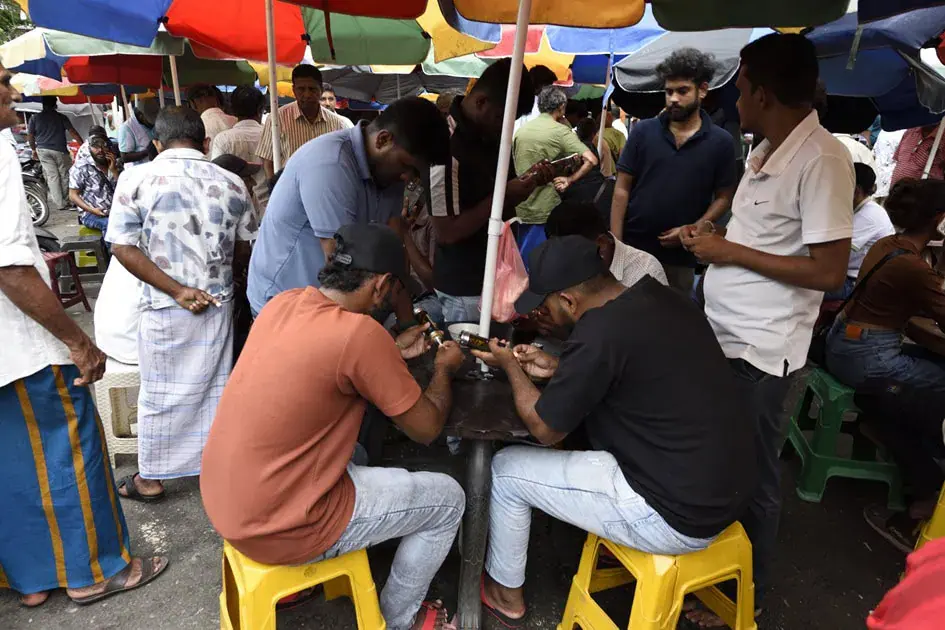
The gem market in Ratnapura (Photo: Nalaka Priyantha)
Where Are the Main Gem Mines in Sri Lanka?
Gems turn up in many parts of the island, but a handful of areas have long been central to gem mining in Sri Lanka. These are mining regions, not attractions with visitor entrances. Most mines in them are private, licensed workings, often in fields or on village land.
| Area | General location | Why it’s known |
| Ratnapura | Sabaragamuwa Province | The historic heart of the trade, with mining, cutting, and dealing all in one area |
| Pelmadulla | East of Ratnapura town | A busy mining and trading area within the wider Ratnapura gem belt |
| Balangoda | Further east in Ratnapura District | Traditional pit mines alongside mechanised and river workings |
| Rakwana and Kalawana | Southern and western parts of Ratnapura District | Long-established gem-producing areas in hill and river country |
| Elahera | Matale District, north-central Sri Lanka | A significant gem field well away from the Ratnapura region |
| Okkampitiya | Monaragala District, south-east | One of the main gem areas in the drier south-east |
| Meetiyagoda | Inland from the south-west coast | Closely associated with moonstone |
Ratnapura District dominates the list, which is why it gets so much attention. Elahera and Okkampitiya are reminders that the gem-bearing ground extends far beyond one town. Meetiyagoda is different again, with a local reputation tied to moonstone rather than sapphire.
Can Tourists Visit Gem Mines in Sri Lanka?
Often, yes, but rarely by just turning up. Seeing a mine usually depends on a local contact, a guide, or a gem business that has a working relationship with a mine owner. It’s worth being clear about what you’re actually being offered, because “gem mine visit” can mean quite different things.
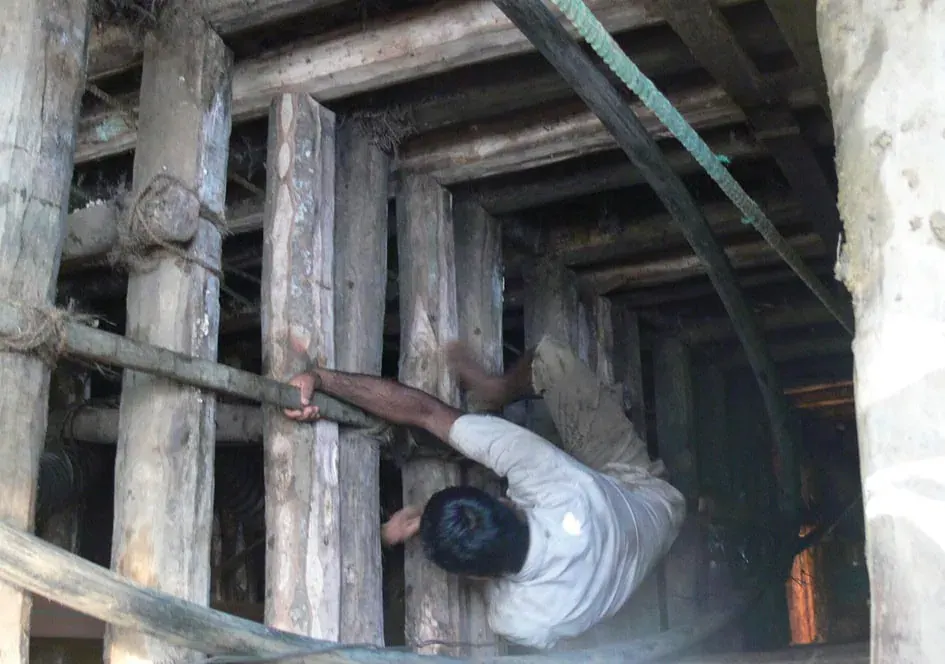
Inside a gem pit in Ratnapura (Photo: Murray Gunn, CC BY-NC-SA 2.0)
What Might Visitors Experience?
Broadly, you’ll come across four kinds of experiences:
- Educational visits or museums that explain gemstones and mining through displays and specimens.
- Demonstrations where gravel washing or a model pit is shown to visitors, sometimes beside a gem shop.
- Trading centres and markets, where you can watch dealers at work.
- Working mines, where you see real mining from a safe distance, with the owner’s permission.
All of these can be interesting. Just be aware that a demonstration pit beside a showroom is not the same as an active mine, and many such visits end in a sales room.
Read about popular museums in Sri Lanka.
How to Arrange a Responsible Visit
Ask your hotel, a licensed tourist guide, or a reputable tour operator before you travel, and be specific. Is it a working mine or a demonstration? Who owns it? Will there be pressure to buy? Is there a fee, and who receives it? Mining depends on weather and water levels, so confirm the arrangements shortly before you go. Giving a fair contribution or tip to the people whose work you watch is considerate, but agree on it openly.
Important Safety and Legal Considerations
Never climb down into a shaft or tunnel, step onto unsupported pit edges, handle pumps or machinery, or pick up gravel or stones without clear permission. Pits are deep, wet, and unstable, and the ground around them can be slippery. Ask before photographing miners, and respect their work rather than treating it as a performance.
Gem mining requires a licence from the National Gem and Jewellery Authority, and Sri Lanka does not grant gem-mining licences to foreign nationals or foreign companies. A visit is to watch and learn, not to try your hand at prospecting.
From Rough Gemstones to Beautiful Jewellery
Once rough stones leave the mine, they pass through several skilled hands. First comes sorting by species, colour, and clarity. Some stones, particularly corundum, may be heat-treated at this stage to improve their colour, a process Sri Lankan specialists are known for.
Cutting is where a pebble becomes a gem. Some cutters still use a traditional hand-driven wheel, while others work with modern machines. The aim is always a balance between brilliance, colour, and keeping as much weight as possible. Polishing then brings out the finish, before the stone is sold loose or set into jewellery, often in the rich 22-carat gold long favoured in Sri Lanka.
Along the way, proper identification matters. A trained gemmologist or laboratory can confirm the species, whether the stone is natural or synthetic, and whether it has been treated. Honest disclosure of treatments is part of good practice, and watching a cutter at work gives you a real appreciation of the craft behind a finished stone.
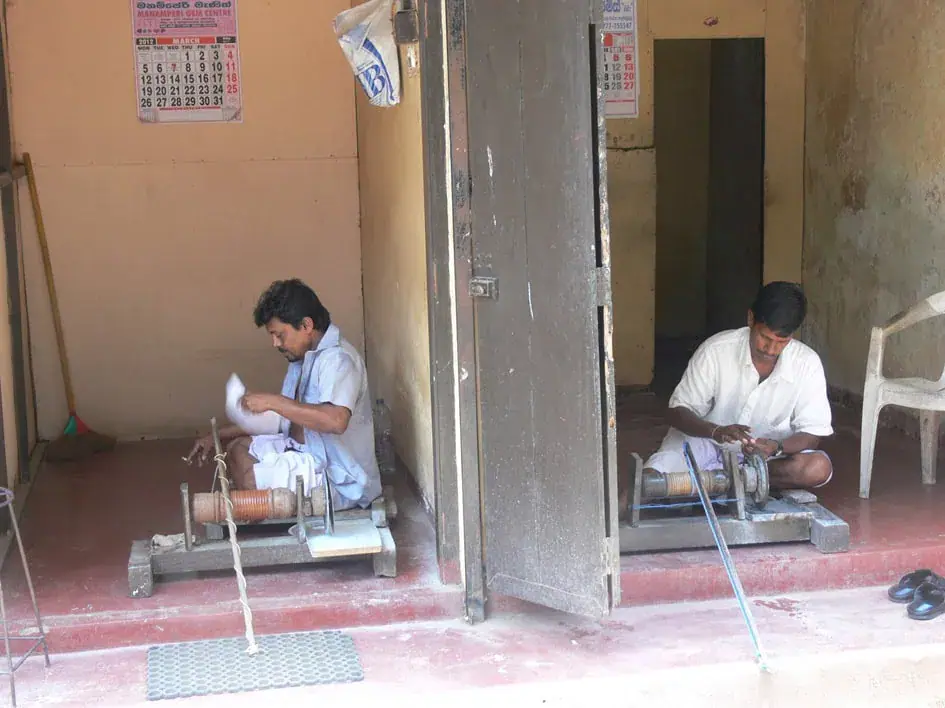
Traditional gem cutters in Ratnapura (Photo: Murray Gunn, CC BY-NC-SA 2.0)
Buying Gemstones in Sri Lanka: Practical Tips for Travellers
Where Can Travellers Buy Gemstones?
Gems are sold all over Sri Lanka, from established jewellers in Colombo and Kandy to shops in coastal resort towns and dealers in Ratnapura. The most reliable choice for most visitors is a long-established business licensed by the National Gem and Jewellery Authority, with a fixed shop and a clear returns and paperwork policy. Gems offered on the street, on the beach or by a friendly stranger are best avoided, however convincing the story.
How to Buy Gemstones Safely
Go slowly, and don’t let a “today only” price rush you. Before paying, ask the seller to state in writing:
- the gem species and variety;
- whether it is natural or synthetic (laboratory-grown);
- whether it has been treated, and how;
- the weight and the price.
For any significant purchase, ask for a report from a recognised gem testing laboratory, or have the stone tested before you commit. The NGJA offers testing services, and reports from other recognised laboratories are also used. Even so, a certificate confirms what was tested. It does not prove that a price is fair, and an informal “certificate” from the shop itself means little. Also remember that not every stone sold in Sri Lanka was mined there.
Can Tourists Take Gemstones Home?
Yes, tourists can generally take gemstones purchased in Sri Lanka home, provided they comply with the relevant export and customs regulations. Requirements may differ for rough, cut, and polished stones, so don’t assume you can take every gemstone abroad without formalities. Before buying, ask the seller about the necessary export documentation and check the latest guidance from the National Gem and Jewellery Authority (NGJA). Keep your official receipt, any laboratory report, and relevant export documents with you. Your home country may also require a customs declaration or charge import duties, so check its rules before travelling.
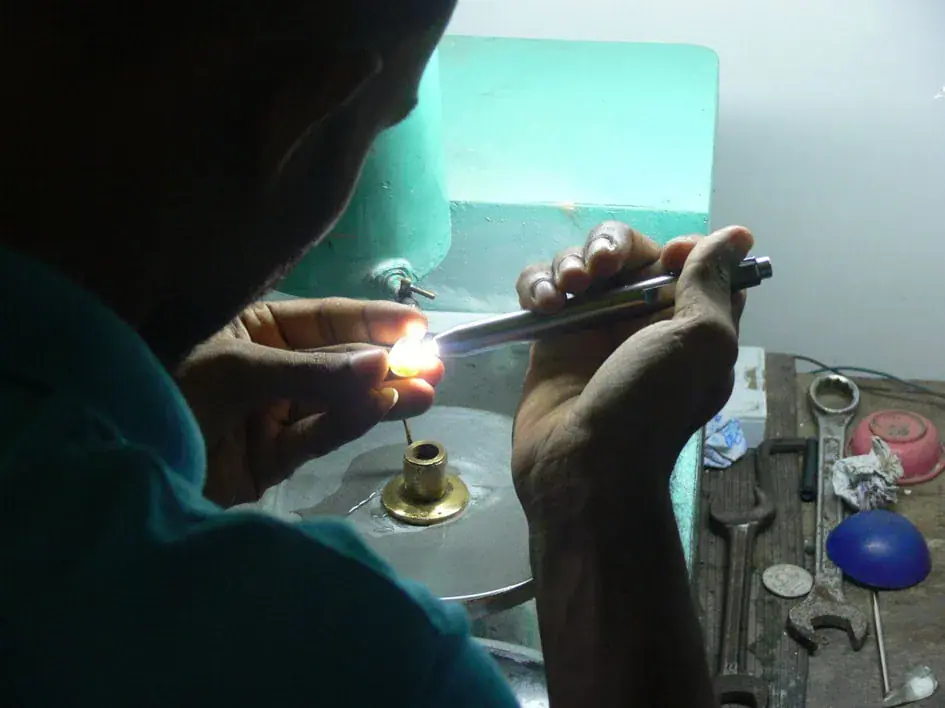
A gem cutter in Ratnapura – Checking a gemstone (Photo: Murray Gunn, CC BY-NC-SA 2.0)
Responsible Gem Mining and Sustainable Tourism
Behind every Sri Lankan gem is hard physical work, often in deep, waterlogged pits. A responsible visit respects that. Watch from where you’re told to stand, keep a respectful distance, and ask before taking photographs, especially close-ups of people at work.
Mining also affects the land. Pits can disturb farmland, groundwater, and rivers, which is why licensed mines are expected to refill and restore pits once work ends. Sri Lanka’s mostly small-scale methods leave a lighter footprint than large industrial operations. However, illegal digging, especially in rivers, still causes damage.
As a buyer, you can help by choosing licensed sellers, asking where stones came from, and expecting honest disclosure. Questions like these support a fairer, better-regulated trade.
Read about responsible and sustainable travelling in Sri Lanka.
Planning Your Gemstone Experience in Sri Lanka
Ratnapura works well as a day trip from Colombo or the Southwest Coast, or as an overnight stop on a longer route. It also sits within reach of Sinharaja Forest Reserve, Adam’s Peak, and on the way towards Udawalawe National Park. Two popular hiking routes to Adam’s Peak (Sri Pada) begin near Ratnapura: the Palabaddala (Siripagama) route and the Kuruwita–Erathna route. Both offer scenic but challenging climbs through lush forests and mountainous landscapes, making them appealing to adventurous travellers. Hence, it fits naturally into a wider journey.
Read more about places to visit in Sri Lanka.
Arrange mine or workshop visits in advance through your hotel or a licensed guide. The Ratnapura area is one of the wettest parts of the island, and heavy rain can flood pits and pause mining, so keep your plans flexible. Wear shoes with good grip that you don’t mind getting muddy, and bring rain protection.
Read about the weather in Sri Lanka and the best time to visit.
A relaxed day might look like this:
- Visit a working mine or washing site in the morning, if one has been arranged.
- See a cutting and polishing workshop.
- Spend the afternoon learning about gems at a museum or exhibition, or watching the trading streets, before shopping only if you want to.
Read about Sri Lanka travel tips.
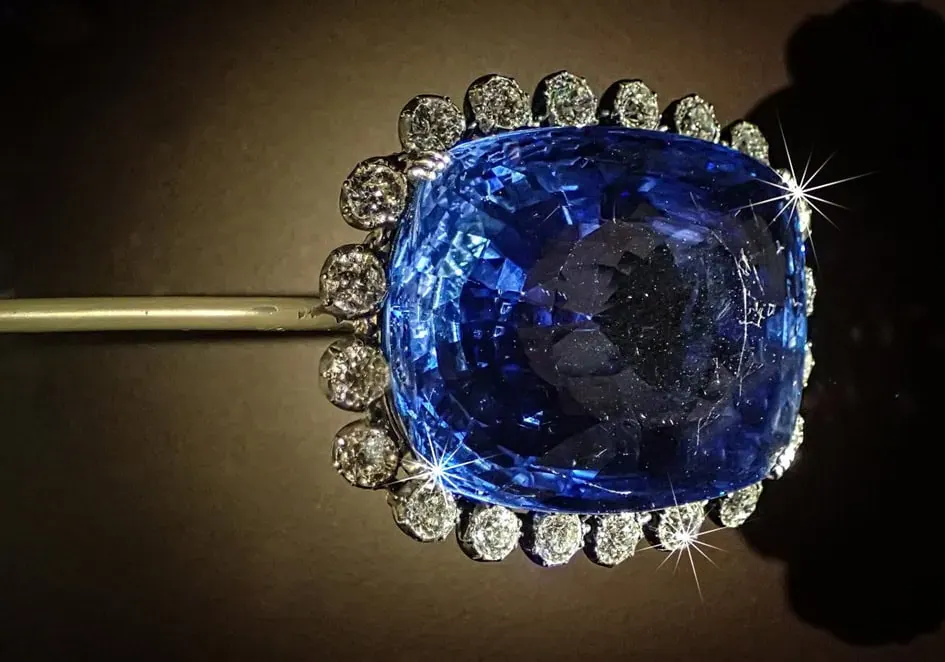
Logan Sapphire framed by 20 diamonds, one of the world’s largest-known faceted blue sapphires from Sri Lanka (Photo: Mary Harrsch, CC BY-NC-SA 2.0)
Frequently Asked Questions
What gemstones is Sri Lanka famous for?
Above all, sapphires: blue, padparadscha, star, and other colours. The island also produces cat’s-eye chrysoberyl, alexandrite, spinel, garnet, zircon, tourmaline, topaz, aquamarine, and moonstone.
Where are the main gem mines in Sri Lanka?
Mainly around Ratnapura, Pelmadulla, Balangoda, Rakwana, and Kalawana, with other important areas at Elahera, Okkampitiya, and, for moonstone, Meetiyagoda.
Can tourists visit gem mines in Ratnapura?
Often, with permission arranged in advance through a hotel, guide, or reputable gem business. Most mines are private working sites, not open attractions.
What are the two common gem-mining methods?
Pit-and-tunnel mining, which reaches buried gem gravel through shafts, and alluvial and surface mining, which works shallower or river gravels. The two often overlap.
Is Ratnapura worth visiting?
Yes, if you’re curious about gems, rural life, and traditional crafts. It’s also a good base for nearby nature areas.
How can travellers buy genuine gemstones?
Buy from licensed, established sellers, get written details of species and treatments, keep official receipts and use a recognised laboratory for valuable stones.
The story of gemstones in Sri Lanka is as much about people and places as about sparkle. It runs through the miners washing gravel beside paddy fields, the dealers bargaining in Ratnapura’s streets and the cutters who turn rough pebbles into finished stones. If you visit with curiosity, respect the people at work and buy carefully, you’ll come away understanding why this island has been linked with gems for so long. Add Ratnapura to your route and learn the story at its source.
If you are new to Sri Lanka, read about things to do in Sri Lanka, the best travel itineraries for your travel season, and our complete travel guide for first-time travellers.
Map – Main Gem Mine Locations
Sources and References:
- National Gem and Jewellery Authority (NGJA) – Official Website. Sri Lanka’s national authority responsible for regulating and developing the gem and jewellery industry, including mining, trading, gemstone testing and exports.
- Sri Lanka Export Development Board – Gemstones Found in Sri Lanka. An overview of Sri Lanka’s gemstone varieties, geological deposits, sapphires, rubies, chrysoberyl, alexandrite, spinel, garnet and other precious stones.
- Sri Lanka Export Development Board – Gem, Diamond and Jewellery Industry in Sri Lanka. Background information on Sri Lanka’s gemstone heritage, alluvial deposits, gem mining and the country’s gem and jewellery industry.
- Gemological Institute of America (GIA) – Sri Lanka: Expedition to the Island of Jewels. Detailed field research examining Sri Lankan gem deposits, traditional mining techniques, gem-bearing gravel, gemstone processing and the Ratnapura region.
- Gemological Institute of America (GIA) – Sri Lanka: The Gem Island. A geological and gemmological study of Sri Lanka’s gem-producing regions, including Ratnapura, Pelmadulla, Balangoda, Rakwana, Elahera and Okkampitiya.
- National Gem and Jewellery Authority – Gem Tower, Ratnapura. Official information about the Demuwawatha International Gem & Jewellery Trade Centre, including gemstone trading, testing, certification and export-related services.
- National Gem and Jewellery Authority – National Gem and Jewellery Authority Act, No. 50 of 1993. The principal legislation establishing the authority and its responsibilities concerning Sri Lanka’s gem and jewellery industry.
- National Gem and Jewellery Authority – Gem & Jewellery Export Process. Official guidance on gemstone and jewellery export procedures, documentation and regulatory requirements.
- Gemological Institute of America (GIA) – Sapphire Quality Factors. Guidance on sapphire colour, quality, value and the characteristics of padparadscha and other coloured sapphires.
- Gemological Institute of America (GIA) – Sapphire History and Lore. Historical and cultural information about sapphires, including the Sri Lankan association with padparadscha sapphires.
- Gemological Institute of America (GIA) – Sapphire Buyer’s Guide. Practical information about purchasing sapphires, heat treatment, laboratory reports, gemstone origin and factors influencing value.
- Sri Lanka Export Development Board – Industry Capability: Gem and Jewellery Industry. Information on Sri Lanka’s gemstone cutting, polishing, manufacturing and jewellery industry.
Featured image: A gem mine in Elapatha village, Ratnapura (Photo: Nalaka Priyantha)

I am a Sri Lankan medical doctor who spends my free time travelling, exploring new destinations, and documenting the beauty of the island I call home. I have journeyed across almost every corner of Sri Lanka with my wife and daughter — from wildlife parks and misty mountains to ancient cities, deep forests, rugged landscapes, and quiet beaches.
Travel is not just a hobby for me — it’s a way of life. I love nature, enjoy road trips, and find joy in wildlife photography. I also read widely about tourism, travel trends, and destination culture. Through my writing, I aim to help travellers experience Sri Lanka through real stories, meaningful insights, and honest recommendations — the same way I explore it with my own family.