
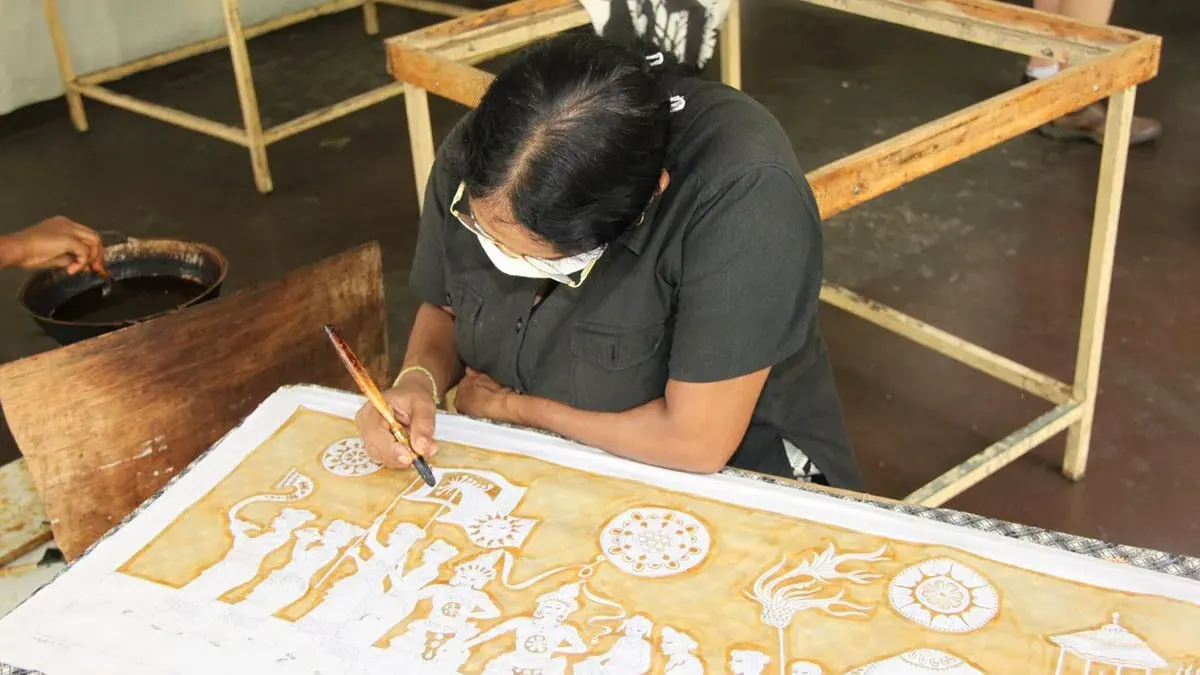

Introduction: Make Something, Not Just Buy Something
There’s a difference between buying a batik sarong in a shop and spending a morning bent over a stretched cotton square, tracing hot wax along a pencil line, then watching your design appear as the dye takes. The second gives you an object with a story you were part of. Craft workshops in Sri Lanka let travellers learn a little of a traditional skill beside the people who practise it, and the best of them are relaxed, personal, and surprisingly absorbing.
The short answer to where and what: batik is the easiest hands-on class to book, with workshops around Kandy and the Cultural Triangle. Pottery classes run in a potters’ village near Weligama on the South Coast. Mask carving is centred in Ambalangoda, with hands-on sessions offered in Galle. Other crafts, such as Beeralu lace, Dumbara mat weaving, and lacquerwork, are usually seen through artisan visits or arranged by enquiry rather than booked as set classes.
That last point matters. Not all twelve experiences below are classes you can reserve online. Some are demonstrations, some are visits to working artisans, and a few need patient advance arrangement. This guide makes those differences clear, so you know what you can realistically fit into your trip.
Quick Guide: Which Craft Workshop Should You Choose?
The access types below describe what is generally on offer. Availability changes, so confirm details directly before you plan around any of them.
| Craft | Best area(s) | What you can try or see | Access type |
| Batik | Kandy; Sigiriya and Habarana; Galle | Draw, wax, dye, and boil your own small batik cloth | Hands-on class |
| Traditional masks | Ambalangoda; Galle Fort | Watch carvers at work; carve or paint a simple mask | Demonstration (Ambalangoda); hands-on class (Galle) |
| Pottery | Kumbalgama village, near Weligama | Prepare clay and try shaping on the wheel | Hands-on class |
| Handloom weaving | Kandy area; Galle; Kurunegala | Watch weavers on the loom; some visits include a short try | Artisan visit |
| Beeralu lace | Galle to Weligama coast | Watch lace-makers working bobbins; occasionally try a few twists | Artisan visit |
| Dumbara Ratā Kalāla | Dumbara valley, Kandy District | See the weaving of patterned hana-fibre mats | Enquire in advance |
| Woodcarving | Kandy area; Ambalangoda | Watch carvers shape wood with hand tools | Demonstration or artisan visit |
| Laksha lacquerware | Hapuvida, Matale District | See the “fingernail” lacquer technique | Enquire in advance |
| Palmyrah-leaf weaving | Jaffna | See baskets, mats, and hats woven from palmyrah leaf | Enquire in advance |
| Coconut-shell crafts | Various coastal and village areas | See shells cut and polished into bowls and spoons | Enquire in advance |
| Brasswork and engraving | Pilimathalawa and villages near Kandy | Watch engraving and finishing in family workshops | Demonstration or artisan visit |
| Knitting and crochet | Colombo | Contemporary beginner classes, if a studio is running them | Enquire in advance |
If you want to make something with your own hands, batik, pottery and mask carving, or painting are the most dependable choices. If you’re happy to watch and learn, the artisan visits open up a much wider range of Sri Lankan handicrafts.
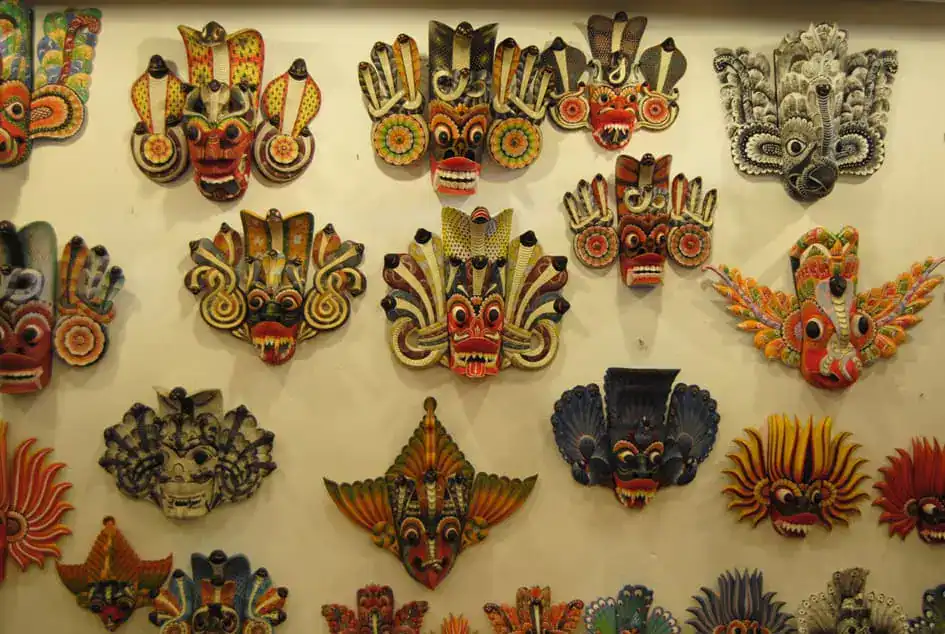
Various Raksha Masks in Ambalangoda (Photo: Sarvodaya Shramadana Movement, CC BY 2.0)
Why Sri Lanka’s Living Crafts Are Worth Experiencing
Many of Sri Lanka’s crafts grew out of specific places and communities. Lacquerwork is tied to a village in the Matale hills. Dumbara mats come from two villages in the Kandy District, woven by a community that once supplied the royal court. Mask carving is closely linked to Ambalangoda, and bobbin lace to the Southern Coast. These skills have usually passed from parent to child through watching and practice, which is why meeting the maker teaches you something a shop shelf cannot.
There’s also a practical case for going beyond shopping. A short session shows you how much time and skill sits behind a finished piece, which makes it easier to judge quality and fair prices if you do buy. And money spent on a class or a direct purchase tends to reach the craftsperson more directly than money spent in a large showroom.
It helps to know the four kinds of experience you’ll meet:
- Workshop or class: you make something yourself, with guidance, materials, and usually a set duration.
- Demonstration: an artisan shows the process while you watch and ask questions. You may get a brief go, but making isn’t the main point.
- Artisan visit: you spend time in a working home or village workshop, seeing the craft in its everyday setting. These are often arranged through a guide or your accommodation.
- Showroom: a shop, sometimes with a craftsperson working at the front. Useful for buying, but don’t mistake it for a lesson.
One more distinction: Sri Lanka has government craft-training centres, run to train local artisans. They are not tourist attractions, and you shouldn’t expect to walk in and join a session.
12 Craft Workshops and Artisan Experiences in Sri Lanka
1. Batik-Making: Learn Wax-Resist Textile Design
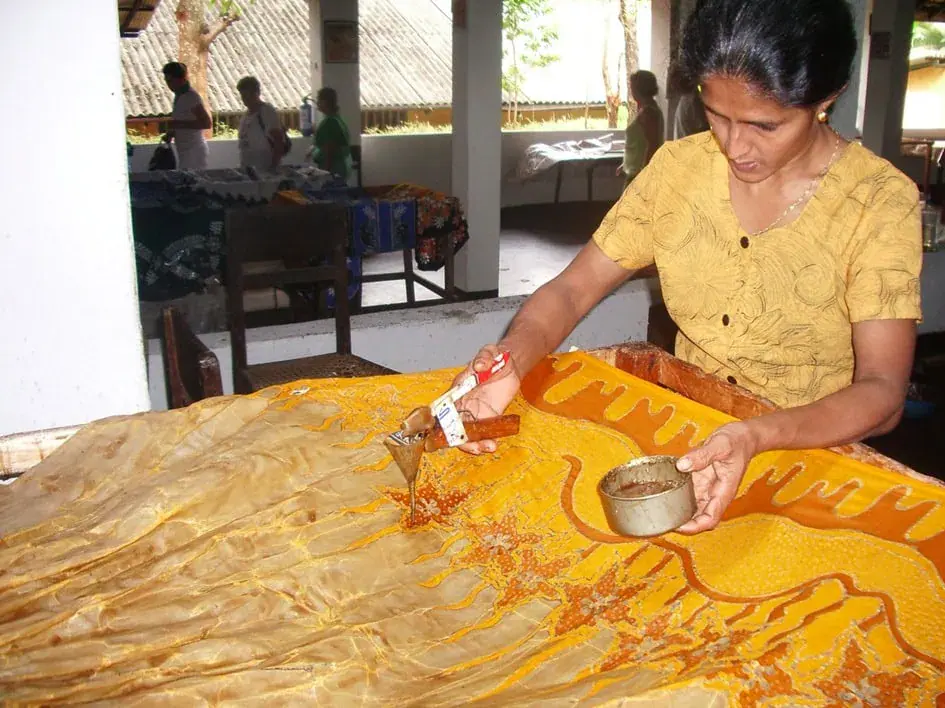
Colouring batik in Kandy (Photo: Jolle~commonswiki)
Batik is the craft most travellers try, and for good reason. The process is easy to grasp, the results are colourful, and you leave the same day with a finished piece of cloth.
The principle is simple. You draw a design on cotton, then trace it in melted wax using a small spouted tool called a tjanting. Wherever the wax sits, the dye can’t reach. After dyeing, the cloth is boiled to remove the wax, revealing your pattern. Longer sessions add extra colours by waxing and dyeing in layers, and some teach the fine “crackle” lines that appear when hardened wax is deliberately broken.
Classes in this category are genuinely hands-on. Around Kandy, studios run sessions of a few hours in which you make your own cloth from start to finish, and private half-day versions can be arranged. Workshops near Habarana and Sigiriya make batik an easy addition to a Cultural Triangle stay, and options also exist around Galle.
Batik suits almost anyone who likes drawing or colour, including teenagers and adults with no art background. A simple design works best on a first attempt. Leaves, fish, or an elephant outline will look far better than an ambitious scene.
Practical tip: Wear clothes you don’t mind marking. Dyes stain, and wax drips are hard to remove.
Caveat: You’ll be working near hot wax and boiling water. Some hosts set a minimum age (one Habarana workshop accepts guests from 12), so check before booking with children.
2. Traditional Masks in Sri Lanka: Carving, Painting, and Meaning
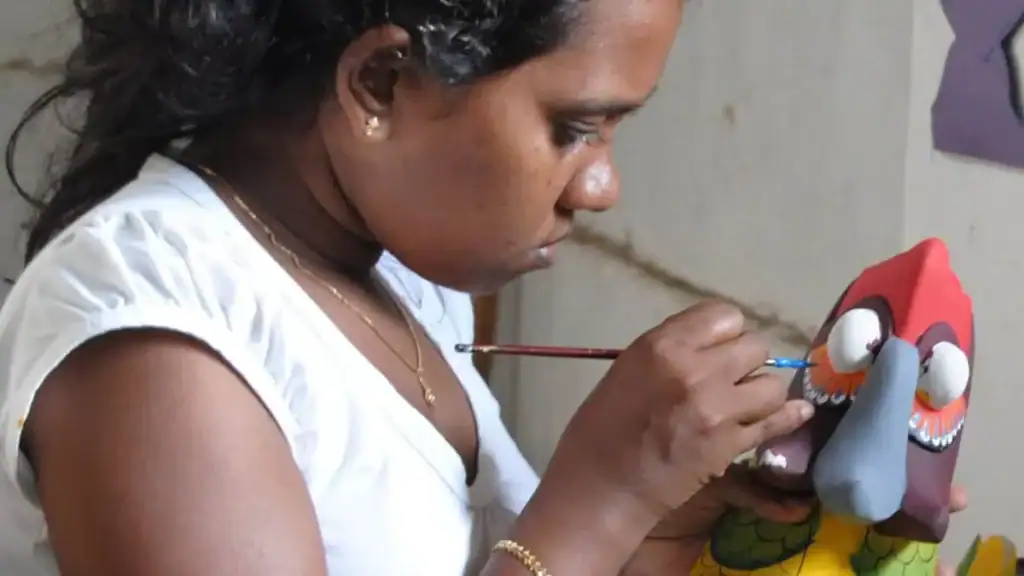
Sri Lankan artisan painting a traditional mask in Ambalangoda (Photo: Sarvodaya Shramadana Movement, CC BY 2.0)
The carved and painted masks you see across the South Coast belong to a living performance tradition, and understanding that makes any mask experience richer. Traditional masks in Sri Lanka have long been used in kolam folk dramas, which present a cast of comic and royal characters, and in sanni healing rituals, where masks represent spirits associated with particular illnesses. Elaborate raksha masks, including cobra and bird forms, appear in festivals and processions (perahera).
These are not novelty faces. Some ritual masks still carry protective or healing meaning in rural communities, so treat them with the same respect you would any religious object.
Ambalangoda, on the coast between Bentota and Galle, is the place most closely linked with the craft. The Ariyapala Mask Museum there combines a small museum explaining mask types and their ritual uses with a workshop where artisans show carving and painting techniques. Expect to watch and learn rather than carve. If a participatory lesson matters to you, ask in advance rather than assuming one will be available.
For a hands-on session, Galle is the better bet. Workshops in and around Galle Fort, offered through tour operators and some hotels, introduce mask types before guiding you through carving a simple kolam mask in light kaduru wood. Painting-only sessions are also offered, and they are a gentler choice for children or anyone uneasy with blades.
This suits travellers with an interest in folklore, performance, or carving, and those who want context rather than just a souvenir.
Practical tip: If you’re buying a mask, ask the maker which character it represents and how it is used. The answer is often more interesting than the object.
Caveat: Carving uses sharp chisels. One Galle workshop limits carving to over-13s, or over-8s with an adult assisting.
3. Pottery: Shape Clay with a Local Potter
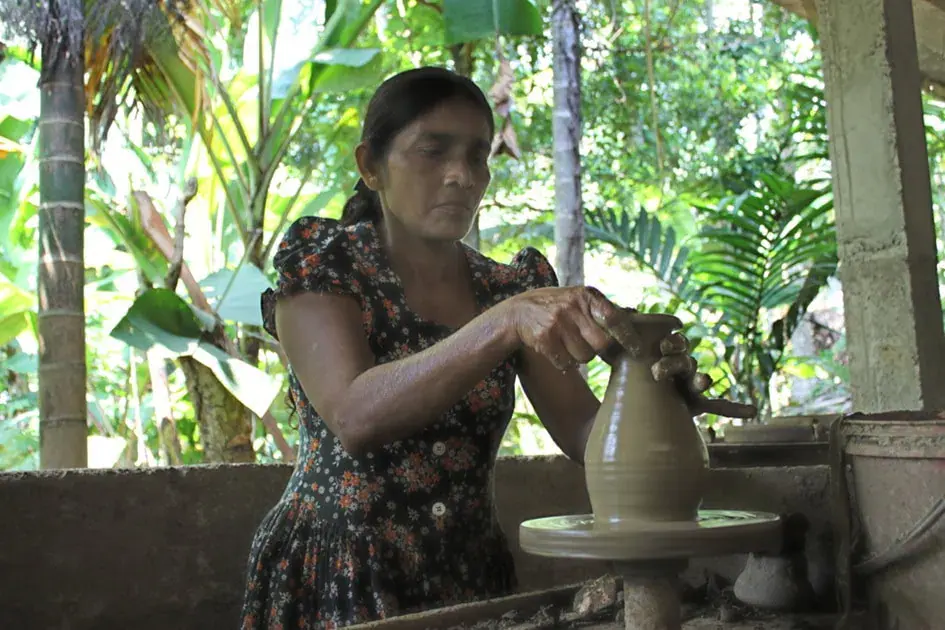
Traditional pottery (Photo: Denish C, CC BY-NC-ND 2.0)
Pottery is one of Sri Lanka’s oldest everyday crafts. Clay pots are still used for cooking in many homes, and some villages remain known for the work.
Kumbalgama, a small village just inland from Weligama, is one of them. Here, home-based potters welcome visitors into family workshops for sessions of around two hours. You’ll see how raw clay is prepared, watch the potter work, and then sit at the wheel yourself. Expect your first pot to wobble. Centring clay is harder than it looks, and the potter will usually step in to rescue it, which is part of the fun.
This is a natural fit for a south-coast stay, especially around Weligama, Mirissa, or Ahangama. It suits patient beginners, families, and anyone who enjoys tactile, messy work, and you don’t need any creative confidence for it.
Practical tip: Ask whether you’ll take home your own piece or one made by the potter, and how it will be fired.
Caveat: Freshly thrown clay must dry and be fired before it can travel, and one Weligama operator says this takes three to four weeks. On a short trip, you may leave with a finished piece made by your hosts rather than the pot you shaped.
4. Handloom Weaving: Discover How Textiles Take Shape
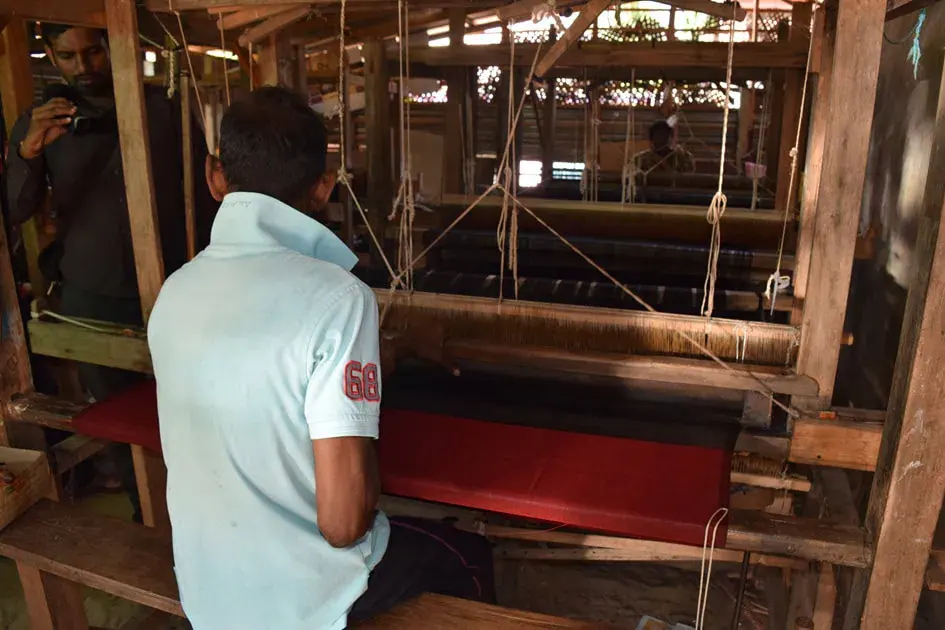
Handloom weaving (Photo: SL Trades and Crafts Documentation Project, CC BY-SA 4.0)
Handloom weaving is one of Sri Lanka’s longest-running crafts, and you’ll see its results everywhere, from sarongs to bedspreads to the cotton shawls sold in Colombo boutiques. During the Kandyan period, hereditary weavers in the Dumbara valley near Kandy produced patterned cloths for the royal court. Some families still weave today.
A visit is worthwhile for the sound and rhythm of the loom. Watching a weaver throw the shuttle, beat the weft into place and switch foot pedals to change the pattern shows you why hand-woven cloth costs more than machine-made fabric, and why no two lengths are quite the same.
Most handloom experiences are artisan visits rather than classes. You watch, ask questions, and sometimes get a short turn at the loom. Three options stand out:
- Kurunegala: Selyn, a fair trade handloom company at Wanduragala, runs a tour of its weaving workshop, natural dye house, and toy workshop, where offcuts become stuffed toys. Kurunegala sits roughly between Colombo and the Cultural Triangle, so it works as a stop on that drive.
- Around Kandy: Countryside craft tours near Pilimathalawa sometimes include a small weaving workshop alongside brass and drum makers. One operator notes that the weaving workshop does not run at weekends.
- Galle: Some Galle Fort hotels arrange behind-the-scenes handloom visits for guests.
Handloom suits travellers interested in textiles, ethical fashion, or how small rural enterprises work.
Practical tip: Plan weaving visits for weekdays. Many workshops operate on a normal working week, and the looms may sit idle on Sundays and public holidays.
5. Beeralu Lace-Making: Learn the Art of Bobbin Lace
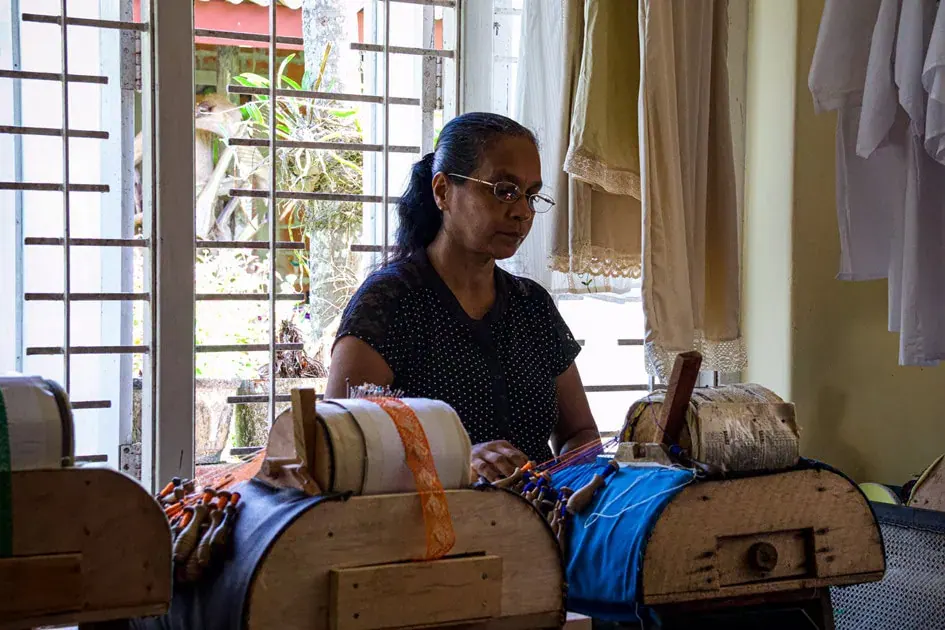
Weaving Beeralu Lace (Photo: Susan Barrow)
Beeralu is bobbin lace, and its story shows how Sri Lankan crafts absorb outside influence. The Portuguese introduced the technique in the 16th century, and the name comes from bilro, the Portuguese word for bobbin. Over the following centuries, it became a cottage craft of the Southern Coast, practised mainly by women in villages around Galle, Weligama, and Matara.
The process is mesmerising to watch. A pattern is drawn on paper and pinned to a firm, round cushion. The lace-maker then crosses and twists pairs of threads wound on small wooden bobbins, moving pins as the pattern grows. An experienced maker’s hands move fast enough that the bobbins click steadily. Even so, the work is slow: one source estimates around a week to make a metre of narrow lace.
You’ll usually experience Beeralu as an artisan visit. Small home workshops along the Galle–Matara coast, some with a sales table at the front, welcome visitors, and a few makers will let you try a few twists. You won’t learn to make lace in an hour, but you’ll understand why it is valued.
This suits patient, detail-minded travellers, and anyone staying on the South Coast who wants a quieter alternative to the beach.
Practical tip: Arrange the visit through your guesthouse or a local guide, who can find a maker who is working that day rather than just a shop selling lace.
6. Dumbara Ratā Kalāla: Explore UNESCO-Recognised Mat Weaving
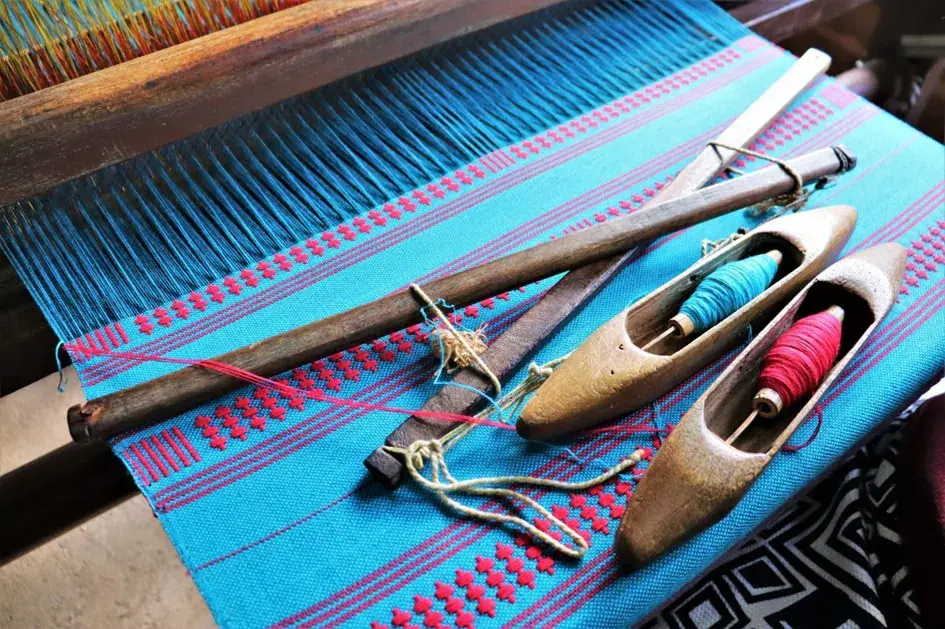
Dumbara Ratā Kalāla (Photo: Mahiru Fernando, CC BY-SA 4.0)
Dumbara Ratā Kalāla are patterned, hand-woven mats from the Dumbara valley in the Kandy District, and the only Sri Lankan craft on UNESCO’s Representative List of the Intangible Cultural Heritage of Humanity, inscribed in 2021. Today they are used mainly as wall hangings, tapestries, and cushion covers.
The kinnara community practises the craft in two villages, Kalasirigama and Alokagama. Historically, these families supplied ornamental mats to the royal palace as part of their service to the crown. The process is entirely manual. Fibre is drawn from the leaves of the hana plant (a type of agave) by scraping away the flesh, then washed, sun-dried, combed and coloured with herbal dyes. The mat is woven on a loom, with motifs worked in using a lath, a thin wooden strip with a hole at one end. Patterns are symbolic and recognisably geometric.
This is not a drop-in experience. The villages are working communities rather than visitor attractions, and there are no regular public classes. Some Kandy-based guides and specialist tour operators arrange visits to weavers or to artists who work with Dumbara designs, so ask about this when planning your time in the hill country.
It suits travellers with a strong interest in textiles or heritage, and anyone willing to arrange a visit in advance for something few tourists see.
Caveat: If you visit, you’re entering someone’s home and workplace. Buying a piece directly, or paying a fair fee for the weaver’s time, is the respectful way to say thank you.
7. Woodcarving: Observe Skilled Hand-Carving
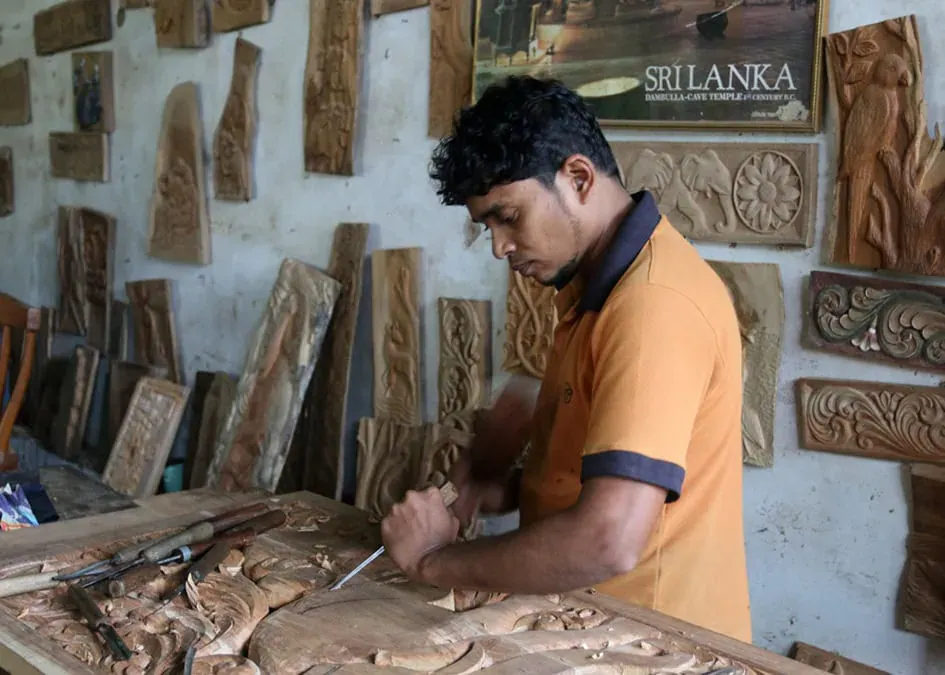
Wood carving (Photo: Denish C, CC BY-NC-ND 2.0)
Sri Lankan woodcarving reached a high point in the Kandyan period, and the best place to appreciate it is not a workshop but a temple. Embekka Devalaya, near Pilimathalawa outside Kandy, is known for its carved wooden pillars, covered in dancers, wrestlers, animals, and mythical creatures. Seeing these first gives you a reference point for the work you’ll find in craft shops.
Living woodcarving is mostly experienced as a demonstration or artisan visit. Carvers work in the villages around Kandy and in Ambalangoda, where woodcarving sits alongside mask-making. You’ll see blocks roughed out with chisels and mallets, then refined with smaller blades. If you want to carve yourself, the mask-carving workshops in Galle are the most practical hands-on option.
It suits travellers interested in temple architecture and traditional design, and those comparing quality before buying a carved piece.
Practical tip: Combine Embekka with a visit to nearby brass workshops near Pilimathalawa. The two make a satisfying half-day outing from Kandy.
Caveat: Ask what wood a carving is made from before buying. Some timbers are protected, and export rules can apply.
8. Laksha Lacquerware: Discover Colourful Decorative Techniques
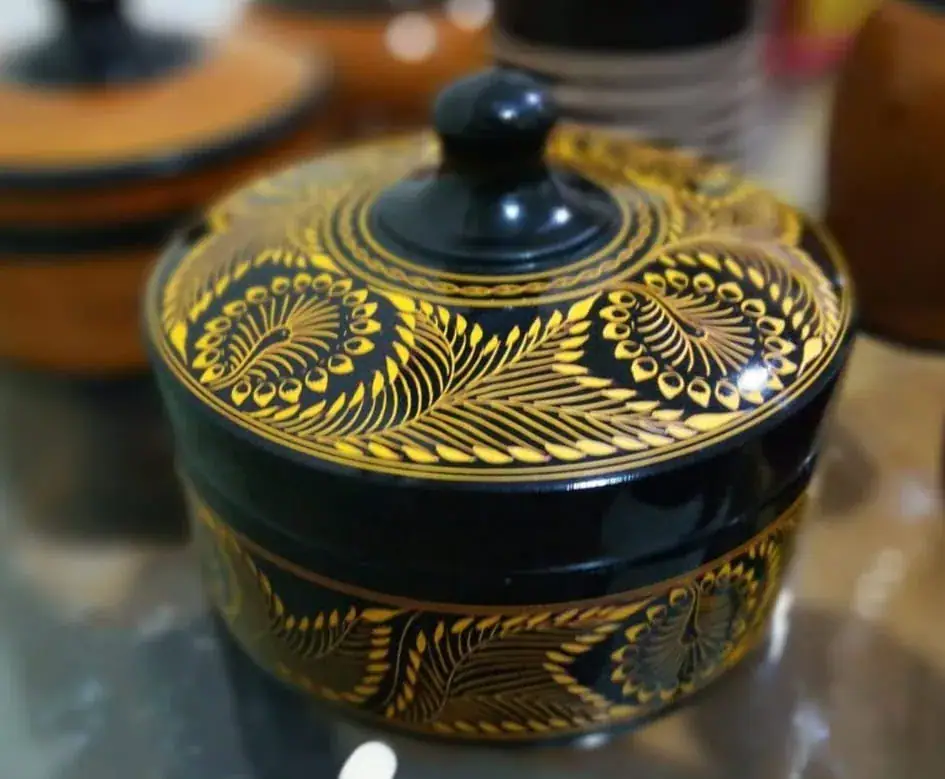
Laksha – Lacquerware (Photo: Chandan.S, CC BY-SA 4.0)
Laksha, or lacquerwork, is one of the most distinctive Sri Lankan handicrafts, and one of the least visited. Its bright bands of red, yellow, green, and black decorate walking sticks, boxes, ceremonial poles, and Kandyan drums. Traditional lac comes from a resin produced by a tiny insect.
What sets Sri Lankan lacquer apart is that no brush is used. In the best-known technique, called niyapoten veda or “fingernail work”, the craftsman warms lac, draws it out into fine threads and presses them onto a turning object, using the fingernail to cut and shape the pattern. A second method applies lac by friction while the object spins on a lathe.
Today the craft is largely concentrated in Hapuvida, a village in the Matale District, where families have practised it for generations. There is no established visitor programme. Arrange a visit in advance through a guide or local contact, and it works best on a drive between Kandy and the Cultural Triangle, since Matale lies on that route.
This suits travellers who enjoy rare techniques and want to see a craft that very few visitors encounter.
Practical tip: If you can’t arrange a visit, look for lacquered pieces at state-run craft outlets, then ask where they were made.
9. Palmyrah-Leaf Weaving: Practical Crafts of Northern Sri Lanka
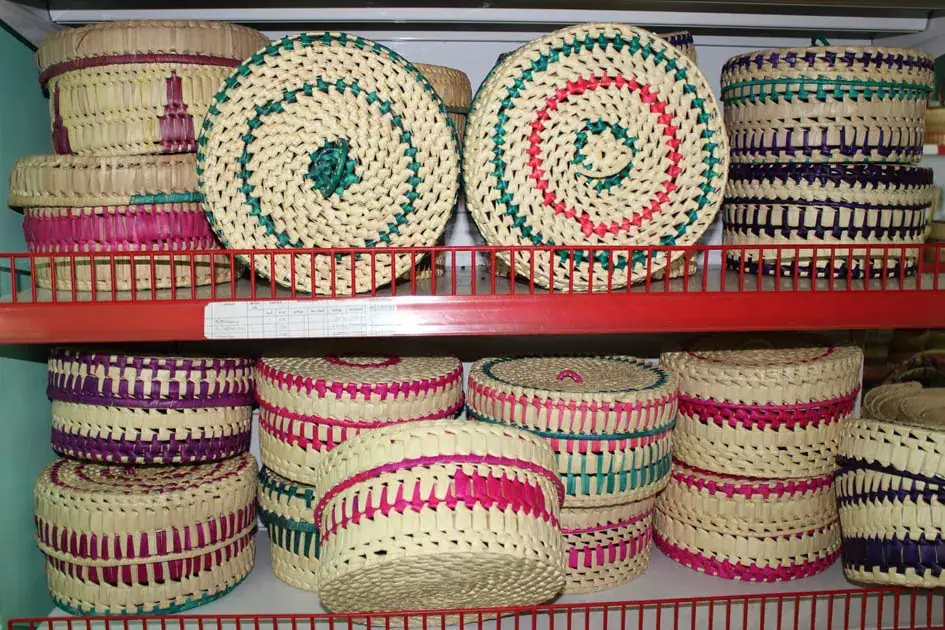
Palmyrah-Leaf Weaving (Photo: SL Trades and Crafts Documentation Project, CC BY-SA 4.0)
In the dry North, the palmyrah palm shapes daily life much as the coconut palm does in the South. Its leaves are woven into baskets, mats, hats, fans, and boxes, and in Jaffna you’ll still see whole fences made from overlapping leaves. Northern weaving tends to be tight and geometric, and the pale, sun-dried leaf gives finished pieces a distinctive look.
Palmyrah weaving is usually experienced as an artisan visit. Small producer groups around Jaffna, some supported by the national Palmyrah Development Board, weave and sell their work. There is no regular tourist class programme, so arrange any visit through your guesthouse or a Jaffna guide before you travel.
This suits travellers already heading north who want a craft encounter that feels firmly rooted in local life.
Caveat: Palmyrah products can become brittle and fade over time, so pack them carefully and keep them out of strong sunlight at home.
10. Coconut-Shell Crafts: Turning Everyday Materials into Objects
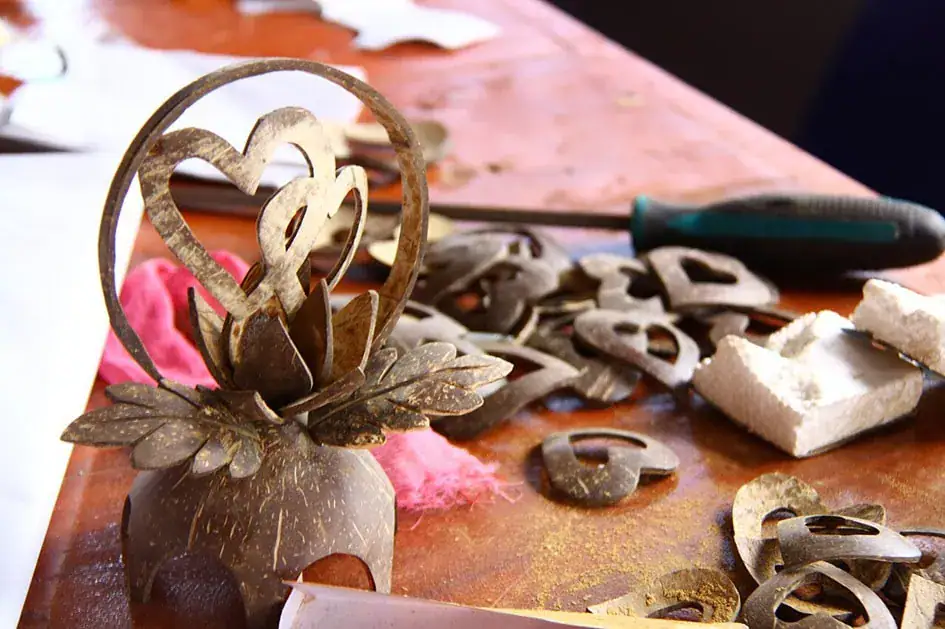
Coconut-Shell Crafts (Photo: SL Trades and Crafts Documentation Project, CC BY-SA 4.0)
Coconut shell is one of the most practical Sri Lankan craft materials. Craftspeople cut, sand, and polish shells into bowls, spoons, ladles, cups, and decorative pieces. The results are light, durable and easy to pack, which makes them popular take-home items.
This is the least formalised craft on this list. We couldn’t confirm a regular tourist workshop, so treat it as an “ask locally” experience. Village tours, community-based guesthouses and craft stalls on the South and West Coasts are the likeliest places to find someone willing to show you how it’s done.
It suits families and travellers on a budget, and anyone who enjoys seeing ordinary materials put to clever use.
Practical tip: Ask how a piece was finished. Some are oiled for kitchen use, while others are varnished and meant only for display.
11. Brasswork and Metal Engraving: Traditional Decorative Skills
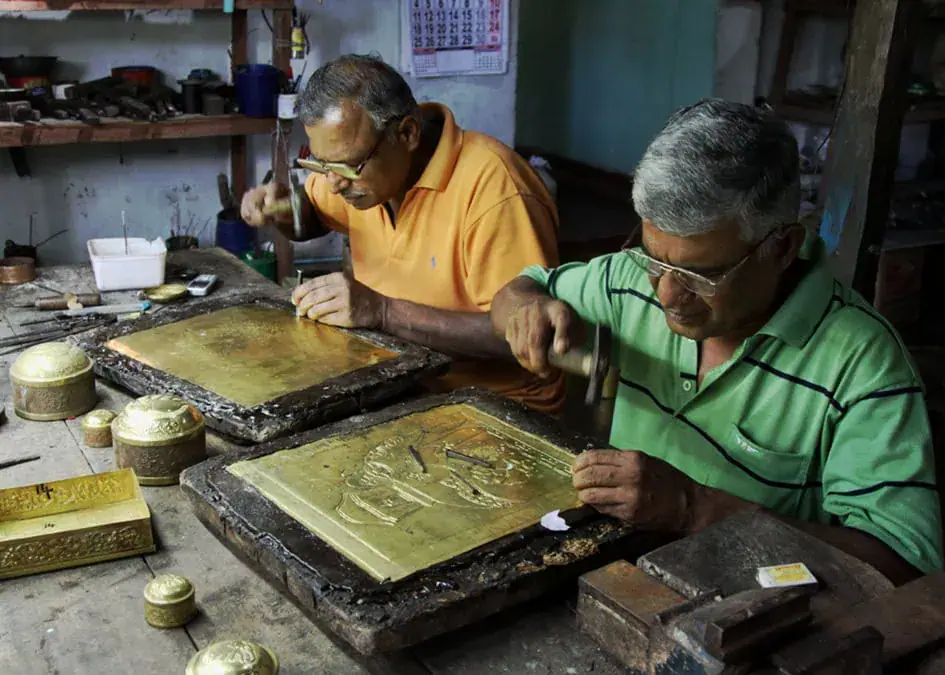
Sri Lankan metalsmiths (Photo: Denish C, CC BY-NC-ND 2.0)
Kandy has long been known for brassware: oil lamps, trays, bowls, betel boxes, and ornate ritual objects, often engraved with fine floral patterns. Artisans work brass in two main ways. Wrought pieces are hammered into shape, while cast pieces are made by pouring molten metal into clay moulds formed around a wax model.
Pilimathalawa, about 10 km from Kandy, is the best-known brass village, with family-run workshops along the road. Villages such as Nattarampota, closer to the city, are also home to brass workers and woodcarvers. Visits are demonstrations: you’ll watch engraving and finishing, then see a small showroom.
This suits travellers interested in temple objects and traditional design, and anyone looking for a solid, long-lasting purchase.
Caveat: Casting involves molten metal and intense heat, so stand where the artisan directs you. Large brass pieces are heavy, and some workshops can arrange shipping.
12. Knitting, Crochet and Contemporary Textile Classes
Knitting and crochet aren’t traditional Sri Lankan crafts in the way Beeralu or Dumbara weaving are. They belong here as contemporary craft activities, popular with local hobbyists and occasionally offered by small studios and creative spaces in Colombo.
We couldn’t confirm a current, regular class open to visitors, so this is firmly an “enquire in advance” option. Search for Colombo craft studios or community workshops close to your travel dates, and message them directly.
It suits experienced crafters with time in Colombo, and long-stay visitors looking for a creative social activity.
Best Places to Experience Traditional Crafts in Sri Lanka
Kandy and the Central Region
Kandy is the most varied base. Batik classes run here, and brass and woodcarving villages are a short drive away near Pilimathalawa. Dumbara weavers and the lacquer workers of Hapuvida, near Matale, are within reach but need arranging in advance.
Sigiriya and Habarana
Batik workshops near Habarana and Sigiriya offer the easiest hands-on craft in the Cultural Triangle. They fit neatly into a half-day between rock fortresses and wildlife safaris.
Ambalangoda and the Southern Coast
Ambalangoda is the centre of mask-making. The Ariyapala Mask Museum and nearby workshops are best for learning and watching, rather than carving yourself.
Galle, Koggala, and Weligama
This stretch offers the widest choice of hands-on options: mask carving and painting in Galle Fort, batik, pottery in Kumbalgama near Weligama, and Beeralu lace-makers along the coast road.
Jaffna and Northern Sri Lanka
Palmyrah weaving is the craft to seek out here, but only through pre-arranged visits.
Colombo and Contemporary Craft Studios
Colombo is better for shopping than learning traditional crafts. State-run craft outlets and design boutiques are useful for comparing quality, and contemporary studios may run occasional textile classes. Confirm availability directly.
How to Find an Authentic, Hands-On Experience
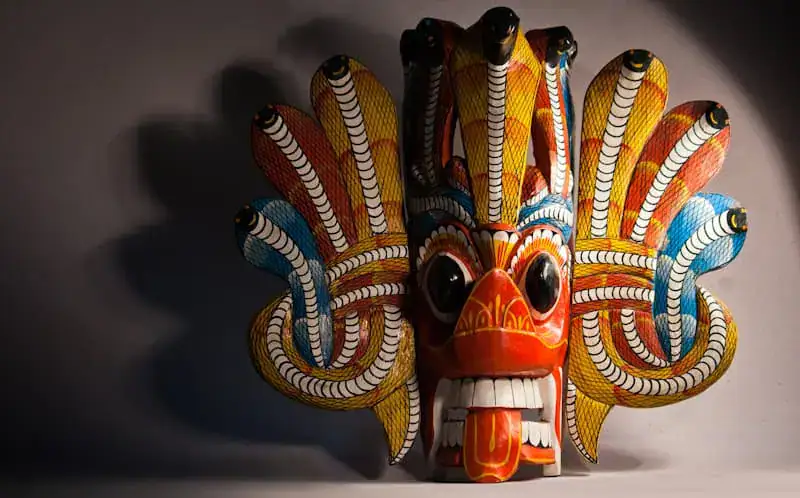
A Naga Raksha Mask (Photo: Dhammika Heenpella, CC BY-NC 2.0)
Before booking, ask:
- Will I make something myself, or mainly watch?
- Who teaches, and are they a practising artisan?
- How long does it last, and are materials included?
- Can I take my finished piece home that day?
- Is photography allowed?
- What is the cancellation policy?
If a “workshop” ends at a sales counter after twenty minutes, it was a demonstration. Buying from the maker is a good way to support the craft, but you shouldn’t feel obliged. If you do buy, pay a fair price rather than haggling hard over handmade work.
Practical Planning Tips for Travellers
Book a day or two ahead, since most workshops are small and family-run. English is usually fine in bookable classes, but village visits go better with a guide. Check minimum ages for anything involving hot wax, blades, or molten metal. Home workshops often have floor seating and uneven ground, so ask about access if mobility is a concern. Morning sessions avoid the worst of the afternoon heat. Prices vary widely, so check current rates directly. To get your work home, roll textiles flat in your luggage and wrap masks and pottery in clothing.
Adding Craft Experiences to a Sri Lanka Itinerary
In the Cultural Triangle, a batik class near Habarana makes an easy half-day. In Kandy, give batik or a brass and woodcarving outing its own morning. On the South Coast, pair Ambalangoda’s mask heritage with a Galle Fort workshop or Kumbalgama pottery. In the North, include palmyrah weaving only if it’s arranged in advance. Avoid squeezing sessions into long transfer days, because one unhurried workshop is usually worth more than three rushed ones.
Are you new to Sri Lanka? Read about the best Sri Lanka travel itineraries for your travel season and our complete travel guide for first-timers.
Frequently Asked Questions
Can tourists join craft workshops in Sri Lanka?
Yes. Batik, pottery, and mask carving or painting are widely available to book. Most other crafts are offered as visits or demonstrations.
Which Sri Lankan craft is best for beginners?
Batik. It’s forgiving and colourful, and you finish your piece in one session.
Where can I learn about traditional masks in Sri Lanka?
Ambalangoda, especially the Ariyapala Mask Museum. For hands-on carving or painting, look to Galle.
Can children join craft classes?
Often, yes, but minimum ages apply for wax, blades, and heat. Mask painting and pottery suit younger children best.
Can I take my finished craft home?
Batik and carved masks usually go home with you on the day. Pottery needs weeks to dry and fire so that you may take a finished piece made by your hosts instead.
Do I need to book workshops in advance?
Yes. Village and artisan visits especially need arranging beforehand.
Are all traditional craft centres open to tourists?
No. Government training centres and working craft villages are not attractions, so arrange visits through a guide.
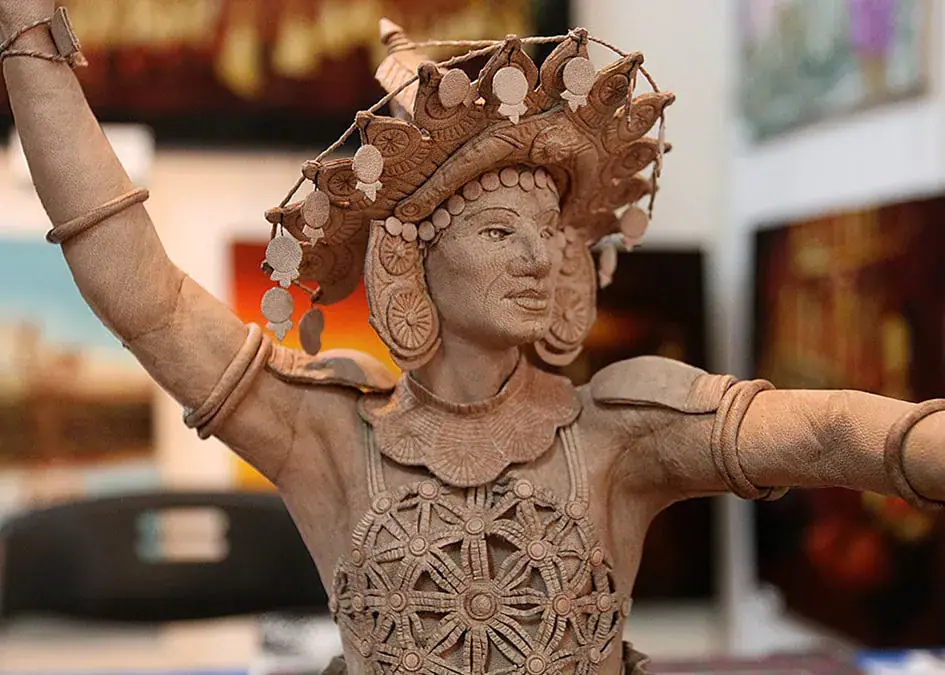
Leather Sculpture of Kandyan Dancer (Photo: Denish C, CC BY-NC-ND 2.0)
Final Thoughts: A More Personal Cultural Memory
You don’t need to try every craft on this list. The most rewarding approach is to pick one that fits your route naturally, such as batik near Kandy or Habarana, pottery near Weligama, or mask carving in Galle, and give it a relaxed morning rather than a rushed hour.
Craft workshops in Sri Lanka are at their best when you see the maker as a teacher. Ask questions, respect the time behind each piece, and buy directly when something speaks to you. Whatever you take home will carry the memory of the people and place behind it.
For more ways to shape your trip, explore our guides to things to do in Sri Lanka.
Map – Sri Lankan Crafts
Sources and References:
- Sri Lanka Tourism – Traditional Craftsmanship in Sri Lanka. Official tourism information on Sri Lanka’s traditional handicrafts, including batik, pottery, mask-making, handloom weaving and other artisan traditions.
- National Crafts Council of Sri Lanka – Crafts Training Project. Information on traditional craft training, artisan skills and craft centres across Sri Lanka, including pottery, woodcarving, weaving and regional handicrafts.
- UNESCO Intangible Cultural Heritage – Traditional Craftsmanship of Making Dumbara Ratā Kalāla. Authoritative documentation of Sri Lanka’s traditional Dumbara mat-weaving craftsmanship, its techniques, cultural significance and UNESCO recognition.
- Ariyapala Mask Museum – Traditional Sri Lankan Masks and Mask-Making. Information on Ambalangoda’s mask-carving heritage, traditional mask designs, cultural meanings and artisan craftsmanship.
- Selyn – Sri Lankan Handloom Craftsmanship. Information on Sri Lankan handloom textiles, artisan communities, fair-trade production and traditional weaving practices.
- Palmyrah Development Board – Sri Lanka. Institutional information relating to the palmyrah industry, traditional palmyrah products and associated livelihoods in Sri Lanka.
- Tripadvisor – Classes and Workshops in Galle District. Traveller reviews and visitor-experience listings covering craft activities, artisan workshops and hands-on cultural experiences in southern Sri Lanka.
Featured image: Brush painting batik in Sri Lanka (Photo: Peter van der Sluijs)

I am a Sri Lankan medical doctor who spends my free time travelling, exploring new destinations, and documenting the beauty of the island I call home. I have journeyed across almost every corner of Sri Lanka with my wife and daughter — from wildlife parks and misty mountains to ancient cities, deep forests, rugged landscapes, and quiet beaches.
Travel is not just a hobby for me — it’s a way of life. I love nature, enjoy road trips, and find joy in wildlife photography. I also read widely about tourism, travel trends, and destination culture. Through my writing, I aim to help travellers experience Sri Lanka through real stories, meaningful insights, and honest recommendations — the same way I explore it with my own family.