
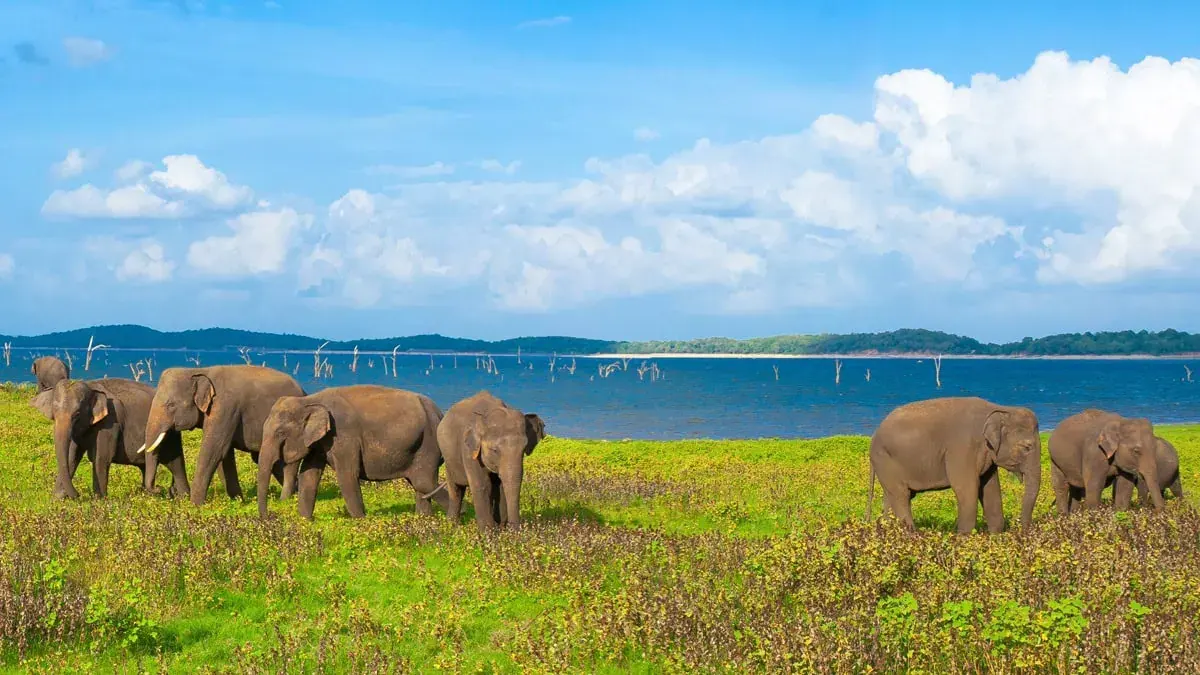

Introduction: Why Choose This 10-Day Nature & Wildlife Journey?
Ten days is enough time to see a surprising range of Sri Lanka’s wild landscapes, as long as you accept some long drives. This 10-Day Sri Lanka Nature & Wildlife Itinerary links four very different habitats: the dry-zone plains around Habarana, where wild elephants feed on reservoir edges; the cool Central Highlands, with cloud forest, grassland, and waterfalls; the open scrub of Udawalawe; and the lowland rainforest of Sinharaja, one of UNESCO World Heritage Sites in Sri Lanka.
What makes this route rewarding is the contrast. In a single week you move from hot plains to misty highlands, where a jumper feels sensible at dawn, and then down to steamy rainforest where the birds are often heard long before they are seen. Few countries let you change ecosystems this quickly by road.
The trade-off is honest and worth knowing from the start. Sri Lanka’s roads are slow, and this route has two heavy travel days: the drive from Habarana to Nuwara Eliya, and the final run from Sinharaja to the airport. The plan works because the nights are placed to absorb those journeys, not because the distances are short.
This is a year-round Sri Lanka itinerary built around balance, not a leopard-chasing safari marathon. You get two elephant safari opportunities, a highland hike, Ella’s hill walks and a guided rainforest day. If you are still comparing routes, browse the best Sri Lanka itineraries. First-time visitors may also find the Complete Sri Lanka Travel Guide useful before finalising plans.
10-Day Sri Lanka Nature & Wildlife Itinerary at a Glance
Title: 10-Day Sri Lanka Nature & Wildlife Itinerary: Safaris, Rainforests & Mountains
Route: Bandaranaike International Airport (BIA), Negombo, Habarana, Nuwara Eliya, Horton Plains, Ella, Udawalawe, Sinharaja (Kudawa/Weddagala side), returning to BIA
Total Duration: 10 days and 9 nights
Overnight Bases: Six: Negombo (1 night), Habarana (2), Nuwara Eliya (1), Ella (2), Udawalawe (1) and the Sinharaja area (2)
Theme: Nature & wildlife, elephant safaris, highland hiking, waterfalls and rainforest birdwatching
Wildlife Highlights: Two elephant safari opportunities (Habarana area and Udawalawe), Horton Plains’ montane grasslands and a guided Sinharaja rainforest walk
Transport: A private car with driver is the most practical option
Pace: Moderate to active, with early starts, one 9 km hike and two long travel days
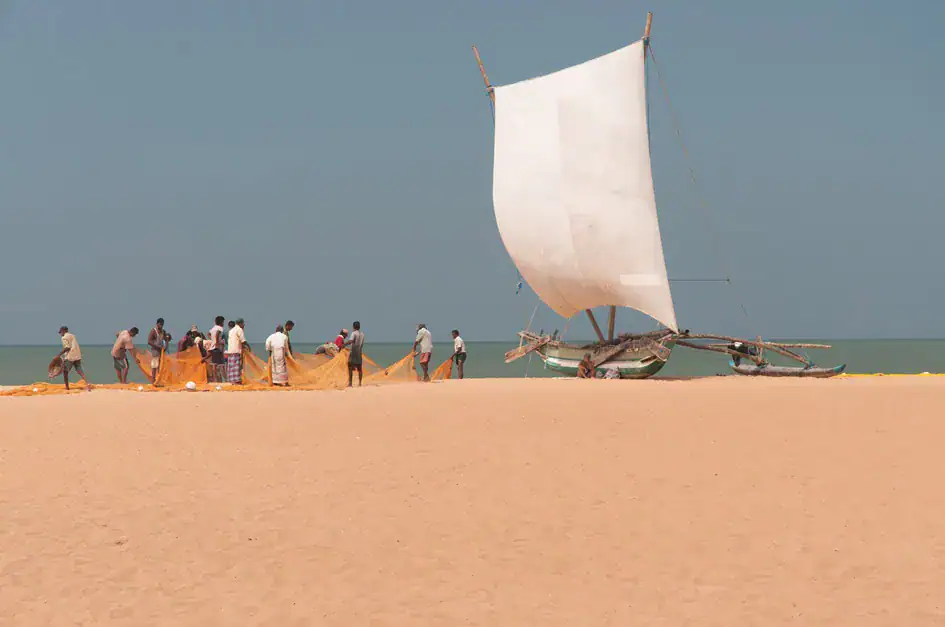
Traditional Fishermen – Negombo Beach (Photo: travelmag.com, CC BY 2.0)
Who This Itinerary Is Best For
This route suits travellers who want variety more than depth in any one place. It works especially well for:
- First-time visitors who want to see Sri Lanka’s wild side rather than its ancient cities
- Couples and friends who enjoy early mornings, walking, and time outdoors
- Birdwatchers keen to see dry-zone waterbirds and rainforest endemics on the same trip
- Photographers interested in elephants, mountain scenery, and misty forest light
- Moderately active travellers who can walk around 9 km on uneven ground at altitude
It is less comfortable for some travellers. Day 4 is a long drive on winding hill roads; Horton Plains involves a walk of about 9 km at more than 2,000 metres, and Sinharaja’s trails are muddy, humid, and often leech-filled. Travellers with limited mobility or a strong dislike of car journeys may find the pace tiring.
Families can follow this route if children are happy with long drives and a few hours of walking. With younger children, shorten the Horton Plains walk, choose a gentler Ella morning and consider adding a night to reduce the driving.
Route Map and Why This Route Works
The route forms a broad loop through the island’s interior. It heads northeast from the airport into the dry zone, climbs south into the hills, drops to the Udawalawe lowlands, then turns west into the wet zone before returning to the airport.
Habarana comes first because it sits close to three elephant areas: Minneriya National Park, Kaudulla National Park and Hurulu Eco Park. Two nights here give you flexibility, because your jeep driver can choose whichever park the herds are using at the time.
From Habarana, the road to the hills passes through Matale and Kandy. Here, Kandy is a transit corridor rather than an overnight stop. The city rewards a full day of cultural sightseeing, and a brief stop would only add traffic and fatigue to an already long drive. If you want to see it properly, add a night or start with our complete guide to Kandy.
Nuwara Eliya is the logical base for an early start at Horton Plains, and Ella is reachable from the park on the same day. From Ella, the road descends through Wellawaya to Udawalawe, then winds west across the southern foothills to the Kudawa side of Sinharaja.
You may notice that Yala National Park is missing. That is intentional. Adding Yala would mean losing a rainforest day or adding more driving, and the route would start to feel like a safari marathon. If leopards are your main goal, see the adaptation notes later in this guide.
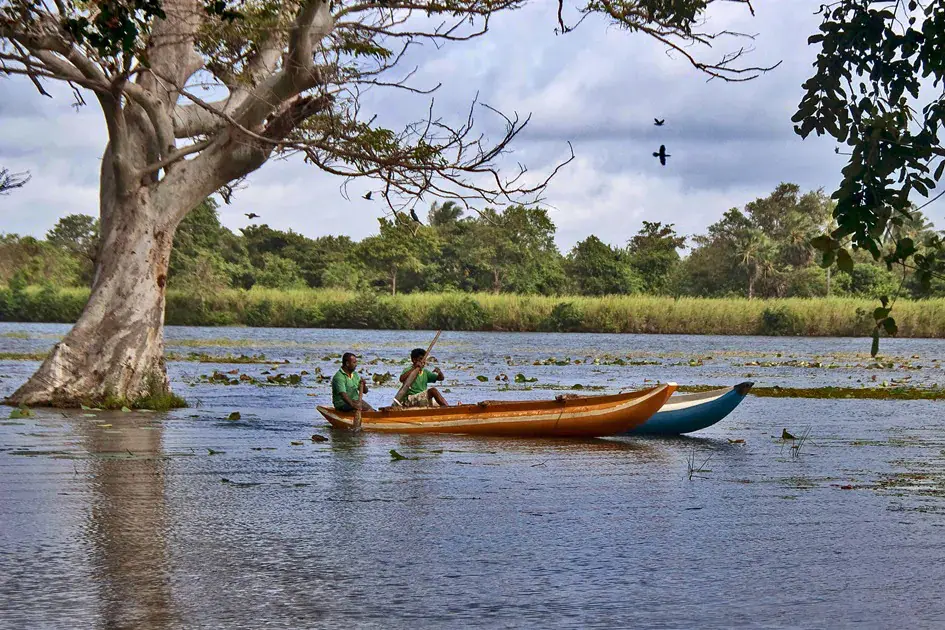
A lake in Habarana (Photo: Hafiz Issadeen, CC BY 2.0)
10-Day Route Snapshot
| Day | Journey/Area | Main Experience | Overnight |
| 1 | BIA to Negombo | Rest; optional lagoon or wetland birdwatching | Negombo |
| 2 | Negombo to Habarana | Transfer into the dry zone; optional short guided nature walk | Habarana |
| 3 | Habarana | Morning birdwatching; afternoon elephant safari (Minneriya, Kaudulla or Hurulu) | Habarana |
| 4 | Habarana to Nuwara Eliya | Long scenic drive via Matale, Kandy and Ramboda | Nuwara Eliya |
| 5 | Horton Plains, then Ella | World’s End and Baker’s Falls hike; drive to Ella | Ella |
| 6 | Ella | Little Adam’s Peak, Nine Arch Bridge, Ravana Falls viewpoint | Ella |
| 7 | Ella to Udawalawe | Descent to safari country via Wellawaya | Udawalawe |
| 8 | Udawalawe, then Sinharaja | Morning jeep safari; transfer to the Kudawa area | Sinharaja area |
| 9 | Sinharaja | Guided rainforest walk focused on endemic wildlife | Sinharaja area |
| 10 | Sinharaja to BIA | Departure transfer | Flight home |
Travel Times and Transport
Distances in Sri Lanka look modest on a map, but average speeds are low. Hill roads twist through tea estates, towns slow traffic, and heavy rain can cause delays or temporary closures on highland roads. Treat these times as planning ranges for a private car, not promises.
| Journey | Approximate Driving Time | Notes |
| BIA to Negombo | 30–45 minutes | Depends on hotel location and traffic |
| Negombo to Habarana | 3.5–4.5 hours | Mostly main roads; a lighter day |
| Habarana to Nuwara Eliya | 5–6 hours of driving; plan 6–8 hours door to door | Winding hill roads after Kandy |
| Nuwara Eliya to Horton Plains | 1–1.5 hours | About 32 km; leave before dawn |
| Horton Plains to Ella | 2.5–3.5 hours | Depends on the route your driver chooses |
| Ella to Udawalawe | 2.5–3 hours | Via Wellawaya; steep descent |
| Udawalawe to Sinharaja (Kudawa) | 3–4 hours | Rural roads; varies by lodge location |
| Sinharaja (Kudawa) to BIA | 3.5–4.5 hours | Plus check-in time; best for evening or late-night flights |
A private car with driver is the most practical way to follow this route. Public transport does not connect these nature areas well, and Horton Plains at dawn and the Sinharaja lodges are awkward to reach without your own vehicle. Safaris use local jeeps, which your driver or lodge can help arrange.
The itinerary assumes arrival and departure at BIA. The final day only suits evening or late-night flights; for earlier flights, see Day 10. For more on getting around, read our guide to transport in Sri Lanka.
Day-by-Day 10-Day Sri Lanka Nature & Wildlife Itinerary
Day 1: Arrive in Sri Lanka — Negombo Lagoon and Rest

Negombo Beach During Sunset (Photo: Nisal Rajapakshe, via Pexels)
Arrival
Arrive at Bandaranaike International Airport, about a 30–45-minute drive from Negombo. Meet your driver and head to your hotel. Negombo is a sensible first base because it saves you a drive through Colombo after a long flight.
Afternoon
If you arrived on an overnight flight, rest is the best use of the day. The trip ahead involves early starts.
If you land in the morning and feel fresh, a guided birdwatching boat trip on the Negombo Lagoon or in the nearby Muthurajawela Marsh is a gentle introduction to Sri Lanka’s wildlife. Muthurajawela is a large coastal wetland of mangrove channels and marsh, south of the lagoon. Herons, egrets, kingfishers, and cormorants are frequently seen. Go in the late afternoon, when the heat eases and birds become more active.
Evening
Take a short walk along Negombo beach, where traditional fishing boats are often pulled up on the sand, and keep the evening early.
Where to Stay
A beachfront hotel or guesthouse in Negombo
Find where to stay in Negombo.
Food Stop
Negombo is a fishing town, so seafood is the obvious choice. Try a rice and curry with fish or prawn curry.
Practical Notes
Only book a lagoon trip if your flight is on time and you feel up to it. Use sun protection and insect repellent on the water.
Day 2: Negombo to Habarana — Into the Dry Zone
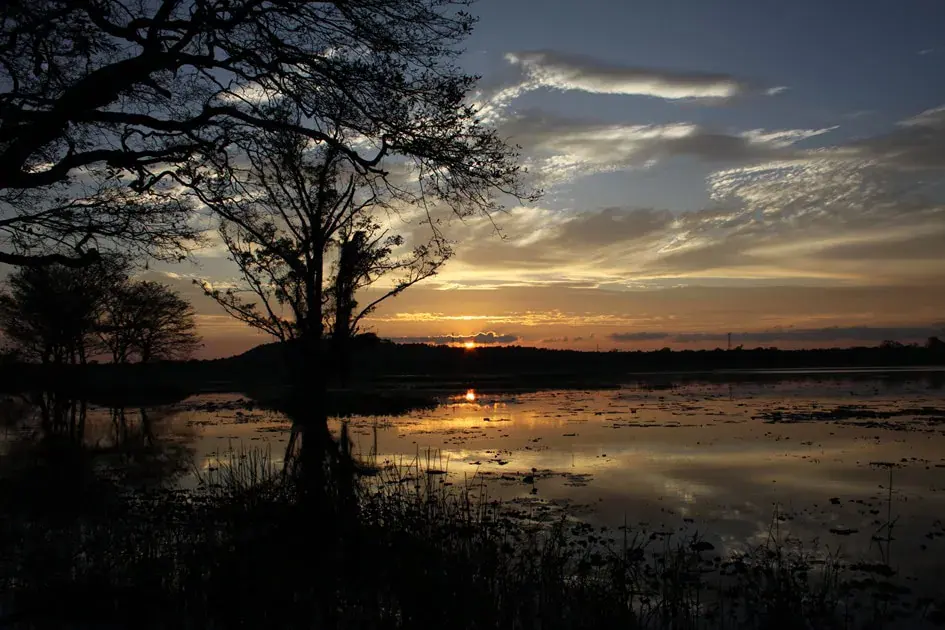
Sunset in Habarana (Photo: Terry Feuerborn, CC BY-NC 2.0)
Morning
After breakfast, head to Habarana. The drive takes about 3.5–4.5 hours. As you travel inland, coconut plantations and paddy fields gradually give way to drier scrub, large reservoirs, and forest. This is Sri Lanka’s dry zone, shaped by ancient irrigation tanks (reservoirs) that now support much of the region’s wildlife.
Afternoon
Check into your lodge and rest through the hottest part of the day. Many Habarana lodges sit on large grounds near forest or tanks, and birdlife is often visible without leaving the property.
Evening
If you have the energy, join a short guided birdwatching or forest-edge walk arranged by your lodge or a local naturalist. Bee-eaters, kingfishers and peafowl are common in this landscape.
Where to Stay
Habarana nature lodge, eco-lodge or guesthouse
Accommodation Guidance
Look for a property with good access to Minneriya, Kaudulla, and Hurulu, and with experienced staff who can help arrange reputable safari jeeps.
Food Stop
Stop on the road for a king coconut (thambili), sold at stalls across the country. It is a refreshing, naturally hydrating drink for a hot travel day.
Practical Notes
Wild elephants live around Habarana and often cross roads near dusk. Never walk unguided along forest edges, tank bunds, or roads after dark. Drink plenty of water, as the dry zone feels noticeably hotter than the coast.
Day 3: Habarana — Minneriya, Kaudulla, or Hurulu Elephant Safari
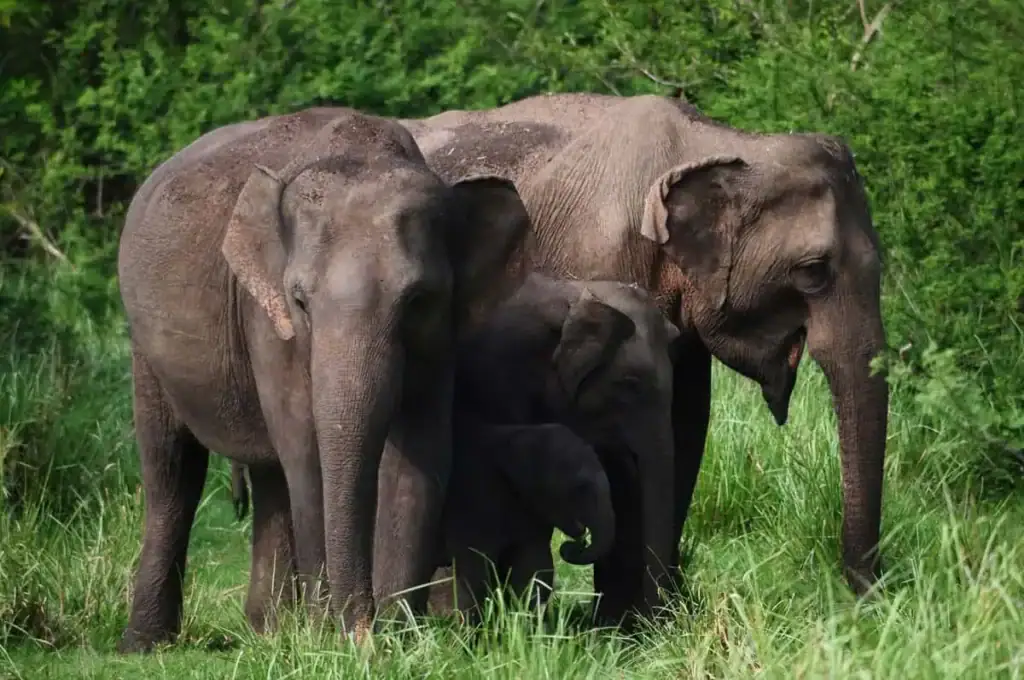
The Protection – An Elephant Family in Minneriya National Park (Photo: Ruchira Sanjeewa, CC BY-SA 4.0)
Morning
Start early with a relaxed guided birdwatching walk or a visit to a village tank near Habarana. Dry-zone reservoirs attract storks, herons, cormorants, and kingfishers. You may also see the Sri Lanka junglefowl, an endemic bird and the national bird of Sri Lanka. Return to your lodge for a late breakfast and rest.
Afternoon
The afternoon is for one of Sri Lanka’s best elephant experiences. Most Habarana safaris run by jeep in the afternoon, when elephants come out of the forest to feed and drink on open ground near the reservoirs.
The three main options are:
- Minneriya National Park: Famous for large concentrations of elephants on the grassy reservoir bed during the dry season, often called “The Gathering”
- Kaudulla National Park: Linked to Minneriya by an elephant corridor; herds often move here depending on water and grazing
- Hurulu Eco Park: A forest area managed by the Forest Department rather than the Department of Wildlife Conservation; often used when elephants disperse during wetter months
Choose the park based on current elephant movement rather than reputation. Herds move between these areas depending on rainfall, water levels, and grazing, and local drivers know where elephants have been seen recently. Large herds are common in some seasons, but no sighting is guaranteed.
On a good day, you may watch family groups feeding, calves staying close to their mothers, and older elephants dusting themselves with soil. Learn more about elephants in Sri Lanka before your safari.
The opening hours for Minneriya and Kaudulla National Parks and Hurulu Eco Park are 6:00 am to 6:00 pm daily.
Evening
Return to your lodge and have an early night. Tomorrow is a long drive.
Where to Stay
The same accommodation
Food Stop
In the dry zone, look out for buffalo curd (meekiri) served with kithul treacle, a syrup from the kithul palm. It is a simple, much-loved Sri Lankan dessert.
Practical Notes
Book through your lodge or a reputable operator. Bring a hat, sunscreen, water, and binoculars. Elephant rides are offered in the Habarana area; skip them, as watching elephants in the wild is the ethical choice.
Day 4: Habarana to Nuwara Eliya — Tea Country and Ramboda Falls
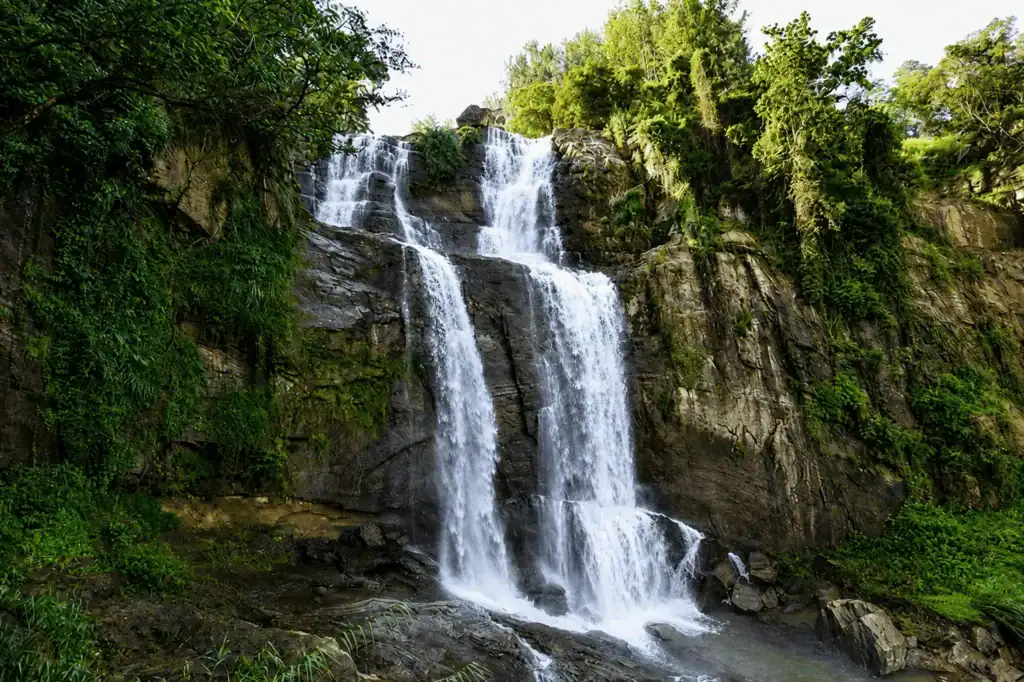
Ramboda Falls (Photo: Nalaka Priyantha)
Morning
Leave Habarana soon after breakfast. Today is a travel day, not a sightseeing day. The route runs south through Dambulla and Matale to Kandy, then climbs past Ramboda towards Nuwara Eliya. Allow around six to eight hours door to door, including a few short stops. Traffic around Kandy, roadworks, and weather can all stretch that figure.
After Kandy, the landscape changes quickly. The road climbs in tight bends, the air cools, and tea bushes cover the slopes in neat rows.
Afternoon
If time and conditions allow, stop briefly at the Ramboda Falls viewpoint beside the main road. The viewpoint is enough; there’s no need to go all the way to the base. Several tea factories along this stretch welcome visitors, and a short tea-tasting stop breaks up the climb well. Learn more about Ceylon tea from leaf to cup. If you are running late or feeling tired, skip both stops. Arriving in daylight matters more.
Evening
Nuwara Eliya sits at about 1,900 metres, and evenings are cool. Have an early dinner, lay out warm layers and get to bed early. Tomorrow’s alarm will be well before dawn.
Where to Stay
Nuwara Eliya guesthouse, small hotel, or colonial-era bungalow
Accommodation Guidance
Check that rooms have hot water and enough blankets, because older buildings can feel chilly at night. Ask whether the hotel can prepare a packed breakfast for an early departure.
Food Stop
Order a pot of fresh highland tea. The hills around Nuwara Eliya grow many of Sri Lanka’s vegetables, so a simple vegetable curry or soup at dinner is often good here.
Practical Notes
The bends after Kandy can cause motion sickness, so take medication beforehand if you need it. Highland roads are sometimes affected by landslides after heavy rain, so ask your driver to check conditions before leaving.
Day 5: Horton Plains, World’s End, and Baker’s Falls — Continue to Ella
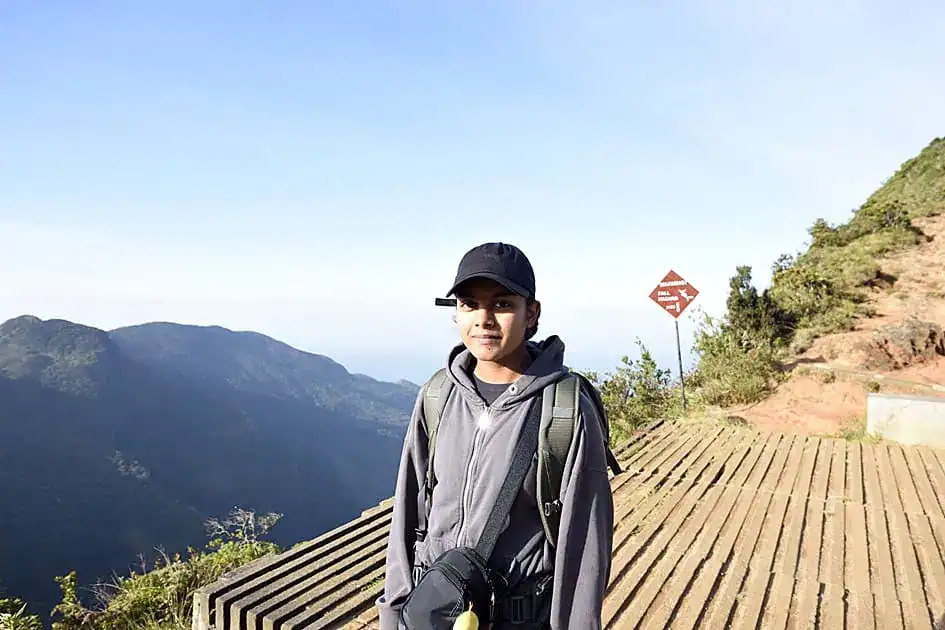
My daughter, Nethuli at Mini World’s End, Horton Plains National Park (Photo: Nalaka Priyantha)
Morning
Leave Nuwara Eliya around 5 am for the drive of about 32 km to Horton Plains National Park. The plateau lies at over 2,000 metres and forms part of the Central Highlands of Sri Lanka World Heritage Site. Arriving at opening time gives you the best chance of clear views, because cloud often rolls up the escarpment from mid-morning.
The main walk is a loop of about 9 km from the visitor centre and usually takes three to four hours. It crosses open grassland, enters patches of stunted cloud forest draped in moss and lichen, and reaches the edge of the plateau. The highlight is World’s End, where the land drops away sharply towards the southern lowlands. On a clear morning, the view stretches a long way south; on a misty one, you may see only white cloud, so go with flexible expectations.
The loop also passes Baker’s Falls, a broad cascade set among forest. Sambar deer are often seen grazing early in the day, and the park is known for highland birds, including several endemic species.
Horton Plains National Park opens between 6:00 am and 6:00 pm daily.
Afternoon
After the walk, continue by road to Ella, a drive of roughly two and a half to three and a half hours. Avoid adding extra sightseeing. Arriving with time to rest makes Day 6 much more enjoyable.
Evening
Settle into Ella, where relaxed cafés and restaurants are within walking distance of most guesthouses.
Where to Stay
Ella guesthouse, boutique hotel, or hillside lodge
Read more about Ella.
Accommodation Guidance
Properties outside the town centre often have better views and quieter nights, but check whether a tuk-tuk can reach the door.
Food Stop
In Ella, try kottu roti, the chopped flatbread stir-fry that has become a Sri Lankan street-food staple.
Practical Notes
Bring a warm layer, a rain jacket, water, and snacks. Polythene and plastic bags are restricted in the park, and bags may be checked at the entrance, so pack food in reusable containers. At World’s End, keep well back from the edge. Confirm current entry rules with the Department of Wildlife Conservation or your driver before you travel.
Day 6: Ella — Little Adam’s Peak, Nine Arch Bridge, and Ravana Falls
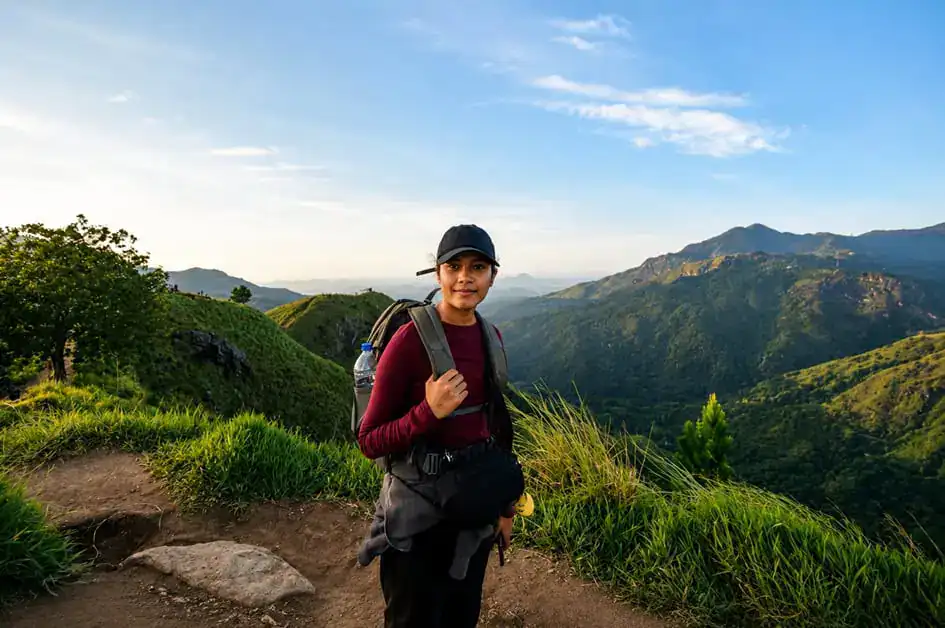
Nethuli at Little Adam’s Peak, Ella (Photo: Nalaka Priyantha)
Morning
Start early to avoid the heat and the crowds. Little Adam’s Peak is the most accessible of Ella’s hikes, taking roughly 45 minutes to an hour each way from town. The path is gentle through tea estates, and only the last stretch is steep and stepped. The summit looks over the Ella Gap, with Ella Rock rising across the valley.
Afterwards, continue to the Nine Arch Bridge, a colonial-era railway viaduct that curves across a forested ravine. Many people walk there along local paths through tea and woodland; others follow the railway line from Ella station. If you use the tracks, stay alert. Trains are infrequent and often late, and some sections leave little space to step aside. Your guesthouse can point you to safer paths to the viewpoints above the bridge.
Trails – Little Adam’s Peak:
Trails – Nine Arch Bridge:
Afternoon
Rest during the hottest hours. Later, take a tuk-tuk to Ravana Falls, a tall waterfall beside the Ella–Wellawaya road about 6 km from town, at its most impressive after rain. Enjoy it from the roadside viewing areas; climbing on wet rocks or swimming in the pools is not safe. A relaxed walk through the tea estates around Ella is a fine alternative.
More Demanding Alternative: Ella Rock
Experienced walkers may prefer Ella Rock to Little Adam’s Peak. It is a harder hike of around four to five hours return, with a steep, hot final climb and many unmarked paths. A local guide is strongly recommended. Treat it as a replacement for the morning walk, not an extra, especially the day after Horton Plains.
Trails – Ella Rock:
- AllTrails Map – Ella – Ella Rock (9.5 km)
- AllTrails Map – Ella Rock Trail (5.6 km)
- AllTrails Map – Amba to Ella via Ella Rock (9.3 km)
Where to Stay
The same accommodation
Food Stop
Try hoppers, bowl-shaped rice-flour pancakes often served with an egg cooked into the base and a spicy sambol.
Practical Notes
Carry water and sun protection, wear shoes with good grip, and take a torch for a sunrise hike. For more ideas, see our guide to hiking and trekking in Sri Lanka.
Day 7: Ella to Udawalawe — From Mountain Valleys to Safari Country
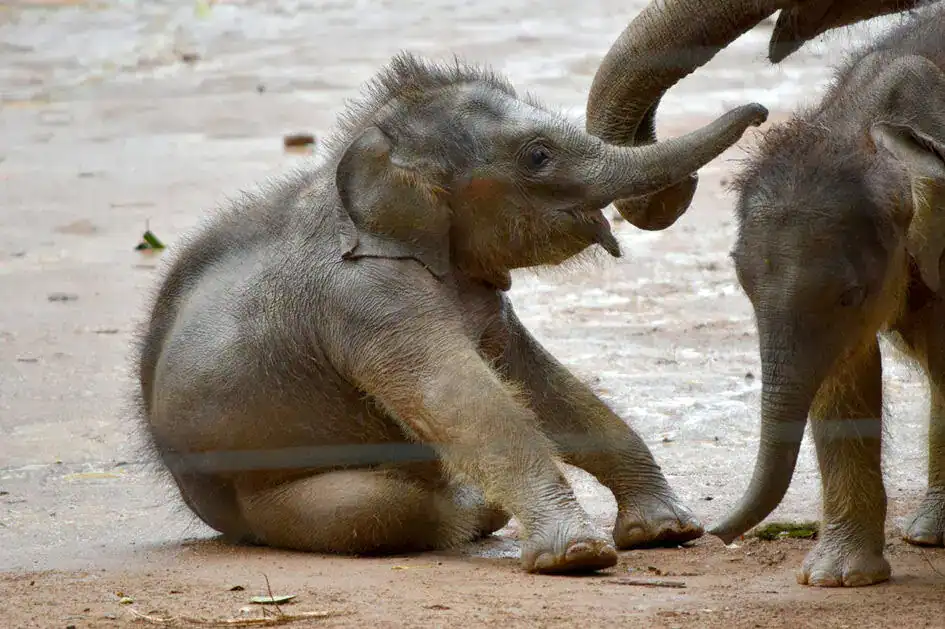
Baby Elephants in Udawalawe Elephant Transit Home (Photo: Andrew Currie, CC BY-SA 3.0)
Morning
Enjoy a slow breakfast before setting off for Udawalawe, about two and a half to three hours away. The road drops steeply through the Ella Gap towards Wellawaya, passing Ravana Falls; if you missed it yesterday, stop briefly at the roadside. Within an hour, cool terraced slopes give way to hot lowland scrub.
Afternoon
Check into your accommodation and rest. If timing works, visit the Elephant Transit Home beside the national park. Set up by the Department of Wildlife Conservation, it cares for orphaned elephant calves. It prepares them for release into the wild. Visitors watch scheduled feeding sessions from a viewing area. Feeding times have commonly been listed as 9 am, 12 pm, 3 pm, and 6 pm, but confirm the current schedule locally.
Unlike places that offer rides or bathing sessions with captive elephants, the Elephant Transit Home deliberately limits contact between visitors and calves. Hence, the calves stay wild enough to survive once released.
Elephant Transit Home Opening Hours: 8:30 am – 6:30 pm every day
Read about Elephant Orphanages in Sri Lanka: Pinnawala vs Udawalawe – Which Should You Visit?
Evening
Have a quiet evening at your lodge. Tomorrow’s safari begins early.
Where to Stay
Udawalawe safari lodge, tented camp, or guesthouse
Accommodation Guidance
Stay close to the park entrance to make the early start easier. Many lodges here can arrange safari jeeps.
Food Stop
Look out for wood apple juice, made from a hard-shelled dry-zone fruit with a sweet, tangy, slightly earthy flavour.
Practical Notes
At the Elephant Transit Home, follow staff instructions and keep noise to a minimum. Confirm your safari jeep the night before.
Day 8: Udawalawe Morning Safari — Continue to Sinharaja
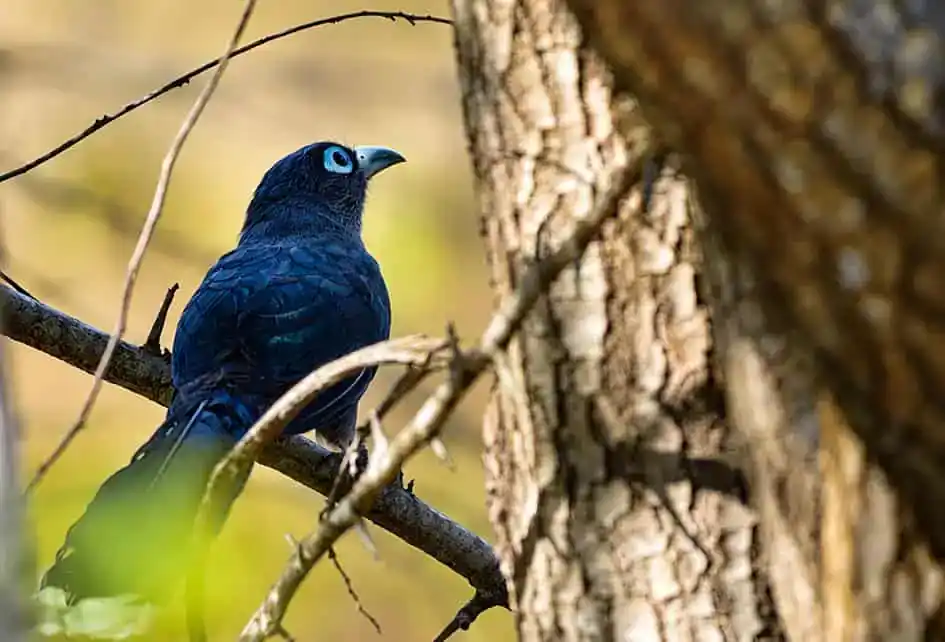
Blue-faced Malkoha – Udawalawe National Park (Photo: Nalaka Priyantha)
Morning
Arrive at the Udawalawe National Park gate at 6 am, when wildlife is often active, and the light is softer. A morning jeep safari usually lasts around three hours.
Udawalawe surrounds a large reservoir and is mostly open grassland and scrub, with the highlands often visible on the horizon. The open landscape makes it one of Sri Lanka’s most dependable parks for elephants, and family herds are seen on many safaris, though sightings are never guaranteed. Spotted deer, water buffalo, crocodiles, peafowl, and birds of prey are also frequently seen.
Udawalawe National Park Opening Hours: 6:00 am – 6:00 pm every day
Afternoon
After a late breakfast, drive west to the Kudawa side of the Sinharaja Forest Reserve, around three to four hours on winding rural roads. Dry scrub slowly gives way to paddy fields, rubber, and tea smallholdings and, finally, dense forest on steep hillsides.
Evening
Arrive, unpack and listen to the forest around you. An early night suits tomorrow’s start.
Where to Stay
Rainforest lodge, eco-lodge, or guesthouse near Kudawa or Weddagala
Accommodation Guidance
Sinharaja has several access points, and they are far apart by road. Check that your lodge is near the Kudawa entrance. A lodge described simply as “near Sinharaja” may be on the Deniyaya side, hours away.
Food Stop
Rural lodges in this area often serve home-style rice and curry with local greens, and jackfruit when in season.
Practical Notes
Book the safari jeep the day before, and travel to Sinharaja in daylight, as the roads are narrow and winding.
Day 9: Sinharaja Rainforest — Guided Nature Walk and Endemic Birds
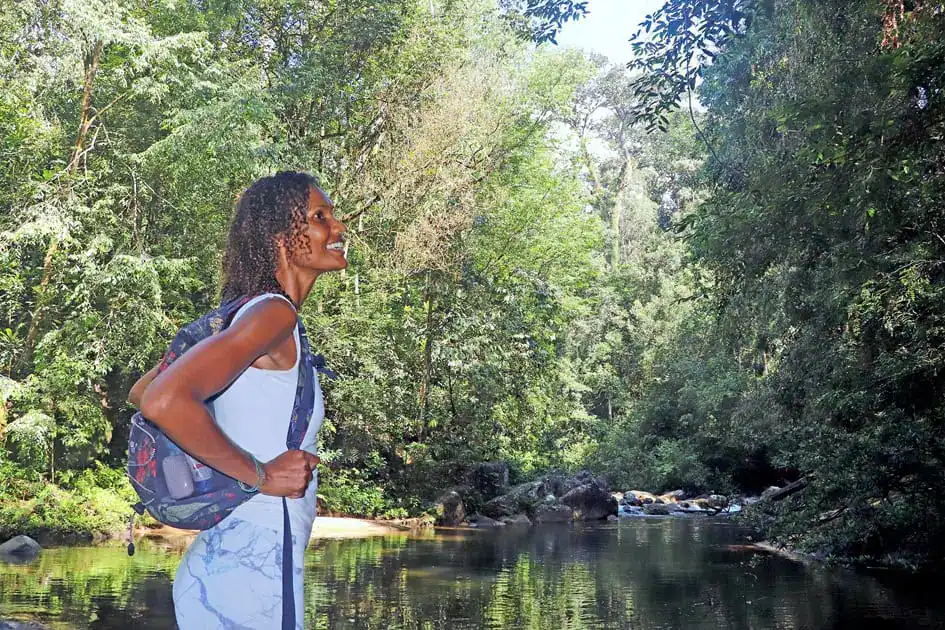
Enjoying the beauty of Sinharaja Forest (Photo: Andreas, CC BY-NC-ND 2.0)
Morning
Today is all about the rainforest. Sinharaja Forest Reserve is Sri Lanka’s best-known remaining area of lowland tropical rainforest and a UNESCO World Heritage Site. At the Kudawa entrance, you enter on foot with a licensed guide. A walk often lasts two and a half to four hours. Start as early as the gate allows.
Wildlife watching here works differently from a safari. The forest is dense and often dim, so guides listen for calls and watch for movement in the canopy. A Sinharaja speciality is the mixed-species bird flock, where many birds move through the forest together, and several species can come into view at once. Endemic birds recorded here include the Sri Lanka blue magpie, red-faced malkoha, and Sri Lanka grey hornbill. Your guide may also point out lizards, frogs, butterflies, and unusual plants. Ask for a guide with birding experience if birds are your priority.
Sinharaja Rainforest opening hours: 6:00 am – 6:00 pm every day (Ticket counters close at 4:30 pm).
Afternoon
Return to your lodge and rest. If you still have energy, take a gentle walk near the lodge with a local guide. A quiet afternoon on a veranda is often rewarding too, as birds are common around many lodges.
Evening
Some lodges offer short guided night walks to look for frogs and other night-time wildlife. Join one only with an experienced guide.
Where to Stay
The same accommodation
Food Stop
Try kola kanda, a herbal porridge made from green leaves and coconut milk, if your lodge serves it.
Practical Notes
Wear long trousers, closed shoes and leech socks, which are often sold at the ticket counter. Carry a rain jacket even on sunny mornings, plus water and snacks. Trails are uneven and can be muddy and slippery.
Day 10: Sinharaja to Bandaranaike International Airport — Departure
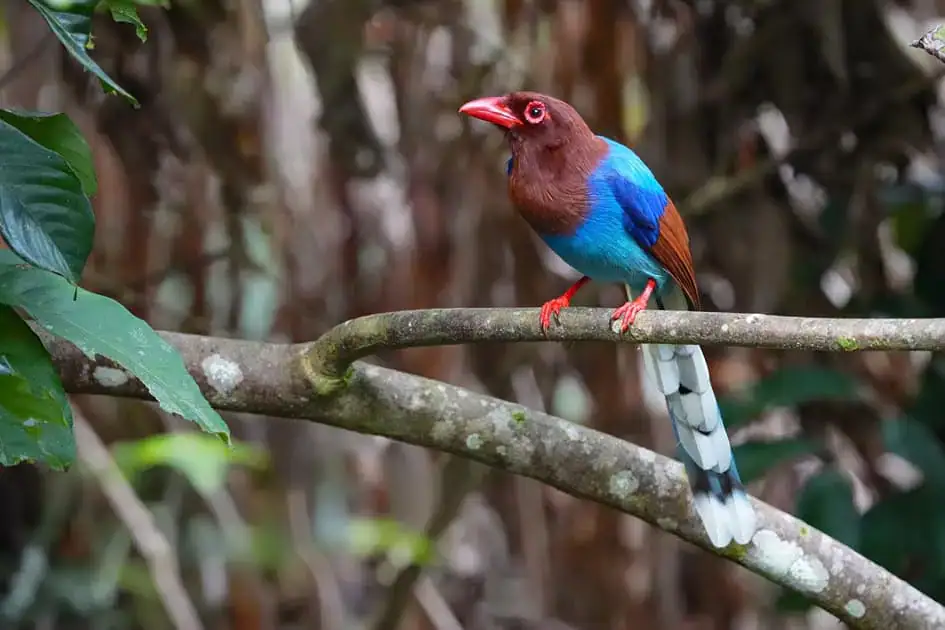
Sri Lankan Blue Magpie (Photo: Thomas Landgren, CC BY-NC-ND 4.0)
Morning
Enjoy a final breakfast, then begin the drive to the airport. Plan on roughly three and a half to four and a half hours or more on the road, depending on your lodge’s location, traffic around Colombo and the weather, plus time for check-in.
Which Flights Suit This Plan
This final day works for evening or late-night flights only. If your flight leaves in the morning or early afternoon, move your ninth night to an airport-side base such as Negombo. The trade-off is clear: you either shorten Sinharaja to one night and a single morning walk, or face a long drive straight after the forest walk on Day 9. Both are better than a stressful pre-dawn dash to the airport.
Practical Notes
Ask your lodge for a packed lunch, keep your passport and essentials in your hand luggage, and expect delays approaching Colombo.
Where to Stay Along the Route
Choose accommodation by location first and comfort second. On this route, the right location saves time and stress. In Negombo, stay near the beach for easy restaurants and a quick departure. In Habarana and Udawalawe, nature lodges close to the parks make safari starts easier. In Nuwara Eliya, warmth and hot water matter more than views for a one-night stop. Ella offers the widest choice, from town guesthouses to quieter hillside lodges. Near Sinharaja, simple rainforest lodges are the norm, so confirm that yours is on the Kudawa side. For more help, see our guide to where to stay in Sri Lanka.
Best Time to Follow This Nature & Wildlife Itinerary
This route works year-round, but no single month is perfect for every stop. Sri Lanka has two main monsoons that affect different regions at different times. The Southwest Monsoon, roughly May to September, brings rain to the Southwest, including Sinharaja and the western highland slopes. The Northeast Monsoon, roughly December to February, mainly affects the North and East. The inter-monsoon periods, around March to April and October to November, often bring afternoon thunderstorms across much of the island.
- Habarana elephants: Herds tend to concentrate around shrinking reservoirs at Minneriya and Kaudulla in the drier months and disperse into surrounding forest, including Hurulu, when rain returns.
- Horton Plains: Clear views are never certain. Mornings are generally clearer early in the year, and mist tends to be heavier around the middle of the year.
- Udawalawe: Elephants are seen in all seasons, making it a reliable part of the route year-round.
- Sinharaja: It’s a wet rainforest year-round. Drier spells, especially early in the year, make walking easier, but expect rain whenever you go.
For more detail, see the best time to visit Sri Lanka and weather in Sri Lanka.
Safaris in Sri Lanka: What to Expect on This Route
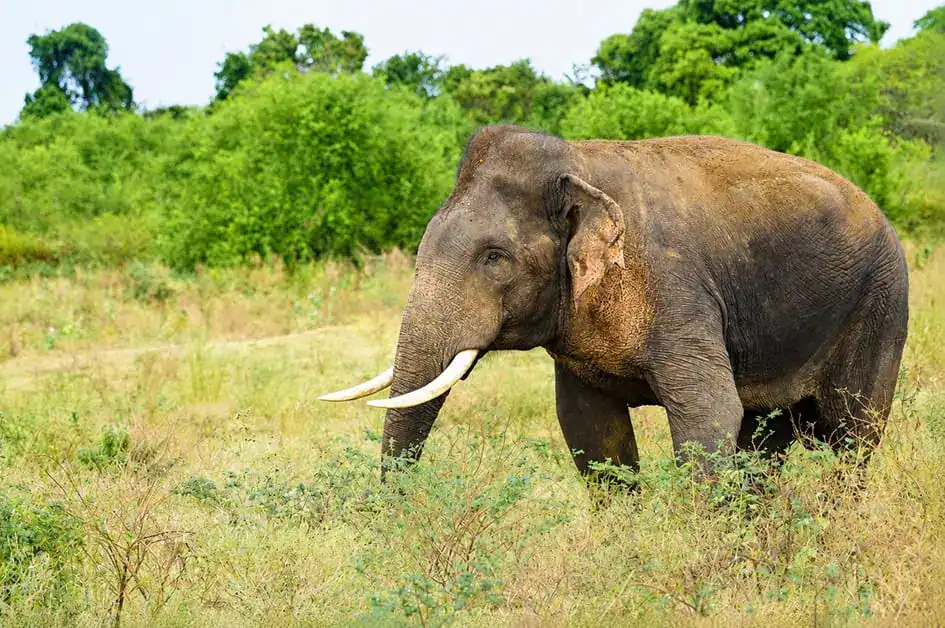
A tusker – Udawalawe National Park (Photo: Nalaka Priyantha)
The two safari areas offer different experiences. Around Habarana, elephant viewing depends on where the herds are at the time. In good conditions, large numbers gather on open reservoir grasslands, and the scale can be remarkable. Choosing between three parks is a strength, but it means relying on local knowledge.
Udawalawe is more consistent. Its open grassland and scrub make elephants easier to see, and it depends less on seasonal concentrations. A morning here complements a Habarana afternoon well. Leopards occur in some of these areas but are rarely seen, so don’t plan around them.
Safaris here are by open-sided jeep, usually for around three hours. In popular periods, many jeeps may gather around the same elephants. A good driver keeps a respectful distance, switches off the engine while you watch and never blocks an animal’s path. Read more about wildlife safaris in Sri Lanka and the country’s national parks.
Hiking, Waterfalls and Rainforest Walks
The walks are manageable for most reasonably fit travellers, but they vary:
- Horton Plains loop (about 9 km): Moderate. Mostly gentle, but rocky, sometimes wet and at high altitude
- Little Adam’s Peak: Easy to moderate. Short, with a steeper final section
- Ella Rock: Moderate to challenging. Long, hot, and hard to navigate without a guide
- Sinharaja guided walk: Moderate. Humid, muddy, and uneven, but at a slow birding pace
Wear trail shoes or lightweight walking boots with good grip; sandals are not suitable for Horton Plains or Sinharaja. Pack a rain jacket for every walk. Leeches are common in Sinharaja and can appear on wet highland trails too. They are harmless but unpleasant, and leech socks plus regular checks make a big difference.
Waterfalls on this route, including Ramboda, Baker’s, and Ravana Falls, are best enjoyed from viewpoints. Rocks are slippery, and currents can be stronger than they look. If a walk feels too demanding, choose a shorter there-and-back walk at Horton Plains, a tea-estate stroll in Ella or a forest-edge walk near your Sinharaja lodge. See more waterfalls and natural wonders in Sri Lanka.
Food and Local Experiences Along the Journey
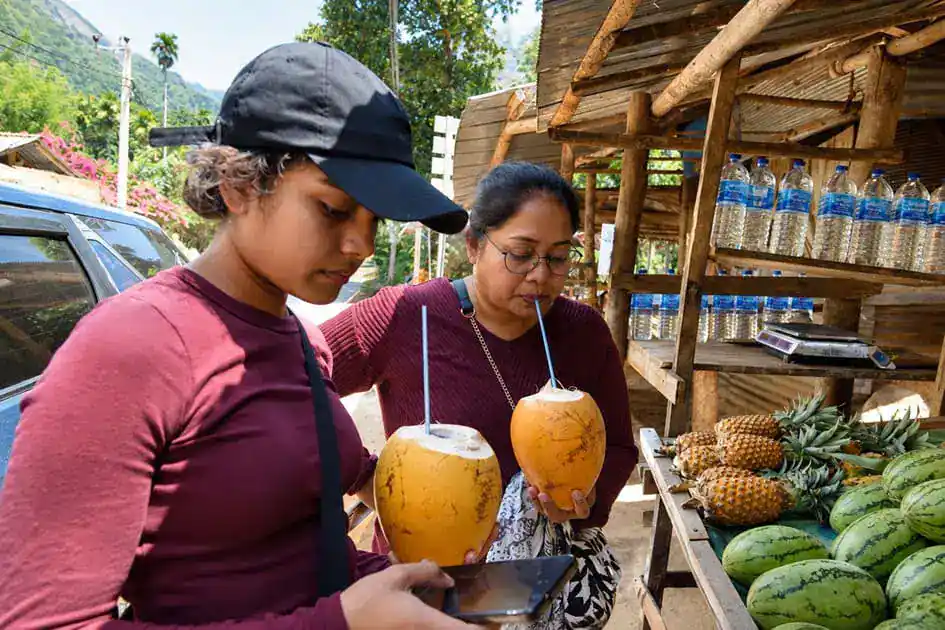
Drinking King Coconuts at a Roadside Fruit Stall in Ella (Photo: Nalaka Priyantha)
Food changes with the landscape on this route. Along the coast, Negombo’s seafood curries make an easy first meal. In the dry zone, look for buffalo curd with kithul treacle and wood apple juice. In the hills, a pot of freshly brewed tea feels right in the cool air, and vegetable dishes benefit from the produce grown nearby. Ella’s cafés are a good place to try kottu roti and hoppers. At the same time, Sinharaja’s lodges usually serve home-style rice and curry.
Rice and curry is the meal you will eat most often. It is a spread of small dishes rather than a single curry, typically dhal, vegetables, a meat or fish curry, and coconut sambol. Spice levels vary, so ask for “less spicy” if you prefer. King coconut water from roadside stalls is the best drink for long drives. Explore more Sri Lankan foods and drinks.
Practical Planning: Transport, Fees, Opening Hours, and Bookings
Transport:
Book a licensed private driver for the whole trip. Agree in advance on what the price includes, such as fuel, the driver’s accommodation, and highway tolls. Safari jeeps are hired separately, usually through your lodge.
Entry Fees:
Official entry tickets for national parks are separate from the variable costs of jeep hire, guides, and drivers. Foreign visitors pay considerably more than residents, and taxes and service charges are added to the base fee. When we researched this guide in October 2026, reported fees for foreign visitors differed between sources, so check the latest rates with the Department of Wildlife Conservation before travelling. The Forest Department manages Hurulu Eco Park and Sinharaja, and they have their own tickets; at Sinharaja, the guide is arranged at the entrance.
Opening Hours:
Udawalawe, Minneriya, and many other wildlife parks open early in the morning, at around 6 am, and close in the evening, with ticket counters closing earlier in the afternoon. Hours can change, so confirm them locally.
Bookings:
The Department of Wildlife Conservation runs the Wildlife Park Permits Reservation eService for some parks, including Horton Plains, Minneriya, Kaudulla, and Udawalawe. Many travellers still let their lodge or jeep driver handle tickets. Book accommodation early in busy periods, especially near Sinharaja, where good options are limited.
Budget for a 10-Day Nature & Wildlife Trip
Prices change often, so think about costs in categories rather than fixed figures. Your main expenses are a private driver for all ten days, accommodation, park entry fees, safari jeeps, guides for Horton Plains birding and Sinharaja, meals, and tips.
Accommodation varies the most, from simple guesthouses to high-end lodges, and it shapes your total budget more than anything else. Park fees and jeep hire add up quickly on this route, with two or three safari outings plus Horton Plains and Sinharaja. Sharing a jeep and driver between two or more people lowers costs considerably. Leave a margin for tips, which are customary for drivers, guides, and jeep crews. For saving tips, see our guide to budget travel in Sri Lanka.
Responsible Wildlife Travel and Safety
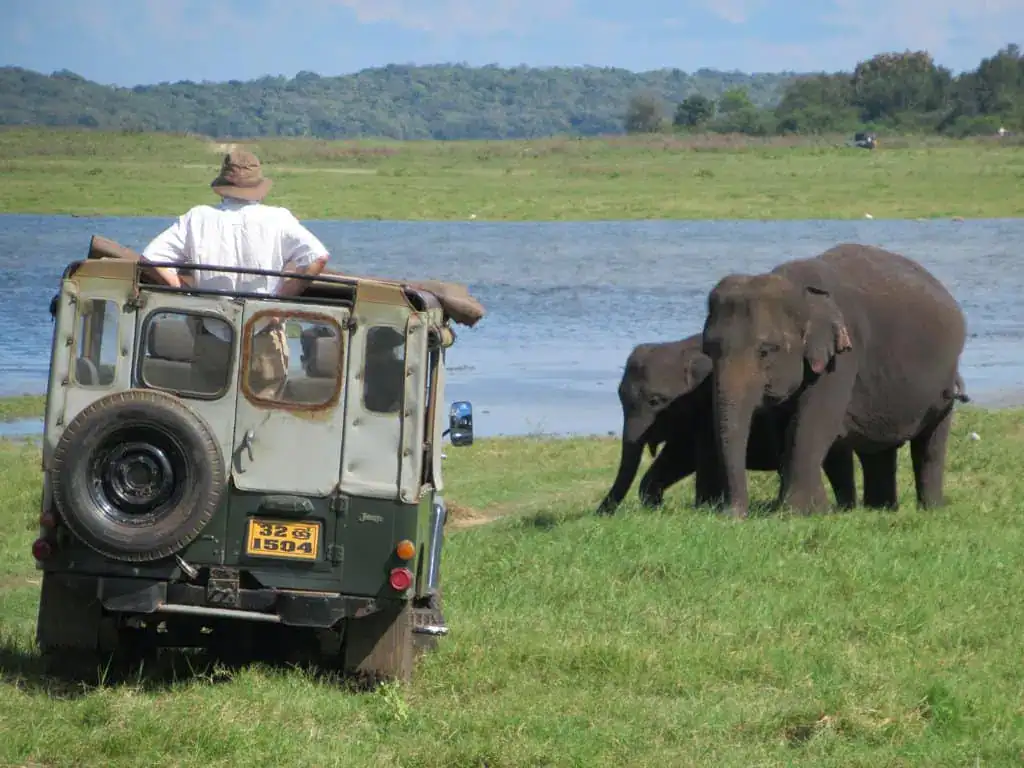
A Safari Jeep – Kaudulla National Park (Photo: David Stanley, CC BY 2.0)
Wildlife:
Never feed or touch wild animals, including elephants, monkeys, and birds. Ask your jeep driver to keep a respectful distance, avoid crowding animals and switch off the engine during sightings. Stay inside the vehicle, keep noise low and choose wildlife experiences over elephant rides or bathing sessions.
Protected Areas:
Follow your guide’s instructions, stay on marked trails, carry your rubbish out, and respect plastic restrictions at Horton Plains.
Personal Safety:
Avoid walking near forest edges after dark in elephant country. Stay back from cliff edges and waterfall pools. Drink plenty of water, use insect repellent, and wear sun protection. Take out comprehensive travel insurance that covers hiking and medical evacuation. Read more about sustainable travel in Sri Lanka.
How to Adapt the Itinerary
Early Flight:
Spend your final night near the airport, as described on Day 10.
Reduced Mobility:
Skip the full Horton Plains loop and visit the plateau for a shorter walk, or enjoy the highland scenery from viewpoints and tea estates instead. Replace the Ella hikes with gentle tea-estate walks, and take a shorter guided walk near the Sinharaja lodge. The safaris need no walking.
Bad Weather:
If Horton Plains is clouded in, enjoy the forest and grassland rather than waiting for the view. In heavy rain, shorten walks, stay off the railway line and waterfall rocks, and give your driver extra time.
Leopard Priority:
This route does not include Yala, Sri Lanka’s best-known leopard park. If leopards are your priority, choose a different route or a longer trip. Our upcoming 14-day Nature & Wildlife itinerary allows time for more parks. Meanwhile, read how to spot leopards in Sri Lanka.
Relaxed Pace:
Add a night in Kandy to split Day 4, or add a second night in Udawalawe for an extra safari.

Baker’s Falls – Horton Plains National Park (Photo: Nalaka Priyantha)
Highlights Summary
The trip builds steadily. It starts gently with lagoon birdlife in Negombo, then moves into the heat of elephant country around Habarana. Next comes a climb into cool tea country, followed by a dawn walk across the Horton Plains grasslands to World’s End. Ella brings easy hill walks and wide valley views before the road drops to Udawalawe’s open plains for a second elephant safari. The journey ends in Sinharaja, the quietest and most immersive part of the route, where the rainforest asks you to slow down and listen.
Final Thoughts
This 10-Day Sri Lanka Nature & Wildlife Itinerary shows how much variety the island holds within a short distance: elephants on reservoir grasslands, cloud forest on a high plateau, and endemic birds in an ancient rainforest. It asks for early starts and two long road days, but each overnight is placed to make the journey manageable.
Go with flexible expectations. Weather, wildlife, and views are never guaranteed. Plan around the realities, and this route rewards you with a broad and memorable introduction to Sri Lanka’s nature.
To compare other routes, explore the best Sri Lanka itineraries. If you’d like more time for wildlife, look out for our upcoming 14-day Nature & Wildlife itinerary.
Map – 10-Day Sri Lanka Nature & Wildlife Itinerary
Sources and References:
- Department of Wildlife Conservation, Sri Lanka – Official information on national parks, protected areas, wildlife conservation, visitor regulations and permits.
- Department of Wildlife Conservation – National Parks – Information on Sri Lanka’s national park system, including Horton Plains and Udawalawe.
- Department of Wildlife Conservation – Wildlife Park Permits Reservation eService – Official online system for checking and reserving available national park entry permits.
- Sri Lanka Tourism – Wild Safaris – Overview of Sri Lanka’s wildlife tourism, national parks, elephants, leopards and biodiversity.
- Sri Lanka Tourism – Official Tourism Website – Destination information and practical travel guidance for Negombo, Habarana, Nuwara Eliya, Ella and other stops along the route.
- UNESCO World Heritage Centre – Central Highlands of Sri Lanka – Conservation significance, mountain ecosystems and endemic biodiversity of Horton Plains and the Central Highlands.
- Central Province Tourism Department – Horton Plains – Information on the national park’s cloud forests, grasslands, World’s End, Baker’s Falls and main hiking circuit.
- Sri Lanka Tourism – Horton Plains – Visitor information covering hiking routes, access from Nuwara Eliya, early-morning visibility and seasonal conditions.
- Central Cultural Fund – Visit Sri Lanka Destinations – Destination information for Ella, including Little Adam’s Peak, Nine Arch Bridge and surrounding hill-country landscapes.
- UNESCO World Heritage Centre – Sinharaja Forest Reserve – Authoritative information on Sinharaja’s tropical rainforest ecosystem, endemic species and World Heritage significance.
- UNESCO Man and the Biosphere Programme – Sinharaja – Information on rainforest biodiversity, conservation, local communities and the Sinharaja Biosphere Reserve.
- Sri Lanka Department of Meteorology – Official weather forecasts, rainfall information, seasonal climate data and weather advisories relevant to safaris and mountain hiking.
- Sri Lanka Tourism – Sri Lanka Weather – Overview of monsoon seasons, regional climate differences and seasonal travel considerations.
Featured image (cropped): Wild elephants – Kaudulla National Park (Photo: Jonybraker, CC BY-NC-ND 2.0)

I am a Sri Lankan medical doctor who spends my free time travelling, exploring new destinations, and documenting the beauty of the island I call home. I have journeyed across almost every corner of Sri Lanka with my wife and daughter — from wildlife parks and misty mountains to ancient cities, deep forests, rugged landscapes, and quiet beaches.
Travel is not just a hobby for me — it’s a way of life. I love nature, enjoy road trips, and find joy in wildlife photography. I also read widely about tourism, travel trends, and destination culture. Through my writing, I aim to help travellers experience Sri Lanka through real stories, meaningful insights, and honest recommendations — the same way I explore it with my own family.