
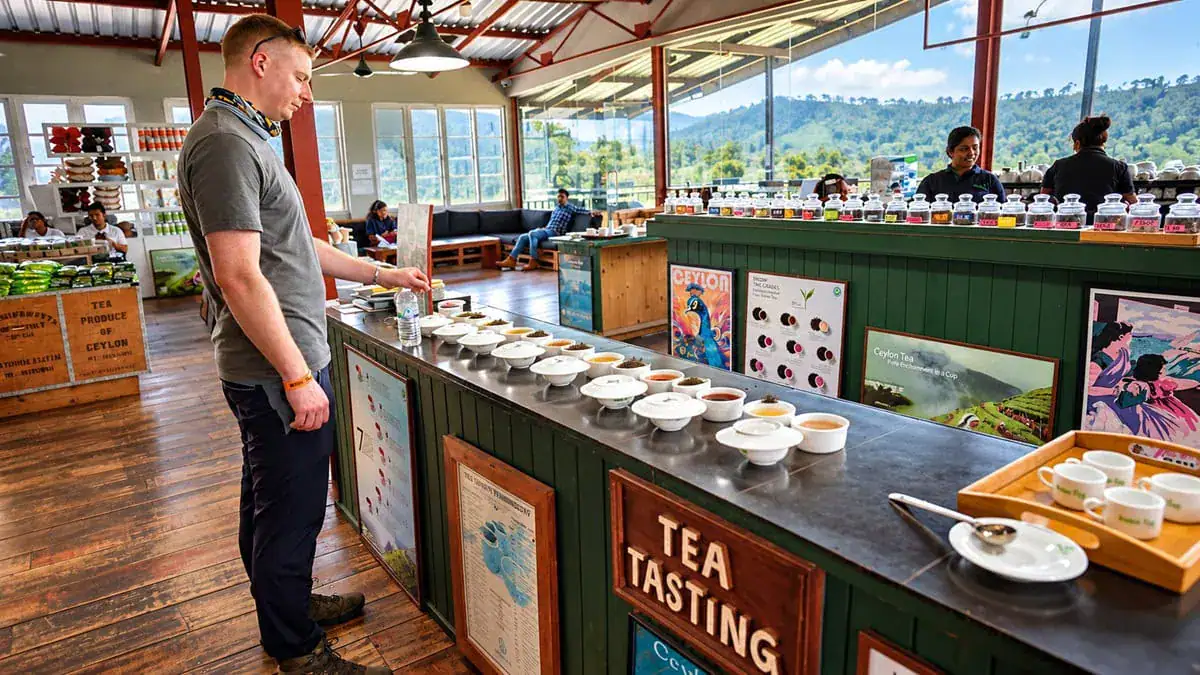

Tea tasting in Sri Lanka can mean a quick cup poured at the end of a factory walk, or it can mean a proper guided session where you compare several teas side by side, looking at the dry leaf, the colour of the brew and how each one tastes. Most visitors meet Ceylon Tea through one of three experiences: a tour of a working factory, a walk through the estate where the leaf is grown, or a tasting. They often overlap, but they are not the same thing, and the difference matters when you have only a morning to spare in the hills.
This guide explains what each experience usually includes, what it often leaves out, and where to find one across the hill country and a few low-grown estates near the South Coast. For the fuller story of how leaf becomes tea, see Ceylon Tea: From Leaf to Cup.
Tea Tasting, Factory Tours and Estate Walks: What Is the Difference?
Signs along hill-country roads tend to use “tea factory”, “tea centre” and “tea tour” loosely. The labels below describe what each experience normally involves, so you can tell what you are actually being offered.
| Experience | What it usually includes | Who it suits | Key caveat |
| Factory tour | A guided walk past withering, rolling, drying, and sorting areas | First-time visitors curious about how tea is made | Machinery may be quiet when you arrive |
| Estate tour or walk | Time among the tea bushes, with explanation of cultivation and plucking | Walkers, photographers, and anyone interested in the landscape and the people who work it | Plucking is skilled work, not a guaranteed hands-on activity |
| Guided tasting | Several teas compared in a structured session | Tea lovers who want to understand differences in flavour | Often a separate or paid option, not automatic |
| Complimentary tea | One cup, usually after a tour | Anyone wanting a short stop | Pleasant, but not a tasting |
| Tea museum | Historic machinery, displays, and heritage context | Visitors interested in the history of tea in Sri Lanka | Not a working factory |
| Tea lounge | A café-style stop for tea, cake, and views | Road-trippers and families needing a break | Factory access may be brief or limited |
Most travellers end up with a factory tour and a free cup. That is a good introduction, but it isn’t a tasting and rarely includes time in the fields, so ask what is included before you pay.

Let’s Pluck Tea Leaves – Nuwara Eliya (Photo: Sanjeewa Jayarathne, via Pexels)
What to Expect on a Tea Factory Tour
Most tours follow the order in which the leaf is processed. Freshly plucked leaf is first spread in long troughs, where air blows through it until it softens and loses moisture; this is called withering. Rolling machines then twist and break the leaf, which starts the properly controlled oxidation process (often called “fermentation” by guides) and begins to darken it. The leaf is then fired in large dryers to stop the process, and finally sifted and sorted into grades. You will probably hear grade names such as BOP (Broken Orange Pekoe) or Pekoe, which describe leaf size rather than quality.
What you see depends on timing. Factories process leaf as it arrives from the fields, so production slows on some days and in quieter seasons, and some do much of their work later in the day. Don’t expect every machine to be running.
Factories are working spaces, with moving belts, heat, and fine tea dust. Guides usually keep visitors to set routes, and some areas may be closed to the public or to photography. Wear closed shoes and keep children close.
At busier factories, a staff guide normally leads small groups. Tours seldom include an estate walk, and the cup at the end is usually a single tea.
What Happens at a Ceylon Tea Tasting?
A structured tasting follows the method professional tasters use, simplified for visitors. Teas are laid out in a row, often with the dry leaf, the brewed leaf and the liquid itself side by side. You look first at the size and twist of the leaf, then at the colour and brightness of the cup. Then you smell it, and finally taste, noticing strength, body, and the slight drying sensation of tea leaves in the mouth.
The value lies in comparison. Tasting a high-grown tea beside a low-grown one, or a fine grade beside a broken one, shows how elevation, region, and processing shape the cup. Differences can be subtle, and a good host helps you put words to them rather than telling you what to taste.
A complimentary cup is simply a welcome gesture. If you want a guided tasting, ask whether one is offered and whether it costs extra.
Etiquette is relaxed. Professional tasters slurp loudly and spit, and you may be invited to try it, but sipping is fine. A shop is usually at the end; buying is optional.
Where to Enjoy Tea Factory Tours and Tea Tasting in Sri Lanka
Tea in Sri Lanka grows at very different elevations, which shapes both the teas and the visits. The high-grown districts around Nuwara Eliya, Ella, Haputale, and Hatton are the classic tea country, hence this guide’s place in our Hill Country Experiences section, but a few low-grown estates in the South are worth including too.
The places below are grouped by the base you are likely to stay in. Each group is its own trip. They are not stops to string together in a single day.
Nuwara Eliya and Ramboda
The A5 road from Kandy climbs through tea, and three well-known stops sit beside it, making easy en-route visits on the drive up. Ramboda is well below Nuwara Eliya, though, and Pedro and Somerset lie on the far side of town. Hence, these are separate stops rather than one compact area.
Labookellie Tea Centre (tea lounge)
One of the most familiar roadside stops in the hill country, Labookellie is best known for tea and cake taken with a view over a steep, neatly terraced estate. You can experience a guided factory tour covering the main processing stages, a tea field tour, tea tasting at the tea centre, and shopping. Treat it as a relaxed break on a travel day rather than a deep dive into tea.
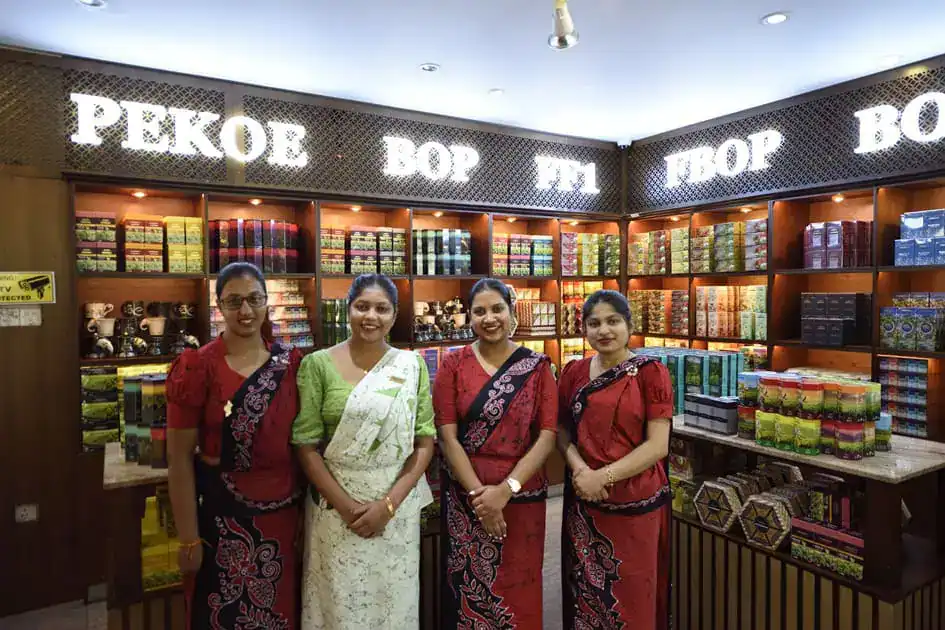
Labookellie Tea Lounge (Photo: Nalaka Priyantha)
Pedro Tea Centre and Factory
Just outside Nuwara Eliya, near the Lover’s Leap waterfall, Pedro is the easiest factory to reach from town, and you can pair it with a short walk to the falls. It is one of the best factories in the region for first-time visitors. Visitors describe a short guided tour followed by a cup of the estate’s tea, with photography restricted in parts of the factory. Some reports suggest much of the processing happens later in the day so that daytime visits can be quiet. Hours and fees are best checked locally.
The Somerset Estate Tea Boutique
The Somerset Estate Tea Boutique is a historic tea plantation and factory in the Dimbula Valley near Nuwara Eliya and Nanu Oya. They offer guided factory & estate tours, covering tea plucking, manufacturing, and tea tasting. You can buy various types of tea, fresh strawberries, meals, and snacks.
Rothschild Tea Factory and Lounge
Rothschild Tea Factory & Lounge sits in Pussellawa between Kandy and Nuwara Eliya. It is a great place with a beautiful view. You can visit the factory, taste tea, and buy Ceylon Tea.
Bluefield Tea Factory, Ramboda
Bluefield combines a guided walk through black-tea production with a shop, a tea plucking experience, tea tasting sessions, tea safari adventures, a restaurant, and a tea lounge, which makes it a practical lunch stop on the Kandy–Nuwara Eliya road. The production area involves concrete floors, steps, and narrow corridors, which matters if anyone in your group has limited mobility.
Ella
Uva Halpewatte Tea Factory
Run by Halpé Tea, this working factory in the hills just outside Ella is one of the clearest options in Sri Lanka for choosing exactly the experience you want. You can experience a factory tour, a separate plantation tour with a plucking lesson, and a longer handmade-tea masterclass in which you blend your own tea. Tasting is included in each option. Published per-person prices and time slots are on its website and may change, so check before you go, and book the masterclass in advance. Most travellers reach it by tuk-tuk from Ella.
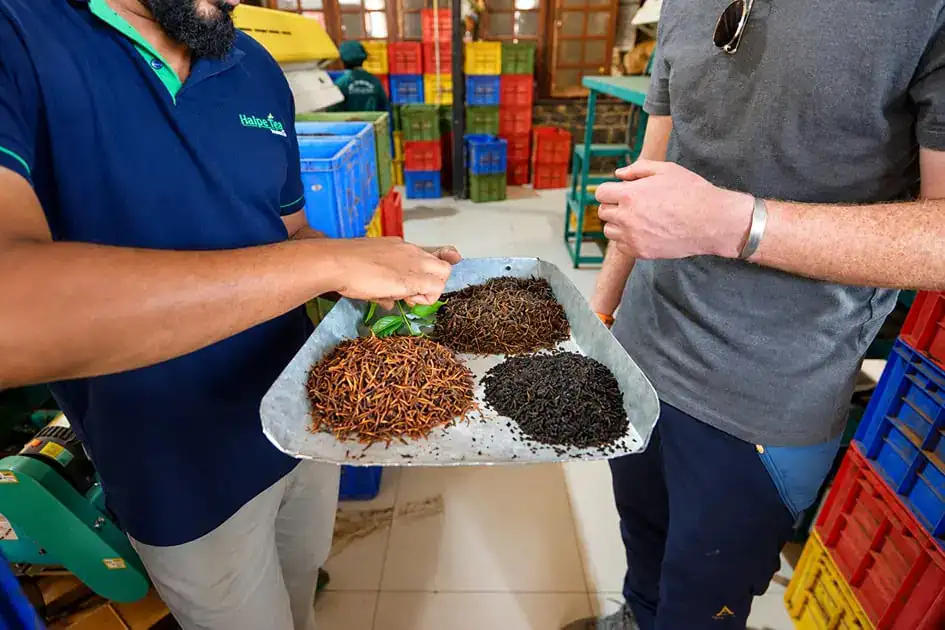
Three different outcomes of fresh tea leaves (Photo: Nalaka Priyantha)
Newburgh Ella
Newburgh Ella offers you tea-related experiences, including guided factory visits, tea estate walks, and the “Leaf to Cup” experience.
Haputale
Dambatenne Tea Factory
Dambatenne sits below Lipton’s Seat, the ridge-top viewpoint on the estate once owned by Sir Thomas Lipton. It is a large, long-established factory, and most visitors combine it with a visit to the viewpoint. Go up to Lipton’s Seat early, before clouds tend to roll in, then walk or take a tuk-tuk down through the tea to the factory. Recent traveller accounts describe a short guided factory tour in English for a small fee. Confirm locally before planning around a particular day. Haputale is the natural base, though Ella also works for a full morning out.
Hatton, Dikoya, and Norwood
The Hatton area is quieter than Nuwara Eliya or Ella, with estates spread across rolling hills and plenty of bungalow-style stays. It suits travellers who want to spend time in the tea country itself rather than at a roadside stop.
The Tea Fields – Tea Tour at Norwood
Listings describe a walk through the tea fields, a chance to try plucking, a tea plantation village experience, a guided visit to the factory floor, an exclusive Ceylon Tea tasting, and a freshly brewed cup at a colonial tea plantation bungalow, usually in the afternoon.
Kandy and Hantana
Kandy isn’t tea country in the way the higher hills are. Still, many itineraries begin there, and it has three useful options.
Ceylon Tea Museum, Hantana
Set in a former tea factory on the hills just outside the city, this is a museum, not a working factory. Its floors hold old machinery, including equipment linked to the early days of commercial tea, and there is a café at the top with views over Kandy and the surrounding hills. You can experience tea tasting and buy premium Ceylon Tea. It works well on a rainy afternoon or for anyone more interested in history than production. The museum’s own website lists opening hours, a weekly closing day, and ticket prices, so check them before you go. For the wider story, see Ceylon Tea Heritage in Sri Lanka: Best Places, Tours, and Experiences.

Ceylon Tea Museum (Photo: calflier001, CC BY-SA 2.0)
New Giragama Tea Factory and Restaurant
This factory near Kandy appears on some day-tour itineraries, and you can experience a guided visit and tea tasting.
Embilmeegama Tea Factory
Embilmeegama Tea Factory sits in Pilimathalawa, 10 kilometres away from Kandy. It is one of the historical factories. They offer factory tours and tea tasting sessions for visitors. You can also buy various types of Ceylon Tea.
Loolkandura (Loolecondera)
Loolecondera Estate
This is where James Taylor, a Scottish planter, began commercial tea cultivation in 1867, and it is often described as the birthplace of the Ceylon tea industry. The estate lies in the hills south-east of Kandy. The remains associated with Taylor, including his stone seat, are protected as a heritage monument. Think of it as a pilgrimage for tea enthusiasts, not a factory tour. It is still a working estate, and access is not straightforward, so visit with a guide or driver who knows the area, and don’t assume a factory visit or tasting will be offered.
Talawakelle
Great Western Tea Estate – Factory
Talawakelle sits in the heart of the high-grown Dimbula district, and the Great Western estate shares its name with the distinctive mountain above it. The factory is open to visitors. You can visit the factory, taste tea, and buy Ceylon Tea and tea coins. Arrange it through your accommodation, guide, or driver.
Southern Tea Country
In the South, tea grows close to sea level, and these low-grown teas are often described as darker and fuller-bodied than the delicate high-grown teas of the hills. The estates below are useful if most of your trip is on the South Coast, or if you want to compare low-grown and high-grown tea. Each is a separate inland excursion rather than part of a single circuit, and the roads to them can be narrow and winding.
Handunugoda Tea Estate, near Ahangama
Handunugoda is the easiest southern estate to reach from Galle or the surf towns of the South Coast. It is best known for its Virgin White tea, a rare speciality white tea, and it also produces a wide range of other teas. You can experience a guided walk followed by a tasting of several teas, often with cake. Confirm current tour times and charges before you go.
Nandana Tea Factory, Akuressa
Inland from Matara and Weligama, Nandana offers one of the more complete experiences on this list. According to the company’s own website, its guided tour takes you into a traditional kitchen, a herbal garden, and the factory, then a tasting where you sample several teas before a full cup, with an optional meal afterwards. Book through the company, which publishes its own per-person prices.
Lumbini Tea Valley Ceylon, Deniyaya
Lumbini sits near the southern edge of the Sinharaja rainforest and is known for speciality low-grown teas. Their listings describe plantation walks, plucking, a factory visit, and a staff-led tasting of different grades. Deniyaya is a long drive inland from the coast, so a visit makes more sense combined with Sinharaja, or with an overnight stay, than as a quick add-on to a beach day. Arrange visits in advance.
Athukorala Tea Factory, Pitigala
This family-run producer, inland from the Southwest Coast, is known for an unusually wide range of teas. Recent Sri Lankan press coverage reports that its tea garden welcomes visitors for factory tours, plucking, tea-sapling planting, and tasting, and that foreign visitors buy a ticket. Ask your driver or hotel to check access and opening times before you set out.
Walahanduwa Tea Factory, Walahanduwa, Galle
Walahanduwa Tea Factory sits near the access road to the Pinnaduwa interchange of the Southern Expressway in Galle. It is best known for its factory experience, plantation adventure, tea centre, and artisan tea workshop.
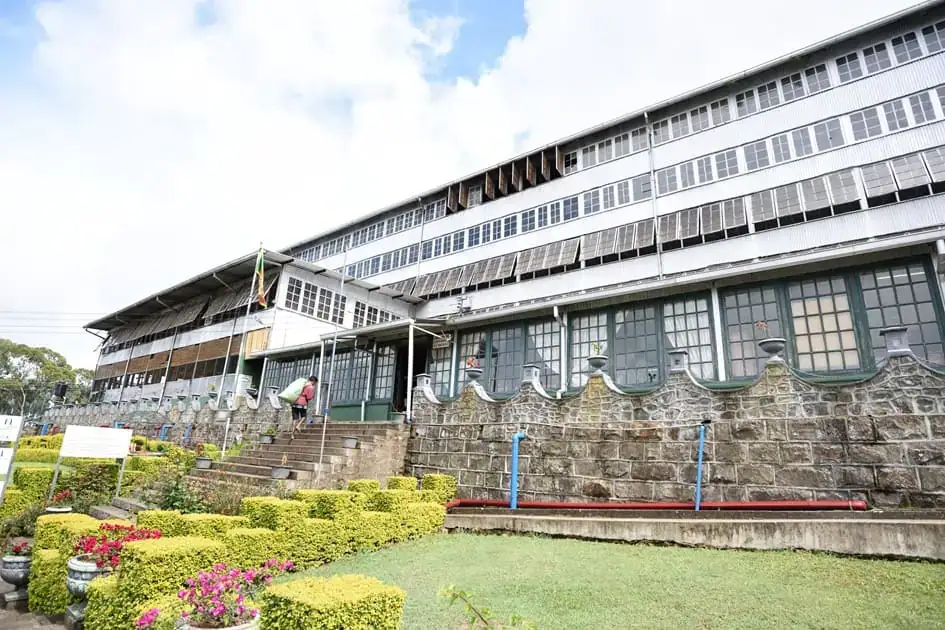
Dambatenna Tea Factory (Photo: Nalaka Priyantha)
Which Tea Experience Should You Choose?
Start with what you’re curious about. If you want to see how tea is made, a working factory such as Pedro, Bluefield, or Dambatenne will show you the process in under an hour. If the landscape and the people who tend it interest you more, choose something with time in the fields, such as the plantation options at Uva Halpewatte or a hosted walk around Norwood. If flavour is the draw, look for a real tasting of several teas, such as those offered at Halpewatte and Nandana, rather than settling for a single cup.
Then fit it to your route. On a short itinerary, one good visit near where you are already staying is usually enough. Tea enthusiasts with more time might pair two contrasting stops. That could be a high-grown factory in the hills and a low-grown estate in the South, or a working factory followed by the Ceylon Tea Museum in Kandy.
For families, short factory tours and stops with a café, such as Labookellie or Bluefield, tend to hold children’s attention better than long tastings. Keep a close eye on young children around machinery.
If anyone in your group has limited mobility, ask directly before you go. Factory floors often involve steps, uneven surfaces and narrow passages, and estate paths can be steep and slippery. Don’t assume a site is accessible because it is popular.
Planning Your Visit: Bookings, Timing, Prices and Transport
Larger roadside tea centres are generally used to walk-in visitors. Smaller estates, hosted walks, and anything described as a masterclass should be booked in advance. Tours change, so confirm what is included when you book.
Morning visits usually give the clearest views, as cloud and rain often build later in the day in the hills. Weather varies across the hill country with the monsoons, and the eastern Uva side around Ella and Haputale doesn’t always share the conditions on the western slopes around Hatton. Check Best Time to Visit Sri Lanka for your travel month. Production levels also vary with the season and the day of the week, so ask whether the factory is processing before you go.
Most visits fit comfortably into a morning or afternoon, plus travel time to and from your base. Hill-country roads are slow and winding, and the southern estates are inland detours, so allow more time than the map suggests. A tuk-tuk or hired driver is the usual way to reach most factories.
Prices change. Some places charge nothing, while others charge per person. Carry enough rupees in cash, because card payment can’t be guaranteed at entrances or small shops.
Bring a light layer and wear closed shoes, as the higher hills can feel cool. Follow any hygiene requests in production areas, and ask before taking photos inside factories, where photography is sometimes prohibited.
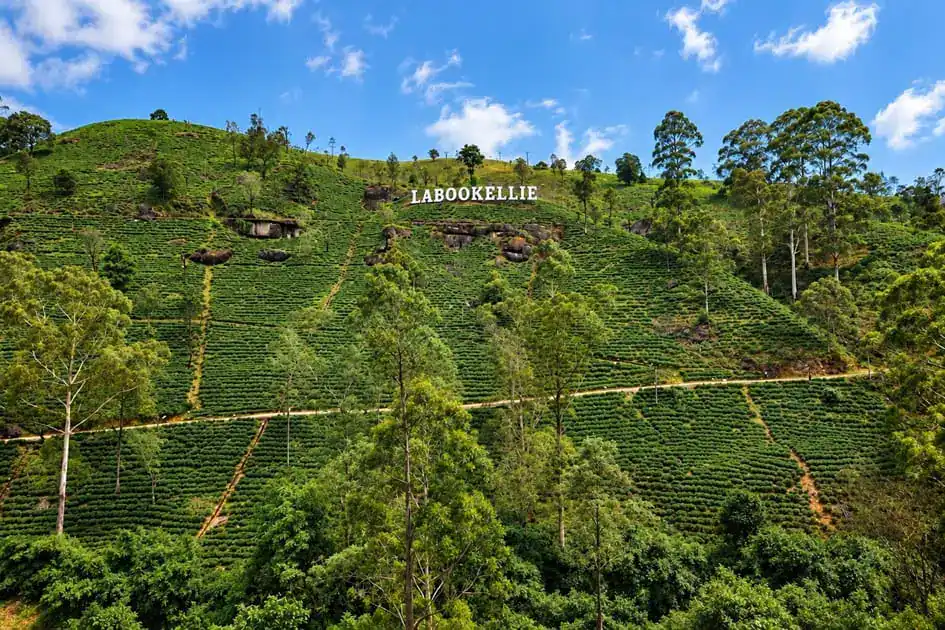
Labookellie Tea Plantation, Nuwara Eliya (Photo: Nalaka Priyantha)
Responsible Tea Tourism
The landscapes visitors admire are maintained by people doing demanding work. Tea pluckers aren’t part of the scenery, so ask before photographing anyone, accept a refusal politely, and avoid interrupting them while they work. If you’re offered a chance to try plucking, treat it as a short lesson in a skilled job, not a photo opportunity.
Stay on the routes your guide shows you, as production areas can be hazardous. Be wary of unclear charges or pressure to tip or buy, and feel free to ask what something costs before you start. Treat claims of “organic”, “ethical” or “sustainable” tea with healthy scepticism unless the seller can explain them or show certification.
Read how to explore responsibly and sustainably in Sri Lanka.
Frequently Asked Questions
Can I visit a tea factory without booking?
At some larger tea centres, yes. Smaller estates, hosted tours and specialist experiences usually need to be arranged in advance, so check ahead.
Will the machinery be operating?
Not necessarily. Production depends on leaf supply, the time of day, and the season. Even when it’s quiet, you will usually still see the equipment and hear the process explained.
Are tastings included?
Sometimes. Many factory tours end with one complimentary cup. At the same time, a guided tasting of several teas may be separate or cost extra. Ask what is included.
Is a tea factory tour suitable for children?
Usually, as long as they’re closely supervised. Short tours with a café stop tend to suit young children better than long tastings.
Can I visit from Ella or Nuwara Eliya?
Yes. Uva Halpewatte and Dambatenne are practical from Ella. Pedro is close to Nuwara Eliya, and Labookellie and Bluefield sit on the road up from Kandy.
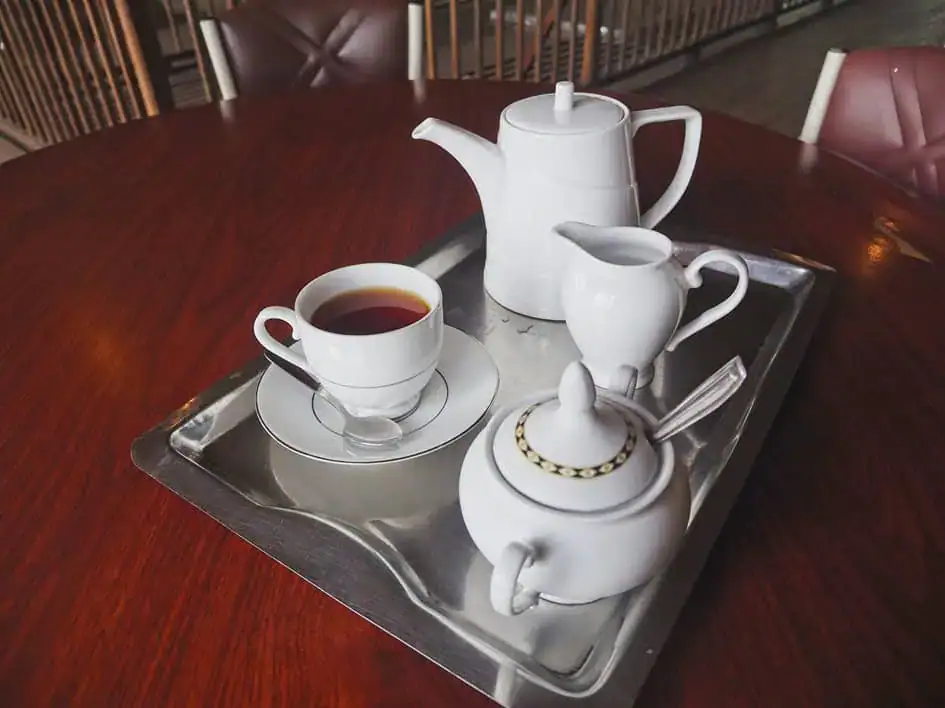
Tea Tasting at Ceylon Tea Museum (Photo: Bex Walton, CC BY 2.0)
If you are visiting Sri Lanka for the first time, we recommend reading about finding the best Sri Lanka itinerary for your travel season and our Complete Planning Guide for First-Time Visitors.
Final Thoughts
You don’t need to visit several factories to understand Ceylon Tea. One well-chosen experience that suits your interests and your route usually tells you more than a string of rushed stops. Decide whether you want to see the process, walk the fields or taste properly, then choose a place that does that well. Tea tasting in Sri Lanka is at its most rewarding when you ask questions and take your time over the cups in front of you.
To go deeper, read Ceylon Tea: From Leaf to Cup to learn how tea is made and graded, and Ceylon Tea Heritage in Sri Lanka: Best Places, Tours, and Experiences for the wider heritage of tea in Sri Lanka.
Map – Tea Factory Tours and Tea Tasting in Sri Lanka
Sources and References:
- Sri Lanka Tea Board – Official Website. Authoritative information about Ceylon Tea, tea production, quality standards, tea tasting, and the Sri Lankan tea industry.
- Sri Lanka Tea Board – Tea Growing Regions. Information about Sri Lanka’s seven principal tea-growing regions, their climatic characteristics, elevations, and distinctive tea flavours.
- Tea Research Institute of Sri Lanka. Research and technical information concerning tea cultivation, processing, and the development of Sri Lanka’s tea industry.
- Sri Lanka Tourism – Official Tourism Website. Visitor information about Sri Lanka’s hill country, tea plantations, scenic landscapes, tea factory visits, and cultural attractions.
- Sri Lanka Tourism – Ceylon Tea Museum. Information about the Ceylon Tea Museum in Hantana, Kandy, including its historical machinery, exhibits, and significance to Sri Lanka’s tea heritage.
- Halpé Tea – Uva Halpewatte Tea Factory Tours. Official information about guided factory tours, plantation visits, tea tasting, and handmade-tea experiences near Ella.
- Nandana Tea Factory – Tours and Experiences. Official information about guided factory visits, herbal garden walks, traditional Sri Lankan kitchen experiences, and tea tasting in Akuressa.
- Sri Lanka Tourism – Pedro Tea Factory and the Pekoe Trail. Information about tea plantation walks, tea processing demonstrations, and tea tasting experiences near Nuwara Eliya.
- Sri Lanka Tourism – Handunugoda Tea Estate Visitor Experience. Tourism itinerary information covering a visit to Handunugoda Tea Factory near Ahangama, its speciality white tea, and tea tasting.
- Sri Lanka Tourism – Tea Heritage and Lipton’s Seat. Information about the Haputale tea-growing landscape, Dambatenne Tea Estate, Lipton’s Seat, and tea-related excursions.
- Sri Lanka Tourism – Hatton and Tea Country. Destination information about Hatton, its historic tea estates, tea factories, and surrounding hill-country attractions.
- Awantha Nishshanka – Manager – Tea, Asia Siyaka Commodities PLC. Personal communication and industry insights regarding tea factories, tea-tasting experiences, and tea estate tours in Sri Lanka. Information provided to the author in 2026.
Featured image: Tea tasting – Uve Halpewatte Tea Factory (Photo: Nalaka Priyantha)

I am a Sri Lankan medical doctor who spends my free time travelling, exploring new destinations, and documenting the beauty of the island I call home. I have journeyed across almost every corner of Sri Lanka with my wife and daughter — from wildlife parks and misty mountains to ancient cities, deep forests, rugged landscapes, and quiet beaches.
Travel is not just a hobby for me — it’s a way of life. I love nature, enjoy road trips, and find joy in wildlife photography. I also read widely about tourism, travel trends, and destination culture. Through my writing, I aim to help travellers experience Sri Lanka through real stories, meaningful insights, and honest recommendations — the same way I explore it with my own family.