

Introduction
A 12-Day Sri Lanka Cultural Itinerary lets you follow the island’s story roughly in the order it unfolded. You start among the great stupas of Anuradhapura, where Buddhism took root more than two thousand years ago. You climb the rock-cut stairways of Mihintale and Sigiriya, walk through the medieval capital of Polonnaruwa and step into the painted caves of Dambulla. In Kandy, you reach the last royal capital, still home to one of the most important Buddhist shrines in the world. The journey ends in Galle, a fortified port town shaped by centuries of Indian Ocean trade and three European colonial powers.
Twelve days gives the major ancient cities a full day each, rather than rushed half-day stops. It also leaves room for rest after long drives, early starts before the midday heat and the living side of culture in Sri Lanka: temple rituals, food, crafts, and daily life around places of worship. This guide explains where to go, how long each site deserves, where to stay, and why each place matters.
12-Day Sri Lanka Cultural Itinerary at a Glance
Duration: 12 days and 11 nights
Start and finish: Bandaranaike International Airport (CMB), near Negombo
Overnight stays: Negombo (1 night), Anuradhapura (2), Sigiriya or Habarana (3), Kandy (3), Galle (2)
Main destinations: Negombo, Anuradhapura, Mihintale, Sigiriya, Polonnaruwa, Dambulla, Kandy, and Galle
Travel style: Culture, heritage, archaeology, history, and living traditions
Recommended transport: Private car with a driver
Pace: Moderate, with several early starts, some steep climbs, and two long road transfers
Major cultural highlights:
- Jaya Sri Maha Bodhi and the great stupas of Anuradhapura
- Mihintale, traditionally linked with the arrival of Buddhism
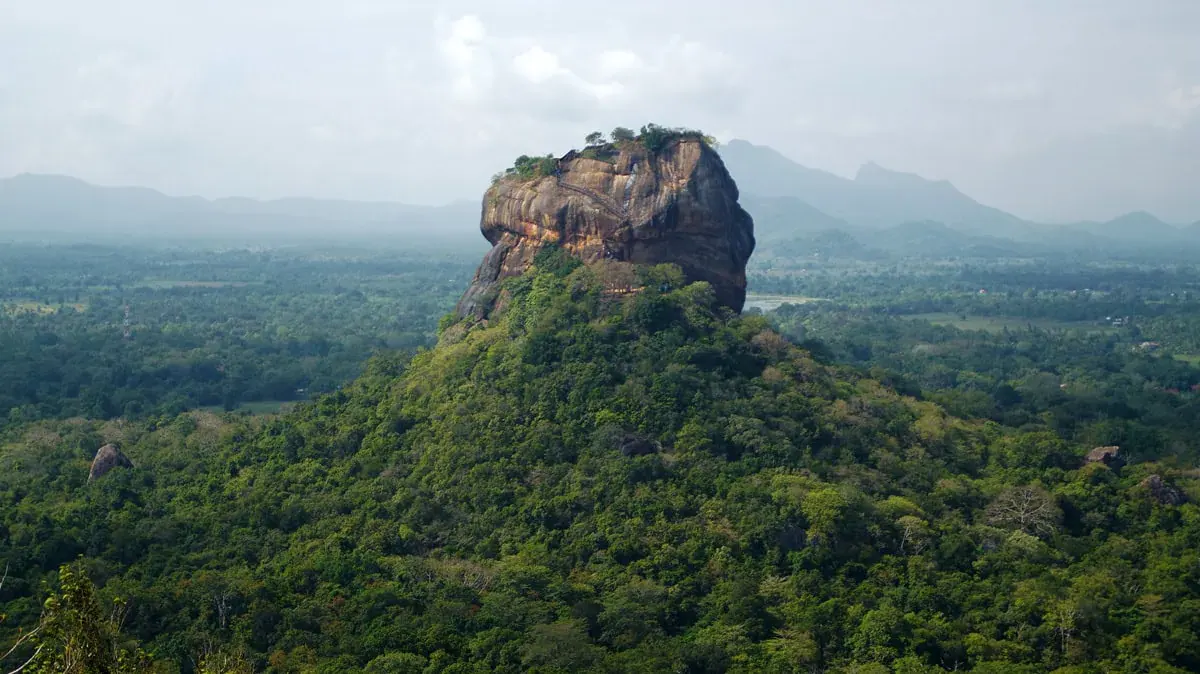
- Sigiriya’s water gardens, frescoes, and summit palace
- The stone Buddha figures at Gal Vihara, Polonnaruwa
- The painted cave shrines of Dambulla
- The Temple of the Tooth Relic in Kandy
- The ramparts and historic streets of Galle Fort
UNESCO World Heritage Sites included: Sacred City of Anuradhapura, Ancient City of Polonnaruwa, Ancient City of Sigiriya, Rangiri Dambulla Cave Temple, Sacred City of Kandy, and Old Town of Galle and its Fortifications.
Why Choose This Cultural Itinerary?
Many first visits to Sri Lanka mix a little heritage with popular beaches, wildlife safaris, and tea country. This route takes a different approach. It focuses on cultural sites and follows a clear historical thread across roughly two thousand years.
Anuradhapura and Mihintale show the early Buddhist kingdom and, according to tradition, the faith’s arrival. Sigiriya reveals a short but remarkable royal experiment in landscape design. Polonnaruwa shows the kingdom rebuilding after Anuradhapura’s decline. Dambulla adds centuries of religious art, Kandy brings the story to its last royal capital, and Galle turns the focus outward to the sea, trade, and colonial rule.
The route also balances ruins with living practice. Many of the places you visit are not only archaeological sites. They are active places of worship, where pilgrims dressed in white bring flowers, light oil lamps, and chant in the evening. Understanding that difference is central to experiencing heritage in Sri Lanka respectfully.
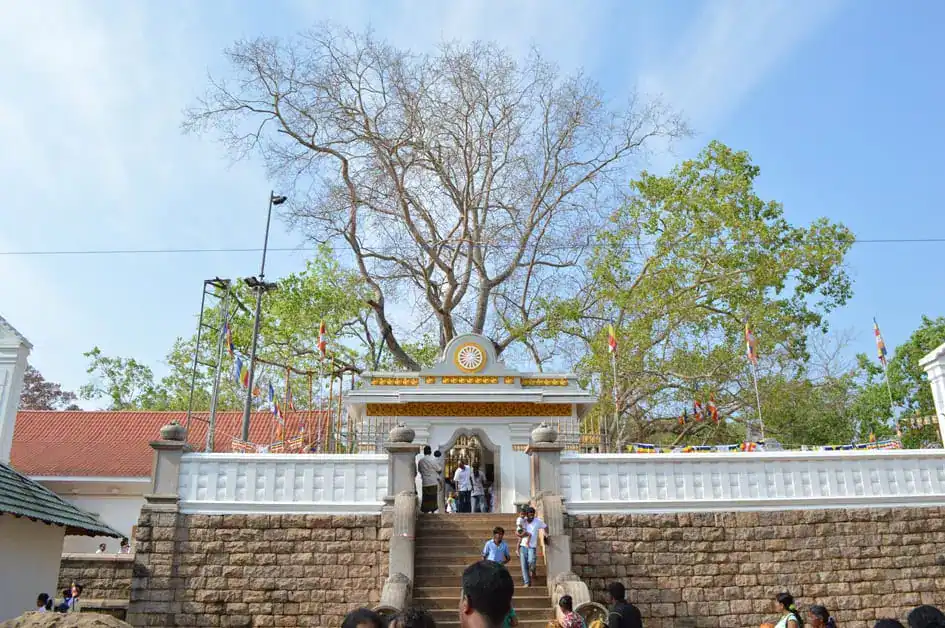
Sri Maha Bodhi – Anuradhapura (Photo: Nalaka Priyantha)
Who Is This Itinerary Best For?
This itinerary suits travellers who want to understand Sri Lanka, not simply see it.
- History enthusiasts and cultural travellers get full days at the ancient cities, plus temples, crafts, food, and colonial architecture.
- First-time visitors see six UNESCO cultural sites without a string of one-night stops.
- Couples and mature travellers benefit from multi-night bases and a moderate pace.
- Families interested in heritage often find that older children enjoy Sigiriya and Galle’s ramparts, though long site days need planning.
- Photography enthusiasts benefit from early mornings and late afternoons, when the light is softer.
The route involves real physical effort. Sigiriya and Mihintale have long, steep stairways with limited shade, and Anuradhapura and Polonnaruwa mean walking large sites in strong heat, often barefoot at shrines. Not every attraction is accessible, so travellers with limited mobility should read the alternatives later in this guide.
Understanding the Route and Travel Pace
The route forms a broad loop. From the airport, it moves north to Anuradhapura, then east, and south through the Cultural Triangle to Sigiriya or Habarana. It then climbs into the hills to Kandy, drops to the South Coast at Galle, and returns to the airport.
Mihintale is visited on the way from Anuradhapura to Sigiriya or Habarana, Polonnaruwa is a day trip from that base, and Dambulla is a stop on the drive to Kandy. This keeps hotel changes to five bases.
A private car with a driver works best, because several days combine a site visit with a transfer. Trains serve Anuradhapura, Kandy, and Galle, but not Sigiriya, Polonnaruwa, or Dambulla. Public buses are cheap but often crowded and slow with luggage. Read our guides on transport in Sri Lanka and renting a car for more detail.
The pace is moderate, not relaxed. Major site days work best with an early start, a rest in the hottest part of the day, and a second outing in the late afternoon. Transfer days are deliberately kept light.
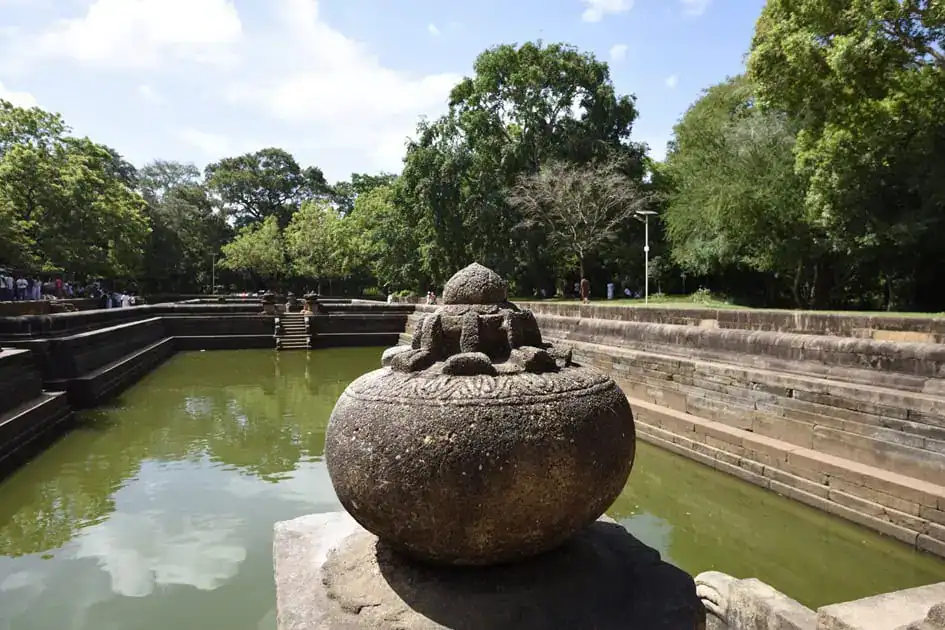
Kuttam Pokuna (Twin Pond) – Anuradhapura (Photo: Nalaka Priyantha)
Complete 12-Day Route Overview
| Day | Destination / Route | Main Cultural Experience | Overnight |
| 1 | Airport → Negombo | Arrival, rest, and Negombo’s fishing and Catholic heritage | Negombo |
| 2 | Negombo → Anuradhapura | Transfer and evening visit to the sacred city | Anuradhapura |
| 3 | Anuradhapura | Full day in the Sacred City of Anuradhapura | Anuradhapura |
| 4 | Anuradhapura → Mihintale → Sigiriya/Habarana | Mihintale and the arrival of Buddhism | Sigiriya or Habarana |
| 5 | Sigiriya | Sigiriya Rock Fortress and a village or cooking experience | Sigiriya or Habarana |
| 6 | Day trip to Polonnaruwa | The medieval capital and Gal Vihara | Sigiriya or Habarana |
| 7 | Sigiriya/Habarana → Dambulla → Kandy | Dambulla Cave Temple | Kandy |
| 8 | Kandy | Temple of the Sacred Tooth Relic | Kandy |
| 9 | Kandy and Peradeniya | Botanic gardens, crafts, and living traditions | Kandy |
| 10 | Kandy → Galle | Long transfer and an evening walk in Galle Fort | Galle |
| 11 | Galle | Galle Fort and maritime heritage | Galle |
| 12 | Galle → Airport | Departure | – |
Approximate Travel Times Between Destinations
Road travel in Sri Lanka usually takes longer than distances suggest. Town traffic, narrow roads, slow vehicles, roadworks, rain, and comfort stops all add time. The ranges below are approximate driving times without sightseeing.
| Journey | Approximate driving time |
| Bandaranaike International Airport → Negombo | 20–40 minutes |
| Negombo → Anuradhapura | 4–4.5 hours |
| Anuradhapura → Mihintale | 20–30 minutes |
| Mihintale → Sigiriya or Habarana | 1.5–2 hours |
| Sigiriya or Habarana → Polonnaruwa | 1–1.5 hours each way |
| Sigiriya → Dambulla | 30–45 minutes |
| Dambulla → Kandy | 2–2.5 hours |
| Kandy → Galle | 5–6 hours |
| Galle → Bandaranaike International Airport | 2–3 hours, using the expressways |
Times can change significantly around Kandy, the outskirts of Colombo and during festivals or heavy rain. Ask your driver to check road conditions the evening before each long transfer.
Day-by-Day Sri Lanka Cultural Itinerary
Day 1: Arrival in Sri Lanka and Negombo

Sunset – Negombo Beach (Photo: Florian Wehde, via Unsplash)
Morning or afternoon
Arrive at Bandaranaike International Airport, complete immigration, and collect your bags. Your driver can then take you to nearby Negombo.
Afternoon
Check in and rest. After a long flight, this is not the day for serious sightseeing.
If you arrive early and feel rested, Negombo offers a gentle first look at coastal culture. The town has a long fishing tradition. Outrigger canoes, known locally as oruwa, are still part of the scene, although motorised boats now do much of the work. Negombo also has one of Sri Lanka’s largest Catholic communities, which reflects its history from the Portuguese period onwards. Large churches such as St Mary’s Church stand among the town’s busy streets, which is why Negombo is sometimes called “Little Rome”.
A short walk or tuk-tuk ride can take you to the old Dutch-era canal, the lagoon edge, or the surviving fort gateway near the lagoon. Keep any outing short.
Evening
Enjoy an early dinner and get a full night’s sleep before heading north.
Where to stay
Negombo.
Accommodation guidance
Choose a quiet hotel or guesthouse with easy airport access. Comfort, air conditioning, and a good night’s rest matter more than a beachside location. See our guide on where to stay in Negombo.
Food and cultural experience
Negombo is a good place to try seafood. Prawn and crab curries are popular, and a simple fish curry with rice is an easy first meal. Ask for mild spice if you are unsure.
Practical travel notes
Withdraw or exchange some Sri Lankan rupees at the airport for small purchases, tuk-tuks, and tips. Drink plenty of water, as the coastal heat can be tiring after a flight.
Day 2: Negombo to Anuradhapura
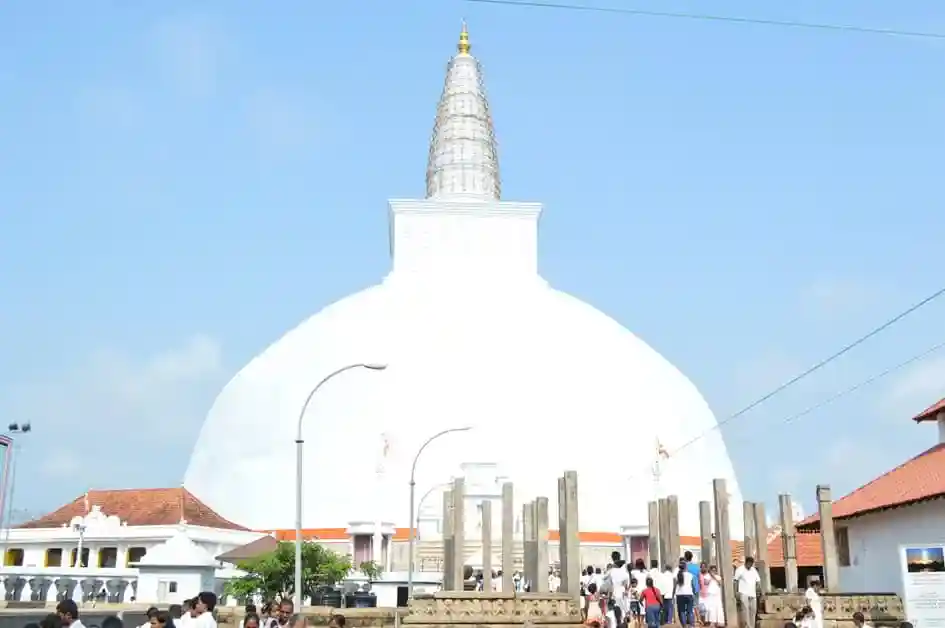
Ruwanwelisaya (Photo: Nalaka Priyantha)
Morning
Leave Negombo after breakfast and head north. If you are up very early, the Negombo fish market area near the lagoon is busiest around dawn, but it is entirely optional.
The drive to Anuradhapura usually takes around 4 to 4.5 hours. The land gradually changes from the coconut-growing west to the drier plains of the North-central region, with paddy fields and large reservoirs.
Afternoon
Arrive, have lunch, and check in. Rest through the hottest part of the day.
Anuradhapura was the capital of the island’s main kingdom for well over a thousand years. Chronicles date its founding as a capital to around the 4th century BCE. It remained the centre of royal power until the early 11th century CE, when invasions from South India led to the capital moving to Polonnaruwa. During that long period, Anuradhapura became one of the great centres of Theravada Buddhism in Asia.
Evening
Make a gentle first visit to the sacred area in the late afternoon or around dusk. Jaya Sri Maha Bodhi and Ruwanwelisaya are both active places of worship. In the evening, pilgrims often gather with flowers, oil lamps, and incense. Watching quietly from the edge is a respectful introduction to how this ancient city remains part of daily religious life.
Keep this visit short. You will return for a full day tomorrow.
Where to stay
Anuradhapura.
Accommodation guidance
Most hotels lie in the New Town or near the large reservoirs, such as Nuwara Wewa and Tissa Wewa. Lakeside properties can be pleasant for sunsets, while town-centre options are often closer to restaurants. Good air conditioning is worth paying for here. See our guide on where to stay in Anuradhapura.
Food and cultural experience
Try a home-style rice and curry with dhal, vegetable curries and mallung, a lightly cooked mix of shredded greens and coconut. You may also see kurakkan (finger millet) dishes on some menus, as this hardy grain is grown in the drier parts of the island.
Practical travel notes
Wear clothing that covers your knees and shoulders for the evening visit. White or light-coloured clothing is common among worshippers and is a thoughtful choice. You will remove your shoes and hats at shrines, so slip-on shoes save time.
Day 3: Explore the Sacred City of Anuradhapura
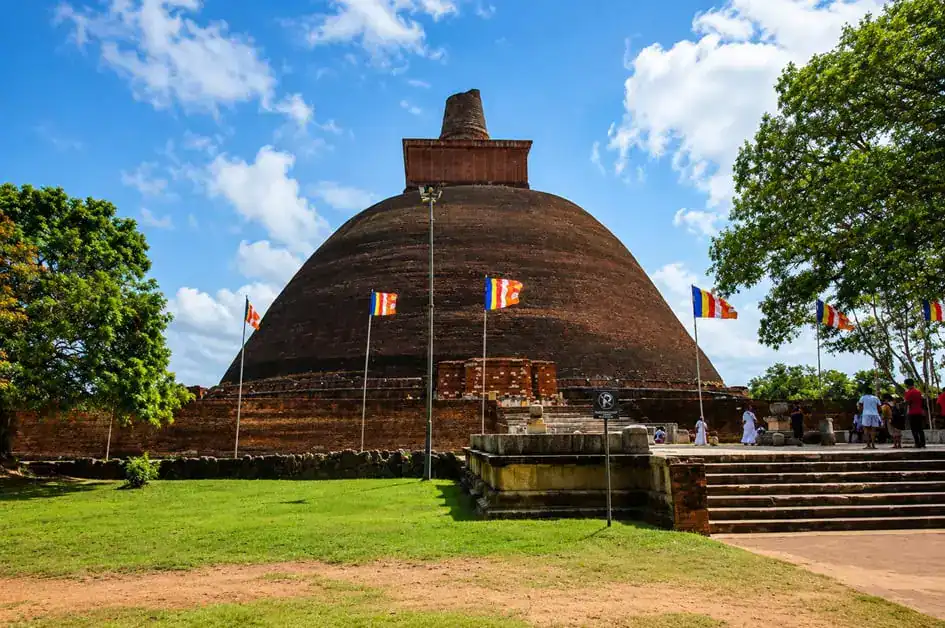
Jetavanaramaya (Photo: Nalaka Priyantha)
Anuradhapura is a vast site. Its monasteries, stupas, ponds, palaces, and reservoirs spread across many square kilometres. Trying to see everything in one day leads to exhaustion. Instead, focus on a well-chosen selection and plan around the heat.
Early morning
Start soon after sunrise at Jaya Sri Maha Bodhi. According to the island’s chronicles, this sacred fig tree grew from a branch of the tree in Bodh Gaya, India, under which the Buddha attained enlightenment. Tradition holds that the nun Sanghamitta, daughter of the Indian emperor Ashoka, brought the sapling to the island in the 3rd century BCE. The tree is often described as one of the oldest living trees with a recorded planting date. For Buddhists, it is one of the most sacred places in Sri Lanka, so expect worshippers from early morning.
Walk on to Ruwanwelisaya, the great white stupa. The chronicles credit its building to King Dutugemunu in the 2nd century BCE. Like most of the city’s great stupas, it has been restored and rebuilt many times, including major restoration work in the 20th century. Its brilliant white dome is a focus of worship, especially on full moon (Poya) days.
Nearby, Thuparamaya is traditionally regarded as the earliest stupa built in Sri Lanka after the arrival of Buddhism. The slender stone pillars around it once likely supported a protective roof structure, although scholars still discuss its exact form.
Midday
Return to your hotel for lunch and a rest. Late morning and early afternoon heat on the open sand and stone can be intense.
Afternoon
Head to the Abhayagiri monastery complex in the northern part of the city. According to tradition, King Valagamba founded Abhayagiri in the 1st century BCE, and it became one of the most influential monasteries in the Buddhist world. It was open to ideas from other Buddhist traditions, which sometimes put it at odds with the more conservative Mahavihara. The Chinese monk Faxian, who visited in the early 5th century CE, wrote about its large monastic community.
Highlights in this area include the Abhayagiri stupa, the calm Samadhi Buddha statue, the beautifully engineered Kuttam Pokuna (Twin Ponds), and the carved moonstones at building entrances. These semi-circular stone thresholds are a distinctive feature of Sri Lankan Buddhist architecture.
Late afternoon
Finish at Jetavanaramaya, built by King Mahasena in the 3rd century CE. Its brick dome is enormous. It is widely estimated to have been one of the tallest structures in the ancient world, before centuries of decay reduced its height. Seen at golden hour, it shows the scale of resources and labour that early Buddhist kingship could command.
If time and energy allow, Isurumuniya, a rock temple near Tissa Wewa, is known for its fine stone carvings. The identity of some figures, including the famous “Lovers”, remains debated.
Understanding the setting
As you move between sites, notice the reservoirs (wewa). Ancient Anuradhapura depended on a sophisticated network of tanks and channels that stored monsoon rain for farming through the dry season. Several of these reservoirs are still in use. This water management is one of the most important achievements of early Sri Lankan civilisation.
Where to stay
Anuradhapura (same hotel).
Accommodation guidance
Staying in the same room keeps the day simple and allows a proper midday rest.
Food and cultural experience
Try hoppers in the evening. These bowl-shaped rice-flour pancakes are often eaten with an egg cooked into the centre, alongside lunu miris, a spicy onion and chilli relish.
Practical travel notes:
- Tickets: Foreign visitors need a Central Cultural Fund ticket for the archaeological areas. Prices are set in US dollars, payable in rupees, and can change with exchange rates. Check the Central Cultural Fund’s ticket page before you travel, and confirm locally which monuments the ticket covers. Active temples, such as Jaya Sri Maha Bodhi, are managed separately.
- Getting around: Distances between sites are large. Use your driver, a tuk-tuk or a bicycle. Cycling is pleasant in the early morning but tiring in the afternoon heat.
- Heat and footwear: You will walk barefoot at shrines, and sand and stone become very hot by late morning. Plan shrine visits for early morning and late afternoon.
- Conduct: Dress modestly, remove shoes and hats where required, never pose with your back to a Buddha image, and do not climb on monuments.
- Guides: A knowledgeable licensed guide can greatly improve your understanding of this large and complex site.
Day 4: Mihintale and Journey to Sigiriya
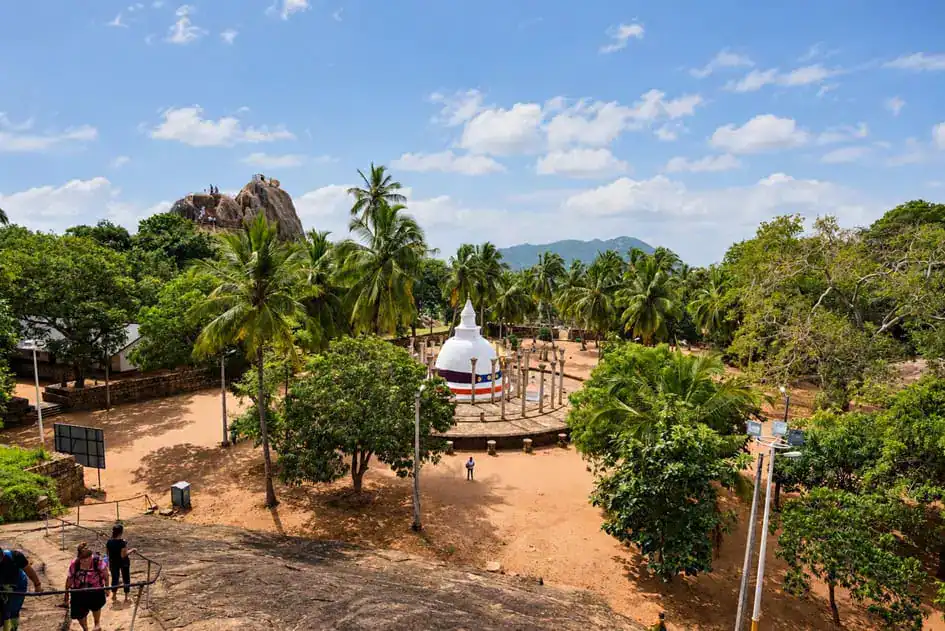
Mihintale – Anuradhapura (Photo: Nalaka Priyantha)
Early morning
Check out early and drive 20 to 30 minutes east to Mihintale. Arrive soon after sunrise, before the stone stairways and rock terraces heat up.
According to the chronicles, this hill is where the monk Mahinda Thera, son of the Indian emperor Ashoka, met King Devanampiya Tissa in the 3rd century BCE. Tradition says the king was out hunting when Mahinda stopped him and taught him the Buddha’s doctrine. The meeting is remembered as the formal introduction of Buddhism to Sri Lanka. It is celebrated every year on Poson Poya, the full moon in June.
A long stone stairway climbs the hillside. A total of more than 1,800 steps are often quoted for the whole site, depending on which terraces you visit. On the way up, you pass a monastic refectory with large stone rice troughs and inscribed slabs recording monastery rules. Higher up, look for:
- Ambasthala Dagoba, traditionally said to mark the meeting place of Mahinda and the king.
- Maha Seya, a large hilltop stupa with views across the plains.
- Aradhana Gala, a steep, exposed rock reached by rock-cut steps and a handrail. Skip it if you dislike heights.
Mihintale is not a separate UNESCO World Heritage Site, but it remains one of the island’s most important pilgrimage places. Allow two to three hours.
Afternoon
Drive 1.5 to 2.5 hours to Sigiriya or Habarana, stopping for lunch on the way. Check in and rest.
Evening
Keep it quiet. Tomorrow begins early.
Where to stay
Sigiriya or Habarana for three nights.
Accommodation guidance
Sigiriya puts you minutes from the rock fortress, while Habarana is slightly closer to Polonnaruwa. Many lodges sit among paddy fields and forest, so expect insects. See our guide on where to stay in Sigiriya.
Food and cultural experience
A light lunch of string hoppers with dhal and coconut sambol suits a hot travel day.
Practical travel notes
Foreign visitors pay an entrance fee at Mihintale, so confirm the current price on site. Take off your shoes on the upper sacred terraces, and the stone gets hot. Wear modest clothing and carry water. Around Poson Poya and other full moon days, crowds can be very large.
Day 5: Sigiriya Rock Fortress and Village Traditions
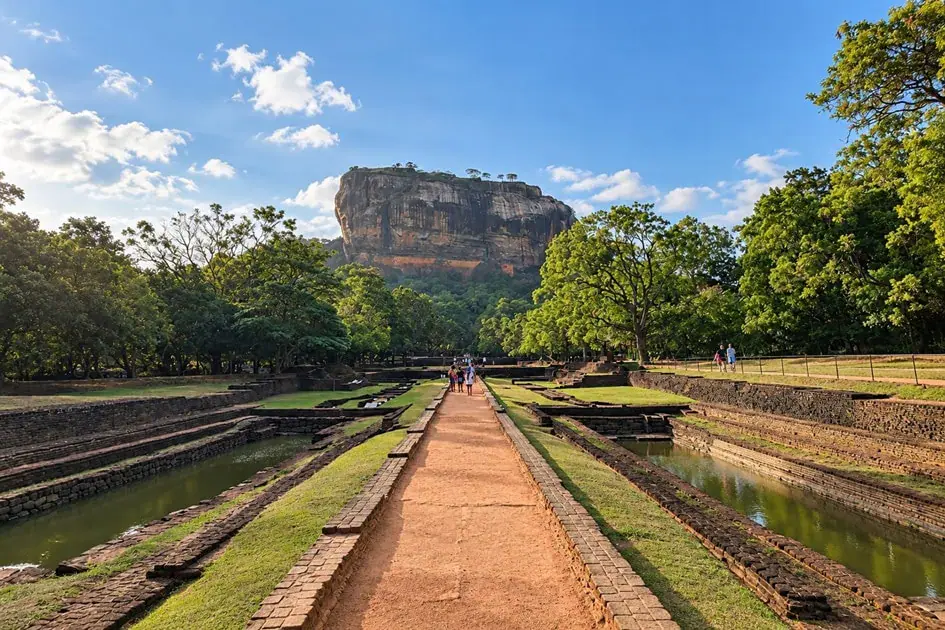
Sigiriya Rock Fortress (Photo: Nalaka Priyantha)
Early morning
Arrive at Sigiriya Rock Fortress when the ticket office opens, for cooler air and fewer people on the narrow stairways.
The popular story comes from the Culavamsa, a later section of the island’s chronicles. It tells how King Kashyapa (Kassapa I) seized the throne from his father, King Dhatusena, in the late 5th century CE and built a royal centre around this huge rock. After his defeat, the site became a Buddhist monastery again. Some scholars argue that religious use mattered more in Sigiriya’s history than this dramatic account suggests, so treat parts of the story as tradition rather than settled fact.
What is beyond doubt is the quality of the planning:
- Water gardens: Symmetrical pools, channels and fountains are often described as among the oldest surviving landscaped gardens in Asia.
- Boulder and terrace gardens: Natural boulders and rock shelters are worked into the design rather than removed.
- Frescoes: Paintings of women carrying flowers survive in a sheltered pocket of the rock. Whether they show celestial figures or royal women remains debated. Follow the posted photography rules.
- Mirror Wall: Visitors scratched hundreds of short verses into this polished plaster surface over several centuries. They are among the earliest surviving examples of Sinhala poetry. Do not touch the wall.
- Lion Gate and summit: Two huge carved paws mark the final climb. The summit holds palace foundations, cisterns, and wide views.
Allow three to four hours, plus time for the site museum. The climb involves around 1,200 steps, including metal stairways fixed to the rock face. Most reasonably fit visitors manage it at a steady pace.
Sigiriya opens between 5:00 am and 6:30 pm every day. Tickets are issued between 5:00 am and 5:00 pm. However, the frescoes area closes for tourists at 5:45 om.
Midday
Return to your hotel for lunch and a rest.
Late afternoon
Join a small, family-run cooking class or a responsibly run village experience. A cooking class shows how a rice and curry meal comes together from vegetables, coconut, and spices. Village tours with bullock-cart rides and lake crossings can be enjoyable. Still, they are organised for visitors and don’t reflect everyday life. Choose operators who pay hosts fairly. Read more about Sri Lankan village life.
Where to stay
Sigiriya or Habarana (same hotel).
Food and cultural experience
Try jackfruit or pumpkin curry with dhal and pol sambol, a fresh coconut and chilli relish.
Practical travel notes
Bring water, a hat and sun protection, and wear shoes with good grip. Wasps nest on parts of the rock, and the climb is sometimes closed after wasp activity, so follow staff instructions. Check current Central Cultural Fund prices and hours before your visit.
Day 6: Ancient City of Polonnaruwa
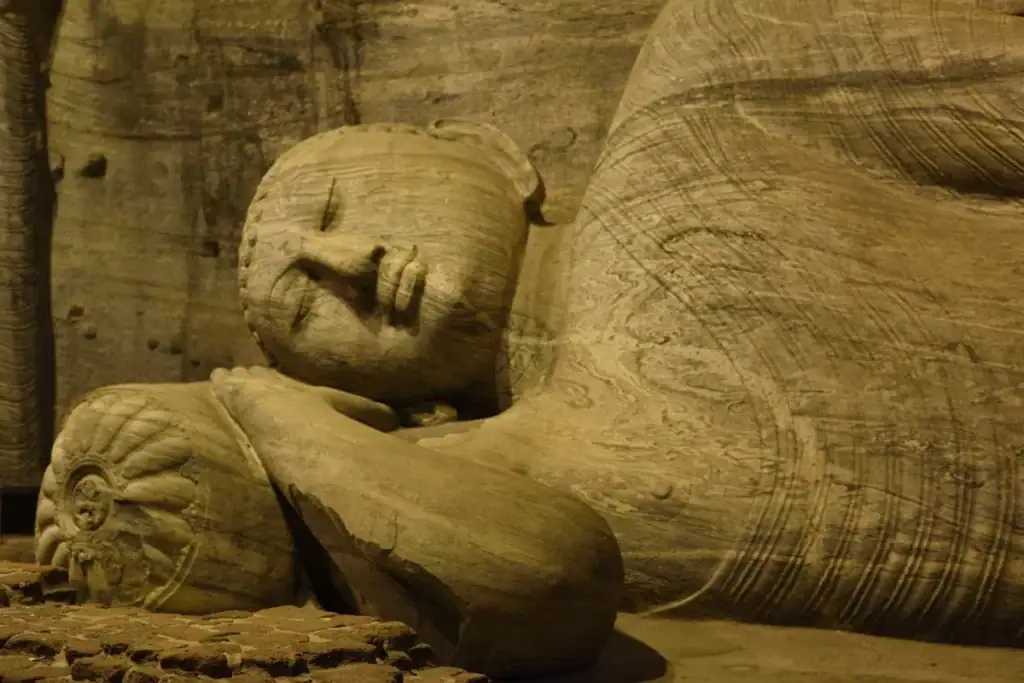
A Buddha statue – Gal Viharaya, Polonnaruwa (Photo: Nalaka Priyantha)
Morning
Leave early for Polonnaruwa, about 1 to 1.5 hours away. Begin at the archaeological museum near the entrance, whose models make the scattered ruins easier to understand.
Polonnaruwa became the capital after Anuradhapura fell to the Chola rulers of South India around the early 11th century. The Cholas ruled from here until King Vijayabahu I drove them out later that century. The city reached its peak in the 12th century under Parakramabahu I and Nissanka Malla. It is more compact than Anuradhapura; its monuments are generally better preserved, and it shows stronger South Indian and Hindu influence.
Highlights include:
- Royal Palace complex: Parakramabahu’s thick brick palace walls, the council chamber with carved elephants and lions, and the royal bathing pool.
- Sacred Quadrangle: The circular Vatadage, with guardstones, a moonstone, and seated Buddhas, is the centrepiece. Nearby stand the Hatadage, the Gal Pota stone inscription of Nissanka Malla and the stepped Satmahal Prasada.
- Shiva Devale No. 2: A small stone Hindu temple from the Chola period, showing the city’s mixed religious life.
- Rankoth Vehera and Lankatilaka: A great stupa and a towering brick image house.
Midday
Rest over lunch in the shade.
Afternoon
Visit Gal Vihara, where four Buddha images were carved from one granite outcrop in the 12th century. The reclining figure is about 14 metres long. Scholars still debate whether the standing figure represents the Buddha or his disciple Ananda. Gal Vihara is an active place of worship, so remove shoes and hats and never pose with your back to the images.
If time allows, finish beside Parakrama Samudra, the vast reservoir linked by the chronicles to Parakramabahu I. The nearby Potgul Vehera statue shows either a king or a sage; interpretations differ.
Evening
Return to Sigiriya or Habarana for a quiet dinner.
Where to stay
Sigiriya or Habarana (same hotel).
Food and cultural experience
Freshwater fish from local reservoirs often appears on menus here, and vegetarian rice and curry is easy to find.
Practical travel notes
The site is spread out, so use your vehicle or hire a bicycle. Most monuments are fully exposed to the sun. Keep your ticket with you, as it may be checked at several points, and do not climb on walls or statues.
Day 7: Dambulla Cave Temple and Journey to Kandy
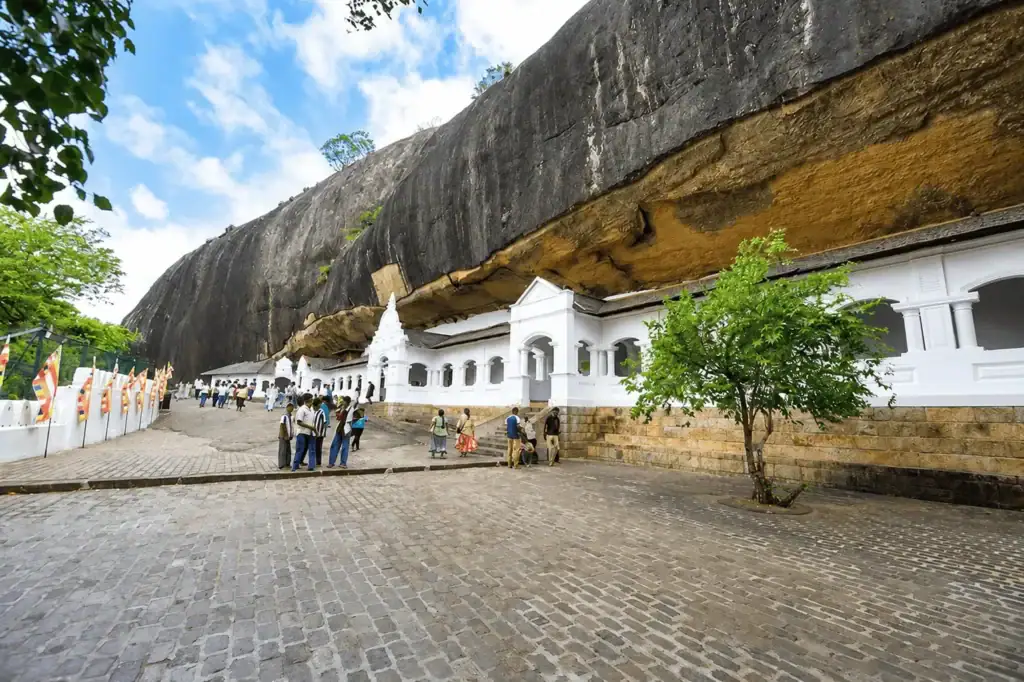
Dambulla Cave Temple (Photo: Nalaka Priyantha)
Morning
Check out and drive 30 to 45 minutes to Dambulla Cave Temple, a UNESCO World Heritage site.
A path climbs the rock for around 20 to 30 minutes to a row of five caves set under a great overhang. Monks are thought to have used rock shelters here from well before the Common Era. Tradition links the temple’s royal patronage to King Valagamba, who is said to have sheltered here during exile in the 1st century BCE. Much of the painting visible today dates from repainting in the 18th-century Kandyan period.
Inside, more than 150 images of the Buddha, along with kings and deities, sit beneath ceilings covered in murals. The largest cave holds rows of seated and standing Buddhas. Allow about 1.5 to 2 hours.
The large golden Buddha and museum at the foot of the hill are a modern addition. They are not the historic caves.
Dambulla Cave Temple opens from 7:00 am to 5:00 pm.
Afternoon
Continue to Kandy, about 2-3 hours away. If you want one cultural stop, choose Aluvihare Rock Temple near Matale. Tradition holds that monks first wrote down the Buddhist Pali Canon here in the 1st century BCE. Nalanda Gedige, a small stone temple combining Hindu and Buddhist design, is another option.
Evening
Check in and rest.
Where to stay
Kandy for three nights.
Accommodation guidance
Hotels near the lake and city centre allow you to walk to the Temple of the Tooth. Hillside properties are quieter and cooler but often require a tuk-tuk. Kandy traffic is heavy, so location matters.
Practical travel notes
Buy tickets at the foot of the hill. Leave shoes at the counter before the caves, and cover shoulders and knees. Flash photography and poses with your back to Buddha images are not allowed. Watch out for monkeys near the path.
Day 8: Kandy’s Sacred and Cultural Heritage
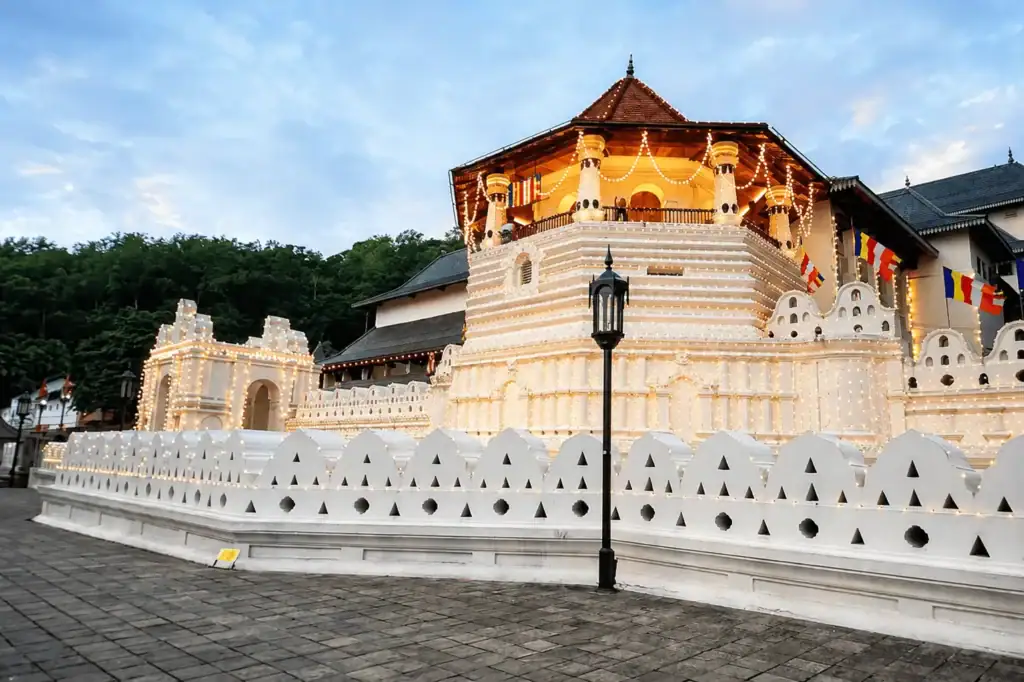
Temple of the Tooth – Kandy (Photo: Nalaka Priyantha)
Early morning
Visit the Temple of the Tooth for one of its daily rituals. According to tradition, a tooth relic of the Buddha reached the island in the 4th century CE. Over time, it became a symbol of the right to rule, so successive capitals housed it. The temple you see today was largely shaped by the Kandyan kings, with the octagonal pavilion added in the early 19th century.
During the ritual, called thevava, drummers play, and devotees bring flowers to the inner shrine. The relic itself is kept inside nested caskets and is not shown to visitors. The temple lists daily rituals starting at 5:30 am, 9:30 am, and 6:30 pm. Expect queues and security checks.
The Temple of the Tooth opens from 5:30 am to 8:00 pm.
Late morning
Walk through the surrounding area. The Audience Hall is where Kandyan chiefs signed the 1815 Kandyan Convention, which ended the island’s last independent kingdom and placed it under British rule. Nearby stand four shrines to guardian deities: Natha, Vishnu, Kataragama, and Pattini devales. Their position beside the Temple of the Tooth reflects how Buddhist and Hindu-derived devotion are closely connected in Kandyan tradition.
Afternoon
Rest, then walk around Kandy Lake, created under the last Kandyan king in the early 19th century. Nearby streets mix colonial buildings, mosques, churches, and Hindu temples.
Evening
Several venues near the lake stage Kandyan dance and drumming performances, usually in the early evening. These are shows for visitors, but they present real traditional dance forms. Check current times locally, as schedules change.
Where to stay
Kandy (same hotel).
Food and cultural experience
Try kiribath, rice cooked in coconut milk and often served with lunu miris. Look out for traditional sweets such as kavum and kokis.
Practical travel notes
Wear white or light-coloured clothes that cover your shoulders and knees. Leave shoes at a counter outside, and remove hats. Foreign visitors pay an entrance fee. During the Esala Perahera (usually July or August), crowds, road closures, and hotel prices rise sharply.
Day 9: Living Traditions and Cultural Experiences in Kandy

Peradeniya Royal Botanical Garden (Photo: Koshy Koshy, CC BY 2.0)
Morning
Visit the Royal Botanic Gardens, Peradeniya, about 20 to 30 minutes from central Kandy. The British established these gardens in the 19th century, and the Department of National Botanic Gardens now manages them. Highlights include the palm avenues, the orchid house, the spice garden, and huge old trees. The gardens are not a UNESCO site, but they help explain the role of botany and plantation agriculture in colonial Ceylon. Allow two to three hours.
Opening hours of the Peradeniya Royal Botanical Gardens are between 7:30 am and 6:00 pm. Ticketing hours are between 7:30 am and 5:00 pm.
Afternoon
Choose one or two experiences rather than rushing several:
- Embekke, Gadaladeniya, and Lankathilaka temples: These 14th-century temples lie a short drive from Peradeniya. Embekke Devale is known for its carved wooden pillars.
- Kandyan crafts: Kandy has a long tradition of brass work, lacquer work, wood carving, and weaving. Craft shops and associations near the lake sell local work. Ask where items are made.
- Museums: The Kandy National Museum near the Temple of the Tooth displays objects from the Kandyan period.
Where to stay
Kandy (same hotel).
Food and cultural experience
Kandy’s town centre has many simple places serving rice and curry, hoppers, and short eats such as patties and rolls.
Practical travel notes
Check the Botanic Gardens’ opening hours and fees with the Department of National Botanic Gardens. Dress modestly at Embekke and the other active temples.
Day 10: Kandy to Historic Galle
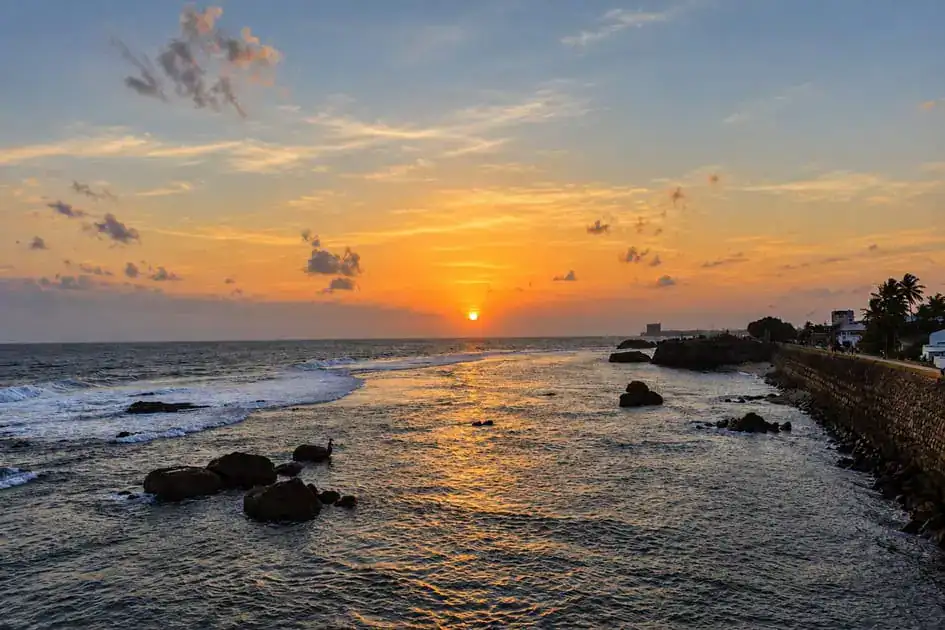
Sunset at the Flag Rock Bastion, Galle Fort (Photo: Nalaka Priyantha)
Morning
Leave Kandy after an early breakfast. The drive to Galle usually takes 4.5 to 6 hours. Treat this as a travel day, with rest stops but no heavy sightseeing.
Afternoon
Arrive and check in. After a week of inland capitals, you reach a port that traded for centuries with Arab, Indian, Chinese, and later European merchants.
Evening
If you have the energy, walk a short section of the Galle Fort ramparts at sunset, when local families gather on the bastions.
Where to stay
Galle for two nights.
Accommodation guidance
Staying inside the fort lets you explore on foot early and late in the day. Hotels just outside are often more spacious and better value. See our guide on where to stay in Galle.
Day 11: Galle Fort and Maritime Heritage
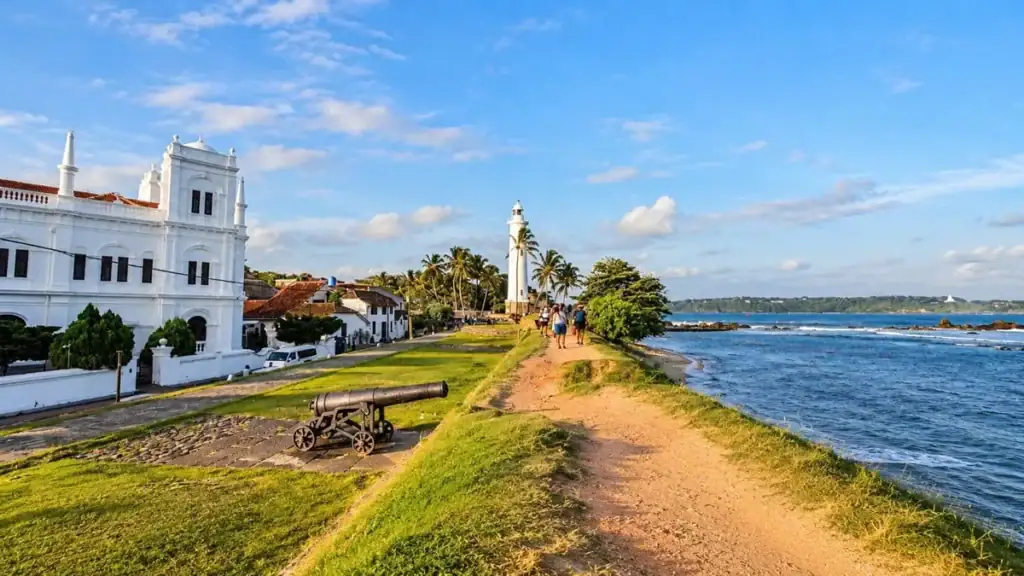
Meeran Mosque, the Lighthouse, a rampart, and the ocean (Photo: Nalaka Priyantha)
Morning
Start early, before the heat builds, with a walk around the ramparts of Galle Fort. The Portuguese built the first fortifications in the late 16th century. The Dutch captured Galle in 1640 and built most of the walls and bastions seen today. The British took over in 1796. UNESCO lists the Old Town of Galle and its Fortifications as an example of a European-built fortified town in South Asia, shaped by both European design and local traditions.
Pass through the Old Gate and the lighthouse, whose present tower dates from the British period.
Late morning
Explore the grid of historic streets. Look for:
- The Dutch Reformed Church, rebuilt in the mid-18th century, with old gravestones set into its floor.
- All Saints’ Church, built during the British period.
- The white Meeran Jumma Mosque near the lighthouse reflects Galle’s long-established Muslim community.
Remember that buildings date from different centuries. Not everything in the fort is “Dutch”.
Afternoon
Rest, then visit a museum such as the National Maritime Museum if it is open, or wander. Galle Fort is still a living town, home to families who have lived here for generations, alongside schools, offices, and places of worship.
Evening
Return to the ramparts for sunset.
Where to stay
Galle (same hotel).
Food and cultural experience
Try ambul thiyal, a sour fish curry associated with southern Sri Lanka and often prepared with goraka (a dried tropical fruit).
Practical travel notes
Respect residents’ privacy when taking photos. Dress modestly at mosques and churches, and remove your shoes where required.
Day 12: Galle to Bandaranaike International Airport
Morning or afternoon
Transfer to Bandaranaike International Airport. The drive usually takes 2-3 hours using the expressways, but traffic around Colombo can add time. Airlines often recommend arriving around three hours before an international departure.
This plan works best for afternoon or evening flights. For early-morning departures, you should spend the final night near the airport, for example in Negombo. This changes the overnight plan, so arrange it in advance. Avoid sightseeing on the way.
Where to stay
No overnight stay is needed.
Understanding Sri Lanka’s Cultural Heritage
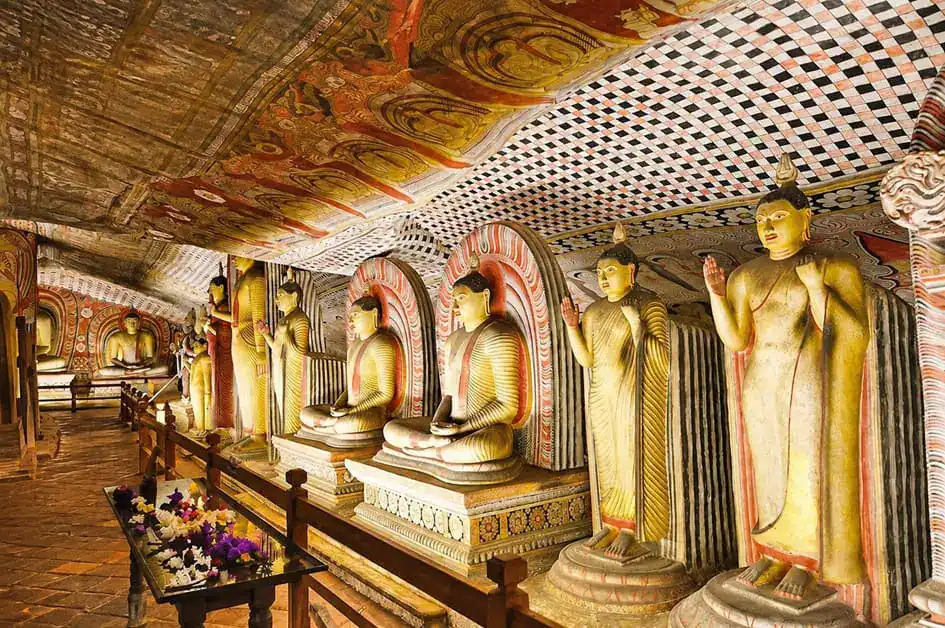
Buddha statues and murals – Dambulla Cave Temple (Photo: Nalaka Priyantha)
This route follows the main chapters of heritage in Sri Lanka. Anuradhapura and Mihintale represent the early Buddhist kingdom, which was built on monastic learning, royal patronage, and irrigation. Sigiriya shows a brief but ambitious royal vision. Polonnaruwa reveals a medieval capital shaped by South Indian contact and great water engineering. Dambulla shows how religious art continued over many centuries, while Kandy shows how royal power and Buddhist ritual endured until the British took control of the kingdom in 1815. Galle adds the story of trade, colonial rule, and communities that shaped the island’s multicultural society.
Culture in Sri Lanka has never belonged to one group. Sinhala Buddhist, Tamil Hindu, Muslim, Christian, and Burgher traditions all contribute to the country’s religious life, language, food, and architecture. These traditions continue to evolve.
Best Time of Year for This Cultural Itinerary
You can follow this itinerary at any time of year, but conditions vary by region.
- Cultural Triangle: Anuradhapura, Polonnaruwa, and Sigiriya are hot for much of the year. The main rains usually fall from about October to January. Start early and rest at midday.
- Southwest Monsoon: From roughly May to September, Galle and the Southwest receive more rain, while the Cultural Triangle is generally drier.
- Kandy: At a higher elevation, Kandy is usually milder but can have heavy showers in several seasons.
- Inter-monsoon periods: Around March to April and October to November, afternoon thunderstorms can occur across the island.
No single month suits every stop perfectly. Plan outdoor sites for early mornings and build some flexibility into the schedule. Read more about the best time to visit and the weather in Sri Lanka.
Accommodation Guidance Along the Route
Negombo needs only one convenient night near the airport. In Anuradhapura, prioritise good air conditioning and easy access to the sacred area. In Sigiriya or Habarana, a peaceful lodge suits three nights of early starts. In Kandy, decide between walkable central hotels and quieter hillside views. In Galle, stay inside the fort for atmosphere or just outside for space and value. See our guide on how to choose where to stay in Sri Lanka.
Food and Culinary Experiences
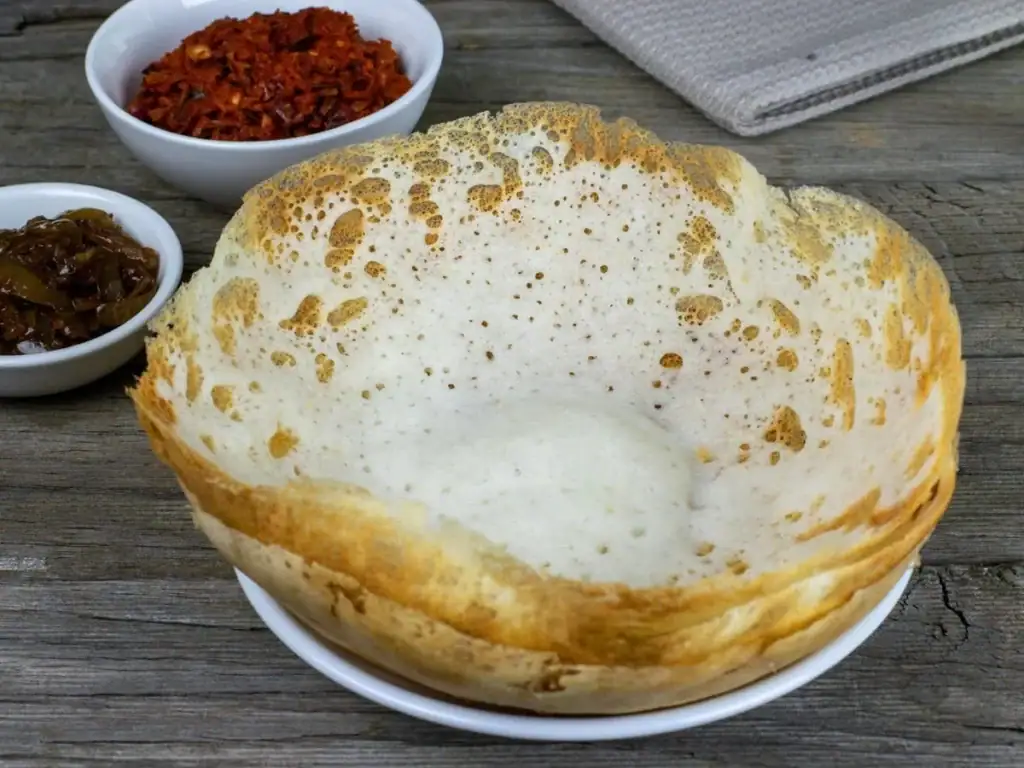
Sri Lankan Hoppers (Photo: Kavinda F, via Pixabay)
Food is part of culture in Sri Lanka. Rice and curry is the everyday meal, with rice served alongside several vegetable, lentil, fish, or meat curries. Breakfast and dinner often include hoppers, string hoppers, pittu (steamed rice flour and coconut) or pol roti. Pol sambol, made from grated coconut, onion, chilli, and lime, appears with many dishes. Dishes such as lamprais reflect Burgher heritage, while watalappan, a spiced coconut custard, is associated with the Muslim community.
Spice levels vary, so ask for “less spicy” if needed. Vegetarian food is easy to find. Many Sri Lankans eat with the right hand, but cutlery is always available. Explore more Sri Lankan food.
Temple Etiquette and Cultural Respect
Most sites on this route are active places of worship. A few simple habits show respect:
- Cover your shoulders and knees. Light, loose clothing in white or pale colours suits Buddhist sites.
- Remove shoes and hats where required. Shoes are usually left at a counter for a small fee.
- Never pose with your back to a Buddha image, touch statues, or climb on monuments.
- Keep your voice low, and do not walk in front of people who are praying.
- Ask before photographing worshippers or monks, and follow posted photography rules.
- Clothing or tattoos showing Buddha images can cause serious offence and may lead to problems with officials.
Respect for temples and sacred sites applies equally at Hindu shrines, mosques, and churches.
Entrance Fees, Opening Hours and Booking Advice
The Central Cultural Fund (CCF) sells tickets for several major sites. Prices are set in US dollars and charged in rupees at the daily exchange rate. In October 2026, its listed full foreign tickets were:
| Site | CCF foreign full ticket |
| Sigiriya | USD 35 |
| Anuradhapura | USD 30 |
| Polonnaruwa | USD 30 |
The Temple of the Sacred Tooth Relic lists a foreign visitor fee of LKR 3,000 (LKR 2,500 for SAARC nationals). It opens between 5:30 am and 8:00 pm, with daily rituals at 5:30–7:00 am, 9:30–11:00 am and 6:30–8:00 pm. Buy tickets only from the official machines on site.
Dambulla Cave Temple, Mihintale, and the Royal Botanic Gardens, Peradeniya, charge their own fees. Check these locally or with the managing body before you travel.
Fees and hours change. Check the Central Cultural Fund and the Temple of the Tooth website shortly before your trip.
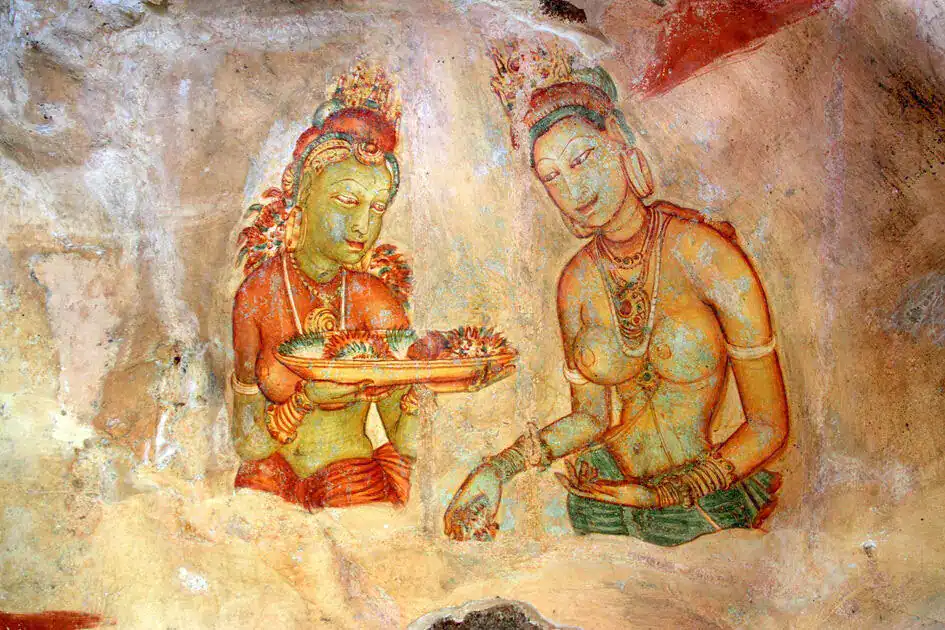
Frescoes in Sigiriya (Photo: Yves Picq, CC BY-SA 4.0)
Estimated Budget for 12 Days
- Heritage tickets: The three CCF sites and the Temple of the Tooth alone come to roughly USD 105 per adult. Dambulla, Mihintale, Peradeniya, and museums add more.
- Private driver: Usually the largest transport cost. Quotes depend on vehicle size, distance, fuel, and whether the driver’s meals and accommodation are included. Always confirm what the price covers.
- Accommodation: Ranges from simple guesthouses to boutique heritage hotels.
- Food: Local rice and curry restaurants are inexpensive. Hotel dining costs considerably more.
- Guides and activities: Licensed guides at major sites, cooking classes, and dance performances add moderate costs.
Read our tips on budget travel in Sri Lanka.
What to Pack for a Cultural Journey
- Breathable, lightweight clothing
- Temple clothing covering shoulders and knees, plus a light scarf or sarong
- Comfortable walking shoes with good grip for Sigiriya and Mihintale
- Slip-on sandals that are easy to remove at temples
- Thin socks for hot stone surfaces where permitted
- Sun hat, sunglasses, and sunscreen
- Compact umbrella or light rain jacket
- Refillable water bottle
- Insect repellent
- Small rupee notes for shoe counters, offerings, and tuk-tuks
Practical Travel Tips and Common Mistakes
- Underestimating travel times: Sri Lankan roads are slower than distances suggest.
- Overloading site days: Anuradhapura and Polonnaruwa deserve unhurried visits with a midday break.
- Visiting in peak heat: Climb Sigiriya and Mihintale early.
- Wrong clothing: Shorts and sleeveless tops can get you turned away.
- Misunderstanding UNESCO listings: Mihintale and Peradeniya are not separate World Heritage Sites.
- Booking an early final flight: This makes the Galle-to-airport transfer risky.
- Assuming full accessibility: Steps, uneven ground, and barefoot areas are common.
Flexibility and Alternative Experiences
- Reduced mobility: Skip the Sigiriya summit and enjoy the water gardens and museum instead. Visit Mihintale’s lower terraces, and explore Anuradhapura and Polonnaruwa by vehicle with short walks.
- A slower pace: Choose one major site per day and spend afternoons resting.
- Rainy conditions: Swap outdoor sites for Dambulla’s caves, the Temple of the Tooth, museums, or a cooking class.
- Families with children: Keep site visits short and add pool time.
- Archaeology or living-culture focus: Archaeology lovers can add Isurumuniya or Polonnaruwa’s outer monuments. Culture lovers can spend more time with Kandyan crafts, temple rituals, and food.
Highlights of the 12-Day Cultural Journey
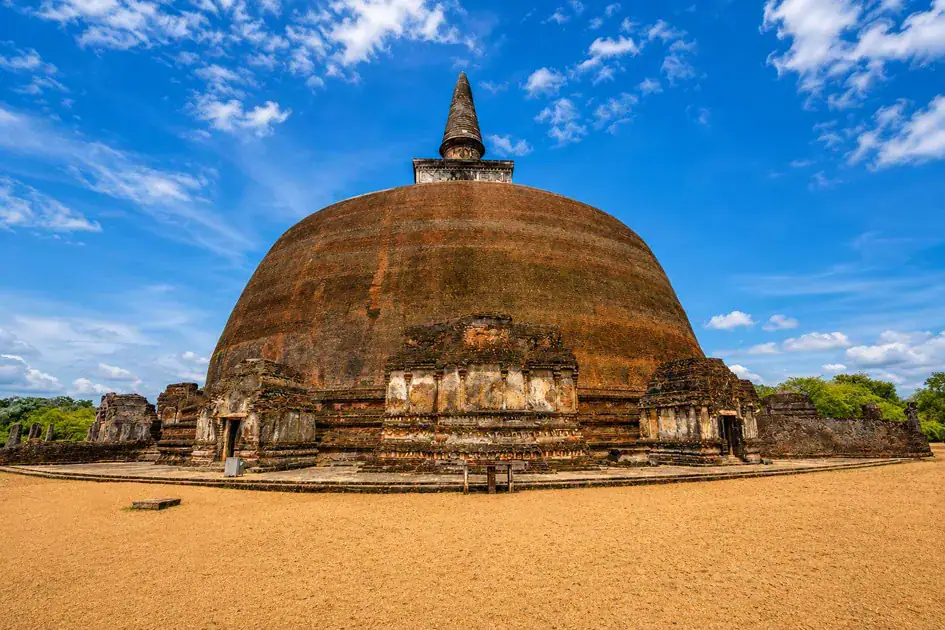
Rankoth Vehera in Polonnaruwa (Photo: Nalaka Priyantha)
The most memorable moments combine history and living faith. Evening lamps around Ruwanwelisaya, the climb to Mihintale’s summit, Sigiriya’s frescoes and water gardens, and the quiet power of Gal Vihara reveal different stages of the island’s past. Dambulla’s painted caves, the drumming at the Temple of the Tooth and sunset on Galle’s ramparts complete a journey from the earliest kingdoms to the colonial coast.
Final Thoughts
A 12-Day Sri Lanka Cultural Itinerary offers time to understand, not just visit, the island’s great heritage sites. From Anuradhapura to the fortified streets of Galle, each stop adds another chapter to Sri Lanka’s long history.
Travel slowly, start early and treat sacred places with care. You will leave understanding the island’s ancient kingdoms and living traditions far better.
If you are visiting Sri Lanka for the first time, we recommend reading about finding the best Sri Lanka itinerary for your travel season and our Complete Planning Guide for First-Time Visitors.
Map – 12-Day Sri Lanka Cultural Itinerary
Sources and References:
- UNESCO World Heritage Centre – Sacred City of Anuradhapura — Historical and archaeological significance of Anuradhapura, its Buddhist monuments and World Heritage designation.
- UNESCO World Heritage Centre – Ancient City of Sigiriya — Sigiriya’s royal history, archaeological remains, landscape design and cultural significance.
- UNESCO World Heritage Centre – Ancient City of Polonnaruwa — The medieval capital, royal monuments, Buddhist architecture and historical development.
- UNESCO World Heritage Centre – Rangiri Dambulla Cave Temple — Buddhist cave shrines, religious sculptures, mural paintings and continuing religious traditions.
- UNESCO World Heritage Centre – Sacred City of Kandy — Kandy’s royal heritage, the Temple of the Sacred Tooth Relic and its importance as a Buddhist pilgrimage centre.
- UNESCO World Heritage Centre – Old Town of Galle and its Fortifications — Galle’s maritime history, colonial fortifications, architectural heritage and multicultural significance.
- Central Cultural Fund, Sri Lanka – Official Website — Conservation, management and presentation of Sri Lanka’s major archaeological and cultural heritage sites.
- Central Cultural Fund – Heritage Site Ticket Information — Official information about entrance tickets and visitor arrangements at major archaeological attractions.
- Central Cultural Fund – Official eTicket Reservation — Online ticket reservations and visitor information for selected heritage sites, including Sigiriya, Anuradhapura and Polonnaruwa.
- Sri Lanka Tourism – Heritage: Discover the Past — An overview of Sri Lanka’s ancient kingdoms, archaeological monuments, sacred cities and cultural heritage.
- Sri Lanka Tourism – Buddhist Places and Mihintale — Historical and religious information about Mihintale, the introduction of Buddhism and Buddhist pilgrimage traditions.
- Sri Dalada Maligawa – Temple of the Sacred Tooth Relic — Official information about the temple’s history, religious significance, cultural traditions and visitor facilities.
- Sri Dalada Maligawa – Visitor Information and Frequently Asked Questions — Guidance on entrance fees, opening hours, daily religious rituals, dress requirements and visitor conduct.
- Department of National Botanic Gardens, Sri Lanka – Official Website — Information about the Royal Botanic Gardens, Peradeniya, its history, botanical collections and visitor attractions.
Note: Entrance fees, opening hours, ticketing procedures, and visitor arrangements may change. Travellers should check the relevant official websites before visiting. Journey times are approximate and depend on traffic, weather, road conditions, and stops.
Featured image: Sigiriya – Ancient Rock Fortress (Photo: VacacionesPagodasBlog from Pixabay)

I am a Sri Lankan medical doctor who spends my free time travelling, exploring new destinations, and documenting the beauty of the island I call home. I have journeyed across almost every corner of Sri Lanka with my wife and daughter — from wildlife parks and misty mountains to ancient cities, deep forests, rugged landscapes, and quiet beaches.
Travel is not just a hobby for me — it’s a way of life. I love nature, enjoy road trips, and find joy in wildlife photography. I also read widely about tourism, travel trends, and destination culture. Through my writing, I aim to help travellers experience Sri Lanka through real stories, meaningful insights, and honest recommendations — the same way I explore it with my own family.