
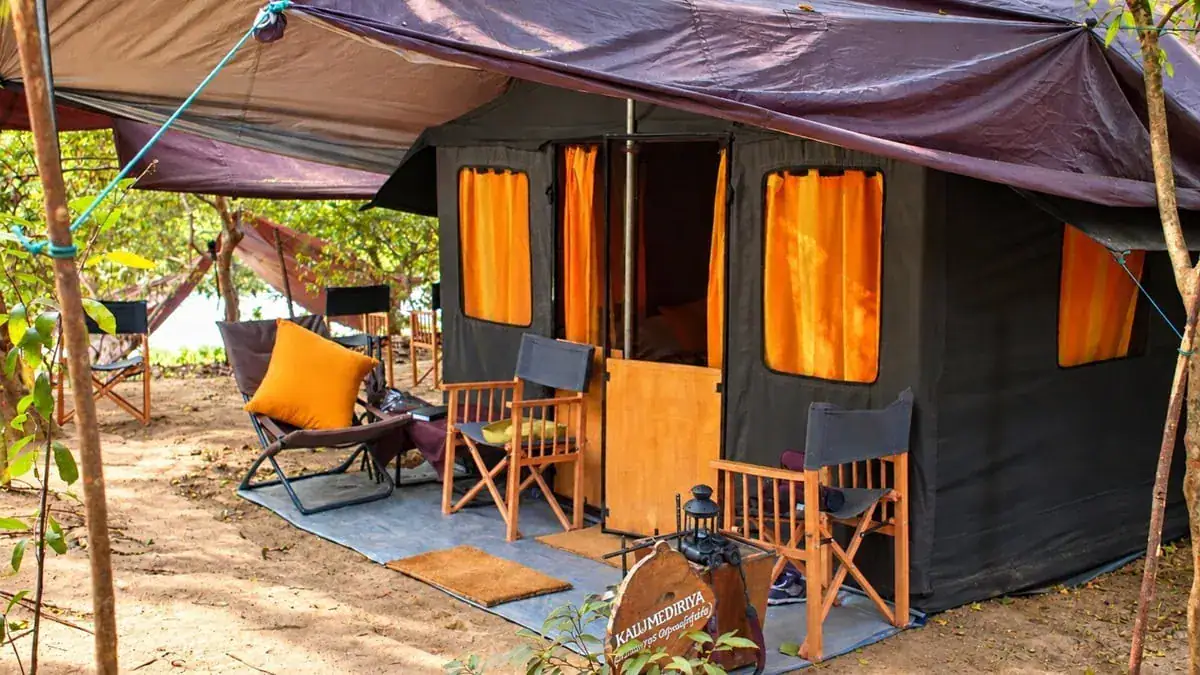

Camping in Sri Lanka rarely means getting off a bus with a rucksack and pitching a tent wherever you find a flat patch of ground. For most international visitors, it means a furnished tent on the edge of a national park, a guided trek through the Knuckles hills with camp set up at the end of the day, a riverside base for rafting at Kitulgala, or a small eco-camp beside a reservoir in Gal Oya. Glamping in Sri Lanka has grown up around these experiences, and the tent is often the least important part of the decision.
So there is no single best campsite on the island. The right choice depends on what you want outside the tent: nature & wildlife, mountain trails, river adventure, rainforest, or the coast. A night at a safari camp near Yala and two nights on a trekking route in the Central Highlands are very different trips in terms of comfort, effort, and planning.
For most travellers, booking a managed camp or glamping site will be far easier than bringing their own equipment, and the advice below assumes that unless it says otherwise.
What Is Camping and Glamping Like in Sri Lanka?
Sri Lanka’s camping scene is built mainly around organised stays rather than self-pitch campsites. The Sri Lanka Tourism Development Authority (SLTDA) treats luxury camping (glamping), caravan or RV camping, and mobile camping as separate categories, which tells you something about how the market works. You’ll rarely find the European model of marked pitches, a shower block, and a campsite shop.
What you will find falls into a few broad types:
- Safari camps: tented accommodation just outside wildlife parks such as Yala, Wilpattu and Udawalawe. Jeep safaris are usually arranged through the camp.
- Trekking camps: simpler tents set up by guides along hiking routes, mostly in the Knuckles region and other hill areas.
- Adventure camps: riverside or reservoir bases where the stay is bundled with rafting, kayaking, canyoning, or hiking.
- Eco-camps: small, low-impact stays in rainforest, reservoir, or village settings, often with guided nature walks.
- Mobile or expedition camps: temporary camps that move with a group, used on some multi-day treks and wildlife trips.
Caravan and RV travel is officially recognised but still uncommon, so it isn’t a realistic way for most visitors to explore the country yet.
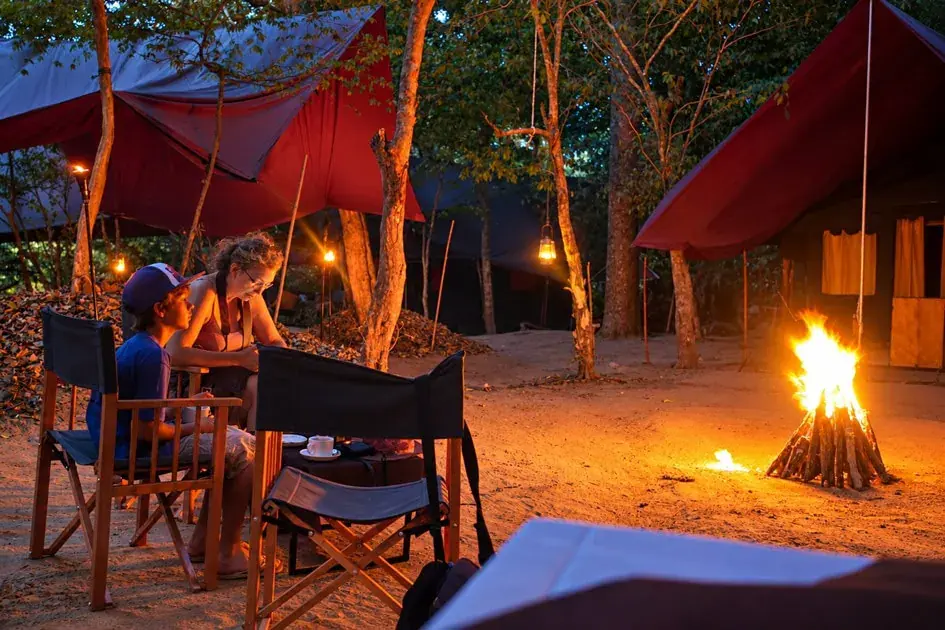
Camp at night – Yala (Photo: Nene La Beet, CC BY-NC-SA 2.0)
Camping vs glamping
The difference is mostly about comfort and how much is done for you. Camping in Sri Lanka can mean a basic dome tent, a sleeping mat, shared toilets, and meals cooked over a simple kitchen set-up, especially on guided treks and adventure camps. You’re there for the walk, the river or the view, and the tent is just where you sleep.
Glamping usually adds a proper bed, a furnished tent on a raised platform, an attached or private bathroom, lighting and charging points, prepared meals and organised activities. The better safari camps also have naturalists who lead game drives and explain what you’re seeing.
The word “glamping” is used loosely, though. One property may offer air-conditioned tents with a plunge pool. At the same time, another may have a canvas tent with a real mattress and a shared bathroom nearby. Read the room description and recent guest photos carefully rather than assuming the label means a particular standard.
Do you need to bring camping equipment?
In most cases, no. Safari camps, glamping sites, and most guided trekking or adventure camps supply the tent, bedding and meals, and many include transfers or can arrange them. This is one reason managed camps suit foreign visitors so well: you can add a night or two under canvas to a normal trip without carrying gear around the island.
Inclusions still vary. Some trekking operators provide sleeping bags while others expect you to bring your own or hire one, and simpler camps may not provide towels. Ask exactly what is supplied when you book. Whatever kind of camp you choose, a torch or headlamp, a light rain jacket, and suitable footwear are almost always worth packing.
Best Places for Camping and Glamping in Sri Lanka
The table below is a quick way to match each area to the kind of trip you have in mind. It reflects Sri Lanka Travel Life’s editorial assessment of how established each area is with international travellers. There are no official figures ranking campsites by foreign visitor numbers, so treat it as a planning guide rather than a statistic.
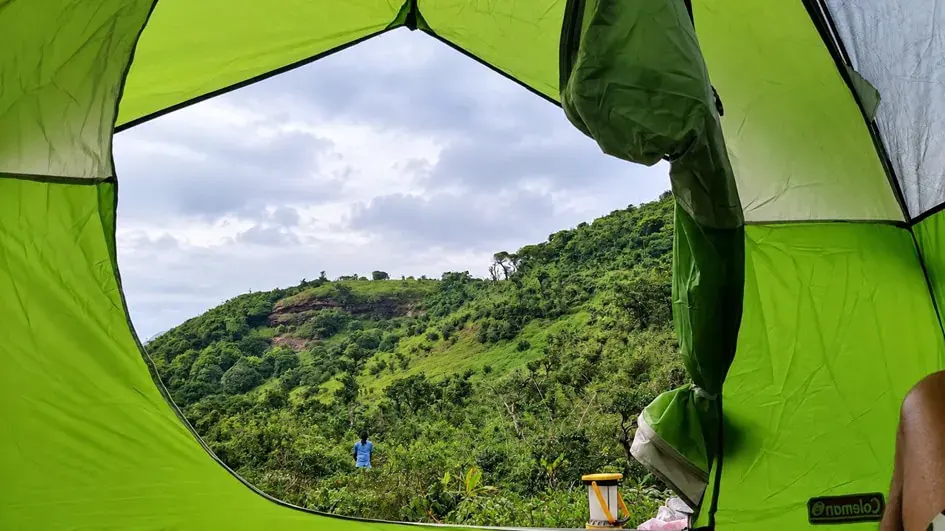
Camping in Sri Lanka with a mountain view – Knuckles Mountain Range (Photo: Randipa, CC BY-SA 4.0)
Which Sri Lanka camping area suits you?
| Area | Best for | Camping style | Current foreign-traveller relevance | Suggested stay | Future potential |
| Yala | Wildlife / first safari | Safari glamping | Very high | 1–2 nights | Very high |
| Wilpattu | Wilderness safari | Safari camping | High | 1–2 nights | Very high |
| Knuckles | Hiking | Trekking/wilderness | High | 1–3 nights | Very high |
| Kitulgala | Adventure | River/adventure | High | 1–2 nights | High |
| Udawalawe | Elephants/families | Safari/nature | Medium–high | 1–2 nights | High |
| Meemure | Remote mountains | Village/wilderness | Medium | 1–2 nights | Very high |
| Belihuloya | Outdoor activities | Adventure/nature | Medium | 1–2 nights | Very high |
| Gal Oya | Quiet premium nature | Eco-glamping | Medium | 1–2 nights | Very high |
| Horton Plains / Ohiya / Bambarakanda | Highland hiking | Mountain/nature | Medium | 1–2 nights | High |
| Sinharaja fringes | Rainforest/birding | Eco/nature | Medium/niche | 1–2 nights | High |
| Kalpitiya | Coast/water sports | Coastal / adventure | Niche | 1–2 nights | Medium–high |
| Arugam Bay / Panama / Kumana | Surf + nature | Coastal / wilderness | Niche | 1–2+ nights | High |
The sections below group these 12 areas by the experience they offer: safari, mountains, rainforest and river adventure, and the coast.
Safari Camping and Glamping
Tented camps beside Sri Lanka’s dry-zone national parks are the most established form of glamping in Sri Lanka, and the easiest to fit into a typical holiday. Private camps sit outside the park boundaries. You enter the park by jeep with a permit, either on a safari booked through your camp or with a local jeep operator. Park fees and safari costs are often charged on top of the room rate, so check this before comparing prices.
1. Yala
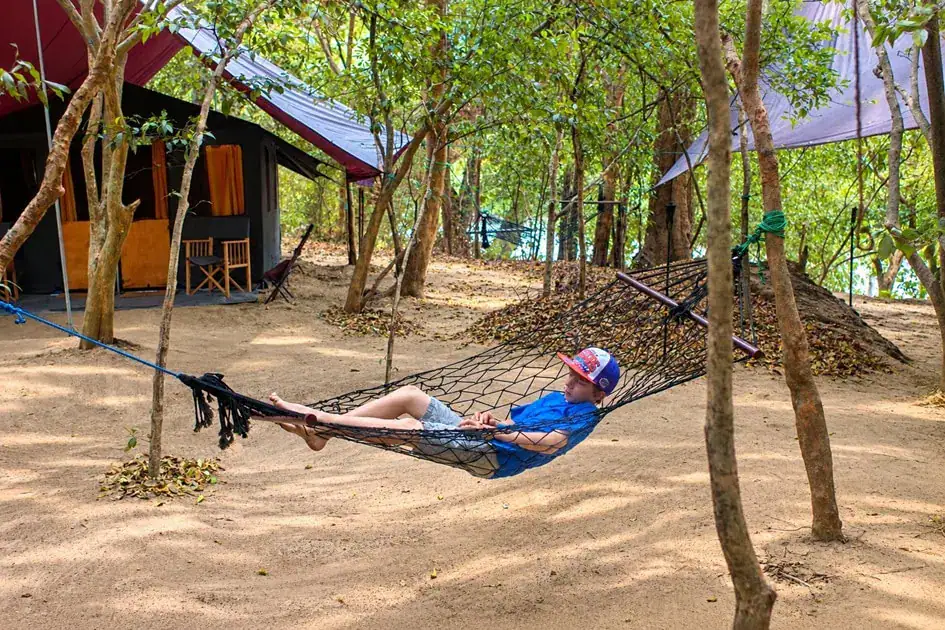
Glamping in Yala (Photo: Nene La Beet, CC BY-NC-SA 2.0)
If you’re adding just one camping night to a first trip to Sri Lanka, Yala is the most straightforward choice. It’s the country’s best-known wildlife park on the Southeast Coast, with the widest range of safari camps. Options run from simple tents to luxury glamping with private decks and bathrooms, mostly clustered around the park’s edges and the approach roads from Tissamaharama and Kirinda.
Yala’s reputation rests largely on its leopards, which are seen more often here than in most parks. Sightings still aren’t guaranteed. Elephants, sloth bears, crocodiles, water buffalo, peacocks, and a wide range of birds are all part of the picture, and coastal lagoons and rocky outcrops give the park a varied landscape.
The usual pattern is one or two nights: arrive at lunchtime, take an afternoon game drive, then go out again early the next morning, when the light is soft and animals are more active. A second night gives you a full-day safari or a slower pace. Camping in Yala fits naturally after Ella and the Hill Country or alongside the South Coast beaches.
There are drawbacks. Block I, the most visited zone, can get busy with jeeps at peak times, and a crowd of vehicles around a leopard isn’t everyone’s idea of wilderness. The dry-zone heat can also be intense in the middle of the day. Parts of the park close for a few weeks most years during the late dry season. In 2026, Zones I and II closed from 14 September to 15 October while the other zones stayed open. Dates change from year to year, so check before booking.
2. Wilpattu
Wilpattu, in the Northwest, is Sri Lanka’s largest national park. It feels noticeably wilder than Yala. Instead of open scrub, much of the park is dense dry forest broken up by villus, shallow natural lakes where animals come to drink. Leopards and sloth bears live here, along with deer, elephants, crocodiles, and plenty of birdlife. Still, the thick vegetation means sightings need more patience.
That’s exactly the appeal for many people. With fewer jeeps on the tracks, safaris tend to be quieter and slower, which suits photographers, couples, and travellers who enjoy the search as much as the result. Safari camps and tented lodges near the park offer a range of comfort, generally with fewer properties to choose from than at Yala.
One or two nights works well, and a full-day safari is worth considering if wildlife is your main focus. Wilpattu fits neatly with Anuradhapura and the rest of the Cultural Triangle, or with a trip along the Northwest Coast. It makes a useful alternative for travellers who aren’t heading to the Southeast at all.
3. Udawalawe
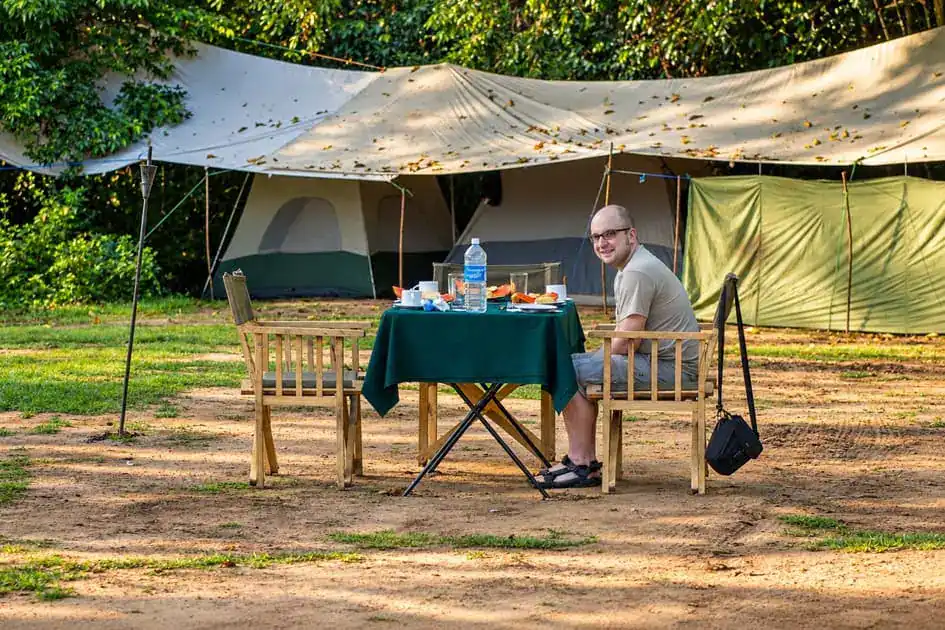
Camping in Udawalawe (Photo: Claire Rowland, CC BY 2.0)
Udawalawe is best known for elephants. Open grassland around a large reservoir makes them easy to spot, and herds are seen on most safaris here, though no sighting can be promised. It’s also good for birds of prey, water birds, and other dry-zone wildlife. The open landscape gives Udawalawe a character of its own, quite different from Yala’s leopard-focused drives or Wilpattu’s forest tracks.
Close by, the Elephant Transit Home cares for orphaned calves before releasing them back into the wild, and visitors can watch from a viewing area at set feeding times.
The area’s tented and riverside camps tend to be relaxed and simple to reach, and many families find the shorter safaris and dependable elephant viewing easier with children than a long day in the jeep. One night is often enough, with a second if you want more time. Udawalawe sits conveniently between the Hill Country and the South Coast, so it’s a natural alternative to Yala when your route runs that way.
4. Gal Oya
Gal Oya is the quiet, premium choice among Sri Lanka’s safari areas. The park surrounds Senanayake Samudra, the country’s largest reservoir, in the southeastern interior, and sees far fewer visitors than the southern parks. Accommodation is limited and leans towards eco-lodges and glamping camps that emphasise nature, guiding, and low impact.
What sets Gal Oya apart is the variety of ways to explore it. As well as jeep safaris, some operators run boat safaris on the reservoir, and they describe the March to July period as the best time to see elephants swimming between its islands. Guided walks and birdwatching are also offered. Availability can change, so confirm which activities are currently running before you book.
It suits nature lovers, return visitors, and higher-budget travellers looking for something away from the busy safari routes. Because it takes longer to get to and has several different activities, two nights usually make more sense than one. Gal Oya combines well with Arugam Bay and the East Coast, or with Ella on the way across from the Hill Country.
Mountain and Wilderness Camping
The hill country offers a very different kind of camping. Here the tent is a place to rest between walks rather than the experience itself, and conditions are cooler, wetter, and more physically demanding than at a safari camp. Several of these areas also fall within or next to protected forest, which affects where you can actually camp.
5. Knuckles Mountain Range
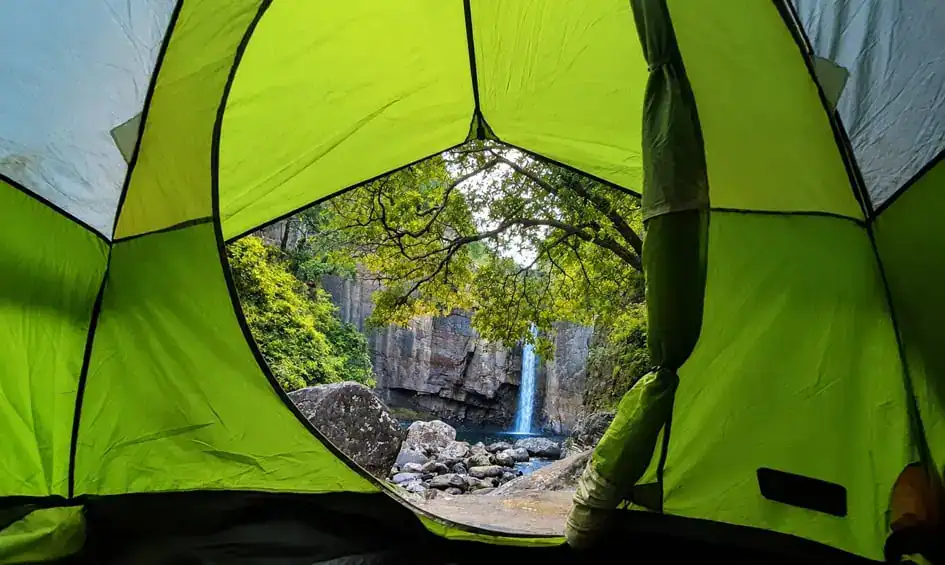
View of Dumbara Falls – Knuckles Mountain Range (Photo: Venushka Fonseka, CC BY-SA 4.0)
The Knuckles range, northeast of Kandy, is Sri Lanka’s best-known area for trekking and wilderness camping. Its ridges, cloud forest, grasslands, streams, and waterfalls cover a wide range of altitudes in a fairly small area, and the Knuckles Conservation Forest is part of UNESCO’s Central Highlands World Heritage property. That status explains both why the landscape is so rich and why access is controlled.
Camping here is fundamentally different from safari glamping. Expect simple tents, shared or basic toilets, meals prepared by your crew, and long days on foot, often on steep, slippery trails. Most visitors go with a licensed local guide or trekking operator, who arranges the forest entry permits and permission for overnight stays. Routes range from a single night to multi-day treks of two or three nights.
It suits reasonably fit hikers and adventure travellers who are happy to trade comfort for scenery. Weather can change quickly, mist is common, and heavy rain can make some trails unpleasant or unsafe, so a good operator will adjust or cancel routes when conditions turn.
6. Meemure
Meemure is a remote village tucked into a valley on the eastern side of the Knuckles range, reached by a long, narrow road that only improved relatively recently. Staying here is less about hiking big distances and more about spending time in a traditional farming community surrounded by forest, paddy fields, streams, and mountains.
Camps and homestays around the village are simple, and many are run by or with local families. Typical days involve short guided walks, river bathing spots, waterfalls, and village meals. The road and the remoteness are part of the appeal, but they also mean it isn’t somewhere to squeeze in for a single rushed night. One or two nights is the usual stay, and travellers who enjoy slow, rural places tend to get the most out of it.
Respect matters more than usual here. You’re a guest in a small community rather than a resort, so dress modestly, ask before photographing people, and keep noise down in the evenings.
7. Belihuloya and Samanalawewa
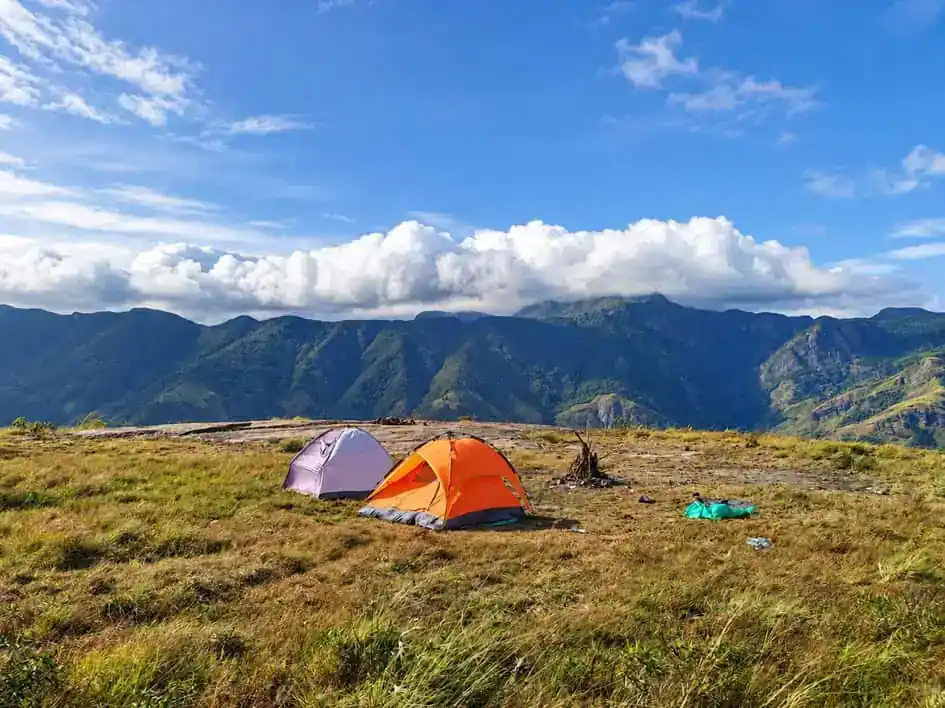
A campsite – Havagala, Belihuloya (Photo: Kusal97, CC BY-SA 4.0)
Belihuloya sits in the southern foothills of the Hill Country, close to the Samanalawewa reservoir. Rivers, waterfalls, rocky pools, and tea-covered slopes give it an accessible outdoor feel, somewhere between the hard trekking of the Knuckles and a lazy beach stop.
Adventure camps here typically package the stay with activities such as kayaking or boating on the reservoir, waterfall hikes, river swims, and nature walks. That makes Belihuloya a good fit for active couples, groups, and families with older children who want variety without long expeditions. Reviews of the local adventure camps tend to praise the guides and activities, with comfort levels varying more than at safari camps.
Its position is the main practical advantage. It lies on the road between the Hill Country and the South, so one or two nights here can break up the journey between Ella or Horton Plains and Udawalawe or the coast.
8. Horton Plains, Ohiya, and Bambarakanda
Horton Plains National Park is a high, windswept plateau of grassland and cloud forest known for the World’s End viewpoint and Baker’s Falls. It’s a ticketed national park that most visitors explore on a morning walk, and it’s not a place to pitch your own tent. Treat any plan to camp inside the park with caution and follow official Department of Wildlife Conservation rules.
Camping opportunities lie in the surrounding highlands. Around Ohiya and down towards Bambarakanda, Sri Lanka’s tallest waterfall, private campsites and nature stays on permitted land offer cool nights, misty mornings, hiking trails, and easy access to the park’s entrance. Many hikers stay nearby so they can reach Horton Plains early, when the views are more likely to be clear.
Nights can be genuinely cold by Sri Lankan standards, so warm layers matter. One or two nights suit hikers and photographers, and the area links well with Nuwara Eliya, Haputale, and Ella.
Rainforest, River and Adventure Camping
The wet zone of the Southwest brings a different set of trade-offs: dense forest, rivers, and outstanding birdlife, but also humidity, frequent rain and leeches.
9. Kitulgala
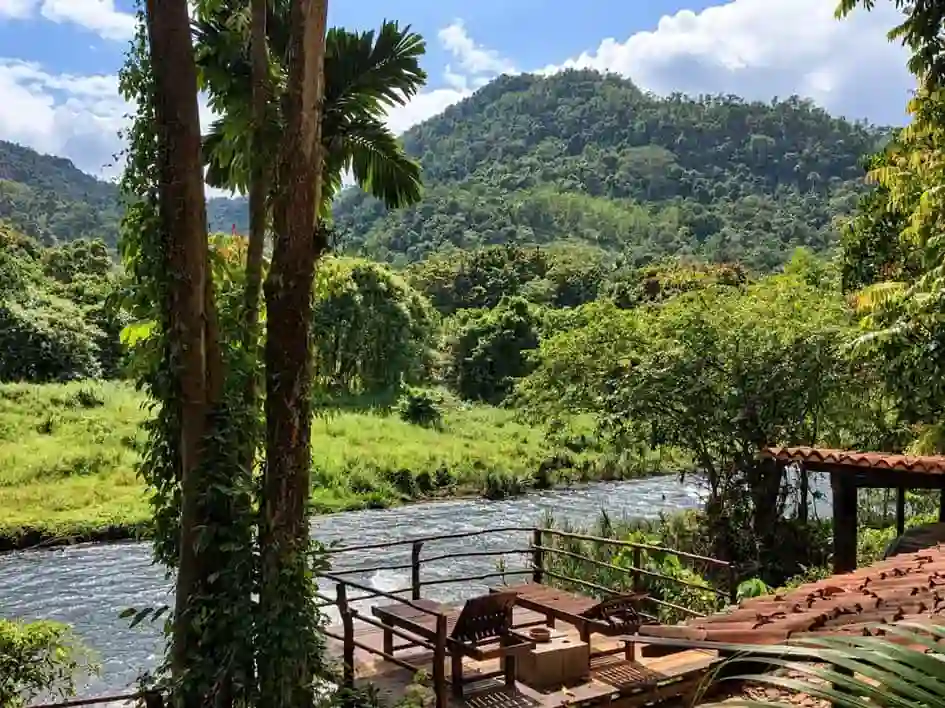
River-side camping in Kitulgala (Photo: Jesse Armand, CC BY-NC-ND 2.0)
Kitulgala, on the Kelani River between Colombo and the Hill Country, is Sri Lanka’s best-known white-water rafting centre. Its riverside camps exist because of the activities, not the other way round. Most people come to raft, and many add canyoning, natural rock slides, waterfall abseiling, jungle walks, or birdwatching in the nearby forest reserve.
Camps range from simple tents by the river to more comfortable glamping set-ups with private bathrooms. Recurring themes in traveller reviews are the friendly guides, the riverside setting, and the convenience of having activities organised on site.
One or two nights fit easily between Colombo and Kandy or Nuwara Eliya. It works well for active couples, groups, backpackers and families with children old enough for the activities. River conditions depend on rainfall so that rafting may be adjusted or paused after heavy rain. Ask operators how they manage safety and age limits.
10. Sinharaja fringes
Sinharaja Forest Reserve is Sri Lanka’s most important lowland rainforest and a UNESCO World Heritage Site. It’s famous for endemic birds, mixed-species bird flocks, reptiles, and amphibians. The reserve itself is protected and visited on guided walks. Camping and eco-stay options are on its fringes, in villages, and on private land near entry points such as Kudawa and Deniyaya.
These stays are simple and nature-focused, built around early-morning birding and guided forest walks with local naturalists. Don’t expect to camp inside the reserve unless you have a specific, authorised arrangement.
Rainforest conditions are part of the experience. Expect high humidity, regular rain, slippery paths, and leeches, and pack quick-drying clothes, leech socks, and a waterproof bag for your camera. One or two nights suit birdwatchers and nature lovers. Travellers looking for comfort and dry weather may prefer a lodge or a day visit.
Coastal and Emerging Camping Experiences
Coastal camping in Sri Lanka is still developing. These two areas have real appeal, but fewer established camps, so check current operators and seasons carefully.
11. Kalpitiya
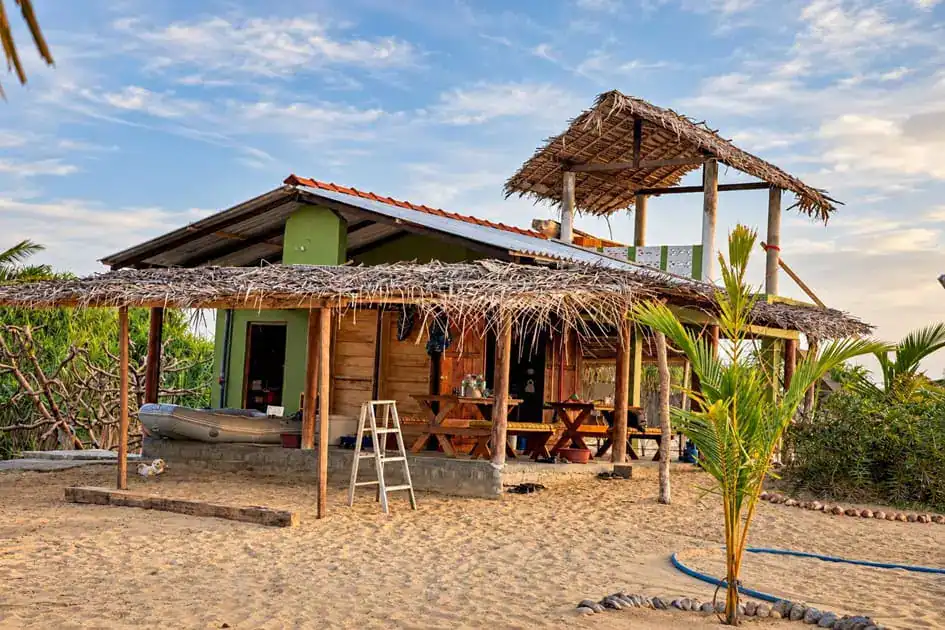
A kite camp in Kalpitiya (Photo: Konstantin Zamkov, CC BY 2.0)
Kalpitiya is a sandy peninsula on the Northwest Coast between the Puttalam lagoon and the Indian Ocean. It’s best known for kitesurfing, and a handful of kite camps and beach stays offer cabanas, tents or simple eco-huts close to the lagoon.
Kitesurfing is strongly seasonal, with the main wind season during the Southwest Monsoon months and a shorter secondary season around the turn of the year. Dolphin-watching boat trips run mainly from about November to April. Confirm exact dates with operators, as conditions vary from year to year.
Kalpitiya suits water-sports enthusiasts and travellers looking for a laid-back beach base. It doesn’t yet have the camping infrastructure of the safari areas, so think of it as a niche option. It can be combined with Wilpattu or a northwestern route.
12. Arugam Bay, Panama and Kumana
The Southeast Coast combines surf and wildlife. Arugam Bay is Sri Lanka’s best-known surf town, and the main surf season runs broadly from May to September. A little further south, the village of Panama has quieter beaches, lagoons and rock outcrops. Beyond that lies Kumana National Park, known for its birdlife, wetland lagoons, and wildlife, and it borders the eastern side of Yala.
Accommodation here ranges from surf camps and beach cabanas to safari-style camps near Panama and Kumana. These are managed, legal stays. Kumana is a protected national park with permit-controlled entry, so don’t assume you can camp freely within it. Book any overnight stay inside through the official system or an authorised operator.
One or two nights, or longer if you’re surfing, makes sense. The area works best as part of an East Coast trip in the May to September season, possibly combined with Gal Oya.
Which Sri Lanka Camping Experience Is Right for You?
These are editorial suggestions rather than fixed rankings, but they’re a useful starting point:
- First-time safari glamping: Yala
- Quieter, wilder safari: Wilpattu
- Elephants and families: Udawalawe
- Off-the-beaten-track wildlife with more comfort: Gal Oya
- Serious trekking: Knuckles
- Remote village and mountain atmosphere: Meemure
- Rafting and river adventure: Kitulgala
- A mix of easy outdoor activities: Belihuloya
- Cool highland hiking: Ohiya and Bambarakanda
- Rainforest and birdlife: Sinharaja fringes
- Coastal water sports: Kalpitiya
- Surf plus nature: Arugam Bay, Panama, and Kumana
If you’re unsure, decide on comfort level first. Travellers who want a proper bed and a private bathroom will usually be happiest at a safari or glamping camp. Those comfortable with basic facilities can explore Knuckles, Meemure, and simpler adventure camps.
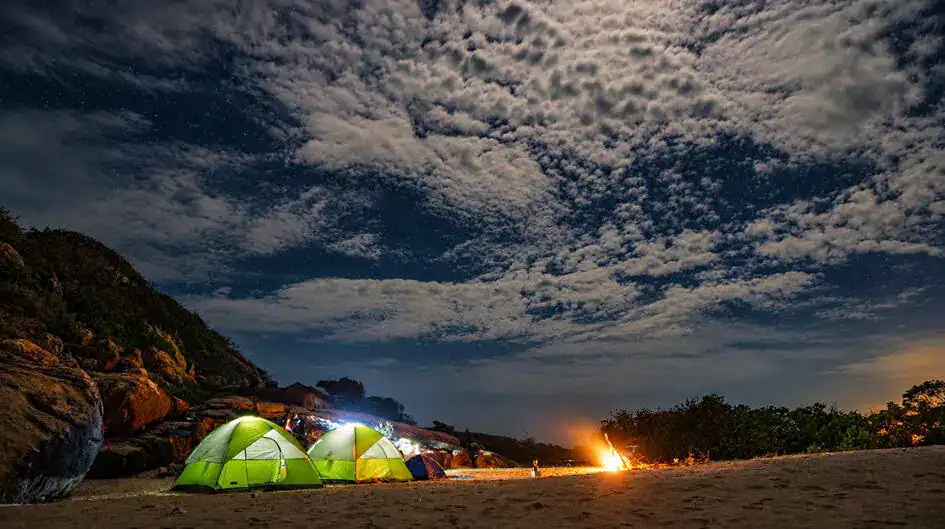
A campsite in Kumana National Park (Photo: Dilanthaonline, CC BY-SA 4.0)
When Is the Best Time to Go Camping in Sri Lanka?
Sri Lanka has no single camping season, because different parts of the island are affected by different monsoons.
- Dry-zone safari parks (Yala, Udawalawe, Wilpattu, Gal Oya): Generally best in the drier months, roughly February to September, when animals gather near water. The Northeast Monsoon brings more rain from about October to January. Yala’s main zones usually close for several weeks in the late dry season.
- Central Highlands (Knuckles, Meemure, Ohiya, Horton Plains): The clearest trekking weather is usually from about January to April. The eastern Knuckles slopes and Meemure also see heavy rain in the Northeast Monsoon, and the western highlands are wetter during the Southwest Monsoon from around May to September.
- Wet zone (Kitulgala, Sinharaja, Belihuloya): Rain is possible at any time, with the heaviest falls in the monsoon months. Many people prefer January to April for birding and river activities.
- Northwest Coast (Kalpitiya): Windy months suit kitesurfing, while calmer months from around November to April suit dolphin trips.
- East Coast (Arugam Bay, Panama, Kumana): Broadly May to September.
Rain doesn’t automatically rule out a well-built glamping camp, which will have raised platforms and solid roofing. It matters much more for trekking, rafting, and river camps, where it can make trails slippery, rivers dangerous, and some activities impossible.
How Much Does Camping and Glamping Cost?
Prices vary enormously, from basic guided camping to luxury safari glamping, and rates change with the season. Rather than relying on a single price range, compare what is included. Before booking, check:
- whether meals are included, and which ones;
- whether safari jeeps and park entry fees are included;
- whether a guide or naturalist is included;
- whether transfers are provided;
- which activities are included in the package;
- whether taxes and service charges are included in the quoted price;
- whether the bathroom is private or shared.
A camp that looks expensive may work out better value if it includes full board, safaris, and park fees.
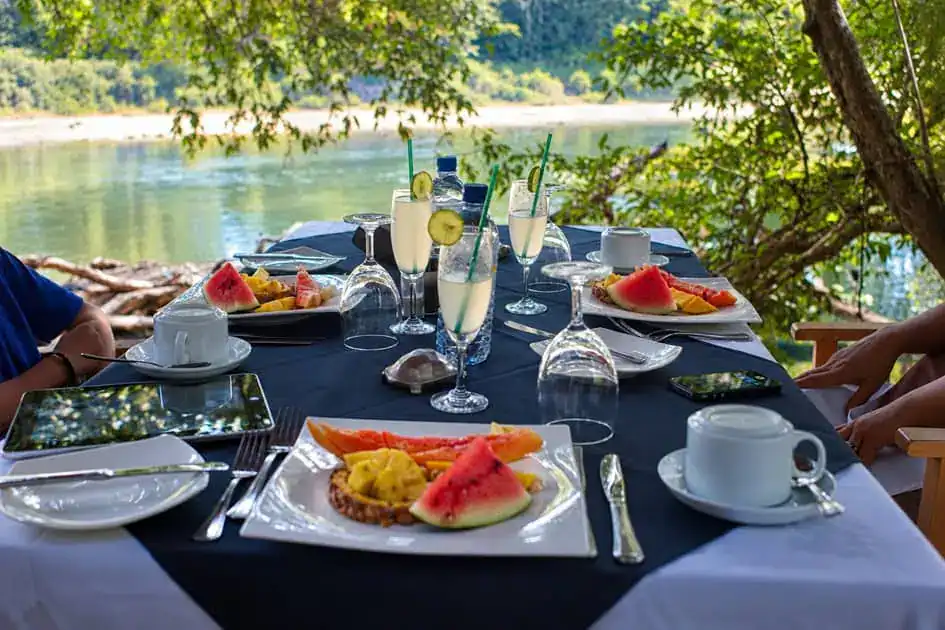
Riverside dining in Yala (Photo: Nene La Beet, CC BY-NC-SA 2.0)
What to Expect at a Sri Lankan Camp
Facilities differ more between camps than between hotels, so use this as a general guide.
Beds and bedding are standard at safari and glamping camps. On treks, you may get mats and sleeping bags. Toilets and showers range from ensuite bathrooms with hot water to shared facilities or very basic arrangements on trekking routes. Electricity may be limited to certain hours or solar power at remote camps, so bring a power bank. Wi-Fi and mobile signal are often weak or unavailable in parks, mountains and rainforest. Meals are usually provided, often Sri Lankan rice and curry with Western options at higher-end camps.
Expect insects, and mosquitoes in particular, so pack repellent and use the nets provided. Rain can be heavy and sudden. Luggage may need to be carried along paths or trails, so a soft bag is easier than a large suitcase. Many camps are hard to find, so confirm transport and check-in arrangements in advance.
Ask before you book:
- Is the bathroom private?
- Are meals included?
- Are safari or activity fees included?
- Is transport provided?
- Is electricity available overnight?
- What happens in bad weather?
- What footwear or equipment do I need?
Is Camping in Sri Lanka Safe?
At established, managed camps, camping is generally safe for visitors who follow staff instructions. Most of the risk comes from ignoring basic rules rather than from wildlife.
Near national parks, elephants and other animals may move close to camps, especially at night. Don’t walk around unescorted after dark, and never keep food in your tent. Watch where you step on trails, carry a torch at night and wear proper footwear.
In mountains and rainforest, leeches are a nuisance rather than a danger. Still, slippery trails, sudden mist and heavy rain need caution. In dry-zone areas, heat and dehydration are a bigger issue than animals. At river camps, wear life jackets and follow the guide’s instructions. Independent camping without local knowledge carries more risk, which is another reason managed camps suit most travellers.
Can You Wild Camp in Sri Lanka?
Sri Lanka is not a country where you can pitch a tent anywhere. National parks are permit-controlled and managed by the Department of Wildlife Conservation, and conservation forests and reserves have their own rules. Much other land is privately owned, used by villages or protected for local reasons.
In practice, you’ll need permission for almost any overnight stay outside a managed site, and protected areas require formal authorisation. The simplest legal option is to book a registered camp or go with a licensed operator who arranges permits. Rules can vary by place and change over time, so always check current requirements for the exact location.
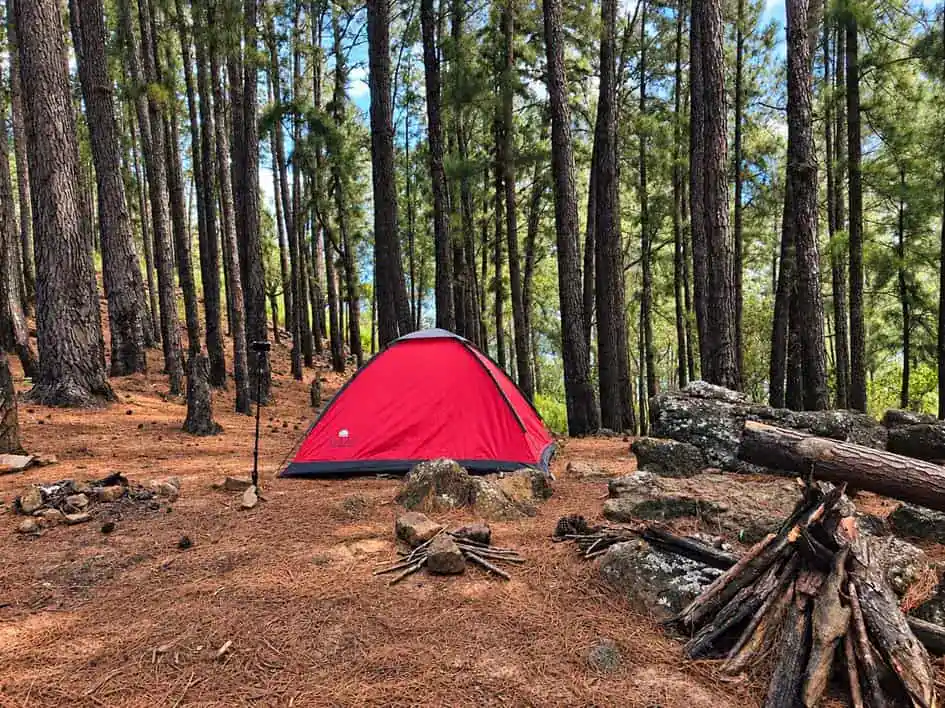
A hikers’ tent in Wangedigala (Photo: Mohamed Nusrath, CC BY-SA 4.0)
How to Camp Responsibly in Sri Lanka
Responsible camping here mainly comes down to a few simple habits:
- Stay at established, legal sites.
- Take all rubbish away and avoid single-use plastic.
- Never touch or feed wildlife, and keep a respectful distance, including when taking photos.
- Keep noise down and avoid playing music.
- Don’t wash with soap or leave waste in streams and rivers.
- Follow fire rules and only light fires where allowed.
- Respect private land and local villages.
- Avoid sharing coordinates of sensitive unofficial camping spots online.
Knuckles and Sinharaja deserve particular care. Both protect globally important ecosystems with species found nowhere else. Stay on trails, follow your guide and don’t collect plants or disturb animals.
The Future of Camping and Glamping in Sri Lanka
Camping in Sri Lanka is likely to keep shifting toward organised, experience-led stays rather than self-pitched camping. Glamping in Sri Lanka appears well positioned to grow faster than basic camping among international visitors, because it suits travellers who want a night in nature without carrying equipment or giving up comfort.
The strongest camps already sell an experience rather than just a bed: safari plus tent, trek plus camp, rafting plus riverside stay. That model could spread to more birdwatching, kayaking, and community-based trips, where villages share in the income from visitors.
Growth also has potential beyond Yala. Wilpattu, Gal Oya, Knuckles, Meemure, and Belihuloya all offer quieter alternatives to the busiest safari routes, and small eco-camps may suit these places better than large developments. Because SLTDA already recognises caravan and RV camping as a category, it could become a longer-term option, although it remains rare for now.
The main challenge is likely to be sustainability. As photos of remote camps spread on social media, pressure on fragile areas such as the Knuckles and rainforest fringes could increase. How carefully new camps are sited and managed will matter as much as how many open.
How to Add Camping to a Sri Lanka Itinerary
Most travellers get the most from one or two camping stays placed along a route they’re already following, rather than a separate camping trip. Some combinations that make geographical sense:
- Cultural Triangle → Wilpattu: a wildlife stop after Anuradhapura.
- Cultural Triangle → Knuckles → Kandy: trekking between the ancient cities and the Hill Country.
- Kandy → Kitulgala: rafting on the way to Colombo or Nuwara Eliya.
- Hill Country → Belihuloya: an outdoor break on the road south.
- Ella → Yala: a classic route from the hills down to safari country.
- Hill Country → Udawalawe → South Coast: elephants on the way to the beaches.
- East Coast → Gal Oya: a quieter wildlife stay alongside Arugam Bay.
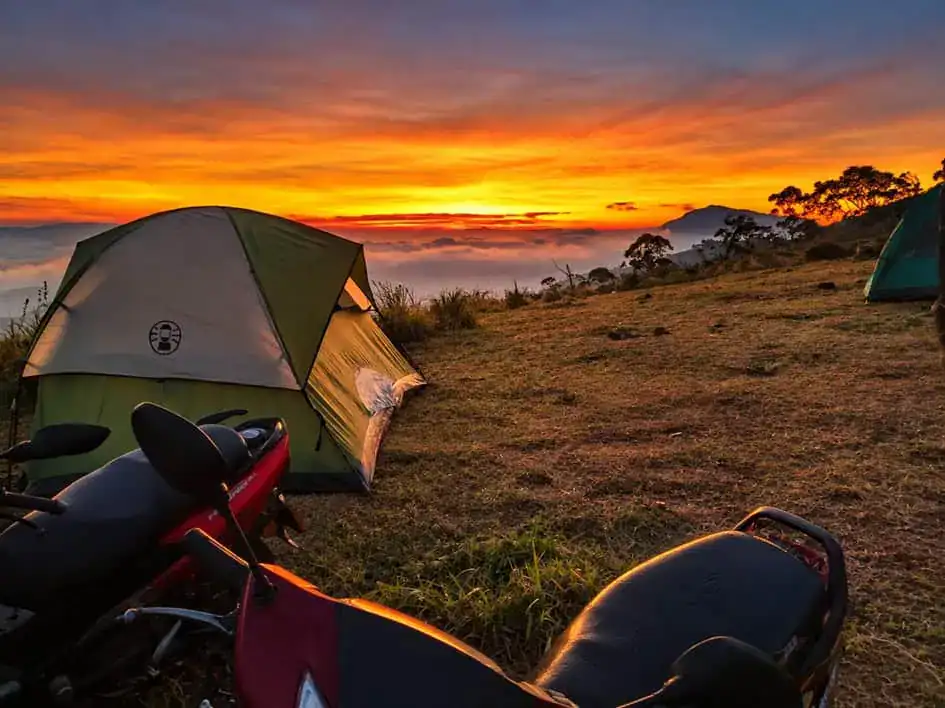
Sunrise view – Bellwood, Moragolla (Photo: Cb619619, CC BY-SA 4.0)
FAQ
Is glamping in Sri Lanka suitable for families?
Yes, generally. Safari camps near Udawalawe and Yala are often the easiest choice, with proper beds, private bathrooms, and meals included. Check age limits for safaris and activities, and ask whether family tents or connecting units are available.
Can I camp inside Yala National Park?
Private safari and glamping camps are located outside the park boundary. The Department of Wildlife Conservation runs a small number of campsites and bungalows inside the park. These must be booked through the department, are simpler than private camps, and close when the main zones close. You cannot pitch your own tent in the park.
What is the best place for safari camping in Sri Lanka?
For most first-time visitors, Yala is best because it has the widest choice of camps and is easy to reach. Wilpattu suits travellers who want a quieter safari, and Gal Oya suits those looking for something more remote.
How many nights should I spend at a safari or glamping camp?
One night allows an afternoon and a morning safari. Two nights give you a slower pace, a possible full-day safari and a better chance of good sightings, and they’re especially worthwhile at Wilpattu and Gal Oya.
Are you new to Sri Lanka? Read our ultimate travel guide for first-time visitors.
Final Thoughts
Camping in Sri Lanka isn’t a single experience. For wildlife, look at Yala, Wilpattu, Udawalawe, or Gal Oya. For mountains, choose Knuckles, Meemure, or the Ohiya highlands. Kitulgala and Belihuloya cover adventure, Sinharaja’s fringes cover rainforest, and Kalpitiya and the East Coast cover the sea.
The best way to choose is to match the experience you want with the right season, your route, and the level of comfort you’re happy with, rather than simply booking the most luxurious tent. Done that way, glamping in Sri Lanka or a night at a simpler camp can become one of the most memorable parts of your trip.
Map – Camping and Glamping in Sri Lanka
Sources and References:
- Sri Lanka Tourism Development Authority (SLTDA) — Tourist Luxury Camping / Caravanning Sites / Mobile Camping Guidelines. Official guidance covering organised camping, luxury camping and glamping, caravan/RV camping, mobile camping, campsite standards, safety, environmental considerations, and tourism registration requirements.
- Sri Lanka Tourism Development Authority (SLTDA) — Camping Sites and Land-Based Adventure Tourism Activities. Official tourism guidance and registration information for camping sites, hiking and trekking, nature walks, vehicle safari operations, and other adventure-tourism activities.
- Sri Lanka Tourism Development Authority (SLTDA) — Development Guidelines for Sri Lankan Tourism Development: Camping Sites. Guidance covering campsite location, site planning, environmental considerations, facilities, sanitation, safety, waste management, and development standards.
- Department of Wildlife Conservation, Sri Lanka (DWC) — National Parks and Protected Areas. Official information on Sri Lanka’s national parks, protected-area classifications, visitor access and permit requirements, including Yala, Wilpattu, Udawalawe, Horton Plains, Gal Oya and other protected wildlife areas.
- Department of Wildlife Conservation, Sri Lanka (DWC) — Official visitor and conservation information for Sri Lanka’s wildlife reserves and national parks, consulted for guidance relating to safari tourism, park access, wildlife protection and activities within protected areas.
- UNESCO World Heritage Centre — Central Highlands of Sri Lanka. Official World Heritage information covering Horton Plains National Park, Knuckles Conservation Forest and Peak Wilderness Protected Area, including their ecological importance, biodiversity and protected status.
- UNESCO World Heritage Centre — Sinharaja Forest Reserve. Official information on Sri Lanka’s World Heritage-listed tropical rainforest, its biodiversity, conservation importance, protected status and visitor management.
- Department of Meteorology, Sri Lanka — Climate and monsoon information used to understand Sri Lanka’s Southwest Monsoon, Northeast Monsoon and inter-monsoon periods and how seasonal rainfall can affect camping, trekking and outdoor travel.
- Sri Lanka Tourism — Official destination and activity information consulted for adventure and nature tourism, including wildlife experiences, hiking, white-water rafting, surfing, kitesurfing and outdoor travel in areas such as Kitulgala, Kalpitiya and the East Coast.
Editorial note: The relative popularity and future-potential assessments of the 12 camping areas in this guide are Sri Lanka Travel Life editorial assessments based on the maturity of the tourism offering, international traveller visibility, available camping and glamping products, destination appeal and current travel patterns. Sri Lanka does not publish an official ranking of camping destinations by foreign visitor numbers.
Information and regulations can change. Travellers should confirm current national-park access, permits, campsite permissions, seasonal closures, weather conditions and operator arrangements before travelling.
Featured image: Camping in Yala (Photo: Nene La Beet, CC BY-NC-SA 2.0)

I am a Sri Lankan medical doctor who spends my free time travelling, exploring new destinations, and documenting the beauty of the island I call home. I have journeyed across almost every corner of Sri Lanka with my wife and daughter — from wildlife parks and misty mountains to ancient cities, deep forests, rugged landscapes, and quiet beaches.
Travel is not just a hobby for me — it’s a way of life. I love nature, enjoy road trips, and find joy in wildlife photography. I also read widely about tourism, travel trends, and destination culture. Through my writing, I aim to help travellers experience Sri Lanka through real stories, meaningful insights, and honest recommendations — the same way I explore it with my own family.