
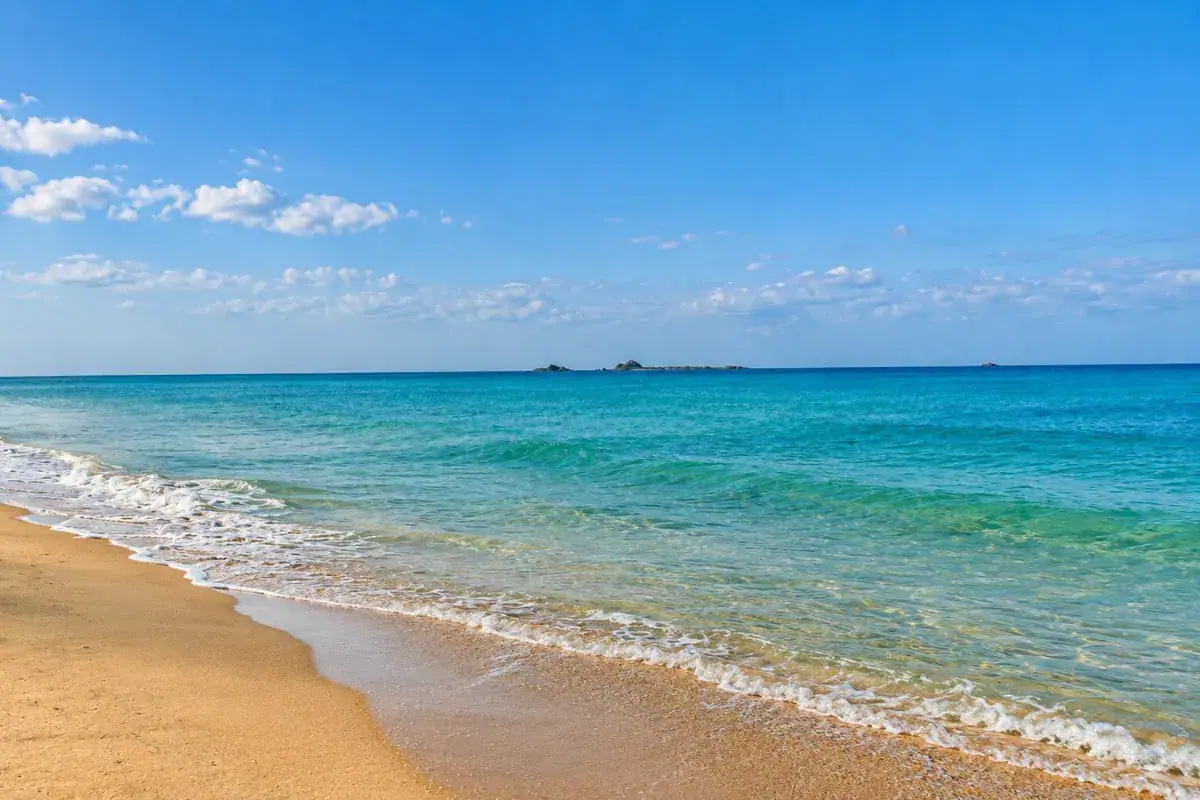

Why This 3-Week Route Works from May to September
Sri Lanka is small, but it doesn’t have one weather system. From May to September, the Southwest Monsoon brings most of its rain to the island’s southwest quarter and the western slopes of the hills. The north-central plains and much of the East Coast usually stay far drier. A good Sri Lanka itinerary for May to September uses that geography deliberately instead of hoping for the best.
That’s what this route does. It gives real time to the Cultural Triangle and a full week to the East Coast, where Trincomalee, Nilaveli, and Arugam Bay have their main beach and surf season in these months. The journey then climbs inland through Ella and Nuwara Eliya to Kandy, the part of the trip where you need the most flexibility.
The journey starts gently in Negombo, near the airport. It then heads north to the ancient city of Anuradhapura and the forests of Wilpattu, and east through Sigiriya, Dambulla and Polonnaruwa. Next come four nights by the sea at Nilaveli and three at Arugam Bay, followed by the hill country and a scenic train ride. Most bases hold you for two to four nights, so you unpack properly more often than you repack.
The season still needs honesty. May is a changeover month: thunderstorms are common before the monsoon settles, usually in the second half of the month. September sits at the end of the monsoon, and weather can become less settled as the October–November inter-monsoon approaches. Even in July, a hill-country morning can start in cloud. This Sri Lanka travel itinerary builds in early starts, lighter afternoons and alternatives, so one wet day doesn’t sink the plan.
If you’re still comparing seasons, read our guide to the best time to visit or browse our best Sri Lanka itineraries for your travel season.
3-Week Sri Lanka Itinerary at a Glance
Destination: Sri Lanka
Duration: 21 days / 20 nights
Season: May to September (Southwest Monsoon period)
Start: Bandaranaike International Airport (BIA) → Negombo
Finish: Kandy → BIA
Pace: Active but balanced. Heritage sites, safaris and hikes alternate with beach days and deliberately light transfer days.
Themes: Heritage, wildlife safaris, east-coast beaches, snorkelling, surfing, hiking, scenic rail, tea country and local food
Overnight bases:
- Negombo – 2 nights
- Anuradhapura – 2 nights
- Sigiriya/Habarana – 3 nights
- Trincomalee/Nilaveli – 4 nights
- Arugam Bay – 3 nights
- Ella – 2 nights
- Nuwara Eliya – 2 nights
- Kandy – 2 nights
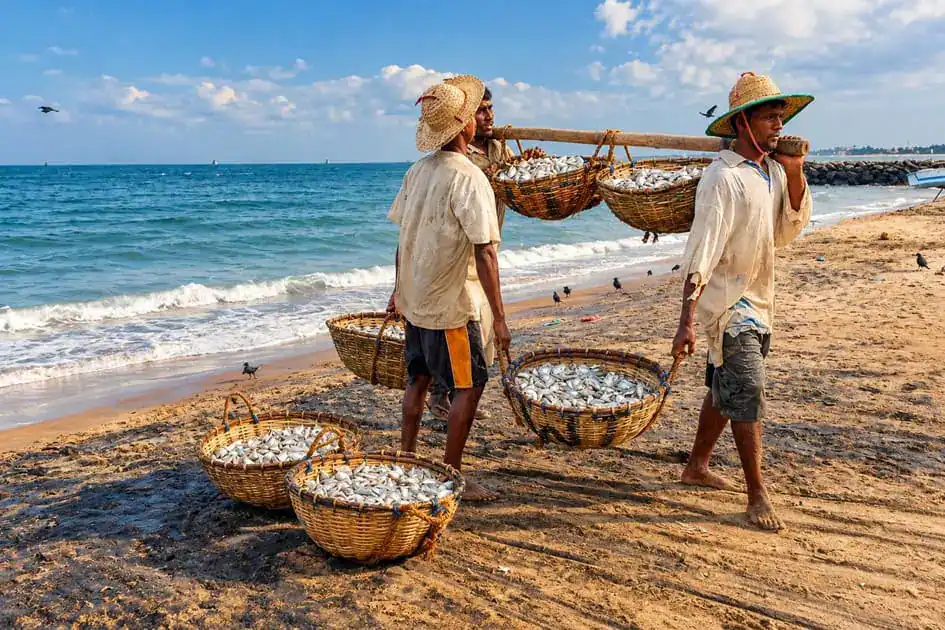
Fishermen – Negombo Beach (Photo: e y e / s e e, CC BY-NC-ND 2.0)
What This Itinerary Covers
The first week focuses on ancient capitals and dry-zone wildlife. You’ll see Anuradhapura’s sacred city, Sigiriya, Dambulla’s painted caves, and Polonnaruwa. You’ll also take two safaris, in Wilpattu and at Minneriya or Kaudulla, whichever park the elephants favour that week.
The second week belongs to the East Coast. Nilaveli gives you time on the beach, snorkelling at Pigeon Island and Trincomalee’s cliff-top Koneswaram Temple. Arugam Bay adds surfing, sunrise at Elephant Rock and a safari in Kumana National Park, known for its wetland birdlife.
The final week moves into the Hill Country: Ella’s viewpoints, the Ella–Nanu Oya train, Horton Plains, tea estates and Kandy’s Temple of the Tooth and Peradeniya gardens.
The seasonal logic is simple. You spend the driest-looking weeks in the regions that are usually driest, then save the hills for the end, when rain is possible but rarely constant across a whole day.
Who This Itinerary Is Best For
This route suits:
- first-time visitors who want culture, nature & wildlife, and beaches in one trip
- couples and solo travellers who like variety
- families with older children who cope well with early starts and heat
- wildlife lovers, with four different safari settings plus marine life
- beginner and intermediate surfers who want a few days in the water
- travellers who can’t travel between December and March but still want good beach time
It’s more demanding than it looks on paper. Five mornings start before dawn: Pidurangala, Elephant Rock, the Ella sunrise hike, Horton Plains, and at least one safari. Several transfers take four hours or more, and the Trincomalee to Arugam Bay drive is the longest of the trip. Hiking at Sigiriya, Pidurangala, and Horton Plains involves steps, uneven ground and heat or cold.
If you have limited mobility, prefer resorts to moving around, or want mostly beach time, drop one safari and one hike. Or lengthen the coastal stays instead. The route can absorb that easily.
Transport and Route Logic
The order follows the season and the map. Negombo is about 20–30 minutes from the airport, so you avoid Colombo traffic on arrival. From there, the road runs north into the dry zone. Anuradhapura comes first because it sits closest to Wilpattu, and entering the Cultural Triangle from the Northwest avoids backtracking later.
Sigiriya or Habarana then works as a hub for Dambulla, Polonnaruwa, and the elephant parks. From there, Trincomalee is a short hop east. Arugam Bay lies further down the same coast, and although that drive is long, it keeps you in the drier east. Ella is the natural way back inland, followed by the train to Nanu Oya for Nuwara Eliya and the road down to Kandy. From Kandy, the airport is one final road journey.
There’s another reason the hills come last. Ella lies on the drier, eastern side of the hills. It is often clearer during these months than Horton Plains or Nuwara Eliya, which catch more of the monsoon’s cloud and drizzle. Ending in the hills also means any lost sunrise is followed by an easy day in Kandy rather than a rush for the coast.
Most travellers use a mix of transport:
- A private car and driver for most transfers. It’s the most practical way to link the Cultural Triangle, the East Coast, and the hills.
- The train from Ella to Nanu Oya, the scenic highlight of the trip.
- Safari jeeps inside national parks, arranged through your hotel or a licensed operator.
- Tuk-tuks for short local trips in Negombo, Trincomalee, Arugam Bay, Ella, and Kandy.
- Boats for Pigeon Island and optional whale watching.
Public buses connect every base and cost very little, but they’re slow on the long east-coast and hill-country legs. Budget travellers often combine buses with a few private transfers on the longest days.
Railway note: at the time of writing, the Kandy–Nanu Oya section of the hill-country line is still being repaired after cyclone damage, but the Nanu Oya–Ella stretch is running on a limited timetable. This route doesn’t need the closed section. Always check the current Sri Lanka Railways timetable before you travel. For more options, see our Transport in Sri Lanka guide.
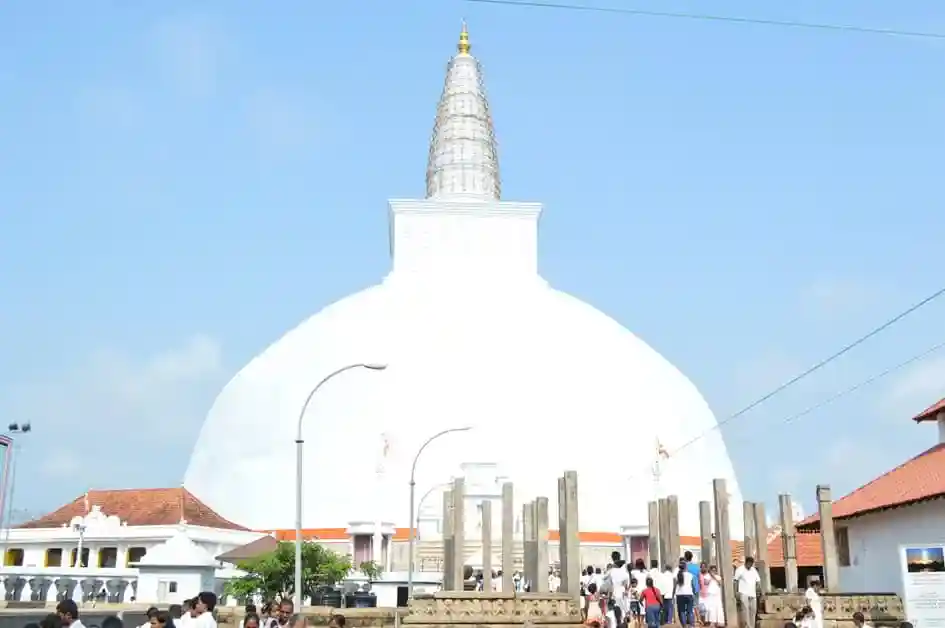
Ruwanwelisaya Stupa – Anuradhapura (Photo: Nalaka Priyantha)
Route Snapshot by Day
| Day | Route / Base | Main experience(s) | Overnight |
| 1 | Airport → Negombo | Arrival, rest, sunset | Negombo |
| 2 | Negombo | Fish market, lagoon or canal trip, easy afternoon | Negombo |
| 3 | Negombo → Anuradhapura | Transfer, Sacred City at dusk | Anuradhapura |
| 4 | Wilpattu day trip | Morning safari, return to rest | Anuradhapura |
| 5 | Anuradhapura → Sigiriya | Transfer, Sigiriya Rock Fortress | Sigiriya/Habarana |
| 6 | Dambulla + safari | Cave Temple, Minneriya or Kaudulla | Sigiriya/Habarana |
| 7 | Pidurangala + Polonnaruwa | Sunrise hike, medieval capital | Sigiriya/Habarana |
| 8 | Sigiriya → Nilaveli | Transfer, beach time | Trincomalee/Nilaveli |
| 9 | Pigeon Island | Snorkelling, conditions permitting | Trincomalee/Nilaveli |
| 10 | Trincomalee | Fort Frederick, Koneswaram Temple | Trincomalee/Nilaveli |
| 11 | Trincomalee/Nilaveli | Whale watching or a slow beach day | Trincomalee/Nilaveli |
| 12 | Trincomalee → Arugam Bay | Long transfer, easy evening | Arugam Bay |
| 13 | Arugam Bay | Elephant Rock sunrise, surfing | Arugam Bay |
| 14 | Kumana day trip | Safari and birdlife | Arugam Bay |
| 15 | Arugam Bay → Ella | Transfer, light evening | Ella |
| 16 | Ella | Sunrise hike, Nine Arch Bridge, Ravana Falls | Ella |
| 17 | Ella → Nanu Oya → Nuwara Eliya | Scenic train ride | Nuwara Eliya |
| 18 | Horton Plains + Nuwara Eliya | Early hike, relaxed town time | Nuwara Eliya |
| 19 | Nuwara Eliya → Kandy | Tea stop, Temple of the Tooth | Kandy |
| 20 | Kandy | Peradeniya gardens, cultural dance show | Kandy |
| 21 | Kandy → Airport | Departure | – |
Approximate Road and Rail Times
Distance is a poor guide to driving time in Sri Lanka. Single-lane roads, town traffic, slow trucks, hill bends, and wildlife on rural roads all add time. Treat these figures as planning estimates, and add extra for meals, photo stops, and weather.
| Journey | Approximate time |
| BIA → Negombo | 20–30 minutes |
| Negombo → Anuradhapura | 4–5 hours |
| Anuradhapura → Wilpattu (main entrance) | Around 1 hour each way |
| Anuradhapura → Sigiriya/Habarana | 1.5–2 hours |
| Sigiriya/Habarana → Polonnaruwa | 1–1.5 hours |
| Sigiriya/Habarana → Nilaveli | 2.5–3 hours |
| Trincomalee/Nilaveli → Arugam Bay | 5.5–7 hours |
| Arugam Bay → Kumana (park entrance) | Around 1 hour each way |
| Arugam Bay → Ella | 3–4 hours |
| Ella → Nanu Oya (train) | Around 2.5 hours on the current timetable; services are limited, so check before travelling |
| Nanu Oya → Nuwara Eliya | 15–20 minutes |
| Nuwara Eliya → Kandy | 2–3.5 hours (longer with a tea stop) |
| Kandy → BIA | 3–4 hours, sometimes more |
The Trincomalee–Arugam Bay drive and the Kandy–airport run need the biggest buffers. Plan an early start for the first and a generous margin for the second.
Day-by-Day Sri Lanka Itinerary for May to September
Day 1: Arrive in Sri Lanka — Negombo
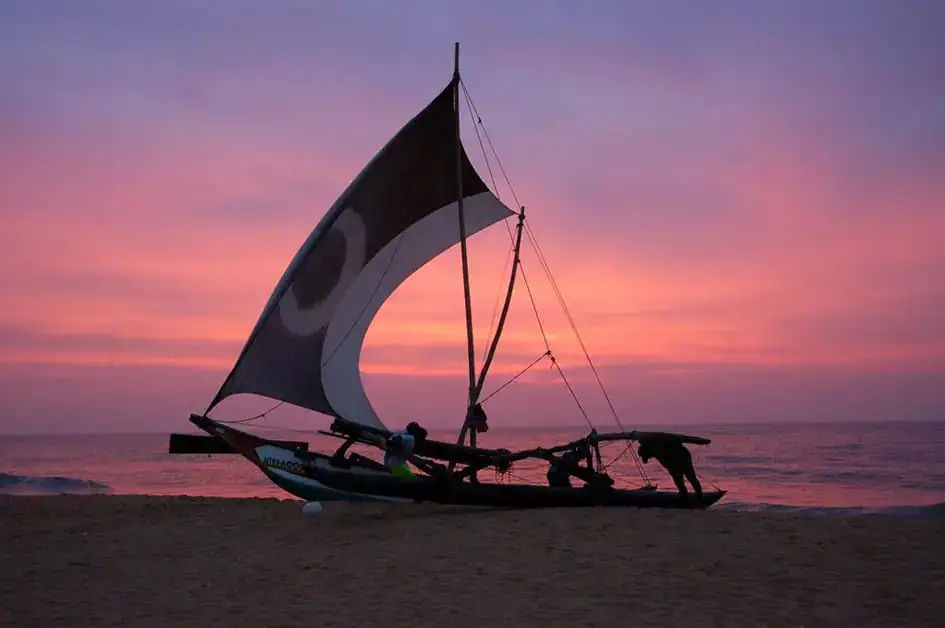
Traditional Fishing Boat and Sunset – Negombo Beach (Photo: e y e / s e e, CC BY-NC-ND 2.0)
Morning/Afternoon
Clear immigration at Bandaranaike International Airport and transfer to Negombo. After check-in, shower, eat something simple and sleep if you need to. Nothing today is essential.
Evening
If you have the energy, walk the beach road around sunset. Negombo is still a working fishing town, and outrigger boats and fishing families are part of the shoreline.
Where to Stay
Negombo. See where to stay in Negombo.
Accommodation Guidance
Choose somewhere quiet with a pool and good air conditioning. The sea here faces the Southwest Monsoon, so a pool is often more useful than the beach in these months.
Food Stop
Try Isso Wadai, a crunchy lentil fritter topped with prawns, sold as a snack along the coast. Pair it with a fresh king coconut.
Practical Notes
West-coast seas are often rough from May to September, with strong currents. Swim only where lifeguards are on duty, and flags allow it. Arrange your airport pickup and driver in advance, especially for late-night arrivals.
Day 2: Negombo
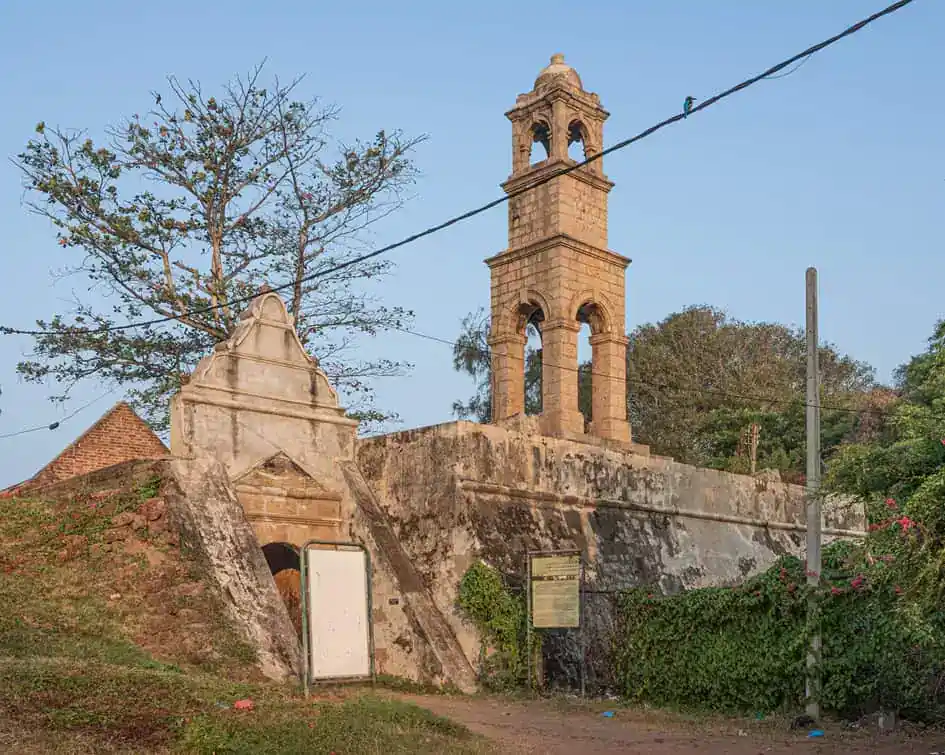
The Dutch Fort in Negombo (Photo: A.Savin)
Morning
Start early at the fish market near the lagoon mouth, where the morning catch is sold, and fish is laid out to dry on the sand. Later, take a boat trip on the Negombo Lagoon or along the old Dutch-era canal, where mangroves and fishing villages line the water. It’s a gentle first look at coastal life.
Afternoon
Rest through the hottest part of the day. If you want more, visit St Mary’s Church, whose painted ceiling reflects Negombo’s strong Catholic heritage, or the Angurukaramulla Temple with its large seated Buddha.
Evening
Have an early dinner and pack for tomorrow’s drive north.
Where to Stay
Negombo
Accommodation Guidance
Stay in the same hotel as Day 1. Two nights in one place makes jet-lag recovery easier.
Food Stop
Negombo’s lagoon is known for crab and prawns. Order a crab curry for dinner, but check the price first, as it’s usually charged by weight.
Practical Notes
Fish markets are busiest early and are wet and slippery underfoot, so wear closed shoes you don’t mind getting dirty. Cover your shoulders and knees at churches and temples.
Day 3: Negombo to Anuradhapura
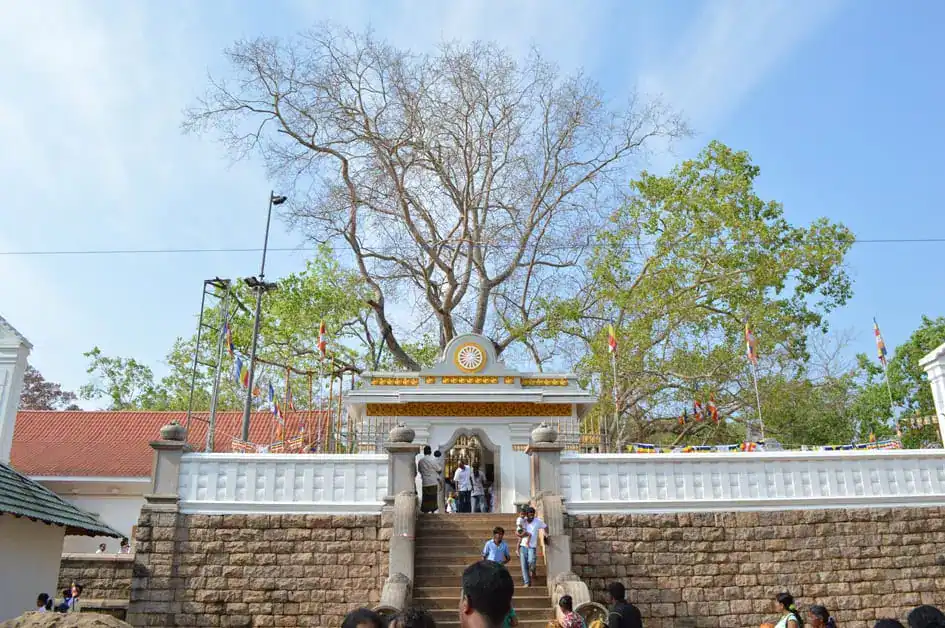
Sri Maha Bodhi – Anuradhapura (Photo: Nalaka Priyantha)
Morning
Leave after breakfast for the long drive north into the dry zone. The landscape gradually changes from coconut groves to paddy fields, scrub and large ancient reservoirs.
Afternoon
Check in and rest through the heat. From about 4 pm, head into Anuradhapura‘s Sacred City, the island’s first great capital. Start with the great white stupa of Ruwanwelisaya and continue to Sri Maha Bodhi, the sacred fig tree grown from a cutting of the tree under which the Buddha is believed to have attained enlightenment.
Evening
Stay for the evening offerings at Sri Maha Bodhi, when pilgrims in white bring flowers and light oil lamps. Leave Jetavanaramaya, Abhayagiri and the Twin Ponds for the early morning of Day 5 or another visit.
Where to Stay
Anuradhapura. See where to stay in Anuradhapura.
Accommodation Guidance
Stay near the Sacred City or beside one of the reservoirs. Hotels on the western side of town cut the drive to Wilpattu tomorrow.
Food Stop
Look for buffalo curd with kithul treacle, a dry-zone favourite sold in clay pots along the region’s roads.
Practical Notes
Wear white or light, loose clothing that covers your shoulders and knees. You’ll remove your shoes and hat at sacred sites, and the stone gets extremely hot, so thick socks help. Buy the Central Cultural Fund ticket for the archaeological sites. In June, Poson Poya brings huge crowds of pilgrims to Anuradhapura and nearby Mihintale. It’s a moving time to visit, but book early and expect traffic.
Day 4: Wilpattu National Park
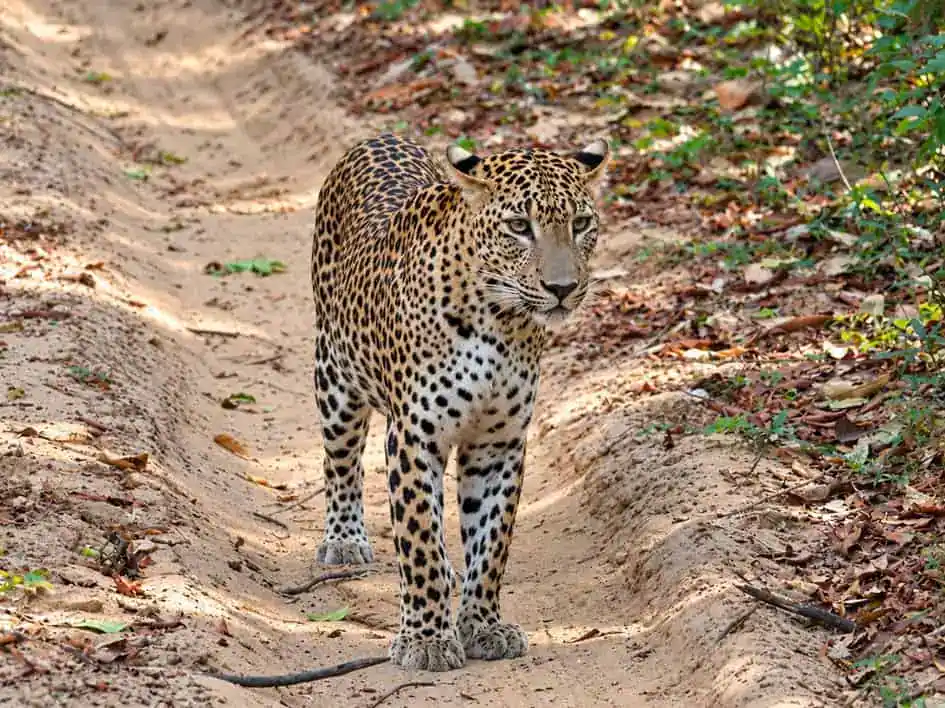
A leopard in Wilpattu National Park (Photo: Nalaka Priyantha)
Morning
Leave around 5 am to reach Wilpattu National Park, which opens at 6 am and closes at 6:00 pm. Sri Lanka’s largest national park is a dense forest broken by villus, natural sand-rimmed lakes where animals come to drink. Leopards, sloth bears, spotted deer, crocodiles, elephants, and many birds live here. As the dry season deepens, the remaining water can draw wildlife into the open. Even so, the forest is thick, and sightings are never guaranteed.
Afternoon
A half-day safari suits most travellers. Return to Anuradhapura for lunch and a long rest. Keen photographers may prefer a full day in the park, but pack food and plenty of water.
Evening
Keep it quiet. An early night helps before tomorrow’s move to Sigiriya.
Where to Stay
Anuradhapura
Accommodation Guidance
The second night here avoids a hotel change. Wilpattu-edge lodges are an option only if you’d rather do a full-day safari and skip the drive back.
Food Stop
Many hotels pack a safari breakfast. Ask for pol roti, a coconut flatbread, with lunu miris, a fiery chilli-onion relish.
Practical Notes
Book your jeep through your hotel or a licensed operator. Bring a hat, sunscreen, binoculars, and neutral clothing. Ask your driver to stay quiet, keep a proper distance, and not crowd animals with other jeeps. Keep bright colours and noise to a minimum. Read more in our guide to wildlife safaris.
Day 5: Anuradhapura to Sigiriya — Sigiriya Rock Fortress
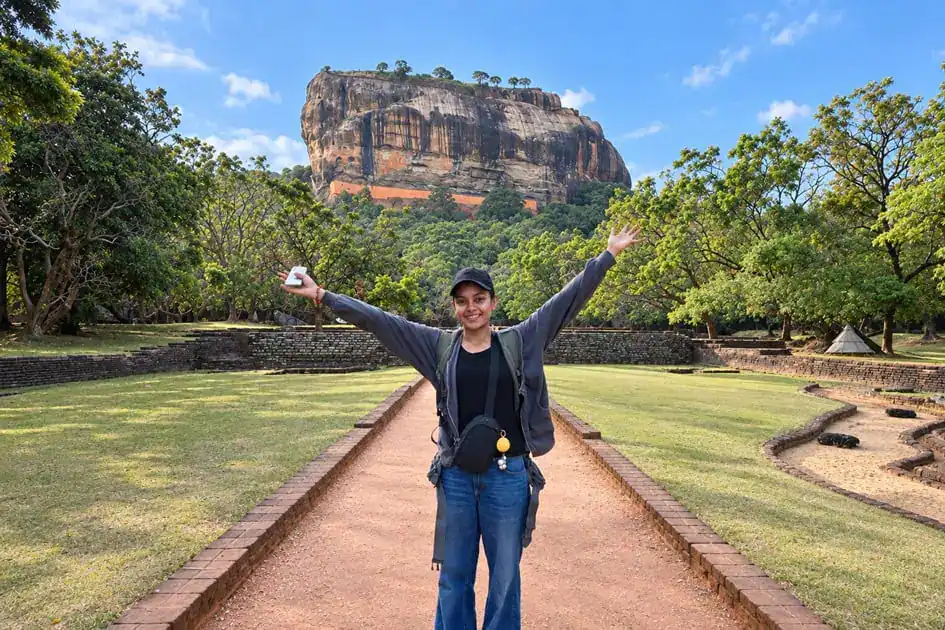
My daughter, Nethuli – Sigiriya Rock Fortress (Photo: Nalaka Priyantha)
Morning
If you missed parts of Anuradhapura on Day 3, revisit early for Jetavanaramaya, one of the tallest brick structures of the ancient world, and the Twin Ponds. Then drive southeast to Sigiriya or Habarana.
Afternoon
Check in, eat lunch and rest. At around 3 pm, head to Sigiriya Rock Fortress. King Kasyapa built his palace on the summit in the 5th century, and the site below is as impressive as the view from the top. Walk through the water gardens, then climb past the painted frescoes and the Mirror Wall to the Lion’s Paw terrace. The last stretch leads to the ruined palace on the summit. Allow 2–3 hours, and plan for around 1,200 steps.
Sigiriya opens between 5:00 am and 6:30 pm every day. Tickets are issued between 5:00 am and 5:00 pm. However, the frescoes area closes for tourists at 5:45 om.
Evening
Dinner at your hotel and an early night. Tomorrow is busy.
Where to Stay
Sigiriya or Habarana. See where to stay in Sigiriya.
Accommodation Guidance
Sigiriya village is best for early starts at the rock and Pidurangala. Habarana is slightly closer to Minneriya, Kaudulla, and Trincomalee. Lodges set among paddy fields or forest suit this three-night stop well.
Food Stop
Village lunches around Sigiriya often feature rice and curry cooked on wood fires. Look for polos, a young jackfruit curry that tastes almost meaty.
Practical Notes
Ticket counters close at 5 pm, so don’t arrive late. You can book through the Central Cultural Fund’s eTicketing system. However, you still need to collect the ticket at the site counter with your receipt. Carry your passport. The upper staircase is exposed and can be windy, which may bother anyone uncomfortable with heights. Take water, a hat, and shoes with good grip.
Day 6: Dambulla Cave Temple and Minneriya or Kaudulla Safari
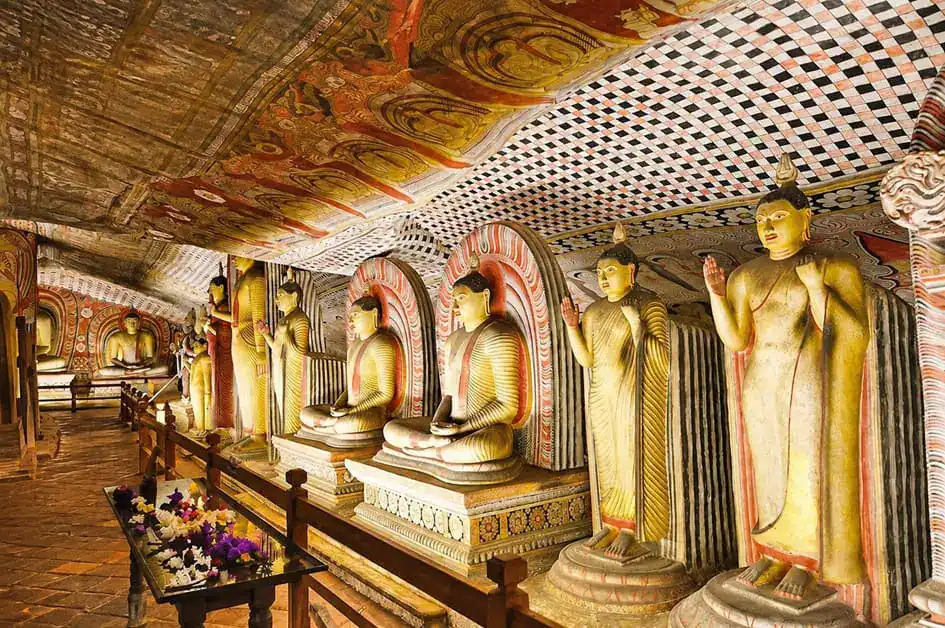
Dambulla Cave Temple (Photo: Nalaka Priyantha)
Morning
Drive about 30–40 minutes to Dambulla Cave Temple and climb there early, before the rock heats up. The five caves are filled with Buddha statues and painted ceilings, and they have been used for worship for more than 2,000 years. From the terrace, you can see across the forest to Sigiriya.
Dambulla Cave Temple opens from 7:00 am to 5:00 pm.
Afternoon
Rest over lunch, then take an afternoon jeep safari to see elephants. Minneriya and Kaudulla both sit around large ancient reservoirs. As the dry season goes on, the water shrinks, and grass grows on the exposed banks, which can draw elephants out in large numbers, especially later in the season. But herds move between the two parks and nearby forest from week to week. Neither park is automatically better. Let your hotel or driver choose on the day, based on where the elephants have recently been seen.
Minneriya and Kaudulla National Parks are open between 6:00 am and 6:00 pm.
Evening
Return for a quiet dinner.
Where to Stay
Sigiriya/Habarana
Accommodation Guidance
Staying in the same room all three nights lets you leave safari dust and damp clothes to dry.
Food Stop
Try fresh wood apple juice, a tart, earthy drink made from a dry-zone fruit and sold at roadside stalls and cafés.
Practical Notes
Cover your shoulders and knees at Dambulla. You’ll leave your shoes at the entrance, and the rock can burn bare feet by mid-morning. On safari, don’t let your jeep crowd or block elephants, particularly mothers with calves.
Day 7: Pidurangala Sunrise and Polonnaruwa
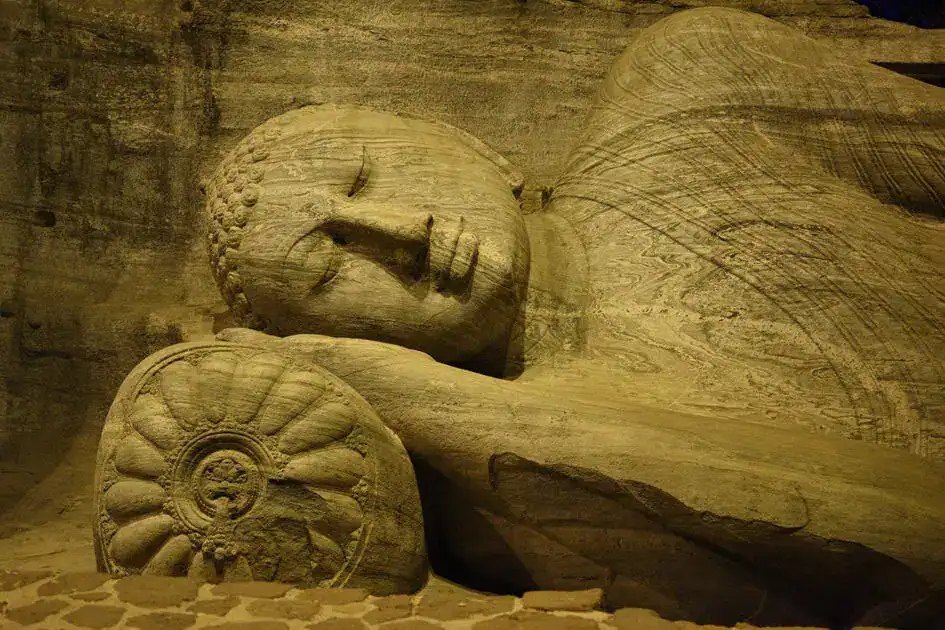
A Buddha statue, Gal Vihara – Polonnaruwa (Photo: Nalaka Priyantha)
Morning
Start around 5 am for the Pidurangala hike. It’s shorter than Sigiriya but rougher, and the last section is a scramble over boulders. From the top, you look straight across at Sigiriya as the light comes up. Come back for breakfast and a proper rest before the afternoon.
The ticket counters open between 5:00 am and 6:00 pm.
Afternoon
Drive to Polonnaruwa, the medieval capital. Start at the museum, then work through the site by car or bicycle. Highlights include the Royal Palace, the Quadrangle’s circular Vatadage, and Gal Vihara, where four Buddha figures are carved into a single granite face. The site is large and exposed, so this later start avoids the worst heat. Ticket counters close around 5 pm, so aim to be there by 2.30–3 pm.
Evening
Eat early and pack. You leave for the coast tomorrow.
Where to Stay
Sigiriya/Habarana
Accommodation Guidance
Ask for an early breakfast box or a late breakfast. Most hotels here are used to hikers.
Food Stop
Try kiribath, rice cooked in coconut milk and set into squares, with lunu miris. It’s the traditional food for special mornings, and a fitting breakfast after a sunrise hike.
Practical Notes
Take a torch for the Pidurangala climb, and wear shoes with grip. The upper temple area requires covered shoulders and knees, so bring a sarong or shawl for the start of the walk. At Gal Vihara, don’t pose for photos with your back to the Buddha statues.
Day 8: Sigiriya/Habarana to Nilaveli, Trincomalee
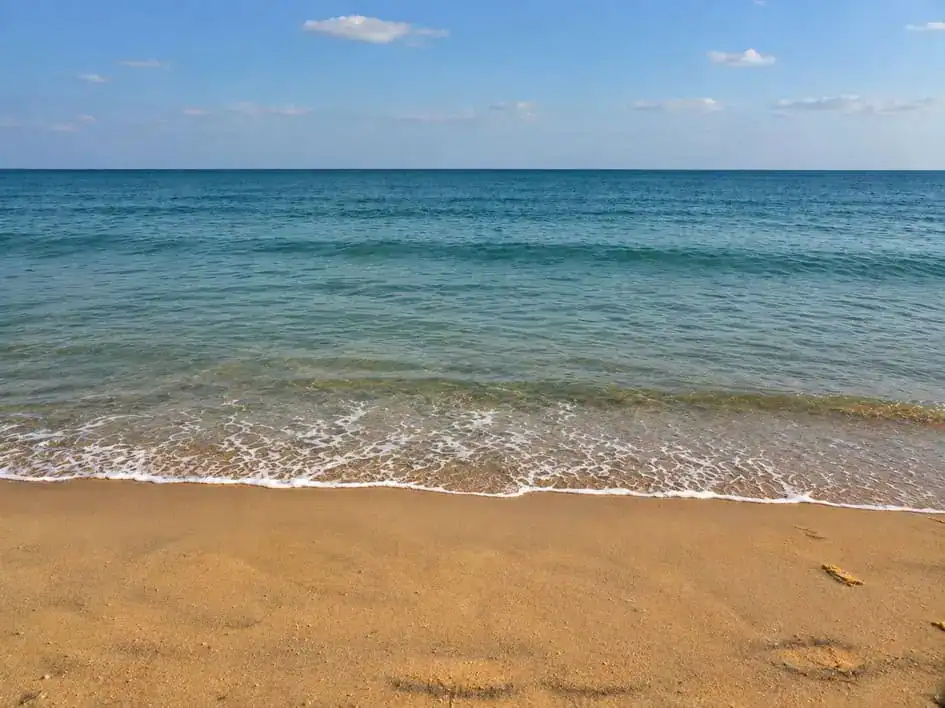
Calm water – Nilaveli Beach (Photo: Nalaka Priyantha)
Morning
Drive northeast to the coast. The road passes through dry forest and elephant country, and you’ll often see warning signs for elephant crossings.
Afternoon
Check in and let the sea do the work. For much of this season, Nilaveli’s water is calm and clear. This is the change the whole route has been building towards: the West Coast is under the monsoon, while the East is often at its best.
Evening
Walk the beach at sunset, then have an unhurried dinner.
Where to Stay
Trincomalee/Nilaveli
Accommodation Guidance
Nilaveli is quieter and closer to the Pigeon Island boats. Uppuveli, nearer Trincomalee town, has more cafés and restaurants and is handy for the harbour and temples. Either works for four nights.
Food Stop
Order grilled fish on the beach, bought fresh that day and cooked simply with chilli and lime.
Practical Notes
Even in a good season, sea conditions change. Ask your hotel about currents before swimming, and avoid swimming alone or after dark.
Day 9: Pigeon Island Marine National Park
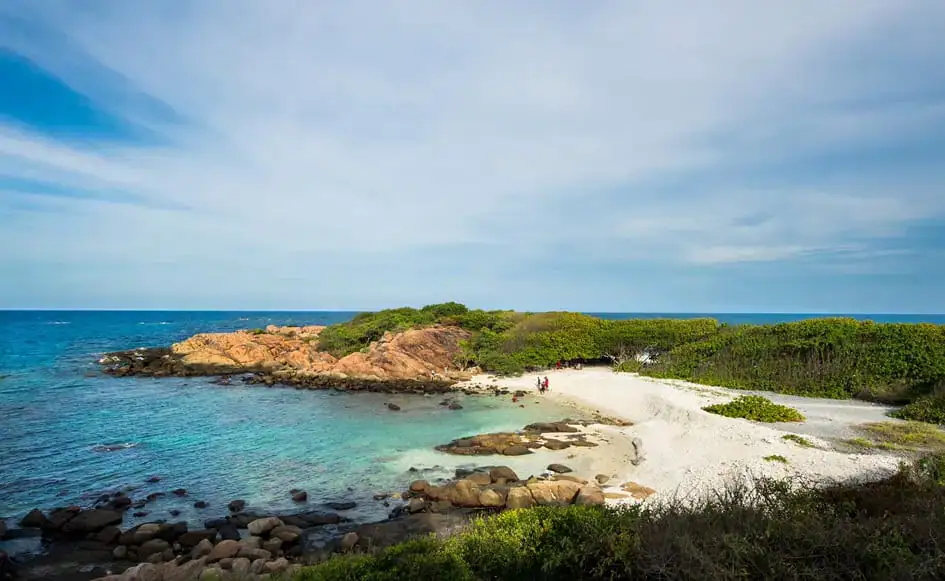
Pigeon Island National Park – Trincomalee (Photo: Chiranmayu Medis, CC BY-SA 4.0)
Morning
Take an early boat from Nilaveli to Pigeon Island, a short ride offshore. Mornings are usually calmer and clearer, and you’ll share the reef with fewer boats. The shallow reef holds hard corals, reef fish, turtles, and small blacktip reef sharks, which are harmless if you keep your distance. The Department of Wildlife Conservation manages the park. You need a park ticket as well as a boat, and the season generally runs through the calmer months, roughly April to September. Access can still be closed for rough seas or conservation reasons.
Afternoon
Rest through the heat. You may be surprised how tiring a morning of snorkelling in the sun is.
Evening
Keep it easy.
Where to Stay
Trincomalee/Nilaveli
Accommodation Guidance
Many hotels can arrange the boat, ticket and gear, which saves haggling at the beach.
Food Stop
Refuel with kottu, chopped roti stir-fried with vegetables, egg, or meat. The clatter of the metal blades on the griddle is the sound of evening food all over the island.
Practical Notes
Never stand on, touch or collect coral. Stay inside marked zones, don’t chase turtles or sharks, and wear a rash guard rather than heavy sunscreen. Single-use plastic is banned on the island. There are no facilities, so bring water and leave valuables behind. If you’re a weak swimmer, take a guide and wear a life jacket.
Day 10: Fort Frederick and Koneswaram Temple
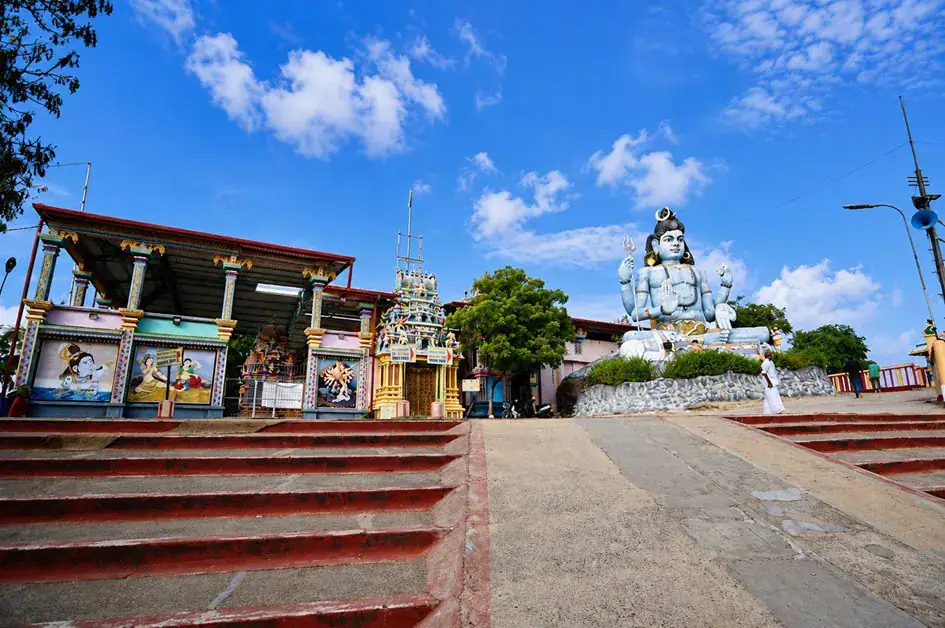
Koneswaram Kovil – Trincomalee (Photo: Nalaka Priyantha)
Morning
Walk through the gateway of Fort Frederick, built by the Portuguese in the 1620s and later held by the Dutch and the British. It’s still an active army base, but visitors can walk the road inside, often past spotted deer. The road climbs to Swami Rock and Koneswaram Temple, an ancient Hindu shrine to Shiva, rebuilt in the 20th century after the Portuguese destroyed the original. The cliff-top setting, with the harbour on one side and open sea on the other, is part of what makes it special.
Afternoon
Explore Trincomalee town, or head back to the beach.
Evening
Watch the sunset over the harbour, then have dinner in Uppuveli or at your hotel.
Where to Stay
Trincomalee/Nilaveli
Accommodation Guidance
No change needed. Day trips from one base are the point of this four-night stop.
Food Stop
Try a Tamil breakfast or lunch in Trincomalee: crisp thosai (fermented rice and lentil pancakes) with wadai, sambar, and coconut chutney.
Practical Notes
Dress modestly and remove your shoes at the temple. Follow any extra instructions at the entrance, and ask before photographing worshippers or ceremonies. Don’t photograph military buildings or soldiers without permission. Go in the morning, before the rock gets hot.
Day 11: Whale Watching or a Relaxed Beach Day
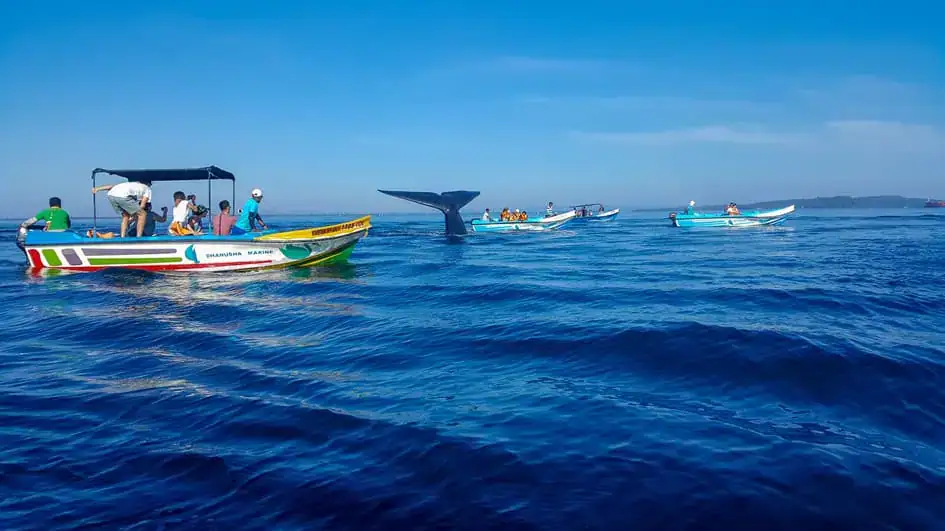
Whale watching off Trincomalee. Choose responsible operators that keep a respectful distance, limit disturbance and never chase or crowd whales. (Photo: PANGEA Travel, CC BY-NC-SA 2.0)
Morning
This day depends on the month and the sea. Trincomalee’s deep offshore waters have their own whale season, broadly from spring to late summer. Blue whales and sperm whales are the main hopes, and spinner dolphins are frequently seen. Earlier months tend to be calmer. By July and August, swell can build, trips are sometimes shortened or cancelled, and by September the season is winding down. If you decide to go, boats usually leave early and return late morning. Expect several hours at sea, possibly in open water, and no guaranteed sighting.
Afternoon/Evening
If the sea is rough, whales aren’t your priority, or you’re simply tired, take a slow beach day instead. Many travellers find a lazy day this far into the trip is exactly what they need.
Where to Stay
Trincomalee/Nilaveli
Accommodation Guidance
Ask your hotel for a late breakfast after the boat trip, or a later checkout tomorrow if you need it.
Food Stop
Order egg hoppers for dinner: bowl-shaped rice-flour pancakes, crisp at the edges, with an egg cooked into the middle.
Practical Notes
Choose an operator that keeps its distance from whales, doesn’t chase or cut off animals, and limits the number of boats around a sighting. If you get seasick, take medication before boarding. Read more in our guide to whale watching in Sri Lanka.
Day 12: Trincomalee to Arugam Bay
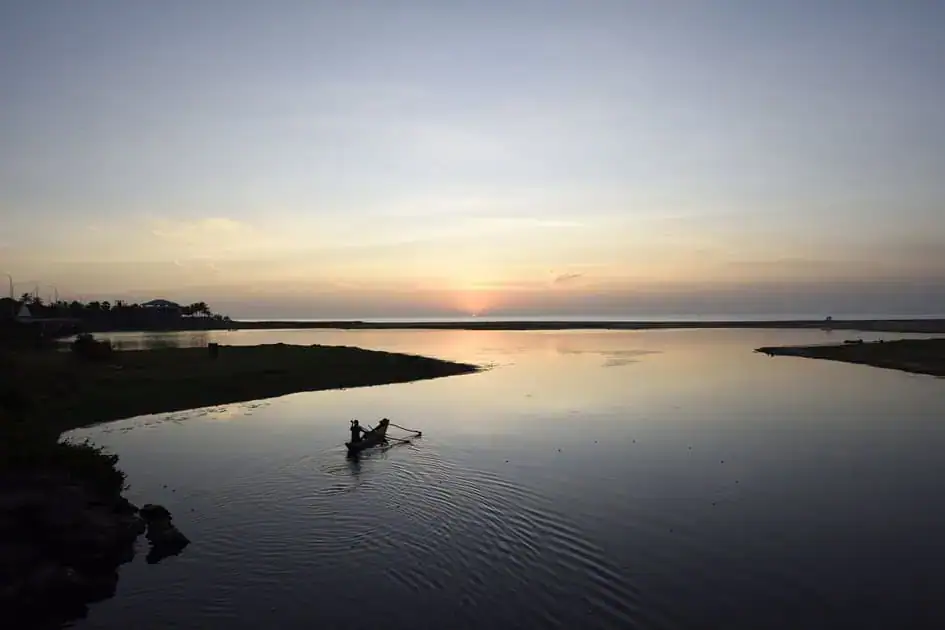
Sunrise from the Arugam Bay bridge (Photo: Nalaka Priyantha)
Morning
Leave early for the longest drive of the trip, heading south along the coast via Batticaloa. Expect 5.5–7 hours, plus stops. The road passes lagoons, paddy fields, fishing towns and villages, with a mix of Tamil, Muslim, and Sinhala communities. This part of the East sees far fewer tourists than the South Coast.
Afternoon
Stop for lunch in or near Batticaloa and stretch your legs. Plan to arrive in Arugam Bay mid-afternoon.
Evening
Check in, walk the beach, and eat early. Tomorrow starts before dawn.
Where to Stay
Arugam Bay
Accommodation Guidance
The main beach strip puts you within walking distance of cafés, surf shops, and the main point break. For quieter nights, look slightly north or south of the centre, but you’ll then rely on tuk-tuks.
Food Stop
Look for watalappan, a spiced jaggery and coconut custard with roots in Sri Lanka’s Muslim community, often sold in east-coast towns.
Practical Notes
Don’t add sightseeing today. Rural roads carry cattle, cyclists, and sometimes elephants, so avoid driving after dark where possible. Carry cash, as ATMs are limited once you leave the main towns.
Day 13: Elephant Rock Sunrise and Surfing in Arugam Bay
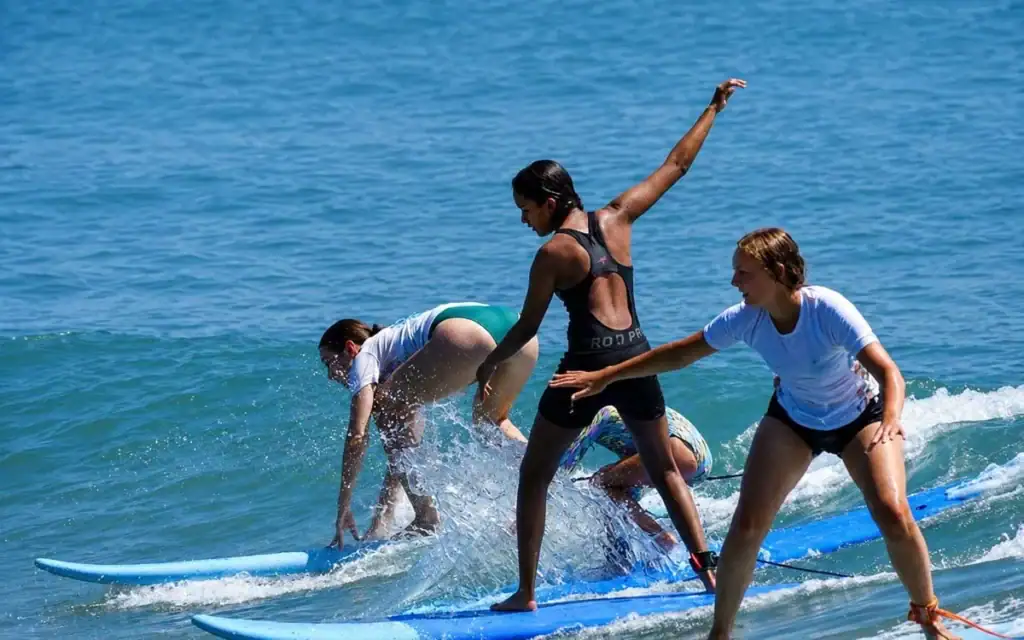
My daughter, Nethuli, is surfing in Arugam Bay (Photo: Nalaka Priyantha)
Morning
Walk or take a tuk-tuk south of the main strip before first light, then climb the short sandy path up Elephant Rock for sunrise over the bay. It’s an easy climb, but the sand is loose, so take a torch. Come back for breakfast, then surf later in the morning once the light is up and you’ve eaten.
Afternoon
Rest, swim where it’s safe, or book a second lesson. Arugam Bay’s main surf season falls in these months, and there’s a spread of breaks. The Main Point is a long right-hand wave that suits experienced surfers and gets crowded. Beginners usually learn at softer spots nearby, such as Baby Point or Whiskey Point, with a surf school choosing the break by the day’s swell. Conditions still vary, and some days are flat or messy. Read more in our guide to surfing in Sri Lanka.
Evening
Watch the surfers come in at sunset, then have dinner on the strip.
Where to Stay
Arugam Bay
Accommodation Guidance
If you’re surfing, stay close to the break you’ll use most, or pick a surf camp with board rental and transport included.
Food Stop
Try devilled prawns, stir-fried with onion, capsicum, and a sweet-hot chilli sauce. You’ll find them on menus all along the coast.
Practical Notes
Beginners should book a lesson with a reputable school rather than paddling out alone. Respect the line-up and local surfers. Wear a rash guard, and treat reef and rocks as real hazards at low tide.
Day 14: Kumana National Park
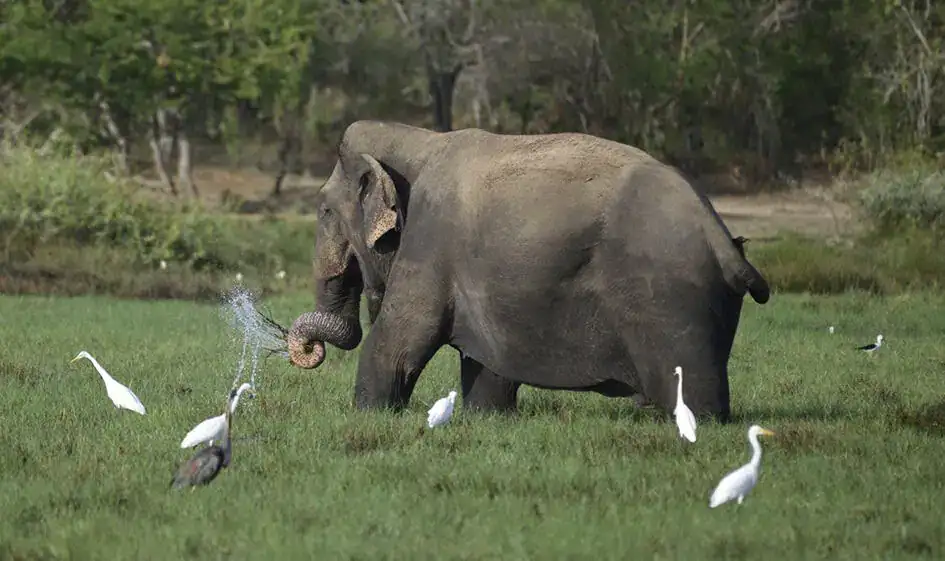
A wild elephant – Kumana National Park (Photo: Nalaka Priyantha)
Morning
Leave very early for Kumana National Park, about an hour south of Arugam Bay. Kumana sits at the eastern edge of the greater Yala wilderness, but it sees far fewer jeeps than Yala itself. The park is best known for birds. From around April to July, large numbers of water birds nest in the mangrove swamp of Kumana Villu. You may see painted storks, spoonbills, pelicans, herons, and ibis. Elephants, crocodiles and occasionally leopards also live here.
This day complements, rather than repeats, Wilpattu and Minneriya. Kumana’s wetlands, lagoons and coastal scrub are a completely different habitat, and the pace is quieter and more about watching than chasing. Nesting activity varies from year to year, and no species is guaranteed.
Kumana National Park is open between 6:00 am and 6:00 pm.
Afternoon
Return to Arugam Bay by lunchtime. Rest through the heat.
Evening
Have a slow evening in town. You leave the coast tomorrow.
Where to Stay
Arugam Bay
Accommodation Guidance
Hotels and surf camps can arrange licensed jeeps and packed breakfasts.
Food Stop
Try pittu, steamed cylinders of rice flour and coconut, eaten with coconut milk and a curry. It’s a common breakfast in Tamil and Muslim homes on the East Coast.
Practical Notes
Take binoculars and a longer lens if you have one. Ask your driver to stop well back from nesting colonies and to keep the engine off while watching. Pilgrims walking the traditional route to Kataragama pass through this area around June and July, which can bring extra crowds.
Day 15: Arugam Bay to Ella
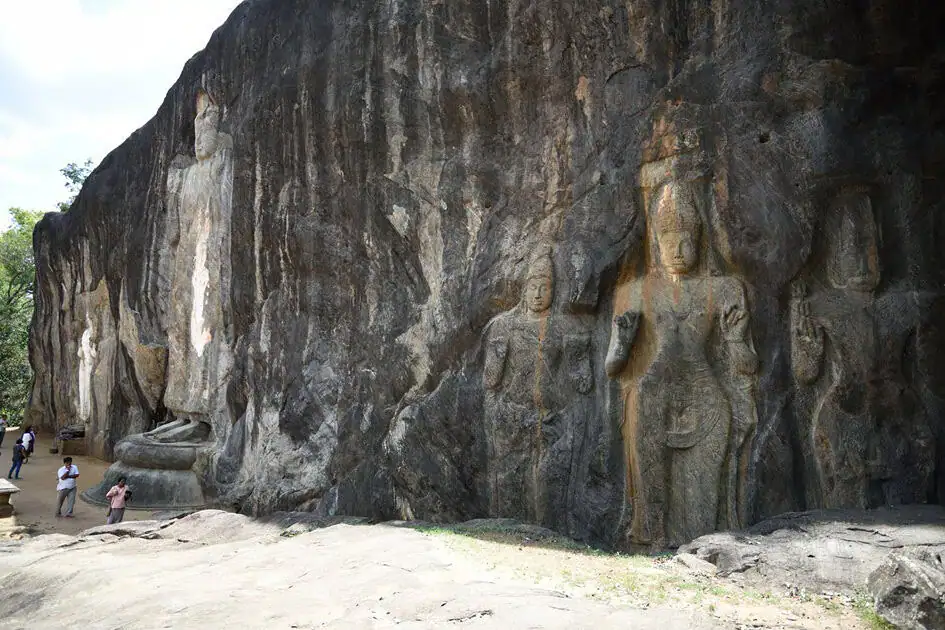
Statues in Buduruwagala (Photo: Nalaka Priyantha)
Morning
Leave after breakfast and drive inland via Monaragala and Wellawaya. The road climbs from coastal scrub into the green hills, and the drive usually takes 3–4 hours.
Afternoon
If you’re making good time, stop near Wellawaya at Buduruwagala, a group of tall Buddhist figures carved into a rock face deep in the forest. It’s a short detour. Arrive in Ella by mid-afternoon and settle in.
Evening
Take a gentle walk into Ella village. It’s a small town full of cafés and guesthouses. Eat early, as tomorrow starts before sunrise.
Where to Stay
Ella
Accommodation Guidance
Guesthouses on the hillsides give you views and quiet but often involve steep walks or tuk-tuk rides. Staying near the main road is easier on foot but busier. Ask about hot water, as nights feel cooler here.
Food Stop
Pick up bibikkan, a dense coconut and jaggery cake, from a bakery for the drive.
Practical Notes
Keep today easy. The change from coast to hills can bring sudden cooler evenings and afternoon cloud, so have a light layer handy.
Day 16: Ella — Sunrise Hike, Nine Arch Bridge, and Ravana Falls
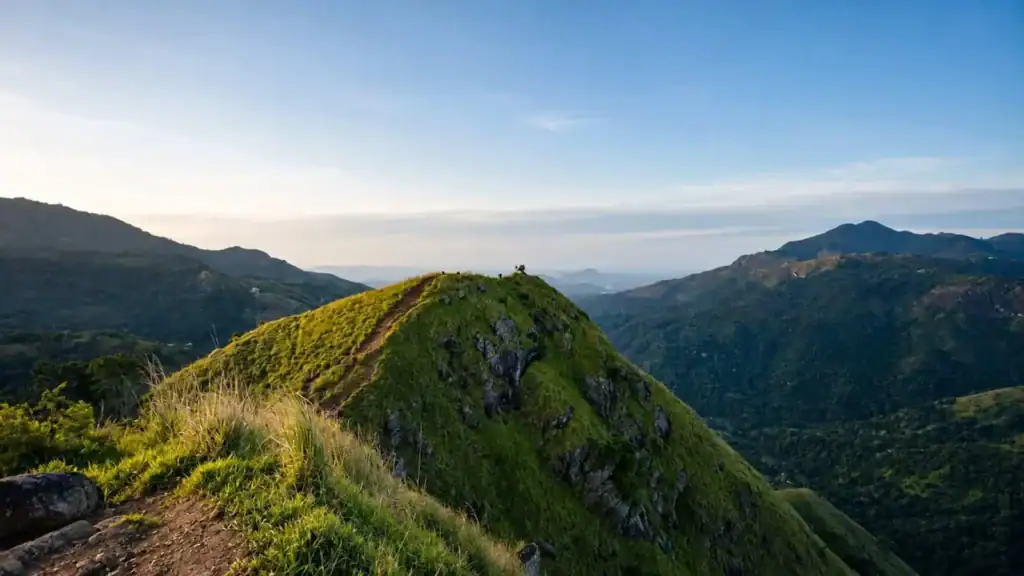
Little Adam’s Peak – Ella (Photo: Nalaka Priyantha)
Morning
Choose one sunrise hike, not both.
Little Adam’s Peak is the easier option. It takes about 45 minutes to walk up on a clear path and steps, with wide views across the Ella Gap. It suits most fitness levels.
Trails – Little Adam’s Peak and Nine Arch Bridge:
- AllTrails Map – Little Adam’s Peak (1.6 km)
- AllTrails Map – Little Adam’s Peak and Lookout (2.9 km)
- AllTrails Map – Nine Arches Bridge – Little Adam’s Peak (5.8 km)
- AllTrails Map – Nine Arch Bridge from Ella Rd (1.9 km)
- AllTrails Map – Nine Arch Bridge (1.3 km)
- AllTrails Map – Nine Arch Bridge Viewpoint Loop (1.3 km)
Ella Rock is harder, taking around 3–4 hours return. Parts of the route follow the railway line and then climb through tea and forest, and it’s easy to take a wrong turn. Hire a local guide unless you’re confident on unmarked trails.
- Footpath to Ella Rock Loop (3.7 km)
- Ella – Ella Rock (9.7 km)
- Ella Rock Trail (5.8 km)
- Ella Rock Sunrise Viewpoint (3.4 km)
- Amba to Ella via Ella Rock (8.7 km)
Afternoon
After breakfast and a rest, walk to the Nine Arch Bridge, a colonial-era viaduct curving through the forest and tea. Services on this line are limited at the time of writing, so check the current timetable if you want to see a train cross. Later, take a tuk-tuk down to Ravana Falls, about 6 km along the Wellawaya road. It’s a roadside stop, not a hike, and the flow can be thinner in drier spells.
Evening
Have dinner in town and an early night before the train.
Where to Stay
Ella
Accommodation Guidance
Two nights here gives you room to move the hike to Day 17 if clouds wipe out today’s sunrise.
Food Stop
Try string hoppers, delicate nests of steamed rice noodles, eaten with kiri hodi, a mild coconut-milk gravy.
Practical Notes
Take a torch, water and good shoes for either hike. Walking on the railway line is dangerous. Step well off the track, and never stand on the bridge when a train is approaching.
Day 17: Ella to Nanu Oya by Train — Nuwara Eliya
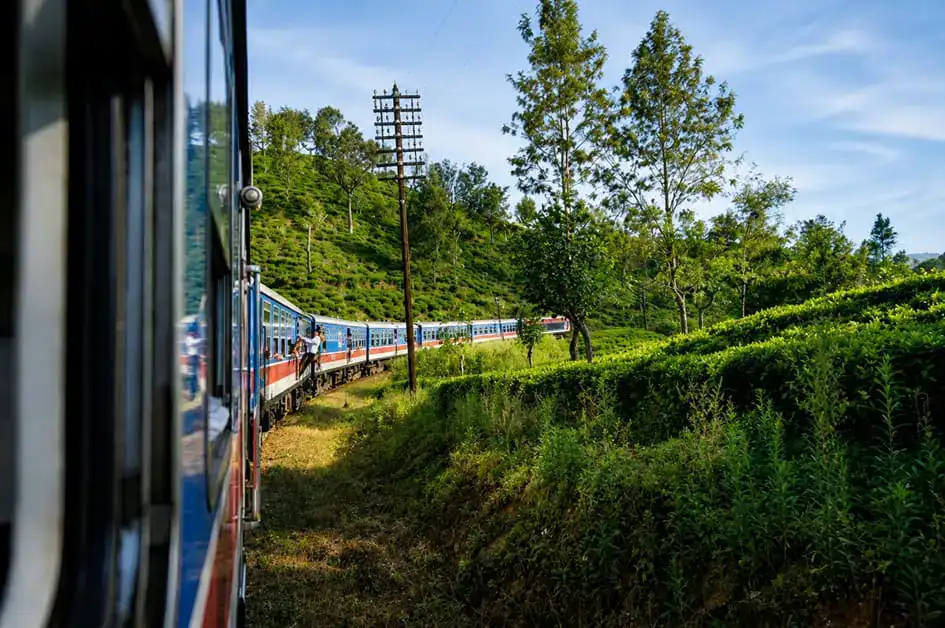
The scenic train through tea plantations (Photo: Nalaka Priyantha)
Morning
Take the train from Ella towards Nanu Oya, the station for Nuwara Eliya. It’s one of the most scenic rail journeys on the island. The line climbs through Haputale, where the valley falls away below. It then continues through tea estates and cloud forest to Pattipola, the highest station on the line, before dropping to Nanu Oya.
At the time of writing, the section is running on a limited special timetable with only a few trains a day, and the journey takes about 2.5 hours. Check current departures and seat options with Sri Lanka Railways before you travel, and don’t count on a specific train or a reserved seat until you have a ticket. Going uphill is slower but just as scenic as the more popular Nanu Oya–Ella direction. Read more about scenic train rides in Sri Lanka.
Afternoon
Take a tuk-tuk or your driver from Nanu Oya to Nuwara Eliya, about 15–20 minutes. Have your driver bring the luggage by road so you can travel light on the train.
Evening
Nuwara Eliya is cool, especially in the evening. Have a warm dinner and an early night.
Where to Stay
Nuwara Eliya
Accommodation Guidance
Choose a place with heating or good blankets and hot water. Hotels near Gregory Lake or the town centre are convenient for tomorrow’s early start.
Food Stop
Buy short eats for the train from an Ella bakery, such as a fish bun, vegetable roti, or egg roll.
Practical Notes
If the train is cancelled or full, your driver can cover the route by road in a similar time. Bring a jacket, as it gets noticeably colder as the train climbs.
Day 18: Horton Plains and Nuwara Eliya
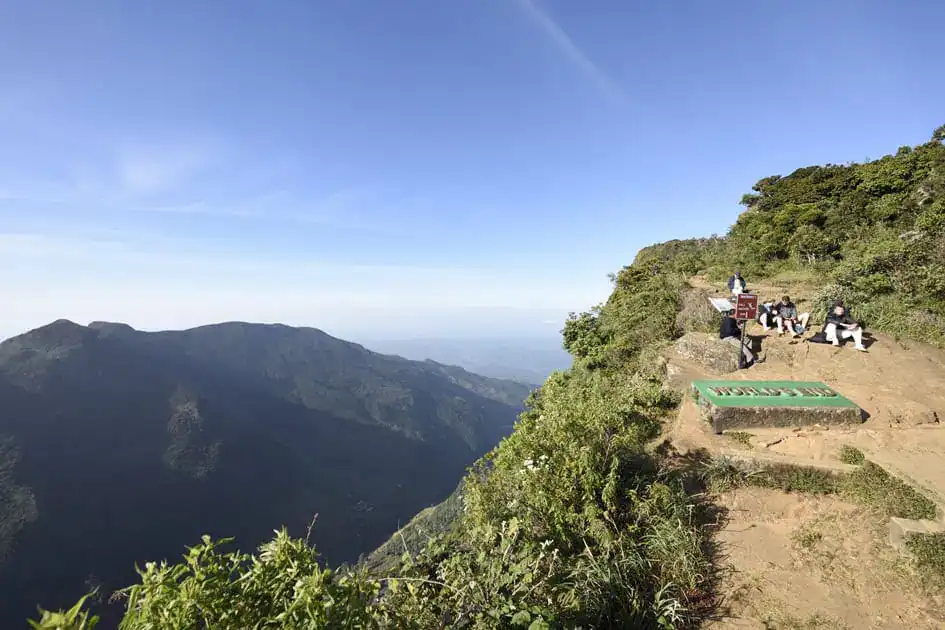
World’s End – Horton Plains National Park (Photo: Nalaka Priyantha)
Morning
Leave very early for Horton Plains National Park, a high plateau of grassland and cloud forest. The loop walk is about 9 km, taking 3–4 hours. It passes Mini World’s End, World’s End, where the escarpment drops away sharply, and Baker’s Falls. Arrive early because cloud usually rolls in by mid-morning. During the Southwest Monsoon, mist, wind, and drizzle are common here, and on some days World’s End shows only a wall of white. It’s still a beautiful walk, but go without expecting a view.
Horton Plains National Park is open between 6:00 am and 6:00 pm.
Afternoon
Return to Nuwara Eliya for lunch and a slow afternoon. Walk around Gregory Lake or Victoria Park, or visit the red-brick post office, one of many British-era buildings left from the town’s time as a hill retreat.
Evening
Warm up with a hot drink and have dinner early.
Where to Stay
Nuwara Eliya
Accommodation Guidance
Colonial-era hotels suit this town’s character, but modern guesthouses are often warmer and better value.
Food Stop
The hills around Nuwara Eliya grow much of the island’s leeks, carrots, and cabbage. Look for a leek or carrot curry, and pair it with a pot of Ceylon tea from the estates around you.
Practical Notes
Horton Plains bans plastic bags and wrappers, and bags are checked at the entrance. Stay on the marked path, and keep well back from the drop at World’s End. Wear layers and waterproof shoes, and bring a rain jacket.
Day 19: Nuwara Eliya to Kandy — Tea Country and Temple of the Tooth
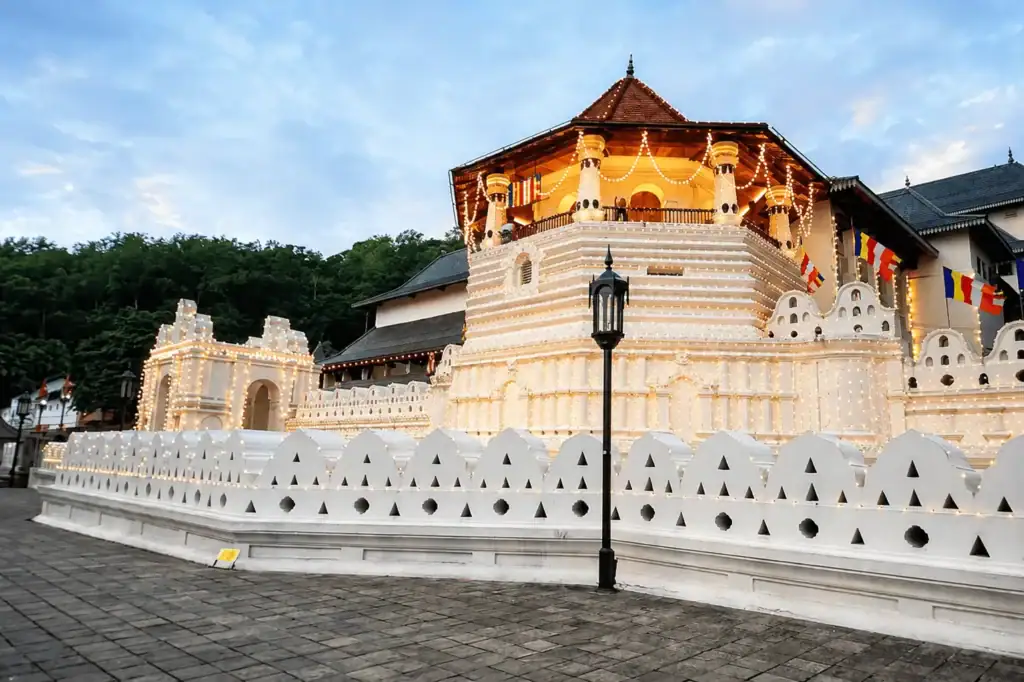
Temple of the Tooth – Kandy (Photo: Nalaka Priyantha)
Morning
Drive north on the A5 towards Kandy, dropping through tea estates, the Ramboda Pass and a string of waterfalls. About 11 km from Nuwara Eliya, stop at the Damro Labookellie Tea Centre, formerly known as the Mackwoods Labookellie Tea Centre. It sits right on the roadside among the estate’s tea gardens. Short factory tours show how leaves are withered, rolled, fermented, dried and graded, and they finish with a cup of tea. Opening hours and tour arrangements can change, so check with your driver on the day.
Afternoon
Continue to Kandy, which usually takes 2–3.5 hours in total with the stop. Check in and rest.
Evening
Walk around Kandy Lake to the Temple of the Sacred Tooth Relic (Sri Dalada Maligawa), Sri Lanka’s most important Buddhist shrine. It holds a relic believed to be the Buddha’s tooth. Try to be there for the evening puja, when drummers play and the shrine room opens for offerings. The relic itself stays inside its casket.
The Temple of the Tooth opens from 5:30 am to 8:00 pm.
Where to Stay
Kandy
Accommodation Guidance
The lake area is walkable and central. Hillside hotels are quieter and cooler, with views, but you’ll need tuk-tuks to get around.
Food Stop
Labookellie’s tea room is known for its chocolate cake, served with a pot of high-grown tea. It’s a tradition many Sri Lankan families follow on this road.
Practical Notes
At the temple, wear white or light clothing that covers your shoulders and knees. Remove your shoes and hat at the entrance, and go through the security check. Arrive early for the puja, as the crowds build quickly.
Day 20: Peradeniya Gardens and a Cultural Dance Performance

Peradeniya Royal Botanical Garden (Photo: Koshy Koshy, CC BY 2.0)
Morning
Take a tuk-tuk or drive about 20–30 minutes to the Royal Botanic Gardens, Peradeniya. Walk the great avenue of palms, the orchid house, the spice garden, and the giant Java fig on the lawn by the river. The fruit bat colony in the trees is worth a look too. Go early, when it’s cooler and quieter.
Opening hours of the Peradeniya Royal Botanical Gardens are between 7:30 am and 6:00 pm. Ticketing hours are between 7:30 am and 5:00 pm.
Afternoon
Return to Kandy for lunch and a slow afternoon. Wander the market, look around the town centre, or rest.
Evening
Watch a Kandyan dance performance. Several halls near the lake stage hour-long shows of drumming, dancing and, often, a fire-walking finale. Show times and venues change, so check locally on the day. Read more about drumming and dance traditions.
Where to Stay
Kandy
Accommodation Guidance
If you’re travelling during the Esala Perahera in July or August, book early. The festival follows the lunar calendar, dates move each year, and rooms fill quickly and cost more.
Food Stop
Order a rice and curry lunch with mallung, finely shredded greens tossed with coconut. It’s one of the freshest-tasting dishes in Sri Lankan cooking.
Practical Notes
Peradeniya is busy on weekends and public holidays.
Day 21: Kandy to Bandaranaike International Airport
Morning
Your departure time depends on your flight. The drive usually takes 3–4 hours and sometimes more, especially on weekday mornings and holidays. Airlines usually ask you to arrive at least three hours before an international flight. For an afternoon flight, that often means leaving Kandy in the early morning.
Afternoon/Evening
Fly home. If your flight is late at night, don’t add sightseeing near the airport unless you have plenty of time to spare. Instead, rest or book a hotel near the airport or in Negombo.
Where to Stay
No overnight
Accommodation Guidance
For a very early morning flight, move to Negombo the night before and take the last day of Kandy sightseeing off the plan.
Food Stop
Have a last cup of kiri thé, strong black tea with milk and plenty of sugar, before you leave.
Practical Notes
Ask your hotel to have breakfast ready early. Keep your passport and valuables within reach. Allow extra time on wet days.
Accommodation Guidance Throughout the Itinerary
Where you stay in each base changes the trip more than the hotel’s star rating. In the Cultural Triangle, choose between staying near the sites for early starts or in lodges set in the countryside. On the East Coast, the main choice is between quiet beaches and walkable towns. In the hills, prioritise hot water and warmth over views.
Booking pressure also changes by month. East-coast beaches and Ella fill up in July and August, when many Europeans travel. Anuradhapura is busy around the Poson full moon in June, and Kandy’s hotels fill fast during the Esala Perahera. Book those dates early, especially if you want rooms with a view or a pool.
The route includes short stays and longer ones. Four nights in Nilaveli and three in Arugam Bay are worth spending more on, as you’ll use the room and grounds. On the other hand, a two-night stop in Nuwara Eliya is mostly about sleeping warmly, and you’ll spend little time there.
See our guides to budget travel and luxury travel for different comfort levels. We also recommend reading about how to choose where to stay in Sri Lanka.
Dining and Food Experiences Across the Trip
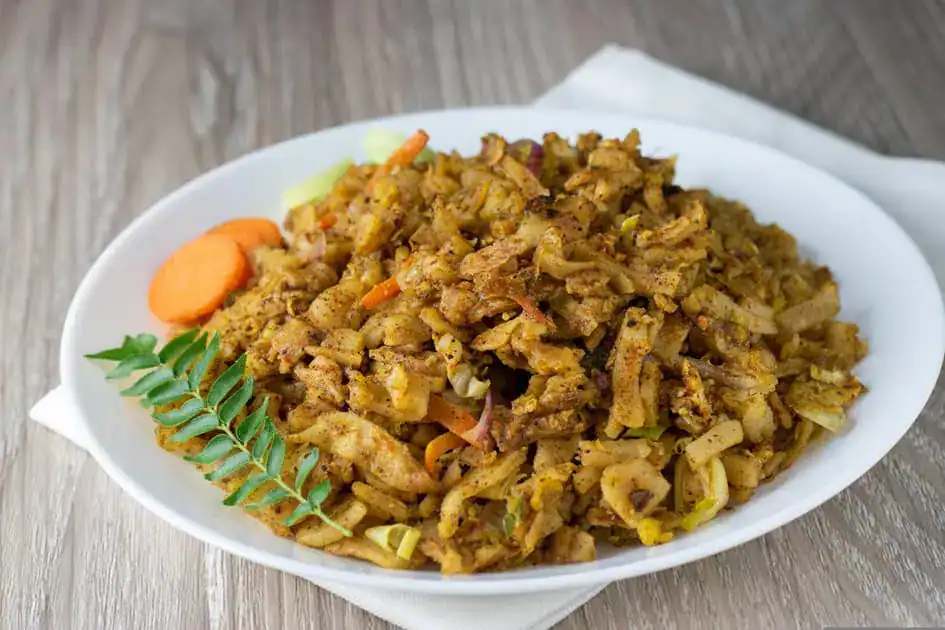
A Delicious Kottu Plate (Photo: KavindaF, via Pixabay)
The route follows Sri Lanka’s regional food. The first days bring coastal seafood and dry-zone flavours, such as buffalo curd with treacle, village rice and curry, and jackfruit. The East Coast adds Tamil and Muslim cooking, including thosai, pittu, wadai, and watalappan. The hills bring upcountry vegetables and some of the world’s best-known teas.
Lunchtime rice and curry is the best way to taste many dishes at once. Vegetarians eat very well here, since lentils, vegetables, and coconut are the backbone of most meals. Spice can be fierce, so ask for dishes “not too spicy” if needed; most cooks will adjust.
Stick to busy places with fast turnover, and drink bottled or filtered water. On Poya (full moon) days, alcohol isn’t sold in shops or most restaurants. For more, see our guides to Sri Lankan food and the best restaurants in Sri Lanka.
Cultural and Local Experiences
This route passes through Buddhist, Hindu, Muslim, and Christian places of worship, often within a single day. The basics are the same at all of them. Cover your shoulders and knees, remove your shoes and hat when asked, and speak quietly. Never pose with your back to a Buddha statue, and cover any tattoos of the Buddha. Ask before photographing worshippers, monks, or ceremonies, and don’t use flash in shrines.
Poya days are also worth knowing about. Temples are busier, many people wear white, and sites like Anuradhapura and Kandy feel especially devotional.
Some of the best moments come from slowing down: a lagoon trip in Negombo, a chat at a roadside curd stall, or a busy morning market. Read more about Sri Lanka’s temples and other religious landmarks and traditional festivals.
Flexibility and Alternatives
Most changes can happen within the route rather than by redesigning it.
Rain in the hills: Two nights in Ella and Nuwara Eliya let you move a sunrise hike to the following morning. If Horton Plains is fully clouded in, a gentler walk around Gregory Lake or a tea estate visit can replace it.
Rough seas: Swap Pigeon Island (Day 9) and the whale-watching or beach day (Day 11) to use the calmer morning. If boats aren’t running, spend the day at the beach or visit Trincomalee’s temples instead.
Surfing ability: Beginners should book lessons at a gentle break. Experienced surfers can use Day 14 for more surf and skip Kumana.
Safari fatigue: Four safaris is a lot for some travellers. Drop Minneriya or Kumana, and use the time to rest or visit a site you missed.
Low energy: Skip the Pidurangala sunrise, choose Little Adam’s Peak over Ella Rock, and take the Day 15 transfer slowly.
Train changes: If the Ella–Nanu Oya train is cancelled or full, the road covers the same journey. Book seats as early as the current system allows.
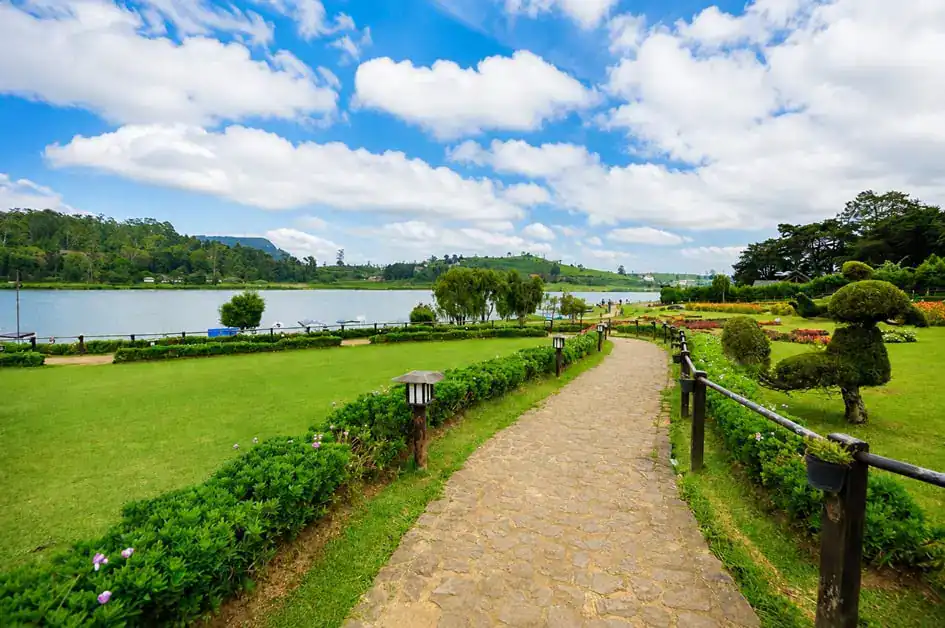
Gregory Lake – Nuwara Eliya (Photo: Nalaka Priyantha)
Weather and Packing Notes for May to September
Sri Lanka’s weather in these months depends on where you are. The Southwest Monsoon runs roughly from May to September. It brings most of its rain to the Southwest Coast and the western side of the central hills, which is why this route keeps you away from the West and South Coasts for most of the trip. The north-central plains and the East Coast sit in the drier zone and usually get far less rain in these months.
The route also changes as the months go by:
May is a changeover month. Before the monsoon sets in, usually in the second half of the month, thunderstorms are common almost everywhere. May is also one of the hottest months across the lowlands, so the Cultural Triangle days can be draining.
June to August is when the pattern is usually most settled. The East Coast is typically sunny and hot, and the dry zone gets windy and dusty. By July and August, the sea on the East Coast can get choppier, which may affect snorkelling and whale-watching trips. In the hills, Horton Plains and Nuwara Eliya often have mist, wind and drizzle, while Ella is usually brighter.
September is the end of the monsoon period. The weather becomes less predictable as the October–November inter-monsoon approaches, and afternoon storms become more likely in many areas.
These are broad patterns, not promises. Any region can have a wet day or a dry spell in any month. For more detail, see our guide to the weather in Sri Lanka.
Packing checklist:
- Light, breathable clothing for heat and humidity
- Temple clothing that covers shoulders and knees, plus a sarong or shawl
- A light rain jacket or compact umbrella
- Hiking shoes with grip, plus sandals
- A warm layer for Nuwara Eliya, Horton Plains, and early starts in the hills
- Sun hat, sunglasses, and high-SPF sunscreen, preferably reef-safe
- A rash guard and your own snorkel mask if you prefer
- Insect repellent
- A reusable water bottle with a filter or purifier
- A dry bag for boat trips and rain
- A head torch for sunrise hikes
- Binoculars for the safaris
- Seasickness tablets if you’re planning boat trips
Practical Details: Hours, Fees, Bookings, and Dress Codes
Prices below were checked in September 2026. They change often, and some are set in US dollars but paid in rupees at the daily exchange rate. Always check again before visiting.
| Site or experience | What to know |
| Sigiriya | Around US$35 for foreign adults. Book online through the Central Cultural Fund (CCF) or pay at the counter, and carry your passport. Ticket counters close at 5 pm. |
| Anuradhapura and Polonnaruwa | CCF tickets are required for the archaeological zones, and counters close at 5 pm. Modest dress is required at sacred areas. |
| Dambulla Cave Temple | Tickets are sold on site. Published prices vary widely, so check on arrival. Shoulders and knees must be covered, and you must leave shoes at the entrance. |
| Temple of the Tooth, Kandy | LKR 3,000 for non-SAARC adults. Modest, preferably light-coloured clothing is required, and there’s a security check. |
| National parks (Wilpattu, Minneriya, Kaudulla, Kumana, Horton Plains) | Entry is paid per person, plus jeep hire, service charges, and taxes. These are usually arranged through your jeep operator or hotel. Horton Plains checks bags for plastic at the gate. |
| Pigeon Island | A park ticket and a licensed boat are required, and access depends on sea conditions. Single-use plastic is banned on the island. |
| Royal Botanic Gardens, Peradeniya | Tickets are sold at the gate. Published prices vary, so check on arrival. |
| Ella–Nanu Oya train | Services run on a limited timetable at the time of writing. Check with Sri Lanka Railways before you travel. |
- Check the current ticket prices for the cultural sites.
- Check the current ticket price for the Temple of the Tooth, Kandy.
- You can buy entrance tickets online for the national parks through the official Wildlife Park Permits Reservation eService.
- You can buy your train tickets online through the official Online Advance Train Seats Reservation system.
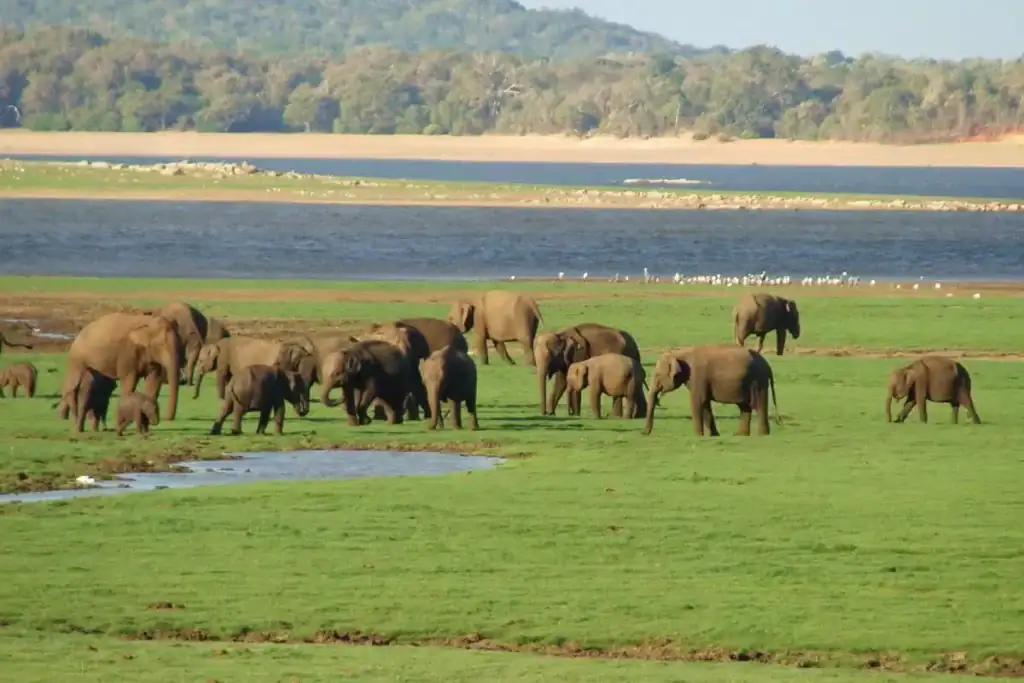
The Gathering in Minneriya National Park (Photo: Rakhitha Karunarathne, CC BY-NC 2.0)
Safety, Health and Comfort Notes
Buy travel insurance that covers medical evacuation, snorkelling and boat trips, and surfing if you plan to surf. The heat catches out many visitors in the Cultural Triangle and on the East Coast. Drink water regularly, rest in the middle of the day, and add oral rehydration salts on long, hot days.
Mosquitoes are present across the island, and dengue outbreaks do occur. Use repellent, especially around dawn and dusk. On the roads, choose an experienced driver and avoid long drives after dark, when cyclists and animals are hard to see. At sea, swim only where locals and lifeguards say it’s safe, and never swim alone.
Kandy and Colombo have the largest hospitals. Regional hospitals serve Anuradhapura, Trincomalee and other main towns, and private clinics are common in tourist areas. The free national ambulance service is on 1990.
Estimated Cost for 3 Weeks in Sri Lanka
Costs depend mainly on accommodation style and whether you hire a private driver. A car and English-speaking driver typically cost around US$65–80 a day. Over 20 days, that’s roughly US$1,300–1,700 per vehicle, often with fuel, tolls, and the driver’s costs included. Split between two people, it’s about US$650–850 each.
For two people sharing a room and a driver, these are rough per-person ranges, excluding international flights and insurance:
Budget-conscious: around US$1,800–2,600, with simple guesthouses, local food and some buses in place of the driver on long days.
Comfortable mid-range: around US$3,000–4,500, with boutique hotels, a driver for the whole trip and all the activities in this itinerary.
Higher-comfort: from around US$6,000, with top-end lodges and beach hotels.
Heritage fees add up quickly. Sigiriya, the ancient cities, safaris and boat trips can easily cost several hundred dollars per person across the trip. Treat these figures as a starting point, not a quote.
Responsible Travel Notes
Choose licensed jeep and boat operators, and tell them clearly that you don’t want them to chase, surround, or feed wildlife. That matters most with elephants at Minneriya and Kaudulla and with nesting birds at Kumana. At Pigeon Island, the coral is fragile and slow to recover. Don’t stand on it or touch it, and choose reef-safe sun protection.
Take your rubbish out of national parks and off trails, and refill a water bottle instead of buying plastic ones. At religious sites, follow local customs even when no one is checking. Where you can, stay in locally owned guesthouses, eat in family-run restaurants and hire local guides. That keeps more of your spending in the communities you visit. Read our guide to sustainable travel in Sri Lanka.
Highlights Summary
The route starts with sacred stupas in Anuradhapura and quiet forest safaris in Wilpattu. It climbs Sigiriya and Pidurangala, then follows elephants between Minneriya and Kaudulla. On the East Coast, days slow down around reefs, a cliff-top Hindu temple and the chance of whales, followed by surf and sunrises at Arugam Bay and the wetlands of Kumana. The final week brings Ella’s viewpoints, the mountain railway, the cool plains of Horton Plains, tea country and Kandy’s temples and gardens. Along the way, the food, landscape, and communities change from one region to the next.
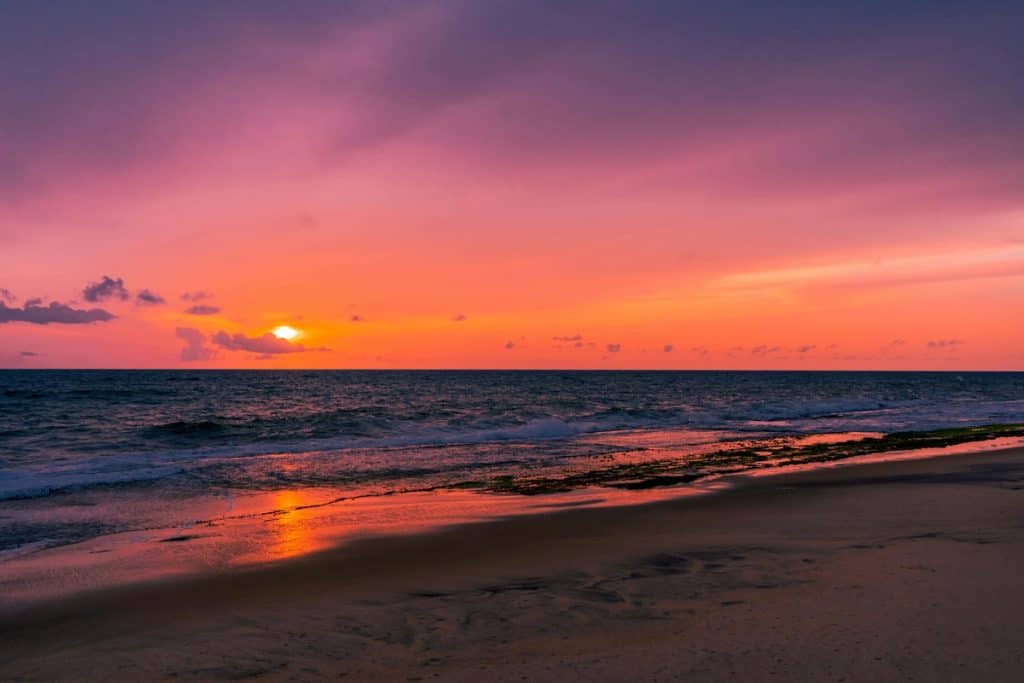
Negombo Beach During Sunset (Photo: Nisal Rajapakshe, via Pexels)
Final Thoughts
The key to a good Sri Lanka itinerary for May to September is to follow the weather rather than fight it. This route spends the monsoon months in the drier parts of the island, gives the East Coast a full week at its best, and leaves the more changeable hill country for the end, with room for plan B.
Expect some rain, some heat, and a few changed plans. With early starts and flexible days, three weeks is enough to see most of what makes Sri Lanka special, and to enjoy it at a sensible pace.
If you’re ready to start planning, read our guide to the best time to visit Sri Lanka. You can also compare seasonal routes in our best Sri Lanka itineraries, or start with our ultimate travel guide for first-time visitors.
Map – 3-Week Sri Lanka Itinerary for May to September
Sources and References:
- Sri Lanka Tourism — Official destination information, attractions, regional travel guidance and tourism planning information.
- Department of Meteorology, Sri Lanka — Climate, monsoon patterns, rainfall and weather information used when considering the May–September seasonal route.
- Department of Wildlife Conservation, Sri Lanka — Official information on national parks, protected areas, wildlife conservation and visitor regulations, including Wilpattu, Minneriya/Kaudulla, Pigeon Island, Kumana and Horton Plains.
- Central Cultural Fund, Sri Lanka — Official information on major archaeological and heritage attractions, visitor tickets and current entrance fees for sites including Sigiriya, Anuradhapura and Polonnaruwa.
- Department of Archaeology, Sri Lanka — Archaeological and historical information relating to Sri Lanka’s ancient cities, monuments and protected heritage sites.
- UNESCO World Heritage Centre — World Heritage information for Sri Lanka’s cultural and natural sites, including Anuradhapura, Polonnaruwa, Sigiriya, Dambulla, Kandy and the Central Highlands of Sri Lanka.
- Sri Lanka Railways — Official train information, schedules and advance seat-reservation guidance for rail journeys, including the Hill Country route used in this itinerary.
- 1990 Suwa Seriya Foundation — Official information on Sri Lanka’s island-wide free pre-hospital emergency ambulance service.
Important: Entrance fees, opening hours, train schedules, safari arrangements, marine conditions and other practical information can change. Always check the relevant official source or service provider shortly before your visit.
Featured image: The View of Pigeon Island from Nilaveli Beach (Photo: Nalaka Priyantha)

I am a Sri Lankan medical doctor who spends my free time travelling, exploring new destinations, and documenting the beauty of the island I call home. I have journeyed across almost every corner of Sri Lanka with my wife and daughter — from wildlife parks and misty mountains to ancient cities, deep forests, rugged landscapes, and quiet beaches.
Travel is not just a hobby for me — it’s a way of life. I love nature, enjoy road trips, and find joy in wildlife photography. I also read widely about tourism, travel trends, and destination culture. Through my writing, I aim to help travellers experience Sri Lanka through real stories, meaningful insights, and honest recommendations — the same way I explore it with my own family.