
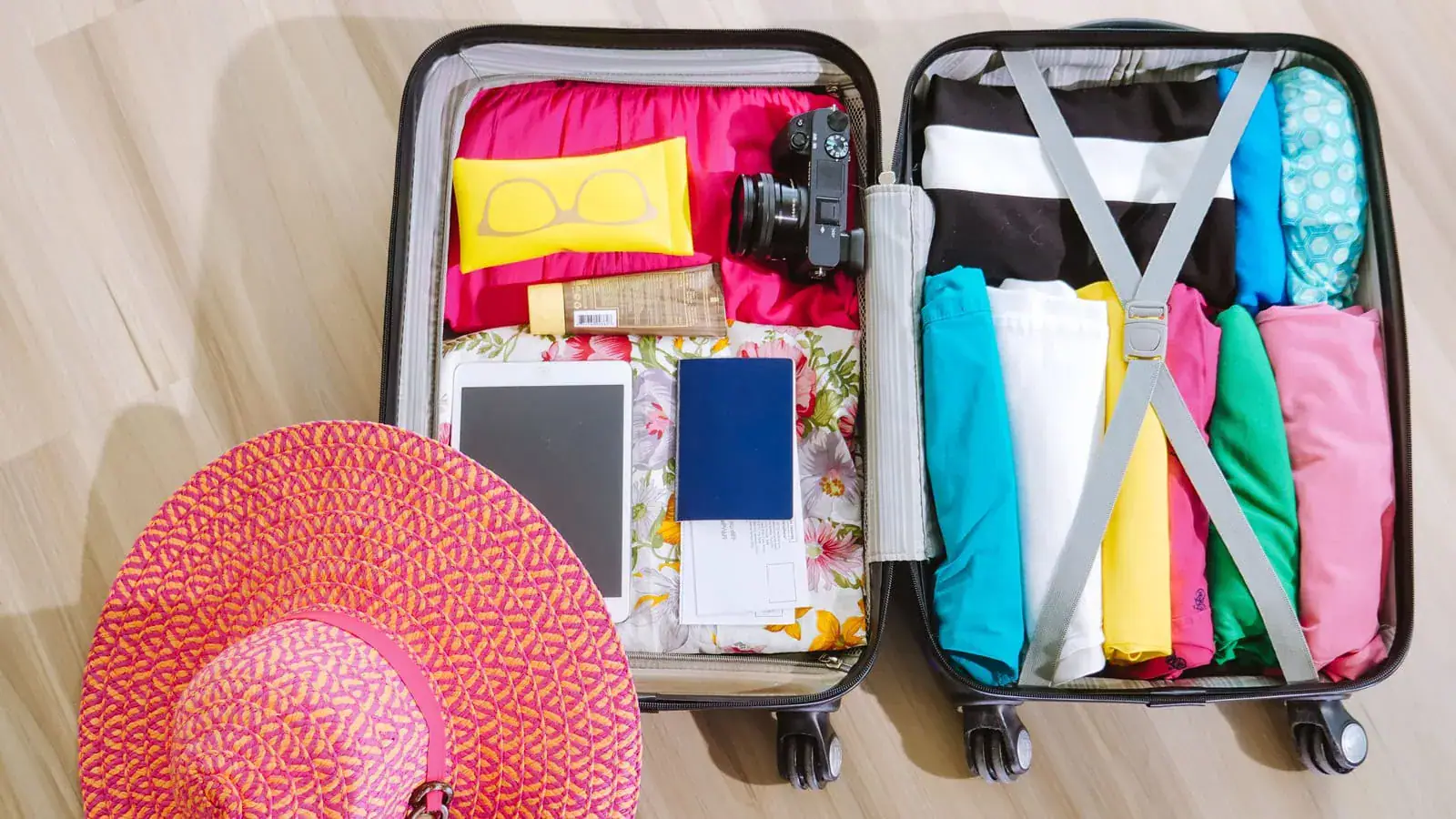

On a single trip to Sri Lanka, you might spend a hot afternoon on a South Coast beach, visit a temple where shoulders and knees must be covered, ride a dusty safari jeep at dawn and wake up in hill country cool enough for a fleece. That variety makes packing harder than for a typical beach holiday. This packing list for Sri Lanka covers what you’ll actually use, what depends on your route, and what you can leave behind.
The short answer: pack light, breathable clothes, at least one modest outfit for religious sites, a warm layer if you’re heading to the highlands, comfortable shoes you can slip off easily, sun and rain protection, mosquito repellent, and any medicines you rely on. Many everyday items are easy to buy in larger towns, so there’s no need to pack for every possibility.
Quick Packing List for Sri Lanka
Essentials for almost every trip
- Passport and your approved entry permit (ETA or visa – check current requirements before you travel)
- Travel insurance details
- Bank cards, plus a plan for getting Sri Lankan rupees
- Lightweight, breathable clothes
- At least one outfit that covers knees and shoulders
- Swimwear
- Comfortable walking shoes and a pair of flip-flops or sandals
- Sunscreen, sunglasses, and a hat
- Mosquito repellent
- A compact umbrella or light rain jacket
- Prescribed medicines, in their original packaging
- Phone, charger, plug adapter, and power bank
- Reusable water bottle
- Small daypack
Add these depending on your itinerary
- Fleece or light jacket for the hill country (Nuwara Eliya, Ella, Horton Plains)
- Trail shoes and leech socks for rainforest or wet-forest hikes
- Neutral-coloured clothes and binoculars for wildlife safaris
- Rash guard and dry bag for beaches and boat trips
- Children’s essentials if you’re travelling as a family

Mother and son having fun in the waves at a tropical beach in Ahangama (Photo: Atlantic Ambience, via Pexels)
What to Know Before Packing
Sri Lanka’s lowlands are warm and humid for most of the year. The hill country is different. Towns such as Nuwara Eliya sit high enough that early mornings and evenings can feel properly cool, and exposed upland areas like Horton Plains can be chilly and windy at sunrise. If your route includes tea country, you’ll need at least one warm layer, even if the rest of your trip feels tropical.
Rain follows broad seasonal patterns rather than a single wet season. Sri Lanka’s Department of Meteorology describes four seasons: the Northeast Monsoon (December to February), the first inter-monsoon (March and April), the Southwest Monsoon (May to September) and the second inter-monsoon (October and November). During the Southwest Monsoon, the weather mainly affects the southwest quarter and hill country. At the same time, eastern and northern regions receive rainfall during the Northeast Monsoon. The inter-monsoon months can bring showers and thunderstorms to much of the island.
Treat these as general patterns, not promises. A “dry” month can still bring a heavy downpour, and a monsoon month doesn’t necessarily mean non-stop rain. Pack for the regions you’ll visit rather than for Sri Lanka as a whole, and check the forecast in the days before you fly. Our guide to the best time to visit Sri Lanka explains how the seasons affect each coast.
Culture also shapes your packing. Everyday dress in tourist areas is relaxed, but Buddhist, Hindu, Christian, and Muslim places of worship expect modest clothing. Swimwear belongs at the beach or pool, not in town.
Finally, consider your trip style. A week on one beach needs far less than a two-week loop through the Cultural Triangle, the hill country and a national park. Hotels and guesthouses widely offer laundry services, so you rarely need to pack for every day of a longer trip.
Clothing for Sri Lanka
Lightweight Everyday Clothes
Choose loose, breathable fabrics such as cotton, linen, or quick-dry synthetics. Lighter colours feel cooler in strong sun. Shorts, T-shirts, and summer dresses are fine for beaches, towns, and long travel days. Add a couple of pairs of lightweight long trousers or a long skirt. They’re useful for evenings when mosquitoes are around, for religious sites and for walks through long grass or forest.
Respectful Temple Clothing
At temples and other religious sites, cover your shoulders and knees. You’ll usually need to remove your shoes and hats or other headwear before entering the sacred areas. Rules can vary from site to site, so follow posted signs and staff instructions.
A sleeved T-shirt and loose trousers or a long skirt is the simplest option. A sarong or large scarf is handy to carry. Still, a scarf thrown over bare shoulders isn’t always accepted, so proper covering clothing is the safer choice.
Swimwear and Cover-Ups
Pack swimwear for the beach and pool, along with a light cover-up, shirt or sarong for walking to a café, shop, or guesthouse. Covering up away from the sand is both respectful and practical, as the sun is strong.
Warm Layers for the Hill Country
If you’re visiting Nuwara Eliya, Horton Plains, Ella or other highland areas, bring a fleece, light jumper or packable jacket. Early starts, such as a dawn walk at Horton Plains, are when you’ll feel the cold most. A warm layer also helps in strongly air-conditioned vehicles and on overnight journeys.
Rainwear
A light, packable rain jacket or a compact umbrella is enough for most trips. An umbrella has the bonus of giving shade on hot days.
Underwear, Socks, Sleepwear, and Laundry
Moisture-wicking underwear is more comfortable in humid weather. Pack enough socks for your walking shoes, plus a warmer pair if you’re heading into the hills. Light sleepwear is usually enough in the lowlands.
There’s no fixed number of outfits that suits everyone. A useful approach is to pack for roughly a week and use laundry services along the way. Clothes can take longer to dry in rainy or humid weather, which is another reason quick-dry fabrics are useful.

Wearing sleeved T-shirts or shirts without caps or hats – Meditation at Mahamevnawa Buddhist Monastery in Ella (Photo: vined mind from Pixabay)
Shoes and Footwear
Comfortable Walking Shoes
Breathable trainers or walking shoes are the most useful pair you’ll bring. You’ll want them for climbing Sigiriya, exploring the ancient cities and walking around towns. Make sure they’re already broken in before you travel.
Sandals or Flip-Flops
You’ll take your shoes off often at temples, guesthouses, and some homes, so a pair you can slip on and off quickly saves time. Sturdy strapped sandals can handle a surprising amount of walking on easier days.
Hiking or Trail Footwear
You only need dedicated trail shoes if you’re planning proper hikes, such as in the Knuckles range or Sinharaja. Look for good grip, because forest paths can be wet and muddy. Heavy boots are rarely necessary unless you’re planning longer treks.
Read hiking & trekking in Sri Lanka.
Water-Friendly Footwear
Water shoes or quick-drying sandals help at rocky beaches, rivers, and waterfalls. They’re optional, and a good pair of sport sandals can often do the same job.
For most travellers, two or three versatile pairs are enough: walking shoes, sandals or flip-flops, and trail or water shoes only if your plans call for them.
Sun, Heat, and Rain Protection
Sri Lanka sits close to the equator, so the sun is strong even when the sky is hazy. Sunburn is easy to get on a boat trip, a beach afternoon, or a long morning among the ruins of Polonnaruwa, where shade can be limited.
- Sunscreen: a broad-spectrum SPF 30 or higher. Reapply after swimming or heavy sweating. Mineral or reef-friendly formulas are worth considering if you plan to snorkel.
- Sunglasses: choose a pair with proper UV protection. Glare off water and pale stone can be tiring.
- Hat: a wide brim protects your face, ears, and neck better than a cap. Remember you’ll take it off at religious sites.
- Lip balm with SPF: small, but easy to forget.
- Reusable water bottle: you’ll drink more than usual in the heat. Many hotels and guesthouses offer refills, which cuts down on plastic bottles.
- Light rain jacket or compact umbrella: essential during monsoon or inter-monsoon months, and useful in the hill country at any time of year.
- Waterproof pouch or dry bag: protects your phone, passport, and cash during sudden downpours, boat rides, and waterfall visits.
The heat matters as much as the sun. Plan outdoor sightseeing for early morning or late afternoon where you can, and keep water in your daypack on travel days.
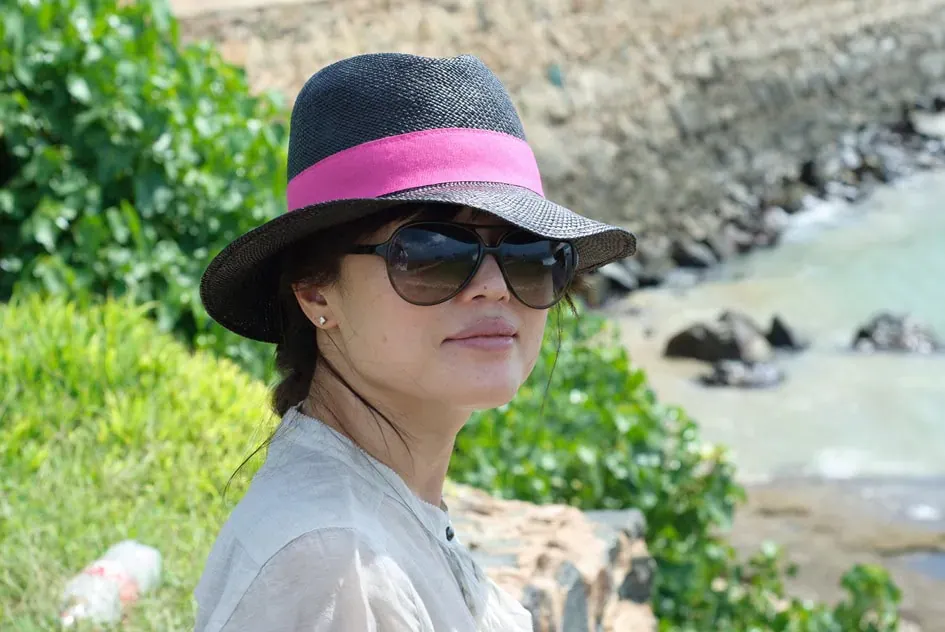
Wearing a hat and sunglasses at Galle Fort (Photo: Jérôme Decq, CC BY 2.0)
Toiletries, Health, and Personal Care
Routine Toiletries
Bring your everyday basics in travel sizes: toothbrush, toothpaste, deodorant, shampoo, and any skincare you rely on. Common brands of soap, shampoo, and toothpaste are easy to find in supermarkets and pharmacies in larger towns. If you use a particular product, pack enough for the whole trip.
Mosquito Repellent and Bite Prevention
Mosquitoes are present across much of the island, and dengue fever occurs in Sri Lanka. The mosquitoes that spread dengue infection bite during the day, not only at dusk, so repellent belongs in your daypack rather than your suitcase. Choose a repellent with an active ingredient such as DEET, picaridin (icaridin), or lemon eucalyptus oil, and follow the instructions on the label. Lightweight long sleeves and trousers help in the evenings, and many guesthouses provide mosquito nets. An after-bite cream can make itchy nights more comfortable.
Prescription Medicines and Basic First Aid
Carry prescribed medicines in your hand luggage, in their original packaging, with a copy of your prescription or a letter from your doctor. Sri Lanka’s National Medicines Regulatory Authority (NMRA) allows travellers to carry medicine for personal use without prior approval under certain conditions. According to the NMRA, the quantity of each medicine should not exceed what you need for your stay or 90 days, whichever is less. Medicines should be in their original container or clearly labelled, and some categories are not permitted. If you take a controlled medicine or an injectable, check the NMRA’s current guidance before you travel.
A small first-aid kit: plasters, antiseptic wipes, blister patches, a pain reliever you already use, and oral rehydration salts.
Motion Sickness and Digestive Comfort
Winding hill-country roads, such as the routes into Ella or Nuwara Eliya, and whale watching tours can be hard on travellers prone to motion sickness. If that’s you, bring whatever has worked for you before. Some people also like to carry a familiar remedy for stomach upsets, as a change of food and climate can unsettle digestion.
Menstrual Products, Contact Lenses, and Individual Essentials
Sanitary pads are widely sold, but tampons and menstrual cups can be harder to find outside larger towns and tourist areas. Pack your preferred products. If you wear contact lenses, bring enough lenses and solution, plus glasses as a backup for dusty safari drives or when your eyes need a rest. The same goes for anything personal and specific, such as hearing-aid batteries, mobility aids, or particular skincare.
Travel Insurance and Professional Health Advice
Get travel insurance that covers medical treatment, including evacuation, along with any activities you plan, such as hiking or water sports. Speak to a doctor, nurse or travel clinic around six to eight weeks before you leave about vaccinations and any health needs specific to you. This guide can’t replace personal medical advice.
Travel Documents, Money, and Connectivity

Using a smartphone – Kandy (Photo: Eddy Billard, via Unsplash)
Passport and Entry Requirements
Check that your passport is valid for your whole trip and meets current entry rules. Most foreign nationals need a valid Electronic Travel Authorization (ETA), obtained online through www.eta.gov.lk before starting their journey. Since 25 May 2026, the 30-day tourist ETA, which allows two entries, has been free for nationals of 40 countries, but you still need to apply in advance. Rules and eligible countries can change, so confirm the details on the official site, which ends in .gov.lk, and avoid third-party sites that add fees.
Read about Sri Lankan visa and entry requirements.
Insurance and Booking Confirmations
Keep your insurance policy number and emergency contact line somewhere easy to find. Save confirmations for flights, hotels, train tickets, and any pre-booked safaris or tours.
You can book,
- Train tickets through the official online advance train seat reservation system.
- Safari tickets through the official wildlife park permits reservation eService.
Bank Cards and Sri Lankan Rupees
Bring at least two payment cards, ideally from different banks, and tell your bank you’re travelling. Cards are generally accepted at hotels and larger shops and restaurants. You’ll still need cash in rupees for tuk-tuks, small guesthouses, local cafés, and roadside stalls. ATMs are easy to find in towns, but less common in rural areas, so withdraw enough before heading somewhere remote.
Rupee notes are rarely available abroad, and you may bring in or take out only a small amount of Sri Lankan currency. Most visitors get rupees from an ATM or exchange counter on arrival. If the foreign currency you bring in exceeds USD 15,000 or the equivalent, you must declare it to Customs.
Digital and Physical Copies
Keep photocopies of your passport, ETA approval, and insurance separate from the originals. Save digital copies of your documents to secure cloud storage and offline on your phone so that you can access them without signal.
Local SIM, eSIM, and Offline Maps
A local SIM card or eSIM is usually cheaper than roaming and makes ride-hailing apps, maps, and messaging much easier. Tourist SIMs are sold at the airport and in towns, and you’ll typically need your passport to buy one. Download offline maps before travelling into the hill country or national parks, where signal can be patchy.
Electronics and Useful Accessories
Smartphone, Chargers, and Power Bank
Your phone will be your map, camera, ticket wallet, and translator, so a power bank is useful on long train and road journeys. Check your airline’s rules before packing it. Power banks must travel in your hand luggage, never in checked bags. Currently, IATA rules permit power banks under 100 Wh without restriction, those between 100 and 160 Wh with airline approval, and prohibit anything over 160 Wh. A newer global standard limits most passengers to two power banks and bans recharging them in flight, and some airlines ban using them on board altogether.
Plug Adapter and Voltage
Sri Lanka uses plug types D, G, and M at a standard voltage of 230V and 50Hz. Type G (the UK-style plug) is common in newer hotels, but older buildings often have round-pin Type D sockets. A universal adapter, or one that covers both D and G, is the easiest solution. Most phone and laptop chargers handle 100–240V, but check the label on hair dryers, straighteners, and other heating appliances before plugging them in.
Camera and Waterproof Protection
A smartphone is enough for most travellers. If photography is a big part of your trip, especially on safari, a camera with a zoom lens is useful. Protect your gear from dust, humidity, and rain with a padded case and a dry bag.
Headphones and Optional Extras
Headphones make long bus and train journeys more pleasant. A small torch or head torch is handy for pre-dawn starts and power cuts, and a short extension lead helps in rooms with few sockets. Leave expensive gadgets at home unless you’ll really use them.
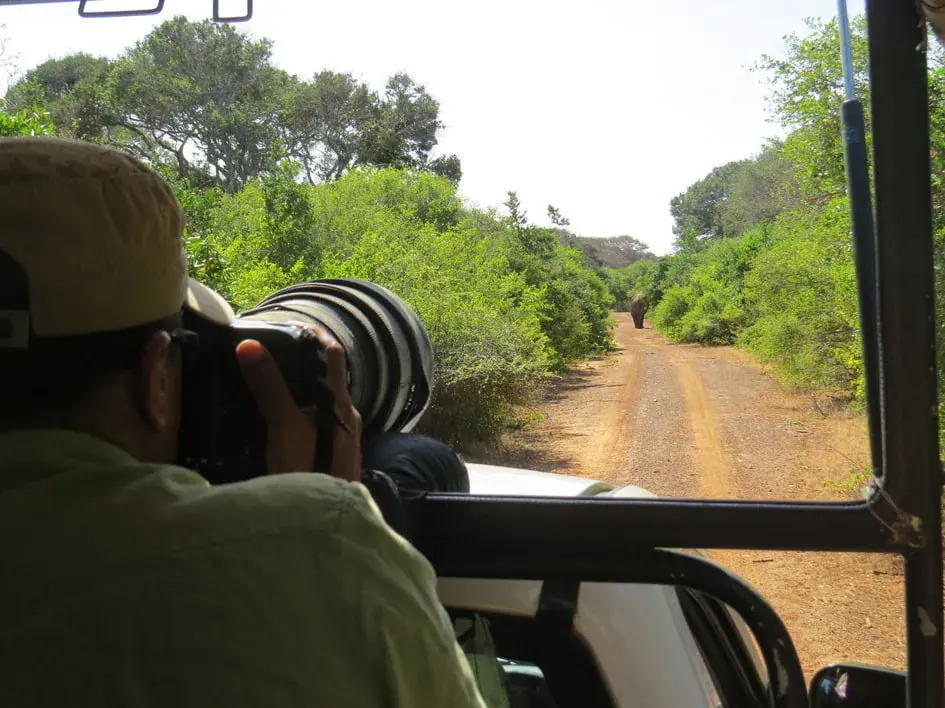
Big camera gear in action – Bundala National Park (Photo: Nalaka Priyantha)
Beach Packing Essentials
Most beach days need only a few extras beyond the basics already covered:
- Swimwear and a cover-up for walking off the beach
- A rash guard or long-sleeved swim top, useful for snorkelling, surfing and long hours in the water
- A quick-dry towel, as not every guesthouse provides beach towels
- A dry bag for your cash and phone
- Flip-flops or water shoes for hot sand and rocky entries
Swimming conditions vary a lot by coast, season, and beach. Strong currents and big waves are common on some stretches, especially when the monsoon is affecting that coast. Lifeguards are not present everywhere. Look for warning flags, ask locally before swimming and stay out of the water when the sea is rough. The South and West Coasts, including Mirissa and Unawatuna, and the East Coast, around Trincomalee and Arugam Bay, tend to have their calmer months at different times of year. Our guide to Sri Lanka’s best beaches goes into more detail.
Wildlife Safari Packing Essentials

A Safari in neutral colour clothes – Udawalawe National Park (Photo: Phil Whitehouse, CC BY 2.0)
Most safaris in parks such as Yala, Udawalawe, Wilpattu, and Minneriya take place in open jeeps on dusty tracks, often starting before sunrise. Pack:
- Breathable clothes in neutral colours such as khaki, olive, or beige, which show less dust and draw less attention than bright colours
- A hat, sunglasses, and sunscreen, since shade is limited once the sun is up
- A buff or light scarf to keep dust out of your nose and mouth
- Plenty of water and a few snacks
- Binoculars and a camera with zoom, if you have them
- A light layer for early drives, which can feel cool in an open vehicle
Sightings are never guaranteed, however good your timing. Keep noise to a minimum, stay in the vehicle and ask your driver not to crowd animals or chase sightings. For more on choosing a park, see our Sri Lanka wildlife safari guide.
Hiking, Rainforest, and Mountain Packing
If your plans include walking in the hill country or forests, add:
- Trail shoes with good grip
- Lightweight long trousers and moisture-wicking socks
- A rain layer, even on clear mornings
- Water, snacks, and a small daypack
- Offline maps or a downloaded route
- A warm, wind-resistant layer for higher areas such as Horton Plains
In wet forests such as Sinharaja and parts of the Knuckles range, leeches can be common, particularly after rain. Leech socks, worn over normal socks and tucked into trousers, are the most practical protection, and some guides supply them. Leeches are mostly a nuisance rather than a danger, but they’re much easier to deal with if you’re prepared.
Several protected areas require a licensed guide, and some limit what you can bring in. Horton Plains, for example, is known for checking bags for plastic. Follow your guide’s advice and the rules of each park.
Read our guide about popular trails in Sri Lanka.
Temples and Cultural Attractions
The temple clothing described earlier is your starting point: shoulders and knees covered, and shoes and hats removed before entering sacred areas. A few practical additions help:
- Shoes that slip on and off easily, as you may remove them several times in one day.
- A pair of socks, because the stone and sand around stupas can get very hot by late morning. Socks are generally acceptable where shoes aren’t, but follow any instructions at the site.
- Water and sun protection, especially at large, exposed sites.
It is important to understand the difference between active religious sites and archaeological sites. At Sigiriya, you’ll keep your shoes on for a long climb up the steps, so wear comfortable footwear and start early to avoid the heat. At the Dambulla cave temples and the Temple of the Tooth in Kandy, which are places of worship, dress rules and shoe removal apply. Anuradhapura and Polonnaruwa combine both: you’ll walk or cycle between ruins in shoes, but some shrines and sacred areas within them require you to remove shoes and dress modestly.
Rules can vary, so look for signs and follow instructions from staff. Avoid posing with your back to a Buddha statue for photos, as many people consider this disrespectful. Our guide to temples & religious landmarks in Sri Lanka explains more.
Packing with Children

A Mother and Two Kids – Dalawella Beach, Unawatuna (Photo: Atlantic Ambience, via Pexels)
Sri Lanka is generally welcoming to families. When packing for children, focus on comfort and the things you’d struggle to replace:
- Child-friendly sunscreen, hats, and swimwear with sun protection
- Insect repellent suitable for their age, checking the label
- Any regular medicines, plus a children’s first-aid kit
- Familiar snacks, especially for long road and train journeys
- Feeding and hygiene supplies, such as formula, nappies, and wipes
- A favourite toy or comfort item
Nappies, wipes and basic baby products are sold in supermarkets in larger towns. Still, specific brands and formulas may be hard to find, especially outside big centres. Bring enough of anything your child relies on. A lightweight, foldable pushchair can be handy in towns. Still, pavements are often uneven, so many parents find a baby carrier more practical. If you’re using private transfers, check in advance whether child car seats are available.
What to Pack for Different Weather Conditions
| Conditions | What to expect | Most useful extra items |
| Hot coastal weather | Warm, humid days, and strong sun | High-SPF sunscreen, hat, light breathable clothes, reusable bottle |
| Southwest monsoon areas (broadly May–September) | Heavier rain more likely on the southwest coast and in the hill country | Compact umbrella, light rain jacket, dry bag, quick-dry clothes |
| Northeast monsoon areas (broadly December–February) | Rain more likely in the north and east | Rain jacket, waterproof pouch, sandals that cope with puddles |
| Cool highlands | Cooler mornings and evenings, with mist and showers possible | Fleece or light jacket, long trousers, warm socks |
| Wet forests | Humid, muddy paths, and possible leeches | Trail shoes, leech socks, long trousers, rain layer |
These patterns are broad, and weather can change quickly. Check a local forecast for each area as you travel.
How to Pack Light and What to Leave at Home
A backpack is easier on train platforms, uneven pavements, and tuk-tuks. At the same time, a suitcase works well if you’re travelling mainly by private car. Either way, a small daypack is useful for day trips. Packing cubes help keep things organised when you’re changing hotels every couple of nights.
Leave behind extra shoes, full-size toiletries, duplicate gadgets, and heavy winter clothing; one warm layer is enough for the highlands. Thanks to laundry services, a week’s worth of versatile clothes covers most trips. Leave space for souvenirs such as Ceylon tea and spices, and check your airline’s baggage allowance before you shop.
Some items aren’t just unnecessary but restricted. Drones need prior approval, and e-cigarettes and vaping devices are banned. Check Sri Lanka Customs for current rules before you pack anything unusual.
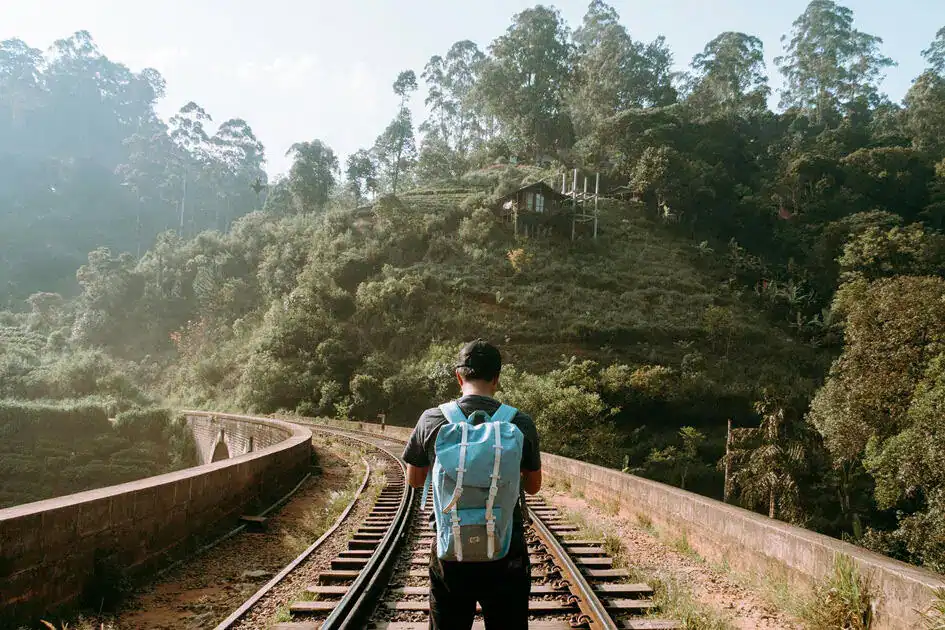
A traveller with a backpack – Nine Arch Bridge, Ella (Photo: Genine Alyssa Pedreno-Andrada, via Pexels)
What Can You Buy in Sri Lanka?
Supermarkets and pharmacies in Colombo, Kandy, Galle, and other major towns sell everyday toiletries, sunscreen, repellent, umbrellas, snacks, and simple clothing such as T-shirts and sarongs. Choice is narrower, and imported brands can be more expensive, especially in rural areas and small beach villages. Bring your prescription medicines, specialist gear, preferred brands, and anything personal you can’t easily replace.
Printable Sri Lanka Packing Checklist
E = essential O = optional A = activity-specific
Documents and money
- Passport (E) · ETA approval (E) · travel insurance details (E)
- Two payment cards (E) · some cash on arrival (E)
- Copies of key documents, digital and paper (E)
Clothing and shoes
- Light, breathable everyday clothes (E)
- Temple outfit covering shoulders and knees (E)
- Swimwear and cover-up (E)
- Fleece or light jacket (A: hill country)
- Light rain jacket or compact umbrella (E)
- Underwear, socks, sleepwear (E)
- Walking shoes (E) · sandals or flip-flops (E)
- Trail shoes (A) · water shoes (O)
Sun and weather protection
- Sunscreen SPF 30+ (E) · sunglasses (E) · hat (E)
- Lip balm with SPF (O) · reusable bottle (E) · dry bag (O)
Health and toiletries
- Prescription medicines and copies of prescriptions (E)
- Mosquito repellent (E) · basic first-aid kit (E)
- Travel-size toiletries (E) · menstrual products (O)
- Contact lenses, solution, and glasses (O)
- Motion-sickness remedy (O)
Electronics
- Phone and charger (E) · plug adapter for Types D and G (E)
- Power bank under 100 Wh, in hand luggage (O)
- Camera (O) · headphones (O) · head torch (O)
Beach
- Rash guard (A) · quick-dry towel (A)
Safari
- Neutral-coloured clothes (A) · binoculars (O) · buff or scarf for dust (A)
Hiking
- Daypack (E) · leech socks (A: wet forests) · offline maps (A)
Family
- Child sunscreen and repellent (A) · children’s medicines (A)
- Snacks, nappies, formula (A) · baby carrier (O)
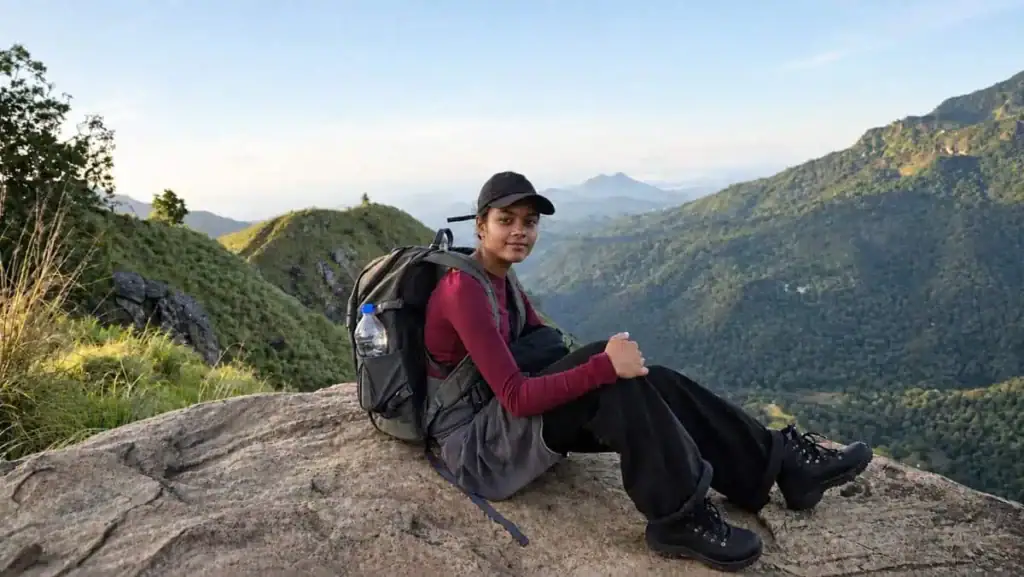
Our daughter, Nethuli, with a cap, a water bottle, a backpack, and trekking shoes – Little Adam’s Peak, Ella (Photo: Nalaka Priyantha)
Frequently Asked Questions
What should I pack for two weeks in Sri Lanka?
Pack for about a week and use laundry services. Add a warm layer and rain protection if your route includes the hill country.
What can female tourists wear in Sri Lanka?
Everyday summer clothing is fine in tourist areas. At religious sites, everyone should cover their shoulders and knees.
Can I wear shorts in Sri Lanka?
Yes, in towns, on beaches, and while travelling. Change into long trousers or a long skirt for temples.
Do I need a jacket in Sri Lanka?
Only if you’re visiting the highlands or doing early safaris. A fleece or light jacket is enough.
What are the best shoes for Sri Lanka?
Comfortable walking shoes and easy slip-on sandals cover most trips. Add trail shoes for serious hikes.
Do I need mosquito repellent?
Yes. Use it during the day and in the evening.
Should I bring a raincoat?
A compact umbrella or a light rain jacket is wise, especially in monsoon months and the hill country.
What plug adapter do I need for Sri Lanka?
One that covers Type D and Type G sockets. A universal adapter is simplest.
Can I buy sunscreen and toiletries in Sri Lanka?
Yes, in larger towns, though specific brands may be limited or more expensive.
Is a backpack or suitcase better?
A backpack suits trains and budget travel. A suitcase works well with a private driver.
How should I pack for the monsoon?
Add quick-dry clothes, a rain layer and a dry bag, and plan around the coast with better weather.
What should I pack for a safari?
Neutral-coloured clothes, sun protection, water, a light layer for early drives and binoculars if you have them.
Final Thoughts
The best packing list for Sri Lanka is the one built around your itinerary. Light clothes, a respectful temple outfit, good shoes, sun and rain protection, repellent, and your medicines will carry you through most trips. Add warm layers, leech socks or safari gear only if your plans call for them. For your next planning step, explore our Sri Lanka itinerary guides and our complete guide for first-time visitors.
Sources and References:
- Sri Lanka Tourism – Sri Lanka Weather and Climate Guide. Information on tropical weather, regional climate differences and the island’s four rainfall seasons.
- Ministry of Foreign Affairs, Foreign Employment & Tourism – National Profile and Geography. Official background on Sri Lanka’s geography, highlands, temperatures and monsoon patterns.
- Department of Immigration and Emigration – Electronic Travel Authorization (ETA). Official information on tourist entry requirements, ETA applications, visa eligibility and applicable fees.
- Centers for Disease Control and Prevention (CDC) – Sri Lanka: Traveler View. Destination-specific travel health recommendations, vaccinations, mosquito-borne diseases, sun protection and suggested medical supplies.
- CDC – Preventing Mosquito Bites While Traveling. Practical guidance on insect repellents, protective clothing and reducing exposure to mosquito-borne illnesses.
- National Medicines Regulatory Authority (NMRA), Sri Lanka – Bringing Personal Medicines into Sri Lanka. Official guidance on carrying prescription medicines for personal use, permitted quantities, packaging and documentation.
- Sri Lanka Customs – Passenger Services Directorate. Information on prohibited and restricted goods, including drones, communication equipment and other items requiring special consideration.
- Sri Lanka Customs – Information for Travellers. Guidance on personal baggage, permitted articles and customs allowances for visitors arriving in Sri Lanka.
- International Air Transport Association (IATA) – Safe Travel with Lithium Batteries. Passenger safety guidance on carrying power banks, spare lithium batteries and electronic devices in cabin baggage.
- Sri Lanka Tourism – Official Tourism Website. General visitor information on destinations, cultural attractions, wildlife, outdoor activities and travel planning.
Travel regulations, entry requirements, medical guidance and airline baggage policies can change. Travellers should consult the relevant official authorities and their airline before departure.
Featured image: Travel essentials arranged in an open suitcase for a packing list for Sri Lanka (Photo: Kindel Media, via Pexels)

I am a Sri Lankan medical doctor who spends my free time travelling, exploring new destinations, and documenting the beauty of the island I call home. I have journeyed across almost every corner of Sri Lanka with my wife and daughter — from wildlife parks and misty mountains to ancient cities, deep forests, rugged landscapes, and quiet beaches.
Travel is not just a hobby for me — it’s a way of life. I love nature, enjoy road trips, and find joy in wildlife photography. I also read widely about tourism, travel trends, and destination culture. Through my writing, I aim to help travellers experience Sri Lanka through real stories, meaningful insights, and honest recommendations — the same way I explore it with my own family.