
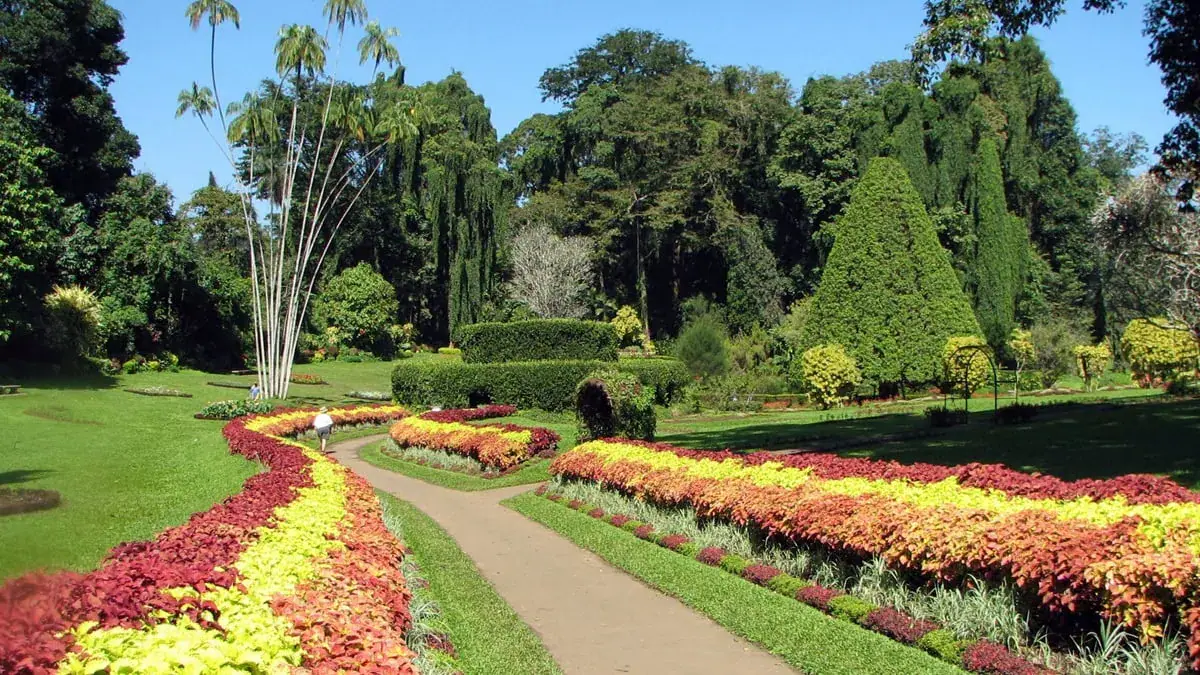

Sri Lanka has very different growing conditions packed into one small island, and its botanical gardens show this clearly. Near Kandy, tall palms and huge fig trees fill a loop of the Mahaweli River. Up in the hills beyond Nuwara Eliya, Hakgala’s cooler air suits roses and temperate plants that would struggle on the coast. Newer gardens near Hambantota and Avissawella focus on the plants of the dry and wet zones. Gampaha and Ganewatte each have their own story: one about rubber and the other about medicinal plants.
If you only have time for one of the botanical gardens in Sri Lanka, choose the Royal Botanic Gardens, Peradeniya. It’s the most historic of the six and the easiest to fit into a typical first trip, because it sits just outside Kandy, which most itineraries pass through anyway. The other five are worth a visit for the right traveller on the right route. The key is to pick a garden that fits the journey you’re already making.
Botanical Gardens in Sri Lanka at a Glance
The table below compares all six gardens. The suggested times are our own estimates for an unhurried visit. They aren’t official figures, and keen gardeners will often want longer.
| Garden | Practical base | Standout appeal | Suggested time (estimate) | Best suited to | Trip fit |
| Royal Botanic Gardens, Peradeniya | Kandy | Palm avenues, orchid house, giant trees, spice garden | 2–3 hours | First-timers, families, photographers | Easy half-day from Kandy |
| Hakgala Botanic Gardens | Nuwara Eliya | Cool highland setting, roses, mountain backdrop | 1.5–2 hours | Hill-country travellers | Half-day from Nuwara Eliya |
| Mirijjawila Dry Zone Botanic Gardens | Hambantota area | Dry-zone flora, single-species avenues, open landscape | 1.5–2.5 hours | Plant enthusiasts heading southeast | Detour on a southern route |
| Seethawaka Wet Zone Botanic Gardens | Colombo or Avissawella area | Lush wet-zone planting, lake, fernery, Japanese garden | 2–3 hours | Nature lovers wanting quiet | Day trip from the West Coast |
| Henarathgoda Botanic Garden | Colombo or Negombo | Rubber history, mature tropical trees | 1–2 hours | Travellers near the airport or Colombo | Short excursion |
| Ganewatte Medicinal Plant Garden | Kurunegala | 300+ medicinal plant species | 1–2 hours | Specialist and educational visitors | Specialist stop only |
Two of these gardens deserve a place on many itineraries: Peradeniya and Hakgala. The other four make the most sense when your route already takes you nearby.
Which Botanical Gardens Are Most Popular with Foreign Visitors?
Peradeniya far outpaces the rest. No other garden in the network comes close, and it’s the one most tour drivers and guidebooks include by default.
Popularity also doesn’t mean a garden is the best choice for everyone. Peradeniya is popular partly because it’s on the main Kandy route and partly because it’s genuinely impressive. If you’re spending your nights in the hills, Hakgala may suit you better. A keen gardener exploring the South could get more out of Mirijjawila’s unfamiliar dry-zone plants than out of another big lowland collection.
Royal Botanic Gardens, Peradeniya
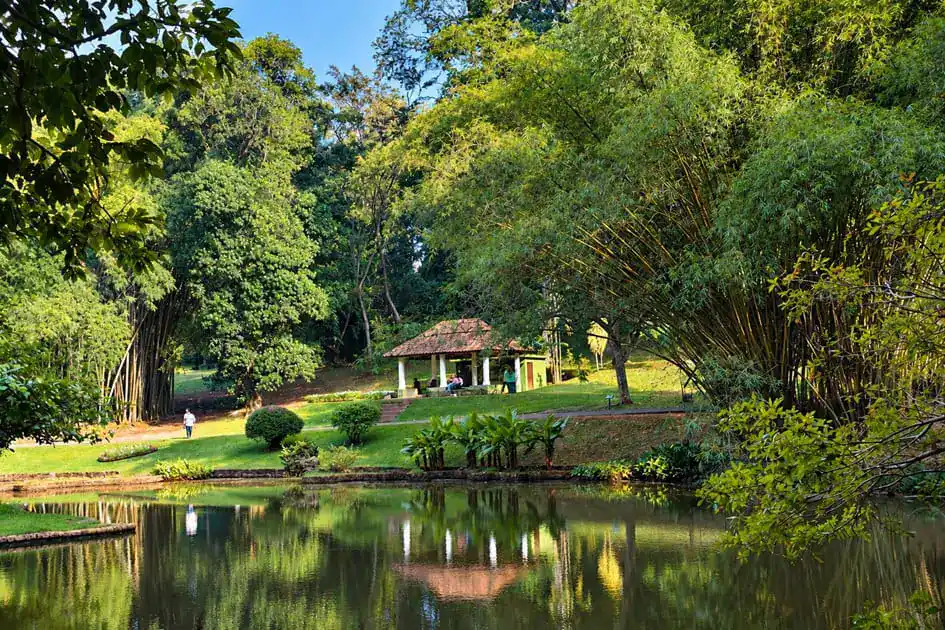
Royal Botanic Gardens, Peradeniya (Photo: Dan Arndt, CC BY-SA 4.0)
Why visit and what to see
Peradeniya is about 5.5 km west of Kandy, on land the Mahaweli River wraps around on almost every side. The site has links to the Kandyan kings. It became a botanical garden under British administration in the 19th century. Today it covers roughly 60 hectares and holds more than 4,000 plant species. Unlike a formal flower garden, it feels more like a series of landscapes you walk through.
The palm avenues are the most photographed part of the garden. Royal palms line the main central drive. Along River Drive, a separate avenue of cabbage palms grows more than 20 metres tall, and a third avenue of palmyra palms links the flower garden to the river. On the Great Lawn, a Java fig spreads out into one of the most recognisable trees in Sri Lanka.
Other highlights include:
- The orchid house, with Cattleya, Dendrobium, and Vanda orchids among many others
- The spice garden, where you can see cinnamon, pepper, cardamom, and nutmeg growing
- Giant Burma bamboo, with stems that can reach 30–40 metres
- Memorial trees planted by visiting royalty and world leaders
- The double coconut palm, which produces the largest seed of any plant
Planning your visit
According to the Department of National Botanic Gardens, Peradeniya is open every day from 7.30 am to 6 pm, and ticket sales stop at 5 pm. Two to three hours lets you see the main avenues, the orchid house and the spice garden without rushing. Plant lovers can easily spend a whole morning there.
You can get there from Kandy by tuk-tuk, by taxi, or on one of the many buses heading out along the Colombo road. Allow extra time, because traffic in central Kandy can be slow at busy times of day.
The paths are mostly level, but the distances add up. At around 460 metres above sea level, the gardens are warm and humid. The big trees give good shade, but the open lawns don’t, so go early in the morning and bring water. Showers can arrive quickly, and some paths get muddy, so wear practical shoes and carry an umbrella. Weekends and public holidays are usually busier with local families.
What to combine with Peradeniya
Most travellers stay in Kandy, which makes it easy to pair a morning in the gardens with an afternoon at the Temple of the Sacred Tooth Relic and a walk around Kandy Lake. Because the gardens are on the western edge of town, they also make a natural stop if you’re arriving from Colombo. They also work if you leave Kandy south along the road through Gampola towards the tea country.
Is it worth visiting?
For most first-time visitors staying in Kandy, yes. It’s easy to reach, there’s plenty to see, and it shows the island’s tropical plant life better than any other single place. It’s less essential if gardens don’t interest you or your time in Kandy is very short. Remember too that it’s a planned, landscaped garden, not wild rainforest. If you want rainforest, you’ll need to go somewhere like Sinharaja instead.
Hakgala Botanic Gardens
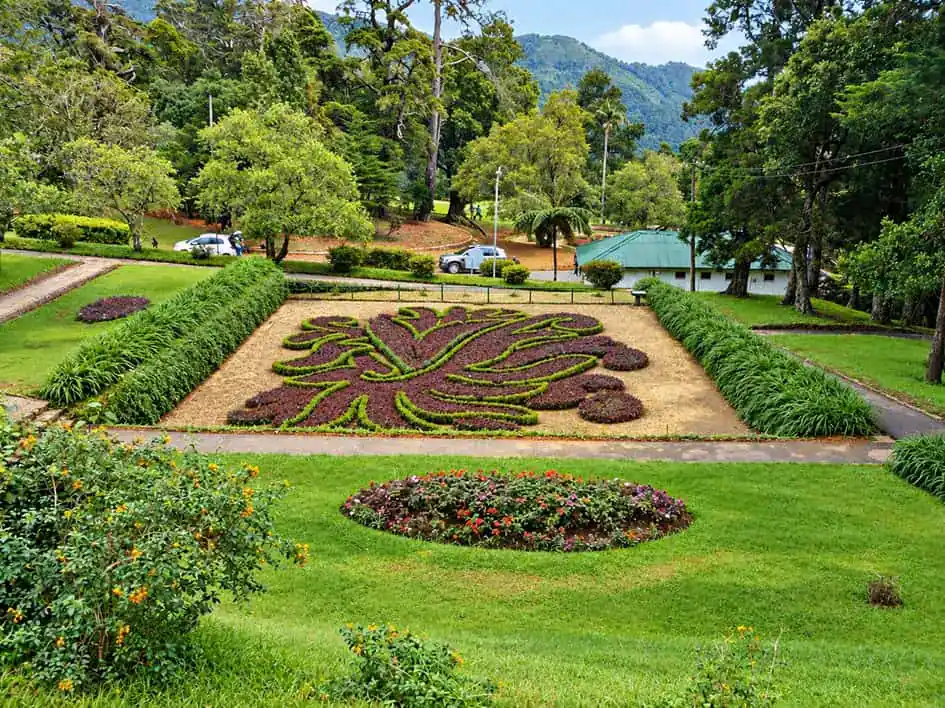
Hakgala Botanic Gardens (Photo: Nalaka Priyantha)
Highlights and seasonal character
Hakgala feels very different from Peradeniya. It lies about 10 km southeast of Nuwara Eliya, just off the Badulla road, at roughly 1,745 metres above sea level. The garden covers about 28 hectares of terraced slopes beneath the rocky face of Hakgala Rock. Because of the height, the plants change completely: you’ll see conifers, tree ferns, and roses instead of tropical palms.
The garden started in 1861 as an experimental cinchona plantation, growing the tree that produces quinine, and later became a garden. Today its best-known features are the rose garden, a fernery of hill-country ferns, flower gardens on two levels, a glasshouse, and an arboretum with both foreign and native trees. Hakgala also borders a strict nature reserve, so on clear days the forested mountain behind it is as much of the view as the flower beds.
Something always grows here, but the displays vary through the year. The Department of National Botanic Gardens says mid-March to the end of April is the best time, which matches Nuwara Eliya’s busy April season. That’s when temperate annuals, roses, and orchids look their best. At other times of year, expect greenery and scattered colour rather than full borders.
Visitor planning
Allow about one and a half to two hours. The terraced layout means you’ll walk up and down slopes, and some paths can be slippery after rain. Visitors with limited mobility may find parts of the garden tiring.
The weather often catches people out. Hakgala can be cool, misty, and wet, and the official guidance mentions frequent afternoon and evening rain from October to December. Bring a rain jacket and a warm layer, and go in the morning if you can. Nuwara Eliya’s cool weather can surprise travellers coming up from the coast.
What to combine with Hakgala
The Seetha Amman Temple, which Hindu tradition links to the Ramayana, sits on the same road between Nuwara Eliya and Hakgala, so you can easily visit both. In the afternoon, you could add a walk around Gregory Lake in town or a nearby tea factory tour. Don’t try to fit Horton Plains into the same day, because it’s best visited very early in the morning and is a big outing in its own right.
Is it worth visiting?
Suppose you’re staying in Nuwara Eliya, yes. It’s close, it’s different from anything in the lowlands, and it shows how much cooler and greener the hill country is. It’s harder to justify a special trip just for Hakgala, particularly outside the March–April season.
Mirijjawila Dry Zone Botanic Gardens
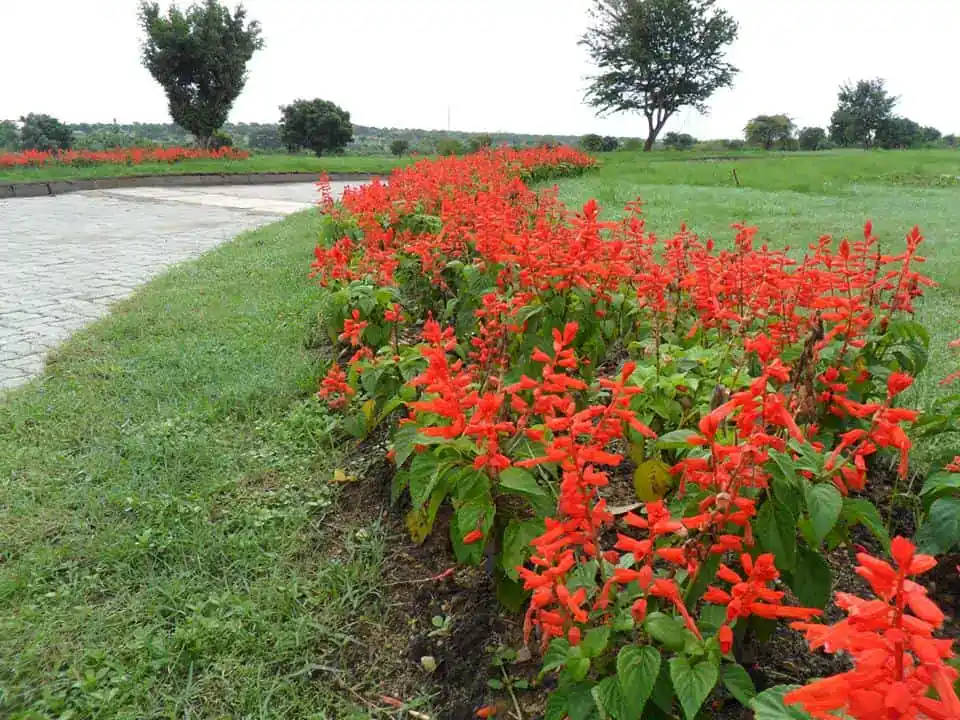
Mirijjawila Botanic Gardens (Photo: L Manju, CC BY-SA 4.0)
What makes the dry zone different
Most of the island’s famous greenery belongs to the wet Southwest and the hills. Mirijjawila, in Hambantota District, shows the other side of Sri Lanka: the drier lowlands, where plants have to survive long dry seasons. The garden opened in 2013 and covers about 300 acres, which makes it the country’s largest botanical garden by area.
It doesn’t look like a Victorian pleasure garden. The Department describes 26 avenues, each planted with a single tree species, as well as a herbal garden, a cactus house, a topiary garden, and patches of natural scrub that attract butterflies, birds and deer. There’s also a Commonwealth Circle of 52 trees planted by heads of government at its 2013 opening.
Visitor planning and southern pairings
The main entrance is on the Colombo–Kataragama road, and a southern entrance is on the Tangalle–Kataragama road. Hambantota and Tangalle are the closest practical bases. Tissamaharama works if you’re heading towards Yala National Park.
The garden is large, and the dry zone gets hot, so go early, take water, and wear a hat. Allow around two hours. You could combine it with Bundala National Park on the way east, but a wildlife safari is a half-day outing by itself. Don’t treat it as a quick extra stop after the garden.
Is it worth visiting?
Plant enthusiasts and travellers curious about landscapes will enjoy seeing a side of Sri Lanka that most itineraries skip. If you’re only passing through the South on the way to a safari and gardens don’t interest you much, it’s fine to leave it out.
Seethawaka Wet Zone Botanic Gardens
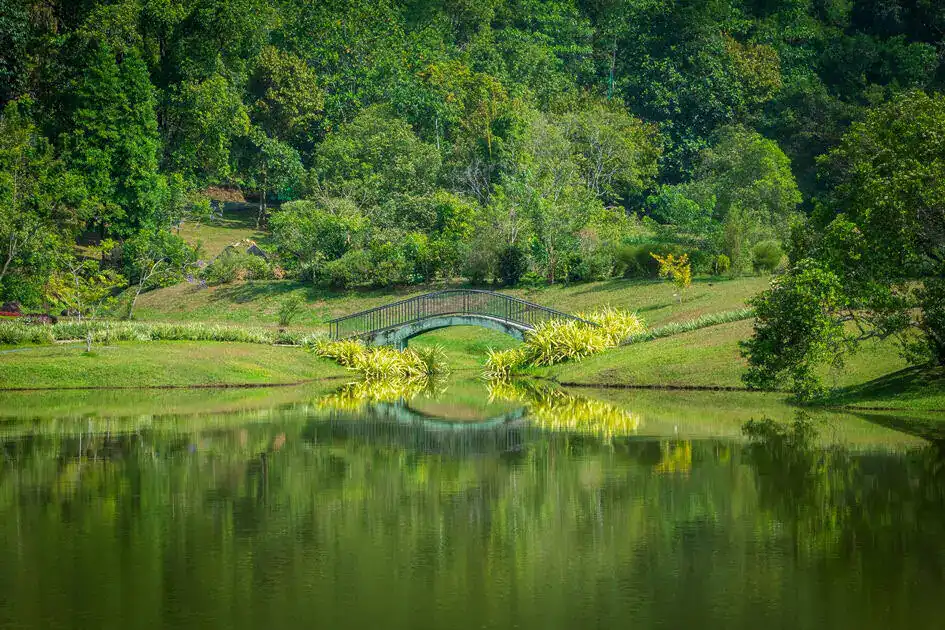
Seethawaka Botanic Gardens (Photo: Sarala Gamage, CC BY-SA 4.0)
What visitors can experience
Seethawaka is at Illukowita near Avissawella, beside the Indikada Mukalana Forest Reserve. It was the first botanical garden in Sri Lanka set up specifically to conserve wet-zone plants. It opened to the public in the mid-2010s and covers about 42 hectares, including a small tea plantation.
Compared with Peradeniya, it’s newer, quieter, and more landscaped. Highlights include a fernery, a rose garden, a Japanese garden, butterfly and spice gardens, a scenic viewpoint and the Kumbuk Lawn, which is popular with photographers because of its shade. A lake with paddle boats makes it a good choice for families. The garden also has a cafeteria, a large car park, paved paths, and a few golf carts.
Access and nearby combinations
Avissawella is on the main road east of Colombo. Driving is the most practical way to get there, since the garden is outside town. Treat it as a day trip from Colombo or as a stop on your way inland. The road from Avissawella towards Kitulgala and the hill country makes this second option work well, especially if you’re heading for river activities at Kitulgala. Plan on two to three hours at the garden.
Expect rain. This is the wet zone, and showers can come at any time of year. Mornings usually give you the best chance of dry weather.
Is it worth visiting?
It’s a good choice if you’re based around Colombo and want a quiet green day out, or if you’re travelling inland on the Kitulgala road. If you’ll already be seeing Peradeniya, Seethawaka is a pleasant extra rather than something you have to see.
Henarathgoda Botanic Garden
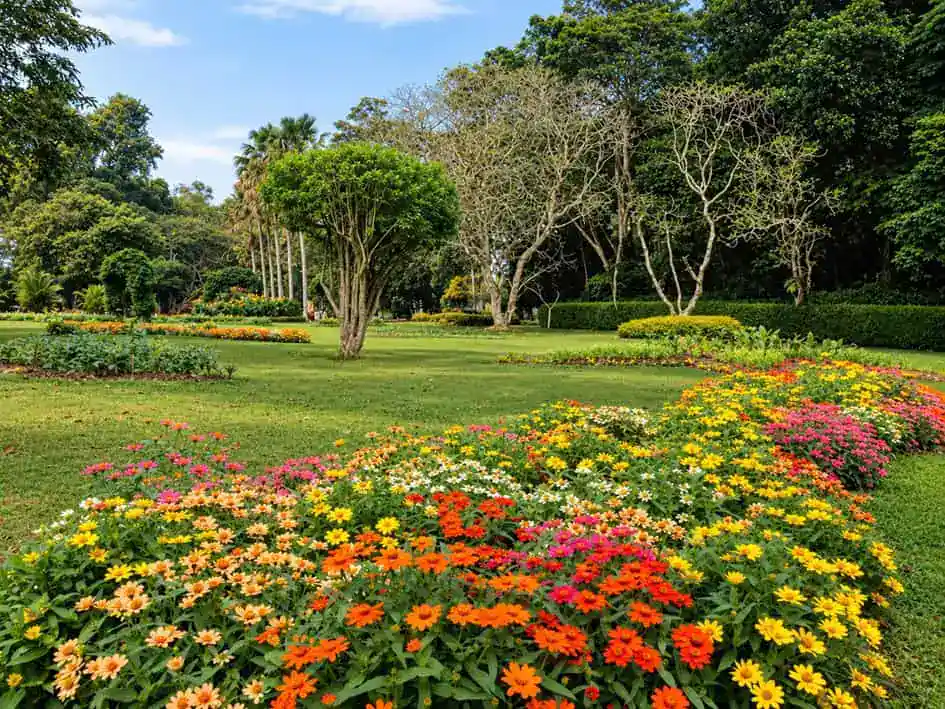
Henarathgoda Botanic Garden (Photo: L Manju, CC BY-SA 4.0)
Rubber heritage and garden highlights
Henarathgoda, also written Henerathgoda and often called the Gampaha Botanic Garden, has an unusual claim to fame. It was set up in 1876 to trial rubber, using seedlings of the Brazilian rubber tree. From the early 1880s, seeds from those early trees were handed out and helped start Sri Lanka’s rubber industry. The oldest of the original trees fell in a storm in 1988, but the surviving historic rubber trees are protected. They’re the main reason most visitors come.
The garden itself is fairly compact, at about 17 hectares on low ground beside the Attanagalu Oya. The Department of National Botanic Gardens says it holds around 2,000 plant species. Expect mature tropical trees, palms, orchids, and plenty of shade rather than big formal displays. The surrounding paddy fields and patches of forest also make it a decent spot for birdwatching.
Planning a Gampaha-area visit
Henarathgoda is about 30 km from Colombo and only around 450 metres from Gampaha railway station. That makes it one of the few gardens you can easily reach by train. It’s also close to the international airport, so it works as a gentle outing on your first or last day if you’re staying in Negombo or near the airport. One to two hours is usually enough.
Is it worth visiting?
It’s worth seeing if you’re interested in history, or if you have half a day free near Colombo or the airport. Don’t plan a long trip around it, though. Its story is more remarkable than its appearance, and Peradeniya offers much more if you’re going to Kandy anyway.
Ganewatte Medicinal Plant Garden
Medicinal-plant collections and learning
The Department of National Botanic Gardens officially calls this one the Medicinal Plant Garden, Ganewatte. It’s the specialist of the group. It opened in 1956, covers about 21 hectares in the intermediate climate zone, and holds more than 300 medicinal plant species, including many native and endemic ones. There’s also an arboretum of tropical trees.
The garden mainly exists for conservation and education. Its facilities include propagation nurseries, a small herbarium, a library, and a sales centre. Students, botanists, and traditional medicine practitioners visit alongside the general public. For travellers, the value is learning about the plants used in Sri Lanka’s long tradition of herbal medicine. The garden’s labels and collections show traditional uses, not proven treatments, so treat them as cultural history rather than health advice.
Public access and route planning
According to the Department, the garden is open to the public every day. It’s about 25 km from Kurunegala town, which means you’ll need your own transport or a driver. Kurunegala lies between the West Coast and the Cultural Triangle, so the most realistic way to fit Ganewatte in is as a stop on that journey for travellers with a real interest in it. Check the route with your driver first, and don’t try to squeeze it into a Kandy day trip.
Is it worth visiting?
It’s worth it for keen gardeners, students of botany, and anyone fascinated by traditional medicine. For most holidaymakers, it’s a niche stop. You won’t miss much by skipping it unless the subject really appeals to you.
Which Garden Should You Choose?
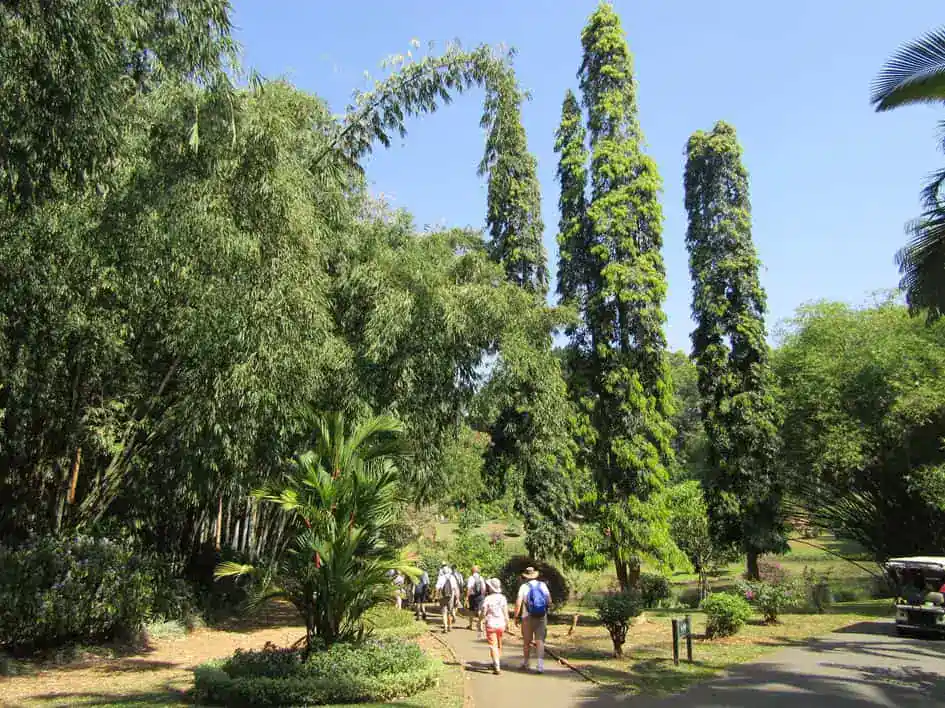
Peradeniya Botanic Gardens (Photo: Leonora (Ellie) Enking, CC BY-SA 2.0)
Visiting all six gardens doesn’t make sense for most trips, because they’re spread across very different parts of the island. Start with your route, then think about your interests.
- First-time visitors: Peradeniya. It fits naturally into a stay in Kandy and gives you the widest variety in one visit.
- Hill-country trips: Hakgala, ideally in the morning while you’re staying in Nuwara Eliya. Add Peradeniya too if you’re passing through Kandy.
- Families: Peradeniya’s wide lawns give children space to run around. Seethawaka’s lake, paddle boats, and golf carts suit a slower day out from Colombo.
- Photographers: Peradeniya’s palm avenues and big trees in early light, and Hakgala when mist sits on the mountain behind it.
- Specialist gardeners: Mirijjawila for dry-zone plants and Ganewatte for medicinal plants. Both show you something the big historic gardens don’t.
- Limited time: Choose one. Usually that’s Peradeniya. If you’re only in the Colombo and Negombo area, Henarathgoda is a convenient short visit.
- Repeat visitors: Seethawaka or Mirijjawila, which are newer, quieter and still unknown to many returning travellers.
Best Time to Visit Sri Lanka’s Botanical Gardens
There’s no single best month for every garden, because Sri Lanka’s weather depends on the region and on two monsoon seasons. In broad terms, the Southwest Monsoon brings rain to the West, the South and the hills in the middle of the year. The Northeast Monsoon affects the North and East around the turn of the year. Between the two, thunderstorms can develop more widely.
Read about the best time to visit Sri Lanka.
In practice, the lowland gardens (Peradeniya, Henarathgoda, Seethawaka) are warm and humid all year. Seethawaka, in particular, is likely to get rain in any month. Mirijjawila, in the drier Southeast, is more about heat than rain, so shade and water matter more there. Hakgala is the only garden with a clear flowering peak. Officially, it runs from mid-March to the end of April, while October to December is mistier and wetter.
The time of day matters more than the month. If you can, arrive close to the 7.30 am opening. Mornings are cooler, the light is softer for photos, and you’re more likely to finish before any afternoon showers. Keep rain gear with you at every garden, and remember that gravel and grass paths get slippery quickly.
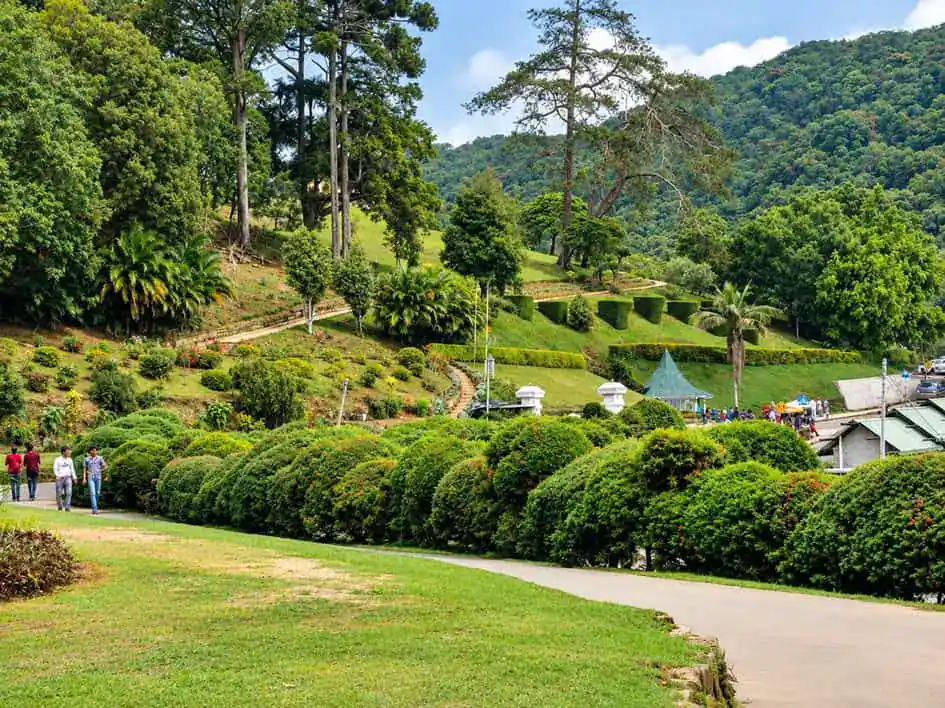
Hakgala Botanic Gardens – Nuwara Eliya (Photo: Nalaka Priyantha)
Tickets, Opening Hours, Transport, and Accessibility
The Department of National Botanic Gardens runs all six gardens. Its official pages list the same opening hours for each one: every day of the year from 7.30 am to 6 pm, with ticket sales ending at 5 pm. Arrive by mid-afternoon at the latest, so you have time to walk around.
Foreign visitors pay a separate rate. When this guide was written, the Department listed the following foreign-visitor prices for each garden:
| Ticket category (foreign visitors) | Price per visit |
| Adult (over 12) | LKR 3,540 |
| Student (proof required) | LKR 2,360 |
| Child (5–12) | LKR 1,770 |
Prices change from time to time, so check the Department’s website before you travel. Several of the gardens’ official pages also link to online ticket booking.
Getting there. Peradeniya and Henarathgoda are the easiest gardens to reach without a private vehicle. Buses run along the Colombo road from Kandy to Peradeniya, and Henarathgoda is a short walk from Gampaha railway station. For Hakgala, a tuk-tuk or taxi from Nuwara Eliya is the simplest option. Mirijjawila, Seethawaka, and Ganewatte are much easier with a driver, because they’re outside towns and public transport means changing buses. If you’re touring Sri Lanka with a driver, ask them to plan the garden into that day’s route rather than adding it as an extra trip.
Read about renting a car and transport in Sri Lanka.
Mobility. The official pages don’t give detailed accessibility information, so plan carefully. Peradeniya is mostly level, but it’s large. Hagala is terraced, with slopes and steps. Seethawaka has paved paths and a few golf carts. Paths at any of the gardens can turn muddy or slippery after rain. If you or someone in your group has limited mobility, contact the Department before your visit to ask about the routes and help available.
How to Fit Botanical Gardens into Your Sri Lanka Itinerary
The best approach is to fit gardens into a route you’d travel anyway. Don’t plan a route to visit gardens.
7–10 days. A classic first trip often goes from the Cultural Triangle to Kandy, then into the hills and down to the coast. Spend half a day at Peradeniya while you’re staying in Kandy. If you spend a night in Nuwara Eliya, Hakgala makes a relaxed morning visit before you continue towards Ella. Two gardens are plenty for a trip this length.
14 days. Add the South Coast or a Yala safari to the 7–10-day route. If you’re travelling between the beaches and Tissamaharama by way of Hambantota, Mirijjawila is a sensible morning stop for plant lovers. It’s an en-route stop, not a reason to spend an extra night.
21 days. With three weeks, you can add one of the quieter gardens where it fits. Henarathgoda works on a slow first or last day near the airport. Seethawaka fits a journey inland towards Kitulgala. Ganewatte is a specialist stop for gardeners travelling between the West Coast and the Cultural Triangle. Choose one or two of these, not all three.
Read about the best Sri Lanka itineraries for your travel season.
Photography and Responsible Garden Visits
These are working scientific collections as well as places to enjoy, so stay on the paths. Leave plant labels, flowers, and seeds where they are, and don’t climb trees or lean on fragile displays. Some greenhouses and special areas may have their own photography rules, so look for signs and follow staff instructions. If you’re shooting portraits or setting up a tripod at a popular spot, keep out of other visitors’ way. Sri Lanka has rules on flying drones, so don’t fly one unless you’ve checked the current regulations and got permission from the garden management.
Read about sustainable travel in Sri Lanka: How to explore responsibly.
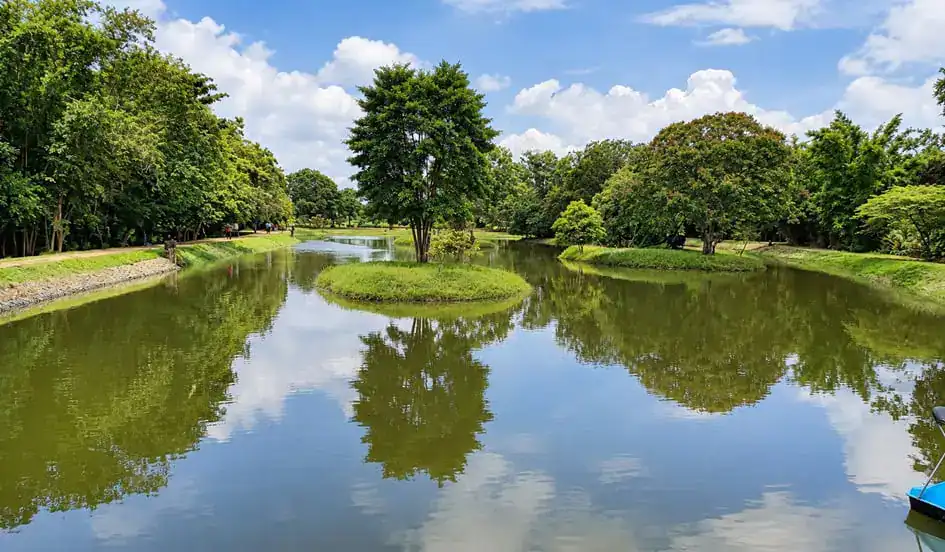
Henarathgoda Botanical Garden, Gampaha (Photo: Nuwande, CC BY-SA 4.0)
Frequently Asked Questions
Which botanical garden in Sri Lanka is best for a first visit?
The Royal Botanic Gardens, Peradeniya. It’s next to Kandy, has the widest collection and fits most first-time itineraries without a detour.
Should I choose Peradeniya or Hakgala?
It depends on where you’re staying. Peradeniya is a large tropical garden with palms and huge trees. Hakgala is smaller and cooler, with roses, ferns, and mountain views. If your route includes both Kandy and Nuwara Eliya, you can easily visit both.
How many gardens should I visit?
For most travellers, one or two is enough. Choose the ones on your route, and visit more only if gardens are a real interest.
Are the gardens suitable for children?
Yes, especially Peradeniya, with its open lawns, and Seethawaka, with its lake and paddle boats. Bring water, sun protection and something to keep you dry if it rains.
Do I need to book in advance?
The official sources we checked don’t say you need to book in advance. Online tickets are available for several gardens. Check the Department’s website for current arrangements.
Will rain spoil a visit?
Usually not. Showers are often short. Go in the morning, carry an umbrella and wear shoes with good grip.
If you are visiting Sri Lanka for the first time, read our ultimate travel guide for first-time travellers.
Final Thoughts
The best botanical gardens in Sri Lanka are the ones that suit your route. For most first-time visitors, that means a morning at Peradeniya while you’re in Kandy, and Hakgala if your trip takes you up to Nuwara Eliya. The other four gardens are good additions when you’re already nearby and interested in what each one specialises in, whether that’s dry-zone plants, wet-zone forest, rubber history, or medicinal plants.
Choose by geography first and interest second. Once you’ve decided, check the current opening details before you travel.
Map – Botanical Gardens in Sri Lanka
Sources and References:
- Department of National Botanic Gardens, Sri Lanka – Official Website. Information on Sri Lanka’s national botanical gardens, conservation activities, botanical collections, opening hours, admission fees and visitor facilities.
- Department of National Botanic Gardens – Royal Botanic Gardens, Peradeniya. Official information on the garden’s history, plant collections, orchid house, palm avenues, spice garden and visitor arrangements.
- Department of National Botanic Gardens – Hakgala Botanic Gardens. Official information on the garden’s history, high-altitude climate, rose and orchid collections, seasonal flowering displays and visitor arrangements.
- Department of National Botanic Gardens – Dry Zone Botanic Gardens, Mirijjawila. Official information on dry-zone plant conservation, garden development, botanical displays and visitor facilities.
- Department of National Botanic Gardens – Wet Zone Botanic Gardens, Seethawaka. Official information on wet-zone plant conservation, landscaped collections, garden attractions and visitor facilities.
- Department of National Botanic Gardens – Henarathgoda Botanic Gardens, Gampaha. Official information on the garden’s botanical collections, history and connection with the introduction of rubber cultivation in Sri Lanka.
- Department of National Botanic Gardens – Medicinal Plant Garden, Ganewatte. Official information on medicinal plant conservation, educational activities, botanical collections and the garden’s specialist role. https://botanicgardens.gov.lk/service_category/gardens/
- Ministry of Environment, Sri Lanka – Department of National Botanic Gardens. Government information on the history, administration, scientific research, biodiversity conservation and public importance of Sri Lanka’s national botanical gardens.
- Sri Lanka Tourism – Botanical Gardens. Official tourism information on the Royal Botanic Gardens at Peradeniya and Hakgala, including their botanical attractions and significance for visitors.
- Sri Lanka Tourism – Scenic Beauty and Botanical Gardens. Background information on the historical development of Sri Lanka’s botanical gardens and their importance as visitor attractions.
- Central Province Tourism Department – Peradeniya Royal Botanical Gardens. Regional tourism information on Peradeniya’s location, botanical collections, notable attractions and visitor appeal.
- Central Province Tourism Department – Hakgala Botanical Gardens. Regional tourism information on Hakgala’s location, history, flowering plants, seasonal highlights and surrounding environment.
- Department of Census and Statistics, Sri Lanka – Statistical Abstract: Climate and Rainfall. Official background information on Sri Lanka’s rainfall patterns, monsoon seasons and regional climatic differences relevant to planning botanical garden visits.
- Sri Lanka Tourism – Weather and Climate Guide. General travel information on the island’s climate, monsoon patterns and seasonal weather conditions.
Featured image: Royal Botanic Gardens in Peradeniya (Photo: Bernard Gagnon, CC BY-SA 3.0)

I am a Sri Lankan medical doctor who spends my free time travelling, exploring new destinations, and documenting the beauty of the island I call home. I have journeyed across almost every corner of Sri Lanka with my wife and daughter — from wildlife parks and misty mountains to ancient cities, deep forests, rugged landscapes, and quiet beaches.
Travel is not just a hobby for me — it’s a way of life. I love nature, enjoy road trips, and find joy in wildlife photography. I also read widely about tourism, travel trends, and destination culture. Through my writing, I aim to help travellers experience Sri Lanka through real stories, meaningful insights, and honest recommendations — the same way I explore it with my own family.