


In a single trip, you could walk under the tall canopy of Sinharaja while a mixed flock of birds moves through the trees above you. A few days later, you could stand in the mist on the Horton Plains plateau, then sit in an open jeep near Habarana watching for elephants at the edge of dry-zone forest. Sri Lanka is a small island, but its forests differ greatly, and choosing between them is harder than it first looks.
This guide is for international travellers who want to add forests in Sri Lanka to their trip but aren’t sure which ones fit their interests, fitness, and route. It covers twelve forest and forest-related destinations. Some are true rainforest hikes. Some are vehicle safaris. A few are better understood as heritage sites or pilgrimage routes that happen to sit inside protected forest. The aim is to help you match the right forest to the trip you’re actually taking.
Read about nature & wildlife in Sri Lanka.
Which Forest in Sri Lanka Should You Visit?
If you already know what kind of experience you want, start here.
| If you want… | Consider | Why |
| Classic tropical rainforest | Sinharaja Forest Reserve | The country’s largest remaining primary lowland rainforest, with guided walks and exceptional birdlife |
| Serious mountain trekking | Knuckles Conservation Forest | Rugged ridges, cloud forest, remote villages, and routes from short walks to multi-day treks |
| An elephant safari in forest country | Hurulu Eco Park | A jeep safari near Habarana, inside a UNESCO biosphere reserve |
| A rainforest walk from the Galle area | Kanneliya Forest Reserve | Lowland rainforest within reach of the south coast |
| A short forest visit in Kandy | Udawattakele Forest Reserve | A forest sanctuary right next to the city centre |
| Cloud forest and highland scenery | Horton Plains National Park | Montane forest and open grassland on a high plateau |
| Birdwatching near Kitulgala | Makandawa Forest Reserve | A compact wet-zone forest close to a popular adventure base |
| Archaeology inside a forest | Ritigala | Monastery ruins set in forest on an isolated mountain |
| Pilgrimage and mountain wilderness | Peak Wilderness/Adam’s Peak | The Sri Pada pilgrimage climb through protected highland forest |
| A shorter southern rainforest visit | Kottawa–Kombala Conservation Forest | A smaller lowland forest near Galle for a half-day outing |
Two more destinations don’t fit as neatly. Ruhunukanda Forest Reserve suits travellers who want a lesser-known forest away from the busier names. Namal Uyana, in the dry zone of the Cultural Triangle, is known for its ironwood forest and rose-quartz ridge, which is a very different landscape from rainforest.
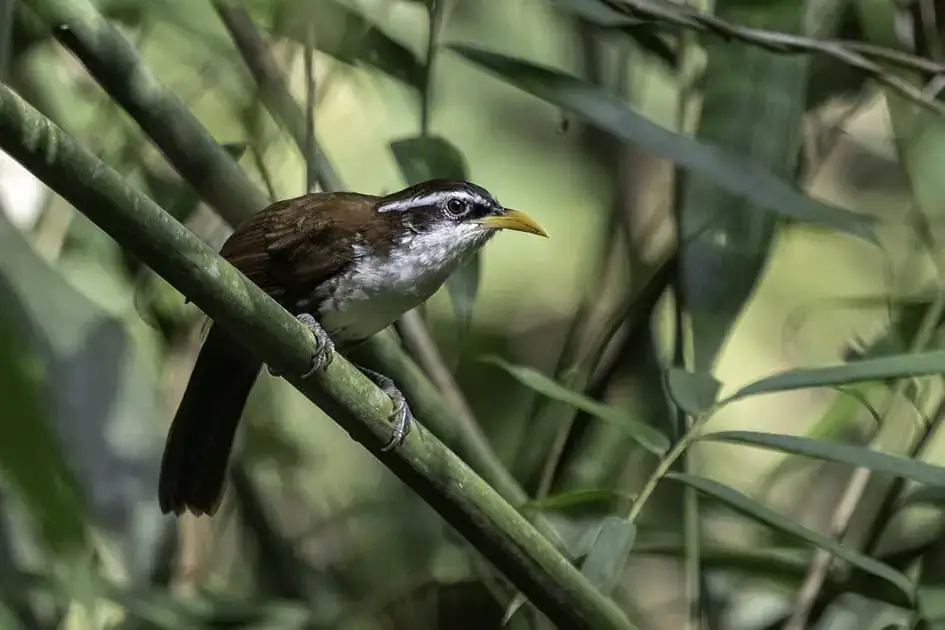
Sri Lanka Scimitar Babbler (Endemic bird) – Sinharaja Rainforest (Photo: Punitha Satharasinnghe, CC BY-SA 4.0)
Understanding Sri Lanka’s Different Forest Experiences
The word “forest” covers several very different landscapes here, so it helps to understand the main types before you choose.
Lowland rainforest grows in the southwestern wet zone, which gets rain from both monsoons. Sinharaja, Kanneliya, Kottawa–Kombala, and Makandawa belong here. Expect tall trees, deep shade, streams, high humidity, and leeches. You see wildlife here mostly at close range, especially birds, reptiles, and insects. You won’t get the open views of a safari park.
Mountain and cloud forest cover the Central Highlands. Horton Plains, the Knuckles Range, and the Peak Wilderness together form one of UNESCO World Heritage Sites, inscribed in 2010. The forest is cooler and more stunted than in the lowlands, often wrapped in mist, and broken up by grassland in places. Weather changes quickly.
Dry-zone forest covers much of the northcentral plains around the Cultural Triangle. It is lower and more open, with a long dry season. Hurulu, Ritigala, and Namal Uyana sit in this zone, and elephants roam widely here.
Urban forest sanctuary describes Udawattakele in Kandy: real forest that you can walk into from a city street.
Archaeological and pilgrimage forests are places where the forest is part of something older. At Ritigala, you visit the ruins of a forest monastery. On Adam’s Peak, you climb a pilgrimage route that passes through protected wilderness.
Access works differently for each one. Different government bodies manage forest reserves, national parks, sanctuaries and archaeological sites, and each sets its own rules. Some sites require a guide. Others allow visitors only on set routes or by vehicle, and parts of several are closed to the public altogether. Being protected doesn’t mean a forest is open to walk in, and seeing a forest on a map doesn’t mean you can enter it.
The Best Forests in Sri Lanka
The twelve destinations below are grouped by type and region rather than ranked by fame. Reliable visitor figures that compare these sites don’t exist, so treat the order as a way to plan, not as a league table. Each entry covers what a visit really involves and where it fits in an itinerary.
1. Sinharaja Forest Reserve
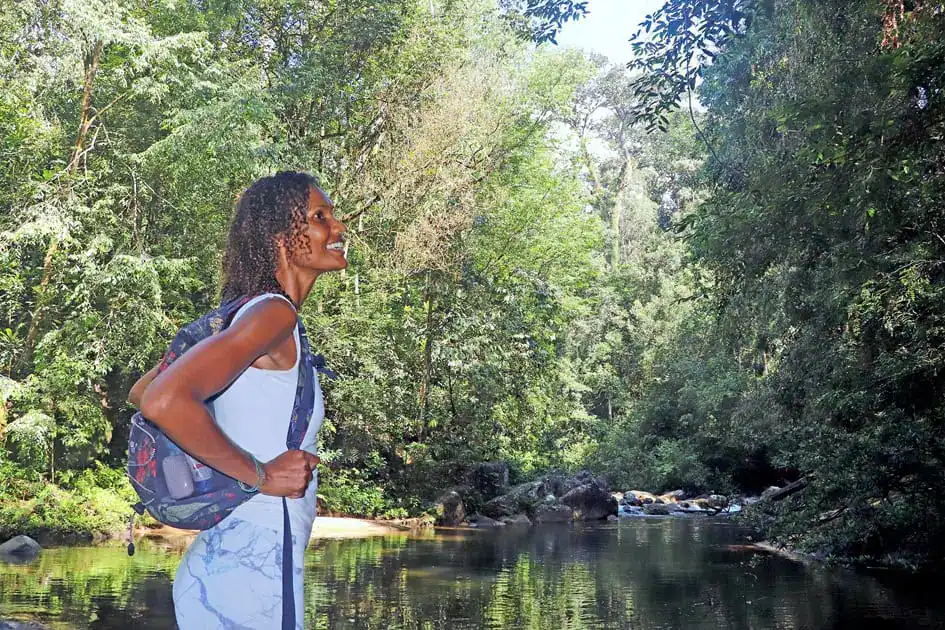
Enjoying the beauty of Sinharaja Forest (Photo: Andreas, CC BY-NC-ND 2.0)
Sinharaja is the forest most people picture when they think of Sri Lankan rainforest, and for good reason. UNESCO describes it as the country’s last viable area of primary tropical rainforest. It was listed as a World Heritage Site in 1988. More than 60 per cent of its trees are found only in Sri Lanka, and the reserve covers parts of Sabaragamuwa and Southern Provinces in the Southwest.
Best for: birdwatchers, nature lovers, and anyone who wants to walk through genuine old-growth rainforest. If your main goal is to see large animals, a dry-zone park will suit you better. The vegetation is too thick for easy sightings here, and the mammal you’re most likely to see is the endemic purple-faced langur.
Sinharaja’s birdlife is the main draw. Nearly all of Sri Lanka’s endemic bird species have been recorded in the forest reserve, including the Sri Lanka blue magpie, red-faced malkoha, and green-billed coucal. The forest is especially known for its mixed-species feeding flocks, in which many species travel through the canopy together. Researchers have studied these flocks continuously since 1981. A good guide will listen for a flock and position you in its path. Endemic reptiles and amphibians, including the green pit viper and hump-nosed viper, are also part of the experience. This is another reason to stay on the path and follow your guide.
How to visit: There are three main entrances. Kudawa, in the Northwest and reached via Kalawana, is the most used and is the usual choice from Colombo or Ratnapura. Pitadeniya, in the South and reached via Deniyaya, is better placed if you’re coming from the South Coast. Trails from this side lead towards waterfalls. Morningside, in the East, is the least visited and is favoured by some serious birders. Inside the reserve, you walk accompanied by a guide or ranger. You can’t explore the trails on your own. Fees and guide arrangements change, so confirm them at the entrance or with the Forest Department before you go. The reserve closes in the evening, around 6 pm.
What to expect: Leeches are almost guaranteed, especially after rain, so wear leech socks or long trousers tucked into socks. Paths can be muddy and slippery, and streams can rise quickly after heavy rain. Rain is possible in any month. January to March and August to September are usually the drier periods.
Time and bases: You can make a long day trip from the South Coast or Ratnapura, but staying a night near Kudawa or Deniyaya means you can start early, which is the best time for birds. Dedicated birders often stay two or three nights. Accommodation near the reserve is mostly simple. Choose your entrance based on where you’re coming from and where you’re going next, because they are a long drive apart. Sinharaja pairs well with Kanneliya or the South Coast if you’re using the southern entrances, and with Ratnapura or Udawalawe National Park if you’re using Kudawa.
2. Knuckles Conservation Forest
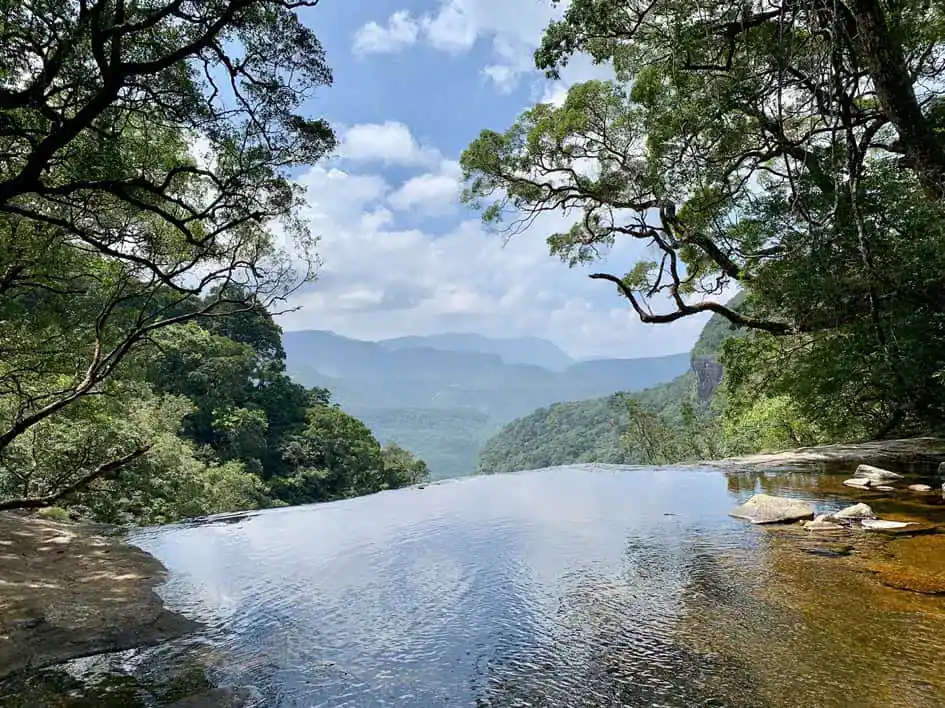
A Natural Infinity Pool – Duwili Ella Falls, Knuckles Conservation Forest (Photo: Subhan Sanjaya, CC BY-SA 4.0)
The Knuckles range rises northeast of Kandy, across the Kandy and Matale districts. British surveyors named it after the shape of its peaks, which look like the knuckles of a clenched fist. In 2010, it became part of the Central Highlands World Heritage Site. Within a fairly small area, it packs in several forest types, from wet montane and cloud forest on the higher ridges to drier slopes, grassland and village farmland lower down.
Best for: trekkers who want real mountain walking, quiet trails, and remote villages. If you’d rather not spend several hours on steep, wet ground, Udawattakele in Kandy or the main loop at Horton Plains will be a gentler choice.
What the trekking involves: Most visitors come in from the Kandy side, through Hunnasgiriya to the pass at Corbett’s Gap. A rough road continues from there to the remote village of Meemure. At Deanston, there is a conservation centre, and from it, a short walk leads to the escarpment known as Mini World’s End. Longer routes start from Corbett’s Gap, Deanston and Meemure. On the Matale side, the Riverston area offers ridge walks with wide views. Routes range from an hour or two to full-day and multi-day treks with village homestays or camping.
You need a permit from the Forest Department to enter the conservation forest, and a local guide is strongly recommended. Trails are often unsigned, side paths are easy to mistake for the main route, and mist can roll in within minutes. Many travellers book through a Kandy-based operator who arranges the permit, guide and transport together.
Conditions: Knuckles is wet and changeable. Leeches are common, streams may have to be waded, and rain can arrive from either monsoon. Ask your guide which routes are in good condition when you visit rather than relying on a fixed “best month”.
Time and bases: A guided day trip from Kandy gives you a good taste of the range, but it involves a long drive each way. If you want the full experience, spend two or three nights at a lodge or homestay near Corbett’s Gap, Meemure, or Riverston. Knuckles fits naturally with Kandy and Udawattakele, and it also works as a mountain detour between Kandy and the Cultural Triangle.
Trails:
- AllTrails Map – Knuckles 5 Peak Trail (7.7 km)
- AllTrails Map – Lebonon Estate to KMP Hut (6.1 km)
- AllTrails Map – Corbett’s Gap (11.4 km)
- AllTrails Map – Kandasamigala (5.8 km)
Read about hiking and trekking in Sri Lanka.
3. Hurulu Forest Reserve and Hurulu Eco Park

Elephants in Hurulu Eco Park (Photo: Jelen_Photos, CC BY-NC-SA 4.0)
Hurulu is different from the forests above, and it’s worth being clear about it. Hurulu Forest Reserve is a large area of dry-zone forest in the North Central Province. UNESCO designated it a biosphere reserve in 1977. Hurulu Eco Park is a separate tourism area of about 1,000 hectares, opened by the Forest Department in 2007 at the edge of the reserve. For travellers, “Hurulu” almost always means a jeep safari in the Eco Park, not a hike through the wider reserve.
Best for: watching elephants in forest and grassland country, especially if you’re already based around Habarana or Sigiriya. If you want to walk in a rainforest, this isn’t the place.
How it works: The entrance is on the Habarana–Trincomalee road, a short drive from Habarana. Wildlife safaris normally run in the early morning or late afternoon and last around three hours in an open 4WD vehicle. Jeeps are easy to hire in Habarana, and some wait at the gate.
Hurulu is part of a wider network of protected land that elephants move through, including Minneriya and Kaudulla national parks. Herds shift between these areas depending on water and grazing, so local drivers usually decide on the day which park gives the best chance of a sighting. A good sighting at Hurulu is likely in some weeks and not in others, so follow a recommendation to switch parks if one is made. Whichever park you visit, ask your driver to keep a respectful distance from the elephants and not to crowd them with other vehicles.
Time and bases: Allow half a day. Habarana is the most convenient base, and Sigiriya and Dambulla are also practical. Hurulu combines easily with Ritigala and Namal Uyana, and with the cultural sites of Sigiriya and Polonnaruwa. Hence, it fits naturally into a few days in the Cultural Triangle.
4. Kanneliya Forest Reserve

Anagimala Falls – Kanneliya Forest Reserve (Photo: Nalaka Priyantha)
Kanneliya is the easiest way to see real lowland rainforest if you’re staying on the South Coast. It lies about 35 km northwest of Galle, near the Udugama–Hiniduma road. It is part of the Kanneliya–Dediyagala–Nakiyadeniya forest complex, which UNESCO named a biosphere reserve in 2004. Apart from Sinharaja, this complex is the largest area of rainforest left in the country. Botanists rank it among the richest areas for plant life in South Asia. It also supplies water to the Gin and Nilwala, two of the South’s main rivers.
Best for: beach-based travellers who want a proper rainforest walk without a long journey inland. If you have time for only one rainforest and birds are your priority, Sinharaja is still the stronger choice.
What the visit involves: You buy tickets and arrange a guide at the entrance. The Forest Department manages the reserve. Routes go further into the forest the longer you walk. The most popular is the walk to Anagimala Ella, a waterfall a few kilometres from the entrance with a pool at its base. Longer trails lead to the smaller Narangas Ella Falls deeper in the forest, past a huge old forest tree and an enormous woody creeper, and up to Kabbale hill, where you look out over the forest canopy. Guide fees depend on the route, so agree the route and the price before you set off.
The walking is humid rather than steep on the shorter routes, but expect mud, stream crossings, roots, and leeches. The waterfalls are fullest after heavy rain, which is also when paths are most slippery. In the wettest weeks, it’s worth checking conditions with your hotel or guide.
Time and bases: Allow a half day for the waterfall walk and a full day for the longer trails. Most visitors come from Galle, Unawatuna, or nearby beach towns and return the same day, leaving early for the cooler morning hours. Kanneliya pairs well with a day in Galle Fort, with the smaller Kottawa–Kombala forest, or with the southern entrances of Sinharaja for a longer rainforest trip inland from the coast.
5. Udawattakele Forest Reserve

Udawattakele Forest Reserve (Photo: Nyanatusita, CC BY-SA 3.0)
Udawattakele is the most convenient forest on this list. It covers a ridge of just over 100 hectares directly behind the Temple of the Tooth in Kandy, and the visitor entrance is about a 15–20 minute walk from the temple. In the days of the Kandyan kings, it was the royal forest. Its Sinhala name refers to a garden above the palace. It became a forest reserve in 1856 and a sanctuary in 1938, and it still protects part of Kandy’s water supply.
Best for: anyone with an hour or three to spare in Kandy, families, and birders who want an easy introduction to wet-zone forest. Don’t expect wilderness. The city surrounds the forest, and you will sometimes hear traffic on the edges.
What you’ll find: Inside, a network of paths winds through tall trees, past a small pond, and to Buddhist hermitages and rock shelters still used by monks. Keep your voice down near these, and dress modestly if you plan to walk past them. Around 80 bird species have been recorded here, including endemics such as Layard’s parakeet and the yellow-fronted barbet. You’re most likely to see monkeys. The trails are generally easy, though some sections are uneven and muddy after rain, and signage is limited. A photo of the trail map at the entrance is useful.
How to visit: You can walk the main paths on your own. A naturalist guide adds a lot if you’re interested in birds, and early-morning guided walks can be booked in Kandy. The sanctuary is usually open during daylight hours, but entry times and fees change, so check locally.
Time and bases: Allow one to three hours. It fits easily into a day of sightseeing in Kandy, either before or after the Temple of the Tooth. It also pairs naturally with the Royal Botanic Gardens at Peradeniya, and with a trek in the Knuckles if you want to compare a city forest with real mountain wilderness.
6. Horton Plains National Park Cloud Forests
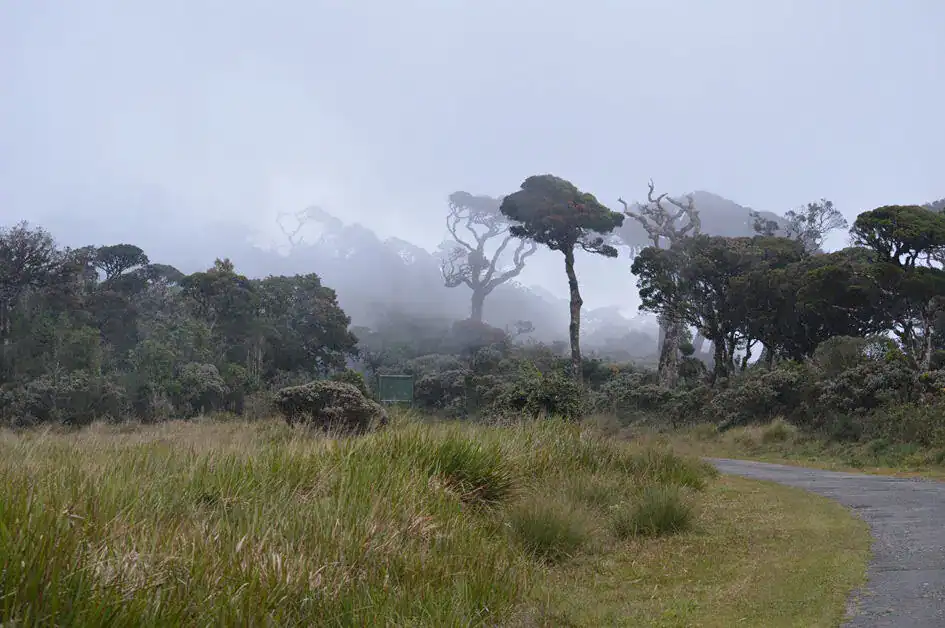
Misty Forest – Horton Plains National Park (Photo: Nalaka Priyantha)
Horton Plains is the highland counterpart to the rainforests above. It is a high plateau of more than 2,000 metres in the southern Central Highlands. It became a national park in 1988 and is part of the Central Highlands World Heritage Site. The Department of Wildlife Conservation manages it. The landscape mixes rolling montane grassland with patches of cloud forest. The trees are short and twisted, with moss and lichen hanging from their branches, and they’re often mist-shrouded. Both the grassland and the forest are what make the park distinctive, so don’t come expecting dense jungle all the way.
Best for: scenery, highland photography and travellers who want a moderate, well-marked walk in cool air. It suits most reasonably fit visitors, including older children. If you dislike early starts, it’s a harder sell.
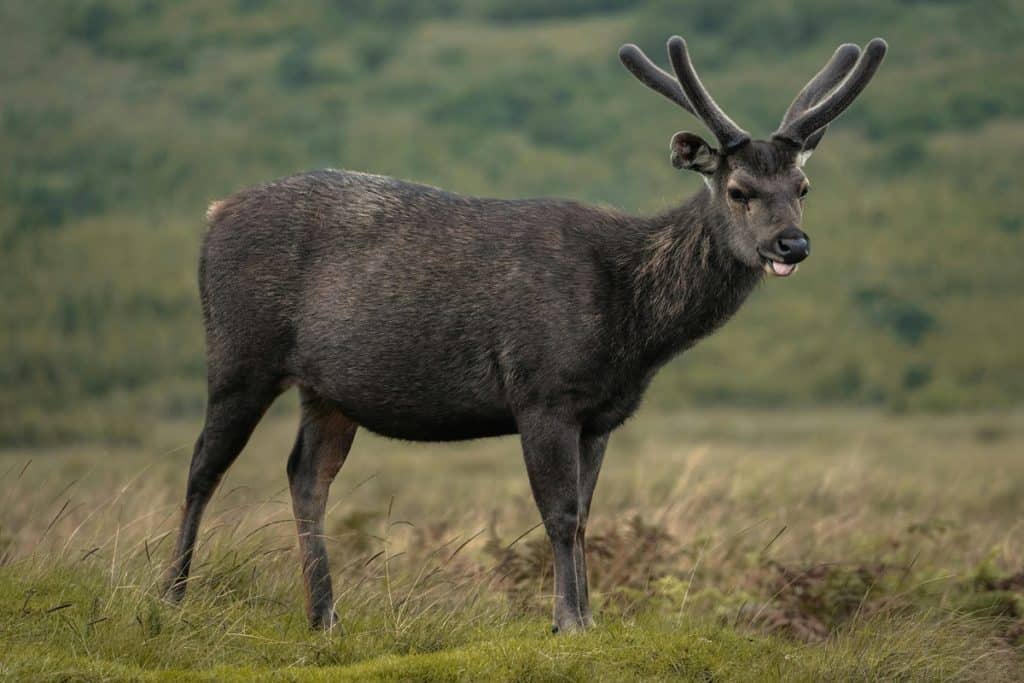
The walk: Most people walk the circular trail from the park entrance, a loop of roughly 9 km that usually takes around three hours. It leads past Mini World’s End to World’s End, where the plateau ends in a cliff that drops about 880 metres. From there it continues to Baker’s Falls and back across open grassland. The direction is clockwise, so you reach the viewpoint first. Sambar deer are often seen near the entrance and on the plains, and the park is important for highland endemic birds and plants.
Timing matters more than season: The park opens at 6 am. Mist often covers the view from World’s End by mid-morning, so plan to be on the trail as early as possible. January to March generally gives the clearest conditions. From April to September, cloud and rain are more common. Mornings are cold, so bring a warm layer and a rain jacket. There are no safety rails at World’s End, so keep children close.
Rules and practicalities: The park takes its no-plastic rule seriously. Bags may be checked at the entrance, so carry refillable bottles and unwrap snacks beforehand. Stay on the trail, and don’t feed or touch the deer. Fees for foreign visitors are relatively high and include vehicle charges, so confirm current rates before you go.
Time and bases: Nuwara Eliya is the usual base, which means a pre-dawn drive. Staying near Ohiya or Pattipola cuts the morning journey, and Haputale is an option from the South. The hill-country railway stops at Ohiya, though most visitors still need a vehicle to reach the entrance. Horton Plains fits naturally between Nuwara Eliya and Ella on a hill-country route. Many travellers combine it with Adam’s Peak and visit both early in the year.
Trails:
- AllTrails Map – World’s End Trail (8.5 km)
- AllTrails Map – Thotupola Mountain (2.7 km)
- AllTrails Map – Kirigalpotta (10.9 km)
7. Makandawa Forest Reserve

Sri Lanka Frogmouth – Makandawa Forest Reserve (Photo: Nick Athanas, CC BY-NC-SA 4.0)
Makandawa sits beside Kitulgala, a small town on the Kelani River that most travellers know for white-water rafting. Kitulgala was also where The Bridge on the River Kwai was filmed. The reserve protects part of the river’s catchment and covers lowland wet-zone rainforest on the far bank. Many birders consider the forests around Kitulgala the best place after Sinharaja to see the island’s lowland endemic birds.
Best for: birdwatchers on a tight schedule, and travellers already stopping in Kitulgala who want a quieter morning after rafting. It’s smaller and less wild than Sinharaja. If you have the time and birds are your main interest, Sinharaja remains the deeper experience.
What the visit involves: Getting there is part of the appeal. You usually cross the Kelani by boat, often a traditional outrigger canoe, and then walk forest paths with a local guide. Birds that guides look for here include the green-billed coucal, red-faced malkoha, chestnut-backed owlet, Sri Lanka spurfowl, spot-winged thrush, and yellow-fronted barbet. Seeing them takes patience, and luck plays a part. Streams on the reserve hold endemic fish and amphibians, and lizards are often seen in the vegetation along the river. The giant squirrel and purple-faced langur are the mammals you’re most likely to see.
The walking is generally gentle but humid, and paths are muddy after rain, so leeches are normal here too. Kitulgala gets rain from both monsoons. When the river is high, the crossing depends on local conditions, so let your guide or hotel decide whether it’s safe that day.
Time and bases: A guided birding walk takes a morning, and an early start makes the biggest difference to what you see. Most guides can be arranged through hotels and guesthouses in Kitulgala. Kitulgala lies on the road between Colombo and Hatton, so Makandawa works well as an overnight stop between the West Coast and the hill country. It also works as a stop before climbing Adam’s Peak from the Hatton side. Rafting on the Kelani makes an easy pairing.
8. Ritigala Forest and Ancient Monastery

Stone stairs – Ritigala (Photo: Marc, CC BY-NC-ND 2.0)
Ritigala is an isolated mountain rising out of the dry plains of the North Central Province, between Habarana and Anuradhapura. Clouds often cling to its upper slopes when the land below is dry, so it supports plants more typical of the wet zone than its surroundings. To protect that unusual ecosystem, it was declared a Strict Nature Reserve in 1941. This is the strictest level of protection in Sri Lanka.
What visitors actually see is a separate, much smaller area on the lower eastern slopes. Here, the ruins of a Buddhist forest monastery have been partly restored by the Department of Archaeology. Monks lived in the area’s caves from around the 1st century BC, and later kings built the stone structures you walk among today. The rest of the mountain is closed to the public, and higher areas can be entered only for research with special permission. Ritigala is a heritage site set inside a forest, not a mountain you can hike freely.
Best for: travellers who enjoy archaeology but want something quieter than Sigiriya or Polonnaruwa. It’s one of the most atmospheric heritage sites in the Cultural Triangle. Don’t come expecting a trek, a wildlife encounter, or a summit view.
What the visit involves: After buying a ticket at the site office, you start beside the Banda Pokuna, a large stone-lined reservoir. From there you follow an ancient paved path uphill through the trees. Along the way, you pass meditation platforms, bathing areas, and the remains of monastic buildings, many of them half-covered by roots. The ruins are known for their plain, carefully worked stonework, with very little religious imagery. Guides are available at the entrance and help bring the site to life. Agree on the fee before you start. Stay on the marked path. The forest beyond it is protected.
Practicalities: Arrive early, as the climb is warm by late morning and you’ll get better light under the trees. The final approach is along a minor road with an unpaved section. Wild elephants live in this part of the country, so travel with a driver who knows the route and take local advice about walking near the road. Dress modestly, as this is still a place of religious importance.
Time and bases: Allow two to three hours on site. Habarana, Sigiriya, and Anuradhapura are all practical bases. Ritigala pairs naturally with an afternoon safari at Hurulu, or you can visit it on the way from Habarana to Anuradhapura.
9. Peak Wilderness / Adam’s Peak Wilderness

Peak Wilderness (Photo: Nalaka Priyantha)
The Peak Wilderness Sanctuary covers a long arc of montane and lowland rainforest across the southwestern edge of the hill country, joining Horton Plains to the East. It became a sanctuary in 1940 and is part of the Central Highlands World Heritage Site. At its heart stands Sri Pada, or Adam’s Peak, a 2,243-metre summit with a footprint-shaped mark at the top. Buddhists, Hindus, Muslims, and Christians all revere the mark in different ways.
For travellers, there are two separate things here, and it helps to keep them apart. One is the pilgrimage climb to the summit, an established route open to everyone. The other is the wider protected forest, which is not open for general hiking. Other than the recognised pilgrim trails, don’t treat the sanctuary as a place to explore on your own.
Best for: travellers who want a once-in-a-trip mountain climb with deep cultural meaning, and who are fit enough to manage thousands of steps. If you want quiet nature walking or wildlife, other forests in this guide will suit you far better.
The climb: Most foreigners take the route from Nallathanni, also called Dalhousie, near Hatton. It’s the shortest and best-developed path, with roughly 5,500 steps. Most people climb it in about three to four hours each way. The traditional plan is to start in the early hours and reach the summit for sunrise. On clear mornings, the peak casts a triangular shadow over the land to the West. The longer Ratnapura–Palabaddala and Kuruwita-Erathna routes climb through much more forest and is considerably harder.
Season matters here: The pilgrimage season begins on the December full moon, Unduvap Poya, and ends with Vesak in May. During these months, the path is lit, tea stalls stay open along the route, and the weather is generally drier. Weekends and full-moon poya days can be extremely crowded, so a weekday climb is usually more comfortable. Outside the season, the lights and facilities are mostly closed, and rain and clouds are frequent. Climbing then is far more demanding and less safe, so check conditions locally and don’t attempt it without reliable local advice.
Respect and preparation: This is first a pilgrimage, and many Sri Lankans climb it as an act of devotion. Dress modestly, keep noise down near the summit shrine, and follow the customs you see others observe. The summit is cold and windy before dawn, so pack a warm layer for the top. Carry your rubbish down with you.
Time and bases: Plan for an overnight stay at a guesthouse in Nallathanni, then a rest day or an easy travel day afterwards, because your legs will feel it. Hatton is the nearest railway station on the hill-country line. Adam’s Peak fits naturally with a stay in tea country and with Horton Plains. Coming from Colombo, a night in Kitulgala on the way breaks up the journey.
Trails:
- AllTrails Map – Adam’s Peak – Nallathanniya Route (10.1 km)
- AllTrails Map – Sri Pada – From Kuruwita, Erathna to Ratnapura, Palabaddala (20.1 km)
10. Kottawa–Kombala Conservation Forest

A lake – Kottawa Kombala Forest Reserve (Photo: Kavindu Pamaljith, CC BY-SA 4.0)
Kottawa is the quickest way to step into rainforest from Galle. The Forest Department manages it, and the visitor area is usually called the Kottawa Rainforest and Arboretum. It’s roughly 20 km inland from the fort, about half an hour by road. It forms part of the larger Kottawa–Kombala forest. A wide, level track runs for about a kilometre beneath tall wet-zone trees, and many trees near the entrance carry name boards. A tree you’ve just read about is a lot easier to spot than one you’ve only seen in a field guide.
Best for: families, less mobile travellers and anyone who wants a gentle first taste of rainforest without a long day out. It’s small, so committed birders or walkers will find Kanneliya or Sinharaja more rewarding.
Keep your pace slow and your eyes on the vegetation beside the path. Lizards such as the hump-nosed lizard, forest birds, and butterflies are the usual rewards, and a local guide will find far more than you would alone. Nearby Hiyare, a reservoir surrounded by secondary rainforest, makes an easy add-on. Volunteers from a local wildlife society sometimes help guide visitors there.
Practicalities: The forest is open during daytime hours. Times and the small entry fee vary, so check before you go. Mornings are cooler and better for birds. Even this short track can be muddy, and leeches appear after rain.
Time and bases: Allow two to three hours, including travel from Galle, Unawatuna, or nearby beach towns. It slots easily into a beach stay, either as a half-day trip on its own or combined with Hiyare. If you have a full day, go on to Kanneliya instead.
11. Ruhunukanda Forest Reserve
Ruhunukanda, often written Runakanda, is one of the least-known forests in this guide. It isn’t on the South Coast. It lies in the interior of Kalutara District, near Baduraliya, where it borders the wider Sinharaja forest. The Western Province Tourist Board describes it as evergreen rainforest with high biodiversity. The Maguru River runs through it, and about 52 bird species have been recorded, along with reptiles, amphibians, and uncommon butterflies. A tiny settlement of a few houses still sits inside the forest.
Why consider it: Ruhunukanda suits travellers who already know Sri Lanka, or birders and naturalists who want a rainforest similar in character to Sinharaja without the main entrances’ visitor traffic. Riverside walks along the Maguru, small waterfalls, and a sense of remoteness are the main attractions. It is not a polished visitor destination. Facilities are simple, transport is limited, and you’ll depend on local arrangements.
How to visit: Visits are typically arranged through a community-run conservation centre near the forest, which provides local guidance. Because conditions and arrangements here change, contact them or a specialist nature operator before you travel rather than turning up on the off chance. December to March is usually the driest period. At other times, expect high water, slippery paths, and plenty of leeches.
Time and bases: Plan on a full day, or ideally an overnight stay nearby. You can reach Ruhunukanda from West Coast beach towns such as Kalutara and Beruwala. It suits travellers who want a nature detour inland from the coast, or anyone combining several Sinharaja-area forests on a dedicated birding trip.
12. Namal Uyana

Namal Uyana Rose Quartz Mountain (Photo: Satheesha J., CC BY-SA 4.0)
Jathika Namal Uyana lies near Ulpathagama, about 16 km northwest of Dambulla. It was declared a National Heritage site in 2005 and is administered under the Department of Wildlife Conservation. Its two attractions are unlike anything else in this guide. The first is the country’s largest forest of naa, or ironwood. This tree is Sri Lanka’s national tree, and its new leaves emerge bright red. Many of the groves are believed to have been planted in ancient times, when this was a Buddhist monastic site. The second is a ridge of rose quartz, often described as the largest in Asia. The rock looks grey from a distance because of weathering, and only shows its pink colour up close.
Best for: curious travellers in the Cultural Triangle who want a quiet, unusual half-day stop that mixes heritage, geology and dry-zone forest. Don’t expect a rainforest or a wildlife experience. Elephants do live in the surrounding jungle, though, so follow local advice.
What the visit involves: A path leads through the ironwood forest, past monastic ruins, to the foot of the quartz ridge, which you can climb with moderate effort for views over the plains. The site owes much of its modern profile to its resident monk, Ven. Wanawasi Rahula Thero, who championed its protection. Dress modestly and keep noise down. Removing quartz is prohibited, however small the piece.
Time and bases: Allow two to three hours, plus the drive from Dambulla, Sigiriya, or Habarana. Climb the ridge early or late in the day, as the exposed rock gets very hot. Namal Uyana works well on the same day as the Dambulla cave temples, or as an alternative to a second safari on a Cultural Triangle stay.
How to Choose the Right Forest for Your Trip
Start with the forest’s location, then think about what you want from it. For wildlife you can actually see, Hurulu’s elephants are the clearest bet. Birders should put Sinharaja first, with Makandawa as the short option. Trekkers belong in the Knuckles. Photographers get the most from Horton Plains at dawn and from Ritigala’s ruins under the trees. If you have limited time or mobility, Udawattakele and Kottawa need little effort. Most travellers do best with one rainforest and one contrasting landscape, such as cloud forest or dry-zone forest, rather than several similar ones.

Trekking – Knuckles Mountain Range (Photo: Isuru flicker, CC BY-SA 4.0)
Planning Forest Visits in Sri Lanka
Weather: The Southwest and the western hill country are wettest during the Southwest Monsoon, roughly May to September. The North and East get most of their rain from the Northeast Monsoon, roughly December to February. Much of the island sees heavy rain in October and November. Rainforests are wet in every month, so plan to start early rather than try to time a dry spell.
Read about the weather and the best time to visit Sri Lanka.
Clothing: Bring leech socks or long socks for the rainforest, light rain gear, shoes with good grip, and a warm layer for the highlands. Cover your shoulders and knees at Ritigala, Namal Uyana, and on Adam’s Peak.
Guides and permits: Guides are compulsory at Sinharaja, effectively essential in the Knuckles, and worth hiring almost everywhere else. Fees, opening hours, and access rules change, so confirm them with the managing authority or a reputable local operator before you go.
Safety and responsibility: Stay on marked paths, and let your guide decide whether to cross a stream after rain. Keep well back from elephants. Take all rubbish out with you, and keep noise low. Don’t fly drones in protected areas without permission.
Read sustainable travel in Sri Lanka: How to explore responsibly.
How to Include Forests in a Sri Lanka Itinerary
- Cultural Triangle (2–3 nights in Habarana or Sigiriya): Ritigala in the morning and a Hurulu safari in the afternoon. Visit Namal Uyana with Dambulla on another day.
- Kandy (2 nights or more): Walk Udawattakele between sights in the city. Add a day in the Knuckles, or two to three nights at a lodge there.
- South Coast (from Galle or Unawatuna): Spend half a day at Kottawa or a full day at Kanneliya. Birders can continue inland to Sinharaja’s southern entrances.
- Colombo to the hill country: Stay overnight in Kitulgala for an early walk at Makandawa, then continue to Hatton for Adam’s Peak during the pilgrimage season.
- Hill country: Visit Horton Plains at dawn from Nuwara Eliya or Ohiya. Pair it with Adam’s Peak only if you can leave a rest day between them.
Three or four forests make a well-paced two-week trip. Trying to fit in all twelve would mean more time on the road than among the trees.
Horton Plains National Park – Nuwara Eliya (Photo: Anupa Uthsara, via Unsplash)
Frequently Asked Questions
What is the best rainforest in Sri Lanka?
Sinharaja. It’s the country’s largest remaining primary lowland rainforest and the best site for endemic birds. Kanneliya is the easier alternative from the South Coast.
Which forest is best for seeing wildlife?
Hurulu Eco Park for elephants, though sightings depend on where the herds are that week. In rainforests, the wildlife is mostly birds, reptiles, and monkeys.
Are there easy short forest walks?
Yes. Udawattakele in Kandy and Kottawa near Galle both offer gentle walks of an hour or two.
Do I need a guide?
At Sinharaja, yes. In the Knuckles, yes, in practice. Elsewhere, a guide is optional but adds a great deal.
Are Sri Lanka’s forests suitable for children?
Udawattakele, Kottawa, and the Horton Plains loop suit most families. Keep children close at World’s End, and plan for leeches in rainforests.
Are you new to Sri Lanka? Read about our ultimate travel guide for first-time travellers.
Final Thoughts
The best forests in Sri Lanka are the ones that fit your route and your interests, not the most famous names. Choose one rainforest, add a misty highland plateau or a dry-zone forest for contrast, and give each a proper early start. That will show you more of the island’s wild side than a rushed attempt to see everything. When you’re ready to build the trip, see our Sri Lanka itineraries for ways to fit forests into your route.
Map – Best Forests in Sri Lanka
Sources and References:
- Sri Lanka Tourism Development Authority (SLTDA). Year in Review 2025. Official tourism statistics, including domestic and foreign visitor numbers for conservation forests such as Sinharaja, Knuckles, Hurulu Eco Park, Kanneliya, Udawattakele and Makandawa.
- Sri Lanka Tourism. Sri Lanka Tourism – Official Travel Website. Destination information and guidance for visitors exploring Sri Lanka’s natural attractions, wildlife, landscapes and cultural heritage.
- Forest Department of Sri Lanka. Official Forest Conservation Resources. Information concerning Sri Lanka’s forest ecosystems, forest conservation and the management of protected forest areas.
- Department of Wildlife Conservation, Sri Lanka. Protected Areas and National Parks. Official information about protected-area classifications, wildlife conservation and visitor access to national parks, including Horton Plains.
- UNESCO World Heritage Centre. Sinharaja Forest Reserve. Authoritative information about Sinharaja’s tropical rainforest, endemic species, biodiversity, conservation importance and World Heritage status.
- UNESCO World Heritage Centre. Central Highlands of Sri Lanka. World Heritage documentation covering Knuckles Conservation Forest, Horton Plains National Park and Peak Wilderness Protected Area, including their montane ecosystems, endemic wildlife and conservation significance.
- Central Cultural Fund, Sri Lanka. Official Heritage and Archaeological Resources. Information on Sri Lanka’s archaeological heritage, ancient monasteries and cultural sites, relevant to understanding forest-associated heritage destinations such as Ritigala.
- Department of Archaeology, Sri Lanka. Official Archaeological Heritage Resources. Information concerning the protection and management of archaeological sites, monuments and historical remains.
- International Union for Conservation of Nature (IUCN). IUCN Red List of Threatened Species. Scientific conservation assessments and species information relevant to the endemic and threatened wildlife found in Sri Lanka’s forest ecosystems.
- Sri Lanka Tourism Development Authority (SLTDA). Year in Review 2024. Historical visitor statistics and tourism trends for Sri Lanka’s conservation forests, providing additional context for forest tourism and international visitor interest.
Featured image: Sinharaja Forest Reserve (Photo: Thomas Landgren, CC BY-NC-ND 4.0)

I am a Sri Lankan medical doctor who spends my free time travelling, exploring new destinations, and documenting the beauty of the island I call home. I have journeyed across almost every corner of Sri Lanka with my wife and daughter — from wildlife parks and misty mountains to ancient cities, deep forests, rugged landscapes, and quiet beaches.
Travel is not just a hobby for me — it’s a way of life. I love nature, enjoy road trips, and find joy in wildlife photography. I also read widely about tourism, travel trends, and destination culture. Through my writing, I aim to help travellers experience Sri Lanka through real stories, meaningful insights, and honest recommendations — the same way I explore it with my own family.