
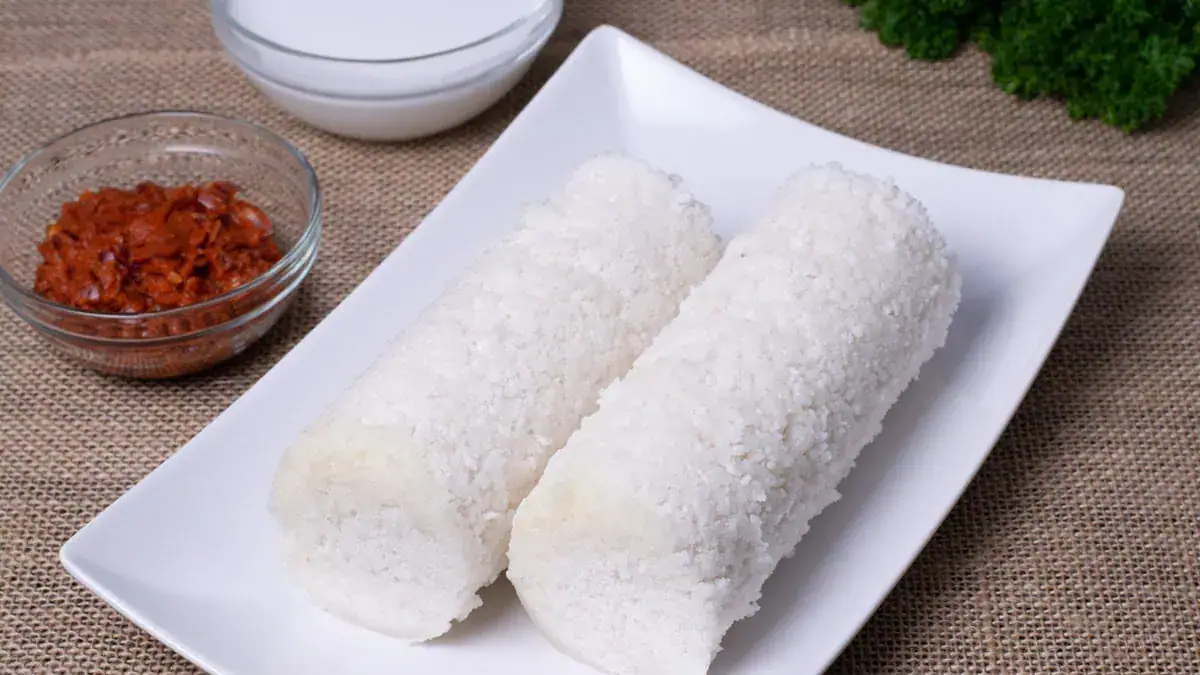

Some food arrives looking finished. Pittu doesn’t. It comes to the table as a short, pale cylinder or a loose mound of steamed rice flour and grated coconut, usually with a curry and a bowl of coconut milk nearby. On its own it looks almost plain, and that is partly the point. It is made to be eaten with something wet and well spiced. Once you understand how it works, you also understand a lot about how everyday Sri Lankan meals come together.
It is also one of the dishes visitors are least likely to know before they arrive. Rice and curry, hoppers, and kottu tend to get the attention. Yet, Pittu is a regular part of many Sri Lankan households. If you know what it is before it reaches your plate, ordering it and eating it become much easier.
Pittu: What You Need to Know
Pittu is a steamed food made from flour and freshly grated coconut. In Sri Lanka, the most common flour is rice flour, either white or red. The cook mixes the flour with coconut and a little water until it forms damp, crumbly granules rather than a dough. These granules are packed into a steamer, often a narrow tube, and cooked by steam.
When it comes out, it holds its shape, but only just. Press it with your fingers or a spoon, and it breaks into soft, slightly moist crumbs. The rice flour gives a light, grainy bite. The coconut adds gentle richness and a faint natural sweetness. On its own, it tastes mild and lightly salted, because it isn’t meant to carry the meal by itself.
You’ll usually see it spelt “pittu” in Sinhala-speaking areas and on English-language menus. In Tamil, it is generally “puttu”, the same name used in Kerala in southern India, where a closely related dish is popular. In Sri Lanka, both spellings refer to the same food.
Why Pittu Stands Out
Most staple foods a visitor knows are either whole grains, like rice, or doughs and batters, like bread, noodles, and pancakes. Pittu sits between the two. It is made from flour but never becomes a dough. It is steamed, but it doesn’t turn sticky or fluffy like steamed rice. That loose, crumbly texture is what makes it different.
The texture also shapes how you eat it. It soaks up liquid quickly, so coconut milk or curry gravy softens it almost at once. People often break it up and mix it with whatever is on the plate, turning a dry-looking cylinder into something soft and well seasoned. The same Pittu can taste quite different beside mild coconut milk, a fiery chicken curry, or a sharp coconut sambol.
There is also very little to hide behind. With only a few ingredients, freshness and technique show clearly, and a well-made Pittu feels noticeably lighter than a heavy or poorly mixed one.
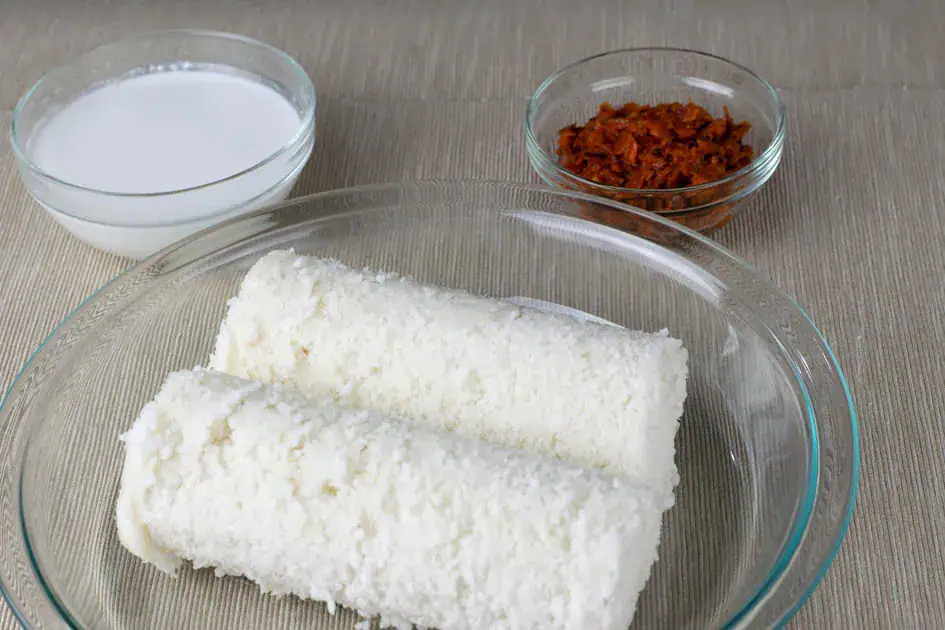
Cylinder-shaped pittu (Photo: Kavinda F from Pixabay)
Where Pittu Sits in Sri Lankan Society
It is everyday food. It belongs mainly in home kitchens, where it may be made for breakfast or a lighter evening meal, rather than for festivals or celebrations. For many families, it is part of a regular rotation of home-cooked staples alongside string hoppers, hoppers, and bread.
It is eaten across communities. You’ll find it in Sinhala, Tamil, and Muslim homes. However, the favourite flours, curries, and seasonings differ from household to household. In the North, especially around Jaffna, puttu holds a particularly strong place in daily eating and appears in some distinctive local forms.
Because it is so closely tied to home cooking, it doesn’t appear on every restaurant menu, and it is less visible in places that cater mainly to tourists. That is one reason it can feel like a small discovery for visitors. For many Sri Lankans, though, it is simply what’s for breakfast.
Popular Varieties and Regional Differences
The biggest difference between one Pittu and another is the flour. Shape and accompaniments vary too, but the flour changes the colour, flavour, and texture most clearly.
White rice flour Pittu is the version travellers are most likely to meet. It is pale, soft, and mild, making it an easy introduction.
Red rice flour Pittu uses flour from red-skinned rice. It is darker and slightly denser, with a gentle nutty flavour. Many households make it regularly, and some cooks combine red and white flour.
Kurakkan Pittu is made with flour from kurakkan, the local name for finger millet, a small grain long grown in Sri Lanka’s drier regions. It produces a reddish-brown Pittu with an earthier taste. Kurakkan flour is often mixed with rice flour to soften its flavour and texture.
Wheat flour Pittu is made in some homes as well. It looks similar but is worth knowing about if you avoid gluten, since a pale Pittu isn’t automatically a rice-flour one.
Odiyal Pittu is a northern speciality. Odiyal flour, made from the palmyra palm, is used in Jaffna to make odiyal pittu. The flour is naturally bitter, so cooks soak and drain it several times before mixing it with grated coconut and salt. Some versions are mixed with fish and green chillies after steaming. You’re most likely to come across it in Jaffna and the wider Northern Province.
Beyond these recognised types, the variations are smaller: how much coconut goes in, how fine the granules are, whether it is served as a neat cylinder or crumbled loosely. These are differences of household habit and personal taste rather than separate dishes, and no single version is the “correct” one.
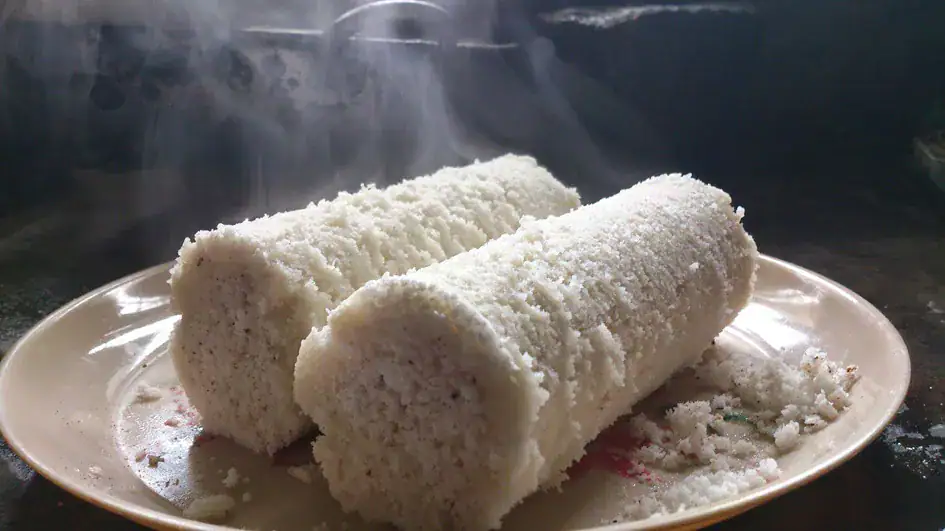
Warm rice flour pittu (Photo: Mathew Jibin, CC BY-SA 4.0)
What Is Pittu Made From?
At its simplest, it needs only three things: flour, grated coconut, and salt, with a little water to bring them together.
The flour is the base. In most Sri Lankan kitchens, this is rice flour, and many cooks lightly roast it before use, which helps the finished Pittu stay loose rather than gummy. Red rice flour, kurakkan (finger millet) flour, wheat flour and, in the North, odiyal flour are the main alternatives.
The coconut is freshly grated from the white flesh of a mature coconut, not the dried, sweetened flakes sold in many countries. It adds moisture, a little fat and a soft, rounded flavour. The amount varies by cook, and it is one of the main reasons two Pittus can taste noticeably different.
Anything else, such as vegetables or fish mixed in, is an addition rather than part of the basic recipe.
How Pittu Is Made
The key step happens before any steaming. The cook sprinkles water and salt over the flour and rubs the mixture between the fingers until it looks like damp breadcrumbs. Too little water and the Pittu falls apart; too much and it becomes a dense, sticky block. Grated coconut is either mixed through or kept aside for layering.
Traditionally, the mixture is steamed in a tall cylinder, once made from bamboo and now often from aluminium or stainless steel. The tube sits over a pot of boiling water, and steam rises through small holes at its base. Cooks usually fill it in layers, alternating a handful of coconut with the flour mixture, which gives Pittu its faint striped look.
After a few minutes of steaming, the cook pushes the cooked Pittu out of the tube in one piece. That is where the familiar cylinder shape comes from. Not every kitchen uses a tube, though. Some steam the mixture loosely in a steamer or cloth, and it reaches the plate as soft crumbs instead.
Serving Style and Temperature
It is best eaten freshly steamed and warm, since it firms up and dries out as it cools. At home, it often goes straight from the steamer to the table.
You may receive it as whole cylinders, cut into short lengths, or already broken up on the plate. Accompaniments usually come in separate bowls, so you can add as much or as little as you like. Restaurants tend to serve a set portion with one or two curries and a sambol; at home, the spread depends on what the family has cooked that day.
How to Spot a Great Version of Pittu
A good Pittu is light. It should hold together when served but crumble easily once you press it, without feeling dusty or pasty. Fine, even granules signal a well-made mixture.
Look for a moist but not wet texture, with the coconut spread evenly rather than sitting in thick clumps. The coconut should smell fresh. A sour or stale note suggests it was grated too long before cooking.
Warmth matters too. Pittu that has sat for hours can be dry and hard. Finally, notice how it behaves with the curry or coconut milk: a good Pittu absorbs it readily and softens, rather than staying stiff.
Beyond that, preference takes over. Some people like plenty of coconut, others prefer a leaner, grainier Pittu. Neither is wrong.
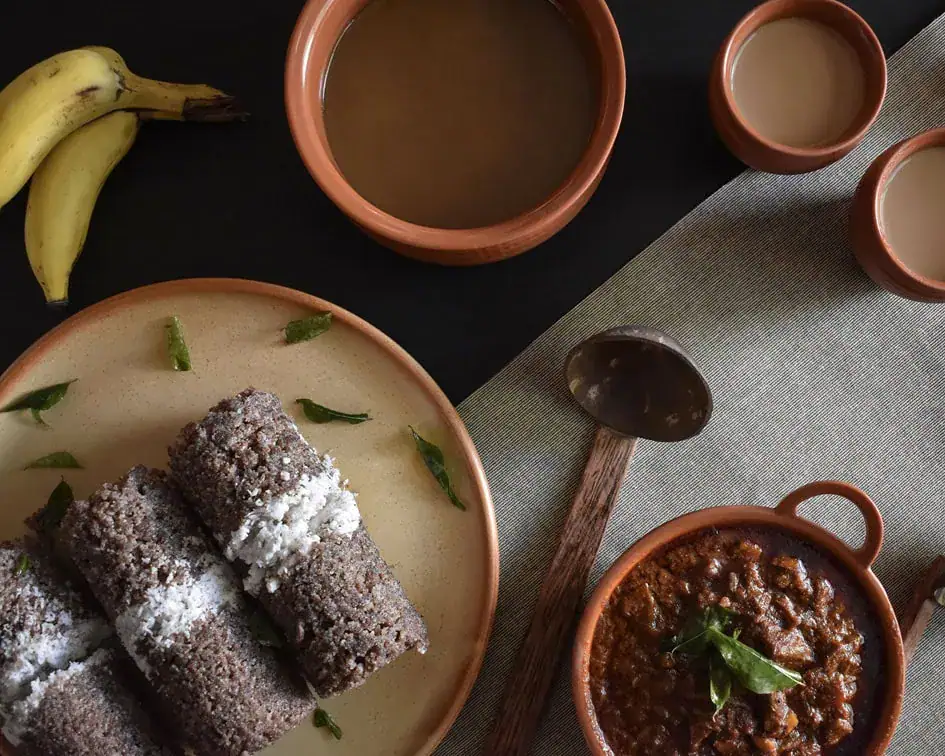
Kurakkan Pittu (Photo: Vaidehi Pujary, CC BY-SA 4.0)
Ordering Advice
It is usually listed simply as “pittu” or “puttu”, sometimes with the flour named, such as red rice or kurakkan. A few questions make ordering easier:
- What does it come with? It is often paired with curries, a mild coconut-milk gravy called kiri hodi, or sambols such as pol sambol (coconut) and lunu miris (onion and chilli).
- How spicy is the curry? Pittu itself is mild, but the curries can be very hot. Ask for a milder option if you need one.
- Which flour is used? This matters if you avoid gluten, as some versions contain wheat.
Plain Pittu often contains no animal products, but the accompaniments may. Curries can include meat or fish, and pol sambol commonly contains Maldive fish, a dried tuna product. Coconut appears in almost everything. If you have an allergy or follow a strict diet, check the ingredients directly with the kitchen.
How to Taste and Enjoy It
Try a small piece on its own first. It’s the easiest way to notice the texture and the coconut before stronger flavours take over.
After that, most people break the Pittu up and mix it with the accompaniments. Coconut milk or kiri hodi softens it into something moist and comforting. At the same time, curry gravy adds seasoning and heat to every mouthful. Adding a little sambol brings sharpness and texture.
Many Sri Lankans eat Pittu with their right hand, mixing and gathering it with the fingertips. Others use a spoon, and nobody expects a visitor to do it one way or the other. Mix a little at a time rather than soaking the whole portion at once, so it doesn’t turn soggy before you finish.
Best Pairings
It works best with something liquid. The most common partners are:
- Coconut milk or kiri hodi: mild and creamy, ideal if you’re wary of spice.
- Chicken, fish, or meat curries: the gravy matters more than the meat, since it moistens the Pittu.
- Dhal curry: a gentle, filling option that also suits vegetarians.
- Pol sambol or lunu miris: small amounts add heat and contrast.
In Jaffna, it is also often eaten with the region’s spicy seafood curries, including crab.
When to Eat Pittu
It is mostly a breakfast or dinner food. Many households make it in the morning or for a lighter evening meal, while rice and curry more often fill the middle of the day. These are habits rather than rules, and timing varies from home to home.
Where to Eat Pittu
Your best chances are small local restaurants and eateries, which may serve it at breakfast or in the evening. Places specialising in traditional Sri Lankan food often include it, and some hotels add it to their breakfast buffets. Guesthouses and homestays are another good option; many hosts will cook it if you ask in advance.
In the North, especially Jaffna, you’ll find it more easily, and you may come across local varieties. Availability changes by time of day and establishment, so don’t expect it everywhere.
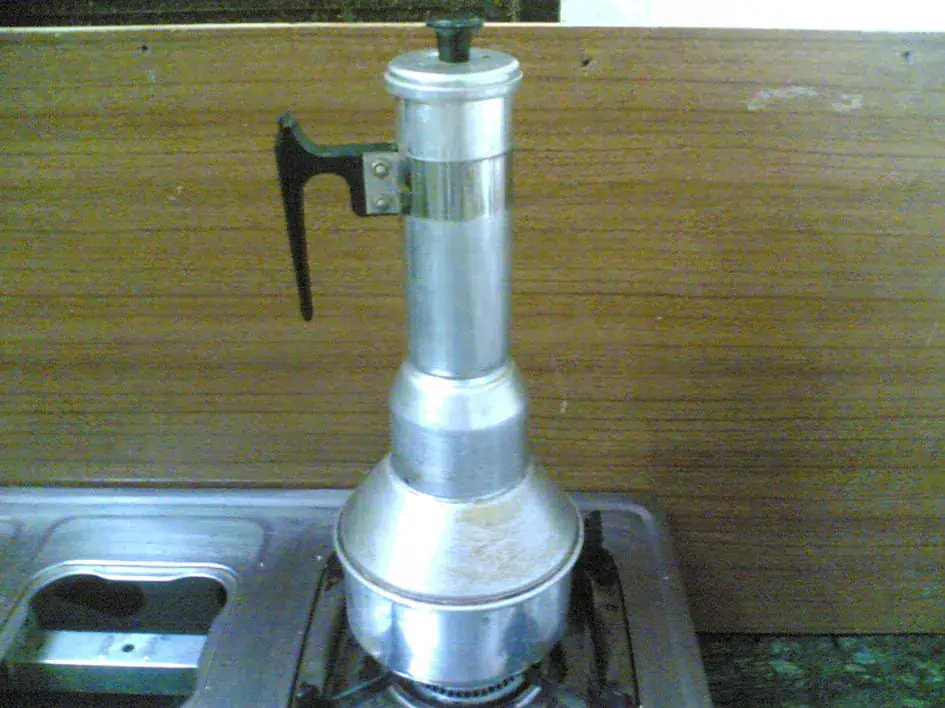
The cylindrical pittu cooker (Photo: Caduser2003)
Energy and Nutrition Facts
Pittu is mainly a carbohydrate food, since the flour makes up most of it. The coconut adds fat, much of it saturated fat, along with some fibre. Protein is fairly low.
There’s no single reliable calorie figure, because the flour, the amount of coconut and the portion size all vary. The accompaniments make an even bigger difference. Coconut milk and rich curries can add a lot of energy, while dhal adds protein and fibre. Think of it as part of a meal, and judge the meal as a whole.
Benefits of Pittu
It is filling, steamed rather than fried, and made from a short list of whole ingredients. Versions made with red rice or kurakkan flour usually contain more fibre than those made with white rice flour, and finger millet is naturally richer in calcium than rice.
Rice-flour Pittu can also suit travellers who avoid wheat, as long as the kitchen confirms the flour. Like any food, its nutritional value depends on what goes into it and what you eat alongside it.
Special Tips
- Start with a smaller portion. Pittu is denser and more filling than it looks, especially once mixed with coconut milk and curry.
- Keep some gravy in reserve. If it starts to feel dry halfway through, a little more coconut milk or curry brings it back.
- Try more than one flour. White rice, red rice, and kurakkan Pittu taste different enough to be worth comparing during a longer trip.
- At a buffet, check that it’s warm. Freshly steamed Pittu is far better than a batch that has been sitting out.
Dos and Don’ts
Do
- Mix Pittu with the accompaniments; that is how it’s meant to be eaten.
- Use a spoon if you prefer. Eating by hand is common but never expected of visitors.
- Ask about ingredients if you have an allergy or dietary restriction.
Don’t
- Judge it by its plain appearance or by a bite eaten on its own.
- Assume every Pittu is wheat-free, vegetarian, or mild.
- Expect it on every menu, particularly at lunchtime.
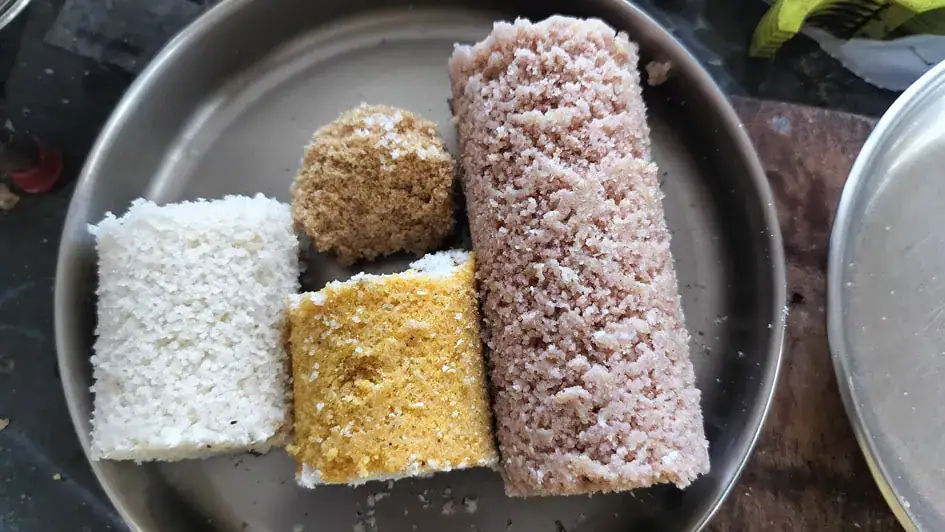
Pittu with different flours (Photo: SijiR, CC BY-SA 4.0)
Why You Should Taste Pittu in Sri Lanka
It shows how Sri Lankan food works day to day. Its role is to bring the curries, coconut milk, and sambols on the table together, which is why tasting it helps you understand the wider logic of Sri Lankan cuisine. It also reflects the island’s diversity: the same basic idea changes with red rice in one home, kurakkan in another, and palmyra flour in Jaffna. Eating it puts you closer to ordinary food culture in Sri Lanka, the meals people eat at home rather than the dishes prepared mainly for visitors.
Final Thoughts on Pittu
Pittu won’t impress you at first glance, and it doesn’t need to. Its appeal lies in texture, freshness, and the way it changes with each spoonful of gravy. Order it warm, mix it with something good, and take your time. For a traveller curious about how Sri Lankans really eat, it is a simple and rewarding place to start.
Sources and References:
- Sri Lanka Tourism — Culinary Tourism: Food Range. Official Sri Lanka Tourism information on pittu, including its use of rice or kurakkan flour and fresh coconut, traditional steaming method, accompaniments, and its place as a breakfast and dinner food.
- Sri Lanka Tourism — Food. Official overview of Sri Lankan cuisine and staple foods, including pittu as a flour-and-coconut preparation alongside other traditional Sri Lankan foods.
- Central Province Tourism Department — Sri Lankan Cuisine. Background information on traditional Sri Lankan meal patterns, rice-based foods and preparations made from rice flour, including pittu.
- Food and Agriculture Organization of the United Nations (FAO) — Sorghum and Millets in Human Nutrition. Reference material on the nutritional composition of finger millet, including carbohydrate, protein, fibre and mineral content, with particular relevance to kurakkan pittu.
- Food and Agriculture Organization of the United Nations (FAO) — International Year of Millets: About Millets. FAO information on finger millet (Eleusine coracana) and its nutritional characteristics.
- Shobana, S. et al. — “Finger Millet (Ragi, Eleusine coracana L.): A Review of Its Nutritional Properties, Processing, and Plausible Health Benefits.” Academic review indexed by FAO AGRIS covering finger millet’s nutrient composition, dietary fibre, minerals and calcium content.
Featured image: Pittu with Lunu Miris and coconut milk (Photo: Kavinda F from Pixabay)

I am a Sri Lankan medical doctor who spends my free time travelling, exploring new destinations, and documenting the beauty of the island I call home. I have journeyed across almost every corner of Sri Lanka with my wife and daughter — from wildlife parks and misty mountains to ancient cities, deep forests, rugged landscapes, and quiet beaches.
Travel is not just a hobby for me — it’s a way of life. I love nature, enjoy road trips, and find joy in wildlife photography. I also read widely about tourism, travel trends, and destination culture. Through my writing, I aim to help travellers experience Sri Lanka through real stories, meaningful insights, and honest recommendations — the same way I explore it with my own family.