
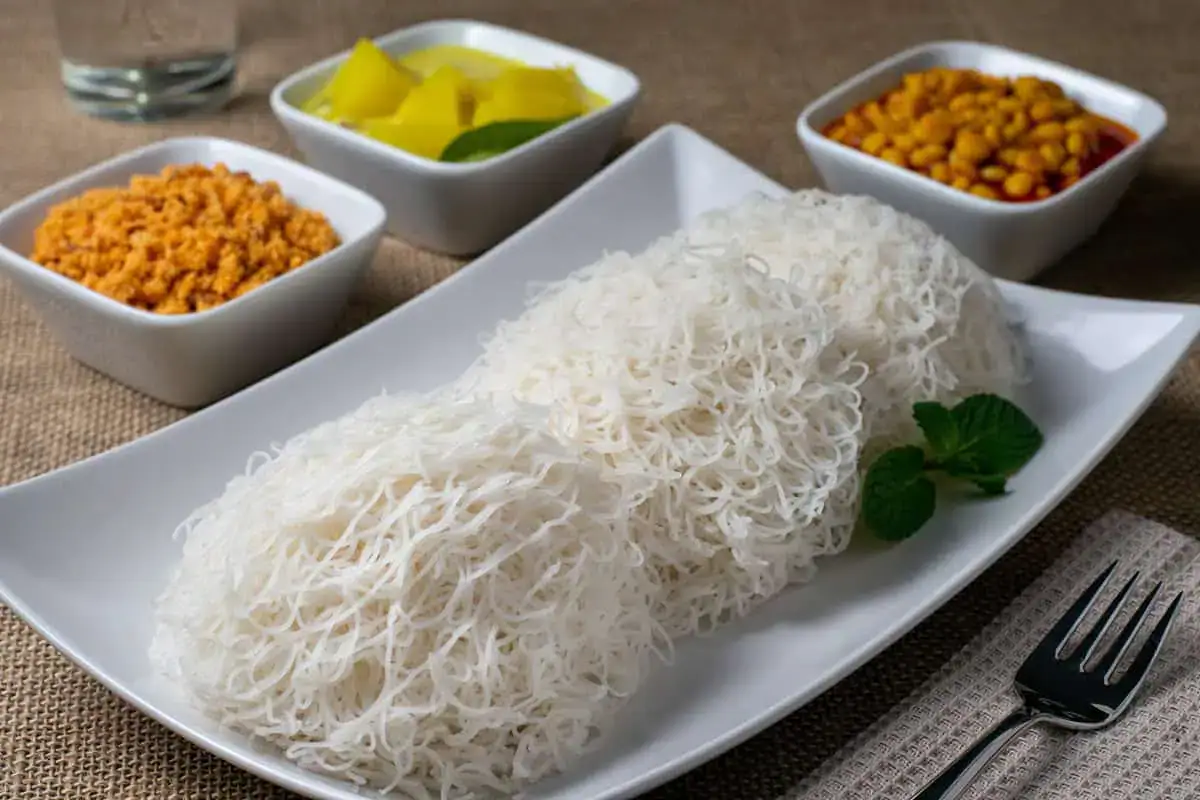

String Hoppers: a soft, lacy nest of steamed rice noodles that makes you taste the quiet beauty of Sri Lankan food. If you have never tried them, you might think of them as delicate, warm, and surprisingly simple. Many who taste them for the first time think: “How can something so plain taste so good?” In this post, I invite you to explore string hoppers (Idiyappam), how they fit into Sri Lankan cuisine, why they matter, and how you might try them in a way that honours tradition and delights your senses.
What You Should Know About Them.
What are String Hoppers?
They are a dish made by pressing rice-flour dough into thin strands, forming them into flat circular nests, then steaming them until soft. The result looks like a small nest or mat of loosely held rice strings. In Sri Lanka, they are known as “string hoppers,” while in Southern India and other regions, they are known as Idiyappam, noolappam, nool puttu, santhagai, ottu shavige, and more.
In straightforward meals, they replace plain rice or heavy breads. They offer a mild, neutral backdrop for bold curries, spicy sambols, or sweet coconut-milk sauces.
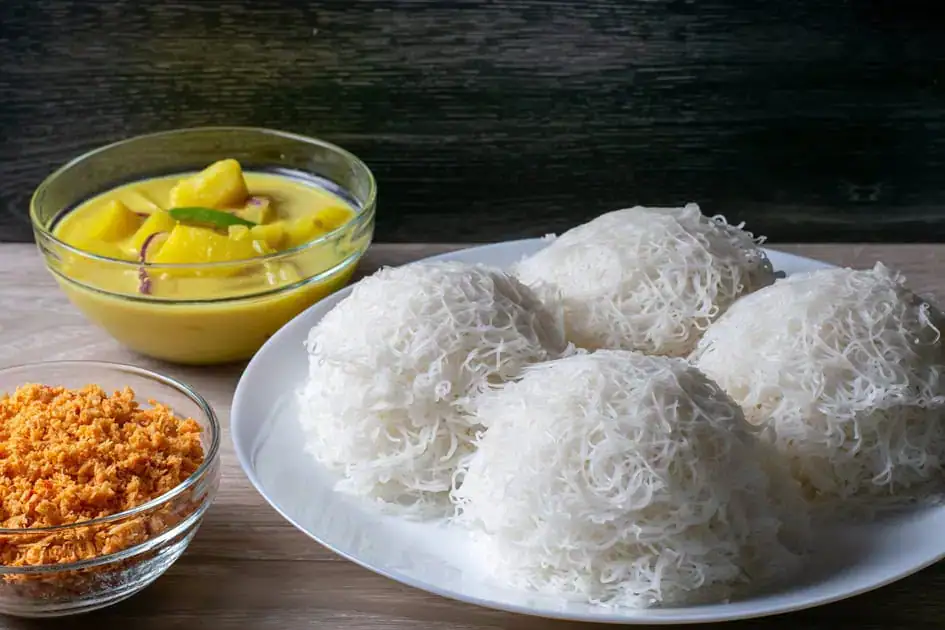
String Hoppers with Pol (Coconut) Sambol and Potato Curry (Photo: Kavinda F)
Where did they come from?
The roots of string hoppers lie in Southern India, especially Tamil Nadu and Kerala. There are records of similar rice-based noodle or steamed preparations in the ancient Tamil country as early as the 1st century AD, according to some food historians. Over centuries, migrants and cultural connections carried this method to Sri Lanka. There, the dish found a new identity as “string hoppers.”
Because the dish is tied to rice cultivation and simple ingredients, they became part of daily meals across families in Sri Lanka.
Why They Stand Out
String hoppers stand out for several reasons. Their texture feels light and airy. Their flavour stays neutral, making them a perfect canvas for more pungent tastes. They are often gluten-free because rice flour constitutes the base.
You get a soft food that fits well in a balanced diet. When you steam instead of frying foods, you avoid added fat. It is one reason many consider them a gentle choice for digestion or a simple, comforting meal.
Varieties and Alternative Names
They go by many names—in Southern India, Idiyappam, noolappam, noolputtu, santhagai, ottu shavige, among others. In Sri Lanka, “string hoppers” or occasionally “idiyaappa / idiappam” are common.
You might also find variations depending on the type of flour. The traditional choice is rice flour. Some cooks use white rice flour, others use red rice flour. Some even mix in other flours, such as millet (kurakkan/ragi) or wheat flour, especially when rice flour is scarce or when they want a different texture.
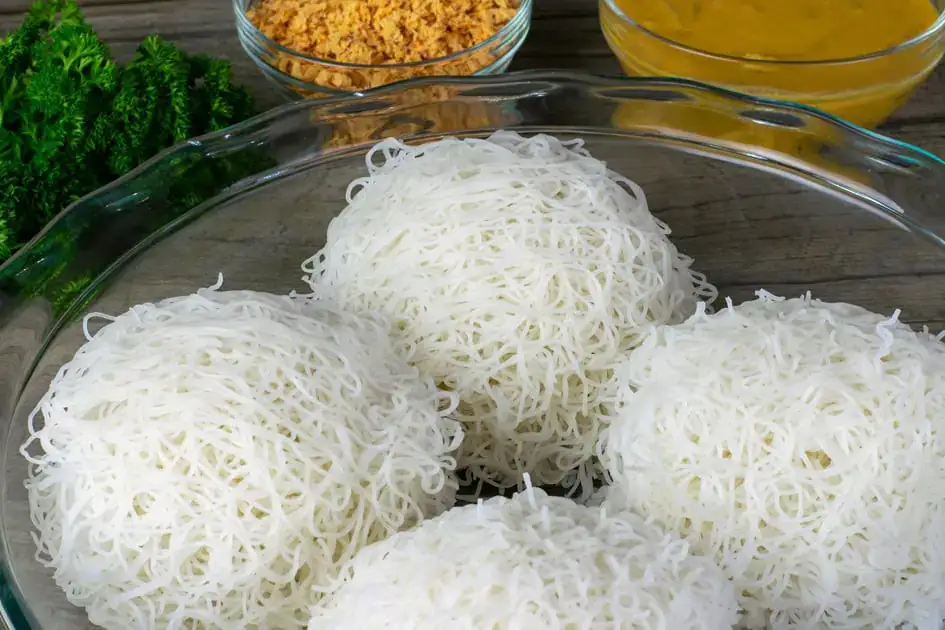
A Close View of String Hoppers (Photo: Kavinda F)
How People Serve and Eat Them
String hoppers appear in many meals. In Sri Lankan homes, they often show up at breakfast or dinner.
They rarely stand alone. On your plate, they usually come with a rich curry (chicken, fish, lentil, or vegetable), or with coconut-based sides — such as spicy sambols or coconut milk gravies.
For a sweeter take, some people serve them with grated coconut and jaggery or coconut milk sweetened with sugar.
Because they stay soft, they hold sauces and gravies well. You break off strands with your fingers and mix with the sides. This mixing helps each bite carry flavour, rather than eating plain noodles alone.
A Peek into the Plate: What You Might Eat
If you sit down to a typical string hopper meal in Sri Lanka, here is what you might find:
- A stack of two or three string hopper nests.
- A coconut-milk gravy such as kiri hodi (mild, rich).
- A spicy chutney or fresh sambol, often made with coconut, onions, and chillies (for example, pol sambol or seeni sambol in some homes).
- A curry: a fish or chicken curry, or a vegetarian curry (potato, lentil, vegetables) to balance flavours.
Because string hoppers themselves have a mild taste, the accents come from the sides.
How They Are Made
Making string hoppers takes some technique. Basic ingredients: rice flour, water, and salt. Some cooks add a bit of oil for a smoother texture.
Steps typically follow this pattern:
- Mix rice flour with salt.
- Pour hot (sometimes boiling) water over the flour, stir, and knead until you have a smooth dough. Some recipes add a little oil or ghee to avoid stickiness.
- Load the dough into a special press or mould (an idiyappam maker or a string-hopper press). Push the dough to extrude thin strands.
- Lay the strands in circular nests on a steaming mat, banana leaf, or greased plate.
- Steam for several minutes (usually 8–10 minutes) until the nests firm up but remain soft to the touch.
Millet-based or red-rice-flour versions exist. Some households use woven mats, others plastic mats, oiled plates or even bamboo steamers, depending on local tradition or convenience.
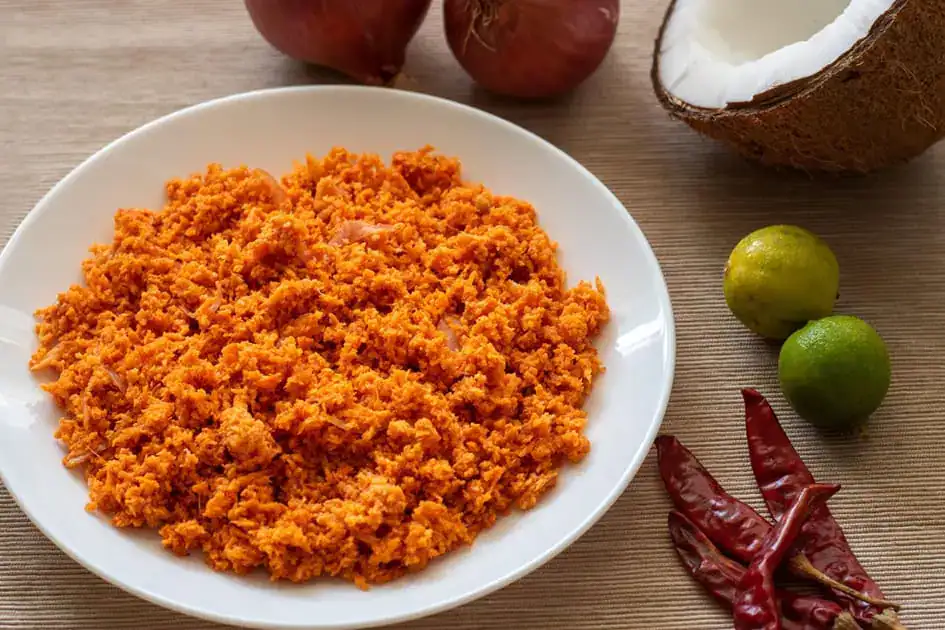
Pol (Coconut) Sambol – A good combination with String Hoppers (Photo: Kavinda F)
When People Eat
In Sri Lanka, string hoppers are a good breakfast option. They also appear in dinner settings.
They suit everyday meals. Many households include them in weekly meal routines.
Some people even use them in festival meals or when guests visit. Their mild taste makes them a versatile base for whatever curry or gravy you pair them with.
Where You Can Eat
You find string hoppers across Sri Lanka in both daily and travel settings. They appear in home kitchens, small local cafés, street food stalls, hotel breakfast buffets, and restaurants specialising in Sri Lankan cuisine. Many family-run eateries prepare them fresh in the morning or evening. Larger restaurants often serve them as part of set meals with curries and sambols. If you stay in a guesthouse or homestay, your host might prepare warm string hoppers for breakfast. They are easy to find in cities like Colombo, Kandy, Galle, and Jaffna, and they are also common in rural towns where traditional meals remain central to daily life.
Regional Differences and Variations
The main differences come from the flour used and the sides served with it. In Sri Lanka, people often use white or red rice flour. Some households use millet flour or mix rice with wheat or ragi to add variety.
In South India, the preparation might be finer: rice flour pressed into finer strands. In some areas, cooks make slight regional tweaks. In certain regions, it might be called nool puttu or sevai.
In Malaysia, Singapore, Indonesia, and other Southeast Asian contexts, relatives of string hoppers are known as putu mayam or putu mayang. There, they might be served sweet with coconut and palm sugar, or with local modifications.
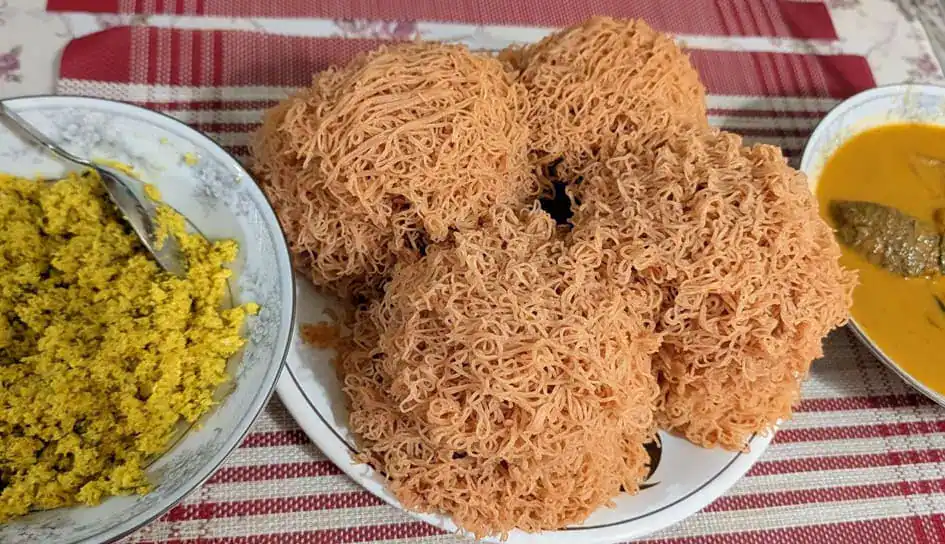
String Hoppers Made from red rice flour (Photo: Dennis Sylvester Hurd, CC BY 4.0)
Energy and Nutrition
Plain string hoppers are relatively light. A 100-gram serving may carry roughly 130–150 calories when made purely from rice flour, water, and salt.
They tend to be high in carbohydrates, low in fat, and modest in protein.
Because of their steam-based cooking and minimal added fat, they are easily digestible. That makes them a good option if you want something filling but light.
For balanced nutrition, pair them with protein-rich or vegetable-rich sides, such as lentil curry, egg curry, vegetable stews, or coconut sambol.
Tips for Tasting Them Right
To enjoy them the Sri Lankan way, try these ideas:
- Warm string hoppers are best. Steam them and eat them right away. Warm nests hold sauces better.
- Break off small strands rather than cutting. Mix with curry or sambol, so each bite carries flavour.
- If you want a sweet taste, add grated coconut and jaggery or sweetened coconut milk.
- For savoury meals, use coconut milk gravies, fresh sambol, or spicy curry.
Smart Advice if You Make or Order
If you cook them at home:
- Use fresh rice flour. Slightly roasted rice flour helps produce soft, non-sticky noodles.
- Use hot or boiling water to make the dough. Cold water may produce a tougher texture.
- Lightly grease the press or mats to prevent sticking. Use banana leaves or traditional mats if possible for aroma and texture.
If you order string hoppers:
- Ask for them freshly steamed. Old or leftover string hoppers may turn sticky and lose softness.
- Pair them with a flavourful curry or chutney. Don’t expect them to taste strong on their own.
- Try contrasting tastes. For example, coconut sambol or spicy curry with mild string hoppers.
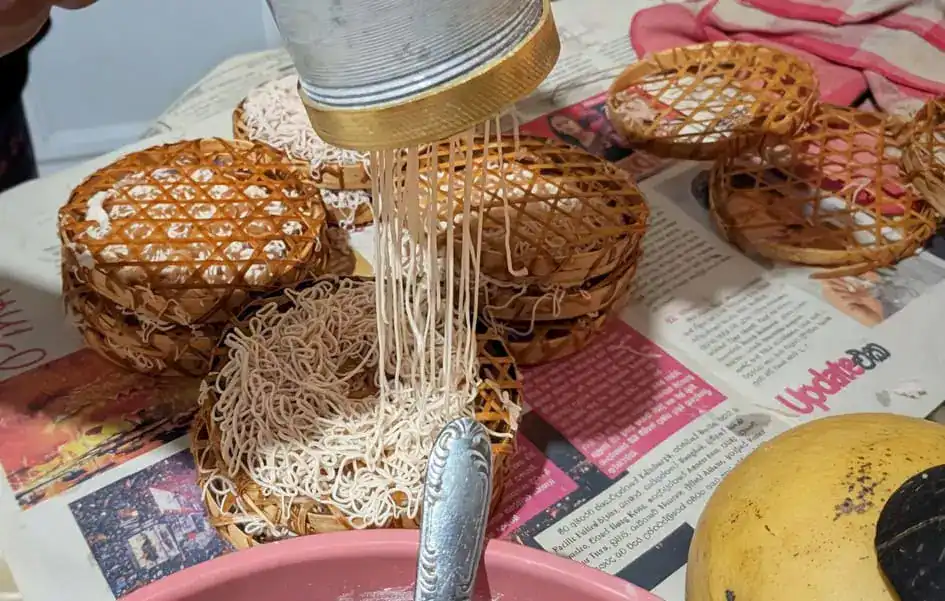
Making String Hoppers (Photo: Dennis Sylvester Hurd, CC BY 4.0)
Where They Sit Among Sri Lankan Dishes
They are a staple, everyday dish in Sri Lankan cuisine. They sit alongside items such as rice and curries, flatbreads, or hoppers and serve as a base for meals.
They also show versatility. You may eat them for breakfast, dinner, or a snack. You may treat them as light meals or combine them with richer sides for hearty meals.
Some creative cooks even twist string hoppers into new dishes — like sweet versions or string hopper biryani, string hopper kottu, or pair them with unconventional sides beyond traditional curries.
Why You Should Try Them
If you want a food that feels light but satisfying, they offer a gentle balance. Their mild taste leaves room for curries, sambols or sauces to shine. Their steamed nature makes them easy on the stomach. Their roots cross cultures and geographies: from Tamil Nadu and Kerala kitchens to Sri Lankan homes.
If you explore Sri Lankan cuisine, you will find that string hoppers combine tradition and practicality. They connect meals to history, to rice-growing rhythms, to simple ingredients, to everyday nourishment.
If you cook at home, you get a hands-on experience: mixing dough, pressing strands, steaming, and serving fresh. If you eat out, you get a glimpse of tradition in a plate.
String hoppers stand without fuss. They do not shout flavour. They whisper comfort.
Try them to feel how simple ingredients meet craft. Try them for a taste of something humble and wholesome. Try them to understand Sri Lankan dishes beyond the well-known names. You might find yourself returning to their soft nests again and again.
Is Sri Lanka Worth Visiting? Yes, of course. There are many reasons Sri Lanka should be on your bucket list. Sri Lankan cuisine is definitely one of them.
Other Popular Sri Lankan Foods and Drinks:
Featured image: String Hoppers/Idiyappam (Photo by Kavinda F)

I am a Sri Lankan medical doctor who spends my free time travelling, exploring new destinations, and documenting the beauty of the island I call home. I have journeyed across almost every corner of Sri Lanka with my wife and daughter — from wildlife parks and misty mountains to ancient cities, deep forests, rugged landscapes, and quiet beaches.
Travel is not just a hobby for me — it’s a way of life. I love nature, enjoy road trips, and find joy in wildlife photography. I also read widely about tourism, travel trends, and destination culture. Through my writing, I aim to help travellers experience Sri Lanka through real stories, meaningful insights, and honest recommendations — the same way I explore it with my own family.