
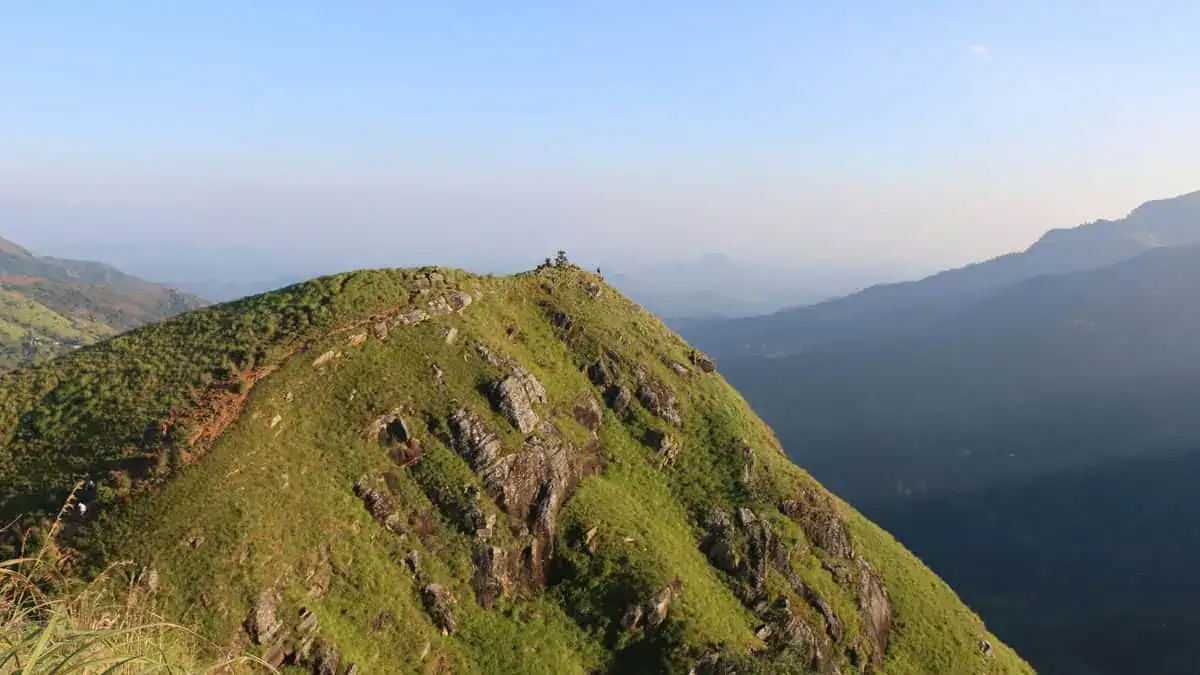

Sri Lanka draws visitors with popular beaches, nature & wildlife, and cultural heritage. Yet hiking and trekking in Sri Lanka offer a deeper and more personal experience. You walk through tea plantations, forest trails, mountain ridges, and ancient pathways used for centuries. Many foreign travellers arrive without a clear plan. They are unsure which routes suit their level, when to go, or how to prepare. This guide answers those questions. You will learn where to hike and trek, and how to plan your journey with clarity and confidence.
If you are new to Sri Lanka, we recommend reading the ultimate Sri Lanka travel guide for first-time visitors.
Why Hiking and Trekking in Sri Lanka Attract Global Travellers
Sri Lanka offers rare diversity within a small area. You travel from coastal plains to cool central highlands within a few hours. It allows you to combine different hiking and trekking experiences in a single trip.
The Sri Lanka Tourism Development Authority highlights nature tourism as a key focus. Data from tourism reports shows steady growth in adventure travel. Hiking and trekking are among the most popular outdoor activities among international visitors. Many travellers now seek active experiences rather than passive sightseeing.
You find a wide range of landscapes across the island. These include rainforest, dry forest, grassland, tea estates, and mountain cloud forest. Each region gives you a different experience. You may start your day in misty hills and end it in warm lowland forest.
Sri Lanka also combines nature with culture. You climb sacred peaks, explore ancient cities, and pass through working plantations. This combination adds depth to each hike or trek. You are not only walking through nature. You are also moving through history and daily life.
If you are interested in mountains, hiking, and trekking, we recommend reading about the mountains in Sri Lanka.
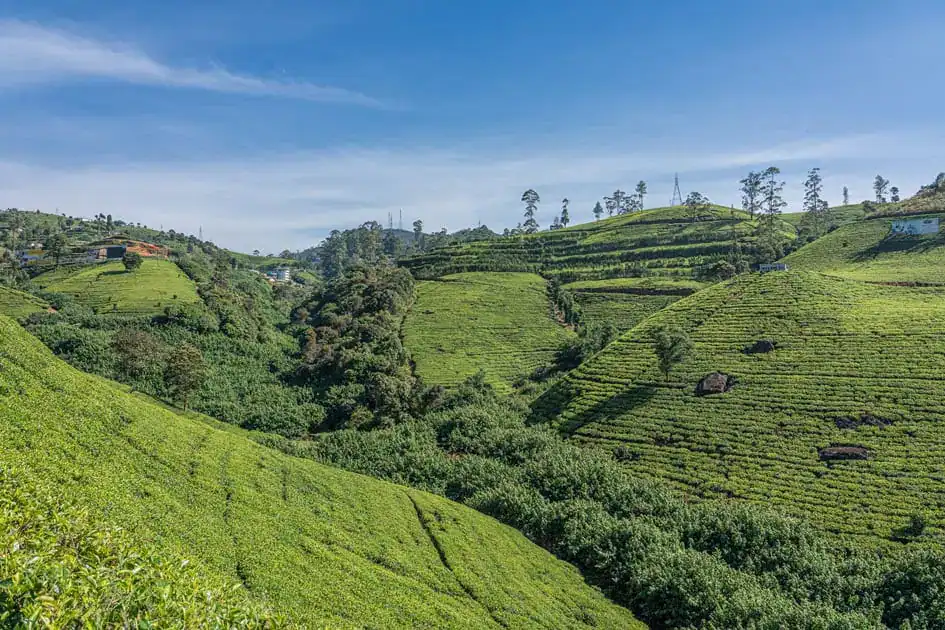
Tea Hills – Nuwara Eliya (Photo: A.Savin)
Hiking and Trekking in Sri Lanka: What You Need to Know
You need to understand the difference between hiking and trekking before planning your trip.
Hiking refers to shorter walks. These routes take a few hours or a full day. Trails are often marked and close to towns. You return to your accommodation the same day. Popular hikes include Little Adam’s Peak, Horton Plains, and Pidurangala Rock.
Trekking involves longer journeys. These routes take several days and pass through remote terrain. You may need a guide, camping gear, or advanced planning. Examples include the Knuckles Mountain Range and the Pekoe Trail.
Sri Lanka supports both styles. Beginners enjoy short hikes with clear paths and strong views. More experienced travellers choose multi-day treks in less developed regions. This flexibility makes the country suitable for a wide range of travellers.
Best Time for Trekking and Hiking in Sri Lanka
The weather has a strong impact on your overall experience. Sri Lanka has two monsoon systems. Rainfall patterns differ across regions.
December to April is the best period for the South and hill country. It includes Ella, Horton Plains, and Adam’s Peak. During this time, trails are drier, and visibility is better.
May to September suits the East and parts of the central highlands. Some trekking routes in the Knuckles Range also work during this period, depending on local conditions.
Heavy rain affects trail safety. Wet rocks and muddy paths increase the risk of slipping. Cloud cover reduces visibility at viewpoints. Always check weather forecasts before starting a hike or trek.
It is recommended to read about the best time to visit Sri Lanka.
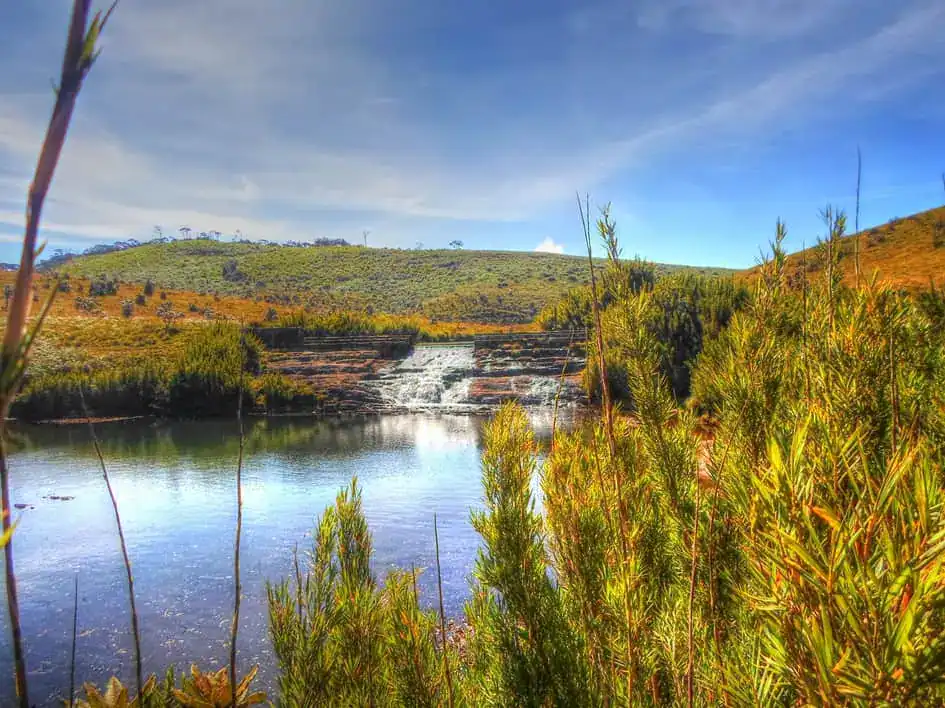
A Stream – Horton Plains National Park (Photo: Iamdjceylon, CC BY-SA 4.0)
Top Hiking Routes in Sri Lanka
These hiking routes are ideal for travellers who want shorter experiences with strong views and easy access.
Adam’s Peak, Sri Pada
Adam’s Peak rises to 2,243 metres. It is one of the most important pilgrimage sites in Sri Lanka. The climb includes thousands of steps. Pilgrims begin at night to reach the summit at sunrise.
The experience combines physical effort with cultural meaning. During the main season from December to May, the path is active and well-supported with rest stops and lights.
- AllTrails Map – Adam’s Peak (9.3 km)
Little Adam’s Peak, Ella
Little Adam’s Peak offers one of the easiest hikes in Sri Lanka. The trail starts near Ella and passes through tea plantations. You reach the summit in about 45 minutes.
The path is clear and suitable for beginners. The summit gives wide views of the surrounding hills. Sunrise and sunset are the best times to visit.
Pidurangala Rock
Pidurangala sits close to Sigiriya. The hike takes around 30 minutes. The final section involves climbing over rocks.
The summit offers one of the best views in Sri Lanka. You see Sigiriya Rock rising from the forest. Many travellers choose this hike for sunrise because it’s less crowded.
- AllTrails Map – Pidurangala Rock (1.4 km)
Sigiriya Rock Fortress
Sigiriya is both a historical site and a hiking experience. You climb a series of staircases attached to a large rock formation. The site dates back to the 5th century.
The official Sri Lanka tourism site lists Sigiriya as a key attraction. You pass ancient gardens, frescoes, and stone structures on your way to the top. The view from the summit covers a wide area of forest and plains.
- AllTrails Map – Sigiriya Rock (2.4 km)
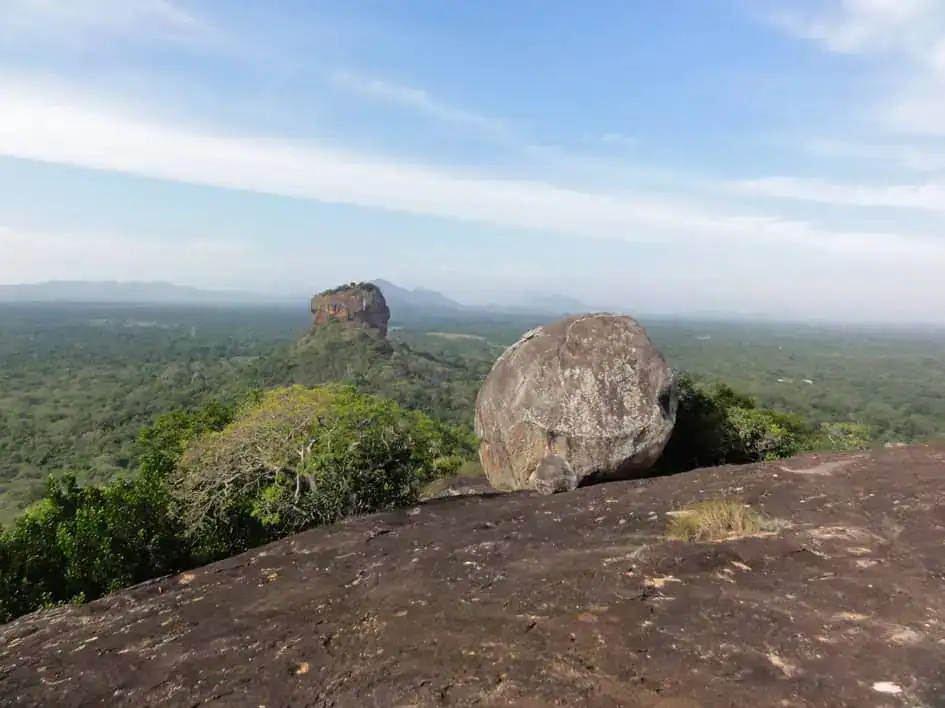
The View of Sigiriya Rock Fortress from the Pidurangala Rock (Photo: Westbeachzero, CC BY-SA 3.0)
Horton Plains and World’s End
Horton Plains National Park lies over 2,000 metres above sea level. The World’s End trail covers about 9 kilometres. It is a UNESCO World Heritage Site.
The main viewpoint drops nearly 870 metres. Clear mornings offer the best visibility. Most visitors start early to avoid mist, which often forms later in the day.
Ella Rock
Ella Rock offers a more challenging hike compared to Little Adam’s Peak. The route begins near railway tracks and continues through forest and tea fields.
The trail is not well-marked. Many travellers hire local guides to avoid getting lost. The summit provides wide views across the Ella Gap.
- AllTrails Map – Ella – Ella Rock (9.7 km)
- AllTrails Map – Ella Rock Trail (5.6 km)
- AllTrails Map – Ella Rock Sunrise Viewpoint (3.4 km)
- AllTrails Map – Amba to Ella via Ella Rock (8.7 km)
Kaludiya Pokuna Trail
Kaludiya Pokuna is less crowded. The trail runs through the forest near ancient ruins. This area attracts birdwatchers and nature lovers.
The route remains quiet compared to more popular hikes. It makes it a good choice for travellers who prefer peaceful surroundings.
Top Trekking Routes in Sri Lanka
These trekking routes are suited to travellers who want longer, more immersive experiences.
The Pekoe Trail
The Pekoe Trail stretches about 300 kilometres across 22 stages. It runs through Sri Lanka’s tea country, connecting Kandy, Nuwara Eliya, and Ella.
You walk through plantations, villages, and mountain paths. The route is divided into sections. You choose stages based on your time and fitness level.
Travel reviews and tourism sources identify the Pekoe Trail as one of Asia’s leading long-distance trails. It reflects Sri Lanka’s colonial tea history and natural beauty. It is one of the best ways to explore Sri Lanka’s tea heritage.
Stage 1–4: Kandy to Pussellawa
- AllTrails Map – The Pekoe Trail Stage 01: Hanthana To Galaha (13 km)
- AllTrails Map – The Pekoe Trail Stage 02: Galaha To Loolkandura (15.3 km)
- AllTrails Map – The Pekoe Trail Stage 03: Loolkandura To Tawalantenne (18.7 km)
- AllTrails Map – The Pekoe Trail Stage 04: Tawalantenne to Pundaluoya (14.2 km)
Stage 5–9: Pussellawa to Kotmale
- AllTrails Map – The Pekoe Trail Stage 05: Pundaluoya To Watagoda (14.3 km)
- AllTrails Map – The Pekoe Trail Stage 06: Watagoda To Kotagala (15.6 km)
- AllTrails Map – The Pekoe Trail Stage 07: Kotagala To Norwood (By-Pass Hatton) (16.3 km)
- AllTrails Map – The Pekoe Trail Stage 08: Norwood to Bogawantalawa (15.4 km)
- AllTrails Map – The Pekoe Trail Stage 09: Bogawantalawa To Dayagama (16.9 km)
Stage 10–14: Kotmale to Hatton and Dikoya
- AllTrails Map – The Pekoe Trail Stage 10: Dayagama To Horton Plains (15.6 km)
- AllTrails Map – The Pekoe Trail Stage 11: Horton Plains To Udaweriya (13.2 km)
- AllTrails Map – The Pekoe Trail Stage 12: Udaweriya To Haputale (17.5 km)
- AllTrails Map – The Pekoe Trail Stage 13: Haputale To St. Catherine (13.7 km)
- AllTrails Map – The Pekoe Trail Stage 14: St. Catherine (Lipton Seat) To Makulella (9.5 km)
Stage 15–18: Hatton to Nuwara Eliya
- AllTrails Map – The Pekoe Trail Stage 15: Makulella To Ella (9.7 km)
- AllTrails Map – The Pekoe Trail Stage 16: Ella To Demodara (8.9 km)
- AllTrails Map – The Pekoe Trail Stage 17: Demodara To Hali-Ela (13.4 km)
- AllTrails Map – The Pekoe Trail Stage 18: Hali-Ela To Ettampitiya (13.5 km)
Stage 19–22: Nuwara Eliya to Horton Plains and Ohiya
- AllTrails Map – The Pekoe Trail Stage 19: Ettampitiya To Loonuwatte (19.5 km)
- AllTrails Map – The Pekoe Trail Stage 20: Loonuwatte To Uda Pussellawa (12.6 km)
- AllTrails Map – The Pekoe Trail Stage 21: Uda Pussellawa To Kandapola (17.2 km)
- AllTrails Map – The Pekoe Trail Stage 22: Kandapola to Pedro (10.9 km)
Knuckles Mountain Range
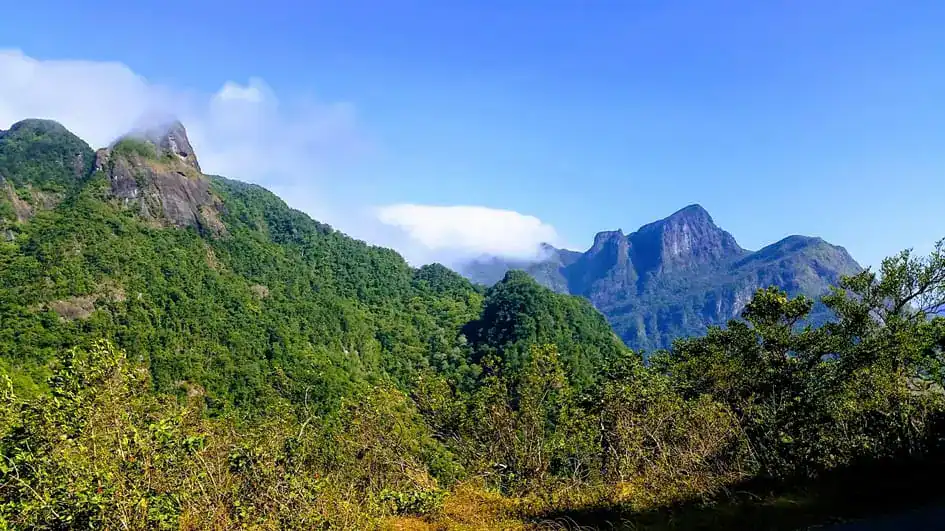
A View of Knuckles Mountain Range (Photo: Ruwangiudawattage, CC BY-SA 4.0)
The Knuckles Mountain Range is one of the UNESCO World Heritage sites in Sri Lanka. The region includes cloud forest, waterfalls, and remote villages.
Treks range from single-day walks to multi-day journeys. Trails vary in difficulty. The terrain can be complex, so guides are recommended.
This region supports rich biodiversity. You encounter endemic plants and animals along the way.
- AllTrails Map – Knuckles 5 Peak Trail (7.7 km)
- AllTrails Map – Lebonon Estate to KMP Hut (5.8 km)
- AllTrails Map – Corbett’s Gap (11.3 km)
- AllTrails Map – Kandasamigala (5.1 km)
Belihuloya to Horton Plains Trek
This trekking route connects the lowland forest with the highland grassland. You pass rivers, waterfalls, and open plains.
The trek usually takes two to three days. Many eco-tour operators include this route in guided trekking packages.
Kirigalpoththa Peak
Kirigalpoththa (2,388 m) is the second-highest mountain in Sri Lanka. The trail begins near Horton Plains.
You walk through dense forest and open grassland. The route is less crowded than the route to Adam’s Peak. Weather conditions change quickly at higher elevations.
- AllTrails Map – Kirigalpotta (10.8 km)
Riverston and Pitawala Pathana
Riverston offers cooler temperatures and scenic views. Pitawala Pathana features open grassland and unusual rock formations.
You find both short and extended trekking routes in this area. The region is less developed for tourism, which adds to its appeal.

Mini World’s End – Pitawala Pathana (Photo: Nalaka Priyantha)
Sinharaja Rainforest
Sinharaja is a UNESCO-listed rainforest. It is one of the most important biodiversity hotspots in Sri Lanka.
Trekking routes pass through dense jungle. Guides are required for most trails. You see endemic birds, reptiles, and plant species.
The environment is humid, and the terrain is often wet. Proper preparation is essential for this trek.
Some routes receive less attention but offer strong experiences.
Haputale and Lipton’s Seat
These trails run through tea plantations. You walk along paths used by estate workers. The viewpoint at Lipton’s Seat offers wide views across several provinces.
This area reflects Sri Lanka’s tea heritage. It provides a mix of culture and nature.
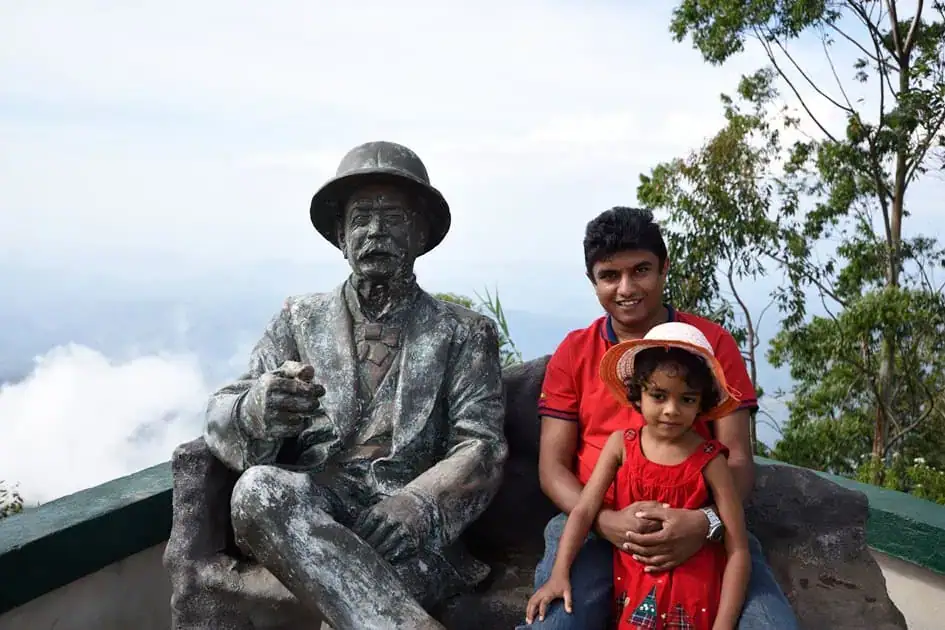
With my daughter, Nethuli – Lipton’s Seat, Haputale
Single Tree Mountain, Nuwara Eliya
This short hike gives a quieter option near Nuwara Eliya. The route is less crowded than other viewpoints.
The summit provides clear views of the surrounding hills and town.
Badulla Region Trails
Badulla offers waterfalls, valleys, and rural landscapes. Tourism data shows increasing interest in this region among repeat visitors.
These trails are still developing. It makes them suitable for travellers seeking new, less crowded routes.
Suggested Itineraries for Hiking and Trekking in Sri Lanka
Planning your route helps you use your time well.
7-Day Hiking Plan
Start in Ella. Hike Little Adam’s Peak and Ella Rock. Travel to Horton Plains for the World’s End trail. Continue to Sigiriya. Climb Sigiriya Rock and Pidurangala.
10 to 14-Day Hiking and Trekking Plan
Begin in Kandy. Walk selected stages of the Pekoe Trail. Travel to the Knuckles Mountain Range for a multi-day trek. Continue to Ella for shorter hikes. End your trip with a rainforest trek in Sinharaja.
These itineraries combine hiking and trekking with cultural and natural highlights.
Find the best Sri Lanka itineraries for your travel season.

Kirigalpoththa Trail (Photo: Chamrith, CC BY-SA 4.0)
How to Prepare for Hiking and Trekking in Sri Lanka
Good preparation shapes your experience. Sri Lanka offers a wide range of conditions. You face heat in the lowlands, cool air in the mountains, and high humidity in rainforest areas. You need to plan for each environment.
Start with your fitness level. Choose routes that match your ability. Short hikes such as Little Adam’s Peak suit beginners. Multi-day treks in the Knuckles Range require stamina and planning.
Book accommodation close to trailheads when possible. It helps you start early and avoid transport delays. Many popular hiking areas, such as Ella and Sigiriya, offer easy access to trails.
Check entry requirements for parks and protected areas. Horton Plains and Sinharaja require permits and entrance fees. Opening times are strict. Arrive early to make full use of daylight.
Hiring a guide improves your experience on remote trails. Guides help you stay on route, understand the environment, and manage safety risks. In areas such as Knuckles and Sinharaja, local knowledge is essential.
Gear and Packing Essentials for Hiking and Trekking in Sri Lanka
You need the right gear to stay safe and comfortable. Pack light but pack smart.
Clothing
Choose breathable and quick-drying fabrics. Avoid heavy cotton. Conditions change fast, especially in the hills.
Bring:
- Lightweight shirts and trousers.
- A light jacket for cooler areas.
- A rain jacket for sudden showers.
- Extra socks to keep your feet dry.
Footwear
Wear strong hiking shoes with a good grip. Trails include mud, loose rocks, and uneven ground. Avoid new shoes. Break them in before your trip.
Backpack
Use a comfortable daypack for hikes. For trekking, use a larger pack with proper support. Keep weight balanced.
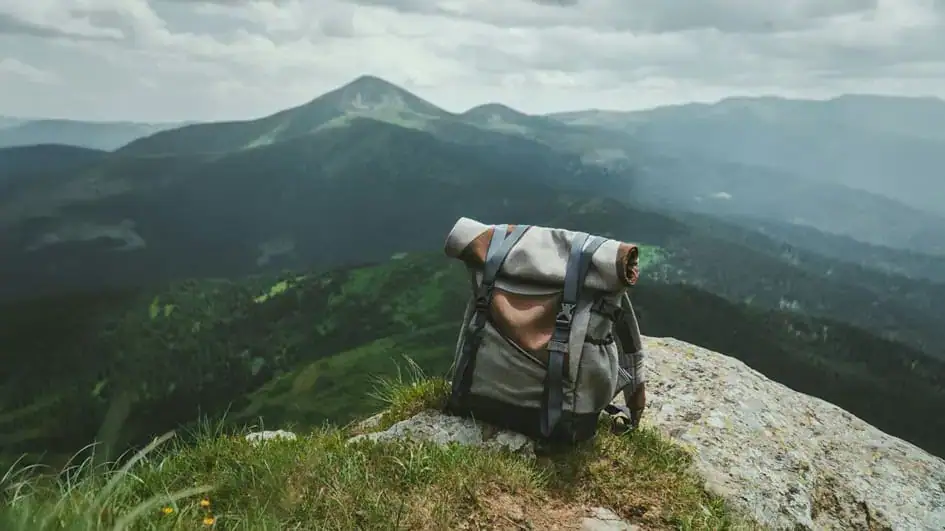
A travel bag (Photo: Yaroslav Konyk, via Unsplash)
Hydration and Food
Carry enough water for the full route. Heat and humidity increase fluid loss. Refill points are limited on many trails.
Bring simple snacks:
- Nuts
- Fruit
- Energy bars
Navigation Tools
Carry both digital and physical navigation tools. Mobile signal is weak in many areas.
First Aid Kit
Keep a small kit with basic items:
- Bandages
- Antiseptic wipes
- Pain relief
- Insect repellent
Sun Protection
Use sunscreen, sunglasses, and a hat. Even cloudy conditions cause sun exposure at high altitudes.
Navigation is key to hiking and trekking in Sri Lanka. Some trails are not well-marked.
Download offline maps before you start. Apps such as Maps.me and AllTrails help you track routes. These apps let you navigate without an internet connection.
Use GPS features to confirm your position. Keep your phone charged. Carry a power bank for longer treks.
Ask locals for directions when needed. In rural areas, people are helpful and familiar with nearby trails.
Take note of landmarks as you walk. It helps you retrace your steps if needed.
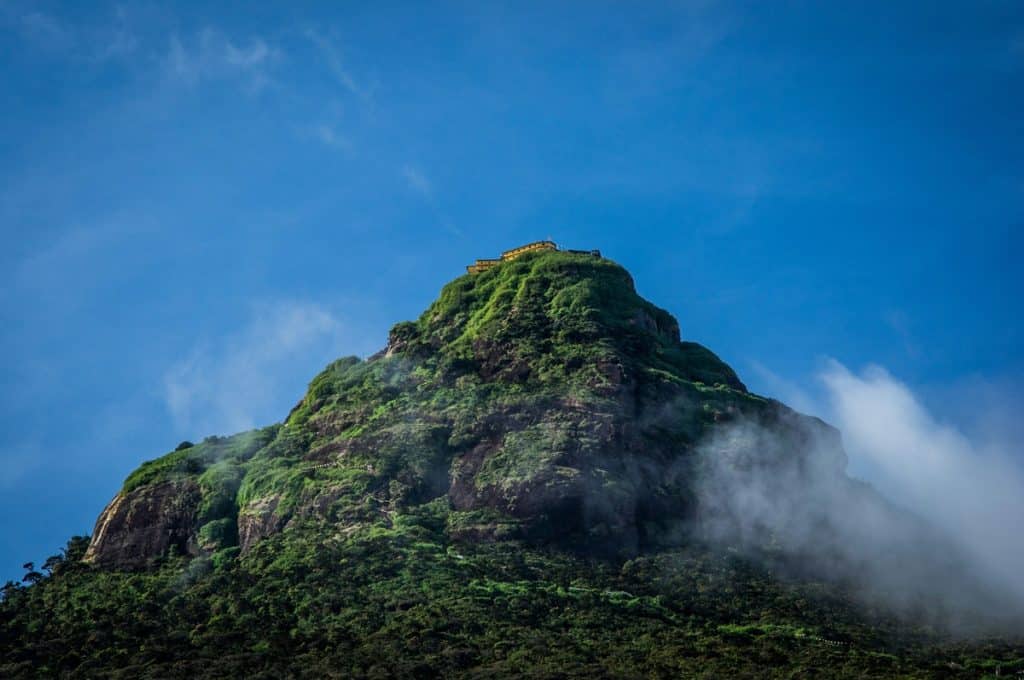
Adam’s Peak (Photo: Vlada, via Unsplash)
Connectivity and Staying Connected
Mobile coverage varies across Sri Lanka. Towns and main roads have good signal strength. Remote trails do not.
Buy a local SIM card on arrival. Providers such as Dialog and Mobitel offer good coverage in most areas.
Inform someone about your plans before starting a trek. Share your route and expected return time.
For longer treks, consider a local guide who understands the terrain and communication challenges.
Do not rely only on mobile data. Always prepare for offline navigation.
Safety Guidelines for Hiking and Trekking in Sri Lanka
Safety and comfort depend on awareness and preparation.
- Check weather conditions before each hike or trek.
- Start early. Morning hours offer better weather and visibility. You avoid heat and afternoon rain.
- Carry enough water and food for the entire route. Dehydration is common in tropical climates.
- Wear strong footwear with a good grip. Watch your footing. Trails can be uneven and slippery.
- Stay on marked paths where possible. Avoid shortcuts through dense forest.
- Be cautious around wildlife. Sri Lanka is home to elephants, snakes, and insects. Keep a distance and avoid sudden movement. Respect wildlife and natural habitats.
- Do not hike alone in remote areas. A partner or a guide improves safety.
- Check local advice before entering forest reserves. Conditions change due to weather and wildlife movement.
- Avoid hiking after dark. Visibility drops and risks increase.
Responsible and Sustainable Trekking in Sri Lanka
Sri Lanka promotes sustainable tourism. You play a role in protecting the environment.
Follow basic principles:
- Do not leave waste behind.
- Carry reusable water bottles.
- Avoid plastic where possible.
- Stay on designated trails.
Respect local communities. Many trails pass through villages and farmland. Ask permission if needed.
Support local guides and small businesses. It helps local economies and promotes responsible tourism.
Avoid disturbing wildlife. Do not feed or touch animals, or damage plants.
Use eco-friendly accommodation where available. Many lodges in Ella, Knuckles, and Sinharaja focus on sustainability.
Respect cultural sites. Dress appropriately when visiting temples or sacred locations such as Adam’s Peak.
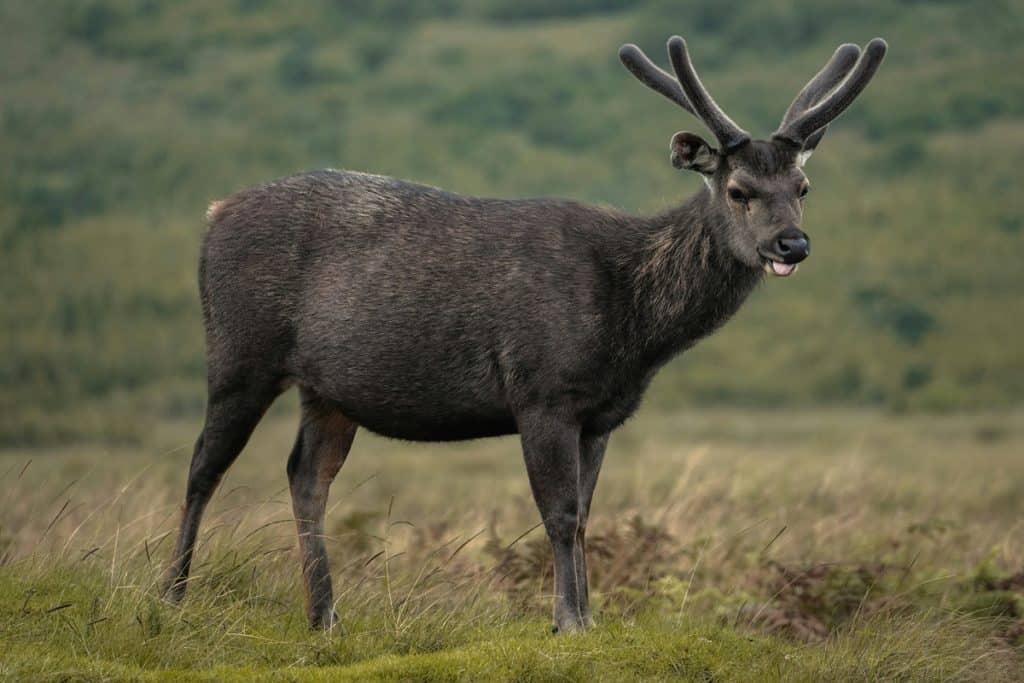
Horton Plains National Park – Nuwara Eliya (Photo: Anupa Uthsara, via Unsplash)
Costs and Budgeting for Hiking and Trekking in Sri Lanka
Sri Lanka offers options for different budgets.
Hiking costs are generally low. Most trails are free or have small entrance fees.
Example costs:
- Horton Plains entry fee for foreign visitors is higher than the local rates. You can buy entry tickets for Horton Plains through the official Wildlife Park Permits Reservation eService.
- The Sigiriya entrance fee is one of the highest in the country.
- Pidurangala has a lower fee.
See the price and buy entry tickets for Sigiriya and Pidurangala through the official page.
Trekking costs depend on duration and support:
- Guide fees vary by region and experience.
- Multi-day treks include food, transport, and accommodation.
- You should buy a pass for each stage of the Pekoe trail.
Budget travellers can plan self-guided hikes in accessible areas. Trekkers in remote regions should allocate funds for guides and permits.
Transport costs are moderate. Trains and buses connect major towns. Tuk-tuks help you reach trailheads. We recommend reading about transport in Sri Lanka.
Food and accommodation remain affordable compared to many destinations. It is advisable to read about authentic Sri Lankan food & drinks, as well as how to Choose Where to stay in Sri Lanka.
Common Mistakes to Avoid
Many travellers make simple mistakes when planning hiking and trekking in Sri Lanka.
- Starting late in the day leads to poor visibility and time pressure.
- Underestimating humidity leads to dehydration.
- Wearing unsuitable footwear increases the risk of injury.
- Relying solely on online maps can lead to confusion on unmarked trails.
- Ignoring local advice leads to safety issues.
- Skipping guides in complex areas leads to navigation problems.
You avoid these issues with proper planning and awareness.
What Makes Trekking in Sri Lanka Unique
- Sri Lanka offers a rare mix of features within a small space.
- You hike through UNESCO World Heritage sites such as Sigiriya and Sinharaja.
- You climb sacred mountains such as Adam’s Peak.
- You walk through tea plantations shaped by colonial history.
- You explore remote mountain ranges such as Knuckles.
- Few countries offer this level of diversity in a compact area.
- You experience changing landscapes, climates, and cultures within short travel distances. It makes Sri Lanka one of the most efficient destinations for hiking and trekking.
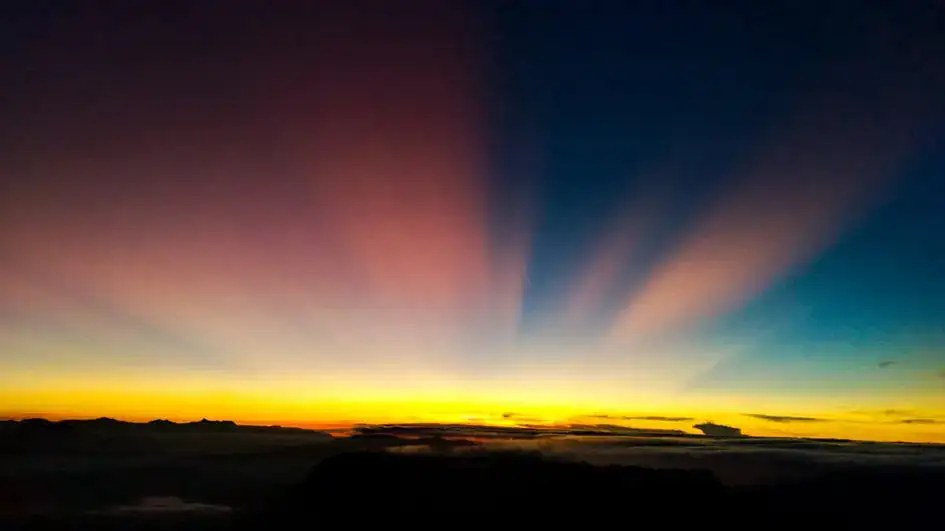
Sunrise from Adam’s Peak (Photo: Thilini Maheshika, CC BY-SA 4.0)
Final Thoughts on Hiking and Trekking in Sri Lanka
Hiking and trekking in Sri Lanka offer more than scenic views. You experience nature, culture, and daily life firsthand. The island provides options for every traveller. Short hikes suit beginners. Multi-day treks challenge experienced adventurers.
You now have a clear understanding of routes, seasons, safety, and preparation. You know how to plan your trip and avoid common mistakes. You understand how to travel responsibly and support local communities.
Trekking in Sri Lanka continues to grow as more travellers seek active and meaningful experiences. The country responds with improved trails, better access, and a strong focus on sustainability.
The next step is yours. Choose your route, prepare well, and experience Sri Lanka on foot.
Sources and References:
- Sri Lanka Tourism Development Authority (SLTDA).
- Sri Lanka Tourism.
- The Pekoe Trail Official Website.
- Department of Wildlife Conservation, Sri Lanka.
- UNESCO World Heritage Centre.
- AllTrails.
- Market data and projections related to hiking and trekking tourism in Sri Lanka – Future Market Insights.
- Sri Lanka Railways.
Featured image: Ella, Sri Lanka (Photo: Petr Sevcovic, via Unsplash)

I am a Sri Lankan medical doctor who spends my free time travelling, exploring new destinations, and documenting the beauty of the island I call home. I have journeyed across almost every corner of Sri Lanka with my wife and daughter — from wildlife parks and misty mountains to ancient cities, deep forests, rugged landscapes, and quiet beaches.
Travel is not just a hobby for me — it’s a way of life. I love nature, enjoy road trips, and find joy in wildlife photography. I also read widely about tourism, travel trends, and destination culture. Through my writing, I aim to help travellers experience Sri Lanka through real stories, meaningful insights, and honest recommendations — the same way I explore it with my own family.