

Sri Lanka draws millions of visitors each year. Many come for the popular beaches and wildlife & nature. Yet the real surprise waits inland. The mountains in Sri Lanka offer cooler air, rich culture, and some of the best hiking routes in Asia. You see sunrise above clouds, walk through tea fields, and reach viewpoints with little effort. This guide answers one key question. Why do foreign travellers choose hiking and trekking in Sri Lanka, and which mountains should you visit first?
If you plan a trip and want more than resorts, this guide gives you clear answers. You will learn where to go, what to expect, and how to plan each hike.
If you are new to Sri Lanka, read the ultimate Sri Lanka travel guide for first-time visitors.
Why Travellers Choose Mountains in Sri Lanka
Tourism data shows a clear trend. Sri Lanka Tourism Development Authority reports steady growth in nature and adventure travel. Hiking and trekking in Sri Lanka draw a large share of international visitors. Research suggests almost four out of five trekking visitors come from overseas. It shows strong demand from foreign travellers.
The reason is simple. Sri Lanka offers a variety in a small space. You move from coast to mountains within hours. You wake up at the beach and reach a cool hillside by afternoon. Few countries offer this level of contrast in such short distances.
You also gain access to different types of travel experiences in one trip:
- Ancient cities & cultural sites
- Tea heritage & plantations
- Cloud forests
- Wildlife parks
- Mountain viewpoints
This mix drives longer stays. Travellers add extra days to explore the central highlands. Reviews and itineraries from travel platforms show that most first-time visitors include at least one mountain destination.
Another factor drives demand. The rise of visual travel content. Photos of Ella, Adam’s Peak, and Sigiriya spread across social platforms. Travellers want those views. Sri Lanka delivers them with low effort.
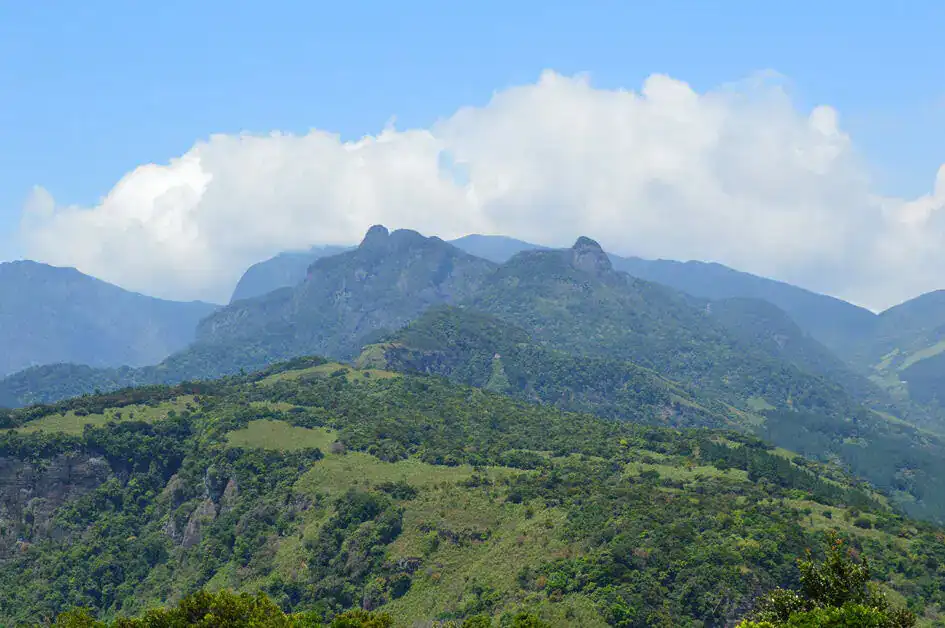
The View of Knuckles Mountains Range from Manigala (Photo: Nalaka Priyantha)
What Makes Trekking in Sri Lanka Different
Trekking in Sri Lanka feels different from other mountain regions. You do not need advanced skills. You do not need special gear. Most hikes stay short and accessible. It suits travellers with limited time.
Here is what sets the experience apart:
Short distances
You reach major hiking spots without long travel days. Ella, Kandy, and Nuwara Eliya connect by train and road.
Clear trails
Many routes follow established paths. Local guides help where needed.
Diverse scenery
You move through forests, grasslands, tea estates, and ridges within one hike.
Cultural depth
You meet locals, pass temples & religious landmarks, and see daily life along the trails.
Mild conditions
The climate stays cooler in the highlands. Early mornings offer the best weather.
This combination makes trekking in Sri Lanka ideal for first-time hikers and casual travellers.
The Most Popular Mountains in Sri Lanka
Now look at the places travellers choose most often. These mountains appear in official tourism material, travel guides, and real itineraries.
Adam’s Peak, Sri Lanka’s Most Iconic Mountain
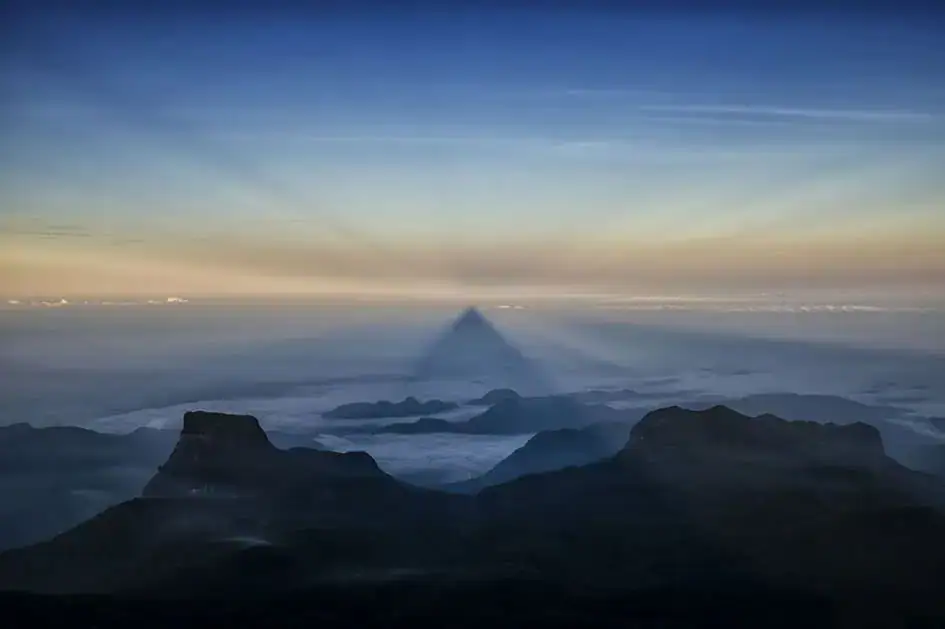
The Summit View of Adam’s Peak with the Shadow of the Mountain with Sunrise (Photo: Sameera Madusanka, CC BY-SA 4.0)
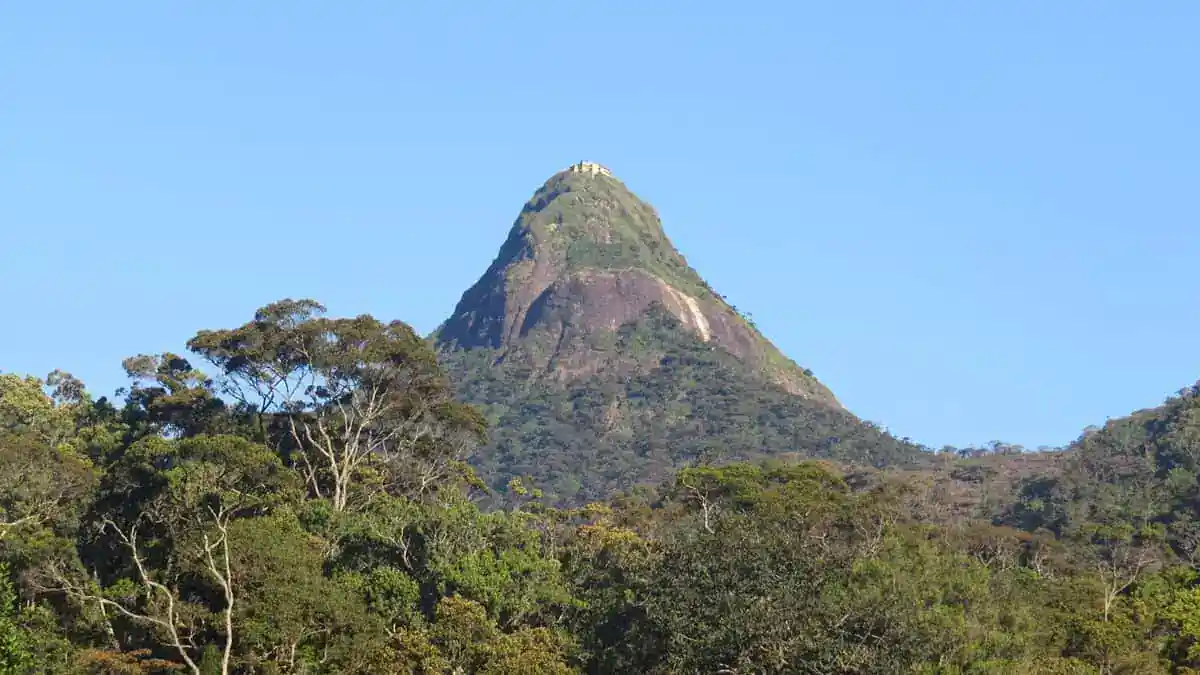
Adam’s Peak stands as the most famous mountain in the country. Locals call it Sri Pada. The site holds religious value for several faiths. Travellers climb it for the experience.
The hike starts at night. You walk up thousands of steps under lights. Pilgrims and travellers move together. You reach the summit at dawn. The sunrise creates a shadow across the clouds. This moment draws people from around the world.
Key facts:
- Elevation reaches 2,243 metres.
- Climb takes around 6 or more hours, depending on pace.
- Peak season runs from December to May.
Travel guides rank this hike among the top experiences in Sri Lanka. Reviews highlight the atmosphere more than the difficulty. The climb feels busy, yet the shared experience makes it unique.
For many travellers, this becomes the highlight of trekking in Sri Lanka.
Little Adam’s Peak, The Easiest Reward
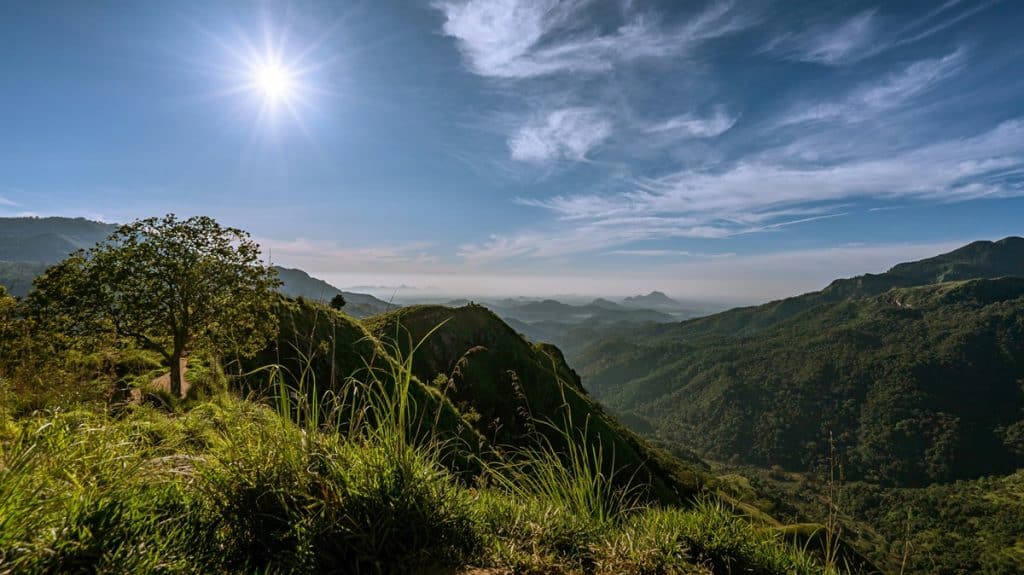
Little Adam’s Peak – Ella (Photo: Kevin Olson, via Unsplash)
Little Adam’s Peak offers the easiest hike with strong views. Located in Ella, this short trail attracts large numbers of foreign travellers.
The path runs through tea plantations. The climb takes less than an hour. You reach a ridge with wide views over valleys and hills. Sunrise and sunset both work well here.
Why travellers choose this hike:
- Short and simple route.
- Clear path with no navigation issues.
- Strong views without effort.
- Easy access from Ella town.
Travel itineraries often place this hike on the first or second day in Ella. Visitors combine it with nearby attractions such as the Nine Arch Bridge.
This location ranks among the most visited mountain viewpoints in Sri Lanka.
Trails:
Ella Rock, A Classic Trekking Route
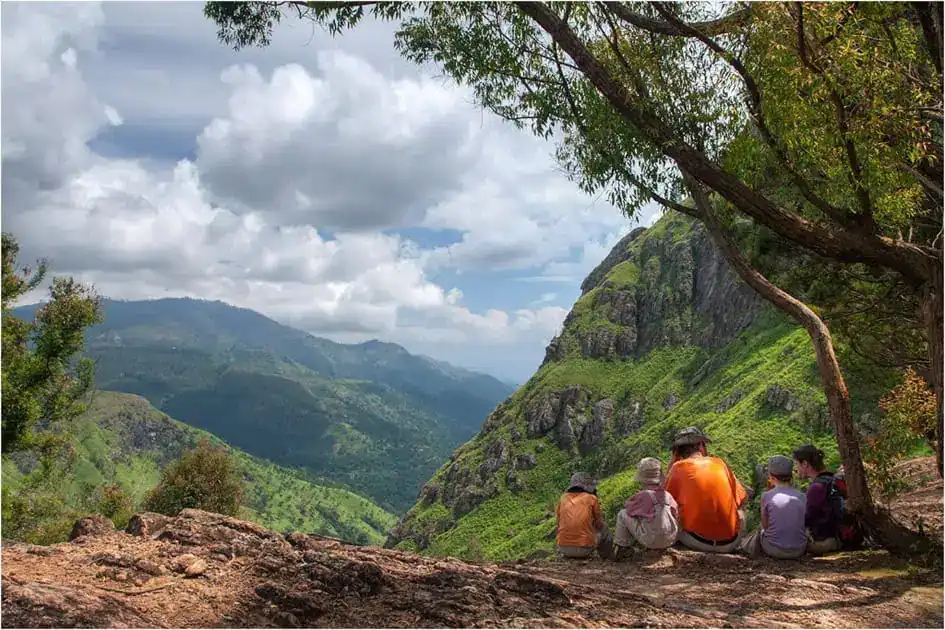
Enjoying the View – Ella Rock Trail (Photo: Tuderna, CC BY 3.0)
Ella Rock attracts travellers seeking a greater challenge. The route feels less structured than Little Adam’s Peak.
You begin along railway tracks. Then the path moves through the forest and the tea fields. The final climb leads to a wide viewpoint. The effort feels higher, yet the reward stays strong.
Key points:
- The hike takes 2 to 4 hours round-trip.
- Navigation needs attention.
- Local guides help first-time visitors.
Backpackers often rate this as a top experience. The route offers more solitude compared to the easier hikes. It appeals to travellers who want a deeper connection with nature.
Ella Rock is a strong choice for trekking in Sri Lanka for those who want more than just basic walks.
Trails:
- AllTrails Map – Ella – Ella Rock (9.7 km)
- AllTrails Map – Ella Rock Trail (5.6 km)
- AllTrails Map – Ella Rock Sunrise Viewpoint (3.4 km)
- AllTrails Map – Amba to Ella via Ella Rock (8.7 km)
Knuckles Mountain Range, The Serious Trek
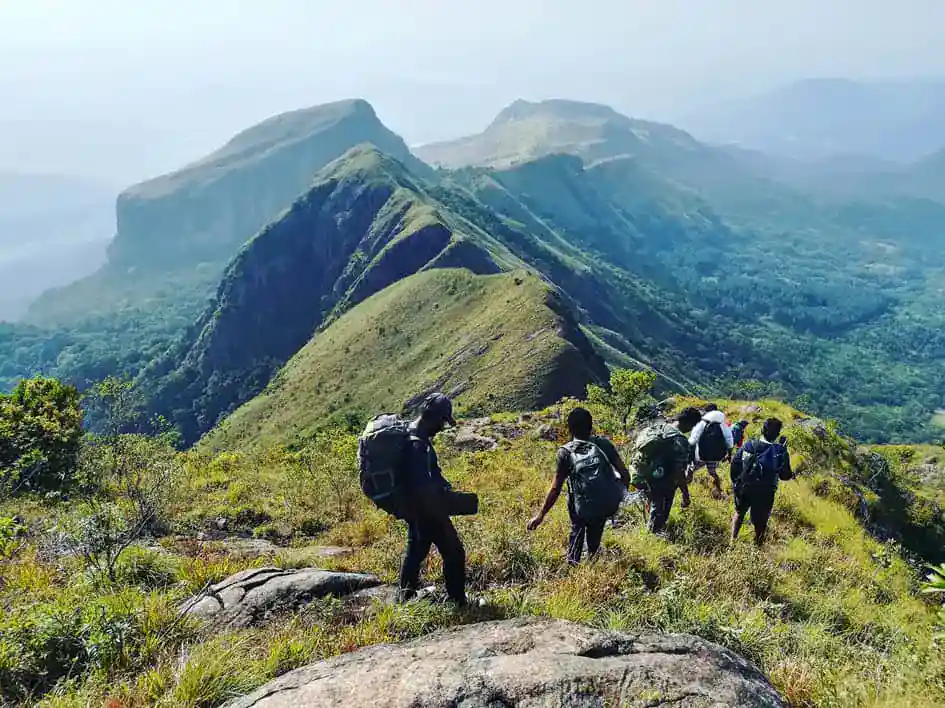
Trekking – Knuckles Mountain Range (Photo: Isuru flicker, CC BY-SA 4.0)
The Knuckles Mountain Range lies in central Sri Lanka, near Kandy. This region offers a different level of trekking.
UNESCO recognises the area for its biodiversity. You find cloud forests, rivers, and remote villages. Trails stretch across several days. Guides often lead these treks because of the complex routes.
Why travellers choose Knuckles:
- Multi-day trekking options
- Low crowd levels
- Rich biodiversity
- Cooler climate
Research and tourism reports highlight this area as a key site for eco-tourism growth. Many foreign travellers who stay longer include Knuckles in their plans.
This region shows the depth of mountains in Sri Lanka beyond the popular towns.
Trails:
- AllTrails Map – Knuckles 5 Peak Trail (7.7 km)
- AllTrails Map – Lebonon Estate to KMP Hut (5.8 km)
- AllTrails Map – Corbett’s Gap (11.3 km)
- AllTrails Map – Kandasamigala (5.1 km)
- Pitawala Pathana/Mini World’s End Trail
- Duwili Ella via Manigala
- Meemure Village Trail
- Gombaniya Peak Trail
- Dothalugala Nature Trail
- Mini World’s End (Deanston) Trail
- Nitro Caves Trail
- Heel Oya Trail
- High Knuckles Trek
Horton Plains and Kirigalpoththa, High Altitude Experience

Kirigalpoththa Trail (Photo: Chamrith, CC BY-SA 4.0)
Horton Plains National Park and Kirigalpoththa offer structured hiking within the national park.
Horton Plains sits at a high altitude. The main trail leads to World’s End. This cliff drops steeply with views across the lowlands. Early morning visits offer clear skies.
Kirigalpoththa is the second-highest peak in Sri Lanka. The hike requires more effort than the main park loop.
Key details:
- Park entry requires a ticket.
- Best visited early morning.
- The weather changes quickly.
Tour operators include Horton Plains in many standard itineraries. It makes it one of the most accessible highland experiences.
These locations attract travellers who want organised trekking in Sri Lanka with clear routes.
Trails:
- AllTrails Map – World’s End Trail (8.4 km)
- AllTrails Map – Kirigalpoththa Trail (10.8 km)
- AllTrails Map – Thotupola Mountain (2.7 km)
Pidurangala and Sigiriya, The Most Climbed Rocks
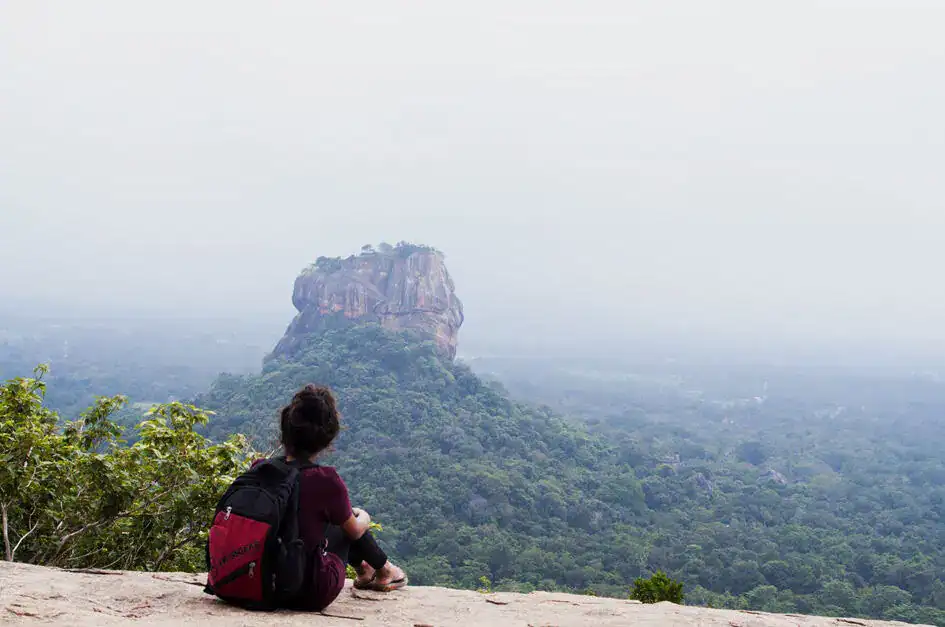
The View of Sigiriya Rock Fortress from Pidurangala Rock (Photo: Tharuka shyaman, CC BY-SA 4.0)
Pidurangala Rock and Sigiriya Rock are located in the Cultural Triangle.
These are not traditional mountains. Yet they attract huge numbers of foreign travellers. Both climbs offer strong views and cultural value.
Sigiriya features an ancient fortress built on a rock column. Pidurangala offers a nearby alternative with lower cost and fewer crowds.
Why these climbs matter:
- High visitor numbers
- Easy access
- Strong sunrise views
- Cultural importance
Many travellers include these stops early in their trip. They provide a first taste of elevation before moving to the highlands.
These sites show how varied the mountain experience becomes in Sri Lanka.
Trails:
How to Choose the Right Mountain for Your Trip
Not all travellers want the same experience. You need to match your time, fitness, and interests.
Choose based on your travel style:
For easy views
Pick Little Adam’s Peak or Pidurangala: short hikes, strong rewards.
For moderate hiking
Try Ella Rock or Horton Plains: more effort, more depth.
For serious trekking
Head to Knuckles. Plan multiple days and use a guide.
For unique experiences
Climb Adam’s Peak at night. Focus on the sunrise moment.
This approach helps you build a plan without stress. You avoid long travel days and focus on what fits your pace.
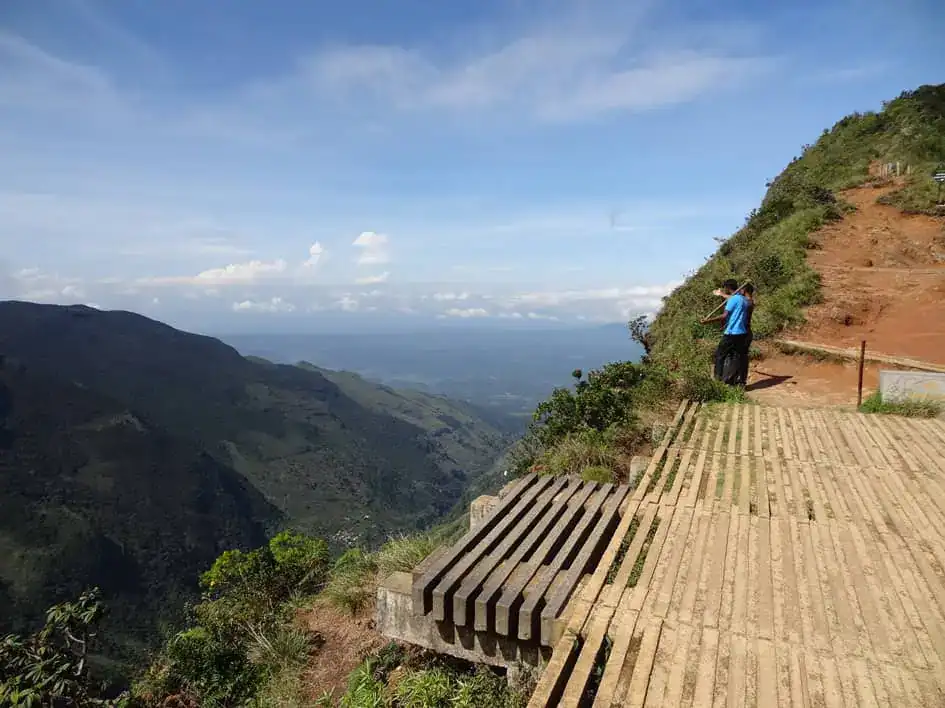
World’s End Viewpoint – Horton Plains National Park (Photo: Cherubino, CC BY-SA 3.0)
How to Plan Your Mountain Itinerary in Sri Lanka
You need a clear plan before you head into the highlands. Distances remain short, but travel time depends on the roads and trains. Good planning helps you avoid delays and crowded routes.
Start with your total number of days. Then build your itinerary around key mountain regions.
For a short trip of 3 to 5 days
Base yourself in Ella. This area offers quick access to several of the most popular hikes.
Suggested plan:
- Day 1: Arrive in Ella, walk to Little Adam’s Peak for sunset.
- Day 2: Hike Ella Rock in the morning.
- Day 3: Visit waterfalls or take the train through tea country.
This plan works well if you want simple trekking in Sri Lanka without long transfers.
For a one-week trip
Combine Ella with the central highlands.
Suggested plan:
- Days 1 to 3: Ella hikes.
- Day 4: Travel to Nuwara Eliya.
- Day 5: Explore Horton Plains National Park.
- Day 6: Visit tea plantations and viewpoints.
- Day 7: Travel to Kandy.
This route adds variety. You move from easy hikes to high altitude terrain.
For a two-week trip
You gain time to explore deeper mountain regions.
Suggested plan:
- Cultural triangle with Sigiriya Rock and Pidurangala Rock
- Central highlands, including Ella and Horton Plains
- Add Knuckles Mountain Range for multi-day trekking
This itinerary shows the full range of mountains in Sri Lanka. You experience both popular sites and remote areas.
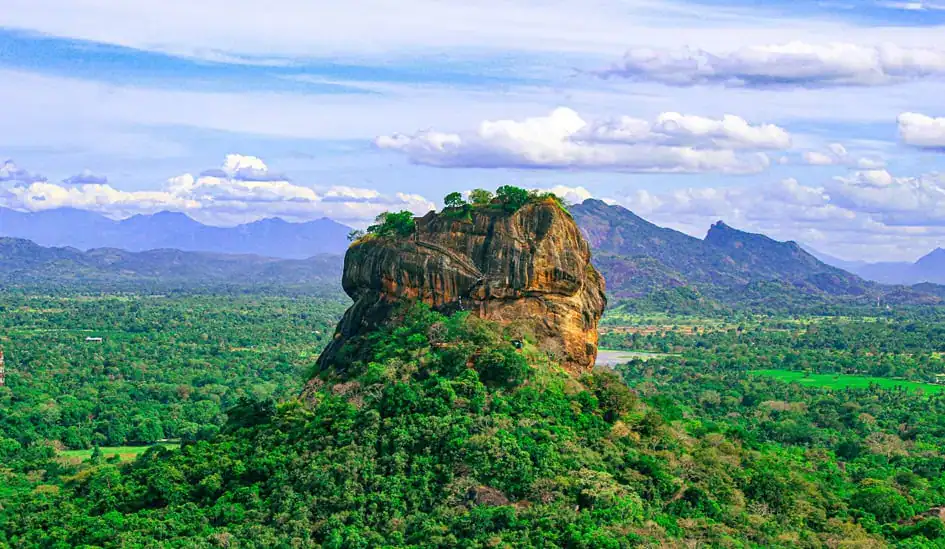
Sigiriya Rock Fortress (Photo: Chamixth, CC BY-SA 4.0)
Best Time for Trekking in Sri Lanka
Weather shapes your experience. The mountains have their own climate. Conditions change fast, especially at higher elevations.
Use these general guidelines:
Central highlands, Ella, Nuwara Eliya, Horton Plains
The best time runs from December to April. Skies stay clearer in the morning.
Adam’s Peak season
Pilgrimage season runs from December to May. Trails stay busy and well-lit.
Knuckles Range
Conditions vary. February to September often brings better trekking weather.
You need early starts. Morning hours give clear views. Clouds move in later in the day.
We recommend reading about the weather and the best time to visit Sri Lanka.
Transport Tips for Mountain Travel
Getting around Sri Lanka feels simple once you understand the basics.
Trains offer one of the best ways to travel between mountain towns. The route from Kandy to Ella ranks among the most scenic train journeys in the world. You pass tea plantations, forests, and valleys.
Buses connect most towns at a low cost. Travel time may increase due to winding roads.
Private drivers give more flexibility. It works well if you travel in a group or follow a tight schedule.
Key advice:
- Book train tickets in advance for popular routes.
- Allow extra time for road travel.
- Start journeys early in the day.
Good transport planning helps you focus on trekking in Sri Lanka without stress.
Find the official train schedule and book train tickets via the official Online Advance Train Seats Reservation.
What to Pack for Mountain Travel
You do not need heavy gear. Keep your packing simple and practical.
Essential items:
- Light hiking shoes with a good grip
- Reusable water bottle
- Sun protection, hat, sunscreen
- Light jacket for early mornings
- Small backpack
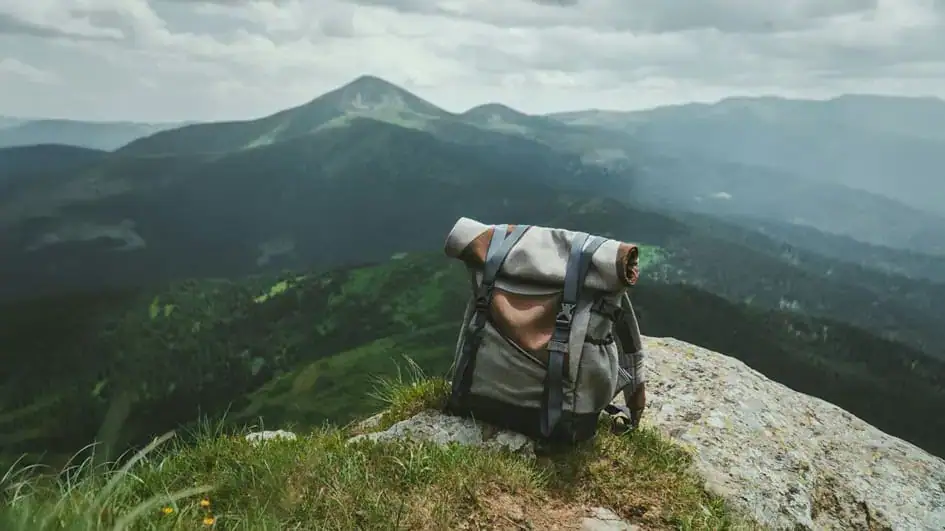
A travel bag (Photo: Yaroslav Konyk, via Unsplash)
Optional items:
- Trekking poles for longer hikes
- Snacks for remote trails
- Offline maps on your phone
The weather changes quickly. Always carry a light layer, even on short hikes.
Photography Tips for Mountains in Sri Lanka
Many travellers visit these locations for photos. You can capture strong images with just a few steps.
Timing matters most. Light shapes the scene.
Best times:
- Sunrise for clear skies and soft light
- Early morning for mountain views
- Late afternoon for warm tones
Avoid midday. Light becomes harsh and reduces contrast.
Composition tips:
- Use leading lines such as paths or ridges
- Include people for scale
- Frame views with trees or rocks
Location-specific advice:
At Adam’s Peak
Capture the sunrise and the shadow cast by the mountain.
At Little Adam’s Peak
Shoot across tea plantations for layered depth.
At Pidurangala Rock
Frame Sigiriya Rock in the distance during sunrise.
At Horton Plains National Park
Arrive early to avoid mist blocking the view at World’s End.
Use your phone or camera in landscape mode for wide scenes. Keep your lens clean due to mist and humidity.
These simple steps improve your experience during trekking in Sri Lanka.
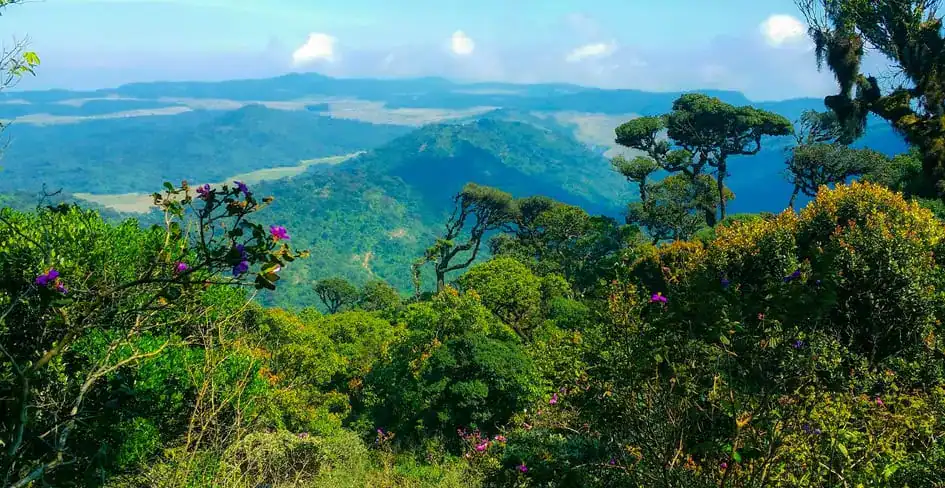
The View From Horton Plains National Park (Photo: Ishan Kahapola Arachchi, via Unsplash)
Common Mistakes Travellers Make
Many visitors repeat the same errors. You can avoid them with basic planning.
Starting hikes too late
Clouds block views after mid-morning. Start early.
Ignoring weather changes
Rain and mist appear fast in the mountains. Check forecasts and stay flexible.
Underestimating travel time
Roads wind through hills. Short distances take longer than expected.
Skipping local advice
Locals know the best routes and conditions. Ask for guidance when needed.
Overpacking
Heavy bags slow you down. Keep items light and useful.
Avoiding these mistakes improves your experience across the mountains in Sri Lanka.
Why These Mountains Attract Global Travellers
Tourism research highlights a clear shift. Travellers seek active experiences. They want more than passive sightseeing. Trekking in Sri Lanka fits this trend.
The country offers several advantages:
Accessibility
You reach most hiking spots without long journeys.
Variety
Each region offers a different environment.
Affordability
Costs remain lower than in many other destinations.
Cultural depth
You connect with local traditions during your hikes.
Visual appeal
Photos from these locations are spread across travel platforms. It drives more interest.
The Sri Lanka Tourism Development Authority continues to promote nature and adventure tourism. Official campaigns highlight mountain experiences alongside wildlife and heritage.
This focus increases visibility among foreign travellers. More visitors now include at least one mountain destination in their itinerary.
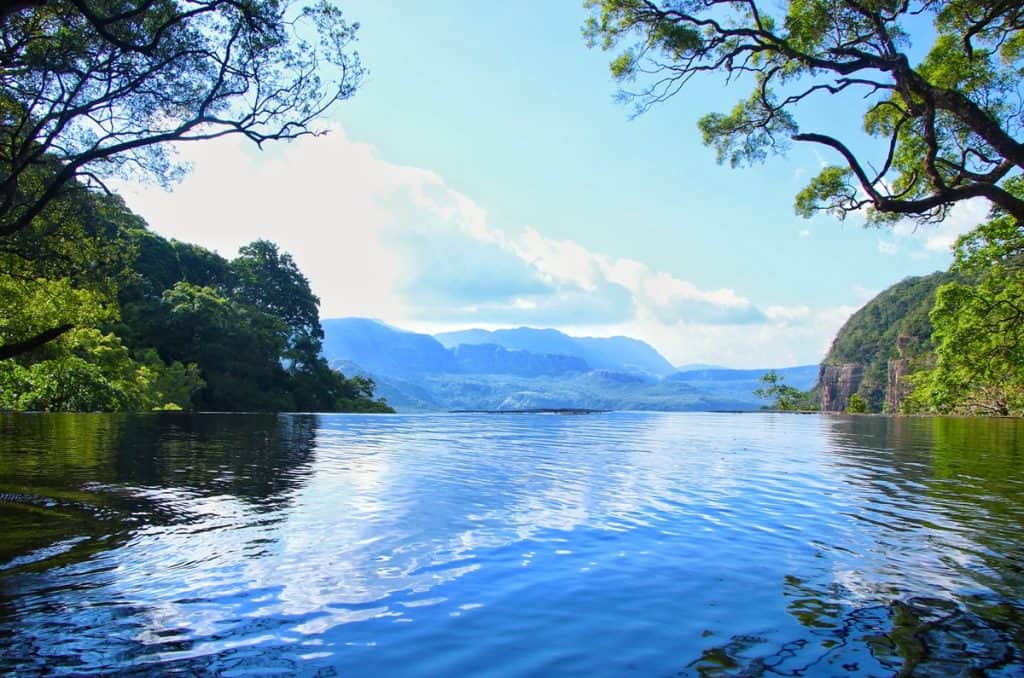
A natural infinity pool – Knuckles Conservation Forest (Photo: Hemaka Pathiranage)
Final Thoughts on Mountains in Sri Lanka
The mountains in Sri Lanka offer one of the most diverse travel experiences in Asia. You move from easy viewpoints to multi-day treks within a short distance. You experience culture, nature, and adventure in one trip.
You do not need advanced skills. You need a plan, early starts, and the right expectations.
Start with one region. Build your Sri Lanka itinerary based on your time and interests. Choose a mix of easy and moderate hikes. Add a challenging trek if you want more depth.
Trekking in Sri Lanka offers more than just views. It gives you moments you remember. Sunrise above clouds, quiet trails through tea fields, and conversations with locals along the way.
Now the question stays simple. Which mountain will you choose first?
Sources and References:
- Sri Lanka Tourism Development Authority.
- Sri Lanka Tourism.
- Department of Wildlife Conservation, Sri Lanka.
- UNESCO – Central Highlands of Sri Lanka.
- Future Market Insights – Hiking and trekking tourism in Sri Lanka report.
- ResearchGate – Studies on tourism and trekking in Sri Lanka.
- TripAdvisor – Traveller reviews and rankings.
- Lonely Planet – Sri Lanka travel guides.
- Rough Guides – Sri Lanka guidebook.
- Booking.com – Traveller trends and destination insights.
- World Tourism Organization – Global tourism trends.
- Sri Lanka Railways – Travel routes and schedules.
Featured image: The View of Adam’s Peak from Maskeliya (Photo: Nalaka Priyantha)

I am a Sri Lankan medical doctor who spends my free time travelling, exploring new destinations, and documenting the beauty of the island I call home. I have journeyed across almost every corner of Sri Lanka with my wife and daughter — from wildlife parks and misty mountains to ancient cities, deep forests, rugged landscapes, and quiet beaches.
Travel is not just a hobby for me — it’s a way of life. I love nature, enjoy road trips, and find joy in wildlife photography. I also read widely about tourism, travel trends, and destination culture. Through my writing, I aim to help travellers experience Sri Lanka through real stories, meaningful insights, and honest recommendations — the same way I explore it with my own family.