
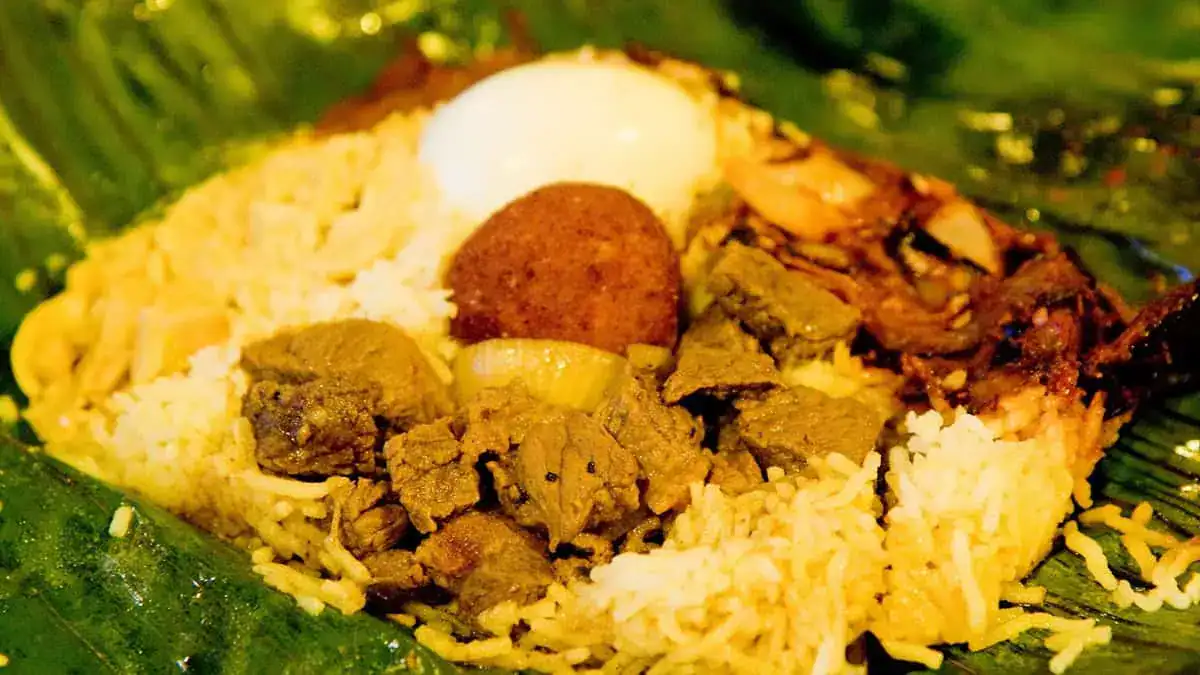

The first time you unwrap a freshly baked Lamprais, the aroma tells a story before you take a bite. Steam rises from a banana leaf wrapped around fragrant rice, slow-cooked meat, spiced sambols, and rich curries. The scent carries hints of cinnamon, cloves, cardamom, and roasted spices. For many Sri Lankans, it is more than a meal. It is a treasured tradition. For foreign travellers, it offers one of the most authentic ways to experience Sri Lankan food and understand the country’s layered history.
Sri Lanka draws visitors with golden beaches, ancient cities, wildlife safaris, and lush tea plantations. Yet food often becomes one of the strongest memories of a journey through the island. Sri Lankan cuisine reflects centuries of trade, migration, and cultural exchange. Few dishes capture this history as clearly as Lamprais. This beloved meal combines Dutch Burgher influences with local ingredients and cooking traditions. The result is a dish unlike anything else in South Asia.
Food tourism continues to grow worldwide. Many travellers now plan parts of their trips around culinary experiences. According to global travel studies by organisations such as the World Food Travel Association, local cuisine plays a major role in destination choice and visitor satisfaction. Sri Lanka has embraced this trend by promoting authentic food experiences through national tourism campaigns. Traditional dishes hold a special place within the food culture in Sri Lanka, and Lamprais is among the finest examples.
Whether you are planning your first visit to the island or searching for hidden gems beyond the standard tourist route, it deserves your attention. Each carefully prepared parcel offers a deeper understanding of Sri Lankan cuisine, family traditions, and the communities that shaped the nation’s identity.
Lamprais: What You Need to Know
Lamprais is a baked rice dish wrapped in a banana leaf. The name traces its roots to the Dutch word “lomprijst,” which translates to a packet of rice. The dish entered Sri Lankan kitchens through the Dutch Burgher community during the colonial era. Over time, local cooks adapted the recipe using Sri Lankan spices and ingredients. The modern version reflects both European influence and island traditions.
At first glance, it appears simple. A banana leaf parcel contains rice and several accompaniments. Yet each component requires careful preparation. The rice cooks in stock infused with spices. The meat is slowly cooked until tender. Side dishes contribute texture, heat, sweetness, and depth.
Traditional Lamprais often features beef, mutton, pork, or a combination of meats. Chicken versions have gained popularity in recent decades. Vegetarian adaptations are also available at some restaurants, although purists prefer the classic recipes passed down through Burgher families.
Preparation demands patience and skill. Home cooks often reserve it for weekends, holidays, and family celebrations. Commercial kitchens devote significant time to maintaining authenticity. This attention explains why many Sri Lankans consider a good Lamprais a special treat rather than an everyday meal.
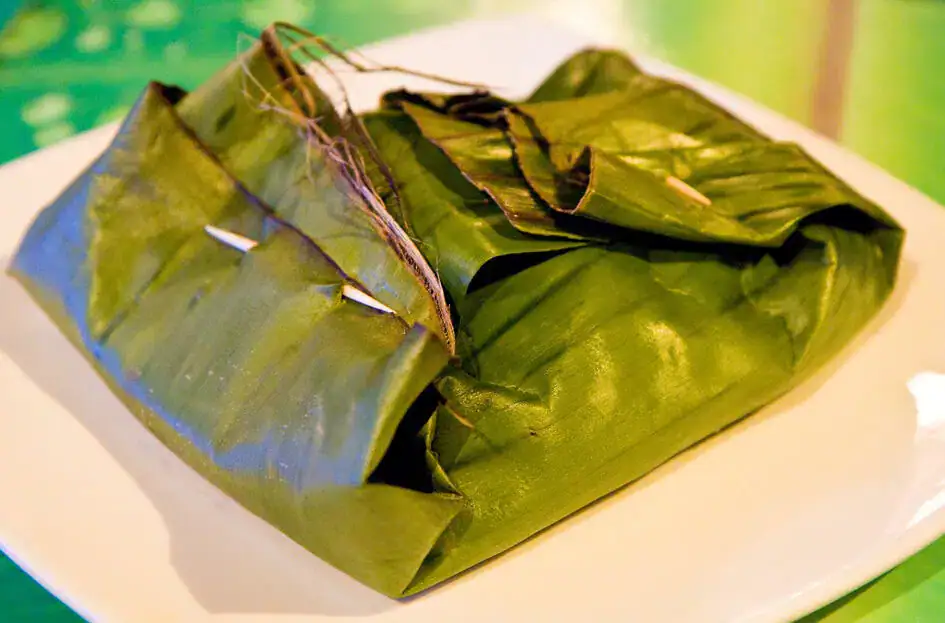
Ready to open the banana leaf wrap to enjoy the meal (Photo: Garrett Ziegler, CC BY-NC-ND 2.0)
Why It Stands Out
Sri Lanka offers many iconic dishes. Rice and curry dominate daily life. Hoppers attract breakfast enthusiasts. Kottu roti entertains late-night diners with its rhythmic preparation. Lamprais occupies a distinct place in Sri Lankan cuisine.
The complexity of Lamprais sets it apart. Each element contributes to a carefully balanced experience. The rice carries gentle spice notes. The meat provides richness. The sambol introduces sweetness and heat. The frikkadels add a savoury crunch. The banana leaf infuses the entire parcel with subtle earthy aromas during baking.
Another distinguishing feature lies in its historical background. Many traditional Sri Lankan food items evolved within specific regions or ethnic communities. It reflects the interaction between Dutch colonial influences and local culinary expertise. Few dishes illustrate this cultural blending so clearly.
Travellers often seek experiences that connect them with a destination’s heritage. Lamprais offers exactly that opportunity. Every parcel serves as an edible reminder of Sri Lanka’s diverse past and enduring traditions.
Where It Sits in Sri Lankan Society
Lamprais holds a respected position within the food culture in Sri Lanka. The dish often appears during family gatherings, festive occasions, and special weekends. Many households associate it with childhood memories, celebrations, and recipes inherited through generations.
Within the Burgher community, Lamprais represents cultural identity and continuity. Families preserve handwritten recipes and guard preparation techniques with pride. Minor variations distinguish one household from another. These differences encourage lively debates about authenticity and quality.
Outside Burgher circles, Lamprais enjoys widespread admiration. Restaurants across Colombo and other urban centres regularly feature the dish. Office workers purchase parcels for Friday lunches. Families order it for birthdays and reunions. Travellers searching for genuine Sri Lankan cuisine often encounter enthusiastic recommendations from locals.
Sri Lanka Tourism promotes cultural immersion as a core aspect of the visitor experience. Food plays a vital role within this approach. Tasting heritage dishes introduces travellers to customs, stories, and social practices that extend beyond major attractions.
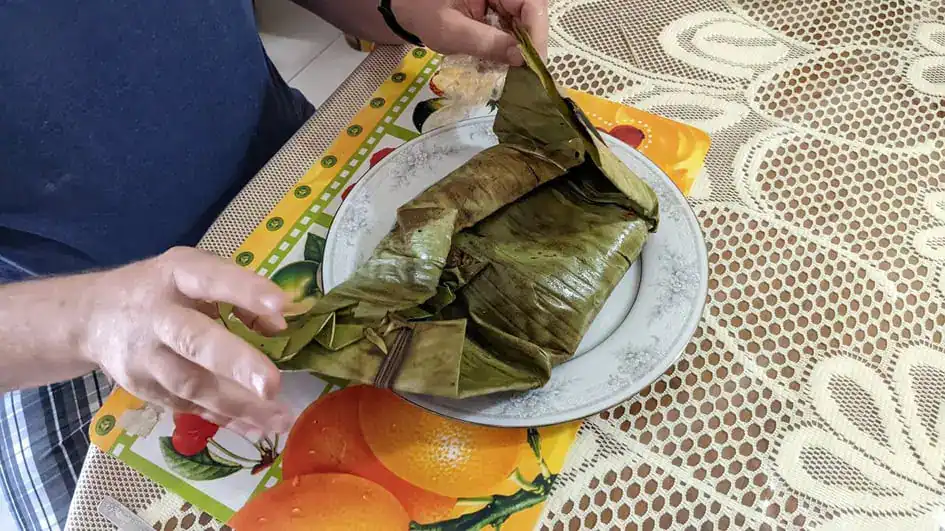
Opening the banana leaf wrapping (Photo: Dennis Sylvester Hurd, CC0 1.0)
Popular Varieties and Regional Differences
Classic Lamprais follows traditional Burgher methods. Beef or mixed meats dominate these older recipes. Frikkadels, which resemble small Dutch-style meatballs, remain an essential component. Brinjal moju adds a sweet-and-sour note with pickled eggplant seasoned with vinegar and spices.
Modern adaptations reflect changing dietary habits and regional preferences. Chicken Lamprais has become one of the most common versions available in restaurants. Seafood interpretations occasionally appear along coastal areas, although these remain less widespread.
Vegetarian Lamprais serves travellers with plant-based preferences. Cooks replace meat with vegetable curries, lentil preparations, or plant proteins while preserving the dish’s layered structure.
Colombo remains the centre of Lamprais culture. Several longstanding establishments have built loyal followings through consistent quality and adherence to tradition. Each venue develops its own signature style. Some favour stronger spice profiles. Others emphasise richer rice or more generous portions.
The ongoing evolution of Lamprais demonstrates the flexibility of Sri Lankan cuisine. New interpretations emerge without erasing the foundations established by earlier generations.
What Is Inside
Understanding Lamprais begins with understanding its components. Each element contributes a distinct role within the finished parcel.
The rice forms the foundation. Cooks prepare short-grain rice in seasoned stock enriched with spices such as cinnamon, cardamom, cloves, and pepper. The grains absorb flavour while retaining structure.
The meat curry provides substance and richness. Traditional recipes rely on slow cooking techniques. The result is tender meat infused with aromatic spices.
Brinjal moju introduces contrast. Thin slices of eggplant are fried, then combined with vinegar, onions, sugar, and spices. The sweet and tangy profile balances the deeper flavours elsewhere in the parcel.
Seeni sambol contributes sweetness and gentle heat. Caramelised onions combine with chilli, tamarind, and spices to produce a dark, intensely flavoured relish.
Frikkadels offer texture. These seasoned meatballs are fried until crisp on the outside while remaining moist inside.
Some versions include ash plantain curry or boiled eggs. Individual recipes determine these additions.
The banana leaf completes the experience. Beyond practical packaging, the leaf influences aroma during baking. Many enthusiasts believe there is no substitute that delivers the same result.
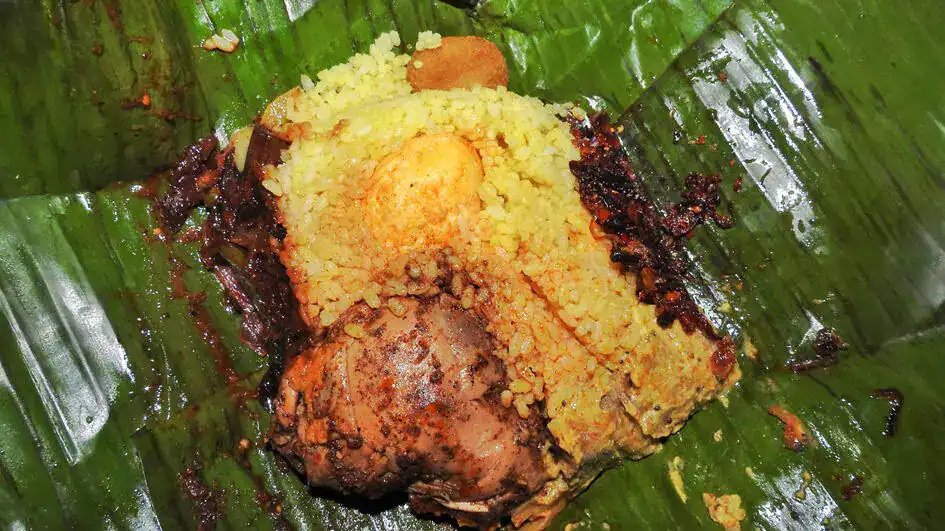
Ready to enjoy Lamprais (Photo: Dennis Sylvester Hurd, CC0 1.0)
How Lamprais Is Made
Preparing Lamprais requires planning. Each component undergoes separate preparation before assembly begins.
The process often starts with the meat curry. Slow cooking develops flavour while softening tougher cuts. Meanwhile, cooks prepare seeni sambol and brinjal moju. Frikkadels require mixing, shaping, and frying.
Attention then shifts to the rice. Stock enriched with spices provides the cooking liquid. The goal is to achieve grains that remain separate while retaining deep flavour.
Assembly demands precision. Banana leaves are briefly heated to increase flexibility. A portion of rice forms the base. Meat and accompaniments occupy the centre. Additional rice is spread over the fillings before folding, transforming the leaf into a compact parcel.
Baking represents the final stage. Heat encourages flavours to mingle while the banana leaf releases its distinctive fragrance. Timing proves essential. Insufficient baking limits flavour integration. Excessive heat risks drying the contents.
This labour-intensive method explains why authentic Lamprais commands respect among cooks and diners alike. Each parcel reflects hours of preparation and generations of accumulated knowledge.
Serving Style and Temperature
Lamprais reaches its peak when served warm. The heat releases aromas trapped within the banana leaf. Unwrapping the parcel becomes part of the dining ritual.
Many Sri Lankans enjoy it as a hearty lunch. The substantial portions satisfy hunger and encourage slow appreciation. Some households prepare the dish for weekend gatherings when family members share meals without time constraints.
Restaurants often serve Lamprais directly within the banana leaf. This presentation preserves authenticity while enhancing sensory appeal. Diners encounter steam, colour, and fragrance simultaneously.
Unlike some forms of Sri Lankan food designed for rapid consumption, it invites attention. The best approach involves sampling individual components before combining flavours across successive bites.
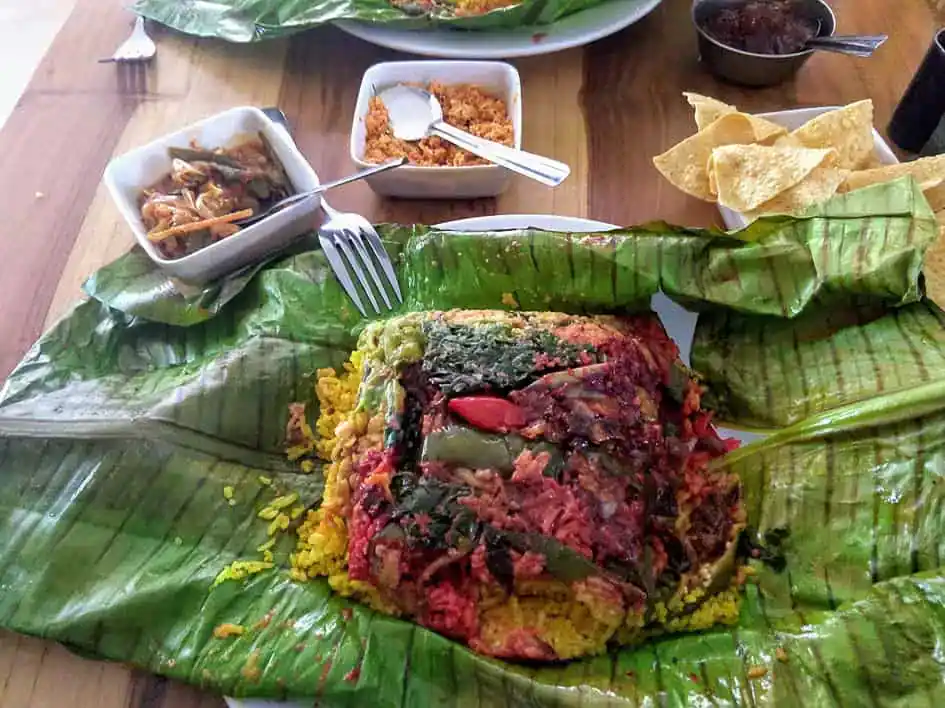
A different presentation – Chill Cafe, Ella (Photo: Amanda, CC BY 2.0)
How to Spot a Great Version of Lamprais
Not all Lamprais deliver the same experience. Knowing what to look for helps travellers identify quality.
The banana leaf should appear fresh and intact. Excessive dryness suggests poor handling or storage.
The rice should remain moist without becoming sticky. Distinct grains indicate careful preparation. Overly oily rice often signals shortcuts.
Meat should be tender and well-seasoned. Harsh spice levels or bland flavours indicate imbalance.
Brinjal moju should offer both sweetness and acidity. Seeni sambol should complement rather than overpower other elements.
Frikkadels should retain crispness despite baking. Soft or greasy versions diminish the overall experience.
Authentic Lamprais demonstrates harmony. No single component dominates the parcel. Instead, each element contributes to a balanced whole.
For travellers seeking meaningful encounters with Sri Lankan cuisine, it provides far more than nourishment. This iconic dish preserves stories of migration, adaptation, and shared identity. The journey through Sri Lankan food often begins with familiar favourites. Yet a deeper understanding emerges through dishes shaped by history and community. Lamprais invites you to slow down, unwrap each layer, and appreciate the richness of the food culture in Sri Lanka through one unforgettable meal.
Ordering Advice
Ordering Lamprais for the first time feels different from ordering many other dishes in Sri Lanka. Restaurants often prepare a limited number of portions each day. Once those portions sell out, the kitchen stops serving them until the next batch is ready. If you have a particular restaurant in mind, arrive early or place a reservation.
Ask staff about the type of Lamprais available. Traditional versions often include beef, pork, mutton, or a mixture of meats. Chicken Lamprais is more widely available in modern establishments. Vegetarian versions have also gained popularity, especially in urban cafés that cater to diverse dietary preferences.
Do not hesitate to ask questions. Sri Lankans take pride in their food traditions. Many servers enjoy explaining the ingredients and the dish’s history. This conversation often enriches the dining experience.
If you have a low tolerance for spice, mention this when ordering. Although it usually emphasises aromatic depth rather than intense heat, accompaniments such as sambols vary from kitchen to kitchen.
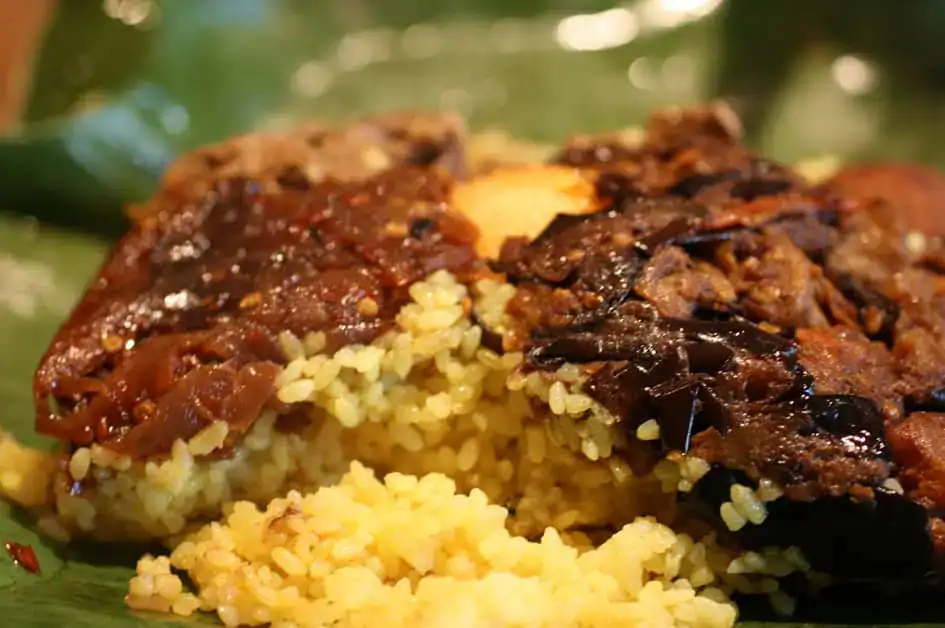
A lamb version (Photo: Jessica and Lon Binder, CC BY-NC-ND 2.0)
How to Taste the Best of Lamprais
Lamprais deserves your full attention. Resist the urge to rush through the meal.
Begin by slowly opening the banana leaf. Take a moment to notice the aroma. The scent of spices mixed with the earthy fragrance of the leaf creates anticipation.
Taste a small spoonful of rice on its own. This step allows you to appreciate the stock-based preparation and the gentle spice profile. Next, sample the meat curry. Notice the tenderness and complexity built through slow cooking.
Move to the accompaniments. Brinjal moju introduces sweet and sour notes. Seeni sambol adds richness through caramelised onions. Frikkadels provide texture and a satisfying savoury bite.
Finally, combine all the components. This approach reveals why it holds such an important place within Sri Lankan cuisine. The dish relies on balance rather than dominance. Every ingredient contributes to the final experience.
Best Pairings
Choosing the right accompaniment enhances the enjoyment of Lamprais.
Many Sri Lankans pair it with a simple glass of iced water. This choice keeps the focus on the dish itself.
Fresh fruit juices also work well. Lime juice offers brightness that complements the richness of the meal. Wood apple juice, a traditional Sri Lankan favourite, provides a sweet-tangy contrast.
Some diners prefer ginger beer. The slight spice and effervescence help cleanse the palate between bites.
Tea enthusiasts often enjoy a cup of Ceylon tea after the meal. Sri Lanka’s tea heritage ranks among the country’s proudest achievements. Ending your Lamprais experience with locally produced tea creates a satisfying culinary journey.
Alcohol pairings vary according to personal taste. Light beers complement rather than overwhelm the flavours within the parcel.
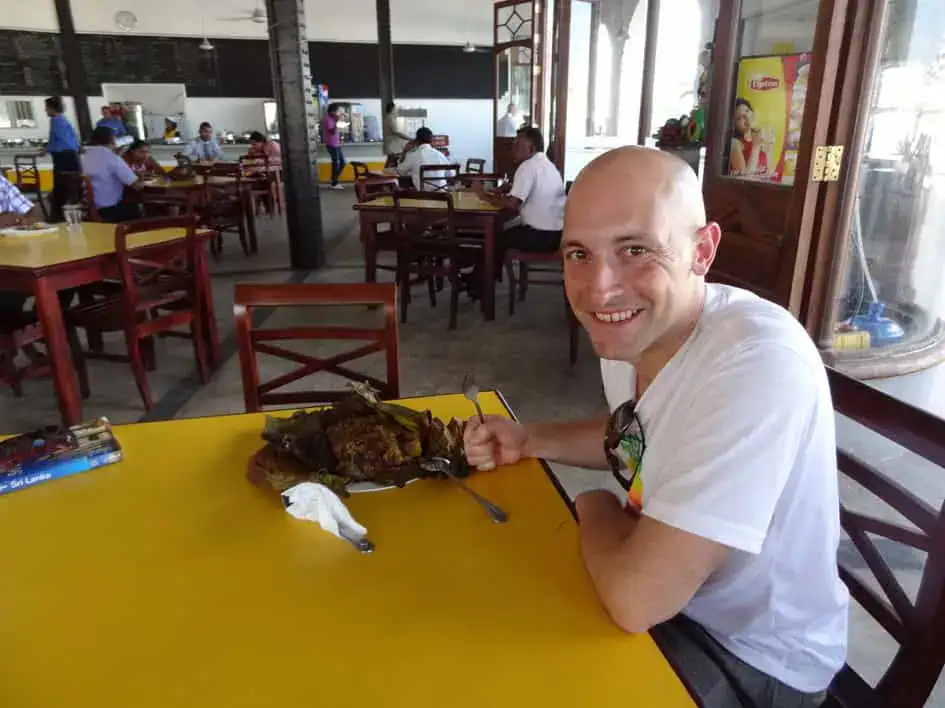
Lamprais for lunch in Colombo (Photo: Dave Lonsdale, CC BY 2.0)
When to Eat
Lamprais traditionally appears as a lunchtime dish. The generous portions and rich ingredients suit the middle of the day when diners have time to savour the meal.
Many restaurants serve it on weekends. Fridays and Saturdays often bring the highest demand. Families gather for leisurely lunches, and office workers treat themselves before the weekend begins.
Public holidays and festive occasions also feature Lamprais prominently. Some households prepare large batches during celebrations. Others place orders from trusted restaurants known for their authenticity.
Travellers should check availability in advance. Popular establishments sell out quickly. Planning helps avoid disappointment.
Where to Eat
Colombo remains one of the best places to experience Lamprais. The city’s diverse culinary landscape reflects centuries of cultural exchange. Several well-known establishments have earned loyal followings for their dedication to quality and tradition.
Family-run restaurants often preserve recipes passed down through generations. These venues offer insight into the dish’s heritage. Larger hotels and upscale restaurants also feature it on their menus, particularly those focused on showcasing Sri Lankan food to international guests.
Beyond Colombo, it is available at selected restaurants across the island. Major cities such as Kandy and Galle offer opportunities to sample the dish. Availability becomes less predictable in smaller towns, although local recommendations often lead to memorable discoveries.
The official tourism authorities in Sri Lanka increasingly recognise food experiences as part of the visitor journey. The Sri Lanka Tourism Development Authority and the national tourism promotion initiatives encourage travellers to explore authentic culinary traditions alongside cultural and natural attractions. Dishes such as Lamprais support this effort by connecting visitors with local heritage.
Ask hotel staff, guides, and residents for suggestions. Personal recommendations frequently lead to the most rewarding meals.
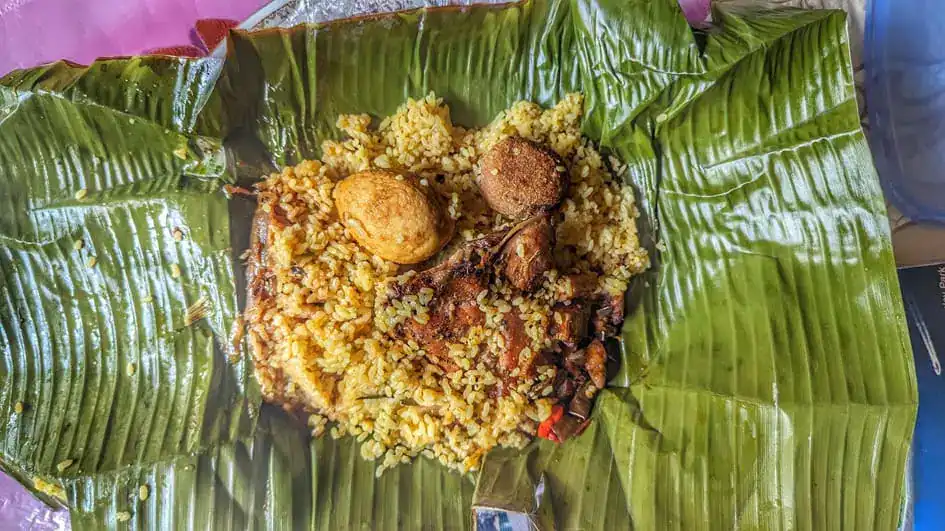
See, smell, feel, and enjoy the authenticity (Photo: Dennis Sylvester Hurd, CC0 1.0)
Energy and Nutrition Facts
Lamprais provides a substantial energy source. The combination of rice, meat, and accompaniments creates a filling meal designed to satisfy.
A standard portion often contains between 700 and 1,000 calories. The exact figure depends on ingredients, portion size, and cooking methods. Traditional recipes with multiple meats and fried components occupy the higher end of this range.
Protein levels remain strong due to the inclusion of meat and frikkadels. The rice provides carbohydrates that provide sustained energy. Brinjal preparations and sambols add fibre and micronutrients.
Spice blends used in Sri Lankan cuisine often include turmeric, cinnamon, cloves, and black pepper. These spices have long histories within traditional food practices.
Travellers with specific dietary concerns should seek guidance from restaurant staff regarding ingredients and preparation methods. Many establishments accommodate requests related to allergies and preferences.
Benefits of Lamprais
It offers more than culinary satisfaction.
The dish provides a direct connection to Sri Lanka’s multicultural history. Understanding local food traditions deepens appreciation for the country’s social fabric.
Eating Lamprais encourages slower dining habits. Unlike fast food consumed in haste, this meal invites attention and reflection. Travellers gain an opportunity to engage with local customs through shared experiences around the table.
Nutritionally, it provides protein, carbohydrates, and a range of spices commonly found in balanced traditional diets. When enjoyed as part of a varied eating pattern, the dish contributes to a satisfying travel experience.
Supporting restaurants that prepare authentic Lamprais also helps sustain culinary traditions. Many family businesses rely on loyal customers who value heritage recipes.
Special Tips
Approach Lamprais with curiosity and patience.
Seek establishments known for consistency. Reviews from local diners often provide valuable guidance.
Do not judge the dish solely by appearance. The modest banana leaf wrapping conceals layers of flavour developed through time-intensive preparation.
Consider sharing a portion if you plan to sample several Sri Lankan dishes during the same outing. It tends to be generous in size.
Visit food markets and culinary festivals when possible. These events often showcase regional specialities and family recipes not widely available elsewhere.
Learn a little about the Burgher community before your meal. Understanding the historical context enriches appreciation for the dish.
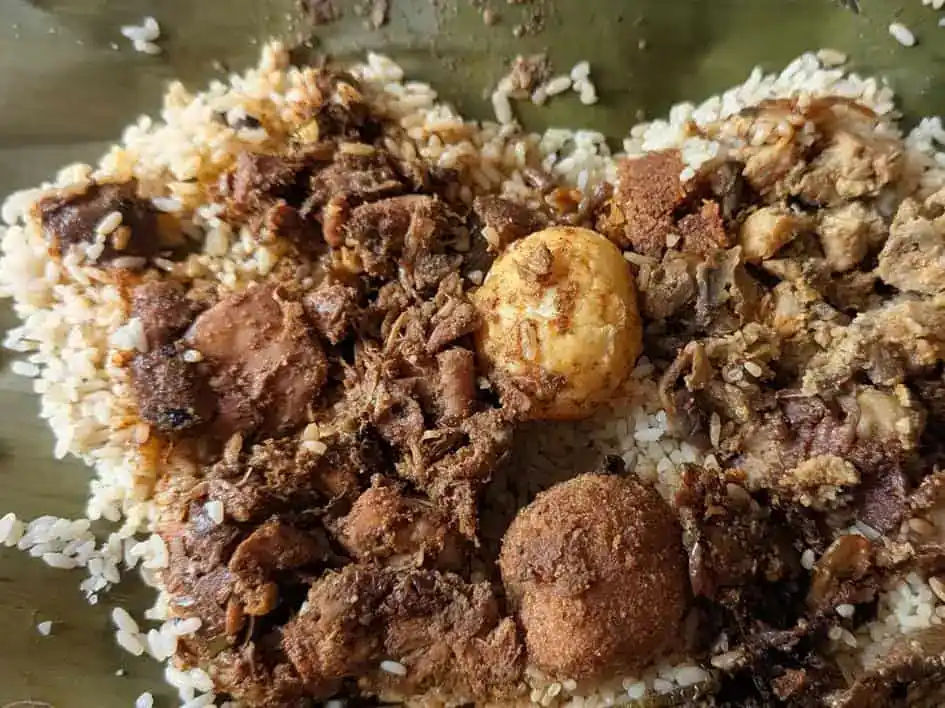
A different colour and a different taste (Photo: Dennis Sylvester Hurd, CC0 1.0)
Dos and Don’ts
Respect local dining customs while enjoying Lamprais.
Dos
- Do try every component before deciding which element you prefer. The complete experience depends on the interaction between flavours.
- Do ask questions about preparation methods. Many cooks take pride in explaining family traditions.
- Do appreciate the effort involved. Authentic Lamprais requires significant time and skill.
- Do support establishments that preserve traditional practices.
- Do share your enthusiasm with fellow travellers. Culinary recommendations often inspire meaningful experiences.
Don’ts
- Do not expect every Lamprais to taste identical. Variations reflect family heritage and regional interpretation.
- Do not rush through the meal. Slowing down enhances enjoyment.
- Do not remove accompaniments without first tasting them. Elements such as brinjal moju play an important balancing role.
- Do not compare it directly with other rice dishes. Its historical roots and preparation methods create a distinct identity.
Why You Should Taste Lamprais
Many travellers arrive in Sri Lanka eager to visit ancient cities, tea estates, and national parks. These attractions deserve their reputation. Yet food experiences often create the strongest emotional connections to a destination.
Lamprais introduces visitors to a chapter of Sri Lanka’s story rarely covered in guidebooks. The dish reflects migration, adaptation, and cultural exchange. Every parcel carries traces of Dutch influence shaped through Sri Lankan creativity and resourcefulness.
The flavours remain memorable because they resist simplification. Sweetness meets spice. Richness meets acidity. Soft textures contrast with crisp elements. The banana leaf contributes fragrance without demanding attention.
It also demonstrates the depth of Sri Lankan cuisine. Many visitors arrive familiar with curry and rice. They leave with a broader understanding of the country’s culinary diversity.
Food culture in Sri Lanka extends beyond nourishment. Meals strengthen family bonds, celebrate milestones, and preserve heritage. Sharing Lamprais offers insight into these values.
If you seek authentic travel experiences, it deserves a place on your itinerary.
If you are new to Sri Lanka, it is recommended that you read our ultimate travel guide for first-time visitors and our guide to finding the best travel itineraries for your travel season.
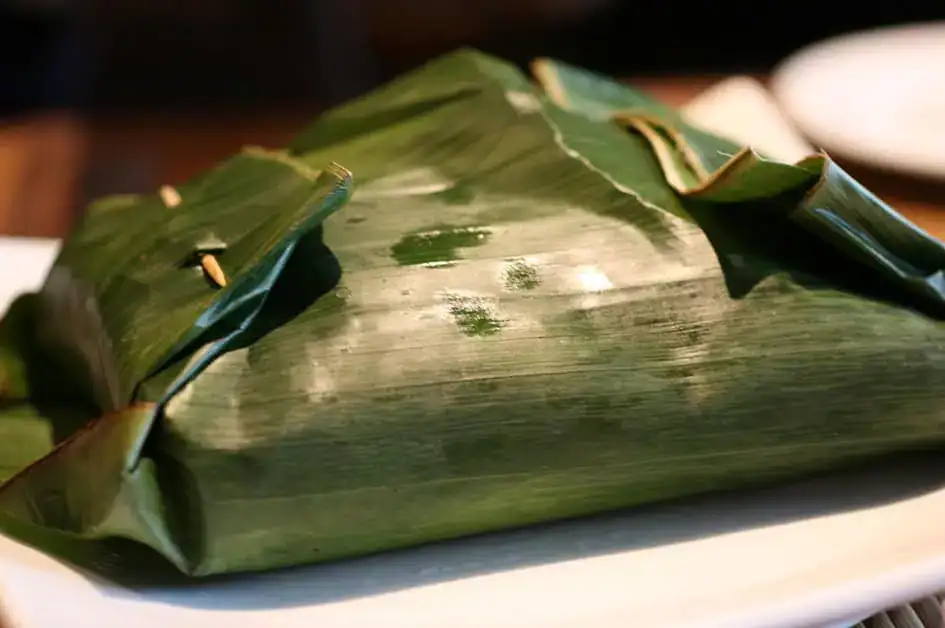
Ready to enjoy a delicious meal (Photo: Jessica and Lon Binder, CC BY-NC-ND 2.0)
Final Thoughts on Lamprais
It is among the most distinctive dishes in Sri Lankan cuisine. Its preparation requires dedication. Its ingredients reveal layers of history. Its flavours reward attentive diners.
Travellers searching for authentic Sri Lankan cuisine often focus on famous attractions and overlook the stories found at the dining table. Lamprais challenges this approach. The dish encourages exploration through taste. Each banana leaf parcel reflects generations of knowledge and the blending of cultures that helped shape modern Sri Lanka.
The food culture in Sri Lanka thrives because communities continue to protect recipes and share them with pride. It embodies this commitment. Whether enjoyed in a bustling Colombo restaurant, a family-run establishment, or during a festive gathering, the experience leaves a lasting impression.
Your journey through Sri Lankan food should include moments of surprise and discovery. Lamprais provides both. The next time you unwrap a warm banana leaf parcel filled with fragrant rice and carefully prepared accompaniments, remember that you are tasting more than a meal. You are experiencing a tradition that continues to define Sri Lankan cuisine.
Lamprais deserves its place among the island’s culinary treasures. For foreign travellers eager to understand Sri Lanka through its flavours, few choices offer a richer introduction. One parcel tells a story of heritage, hospitality, and the enduring power of food to connect people across cultures.
Sources and References:
- Sri Lanka Tourism. “Food.” Official Sri Lanka Tourism Website.
- Sri Lanka Tourism. “So Rich in Flavours: Culinary Tourism.” Official Sri Lanka Tourism Website.
- Sri Lanka Tourism. “Essence of Sri Lanka.” Official Sri Lanka Tourism Website.
- Sri Lanka Tourism Development Authority. “Welcome to the Corporate Website of the Sri Lanka Tourism Development Authority.“
- Sri Lanka Tourism Development Authority. “Tourism Research and Statistics.“
- Sri Lanka Tourism Development Authority. “Monthly Tourist Arrivals Reports.“
- Roads & Kingdoms. “History Baked in Banana Leaf.”.
- Explore Parts Unknown. “Lamprais: Sri Lankan History Baked in a Banana Leaf.”
- Whetstone Magazine. “In Sri Lanka, Lamprais Keeps the Dutch Burgher Legacy Alive.”
- GOYA Journal. “Lamprais: An Insight into the Burghers of Sri Lanka.“
- The Dutch Burgher Union of Ceylon. Community publications and historical records relating to Burgher culinary traditions.
- World Food Travel Association. Research and reports on food tourism trends and traveller behaviour.
- Department of Census and Statistics, Sri Lanka. “Tourism Statistics.”
- Sri Lanka Tourism Promotion Bureau. “Introduction to Sri Lankan Culinary Tourism.“
- Traditional recipes and oral histories from Sri Lankan Burgher households, documented through culinary publications and heritage food initiatives.
Featured image: A delicious Sri Lankan meal wrapped in a banana leaf (Photo: Garrett Ziegler, CC BY-NC-ND 2.0)

I am a Sri Lankan medical doctor who spends my free time travelling, exploring new destinations, and documenting the beauty of the island I call home. I have journeyed across almost every corner of Sri Lanka with my wife and daughter — from wildlife parks and misty mountains to ancient cities, deep forests, rugged landscapes, and quiet beaches.
Travel is not just a hobby for me — it’s a way of life. I love nature, enjoy road trips, and find joy in wildlife photography. I also read widely about tourism, travel trends, and destination culture. Through my writing, I aim to help travellers experience Sri Lanka through real stories, meaningful insights, and honest recommendations — the same way I explore it with my own family.