

April sits between two of Sri Lanka’s main travel seasons. The southwest coast still offers plenty of good beach days, the Cultural Triangle stays warm and accessible, and the central highlands remain attractive for hiking and sightseeing. At the same time, weather patterns start to shift as the month progresses.
A well-planned Sri Lanka itinerary for April needs to work with this seasonal shift rather than follow a standard year-round route. This 14-day journey does exactly that. You start near the West Coast, travel through Sigiriya and Sri Lanka’s ancient cities, cross the central highlands through Kandy and Nuwara Eliya, explore Ella, search for nature & wildlife in Yala, and finish beside the Southern Coast. The result is culture, mountains, wildlife, local food, popular beaches, and historic towns in two weeks.
Why This Sri Lanka Itinerary for April Works So Well
April deserves special planning. Sri Lanka does not have one nationwide dry season. Rainfall changes between the West, South, East, North, and central mountains. April also falls between the Northeast Monsoon and the approaching Southwest Monsoon. Short afternoon or evening showers become more common in several regions, while mornings often remain suitable for sightseeing.
The route also focuses on places with strong visitor appeal. Sigiriya provides a clear example.
The statistical evidence from the Sri Lanka Tourism Development Authority (SLTDA) supports placing Sigiriya near the beginning of an April journey.
The wider route follows another useful pattern. Popular two-week routes often connect Sigiriya, Kandy, the Hill Country, the South, and Galle.
This April version adjusts the route for seasonal conditions. Minneriya and Kaudulla are left out as core wildlife safari stops because their strongest elephant-viewing period comes later in the year. Yala fits April better. The East Coast also stays optional because Trincomalee, Nilaveli, Uppuveli, and Passikudah move towards their stronger beach season from May onwards.
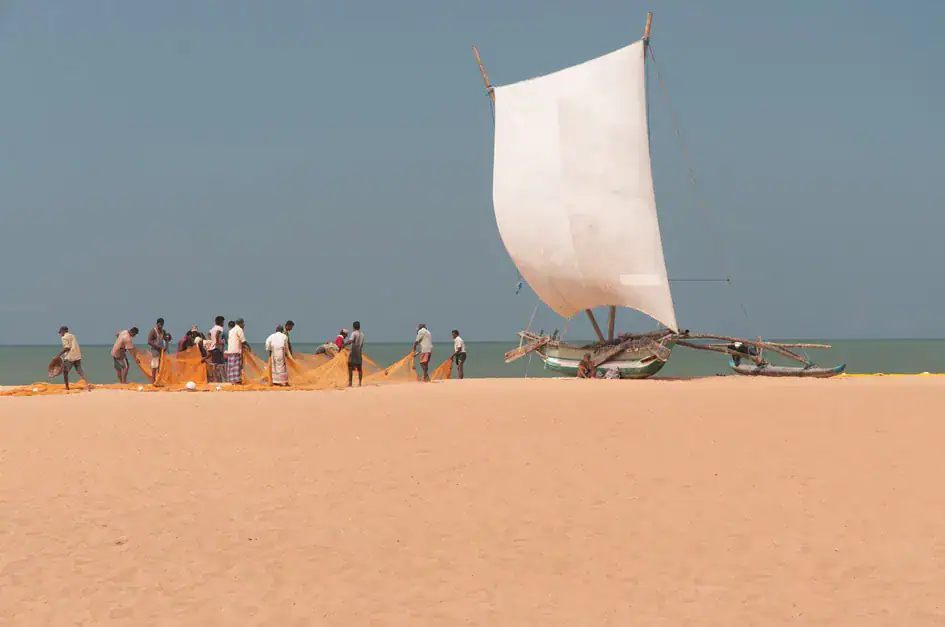
Traditional Fishermen – Negombo Beach (Photo: travelmag.com, CC BY 2.0)
Overview of This 14-Day Sri Lanka Journey
Title: Sri Lanka Itinerary for April: The Perfect 14-Day Island Route
Destinations: Negombo, Dambulla, Sigiriya, Polonnaruwa, Kandy, Nuwara Eliya, Horton Plains, Ella, Yala, Tissamaharama, Tangalle, Mirissa, Weligama, Unawatuna, Galle, and Colombo
Total duration: 14 days and 13 nights
Theme: Culture, UNESCO heritage, Hill Country, hiking, wildlife, food, beaches, and local experiences
Pace: Moderate
Best transport mix: Private car or car with driver, train, tuk-tuk, walking, and safari jeep
The route covers a large part of Sri Lanka without trying to visit every region. That matters. Sri Lanka is a small land, but road travel often takes longer than expected. Mountain roads, towns, traffic, railway schedules, and sightseeing stops all add time.
A good 14 days in Sri Lanka should therefore focus on a logical route rather than a long destination list.
What This Itinerary Covers
This journey begins with a soft landing in Negombo. You then move inland to Sri Lanka’s Cultural Triangle. Dambulla, Sigiriya, and Polonnaruwa introduce ancient kingdoms, Buddhist art, royal ruins, reservoirs, and village life.
Sri Lanka Tourism lists Sigiriya, Dambulla, Polonnaruwa, Kandy, and Galle among the country’s UNESCO cultural heritage attractions. The official tourism site describes the Cultural Triangle as a compact area where travellers experience ancient cities, cave temples, royal ruins, and Sigiriya’s historic gardens and fortress.
From Sigiriya, the route moves south into Kandy. You then climb into tea country through Nuwara Eliya before hiking across Horton Plains. The official Sri Lanka Tourism description places Horton Plains at about 2,100 metres above sea level. It describes a main circular hike of around nine kilometres.
Ella follows the highlands. From there, the journey drops towards Yala and the dry Southeast before reaching Tangalle, Mirissa, Weligama, Unawatuna, and Galle.
This direction works well because each stage feels different from the previous one.
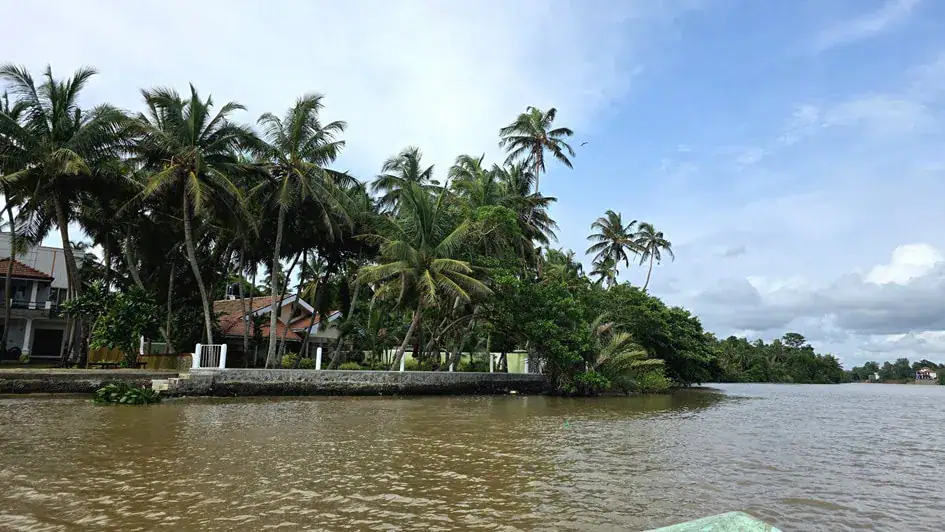
A Boat Ride Along the Dutch Canal – Negombo (Photo: Richard Mortel, CC BY 4.0)
Who Will Enjoy This Route Most?
This 2 weeks in Sri Lanka route suits first-time travellers who want a broad introduction to the country. Couples get scenic stays, beaches, mountain views, and relaxed evenings. Families with older children get wildlife, historic sites, easy walks, and beach time. Solo travellers get several well-established tourism centres with guesthouses, restaurants, guides, and transport options.
The route also works well for photographers. Sigiriya, Horton Plains, Ella, Yala, Tangalle, Mirissa, and Galle offer distinct settings within a short journey.
Active travellers receive several walking opportunities without turning the holiday into a trekking trip. Sigiriya, Pidurangala, Horton Plains, Little Adam’s Peak, Nine Arch Bridge, and Galle Fort all involve time on foot.
Transport and Route Logic
The easiest way to complete this route is to combine a private vehicle with one scenic rail journey.
A driver works especially well from Negombo through Sigiriya, Kandy, and Nuwara Eliya. A vehicle saves time between archaeological sites and gives you more control over stops. You also avoid carrying luggage between several local buses.
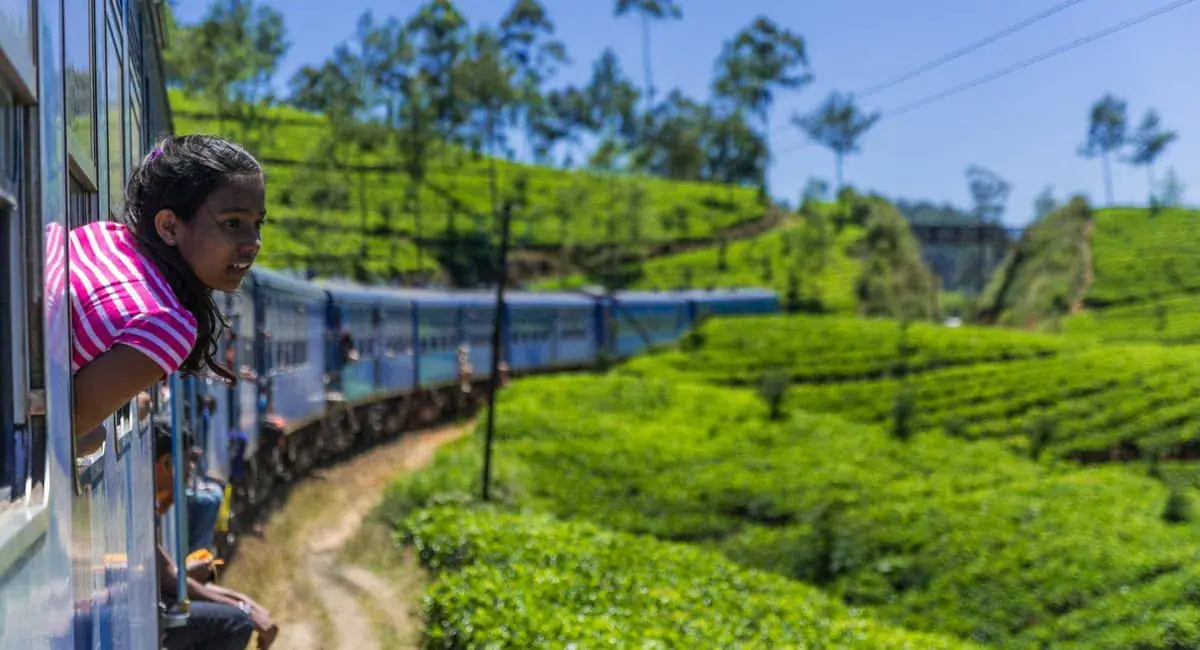
Rail travel becomes more attractive in the Hill Country. The railway between Nanu Oya and Ella passes through tea estates, forests, mountain settlements, tunnels, bridges, and valleys. Reserve seats as soon as reservations become available, especially around Sri Lankan New Year.
- Book your train tickets via the Official “Online Advance Train Seats Reservation” system.
April brings another transport issue. Sinhala and Tamil New Year falls in the middle of the month. Domestic travel rises around the holiday period. Trains, buses, hotels, and popular local destinations often become busier. Book key transport and accommodation early if your dates fall around 13 and 14 April.
We recommend reading our guide about transport in Sri Lanka.
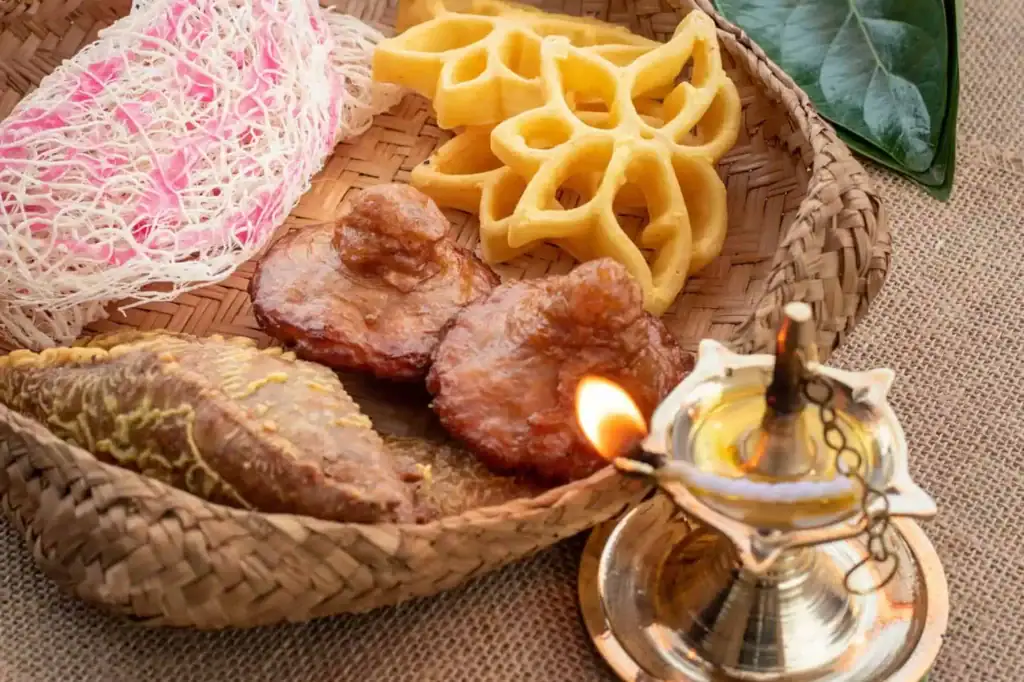
Traditional Food – Sri Lankan New Year Festival in April (Photo: Kavinda F from Pixabay)
Route Snapshot by Day
- Day 1: Bandaranaike International Airport to Negombo
- Day 2: Negombo to Dambulla and Sigiriya
- Day 3: Sigiriya Rock Fortress, Sigiriya area, and Pidurangala
- Day 4: Polonnaruwa day trip from Sigiriya
- Day 5: Sigiriya to Kandy
- Day 6: Kandy to Nuwara Eliya
- Day 7: Horton Plains, Nuwara Eliya, and Ella
- Day 8: Ella
- Day 9: Ella to Tissamaharama and Yala
- Day 10: Yala National Park to Tangalle
- Day 11: Tangalle to Mirissa and Weligama
- Day 12: Mirissa and Weligama
- Day 13: Mirissa to Unawatuna and Galle
- Day 14: Galle to Colombo and Bandaranaike International Airport
Approximate Road and Rail Times
- Bandaranaike International Airport to Negombo: 20 to 30 minutes
- Negombo to Dambulla: about 3.5 to 4 hours
- Dambulla to Sigiriya: about 15 to 30 minutes
- Sigiriya to Polonnaruwa: about 1.5 hours each way
- Sigiriya to Kandy: about 2.5 to 3.5 hours
- Kandy to Nuwara Eliya: about 2.5 to 3 hours by road
- Nuwara Eliya to Horton Plains: about 1 to 1.5 hours
- Nanu Oya to Ella: around 3 to 5 hours by train, depending on the service
- Ella to Tissamaharama: about 2 to 3 hours
- Tissamaharama to Yala entrance: roughly 30 to 45 minutes, depending on the gate and accommodation
- Yala area to Tangalle: about 2 to 3 hours
- Tangalle to Mirissa: about 1.5 hours
- Mirissa to Galle: about 1 to 1.5 hours
- Galle to Colombo: about 2 to 2.5 hours by road
- Galle to Bandaranaike International Airport: about 2 to 2.5 hours by expressway in favourable traffic
Treat these as planning estimates, not fixed journey times. Roadworks, traffic, weather, railway delays, and holiday travel affect journey length.
Day-by-Day Sri Lanka Itinerary for April
Day 1: Arrival and a Relaxed Start in Negombo
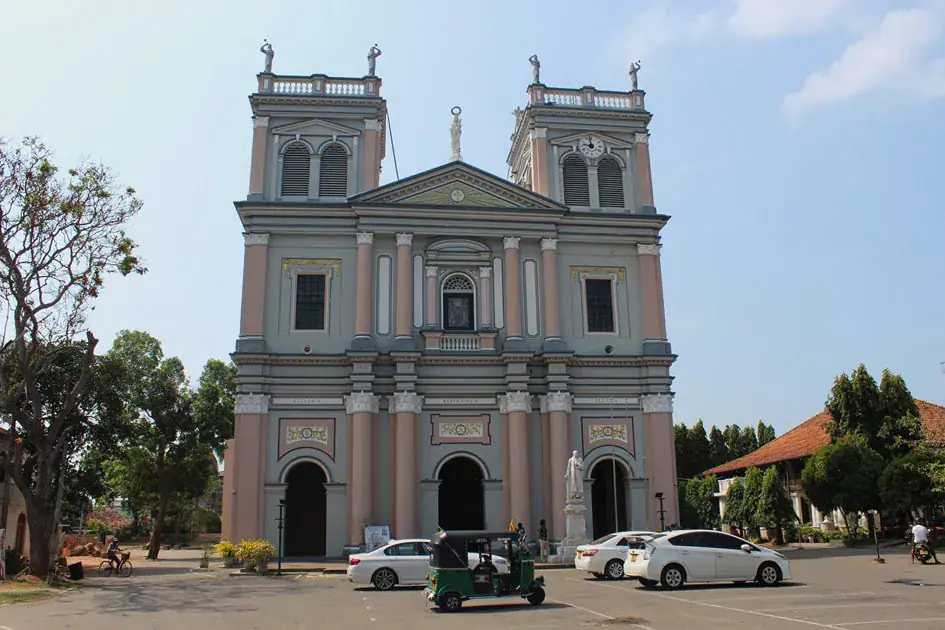
St. Mary’s Church – Negombo (Photo: Timon91, CC BY-NC-SA 4.0)
Morning
Arrive at Bandaranaike International Airport. Complete immigration, collect your luggage, and travel the short distance to Negombo.
Negombo is a better option than a long transfer on your first day. The town sits close to the airport and gives you time to recover after your flight. Check in, shower, rest, and adjust to the heat.
Afternoon
Take a gentle walk near Negombo Beach. If you have energy, explore part of the town, the lagoon area, or the fishing neighbourhoods.
Keep sightseeing light. Your route becomes much more active from Day 2.
Evening
Walk beside the beach near sunset. April evenings often feel warm and humid. A sea breeze makes the coast more comfortable.
Have an early dinner and get good sleep before the journey inland.
Where to Stay
Choose a beachfront hotel, boutique hotel, or guesthouse in Negombo.
Accommodation Guidance
A location near the beach gives you easy access to restaurants and a relaxed first evening. Airport hotels suit travellers arriving late at night.
Food Stop
Start with Sri Lankan rice and curry with fresh fish. Negombo has a long fishing tradition, so seafood is a great first local meal.
Practical Notes
Avoid planning a long sightseeing schedule on arrival day. Flight times, immigration, baggage collection, and jet lag vary widely.
Day 2: Negombo to Dambulla and Sigiriya
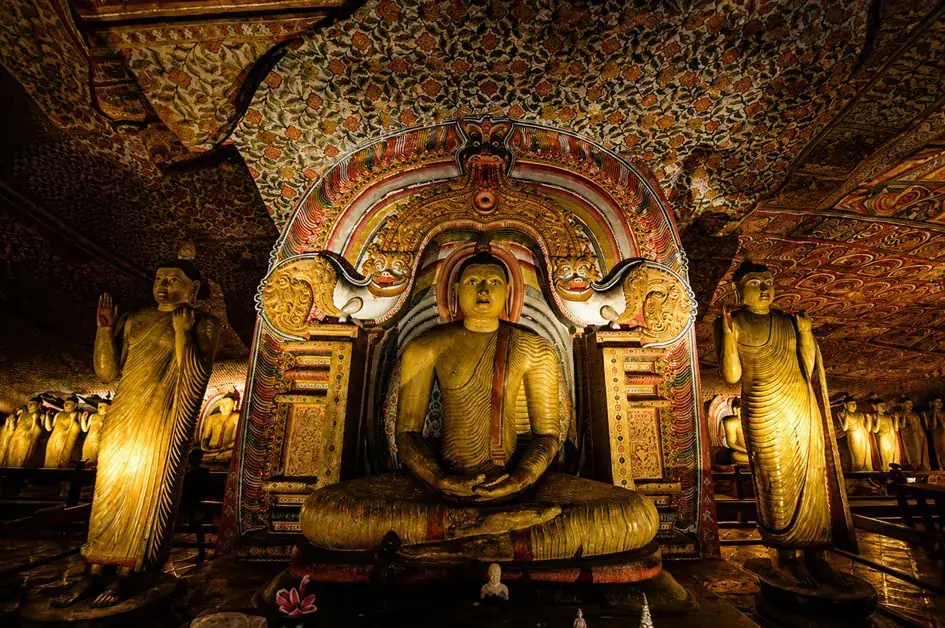
Statues and Murals in Dambulla Cave Temple (Photo: Nalaka Priyantha)
Morning
Leave Negombo after breakfast and travel inland towards Dambulla.
The scenery changes as you move away from the busy western coastal belt. Towns become smaller, coconut palms line parts of the road, and the dry-zone setting becomes clearer as you approach the Cultural Triangle.
Afternoon
Visit Dambulla Cave Temple before continuing to Sigiriya.
Dambulla contains five major cave shrines with Buddhist paintings and statues. Sri Lanka Tourism traces the temple complex back to the first century BCE and recommends morning or evening climbs because visitors reach the caves by long stone steps.
When you enter the temple area, cover your knees and shoulders. Remove shoes where required.
Continue to Sigiriya after your visit and check into your accommodation.
Dambulla Cave Temple is open daily from 7:00 am to 7:00 pm.
Evening
Spend a quiet evening near Sigiriya or Habarana. A pool, garden, or countryside lodge works well after several hours on the road.
Where to Stay
Stay in Sigiriya or Habarana for three nights.
Accommodation Guidance
Sigiriya suits travellers who want quick access to the rock fortress and Pidurangala. Habarana has a wider spread of resorts and provides good road links across the Cultural Triangle.
Food Stop
Try kottu roti for dinner. The dish combines chopped flatbread with vegetables, egg, meat, or seafood on a hot griddle.
Practical Notes
April afternoons become hot in the Cultural Triangle. Carry drinking water and sun protection. Keep temple clothing in your day bag.
Day 3: Sigiriya Rock Fortress and Pidurangala
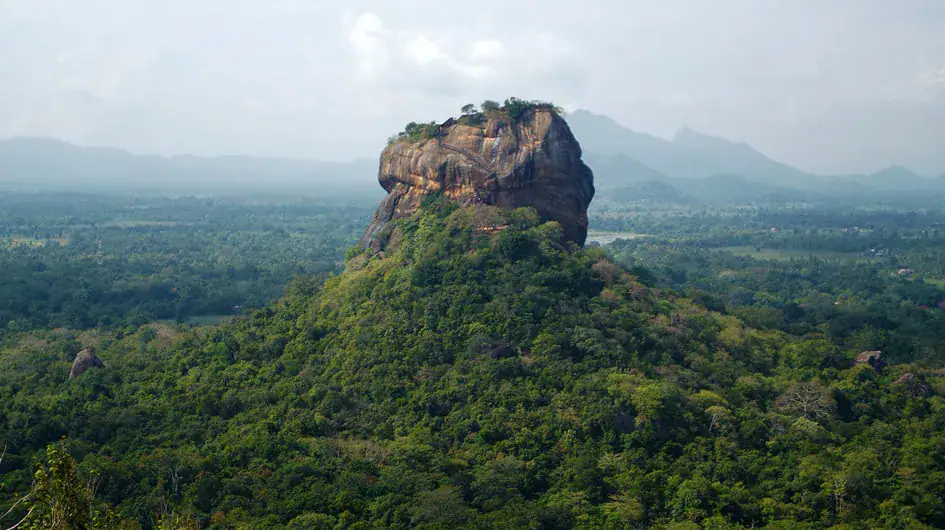
The View of Sigiriya Rock from Pidurangala (Photo: VacacionesPagodasBlog from Pixabay)
Morning
Start early at Sigiriya Rock Fortress.
Sigiriya deserves a central place in an April in Sri Lanka route. April also ranks among the months with the highest share of international visitors.
Walk through the landscaped water gardens before climbing towards the rock. The route passes ancient features, frescoes, the Mirror Wall area, and the Lion Paws before reaching the summit ruins.
The climb involves around 1,200 steps according to the SLTDA visitor management study. Start early to avoid stronger midday heat.
As of August 2026, the Central Cultural Fund lists the full foreign visitor ticket for Sigiriya at US$35. Check the official price again before you travel, as rates and exchange calculations change.
Sigiriya is open daily from 5:00 am to 6:30 pm. Ticket counters close at 5:00 pm, while access to the frescoes area ends at 5:45 pm.
Afternoon
Return to your accommodation for lunch and rest during the hottest hours.
Later, explore Sigiriya village or join a small local experience. Keep the afternoon flexible if rain develops.
Evening
Climb Pidurangala Rock if weather and energy levels suit the walk. The summit gives a broad view towards Sigiriya and the surrounding dry-zone countryside.
Start early enough to descend before darkness.
The Pidurangala Rock ticket office is open from 5 am to 6 pm every day.
Where to Stay
Stay at the same hotel or guesthouse in Sigiriya or Habarana.
Accommodation Guidance
Keeping the same room for three nights reduces packing and gives this section of the trip a slower rhythm.
Food Stop
Try a village-style rice and curry meal with dhal, coconut sambol, vegetables, and a local curry.
Practical Notes
Carry water for both climbs. Wear shoes with grip for Pidurangala. Avoid exposed rock during thunderstorms or heavy rain.
Day 4: Polonnaruwa Ancient City and Rural Sri Lanka
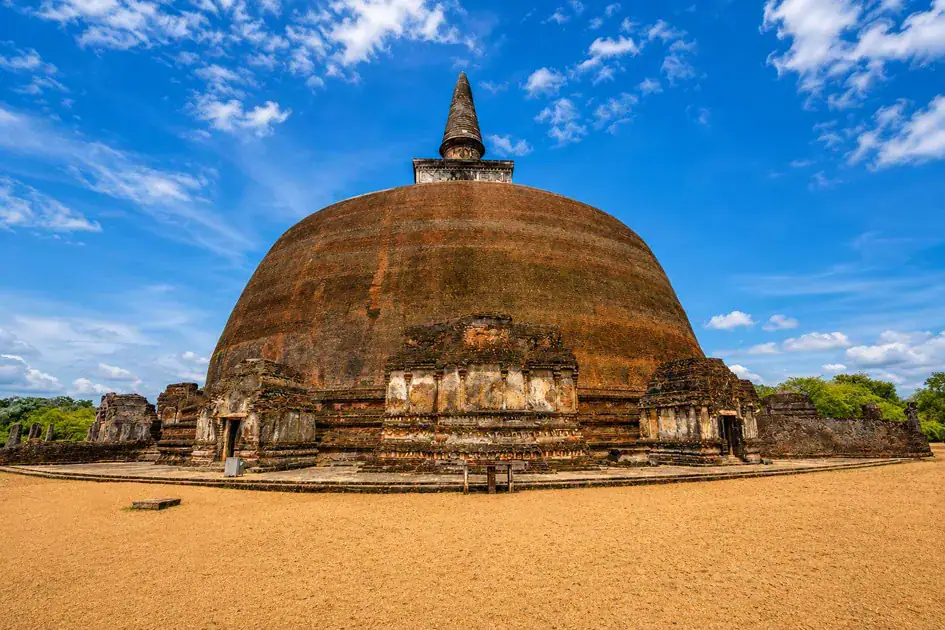
Rankoth Vehera in Polonnaruwa (Photo: Nalaka Priyantha)
Morning
Leave after breakfast for Polonnaruwa.
The medieval capital holds one of Sri Lanka’s richest groups of archaeological remains. The ancient city includes royal buildings, temples, stupas, stone carvings, and the Gal Vihara Buddha statues.
Sri Lanka Tourism includes Polonnaruwa among the country’s archaeological UNESCO World Heritage Sites.
Explore by bicycle if you enjoy cycling. A car or tuk-tuk works better during strong heat or rain.
The Central Cultural Fund lists the current full foreign visitor ticket at US$30 as of August 2026. Check the official rate before your visit.
Afternoon
Visit Parakrama Samudra before returning towards Sigiriya or Habarana.
If time and weather allow, spend part of the afternoon learning about village life. Choose a small community-based experience where residents receive a clear share of tourism income.
Evening
Return to your accommodation and rest.
Where to Stay
Stay in Sigiriya or Habarana for the third night.
Accommodation Guidance
Using one Cultural Triangle base saves time and avoids another hotel change.
Food Stop
Try a home-style rice-and-curry lunch. Look for dishes such as dhal curry, jackfruit curry, pumpkin curry, gotukola sambol, and freshwater fish where available.
Practical Notes
Polonnaruwa becomes hot around midday. Carry water, sunscreen, a hat, and socks for religious areas where shoes need to come off.
Day 5: Sigiriya to Kandy
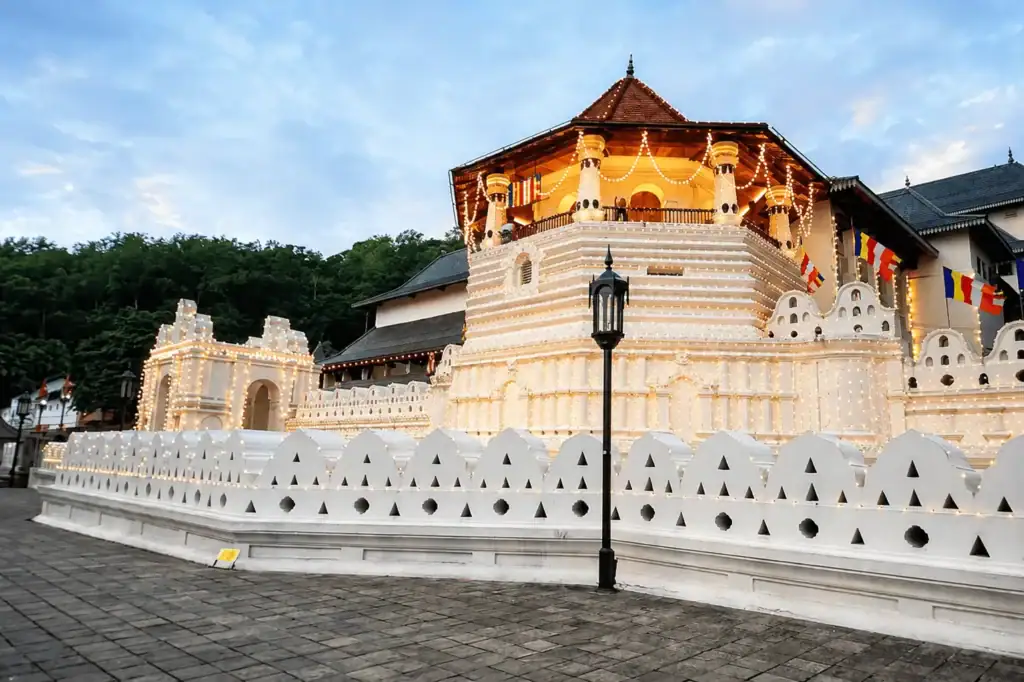
Temple of the Tooth – Kandy (Photo: Nalaka Priyantha)
Morning
Leave Sigiriya after breakfast and travel south towards Kandy.
Stop at a spice garden only if you have researched the operator and want the experience. Avoid visits built around high-pressure product sales.
Afternoon
Reach Kandy and settle into your accommodation.
Visit the Temple of the Tooth Relic. Kandy served as Sri Lanka’s last royal capital and remains one of the country’s main Buddhist centres. Official Sri Lanka Tourism describes the city as a centre of traditional culture. It identifies the Temple of the Tooth as its key sacred site.
Dress respectfully. Cover shoulders and knees and remove footwear before entering required areas.
Opening hours of the Temple of the Tooth: From 5.30 am to 8.00 pm (every day).
Evening
Walk around Kandy Lake or attend a cultural dance performance.
The evening puja period at the Temple of the Tooth attracts worshippers, so expect a busier atmosphere around the complex.
Where to Stay
Choose a hotel or guesthouse in central Kandy or on the surrounding hills.
Accommodation Guidance
Central accommodation works well for travellers who prefer walking access. Hillside hotels offer quieter surroundings and wider views, though tuk-tuk trips become more frequent.
Food Stop
Try lamprais, rice and curry, or hoppers with sambol.
Practical Notes
Kandy traffic becomes heavy around busy periods. Allow extra time when crossing the city.
Day 6: Kandy to Nuwara Eliya Through Tea Country
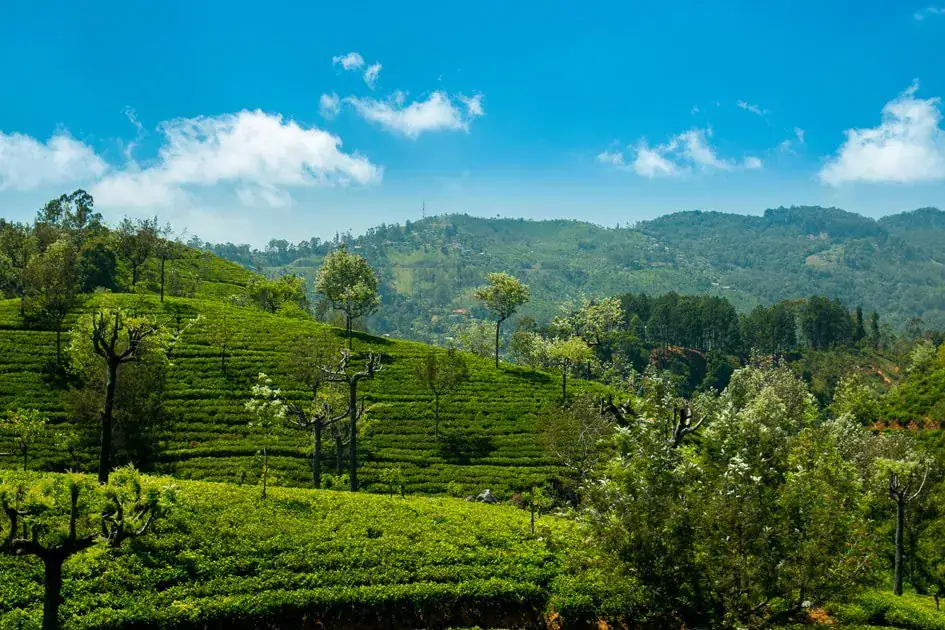
Tea Plantations in Nuwara Eliya (Photo: Francis Bijl, CC BY-NC-SA 2.0)
Morning
Visit the Royal Botanic Gardens at Peradeniya after breakfast.
Take time to walk through the palm avenues, orchid areas, lawns, and tropical plant collections.
The Royal Botanic Gardens, Peradeniya are open from 7:30 am to 6:00 pm. Ticket counters close at 5:00 pm.
After the gardens, begin the climb towards Nuwara Eliya.
Afternoon
Travel through Sri Lanka’s tea-growing highlands. Stop at a reputable tea estate or factory where visitors learn how fresh leaves move through the production process.
Continue towards Nuwara Eliya.
The climate feels different from Sigiriya and Kandy. At more than 1,800 metres above sea level, Nuwara Eliya often feels cool in the morning and evening.
April has another local importance here. The traditional Nuwara Eliya holiday season attracts Sri Lankan visitors during April, especially around the New Year period. Accommodation prices and traffic often rise.
Evening
Walk around the town or spend a quiet evening at your hotel. Prepare your clothes and daypack for an early departure to Horton Plains.
Where to Stay
Stay one night in Nuwara Eliya.
Accommodation Guidance
Choose accommodation with an early breakfast option or request a packed breakfast. Horton Plains requires an early start.
Food Stop
Try vegetable roti with dhal or a warming Sri Lankan curry. A cup of locally grown Ceylon tea fits naturally into the day.
Practical Notes
Pack a light fleece or jacket. Temperatures in the highlands feel much cooler than in the Cultural Triangle.
Day 7: Horton Plains and the Scenic Journey to Ella
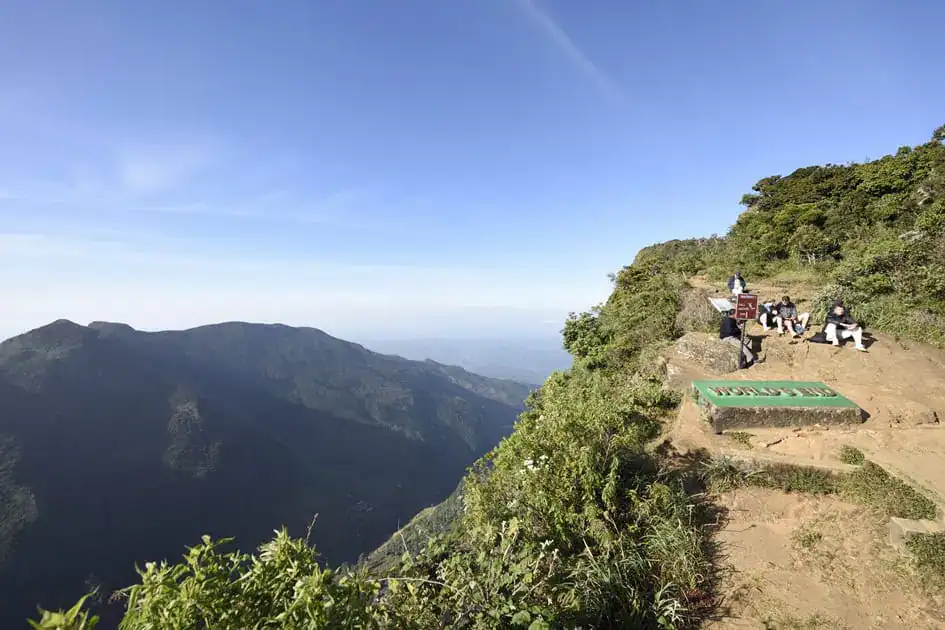
World’s End – Horton Plains National Park (Photo: Nalaka Priyantha)
Morning
Leave Nuwara Eliya before sunrise and drive towards Horton Plains National Park.
An early start gives you a better chance of clear views before the clouds roll in. The main trail crosses montane grassland and cloud forest before reaching viewpoints and Baker’s Falls.
Sri Lanka Tourism describes Horton Plains as a plateau at around 2,100 metres above sea level. The main circular trek covers about nine kilometres. It takes many walkers around three hours, although photo stops and trail conditions often extend the visit.
Wear proper walking shoes. Carry water, sun protection, and a light rain layer.
Horton Plains National Park is open between 6:00 am and 6:00 pm every day. You can book tickets through the Official Wildlife Park Permits Reservation eService.
Afternoon
Return towards Nuwara Eliya or Nanu Oya after the hike.
Collect your luggage and continue to Ella. The train from Nanu Oya offers one of the most scenic sections of Sri Lanka’s Main Line (Kandy to Ella Train). Tea estates, mountain slopes, forest, small stations, tunnels, bridges, and villages fill much of the route.
Reserve seats early if your journey falls near the Sinhala and Tamil New Year holiday.
Evening
Arrive in Ella and check into your accommodation.
Keep the evening easy after an early start at Horton Plains. Walk through Ella town, have dinner, and rest.
Where to Stay
Stay in Ella for two nights.
Accommodation Guidance
Choose accommodation within walking distance of town for easy access to restaurants. Hillside guesthouses outside the centre suit travellers seeking quieter surroundings and mountain views.
Food Stop
Try string hoppers with dhal and coconut sambol. Ella also has many restaurants serving Sri Lankan rice and curry.
Practical Notes
April weather changes quickly in the mountains. Start outdoor activities early and keep a light waterproof layer in your daypack.
Day 8: Ella, Little Adam’s Peak, and Nine Arch Bridge
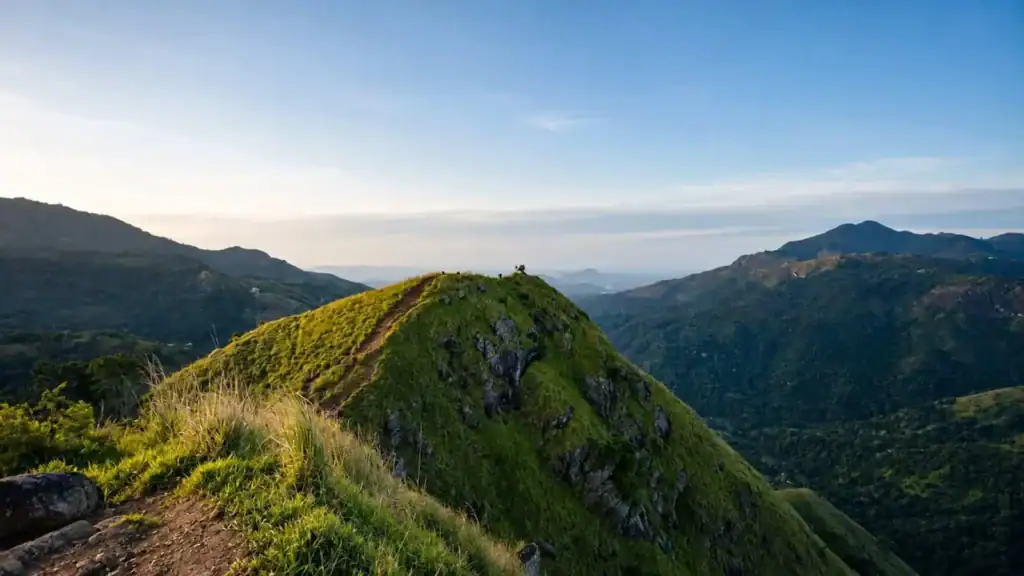
Little Adam’s Peak – Ella (photo: Nalaka Priyantha)
Morning
Start early with a walk up Little Adam’s Peak. The trail begins close to Ella and climbs through tea-growing country before reaching open viewpoints above the valley. The walk suits most travellers with a moderate level of fitness.
Mornings offer the best chance of clear mountain views. Clouds often gather later in the day during April. Wear shoes with good grip because rain leaves parts of the trail wet.
After the walk, continue towards Nine Arch Bridge. Trains pass across the stone bridge several times each day, though railway delays often change the exact timing. The surrounding forest and tea slopes make the area worth visiting even without a passing train.
- AllTrails Map – Little Adam’s Peak (1.6 km)
- AllTrails Map – Little Adam’s Peak and Lookout (2.9 km)
- AllTrails Map – Nine Arches Bridge – Little Adam’s Peak (5.8 km)
- AllTrails Map – Nine Arch Bridge from Ella Rd (1.9 km)
- AllTrails Map – Nine Arch Bridge (1.3 km)
- AllTrails Map – Nine Arch Bridge Viewpoint Loop (1.3 km)
Afternoon
Return to Ella for lunch and rest during the warmest part of the day.
Later, visit a tea estate, take a short countryside walk, or spend time around Ella town. Travellers seeking a harder hike might choose Ella Rock instead of Little Adam’s Peak, though the longer route needs more time and better weather.
Keep some flexibility during April. A clear morning might turn into rain by afternoon.
- Footpath to Ella Rock Loop (3.7 km)
- Ella – Ella Rock (9.7 km)
- Ella Rock Trail (5.8 km)
- Ella Rock Sunrise Viewpoint (3.4 km)
- Amba to Ella via Ella Rock (8.7 km)
Evening
Enjoy a quiet evening in Ella. Choose a restaurant overlooking the hills or walk through the centre before dinner.
Where to Stay
Stay at the same guesthouse or hotel in Ella.
Accommodation Guidance
A second night avoids another luggage move and gives you one full day in the Hill Country.
Food Stop
Try coconut roti with dhal curry, pol sambol, and a vegetable curry. Many small restaurants around Ella prepare simple Sri Lankan meals throughout the day.
Practical Notes
Start walks early. Carry water and a light rain jacket. Paths around Nine Arch Bridge become slippery after rain. Stay away from railway tracks when trains approach.
Day 9: Ella to Tissamaharama and the Yala Region
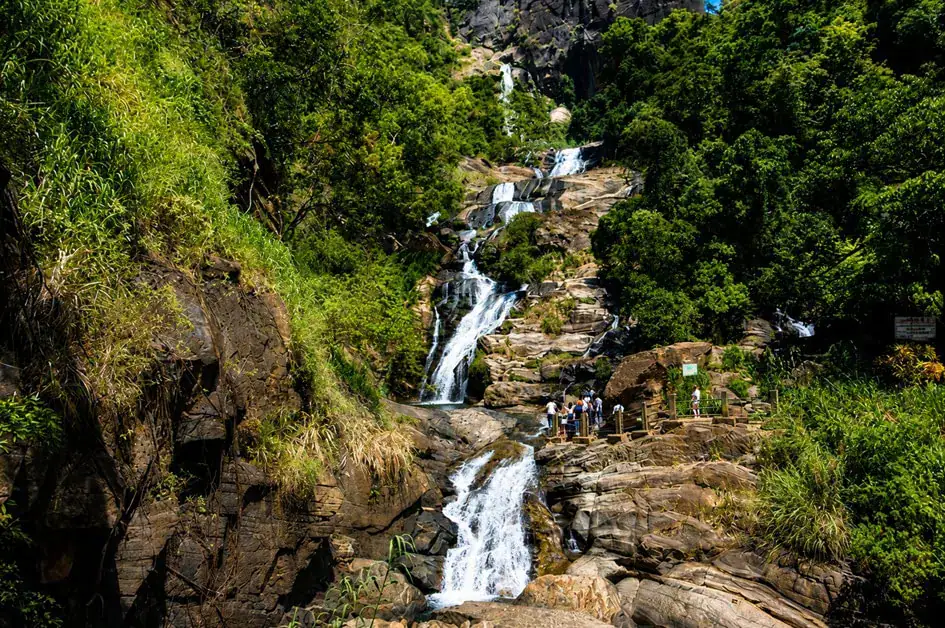
Ravana Ella Falls – Ella (Photo: Nalaka Priyantha)
Morning
Leave Ella after breakfast and begin the descent towards Sri Lanka’s Southeast.
Stop at Ravana Falls if traffic and weather suit a short visit. The waterfall sits beside the main road below Ella. View the falls from safe public areas. Wet rocks near waterfalls become slippery.
If you like visiting waterfalls, we recommend reading our guide to waterfalls and natural wonders in Sri Lanka.
The road soon leaves the cooler Hill Country. Temperatures rise as you travel towards Wellawaya and Tissamaharama.
Afternoon
Continue to Tissamaharama or accommodation near Yala National Park.
Use the afternoon for slower travel. Check into your hotel, rest, and prepare for an early safari the next morning.
Tissamaharama has reservoirs, wetlands, birdlife, temples, and farming areas. A short walk near Tissa Wewa offers a calm end to a travel day.
Evening
Have an early dinner and arrange your safari jeep, entrance procedure, breakfast pack, and pickup time.
The Department of Wildlife Conservation identifies Yala, Wilpattu, Horton Plains, and Udawalawe among Sri Lanka’s most visited national parks. Visitors need park permits and must follow wildlife department conditions.
Where to Stay
Stay in Tissamaharama, Kirinda, or near a Yala access route.
Accommodation Guidance
Tissamaharama gives you more restaurants and a broader range of accommodation. Lodges closer to Yala reduce morning driving time but often cost more.
Food Stop
Try curd with treacle after dinner. Southern and southeastern Sri Lanka have a long tradition of buffalo curd served with palm syrup.
Practical Notes
Confirm which Yala entrance your safari operator plans to use. Different blocks and gates affect travel time. Pack binoculars, cameras, water, sun protection, and neutral clothing for the safari.
Day 10: Yala National Park Safari and Tangalle
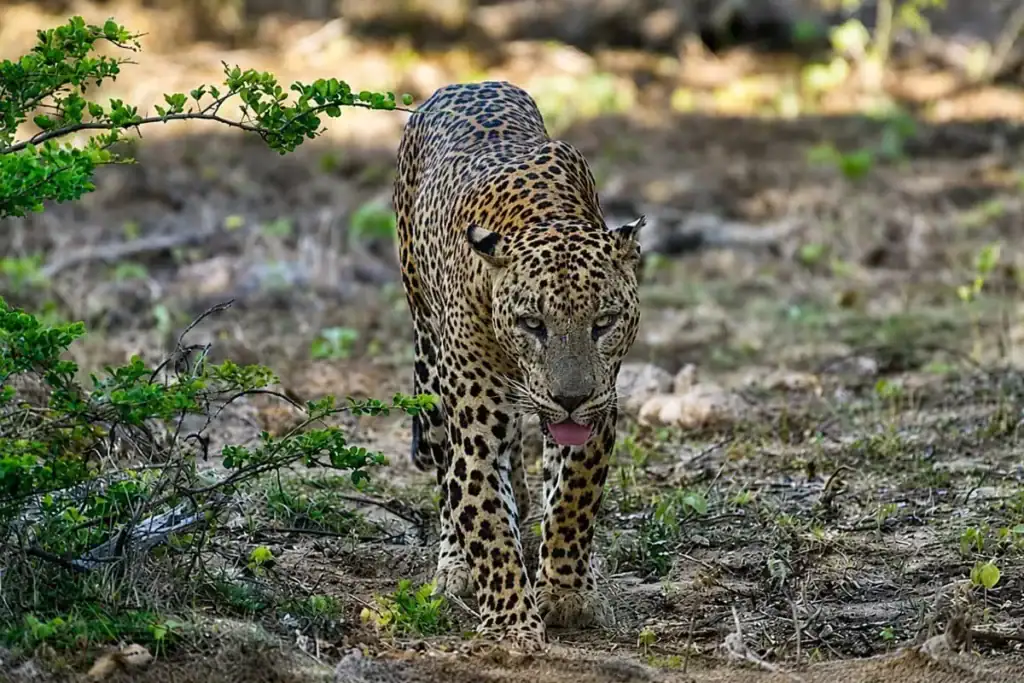
A Leopard in Yala National Park (Photo: Nalaka Priyantha)
Morning
Start before sunrise for the drive towards Yala National Park.
A morning safari usually offers cooler conditions and good wildlife activity. Yala supports elephants, crocodiles, spotted deer, buffalo, monkeys, wild boar, many bird species, and a well-known leopard population. Wildlife sightings never follow a schedule, so treat each safari as a nature experience rather than a checklist.
Ask your driver to keep a respectful distance from animals. Avoid operators who race between sightings or crowd wildlife.
The Department of Wildlife Conservation requires visitors to enter national parks with permits after paying the prescribed fee. Official conditions and ticket charges change, so check current rates close to your travel date.
Yala National Park is open between 6:00 am and 6:00 pm every day. You can book tickets through the Official Wildlife Park Permits Reservation eService.
Afternoon
Return to your accommodation, collect your luggage, and travel west towards Tangalle.
The drive shifts the journey from dry-zone wildlife country back towards the Southern Coast. Check into your beach accommodation and spend the rest of your afternoon at a relaxed pace.
Tangalle works well after an early safari. Long beaches and quieter coastal areas give you time to slow down.
Evening
Walk along the beach before dinner. Choose a safe swimming area rather than entering the sea wherever the beach looks calm. Currents vary along the Southern Coast.
Where to Stay
Stay near Tangalle Beach or one of the smaller bays nearby.
Accommodation Guidance
Choose accommodation within walking distance of a beach and restaurant area. Ask your hotel about local swimming conditions before entering the water.
Food Stop
Try ambul thiyal, a sour Sri Lankan fish curry from the South. The dish uses goraka and spices and pairs well with rice.
Practical Notes
A safari followed by a road transfer makes Day 10 tiring. Keep the afternoon free from major sightseeing.
Day 11: Tangalle to Mirissa Through the South Coast
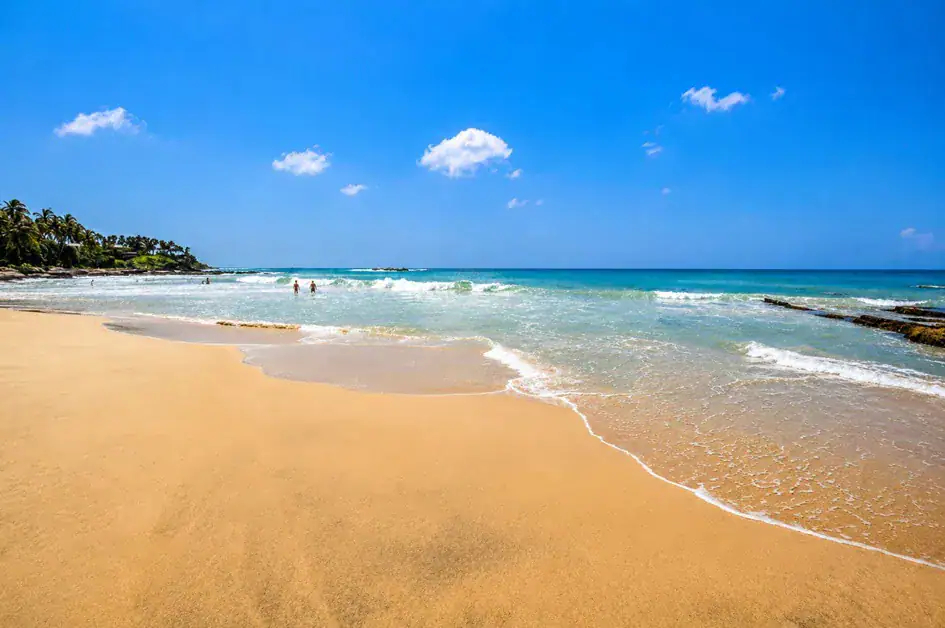
Goyambokka Beach – Tangalle (Photo: Nalaka Priyantha)
Morning
Enjoy a slow breakfast beside the coast.
Spend part of the morning on the beach or visit a nearby lagoon, fishing village, or local market. Leave enough time for the coastal journey towards Mirissa.
April still sits near the end of the stronger southwest and south coast beach period. Sri Lanka Tourism explains how seasonal winds shape beach conditions around the island and names Tangalle, Mirissa, and Unawatuna among important southern beaches.
Afternoon
Travel west along the Southern Coast.
Continue to Mirissa and check into your accommodation. Stop in Weligama if you want to see the broad bay. Weligama attracts beginner surfers because several parts of the bay offer gentler waves than many reef breaks.
Spend the late afternoon near Mirissa Beach. Coconut Tree Hill and nearby viewpoints attract many visitors, though crowds rise near sunset.
Evening
Walk through Mirissa and have dinner near the beach.
Where to Stay
Stay in Mirissa for two nights.
Accommodation Guidance
Choose accommodation slightly away from the busiest beach bars if you value quiet sleep. Travellers interested in nightlife might prefer a central beachfront location.
Food Stop
Try devilled prawns with rice or a fresh fish curry. Ask about spice levels before ordering if you prefer milder food.
Practical Notes
Use marked paths near coastal viewpoints. Avoid unstable cliff edges. Check sea conditions before swimming.
Day 12: Mirissa and Weligama Beach Day
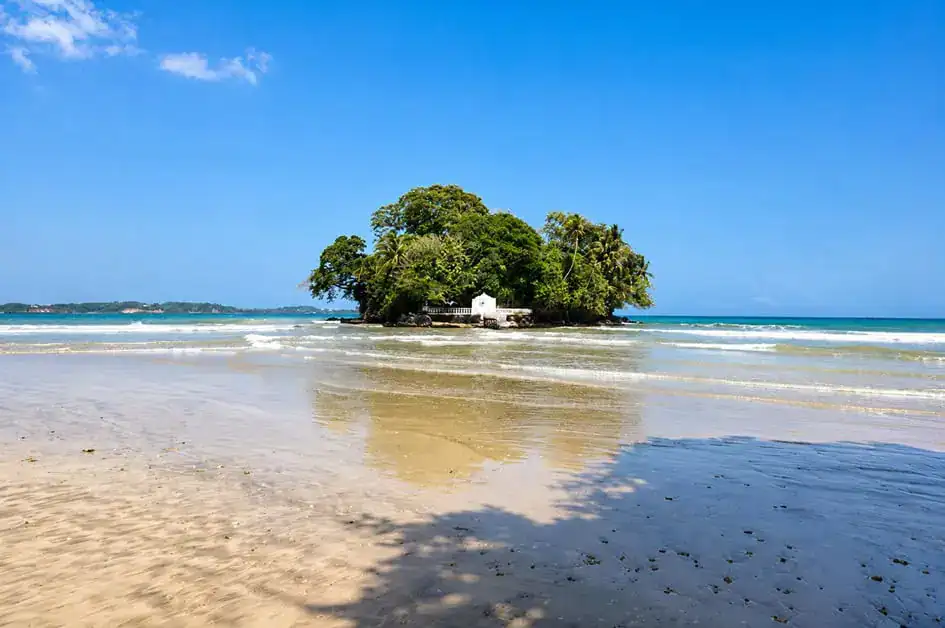
Taprobane Island and Weligama Beach (Photo: Nalaka Priyantha)
Morning
Keep Day 12 flexible.
A beach morning works well after more than a week of moving between destinations. Swim only where local conditions look safe, and lifeguards or experienced local operators recommend the area.
Travellers interested in surfing might head to Weligama for a beginner lesson. Choose an instructor with suitable boards and clear safety guidance.
Whale-watching trips operate from Mirissa during parts of the year. Sea conditions change during April, so check forecasts and operator practices before booking. Choose a company which keeps a respectful distance from marine wildlife.
Afternoon
Return to Mirissa for lunch and a slower afternoon.
Relax on the beach, visit Weligama, or spend time at your accommodation. Avoid filling every hour. Two weeks in Sri Lanka feels much better when some days include genuine rest.
Sri Lanka Tourism describes the island as having around 1,600 kilometres of coastline. It explains how different monsoon periods shift the best beach conditions between coasts.
Evening
Watch the sunset from the beach before your final night in Mirissa.
Where to Stay
Stay at the same accommodation in Mirissa.
Accommodation Guidance
A second night gives you a full coastal day without having to pack. Properties with shaded outdoor space work well during warm April afternoons.
Food Stop
Try hoppers for dinner. Plain hoppers, egg hoppers, dhal, and sambol make a light evening meal.
Practical Notes
Use reef-safe sun protection where available. Drink plenty of water. April heat feels stronger on exposed beaches.
Day 13: Mirissa to Unawatuna and Galle Fort
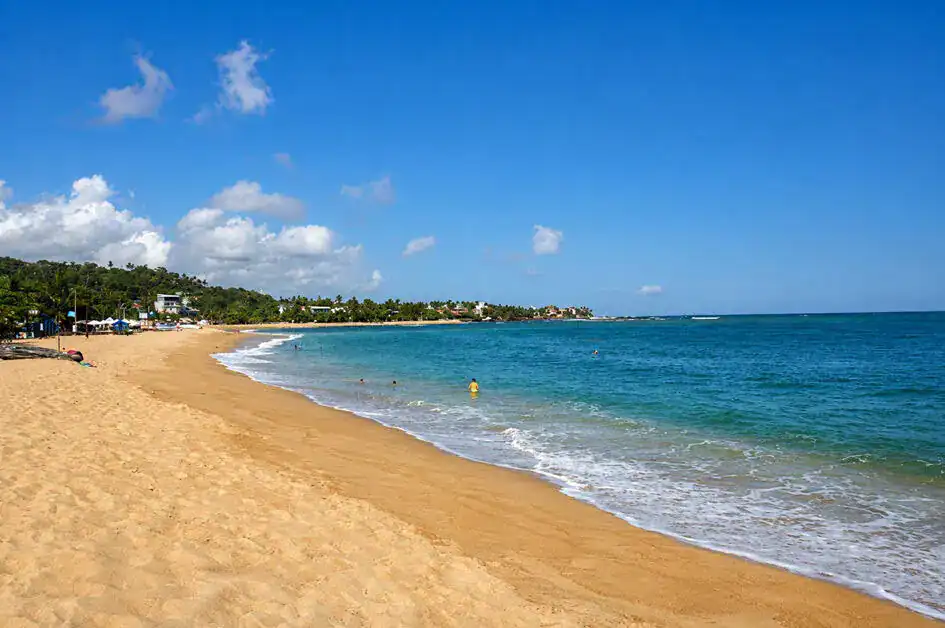
Unawatuna Beach (Photo: Nalaka Priyantha)
Morning
Leave Mirissa after breakfast and travel towards Unawatuna.
Spend a short period near the beach or visit the wider coastal area before continuing to Galle.
Do not make swimming essential on Day 13. Sea conditions change, and Galle deserves enough time later in the day.
Afternoon
Reach Galle and begin exploring Galle Fort.
The Central Cultural Fund describes Galle Fort as a living historic town with Portuguese, Dutch, British, and South Asian influences. UNESCO added the fortified city to the World Heritage List in 1988. The ramparts run for roughly three kilometres around the peninsula.
Walk through the narrow roads and visit the lighthouse area, old churches, bastions, courtyards, and small museums. The fort still contains homes, hotels, restaurants, shops, and religious buildings, so treat the area as a living neighbourhood rather than an open-air museum.
The main streets and ramparts do not require a general admission ticket. Individual museums and attractions charge separate fees. As of August 2026, the Central Cultural Fund lists the Galle Museum foreign adult ticket at US$6.
Evening
Stay inside the fort for sunset.
The ramparts provide broad views across the Indian Ocean. Sunset brings more walkers, local families, and visitors to the walls.
Enjoy dinner inside Galle Fort or in the newer city outside the walls.
Where to Stay
Stay in Galle Fort, Galle city, or Unawatuna.
Accommodation Guidance
A room inside the fort gives you easy evening access to restaurants and historic streets. Unawatuna suits travellers who prefer another beach night. Galle city often gives better value.
Food Stop
Try a southern-style rice and curry meal with fish, dhal, sambol, and seasonal vegetables.
Practical Notes
Wear comfortable shoes. The fort works best on foot. Carry water during midday and leave the ramparts during thunderstorms.
Day 14: Galle to Colombo and Departure
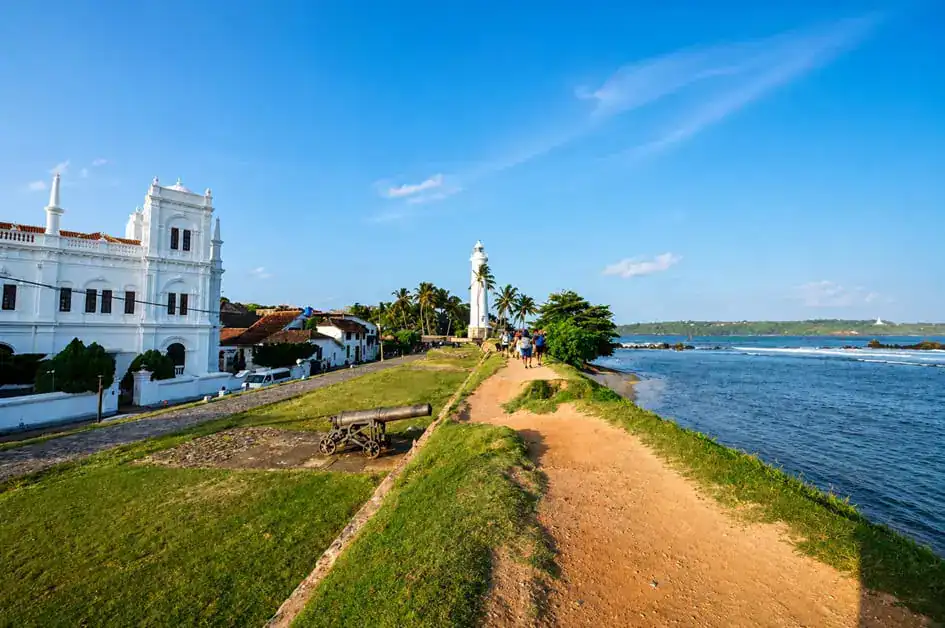
Galle Fort (Photo: Nalaka Priyantha)
Morning
Leave Galle according to your flight schedule.
The Southern Expressway makes the journey towards Colombo and Bandaranaike International Airport much faster than the old coastal road.
Travellers with an evening or late-night flight have time for a short stop in Colombo. Travellers with an earlier departure should travel straight towards the airport.
Afternoon
If flight timing allows, spend a few hours in Colombo.
Visit Galle Face, Pettah, Fort, or another area based on your interests. Avoid planning a long city tour before an international flight.
Leave generous time for airport traffic, check-in, security, and immigration.
Evening
Transfer to Bandaranaike International Airport and complete your 14 days in Sri Lanka.
Where to Stay
No overnight stay is needed for most evening departures.
Travellers flying early on Day 15 should stay in Negombo or near the airport.
Accommodation Guidance
An airport-area hotel works better than Colombo for an early morning flight.
Food Stop
Finish with rice and curry, kottu roti, or hoppers before departure. Choose the Sri Lankan dish you enjoyed most during the journey.
Practical Notes
Do not calculate airport timing from road distance alone. Traffic near Colombo and the airport changes throughout the day. Aim to reach the airport around three hours before an international departure.
Accommodation Guidance Throughout This Sri Lanka Itinerary for April
Thirteen nights give you enough time to change regions without moving hotels every night.
The route works best with one night in Negombo, three nights around Sigiriya or Habarana, one night in Kandy, one night in Nuwara Eliya, two nights in Ella, one night near Yala, one night in Tangalle, two nights in Mirissa, and one night in Galle.
Budget travellers will find guesthouses across every major stop. Family-run properties often include breakfast and local advice. Mid-range travellers have the widest choice, especially in Negombo, Sigiriya, Kandy, Ella, Mirissa, and Galle.
Higher-end travellers will find resort options around Habarana, the Hill Country, Yala, Tangalle, and the South Coast.
Location matters more than luxury for a fast-moving route. A cheaper hotel far outside town can add transport costs and waste time.
April needs one extra accommodation rule. Book early if your trip overlaps with Sinhala and Tamil New Year around 13 and 14 April. Nuwara Eliya, Ella, coastal resorts, and popular domestic destinations receive more local visitors during the holiday period.
We recommend reading our guide on how to choose where to stay in Sri Lanka.
Dining and Food Experiences Across the Trip
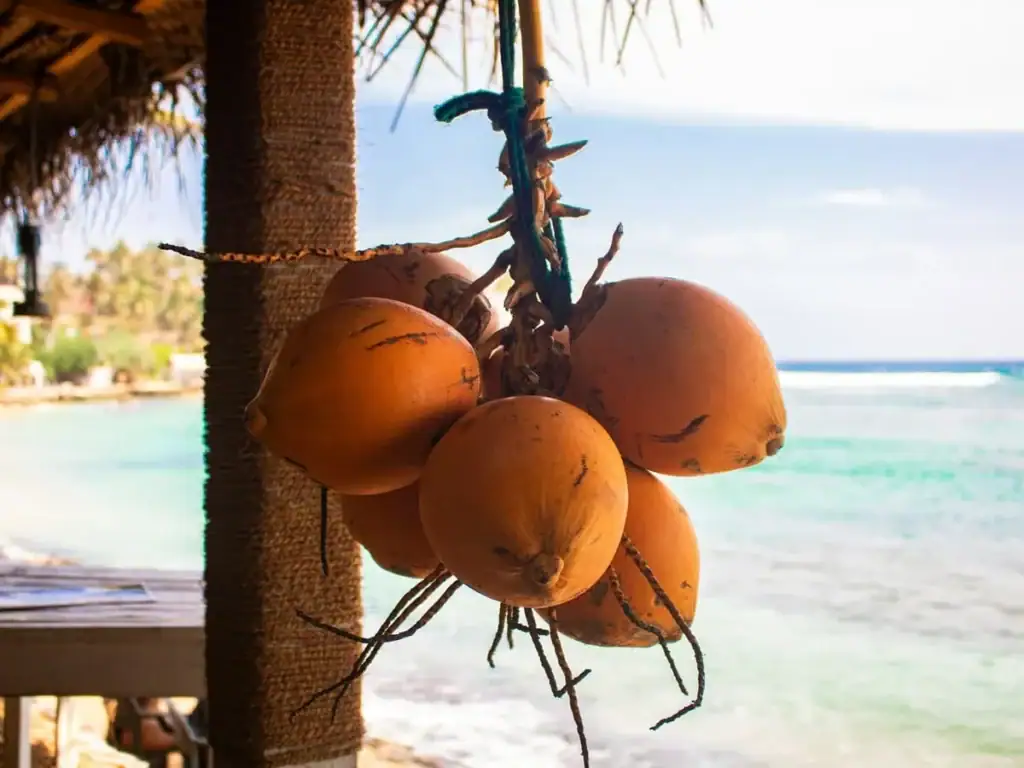
Don’t forget to taste king coconut. (Photo: Zoshua Colah, via Unsplash)
Sri Lankan Food should form part of the journey rather than become an extra activity.
Negombo starts with seafood and rice and curry. Sigiriya and Polonnaruwa suit village-style meals with vegetables, dhal, sambol, and local curries. Kandy offers hoppers, lamprais, and traditional rice-and-curry restaurants.
Tea country brings another side of Sri Lankan food. Nuwara Eliya and Ella have fresh vegetables, tea, roti, string hoppers, and a growing mix of small cafes and traditional kitchens.
Southern Sri Lanka adds seafood, ambul thiyal, devilled dishes, curd and treacle, and coconut-rich curries.
Look beyond hotel buffets. Small restaurants and family-run guesthouses often give you a better introduction to everyday Sri Lankan cooking.
Ask about chilli levels before ordering. Sri Lankan food often uses more chilli than many visitors expect.
Drink bottled, filtered, or properly treated water. Avoid single-use plastic where refill stations offer safe drinking water.
Cultural and Local Experiences
The strongest cultural experiences on this route come from ordinary daily settings as well as major monuments.
Dambulla introduces Buddhist cave art and worship. Sigiriya shows royal planning, ancient engineering, gardens, and palace remains. Polonnaruwa presents another period of Sri Lankan history through temples, stone sculpture, reservoirs, and royal ruins.
Kandy adds living religious practice. The Temple of the Sacred Tooth Relic still serves worshippers rather than functioning only as a visitor attraction. Sri Lanka Tourism identifies the temple as one of the country’s most sacred Buddhist pilgrimage sites. The official tourism guidance asks visitors to remove shoes and cover knees and shoulders before entering.
Rural stays, tea estates, local markets, fishing towns, railway journeys, and small restaurants add daily contact with local life.
Ask permission before photographing people up close. Follow restrictions inside temples. Avoid posing with your back towards Buddha statues.
Flexibility and Alternatives for April
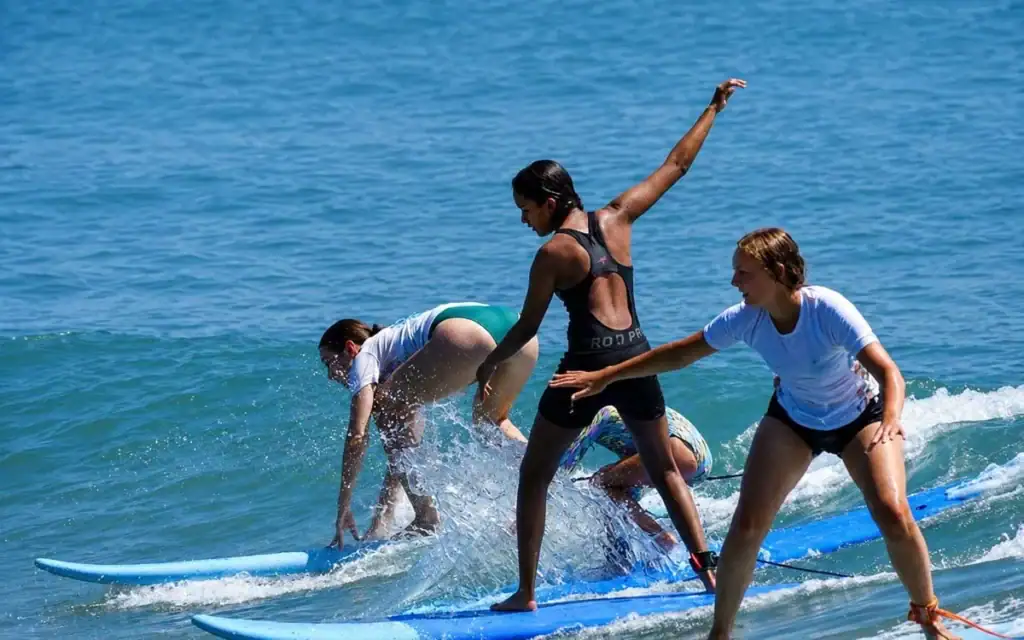
My daughter, Nethuli – Surfing in Arugam Bay (Photo: Nalaka Priyantha)
April rewards travellers who keep some space in the schedule.
If rain affects Pidurangala, stay around Sigiriya and move the climb to another morning.
If Horton Plains receives poor weather, spend more time in Nuwara Eliya, visit a tea estate, or travel to Ella earlier.
If rough seas affect Mirissa, replace swimming or whale watching with Weligama, Matara, coastal temples, cafes, or an extra half-day in Galle.
Travellers who value wildlife more might spend two nights near Yala and remove Tangalle. Beach-focused travellers might keep Tangalle and shorten Ella.
Kumana National Park becomes a stronger wildlife alternative during April, especially for birdlife, though adding Kumana makes the route longer. Arugam Bay also begins moving towards better conditions as April progresses. A standard first-time 14-day route still works more smoothly through Yala and the South Coast.
Weather and Packing Notes for April
April is a transition month.
Expect warm conditions across the lowlands, high humidity near the coast, strong sun, and a growing chance of afternoon or evening rain. The Cultural Triangle feels hot during midday. Kandy stays warm but receives showers. Nuwara Eliya and Horton Plains feel much cooler. Ella also has cooler mornings and changing mountain weather.
South Coast conditions often stay attractive during at least part of April, though the stable dry-season pattern starts weakening. Official Sri Lanka Tourism information explains how seasonal monsoon winds shift calmer beach conditions between the Southwest and East Coasts.
Pack light clothing for the lowlands and one warmer layer for Nuwara Eliya and Horton Plains.
Useful packing essentials include,
- Lightweight cotton or quick-dry shirts
- Breathable trousers or shorts
- Modest clothing for temples
- A light fleece
- A thin waterproof jacket
- Comfortable walking shoes
- Sandals
- A sun hat
- Sunglasses
- Sunscreen
- Insect repellent
- A reusable water bottle
- Small daypack
- Swimwear
- Personal medicines
- Basic first-aid supplies
- Travel adapter
- A portable charger
- A waterproof phone pouch
- Copies of travel documents
A small umbrella also works well during short April showers.
We recommend reading our guides on the best time to visit and the weather in Sri Lanka.
Practical Details, Hours, Fees, Bookings, and Dress Codes

Frescoes in Sigiriya (Photo: Yves Picq, CC BY-SA 4.0)
Entry Fees
Ticket prices and payment arrangements change, so check official sources before travel. As of 26 August 2026, the Central Cultural Fund lists the full foreign adult ticket at US$35 for Sigiriya and US$30 for Polonnaruwa. The Galle Museum costs US$6 for a full foreign adult ticket. CCF calculates local-currency prices using its current exchange rate. Tickets are valid for a single entry on the relevant day. Official online reservations are available for selected heritage sites.
Opening Hours
Most cultural sites open during the morning and remain accessible until late afternoon or evening.
Start Sigiriya and Polonnaruwa early for cooler conditions and a lower risk of rain. Horton Plains deserves an early departure from Nuwara Eliya.
Religious sites sometimes follow separate worship schedules, so check current times before visiting.
Dress Code
Dress respectfully when visiting temples and other religious sites. Cover your knees and shoulders, and remove shoes and hats where required. Carry socks for temple visits during hot afternoons, as stone floors can become uncomfortable under strong sun.
Transport Tips
Reserve Hill Country train seats early when possible, especially if your trip falls around the Sinhala and Tamil New Year period in April, when domestic travel demand rises. For national parks, use an authorised safari jeep and follow Department of Wildlife Conservation rules. Do not leave the vehicle without permission, or ask drivers to move too close to animals.
Safety, Health, and Comfort Notes
Travel Insurance
Buy travel insurance before departure. Choose a policy covering medical treatment, trip interruption, hiking, safari travel, and any water sports you plan to try. Keep copies of your insurance details and passport both online and offline.
Local Safety
Use normal travel precautions throughout Sri Lanka. Store passports, extra cash, and other valuables securely at your accommodation. Use registered transport providers where possible and wear seat belts. Choose daytime travel for long road journeys when practical. Heat also needs attention. Drink enough water, use sun protection, and schedule climbs for the cooler morning hours. Use mosquito repellent, especially around dawn and dusk.
Hospitals and Medical Access
Colombo offers the widest choice of major public and private hospitals. Kandy, Galle, Nuwara Eliya, and other large towns also have hospitals and medical facilities. Medical services are more limited around remote hiking areas and national parks, so carry your regular medicines. For emergencies, Sri Lanka’s 1990 Suwa Seriya ambulance service provides emergency medical assistance. SLTDA also lists 1912 as the tourism hotline and 1990 for ambulance assistance.
Estimated Costs for 14 Days in Sri Lanka
Travel costs vary widely by hotel level, transport choice, safari type, food habits, and entrance fees.
A budget traveller using guesthouses, trains, buses, local restaurants, and shared activities might spend around US$45 to US$70 per person each day, excluding international flights.
A mid-range traveller using comfortable guesthouses or hotels, a mix of private transport and rail, restaurant meals, heritage tickets, and one safari might spend around US$90 to US$150 per person each day.
A higher-end journey with boutique hotels, private transport throughout, upscale resorts, private safaris, and premium dining might exceed US$200 per person each day.
For two weeks, a practical planning range sits near US$630 to US$980 per person for a budget trip, US$1,260 to US$2,100 for a mid-range trip, and US$2,800 or more for a higher-end trip.
International flights are separate.
Major heritage fees add up quickly. Sigiriya and Polonnaruwa alone total US$65 per foreign adult at current August 2026 CCF rates.
Safari charges include park fees, jeep hire, taxes, and related charges. Ask operators for a full price before booking.
April accommodation prices rise around the New Year holiday in some areas. Booking early gives you more control over both price and location.
Responsible Travel Notes
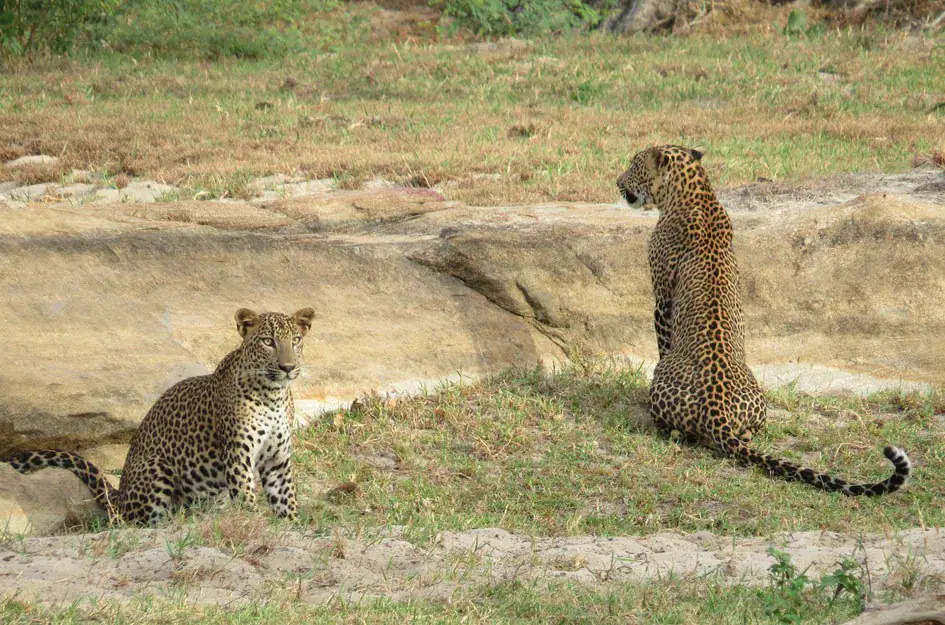
Two Leopards – Yala National Park (Photo: Nalaka Priyantha)
Choose accommodation, guides, drivers, and restaurants where tourism income reaches local people.
Avoid elephant rides and wildlife attractions built around handling wild animals. Watch wildlife inside protected areas from a safe distance. Do not touch or feed wild animals.
During safaris, ask drivers not to block animals or race between sightings.
Carry a refillable bottle where safe refill points exist. Reduce disposable plastic. Keep rubbish with you until you reach a proper bin.
Respect temple rules. Dress modestly. Remove shoes where required. Avoid touching statues or historic surfaces.
The Central Cultural Fund states that ticket income supports conservation, maintenance, and heritage preservation. Buying official tickets therefore supports the sites you visit.
Use local guides where their knowledge adds value. A good guide often explains history, wildlife, farming, religion, and daily life in ways a quick visit misses.
Highlights of This 14-Day April Route
This Sri Lanka itinerary for April includes several memorable experiences.
- Climbing Sigiriya Rock Fortress
- Exploring the ancient city of Polonnaruwa
- Visiting Dambulla Cave Temple
- Experiencing the Temple of the Sacred Tooth Relic in Kandy
- Travelling through Sri Lanka’s tea country
- Hiking through Horton Plains National Park
- Exploring Little Adam’s Peak and Nine Arch Bridge in Ella
- Watching wildlife on safari in Yala National Park
- Relaxing on Tangalle, Mirissa, Weligama, and Unawatuna beaches
- Walking through historic Galle Fort
These highlights create a balanced 14-day journey through Sri Lanka’s culture, Hill Country, wildlife, and Southern Coast.
Partners in travel: my loving wife Ridmika and our daughter Nethuli, in Nuwara Eliya (Photo: Nalaka Priyantha)
Are you new to Sri Lanka? We recommend reading our complete Sri Lanka travel guide for first-time visitors and learning how to find the best travel itineraries for your travel season.
Final Thoughts
A good April route needs more than a list of famous places. Timing matters because Sri Lanka’s weather changes between regions during the month.
This Sri Lanka itinerary for April uses those seasonal differences to your advantage. You visit Sigiriya, Dambulla, Kandy, Nuwara Eliya, and Horton Plains while April still suits those areas well. You then move through Ella and Yala before finishing on the Southern Coast.
Fourteen days also gives you enough time to experience several sides of Sri Lanka without changing destinations every morning.
You see ancient capitals, Buddhist temples, tea country, mountain trails, wildlife, fishing towns, beaches, and Galle Fort within one connected route.
April also gives travellers an interesting view of Sri Lankan life because Sinhala and Tamil New Year falls during the month. If your dates overlap with the holiday, book transport and accommodation earlier and leave extra room for local travel demand.
For a first visit, this route balances variety, seasonal logic, and manageable travel time. The Sri Lanka itinerary for April starts with culture, crosses the mountains, adds a safari, and ends beside the Indian Ocean. After 14 days, you leave with a broad view of the country rather than a rushed collection of stops.
Sources and References:
- Sri Lanka Tourism Development Authority (SLTDA). Tourist arrival statistics, tourism information, visitor services, tourism hotline, and travel data.
- Sri Lanka Tourism. Official destination information covering Sigiriya, Dambulla, Kandy, the Cultural Triangle, Hill Country, beaches, wildlife, heritage attractions, and regional travel experiences.
- Central Cultural Fund (CCF). Official information for Sigiriya, Polonnaruwa, Dambulla, Galle Fort, archaeological sites, museums, heritage conservation, and visitor information.
- Central Cultural Fund Ticket Prices. Current foreign visitor entrance fees for Sigiriya, Polonnaruwa, Galle Museum, and other CCF-managed attractions.
- Central Cultural Fund eTicket Service. Official online ticket information and reservations for major archaeological and heritage sites, including Sigiriya and Polonnaruwa.
- Department of Wildlife Conservation Sri Lanka. Official information about national parks, protected areas, visitor permits, wildlife regulations, and conservation. This source supports information related to Yala National Park and responsible safari travel.
- Sri Lanka Railways. Official train information, railway services, schedules, and passenger guidance.
- Sri Lanka Railways Online Seat Reservation. Official advance seat reservation service. The system covers routes relevant to this itinerary, including Kandy to Badulla and Kandy to Ella services.
** Entrance fees, opening hours, train schedules, and park regulations are subject to change. Check the official sources above before your trip.
Featured image: The Hill Country Train (Photo: Stéphane Bouley, CC BY-NC-ND 2.0)

I am a Sri Lankan medical doctor who spends my free time travelling, exploring new destinations, and documenting the beauty of the island I call home. I have journeyed across almost every corner of Sri Lanka with my wife and daughter — from wildlife parks and misty mountains to ancient cities, deep forests, rugged landscapes, and quiet beaches.
Travel is not just a hobby for me — it’s a way of life. I love nature, enjoy road trips, and find joy in wildlife photography. I also read widely about tourism, travel trends, and destination culture. Through my writing, I aim to help travellers experience Sri Lanka through real stories, meaningful insights, and honest recommendations — the same way I explore it with my own family.