

April feels like the month when Sri Lanka opens itself to you. The sea stays warm, the hill country feels fresh, and the air carries the sound of drums and laughter from Sinhala and Tamil New Year celebrations. You share the island with many other curious travellers, but not peak-season crowds. A 12-day itinerary for Sri Lanka fits well with the shoulder season. You move through culture & heritage, wildlife & nature, and golden beaches at a steady pace, with enough time to breathe, eat, and talk to people.
This guide gives you a complete, practical plan that links the most-loved attractions in Sri Lanka with real-world timing and straightforward advice. Use it as your core Sri Lanka travel itinerary when you visit Sri Lanka in April.
Title and Clear Overview
Title: The Best 12-Day Itinerary for Sri Lanka in April
Destination: Sri Lanka, round trip starting from Negombo and finishing on the South and Southwest Coast.
Total duration: 12 days and 11 nights.
Main route: Negombo, Wilpattu National Park, Anuradhapura, Polonnaruwa, Sigiriya, Dambulla, Kandy, Nuwara Eliya, Kandy to Ella train line, Ella, Yala National Park, Mirissa, Weligama, Unawatuna, and Galle Fort.
Themes: Culture and heritage, wildlife and nature, beaches and surf, rail journeys, Sri Lankan food, and local festivals around the Sinhala and Tamil New Year.
Style and pace: Active but balanced. Mornings focus on key things to do in Sri Lanka, such as climbs, wildlife safaris, and hikes. Afternoons and evenings bring rest, food, and shorter walks.

A traditional fishing boat on Negombo Beach (Photo: Véronique Nijs)
Why This Sri Lanka Travel Itinerary Works in April
April sits between the two monsoon systems. Coastal guides and weather overviews describe this month as warm, humid, and often dry along the South and West Coasts, with clear early mornings in the Cultural Triangle and soft air in the Central Highlands. You meet quick showers, but they pass fast.
If you plan to visit Sri Lanka, it is better to read up on the weather and the best time to visit.
The Sinhala and Tamil New Year usually falls on the 13th and 14th of April. It marks a key moment in the cultural calendar. You see village games, sweet stalls, temple visits, and family rituals across the island. Many tour companies shape April routes around this period because guests want real contact with local life.
How to Use This Itinerary for Sri Lanka
This route is for first-time visitors who want a mix of icons and simple daily routines. You land, move north for wildlife and heritage, cross through the hills, then roll down to the South coast. Transfers stay moderate. High-energy days sit early in the trip. Beach and short stroll days sit near the end.
A private driver with a car keeps things smooth. Many visitors choose this option for 10 to 14 days because road times drop, and you control stops. You also use the Kandy to Ella railway for one of the best-known scenic train rides in Asia.
You adjust small parts if your flight times differ, but the overall shape stays the same.
Route Snapshot by Day
- Day 1: Negombo. Arrival and coastal reset.
- Day 2: Negombo to Wilpattu National Park. Evening safari.
- Day 3: Wilpattu to Anuradhapura, which was the first kingdom of Sri Lanka. Ancient city and sacred sites.
- Day 4: Anuradhapura to Polonnaruwa, which was the second kingdom of Sri Lanka. Ruins and lakes.
- Day 5: Polonnaruwa to Sigiriya and Dambulla. Rock Fortress and Cave Temple.
- Day 6: Sigiriya to Kandy, which was the last kingdom of Sri Lanka. Temple of the Tooth and lakefront evening.
- Day 7: Kandy and Royal Botanic Gardens, Peradeniya. City, markets, and crafts.
- Day 8: Kandy to Nuwara Eliya. Tea country and cool air.
- Day 9: Nuwara Eliya to Ella on the Kandy to Ella train line. Nine Arches Bridge and Little Adam’s Peak.
- Day 10: Ella to Yala National Park. Evening safari.
- Day 11: Yala to Mirissa and Weligama. Beach time and an option for surfing.
- Day 12: Mirissa whale watching, Unawatuna Beach, and Galle Fort. Return towards Colombo.
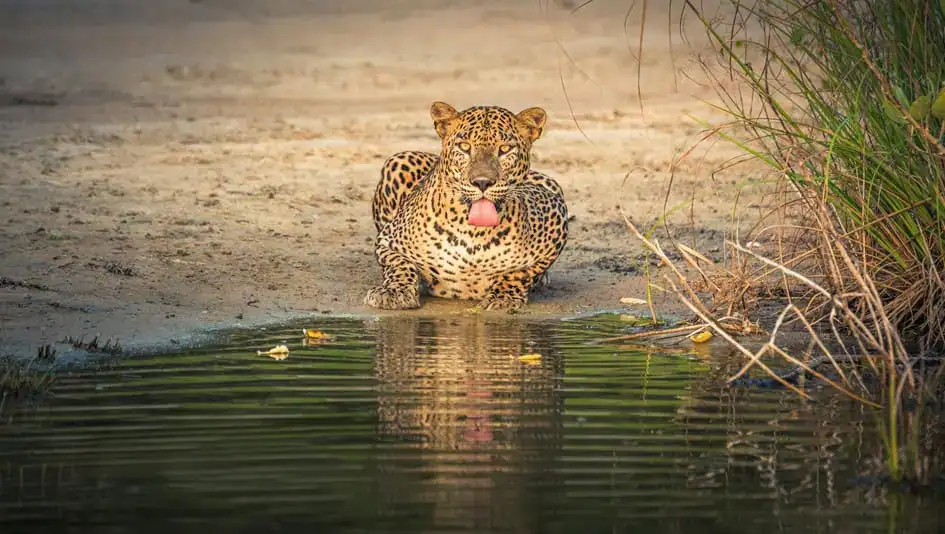
Leopard – Wilpattu National Park (Photo: Udara Karunarathna)
Transport and Basic Logistics
Main transport: Private car and driver for the whole route, apart from the scenic train. This mode of transport best matches most 10- to 16-day itineraries because it saves time and energy.
Train: Kandy or Nanu Oya to Ella on the Hill Country line. Book seats in advance.
Online Ticket Booking: Online Advance Train Seats Reservation from the Sri Lanka Railways Official Page.
If you visit Sri Lanka, it is advisable to read the Transport in Sri Lanka: The Best Guide.
Approximate Road Times
- Negombo to Wilpattu: 3.5 hours.
- Wilpattu to Anuradhapura: Around 1 hour.
- Anuradhapura to Polonnaruwa: Around 2 hours.
- Polonnaruwa to Sigiriya: 1.5 hours.
- Sigiriya to Kandy: 2.5 hours.
- Kandy to Nuwara Eliya: Around 3 hours.
- Nuwara Eliya to Ella by train: around 3 hours.
- Ella to Yala area (Tissamaharama): 2.5 hours.
- Yala to Mirissa or Weligama: 2.5 hours.
- Mirissa to Galle: 1 hour.
- Galle to Colombo Airport: around 2.5 hours.
Weather Tips for Transport
Start transfers early in the day. April afternoons feel hot in the lowlands, and showers often arrive later.
Day by Day Sri Lanka Travel Itinerary
Day 1: Arrival in Negombo

Negombo Beach During Sunset (Photo: Nisal Rajapakshe)
Morning
Arrive at Bandaranaike International Airport. Clear immigration and meet your driver. Reach Negombo in around 30 minutes. Check into a hotel near the beach or the Dutch Canal. Most travellers use Negombo as a soft landing spot because access is simple and the atmosphere feels relaxed.
Afternoon
Walk along Negombo Beach. Take off your shoes and feel the sand. Large resorts sit next to small guesthouses. If you arrive early, visit the fish market and see boats unload their catch. The scene gives you a first taste of daily life.
Evening
Eat grilled lagoon prawns or crab at a beach restaurant. Try your first plate of rice and curry with coconut sambol. Drink plenty of water and go to bed early.
Where to Sleep
Stay near Lewis Place or the main beach strip. Options range from simple guesthouses to larger hotels with pools.
Read the ” Where to Stay in Negombo” guide.
Day 2: Negombo to Wilpattu National Park
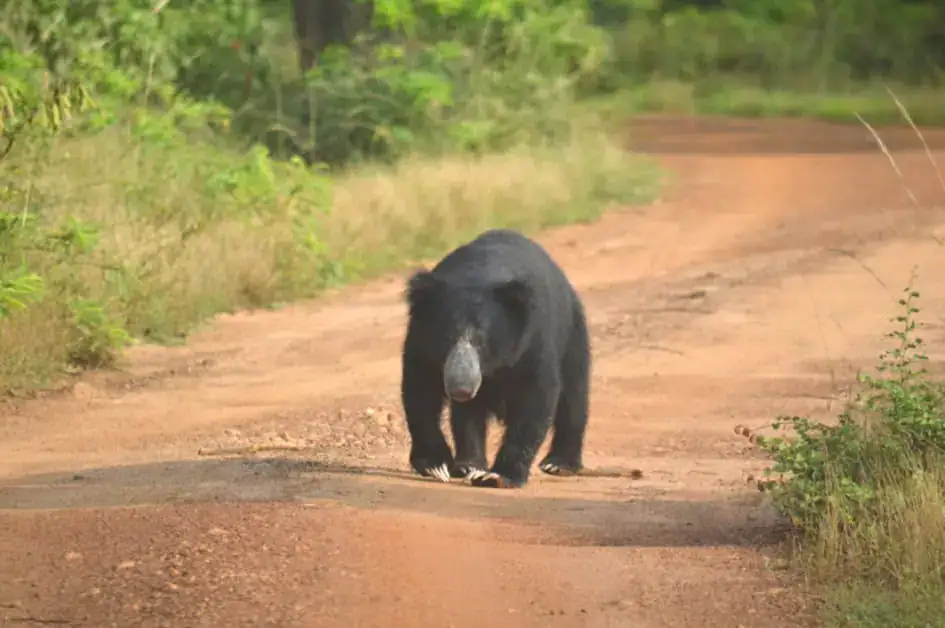
A Sloth Bear – Wilpattu National Park (Photo: Nalaka Priyantha)
Morning
Eat an early breakfast. Drive north towards Wilpattu National Park. The route passes small towns and coconut plantations. Reach your lodge near the park around midday. Check in and rest during the hottest hours.
Afternoon
Head out for an afternoon safari in Wilpattu. Guides describe this park as one of the most visited in recent years, with growing appeal among foreign guests who want leopard and sloth bear sightings in a quieter setting than Yala. Thick forest, natural lakes, and long tracks give a strong sense of space.
Evening
Return to your lodge. Eat dinner under the trees if the weather allows. Try a simple buffet with rice, curries, and grilled meats. Sleep early for another half day in the park, or have a relaxed morning.
Food Tip
Ask for fresh fruit. April brings ripe mangoes, pineapple, and bananas.
Opening hours of Wilpattu National Park: From 6.00 am to 6.00 pm.
Day 3: Wilpattu to Anuradhapura
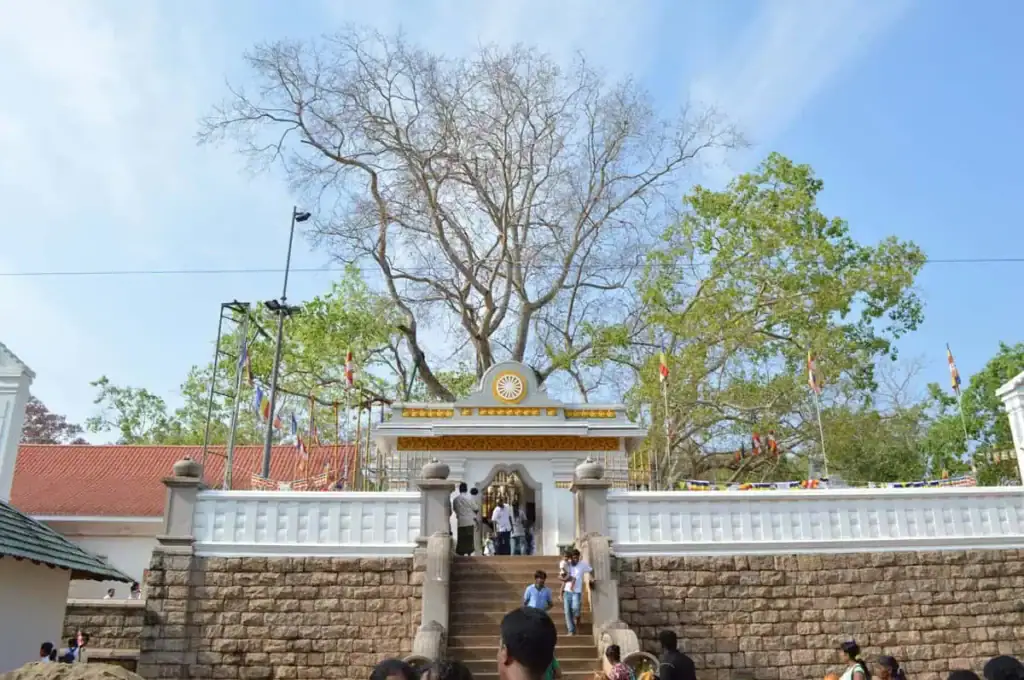
Jaya Sri Maha Bodhi (Photo: Nalaka Priyantha)
Morning
Take a morning safari if you want more time in Wilpattu. Early drives often attract more wildlife, especially birds and deer. Return to your lodge by late morning. Shower and pack.
Afternoon
Drive to Anuradhapura. Reach the ancient city in about 1 hour. Check in at a hotel or guesthouse near the old city or the new town. Eat lunch, then go out for your first look at the stupas and sacred sites.
Visit the Sri Maha Bodhi tree, a key pilgrimage site linked to the original Bodhi tree in India. Walk around the Ruwanwelisaya stupa and observe local worship. UNESCO lists Anuradhapura as a World Heritage Site, making it ideal for travellers seeking more profound heritage experiences.
Evening
Return to your hotel. Eat at a local restaurant that serves simple rice-and-curry plates. Rest well after a full day.
Cultural Tip
Dress with covered shoulders and knees during temple visits. Remove shoes and hats at entrances.
Day 4: Anuradhapura to Polonnaruwa
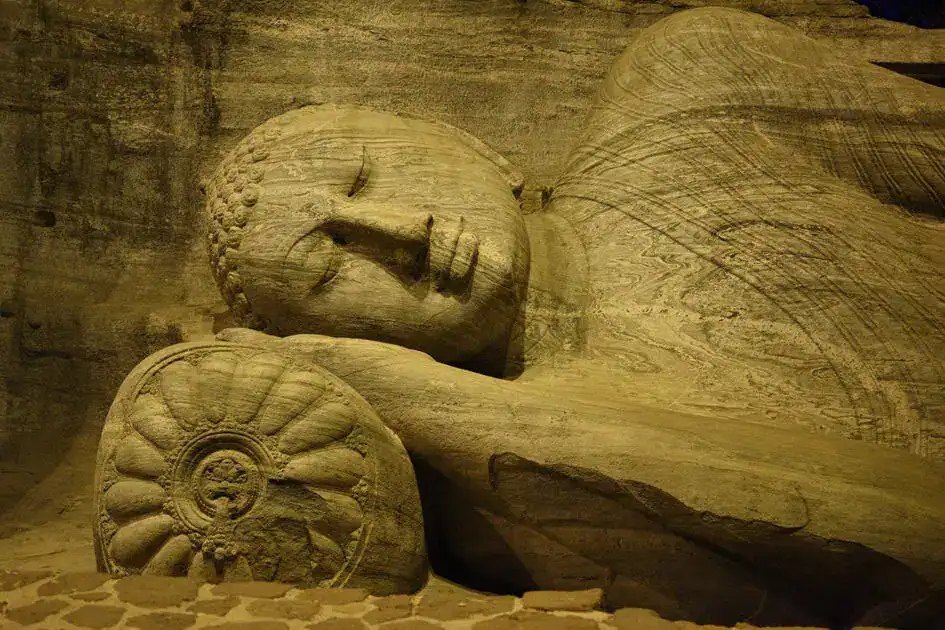
Buddha Statue – Polonnaruwa Gal Viharaya (Photo: Nalaka Priyantha)
Morning
Spend a final morning in Anuradhapura. Visit the Jetavanaramaya stupa, another major site, an important attraction for both locals and foreigners. Hire a guide or use a local tuk-tuk to move between clusters of ruins.
Afternoon
Drive to Polonnaruwa around midday. The road takes about 2 hours. Check into a hotel near the lake or in town. Eat lunch, drink water, and rest for a short time.
Late Afternoon
Explore the ruins of Polonnaruwa. You walk among ancient palaces, temples, and the famous Gal Vihara rock Buddha statues. Polonnaruwa is in the top three cultural and heritage attractions in Sri Lanka.
Evening
Watch the light soften over the lake. Eat dinner at your hotel or a simple roadside restaurant. Try a plate of kottu, chopped roti stir-fried with vegetables and egg.
Where to Sleep
Choose a mid-range hotel near the lake or a guesthouse on a quiet lane. Families often prefer places with small gardens and pools.
Day 5: Polonnaruwa, Sigiriya Rock Fortress, and Dambulla Cave Temple
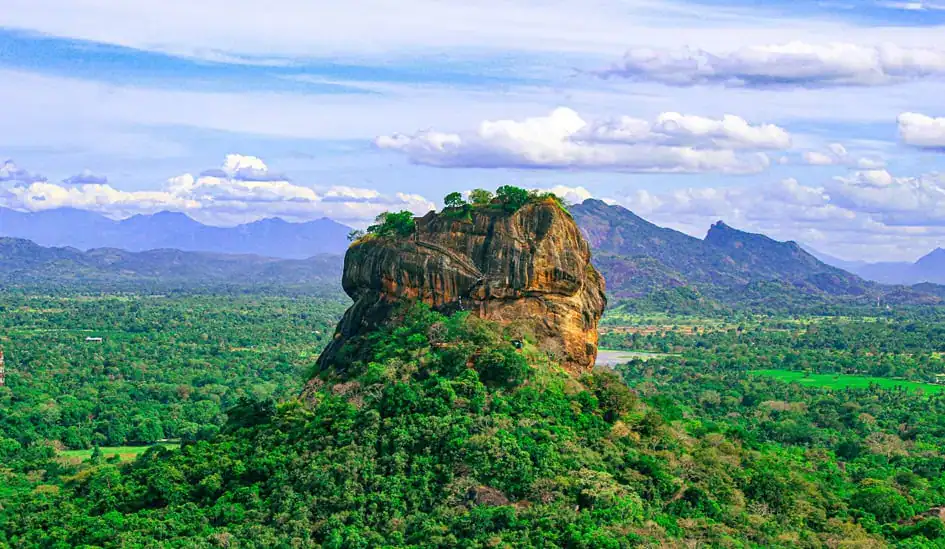
Sigiriya Rock Fortress (Photo: Chamixth, CC BY-SA 4.0)
Morning
Drive from Polonnaruwa to Sigiriya. The trip takes around 1.5 hours. Start early so you reach Sigiriya Rock Fortress by mid-morning. Climb before the peak heat. The ascent takes about 1 to 1.5 hours, with photo stops along the way.
Sigiriya sits at the top of every list of attractions in Sri Lanka for good reason. From the top, you see forests, lakes, and distant hills. Frescoes, the mirror wall, and ancient water gardens sit along the route.
Opening hours of Sigiriya: From 5.00 am to 6.30 pm (every day), the Precos area closes at 5.45 pm.
Afternoon
Eat lunch at a nearby guesthouse or restaurant. Many places offer home-style rice and curry with vegetables from their own gardens. In the afternoon, drive to Dambulla Cave Temple, around 30 minutes away. Climb the steps to the caves and spend around 1-2 hours inside. The wall paintings and statues give a strong sense of Buddhist art over many centuries. UNESCO status and easy access make Dambulla a frequent stop on Cultural Triangle itineraries.
Opening hours of Dambulla Cave Temple: From 7.00 am to 7.00 pm (every day).
Evening
Drive back to your hotel in the Sigiriya or Habarana area. Eat dinner and relax by the pool or in a garden. Listen to frogs and insects as night falls.
Optional Experiences
Arrange a short bullock cart ride and village lunch near Habarana. Take part in a simple cooking demonstration and learn how to prepare dhal and coconut sambol.
Day 6: Sigiriya to Kandy

Kandy – Temple of Tooth Relic (Photo: A.Savin)
Morning
Leave Sigiriya after breakfast. Drive towards Kandy. The journey takes about 2.5 hours without long stops. Many drivers break the trip at Matale to visit a small Hindu temple or the National Spice Garden. These stops give context on local crops such as cinnamon, pepper, and nutmeg.
Afternoon
Reach Kandy around midday. Check in at a hotel near the lake or on a hill with views over the city. Eat lunch, rest for a short time, then head out to the Temple of the Tooth. This shrine houses a relic of the Buddha’s tooth and stands at the heart of the sacred city of Kandy, a UNESCO World Heritage Site. Spend at least an hour. Plan your visit during one of the daily offerings, when drummers and monks move through the halls.
Opening hours of the Temple of the Tooth: From 5.30 am to 8.00 pm (every day).
Evening
Walk a loop around Kandy Lake. The path gives a clear view of the city and the hills. In the evening, you watch a cultural show with Kandyan dance and drumming. Families rate this experience as a helpful first step towards understanding local music and movement traditions.
Food Tip
Try a rice and curry buffet at a local restaurant. Look for dishes with jackfruit, beetroot, and tempered greens.
Day 7: Kandy and Royal Botanic Gardens, Peradeniya

Peradeniya Royal Botanical Garden (Photo: Koshy Koshy, CC BY 2.0)
Morning
Visit the Royal Botanic Gardens in Peradeniya, a short drive (15-30 minutes) from Kandy. Allow two to three hours. Paths pass orchid houses, palm avenues, giant bamboo, and lawns beside the river. Guidebooks often rate these gardens among the most pleasant things to do in Sri Lanka for travellers who enjoy calm walks through green spaces.
Opening hours of Royal Botanic Gardens, Peradeniya: From 7.30 am to 6.00 pm (every day).
Afternoon
Return to Kandy for lunch, then explore the central market. Browse stalls with fruit, spices, and household items. Visit a small workshop that produces batik, woodcarving, or traditional drums. These visits support local makers.
Evening
Enjoy a quiet evening at your hotel. Have tea on the terrace. Write notes in a journal. Rest before the shift to the hills.
Accommodation Tip
Stay two nights in Kandy, so you avoid re-packing daily. Hillside guesthouses offer views and cooler air at night.
Day 8: Kandy to Nuwara Eliya
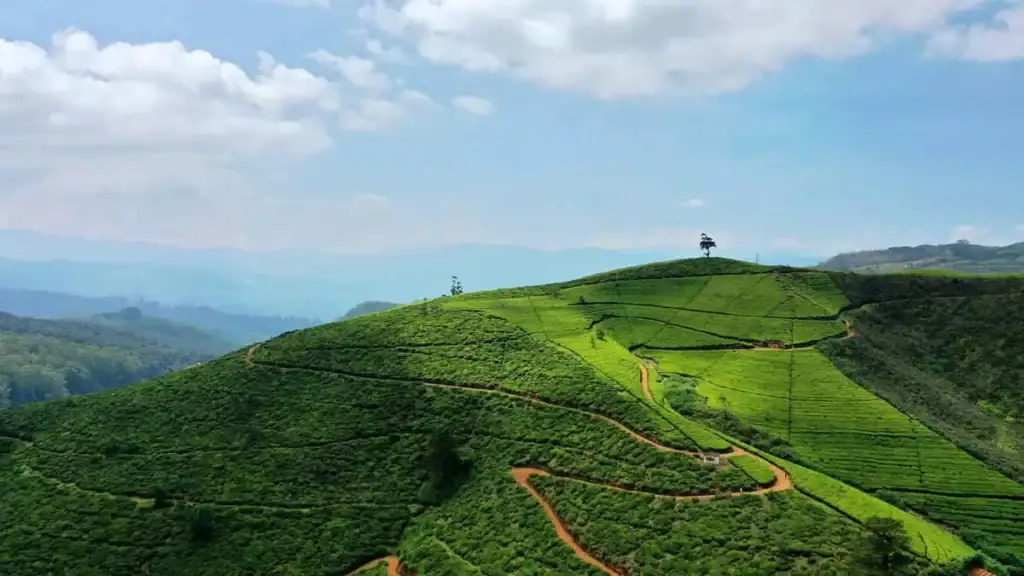
Tea Hills in Nuwara Eliya (Photo: Juho S)
Morning
Check out after breakfast. Travel from Kandy towards Nuwara Eliya. You can either take a morning train to Nanu Oya on the Kandy to Ella line or drive by road. The route climbs into the Central Highlands. Tea estates spread across the hills, and small towns appear at regular intervals. Travel guides describe this central region as a core part of any Sri Lanka Travel Itinerary that focuses on nature and slower days.
Afternoon
Reach Nuwara Eliya around midday. This hill station carries traces of the British colonial period, with older bungalows and a cool climate. Visit a tea factory and walk through the processing rooms. Learn how leaves are dried and sorted. Taste fresh Ceylon Tea in a small cup, first without sugar, then with sugar if you prefer.
Later, you stroll around Gregory Lake or through the central Victoria Park. The air feels cooler than in Kandy or Sigiriya, which brings relief after several hot days.
Opening hours of Victoria Park: From 7.00 am to 7.00 pm (every day).
- AllTrails Map – Gregory’s Lake Loop (4.5 km)
Evening
Eat dinner at a local restaurant or in your hotel. Try vegetable soups and warm curries. Nights drop to 15-18 degrees Celsius in April, so a light jumper helps.
Day 9: Nuwara Eliya to Ella on the Kandy to Ella Train Line
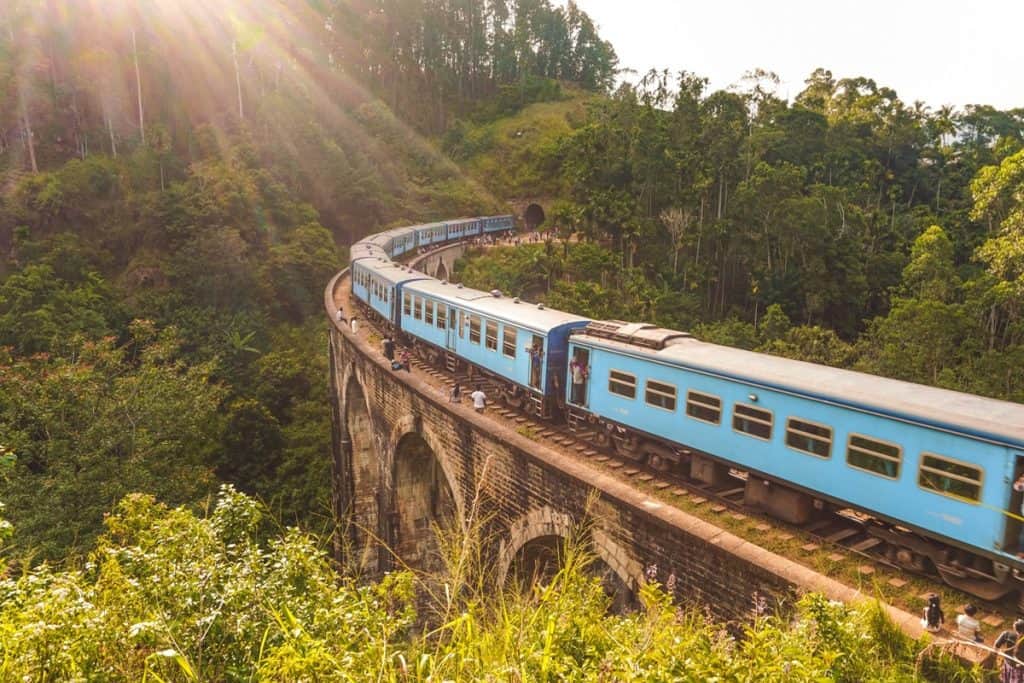
Nine Arch Bridge, Ella (Photo: Adam Vandermeer)
Morning
Drive from your hotel to Nanu Oya station. Board the train on the famous Kandy to Ella route. Travellers on blogs and forums call this one of the world’s most scenic rail journeys, with bridges, tunnels, and rolling tea hills. The stretch from Nanu Oya to Ella takes around 3 hours. Stand by an open door for short periods if rules and safety allow, and take in the view.
Afternoon
Arrive in Ella. Check into a guesthouse with a balcony facing the valleys. Eat lunch in town. Spend the afternoon visiting Nine Arches Bridge. You walk through tea fields and along a track to reach the viewpoint. Plan your visit to coincide with a train passing based on station timetables or local advice.
Evening
Hike up Little Adam’s Peak for sunset if you feel fresh. The walk takes around 45 minutes from the trailhead. The view across the valleys gives you a strong sense of the hill region without long climbs. Return to Ella for dinner. Many cafés serve rice and curry, roti, and Western dishes.
Optional Experiences
Arrange a short cooking lesson in Ella. Many guesthouses invite guests into their kitchens in the late afternoon. You help make dhal, coconut sambol, and one vegetable curry, then sit down to eat.
Day 10: Ella to Yala National Park
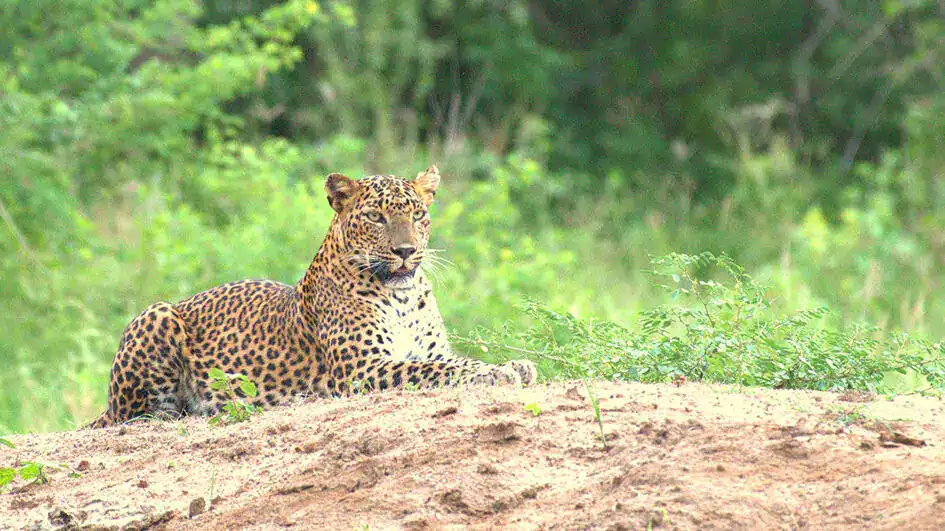
Leopard in Yala National Park (Picture: Nalaka Priyantha)
Morning
Enjoy a relaxed breakfast with tea and fruit. Take a short walk to a viewpoint or visit a nearby waterfall such as Ravana Falls. Leave Ella around late morning. Drive south towards Yala National Park and the town of Tissamaharama. The trip takes roughly 2.5 hours.
Afternoon
Check in at a safari lodge or guesthouse near the park. Rest during the heat of the day by the pool or in a shaded garden.
Evening
Head out for an evening safari in Yala. It has strong foreign interest due to leopard density and overall wildlife variety. You also see elephants, deer, buffalo, crocodiles, and many birds. Follow the guide instructions and respect distance rules.
Opening hours of Yala National Park: From 6.00 am to 6.00 pm (every day).
You can pre-book your Yala safari through the official portal.
Night
Eat dinner at the lodge. Talk with guides about conservation and park management. Learn how jeep numbers and visitor behaviour affect animal health.
Safety Tip
Stay inside the vehicle at all times in the park. Do not feed animals or ask drivers to get closer than allowed by the rules.
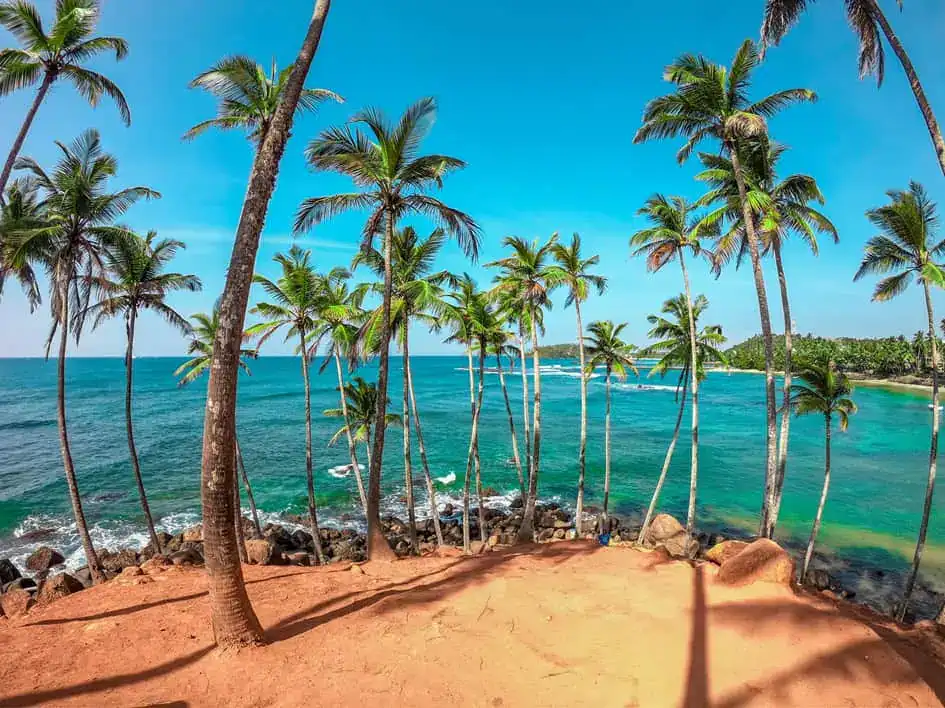
Coconut Tree Hill in Mirissa (Photo: Dinuka Lankaloka)
Morning
Leave Yala after breakfast. Drive along the South Coast towards Mirissa. The route passes fields, lagoons, and small towns. Reach Mirissa in about 2.5 hours. Check in at a hotel or guesthouse near the beach.
Afternoon
Spend the afternoon on Mirissa Beach. Swim in safe areas and rest in the shade when the sun feels strong. Many visitors rate Mirissa among the most enjoyable beaches for first-timers, thanks to its sheltered bay, casual cafés, and whale-watching opportunities.
Later in the afternoon, take a short drive to Weligama Bay. The beach has a sandy bottom and gentle waves, which surf schools highlight as ideal for beginners from November to April. Take a lesson with a local instructor if you want to stand on a board for the first time.
Evening
Return to Mirissa for dinner. Eat grilled fish, prawns, or calamari with rice and salads. Drink a fresh king coconut on the sand.
Accommodation Tip
Pick a place within walking distance of the harbour if you plan a whale watching trip the next morning. It saves early transfers.
Day 12: Mirissa Whale Watching, Unawatuna Beach, and Galle Fort

Whales in Sri Lanka (Photo: rhythmicdiaspora, CC BY 2.0)
Morning
Join a whale watching trip out of Mirissa Harbour. Boats depart early, often around 6 or 7 a.m., during the main season from November to April. Marine guides and researchers note that the waters off Mirissa are among the most reliable places worldwide for blue whale sightings during this period, though no single trip guarantees sightings. Expect a journey of three to five hours. Choose an operator with life jackets for all guests, a trained crew, and clear rules on wildlife distance.
Return to shore late morning. Eat a light brunch and shower. Pack for your transfer along the coast.
Afternoon
Drive from Mirissa to Unawatuna. The trip takes about one hour. Stop at Weligama again if you want a final surf session or coffee. Reach Unawatuna and spend an hour or two on the beach or at Jungle Beach, a smaller cove nearby. Unawatuna is among the top South Coast destinations for foreign visitors, especially those from Europe.
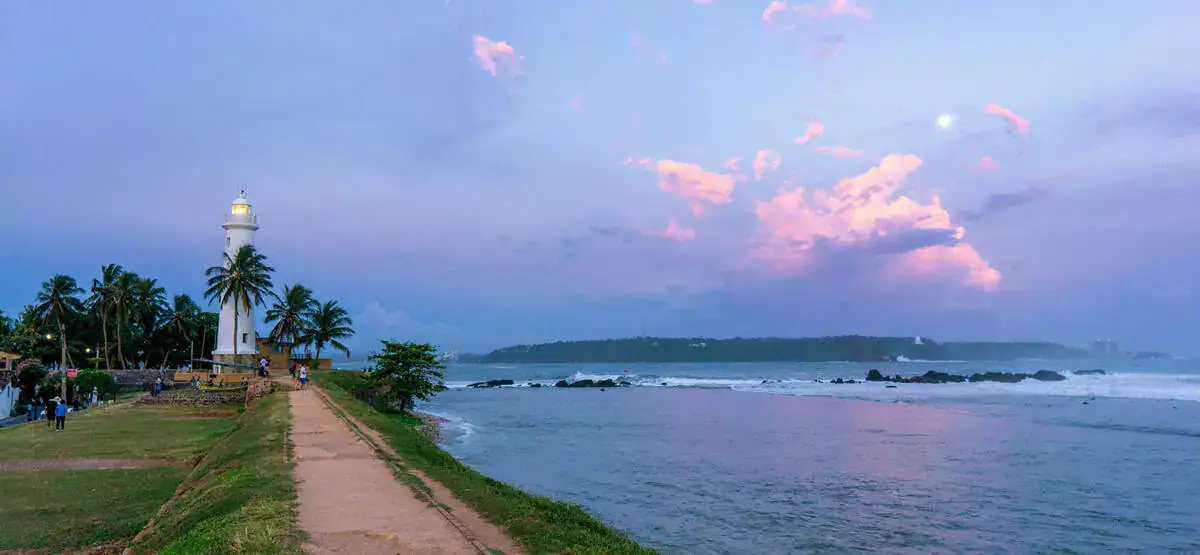
Later in the day, continue to Galle Fort. The short drive takes around twenty minutes. Walk along the ramparts, visit the lighthouse, and explore the narrow streets. Galle Fort holds UNESCO status and appears in almost every long Sri Lanka Travel Itinerary promoted by European media and tour operators. Browse boutiques, visit small museums, and stop for ice cream or a tea break.
Evening
Watch the sun drop over the ocean from the fort walls. Eat dinner at a café inside the fort or at a restaurant on the outskirts of town.
Night and Departure
From Galle, you travel to Colombo or directly to the airport. Many travellers choose to sleep in Galle or Colombo and fly out the next day. If your flight leaves late at night, you transfer after dinner and reach the airport in about 2.5 hours.
- Read the “Where to Stay in Galle” guide.
- Read the “Where to Stay in Colombo” guide.

Weligama Beach – A Popular Surfer Hangout (Photo: Inna Rabotyagina)
Accommodation Guidance by Region
Negombo
Suitable for a simple first night. Look for beach hotels with pools for families, and small guesthouses for budget travellers.
Wilpattu National Park
Stay in tented camps or lodges near the park boundary. Mid-range visitors favour lodges that combine a focus on wildlife with comfort.
Anuradhapura and Polonnaruwa
Guesthouses and small hotels sit close to the ruins. Choose places that offer bike rentals or tuk-tuk services to keep your visit running smoothly.
Sigiriya and Habarana
Jungle lodges and eco resorts around lakes and paddy fields suit couples and groups. Many have pools and on-site guides.
Kandy
Hotels ring the lake and line the hills. Those with balconies and shared terraces work well for solo travellers who like company.
Nuwara Eliya
Colonial-era hotels, simple guesthouses, and tea-estate bungalows suit different budgets.
Ella
Guesthouses with valley views remain the most popular choice. Book early in April due to strong demand.
Yala region
Tissamaharama offers simple hotels and guesthouses. Luxury tented camps sit closer to the park gates.
Mirissa, Weligama, Unawatuna, and Galle
Pick smaller hotels or beach guesthouses with strong recent reviews. South Coast towns host a mix of backpackers, digital workers, and families, so the choice runs wide.

Unawatuna Beach (Photo: Chathura Anuradha Subasinghe)
Dining and Food Suggestions
Each day includes at least one authentic stop.
Negombo
Seafood near the beach. Try the lagoon crab and prawn curry.
Wilpattu and Anuradhapura
Buffet-style rice and curry at lodges and local cafés. Taste pumpkin curry and spiced greens.
Polonnaruwa and Sigiriya
Village lunches are served on banana leaves—fresh buffalo curd with treacle for dessert.
Kandy
Street food near the market, such as vadai and samosas. Evening rice and curry with jackfruit dishes.
Nuwara Eliya
Highland vegetables in soups and warm curries. Tea and cake in an old-style café.
Ella
String hoppers with dhal for breakfast. Roti and kottu in town at night.
Yala Area
Simple rice dishes at lodges, with grilled chicken or fish.
Mirissa, Weligama, Unawatuna, and Galle
Grilled fish, prawns, and crab. Coconut roti with sambol. Tropical fruit juices and king coconut. Colombo and Galle also feature higher-end options such as Ministry of Crab, which receives strong international coverage.
Culture, Festivals, and Local Experiences
Your 12-day itinerary for Sri Lanka includes the Sinhala and Tamil New Year if your travel dates fall in mid-April. Visit local temples and town squares to see rituals and games. Families light new hearths, share sweet snacks such as kokis and kavum, and play tug-of-war, pillow fights, and other friendly contests. Ask your driver or hotel about nearby community events. Respect personal space and ask before taking photos.
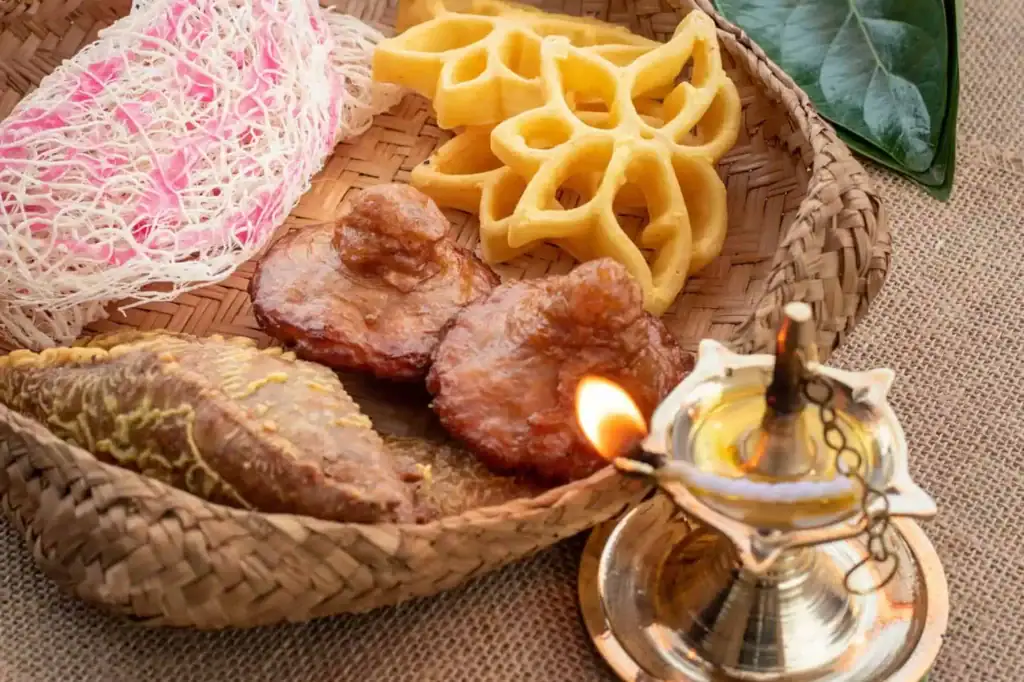
Traditional Food – Sri Lankan New Year Festival (Photo: Kavinda F)
Other Cultural Experiences
- Temple visits in Anuradhapura, Polonnaruwa, Kandy, and Galle.
- Walks around markets in Kandy and Nuwara Eliya.
- Cooking classes in Sigiriya or Ella.
- Tea tasting in Nuwara Eliya and Ella.
Flexibility and Alternative Options
You keep the 12-day frame but adjust the intensity.
Ideas for a Slower Pace
- Skip one safari and add a second night in Mirissa.
- Stay two nights in Galle at the end instead of splitting nights between Mirissa and Unawatuna.
- Drop Wilpattu if you’re sensitive to long drives, and add an extra day in the Hill Country.
Ideas for More Activity
- Add a hike in the Knuckles range from Kandy.
- Visit Horton Plains from Nuwara Eliya for a full-day hike to World’s End and Baker’s Falls.
Practical Details
Entry Fees and Permits
Sigiriya, Dambulla, Polonnaruwa, Anuradhapura, Kandy Temple of the Tooth, Yala, and Wilpattu all charge entry fees. Foreign visitor prices sit much higher than local rates. Together, they account for a large share of Sri Lanka’s tourism revenue. Safari costs include a park ticket, jeep, and guide. Book train tickets in advance through official channels.
You can pre-book wildlife safari tickets/permits through the official Wildlife Park Permits Reservation eService.
Opening Hours
Most major sites open from morning until late afternoon. Temple hours extend into the evening, but midday heat takes energy. Plan key visits for early or late in the day.
Dress Codes and Customs
Wear modest clothing in temples and other religious landmarks. Remove shoes and hats. Keep cameras away from worship spaces if signs say so. Avoid public displays of affection in religious sites and rural towns.
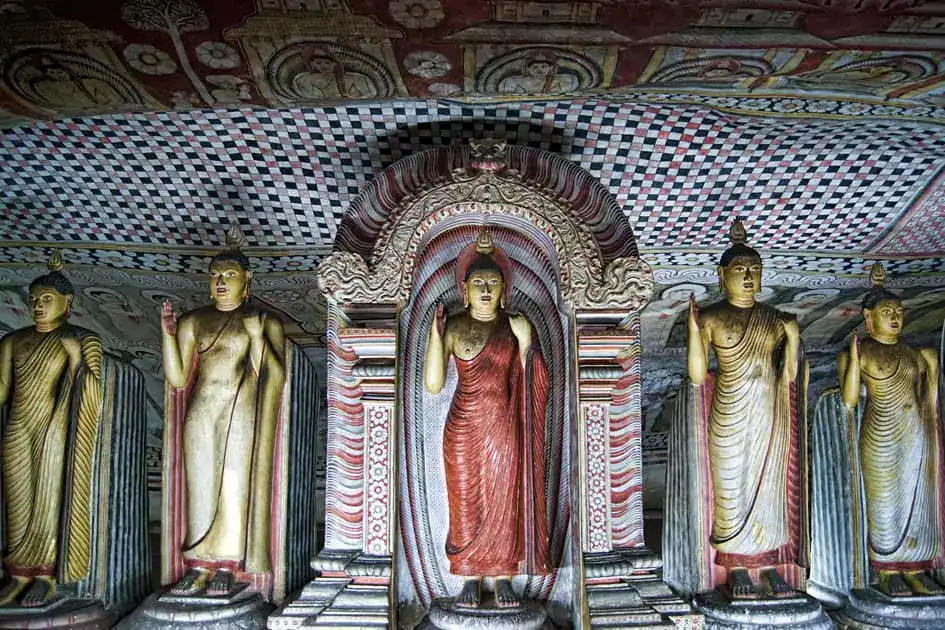
Buddha Statues – Dambulla Cave Temple (Photo: Philip Nalangan, CC BY 4.0)
Weather and What to Pack for April
Temperatures
Lowland areas such as Negombo, Wilpattu, the Cultural Triangle, and the South Coast typically reach 30 to 34 degrees Celsius during the day. Hill towns such as Nuwara Eliya and Ella stay cooler, especially at night, with readings around 15 to 22 degrees Celsius.
Packing List
- Light cotton or linen clothing.
- One light jumper or a fleece for high-country evenings.
- Comfortable walking shoes.
- Sandals for the beach.
- Wide-brimmed hat and sunglasses.
- Sunscreen with high SPF.
- Insect repellent.
- A compact umbrella or light rain jacket.
- Swimwear and a quick-drying towel.
- A scarf or shawl for temple visits.
Health and Safety Information
General Health
Drink safe water. Many hotels provide filtered water stations so you can refill your own bottle. Use sunscreen often, especially near midday. Eat at places with steady local trade and fresh food.
Insurance and Care
Take out travel insurance that covers medical care, lost, and trip changes. Major hospitals sit in Colombo, Kandy, Anuradhapura, Polonnaruwa, and Galle. Smaller hospitals serve other towns. Emergency numbers in Sri Lanka include 119 for police and 1990 for medical emergencies.
Wildlife Safety
Keep a distance from wild animals in parks and near beaches. Follow the guide instructions. Avoid feeding monkeys, stray dogs, or other wild animals. On whale-watching trips, choose operators that follow national guidelines on approach distances.
Estimated Costs for This 12-Day Itinerary for Sri Lanka
Budget stays range from 25 to 40 USD per night. Mid-range stays range from 60 to 120 USD. Luxury stays rise above 150 USD. Meals range from 3 USD at simple cafes to 20 USD at restaurants. Transport by private car costs 45-60 USD per day. Train tickets vary by class. Entrance fees range between 10 and 65 USD.
* All prices are subject to change.
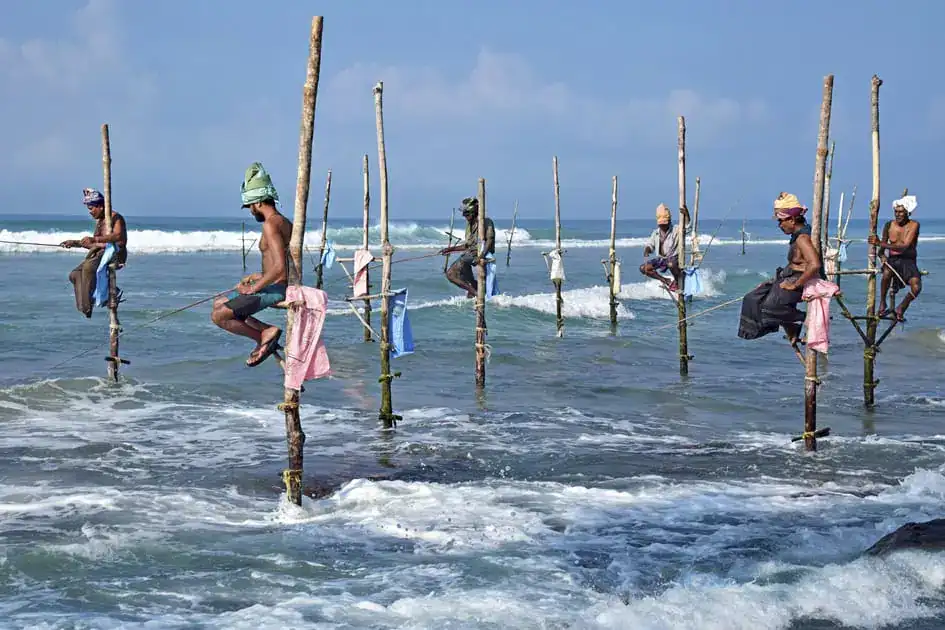
Stilt Fishermen – Southern Coast (Photo: Sumudu Gamage)
Use refillable bottles and say no to single-use plastic when possible. Many cafés and hotels on this route now offer refill points and rely less on small plastic bottles. Dispose of waste responsibly.
Support local guides, homestays, and small restaurants in Sigiriya, Kandy, Ella, and Mirissa. These businesses keep more tourism income in the community.
In wildlife areas, choose operators with clear ethics. Look for park briefings, limits on the number of jeeps per sighting, and strong respect for animal space.
During Sinhala and Tamil New Year events, move with patience. Watch people first, participate later with guidance, and give space to elders and children.
Final Thoughts
This 12-day itinerary for Sri Lanka in April gathers the experiences most foreign travellers seek. You begin with a soft landing in Negombo. You move to Wilpattu for a quieter wildlife start, then pass through Anuradhapura and Polonnaruwa, two of the country’s most important heritage cities. You climb Sigiriya Rock Fortress and visit Dambulla Cave Temple, which stand at the top of the list for attractions in Sri Lanka.
You spend time in Kandy, watch pilgrims at the Temple of the Tooth, and walk in the Royal Botanic Gardens at Peradeniya. You ride part of the legendary Kandy to Ella train line and taste high-grown tea in Nuwara Eliya. You rest in Ella, walk to Nine Arches Bridge, and watch the sun set from Little Adam’s Peak. You explore Yala National Park for leopards and elephants, then shift to Mirissa and Weligama for swimming, surfing, and whale watching in season. You finish on Unawatuna Beach and inside the walls of Galle Fort, a favourite stop in almost every Sri Lanka Travel Itinerary promoted in Europe and Asia.
Over these twelve days, you meet a clear cross-section of things to do in Sri Lanka. You move from ruins and stupas to forests and tea hills, then on to reefs and bays. You share the Sinhala and Tamil New Year with local families if your dates match the festival. You taste food from many regions and hear stories from drivers, guides, and hosts along the route.
Use this plan as your working guide when you visit Sri Lanka in April. Adjust nights to fit your pace, keep space for slow mornings and chance meetings, and respect the communities and environments that make these journeys possible. Your itinerary for Sri Lanka then turns from a list of stops into a connected set of days that feel complete and grounded.
Map of the 12-Day Itinerary for Sri Lanka in April
Other Popular Sri Lanka Itineraries
- The Best 2 Week Sri Lanka Itinerary for December to March
- The Best 12-Day Sri Lanka Travel Itinerary for May to September
- The Best 12 Day Sri Lanka Itinerary for October to November
Featured image: The Lighthouse – Galle Fort (Photo: Hendrik Cornelissen)

I am a Sri Lankan medical doctor who spends my free time travelling, exploring new destinations, and documenting the beauty of the island I call home. I have journeyed across almost every corner of Sri Lanka with my wife and daughter — from wildlife parks and misty mountains to ancient cities, deep forests, rugged landscapes, and quiet beaches.
Travel is not just a hobby for me — it’s a way of life. I love nature, enjoy road trips, and find joy in wildlife photography. I also read widely about tourism, travel trends, and destination culture. Through my writing, I aim to help travellers experience Sri Lanka through real stories, meaningful insights, and honest recommendations — the same way I explore it with my own family.