
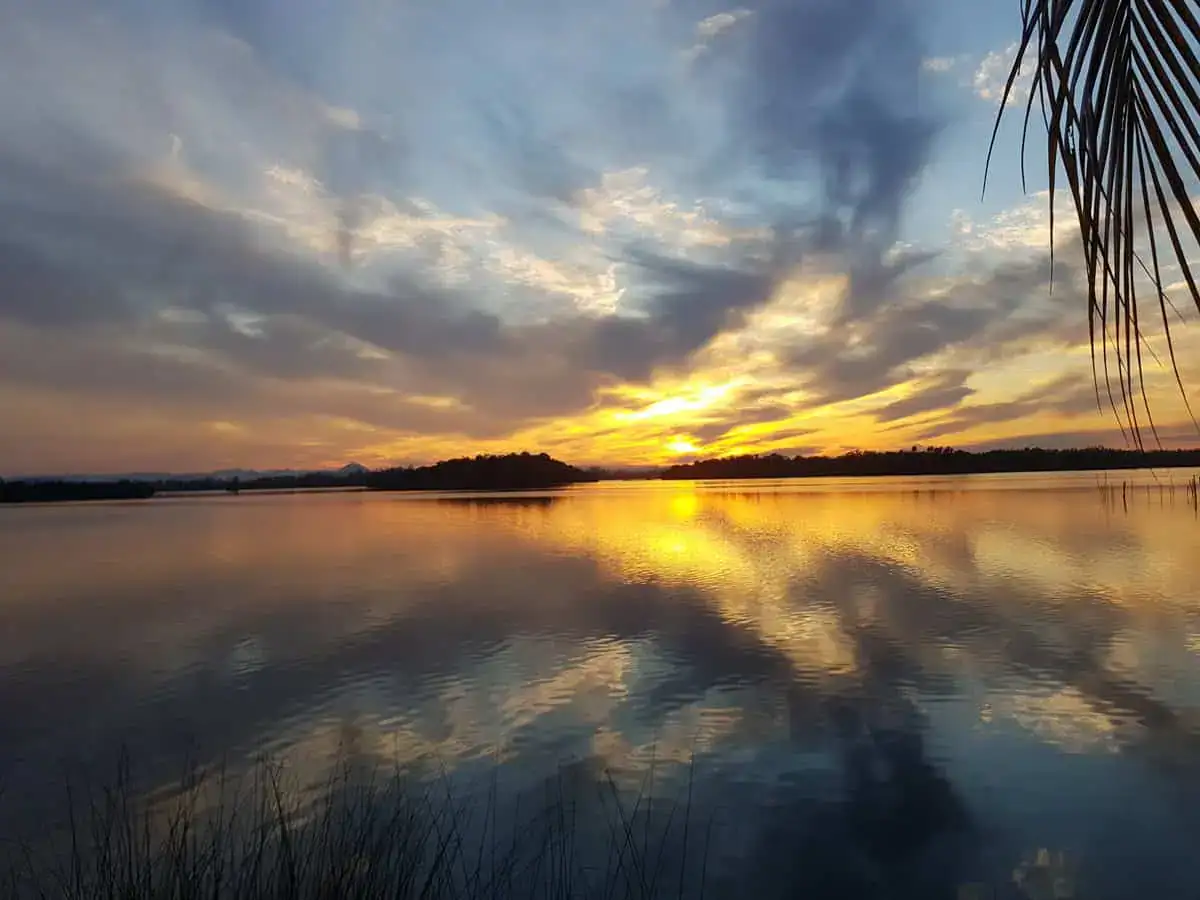

What is Madu Ganga
Madu Ganga is a small but rich watercourse in Southern Sri Lanka. It begins near Uragasmanhandiya in Galle District and flows into the Indian Ocean at Balapitiya. Along the way, it widens to form a lagoon also known as Madu Ganga Lake.
Together with a more petite linked water body, Randombe Lake, Madu Ganga forms a coastal wetland complex. This wetland network includes the lagoon, narrow river channels, and a string of mangrove-covered islets.
Why Madu Ganga is Special
Madu Ganga stands out for its blend of nature and culture. It preserves substantial patches of mangrove forest. It supports a large number of plant and animal species. It also hosts islands with ancient temples, cinnamon processing, and traditional fishing communities. This mix of ecology, heritage, and livelihood makes it a living landscape.
Visitors to Madu Ganga often take a river safari. They glide along narrow waterways under mangrove tunnels. They reach Cinnamon Isle to see cinnamon peeling and oil extraction. They stop at temple islands. They sit at a dock while fish softly nibble at their feet for a “natural fish spa.”
Why Madu Ganga Matters
This wetland matters for ecology, economy, and culture. The mangrove forests act as a buffer against coastal erosion. The ecosystem supports hundreds of plant and animal species. The wetland supports local livelihoods, especially cinnamon processing and fishing. As one of the last relatively intact mangrove swamps in Sri Lanka, Madu Ganga offers critical ecological value.
In 2003, Madu Ganga was formally listed under the Ramsar Convention, recognising its international importance as a wetland.
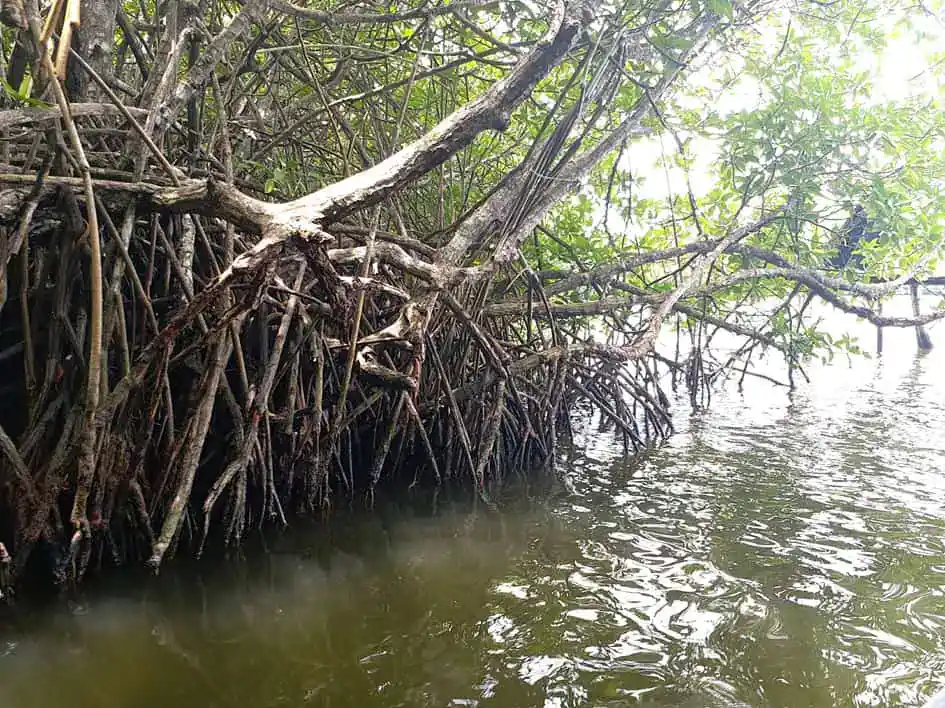
Mangroves – Madu Ganga (Photo: Duvindu Nayanajith, CC BY-SA 4.0)
Geography, Wetland Type, Ecosystem and Size
Madu Ganga lies on the Southwest Coast of Sri Lanka. Its river flows roughly 4.4 kilometres after widening into a lagoon, before meeting the sea.
The wetland comprises a mix of fresh and slightly brackish water, with mangrove swamps, lagoons, estuaries, and islets. This makes it a classic coastal wetland ecosystem.
Depending on the source, the wetland covers roughly 915 hectares, of which about 770 are water.
The lagoon portion, often referred to as “Madu Ganga Lake,” measures about 5 kilometres from north to south and covers nearly 10 square kilometres, though only around 80 per cent of that is open water.
Islets and Their Unique Characters
Madu Ganga contains many islets of varying sizes. Promotional materials often speak of 64 islands, though today about 25 are visible or have significant land, and roughly 15 of those have a sizeable land mass.
Some of these islands are inhabited. Others are thick with forest and shrubs. Several islands hold temples or shrines. Each island carries a unique identity and history.
Key Islands, Culture and Traditions
Ma Duwa (Ma Doowa) and Bridge
Ma Duwa is the largest inhabited islet in the Madu Ganga. It spans nearly one kilometre in diameter. About 300 families live there.
A 330-metre bridge links Ma Duwa to Balapitiya on the mainland. For a long time, this was the longest bridge in Sri Lanka. The island offers a rare window into local life on a mangrove-fringed river.
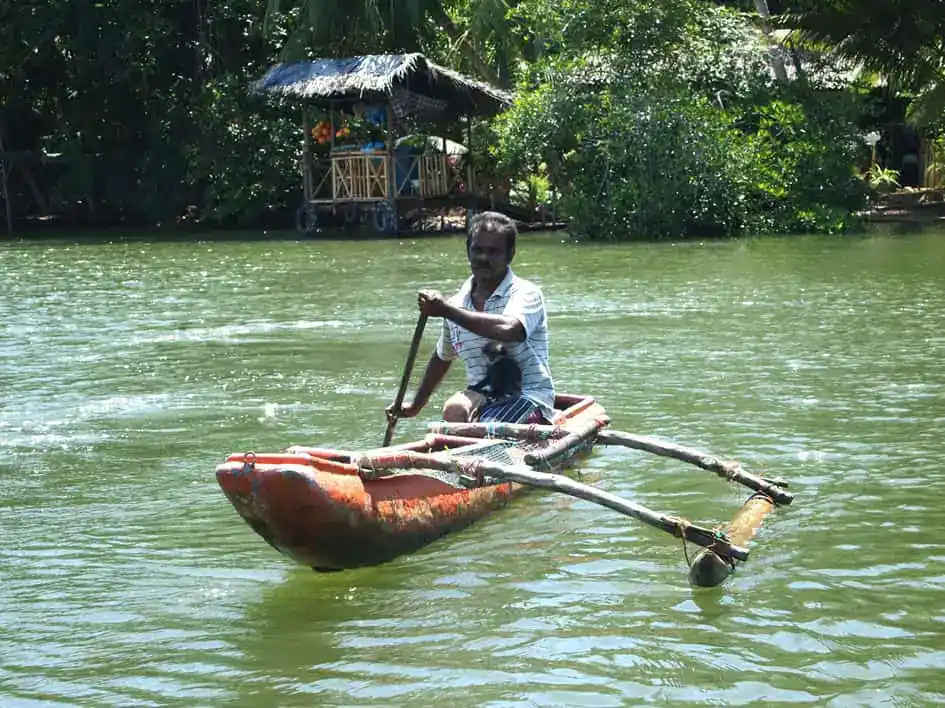
A Traditional Canoe – Madu Ganga (Photo: Kalaiarasy, CC BY-SA 3.0)
Satha Paha Duwa (Five Cent Island)
Satha Paha Duwa is the smallest islet in the wetland. Locals call it “Five-Cent Island” because of a legend that it was once sold for five cents. Its shape or size also resembles a coin.
Despite its small size, the islet hosts a shrine. The shrine is dedicated to Kataragama Deviyo, a deity revered by both Buddhists and Hindus. This reflects the region’s syncretic traditions.
Cinnamon Isle (Kurundu Duwa / Cinnamon Island)
Cinnamon Isle stands out as a cultural and economic cornerstone. Locals grow, peel and distil cinnamon bark and produce cinnamon oil. Visitors can observe cinnamon bark peeling and oil extraction firsthand. They may taste freshly brewed cinnamon tea. They may buy fresh Sri Lankan cinnamon products.
Much of Sri Lanka’s cinnamon comes from districts including Galle, and the cinnamon grown around Madu Ganga belongs to that group. That makes Cinnamon Isle especially authentic.
Kothduwa Island and Kothduwa Raja Maha Viharaya
Kothduwa Island hosts a Buddhist temple: Kothduwa Raja Maha Viharaya. The temple sits within the estuary and wetland area.
That temple holds deep historical and spiritual significance. Ancient traditions claim that, around 340 CE, it once sheltered a sacred relic: the tooth of the Buddha. A Bodhi tree on the island was planted from a bud of the historic Jaya Sri Maha Bodhi by a minister of a Sinhalese king.
In the 19th century, local revival efforts rebuilt the temple. Today, monks live there. Visitors reach the temple by boat. In peak seasons, local devotees join.
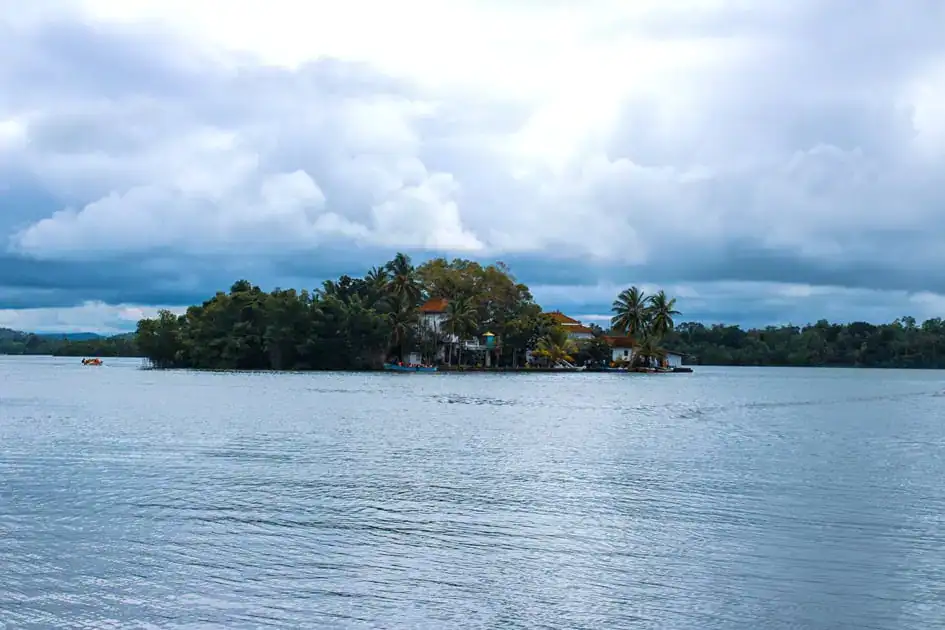
Kothduwa Island in the Madu Ganga (Photo: Knthabrew, CC BY-SA 4.0)
Location and Access
Madu Ganga lies in the Galle District of Sri Lanka’s Southern Province. The river passes close to the coastal town of Balapitiya. The distance from Colombo is roughly 88 kilometres. It lies about 35 kilometres north of Galle.
The main coastal road A2 crosses the river near its mouth. Many boat operators launch from shops near this highway. Boat safaris and river tours are the most common ways to experience Madu Ganga.
Reaching by car or tuk-tuk from nearby beach resorts such as Bentota or Hikkaduwa often takes under an hour.
To get a good idea of transport in Sri Lanka, it is advisable to read the transport guide.
Climate and Best Time to Visit
The climate in Southwestern Sri Lanka is tropical. Rainy seasons bring heavy downpours. The dry period typically runs from December to April. Many travellers highlight this period as ideal for boat safaris.
Dry season offers pleasant weather, calm water, better visibility for birdwatching, and comfortable conditions for boat rides. River tours along a wetland suit these conditions well.
If you want to spot wildlife, enjoy the mangroves, or take photos, visiting between December and April offers the best chances for clear skies, calm waters, and optimal conditions for boat rides and wildlife observation.
If you plan to combine your visit to Madu Ganga with other destinations in Sri Lanka, read up on the weather in Sri Lanka and the best time to visit.
Who Will Enjoy Madu Ganga
Madu Ganga suits travellers who like nature, quiet water, wildlife, and gentle adventure. It appeals to people interested in mangrove ecosystems, bird watching, simple traditional culture, or heritage sites.
Madu Ganga works for those who prefer slower travel rhythms. Families, couples, solo travellers who enjoy calm boat rides, or people who want a break from beach resorts, will appreciate it. People who value hands-on cultural immersion or enjoy observational experiences will find it rewarding.
Life in the Mangroves: Flora and Fauna
Madu Ganga wetland hosts impressive biological diversity. The ecosystem contains around 303 plant species, belonging to 95 families.
Animals living here include many vertebrates. About 248 species of vertebrates are recorded.
Mangroves along the riverbanks involve a variety of species. Up to 14 mangrove species are found in the area. One locally common species is the black mangrove, known as “Rathamilla” (Lumnitzera littorea).
Wildlife sightings often include kingfishers, cormorants, herons, and migratory birds. Water monitors, crocodiles, and reptiles live among the mangroves. Fish, molluscs, amphibians, butterflies and small mammals also inhabit the ecosystem.
For bird watchers or photographers, mangrove tunnels and quiet water channels serve as a natural frame. The mix of water, green canopy, wildlife and islands creates many photo-worthy moments.
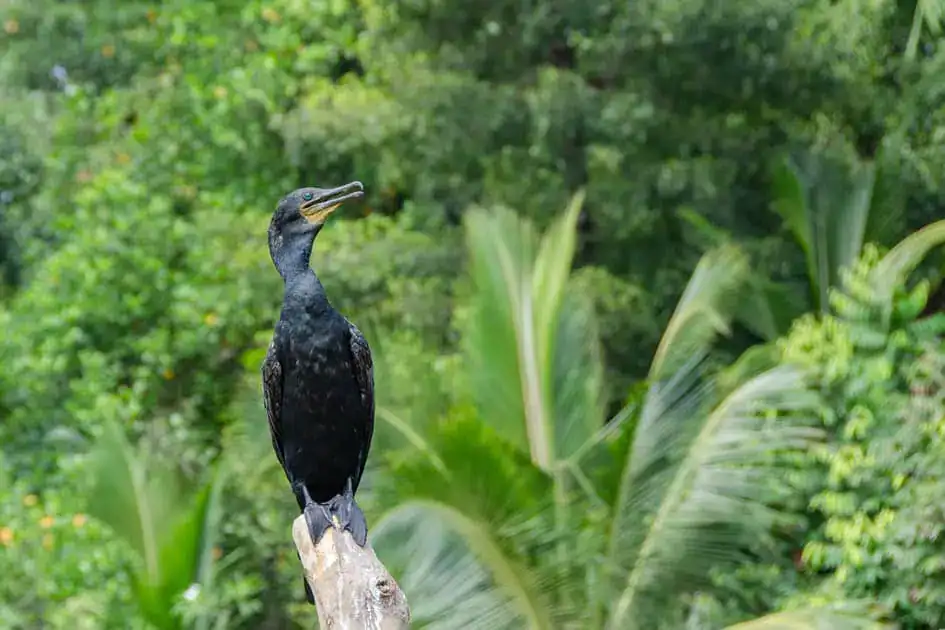
A Cormorant – Madu Ganga (Photo: pen_ash)
Boat Safari: River Ride, Mangroves, Wildlife
Boat safari is the signature experience at Madu Ganga. Tours typically last 1.5 to 2 hours. In that time, you glide through mangrove passages, visit Cinnamon Isle, reach temple islands, and view the local ecology.
Boat rides may include stops for island visits, cinnamon demonstrations, temple visits, and even natural fish spas. Many tours are run by local operators in Balapitiya.
If you prefer a quieter, ecological route, choose tours that emphasise mangrove exploration and wildlife spotting. For cultural highlights, look for tours that include Cinnamon Isle, Kothduwa temple, or Ma Duwa.
Natural Fish Spa
One unusual experience at Madu Ganga involves a natural fish spa. Some tour stops include piers over shallow water enclosures where live fish nibble on the calloused skin of your feet. This provides a gentle foot massage.
This practice uses fish living naturally in the wetland environment. Unlike spa pools, these fish have access to open water. Some tourism operators highlight this as a unique natural therapy.
Traditional Fishing Methods: Ja-Kotu Prawn Traps
Local fishermen use traditional prawn-fishing kraals called “Ja-Kotu.” These consist of nets or traps placed in shallow water, often arranged between stakes or branches. At dusk, they light lanterns to draw prawns. Boat operators navigate carefully to avoid getting entangled in the ropes that guide motors to rise above water. This low-impact method avoids strong waves that might erode banks.
This traditional fishing demonstrates how people and the ecosystem have coexisted in Madu Ganga for generations.
Accommodations and Dining
While Madu Ganga itself lacks large resorts on islands, the nearby town of Balapitiya and the coastal zone offer guesthouses, small hotels, and homestays. Many travellers combine beach stays with a half-day or full-day boat safari.
Some local homestays or small lodges cater to those seeking quiet retreats with river access. Visitors often enjoy local Sri Lankan cuisine, including seafood, fish, and traditional meals cooked on cinnamon wood.
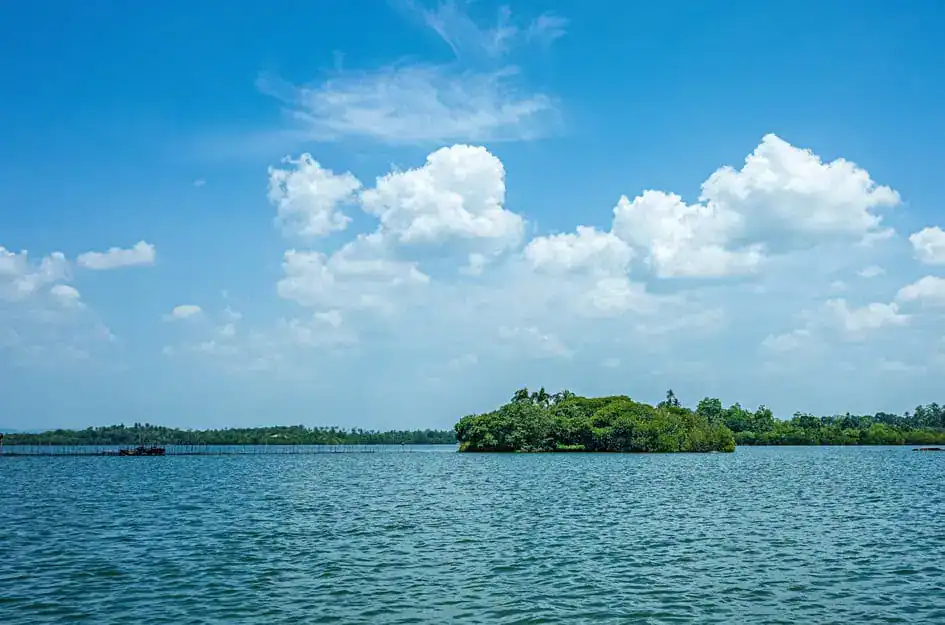
Another View of Madu Ganga (Photo: confused_me)
Nearby Attractions and Pairing Visits
Madu Ganga works well as a side trip from beach resorts along the Southwest Coast, such as Bentota or Hikkaduwa. A morning or afternoon river safari makes a pleasant break from sun and sand.
If you are visiting other natural attractions nearby, combining Madu Ganga with visits to coastal towns, beach trips, or other wetland or forest reserves offers variety.
Smart Planning: What to Bring, When to Go, What to Expect
To enjoy Madu Ganga, bring the following:
- Lightweight clothes suitable for warm, humid weather.
- Sunscreen, sunglasses, and a hat. Sun reflects from water. Boat rides expose you to tropical sun.
- Waterproof or quick-dry shoes or sandals. Some islands or piers may be wet or slippery.
- A camera with a zoom lens or a binoculars for birdwatching and wildlife.
- Insect repellent, particularly for boat rides among mangroves.
The best time to visit Madu Ganga is from December to April. Water remains calm. Rivers stay navigable. Wildlife tends to concentrate, increasing chances of sighting. Visitors often schedule boat safaris in the morning or late afternoon when the light is soft, and wildlife is active.
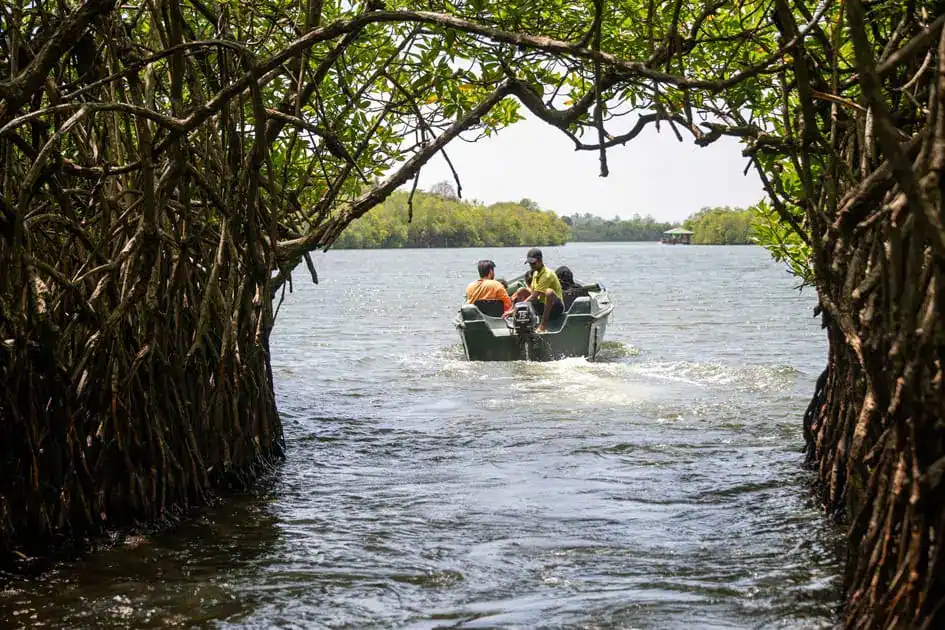
Through the Mangroves (Photo: Rod Waddington, CC BY-SA 2.0)
Things to Do, Do Not Miss
Do not miss these highlights:
- Boat safari through mangrove tunnels and along open water.
- Visit Cinnamon Isle to observe cinnamon peeling and oil extraction, and to taste cinnamon tea.
- Stop at Kothduwa Island to see Kothduwa Raja Maha Viharaya and its sacred Bodhi tree.
- Take a natural fish spa on a pier in shallow water.
- Explore Ma Duwa island and walk over the bridge to village life.
- Watch local fishing practices, such as Ja-Kotu prawn trapping at dusk.
- Birdwatching and photography along the banks and in the mangroves.
Responsible Travel, Sustainability, Safety and Comfort
While visiting Madu Ganga, respect local nature and culture. Stay within boat lanes. Avoid disturbing mangrove roots or wildlife. Use reef-safe sunscreen if you plan to swim. Dispose of trash properly.
Hire local guides and pay fair fees. That supports local families and preserves traditional livelihoods.
Wear a life jacket during a boat safari. Use shoes with a grip to avoid slipping on piers or boats.
To get an idea of how to plan your trip to Sri Lanka, read about Nature and Wildlife in Sri Lanka and the ultimate travel guide for first-time visitors.
Final Thoughts
Madu Ganga offers a quiet escape into a living world of mangroves, islands, temples, cinnamon scent, and gentle water. Its ecology remains rich. Its culture stays alive. A boat safari immerses you in beauty, heritage, nature, and local life. Visiting Madu Ganga gives you more than a tour. It gives you a connection to a fragile ecosystem and a community rooted in tradition.
If you value calm waters, green forests, wildlife sounds, cultural history, and simple pleasures like cinnamon tea or a fish spa, then Madu Ganga welcomes you. Take your binoculars. Respect the wetland. Let the river carry you into one of Sri Lanka’s quiet gems.
Map of Madu Ganga
Featured image: Sunrise – Madu Ganga (Photo: Mafaz Zarook, CC BY-SA 4.0)

I am a Sri Lankan medical doctor who spends my free time travelling, exploring new destinations, and documenting the beauty of the island I call home. I have journeyed across almost every corner of Sri Lanka with my wife and daughter — from wildlife parks and misty mountains to ancient cities, deep forests, rugged landscapes, and quiet beaches.
Travel is not just a hobby for me — it’s a way of life. I love nature, enjoy road trips, and find joy in wildlife photography. I also read widely about tourism, travel trends, and destination culture. Through my writing, I aim to help travellers experience Sri Lanka through real stories, meaningful insights, and honest recommendations — the same way I explore it with my own family.