
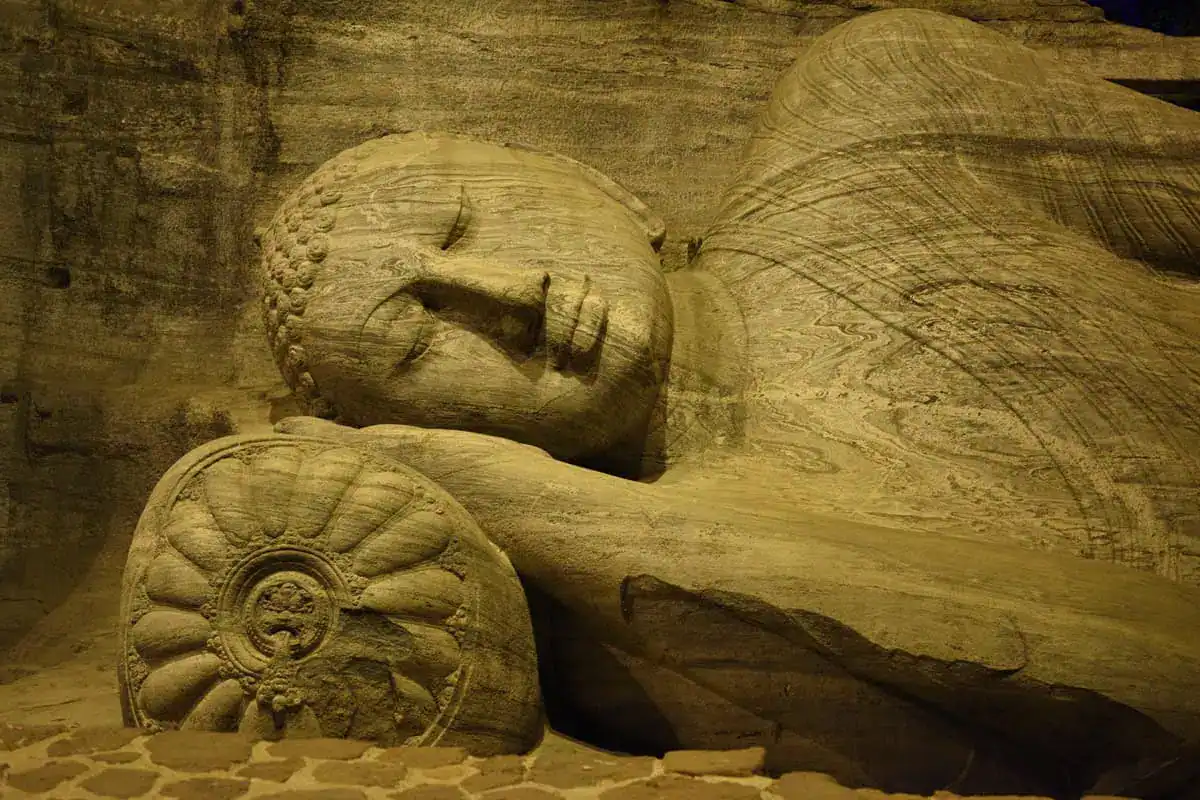

Polonnaruwa draws you into the heart of Sri Lanka’s past. You walk through royal halls, silent shrines, and peaceful ponds that still hold the spirit of ancient kings. When you visit Sri Lanka, this city helps you understand power, faith, and engineering in the Cultural Triangle. The stories in these ruins feel close when you stand in the heat, listen to birds, and trace carvings with your eyes. Polonnaruwa offers clear insight into Sri Lanka’s long history. It gives you a calm space to reflect. It also rewards every traveller with variety, structure, and depth.
What is the Ancient City of Polonnaruwa
Polonnaruwa is the second ancient kingdom of the island. It followed the long Anuradhapura era. Kings built temples, palaces, stupas, tanks, and gardens across a vast region. You explore these remains inside the Polonnaruwa Ancient City. The protected zone contains the UNESCO World Heritage Site. The nearby modern town supports visitors with food, lodging, and transport. Today, the ruins stand in good condition. Many structures reveal clean lines, strong pillars, and carvings that still look sharp.
Why Polonnaruwa Is Special
Polonnaruwa offers direct contact with medieval life. You see military planning, religious devotion, and advanced water management. The city’s layout is clear. You can follow a sequence of monuments that show how people lived, prayed, and worked. The connection between the reservoir and the farmland highlights engineering skill. The strength of palace walls shows royal planning. The quiet tone of temples shows a stable spiritual world. Visitors value this balance.
If you are interested in Polonnaruwa, we recommend reading the “Cultural Heritage and Ancient Cities in Sri Lanka” guide.
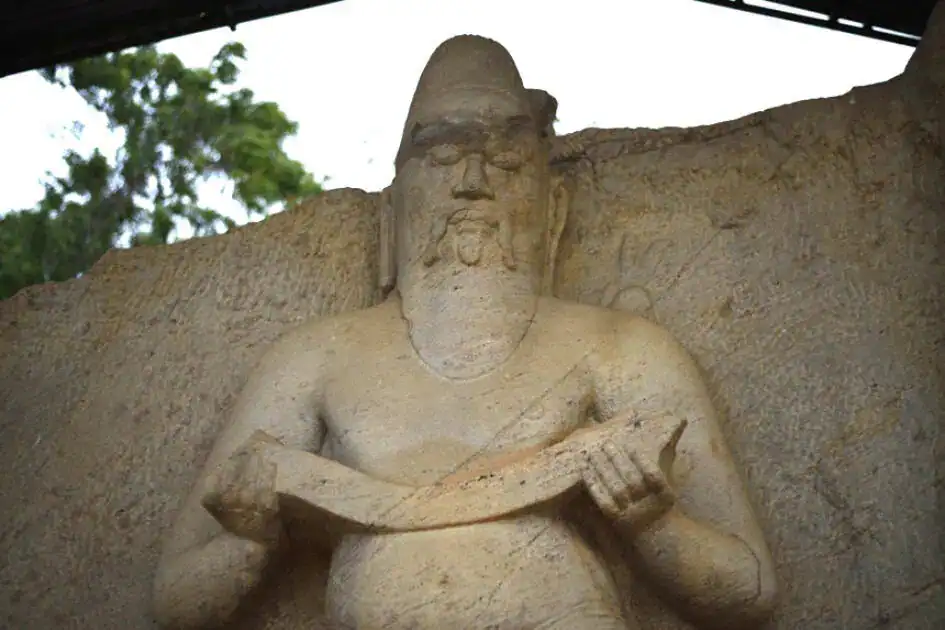
The Statue of King Parakramabahu – Polonnaruwa (Photo: Nalaka Priyantha)
Recognition and Tourism Appeal
The UNESCO listing protects the entire ancient city. The listing notes cultural value and the unique combination of architecture and irrigation. Travellers praise the site for access, clean surroundings, and open views. You walk from one structure to the next with comfort. The place suits solo travellers, couples, and families. Guides offer local context. Photographers enjoy soft morning light across stone surfaces. Many travellers who visit Sri Lanka rank Polonnaruwa above other sites because the ruins feel complete.
Historic Roots, Ancient Architecture, and Hydraulic Legacy
Polonnaruwa (1055-1232) grew in phases. The Chola period marked the first major urban push. Later, King Vijayabahu I restored independence. King Parakramabahu I then built large irrigation works and a strong central city. His rule marked the high point of planning and growth. King Nissanka Malla followed with the construction of new temples and civic buildings. Each phase added to a growing network of stupas, image houses, audience halls, gardens, and ponds.
The city depended on the Parakrama Samudra reservoir. This massive tank supported farms, managed floods, and supplied water for the population. Engineers carefully shaped canals, sluices, and feeder channels. Their work still functions. The reservoir remains an active local water source. This hydraulic legacy sets Polonnaruwa apart from many ancient capitals in the region.
Best Time to Visit and Why
The dry months from May to October offer clear skies and warmer days. Morning visits provide comfort with soft light and fewer crowds. Late afternoon offers shade and intense colours. Midday heat feels strong in open areas, so plan breaks near ponds or under trees. The rainy months bring shorter visits because sudden showers interrupt outdoor walks. Some travellers enjoy the monsoon season because the landscape looks greener. Yet most visitors prefer the dry season for long days inside the ancient city.
If you plan to combine your visit to Polonnaruwa with other destinations in Sri Lanka, read up on the weather in Sri Lanka and the best time to visit.
Current Weather and Weather Forecast in Polonnaruwa
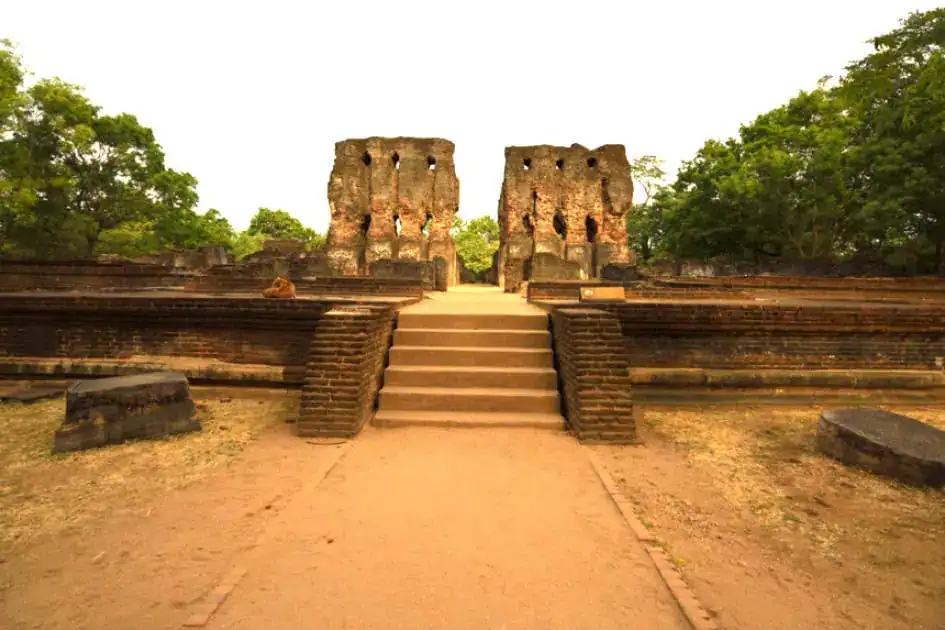
The Palace of King Parakramabahu (Photo: Nalaka Priyantha)
Who Is Polonnaruwa Best For
Polonnaruwa suits travellers who enjoy structure and calm movement. The city is large but organised. Each section has its own story. You follow a route with ease. If you enjoy temples & religious landmarks, ruins, or art, you will find something to interest you in every zone. If you enjoy photography, early and late light give rich tones. Families who enjoy gentle cycling feel at ease. Travellers with a strong interest in the History of Sri Lanka will find precise details throughout the site.
Layout and Conditions
The ancient city spreads across several zones. The entrance and museum stand near the reservoir. The Sacred Quadrangle sits north of the main gate. Alahana Piriwena occupies a hill nearby. Gal Viharaya stands further north, beyond fields and shaded paths. Royal spaces lie near the centre. Each zone has its own paths and clusters of monuments. Surfaces vary from gravel to grass to stone. Distances between attractions are short but steady. Bring strong shoes, water, and sun protection.
Location and How to Get There
Polonnaruwa lies in the North Central Province about 220 kilometres from Colombo. Many travellers arrive from Sigiriya or Dambulla as part of a Cultural Triangle circuit. Buses link Polonnaruwa with major towns. Trains connect Colombo with nearby stations. Private drivers offer flexible timing. Roads remain smooth and travel times stay reasonable.
Transport, Getting Around, and Parking
The best way to explore Polonnaruwa City is by bicycle or tuk-tuk. Bicycles give you control and allow you to pause where you like. Tuk-tuks save energy during hot hours. Walking works inside each zone, but the whole site feels too large for a single walk. Parking sits near the museum and main clusters. Drivers wait near entrances.
If you plan to visit Polonnaruwa, it is advisable to read our Transport in Sri Lanka: The Best Guide.
Polonnaruwa for Every Budget
Polonnaruwa offers guesthouses, small hotels, midrange stays, and a few upscale lodges. Food prices remain moderate. Entry tickets for the ancient city cost more for foreign visitors. Yet the ticket covers the entire site, including the museum. Cycle rentals stay affordable. Guided tours range in price depending on language and route. Overall, Polonnaruwa fits budget travel and midrange comfort with ease.
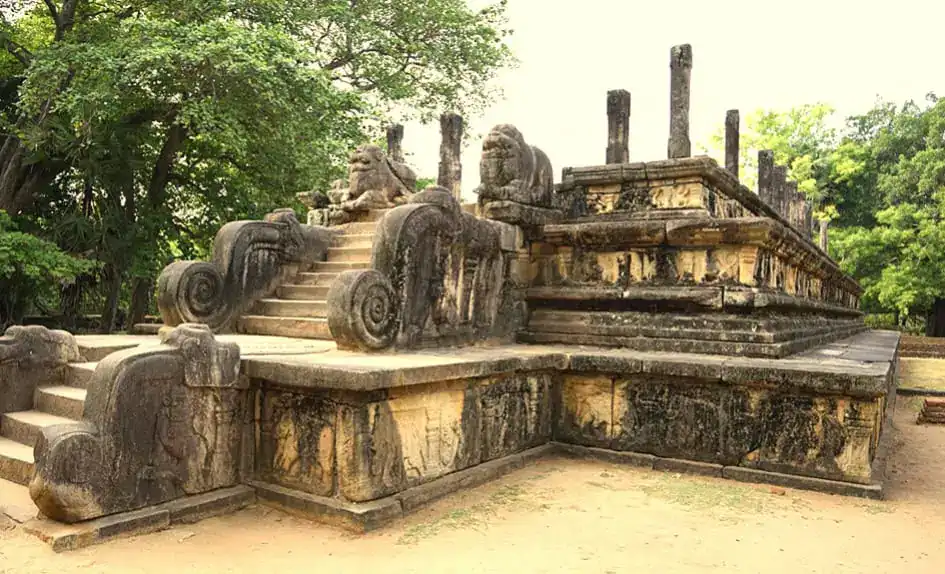
The Council Chamber of King Parakramabahu (Photo: Nalaka Priyantha)
Popular Attractions and Experiences
Below is every major attraction in Polonnaruwa with a short, clear, human description. Each section uses simple sentences, direct explanations, and a practical tone.
Sacred Quadrangle (Dalada Maluwa) Area
Thuparamaya Image House
Thuparamaya holds fragments of a large image house with strong brick walls and stone features. You see the base of the structure and small carvings. The site helps you understand the early phases of Polonnaruwa’s Buddhist architecture. It also shows how builders shaped image houses around sacred statues.
Nissanka Latha Mandapaya
This small shrine stands out for its stone pillars shaped like flowers. King Nissanka Malla built it for chanting and ritual recitation. Each pillar curves gently towards the top. This design appears nowhere else in the ancient city. Visitors study the pillars for detail and style.
Recumbent Buddha Image House
This image house holds a peaceful reclining Buddha. The carving reflects the final moments of Buddha’s life. The long shape and soft facial detail give the space a quiet mood. Visitors pause here for a moment of reflection.
Vatadage
The Vatadage (a stupa house) is a circular shrine built around a central stupa. Steps lead to the top platform where four seated Buddha statues face the cardinal points. The stone carvings around the base show patterns and stories. This structure remains one of the finest examples of circular shrine design in Sri Lanka.
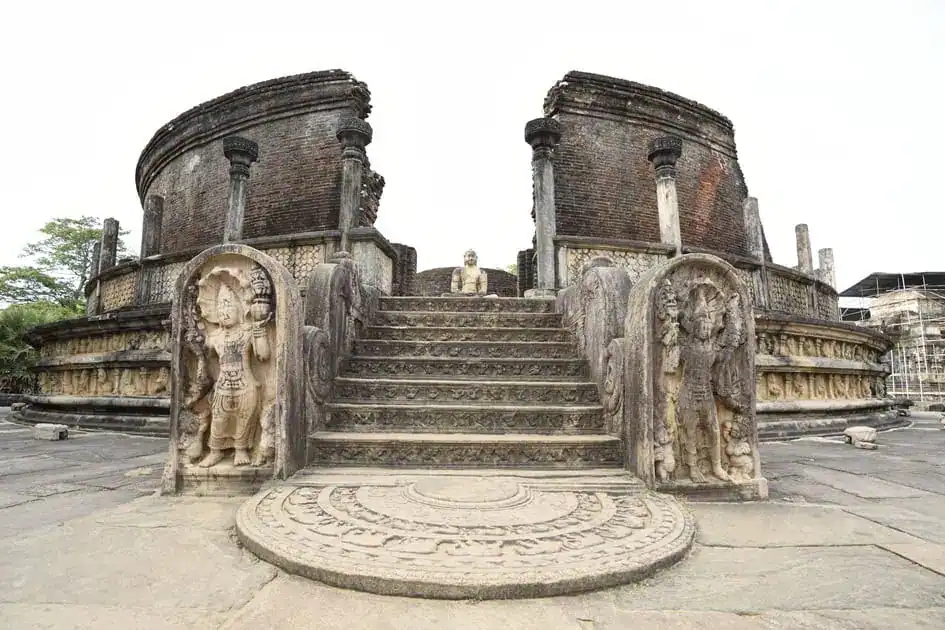
Vatadage (Photo: Nalaka Priyantha)
Atadage
Atadage once held sacred relics in the time of King Vijayabahu I. Today, only stone columns and low walls remain. The layout helps you imagine an upper level where relics stood. The quiet yard gives you time to observe stonework from early Polonnaruwa.
Hatadage
Hatadage sits next to Atadage. King Nissanka Malla built it as a new relic house. Its walls are thicker and more complex. The frontage shows carved door frames and strong platforms. Visitors study the steps for detail in shapes and symbols.
Bosath Statue
This short offset statue depicts a Bodhisattva. The carving stands close to the surrounding shrines. The gentle facial features highlight skilled stonework and simple design.
Gal Pota
Gal Pota is a large inscription carved into a massive stone set on the ground. The text praises King Nissanka Malla and records significant deeds. The stone’s size suggests substantial effort in its transport and placement. Readers examine symbols and letters to link stories with the surrounding buildings.
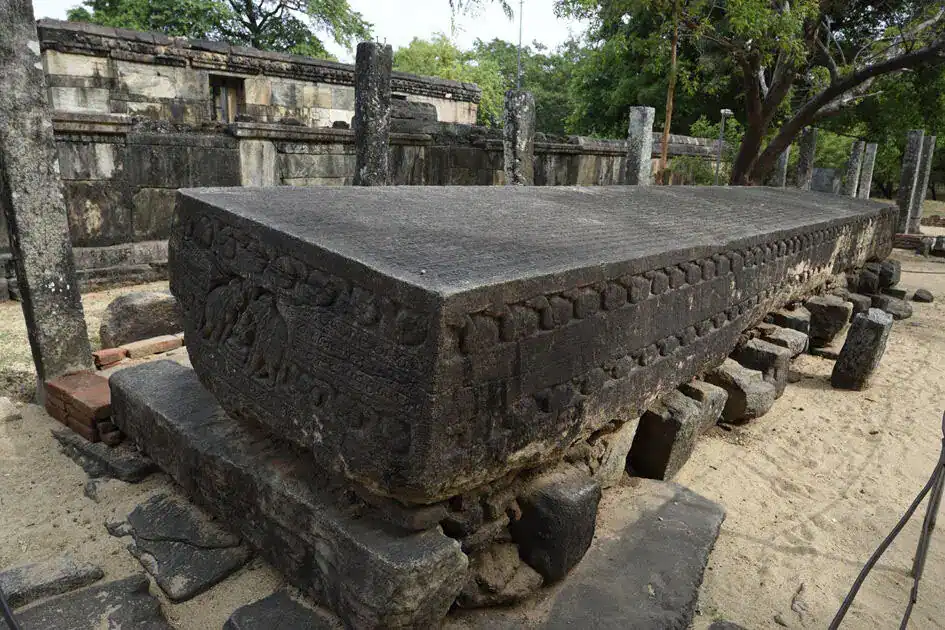
Gal Pota (Photo: Nalaka Priyantha)
Sathmahal Prasadaya
This stepped pyramid sits near the Quadrangle. Its layers form a tall but compact shape. Scholars suggest that foreign influence is evident in the design. The structure’s form differs from the round stupas common in the region. This contrast interests visitors.
Velikkara Inscriptions
These stone slabs record commands and agreements from ancient rulers. They outline duties, land rules, and temple rights. They add context to the political and economic world of Polonnaruwa.
Pabalu Vehera
Pabalu Vehera is a stupa associated with a royal woman, believed to be Queen Rupavati. The structure has small image houses around its base. The stupa’s rounded shape and brick texture give it a soft look. Many visitors enjoy its quiet location and balanced design.
Siva Devalaya 1, 2, 3, and 4
These four shrines show Hindu worship during specific periods of Polonnaruwa. Each temple uses stone blocks and simple carvings. Doors and pillars remain in strong condition. They show the city’s cultural mix.
Manik Vehera
Manik Vehera rises on a small platform with a tall stupa core. Its brick mass stands strong. The site sits away from crowds, so visitors enjoy peaceful surroundings.
Rankoth Vehera
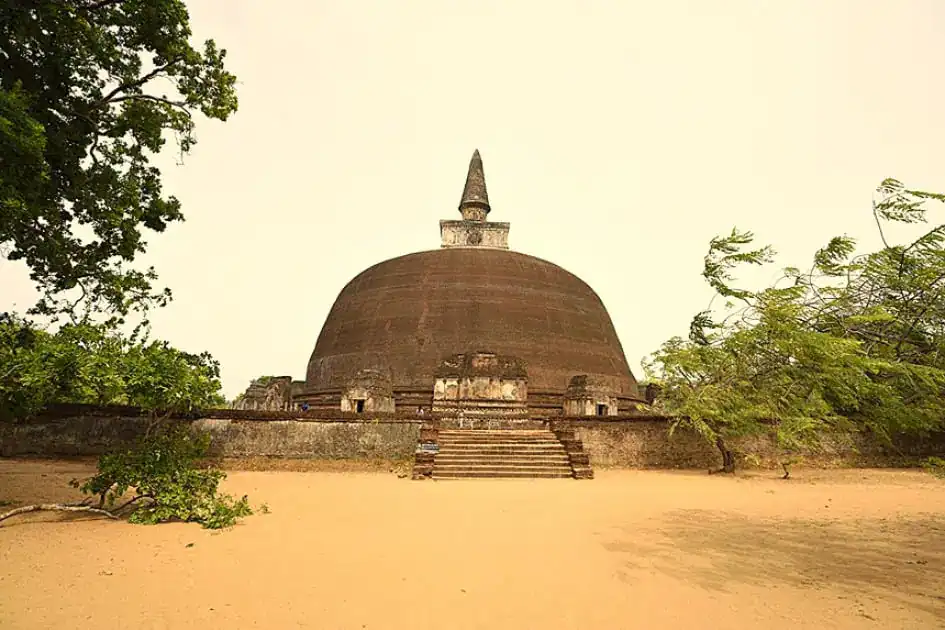
Rankoth Vehera (Photo: Nalaka Priyantha)
Rankoth Vehera is one of the biggest stupas in Polonnaruwa. The form follows classical proportions. The surrounding terrace and boundary walls create a vast open ritual space. Walk around the base to get a sense of its size.
Alahana Piriwena Area
Ancient Bhikku Hospital
This hospital treated monks with herbal baths, rest areas, and treatment rooms. Stone outlines show beds, bathing troughs, and drains. Visitors gain insight into monastic care and daily life.
Gopala Pabbata
This site holds building foundations linked to monastic study. The paths and stones show a linked complex with living and learning spaces.
Ponds
Several ponds supplied water for cleaning and ritual use. Their shapes vary from rectangular to round. The stone edges remain strong and neat.
Baddha Sima Prasadaya
This structure served as a monastic ordination hall. The boundary stones and platform shape define the sacred space. Visitors notice the symmetry and order of the layout.
Lankatilaka Image House
Lankatilaka holds a tall standing Buddha statue framed by high walls. The statue’s scale impresses visitors. The interior walkway leads you to the statue’s base. The combination of height and narrow spacing creates a powerful view.
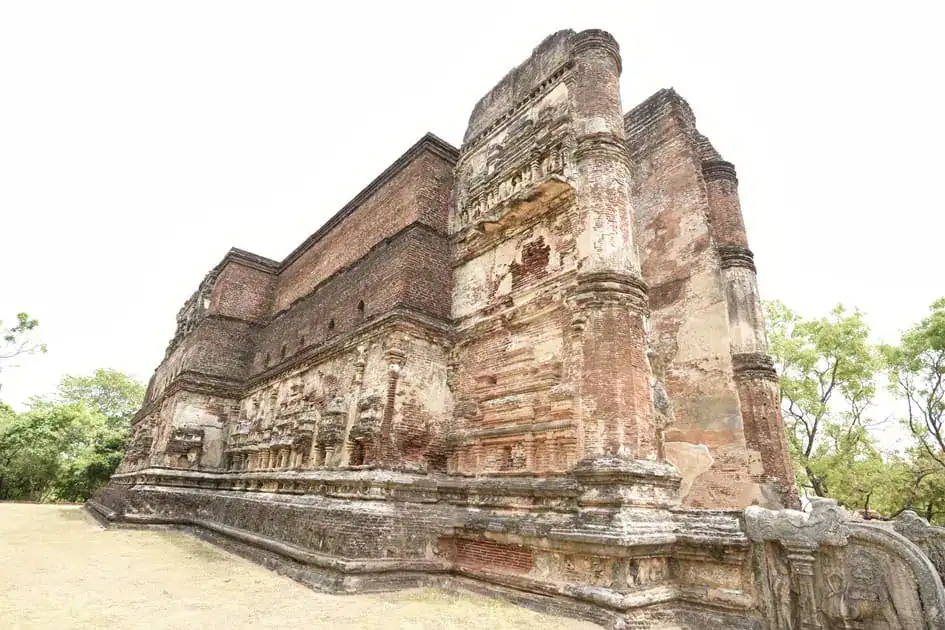
Lankatilaka Image House (Photo: Nalaka Priyantha)
Hevisi Mandapaya
This small pavilion likely served as a drum and musician platform during rituals. Stone pillars mark the structure. The open sides help sound travel.
Kiri Vehera
Kiri Vehera stands near Lankatilaka. Its white plaster once shone bright. Today, the stupa looks plain but graceful. It holds one of the oldest forms in Polonnaruwa.
Accessory Pagoda
Smaller pagodas near main structures supported minor relics or offerings. These sites help you see the broader monastic landscape.
Gal Viharaya
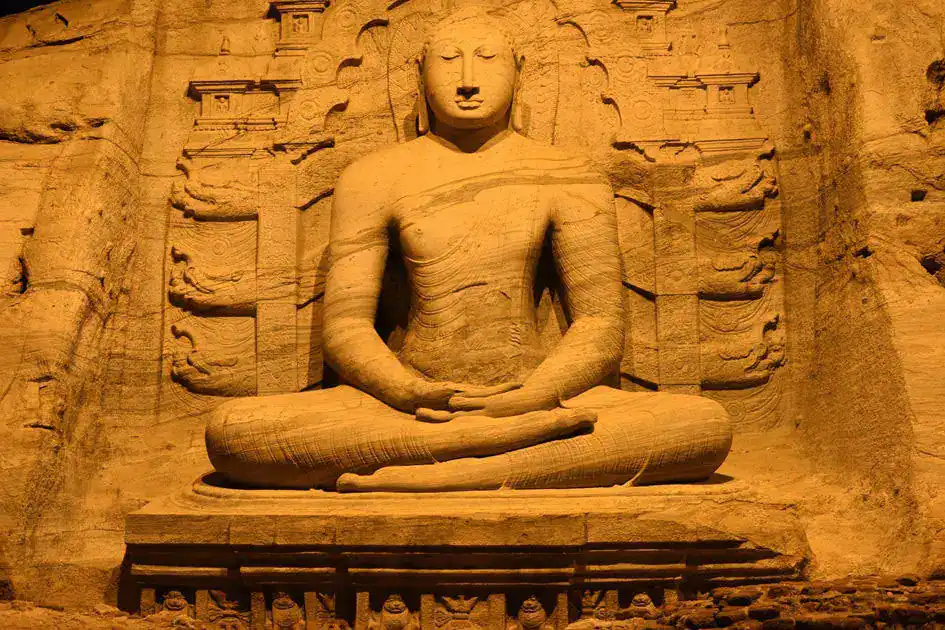
Gal Viharaya – Polonnaruwa (Photo: Nalaka Priyantha)
Gal Viharaya presents four Buddha statues carved from a single stretch of stone. The seated figure is in a meditation pose, perfectly balanced. The standing figure shows calm control. The reclining figure presents the final moment of life. The smaller seated image inside a carved chamber completes the group. Visitors walk slowly across the platform to study the details. Many travellers consider this the highlight of Polonnaruwa.
Demala Maha Seya
Demala Maha Seya is a large stupa mound. It reflects the ambitions of rulers who planned a massive religious site. Although incomplete, the scale remains clear.
Nelum Pokuna (the Lotus Pond)
This pond has steps arranged like lotus petals. The design holds practical and symbolic meaning. The shape feels calm and balanced. Many visitors photograph the pond from above to capture the pattern.
Thivanka Image House
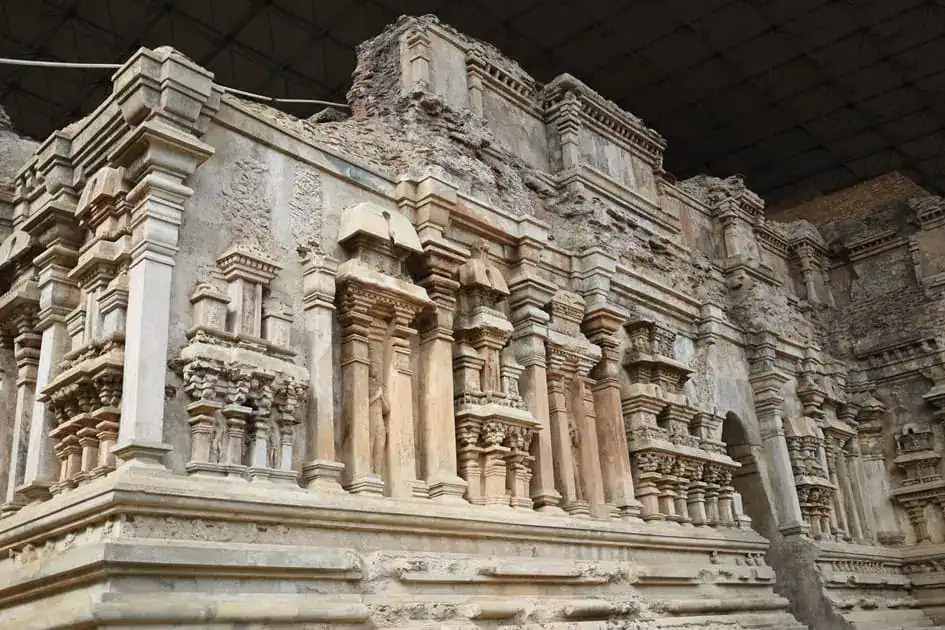
Thivanka Image House (Photo: Nalaka Priyantha)
Thivanka Image House holds a tall Buddha statue with a curved pose. The interior walls once held paintings. Fragments of colour remain. You walk through a long, narrow passage to reach the statue.
Royal Palace Area
Royal Palace of King Parakramabahu
According to records, the palace once had seven floors. Today, you see thick walls, firm foundations, and collapsed columns. The size hints at luxury and power.
Audience Hall
The Audience Hall holds carved elephants and lions along its base. Steps lead to the central platform. This space held ceremonial events and official meetings.
Council Chamber of King Parakramabahu
This chamber has orderly stone steps and blocks that define seats for ministers. The shape highlights careful planning for state affairs.
Kumara Pokuna
This elegant pond served the royal household. Stone steps curve around the water. The design shows skill and order in royal life.
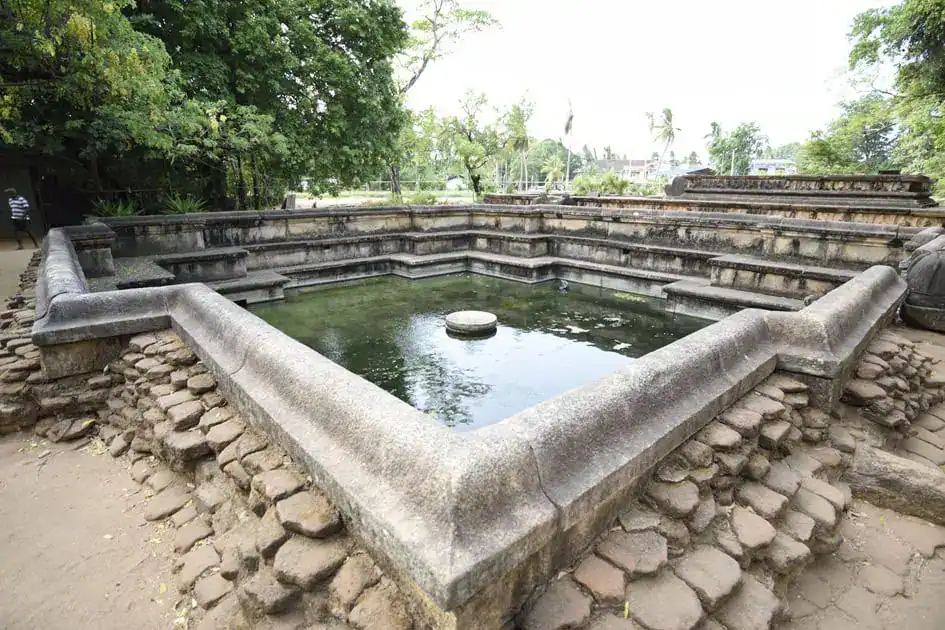
Kumara Pokuna (Pond), Photo: Nalaka Priyantha
Deepa Uyana Area
Palace of King Nissanka Malla
This palace sits near the reservoir. Large blocks and raised platforms define the layout.
Council Chamber of King Nissanka Malla with Lion Throne
This structure features a carved throne base in the shape of a lion. It marks the king’s formal seat.
Polonnaruwa Archaeological Museum
The museum displays statues, tools, jewellery, and decorative pieces. You also see models of the ancient city. A visit here helps you understand the context before you explore the ruins.
Parakrama Samudra
This reservoir supports farms and protects nearby lands. You see fishing boats, birds, and open water. The scale shows the engineering skill of ancient Sri Lanka.
Potgul Viharaya
Potgul Viharaya is believed to be a library or reading hall. Small rooms and circular shapes suggest reading cells. It sits near a statue thought to represent King Parakramabahu.
Statue of King Parakramabahu
This tall statue depicts a wise ruler holding a palm-leaf book. It reflects strength, intellect, and discipline.
Nearby Key Attractions to Pair with Polonnaruwa
Travel north to Medirigiriya Vatadage to see another round shrine. Travel west to Sigiriya Rock Fortress for more royal history. Travel south to the Dambulla Cave Temple to see its preserved murals. These sites help you build a whole Cultural Triangle route when you visit Sri Lanka.
Activities, Events, and Experiences
Rent a bicycle to explore the entire ancient city. Book a guide for deeper stories. Take a sunset walk near the reservoir. Visit local markets for fruit and snacks. Attend simple rituals at nearby temples. Explore small villages outside town for daily life and farming scenes.
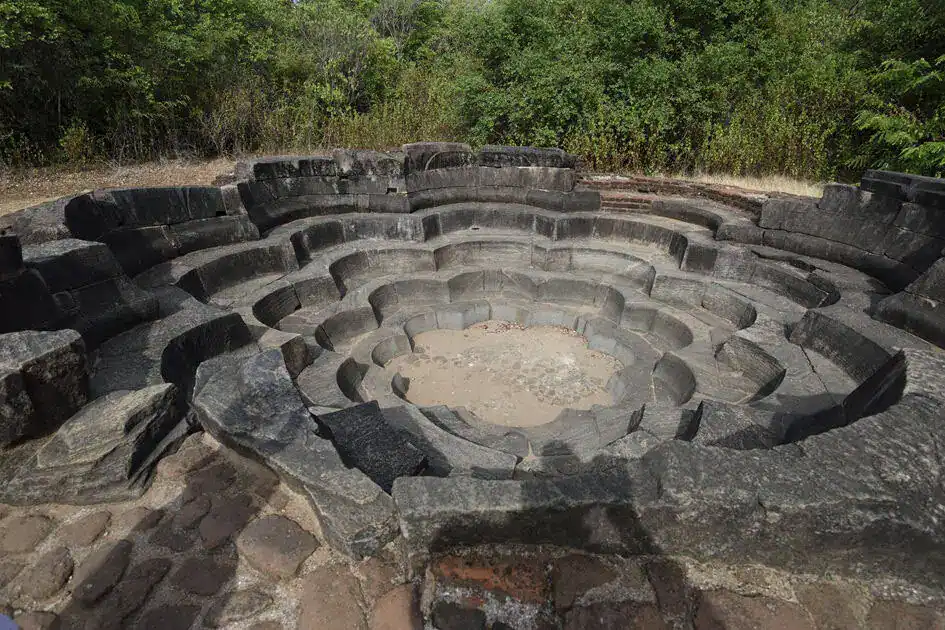
Nelum Pokuna/The Lotus Pond (Photo: Nalaka Priyantha)
Culture and Local Life
People in Polonnaruwa welcome visitors with calm warmth. Shops sell snacks, drinks, and small goods. Farmers travel on bicycles. Children play near water. Respect local customs. Dress modestly at sacred sites. Smile and greet people.
Accommodation and Dining
Choose from guesthouses, homestays, midrange hotels, and a few higher-end lodges. Meals include rice and curry, roti, hoppers, and fresh fruit. Many places offer vegetarian dishes. Expect simple, fresh flavours.
What to Bring and Packing List
- Water bottle
- Comfortable shoes
- Sunscreen
- Hat
- Insect repellent
- Camera
- Small cash for shops
- Light clothing
Money, Services, and Connectivity
ATMs work in town. Card payments work at larger shops. Mobile data stays stable. Wifi works in many hotels.
What Not to Miss
Do not miss Gal Viharaya during early light. Do not miss the Sacred Quadrangle. Do not miss a walk near Parakrama Samudra at sunset.
Dos and Don’ts
- Do respect dress codes in temples.
- Do drink water often.
- Do follow marked paths.
- Do ask before taking photos of locals.
- Don’t climb restricted ruins.
- Don’t feed wild animals.
- Don’t leave rubbish behind.
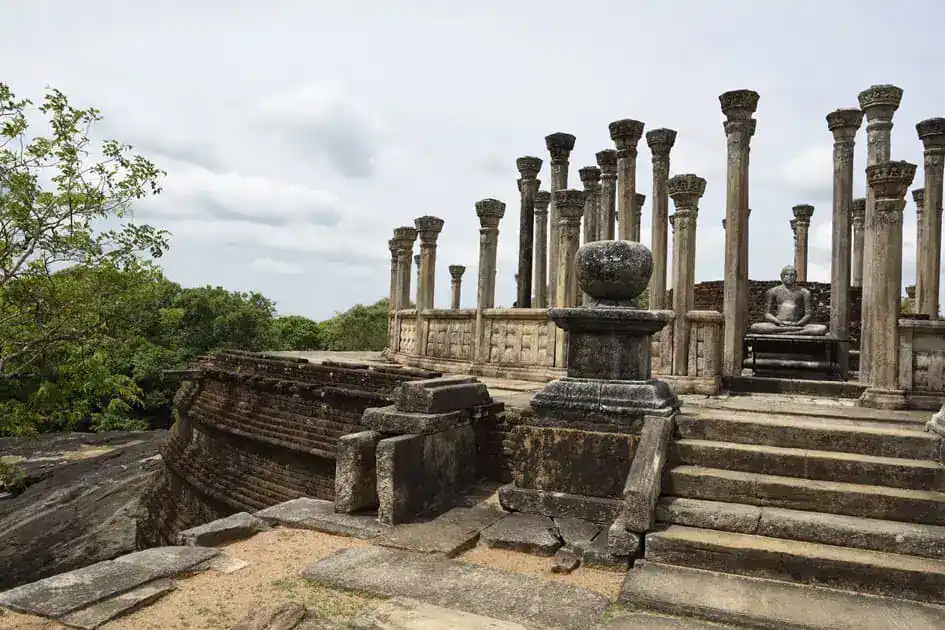
Medirigiriya Vatadage (Photo: Nalaka Priyantha)
Special Tips
Start early. Visit the museum first. Bring plenty of water. Use a bicycle to complete a loop. Ask a guide about the stories behind the carvings.
Photography Tips
Use morning or evening light. Shoot wide for stupas. Shoot close for carvings. Focus on the eyes when shooting statues. Capture reflections near ponds.
Simple and Easy Plans
Half-day plan
- Museum
- Sacred Quadrangle
- Gal Viharaya
Full day plan
- Museum
- Sacred Quadrangle
- Alahana Piriwena
- Gal Viharaya
- Royal Palace
- Parakrama Samudra walk
Two-day plan
- Day one: major sites
- Day two: Deepa Uyana, outer ruins, nearby villages
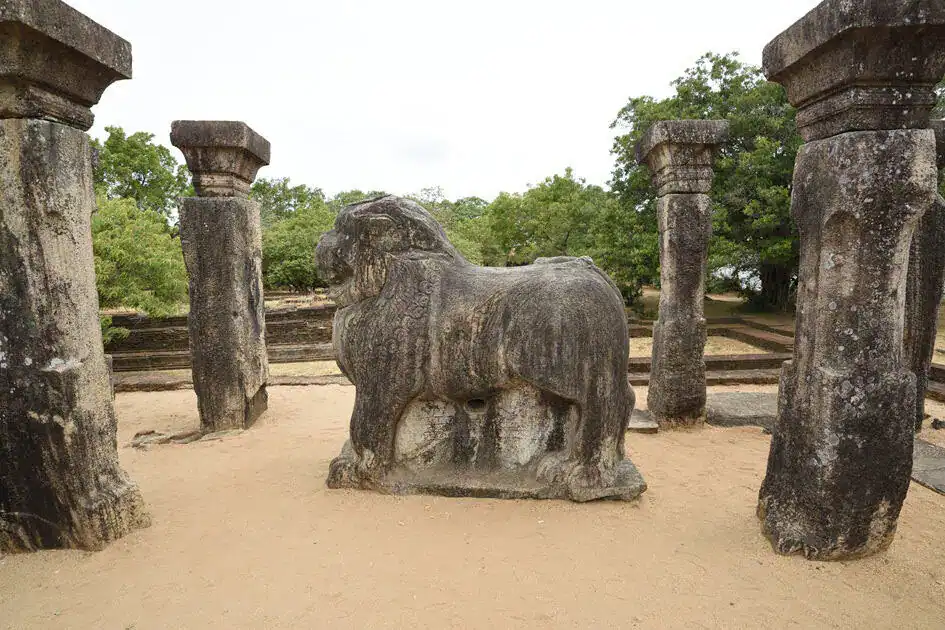
The Council Chamber of King Nissanka Malla with the Lion Throne (Photo: Nalaka Priyantha)
Carry your own bottle. Avoid plastic. Respect wildlife. Support local food stalls. Buy from small shops. Stay on paths to protect vegetation.
Health, Safety, and Comfort
Rest in shade. Drink water. Wear strong shoes. Watch for uneven ground. Bring basic medicine.
Shopping and Souvenirs
Local shops sell wooden carvings, stone figures, postcards, drawings, and simple textiles. Choose items made in the region.
For a complete overview of planning your first trip to Sri Lanka, read our Complete Sri Lanka Travel Guide.
Final Thoughts
Polonnaruwa offers a deep connection to Sri Lanka’s history. You feel the presence of kings, monks, and builders. You also see clear signs of purpose and planning. When you finish your time in Polonnaruwa City, you understand why people call it a jewel of the Cultural Triangle. The ancient city gives you space to reflect and learn. Your visit to Polonnaruwa is one of the most rewarding parts of your journey in Sri Lanka.
Map of Polonnaruwa
The featured image: A Buddha Stature – Gal Viharaya (Photo: Nalaka Priyantha)

I am a Sri Lankan medical doctor who spends my free time travelling, exploring new destinations, and documenting the beauty of the island I call home. I have journeyed across almost every corner of Sri Lanka with my wife and daughter — from wildlife parks and misty mountains to ancient cities, deep forests, rugged landscapes, and quiet beaches.
Travel is not just a hobby for me — it’s a way of life. I love nature, enjoy road trips, and find joy in wildlife photography. I also read widely about tourism, travel trends, and destination culture. Through my writing, I aim to help travellers experience Sri Lanka through real stories, meaningful insights, and honest recommendations — the same way I explore it with my own family.