
Introduction: Why UNESCO World Heritage Sites Matter in Sri Lanka
Sri Lanka holds deep layers of history, culture, and nature within a small island. Many travellers arrive for popular beaches, wildlife safaris, or views of tea country. Yet another story runs through the island. That story appears in the UNESCO World Heritage Sites across Sri Lanka. These places hold global value. They reveal how ancient kingdoms grew, how faith shaped cities, and how nature evolved over thousands of years.
Many first-time visitors hear about Sigiriya or the Temple of the Sacred Tooth Relic. Few realise how these sites connect with other historic cities, temples & religious landmarks, and natural forests across the island. UNESCO recognition helps protect these places and share their importance with the world. Sri Lanka holds eight UNESCO World Heritage Sites. Six sites represent culture and history. Two protect rare rainforest ecosystems.
This guide introduces all eight UNESCO World Heritage Sites in Sri Lanka. You will learn what makes each place important. You will also learn where to find them and how travellers include them in a journey across the island.
If you are new to Sri Lanka, we recommend reading “Find the Best Sri Lanka Itinerary for Your Travel Season” and “The Complete Planning Guide for First-Time Visitors“.
Understanding UNESCO World Heritage Sites
UNESCO protects places with outstanding value for humanity. These locations represent culture, history, science, or nature. UNESCO recognition helps preserve these sites for future generations.
Sites are entered into the World Heritage List after careful research and review. Experts evaluate history, architecture, ecological value, and cultural significance. When UNESCO approves a site, the country accepts responsibility for protecting and maintaining the location.
Sri Lanka joined the UNESCO World Heritage Convention in 1980. Since then, eight locations across the island have gained UNESCO status. These sites show different chapters of Sri Lanka’s past. Some represent ancient capitals. Others protect sacred religious landmarks. One site protects one of South Asia’s last primary rainforests.
UNESCO World Heritage Sites in Sri Lanka: Quick Overview
| Site | Type | Location | Best known for |
| Sigiriya Rock Fortress | Cultural | The Cultural Triangle | Lion rock palace |
| Sacred City of Anuradhapura | Cultural | The Cultural Triangle | Ancient Buddhist capital |
| Ancient City of Polonnaruwa | Cultural | The Cultural Triangle | Stone Buddha statues |
| Rangiri Dambulla Cave Temple | Cultural | The Cultural Triangle | Cave murals and statues |
| Sacred City of Kandy | Cultural | The Cultural Triangle | Temple of the Tooth |
| Old Town of Galle and its Fortifications | Cultural | The South Coast | Dutch colonial fort |
| Central Highlands of Sri Lanka | Natural | The Hill Country | Biodiversity and mountains |
| Sinharaja Forest Reserve | Natural | Southwest rainforest | Biodiversity & endemic wildlife |
Sri Lanka’s eight UNESCO World Heritage Sites fall into two categories.
- Cultural heritage sites
- Sigiriya Rock Fortress
- Sacred City of Anuradhapura
- Ancient City of Polonnaruwa
- Rangiri Dambulla Cave Temple
- Sacred City of Kandy
- Old Town of Galle and its Fortifications
- Natural heritage sites
- Central Highlands of Sri Lanka
- Sinharaja Forest Reserve
Most cultural heritage sites appear in the Cultural Triangle region in the centre of the island. This region formed the heart of ancient Sri Lankan civilisation. Natural heritage sites are found in the Hill Country and the Southwest rainforest zone.
Together, these eight UNESCO World Heritage Sites form a cultural map of Sri Lanka.
Map of the UNESCO World Heritage Sites in Sri Lanka
Where Are the UNESCO World Heritage Sites in Sri Lanka
Geography plays an important role in planning a trip to these sites. Many cultural heritage landmarks are located within the Cultural Triangle. This area connects the ancient capitals of Anuradhapura, Polonnaruwa, and Sigiriya. Travellers often visit these sites within two or three days.
Kandy lies south of the Cultural Triangle, at the gateway to the Hill Country. Galle appears along the Southern Coastline. The Central Highlands stretch across the mountainous interior. Sinharaja Forest Reserve lies in the rainforest zone of the Southwest.
This distribution allows travellers to combine culture, nature, and coastal destinations in a single journey.
Sigiriya Rock Fortress
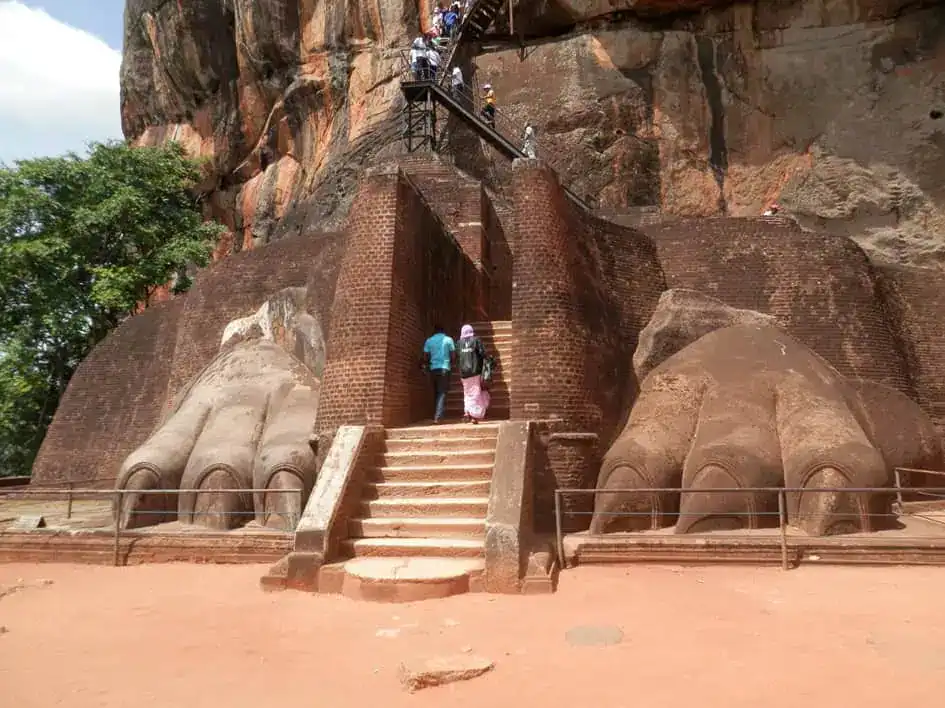
The Lion Gate in Sigiriya Rock Fortress (Photo: Gonzo Gooner, CC BY 3.0)
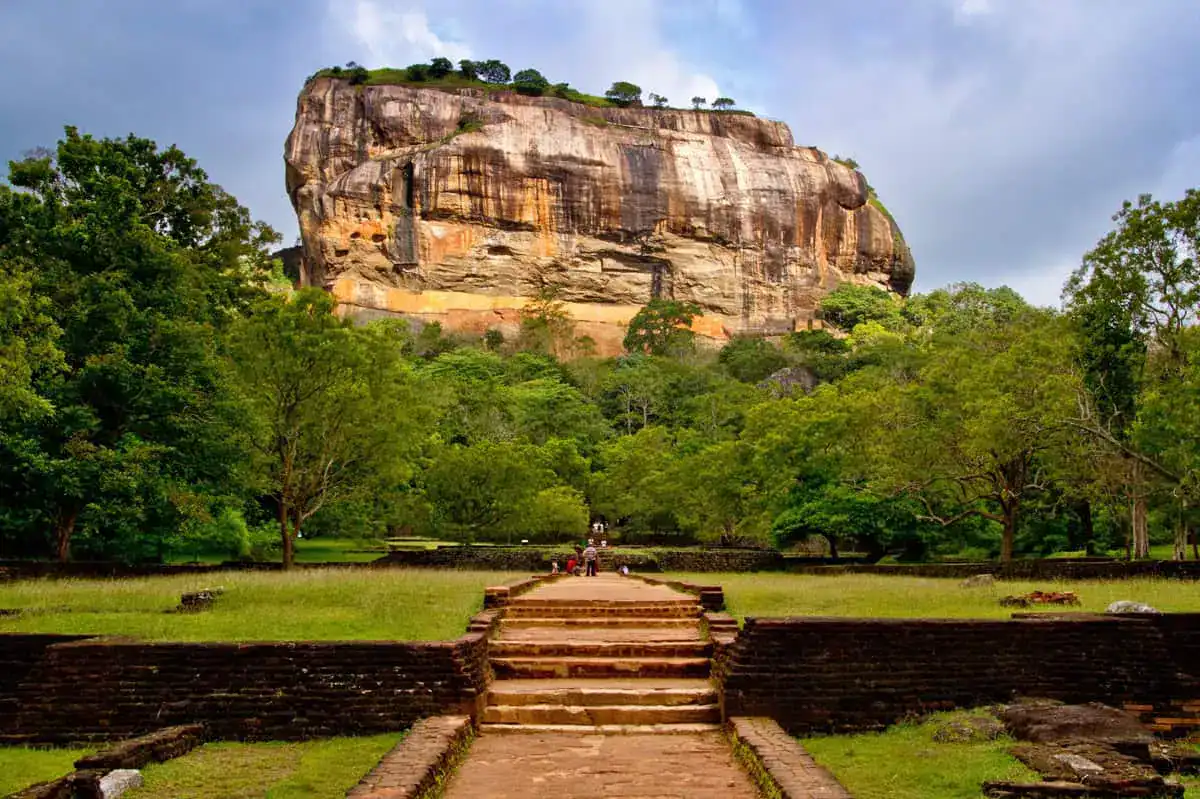
Sigiriya stands among the most recognised UNESCO World Heritage Sites in Sri Lanka. The massive rock rises almost 200 metres above the surrounding plains. King Kashyapa built the fortress during the fifth century.
Sigiriya served as a royal palace and military stronghold. Builders created advanced water gardens, pools, and defensive walls around the base of the rock. Visitors begin the climb through landscaped gardens designed over 15 centuries ago.
Halfway up the rock, ancient frescoes appear on a sheltered wall. These paintings show women carrying flowers and trays. Scholars believe the images represent celestial figures.
Higher along the climb, visitors walk beside the famous Mirror Wall. The polished stone surface once reflected the king as he walked past.
At the summit of the Sigiriya Rock, the remains of the royal palace still stand. Stone foundations outline halls, pools, and viewing terraces. The summit also offers one of the broadest views across central Sri Lanka.
Sigiriya remains one of the most visited UNESCO World Heritage Sites in Sri Lanka. Early morning visits reduce heat and crowds.
Sacred City of Anuradhapura
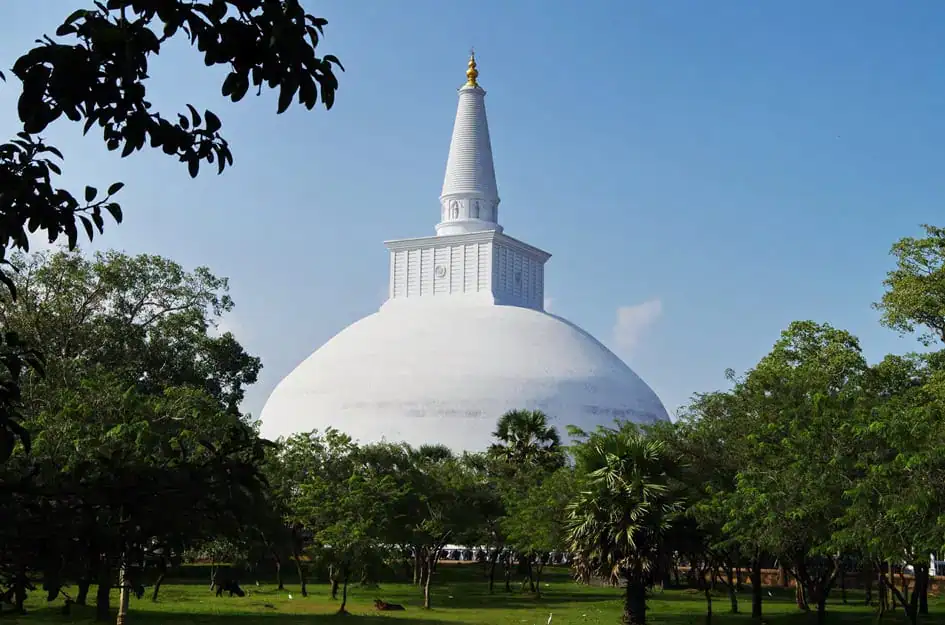
Ruwanweliseya Stupa, Anuradhapura (Photo: Balou46, CC BY-SA 3.0)
Anuradhapura represents the first great kingdom of Sri Lanka. The city served as the island’s capital for over one thousand years. During this time, rulers developed irrigation systems, reservoirs, and religious monuments across the region.
The city also holds one of the most sacred trees in the Buddhist world. The Sri Maha Bodhi tree is a cutting from the Bodhi tree in India. Historical records trace the planting of this tree back more than two thousand years.
Anuradhapura contains massive brick-and-stone stupas. These domed monuments served as religious centres for monks and pilgrims. Ruwanwelisaya, Jetavanaramaya, and Abhayagiri stand among the largest stupas ever built in the ancient world.
Visitors often explore Anuradhapura by bicycle. The wide paths between temples and reservoirs make cycling easy. The scale of the city becomes clear during these journeys.
Anuradhapura remains one of the most sacred UNESCO World Heritage Sites for Buddhist pilgrims.
Ancient City of Polonnaruwa
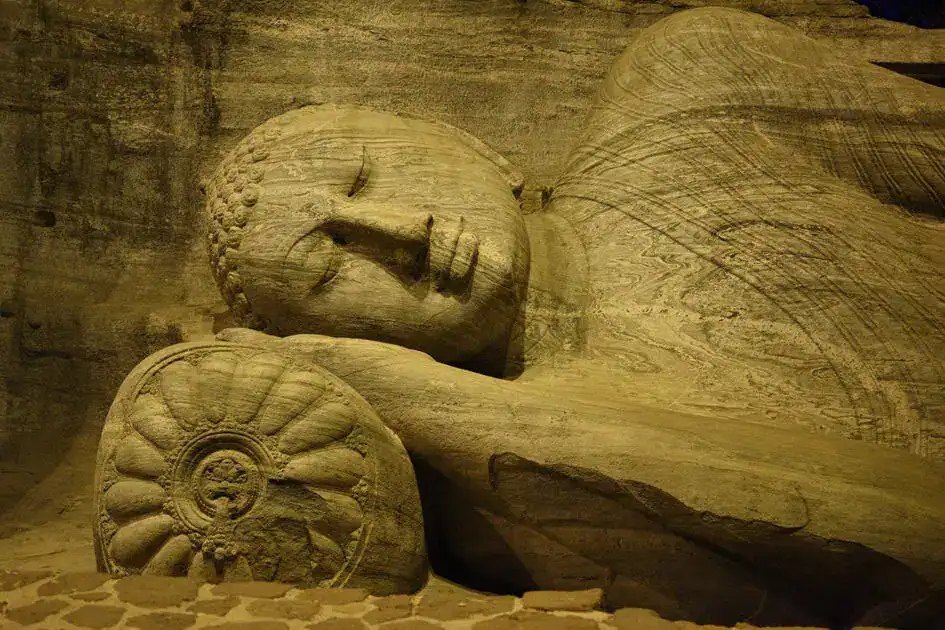
Buddha Statue – Polonnaruwa Gal Viharaya (Photo: Nalaka Priyantha)
Polonnaruwa replaced Anuradhapura as the capital during the eleventh century. Kings from the Chola dynasty and later the Sinhalese kingdom ruled from this city. During this period, architects built temples, palaces, and public buildings across the plains.
The city layout feels more compact than Anuradhapura. Travellers often explore the main monuments within a single day.
The Gal Vihara complex holds the most famous sculptures in Polonnaruwa. Four Buddha statues carved directly into granite stand in a single rock wall. The standing, seated, and reclining Buddhas show exceptional craftsmanship.
Polonnaruwa also shows advanced irrigation engineering. Ancient canals and reservoirs supported rice farming across the region.
Visitors who walk through Polonnaruwa begin to understand how organised and advanced these ancient cities were.
Rangiri Dambulla Cave Temple
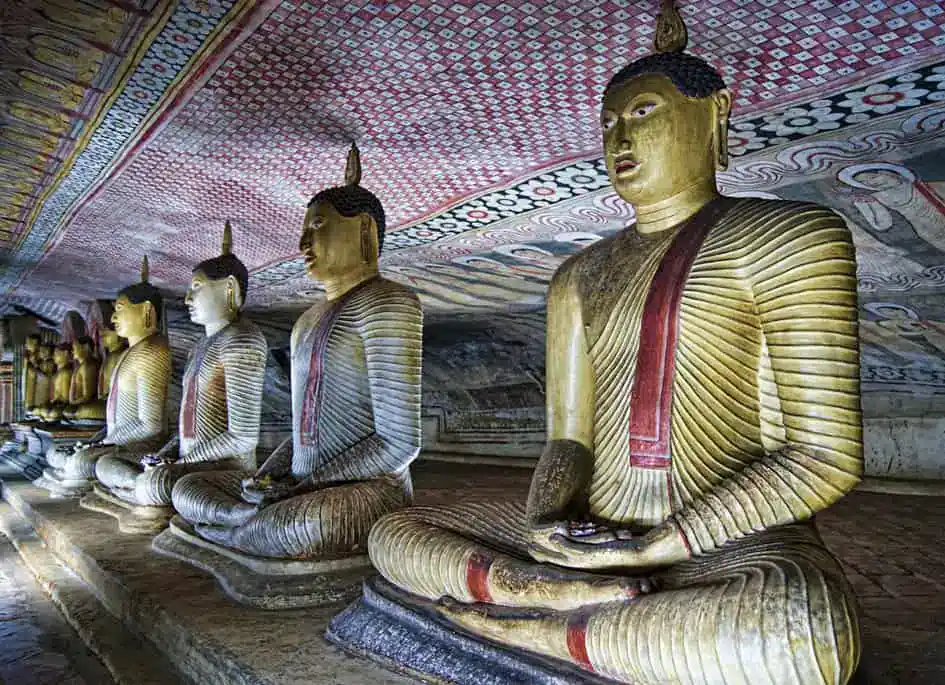
Buddha Statues and Paintings in Dambulla Cave Temple (Photo: Philip Nalangan, CC BY 4.0)
Rangiri Dambulla Cave Temple stands as the largest cave temple complex in Sri Lanka. The temple sits on a large rock overlooking the plains of the Cultural Triangle.
Five main caves hold over 150 Buddha statues. The walls and ceilings display colourful paintings covering thousands of square metres. Many of these murals date back centuries.
The caves served as a place of refuge during times of war. King Valagamba used the caves as shelter during exile in the first century BCE. After regaining the throne, he transformed the caves into a temple complex.
Visitors climb a series of steps to reach the caves. Along the path, monkeys gather near the temple entrance. The climb also offers views across farmland and distant hills.
Inside the caves, rows of statues and paintings create a calm atmosphere. The artwork tells stories from Buddhist teachings and Sri Lankan history.
The Dambulla Cave Temple forms a key part of the UNESCO World Heritage Sites within the Cultural Triangle.
Sacred City of Kandy
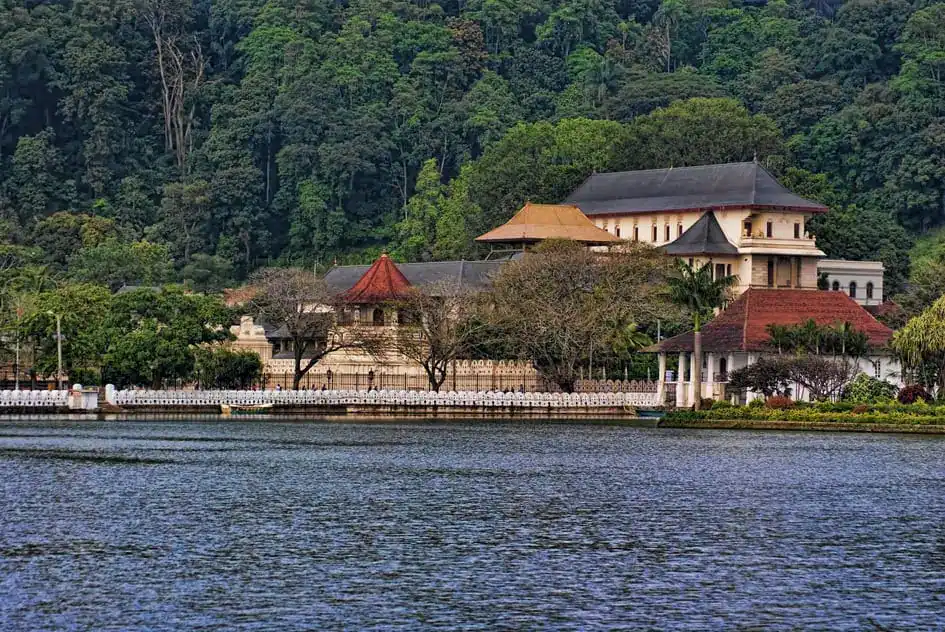
The Temple of the Tooth and Kandy Lake (Photo: Philip Nalangan, CC BY 4.0)
Kandy became the final royal capital of Sri Lanka before the colonial period. The city sits beside a lake surrounded by green hills. Within this setting stands the Temple of the Sacred Tooth Relic.
The temple protects a tooth relic believed to belong to the Buddha. This relic carries deep spiritual meaning for Buddhists. For centuries, the kingdom’s ruler protected the relic as a symbol of authority.
Pilgrims visit the temple throughout the year. They bring flowers and offer prayers during daily rituals.
Kandy also hosts one of Asia’s most famous cultural festivals. The annual Esala Perahera procession fills the streets with dancers, drummers, and decorated elephants.
The Sacred City of Kandy remains one of the most famous and visited UNESCO World Heritage Sites in Sri Lanka. The city also serves as a gateway to the Hill Country.
Old Town of Galle and Its Fortifications
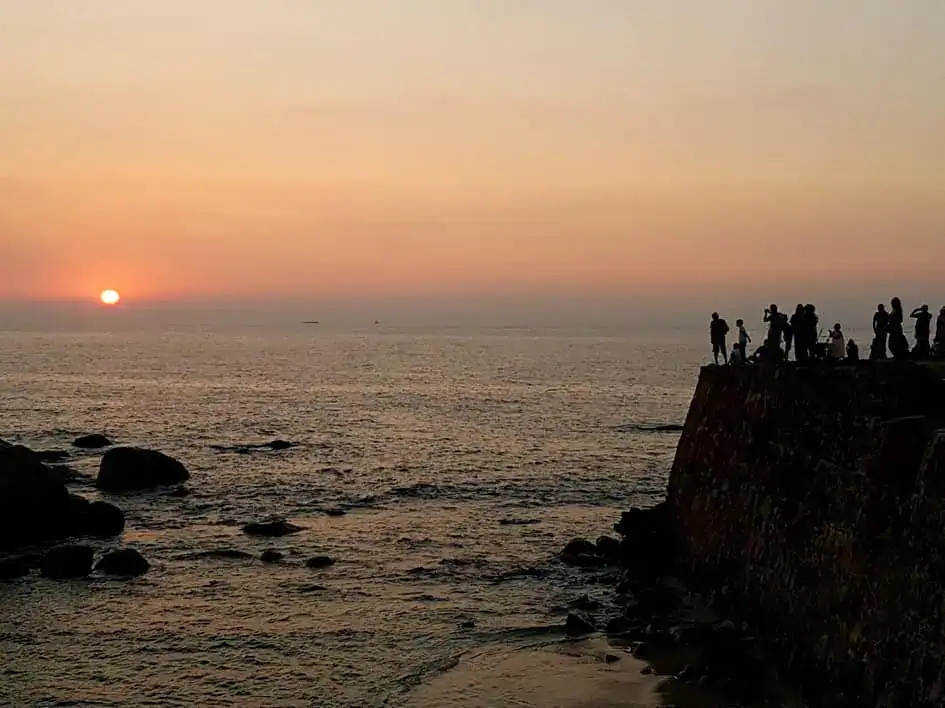
Sunset – Galle Fort (Photo: Peter Addor, CC BY-SA 4.0)
Galle Fort stands on the Southern Coast of Sri Lanka. European colonial powers built the fort during the sixteenth and seventeenth centuries. Portuguese traders first established the settlement. Later, the Dutch expanded the fort into a fortified city.
Today, thick stone walls still surround the old town. Streets inside the fort follow a grid pattern lined with colonial buildings.
The architecture blends European and South Asian influences. Churches, warehouses, and houses stand beside small cafés and art galleries.
Visitors walk along the ramparts in the evening. From the walls, views stretch across the Indian Ocean.
Unlike ancient ruins, Galle Fort remains a living town. Families live inside historic houses. Shops and restaurants fill restored buildings.
This mix of history and daily life makes Galle one of the most distinctive UNESCO World Heritage Sites in Sri Lanka.
Central Highlands of Sri Lanka
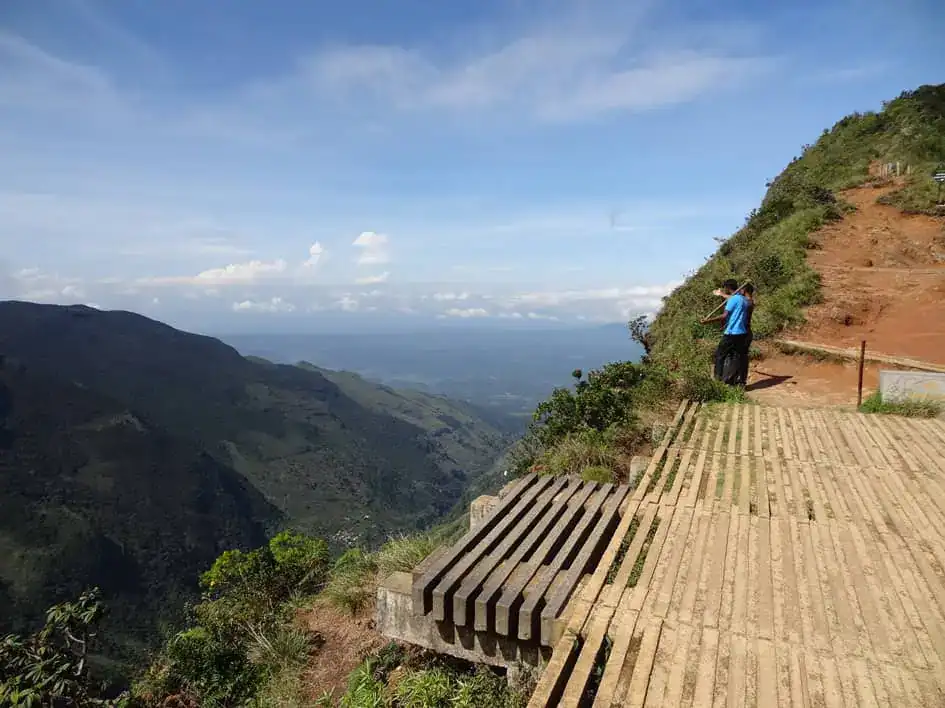
World’s End – Horton Plains (Photo: Cherubino)
The Central Highlands form the only natural mountain ecosystem among the UNESCO World Heritage Sites in Sri Lanka. This protected region includes three important areas: Horton Plains National Park, the Knuckles Forest Reserve, and Peak Wilderness Sanctuary.
These highlands rise above the lowland plains of the island. Mist covers the mountains during early morning hours. Rivers begin their journey from these hills and flow towards the coast.
Horton Plains National Park sits at an elevation of more than 2,000 metres above sea level. The plateau is home to grasslands, forests, and streams. One of the most famous viewpoints in the park is called World’s End. The cliff drops almost 900 metres straight down. On clear mornings, the view stretches across the southern plains.
Peak Wilderness Sanctuary surrounds Adam’s Peak, one of Sri Lanka’s most sacred mountains. Pilgrims from different religions climb the mountain during the pilgrimage season. The journey begins at night, so visitors reach the summit before sunrise.
The Knuckles Mountain Range protects rare ecosystems and plant species. The region also supports traditional villages and farming communities.
The Central Highlands protect many animals and plants found nowhere else on Earth. Because of this unique biodiversity, UNESCO recognised the region as a World Heritage Site.
Sinharaja Forest Reserve
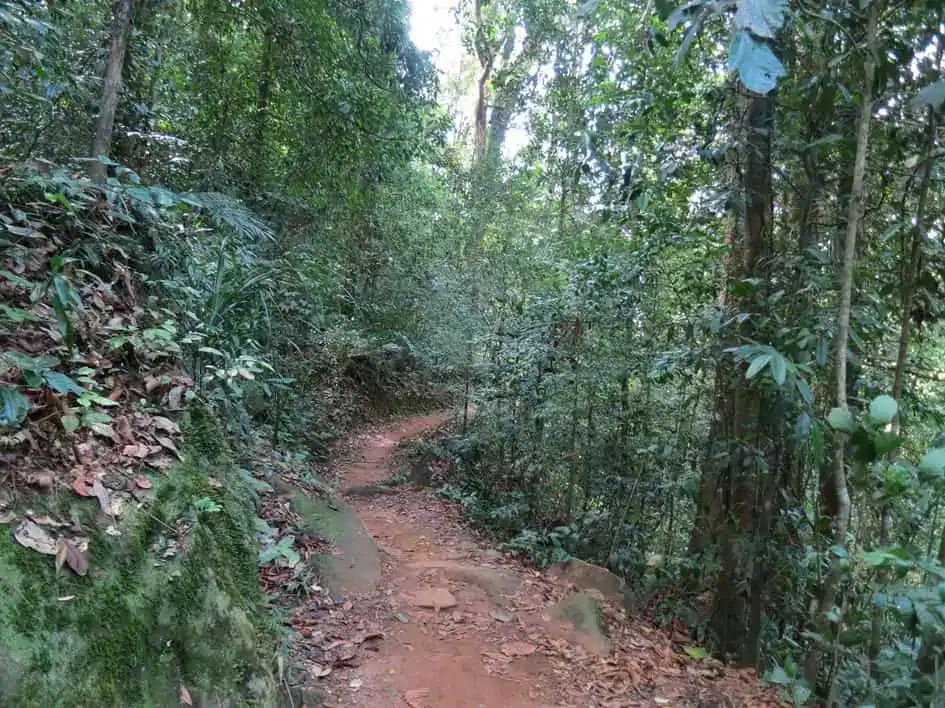
Sinharaja Forest Trail (Photo: Saqib Qayyum, CC BY-SA 3.0)
Sinharaja Forest Reserve stands as the last large primary rainforest in Sri Lanka. This forest lies in the Southwest of the island. Thick vegetation, tall trees, and constant rainfall shape the environment.
Sinharaja was recognised as a UNESCO World Heritage Site for its exceptional biodiversity. Many plants, birds, reptiles, and insects found in this forest exist nowhere else in the world.
Researchers have recorded more than half of Sri Lanka’s endemic species within this rainforest. Bird watchers often visit Sinharaja to see rare species such as the Sri Lankan blue magpie or the red-faced malkoha.
Guided forest walks remain the best way to explore the reserve. Narrow trails pass through dense vegetation and small streams. The sound of birds fills the canopy above.
Visitors must travel with trained local guides. These guides know the forest well and help protect the fragile ecosystem.
Sinharaja shows a different side of Sri Lanka’s heritage. While ancient cities reveal human history, this rainforest protects natural history.
How to Visit the UNESCO World Heritage Sites in Sri Lanka
Travellers often worry about how to fit UNESCO World Heritage Sites into a single journey. A clear route helps simplify the trip.
Many sites sit within the Cultural Triangle. Because of this, travellers often begin their journey in the island’s central region.
A simple travel route often looks like this.
- Day 1 to Day 2: Visit Sigiriya Rock Fortress and Rangiri Dambulla Cave Temple.
- Day 3: Travel to Polonnaruwa and explore the ancient city.
- Day 4: Continue north to Anuradhapura.
- Day 5: Travel south to Kandy and visit the Temple of the Sacred Tooth Relic.
- Day 6 to Day 7: Travel through the Hill Country and visit the Central Highlands region.
Optional extension
Travel south to Galle Fort. From there, travellers who enjoy nature head to the Sinharaja Forest Reserve.
This route allows visitors to see most of Sri Lanka’s UNESCO World Heritage Sites without rushing.
Transport options vary depending on travel style. Private drivers offer the easiest option for travellers who want flexibility. Trains connect major cities such as Colombo, Kandy, and the Hill Country. Buses also reach most towns across the island.
We recommend reading the “transport in Sri Lanka” guide.
Many visitors combine these heritage sites with beaches, wildlife safaris, and tea country travel.
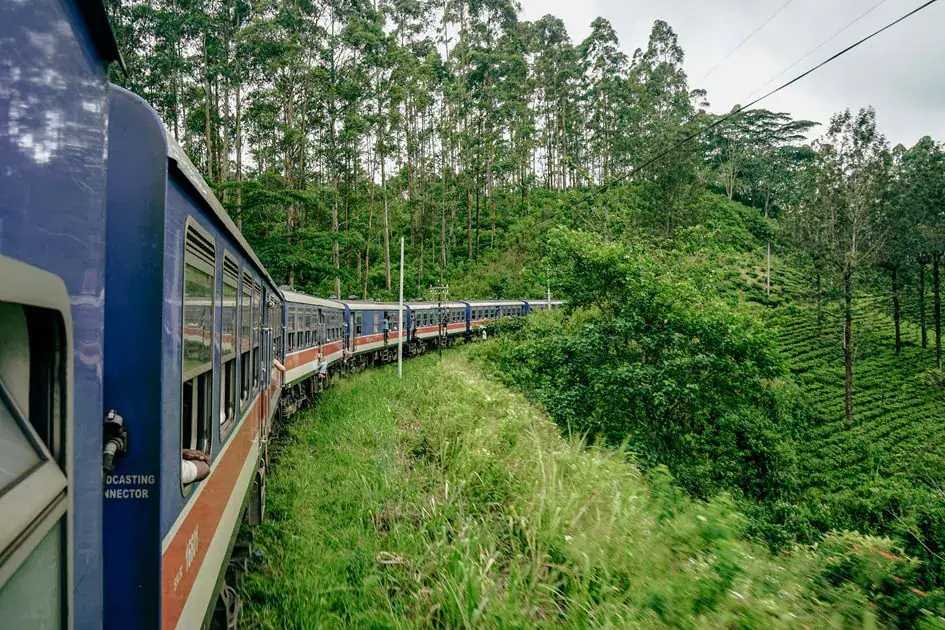
Kandy to Ella Train (Photo: Matt Dany via Unsplash)
Why the UNESCO World Heritage Sites Tell the Story of Sri Lanka
Each UNESCO site reveals a different period of Sri Lanka’s past.
Ancient cities such as Anuradhapura and Polonnaruwa show advanced irrigation engineering and organised urban planning. These kingdoms supported large populations and complex societies.
Sigiriya reveals royal ambition and military strategy. Dambulla Cave Temple demonstrates the enduring power of religious devotion across centuries.
Kandy represents the last independent kingdom before colonial rule. Galle Fort tells the story of European traders who arrived along the coast.
The Central Highlands and Sinharaja Forest Reserve protect ecosystems shaped long before human settlement.
Together, these UNESCO World Heritage Sites form a historical timeline of the island. They show how nature, faith, culture, and trade shaped Sri Lanka.
Travellers who visit these locations gain a deeper understanding of the island beyond beaches and resorts.
Frequently Asked Questions About UNESCO Sites in Sri Lanka
How Many UNESCO World Heritage Sites Are in Sri Lanka?
There are 8 UNESCO World Heritage Sites on the island. Six sites protect cultural heritage, including ancient cities, temples, and historic towns. Two sites protect natural heritage in the form of a tropical rainforest ecosystem.
Which UNESCO World Heritage Site in Sri Lanka is most famous?
Sigiriya Rock Fortress attracts the most visitors each year.
Which UNESCO sites in Sri Lanka are natural?
Sinharaja Forest Reserve is the island’s only primary rainforest recognised by UNESCO. The Central Highlands of Sri Lanka are also a natural UNESCO World Heritage site.
Can travellers visit all UNESCO sites in one trip?
Most travellers see five or six sites within ten to twelve days.
Final Thoughts: Exploring UNESCO World Heritage Sites in Sri Lanka
The UNESCO World Heritage Sites across Sri Lanka reveal the island’s cultural depth and natural richness. Eight locations hold this international recognition.
Sigiriya, Anuradhapura, Polonnaruwa, Dambulla, Kandy, and Galle represent historic cities, temples, and royal capitals. The Central Highlands and Sinharaja Forest Reserve protect rare natural ecosystems.
Together, these UNESCO World Heritage Sites help travellers understand Sri Lanka’s long history. Ancient engineers built cities across dry plains. Religious leaders created sacred temples. Nature shaped forests and mountains filled with unique wildlife.
When you travel across the island, these sites help connect each destination. They explain how history and nature shaped the country you see today.
Travellers who want a deeper experience in Sri Lanka should begin their journey with these UNESCO World Heritage Sites. They offer the clearest path to understanding the island’s past and present.
The Official UNESCO Listings:
- UNESCO World Heritage Sites in Sri Lanka
- Ancient City of Polonnaruwa
- Ancient City of Sigiriya
- Old Town of Galle and its Fortifications
- Rangiri Dambulla Cave Temple
- Sacred City of Anuradhapura
- Sacred City of Kandy
- Central Highlands of Sri Lanka
- Sinharaja Forest Reserve
Featured image: The View of Sigiriya from the Ancient Garden (Photo: Poswiecie, via Pixabay)

I am a Sri Lankan medical doctor who spends my free time travelling, exploring new destinations, and documenting the beauty of the island I call home. I have journeyed across almost every corner of Sri Lanka with my wife and daughter — from wildlife parks and misty mountains to ancient cities, deep forests, rugged landscapes, and quiet beaches.
Travel is not just a hobby for me — it’s a way of life. I love nature, enjoy road trips, and find joy in wildlife photography. I also read widely about tourism, travel trends, and destination culture. Through my writing, I aim to help travellers experience Sri Lanka through real stories, meaningful insights, and honest recommendations — the same way I explore it with my own family.
[…] Official Sri Lanka Tourism describes Galle Fort as one of Asia’s best-preserved colonial forts. Galle also forms part of Sri Lanka’s UNESCO-listed cultural heritage. […]