
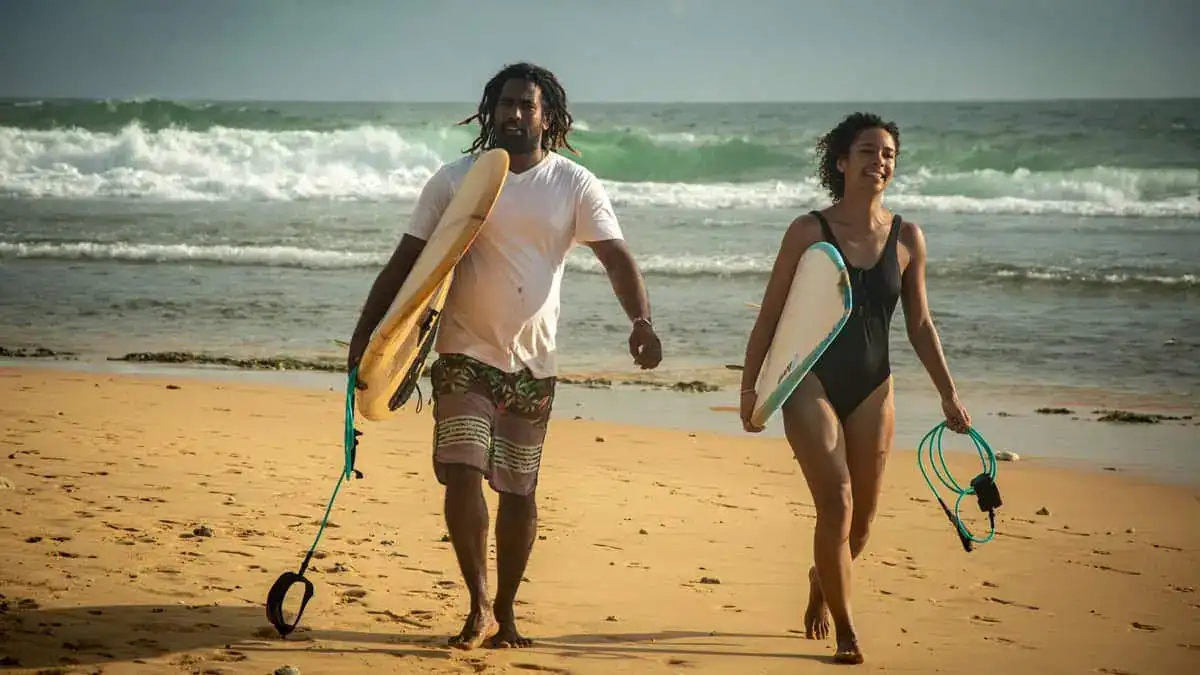

Introduction: Why Surfing in Sri Lanka Draws Surfers From Across the World
Surfing in Sri Lanka attracts travellers seeking warm water, reliable waves, and a relaxed coastal culture. The island sits in the Indian Ocean and holds more than 1,790 kilometres of coastline. Along this shoreline, you find beach breaks, reef breaks, and point breaks that suit beginners and experienced surfers.
Many visitors arrive with simple questions. Where are the best surf beaches in Sri Lanka? When is the surf season? Which places suit beginners? What other surf sports exist besides traditional wave surfing?
The answers are easier than many expect. Sri Lanka offers two different surf seasons each year. When waves calm on one side of the island, the opposite coast begins to work. This pattern allows surfers to ride waves year-round.
The island supports several surfing styles. Traditional wave surfing remains the most popular. Wind sports such as kitesurfing and windsurfing also grow rapidly in coastal areas with strong seasonal winds.
This guide explains everything you need to know about surfing in Sri Lanka. You will learn about surf seasons, the different types of surfing available, and the popular beaches where surfers gather across the island.
Do you have an idea of the top 10 beaches in Sri Lanka and the best beaches for swimming?
Why Sri Lanka Is One of the Indian Ocean’s Most Reliable Surf Destinations
Sri Lanka’s geography shapes its surf culture. The island faces open ocean swells from different directions. These swells interact with reefs, sandy bays, and rocky points along the coast.
Several factors make Sri Lanka attractive for surfers.
Warm water all year
Water temperatures usually range between 26 and 29 degrees Celsius. Surfers do not need wetsuits.
Two surf seasons
The South and West Coasts receive strong waves between November and April. The East Coast receives strong waves from May to September.
Accessible surf towns
Many surf beaches sit close to towns with guesthouses, restaurants, and surf schools.
Wide range of surf levels
Some beaches offer soft rolling waves ideal for beginners. Others deliver faster reef breaks suited for experienced surfers.
Sri Lanka Tourism Development Authority promotes surfing as a major coastal activity. Surf tourism continues to grow as more travellers seek warm-water destinations with reliable waves.
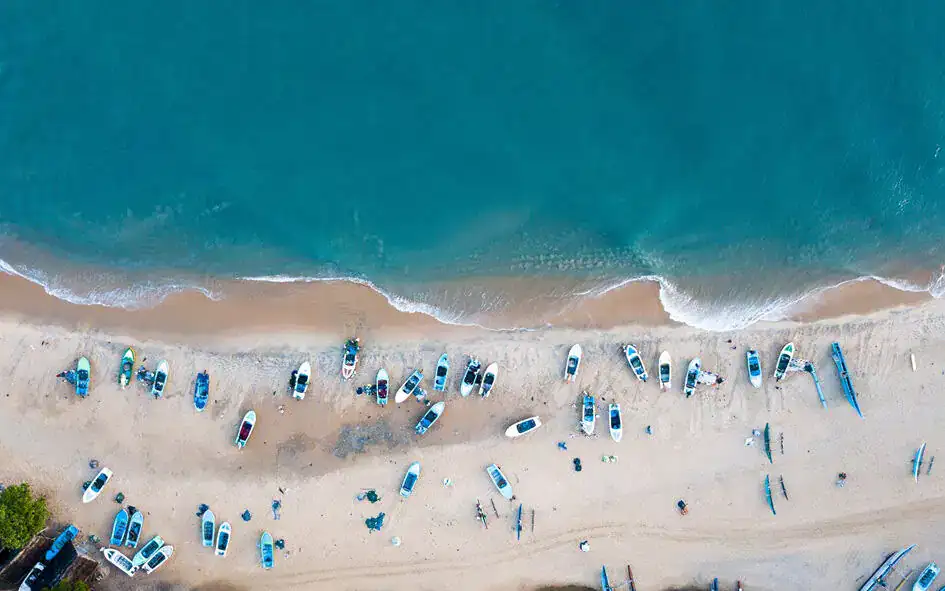
Aerial View of Arugam Bay Beach (Photo: Etienne Boulanger, CC BY 3.0)
Understanding the Surf Seasons in Sri Lanka
Surf conditions change during the year because monsoon winds influence the direction of ocean swells. This natural pattern divides the island into two surf seasons.
South and West Coast Surf Season
The main season runs from November to April. During this period, waves arrive along the Southwest Coast.
Popular surf locations include,
Many beginners start surfing in Weligama because the bay produces gentle rolling waves.
East Coast Surf Season
The East Coast season runs from May to September. During these months, strong swells reach the coast near Arugam Bay.
Popular East Coast surf areas include,
- Arugam Bay
- Pottuvil
- Whiskey Point
- Peanut Farm
Arugam Bay has become the most recognised surf destination on the East Coast. The long point break produces consistent right-hand waves during the peak season.
Because of these two seasons, surfers travel around the island to follow the best conditions.

Weligama Beach – A Popular Surfer Hangout (Photo: Inna Rabotyagina)
Surfing in Sri Lanka: Understanding the Different Surf Disciplines
Surfing in Sri Lanka includes several different styles. Ocean waves support traditional board surfing, while lagoons and windy coastal areas support wind-powered sports.
The most common types of surfing available on the island include,
- Wave surfing
- Longboard surfing
- Shortboard surfing
- Bodyboarding
- Stand-up paddle surfing
- Kitesurfing
- Windsurfing
- Wing foiling
Each style suits different coastal environments and skill levels.
Wave Surfing: The Core Surf Experience
Wave surfing remains the foundation of surfing in Sri Lanka. Surfers ride ocean swells using boards designed to glide across breaking waves.
Sri Lanka’s coastline offers three common wave types.
Beach breaks
Waves break over sandy seabeds. These waves often feel softer and more forgiving. Weligama provides one of the best beach breaks on the island.
Reef breaks
Waves break over coral reefs. These waves often form cleaner shapes. Hikkaduwa and parts of Midigama offer reef breaks.
Point breaks
Waves wrap around rocky points and break along the coastline. Arugam Bay provides the most famous point break in Sri Lanka.
Wave surfing works best during early morning hours when wind conditions remain calm.
Longboard and Shortboard Surfing
Surfers often choose between longboards and shortboards depending on wave conditions and personal style.
Longboard Surfing
Longboards measure around nine feet in length. The larger board provides stability and smooth movement across the wave.
Longboards suit,
- Beginners learning balance
- Small and gentle waves
- Long rolling beach breaks
Weligama Beach has become one of the best longboard learning beaches in Sri Lanka.
Shortboard Surfing
Shortboards measure between six and seven feet. The smaller board allows quick turns and faster manoeuvres.
Shortboards suit,
- Steeper waves
- Reef breaks
- Experienced surfers
Midigama and Arugam Bay attract surfers who prefer faster waves suitable for shortboards.
Bodyboarding
Bodyboarding offers a simpler entry point into wave riding. Riders lie on a small board and use fins to catch waves.
This activity attracts beginners and young travellers because the learning process feels quicker than stand-up surfing.
Bodyboarding works well in beach-break conditions, where waves break close to shore.
Popular bodyboarding beaches include,
- Weligama
- Hikkaduwa
- Unawatuna
Many surf schools introduce beginners to bodyboarding before moving on to stand-up surfing lessons.

Surfing – Weligama Beach (Photo: Inna Rabotyagina)
Stand Up Paddle Surfing
Stand-up paddle surfing combines surfing with balance on a paddle. Riders stand on a larger board and use a paddle to move across the water.
Calm ocean mornings provide ideal conditions for this activity. Travellers enjoy paddle surfing because the boards feel stable and the learning curve feels manageable.
Popular stand-up paddle surfing locations include,
- Bentota River area
- Mirissa Bay
- Kalpitiya lagoons
Paddle surfing often takes place during calm early-morning hours before the wind strengthens.
Kitesurfing in Sri Lanka
Kitesurfing uses a large controllable kite connected to the rider. Wind pulls the rider across the water while standing on a board.
Sri Lanka’s Northwest Coast offers ideal wind conditions for this sport.
Kalpitiya has become the country’s main kitesurfing centre. The region contains shallow lagoons with flat water and steady winds.
Two wind seasons support kitesurfing.
- December to March
- May to October
During these months, kitesurfers gather in Kalpitiya for lessons, equipment rental, and guided kite trips.
Kite schools operate along the lagoon and provide instruction for beginners.
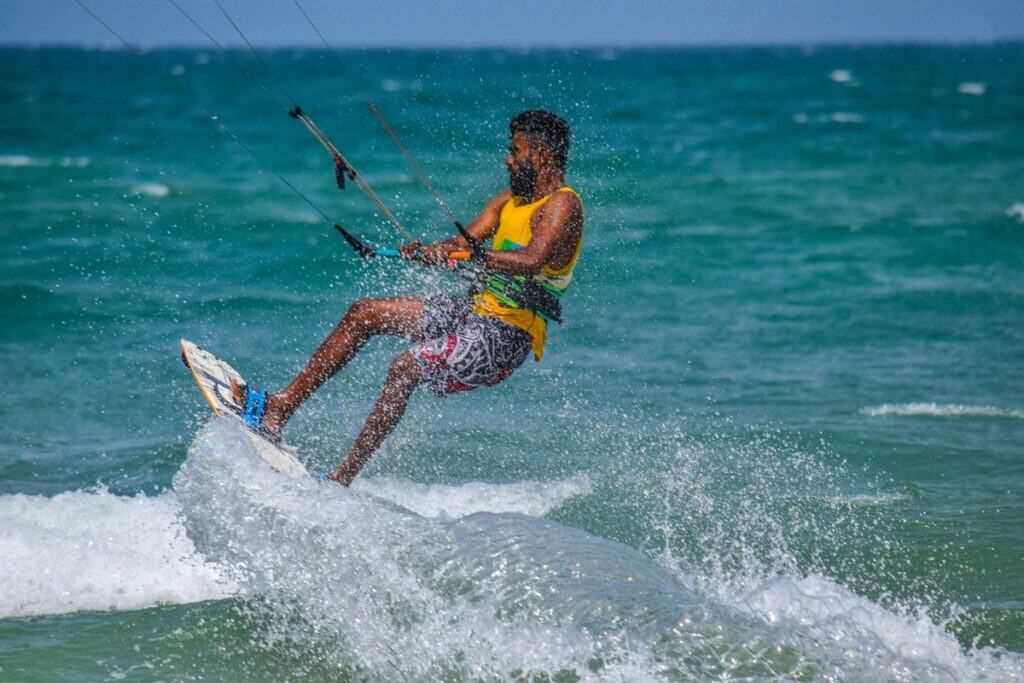
Kitesurfing – Kalpitiya Beach (Photo: Namal Siriwardana)
Windsurfing
Windsurfing combines surfing with a sail attached to the board. Riders control direction and speed by adjusting the sail position.
Wind conditions determine the quality of windsurfing experiences.
Kalpitiya provides some of the most consistent windsurfing conditions because strong winds move across the lagoon during seasonal wind periods.
Some windsurfing also takes place near,
- Negombo
- Bentota
- Arugam Bay during windy months
Wing Foiling
Wing foiling has gained attention in recent years. Riders hold a lightweight inflatable wing while standing on a hydrofoil board.
The hydrofoil lifts the board out of the water once the rider gains speed.
It creates a smooth gliding motion above the waves.
Wing foiling works best in areas with steady wind and open water.
Kalpitiya lagoons and some areas along the East Coast provide suitable conditions for this new sport.
Best Surf Spots in Sri Lanka
Several coastal regions are known for strong surf conditions. These locations attract beginners, experienced surfers, and travellers who want to learn wave riding during their trip.
Weligama
Weligama remains one of the most popular surf towns on the South Coast. The beach forms a wide, curved bay with a sandy seabed. Waves roll slowly towards the shore and break gently across the bay.
These conditions create an ideal place for beginners. Surf schools operate along the beach and offer daily lessons. Board rental shops also line the shoreline.
Early mornings bring the calmest conditions. You often see surfers entering the water shortly after sunrise.
Hikkaduwa
Hikkaduwa lies about one hour south of Colombo. The beach holds several reef breaks that produce faster waves during the surf season.
The reef structure shapes the waves into clean forms. Experienced surfers often prefer these breaks.
The town also has a long history of surfing. Surf travellers began visiting Hikkaduwa decades ago, long before many other surf destinations developed along the South Coast.
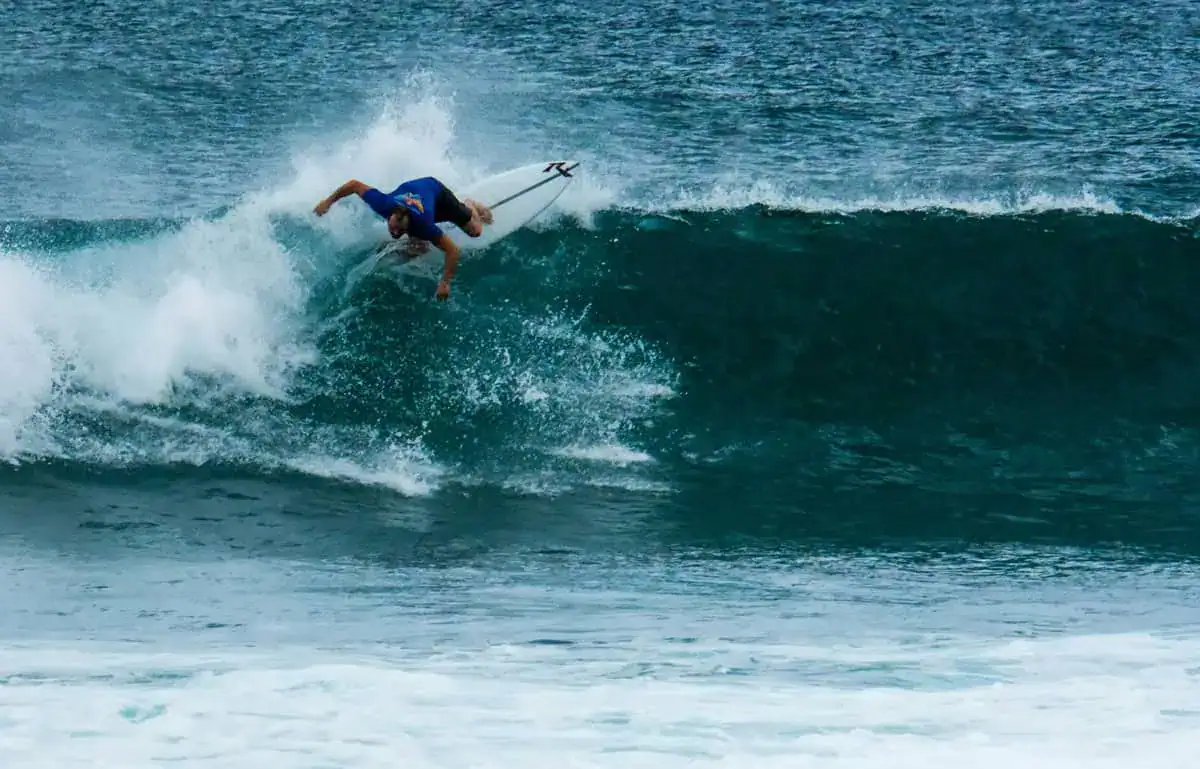
Redbull Ride My Wave event 2019 in Hikkaduwa (Photo: Croyde Bay, via Unsplash)
Midigama
Midigama sits between Weligama and Ahangama. This small coastal village has several well-known surf breaks.
Experienced surfers often come here to ride faster waves. Reef formations along the coast produce stronger swells than nearby beginner beaches.
Popular breaks in the area include,
- Lazy Left
- Rams Right
- Plantations
These waves suit surfers who feel comfortable handling stronger ocean energy.
Mirissa
Mirissa has gained attention mainly for whale watching. The beach also offers smaller waves suitable for casual surfing.
Travellers often enjoy a relaxed surf session in the morning before heading out on whale watching boats later in the day.
Arugam Bay
Arugam Bay stands as the most recognised surf destination on the East Coast of Sri Lanka. Surfers from many countries gather here during the main East Coast season.
The famous point break at Arugam Bay produces long right-hand waves. These waves travel along the coastline, allowing surfers to ride farther.
Several other surf breaks exist near the main bay.
- Whiskey Point
- Peanut Farm
- Elephant Rock
These beaches provide different wave conditions throughout the season. Surf competitions and international surf travellers often gather here during the season.
Kalpitiya
Kalpitiya sits on the Northwest Coast of Sri Lanka. This region attracts travellers who enjoy wind-powered water sports.
Large lagoons provide flat water conditions ideal for kitesurfing, windsurfing, and wing foiling. The open ocean also offers wave-surfing opportunities during certain periods.
Many surf camps and kite schools operate along the lagoon shores.
Surf Schools and Lessons in Sri Lanka
Surf schools play an important role in Sri Lanka’s coastal tourism. Many travellers visit the island specifically to learn surfing for the first time.
Most surf schools operate along the South Coast. Weligama has the largest concentration of instructors and beginner programs.
A typical lesson begins with a short explanation on the beach. Instructors explain safety rules, wave timing, and board handling. After this introduction, students enter the water under the instructor’s guidance.
Lesson programs often include
- Board control training
- Balance practice on the sand
- Wave entry timing
- Standing technique
After several sessions, beginners often gain enough confidence to surf small waves independently.
Many surf schools also offer multi-day training programs for travellers who want to improve their technique.
Many surf schools also provide equipment rental for travellers who continue practising after lessons.
Surf tourism supports many coastal communities by creating employment for instructors, guides, and small guesthouses.
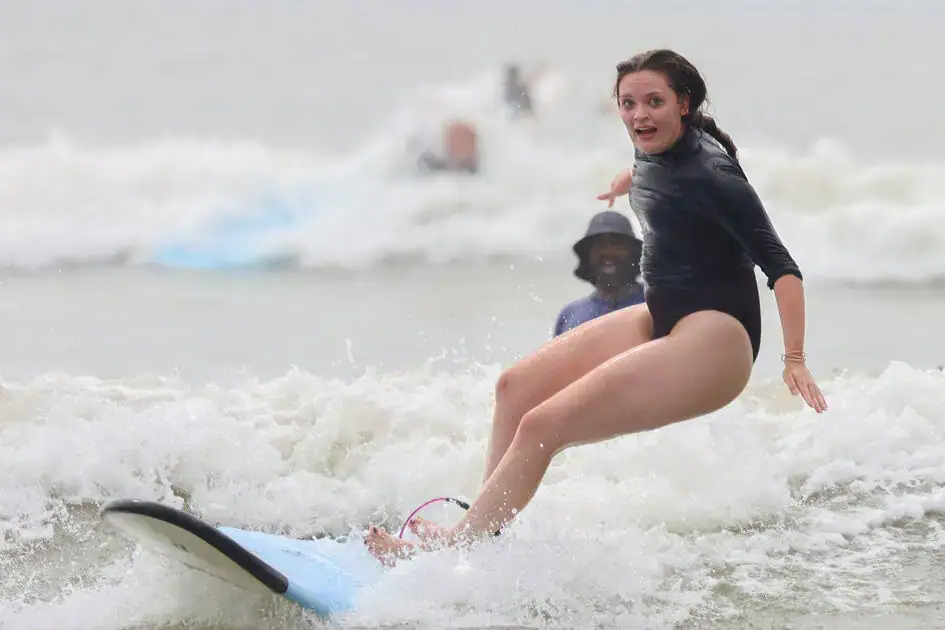
Learning to Surf in Sri Lanka (Photo: flowcomm, CC BY 2.0)
Who Will Enjoy Surfing in Sri Lanka
Surfing in Sri Lanka appeals to a wide range of travellers. The island offers something for almost every ocean enthusiast.
Beginners
Gentle beach breaks make learning easier. Weligama remains one of the most beginner-friendly surf beaches in Asia.
Intermediate surfers
Travellers with some experience often explore Midigama or Arugam Bay, where waves offer stronger rides.
Experienced surfers
Advanced surfers seek reef breaks and point breaks along the South and East Coasts.
Adventure travellers
Visitors who enjoy outdoor sports often combine surfing with hiking, wildlife safaris, or train journeys through the Hill Country.
Ocean lovers
Some travellers enjoy the coastal atmosphere even if they do not surf daily. Beach cafés, sunset views, and relaxed coastal towns create an appealing environment.
Surf Travel Tips for Sri Lanka
Surf trips run smoothly with simple planning.
Useful tips include,
- Start surf sessions early in the morning.
- Use reef-safe sunscreen.
- Check seasonal surf conditions before travelling.
- Respect surf etiquette in crowded breaks.
- Stay hydrated in tropical heat.
Ocean conditions change quickly. Local surf instructors often provide helpful guidance about safe entry points and wave patterns.
If you are interested in smart travelling, we recommend reading our travel tips guide.
What to Bring for a Surf Trip
Packing the right items improves your surf experience.
Useful items include,
- Lightweight surf clothing
- Rash guard or surf shirt
- Reef safe sunscreen
- Reusable water bottle
- Beach towel
- Waterproof phone case
Many travellers rent surfboards locally rather than bringing equipment from home. Surf shops offer a range of boards suited to different skill levels.
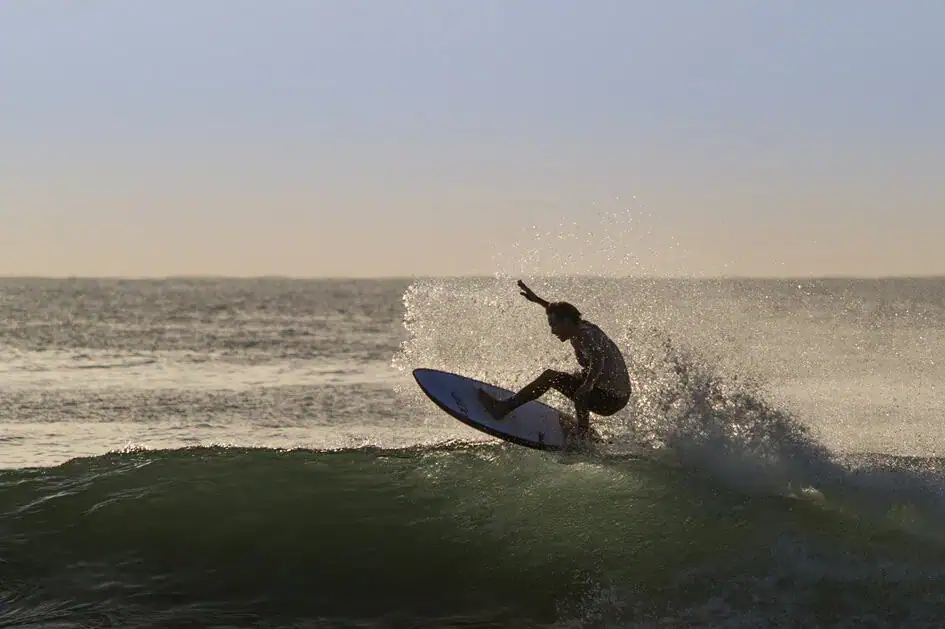
Surfing in Arugam Bay (Photo: Sylvester S., CC BY 2.0)
Facilities and Surf Infrastructure
Surf tourism has expanded along many Sri Lankan beaches. Coastal towns now offer a range of facilities that support surf travellers.
- Surfboard rental shops
- Surf schools
- Beach cafés and restaurants
- Guesthouses and surf hostels
- Surf camps and training retreats
Many accommodation providers now cater specifically to surfers. Early breakfast services allow guests to reach the beach before sunrise sessions.
Transport between surf towns also remains easy. Coastal highways connect many of the popular surf areas. To get an idea of how to get around, read “Transport in Sri Lanka.”
Accommodation and Dining Near Surf Beaches
Travellers find many accommodation choices near surf beaches.
Guesthouses and small hotels dominate the South Coast. Many of these places sit within walking distance of the beach.
Weligama, Hikkaduwa, and Mirissa offer the largest selection of stays. Arugam Bay also provides many surf camps and hostels during the East Coast season.
Dining options remain simple and enjoyable in these coastal towns.
- Fresh seafood
- Rice and curry meals
- Tropical fruit juices
- Local street food
Many surfers end their day with sunset dinners beside the ocean.
If you are interested in authentic Sri Lankan dishes, read about popular foods and drinks.
Photography Tips for Surf Travel
Sri Lanka’s surf beaches offer excellent photography opportunities.
Sunrise and sunset light create dramatic ocean scenes. Early morning sessions often produce calm water surfaces and golden light across the waves.
Photographers often capture,
- Surfers riding morning waves
- Fishing boats crossing the horizon
- Palm trees along sandy beaches
- Ocean sunsets
A waterproof camera or protective case helps protect equipment from saltwater spray.
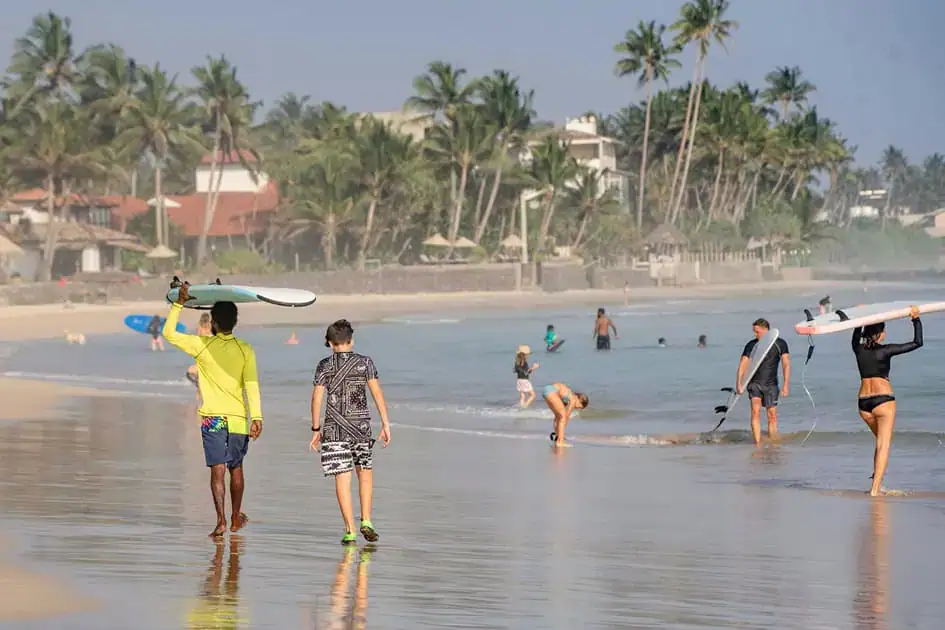
Ahangama Beach (Photo: Atlantic Ambience, via Pexels)
Responsible Surf Travel in Sri Lanka
Surf tourism depends on healthy oceans and clean beaches. Therefore, coastal ecosystems require protection. Surf travellers play an important role in maintaining these environments.
Responsible travellers protect coastal environments by following simple habits.
- Stay on designated beach access paths.
- Carry reusable water bottles.
- Avoid plastic waste on beaches.
- Respect coral reefs and marine life.
- Support local surf schools, businesses, and guides.
Many coastal communities rely on surf tourism as an important source of income. Responsible travel helps protect these communities and the natural environment.
Surfing in Sri Lanka also encourages awareness about ocean conservation and sustainable tourism.
How to Plan a Surf Trip in Sri Lanka
Many travellers include surfing as part of a larger journey across the island.
South Coast Surf Route
- Colombo
- Hikkaduwa
- Weligama
- Midigama
- Mirissa
This route follows the Southwest Coastline, where surf conditions remain reliable from November to April.
East Coast Surf Route
- Colombo
- Ella
- Arugam Bay
Travellers often pass through the Hill Country before reaching Arugam Bay during the East Coast season.
Adding inland destinations creates a balanced itinerary. Many surfers combine beach days with wildlife safaris, cultural sites, or mountain scenery.
Why Surfing in Sri Lanka Holds Global Appeal
Sri Lanka attracts surfers from many countries year-round. Few destinations offer two surf seasons within the same country. When waves calm along the South Coast, the East Coast begins to produce strong swells.
The island also supports a variety of surfing styles. Traditional wave surfing remains the most popular. Wind sports such as kitesurfing and windsurfing add variety for travellers who enjoy wind-driven ocean activities.
Kalpitiya lagoons attract kite and wind sport enthusiasts, while Weligama and Arugam Bay remain the main centres for wave surfing.
This combination of surf styles, tropical water, and accessible beaches makes Sri Lanka a strong destination for surfers across the Indian Ocean.
Sri Lanka’s coastline continues to grow as a surf destination. For many travellers, the experience becomes one of the highlights of their journey across the island.
If you are new to Sri Lanka, we recommend reading “Find the Best Sri Lanka Itinerary for Your Travel Season” and “The Complete Planning Guide for First-Time Visitors“.
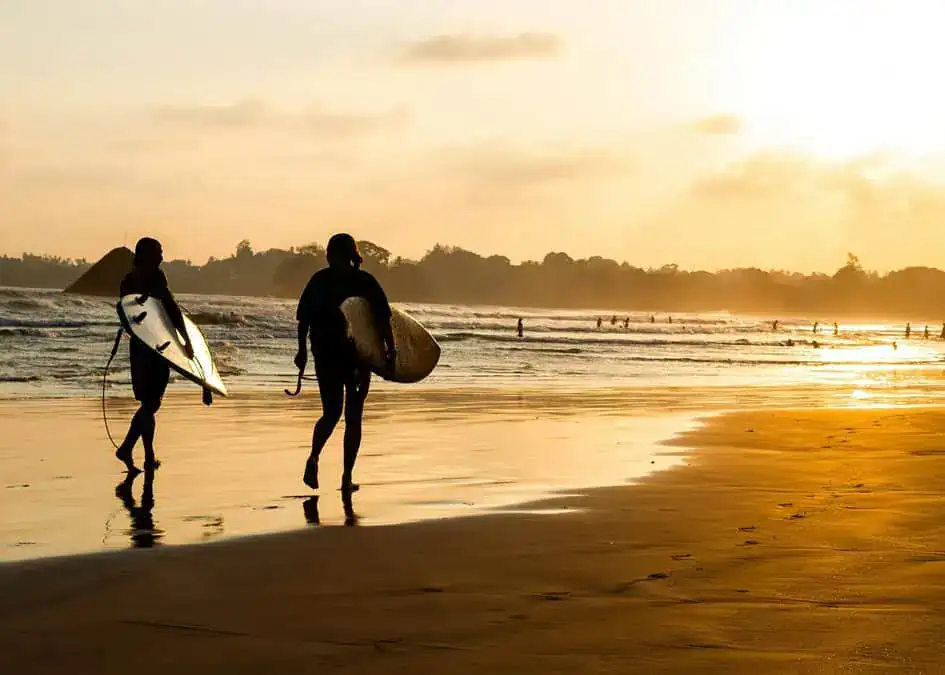
At the End of the Day in Weligama (Photo: Lucas Klein, via Pexels)
Summary: Why Surfing in Sri Lanka Deserves a Place on Your Travel List
Surfing in Sri Lanka offers warm water, reliable surf seasons, and beaches suitable for surfers of all skill levels. Beginners learn wave riding in calm bays such as Weligama. At the same time, experienced surfers chase stronger swells at Midigama or Arugam Bay.
Wind-powered sports add another dimension to the experience. Kitesurfing, windsurfing, and wing foiling thrive in the windy lagoons near Kalpitiya.
Surf culture continues to grow along the island’s coastline. Surf schools, guesthouses, and beach cafés create welcoming spaces for travellers who enjoy ocean life.
Many visitors arrive expecting beautiful beaches. They leave with a deeper connection to the ocean and the relaxed rhythm of Sri Lanka’s coastal towns.
For travellers who enjoy ocean adventure, surfing in Sri Lanka offers one of the most rewarding coastal experiences in the Indian Ocean.
Map – The Best Surf Spots in Sri Lanka
Sources and References:
- Sri Lanka Tourism Development Authority (SLTDA)
- Sri Lanka Tourism
- International Surfing Association (ISA)
- World Surf League (WSL)
- Kalpitiya wind sports information – Sri Lanka Tourism
Featured image: Surfers walking on a beach after surfing in Sri Lanka – Hikkaduwa (Photo: Sunriseforever, via Pixabay)

I am a Sri Lankan medical doctor who spends my free time travelling, exploring new destinations, and documenting the beauty of the island I call home. I have journeyed across almost every corner of Sri Lanka with my wife and daughter — from wildlife parks and misty mountains to ancient cities, deep forests, rugged landscapes, and quiet beaches.
Travel is not just a hobby for me — it’s a way of life. I love nature, enjoy road trips, and find joy in wildlife photography. I also read widely about tourism, travel trends, and destination culture. Through my writing, I aim to help travellers experience Sri Lanka through real stories, meaningful insights, and honest recommendations — the same way I explore it with my own family.