
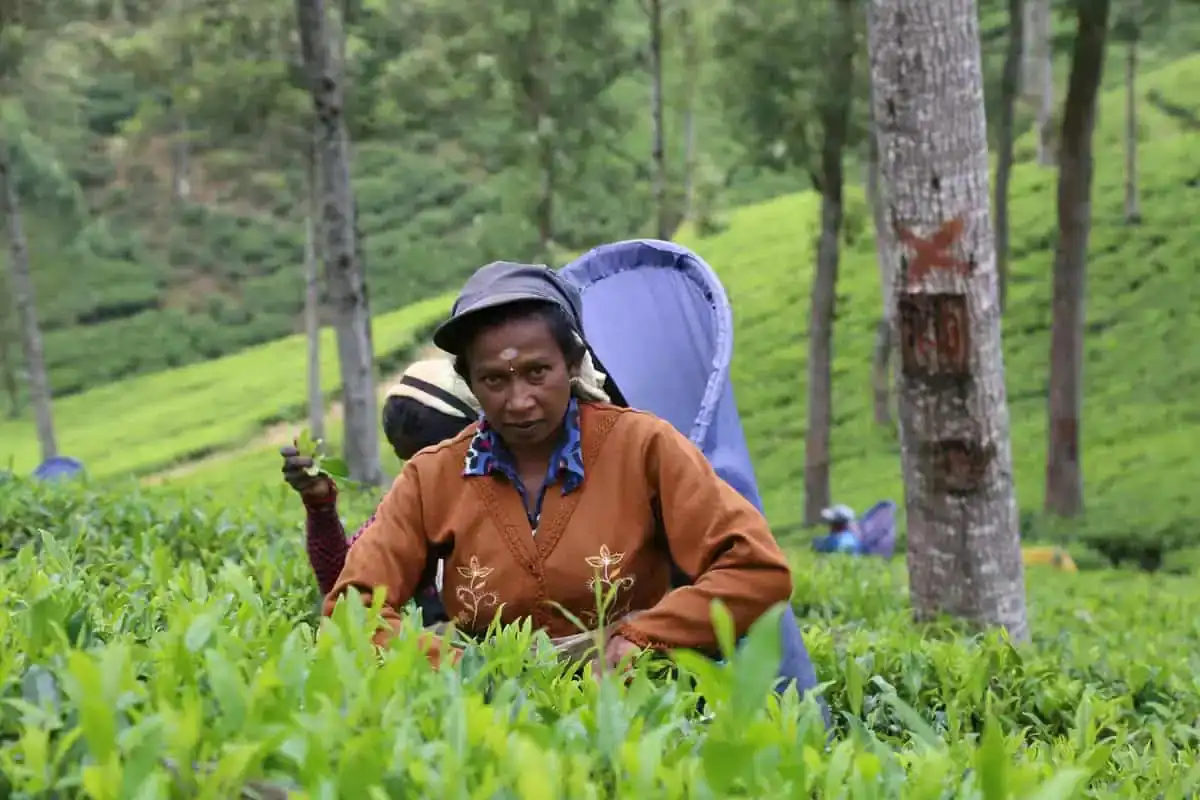

Tea heritage shapes Sri Lanka’s identity in a way few travellers fully understand. Many people visit Sri Lanka and pass through the hill country, yet they only see tea estates from a distance. They take photos, enjoy the views, and move on. This approach misses the depth of Ceylon tea and its role in shaping culture & heritage in Sri Lanka.
This guide shows you how to experience tea heritage in a meaningful way. You will learn where to go, what to do, and how to plan your time in the tea regions. You will understand how Ceylon tea became a global name and how it continues to influence daily life. By the end, you will know how to include tea heritage in your journey when you visit Sri Lanka.
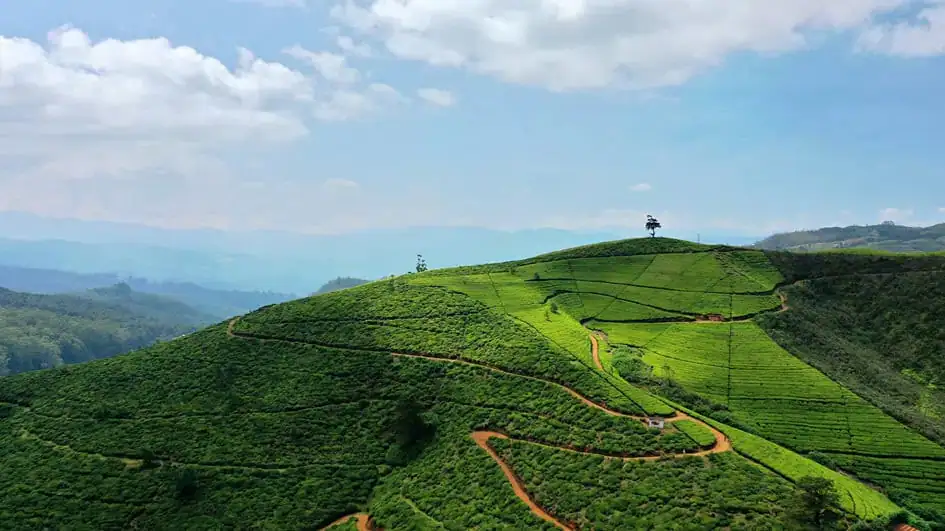
A Tea Estate in Nuwara Eliya (Photo: Juho S, via Unsplash)
Why Tea Heritage Matters in Sri Lanka
Tea is one of the strongest symbols of Sri Lanka. The country ranks among the world’s top tea exporters. Data from the Sri Lanka Tea Board shows that Sri Lanka produces hundreds of millions of kilograms of tea each year. A large share of this tea goes to global markets.
Tea also supports a large workforce. Estate workers, factory staff, and transport networks all depend on this industry. When you travel through the hill country, you see this system in action.
The story of tea also connects with colonial history. During the British period, large areas of land were converted into plantations. Railways were built to transport tea from the hills to the ports. These railways still operate today and form part of scenic travel routes.
Tea heritage in Sri Lanka is not only about production. It is about people, history, and landscape. When you explore tea regions, you step into a living system that continues to shape the country.
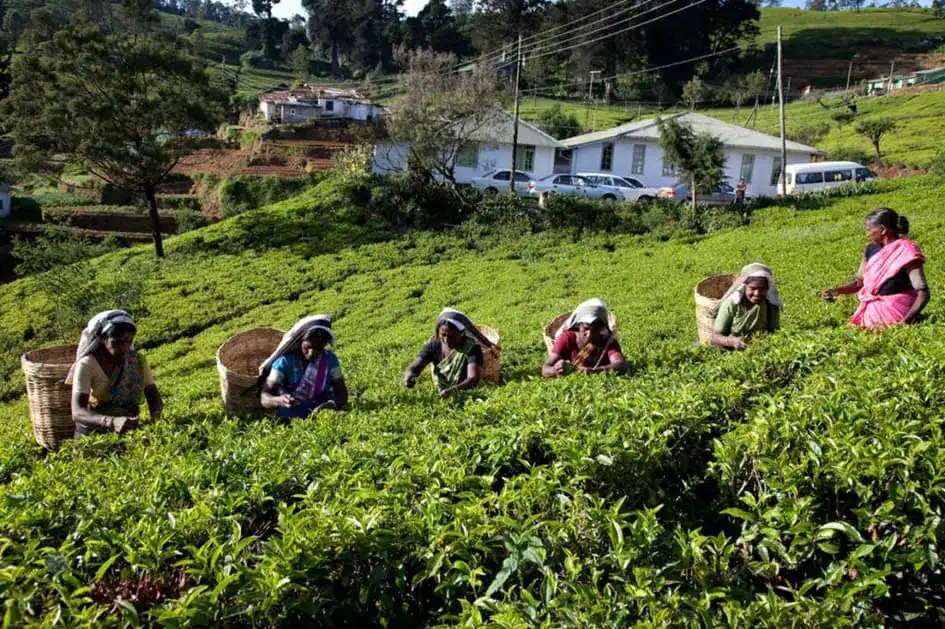
Workers Picking Tea Leaves (Photo: Amila Tennakoon, CC BY 2.0)
A Brief History of Ceylon Tea
Tea in Sri Lanka began in the nineteenth century. Before tea, coffee dominated plantation agriculture. A plant disease destroyed coffee crops across the island. It created a need for a new crop.
James Taylor, a Scottish planter, introduced tea cultivation in the central highlands. He started with a small plantation in Kandy. His work expanded quickly, and other planters followed.
Tea replaced coffee within a few decades. The hill country transformed into large estates. Factories were built near plantations to process leaves. Railways connected these estates to Colombo, enabling export growth.
Ceylon tea gained recognition for its quality. The name became associated with strong flavour and consistent grading. Over time, Sri Lanka built a reputation as a reliable tea producer.
Today, the term Ceylon tea remains a global brand. It reflects both history and ongoing production.
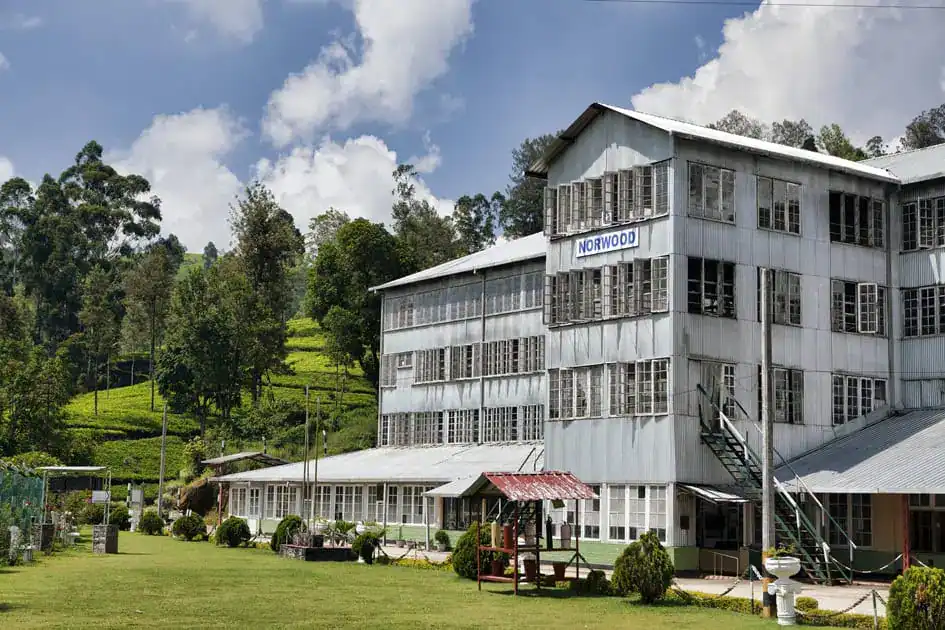
Norwood Tea Factory (Photo: Ceylon Tea Trails, CC BY 2.0)
Best Places to Explore Tea Heritage in Sri Lanka
To understand tea heritage, you need to visit the right regions. Each location offers a different perspective.
Nuwara Eliya
Nuwara Eliya sits at a high elevation. The cool climate supports tea cultivation. This area has a strong colonial influence. You see old buildings, gardens, and estates.
Tea estates in this region produce high-grown tea. This type of tea has a lighter flavour and bright colour.
You visit factories, walk through plantations, and explore nearby viewpoints. This area suits travellers who want a structured experience.
Ella
Ella offers a mix of scenery and accessibility. It connects well with train routes and major travel paths. Tea estates surround the area, and views extend across valleys.
You combine tea experiences with hiking and scenic spots. Ella attracts many visitors due to its location and range of activities.
Haputale
Haputale sits between Nuwara Eliya and Ella. It receives fewer visitors, which creates a quieter setting.
You find wide views across tea plantations. Trails pass through estates and connect small communities. This area suits travellers who prefer less crowded environments.
Hatton and Bogawantalawa
These regions form the core of tea production. Many estates operate here, and some of the oldest plantations remain active.
Bogawantalawa is often called the Golden Valley of Tea. The landscape is a rolling landscape of tea bushes.
You find estate bungalows, factory tours, and walking paths. This area suits travellers who want a deeper immersion in tea heritage.
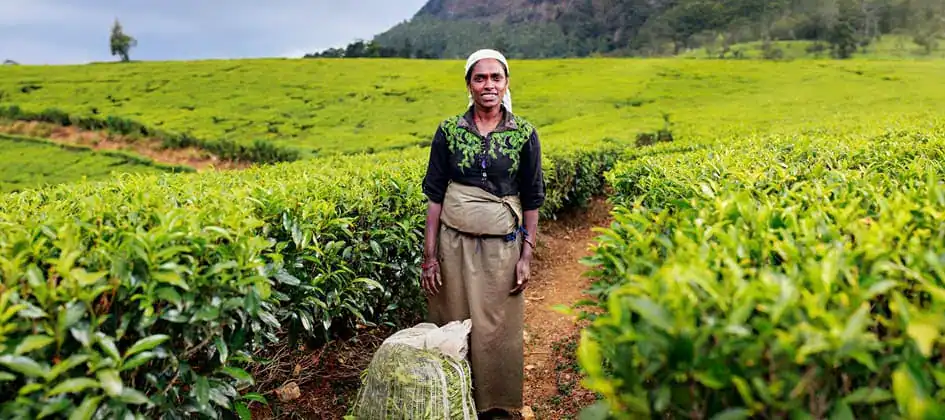
Tea Plantations in Nuwara Eliya (Photo: Curved.kiwix)
Kandy Region
Kandy serves as the gateway to the hill country. Tea cultivation began near this region. You visit early plantations and learn about the industry’s origins.
Kandy is easily accessible from Colombo, making it a starting point for many Sri Lankan itineraries.
Scenic Train Rides Through Tea Country
Scenic train rides are a key part of tea heritage in Sri Lanka. These routes pass directly through plantations and valleys.
The Kandy to Ella route is the most well-known. It connects major tea regions and offers continuous views of estates. Travel time ranges from six to seven hours.
Shorter segments, such as Nanu Oya to Ella, provide similar scenery in less time. These routes suit travellers with limited schedules.
You see workers in the fields, factories near stations, and hills covered with tea bushes. The train moves slowly through many sections, allowing you to observe details.
Train travel also reflects the history of tea. Railways were built to transport tea to ports. Today, they serve both transport and tourism.
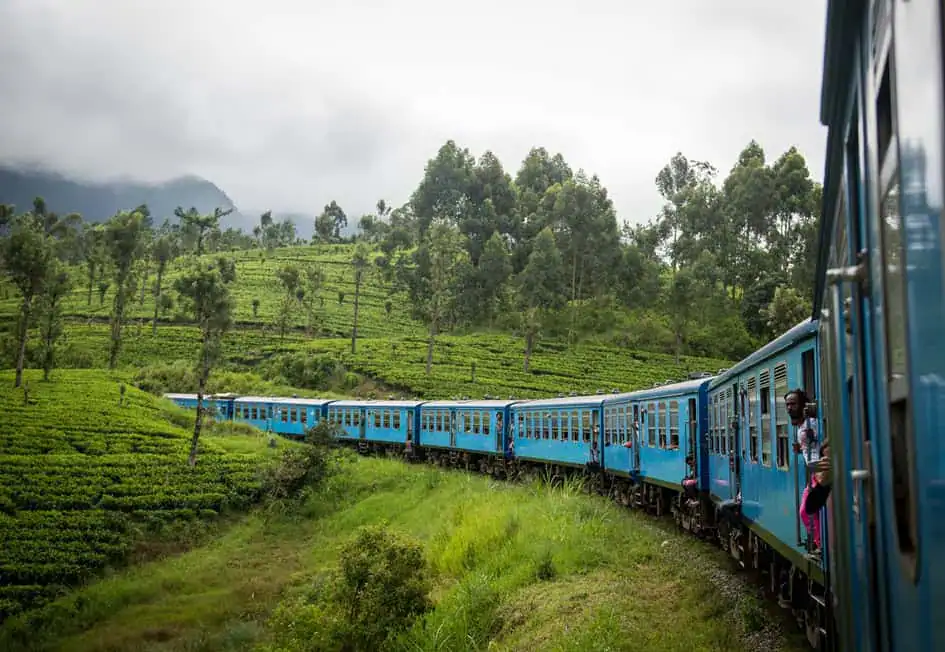
The Scenic Train Ride through Tea Estates (Photo: Oscar Miño Peralta, CC BY-NC-ND 2.0)
Tea Estate Experiences You Should Not Miss
To understand tea heritage, you need direct experience. Watching from a distance is not enough.
Tea Plucking Experience
You join workers in the fields and learn how leaves are selected. Workers pick two leaves and a bud from each plant. This process requires skill and speed.
You gain insight into daily routines and the effort that goes into production.
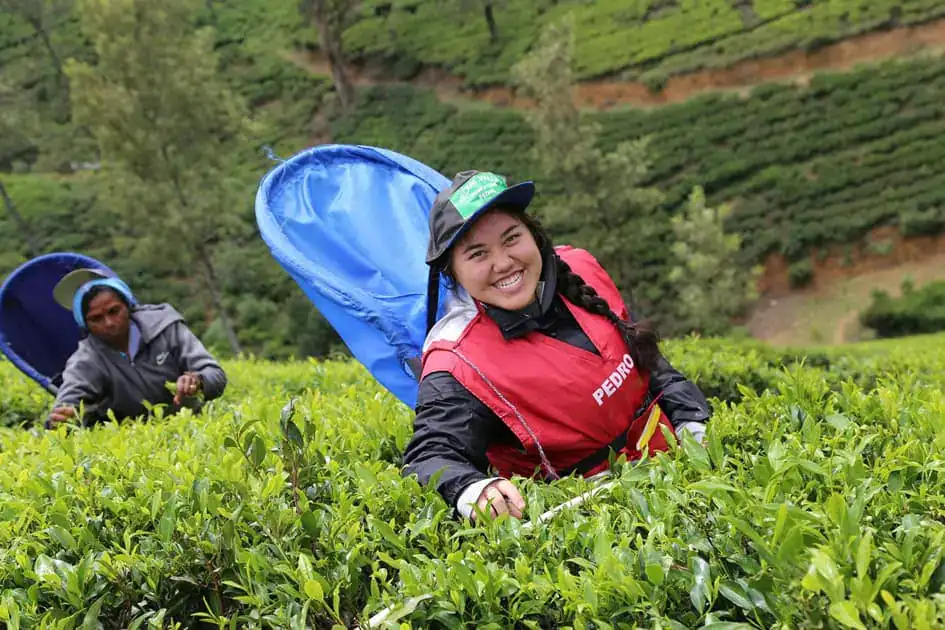
Plucking Tea Leaves with Locals in Nuwara Eliya (Photo: Sanjeewa Jayarathne, via Pexels)
Tea Factory Visits
Factories process fresh leaves within hours of plucking. A guided tour shows each stage of the production process.
The main steps include:
- Withering, where leaves lose moisture.
- Rolling, where leaves are shaped.
- Fermentation, where flavour develops.
- Drying, where moisture is removed.
You see machinery, workers, and the flow of production.
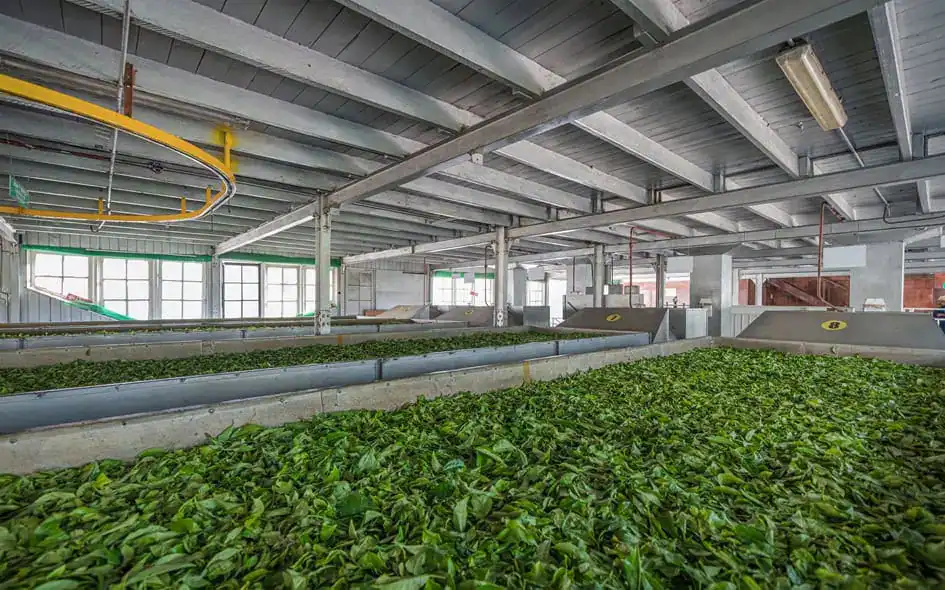
In the Damro tea factory in Nuwara Eliya (Photo: A.Savin)
Sorting and Grading
After drying, tea is sorted into grades. These grades depend on leaf size and quality. Each grade serves a different market.
You learn how classification affects price and flavour.
Tea Tasting
Tasting sessions allow you to compare different teas. You smell, sip, and test colour and strength.
You learn to identify quality and understand regional differences.
These experiences turn tea heritage into something tangible. You move from observation to understanding.
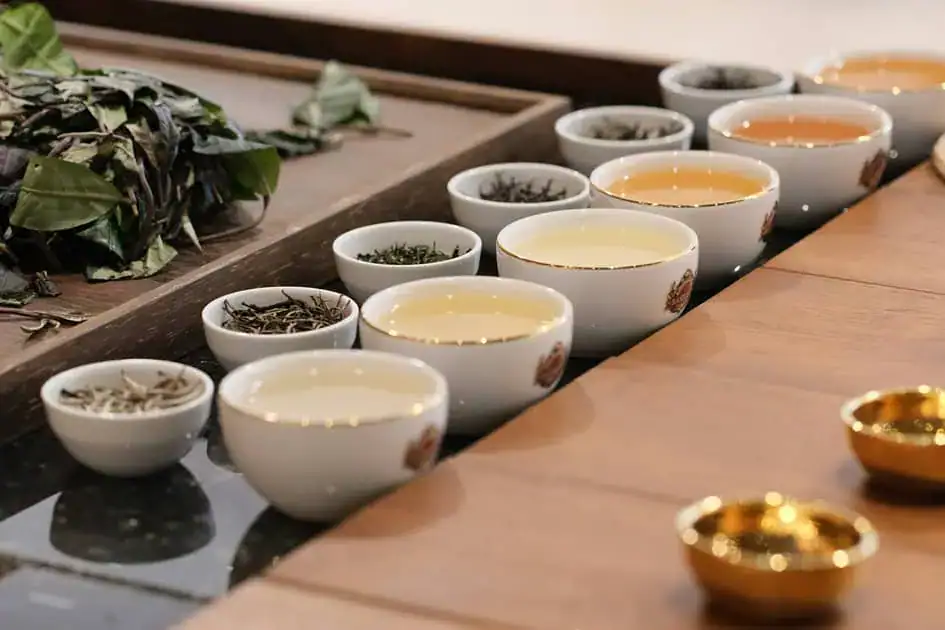
Ceylon Tea Tasting (Photo: Dmitriy Sarychev, via Unsplash)
Tea Tours and Guided Experiences
Guided tours help you explore tea regions with structure. Many estates offer organised visits.
You choose from:
- Half-day tours
- Full-day tours
- Private estate visits
Guides explain history, production, and local context. It improves your understanding and saves time.
Some tours combine train travel with estate visits. It creates a complete experience in one day.
Staying in Tea Bungalows and Estate Accommodation
Tea bungalows offer a different way to experience tea heritage. These buildings were once homes of plantation managers. Many have been converted into guest accommodation.
You stay within tea estates and wake up to views of plantations. The environment remains quiet and controlled.
Services often include:
- Home-style meals
- Guided walks
- Access to estate areas
This type of stay suits travellers who want a slower pace and a deeper connection.
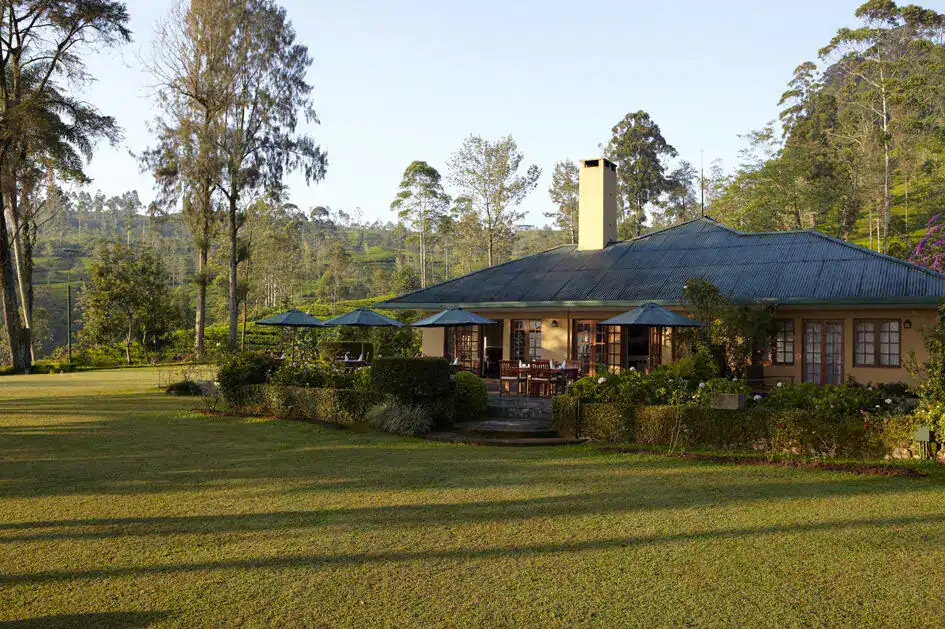
Norwood Bungalow – Bogawantalawa, Hatton (Photo: Ceylon Tea Trails, CC BY 2.0)
Trekking and Trails Through Tea Estates
Walking through tea plantations offers a clear view of tea heritage in Sri Lanka. You move at a slower pace and notice details you might have missed in a vehicle or on a train. You see how estates spread across hills and how workers move through the fields.
The most important development in recent years is the Pekoe Trail. This long-distance walking route connects key tea regions across the central highlands. It links Kandy, Hatton, Nuwara Eliya, Haputale, and Ella through a series of stages.
The Pekoe Trail follows old estate roads, footpaths, and railway lines. It covers more than 300 kilometres. Each stage offers a manageable distance, which allows you to plan short walks or longer treks.
You pass through:
- Tea plantations and factory areas
- Small villages within estates
- Forest patches and open viewpoints
- Railway crossings and bridges
The trail connects directly with the tea heritage. It follows routes once used by estate workers and planters. You walk through the same landscapes that shaped the Ceylon tea industry.
Shorter walks also exist in most tea regions. In Ella, you walk through plantations on the way to viewpoints such as Little Adam’s Peak. In Haputale, trails lead to Lipton’s Seat, where you see wide views across estates. In Nuwara Eliya, you find estate roads suitable for light walks.
These walks do not need advanced skills. You need comfortable shoes and basic preparation. Walking through tea estates adds depth to your visit and gives you time to observe daily life.
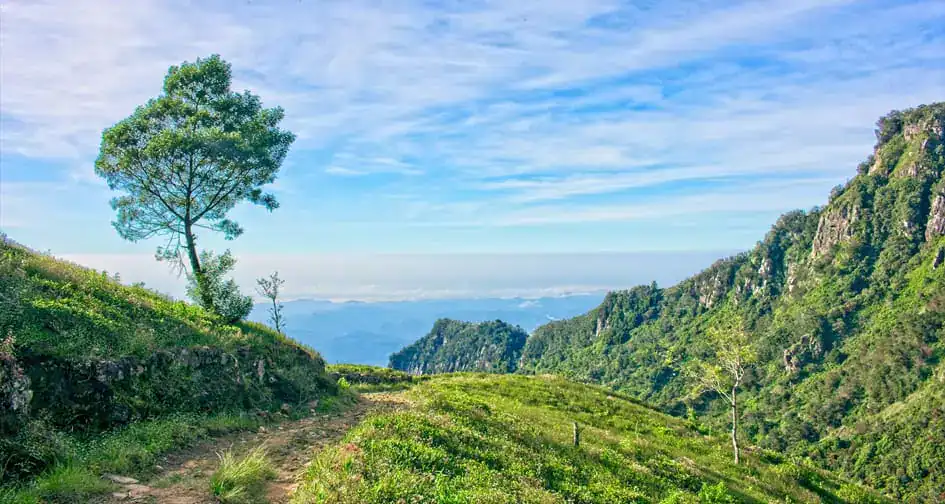
Devil’s Staircase – Trekking (Photo: Samantha Weerasinghe, CC0)
Best Time to Visit Tea Heritage Regions
Timing affects your experience in tea regions. Weather conditions change visibility, comfort, and access.
The hill country has a cooler climate compared to coastal areas. Temperatures often range from 15 to 25 degrees Celsius. Mornings and evenings feel cooler, especially at higher elevations.
The best period for clear views falls between January and April. During these months, rainfall stays lower, and skies remain clearer. You see valleys, plantations, and distant hills without heavy mist.
From May to September, rainfall increases in the hill country. It does not stop travel, but clouds and mist may reduce visibility. Trails may become muddy, and some views may not be clear.
October and November bring inter-monsoon rains. Conditions may change quickly during these months.
Time of day also matters. Early morning offers the best light and visibility. Mist clears after sunrise, improving views across the tea estates. Late afternoon also provides good light, but clouds may build in some areas.
Plan your activities during daylight hours. Tea factory visits and estate walks work best in the morning or early afternoon.
We recommend reading about the weather in Sri Lanka and the best time to visit.
How to Include Tea Heritage in Your Sri Lanka Itinerary
Tea heritage fits naturally into most travel plans when you visit Sri Lanka. The hill country sits between major regions such as Colombo, Kandy, and the South Coast.
A common route starts in Colombo and moves to Kandy. From Kandy, you continue to Nuwara Eliya and then to Ella. This route covers the core tea regions and allows you to include train travel.
You may follow this structure:
- Colombo to Kandy for history and culture.
- Kandy to Nuwara Eliya for high-grown tea estates.
- Nuwara Eliya to Ella for scenic travel and walks.
- Ella to the South Coast for popular beaches or wildlife.
This route allows you to combine tea heritage with other experiences.
If you have limited time, focus on one or two locations. For example, you may travel from Kandy to Ella by train and stay in Ella for a few days. You still experience tea estates, factory visits, and walking trails.
If you prefer a quieter setting, choose Haputale or Hatton. These areas receive fewer tourists and offer direct access to plantations.
You may also combine tea heritage with wildlife. After visiting Ella, you may travel to Udawalawe or Yala for a wildlife safari. It creates a balanced itinerary with both nature and culture.
Planning your route carefully helps you avoid long travel days and focus on meaningful experiences.
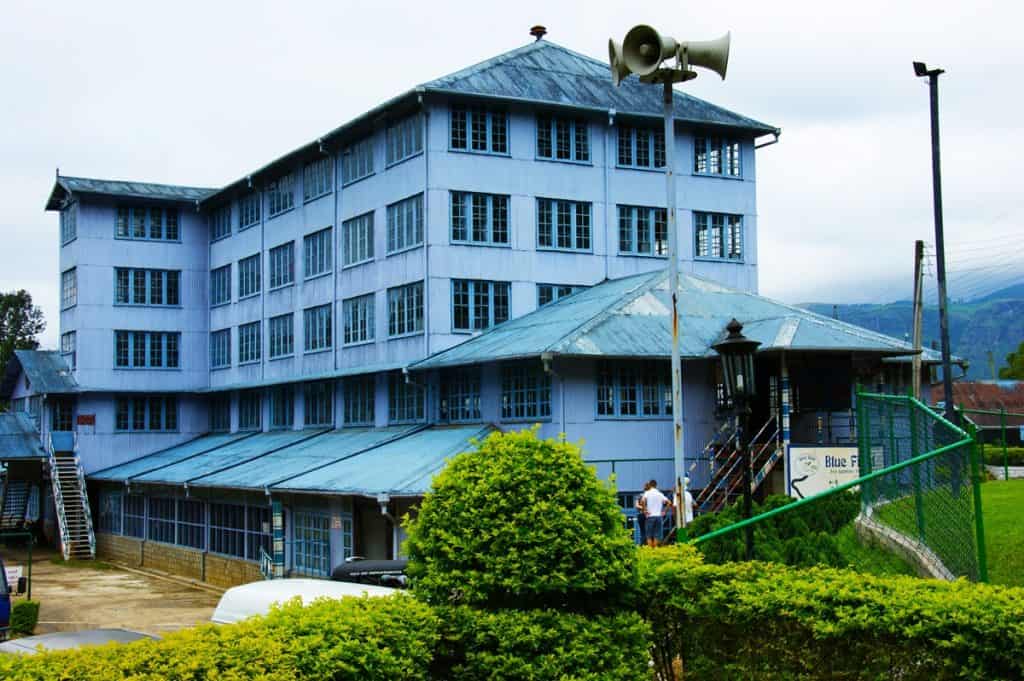
Blue Fields Tea Factory – Ramboda, Nuwara Eliya (Photo: Dan arndt)
What to Bring for Exploring Tea Heritage
Packing correctly improves your comfort during your visit. The hill country has a cooler climate and changing weather.
You should bring:
- A light jacket for early mornings and evenings.
- Comfortable walking shoes for estate trails.
- A hat and sunscreen for daytime walks.
- A reusable water bottle.
- A camera or phone for photos.
- Cash for small purchases in local shops.
Rain may occur at any time in the hill country. A light rain jacket or umbrella helps you stay prepared.
You should also respect estate environments. Workers follow daily routines; avoid interrupting their work. Ask permission before taking close photos of people.
Common Mistakes to Avoid
Many travellers rush through tea regions. It reduces the value of the experience.
You should avoid these common mistakes:
- Spending only a few hours in the tea country.
- Skipping tea factory visits.
- Ignoring smaller towns such as Haputale.
- Travelling during poor weather without planning.
- Booking train tickets too late.
Taking time to explore one or two areas gives better results than trying to cover everything quickly.
You should also avoid relying only on viewpoints. Tea heritage involves people, production, and daily life. Factory visits and walks provide a deeper understanding.
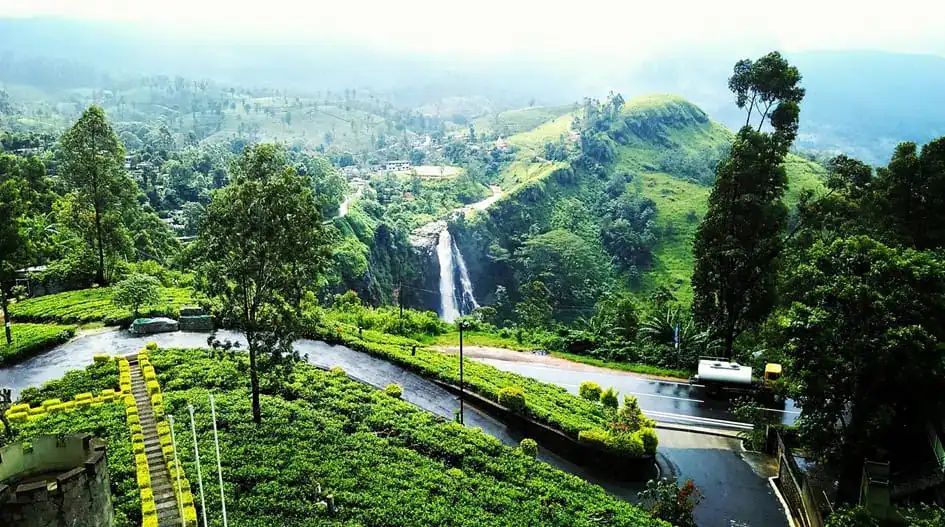
View of Devon Falls from the Mlesna Tea Castle (Photo: Kaushiru90)
Practical Tips for a Better Experience
Following these simple, practical tips can enhance your experience when exploring tea heritage in Sri Lanka.
Arrive early for factory visits. It allows you to see active production.
Choose guided tours when available. Guides explain processes and history clearly.
Combine activities. For example, you may take a train ride, visit a factory, and walk through an estate on the same day.
Stay at least one night in a tea region. It gives you time to explore without rushing.
Use local transport carefully. Roads in the hill country are narrow and winding. Plan travel times with care.
You should also remain flexible. Weather and transportation conditions may change, so adjust your plan as needed.
Photography Tips for Tea Regions
Tea landscapes offer strong visual opportunities. You see patterns of tea bushes, workers in the fields, and wide valley views.
Early morning light works best for photos. The light remains soft, and shadows stay low. It improves detail in plantations.
Use elevated viewpoints for wide shots. Locations such as Lipton’s Seat in Haputale and viewpoints in Ella provide clear views across the estates.
Focus on details as well. Close shots of tea leaves, baskets, and factory processes add variety to your photos.
You should respect people when taking photos. Ask before taking close portraits of workers.

Tea leaves (Photo: Prabath Gunasekara, via Pixabay)
Money, Services, and Connectivity
Tea regions have basic services, but you should plan.
Major towns such as Nuwara Eliya, Ella, and Kandy have banks and ATMs. Smaller areas may have limited access to cash services.
Mobile coverage is available in most towns, but signal strength may vary in remote areas. Internet access is available in hotels and guesthouses.
You should carry some cash for small expenses. Many small shops and local services do not accept cards.
Health, Safety, and Comfort
Tea regions remain safe for travel. You should still follow basic precautions.
Wear proper footwear when walking on estate paths. Ground conditions may vary, especially after rain.
Stay hydrated during walks. Even in cooler climates, you lose water during activity.
Follow instructions during factory visits. Machinery operates continuously, and you should remain aware of your surroundings.
If you plan longer walks or sections of the Pekoe Trail, inform someone about your route. It adds a layer of safety.
Responsible Travel and Sustainability
Tea heritage depends on both people and land. You play a role in preserving this system.
Support local businesses when possible. Buy tea directly from estates or small shops.
Respect workers and their environment. Do not enter restricted areas without permission.
Avoid littering in estates and trails. Carry the waste and dispose of it properly.
Choose accommodation that follows responsible practices. Many estate stays focus on sustainability and local engagement.
These actions help maintain the quality of tea heritage in Sri Lanka. Therefore, your responsible and sustainable travel matters.

A Cup of Tea (Photo: Anastasiia Madiar, via Unsplash)
Final Thoughts on Tea Heritage in Sri Lanka
Tea heritage defines much of life in Sri Lanka. It connects history, culture, and daily work across the hill country. When you visit Sri Lanka, you can experience this heritage firsthand and in a meaningful way.
You do not need to rush through many locations. Choose one or two regions and spend time there. Walk through plantations, visit a factory, taste different teas, and travel by train through the hills.
Ceylon tea is more than a product. It reflects the story of a country and its people. When you include tea heritage in your journey, you gain a deeper understanding of heritage in Sri Lanka and create a more complete travel experience.
Map – Tea Heritage in Sri Lanka
Sources and References:
- Sri Lanka Tea Board.
- Sri Lanka Tourism Development Authority (SLTDA).
- Sri Lanka Tourism.
- Department of Export Agriculture, Sri Lanka.
- The Pekoe Trail Official Website.
- Sri Lanka Railways.
- Dilmah Tea Official Resources.
- Mackwoods Tea Official Website.
Featured image: A Tea Plucker in Nuwara Eliya (Photo: Sanjeewa Jayarathne, via Pexels)

I am a Sri Lankan medical doctor who spends my free time travelling, exploring new destinations, and documenting the beauty of the island I call home. I have journeyed across almost every corner of Sri Lanka with my wife and daughter — from wildlife parks and misty mountains to ancient cities, deep forests, rugged landscapes, and quiet beaches.
Travel is not just a hobby for me — it’s a way of life. I love nature, enjoy road trips, and find joy in wildlife photography. I also read widely about tourism, travel trends, and destination culture. Through my writing, I aim to help travellers experience Sri Lanka through real stories, meaningful insights, and honest recommendations — the same way I explore it with my own family.