
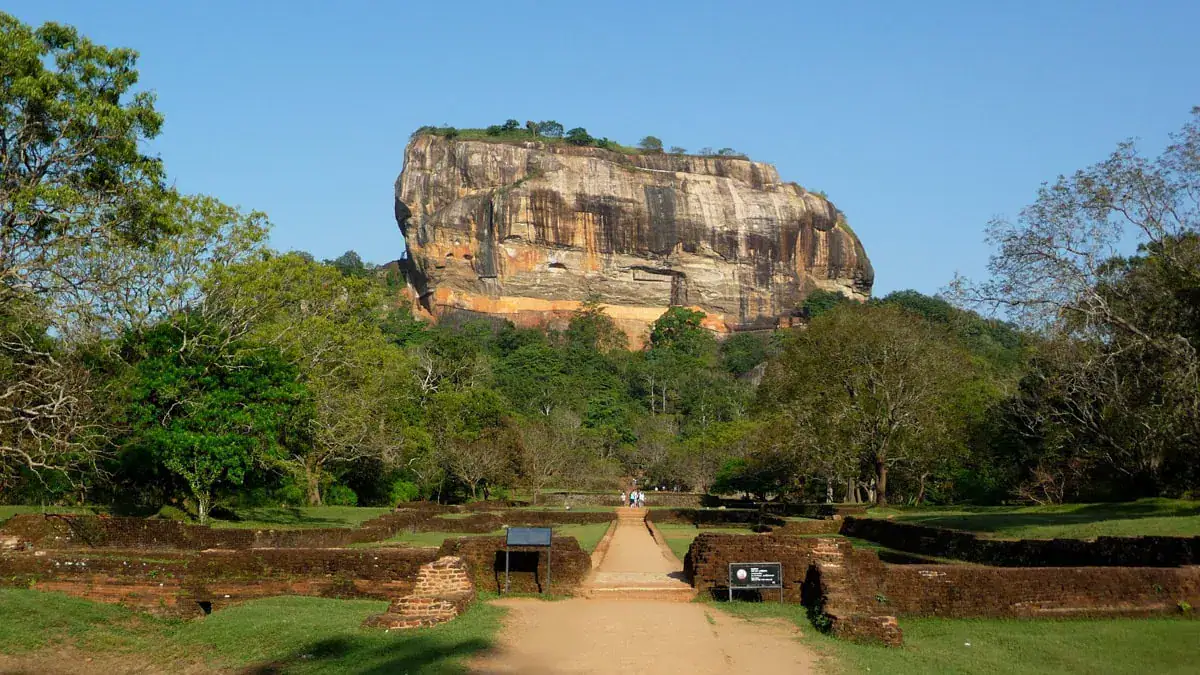

Why This 21-Day Sri Lanka Itinerary for April Works So Well
Three weeks is when a Sri Lanka trip stops feeling like a checklist. This 21-day Sri Lanka itinerary for April gives you ancient capitals, two very different wildlife regions, both Nuwara Eliya and Ella, and a proper stretch of South Coast beach, without packing your bag every morning.
Shorter trips force hard choices. With two weeks, most travellers pick one national park, skip either Nuwara Eliya or Ella, and give the coast a day or two at most. Twenty-one days removes most of those trade-offs. You can safari in Wilpattu in the Northwest and Yala in the Southeast, spend five nights in the Hill Country, and still keep six nights by the sea. Most bases hold you for two or three nights, so the trip feels settled rather than rushed.
The route runs from Negombo, close to the airport, up to Wilpattu and Anuradhapura, then through the Cultural Triangle to Kandy. From there it climbs into tea country, takes the scenic train to Ella and drops down to Yala. The final stage follows the South Coast through Tangalle and Mirissa or Weligama, with a day trip to Galle before you head back to the airport.
April needs a little honesty. It falls at the end of Sri Lanka’s first inter-monsoon period, a transitional stretch between the two main monsoons. Days are often hot and humid, and afternoon or evening thunderstorms are common in many regions. Conditions also vary between the coast, the dry plains and the mountains. That’s why this Sri Lanka travel itinerary for April favours early starts, lighter afternoons and built-in alternatives.
The pace also slows on purpose. After two weeks of wildlife safaris, climbs and early alarms, the last four nights around Mirissa and Weligama are there for rest, surfing, an optional whale-watching trip and Galle.
Below you’ll find the full route overview, a daily plan with meals, stays and practical notes, and planning advice on weather, costs, bookings and what to do if plans change. If you are still comparing routes, see our best Sri Lanka itineraries for your travel season.
If you are visiting Sri Lanka for the first time, read our ultimate travel guide for first-time visitors.
Clear Overview of the 21-Day Sri Lanka Itinerary
Title: 21-Day Sri Lanka Itinerary for April: The Perfect 3-Week Route
Destination: Sri Lanka
Total Duration: 21 days / 20 nights
Start: Bandaranaike International Airport (BIA) → Negombo
Finish: Mirissa/Weligama → Colombo (only if flight timing allows) → BIA
Theme: Culture and heritage, wildlife, Hill Country scenery, scenic rail, hiking and nature, tea country, South Coast beaches, and local food
Pace: Balanced and moderate. Active sightseeing fills the first two-thirds, and the coastal days that follow are deliberately slower.
Main overnight bases:
- Negombo – 1 night
- Wilpattu – 1 night
- Anuradhapura – 1 night
- Sigiriya/Habarana – 3 nights
- Kandy – 2 nights
- Nuwara Eliya – 2 nights
- Ella – 3 nights
- Tissamaharama/Yala – 1 night
- Tangalle – 2 nights
- Mirissa/Weligama – 4 nights
This is a substantial 3-week Sri Lanka itinerary rather than a fast highlights circuit. The three single-night stops come early and sit on short transfers, so the longer stays that follow give you room to recover.

Traditional Fishermen in Negombo (Photo: Claudia Schillinger, CC BY-ND 2.0)
What This Itinerary Covers
Over three weeks, the route takes in:
- Heritage: Anuradhapura’s Sacred City, Dambulla Cave Temple, Sigiriya, Polonnaruwa and Kandy’s Temple of the Sacred Tooth Relic
- Wildlife: Wilpattu, Minneriya or Kaudulla for elephants, Yala, and optional whale watching from Mirissa
- Hill Country: Peradeniya’s botanical gardens, tea estates, Nuwara Eliya, Horton Plains, the Nanu Oya–Ella train, Ella’s hikes and optional Haputale
- Coast: arrival and recovery in Negombo, Tangalle and Hiriketiya, Mirissa and Weligama for surfing and beach time, Galle Fort, and Unawatuna with the Japanese Peace Pagoda or Jungle Beach
The balance is what makes the route work. Anuradhapura, Dambulla, Sigiriya, Polonnaruwa, Kandy and Galle are all UNESCO World Heritage Sites, and Horton Plains is part of the Central Highlands World Heritage property. The trip never becomes a string of ruins, though. Heritage days alternate with safaris, mountain walks, a rail journey and, finally, the sea.
Best for Whom
This route suits:
- first-time visitors with 3 weeks in Sri Lanka
- couples and solo travellers
- families who are comfortable with early starts, heat, and some walking
- culture and history lovers
- wildlife enthusiasts and photographers
- hikers and nature lovers
- food-curious travellers
- anyone who wants beaches without making the whole trip a beach holiday
- travellers who prefer a balanced pace to a very fast one
You may want to adjust it if you want a very slow holiday, plan to surf most days, are focused mainly on wildlife, have limited mobility, or prefer resort-based travel. Fewer bases and longer stays would suit those trips better.
Transport and Route Logic
The order follows Sri Lanka’s geography. Negombo is much closer to the airport than central Colombo, so your first night starts with a short transfer rather than city traffic. From there, Wilpattu and Anuradhapura lie on the natural road north. Visiting them first means you enter the Cultural Triangle from the Northwest instead of making a separate return trip later.
Sigiriya or Habarana then works as a central hub. Dambulla, Polonnaruwa and the elephant parks all sit within easy day-trip range. Kandy lies south, on the way to the mountains. After two nights there, the road climbs to Nuwara Eliya, and the train covers the most scenic section of track down to Ella.
Leaving Ella, you descend towards the Southeast and Yala. From that point, every transfer heads west along the coast, back towards the airport. Each leg gets shorter as the trip slows down. This loop is the main reason this Sri Lanka itinerary for 21 days avoids long backtracking days.
Most travellers use a mix of transport:
- Private car and driver for most intercity transfers
- Tuk-tuks for short local journeys
- The scenic train from Nanu Oya to Ella
- Safari jeeps inside the national parks
- Walking and hiking for Sigiriya, Pidurangala, Horton Plains and viewpoints in Ella
Sri Lanka Railways runs an official timetable and seat-reservation services. Schedules can change, so check current times before you travel. For more detail, see our Transport in Sri Lanka guide.
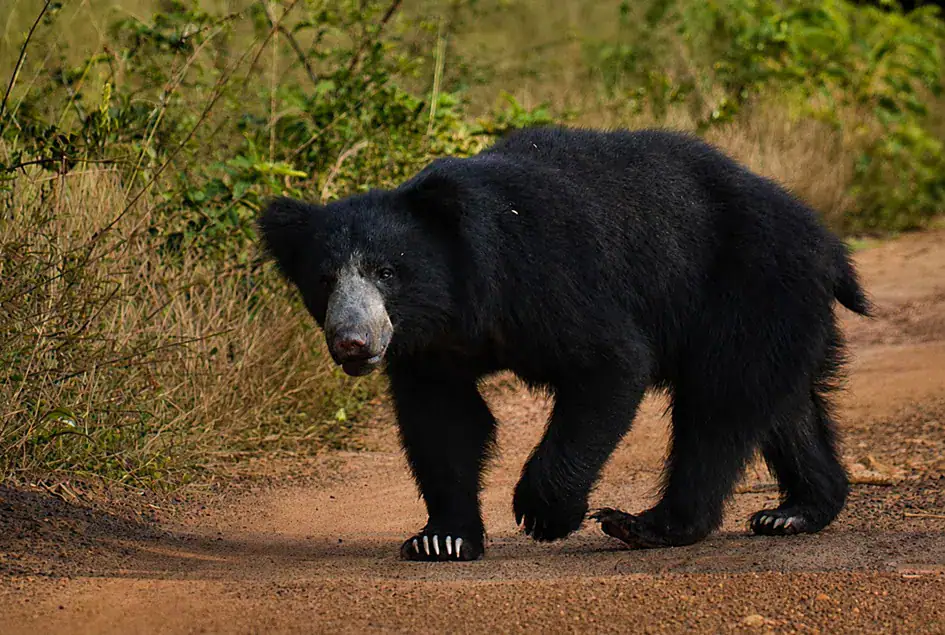
A Sloth Bear in Wilpattu National Park (Photo: Nalaka Priyantha)
Route Snapshot by Day
- Day 1: Negombo – Arrival, beach, and sunset
- Day 2: Wilpattu – Transfer + afternoon safari
- Day 3: Anuradhapura – Ancient Sacred City
- Day 4: Sigiriya/Habarana – Transfer + Dambulla
- Day 5: Sigiriya/Habarana – Sigiriya + Pidurangala
- Day 6: Sigiriya/Habarana – Polonnaruwa + elephant safari
- Day 7: Kandy – Transfer + optional en-route heritage/spice stops
- Day 8: Kandy – Temple, gardens, markets, and cultural performance
- Day 9: Nuwara Eliya – Tea country + town
- Day 10: Nuwara Eliya – Horton Plains
- Day 11: Ella – Nanu Oya–Ella scenic train
- Day 12: Ella – Little Adam’s Peak + Nine Arch Bridge
- Day 13: Ella – Ella Rock OR Haputale/Lipton’s Seat
- Day 14: Tissamaharama/Yala – Ravana Falls + recovery
- Day 15: Tangalle – Yala safari + South Coast
- Day 16: Tangalle – Beaches + Hiriketiya
- Day 17: Mirissa/Weligama – Transfer + beach/sunset
- Day 18: Mirissa/Weligama – Optional whale watching + leisure
- Day 19: Mirissa/Weligama – Beach/surfing/slower day
- Day 20: Mirissa/Weligama – Galle + Unawatuna/coastal attractions
- Day 21: Colombo/BIA – Departure
Approximate Road and Rail Times
Road journeys in Sri Lanka often take longer than the distance suggests. Mountain bends, busy towns, roadworks, and slow traffic all add time. Treat these figures as rough planning guides, not fixed schedules.
| Journey | Approximate time |
| BIA → Negombo | 20–30 minutes |
| Negombo → Wilpattu | 3.5–4 hours |
| Wilpattu → Anuradhapura | 1–1.5 hours |
| Anuradhapura → Sigiriya/Habarana | 1.5–2 hours |
| Sigiriya/Habarana → Polonnaruwa | 1–1.5 hours |
| Sigiriya/Habarana → Kandy | 2.5–3 hours (longer with stops) |
| Kandy → Nuwara Eliya | 3–3.5 hours |
| Nuwara Eliya → Nanu Oya station | 15–20 minutes |
| Nanu Oya → Ella (train) | Around 2.5–4 hours, depending on the service and delays |
| Ella → Tissamaharama/Yala | 3 hours |
| Tissamaharama/Yala → Tangalle | 2–2.5 hours |
| Tangalle → Mirissa/Weligama | 1–1.5 hours |
| Mirissa/Weligama → Galle | 30-45 minutes |
| Mirissa/Weligama → Colombo/BIA | 2.5–3 hours via expressways |
Add extra time for photo stops, meal breaks, holiday traffic, and April downpours, especially on mountain roads. On departure day, build in a generous buffer for the airport run.
Day-by-Day 21-Day Sri Lanka Itinerary for April
Day 1: Arrival in Negombo
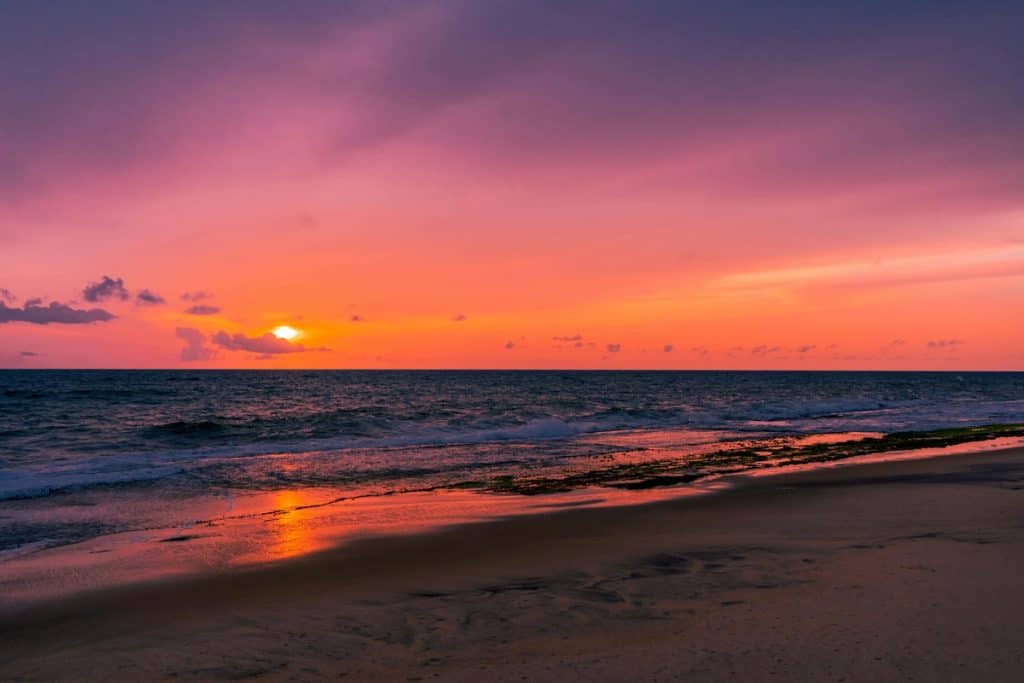
Negombo Beach During Sunset (Photo: Nisal Rajapakshe, via Pexels)
Morning/Afternoon
Clear immigration at Bandaranaike International Airport and transfer to Negombo. Check in, shower and rest. Long-haul fatigue is real, so nothing on today’s plan is essential.
Evening
Walk along Negombo Beach as the light softens. Fishing boats line the sand, and the town’s lagoon has supported fishing families for generations. Stay for sunset, then eat early.
Where to Stay
Negombo, close to the beach
Accommodation Guidance
A beachside hotel or guesthouse with a pool and quiet rooms makes jet-lag recovery easier.
Food Stop
Try a lagoon crab curry or a prawn curry. Negombo’s seafood comes largely from the lagoon and nearby waters.
Practical Notes
Arrange your driver in advance. Airport currency exchange and local SIM cards are available on arrival.
Day 2: Negombo to Wilpattu
Morning
Leave after breakfast and follow the coast north through Chilaw and Puttalam towards Wilpattu.
Afternoon
Head into Wilpattu National Park by jeep. Sri Lanka’s largest national park feels wild and quiet, with dense forest opening onto natural lakes called villus. Leopards, elephants, sloth bears, deer, and many birds live here, but the thick cover means sightings are never certain. Enjoy the stillness rather than chasing a checklist.
Opening hours of Wilpattu National Park are between 6:00 am and 6:00 pm.
Evening
Dinner and an early night at your lodge.
Where to Stay
Near the main park entrance
Accommodation Guidance
Choose a lodge or camp close to the gate to shorten safari transfers.
Food Stop
Look for freshwater fish curry from the local reservoirs, often cooked with tamarind.
Practical Notes
Book your jeep and tracker through your lodge or a reputable operator. Bring water, sunscreen, a hat, and neutral clothing. Ask drivers to keep a respectful distance from animals.
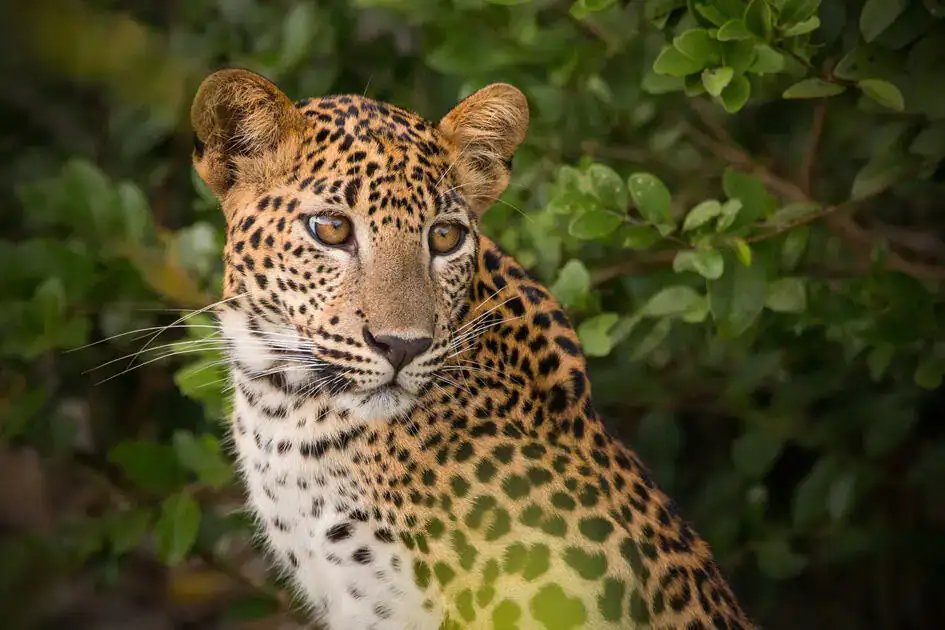
Sri Lankan Leopard in Wilpattu National Park (Photo: Senthi Aathavan Senthilverl, CC BY-SA 4.0)
Day 3: Wilpattu to Anuradhapura
Morning
Drive to Anuradhapura, Sri Lanka’s first great capital and a sacred Buddhist city for well over 2,000 years.
Afternoon
Start at Sri Maha Bodhi, the revered fig tree said to have grown from a cutting of the tree under which the Buddha gained enlightenment. Continue to the white dome of Ruwanwelisaya, then to Jetavanaramaya or Abhayagiri. These huge brick stupas show the scale of this ancient city. Distances are large, so use a tuk-tuk, your driver, or a bicycle if the heat allows.
Evening
Return to the Sacred City at dusk, when pilgrims gather with flowers and oil lamps.
Where to Stay
Anuradhapura
Accommodation Guidance
Stay near the Sacred City or beside one of the ancient reservoirs.
Food Stop
Try kurakkan roti, a flatbread made from finger millet, a traditional dry-zone grain.
Practical Notes
Cover your shoulders and knees at sacred sites. Remove your shoes and hat where required, and never pose with your back to a Buddha statue. Temple ground gets very hot by midday, so thick socks help.
Day 4: Anuradhapura to Sigiriya/Habarana via Dambulla
Morning
Drive southeast into the Cultural Triangle.
Afternoon
Visit Dambulla Cave Temple. Its five caves hold dozens of Buddha statues beneath painted ceilings, and the view from the terrace stretches over the forest towards Sigiriya.
Dambulla Cave Temple opens from 7:00 am to 5:00 pm.
Evening
Check in and relax. Sigiriya and Habarana sit between Dambulla, Polonnaruwa and the elephant parks, so this three-night base cuts driving and removes the need to pack again.
Where to Stay
Sigiriya or Habarana
Accommodation Guidance
Nature lodges surrounded by forest or paddy fields suit this stay well.
Food Stop
Look for nelum ala, a lotus root curry from the region’s tank country.
Practical Notes
The climb to Dambulla’s caves is steep and exposed. Carry temple clothing and water.
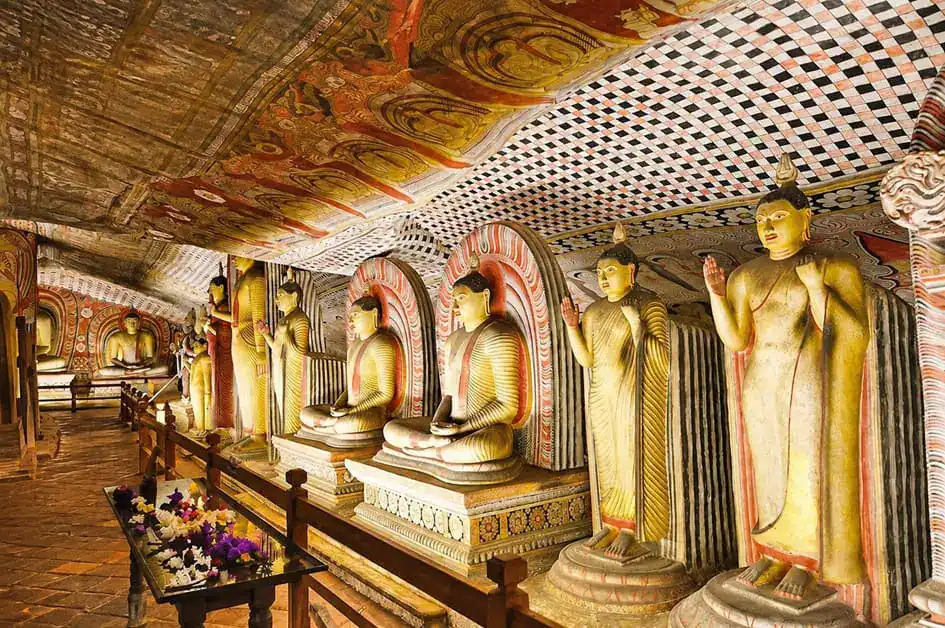
Dambulla Cave Temple (Photo: Nalaka Priyantha)
Day 5: Sigiriya and Pidurangala
Morning
Arrive at Sigiriya Rock Fortress at opening. King Kasyapa built his palace here in the 5th century. Take time for the water gardens, the frescoes, the Mirror Wall, and the Lion’s Paw terrace. The summit is only part of the story.
Sigiriya opens between 5:00 am and 6:30 pm every day. Tickets are issued between 5:00 am and 5:00 pm. However, the frescoes area closes for tourists at 5:45 om.
Afternoon
Rest through the hottest hours.
Evening
If the weather allows, climb Pidurangala for sunset. This is a hike to a viewpoint rather than an archaeological site. The last section involves a scramble over boulders, and the reward is a view straight across to Sigiriya.
The ticket counters open between 5:00 am and 6:00 pm.
Where to Stay
Same accommodation
Food Stop
Try a village-style clay-pot meal with polos, a young jackfruit curry.
Practical Notes
Wear good-grip shoes. Pidurangala begins at a working temple, so bring clothing that covers your shoulders and knees. Watch for April storm clouds before starting the climb.
Day 6: Polonnaruwa and Minneriya/Kaudulla Safari
Morning
Explore Polonnaruwa, the medieval capital that followed Anuradhapura. The ruins are compact enough to cycle. Focus on the Royal Palace, the Quadrangle, and the carved Buddhas of Gal Vihara.
Afternoon
Join an elephant safari in Minneriya or Kaudulla. Your driver should choose the park based on where the herds are feeding now, not on a fixed calendar. Elephant numbers vary, and large gatherings are never guaranteed.
Minneriya and Kaudulla National Parks are open between 6:00 am and 6:00 pm.
Where to Stay
Same accommodation
Food Stop
Try divul (wood apple) juice, a tangy dry-zone drink.
Practical Notes
Bring binoculars and sun protection. Safaris can be dusty, so protect your camera.
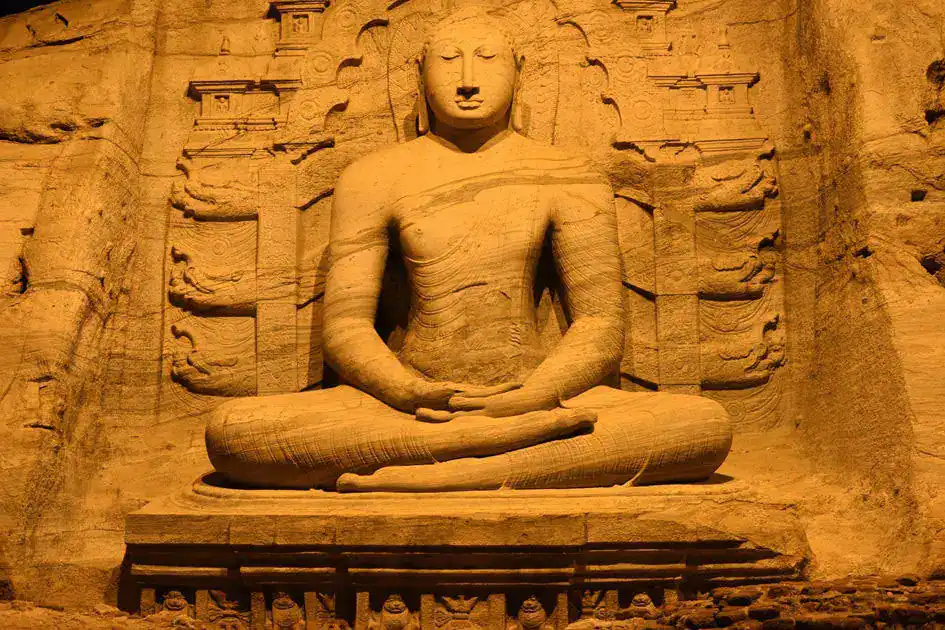
A Buddha Statue – Gal Viharaya, Polonnaruwa (Photo: Nalaka Priyantha)
Day 7: Sigiriya/Habarana to Kandy
Morning
Drive south towards Kandy. Pick one or two optional stops rather than all three:
- Nalanda Gedige, a small stone temple mixing Hindu and Buddhist styles
- Aluvihare Rock Temple, where Buddhist scriptures were written down on palm leaves in the 1st century BCE
- A spice garden near Matale, interesting, though often sales-focused
Afternoon
Arrive in Kandy and check in.
Evening
Walk around Kandy Lake if you still have energy.
Where to Stay
Kandy
Food Stop
If you visit around the Sinhala and Tamil New Year in mid-April, look for kavum and kokis, traditional festive sweets.
Practical Notes
Kandy traffic is heavy in the late afternoon, so allow extra time.
Day 8: A Full Day in Kandy
Morning
Visit the Temple of the Tooth Relic, Sri Lanka’s most important Buddhist shrine. Go early for a calmer visit and try to catch a puja (offering ceremony).
The Temple of the Tooth opens from 5:30 am to 8:00 pm.
Afternoon
Spend a few hours at the Royal Botanic Gardens, Peradeniya. Its giant bamboo, orchid house and huge fig trees are highlights. Afterwards, wander Kandy’s central market.
Opening hours of the Peradeniya Royal Botanical Gardens are between 7:30 am and 6:00 pm. Ticketing hours are between 7:30 am and 5:00 pm.
Evening
See a Kandyan cultural performance, with drumming, dancing, and fire-walking.
Where to Stay
Same accommodation
Food Stop
Order egg hoppers, bowl-shaped rice-flour pancakes with a soft egg in the centre.
Practical Notes
Dress modestly, leave your shoes at the counter and keep your voice low inside the temple.
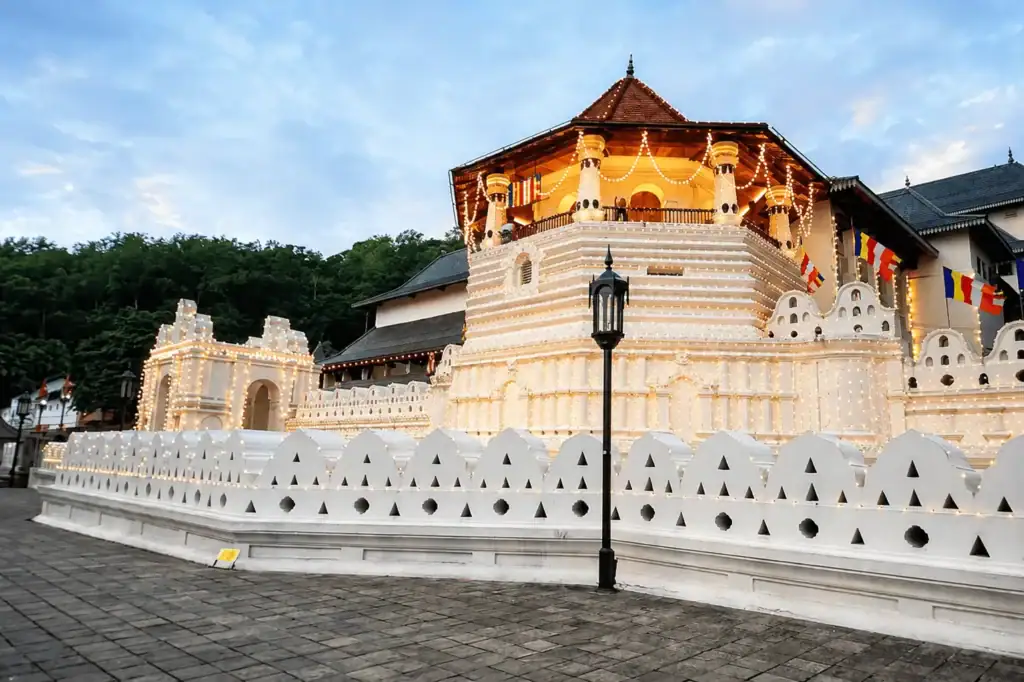
Temple of the Tooth Relic – Kandy (Photo: Nalaka Priyantha)
Day 9: Kandy to Nuwara Eliya
Morning
The road climbs steeply through tea country, with waterfalls and rows of bushes clinging to the slopes.
Afternoon
Stop at a tea factory, such as Labookellie on this route, to see withering, rolling, oxidation and drying. Tea tasting shows how altitude affects flavour. Tea shaped the Hill Country economy, and many estate workers are Hill Country Tamils whose families were brought from South India in the 19th century.
Evening
Walk around Gregory Lake and Nuwara Eliya‘s colonial-era town centre.
Where to Stay
Nuwara Eliya
Accommodation Guidance
Choose town for convenience or a tea estate bungalow for atmosphere.
Food Stop
Try tempered leeks or carrots, both grown locally, with a cup of high-grown Ceylon Tea.
Practical Notes
Evenings get cold. Carry a warm layer.
Day 10: Horton Plains
Morning
Leave before dawn to reach Horton Plains National Park at opening. The roughly 9–10 km loop takes in World’s End, a sheer drop-off, and Baker’s Falls. Most people take three to four hours. Mist often rolls in by mid-morning and can hide the view, so an early start matters.
Horton Plains National Park opens between 6:00 am and 6:00 pm.
Afternoon
Return to Nuwara Eliya and rest.
Where to Stay
Same accommodation
Food Stop
Warm up with parippu vadai, crispy lentil fritters, and a sweet milk tea.
Practical Notes
Pack layers, a rain jacket, sturdy shoes, and water. Bags may be checked for plastic at the entrance.
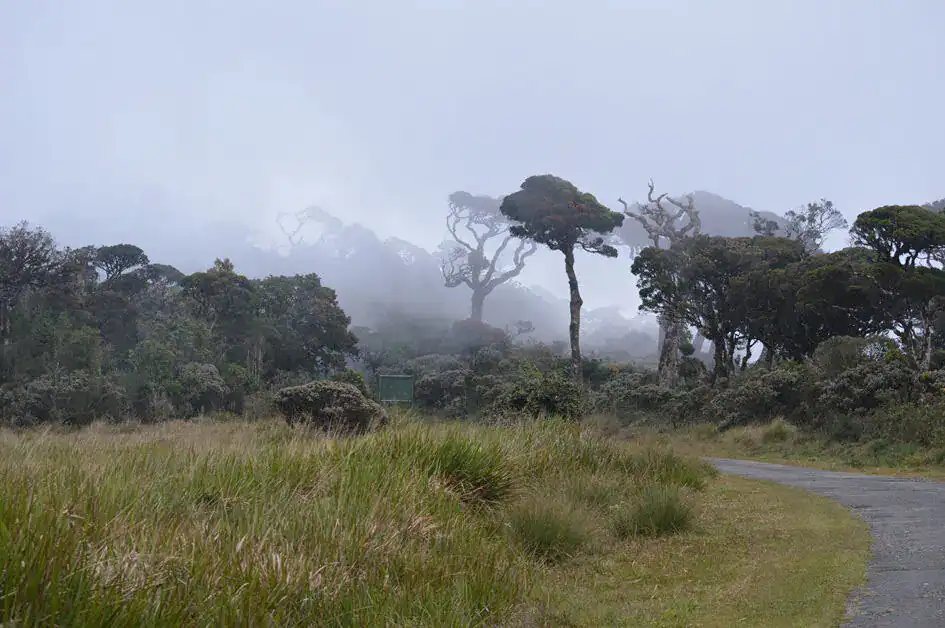
Misty Forest – Horton Plains National Park (Photo: Nalaka Priyantha)
Day 11: Nanu Oya to Ella by Scenic Train
Morning
Transfer to Nanu Oya station, 15 to 20 minutes away, and board the scenic train to Ella.
Train tickets can be booked through the official Online Advance Train Seats Reservation system.
Afternoon
The line winds past tea estates, pine forests, waterfalls, small stations, tunnels, bridges, and valley villages. It passes Pattipola, the highest station on the network. Sit back and watch the landscape change as the train descends.
Evening
Settle into Ella and enjoy a relaxed evening.
Where to Stay
Ella
Accommodation Guidance
Stay in the walkable centre for convenience or on the hillside for quiet and views.
Food Stop
Try kottu, chopped roti stir-fried with vegetables, egg, or meat. The rhythmic clatter from the kitchen tells you it is being made.
Practical Notes
Check current schedules and reserve seats through Sri Lanka Railways, as times change and trains often run late. Keep your body inside the carriage at all times.
Day 12: Little Adam’s Peak, Nine Arch Bridge, and Demodara
Morning
Climb Little Adam’s Peak early, before the heat and crowds build. The walk takes around 45 minutes each way on a clear path through tea bushes and steps. At the top, the view opens across Ella Gap towards the lowlands.
Afternoon
Head to Nine Arch Bridge, a colonial-era railway viaduct built from stone and brick. Both sites lie on the same side of town, so visiting them together saves backtracking. Check the approximate train times locally if you want to see one cross. If you still have energy, visit Demodara, where the railway loops around a hill and passes beneath its own station, or tour a nearby tea factory.
- AllTrails Map – Little Adam’s Peak (1.6 km)
- AllTrails Map – Little Adam’s Peak and Lookout (2.9 km)
- AllTrails Map – Nine Arches Bridge – Little Adam’s Peak (5.8 km)
- AllTrails Map – Nine Arch Bridge from Ella Rd (1.9 km)
- AllTrails Map – Nine Arch Bridge (1.3 km)
- AllTrails Map – Nine Arch Bridge Viewpoint Loop (1.3 km)
Evening
Take a slow dinner in town.
Where to Stay
Same accommodation
Food Stop
Try pol roti, a coconut flatbread, with lunu miris, a fiery onion and chilli relish.
Practical Notes
Walking on the railway tracks near the bridge is common, but trains do run. Step well clear and never stand on the bridge as a train approaches.
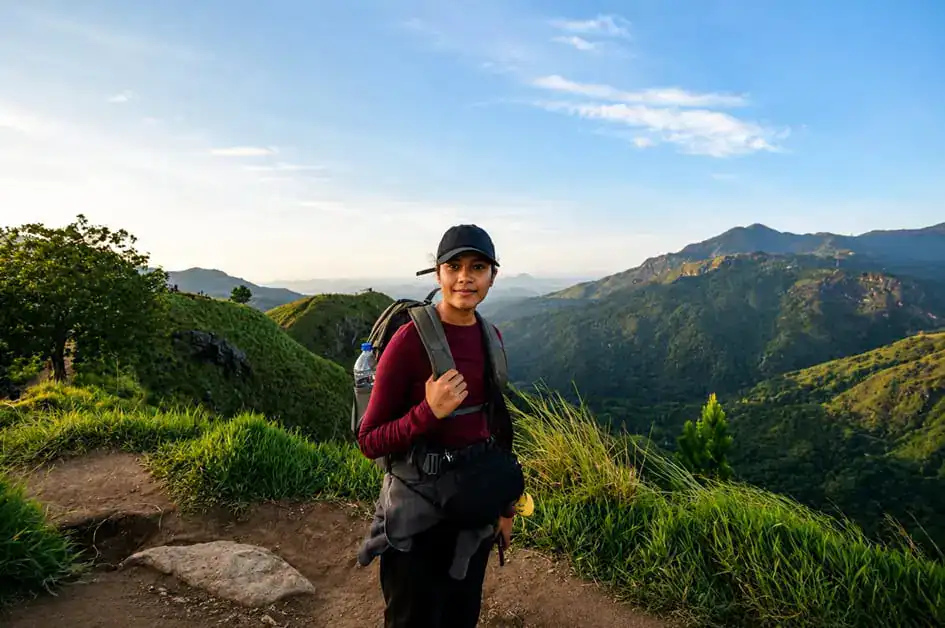
My Daughter, Nethuli – Little Adam’s Peak, Ella (Photo: Nalaka Priyantha)
Day 13: Ella Rock or Haputale Day Trip
Both options are good, but they don’t fit comfortably into the same day. Choose one.
Option A: Ella Rock
This option suits fit, confident hikers. The round trip takes about three to four hours and involves a steep final climb. The route has several unmarked turns, and some sections follow the railway. Hence, a local guide or a reliable offline map helps. Start at first light to avoid the midday heat and any afternoon storms.
- Footpath to Ella Rock Loop (3.7 km)
- Ella – Ella Rock (9.7 km)
- Ella Rock Trail (5.8 km)
- Ella Rock Sunrise Viewpoint (3.4 km)
- Amba to Ella via Ella Rock (8.7 km)
Option B: Haputale
This option suits travellers who prefer scenery without a hard hike. Drive to Dambatenne Tea Estate, once owned by Sir Thomas Lipton, then continue up to Lipton’s Seat. From this ridge, on a clear morning, you can see across several provinces. Mist often arrives by late morning, so go early. On the way back, stop in Haputale town, which clings dramatically to its ridge.
Afternoon/Evening
Rest, read, or enjoy a massage in Ella.
Where to Stay
Same accommodation
Food Stop
Look for a Hill Country vegetable curry with gotu kola sambol, a fresh herb salad.
Day 14: Ella to Tissamaharama/Yala
Morning
Leave Ella after a relaxed breakfast. Stop at Ravana Falls, just outside town, for a short look and photos.
Afternoon
The road drops sharply out of the mountains, and the air grows warmer and drier as you approach the Southeast. Check in near Tissamaharama and keep the rest of the day light. Tomorrow starts very early.
Evening
Walk beside Tissa Wewa, the ancient reservoir, as waterbirds gather at dusk.
Where to Stay
Tissamaharama or the Yala area
Accommodation Guidance
Stay near the park entrance to keep the pre-dawn drive short.
Food Stop
Try buffalo curd with kithul treacle, a southern speciality sold in clay pots along the roadside.
Practical Notes
Confirm your jeep pickup time for the morning.
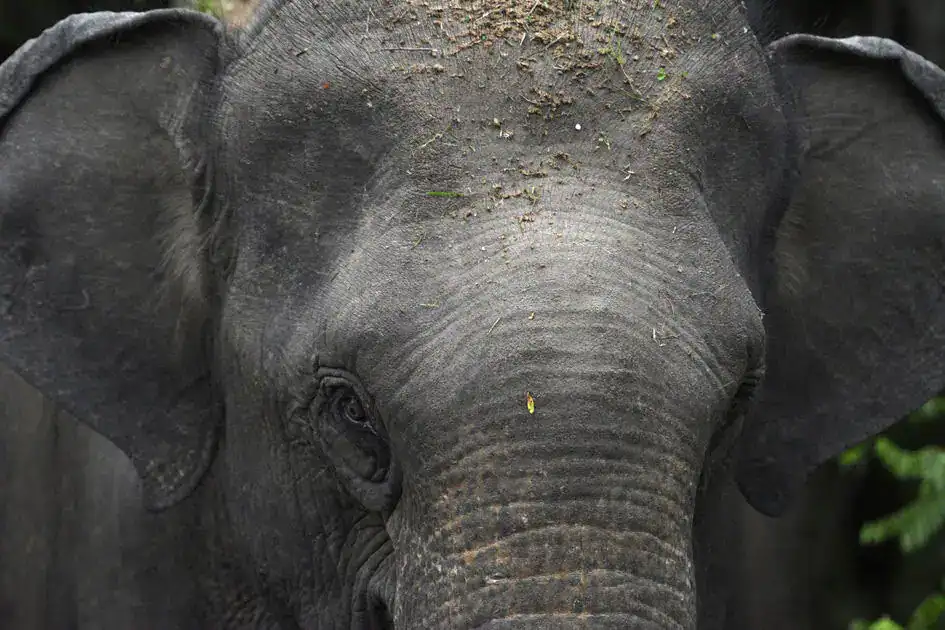
Eye contact – Yala National Park (Photo: Nalaka Priyantha)
Day 15: Yala Safari to Tangalle
Morning
Enter Yala National Park at opening, when animals are most active. Yala is famous for leopards, and elephants, sloth bears, crocodiles, water buffalo and many birds also live here. Sightings depend on luck, season, and patience. A good tracker makes a real difference, but nobody can guarantee a leopard.
Opening hours of Yala National Park are between 6:00 am and 6:00 pm.
Afternoon
Return for a late breakfast, then drive west to Tangalle. Spend the rest of the day on the beach.
Where to Stay
Tangalle
Accommodation Guidance
Tangalle suits quiet beach villas and small guesthouses.
Food Stop
Order ambul thiyal, a sour fish curry from the South, cooked with dried goraka fruit.
Practical Notes
If jeeps crowd around an animal, ask your driver to wait back or move on.
Day 16: Tangalle and Hiriketiya
Morning
Keep today loose. Swim or walk the long beaches around Tangalle. Some stretches have strong currents, so choose sheltered coves and follow local advice.
Afternoon
Take a short trip to Hiriketiya, a small horseshoe bay popular with surfers and swimmers. Rent a board if conditions suit your level. Alternatively, visit the Hummanaya Blowhole, where the sea bursts up through the rocks. It is most dramatic when the swell is up.
Evening
Stay for sunset and an unhurried dinner.
Where to Stay
Same accommodation
Food Stop
Drink a fresh thambili (king coconut) straight from the shell.
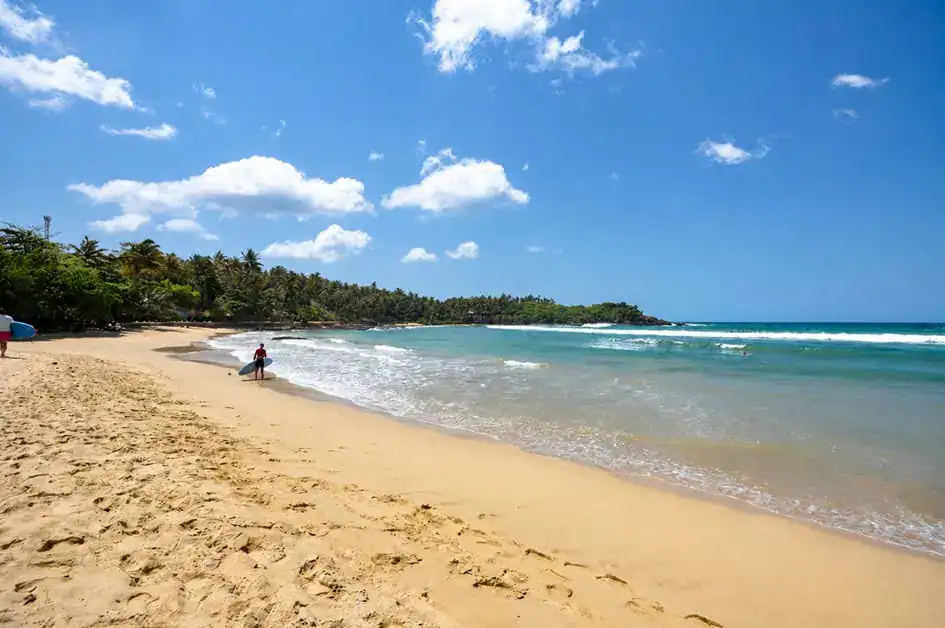
Hiriketiya Beach (Photo: Nalaka Priyantha)
Day 17: Tangalle to Mirissa/Weligama
Morning
Take the short coastal drive west and check in at your final base.
Afternoon
Mirissa has a lively beach, easy access to whale-watching boats and small viewpoints nearby. Weligama‘s broad bay has gentle waves that suit beginner surfers, and surf schools line the beach. Both towns sit close together, so you can visit the other easily.
Evening
In Mirissa, walk up to Coconut Tree Hill for sunset.
Where to Stay
Mirissa or Weligama
Food Stop
Snack on fish cutlets, spiced fish, and potato croquettes.
Day 18: Optional Mirissa Whale Watching and Beach
Morning
Boats usually leave early, and a trip can last several hours. Blue whales, sperm whales, and dolphins are possible. However, April falls near the end of the usual southern season, so sightings and sea conditions become less predictable. Check with operators close to your date and expect no guarantees. Choose one that follows proper approach distances and doesn’t chase animals.
If you would rather skip it, sleep in, swim, or book a gentle surf lesson.
Afternoon
Relax on the beach.
Where to Stay
Same accommodation
Food Stop
Order string hoppers with kiri hodi, a mild coconut milk gravy.
Practical Notes
Take seasickness tablets beforehand if you are prone to it.
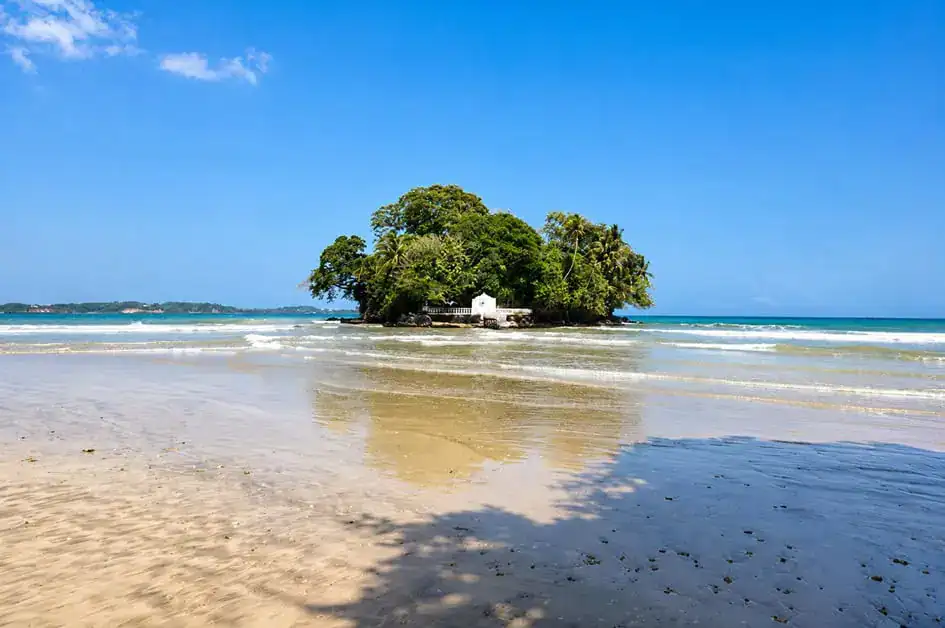
Taprobane Island and Weligama Beach (Photo: Nalaka Priyantha)
Day 19: A Deliberately Slow Day in Mirissa/Weligama
This day is not a space waiting to be filled. After nearly three weeks of early starts, transfers, and climbs, a genuine rest day helps you enjoy the final stretch rather than rushing through it.
Choose as much or as little as you like:
- beach time and swimming
- a surf lesson or a session on your own, depending on your experience and conditions
- a café lunch or a walk to local bakeries
- a coastal walk between beaches
- a spa treatment or a nap
- a short tuk-tuk trip to a nearby temple or cove
Where to Stay
Same accommodation
Food Stop
Try a maalu paan, a soft bakery bun filled with spiced fish.
Day 20: Galle Fort and Unawatuna
Morning
Drive to Galle. The Portuguese built the first fort here, and the Dutch later expanded it into the walled town you see today. Galle Fort is a UNESCO World Heritage Site. Walk the ramparts, then explore streets lined with colonial buildings, churches, a lighthouse, and small shops. The town is still lived in, which gives it a relaxed, everyday feel.
Afternoon
Continue to Unawatuna. Climb to the Japanese Peace Pagoda on Rumassala Hill, or walk down to Jungle Beach for a swim. There is usually time for one, not both.
Evening
Return to Mirissa or Weligama for your final night by the coast.
Food Stop
Try lamprais, a Dutch Burgher dish of rice, meat and sambols baked in a banana leaf.
Practical Notes
The ramparts have little shade, so start in the morning.
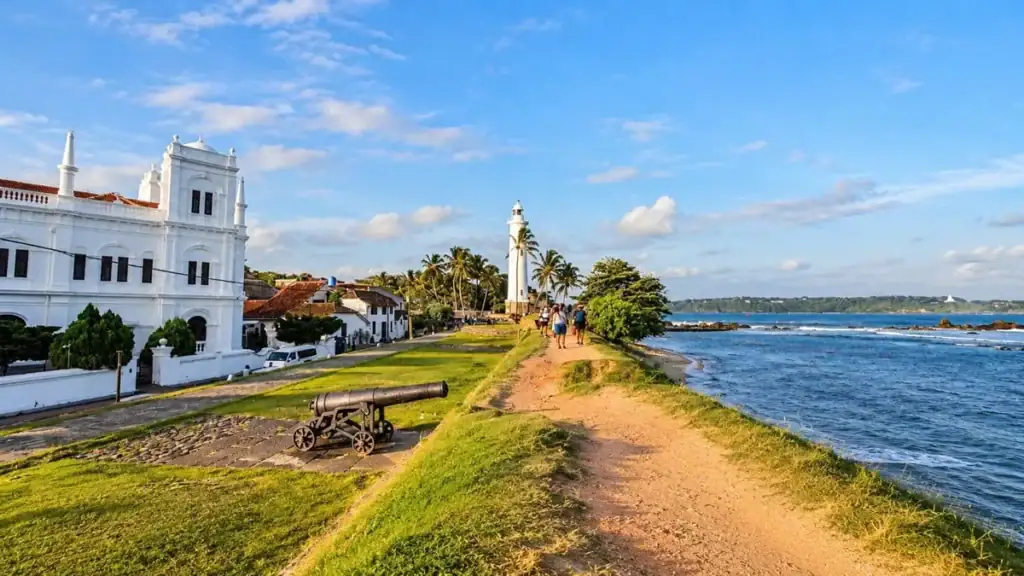
Meeran Mosque and the Lighthouse in Galle Fort (Photo: Nalaka Priyantha)
Day 21: Mirissa/Weligama to Colombo/BIA
Morning/Afternoon
Take the expressway north towards the airport. Stop in Colombo only if your flight time genuinely allows it. A short visit to the Galle Face seafront or a final lunch is realistic with an evening flight. Don’t risk an international departure for extra sightseeing.
Aim to reach the airport at least three hours before departure, plus a buffer for traffic. If your flight leaves very early in the morning, consider moving your final night to Negombo instead of Mirissa or Weligama.
Food Stop
If time allows, enjoy one last rice and curry, with several small curries around a mound of rice.
Accommodation Guidance Throughout This Sri Lanka Itinerary for 21 Days
On a trip this long, location matters more than luxury. Choose each base for what you will do there, not only for how it looks online.
- Negombo: Stay near the beach, a short drive from the airport, with quiet rooms for recovery.
- Wilpattu: Stay close to the park gate so early and late safaris don’t involve long drives.
- Anuradhapura: Stay near the Sacred City to reduce time in the midday heat.
- Sigiriya/Habarana: Nature lodges suit a three-night stay. Check the drive time to Sigiriya’s entrance.
- Kandy: Lakeside and town-centre stays are walkable. Hillside hotels have better views but depend on tuk-tuks.
- Nuwara Eliya: Town is convenient. Tea estate bungalows feel more atmospheric but are more remote.
- Ella: The centre is lively and walkable. Hillside guesthouses are quieter but can involve steep paths.
- Tissamaharama/Yala: Proximity to the park entrance matters most.
- Tangalle: Look for quiet beach villas and small guesthouses.
- Mirissa/Weligama: Choose Mirissa for beach life and whale-watching access, or Weligama for surf schools and a wider bay.
Budget travellers will find clean, family-run guesthouses almost everywhere on this route. Mid-range boutique hotels and eco-lodges offer good value, especially in the Cultural Triangle and Hill Country. Higher-end options include tea estate bungalows, safari camps, and beach resorts.
April is a busy month. The Sinhala and Tamil New Year falls in mid-April, and many Sri Lankans travel then, with Nuwara Eliya especially popular. Book well ahead if your dates overlap with the holiday.
If you are interested in traditional festivals, read our guideline on “Traditional Festivals in Sri Lanka: A Complete Guide to the Most Spectacular Cultural Celebrations“.
Dining and Food Experiences Across the Trip

Sri Lankan Rice and Curries (Photo: KavindaF via Pixabay)
Eating well is one of the pleasures of spending 3 weeks in Sri Lanka. Rice and curry is the everyday centrepiece, but it’s never just one curry. Expect several small dishes, such as dhal, vegetables, fish or meat, and a sharp coconut sambol. Breakfast might be hoppers or string hoppers. Evenings often bring kottu or roti from a busy street stall.
Food changes as you travel. The dry zone favours millet and tank fish. The Hill Country grows cool-climate vegetables to eat with its tea. The South is known for sour fish curries, buffalo curd and treacle. Bakeries sell cheap, filling snacks such as fish buns and vadai, and tropical fruit stalls offer mango, papaya, rambutan, and king coconut.
Vegetarians eat very well, as many curries are naturally meat-free. Sri Lankan food can be fiery. Ask for “less spicy” when you order, and use yoghurt, curd or plain rice to cool things down.
Choose busy, reputable restaurants, and family-run places with a steady stream of customers. Drink bottled or filtered water, and use a refillable bottle where your hotel offers safe water.
Cultural and Local Experiences
This route connects you with everyday Sri Lanka, not only its monuments. You will visit active Buddhist temples, where respectful behaviour matters more than photographs. In the dry zone, ancient reservoirs still water the rice fields around them. Kandy keeps its drumming and dance traditions alive, and its markets show what people actually buy.
In tea country, remember that estates are workplaces and homes. On the coast, fishing communities work long hours. Surf culture in Weligama and Hiriketiya adds a younger, more relaxed side to the South.
Treat people as neighbours, not attractions. Always ask before photographing someone, and accept a no with good grace.
Flexibility and Alternatives
April rewards travellers who plan for change. Adjusting the route is part of good planning, not a sign that something went wrong.
- Rain: Hike early. If storms roll in, swap Pidurangala for a quiet Sigiriya afternoon, or Ella Rock for Haputale.
- Train disruption: If the train is cancelled or badly delayed, your driver can cover the Nuwara Eliya–Ella road in far less time.
- Safaris: Let local guides choose between Minneriya and Kaudulla, or nearby areas, based on where elephants are feeding.
- Whale watching: If sea conditions are poor or trips are cancelled, enjoy a beach morning instead.
- Sea conditions: If the swell is up, favour Hiriketiya’s bay or Tangalle beach over the blowhole, and swim only where it is safe.
- Fatigue: Drop an optional stop. Day 19 exists for exactly this reason.
- Flights: Adjust the Colombo stop, or the final night, to suit your departure time.
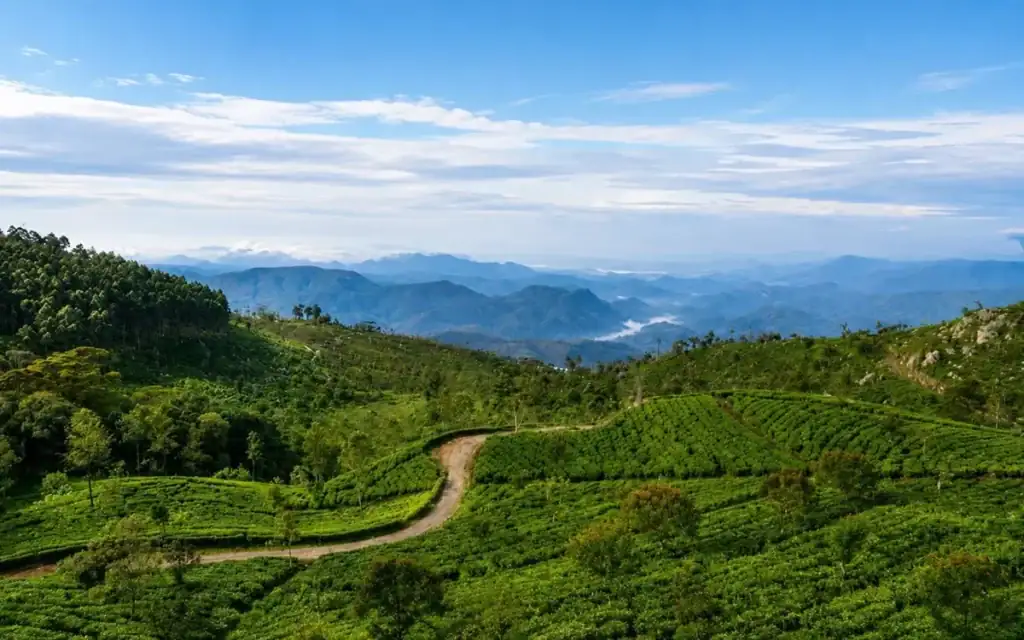
Tea Plantations and the Scenic View in Haputale (Photo: Nalaka Priyantha)
Weather and Packing Notes for April
April is a transitional month rather than a simple dry or wet season. It falls within the first inter-monsoon period, when winds are light, and weather patterns are less predictable. The lowlands, the Cultural Triangle and the coast are usually hot and humid, with strong sun. Many areas see afternoon or evening thunderstorms. The Hill Country is noticeably cooler, and nights in Nuwara Eliya and at Horton Plains can be cold. Conditions vary from region to region and from year to year, which is why this Sri Lanka travel itinerary for April leans on early starts and flexible afternoons.
Packing Essentials
- lightweight, breathable, quick-dry clothing
- clothes that cover your shoulders and knees for temples and other religious landmarks
- a light rain jacket or compact umbrella
- comfortable walking shoes, plus hiking shoes with good grip
- sandals or flip-flops, and swimwear
- a sun hat, sunglasses, and high-SPF sunscreen
- insect repellent
- a reusable water bottle and small daypack
- a fleece or warm layer for Nuwara Eliya and Horton Plains
- basic first-aid items and personal medication
- a power bank and travel adaptor
- waterproof protection for your phone, camera, and passport
- binoculars for safaris
- enough camera or phone storage
We recommend reading our guides on the best time to visit and the weather in Sri Lanka.
Practical Details, Hours, Fees, Bookings, and Dress Codes
Entry Fees
Fees are often quoted in US dollars but paid in rupees. Treat these figures as approximate and check current rates before you go:
| Attraction | Approximate foreign adult fee |
| Sigiriya | USD 35 |
| Anuradhapura, Polonnaruwa | USD 30 each |
| Dambulla, Temple of the Tooth, Peradeniya | Lower fees, usually paid in rupees |
| Wilpattu, Minneriya/Kaudulla, Yala | Roughly USD 30–45 per person per visit, including charges and tax |
| Horton Plains | Similar range, usually slightly lower |
At national parks, jeep hire is charged separately from the park ticket. When comparing safari quotes, ask whether the park entry fee is included.
See the current entrance fees for the cultural and heritage sites.
* Prices are subject to change.
Opening Hours
Sigiriya Rock Fortress opening hours: 5.00 am to 6.30 pm each day. The Frescoes section closes earlier at 5.45 pm, and most national parks open between 6:00 am and 6:00 pm. Hours can change, so confirm locally or with your driver.
Bookings
Arrange safaris through your lodge or a reputable operator. Reserve Nanu Oya–Ella train seats early through Sri Lanka Railways’ official booking service, as popular classes sell out. Book whale watching a day or two ahead, and reserve accommodation early around the mid-April holiday.
You can book the entrance tickets for Wilpattu, Minneriya, Kaudulla, Horton Plains, and Yala National Parks online through the official Wildlife Park Permits Reservation eService.
Train tickets can be booked through the official Online Advance Train Seats Reservation system.
Dress Codes
At Buddhist temples, cover your shoulders and knees, and remove your shoes and hat where required. Don’t pose with your back to Buddha statues, and don’t touch monks. For safaris, wear neutral colours. For hikes, choose shoes with good grip.
Transport Tips
Plan around realistic road times, and start early when it pays off, such as at Sigiriya, Horton Plains, and the national parks. Use a licensed, recommended driver and wear a seat belt where one is available. Agree tuk-tuk fares before you set off, or use a meter or ride-hailing app where available. On the train, stay inside the carriage. Hanging from doorways for photos has caused serious accidents.
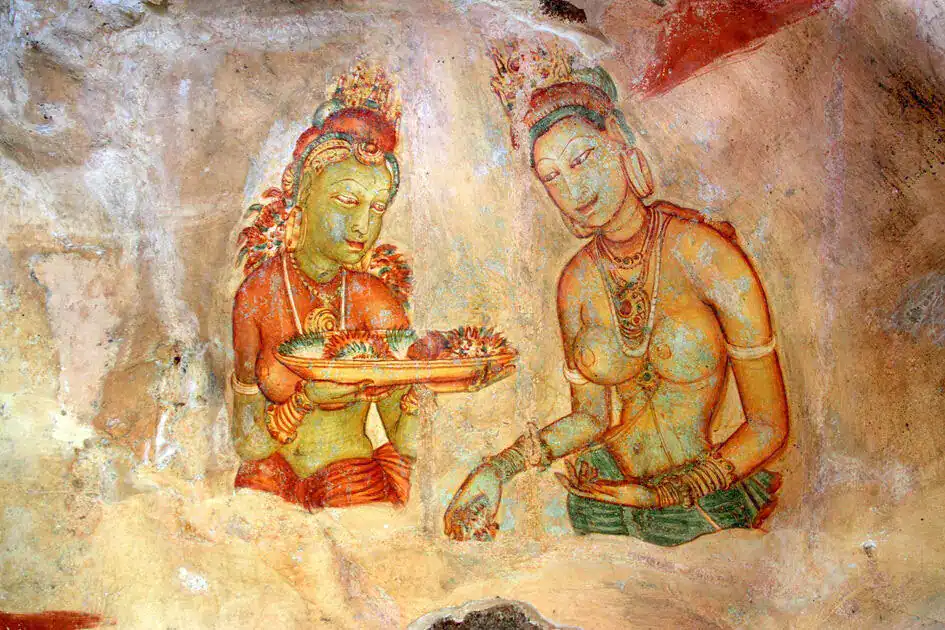
Frescoes in Sigiriya (Photo: Yves Picq, CC BY-SA 4.0)
Safety, Health, and Comfort Notes
Sri Lanka is a welcoming destination, and most trips here pass without trouble. A few sensible habits make the journey smoother.
Travel Insurance
Take out comprehensive travel insurance before you leave. It should cover medical treatment, evacuation, trip disruption and baggage. Check that it includes hiking, safaris, and surfing if you plan to do them, and read the activity terms carefully.
Local Safety
Keep valuables in your hotel safe and carry only what you need each day. Use reputable drivers and agree tuk-tuk fares before you travel. A polite, firm approach usually works.
Swim only where locals swim, and respect warning flags, as some southern beaches have strong currents. Stay in safari vehicles, keep your distance from wild elephants and monkeys, and take care near cliff edges and on wet trails. Roads can be chaotic, so look both ways twice before crossing.
Health and Comfort
Heat is the most common problem. Drink water regularly, rest through the middle of the day, and use sunscreen and a hat. Use repellent, especially at dawn and dusk. Eat freshly cooked food, and pack layers for the sudden chill in the Hill Country. Bring enough personal medication for the whole trip.
Hospitals and Medical Access
Colombo, Kandy, Galle, and other cities have larger hospitals and private medical facilities. Wilpattu, Yala, and some areas in the Hill Country are more remote, so reaching good care may take time. For emergencies, call 119 for police or 1990 for the Suwa Seriya ambulance service. The Sri Lanka Tourism hotline is 1912.
Estimated Costs for 3 Weeks in Sri Lanka
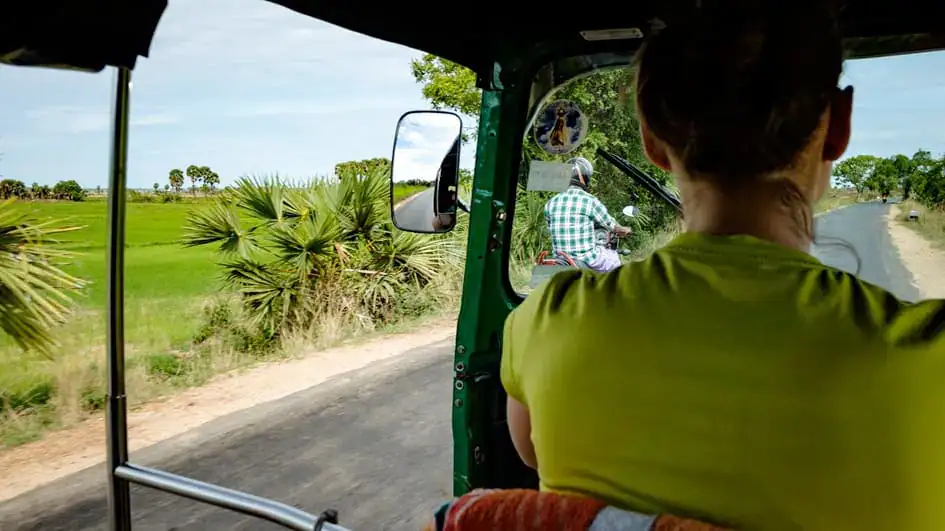
A self-drive tuk-tuk drive along a village road (Photo: Michal Bocek, CC BY 2.0)
Costs depend on your accommodation style and whether you share a driver. These are rough planning ranges per person, based on two people sharing a room and a car. They exclude international flights, visa or ETA fees, and insurance.
| Cost area | Approximate range (USD per person) |
| Accommodation (20 nights) | 350–800 budget / 800–1,600 mid-range / 2,500+ luxury |
| Food | 15–25 per day budget / 30–50 mid-range |
| Private car and driver (shared) | 650–950 for the trip |
| Train, tuk-tuks and local transport | 50–120 |
| Heritage sites | 150–220 |
| Three safaris (park fees plus shared jeep) | 180–280 |
| Whale watching (optional) | 50–80 |
| Surfing, spa and extras | 50–200 |
| Tips and miscellaneous | 100–200 |
Budget-conscious: around USD 1,800–2,500 per person
Comfortable mid-range: around USD 3,000–4,200 per person
Higher-comfort or luxury: from around USD 6,000 per person
Prices change, so treat these figures as a starting point and confirm current rates when you book.
Responsible Travel Notes
Choose locally owned guesthouses, restaurants, and licensed guides where you can, so that more of your spending stays in the community. On safari, never feed or touch animals, and ask your driver not to crowd or chase wildlife for a photo. Pick whale-watching operators that follow approach guidelines.
Carry a refillable bottle, refuse plastic bags, and take your rubbish off trails and beaches. Don’t touch coral or archaeological remains. Respect temple customs, ask before photographing people, and remember that tea estates are homes as well as workplaces. On hikes, stay on marked paths.
We recommend reading our guideline on “Sustainable Travel in Sri Lanka: How to Explore Responsibly“.
Highlights Summary
- Leopard country and quiet lakes in Wilpattu
- The sacred stupas and Bodhi tree of Anuradhapura
- Dambulla’s painted cave temples
- Sigiriya’s rock fortress and gardens, and sunset from Pidurangala
- Medieval Polonnaruwa and an elephant safari
- Kandy’s Temple of the Tooth and Peradeniya’s gardens
- Tea country and misty Horton Plains
- The Nanu Oya–Ella train and hikes in Ella
- A dawn safari in Yala
- Quiet bays at Tangalle and Hiriketiya
- Surf and sunsets in Mirissa and Weligama, with optional whale watching
- The ramparts of Galle Fort
What makes this 21-day Sri Lanka itinerary for April work is not the length of the list. It is the space between the stops, with enough time to enjoy each place rather than pass through.
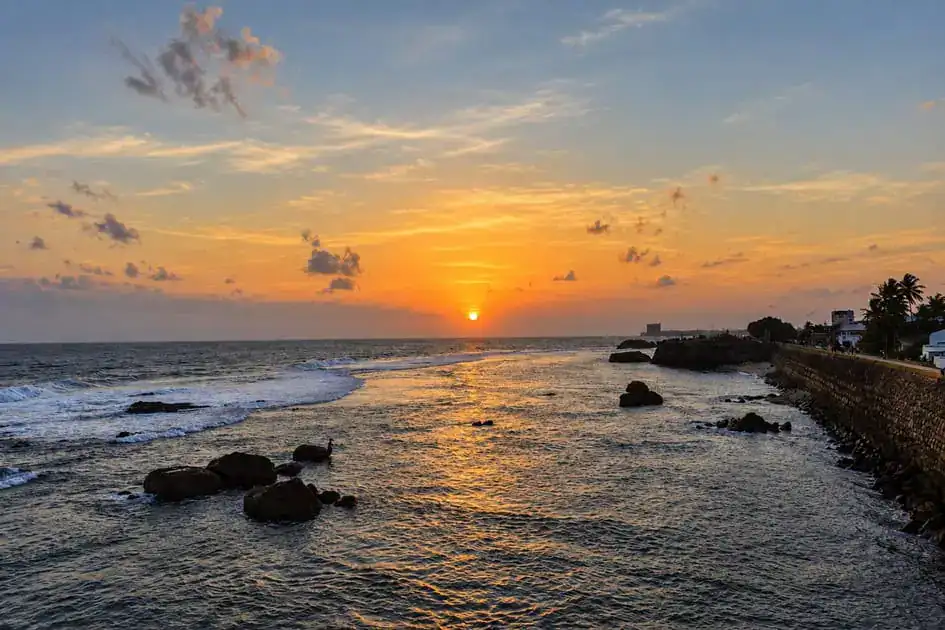
Sunset View at the Flag Rock Bastion, Galle Fort (Photo: Nalaka Priyantha)
Final Thoughts
Three weeks gives you what shorter trips rarely can: time for the ancient capitals, two wildlife regions, both Nuwara Eliya and Ella, a slow train through tea country, proper hikes and several unhurried days by the sea.
The route builds naturally. It moves from arrival on the coast to wildlife and ancient capitals, through the Cultural Triangle and Kandy, into the Hill Country, back to wildlife and finally down to the South Coast. April asks for some flexibility, as storms, sea conditions, animal movements, and train timings can all shift your plans.
Travel with realistic expectations, start early, and let the final days slow down. Followed that way, this 21-day Sri Lanka itinerary for April offers a rich, well-paced introduction to the island, and a strong reason to come back.
Map – 3 Weeks in Sri Lanka in April
Sources and References:
- UNESCO World Heritage Centre — Sri Lanka World Heritage Sites. Covers the Sacred City of Anuradhapura, Ancient City of Polonnaruwa, Ancient City of Sigiriya, Sacred City of Kandy, Rangiri Dambulla Cave Temple, Old Town of Galle and its Fortifications, and the Central Highlands of Sri Lanka.
- Central Cultural Fund (CCF) — Official Ticket Prices and Heritage Sites. Useful for current foreign-visitor admission prices for Sigiriya, Anuradhapura, Polonnaruwa and other CCF-managed heritage attractions.
- Sri Lanka Railways. Use for current train times, routes, available classes and fares, particularly for the Nanu Oya–Ella section of the itinerary.
- Sri Lanka Railways — Online Advance Seat Reservations. Official source for reserving train seats and checking reservation availability for Hill Country rail journeys.
- Department of National Botanic Gardens — Royal Botanic Gardens, Peradeniya. Official information for the Royal Botanic Gardens included on Day 8, including visitor information and current opening hours.
- Department of Wildlife Conservation, Sri Lanka. Primary government authority for Sri Lanka’s national parks and wildlife conservation. Use for current visitor regulations and national-park information relating to Wilpattu, Minneriya, Kaudulla, Horton Plains and Yala.
- Sri Lanka Tourism Development Authority (SLTDA) — Tourist Assistance and Emergency Information. Official source for tourism assistance and emergency contacts.
- 1990 Suwa Seriya Foundation — Emergency Ambulance Service. Official information about Sri Lanka’s island-wide pre-hospital emergency ambulance service and the 1990 emergency number.
Featured image: Along the Water Garden to the Sigiriya Rock (Photo: Richie Rocket, CC BY-NC-ND 2.0)

I am a Sri Lankan medical doctor who spends my free time travelling, exploring new destinations, and documenting the beauty of the island I call home. I have journeyed across almost every corner of Sri Lanka with my wife and daughter — from wildlife parks and misty mountains to ancient cities, deep forests, rugged landscapes, and quiet beaches.
Travel is not just a hobby for me — it’s a way of life. I love nature, enjoy road trips, and find joy in wildlife photography. I also read widely about tourism, travel trends, and destination culture. Through my writing, I aim to help travellers experience Sri Lanka through real stories, meaningful insights, and honest recommendations — the same way I explore it with my own family.