
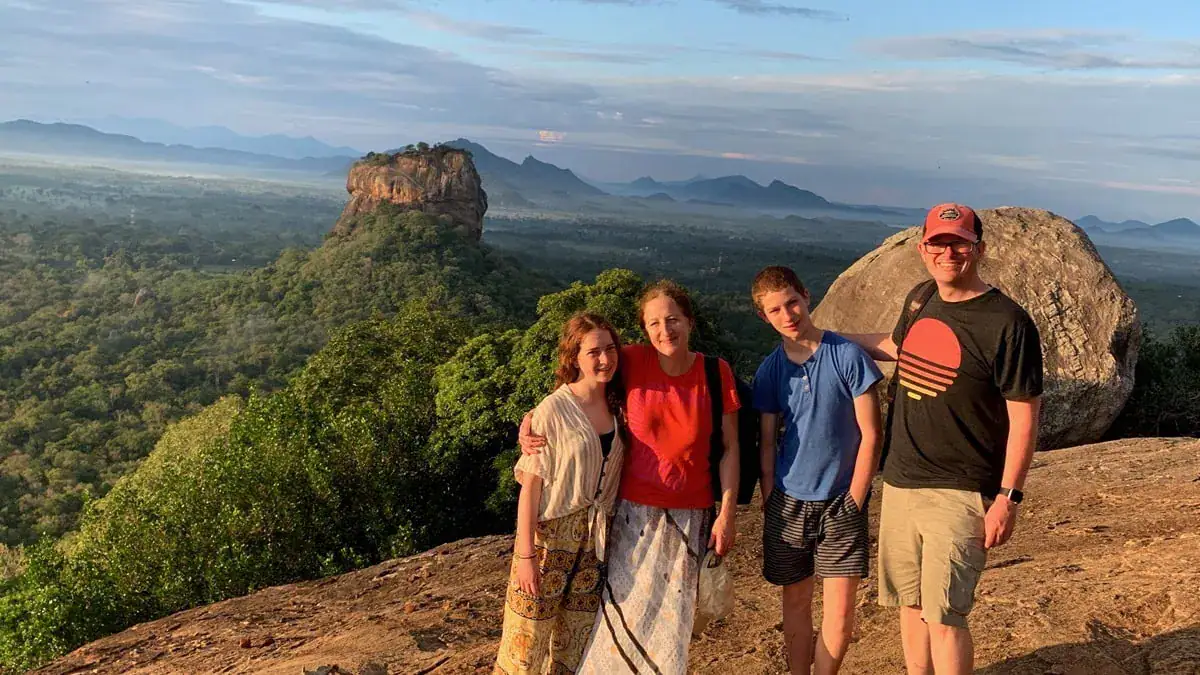

Planning a family holiday often starts with one big question. Where will parents and children find enough to enjoy together? Sri Lanka offers a strong answer. The best family destinations in Sri Lanka bring ancient cities, elephants, popular beaches, mountain trains, local food, and outdoor adventures into one compact island.
Your children might climb towards a 1,500-year-old palace at Sigiriya in the morning and search for wild elephants a day later. A few days after that, your family might ride through tea country by train. End the journey beside the Indian Ocean, where slower days give everyone time to rest.
Sri Lanka also offers useful variety for different ages. Younger children often enjoy beaches, gardens, elephants, and short nature trips. School-age children get more from ancient ruins, wildlife safaris, scenic train journeys, and easy walks. Teenagers can choose from surfing, cycling, hiking & trekking, snorkelling, photography, and wildlife trips.
Official Sri Lanka Tourism lists Sigiriya, Dambulla, Polonnaruwa, Kandy, and Galle among the country’s great cultural heritage sites. These places also fit naturally into established touring routes.
Family travel specialists follow a similar pattern. A 12-day Sri Lanka Family Holiday links Negombo, Dambulla, Sigiriya, Kandy, Udawalawe, Mirissa, Galle, and Colombo. The programme mixes culture and wildlife with active experiences and free time.
No official Sri Lanka Tourism Development Authority ranking lists destinations by foreign family visits alone. This guide therefore looks at official tourism information, visitor patterns, established family itineraries, traveller feedback, activity choice, location, seasonal conditions, and suitability for children.
You do not need to visit every place below. A good family trip to Sri Lanka depends on choosing the right combination for your children’s ages, your interests, and your travel month.
Why Sri Lanka Works Well for a Family Holiday
Sri Lanka gives families several types of holidays without requiring international flights between them.
The Cultural Triangle brings ancient cities and temples. The Central Highlands bring tea estates, cooler weather, waterfalls, and railway journeys. National parks bring elephants, crocodiles, deer, monkeys, birds, and leopards. The coast adds swimming, surfing, snorkelling, and slower days.
Distances look short on a map, though road journeys often take longer than expected. A well-planned route solves this problem. Stay for two or three nights at important bases rather than changing hotels every day.
Wildlife deserves a place on most family routes. SLTDA’s 2024 tourism report identified Yala, Udawalawe, Horton Plains, and Mirissa whale watching among the wildlife attractions drawing strong foreign interest. Foreign travellers represented 42.8 per cent of visits to the wildlife attractions covered by the report.
Culture does not need to feel like a school lesson either. At Sigiriya, children climb towards an ancient palace. At Polonnaruwa, older children explore a large archaeological area. In Kandy, families see a living Buddhist tradition. Galle offers streets and fort walls instead of another formal archaeological visit.
The strongest family routes balance these active days with rest. That balance matters. Children who enjoy Sigiriya on Monday do not always want another long climb on Tuesday.
Plan around experiences rather than the number of places you reach.
The 15 Best Family Destinations in Sri Lanka
1. Sigiriya and Dambulla: Best Overall Family Destination
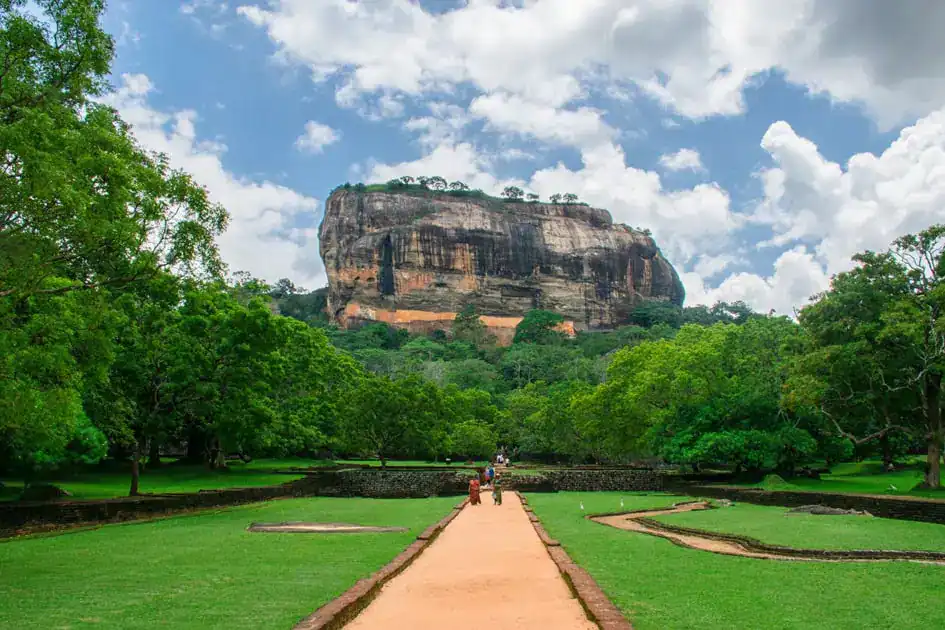
Sigiriya and Water Garden (Photo: Ákos Helgert, via Pexels)
Sigiriya and Dambulla offer one of the best starting points for a family tour in Sri Lanka.
Sigiriya rises about 200 metres above the surrounding area. The ancient complex includes water gardens, defensive structures, frescoes, the Lion Gate, the mirror wall, and palace ruins on the summit. Official Sri Lanka Tourism describes Sigiriya as a fifth-century site with advanced urban planning and irrigation.
Children often respond well to Sigiriya because the visit has a clear goal. Instead of walking through a series of rooms, they climb towards the top of a huge rock.
The climb still needs preparation. An SLTDA and UN Tourism visitor-management study describes the route to the summit as roughly 1,200 steps.
Start early. The cooler morning makes the climb easier, especially for children. Parents should also judge the upper sections against each child’s fitness and comfort with heights.
Dambulla gives your family a different cultural experience nearby. The cave temple complex contains five main shrines filled with paintings and Buddha statues. Official tourism information traces the temple’s history back more than 2,000 years.
Stay around Sigiriya, Dambulla, or Habarana for two or three nights. From the same base, your family can visit Polonnaruwa and go on elephant safaris around Minneriya or Kaudulla.
Best for: School-age children and teenagers.
Family tip: Visit Sigiriya early, then leave the hottest part of the afternoon for lunch, swimming, or rest.
2. Kandy: Best for Living Culture
Kandy brings your family into Sri Lanka’s cultural heart.
The Temple of the Sacred Tooth Relic forms the centre of the city’s religious life. Unlike an abandoned ancient city, Kandy introduces children to traditions still followed today. Official Sri Lanka Tourism describes the former royal capital as an important centre for Sri Lankan architecture, art, music, and Buddhist culture.
Explain the temple before entering. Children often show more interest when they understand why pilgrims come and why the site matters.
Dress with respect. Shoulders and knees should remain covered. Remove footwear where required.
The Royal Botanic Gardens at Peradeniya provide a good contrast. Open lawns, tropical plants, palms, and huge trees give children room to move after a temple visit.
A Kandyan cultural performance offers another family-friendly evening activity. Traditional dance and drumming give younger travellers a more active introduction to local culture.
Kandy also works as a natural link between the Cultural Triangle and Hill Country. Many family routes continue from here towards Nuwara Eliya or Ella.
Spend two nights if your schedule allows. Trying to fit the temple, gardens, cultural activities, and onward travel into one day often creates unnecessary pressure.
Best for: Families interested in culture, gardens, food, and traditional arts.
Family tip: Give the temple and botanical gardens separate parts of the day rather than rushing between them.
3. Galle and Unawatuna: Best Mix of Heritage and Beach Time
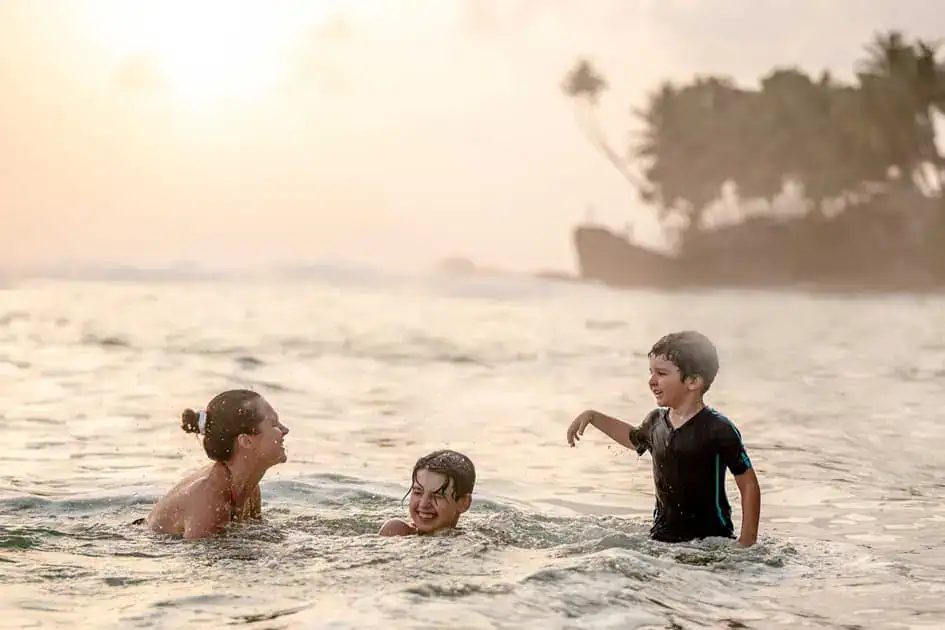
A Mother and Two Kids – Dalawella Beach, Unawatuna (Photo: Atlantic Ambience, via Pexels)
Galle works well for families because sightseeing does not feel formal.
Galle Fort invites you to walk. Old streets lead between bastions, colonial buildings, cafés, shops, religious sites, and sea views. Children get space to move while parents explore one of Sri Lanka’s major heritage areas.
Official Sri Lanka Tourism describes Galle Fort as one of Asia’s best-preserved colonial forts. Galle also forms part of Sri Lanka’s UNESCO-listed cultural heritage.
Visit during the late afternoon if your schedule allows. The temperature becomes more comfortable, and the fort works well for a slow walk before sunset.
Nearby Unawatuna adds beach time. Staying in Galle or Unawatuna gives your family access to both experiences without another long transfer.
This combination becomes especially useful near the end of a busy holiday. Parents still have restaurants, history, and local life to explore. Children get time for the beach and hotel pool.
Family itineraries often include Galle for the same reason. A normal family route places Galle after Mirissa and before Colombo, giving families a cultural stop near the end of their journey.
Two or three nights work well for Galle and the surrounding coast.
Best for: Almost every age group.
Family tip: Do not treat Galle as a quick roadside stop. Give the fort a few relaxed hours and combine the visit with beach time.
4. Udawalawe: Best Family Safari
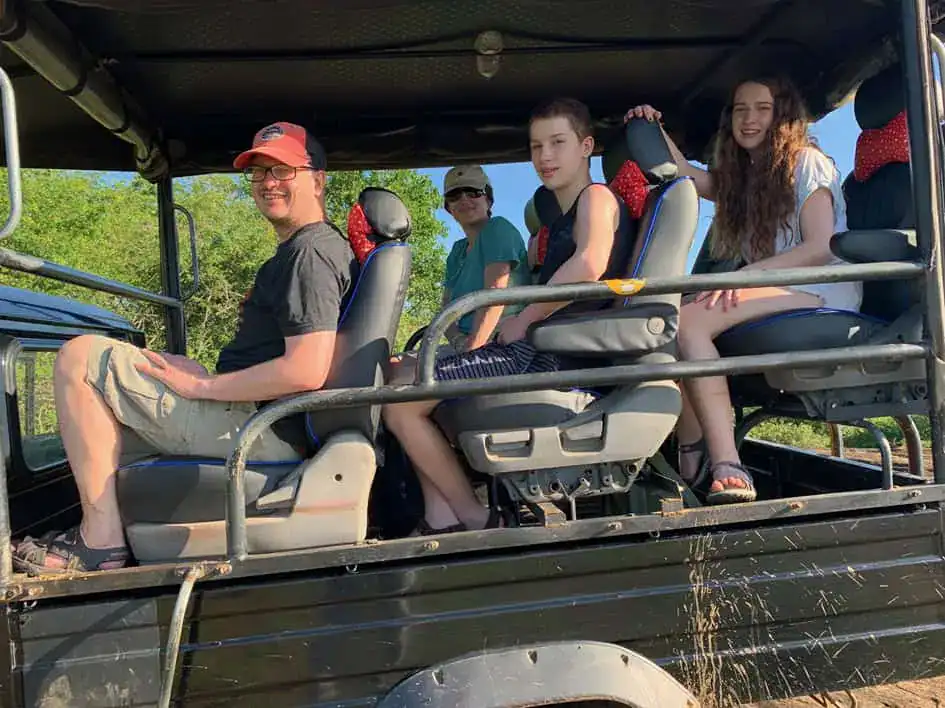
A Safari in Udawalawe National Park (Photo: Phil Whitehouse, CC BY 2.0)
For many children, seeing a wild elephant becomes one of the biggest memories from Sri Lanka.
Udawalawe is a strong place to make this happen.
The open habitat gives families good opportunities for elephant watching. Safari drives also bring chances to see water buffalo, deer, crocodiles, monkeys, peacocks, raptors, and other wildlife.
SLTDA’s tourism research places Udawalawe among Sri Lanka’s leading wildlife attractions for foreign visitors.
Udawalawe also fits neatly into a classic family route. Travel south after Ella and stop near the national park before continuing towards the coast. This avoids a large detour.
An Udawalawe family safari is one of the main wildlife experiences.
Wildlife sightings never follow a fixed schedule. Do not promise children a particular animal before entering the park. Turn the search into part of the experience.
Choose a responsible safari operator. A good driver keeps a sensible distance from animals and doesn’t race other jeeps toward sightings.
One night works for a faster route. Two nights give younger children more rest.
Best for: Families who want their first Sri Lankan safari and families with children interested in elephants.
Family tip: One well-planned safari often works better than filling both morning and afternoon with long jeep drives.
5. Ella: Best for Active Families
Ella brings train travel, short walks, mountain views, tea country, and waterfalls together.
For many families, the journey towards Ella becomes part of the experience. Sri Lanka’s Hill Country railway passes through tea-growing areas, tunnels, bridges, villages, valleys, and mountain scenery.
A reserved seat makes a long railway journey easier with children. Keep snacks, drinking water, and a light layer within reach.
Once in Ella, choose activities based on your children’s age and energy.
Little Adam’s Peak offers a manageable outing for many active families. Nine Arch Bridge is another popular stop. Tea experiences and waterfalls give you alternatives if your children need a slower day.
Do not turn Ella into a hiking contest. A family arriving after several busy cultural days often benefits from a quiet afternoon.
Two nights give you enough time for the train, one main walk, and some rest. Three nights suit families who want a slower Hill Country stay.
Best for: School-age children, teenagers, walkers, photographers, and railway fans.
Family tip: Keep your arrival day light. Save the main walk for the following morning.
6. Yala National Park: Best for Families Interested in Leopards

Two Leopards Playing – Yala national Park (Photo: Nalaka priyantha)
Yala offers a different safari experience from Udawalawe.
Elephants live here, but many foreign visitors arrive hoping to see a Sri Lankan leopard. The park also supports deer, crocodiles, wild boar, buffalo, monkeys, sloth bears, and a wide range of birds.
SLTDA identifies Yala as one of Sri Lanka’s most visited wildlife attractions and a leading choice among foreign travellers.
A leopard sighting should never become a promise. Some families see one. Others leave without one. A good safari remains rewarding when children learn to watch for tracks, alarm calls, birds, reptiles, and smaller animals.
Yala also receives heavy safari traffic during busy periods. Responsible behaviour matters. Choose an operator who respects park rules, keeps distance from animals, and avoids aggressive driving.
For a first safari with younger children, Udawalawe often provides the simpler choice if elephants are the main goal. Families with older children who already enjoy wildlife watching might prefer Yala.
Stay around Tissamaharama, Kirinda, or the wider park area for one or two nights.
Best for: Older children and teenagers with a strong interest in wildlife.
Family tip: Focus on the whole ecosystem rather than spending the drive searching only for a leopard.
7. Bentota and Beruwala: Best for a Relaxed Family Beach Stay
Some families want a beach break with easy resort facilities rather than a long list of excursions.
Bentota and Beruwala fit this style well.
The Southwest Coast gives families plenty of places to stay, dine, swim, and enjoy water activities. Bentota River adds boat trips and water-based experiences away from the open sea.
The area also works well at the beginning or end of a route because road access from Colombo and the airport region is easier than reaching more distant coastal areas.
Families with toddlers often appreciate this setup. A pool, beach, comfortable room, and flexible meal times sometimes matter more than another day of sightseeing.
Season deserves attention. The South and Southwest Coast generally fit classic winter routes better than the East Coast. Always check local sea conditions before swimming.
Allow two to four nights if Bentota forms your main rest stop.
Best for: Younger children, resort stays, and families who want slower beach days.
Family tip: Do not schedule every day. Leave room for swimming, sleep, and family time.
8. Mirissa and Weligama: Best for Beach Activities

A kid is learning to surf while the Sri Lankan instructor watches. (Photo: Atlantic Ambience, via Pexels)
Mirissa and Weligama offer more activity than a simple resort stay.
Mirissa works well for beach time and seasonal whale watching. Weligama has become a popular place for beginner surfing. Older children and teenagers often enjoy a supervised lesson in the bay.
Mirissa also appears in established family itineraries. Most family itineraries place a beach stay here after Udawalawe, which creates a useful change of pace after the Cultural Triangle, Kandy, and wildlife experiences.
Whale watching needs more planning with children. Trips often start early and involve several hours on the water. Think about seasickness, your child’s age, and current sea conditions before booking. Choose operators who respect wildlife and avoid close approaches.
Families do not need to book an activity every day. The main strength of this area comes from choice. Spend one morning surfing, another on an outing, and leave the rest open.
Two to four nights suit most routes.
Best for: School-age children, teenagers, beach lovers, and families interested in surfing.
Family tip: Check sea conditions before swimming or surfing, even when the beach looks calm.
9. Nuwara Eliya: Best for Tea Country and Cooler Weather
Nuwara Eliya feels different from the hot lowlands.
Tea estates, vegetable farms, gardens, hills, and cooler temperatures shape the area. The change often feels welcome after several days around Sigiriya and Kandy.
A tea estate visit gives children a practical introduction to one of Sri Lanka’s best-known products. They see tea growing on the hills and learn how workers turn fresh leaves into different grades of Ceylon Tea.
Gregory Lake offers a slower outing. Victoria Park gives families another easy break from road travel.
Families with older children might also use Nuwara Eliya as a base for Horton Plains National Park. The walk requires an early start and more effort than a casual town visit, so match the outing to your children’s fitness.
Nanu Oya railway station links the area with the Hill Country train route. Many families stay in Nuwara Eliya before continuing towards Ella.
One night works if you mainly want a tea-country stop. Two nights suit a visit to Horton Plains.
Best for: Tea experiences, nature, older children, and families seeking cooler weather.
Family tip: Bring a light jacket. Hill Country mornings and evenings often feel cool after time on the coast or in the Cultural Triangle.
10. Habarana and Minneriya: Best for an Elephant Safari Near the Cultural Triangle
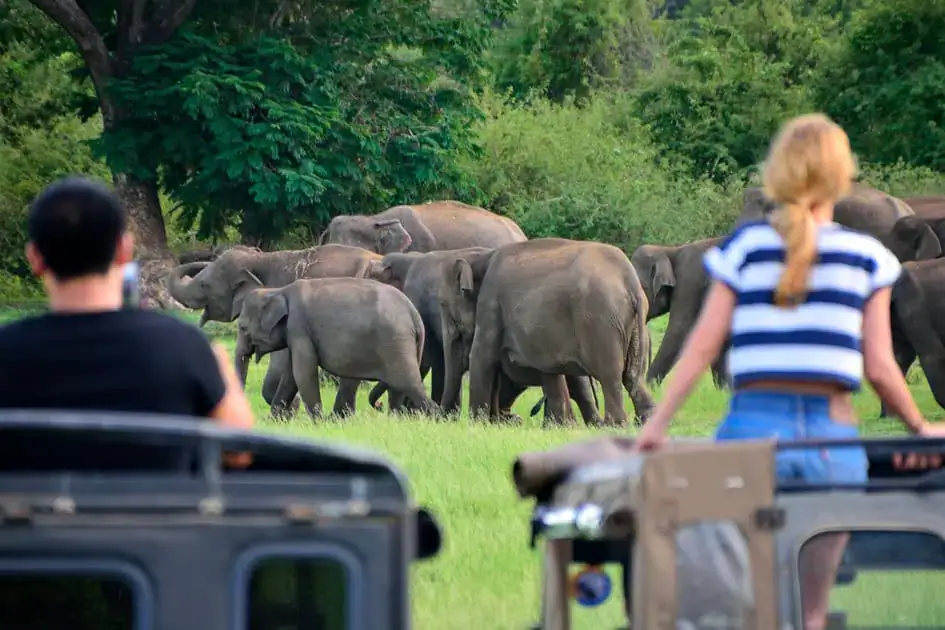
Watching Elephants in Minneriya National Park (Photo: Jason Jones, CC BY-NC-SA 2.0)
Habarana works as a useful base rather than a destination you need to fit into a separate part of the trip.
Sigiriya, Dambulla, Polonnaruwa, Minneriya, and Kaudulla lie within reach. This location helps families see more without changing hotels every night.
Minneriya is well known for wild elephants. Elephant locations shift according to water, food, rainfall, and seasonal conditions. Nearby Kaudulla sometimes provides a better safari on a given trip.
Ask a trusted local operator about recent elephant movements before choosing a park.
If Udawalawe already appears later in your route, decide whether your children want two elephant safaris. Wildlife-loving families might enjoy both. Other families might prefer to use the time for cycling, a village experience, the hotel pool, or Polonnaruwa.
Two or three nights around Habarana or Sigiriya cover the wider area.
Best for: Families combining culture and wildlife.
Family tip: Keep your safari choice flexible until you have reliable local information about elephant movements.
11. Polonnaruwa: Best Ancient City for Cycling Families
Polonnaruwa offers a different kind of history from Sigiriya.
Instead of climbing one major monument, families move between royal buildings, temples, reservoirs, statues, and other ruins spread across a broad archaeological zone.
Official Sri Lanka Tourism places Polonnaruwa among the country’s major ancient cities and UNESCO cultural sites.
Older children often enjoy exploring parts of the site by bicycle. The activity gives the day a different rhythm from walking around a museum or temple complex.
Gal Vihara deserves a place on your route. The famous rock-cut Buddha figures rank among Polonnaruwa’s most important monuments. Add a few major palace and religious sites rather than trying to inspect every ruin.
Start early. Much of the archaeological area is exposed to the sun.
Polonnaruwa works well as a day trip from Sigiriya or Habarana. Keeping the same hotel saves your family another packing day.
Best for: School-age children, teenagers, cyclists, and history lovers.
Family tip: Choose the main sites before you arrive. Trying to cover the whole ancient city in detail often leaves children tired.
12. Negombo: Best First or Last Stop
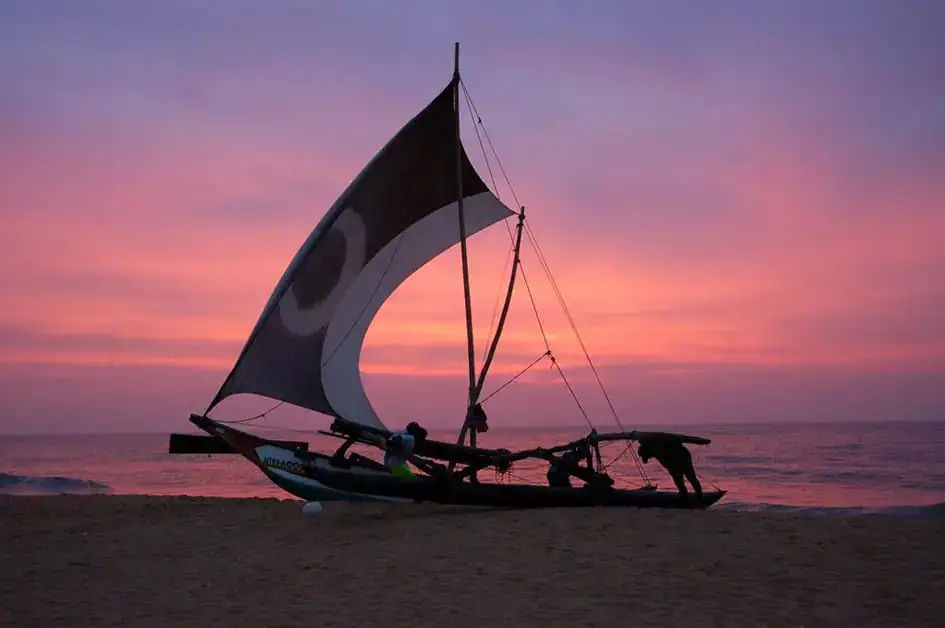
Traditional Fishing Boat and Sunset – negombo Beach (Photo: e y e / s e e, CC BY-NC-ND 2.0)
Negombo earns a place on this list because of its location and convenience.
The town lies close to Bandaranaike International Airport. This makes Negombo useful after a long international flight or before an early departure.
Instead of landing and starting a long road journey, families can check in, eat, swim, sleep, and begin the main trip the next morning.
Negombo also introduces visitors to coastal Sri Lankan life. The lagoon, fishing industry, canals, churches, markets, and beach provide enough for a gentle first day.
Many organised routes use Negombo in the same way. Most family itineraries start there before moving towards Dambulla and Sigiriya.
One night suits most families.
Best for: Arrival nights, departure nights, and families recovering from long flights.
Family tip: Resist the urge to fill arrival day with sightseeing. Rest first.
13. Hikkaduwa: Best for Marine Experiences on the Southwest Coast
Hikkaduwa combines beach tourism with reef and marine experiences.
Families come for swimming, snorkelling, surfing, and the chance to see marine life. Older children and teenagers often appreciate the wider range of activities.
Hikkaduwa also sits within easy reach of Galle. You don’t need to stay in both places. A family based around Galle or Unawatuna might visit Hikkaduwa for the day.
Protecting marine life matters. Never stand on coral. Do not chase or touch turtles. Avoid feeding wild animals for photographs.
Surfing suits older children with suitable swimming skills. Use an experienced instructor and judge each session against current conditions.
Two or three nights work if Hikkaduwa becomes your main beach base.
Best for: Older children, teenagers, snorkelling, surfing, and marine life.
Family tip: Ask about current sea conditions before choosing where children swim.
14. Trincomalee, Nilaveli, and Uppuveli: Best East Coast Family Beach Destination
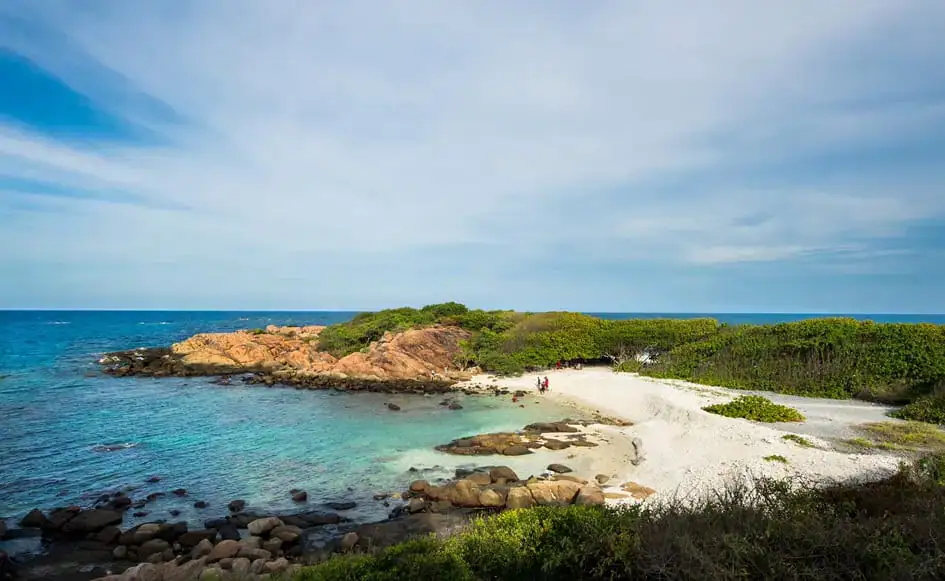
Pigeon Island National Park – Nilaveli (Photo: Chiranmayu Medis, CC BY-SA 4.0)
The South Coast does not always offer the best beach conditions.
During the east-coast season, Trincomalee, Nilaveli, and Uppuveli become strong alternatives.
Nilaveli offers a long sandy coast north of Trincomalee. Uppuveli sits closer to the city and has plenty of accommodation and dining choices.
Families also get access to Trincomalee’s cultural and historic attractions. This makes the area more useful than a beach-only stop.
Pigeon Island attracts families interested in snorkelling and marine life. Follow national park rules and protect the reef. Never stand on coral or chase marine animals.
The main issue is route design. Trincomalee lies away from the classic south-coast circuit. Hence, the destination works best when your season and wider itinerary support an east-coast stay.
Three to five nights make the longer journey worthwhile.
Best for: Families travelling during the east-coast beach season.
Family tip: Choose Sri Lanka’s coast by travel month rather than by beach photos alone.
15. Colombo: Best for a Short Urban Finish
Colombo shows families modern urban Sri Lanka after days of ancient cities, mountains, wildlife, and beaches.
The city offers parks, museums, markets, restaurants, shopping, religious sites, and coastal spaces. Families interested in Sri Lankan food also get a broad choice of places to eat.
Colombo works especially well on the final day. Families have time for a meal, shopping, or a short city outing before heading towards the airport.
Do not feel obliged to add several days. For most first-time family routes, one night is enough unless city experiences are an important part of your plans.
Best for: Food, shopping, museums, and a final overnight stay.
Family tip: Keep the final day light. Children face a long flight soon after.
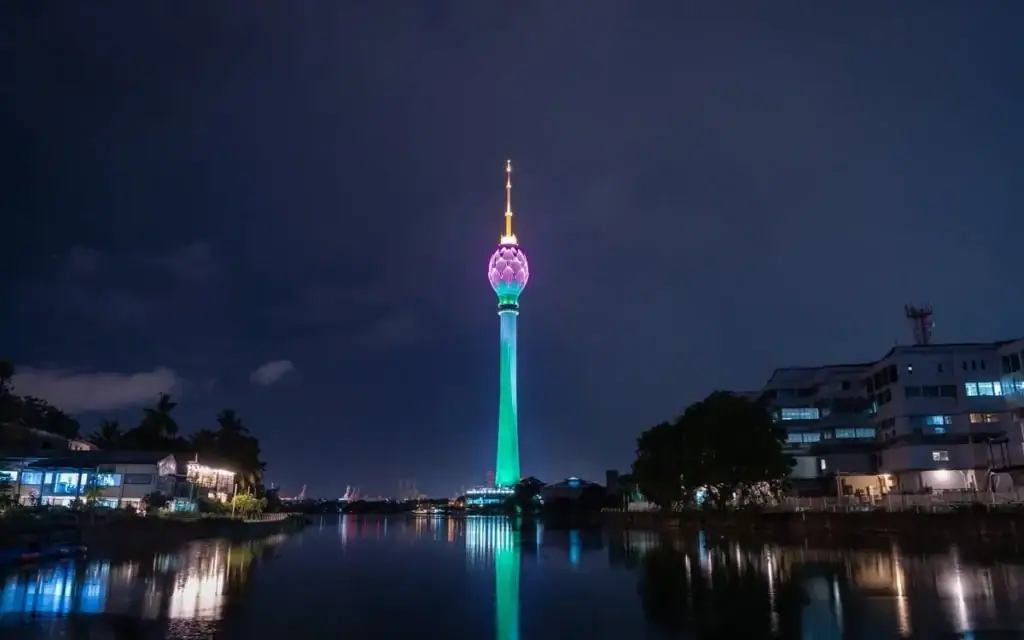
The Lotus Tower – Colombo (Photo: Thilina Alagiyawanna, via Pexels)
Choosing Family Destinations in Sri Lanka by Child Age
Age changes the type of holiday your family will enjoy.
Families with toddlers and preschoolers often benefit from fewer hotel changes. Negombo, Bentota, Galle, Unawatuna, and Kandy work well because parents can easily access simple outings and comfortable accommodation. Udawalawe also suits young animal lovers if they can handle a jeep ride.
Children aged six to twelve have more options. Sigiriya gives them a physical goal. Udawalawe brings wild elephants. Kandy adds culture. Ella adds trains and short walks. A beach stay then gives everyone time to recover.
Teenagers have the broadest activity range. Add cycling in Polonnaruwa, hiking around Ella, surfing in Weligama, snorkelling around Hikkaduwa or Pigeon Island, and a wildlife safari.
Let older children help choose part of the route. Ask each person to pick one or two experiences. This simple step helps children feel more connected to the family holiday.
Best Places for Different Family Interests
Wildlife-focused families should put Udawalawe near the top of the list. Yala suits older children who want a broader safari and hope to see a leopard. Minneriya or Kaudulla fits neatly into a Cultural Triangle stay.
Beach-focused families have several choices. Bentota offers resort convenience. Unawatuna pairs well with Galle. Mirissa and Weligama add surfing and other activities. Hikkaduwa brings marine experiences. Nilaveli gives east-coast travellers a strong beach base.
For culture, combine Sigiriya and Dambulla with Kandy. Add Polonnaruwa if your children enjoy history. Galle provides a different style of heritage near the coast.
Active families should look at Ella, Sigiriya, Polonnaruwa, Weligama, and Hikkaduwa.
Families seeking a slower holiday should choose fewer places. Sigiriya, Kandy, Udawalawe, and one suitable beach base already provide culture, wildlife, and coast without constant packing.
Best Time for a Family Holiday in Sri Lanka
Sri Lanka does not have one simple beach season for the whole island. Your route should reflect regional weather patterns.
December to March works well for many classic first-time routes. The Cultural Triangle, Kandy, Hill Country, wildlife areas, and South or Southwest Coast fit together well. Bentota, Galle, Unawatuna, Mirissa, and Weligama are natural beach choices during this period.
April is a transition month. Cultural sites, Kandy, tea country, wildlife, and the Southern Coast still offer plenty of options. Heat becomes more intense around Sigiriya and Polonnaruwa, so early starts help.
From May to September, look east for the beach section. Trincomalee, Nilaveli, and Uppuveli fit well with Sigiriya, Dambulla, Polonnaruwa, and Kandy.
October and November bring less predictable inter-monsoon conditions. Keep beach plans flexible and build the trip around culture, food, wildlife, and inland experiences as well.
Weather never follows an exact calendar. Check conditions close to your travel dates.
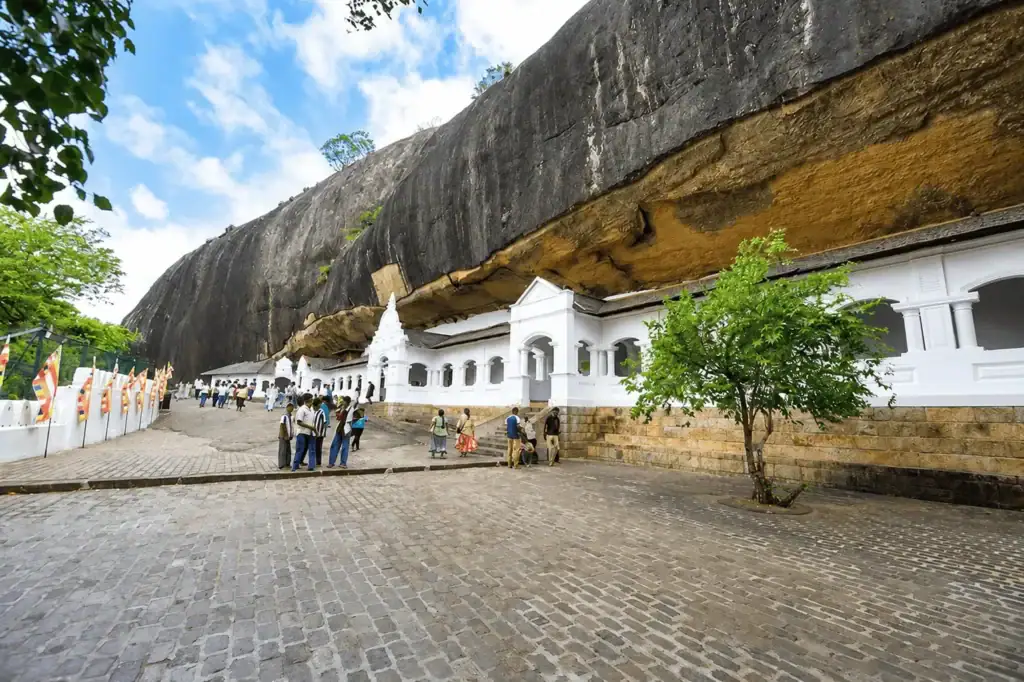
Dambulla Cave Temple (Photo: Nalaka Priyantha)
How Many Days Do Families Need in Sri Lanka?
Seven days require a focused route. Pick three or four main areas rather than trying to cross the whole island.
Ten to twelve days give you more freedom. A Cultural Triangle stay, Kandy, Hill Country, safari, and beach stop become easier to combine.
Fourteen days offer a strong balance for a first family trip to Sri Lanka. Two-night stays become easier, and children spend less of the holiday packing.
Three weeks suit slow travel. Add longer beach stays, smaller towns, extra nature stops, or more rest days.
A Practical 14-Day Family Tour in Sri Lanka
Day 1: Negombo. Rest after your flight.
Days 2 to 4: Sigiriya, Dambulla, and Habarana. Visit the cave temple and Sigiriya. Add Minneriya or Kaudulla if your family wants an elephant safari here.
Days 5 and 6: Visit the Temple of the Tooth in Kandy and the Royal Botanic Gardens in Peradeniya. Add a cultural or food experience.
Day 7: Nuwara Eliya. Enter tea country and enjoy a slower afternoon.
Days 8 and 9: Ella. Take the scenic train and choose one or two easy outdoor activities.
Day 10: Udawalawe. Take a wildlife safari.
Days 11 and 12: Mirissa or Weligama. Rest beside the coast. Add surfing or another suitable activity.
Day 13: Galle and Unawatuna. Walk around Galle Fort and enjoy your final coastal day.
Day 14: Colombo or airport. Keep the final transfer simple.
This route works because the experiences change as you travel. Ancient sites lead into living culture. Mountains follow. Wildlife comes next. The beach gives the family a slower finish.
If you travel during the east-coast season, redesign the beach section around Trincomalee, Nilaveli, or Uppuveli rather than forcing the southern route.
Getting Around Sri Lanka with Children
A private vehicle with a driver offers one of the easiest ways to manage a multi-stop family trip. Parents control departure times and stop when children need food, toilets, or a break.
Use the railway for selected journeys. The Hill Country train offers an experience, not just transport between two places. Reserve seats ahead where possible.
Tuk-tuks work well for short local trips.
Do not judge road travel by distance alone. Hills, towns, traffic, and road conditions add time. Avoid planning a long drive followed by a demanding attraction.
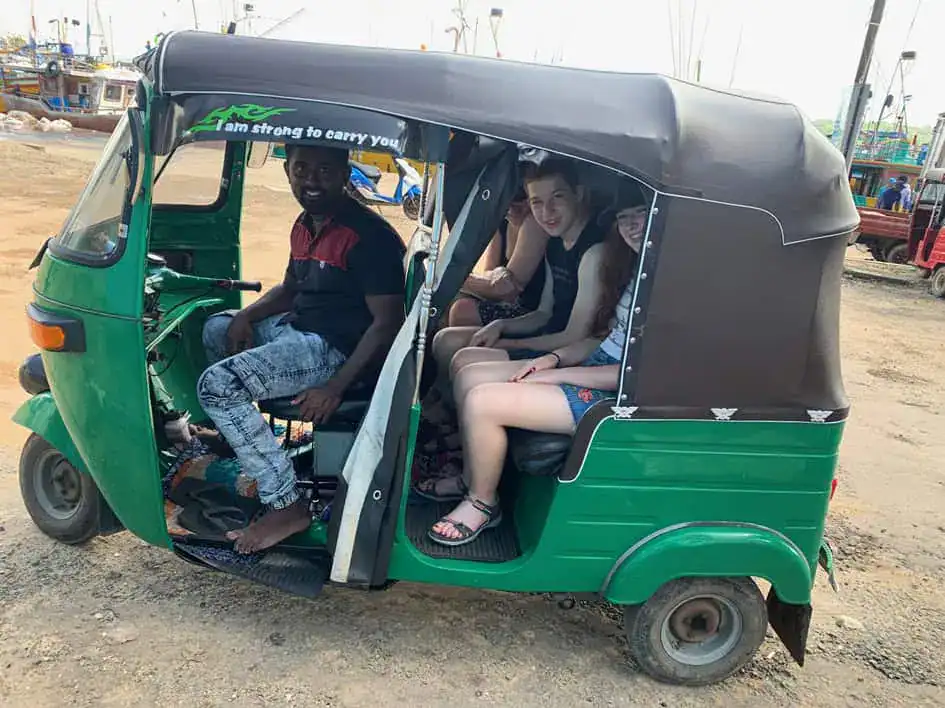
A tuk-tuk ride with kids – Mirissa (Photo: Phil Whitehouse, CC BY 2.0)
Where to Stay with Children
Choose accommodation around your family’s needs, not star ratings alone.
Family rooms and connecting rooms help parents travelling with older children. Confirm the exact bed arrangement before booking.
A pool adds value in hot inland areas such as Sigiriya. Beach hotels make sense when you want several slower days at the end.
Location also matters. A cheaper hotel far from restaurants and attractions often creates extra travel.
Try to keep the same room for two or three nights whenever your route allows. Fewer check-ins mean more time for the holiday.
Sri Lankan Food with Children
Sri Lankan food gives families plenty of simple choices.
Rice, dhal, hoppers, string hoppers, roti, eggs, fruit, and mild vegetable dishes work well for children who do not enjoy strong chilli.
Ask for mild food when ordering. Tourist areas also have international dishes when children want something familiar.
Food experiences add value to a family trip. Visit a market, try hoppers for breakfast, join a cooking class, or let each child choose a new tropical fruit.
Encourage tasting without turning every meal into a challenge.
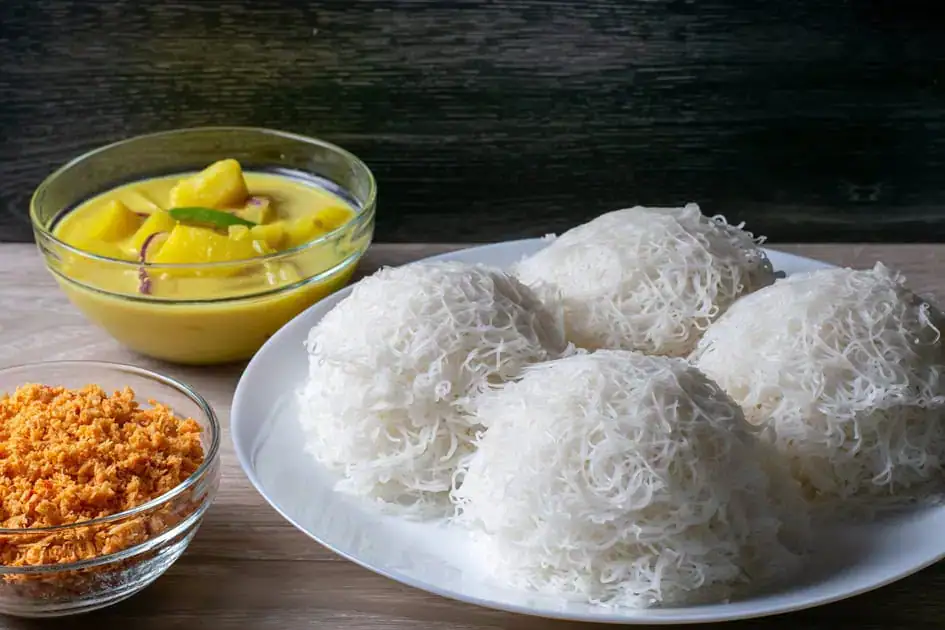
String Hoppers with Pol (Coconut) Sambol and Potato Curry (Photo: Kavinda F, via Pixabay)
Family Safety in Sri Lanka
Simple planning deals with many family safety concerns.
Choose reliable transport and use seat belts where available. Ask about suitable child seating before arrival if you travel with young children.
Heat needs attention. Carry drinking water, hats, and sun protection. Visit exposed cultural sites early.
Use mosquito repellent and bring regular medicines from home.
Take extra care beside the sea. Currents change between beaches and seasons. Follow local warnings and never assume calm-looking water is safe.
Wild animals need distance. Do not feed monkeys. Never approach elephants on roads. Follow park rules during safaris.
Suitable travel insurance also belongs in your pre-departure planning.
Responsible Family Travel
Sri Lanka gives parents a useful chance to teach children about responsible tourism.
Keep distance from wildlife. Never encourage a safari driver to chase animals for photographs.
Do not touch turtles or coral. Never feed wild animals to bring them closer.
Reduce disposable plastic where practical. Use refill options from trusted sources.
Respect temples and religious landmarks. Wear suitable clothing, remove footwear where required, and keep voices low around worshippers.
Choose responsible guides and local businesses. Children learn from how adults behave while travelling.
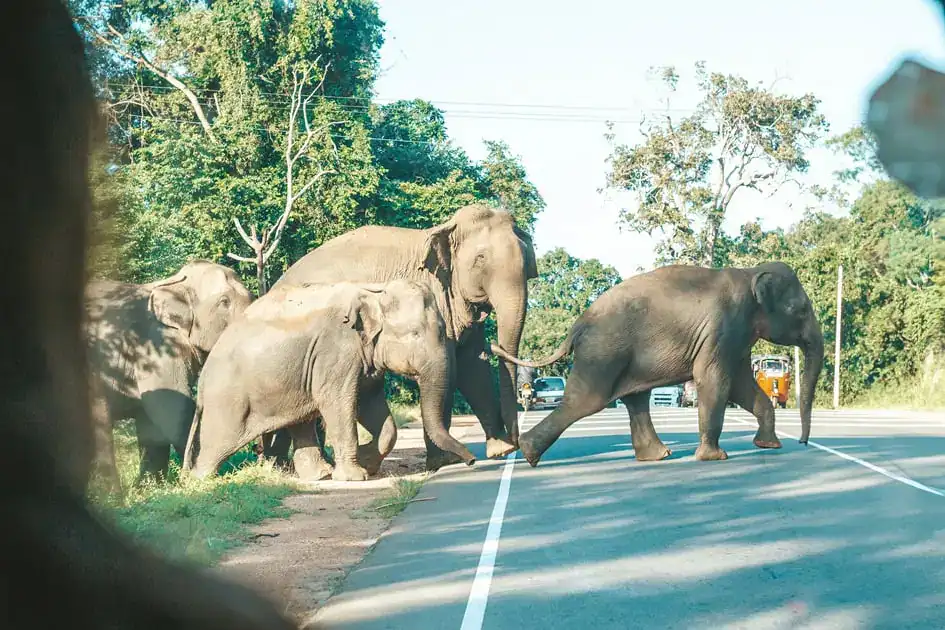
Elephants Crossing the Road in Dambulla: Always Keep a Safe Distance from Wild Animals. (Photo: Filiz Elaerts on Unsplash)
What to Pack for Your Family Trip
Pack light clothing for the lowlands and coast. Add warmer layers for Nuwara Eliya and cool Hill Country mornings.
Bring comfortable walking shoes for Sigiriya, Ella, and ancient cities. Pack sandals for easier days.
Sun hats, sunscreen, mosquito repellent, swimwear, rain protection, reusable water bottles, medicines, and a small first-aid kit cover most daily needs.
Bring clothing suitable for temples. Shoulders and knees need coverage at religious sites.
Keep snacks in your day bag during long transfers, especially when travelling with younger children.
Common Family Travel Mistakes
The biggest mistake is trying to see too much.
Changing hotels every night means packing, driving, checking in, and unpacking again. Children lose rest time while parents spend more time managing luggage.
Another mistake is underestimating road journeys. Keep long transfer days simple.
Do not choose your beach before checking the season. Sri Lanka’s East and Southwest Coasts follow different weather patterns.
Avoid booking too many safaris. One or two good wildlife experiences often give children more value than repeated jeep trips.
Don’t schedule demanding activities on consecutive days. Follow a climb or long sightseeing day with something easier.
Most importantly, leave free time. Children do not measure a holiday by how many attractions their parents completed.
Frequently Asked Questions About a Family Trip to Sri Lanka
Is Sri Lanka a good country for a family holiday?
Yes. Sri Lanka offers culture, wildlife, beaches, train travel, nature, food, and outdoor activities within a relatively compact country. Good route planning keeps travel days manageable.
How many days are enough for a family trip to Sri Lanka?
Ten to fourteen days work well for many first-time visitors. Fourteen days allow more two-night stays and a slower pace.
Which part of Sri Lanka is best for families?
The answer depends on your interests. Sigiriya and Dambulla suit culture and adventure. Udawalawe suits wildlife. Ella suits active families. Galle and the coast combine heritage with beach time.
What is the best family beach in Sri Lanka?
Bentota works well for resort stays. Unawatuna pairs with Galle. Mirissa and Weligama offer more activities. Nilaveli provides a strong east-coast option during the right season.
Is Sigiriya suitable for children?
Many school-age children enjoy the climb. Parents should consider fitness, heat, stairs, height, and each child’s confidence. Start early and take breaks.
Which safari is better for families, Yala or Udawalawe?
Choose Udawalawe when elephants are the main priority. Choose Yala for a wider wildlife experience and the chance to see a leopard. Neither park guarantees sightings.
Is the Kandy to Ella train suitable for children?
The Hill Country railway works well for many families. Reserved seating makes the journey easier. Bring water, snacks, and a light layer.
What is the best time for a family holiday in Sri Lanka?
December to March fits many routes using the South and Southwest Coast. May to September gives east-coast destinations greater appeal. Your exact route matters more than choosing one month for the whole island.
Is Sri Lankan food suitable for children?
Yes. Rice, dhal, roti, hoppers, string hoppers, eggs, fruit, and mild vegetable dishes offer simple choices. Ask for less chilli where needed.
Does a family need a private driver?
No. A private vehicle makes multi-stop travel easier, especially with younger children and luggage. Trains and tuk-tuks still add useful local experiences.
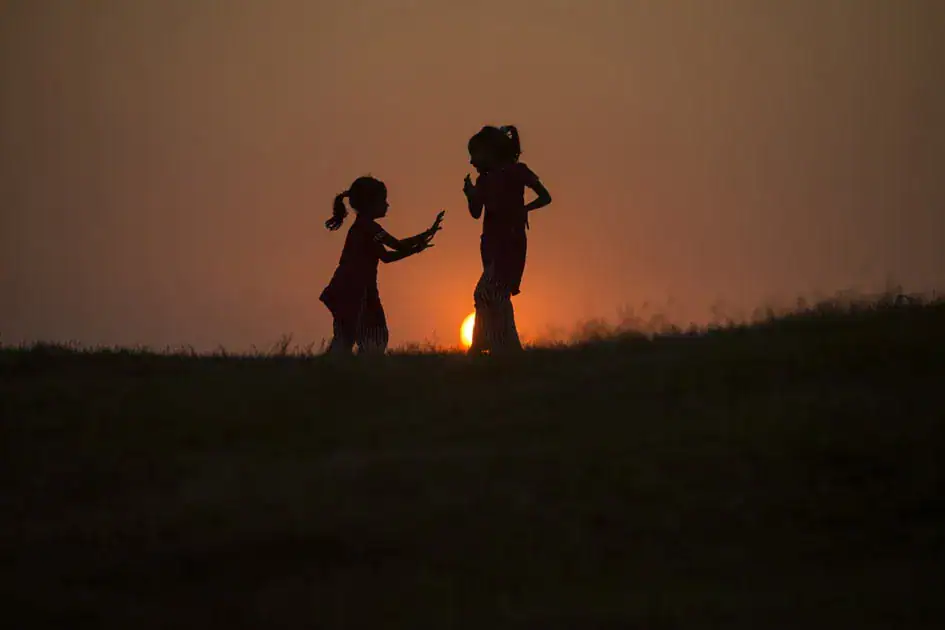
Playing Kids and Sunset – Galle Fort (Photo: Brett Davies, CC BY-NC-SA 2.0)
Are you visiting Sri Lanka for the first time? We recommend reading about the best travel itineraries for your travel season and our ultimate travel guide for first-time visitors.
Final Thoughts
The best family destinations in Sri Lanka give children and adults different ways to enjoy the same journey.
Sigiriya and Dambulla mix history with adventure. Kandy adds living culture. Ella brings mountain railways and walks. Udawalawe and Yala bring families close to wild animals. Galle adds heritage without another demanding sightseeing day. The coast gives everyone time to slow down.
You do not need all 15 destinations for a great family holiday in Sri Lanka.
For a first visit, choose four or five main bases. Stay for two or three nights where possible. Add one strong wildlife experience. Include the Hill Country if your schedule allows. Finish with beach time on the coast best suited to your travel season.
A good family tour in Sri Lanka also leaves gaps in the schedule. Children need time to swim, eat, sleep, and enjoy ordinary moments between major attractions.
Choose your route around your children’s ages, interests, and energy levels. Match your beach stay to the season. Keep travel days realistic.
Those choices matter more than ticking every famous place off a list.
Which experience would your family choose first: climbing Sigiriya, watching elephants in the wild, riding through tea country by train, or spending a few slow days beside the Indian Ocean?
Sources and References:
- Sri Lanka Tourism Development Authority (SLTDA). Annual Statistical Report / Year in Review 2024. Tourism statistics, visitor numbers, cultural attractions, national parks, wildlife tourism, and foreign visitor trends.
- Sri Lanka Tourism Development Authority (SLTDA) and UN Tourism. Sri Lanka Visitor Management Final Report, 2025. Visitor patterns and destination research for major attractions, including Sigiriya and Polonnaruwa. The report records more than 1.1 million visitors to Sigiriya in 2024, with foreign visitors accounting for 45.3 per cent.
- Sri Lanka Tourism Development Authority (SLTDA). Annual Reports. Official tourism development reports and supporting tourism information.
- Sri Lanka Tourism, Official Tourism Website. Cultural Heritage. Information on Sigiriya, Polonnaruwa, Dambulla, Kandy, Galle, and Sri Lanka’s UNESCO-listed cultural heritage.
- Sri Lanka Tourism, Official Tourism Website. Sigiriya Rock Fortress and City. Historical information, World Heritage status, architecture, water gardens, and the 200-metre-high rock.
- Sri Lanka Tourism, Official Tourism Website. Dambulla Cave Temple. Information on the cave complex, Buddhist paintings, statues, history, and visitor access.
- Sri Lanka Tourism, Official Tourism Website. Heritage Sri Lanka. Suggested heritage routes covering Kandy, Dambulla, Sigiriya, Polonnaruwa, botanical gardens, cultural experiences, bird watching, and elephant safaris.
Featured image: The view of Sigiriya Rock Fortress from Pidurangala (Photo: Phil Whitehouse, CC BY 2.0)

I am a Sri Lankan medical doctor who spends my free time travelling, exploring new destinations, and documenting the beauty of the island I call home. I have journeyed across almost every corner of Sri Lanka with my wife and daughter — from wildlife parks and misty mountains to ancient cities, deep forests, rugged landscapes, and quiet beaches.
Travel is not just a hobby for me — it’s a way of life. I love nature, enjoy road trips, and find joy in wildlife photography. I also read widely about tourism, travel trends, and destination culture. Through my writing, I aim to help travellers experience Sri Lanka through real stories, meaningful insights, and honest recommendations — the same way I explore it with my own family.