

Introduction: Why This 3-Week Sri Lanka Itinerary Works So Well
A 3-week Sri Lanka itinerary gives you something shorter trips often lack. Time. You have enough days to explore ancient capitals without rushing, spend several nights among tea estates, stop in smaller hill towns, watch wildlife & nature, and finish with a slow journey along the South Coast.
December to March suits this route well. The journey focuses on the South, Southwest, West, Cultural Triangle, and central highlands. Sri Lanka Tourism describes December to February as the Northeast Monsoon period. March then moves into the first inter-monsoon, when warmer conditions and afternoon showers become more common. The central highlands are also relatively cool and dry from January to April.
The route starts near Bandaranaike International Airport and heads north to Anuradhapura. From there, you cross the Cultural Triangle before turning south towards Kandy. The journey then slows across Nuwara Eliya, Haputale, and Ella. After the highlands, you descend towards Udawalawe and continue to the South Coast. Hiriketiya, Mirissa or Weligama, and Galle form the final coastal section.
Three weeks also gives you room to make choices. You do not need to squeeze every famous place into one crowded day. You have time for a long lunch, a tea-estate walk, a quiet beach morning, or an extra stop beside an ancient reservoir. Alternatives such as Yala National Park and Adam’s Peak also fit without breaking the flow of the route.
This Sri Lanka travel itinerary from December to March suits travellers who value depth over speed. You still see many of the island’s best-known places. You also spend enough time in each region to notice how the scenery, food, climate, history, and daily life change as you travel.
Clear Overview of the 3-Week Sri Lanka Itinerary
Title: 3-Week Sri Lanka Itinerary: The Grand Tour for December to March
Destination: Sri Lanka
Total duration: 21 days and 20 nights
Route: Negombo, Anuradhapura, Sigiriya or Habarana, Polonnaruwa, Dambulla, Kandy, Nuwara Eliya, Haputale, Ella, Udawalawe, Hiriketiya or Dikwella, Mirissa or Weligama, Galle or Unawatuna, Bandaranaike International Airport
Theme: Slow travel, culture, heritage, tea country, nature, wildlife, local food, smaller towns, and South Coast beaches
Pace: Moderate and relaxed
Best season: December to March
Main transport: Private car with a driver, selected Hill Country train journeys, tuk-tuks for short local trips, and walking where suitable.
The route also covers several UNESCO World Heritage Sites, including Anuradhapura, Polonnaruwa, Sigiriya, Kandy, Dambulla, and Galle.
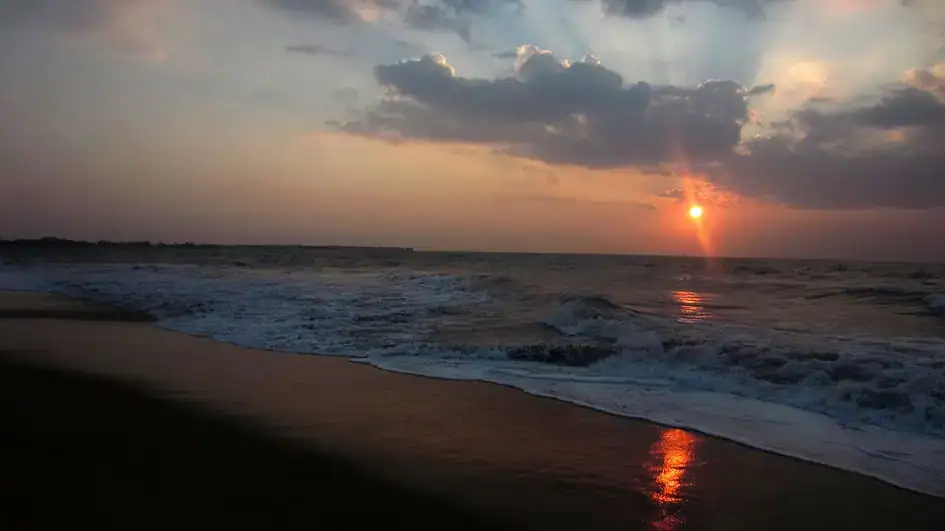
Sunset View – Negombo Beach (Photo: Megan, CC BY-NC-ND 2.0)
What This Itinerary Covers
The first week focuses on Sri Lanka’s ancient history. You spend two nights in Anuradhapura and three nights around Sigiriya or Habarana. This slower structure gives Anuradhapura, Sigiriya, Polonnaruwa, and Dambulla enough time without turning the Cultural Triangle into a rapid series of archaeological stops.
The next stage moves into Kandy and the tea-growing highlands. Instead of travelling straight from Kandy to Ella, you stay in Nuwara Eliya and Haputale first. This section brings cooler weather, working tea estates, cloud forests, mountain railways, waterfalls, and smaller towns into the journey.
Wildlife follows the Hill Country. Udawalawe is the main safari stop because it sits naturally between Ella and the South Coast. Yala remains a strong alternative for travellers whose main safari goal is leopard viewing.
The final stage slows down again. You follow the South Coast west through Hiriketiya or Dikwella, Mirissa or Weligama, and Galle or Unawatuna. Several coastal nights give you time to swim, surf, eat seafood, join a whale-watching trip, or spend an afternoon doing little.
Why December to March Suits This Route
Sri Lanka’s weather varies between regions because different monsoon systems affect different parts of the island. A route planned for January should therefore differ from one planned for July.
Sri Lanka Tourism places December to February within the Northeast Monsoon season. March begins the first inter-monsoon, a warmer period with afternoon thunderstorms in parts of the country. Official tourism guidance also describes the central highlands as pleasantly cool and relatively dry from January to April.
Tourism figures show how popular this period has become. Those numbers matter when you book accommodation, trains, and wildlife safaris. South Coast hotels, reserved Hill Country train seats, and well-rated wildlife lodges face heavier demand during the peak winter travel period.
December to March also overlaps with the South Coast whale-watching season. Sri Lanka Tourism lists November to April as the main whale and dolphin watching period around Mirissa.
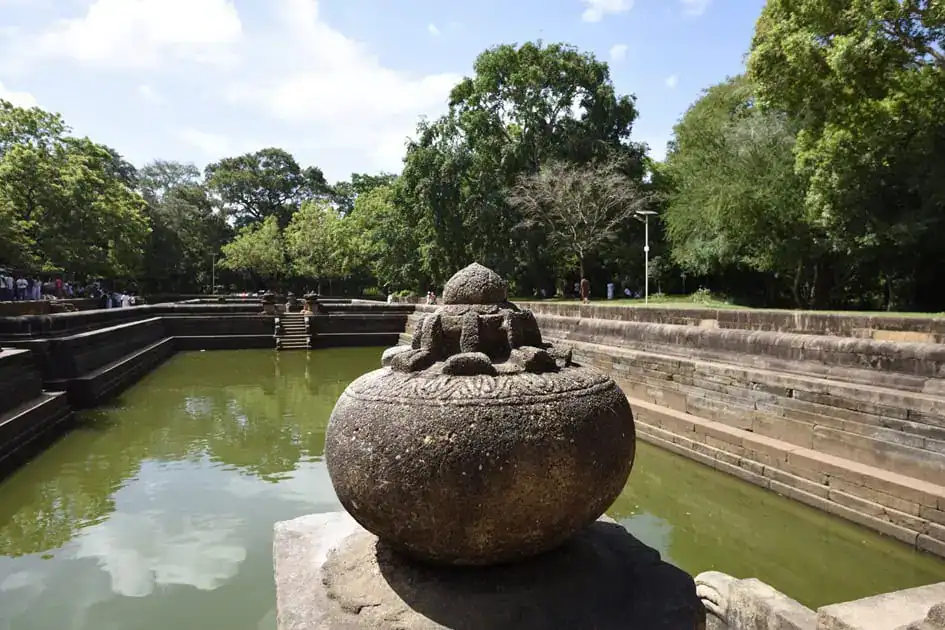
Kuttam Pokuna (Twin Pond) – Anuradhapura (Photo: Nalaka Priyantha)
Who This Route Suits Best
This Sri Lanka 3 week itinerary suits first-time visitors who want more than a fast highlights tour. Couples, solo travellers, photographers, food-focused visitors, active older travellers, nature lovers, and history enthusiasts all fit the route well.
The journey includes regular walking. Sigiriya involves many steps. Anuradhapura and Polonnaruwa spread across large archaeological areas. Horton Plains requires several hours on foot. Haputale rewards walkers who enjoy tea-country scenery. Ella adds shorter hikes.
Beach travellers also receive enough time near the end. Weligama suits many surfers. Hiriketiya offers a smaller bay and a compact coastal setting. Mirissa suits travellers interested in whale watching and beach time. Galle appeals to travellers drawn to history, architecture, cafés, and old streets.
Travellers with limited mobility should adjust Sigiriya, Horton Plains, Lipton’s Seat, and some Ella walks. The rest of the route still works with easier cultural, tea, wildlife, and scenic experiences.
Transport and Route Logic
Sri Lanka looks small on a map, yet road journeys often take longer than distance alone suggests. Town traffic, narrow roads, railway crossings, mountain bends, and roadside activity all affect journey times.
This route limits unnecessary backtracking. Negombo sits close to Bandaranaike International Airport, so your arrival day stays short. The next morning, you travel north towards Anuradhapura instead of heading south into Colombo and then returning north.
From Anuradhapura, the route continues towards Sigiriya or Habarana. One three-night base covers Sigiriya, Polonnaruwa, and nearby countryside. Dambulla then fits naturally on the road towards Kandy.
Kandy leads into the highlands. Nuwara Eliya comes first, followed by Haputale and Ella. This order gives tea country enough time and removes the pressure to treat one long train ride as the entire Hill Country experience.
After Ella, the road descends towards Udawalawe. The South Coast then unfolds in short westward stages through Hiriketiya, Mirissa or Weligama, and Galle.
For most travellers, a private car with a driver offers the easiest option for long inland transfers. Sri Lanka Tourism maintains a database of authorised guides, including chauffeur guides.
We recommend reading our guide about “Transport in Sri Lanka” and “Rent a Car in Sri Lanka: Complete Guide for Travellers“.
Trains suit selected Hill Country sections. Tuk-tuks work well for shorter journeys. Walking suits Galle Fort, central Ella, Kandy Lake, and several beach areas.
You can book your train tickets through the official portal of Online Advance Train Seat Reservation.
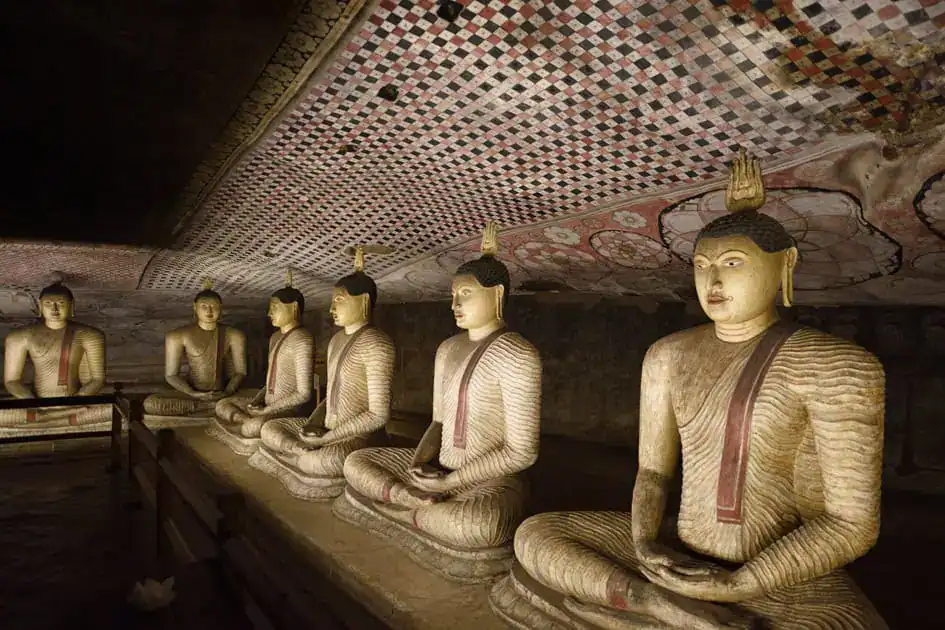
Buddha Statues and Murals – Dambulla Cave Temple (Photo: Nalaka Priyantha)
Route Snapshot by Day
- Day 1: Arrive in Negombo.
- Day 2: Travel to Anuradhapura.
- Day 3: Explore Anuradhapura.
- Day 4: Travel to Sigiriya or Habarana.
- Day 5: Explore Sigiriya Rock Fortress.
- Day 6: Visit Polonnaruwa, with an optional nature experience.
- Day 7: Visit Dambulla Cave Temple and continue to Kandy.
- Day 8: Explore Kandy.
- Day 9: Travel through tea country to Nuwara Eliya.
- Day 10: Visit Horton Plains or enjoy a slower day in Nuwara Eliya.
- Day 11: Travel to Haputale.
- Day 12: Visit Lipton’s Seat and Dambatenne tea country.
- Day 13: Travel from Haputale to Ella.
- Day 14: Explore Ella.
- Day 15: Travel to Udawalawe.
- Day 16: Join a safari and continue to Hiriketiya or Dikwella.
- Day 17: Enjoy a slow South Coast day.
- Day 18: Travel to Mirissa or Weligama.
- Day 19: Enjoy the coast, with whale watching or surfing as optional activities.
- Day 20: Travel to Galle or Unawatuna and explore Galle Fort.
- Day 21: Travel to Bandaranaike International Airport.
Approximate Road and Rail Times
Treat these times as planning ranges. Traffic, weather, road works, train delays, and sightseeing stops affect every journey.
- Negombo to Anuradhapura takes around 4 to 5 hours by road.
- Anuradhapura to Sigiriya or Habarana takes around 2 hours.
- Sigiriya or Habarana to Polonnaruwa takes around 1.5 to 2 hours each way.
- Sigiriya to Dambulla takes around 30 minutes.
- Dambulla to Kandy takes around 2 to 2.5 hours.
- Kandy to Nuwara Eliya takes around 3 to 4 hours by road without long stops.
- Nuwara Eliya to Haputale takes around 2 to 3 hours by road.
- Haputale to Ella takes around 1.5 to 2 hours by road.
- Ella to Udawalawe takes around 2.5 to 3 hours.
- Udawalawe to Hiriketiya takes around 2 to 2.5 hours.
- Hiriketiya to Mirissa or Weligama takes around 1 to 1.5 hours.
- Mirissa or Weligama to Galle takes around 1 hour.
- Galle to Bandaranaike International Airport often takes around 2.5 to 3 hours. Add a generous safety margin before an international flight.
Day by Day 3-Week Sri Lanka Itinerary
Day 1: Arrival in Negombo
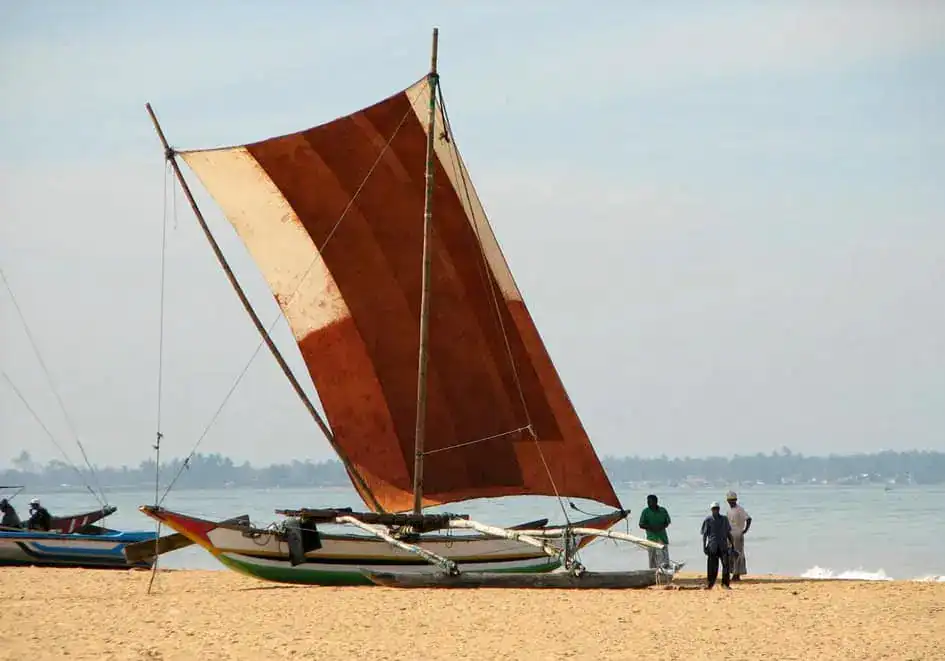
A Traditional Fishing Boat – Negombo (Photo: Bernard Gagnon, CC BY-SA 3.0)
Morning
Arrive at Bandaranaike International Airport, complete arrival formalities, and travel to Negombo.
Keep your first day simple. Long-haul flights, humidity, and time differences often leave travellers tired.
Afternoon
Check into your hotel and rest. Later, walk along the beach or through town. Fishing remains an important part of Negombo life, and boats, canals, churches, markets, and coastal neighbourhoods give the town a distinct character.
If you arrive early and still feel fresh, visit the lagoon area or walk near the Dutch Canal.
Evening
Watch sunset along the West Coast and enjoy an early dinner.
Where to Stay
A beachfront guesthouse, boutique hotel, or airport-area hotel works well. Convenience matters more than a long list of facilities on the first night.
Food Stop
Try fish ambul thiyal with rice, dhal curry, and coconut sambol. This dry, sour fish curry gives you a strong first taste of Sri Lankan cooking.
Practical Notes
Keep Sri Lankan rupees in smaller denominations for tuk-tuks, local shops, and casual food stops.
Day 2: Negombo to Anuradhapura
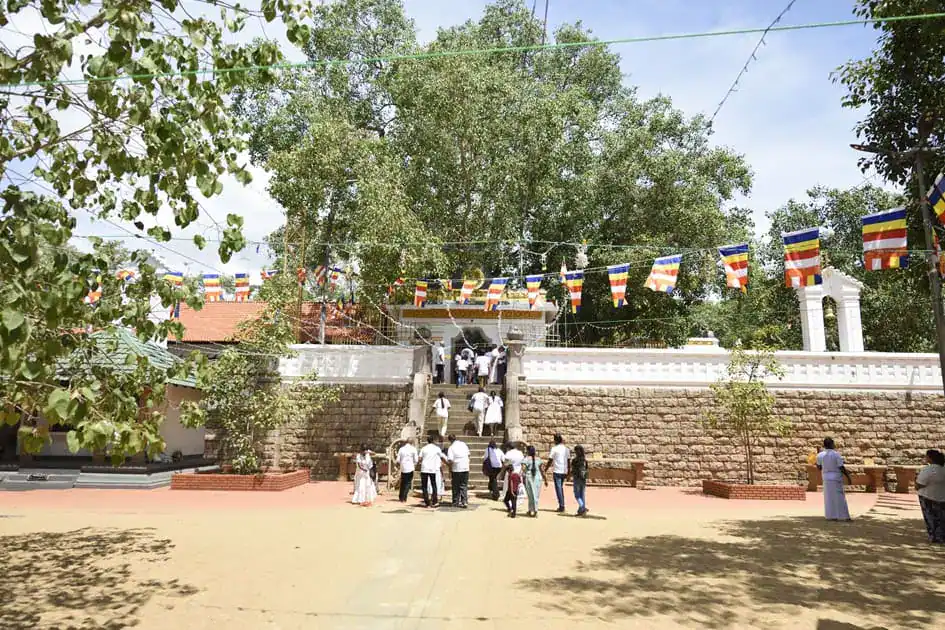
Sri Maha Bodhi Tree – Anuradhapura (Photo: Nalaka Priyantha)
Morning
Leave Negombo after breakfast and head north towards Anuradhapura.
The drive gradually leaves the busy western corridor. Coconut-growing areas give way to dry-zone countryside, reservoirs, farmland, and smaller towns.
Take one or two breaks instead of filling the transfer with extra attractions.
Afternoon
Check into your hotel and rest. Later, take a gentle trip around town or visit a nearby reservoir.
Save the main archaeological area for tomorrow.
Evening
Arrange a bicycle, tuk-tuk, driver, or local guide for the next day.
Where to Stay
Stay near the archaeological zone or central Anuradhapura. Garden guesthouses often offer good value. Larger properties around reservoirs suit travellers looking for quieter surroundings.
Food Stop
Try rice and curry with parippu, pumpkin curry, beetroot, mallung, coconut sambol, and fish or chicken.
Practical Notes
Anuradhapura feels hot during the middle of the day. Carry water, sunscreen, a hat, and modest clothing for religious sites.
Day 3: Explore the Sacred City of Anuradhapura
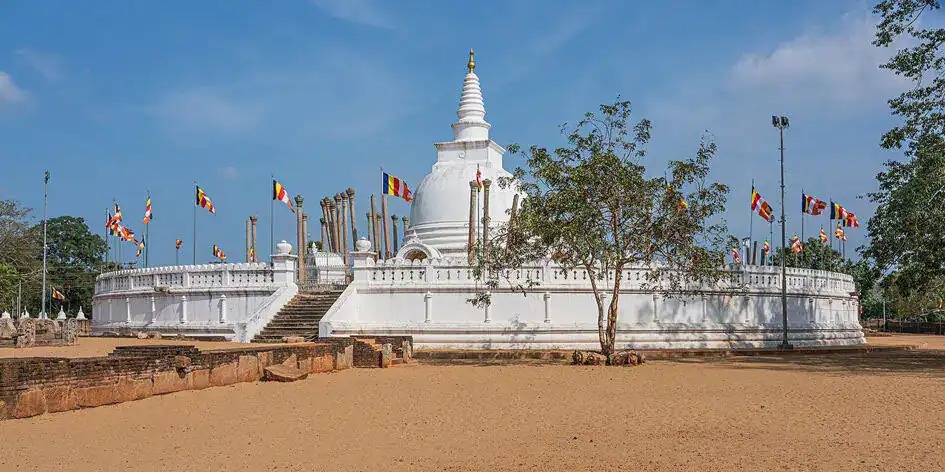
Thuparamaya – Anuradhapura (Photo: A. Savin)
Morning
Start early. Anuradhapura covers a huge area, so choose your transport based on fitness and weather.
Begin around Sri Maha Bodhi, Ruwanwelisaya, Thuparamaya, and the surrounding sacred sites. Many Sri Lankan visitors come for worship, so give devotees space and keep your voice low.
Do not rush. Reservoirs, monastic complexes, stupas, roads, and active religious spaces spread across a wide area.
Afternoon
Continue towards Abhayagiri and the northern section of the ancient city. Stop for lunch during the hottest hours if needed.
Late afternoon is a good time to visit a reservoir before returning to your hotel.
Evening
Keep the evening quiet. Tomorrow brings another transfer.
Where to Stay
Spend your second night in Anuradhapura.
Food Stop
Try kurakkan roti with dhal, coconut sambol, and vegetable curry.
Practical Notes
Remove shoes and hats where required. Temple paving becomes hot around midday, so socks often help.
Day 4: Anuradhapura to Sigiriya or Habarana
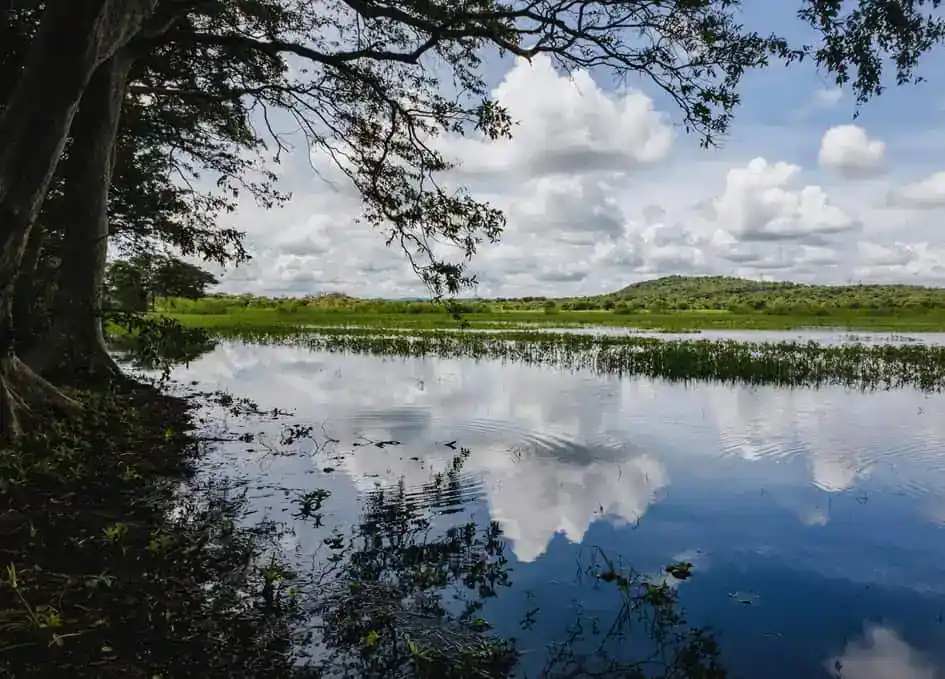
Habarana Lake (Photo: Chulani Iddawela, CC BY-SA 4.0)
Morning
Travel towards Sigiriya or Habarana after breakfast.
For the next three nights, use one base. This gives you enough time for Sigiriya, Polonnaruwa, rural scenery, and rest without constant packing.
Sigiriya suits travellers who want quick access to the rock fortress and a village setting. Habarana offers convenient road links to Polonnaruwa and nearby wildlife areas.
Afternoon
Check in, have lunch, and rest.
Later, explore nearby village roads, paddy fields, or reservoir areas. Fit travellers might visit Pidurangala for sunset. The upper section includes rough rock scrambling, so wear suitable shoes.
Pidurangala Rock opens at 5:00 am and closes at 6:00 pm daily.
Evening
Return early. Sigiriya deserves an early start tomorrow.
Where to Stay
Look for a guesthouse, eco lodge, boutique hotel, or nature-based property around Sigiriya or Habarana.
Food Stop
Try jackfruit curry with red rice, dhal, gotukola sambol, and coconut-based vegetables.
Practical Notes
Use mosquito repellent after sunset, especially around gardens, reservoirs, and forest-edge hotels.
Day 5: Sigiriya Rock Fortress
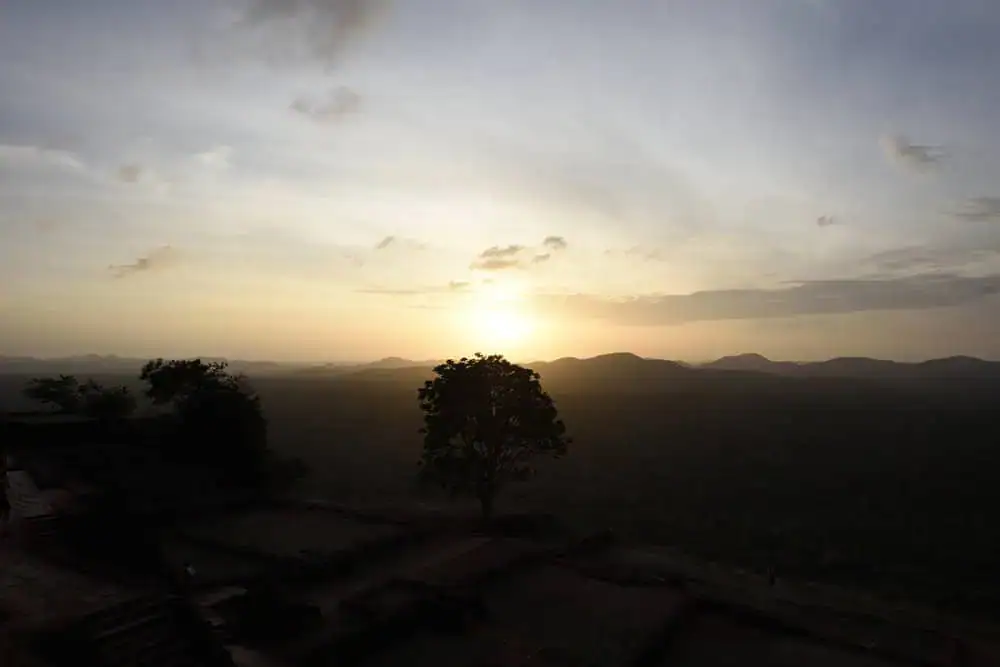
Sunrise from Sigiriya Rock (Photo: Nalaka Priyantha)
Morning
Reach Sigiriya early, before the strongest heat.
The complex includes water gardens, defensive structures, frescoes, the Lion Gate, the Mirror Wall, palace ruins, and wide views from the summit.
Spend time in the lower gardens before climbing. Many visitors head straight towards the rock and miss much of the site’s design.
The climb involves long stairways and exposed sections. Carry water and wear shoes with good grip.
Sigiriya is open daily from 5:00 am to 6:30 pm. The ticket counters are open daily from 5:00 am to 5:00 pm. The frescoes area will be closed at 5:45 pm.
Afternoon
Return to your hotel for lunch and rest.
There is no need to squeeze Dambulla into the same day. Spend the late afternoon exploring a village, at a reservoir, in a cooking class, or at a quiet viewpoint.
Evening
Stay close to your accommodation and prepare for Polonnaruwa.
Where to Stay
Remain in the same Sigiriya or Habarana property.
Food Stop
Try egg hoppers with lunu miris and dhal curry.
Practical Notes
Use official ticket channels or the site ticket office. Start early during the busiest winter months.
Day 6: Polonnaruwa and an Optional Nature Experience
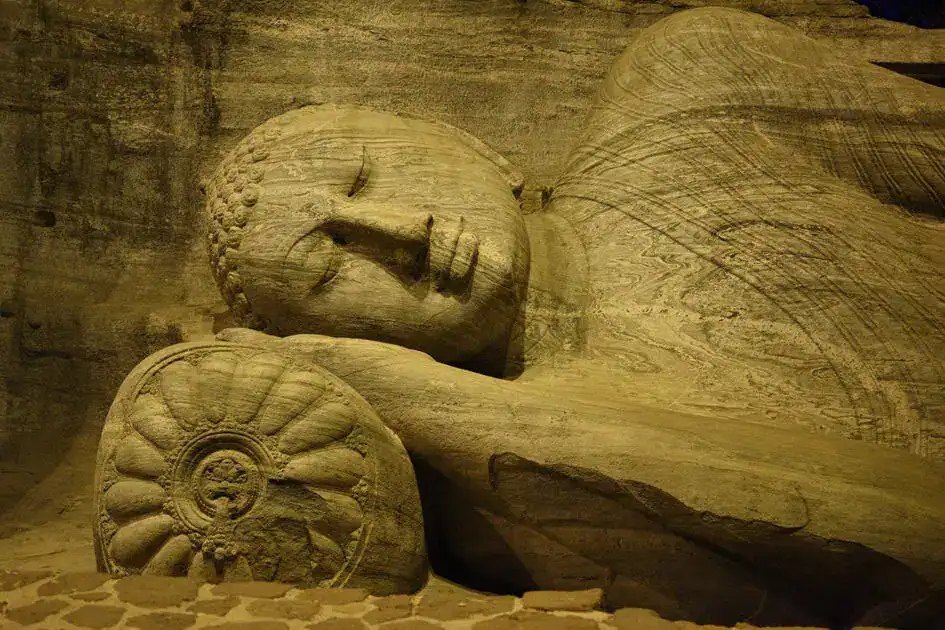
A Buddha Statue – Polonnaruwa Gal Viharaya (Photo: Nalaka Priyantha)
Morning
Travel to Polonnaruwa after breakfast.
The archaeological zone spreads across a large area. Bicycles suit active travellers. A tuk-tuk or car may feel more comfortable in the heat.
Focus on the Royal Palace area, Vatadage, Gal Vihara, Lankatilaka, and the wider monastic remains. Spend some time beside Parakrama Samudra before leaving.
Afternoon
Return towards Habarana or Sigiriya.
Wildlife-focused travellers might add a late-afternoon elephant safari. Ask a responsible operator where elephants are being seen during your stay. Herd movements shift between protected areas.
Travellers already planning Udawalawe have good reason to skip the second safari and enjoy a slower afternoon.
Evening
Return to your hotel.
Where to Stay
Spend the third night in Sigiriya or Habarana.
Food Stop
Try string hoppers with kiri hodi, dhal curry, and pol sambol.
Practical Notes
Polonnaruwa has large open areas with limited shade. Carry water and sun protection. Avoid posing for photographs with your back directly towards Buddha statues.
Day 7: Dambulla Cave Temple and Kandy
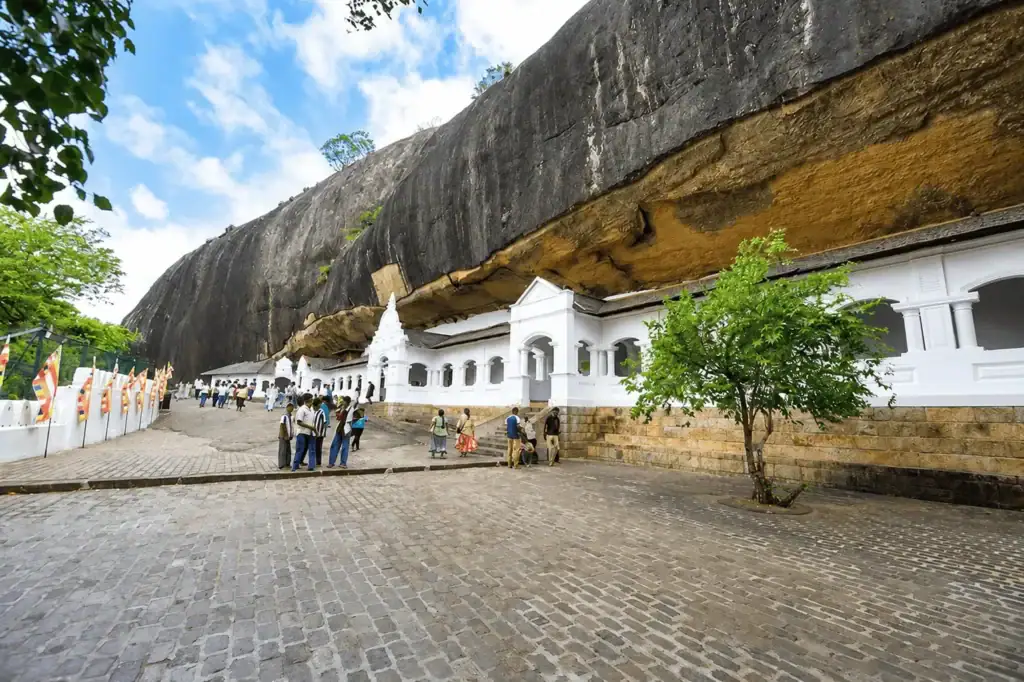
Dambulla Ancient Cave Temple (Photo: Nalaka Priyantha)
Morning
Check out and travel to Dambulla.
Climb to Rangiri Dambulla Cave Temple. Five main caves hold painted ceilings, Buddha images, shrines, and centuries of religious art.
Give yourself enough time for the climb and the caves. Keep food secured because monkeys frequent the temple area.
Dambulla Cave Temple is open daily from 7:00 am to 7:00 pm.
Afternoon
Have lunch and continue towards Kandy.
The scenery grows greener as the road enters the central hills. Check into your hotel and rest.
If you still have energy, take a short walk beside Kandy Lake.
Evening
Keep the evening easy after the transfer.
Where to Stay
Accommodation near Kandy Lake gives you easy access to central sights. Hillside hotels offer wider views but usually involve more tuk-tuk rides.
Food Stop
Try Kandyan-style rice and curry with jackfruit, mallung, dhal, and seasonal vegetables.
Practical Notes
Traffic slows around Kandy during busy periods. A central base saves time.
Day 8: Kandy and the Temple of the Sacred Tooth Relic
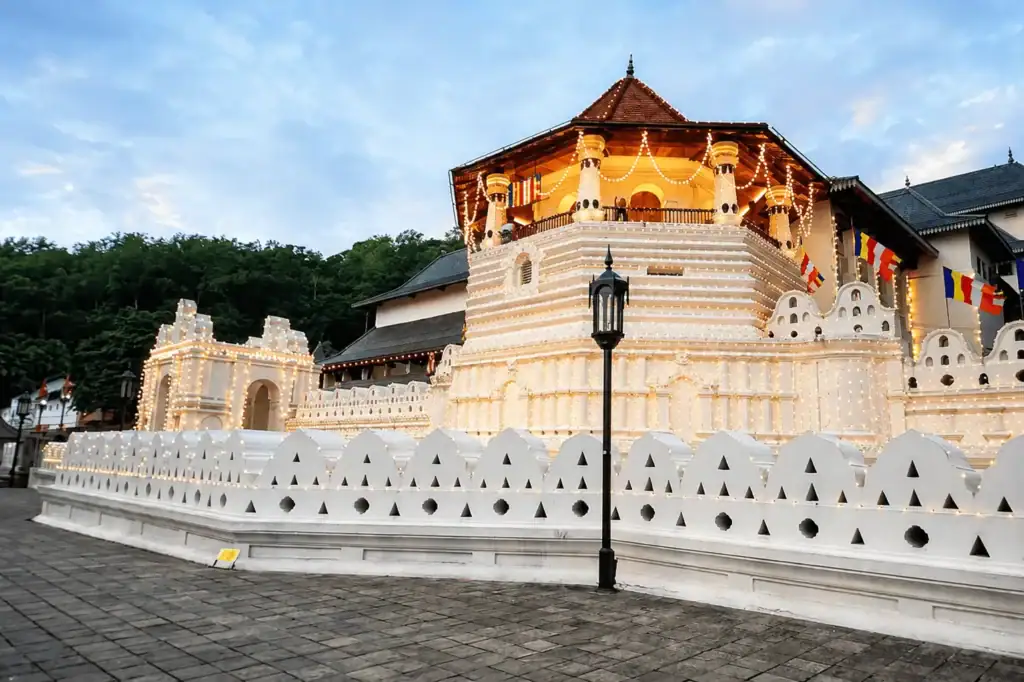
Temple of the Tooth – Kandy (Photo: Nalaka Priyantha)
Morning
Start at the Temple of the Tooth Relic in Kandy.
Visit early, before the city centre becomes busy. Morning worship brings devotees carrying flowers and offerings. Move quietly and respect active religious practices.
Spend time around the main temple buildings, courtyards, museum areas, and lakeside setting.
The opening hours of the Temple of the Tooth are between 5:30 am and 8:00 pm daily.
Afternoon
Travel to the Royal Botanic Gardens at Peradeniya. Walk through palm avenues, orchid collections, bamboo stands, lawns, and riverside sections.
Later, return to Kandy and visit the market or a tea shop.
Evening
Walk around Kandy Lake or attend a Kandyan cultural performance.
Where to Stay
Remain in the same Kandy hotel.
Food Stop
Try lamprais, a banana-leaf rice dish linked with Sri Lanka’s Burgher food traditions.
Practical Notes
Cover shoulders and knees at the temple. Remove shoes where required.
Day 9: Kandy to Nuwara Eliya Through Tea Country
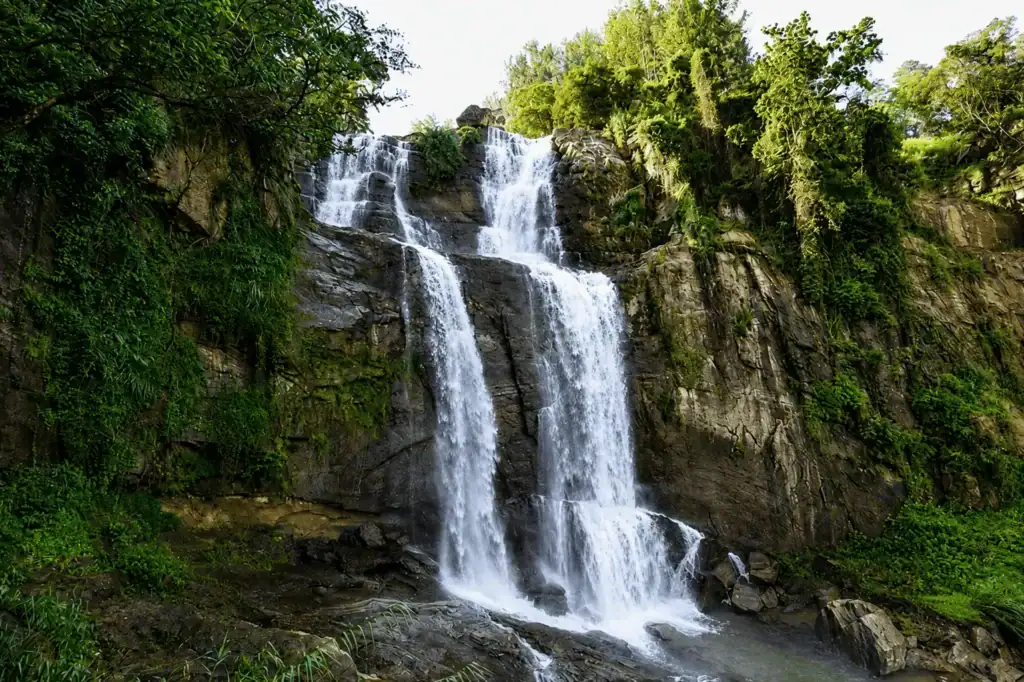
Ramboda Ella Falls – Nuwara Eliya (Photo: Nalaka Priyantha)
Morning
Leave Kandy after breakfast and climb towards Nuwara Eliya.
Road travel makes sense today because it gives you time for tea-estate and waterfall stops. Save a scenic train journey for the shorter highland sections ahead.
Visit a working tea estate and factory. A useful tour should explain plucking, withering, rolling, oxidation, drying, grading, and tasting.
Afternoon
Arrive in Nuwara Eliya and check in.
Walk through town, visit Victoria Park, or spend some time near Gregory Lake.
Evening
Temperatures often fall after sunset, so take a sweater or light jacket.
Where to Stay
Look for a small hotel, colonial-style guesthouse, tea bungalow, or lodge.
Food Stop
Try vegetable roti with a cup of Ceylon tea.
Practical Notes
Nuwara Eliya feels much cooler than the lowlands, especially early and late in the day.
Day 10: Horton Plains and World’s End
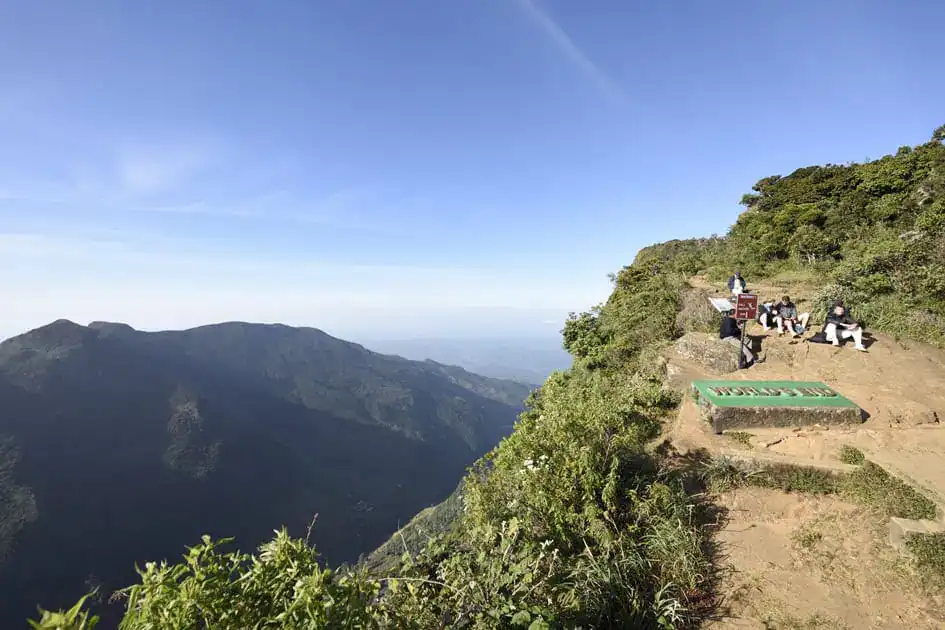
World’s End – Horton Plains National Park (Photo: Nalaka Priyantha)
Morning
Leave before sunrise for Horton Plains National Park.
An early start gives you a better chance of clear views before cloud gathers around World’s End.
The main walking circuit passes grassland, cloud forest, streams, Baker’s Falls, and World’s End. Allow several hours and wear shoes with good grip.
Horton Plains National Park is open daily from 6:00 am to 6:00 pm.
You can book tickets for Horton Plains National Park through the official Wildlife Park Permits Reservation eService.
Afternoon
Return to Nuwara Eliya for lunch and rest.
Travellers who prefer a lighter day should skip the hike. Instead, spend the day visiting a tea estate, Victoria Park, Gregory Lake, and nearby viewpoints.
Evening
Enjoy a quiet dinner.
Where to Stay
Remain in Nuwara Eliya.
Food Stop
Try string hoppers with kiri hodi, dhal curry, and coconut sambol.
Practical Notes
Take water and a light rain layer. Follow all waste and plastic restrictions inside the park.
Day 11: Nuwara Eliya to Haputale
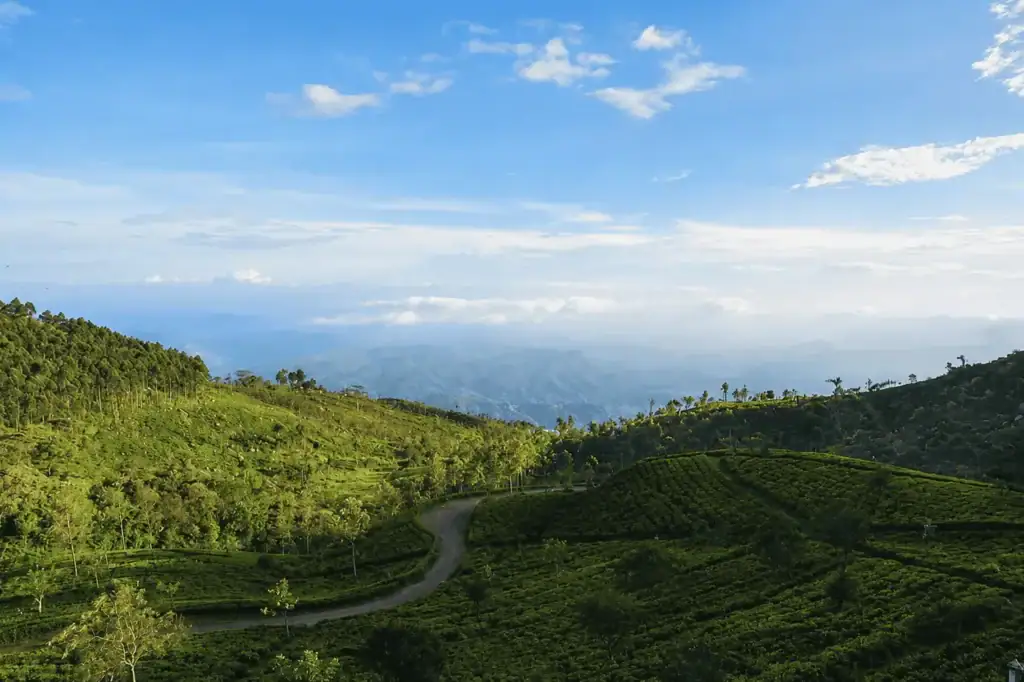
The View from Haputale (Photo: Nalaka Priyantha)
Morning
Travel to Haputale after breakfast.
For rail travel, transfer to Nanu Oya station and continue towards Haputale. The route passes tea fields, tunnels, small stations, forests, and steep valleys.
This shorter rail section gives you the Hill Country train experience without spending nearly a full day in transit.
Afternoon
Check into your accommodation and explore Haputale.
Walk through the centre, stop at a tea shop, or visit a nearby viewpoint. Haputale feels quieter and less tourism-focused than Ella.
Evening
Eat early and prepare for a sunrise visit to Lipton’s Seat.
Where to Stay
Choose a guesthouse or small hotel in Haputale or a nearby tea-country property.
Food Stop
Try roti with dhal, coconut sambol, and spicy onion relish.
Practical Notes
Keep a light jacket close. Wind and mist often arrive with little warning.
Day 12: Lipton’s Seat and Dambatenne Tea Country
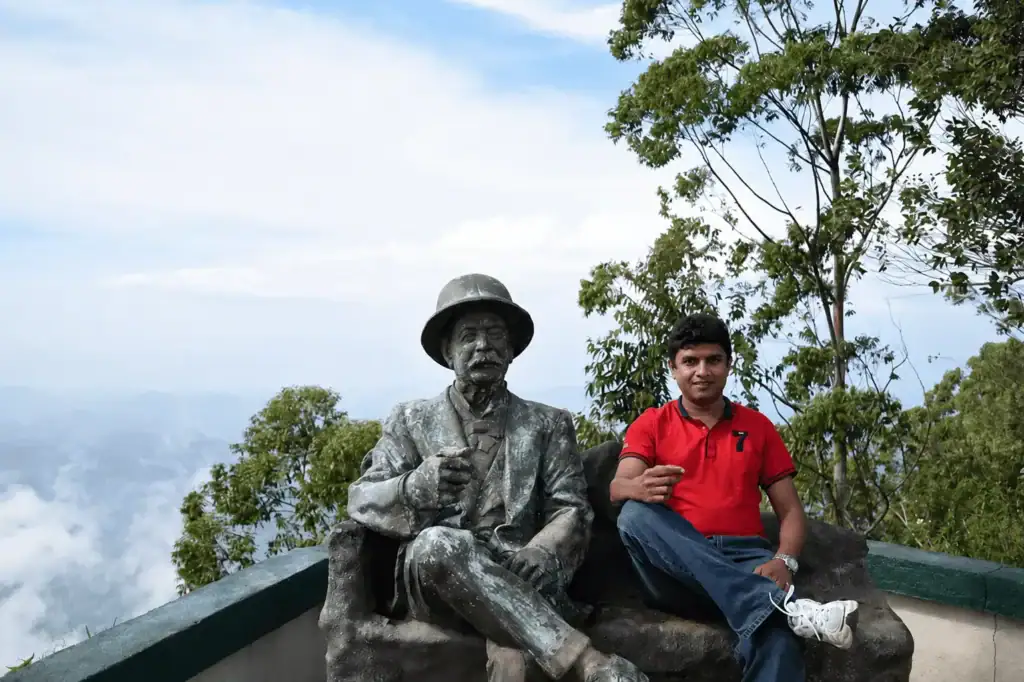
I am sitting with Thomas Lipton (Photo: Nalaka Priyantha)
Morning
Leave before sunrise towards Lipton’s Seat.
The road climbs through Dambatenne tea country. Early morning offers the best chance of wide views before mist moves through the hills.
Walk part of the final section if your fitness allows. The route passes tea fields, estate homes, small shops, and working communities.
This day adds something different from your earlier tea-factory visit. Day 9 explains how tea is processed. Day 12 gives you more time inside a working plantation area.
Afternoon
Return towards Haputale and stop around Dambatenne.
Keep the afternoon light. A countryside walk or tea tasting fits well.
Evening
Return to Haputale.
Where to Stay
Spend a second night in Haputale.
Food Stop
Try pittu with coconut milk and curry.
Practical Notes
Ask before photographing tea workers. Tea estates are workplaces and residential communities.
Adam’s Peak Alternative
December to March falls within the traditional Sri Pada pilgrimage season. Sri Lanka Tourism states that Adam’s Peak is most often climbed from December to May. The more specific pilgrimage calendar begins around the Duruthu full moon period and runs until Vesak.
Adam’s Peak rises to 2,243 metres and attracts pilgrims from across Sri Lanka. The climb involves thousands of steps and several hours of walking, so add this variation only if the physical challenge suits you.
The easiest adjustment is to replace one night in Nuwara Eliya or Haputale with a night near Nallathanniya.
Arrive during the afternoon, eat early, and rest. Start the climb late at night or before dawn. After descending, give your legs time to recover before another long transfer.
Adam’s Peak adds a strong cultural and seasonal experience to a Sri Lanka itinerary from December to March. The standard route suits travellers who prefer gentler walking.
Day 13: Haputale to Ella
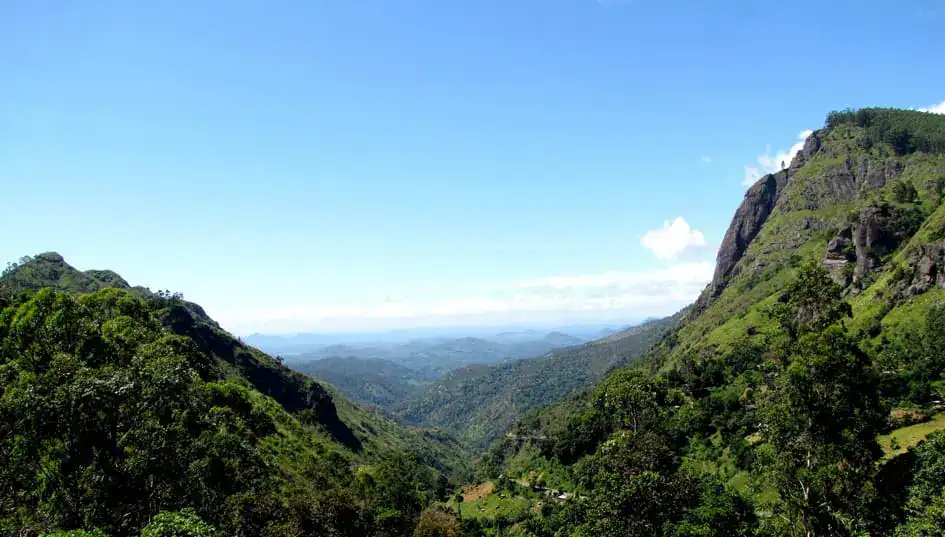
Ella Gap (Photo: Balathasan Sayanthan, CC BY 2.0)
Morning
Enjoy a relaxed breakfast, then travel to Ella by road or rail.
If you travel by road, select one or two scenic stops rather than trying to visit every waterfall along the route.
Afternoon
Check into your accommodation in Ella.
Walk through town, visit a café, or head towards a nearby viewpoint. Keep the first afternoon light.
Evening
Enjoy the view towards Ella Gap if the weather stays clear.
Where to Stay
A central guesthouse suits travellers who want to walk to restaurants. Hillside properties offer more space and broader views.
Food Stop
Try pol roti with lunu miris and dhal curry.
Practical Notes
Stay near the centre if you prefer walking to restaurants after dark.
Day 14: Ella, Little Adam’s Peak, and Nine Arch Bridge
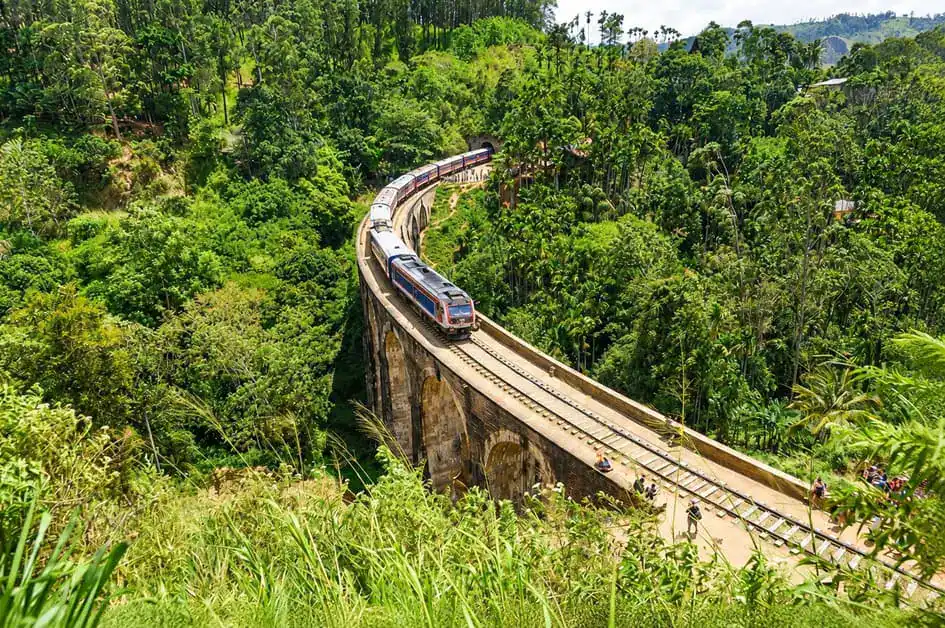
The train passing the Nine Arch Bridge (Photo: Nalaka Priyantha)
Morning
Start with Little Adam’s Peak before the strongest midday heat.
The walk passes tea-covered slopes and leads to views across Ella Gap.
After descending, continue towards Nine Arch Bridge. Check current train times if you hope to see a train crossing, but leave some flexibility in your schedule.
- AllTrails Map – Little Adam’s Peak (1.6 km)
- AllTrails Map – Little Adam’s Peak and Lookout (2.9 km)
- AllTrails Map – Nine Arches Bridge – Little Adam’s Peak (5.8 km)
- AllTrails Map – Nine Arch Bridge from Ella Rd (1.9 km)
- AllTrails Map – Nine Arch Bridge (1.3 km)
- AllTrails Map – Nine Arch Bridge Viewpoint Loop (1.3 km)
Afternoon
Return to Ella for lunch and rest.
Active travellers might add another short walk. Waterfall lovers might visit Ravana Falls south of town.
Evening
Spend your final Ella evening at a small restaurant or guesthouse.
Where to Stay
Remain in the same accommodation.
Food Stop
Try kottu roti with vegetables, egg, or chicken.
Practical Notes
Wet paths become slippery. Wear shoes with good grip.
Day 15: Ella to Udawalawe
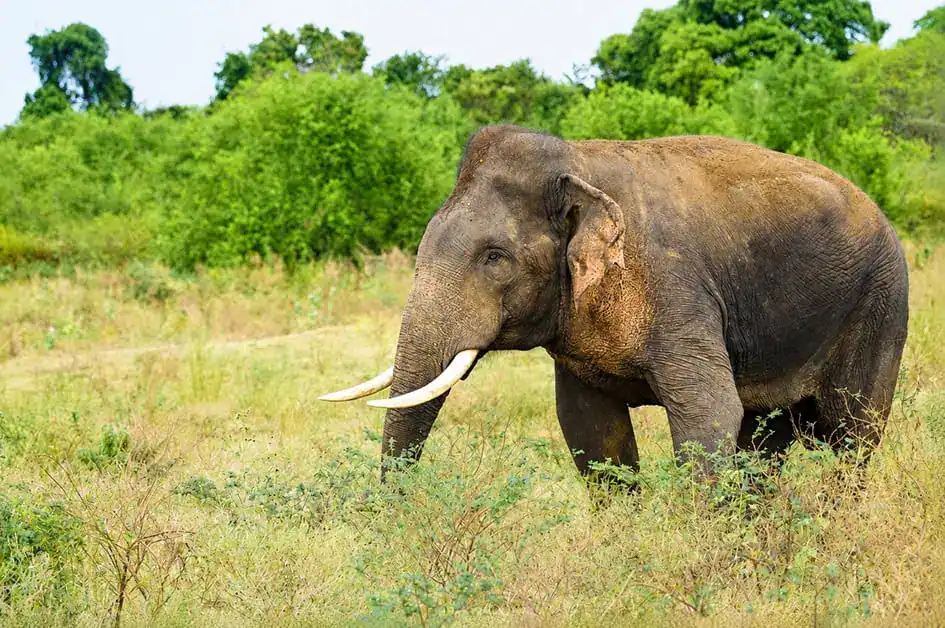
A tusker – Udawalawe National Park (Photo: Nalaka Priyantha)
Morning
Leave Ella after breakfast and descend from the highlands towards Udawalawe.
The scenery changes quickly as mountain slopes give way to warmer, drier country.
Stop at Ravana Falls if you missed the site yesterday, then continue through Wellawaya.
Afternoon
Check into a lodge near Udawalawe National Park.
Rest during the hottest part of the day. Travellers who prefer an afternoon safari could move the park visit to later today and enjoy a slower morning tomorrow.
The opening hours of Udawalawe National Park are between 6:00 am and 6:00 pm daily.
Evening
Prepare your camera, water, and light clothing for the safari.
Where to Stay
Stay close to the park entrance to reduce your early morning transfer.
Food Stop
Try chicken curry with red rice, dhal, fried aubergine, and cucumber salad.
Practical Notes
Select a safari operator who keeps a sensible distance from wildlife and avoids aggressive jeep driving.
Day 16: Udawalawe Safari and Hiriketiya
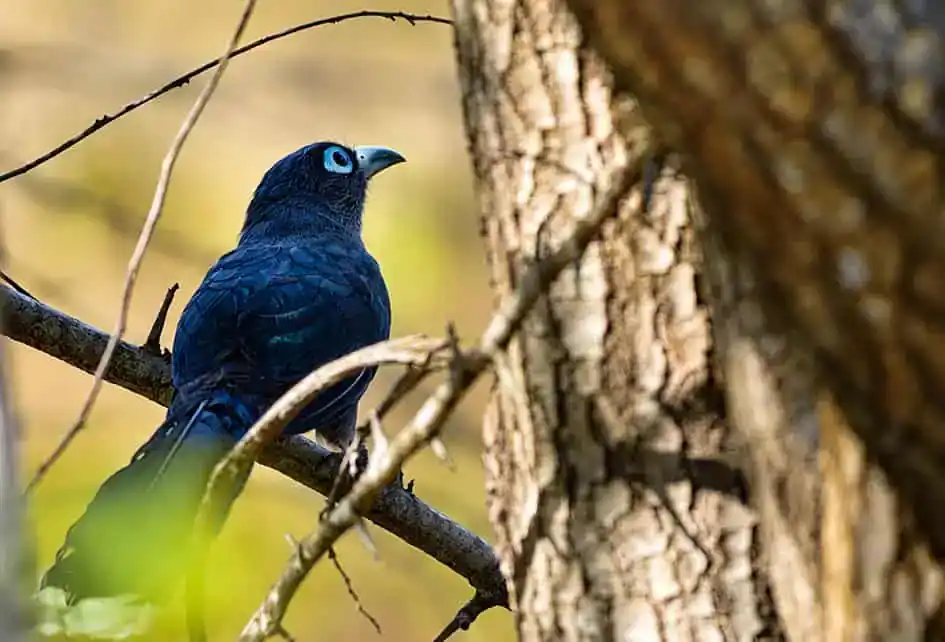
Blue-Faced Malkoha – Udawalawe National Park (Photo: Nalaka Priyantha)
Morning
Enter Udawalawe near opening time.
Asian elephants form the main attraction for many visitors. Other possible sightings include water buffalo, spotted deer, crocodiles, monitor lizards, peacocks, raptors, and many other bird species.
Give animals space. Do not pressure your driver to approach them closely.
After the safari, return for breakfast or an early lunch.
Afternoon
Travel towards Hiriketiya or Dikwella.
The South Coast now changes the rhythm of the trip. After two weeks of temples, trains, mountains, and walking, your schedule becomes lighter.
Check into your accommodation and visit the beach later in the day.
Evening
Enjoy a simple seaside dinner.
Where to Stay
Hiriketiya suits travellers looking for a small bay and surf atmosphere. Dikwella provides a broader local-town setting.
Food Stop
Try devilled prawns with rice.
Practical Notes
Follow beach flags and local advice before swimming.
Yala National Park Alternative
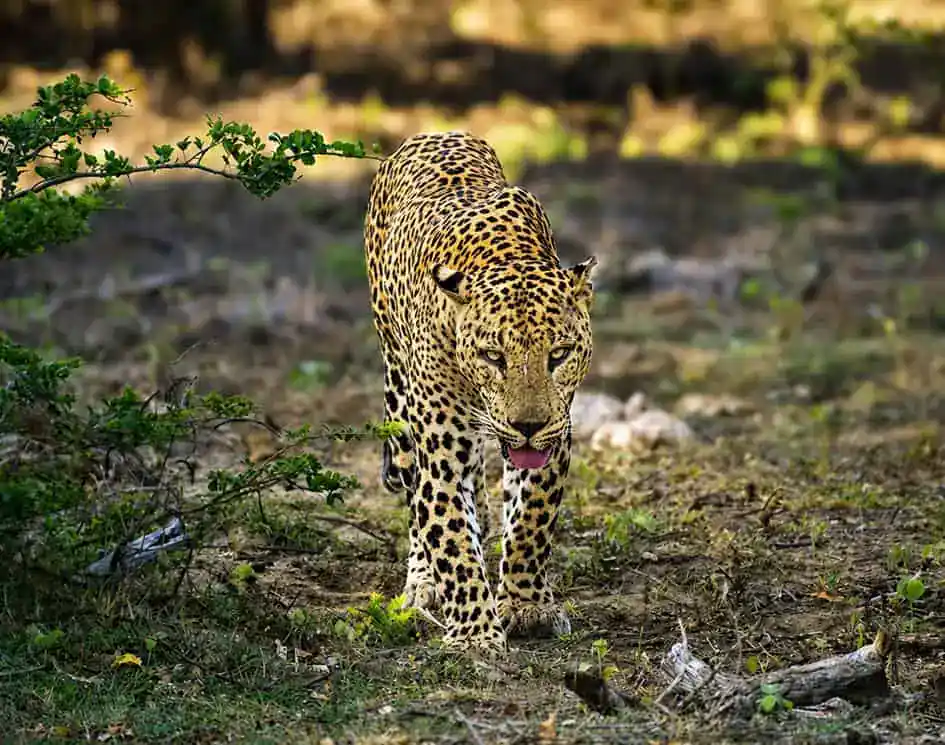
A leopard in Yala National Park (Photo: Nalaka Priyantha)
Choose Yala National Park instead of Udawalawe if leopard viewing ranks near the top of your wildlife goals.
Yala’s popularity comes with a trade-off. Busy sightings often attract many jeeps.
Replace the Udawalawe night with Tissamaharama, Kirinda, or accommodation near a Yala entrance. Take an early safari on Day 16, then continue towards Hiriketiya.
Yala suits travellers placing greater weight on leopard sightings and a broad dry-zone safari. Udawalawe suits travellers seeking a stronger elephant focus and a more direct route from Ella to the South Coast.
The opening hours of Yala National Park are between 6:00 am and 6:00 pm daily.
You can book tickets for both Udawalawe and Yala through the official Wildlife Park Permits Reservation eService.
Day 17: Slow Day in Hiriketiya and Dikwella
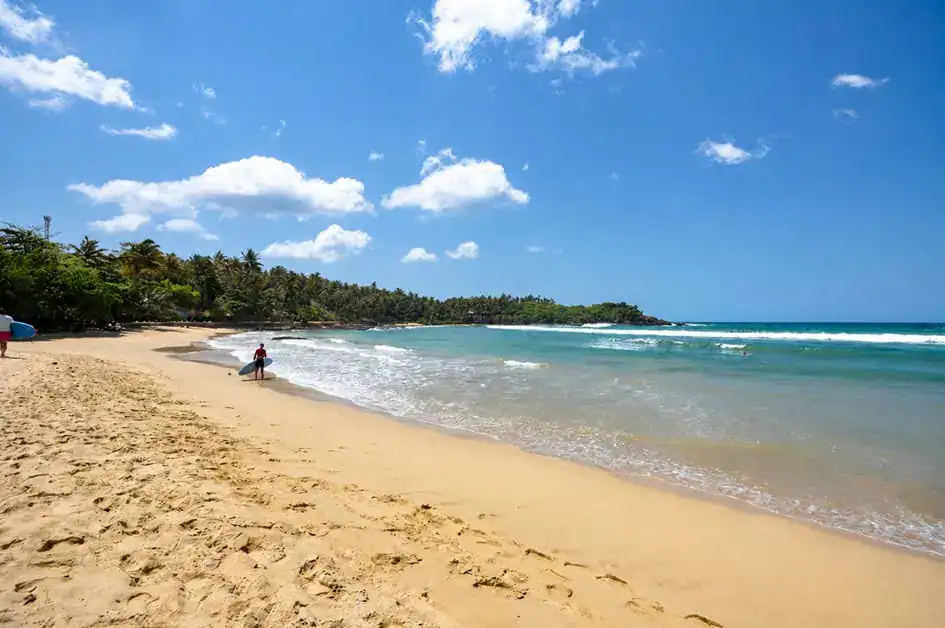
Hiriketiya Beach (Photo: Nalaka Priyantha)
Morning
Leave the schedule open.
Walk to the beach after breakfast. Swim where conditions are safe or join a surf lesson.
This slow day plays an important role in the Sri Lanka Grand Tour. Three weeks should include time without a major monument, safari, or transfer.
Afternoon
Explore Dikwella or nearby coastal roads. Stop at a fruit stall, small restaurant, shop, or another beach.
Travellers interested in religious sites might visit Wewurukannala Vihara near Dikwella.
Evening
Return to Hiriketiya for sunset and dinner.
Where to Stay
Remain in the same accommodation.
Food Stop
Try isso wade, a lentil fritter topped with prawns.
Practical Notes
Select busy food stalls with steady turnover and clean preparation areas.
Day 18: Hiriketiya to Mirissa or Weligama
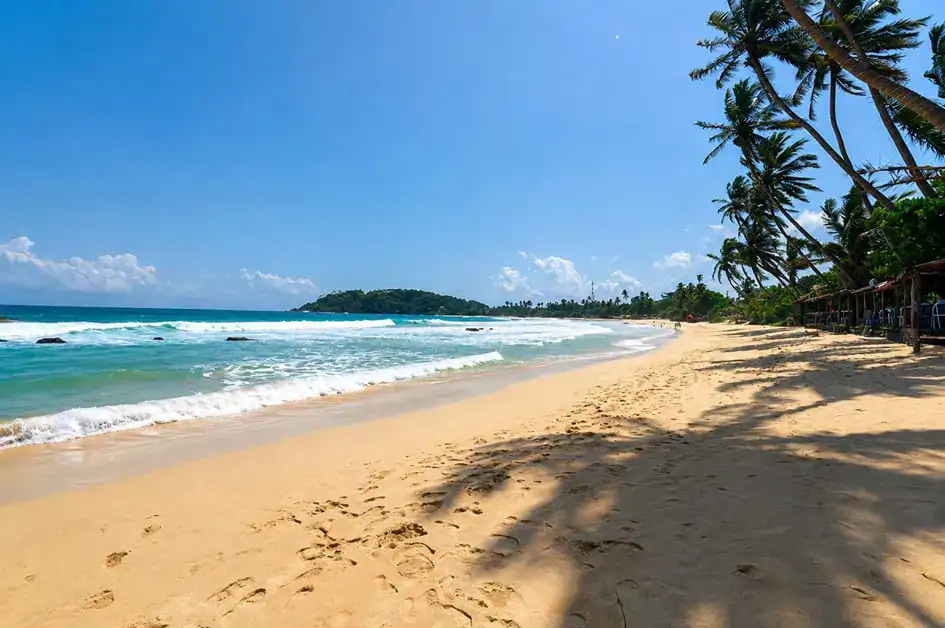
A sunny day – Mirissa (Photo: Nalaka Priyantha)
Morning
Travel west along the South Coast.
The drive stays short enough for one or two relaxed stops. Fishing harbours, beaches, coconut groves, and small coastal towns line the route.
Mirissa suits travellers interested in beach time and whale-watching departures. Weligama places more focus on surfing.
Afternoon
Check into your hotel and spend time near the beach.
Weligama’s broad bay attracts many beginner surfers. Mirissa offers a compact beach setting and easy access to boat trips.
Evening
Eat near the coast and decide whether Day 19 will focus on whale watching, surfing, or rest.
Where to Stay
Spend two nights in Mirissa or Weligama.
Food Stop
Try Sri Lankan crab curry or fish curry with rice and coconut sambol.
Practical Notes
Check sea conditions each morning. Currents and wave strength vary between beaches and from day to day.
Day 19: Mirissa, Weligama, or Whale Watching
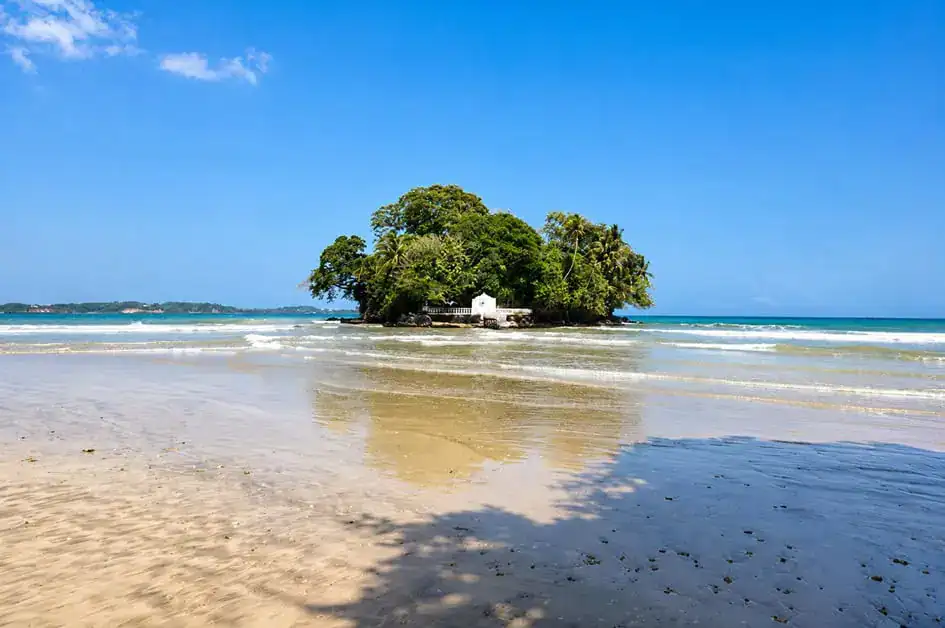
Taprobane Island and Weligama Beach (Photo: Nalaka Priyantha)
Morning
Shape the day around your interests.
Whale watching from Mirissa is seasonal. Sri Lanka Tourism identifies Dondra Point, reached from Mirissa and nearby South Coast towns, as one of the island’s main whale-watching areas. Its Mirissa guide places the main southern whale and dolphin season from November to April.
Choose an operator with clear animal-welfare standards. Responsible boats maintain distance and avoid chasing whales.
If you prefer to stay on land, take a surf lesson in Weligama or enjoy a quiet morning by the sea.
Afternoon
Keep the afternoon open after a boat trip.
Surfing travellers might take another lesson later in the day.
Evening
Enjoy your final full beach evening.
Where to Stay
Remain in Mirissa or Weligama.
Food Stop
Try fish ambul thiyal with rice.
Practical Notes
Take motion-sickness medication before departure if you are prone to seasickness.
Day 20: Mirissa or Weligama to Galle and Unawatuna
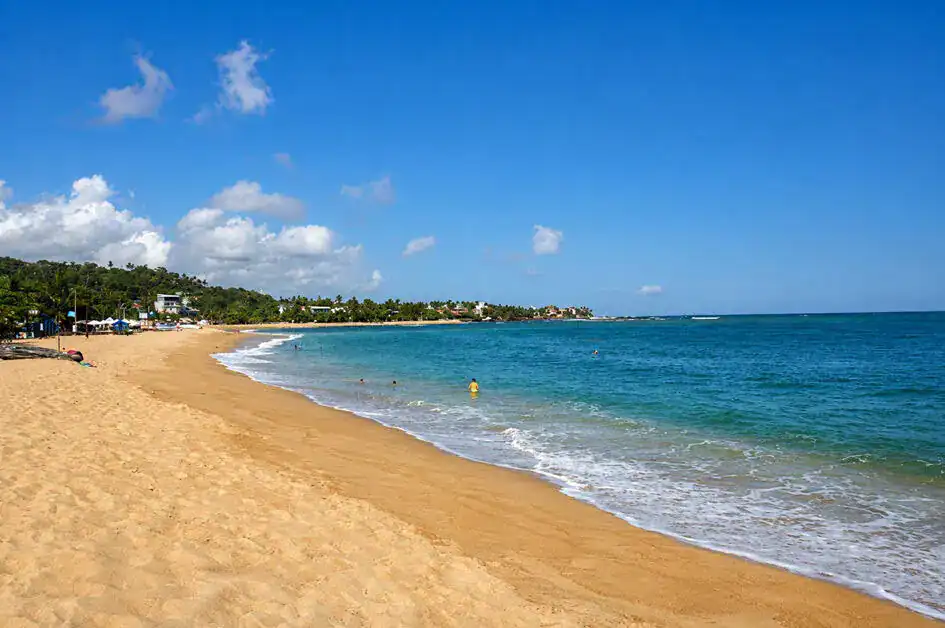
A sunny day and calm water – Unawatuna (Photo: Nalaka Priyantha)
Morning
Travel west towards Galle.
Stop in Unawatuna if you want another beach visit before reaching the fort.
Galle Fort forms one of Sri Lanka’s most important historic urban areas. Portuguese foundations, Dutch fortifications, churches, old homes, public buildings, shops, and later British influences remain within the walls.
Afternoon
Explore Galle Fort on foot.
Visit the ramparts, lighthouse area, old streets, churches, courtyards, and museums. The fort also remains a living neighbourhood with homes, schools, hotels, shops, restaurants, and places of worship.
Late afternoon brings cooler temperatures and softer light.
Evening
Watch sunset from the ramparts before dinner.
Where to Stay
Stay inside Galle Fort for history and easy walking. Choose Unawatuna for beach access. Other parts of Galle offer a wider range of rooms and easier road access.
Food Stop
Try a southern rice-and-curry meal with fish, dhal, brinjal, coconut sambol, and seasonal vegetables.
Practical Notes
Galle Fort is best explored on foot. Wear light clothing and comfortable shoes.
Day 21: Galle to Bandaranaike International Airport
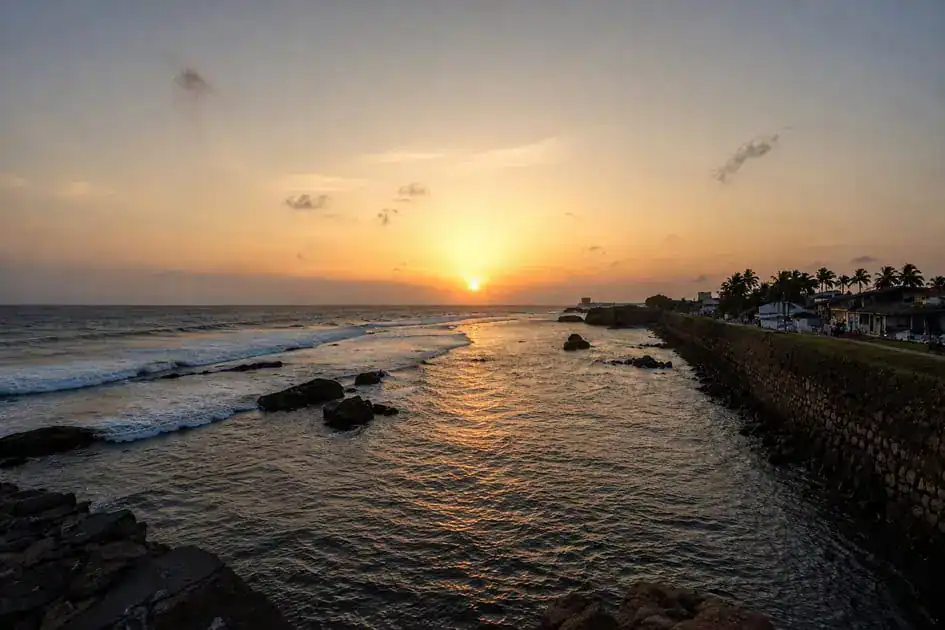
Sunset from Galle Fort (Photo: Nalaka Priyantha)
Morning
Enjoy breakfast and a final walk if your flight schedule allows.
Leave Galle with plenty of time. The Southern Expressway shortens the road journey, but delays near Colombo and the airport corridor still occur.
Afternoon
Travel towards Bandaranaike International Airport.
Travellers with a late flight may make a brief stop in Colombo. A direct airport journey gives more breathing room.
Evening
Depart Sri Lanka or stay in Negombo if your flight leaves the following morning.
Where to Stay
No extra hotel is needed if you have a suitable evening flight. Book Negombo or an airport hotel for an early Day 22 departure.
Food Stop
End the trip with the Sri Lankan dish you enjoyed most during the previous three weeks.
Practical Notes
Check your airline’s latest guidance and leave enough time for international check-in.
Accommodation Guidance Throughout the Itinerary
Accommodation should support the pace of a long journey rather than force constant movement.
Negombo needs one night. Anuradhapura deserves two. Sigiriya or Habarana works best with three because the same base covers several important places.
Kandy, Nuwara Eliya, Haputale, and Ella each receive two nights. This structure gives the Hill Country much more depth than a standard highlights itinerary.
Udawalawe needs one night on the main route.
The coast returns to slower travel. Two nights around Hiriketiya and two around Mirissa or Weligama give you time to rest before the final Galle night.
Budget travellers will find many locally run guesthouses along the route. Family properties are common in Anuradhapura, Sigiriya, Haputale, Ella, and the South Coast.
Mid-range travellers have a broad choice of boutique hotels, small resorts, tea-country lodges, and well-managed guesthouses.
Luxury travellers might add a tea-estate bungalow, high-end safari lodge, or restored hotel inside Galle Fort.
Reserve popular stays well ahead for late December, January, and February. SLTDA’s 2025 figures show the strongest international arrival volumes in the first and final quarters of the year, with December recording the year’s highest monthly total.
We recommend reading our guide on “How to Choose Where to Stay in Sri Lanka“.
Dining and Food Experiences Across the Trip
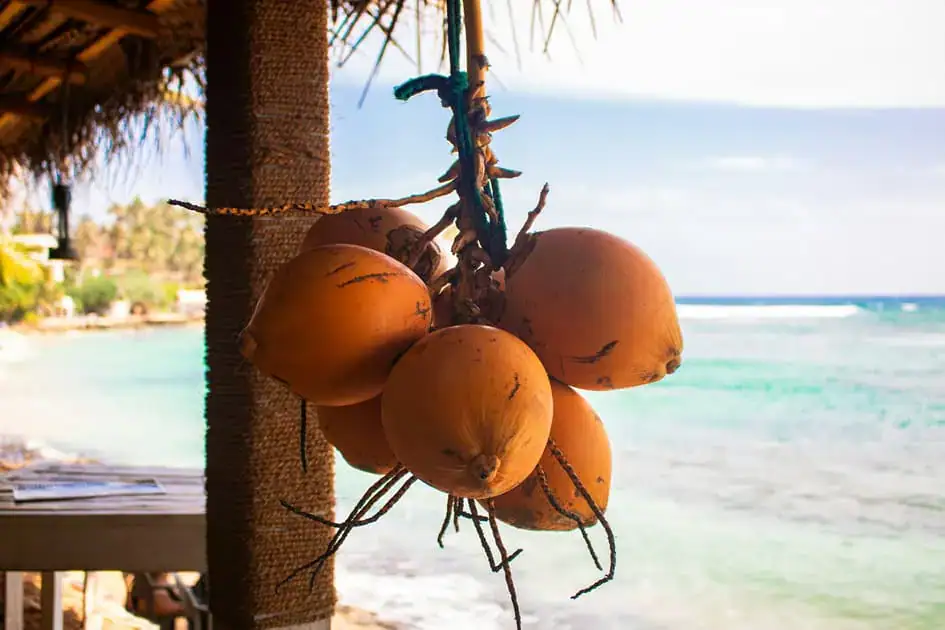
King Coconut – Mirissa Beach (Photo: Zoshua Colah, via Unsplash)
Sri Lankan food changes as you travel across Sri Lanka, adding another layer to the route.
Negombo introduces seafood and west-coast cooking. Fish, prawns, crab, and cuttlefish appear widely.
The dry-zone section around Anuradhapura and the Cultural Triangle brings rice, dhal, coconut sambol, jackfruit, pumpkin, brinjal, leafy mallung, and freshwater fish.
Kandy offers access to central Sri Lankan cooking and dishes linked to Kandyan food traditions.
Tea country changes the setting. Cooler weather pairs well with hoppers, string hoppers, pittu, roti, curries, and hot tea.
The South Coast returns the focus to seafood. Fish ambul thiyal deserves a place on your list. Crab curry, prawn curry, grilled fish, and cuttlefish also appear often.
Do not eat every meal inside hotels. Small family restaurants, bakeries, markets, cafés, and guesthouses often provide a broader view of Sri Lankan food.
Ask about spice levels if you prefer mild meals. Drink bottled, boiled, or properly filtered water where needed.
Read our guide “Dining in Sri Lanka – A Culinary Journey Worth Travelling For“.
Cultural and Local Experiences
Major monuments form only one part of this journey.
Anuradhapura becomes more meaningful when you see the ancient city as an active sacred place. Watch pilgrims place flowers, light lamps, and sit in prayer.
Around Sigiriya and Habarana, spend time away from the headline attractions. Village roads, reservoirs, farms, and home cooking add context to the Cultural Triangle.
Kandy introduces another side of Buddhist life through the Temple of the Tooth Relic and daily worship.
Tea country provides one of the strongest local themes. Look for estate visits where guides explain work, production, and history rather than treating plantations only as scenery.
Haputale gives you closer contact with working plantation areas than central Ella.
Along the South Coast, fishing still shapes everyday life. Harbours and morning markets show another side of coastal communities.
Ask before photographing people. Respect workers, worshippers, children, and families living around tourist areas.
Flexibility and Alternatives
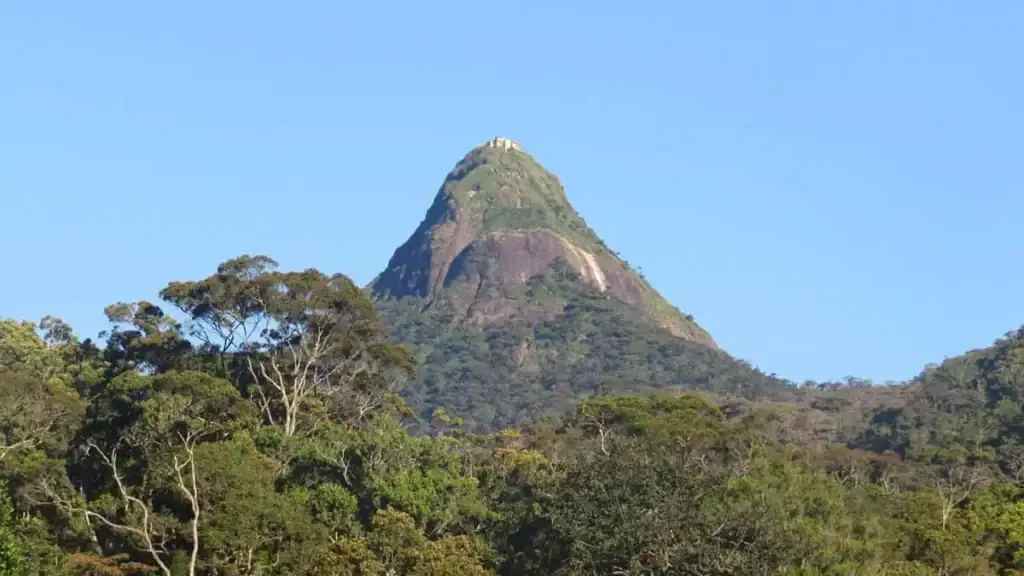
Adam’s Peak (Photo: Nalaka Priyantha)
A good Sri Lanka travel itinerary leaves room for personal interests.
Replace Udawalawe with Yala if leopard-focused wildlife matters more than elephant viewing.
Add Adam’s Peak if you enjoy demanding hikes and travel during the pilgrimage season.
Skip Horton Plains if long walks do not suit your fitness. Use the day for tea estates, gardens, and a slower Nuwara Eliya experience.
Spend one less night in Hiriketiya and add the night to Galle if history and architecture matter more than beach time.
Choose Weligama instead of Mirissa if surfing ranks higher than whale watching.
Travellers with 20 days should remove one South Coast night. Keep the Cultural Triangle and Hill Country structure intact. Those slower sections give this route its character.
Weather and Packing Notes for December to March
Conditions differ sharply between the lowlands and the highlands.
Negombo, Anuradhapura, Sigiriya, Udawalawe, and the South Coast often feel hot during the day.
Kandy feels milder.
Nuwara Eliya, Horton Plains, Haputale, and Adam’s Peak feel much cooler, especially before sunrise and after dark. Sri Lanka Tourism describes the central highlands as relatively dry and pleasantly cool from January to April.
March moves into the first inter-monsoon. Warm, humid weather and afternoon thunderstorms become more common during this transition.
Pack for heat, rain, cool mountains, temples, walking, beaches, and wildlife.
Packing Essentials
- Lightweight clothing
- Long trousers or skirts for temples, and tops covering the shoulders
- A warm layer for the Hill Country
- A light waterproof jacket
- Comfortable walking shoes
- Sandals
- Socks for temple paving
- Swimwear
- A sun hat
- Sunglasses
- Sunscreen
- Insect repellent
- A reusable water bottle
- A small daypack
- A power bank
- Personal medication
- Basic first-aid supplies
- Binoculars
- A torch or headlamp for Adam’s Peak
We recommend reading both our guides on “weather in Sri Lanka” and “the best time to visit“.
Practical Details, Hours, Fees, Bookings, and Dress Codes
Entry Fees
Several locations along this 3-week Sri Lanka itinerary require entrance tickets or permits.
Major heritage attractions such as Sigiriya, Polonnaruwa, Anuradhapura, and other cultural sites charge separate admission fees for foreign visitors. Entrance fees change over time, so check official sources close to your travel date.
National parks such as Udawalawe and Yala charge park admission in addition to safari-jeep costs. Ask your lodge or safari operator to explain the full amount before you book so you understand which charges are included.
Carry both cash and a payment card. Payment methods differ between attractions, and smaller counters or local services sometimes rely on cash.
Check the ticket price for the Temple of the Tooth.
Opening Hours
Opening times sometimes change because of religious events, conservation needs, weather, and management decisions. Check current hours before visiting major attractions.
Sigiriya is best visited early in the morning, when temperatures are lower, and the site is often less crowded.
Horton Plains also rewards an early start because cloud often reduces distant views later in the morning.
Lipton’s Seat follows the same pattern. Early morning usually gives you a better chance of clear views before mist gathers across the hills.
Wildlife parks follow set entry periods for safari vehicles, so confirm the latest opening times with the park, your lodge, or your safari operator before travelling.
Dress Code
Respectful clothing is important at temples and religious landmarks throughout the route. Cover your knees and shoulders before entering sacred areas.
Remove shoes and hats where required. Some temples also expect visitors to remove sunglasses before entering worship areas.
Avoid clothing with religious images, slogans, or designs likely to offend.
Do not pose for photographs with your back directly towards Buddha images. This is considered disrespectful at Buddhist sites.
Light clothing with a scarf or shawl works well if you plan to visit several temples during the trip.
Transport Tips
Begin longer travel days early when possible. Morning departures help you avoid stronger midday heat and heavier traffic around towns and cities.
Carry drinking water and light snacks during longer inland transfers. A private car with a driver gives you more flexibility for tea-estate stops, viewpoints, waterfalls, and smaller towns along the route.
Train reservations deserve extra attention during the peak December to March season. Sri Lanka Railways currently allows advance seat reservations up to 30 days before the journey. Reserved seats operate on a first-come, first-served basis.
Check the official Sri Lanka Railways timetable before every rail journey because schedules and service conditions change. This is especially important for the Hill Country sections around Nanu Oya, Haputale, and Ella.
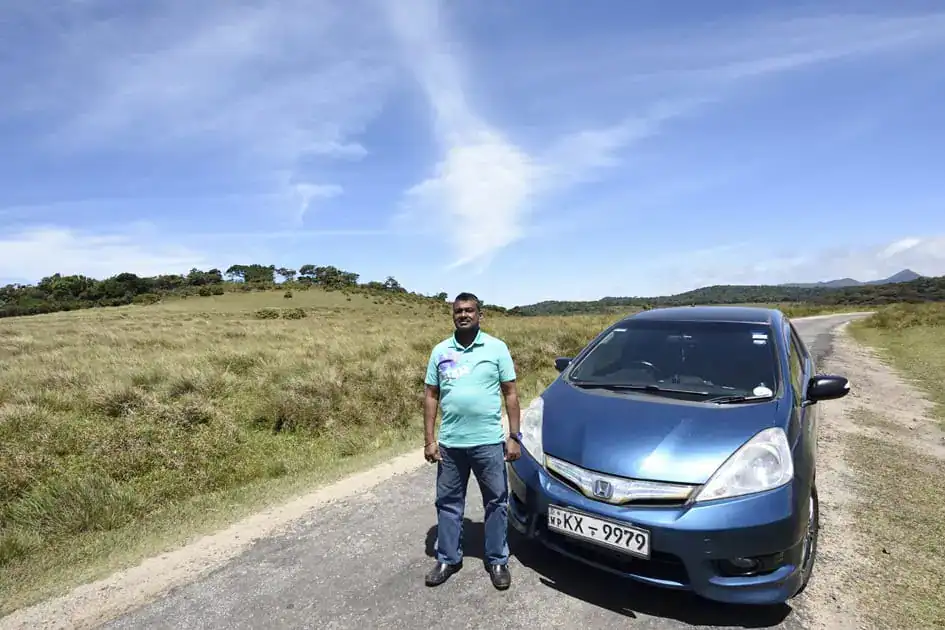
A chauffeur tourist guide – Horton Plains National Park (Photo: Nalaka Priyantha)
Safety, Health, and Comfort Notes
Buy suitable travel insurance before departure.
Look for cover for medical treatment, hospital care, emergency transport, trip disruption, baggage, hiking, safaris, surfing, and boat trips where relevant.
Keep both digital and printed copies of your policy details.
Use normal travel precautions around transport hubs, markets, beaches, and crowded attractions. Keep passports and large amounts of cash secure.
Avoid isolated beaches late at night.
Use trusted transport and wear a helmet when riding a scooter or motorbike.
Do not swim when red flags, rough surf, strong currents, or local warnings indicate unsafe conditions.
Follow safari guides and stay inside the vehicle where required. Never touch or feed wild animals.
Heat deserves attention in Anuradhapura, Sigiriya, Polonnaruwa, and Udawalawe. Start demanding outdoor activities early, drink water throughout the day, use sunscreen, and rest in shade.
Use mosquito repellent during the evening, especially near wetlands, gardens, forests, and rural areas.
Large hospitals operate in Colombo, Kandy, and other major cities. Regional hospitals and private medical centres serve many towns along the route. More remote areas, including national parks and mountain roads, lie farther from major medical facilities.
Carry enough prescription medication for the full journey.
For a medical emergency, Sri Lanka’s island-wide 1990 Suwa Seriya service provides free pre-hospital emergency ambulance care. The emergency number is 1990.
For an urgent police emergency, call 119.
Estimated Costs for 3 Weeks in Sri Lanka
Your total budget depends on accommodation, transport, dining style, entrance fees, safari choices, and optional activities.
For planning purposes, budget guesthouses often sit at the lower end of the accommodation market. At the same time, boutique hotels, beach resorts, tea bungalows, and safari lodges can quickly raise the daily spend. Peak-season dates around Christmas, New Year, January, and February often cost more than quieter periods.
A private driver forms one of the largest expenses on a three-week route. The price depends on vehicle type, distance, fuel arrangements, driver accommodation, parking, highway charges, and the number of travel days.
Major heritage attractions also add a meaningful amount to the trip budget. Sigiriya, Anuradhapura, Polonnaruwa, national parks, and several other attractions charge foreign visitor rates.
Safari costs include more than the jeep. Your total often includes park admission, taxes, vehicle charges, and jeep hire.
Whale watching, surf lessons, private guides, cooking classes, and extra excursions add optional costs.
For a broad planning estimate, a budget traveller sharing some transport might plan around USD 45 to 70 per person per day before international flights.
A mid-range traveller using comfortable accommodation and regular private transport might plan around USD 100 to 180 per person per day.
Over 21 days, this puts a broad mid-range land budget at around USD 2,100 to 3,800 per person before international flights.
Treat these figures as budgeting guides, not fixed prices. Exchange rates, accommodation demand, entrance charges, fuel costs, and operator prices change.
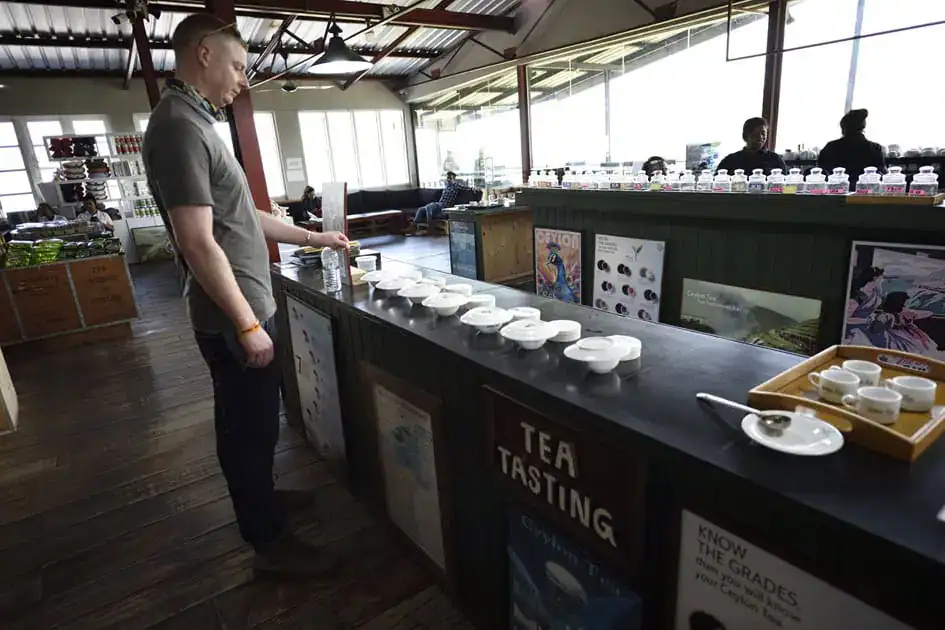
Tea Tasting – Uve Halpewatte Tea Factory, Ella (Photo: Nalaka Priyantha)
Responsible Travel Notes
Three weeks gives you many chances to direct your spending towards local communities.
Stay in locally owned guesthouses where they suit your needs. Eat in independent restaurants and cafés. Hire trained local guides. Buy goods from local shops and producers.
For tea visits, look for reputable estates and guides who explain both production and the people behind the industry.
Keep a respectful distance from wildlife.
Avoid safari drivers who surround elephants or race towards sightings.
Skip elephant rides and direct wildlife-contact experiences.
Use whale-watching operators who keep their distance from animals and avoid chase behaviour.
Carry a reusable bottle and refill where safe drinking water is available.
Reduce single-use plastic and take rubbish away from hiking trails and beaches.
Dress respectfully around temples and rural communities.
Ask permission before photographing people.
Buy genuine local crafts where possible.
Remember that tea plantations are working places. Estate roads, homes, schools, and fields form part of daily community life.
Read our guide on “Sustainable Travel in Sri Lanka: How to Explore Responsibly“.
Highlights Summary
This 3-week Sri Lanka itinerary brings together many of the island’s strongest travel experiences without turning every day into a long transfer.
You explore Anuradhapura, climb Sigiriya, visit Polonnaruwa, walk through Dambulla Cave Temple, and experience Kandy’s sacred centre.
You then slow down through Nuwara Eliya, Haputale, and Ella instead of treating the Hill Country as one scenic train journey.
You walk through Horton Plains, spend time in working tea regions, and learn how Ceylon tea moves from leaf to cup.
Udawalawe adds an elephant-focused safari. Yala offers a strong leopard-focused alternative.
The final stretch gives the South Coast enough time. Hiriketiya, Mirissa or Weligama, and Galle each offer a different experience.
Travellers seeking a harder physical challenge also have the option to add Adam’s Peak during the pilgrimage season.
We recommend reading about the best Sri Lanka travel itineraries for your travel season, as well as our complete travel guide for first-time visitors.
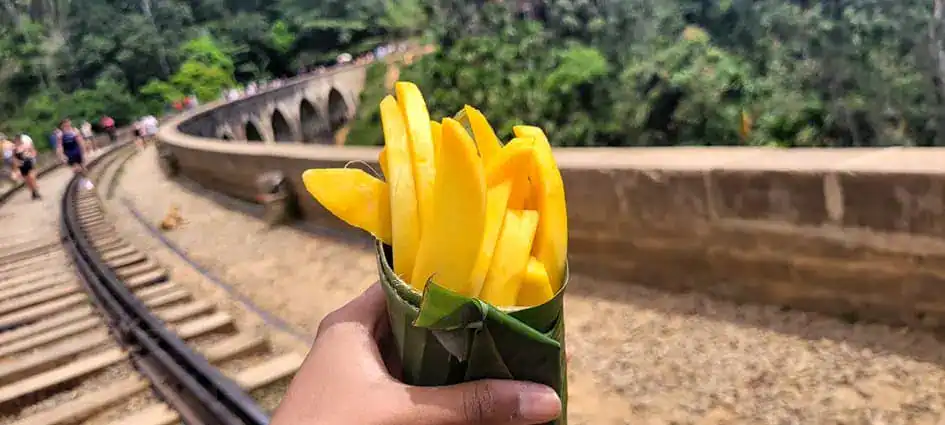
Having mango wrapped with a banana leaf – Nine Arch Bridge, Ella (Photo: My daughter, Nethuli)
Final Thoughts
A three-week journey changes the way you experience Sri Lanka. Famous places still form part of the route, but the schedule no longer revolves around racing between them.
This 3-week Sri Lanka itinerary gives Anuradhapura a full day. The Sigiriya region receives three nights. Tea country stretches through Nuwara Eliya, Haputale, and Ella. Wildlife gets a dedicated stop. The South Coast receives enough time for swimming, food, surfing, whale watching, or simple rest.
December to March fits the route well because the journey concentrates on the Cultural Triangle, central highlands, wildlife regions, and the South and Southwest Coast. The same period overlaps with the main Adam’s Peak pilgrimage season and the South Coast whale-watching season.
Pace matters as much as destinations. A Sri Lanka 3 week itinerary should feel different from a two-week holiday. Extra days should create deeper experiences, not just a longer list of hotel changes.
Spend time beside an ancient reservoir in Anuradhapura. Walk through working tea country near Haputale. Leave an afternoon free in Hiriketiya. Eat in small local restaurants. Watch daily worship inside active temples. Ride a Hill Country train because you want to experience the journey, not because you need another item on a checklist.
By the time you reach Galle on Day 20, you have travelled from the West Coast to ancient capitals, crossed the central mountains, walked among tea estates, entered wildlife country, and followed the southern shoreline west again.
For travellers with three weeks available between December and March, this 3-week Sri Lanka itinerary offers a balanced way to explore the island at a slower pace. Culture, nature, food, wildlife, tea country, and the coast all receive enough time to make the journey feel complete.
Map: 3-Week Sri Lanka Itinerary – December to March
Sources and References:
- Sri Lanka Tourism Development Authority (SLTDA), Year in Review 2025. Used for annual and monthly international tourist arrival statistics, national park visitor statistics, and tourism trends.
- Sri Lanka Tourism, Official Tourism Website. Used for seasonal weather information, climate patterns, destination guidance, Adam’s Peak pilgrimage information, whale-watching seasons, and general travel advice.
- Sri Lanka Tourism Development Authority, Sustainable Tourism. Used for guidance on responsible and sustainable tourism practices in Sri Lanka.
- Central Cultural Fund, Sri Lanka. Used for official heritage-site information and online ticketing for major archaeological attractions, including Sigiriya, Anuradhapura, and Polonnaruwa.
- UNESCO World Heritage Centre, Sri Lanka. Used for historical and World Heritage information on the Sacred City of Anuradhapura, Ancient City of Polonnaruwa, Ancient City of Sigiriya, Sacred City of Kandy, Rangiri Dambulla Cave Temple, Old Town of Galle and its Fortifications, and the Central Highlands of Sri Lanka.
- Department of Sri Lanka Railways. Used for official train schedules, passenger information, reserved-seat guidance, and the 30-day advance reservation period.
- Department of National Botanic Gardens, Sri Lanka. Used for visitor information and opening hours for the Royal Botanic Gardens, Peradeniya.
- Department of Wildlife Conservation, Sri Lanka. Used for national park information, wildlife regulations, park permits, and visitor guidance for protected areas such as Udawalawe and Yala National Parks.
- 1990 Suwa Seriya Foundation. Used for information about Sri Lanka’s island-wide free emergency ambulance service and the 1990 medical emergency number.
- Sri Lanka Police. Used for official emergency information, including the 119 Police Emergency Service.
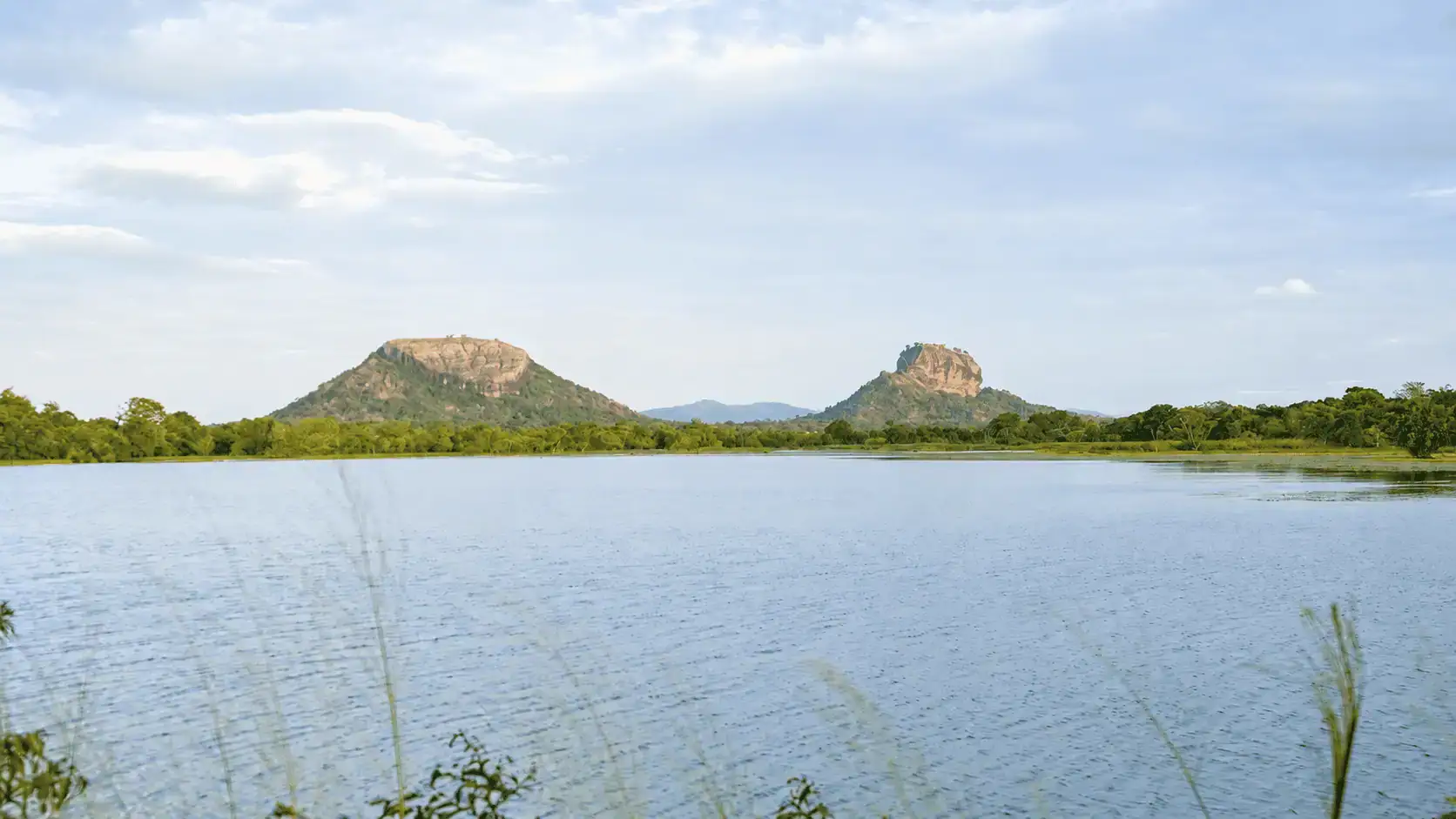
Featured image: The View of Pidurangala and Sigiriya Rocks from Thalkote Reservoir (Photo: Nalaka Priyantha)

I am a Sri Lankan medical doctor who spends my free time travelling, exploring new destinations, and documenting the beauty of the island I call home. I have journeyed across almost every corner of Sri Lanka with my wife and daughter — from wildlife parks and misty mountains to ancient cities, deep forests, rugged landscapes, and quiet beaches.
Travel is not just a hobby for me — it’s a way of life. I love nature, enjoy road trips, and find joy in wildlife photography. I also read widely about tourism, travel trends, and destination culture. Through my writing, I aim to help travellers experience Sri Lanka through real stories, meaningful insights, and honest recommendations — the same way I explore it with my own family.