
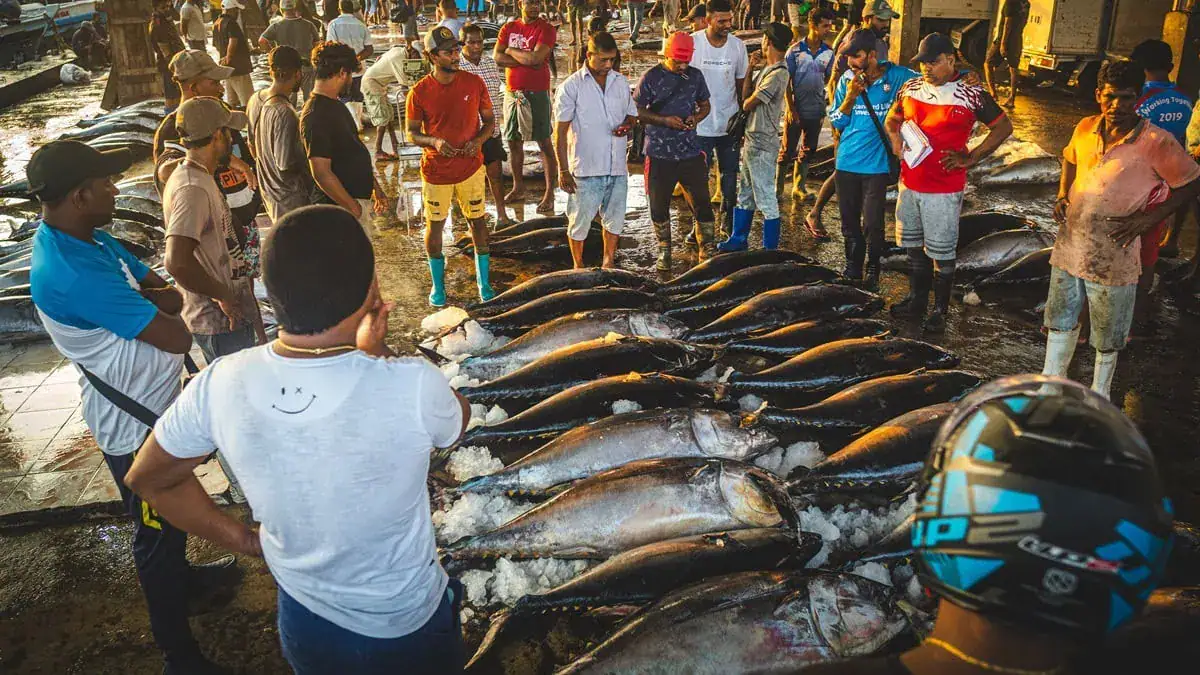

Long before most of Negombo’s hotel guests wake up, the town’s main fish market is already busy. A Daily FT photojournalist described the Pitipana ‘Maha Lellama’ as already a hive of activity at 3.30 am, with people arriving by vehicle and on foot to buy fish straight from the sea. Later in the morning, the beach beyond fills with neat rows of salted fish laid out to dry.
This guide to fish markets in Sri Lanka begins with Negombo. For most visitors, it is the easiest and most rewarding choice, and it sits close to the country’s main international airport. The guide then travels around the island to Colombo’s wholesale hub at Peliyagoda, the southern harbours of Beruwala, Galle, and Mirissa, and the very different lagoon and sea fisheries of Trincomalee, Jaffna, and Batticaloa. Along the way, you’ll find out which fishing traditions you can realistically see, when to go, and how to visit without getting in anyone’s way.
Why Fishing Is at the Heart of Sri Lanka’s Coastal Life
In Sri Lanka, the sea is never far from daily life. Fishing happens along the coast, in large lagoons such as Negombo and Jaffna, and in the island’s inland reservoirs. Government figures describe fish as the population’s main source of animal protein. According to the Ministry of Fisheries’ 2025 performance report, the country has 318,470 fishers, and total fish production reached 364,190 tonnes in 2025, most of it from the sea. The same report estimates that around 2.7 million people earn their livelihoods from fisheries and related activities.
Behind those numbers is a lot of knowledge passed down through families: how to read currents, mend nets, and judge the weather from the shore. In many communities, women play a central part after the catch comes in. They clean, salt, dry, and sell fish. Modern multi-day boats now work from the same harbours as older craft and methods.
Tourism is starting to take notice. The Sri Lanka Tourism Development Authority (SLTDA) launched a Marine Tourism Roadmap on 10 April 2025, and officials linked marine tourism to job creation and community-based development. For now, these are plans. They do not yet amount to a network of community fishing tours you can book.
Six Fascinating Fishing Traditions in Sri Lanka
Several fishing traditions in Sri Lanka can still be seen today. Some are easy to find, while others depend on the tide, the season, and luck.
Stilt Fishing – The Iconic Riti Panna Tradition
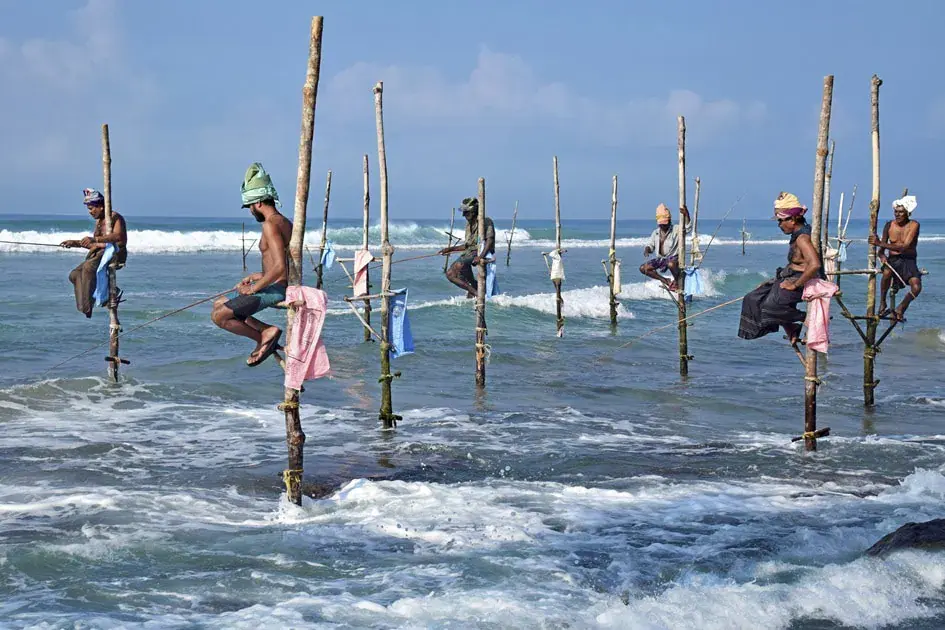
Traditional Stilt Fishermen (Photo: Sumudu Gamage from Pixabay)
Ritipanna is the Sinhala word for stilt fishing. Fishermen fish with a rod and line while sitting on a crossbar tied to a wooden pole driven into the coral reef. The best-known stretch is around Koggala, Kathaluwa, and Ahangama, east of Galle. The scene looks ancient, but it probably isn’t. The history of stilt fishing is not clear. Still, elderly fishermen told FAO researchers it began after World War II.
Today, many fishermen rely on tourists and pose on the stilts to make ends meet. If you stop at a roadside group of stilt fishermen, expect to be asked for a fee. If you want to see real fishing, ask a local guide where and when it still happens.
Madel – Traditional Beach Seine Fishing
In madel fishing, a boat carries a large net out in a wide arc, and teams on the beach then haul it slowly back to shore. On the Kalpitiya peninsula, beach seine fishers traditionally work as teams of 15–30 people using a single net. Under Sri Lanka’s Madel Fishing Regulations of 1984, this fishing must be done by human labour alone, without machinery, and most of the country’s 827 seine nets operate in the Southern Province. Hauls follow the fish and the sea rather than a timetable, so you can’t plan to see one. If you happen to come across a haul, watch from a respectful distance.
Oruwa – Traditional Outrigger Canoe Fishing
The oruwa is a narrow dugout canoe balanced by a single outrigger. It is the most common traditional craft of the Sri Lankan coast. Negombo is the classic place to see one. Diesel-powered fibreglass boats are now everywhere in the lagoon. Still, a few Negombo fishermen have kept their traditional outrigger canoes. Seeing an oruwa beside a modern trawler shows how fishing here has changed without completely leaving the past behind.
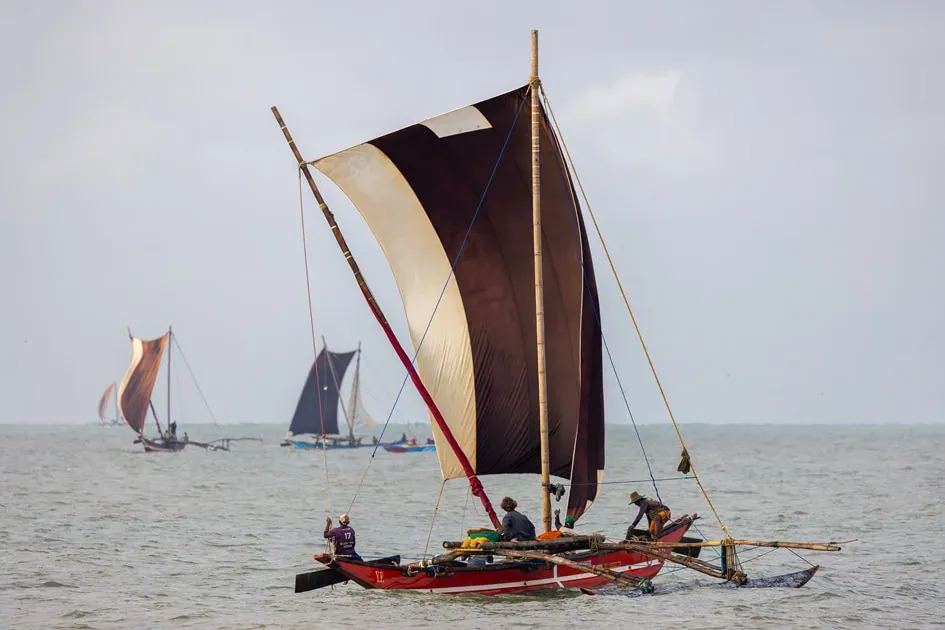
Traditional Canoe Fishing – Negombo (Photo: Caroline Jones, CC BY 4.0)
Lagoon Fishing and Cast Nets
Sri Lanka’s lagoons support quieter, shallow-water fisheries. In Negombo Lagoon, researchers recorded 22 fishing methods, 13 of them entirely traditional, including cast nets and staked seine nets, with shrimp the main target. Lagoon fishing is also important around Kalpitiya, Jaffna, and Batticaloa. The catch varies from place to place, but prawns, crabs, and small lagoon fish are typical.
Traditional Stake Nets and Fish Traps
Jaffna Lagoon is Sri Lanka’s largest lagoon, and fishing there relies heavily on fixed gear. Fyke nets and stake nets are among the most widely used fishing methods there. Long fences of netting strung between wooden poles guide fish and prawns into chambers at the end. Fishermen have traditionally used closely set stake nets to catch white and red prawns.
Karawala – The Tradition of Drying Fish
Karawala, or dried fish, is a way of preserving the catch rather than a way of catching it. It is still central to coastal life. On Negombo beach, fish are cleaned and spread out on jute mats to dry in the sun. The fish are turned by hand so both sides dry evenly, and the whole process takes about three days. Much of the cutting and cleaning is skilled work, often done by women. The smell is strong, but karawala turns up in kitchens all over the island.
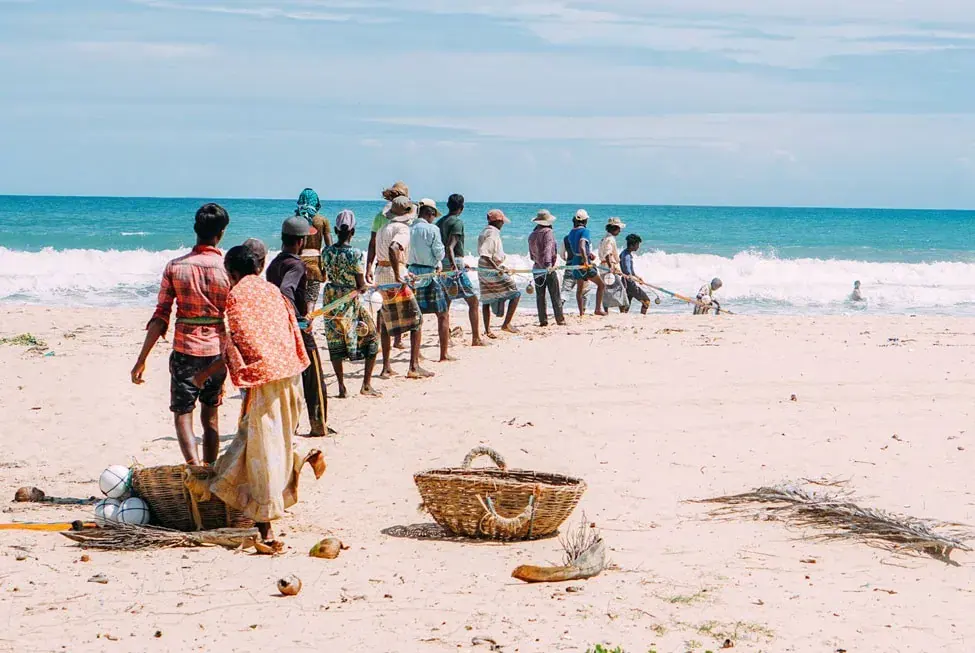
Madel Fishing (Photo: Sudheera Bandara via Pexels)
Best Fish Markets in Sri Lanka to Visit
Fish markets in Sri Lanka vary widely. Some are beach markets where the catch is landed and sold on the spot, others are working harbours, and one is a vast wholesale hall that most travellers never see. The list below starts with the easiest and most rewarding visit and moves around the island from there.
1. Negombo Fish Markets – Sri Lanka’s Essential Fishing Experience
Negombo has more than one fish market, and the name “Lellama” can cause confusion. Lonely Planet lists a main fish market near the old Dutch fort, with a second fish market across the lagoon bridge. Locals often use “Lellama” loosely for both. The Lellama on the Duwa side, a small fishing island next to Negombo, is where the serious wholesale trading happens. According to the Sunday Observer, the fresh catch is sold to wholesale buyers from about 4 am to 6 am, and the market then opens to retail customers between 6 am and 11 am. The Daily FT reported that much of this business is an auction of catches from multi-day fishing boats.
Near the fort, the beach drying grounds are easier to explore at a slower pace. Rows of fish are laid out on mats while women sort and turn the catch. To see the auctions, go as early as you can. For the drying, mid-morning works well. Sundays are usually quiet: the market is said to close because much of the town is Catholic, although some Muslim fishermen still work that day. Wear closed shoes that you don’t mind getting wet, and ask before photographing people.
2. Peliyagoda Central Fish Market – The Island’s Seafood Trading Hub
Peliyagoda, just outside Colombo, is a trading hub rather than a landing site. No boats come in here. Instead, lorries bring fish in from all over the country, including from Trincomalee, Batticaloa, Jaffna, Galle, and Puttalam. The complex opened in 2011 and replaced the old St John’s fish market in Pettah, which dated from 1894. The Ministry of Fisheries now describes it as the country’s main centre for fish distribution. It is busy, wet, and mainly wholesale, so it suits food-focused travellers who want to see the supply chain, ideally with a local guide.
3. Beruwala Fish Market and Fishing Harbour
Beruwala’s harbour is one of the busiest on the West Coast, with berthing, refrigeration, and fuel for the fleet. It was destroyed in the 2004 tsunami and later rebuilt. Trading is busiest early: reviewers suggest arriving around 5–6 am, and some say the fish market winds down by about 9 am. Beruwala is a short drive from Bentota, so it makes an easy early-morning trip from a beach hotel. It is a working fishery harbour, so follow any instructions at the gate and stay out of the way of boats and loading areas.
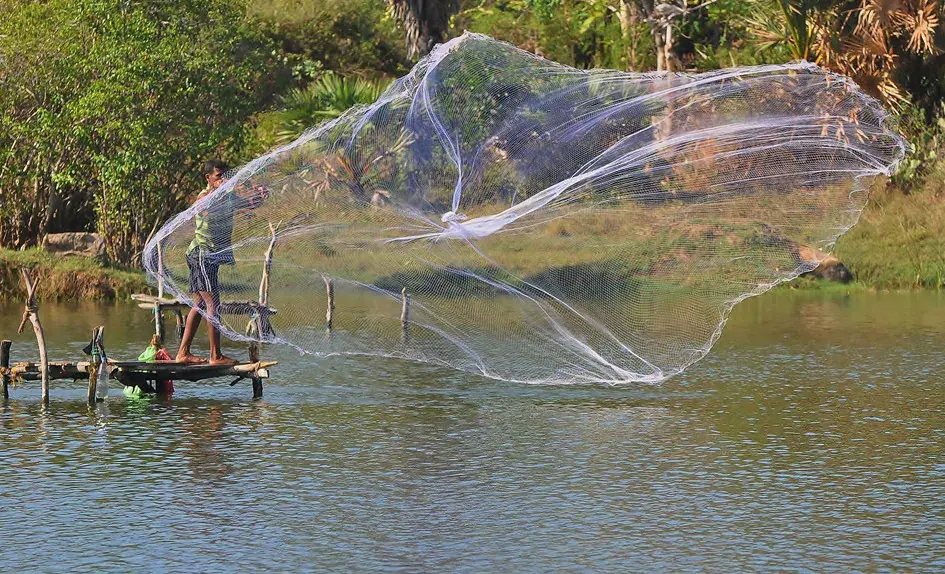
Casting a net (Photo: Jayasiri Wickramasinghe via Pexels)
4. Galle Fish Market – Coastal Life Beyond the Historic Fort
Galle has two types of fish markets. Inside the harbour on the eastern edge of town, a commercial fish market operates along the docks and is busiest in the early morning. Closer to the fort, another market sits between the eastern rampart and the sea, and it is the more practical place to buy fish if you’re self-catering. The morning catch contrasts nicely with the colonial streets of Galle Fort, and you can easily do both in the same day.
5. Mirissa Fish Market and Fisheries Harbour
Mirissa Fisheries Harbour sits on the eastern side of Weligama Bay. It opened in 1966 and is run by the Ceylon Fishery Harbours Corporation. The harbour has berths for around 300 small and mid-sized boats, and is best known for tuna, seer fish, other reef and open-ocean fish, and inshore squid and prawns. It is also where many of Mirissa’s whale-watching boats depart from, so expect fishing crews and tour groups on different quays early in the morning. The auction runs from around dawn. Remember that the harbour is a workplace first.
6. Trincomalee Fish Market – Seafood Culture on the East Coast
The Fish Market in Trincomalee is a local trading place, not a tourist attraction. Lonely Planet describes a lively daily fish market near the bus station, busiest in the early mornings. It doesn’t need more than half an hour. It works best as a quick stop before visiting Fort Frederick and Koneswaram Temple, or before heading to the beaches at Uppuveli and Nilaveli to the North.
7. Gurunagar Fish Market, Jaffna – Discover Northern Fishing Heritage
Gurunagar is Jaffna‘s fishing quarter, on the lagoon edge of the town. Early morning is the time to see boats landing their catch. Researchers from the University of Jaffna describe Gurunagar as one of the busiest landing-site fish markets on the peninsula. They found a full chain of people at work: fishermen, auctioneers, agents, dried fish producers, wholesalers, retailers, and exporters.
Wikivoyage gives the market’s hours as roughly 6 am to 10 am, but check locally. The catch here supplies much of the prawns, crab, and cuttlefish behind Jaffna’s well-known Tamil seafood cooking. It also comes from both the sea and the shallow lagoon, where fixed stake nets are still widely used. Gurunagar is a working market with limited space, so keep your visit short and low-key.
8. Batticaloa – Lagoon Fishing and Local Seafood Markets
Batticaloa doesn’t have a single headline fish market. It is better seen as a regional lagoon experience. The lagoon supports traditional small-scale fishing with cast nets, basket traps, and catamaran-style craft. Researchers found that most of the catch is sold in local markets or at roadside stalls rather than one central hall. Guesthouses in town or local guides can sometimes arrange informal boat trips with fishermen across the lagoon. You can also walk out to the Kallady Bridge, the area linked to Batticaloa’s “singing fish” legend.
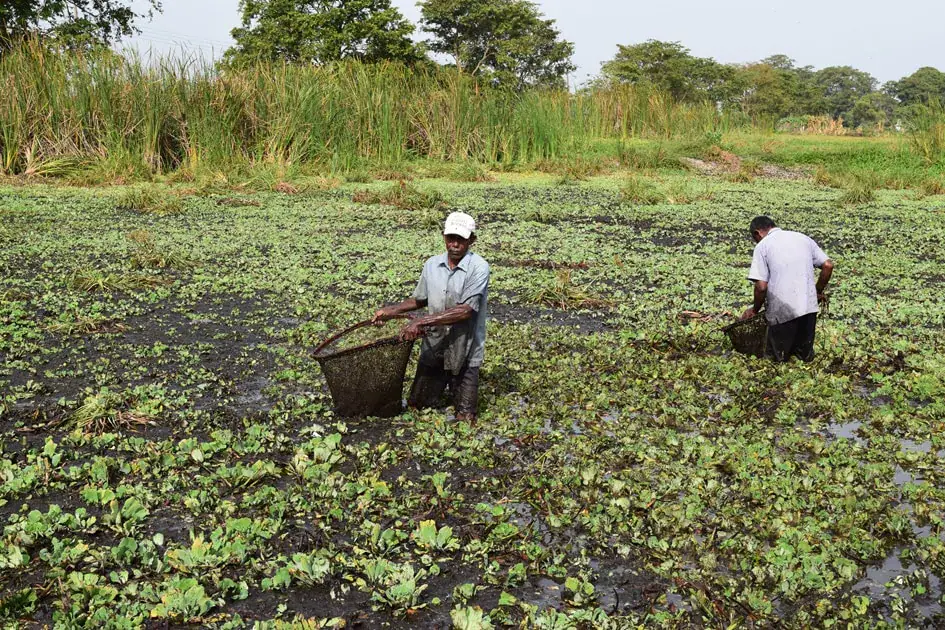
Traditional Athangu Fishing Style – Batticaloa (Photo: SL Trades and Crafts Documentation Project, CC BY-SA 4.0)
From Fishing Boat to Dinner Plate – Discover Sri Lankan Seafood
A morning at the market makes more sense once you’ve eaten the catch. Tuna is the backbone of southern cooking. Skipjack tuna is the fish behind Maldive fish, the hard, smoke-cured tuna that cooks grate into sambols and curries. Tuna is also the usual choice for ambul thiyal, the sour black-pepper and goraka curry of the South Coast. Fish ambul thiyal is dry and tangy, and because of the goraka (a souring fruit), it traditionally keeps well, which mattered long before refrigeration.
Further north, the cooking changes. Jaffna’s Tamil kitchens are known for rich, peppery crab curry made with lagoon crab, along with prawn and cuttlefish dishes. On the West Coast, Negombo’s lagoon supplies prawns and crabs for curries and devilled dishes, and the beach drying grounds keep karawala on the menu. Seer fish, sardines, and other small fish appear in everyday curries everywhere. At the same time, beach restaurants along the South Coast tend to grill the catch.
Read more about our guide on Sri Lankan cuisine.
If you buy fish at a market, only do so if you can get it on ice and cooked within a few hours. In the heat, fresh fish spoils quickly. Busy restaurants with a fast turnover are usually the safest place to try seafood. Make sure it is cooked through, and tell staff clearly about any shellfish allergy, because prawns and Maldive fish turn up in dishes where you might not expect them.
Read about dining and the best restaurants in Sri Lanka.
Authentic Fishing Experiences Travellers Can Enjoy
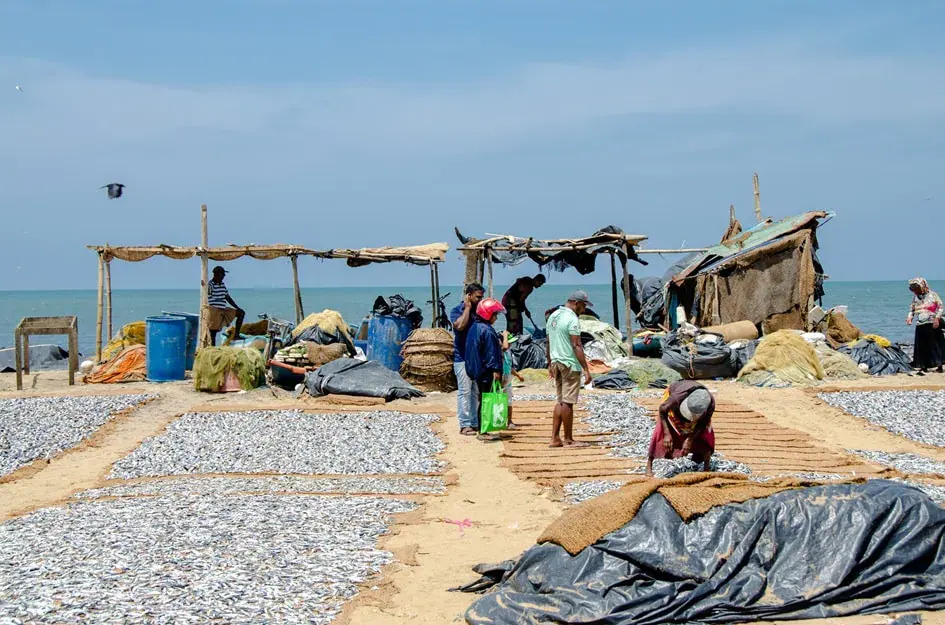
Drying fish to make Karawala (Photo: Penny from Pixabay)
Guided Fish Market and Harbour Tours
A good local guide can explain what you’re looking at, deal with gatekeepers, and make it easier to ask people before taking photos. In Negombo, several operators run early-morning tours. One lagoon fishing tour, for example, starts at the Lellama at 6 am to watch the auctions before heading out on a boat. Tour listings change often, so check reviews and confirm the current details with the operator before booking.
Traditional Fishing Demonstrations and Lagoon Boat Trips
Lagoon boat trips are the most widely available option. Private trips through Negombo Lagoon and the old Dutch Canal pass mangroves, traditional fishing villages, and birdlife. In Batticaloa, local fishermen sometimes offer informal lagoon boat trips, which are best arranged through guesthouses or a local guide. Treat these as chances to watch people at work. Don’t expect to join in, catch anything or see a particular method.
Seafood Market Visits and Cooking Experiences
Market-to-table classes give the visit a purpose. In Negombo, one listed experience combines a guided fish market tour with a hands-on cooking class using clay pots and a firewood stove, and participants buy their own seafood. In Jaffna, guests at Catamaran Guesthouse can learn Tamil cooking, including Jaffna crab curry.
Best Time to Experience Fishing Traditions in Sri Lanka
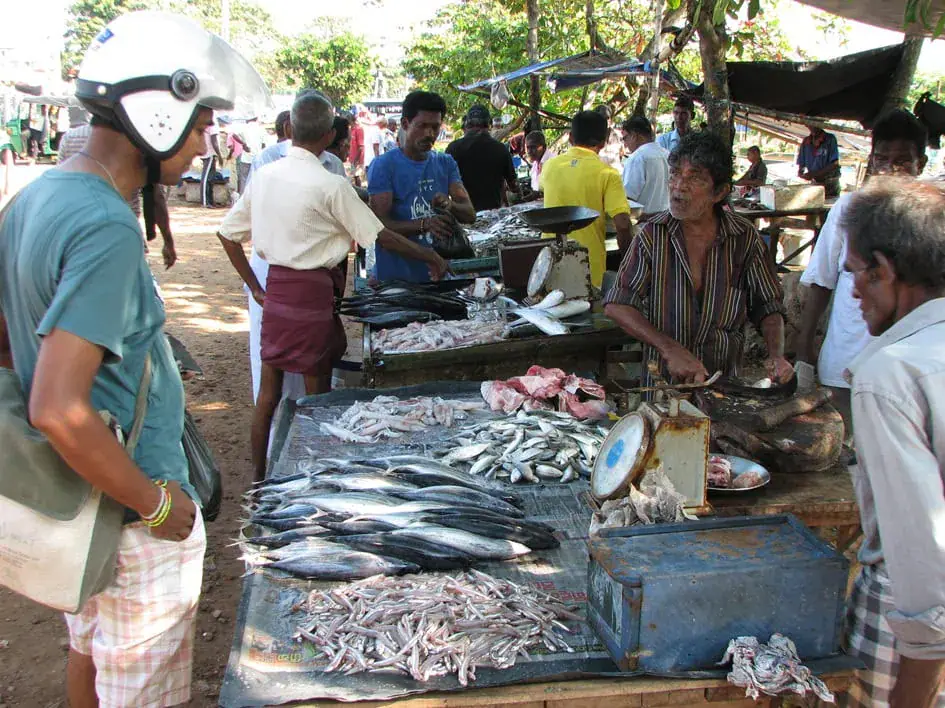
Fish Market – Galle (Photo: Seyemon, CC BY-NC-ND 2.0)
Markets are busiest at dawn all year round, so the time of day matters more than the month. For travel weather, keep in mind that Sri Lanka has two monsoons. The Department of Meteorology describes four seasons: the Southwest Monsoon (May–September), the Northeast Monsoon (December–February), and two inter-monsoon periods in March–April and October–November. October and November bring the heaviest rainfall, with every part of the country receiving more than 300mm.
Read more about weather in Sri Lanka.
| Region | Generally drier travel season |
| West and South Coasts (Negombo, Beruwala, Galle, Mirissa) | December–April |
| East Coast (Trincomalee, Batticaloa) | May–September |
| North (Jaffna) | May–September is commonly suggested; check before travel |
As a rough guide, the Southwest is driest from December to March and the Northeast around Trincomalee and Jaffna from May to September. Good travel weather is not the same as a good fishing season. In Batticaloa Lagoon, for example, researchers recorded the peak fishing season from September to March. Rough seas, tides, fishing regulations, and religious days can all keep boats ashore.
Find the best time to visit Sri Lanka.
Practical Tips for Visiting Fish Markets in Sri Lanka
- Go early. Most trading is over by mid-morning.
- Wear closed, non-slip shoes. Floors and quays are wet and slippery, and ice water runs everywhere.
- Carry small rupee notes for snacks, small purchases, or a tip for help.
- Ask before photographing people, and accept a no. If someone asks for money for a photo, agree on the amount first.
- Keep moving. Stand aside for porters, carts, and anyone carrying fish or ice.
- Respect restricted areas. Harbour gates, auction floors, and boats are workplaces, so wait to be invited.
- Think about who’s with you. Crowds, slippery surfaces, and strong smells make markets hard going for young children and anyone with limited mobility.
Read about markets and shopping in Sri Lanka.
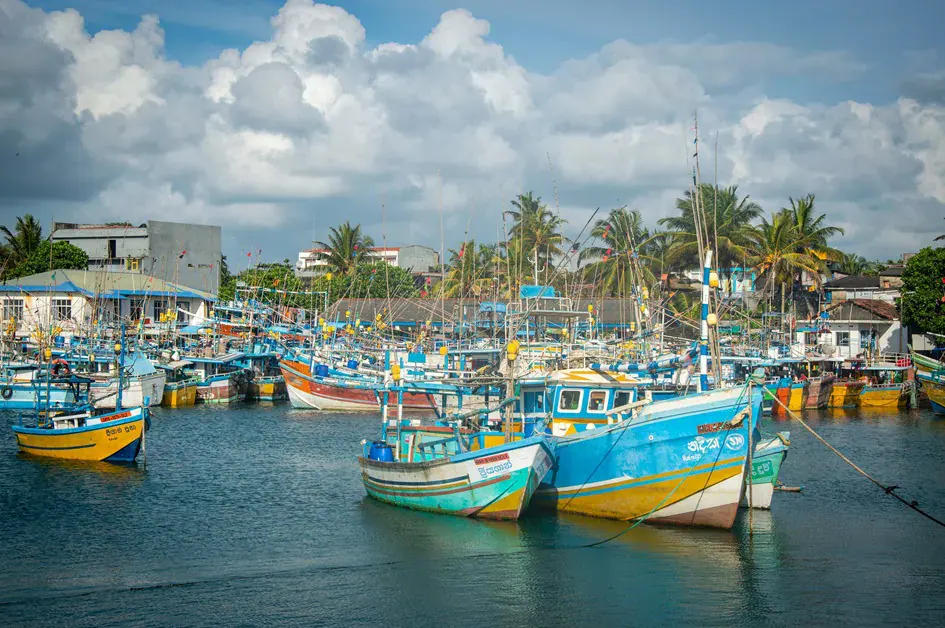
Fishing Harbour – Hikkaduwa (Photo: Sunrise from Pixabay)
Responsible Tourism – Supporting Sri Lanka’s Fishing Communities
Visitors can make a positive difference to fishing communities. Hire local guides, pay agreed fees without arguing, and buy breakfast or seafood from local vendors rather than just taking photos. Treat people’s homes, boats, and drying grounds as private unless you’re invited in.
Fishing communities face real pressures, and simple claims about sustainability don’t capture them. Lost and abandoned fishing gear is a growing problem in Sri Lankan waters: one turtle conservation centre in Kosgoda reports finding at least 30 turtles a year tangled in ghost nets on its stretch of beach. In the North, Sri Lanka banned bottom trawling in 2017. Still, fishers report that illegal trawling continues in their waters and has badly depleted catches. Fishers also say that climate change, pollution, and overfishing are combining to shrink catches.
Read more about sea turtles and conservation programmes in Sri Lanka.
You can help in small ways. Take your plastic away with you, don’t buy anything you suspect comes from a protected species, and choose restaurants that serve local, seasonal fish.
Read more about responsible and sustainable travelling in Sri Lanka.
Suggested Fishing Heritage Itineraries in Sri Lanka
Half-Day Negombo Fishing Experience
Get to the Lellama for the early wholesale trading. Afterwards, walk the beach drying grounds near the fort and stop for breakfast. Late morning suits a lagoon boat trip, and you can finish with a seafood lunch in town. This works well on the morning after you arrive, or before an evening flight.
Two-Day Southern Coast Fishing Heritage Trail
On day 1, start at Galle’s harbour market, then spend the rest of the morning in Galle Fort. Late in the afternoon, drive east to the stilt-fishing stretch between Koggala and Ahangama. On day 2, go to Mirissa Fisheries Harbour for the dawn landings, then take it easy around Weligama Bay or book a seafood cooking class. Staying near Ahangama or Weligama cuts down on early-morning driving.
Three- to Four-Day Northern and Eastern Fishing Heritage Experience
Four days work best. Spend day 1 settling into Jaffna. On day 2, visit Gurunagar at dawn, then explore northern lagoon communities with a local guide. Day 3 is a full travel day to Trincomalee. On day 4, visit the market early and then Fort Frederick and Koneswaram Temple, before heading to Uppuveli beach. With only three days, drop the lagoon excursion rather than rushing the transfer.
Read about the best Sri Lanka itineraries for your travel season.
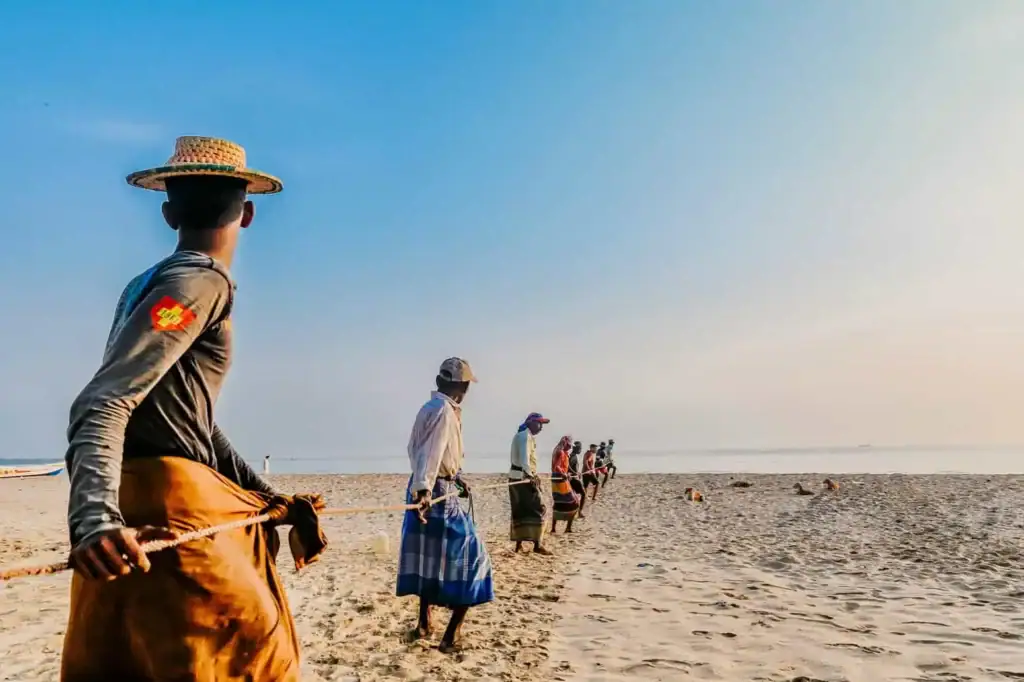
Traditional Madel Fishing – Kuchchaveli, Trincomalee (Photo: Charith Kodagoda via Pexels)
Frequently Asked Questions
What is the best fish market to visit in Sri Lanka?
Negombo is the best fish market for most visitors. It is close to the airport, trades early every morning except on quieter Sundays, and combines auctions, boats, and beach drying grounds.
What is the best time to visit Negombo Fish Market?
Go at dawn. Wholesale trading usually runs from around 4 am to 6 am, and retail buying continues until late morning.
Where can I see traditional stilt fishermen in Sri Lanka?
Head for the South Coast between Koggala, Kathaluwa, and Ahangama, east of Galle. Ask a local guide where genuine fishing still takes place.
Are guided fish market and fishing village tours available?
Yes. Operators in Negombo and elsewhere offer market visits, lagoon trips, and cooking classes, but availability changes, so check current details before booking.
Can tourists buy fresh fish at Sri Lankan fish markets?
Yes. Buy only if you can keep the fish on ice and cook it within a few hours.
Do tourists have to pay to photograph stilt fishermen?
Often, yes. Many stilt fishermen pose for tourists to earn a living, so agree on any fee before taking pictures.
Are you new to Sri Lanka? Read our complete planning guide for first-time travellers.
Final Thoughts – Discover Sri Lanka Beyond Its Beaches
Visiting even one of the fish markets in Sri Lanka shows you a side of the island that beach holidays usually miss. Set your alarm for a Negombo dawn or Mirissa’s harbour, go with a local guide if you can, and spend some money with the people you meet.
Read more about popular beaches in Sri Lanka.
Map – Fish Markets in Sri Lanka
Sources and References:
- Ministry of Fisheries, Aquatic and Ocean Resources, Sri Lanka – Performance Report 2025.
- Sri Lanka Tourism Development Authority (SLTDA) – Marine Tourism Roadmap for Sri Lanka (2025).
- Food and Agriculture Organization of the United Nations (FAO) / Bay of Bengal Programme – Stilt Fishing in Galle District.
- Food and Agriculture Organization of the United Nations (FAO) / Bay of Bengal Programme – Negombo Lagoon Fisheries.
- Ministry of Fisheries, Sri Lanka – Madel (Beach Seine) Fishing Regulations (2026).
- International Collective in Support of Fishworkers (ICSF) – The Oruwa in Negombo.
- The National – Postcard from Galle: Keeping Alive Sri Lanka’s Unique Tradition of Stilt Fishing (2024).
- University of Jaffna – Status of the Fishery of Jaffna Lagoon.
- University of Jaffna – Marketing Channels in Gurunagar Fish Market.
- Research on Fish Production in Batticaloa Lagoon.
- Daily FT – Life at the ‘Lellama’.
- Sunday Observer – Make Dried Fish While the Sun Shines.
- Lonely Planet – Main Fish Market, Negombo.
- Lonely Planet – Fish Market, Trincomalee.
- Ministry of Fisheries, Sri Lanka – Institutions and Entities: Central Fish Market Complex, Peliyagoda.
- &Beyond – Galle Fish Markets.
- National Geographic – Eat in Jaffna, Sri Lanka’s Crab Curry Capital.
- Department of Census and Statistics, Sri Lanka – Statistical Abstract: Geography and Climate.
- Mongabay – As Sri Lanka Struggles with Ghost Nets, Volunteer Youth Lead Seabed Cleanup (2025).
Featured image: Lellama Fish Market – Negombo (Photo: Nazly Ahmed, CC BY-NC-SA 2.0)

I am a Sri Lankan medical doctor who spends my free time travelling, exploring new destinations, and documenting the beauty of the island I call home. I have journeyed across almost every corner of Sri Lanka with my wife and daughter — from wildlife parks and misty mountains to ancient cities, deep forests, rugged landscapes, and quiet beaches.
Travel is not just a hobby for me — it’s a way of life. I love nature, enjoy road trips, and find joy in wildlife photography. I also read widely about tourism, travel trends, and destination culture. Through my writing, I aim to help travellers experience Sri Lanka through real stories, meaningful insights, and honest recommendations — the same way I explore it with my own family.